All posts by mpositiveone@gmail.com

Nuruddin wins accolades for designing Science Fair of Assam Sahitya Sabha

ASSAM :

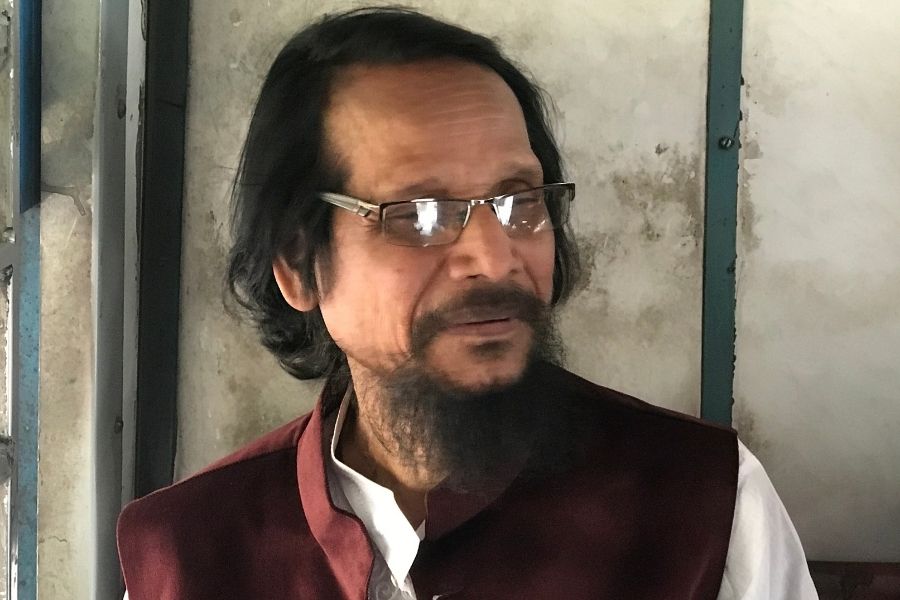
Nuruddin Ahmed standing in front of the arch of Science Fair

Two decades ago, Nuruddin Ahmed created a stir by bringing the sinking of the Titanic to life on stage in live theatre.

Over the years, he has also brought to life the 5,000-year-old Maya civilization and Indraprastha, the capital of the Pandava kingdom from the Mahabharata, in Durga Puja mandaps.

A National Award-winning sculptor and art director, Ahmed is currently leading the Pathsala session of the Assam Sahitya Sabha. He has previously made headlines for displaying models of iconic structures like the Taj Mahal, the Colosseum, and the Great Wall of China during Durga Puja.

Nuruddin Ahmed played a significant role in organising the 77th Pathsala session of the Assam Sahitya Sabha. The first-ever Science Fair held on the Sahitya Sabha grounds from January 31 to February 4 attracted lakhs of visitors from across India and abroad.

For those unfamiliar, the Assam Sahitya Sabha is a key guardian of Assam’s cultural and literary heritage, playing a vital role in promoting the language, culture, literature, and dignity of the northeastern state.
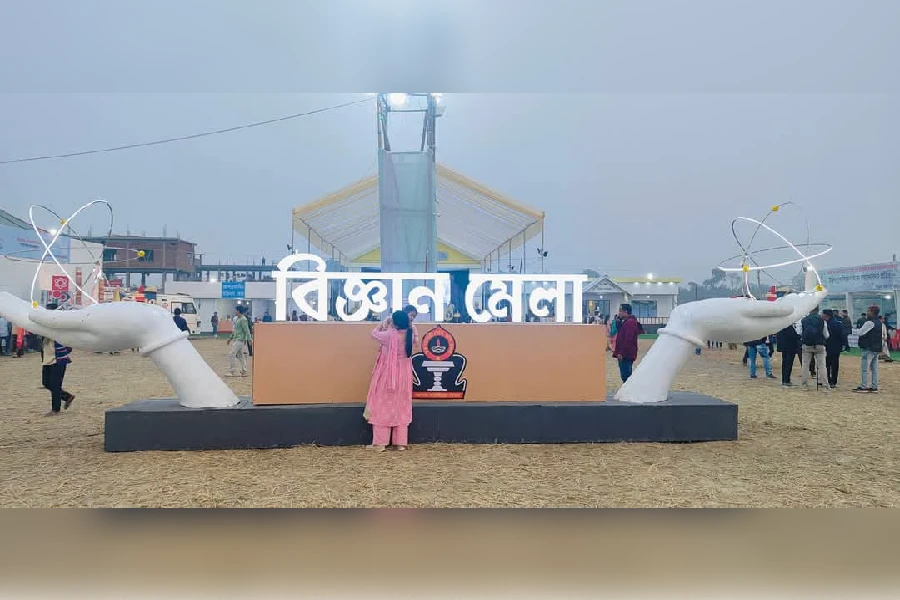
A scene inside the Science Fair

The organization, founded in 1917 by pioneers like Padmanath Gohanibarua and Sarat Chandra Goswami, is celebrating its 108th year by hosting a science fair alongside its literary activities for the first time.

In an interview with Awaz-the Voice, Assam, Nuruddin Ahmed shared that, while he has been involved in sculpture and art direction for decades, this is his first time organizing such a large-scale science fair.

“I have organized many science fairs and also worked with the Assam Science Technology & Environment Council. The Pathsala session of the Assam Sahitya Sabha features 21 departments related to science and technology,” he said. These include institutions such as the Indian Army, National Science Centre, Aryabhatta Science Centre, Oil Corporation of India, Numaligarh Oil Refinery, Assam Agricultural University, North Eastern Space Application Centre, Tezpur University, Gauhati University, and the Shipping Corporation of India.

“This initiative by the Assam Sahitya Sabha is a welcome move and will play a crucial role in fostering a scientific mindset among the youth,” said Nuruddin Ahmed, a Sangeet Natak Academy Award winner.
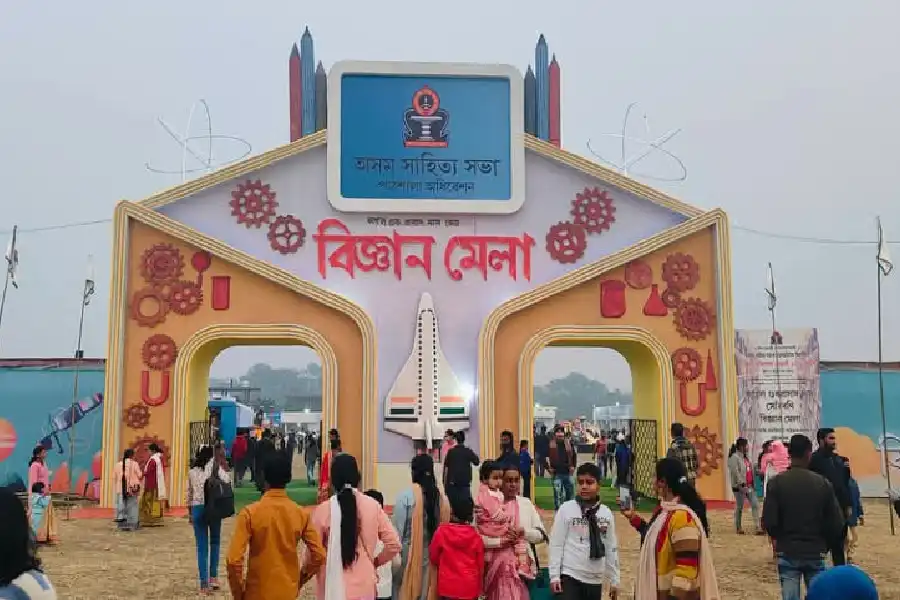
Science Fair at Pathsala

Nuruddin Ahmed has been designing arches for the venue of the Assam Sahitya Sabha sessions held in different parts of Assam for the past three decades. He was also closely involved during the 1987 session at Pathsala, Bajali district.

At that session, Nuruddin worked on the museum and archway. He is proud of his association with the Pathshala Sahitya Sabha session after 38 years and thanked the local MLA and Minister Ranjeet Kumar Dass for this.

“I have a special passion for the Pathsala session. The Sahitya Sabha session was held here in 1987. “I am grateful to the welcoming committee president and Minister Ranjeet Kumar Dass for giving me this opportunity this time”, Ahmed said. 

The art director told Awaz that he began decorating the venue on January 19 and completed the work by January 30 and handed it over to the management committee. A group of 16 artists collaborated to decorate the Science Fair for the public, with Nuruddin Ahmed’s two sons, Dwip and Raj Ahmed, also contributing to success of the event..

Nuruddin Ahmed, who has revived the traditional arches of temples and sculptures in various parts of Assam, has prepared the tableau of the state of Assam for several Republic Days.

Nuruddin Ahmed has been creating and painting idols of Hindu Gods and Goddesses for many years. Despite facing challenges at the beginning, as idolatry is forbidden in Islam, his works are now embraced with love and reverence by both Hindus and Muslims.
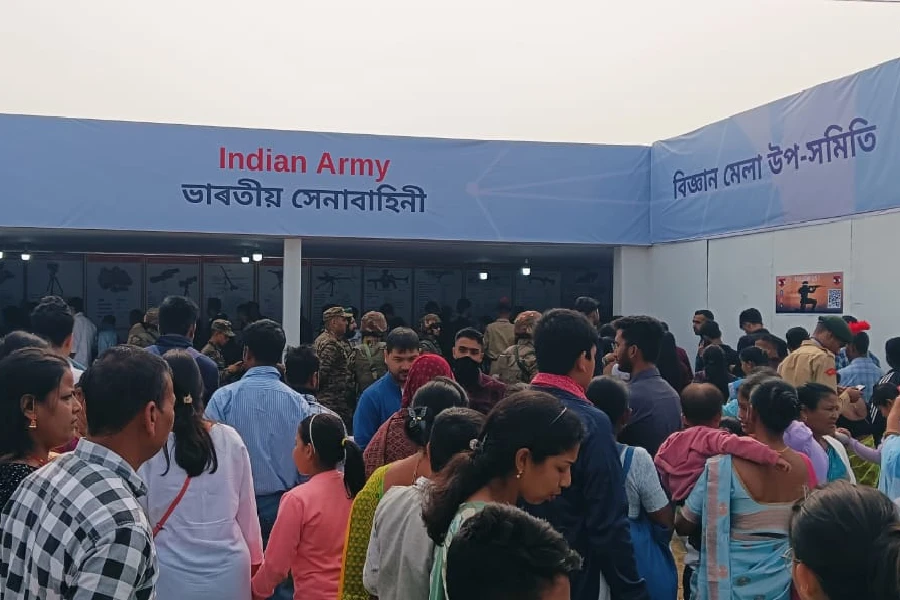
The Pandal of Indian Army at the Science Fair

During the Sharadiya Durga Puja last year, Nuruddin Ahmed brought Indraprastha, the capital of the Pandava kingdom in the ancient Hindu epic Mahabharata, to life. His creation received praise at the Athgaon Public Durga Puja Mandap in Guwahati. Indraprastha, which means “The city of Indra,” is believed to have been located in the area where present-day New Delhi stands.

The Assam Sahitya Sabha is the guardian of Assam’s cultural and literary heritage. It has played a great role in promoting the language, culture, literature and dignity of the North Eastern Space Application Centre.

The organization was founded in 1917 by pioneers like Padmanath Gohanibarua and Sarat Chandra Goswami. In its 108th year for the first time a science fair is being organized along side literary activities.

source: http://www.awazthevoice.in / Awaz, The Voice / Home> Stories / by Mukut Sharma, Guwahati / February 05th, 2025
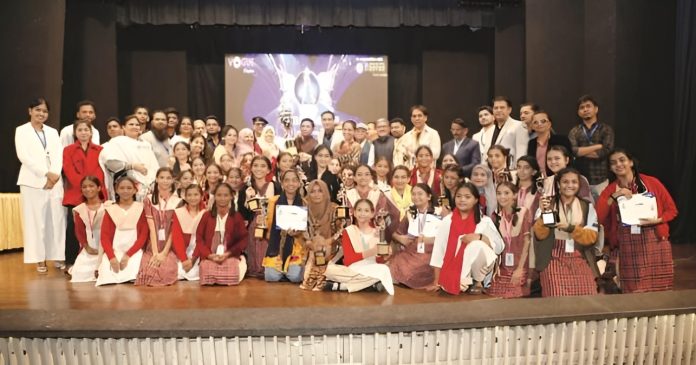
Vogue Theater Committed to Promoting Urdu Language, Theatre, and Creative Activities

Mumbai, MAHARASHTRA :

Mumbai:

The sixth annual festival, “Discover,” celebrated young creative talents with enthusiasm, recognizing efforts to provide them a platform.

Organized by Vogue Theatre in collaboration with Bharatiya Vidya Bhavan, the state-level Urdu drama competition and children’s festival successfully took place at Bharatiya Vidya Bhavan. The event showcased the richness of Urdu language and literature while offering young talents an opportunity to express their creativity. Schools from Mumbai, its suburbs, and other districts participated, making it a vibrant confluence of artistic expression.

Engr. Adnan Sarkhot, President of Vogue Theatre, who has been associated with Urdu theatre for over 30 years and actively works for children’s creative development, led the event to its grand success. Notable guests, including Padma Shri Dr. Zaheer Kazi, IPS Qaiser Khalid, Dr. Sheikh Abdullah, Zahid Khan, and Zakir Khan, lauded Team Vogue’s initiative, emphasizing the importance of such programs in preserving Urdu for future generations.

As in previous years, “Discover” featured various competitions, including drawing, mono-acting, Urdu and English story writing, quizzes, and drama. More than a contest, the festival served as a learning experience, building confidence and refining students’ artistic skills. The participants’ creative performances left a lasting impression on the audience.

Experts from Mumbai, Bhiwandi, and Solapur judged the competitions.

Awardees included Principal Saba Patel, who received the Innovative Principal Award, while Raja Baghban (Solapur) and Sajid Dolar (Malegaon) were honored with the Lifetime Achievement Award for their contributions to education and literature. Additionally, for their outstanding performances in Urdu drama and academic excellence in SSC exams, Zara Feroz Shaikh (Mira Road) and Aashna Wahid Ansari (Mumbra) received the Rising Star Award.

source: http://www.radiancenews.com / Radiance News / Home> Arts & Culture / by Radiance News Bureau / February 08th, 2025

Nawab Shaffan Khan, heir of Nawab Khan Bahadur Khan, passes away – Urdu News Bareilly

Bareilly, UTTAR PRADESH :

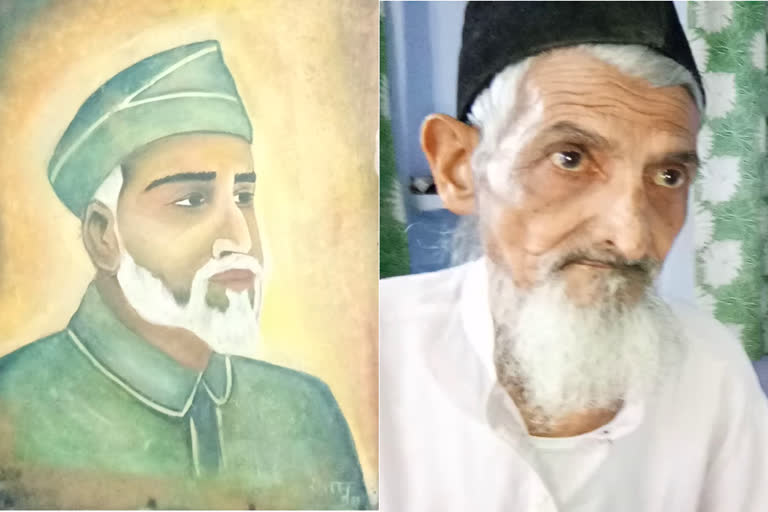
Nawab Shafan Khan, the heir of Nawab Khan Bahadur Khan, who kept the Rohilkhand region free from British rule for eleven months during the 1857 freedom movement, has passed away.

Nawab Shafan Khan breathed his last at the age of 80. The sacrifices of his ancestors are recorded in golden words in the pages of history.

Death of Nawab Shaffan Khan, heir of Nawab Khan Bahadur Khan

Nawab Shafan Khan, a resident of Shahabad area of ​​Bareilly city, has passed away. He was laid to rest in Bhor graveyard near his home after Zuhr prayers. He was the heir to a great family whose ancestors ruled not only Bareilly but also in about 9 surrounding districts. His great-grandfather Nawab Khan Bahadur Khan had set a great example of bravery and sacrifice in the style of his namesake.

He was a hero of the 1857 revolution. He was born in 1791 into a Nawab family. He was the grandson of Rohilla Sardar Hafiz Rehmat Khan.

The slogan of revolution was raised in Meerut on 10 May 1857 and when the news of it reached Bareilly on 14 May, preparations were intensified here too. On 31 May, Khan Bahadur Khan and his generals and soldiers, led by Subedar Bakht Khan, declared a rebellion against the British government.

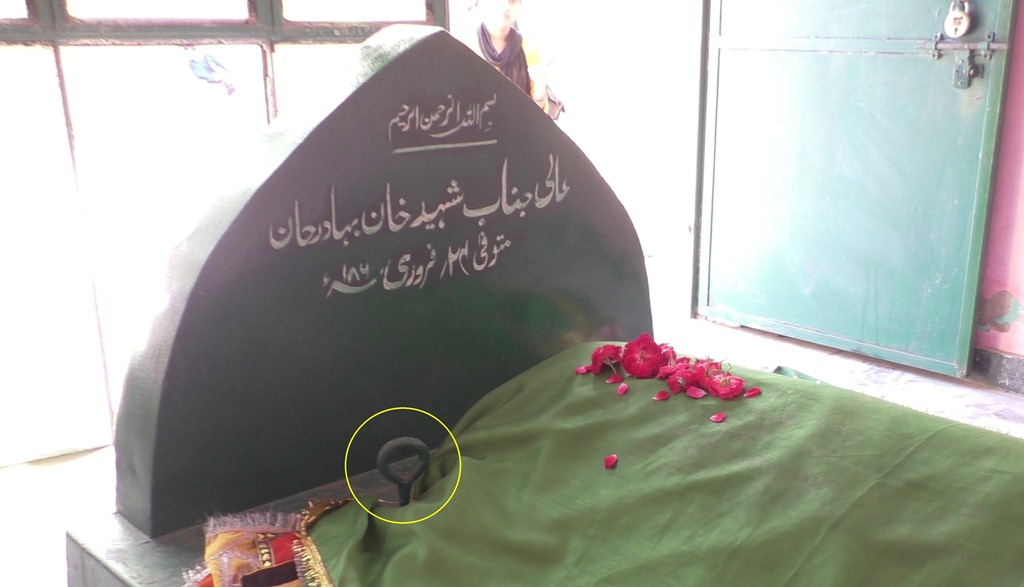
Tomb of Nawab Khan Bahadur Khan

The then magistrate, civil sergeant, jail superintendent and principal of Bareilly College, “C.Buk”, were killed by the revolutionaries. By five in the evening, the revolutionaries had taken control of the Bareilly division.

On June 1, these revolutionaries took out a triumphant procession. When the procession reached Kotwali, a large number of Bareilly citizens crowned Nawab Khan Bahadur Khan and elected him the Nawab of the Bareilly division.

Heir of Nawab Khan Bahadur Khan

An example of the bravery of Nawab Khan Bahadur Khan is that despite the numerous atrocities and abuses of the British government and being a powerful ruler, he kept the Bareilly division free from the rule of the British government for eleven months.

However, later, the British government arrested Nawab Khan Bahadur Khan while fighting a war at one place. He was brought to the same Kotwali where he was awarded the title of Nawab. He was imprisoned and kept in an unknown place.

Then on February 24, 1860, the hero of the urban people was brought on foot to the Kotwali and hanged on the same day at 7:10 am. A strange silence fell in the city and darkness prevailed.

Heir of Nawab Khan Bahadur Khan

To prevent any unrest in the city after the hanging of Nawab Khan Bahadur Khan, his body was taken to the district jail in an armored police vehicle and buried in the premises of the district jail.

Heir of Nawab Khan Bahadur Khan

The special thing is that he was buried with irons. Even today, the irons are clearly visible on the head of his grave. The British government had also buried Khan Bahadur Khan in the prison premises so that people could not gather at his grave and there would be no further excitement in the revolution.

Now let us mention Nawab Shafan Khan, the heir of Khan Bahadur Khan. He struggled for life and livelihood till his last breath. Despite belonging to the Nawab family, his family had to face difficulties for years or even their entire lives. Despite this, the struggle did not end in his life till his last breath.

According to his younger brother Nawab Liaquat Khan, Nawab Shaffan Khan’s health had deteriorated for the past five days. He was unable to go to the mosque to offer prayers during those days. Due to the weak financial condition of the family, he was undergoing treatment at home. But in the morning, his health deteriorated further and he died after a few moments.

source: http://www.etvbharat.com / ETV Bharat – Urdu / Home> Urdu> State / by Urdu translation into English / July 02nd, 2021

Mahakumbh: Farhan Alam saved Ramshankar’s life to emerge as hero

Prayagraj (formerly Allahabad), UTTAR PRADESH :

PIC

New Delhi

“When you help someone, you don’t think of his religion or sect; saving a life is human and a duty. Religion also teaches that human life is the most precious thing in the world.”

This is what Farhan Alam, a young lawyer and social worker from Prayagraj, who saved Ramshankar by giving him timely CPR  when the former suffered a heart attack during the Mahakumbh at Prayagraj, Uttar Pradesh, said. Cardiopulmonary resuscitation (CPR) is an emergency treatment done on someone who se breathing or heartbeat has stopped.

Last week’s incident came to light when a video of Farhan Alam administering the life-saving procedure on Ramshankar went viral on social media. In the clip, Farhar is seen applying pressure with both hands on the chest of an unconscious Ramshankar as his wife and child are seen crying.

Later it was revealed that Farhan Alam had saved the life of Ramshankar, a devotee who had come to Maha Kumbh.

Speaking with Awaz-the Voice, Farhan Alam said this was not unusual for him. “It was a part of my responsibility that I performed well. The important thing is that I tried reviving him through CPR and Allah helped me.”

pix02

Remembering the incident, he said, “I was posted at the railway station, but one of my colleagues Muhammad Arshad told me about the passing out of a devotee on the walkie-talkie. I rushed there within a few minutes. He was unconscious and his breathing had stopped. I quickly started the CPR procedure. After a few moments of hard work, he started breathing; his heart was beating. As the wave of life ran through Ramshankar, it also rejuvenated the people around – onlookers and most importantly his child and wife.”

Farhan Alam is working with UNICEF on behalf of the Prayagraj-based NGO HAQ that works on child rights. Along with HAQ, he is also the founder of Prim Rose Siksha Sansthan.

Farhan’s interest in volunteering as a social worker comes from his late father Dr. Noor Alam. In 1994, he trained the Railway Protection Force personnel in emergency medical assistance procedures.

However, Farhan Alam says saving life is always a challenge; so it was in the case of Ramshankar. “I can do my best with all the courage I have. The rest is Allah’s will”.

Farhan Alam told Awaz-The Voice that before the Maha Kumbh, he trained  Railway Protection Force jawans led by Inspector Shiv Kumar Singh in the run-up to the Mahakumbh. He imparted them training on administering CPR. This was part of the preparations for the Mahakumhb which is expected to be visited by a record 45 crore people.

Farhan Alam says that the Maha Kumbh Mela is the center of the faith of Hindus, but we all respect it and the residents of Prayagraj are ready to take up every kind of responsibility for its smooth conduct as “All devotees are our guests.”

He says being from Prayagraj it’s “our responsibility and duty to protect them till they return from the Kumbh Mela. I believe that this is the Maha Kumbh of brotherhood and communal harmony. There are also Muslims here who volunteer to serve crores of devotees. Muslim volunteers work day and night with great pride to help the devotees.”

pix03

Farhan Alam told Awaz-The Voice that at the Maha Kumbh Mela, there is no difference between Hindus and Muslims. “No one stopped us from serving because of our religion nor did anyone object. We, the people of the city, consider it our social and human responsibility to serve the visitors. We all work with the spirit that we should tackle problems that devotees might face. Volunteers have no religion; they are in the service of humanity.”

Later, Farhan Alam met Ram Shankar in the hospital in Prayagraj. All those in the hospital came to meet and thanked him for his act. However, Farhan Alam was happy to see Ramshankar’s smiling countenance.

Interestingly, Farhan Alam also shared a video clip in which he is seen administering CPR on a devotee at a religious festival on social media.

Speaking as a volunteer, Farhan Alam told Awaz that this incident demonstrated to common devotees how much preparations have been done by the administration for the Mahakumbh.

People are praising Farhan Alam for this deed and calling him the real hero of Mahakumbh.

source: http://www.awazthevoice.in / Awaz, The Voice / Home> Stories / posted by Aasha Khosa, ATV / January 30th, 2025

India’s Top Muslim Business Tycoons: Shaping the Nation’s Global Prestige

INDIA :

From technology to hospitality, Muslim businessmen are raising India’s stature on the global stage

New Delhi :

In the ever-evolving world of business, several prominent figures are not just shaping the Indian economy but also placing the country on the global map. Among them, six Muslim businessmen stand out, with their remarkable ventures spanning across various sectors, such as technology, healthcare, retail, and hospitality. These influential entrepreneurs are enhancing India’s image worldwide, further solidifying its position in the global business arena.

Azim Premji – The Tech Magnate Azim Premji, often regarded as the richest Muslim businessman in India, has played a pivotal role in the growth of India’s technology sector. As the chairman of Wipro, one of the country’s largest IT companies, Premji’s leadership has helped the company expand its reach across various international markets. His contributions extend beyond the business world as well. “India’s rise in the global tech landscape is closely tied to Wipro’s innovation and excellence,” said Premji. Through Wipro, Premji has established himself as a philanthropist, with substantial donations to charitable causes.

Meraj Manal – The Herbal Business Visionary Meraj Manal, the driving force behind the success of ‘Himalaya,’ India’s prominent herbal company, is known for his dedication to promoting natural wellness. His business expertise has helped Himalaya expand into a globally recognised brand, selling products in over 90 countries. Manal attributes his success to innovation and a commitment to quality. “We’re not just selling products; we’re selling a way of life,” he shared. His continued success has played an essential role in reinforcing the global appeal of Indian herbal and natural products.

Rafiq Malik – Footwear Industry Leader Rafiq Malik, founder and owner of ‘Metro,’ one of India’s leading footwear brands, has seen significant international growth. His entrepreneurial vision has positioned Metro as a key player in the retail space, both in India and abroad. Under his leadership, Metro has expanded its footprint, contributing to the growing demand for Indian brands in global markets. “Metro is about more than just shoes; it’s about delivering quality and style to every customer,” said Malik.

Yusuf Ali – Hospitality and Retail Mogul Yusuf Ali, owner of ‘Lulu,’ one of the largest retail chains and shopping malls in many world countries and in India, has firmly placed his mark in the retail and hospitality sectors. With Lulu Mall’s presence in multiple countries, his business is recognised globally. From large-scale shopping centres to luxury hotels, Yusuf Ali’s diverse portfolio is a testament to his entrepreneurial prowess. “Our mission is to provide an unparalleled shopping experience for our customers, no matter where they are,” Yusuf Ali explained.

Other Notable Names
While Premji, Manal, Malik, and Yusuf Ali are among the most prominent, several other Muslim businessmen are also contributing significantly to India’s economic growth. Their ventures span multiple industries, from healthcare to infrastructure, highlighting the diversity and dynamism of Muslim entrepreneurs in India.

These businessmen not only continue to lead successful ventures but also serve as role models for the younger generation, proving that entrepreneurship knows no bounds. Through their business acumen, these individuals are ensuring that India continues to grow as an economic powerhouse on the global stage.

source: http://www.clarionindia.net / Clarion India / Home> Editors Pick> India / by Team Clarion / December 07th, 2025

Uddhav Thackeray Felicitates Arif Bamane for Rescuing 35 Mumbai Ferry Passengers 

Mumbai, MAHARASTHRA :

New Delhi : 

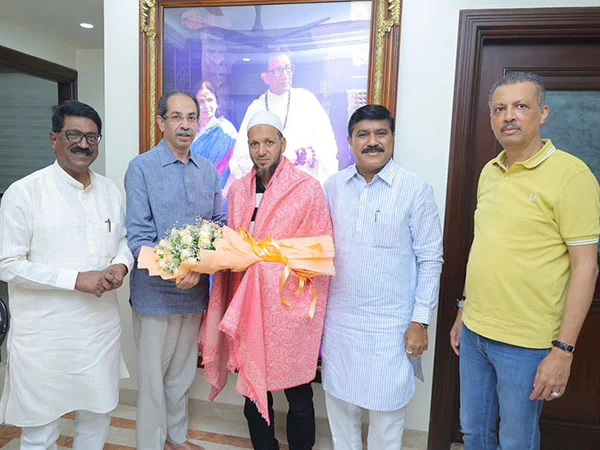
Shiv Sena (UBT) chief Uddhav Thackeray on Tuesday felicitated Arif Bamane who rescued around 35 passengers following the collision of a Navy speedboat with a passenger ferry off the Mumbai coast that resulted in the death of 15 people.

In a post on X, the party informed about the felicitations. The post also contains photographs of Thackeray with Arif.  

“Arif Bamane, who showed bravery in saving the lives of 35 passengers in the Nilkamal boat accident, was honoured by party chief Hon. Uddhavsaheb Thackeray. Shiv Sena leader MP Arvind Sawant, Secretary MLA Milind Narvekar and Deputy Leader MLA Manoj Jamsutkar were present on this occasion,” said the party. 

The tragic maritime accident occurred on December 18 near Mumbai when an Indian Navy boat collided with the passenger ferry Neelkamal causing it to capsize. The ferry was headed to the Elephanta Caves from Gateway of India. A total of 101 people were rescued.

According to reports, on receiving a distress call, Arif and his team rushed to the accident site, traversing a distance typically covered in 18–20 minutes in just eight minutes. Describing the horrific scene to reporters, Arif said, “It was devastating. People were crying for help, some floating on the waves, while others struggled to stay afloat without life jackets. I saw a little girl lying motionless, with her lungs filled with water. I also rescued a newborn who wasn’t breathing and revived him by hanging him upside down.”

Arif, aboard his boat Porwa, a pilot vessel used to assist larger ships in anchoring, led his team in pulling people out of the treacherous waves. While many at the Gateway of India stood as helpless spectators, praying for the victims, Arif jumped into action. His priority was the vulnerable — children and women — whom he dragged to safety, calmed with reassuring words, and provided them with life jackets.

source: http://www.clarionindia.net / Clarion India / Home> Editors Pick> India / by Team Clarion / December 24th, 2024

Small Acts, Big Rewards: Kifayatullah Malik’s Quest to Empower Underprivileged

Lawaypora Village (Bandipora), JAMMU & KASHMIR :

Bandipora, Kashmir:

Growing up in Lawaypora, a small village in bandipora, Kifayatullah was the first child in his family to attend school. His father is a farmer. Kifayatullah soon realized that many children in his community were deprived of this basic right.

Kifayatullah Malik told TCN, “My desire to serve the community was sparked by the difficulties and hardships I encountered during my school days. I was driven to social work by a dream that no other child should experience the hardships I endured”.

Kifayatullah Malik, 25, is a mountaineer, young leader, and social worker. He graduated from the University of Kashmir with a master’s degree in social work. As a committed social worker, he advocates for Underprivileged people, especially women, children, and youth.

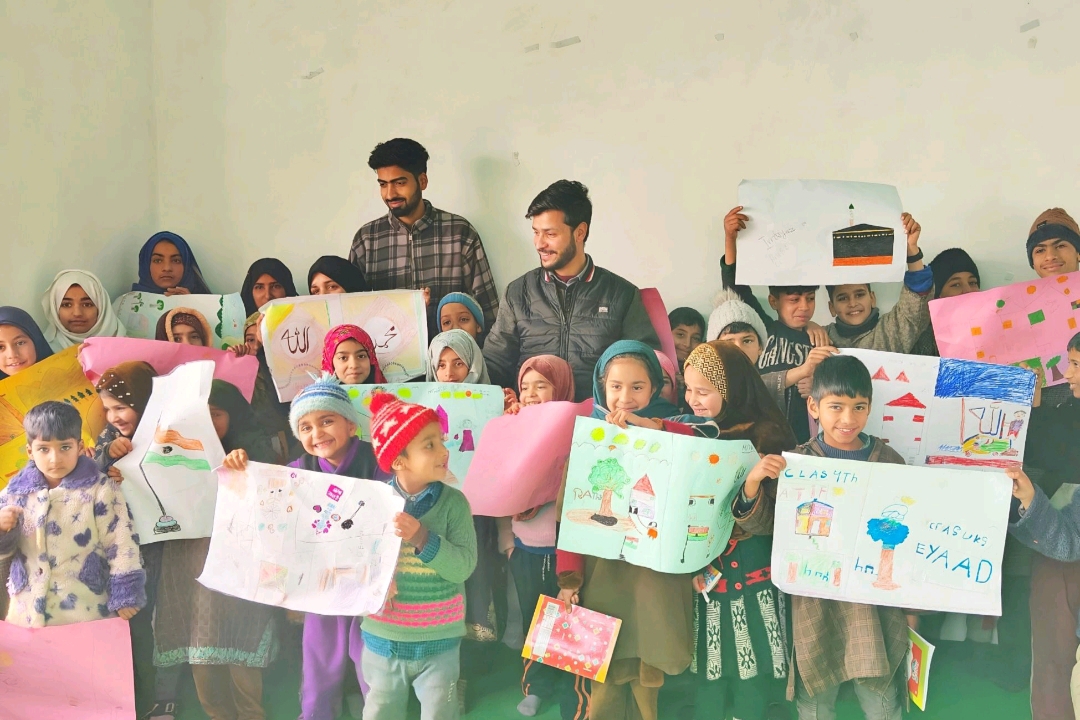
Children in hilly regions are encouraged to play sports and go to school by Kifayatullah. Additionally, he gathers used textbooks and gives them to students in need.

In remote areas such as Ketson, Dakhi, Dangarnar, Chinchar, he has set up awareness camps on topics including drug misuse, environmental sustainability, and women’s empowerment. His efforts in social forestry and tree planting are also worth mentioning.

He mentioned the lack of finance as the main obstacle, adding that I primarily rely on crowd-funding to carry out my purpose.

Kifayatullah Malik is currently the district coordinator for REACHA (Research and Extension Association for Conservation of Horticulture and Agro-forestry), which works to increase economic opportunities, enhance education, and close the digital divide in underprivileged areas of J&K. In addition, he has served under “Bal Raksha Bharat,” an organization that is vital to improving rural communities’ access to healthcare, education, and livelihood.

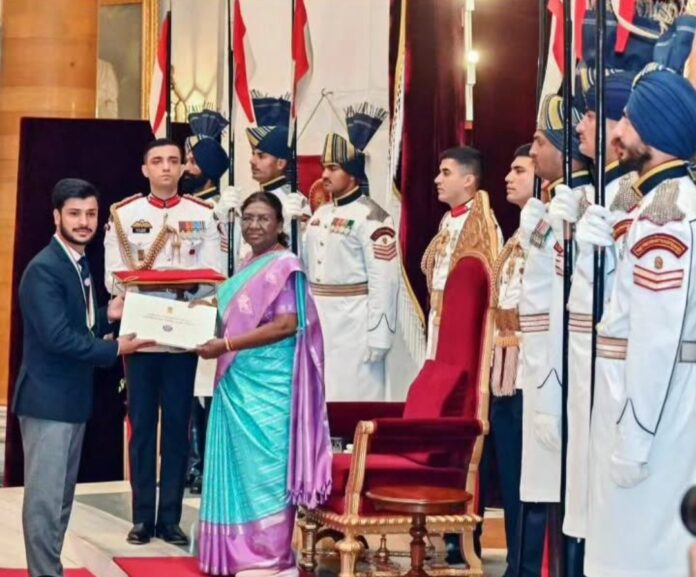
President Draupadi Murmu presented him with the esteemed President’s Award for Social Work and Community Welfare in 2021-22. Other honors that Kifayatullah has received include the Best Forest Friend Award for planting trees from the Jammu and Kashmir Social Forestry Department, the Ambassador of Humanity Award 2024, the Global Human Rights Award, the ADG’s Appreciation Award 2019, and the award for social work in 2024.

Kifayatullah Malik says, having millions is not necessary to make a difference. A small act of kindness can have a significant impact. Simple actions like providing guidance to a child, giving someone a book or a pen, feeding a poor family can bring great rewards. Try it and see the positive change you can create!

source: http://www.twocircles.net / TwoCircles.net / Home> India News> TCN Positive / by TCN News / February 07th, 2025

In this UP village, Muslims use Brahmin surnames as a gesture to honour ancestry, promote harmony

Dehri Village (Kerakat Tehsil), UTTAR PRADESH :

Naushad Ahmad of this village in Kerakat tehsil drew attention when he mentioned his name as Naushad Ahmad Dubey on his daughter’s wedding card.

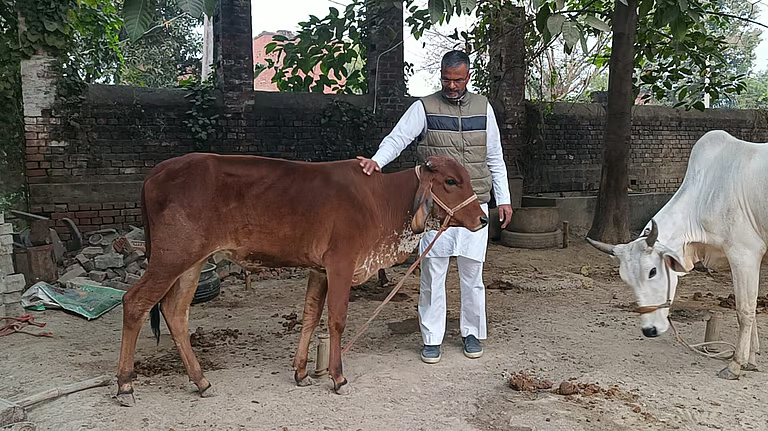
Naushad Ahmad Dubey tending to cows (Photo | Special arrangement)

Lucknow :

Dehri, a small nondescript village around 35-40 km from the Jaunpur district headquarters in eastern UP, is in the limelight for a rare phenomenon.

Dehri is predominantly a Muslim village with over 7000 Muslims and 5000 Hindus living together in perfect harmony for ages. Suddenly a new trend is emerging in the village. Around 70 Muslims of the village have added ‘Brahmin’ surnames to their names. However, they claim that they have not reconverted to Hinduism.

Naushad Ahmad of this village in Kerakat tehsil has drawn obvious attention when he mentioned his name as Naushad Ahmad Dubey on his daughter’s wedding card.

In the same village lives Pandey ji or Irshad Ahmad Pandey who stays just two houses away from Naushad Ahmad Dubey.

Many others like Naushad and Irshad are following the same practice by adding the surnames Mishra, Pandey, Tiwari to their names.

“We started this practice around two years back when we came to know about our genuine ancestry. We got to know that we all were Hindus who got converted many generations ago,” says Naushad Ahmad with a saffron stole around his neck.

He adds that on tracing his roots, he learned that his forefathers especially Lal Bahadur Dubey had converted to Islam eight generations back and became Sheikh.

“As people used to address the senior members of my family as ‘Panditji’, I was curious about my ancestry and lineage. My great-grandfather told me that eight generations back, our ancestor Lal Bahadur Dubey of Rani ki Sarai had arrived in Dehri and purchased a ‘Zamindari’ from Hazari Singh. When he came here, he had already converted to Islam,” says Naushad mentioning that his quest to know the conditions under which Lal Bahadur embraced Islam is still on.

“After getting the information about my ancestry, I decided to put my original surname ‘Dubey’ with my name,” says Naushad who now has turned into a Gau Bhakt and Gau Sewak (cow caretaker). However, no one else in his family has added Dubey’s surname.

Similarly, Ehtesham Ahmad of the same village claims that he also has Hindu lineage. “My ancestors were also Brahmins but I have not added their surname to my name yet,” he says, adding that many Muslim men have started using other Brahmin surnames and have started tending the cows. Dehri gram Pradhan (village head) Farhan says that he traced his ancestors four generations back and learned that they were Hindus.

Similarly, Abdullah Sheikh is now Abdullah Sheikh Dubey, Mohammad Gufran is now known as Thakur Gufran and those with Sayyad as surname are now Shandilya.

They all follow Islamic practices but go to the temple as well to pay obeisance to Hindu deities. They follow the holy Quran but also take part in aarti at the village temple.

However, many of their relatives have yet to be convinced about adding Hindu surnames to their names. Sheikh Mariam Siddiqui, a relative of Naushad Ahmad Dubey, feels that her name is her identity and there is no need to change it.

Naushad Ahmad Dubey feels others should also trace their roots and connect with them by adding their original surnames to their present names.

“These surnames like Sheikh, Pathan, Sayyad and Mirza are not our original surnames. These have been brought in by foreigners. We have not come from Afghanistan or Gulf. I cannot say under what conditions our ancestors had to convert to Islam but we can always use our original surnames to strike a harmonious chord with our Hindu brothers and live peacefully. This will also strengthen the nation,” says Israr Ahmad who also uses the surname Dubey.

When asked if he believed in Lord Ram, Naushad says he does, as Lord Ram is not only a Hindu deity but a symbol of India’s spiritual prosperity, a uniting factor.

source: http://www.newindianexpress.com / The New Indian Express / Home> Nation /by Namita Bajpai / December 10th, 2020

AMU Junior Resident Doctor Bags Best Paper Award at National Event in Mumbai

Aligarh, UTTAR PRADESH :

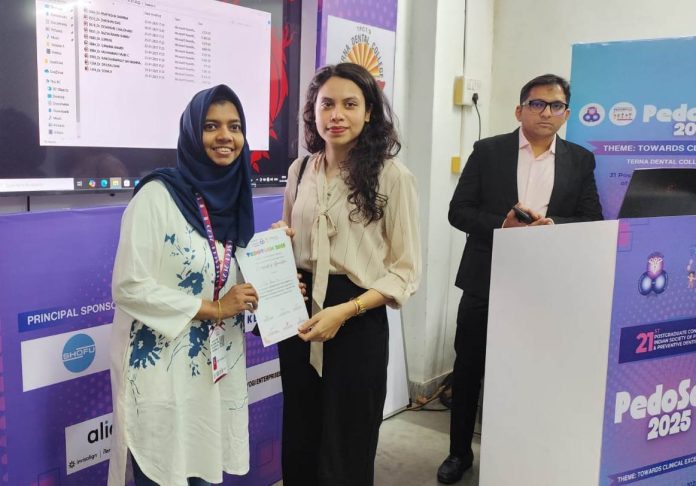
Dr. Fasna K receiving the best paper award at Mumbai

Aligarh:

Dr. Fasna K, a Junior Resident-III in the Department of Pediatric and Preventive Dentistry, Dr. Z.A. Dental College, Aligarh Muslim University got the Best Paper Award at the 21st National Postgraduate Convention of the Indian Society of Pedodontics and Preventive Dentistry (PedoSoch 2025), held in Mumbai, recently.

Her Guide, Prof Saima Yunus Khan, Chairperson of the department congratulated Dr. Fasna on the achievement.

source: http://www.radiancenews.com / Radiance News / Home> Pride of the Nation> Awards> Latest News / by Radiance News Bureau / February 05th, 2025
Eradicating books from our lives will never be possible: Abul Bashar

Murshidabad, WEST BENGAL :

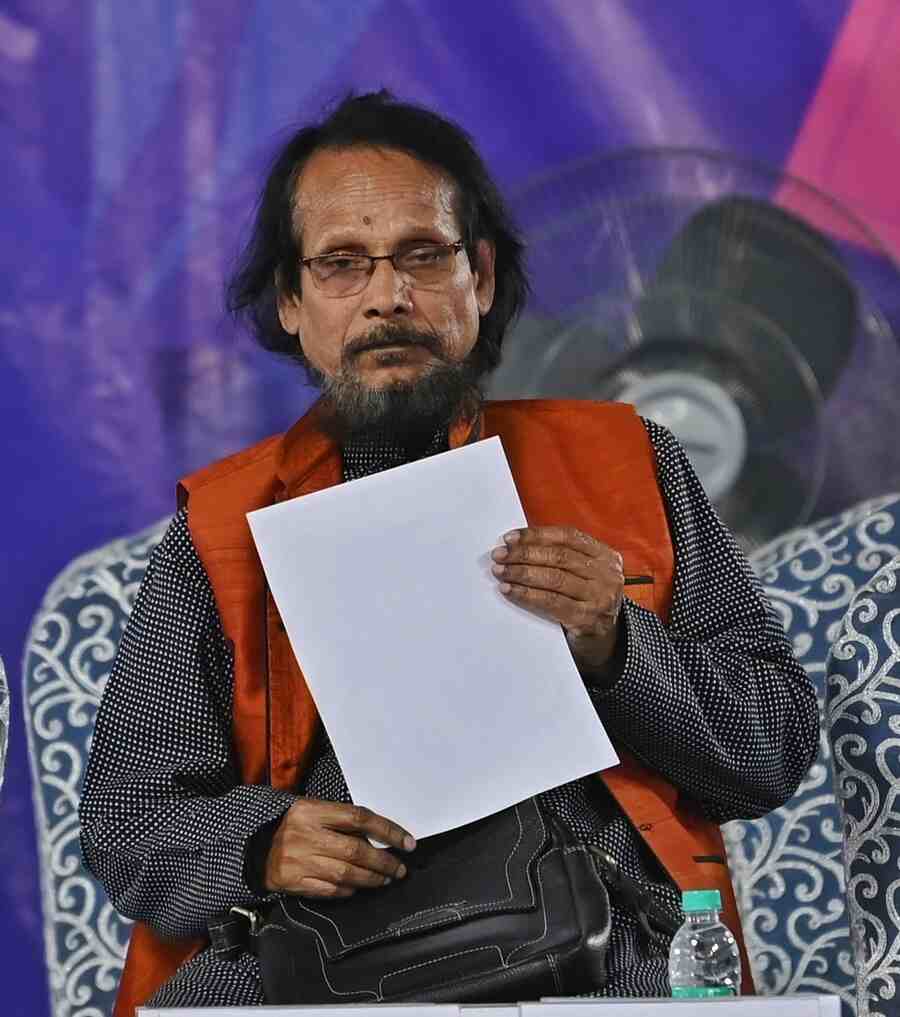
The award-winning Bengali author talks about his books, development of minority communities, Kolkata Book Fair, social media, and more.

Abul Bashar — the author of ‘Agnibalaka’ and several other popular titles — is one of the prominent voices documenting the lives of minority communities in Bengal / Wikimedia Commons

Born in Murshidabad at a time when the zilla’s literacy rate was 12.9 per cent, it was an uphill battle for Abul Bashar to not just educate himself but also to live his dream of becoming an author.

With 40 books to his name, including popular titles such as AgnibalakaMarusvarga, Jol, Mati, Aguner Upakkhayan, and Dharmer Grahon, Bashar has documented the lives and issues of minority communities and socio-religious matters through his works. A recipient of top honours such as the Ananda Puraskar and Banga Bhushan, he was awarded the Guild Lifetime Literary Award in 2025 at the 48th International Kolkata Book Fair.

My Kolkata met Bashar at the boi mela for a conversation, discussing India’s evolution, the status of the Bengali Muslims, his career as an author, and more. Edited excerpts follow.

My Kolkata: India celebrated its 76th Republic Day this year. You were born in 1951. As an author who has been documenting the growth of society in his works, how do you see India’s evolution?

Abul Bashar: One thing that has been catching my attention is that the culture that comprises both Hindus and Muslims is in a state of dialectics and adjustment with the ‘Indian culture’. We have imbibed the virtues of Indian society, but there are a few aspects of Bengali society that do not marry well with the Indian society. This concerns me, because this is not how it was earlier. The incidents around the Babri Masjid and the Ram Mandir have changed the political diaspora of India.

It is now a global situation and not just confined to India. It is prevalent in the subcontinent that religious minorities are under attack. Civilisation is under threat, but this is not how it is supposed to be. The Indian Constitution speaks about equality towards minority communities, their representation in the power structure of the society, and a homogeneity of culture. These were the ideals of Rabindranath Tagore and Mahatma Gandhi. The lack of homogeneity in the culture is worrying me. Of course, the extent varies from place to place, but there are a few incidents that happen that make me feel imperiled.

In this country, the constitutional rights and duties of people from all walks of life are directly and intrinsically involved with the idea of democracy. India is a pluralist country where diverse religious identities and cultures cohabit in an interesting milieu, but this fabric is facing a push back.

You have written extensively on Bengali Muslims. What do you think of their current socio-religious status?

More than the religious identity, the Muslim community continues to be backward in terms of financial independence, and I give more importance to financial independence. One of the primary tenets of India is the growth of any backward community — be it among Hindus, Muslims, or any other community. The Constitution aims towards that.

The financial backwardness of the Muslim community has affected the education of modernism. It is difficult for a financially backward community to become modern. The State, thus, has to fulfill its responsibility towards removing this roadblock so that a symbiosis between community and modernism takes place.

I have not only written about the Muslim community, but also about the Hindu community. My novel, Maruswarga, can be termed — ekjon Bangali lekhoker Ihudi upanyash (a Bengali writer’s Jewish novel). My work is extensively based on various mythologies and the folk culture of Bengal, focusing on the baul-fakirs. There is a unique amalgamation of Buddhism and Islam in the bauls, which was evident through the life of Lalon Shah. My thoughts revolve around these aspects, and I want comprehensive development of the Muslim society through cultural amalgamation.

Through my books, I have addressed the religious superstitions and other roadblocks that can cause hindrance to the development of society.

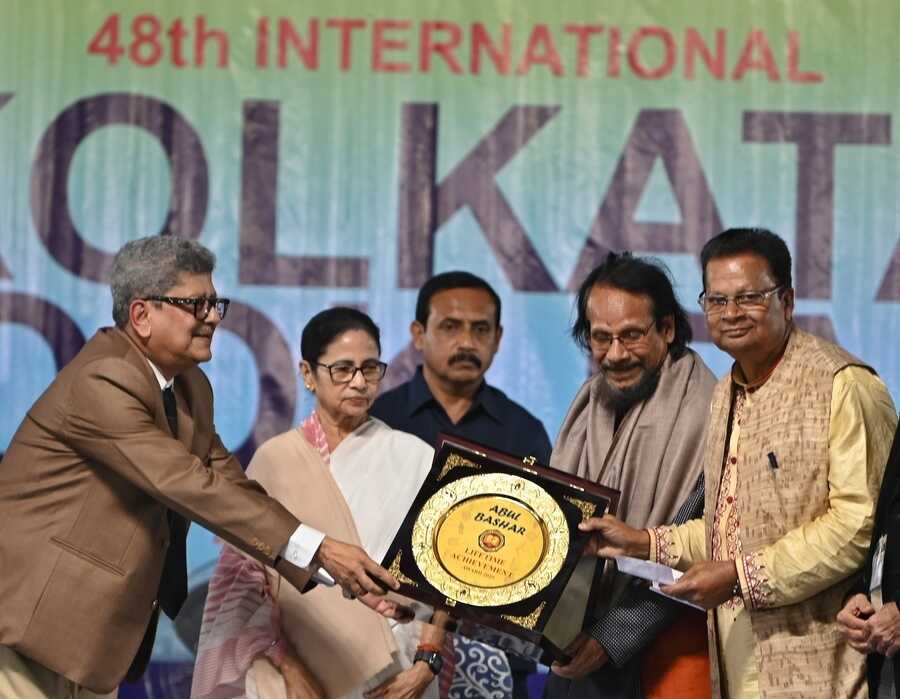
Abul Bashar was conferred the Guild Lifetime Achievement Award by chief minister of West Bengal, Mamata Banerjee, on January 28 at the inauguration of the 48th International Kolkata Book Fair / My Kolkata

Do you think awards and accolades you have received have made it easier for your voice to reach society?

No, absolutely not. In my initial days as an author, I found that the readerbase of my genre of writing in West Bengal was very constricted because I belonged from a backward society. I have had a readerbase in Bangladesh since the inception of my career. Here [in West Bengal], it has taken time, but a community of people who read my kind of writings have developed. My thought process, and my novels that are based on mythology have found an academic discourse, and a doctoral candidate from Murshidabad, did his PhD on my work at Jadavpur University.

What surprised me was that a member of the society that created barriers for me and refused to accept my words did a doctoral thesis on the mythical treatment in my literature as an academic discourse. Society has evolved, and the environment of the present times is removing roadblocks, making way for an educated middle-income strata that is progressive and free thinking.

From Agnibalaka to Bhor Poati Tara — how do you see your evolution as an author?

It is a journey that I made, I would say. I have been influenced by several thoughts at different points in my life. I was an activist of Leftist politics that was different from today’s times. Leftist politics was known as the politics of sacrifice. Agnibalaka’s protagonists, if you notice, are characters who do not conform to societal norms. They are free thinkers and are characters who have imbibed Marxism in order to elevate their lives. They are the voices of dissent against stigmas and stereotypes of society.

Agnibalaka is a political novel in which dialectical materialism among various stratas of the society as well as the dialectics in interpersonal relationships between two political parties is shown. The conflict between the social strata during the 19-month long Emergency period in India, and how Marxism could be brought into praxis — Agnibalaka is an experimentation on that.

However, I do not share the same thoughts today, and by this I mean that it has been removed from my life in some ways. I have not removed it from my life, but the ideology is gradually vanishing on a global scale. It is possible that my experiments or observations are incorrect, but in today’s time, this is how I see it.

When the world starts facing a situation like today in reference to Marxism, existentialism takes its course, and becomes a replacement and anti thesis for Marxism. Everyone is in a state of endangerment, and the very thought that society that was created for its residents, is now in oblivion. Social norms were made for the development of people, but development is not entirely dependent on norms. An excessive emphasis on following social norms has given rise to conflict between man and society. This was the reason behind the two World Wars. This has also given birth to existentialist literature, as well as poets like Jibanananda Das and Michael Madhusudan Dutta.

Abul Bashar at the Kolkata Book Fair, 2025 / My Kolkata

The Kolkata International Book Fair is one of the largest book fairs in the world. In a day and age when social media has diminished attention spans, how do you see the importance of book fairs?

Social media is not a replacement for books. There is no conflict between gadgets that we use on a regular basis versus books. Gadgets like phones are essential to attain information and gain knowledge, but literature is not just information. When we speak of literature, we usually refer to the written. But what about oral literature, which is a significant part of Bengali literature? The works of Lalon Shah, for instance, are originally songs and are kabya sahitya (poetry). Another example is Rabindrasangeet — a youngster, who is engrossed in his or her phone, is also a listener of Rabindranath Tagore’s music.

There is a trough and crest when it comes to readership, but eradicating books from our lives will never be possible — just like classical music, songs like Kaa Karu Sajni, or verses of Kabir. We have to increase our habit of reading because that will increase our creativity and strengthen our culture as well as inter-personal relationships. There is evolution in the publishing industry with the digitisation of books, which has increased the readerbase. And because of book fairs, there is a boost in the number of bibliophiles.

What is your next work?

I intend to go back to my zilla (Murshidabad) to work on a piece that would complete an unfinished novel.

source: http://www.telegraphindia.com / The Telegraph Online / Home> My Kolkata / by Pooja Mitra / February 02nd, 2025