RIFAH Chamber of Commerce and Industry successfully organized the International Business Networking Meet 2025 at the Galadari Hotel, Colombo, bringing together leading entrepreneurs and industry professionals from India, Sri Lanka, and Malaysia. The two-day event marked a major milestone in promoting bilateral trade, investment, and cross-border collaboration.
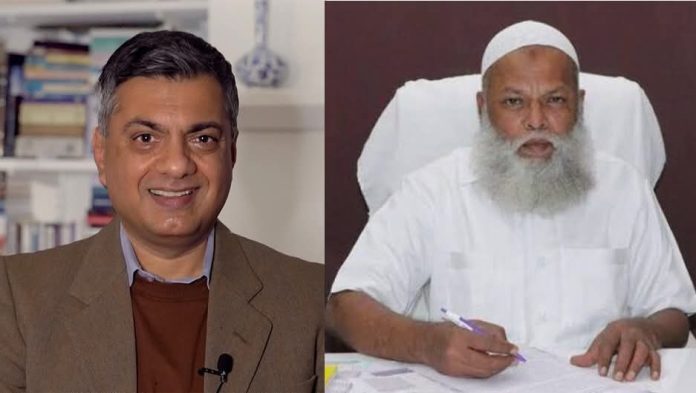
The event was inaugurated by Mr. Hanif Yosoof, Governor of the Western Province, Sri Lanka, who praised Rifah’s initiative in connecting business leaders and fostering ethical, growth-oriented entrepreneurship across regions.
Mr. Rifas Jabbar, Chairman of The Lanka Business Alliance, extended a warm welcome to all dignitaries and delegates, appreciating their participation in strengthening business relations between the two nations. The meet featured productive B2B networking sessions, market opportunity discussions, and presentations on trade facilitation and ease of doing business in Sri Lanka.
Mr. Afzal Baig, General Secretary of RIFAH, introduced the chamber’s vision and ongoing initiatives to expand international market linkages. The programme also saw contributions from various state representatives who shared insights on investment potential and collaborative ventures in multiple sectors.
As a gesture of goodwill, mementos were presented to key dignitaries including Mr. Hanif Yosoof (Governor, Western Province), Mr. Sudath Ja Jayasekara (Deputy Director, Investment Promotion Department), Mr. Aqthar Hussain (Expert in International Trade & Customs Affairs), and Major General (Retd.) Samantha Wickramasena (Secretary General, Ceylon National Chamber of Industries). The felicitation was led by Mr. Afzal Baig (General Secretary, RIFAH), Mr. Anees Mohammad (Head, International Department, RIFAH), Dr. Abdul Qadeer (Educationalist), and Mr. Yonus Sait (President, RIFAH Tamil Nadu Chapter).
The event, organized in collaboration with The Lanka Business Alliance, served as a vital platform to strengthen India–Sri Lanka business relations, encourage joint ventures, and build a network of entrepreneurs committed to sustainable, ethical, and globally integrated trade practices.
source: http://www.indiatomorrow.net / India Tomorrow / Home> World Affairs / by India Tomorrow / October 10th, 2015
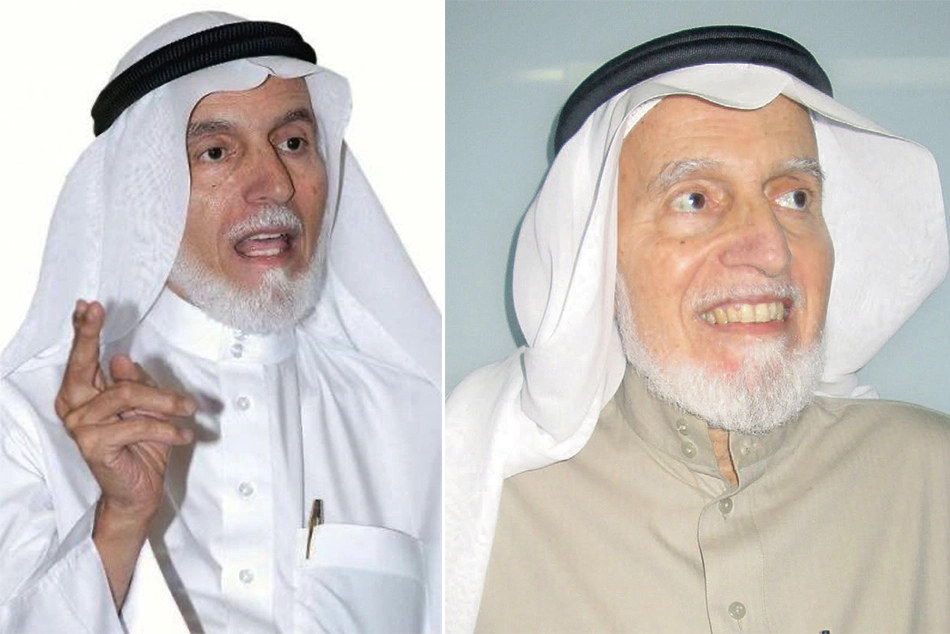
Former Chief of Muslim World League, President of King Abdulaziz University and the brain behind a number of key projects and initiatives, including the exemplary Hajj crowd management system, Dr. Abdullah Omar Naseef breathed his last aged 86 in Jeddah on Sunday October 12, 2025.
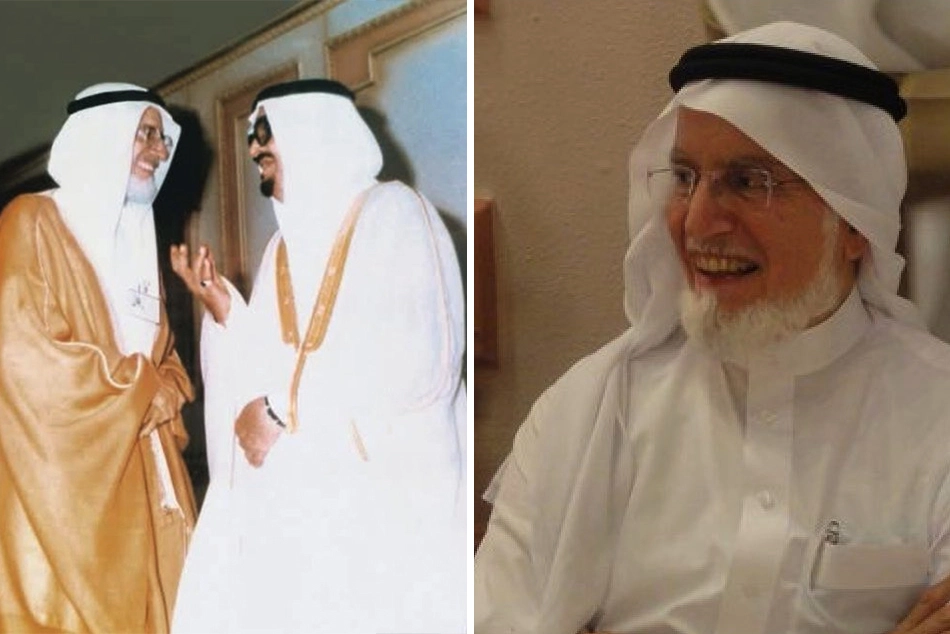
Dr. Abdullah Omar Naseef with King Fahd
Dr. Abdullah Omar Naseef is no more. Former Chief of Muslim World League, President of King Abdulaziz University and the brain behind a number of key projects and initiatives, including the exemplary Hajj crowd management system, Dr. Abdullah Omar Naseef breathed his last aged 86 in Jeddah on Sunday October 12, 2025.
Dr Abdullah Omar Naseef’s funeral prayer was offered at Al-Juffali Mosque after Asr prayer Sunday. He was later buried at Al-Assad Cemetery in Jeddah.
Dr. Abdullah Omar Naseef was born in Jeddah in 1939. During his long career, Dr Abdullah Naseef held several key positions and also served as Secretary General of the Muslim World League (MWL) and Chairman of World Muslim Congress.
As Secretary General of the Muslim World League from 1983-1993, he extensively travelled all across the world to study the conditions of Muslim minorities and solve their problems.
Dr Abudllah Omar Naseef in Malegaon
Dr. Abdullah Omar Naseef receiving King Faisal Award
During the same period, he visited Malegaon on May 01, 1992 leading an extraordinary delegation of Muslim scholars and Arab dignitaries.
After arrival in Mumbai by air, Dr Naseef travelled to Malegaon by road with Maulana Mukhtar Ahmed Nadvi, renowned Islamic Scholar, Founder of Jamia Mohammadia Mansoora Malegaon, former Vice President of All India Muslim Personal Law Board (AIMPLB) and his host in Malegaon.
“A huge crowd had gathered on the two sides of the road from Girna Bridge to Jamia Mohammadia Mansoora to greet Dr Naseef and the members of his delegation”, Abdul Qayyum Faizee, General Secretary of Jamiat Ahle Hadees Maharashtra at that time, told ummid.com.
“Qari Abdus Samad led the crowd, standing along the Malegaon-Manmad Road and repeating the chants of Ahlan w Sahlan Marhaba to greet Dr Naseef and other guests”, Abdul Qayyum Faizee recalled.
“The grand welcome was indeed heart-warming for the onlookers as well as the visiting guests”, he added.
Abdul Qayyum Faizee said after offering Friday prayers at Masjid Ayesha Al Duaij in Mansoora, Dr Naseef and his delegation took a tour of Malegaon and also visited Jamiatul Huda.
“During his day-long visit to Malegaon, Dr Abdullah Omar Naseef’s focus of discussion was the social, educational and economic empowerment of Muslims”, he recalled.
Dr Abudllah Omar Naseef’s Mumbai and Bhiwandi connection
Dr Abudllah Omar Naseef’s mother was sister of Islamic Scholar Maulana Abdus Samad Sharafuddin. Abdus Samad Sharafuddin was a publisher of Islamic books, owning a printing press in Bhiwandi and a book shop in Mumbai. Sharafuddin and Sons at Mumbai’s iconic Mohammad Ali Road is still a one stop shop for rare books.
Maulana Abdus Samad Sharafuddin had formidable connections with Mumbai’s elites. When Saudi King Saud bin Abdulaziz visited Bombay in 1955, on his way to Jama Masjid Ahle Hadees Mominpura, he suddenly asked his convoy to halt at Abdus Samad Sharafuddin’s home.
“His visit to Maulana Abdus Samad Sharafuddin’s home was unscheduled and hence left the local security personnel puzzled”, Abdul Qayyum Faizee recalled.
King Saud’s visit to Dr Naseef’s maternal uncle Maulana Abdus Samad Sharafuddin’s home in Mumbai is reminiscent of the special relation Dr Naseef and his family had with the Saudi Royal family.
Dr Abdullah Omar Naseef’s Contributions
After completing primary education, Dr Naseef obtained bachelor’s degree in Chemistry from King Saud University in 1964. He was holder of a doctorate degree in Geology from the University of Leeds in 1971. He started his career as a Teacher first at King Saud University in Riyadh and then at King Abdulaziz University in Jeddah. He continued to rise through the academic ranks, until becoming a Professor and later appointed as the President King Abdulaziz University. He was also a fellow of the Geological Society of London and the Geological Society of America.
Dr Naseef also served as Chief Scout and member of the Board of Directors of the Saudi Arabian Boy Scouts Association, which he joined in 1956. Later, he served as President of the International Union of Muslim Scouts and member of the World Scout Committee.
Besides serving as the Secretary General of the Makkah-based Muslim World League, Dr Naseef also held several key positions – both in Saudi Arabia and abroad. His contributions were highlighted in the Islamic Relief Project, known as “Sanabel Al-Khair,” which aims to save the poor masses in the far reaches of the Islamic world from poverty, ignorance, and disease. He represented Saudi Arabia in several international conferences and forums, defending Islamic causes and calling for dialogue and understanding between peoples and religions.
Dr Naseef later also served as Vice President of the Saudi Shoura Council and carved his niche as a model of wisdom, broad vision, and service to the national interests. The positions held by Dr. Naseef include vice chairman of the Saudi National Dialogue Committee for 10 years, Secretary General of the International Islamic Council for Call and Relief from 2008 to 2019, Chairman of the Board of the International Islamic Relief Organization in 2000, President of the World Muslim Congress, Vice Chairman of the Saudi National Dialogue Committee for 10 years, and President of the Abdullah bin Omar Nassif Charitable Foundation.
Among the Arab and international positions that he held include Member of the Board of Trustees of the University of Dar es Salaam in New Mexico, the Islamic American College in Chicago, the Royal Moroccan Academy, the Islamic Academy in Cambridge, and Vice President of the International Islamic University in Islamabad. He chaired the Boards of Trustees of the Islamic Cultural Center in Geneva, the Institute for the History of Arabic and Islamic Sciences at the University of Frankfurt, the Islamic Cultural Center in Sydney, the International Islamic University in Chittagong, Darul Ihsan University in Bangladesh, and the Islamic University in Niger.
British-Pakistani writer Ziauddin Sardar in his book “Desperately Seeking Paradise: Journeys of a Sceptical Muslim” has described at length how Dr Abdullah Omar Naseef was instrumental in fomalising a system to manage crowd during Hajj, the annual ritual when over 2 million Muslims from around the world throng the Two Holy Cities – Makkah and Madinah.
Dr. Naseef was awarded with the King Faisal Prize for Service to Islam in 1991 and the King Abdulaziz Medal of the First Class in 2004. In 1983 Nasseef was awarded the Bronze Wolf, the only distinction of the World Organization of the Scout Movement, awarded by the World Scout Committee, for exceptional services to world Scouting.
Condolences
Condolences are pouring in from all across the world after the demise of Dr Abdullah Omar Naseef.
“The Departure of a Man Who Shaped a Civilization and Human Presence for Muslims Across the Globe”, Faid Mohammed Said, University Professor and a Member of the European Council for Muslim Leaders, said condoling the death of Dr Naseef.
“A great friend of the UK Muslim community”, the Muslim Council of Britain (MCB) in its condolence message on the passing of Dr Abdullah Omar Nassef.
In his condolence message, The Mufti of Uganda, Sheikh Shaban Ramadhan Mubaje, paid tribute to the late Dr. Abdallah Omar Naseef, recognising his key role in rebuilding and strengthening the country’s Muslim community in the 1980s and 1990s.
“One of the finest persons lived in Saudi Arabia. May Allah be pleased with the departed”, Dr Khaled Almaeena, Former Editor in Chief Arab News and Saudi Gazette, paid tribute to Dr Abdullah Omar Naseef in these words.
[With inputs from Saudi Gazette. The writer, Aleem Faizee, is Founder Editor of ummid.com. Aleem Faizee has also worked as Researcher at Tata Institute of Social Sciences (TISS) and with Action Aid for its research work published as “BROKEN PROMISES -A study on the socio-economic status of Indian Muslims: Seven years post Sachar”. Aleem Faizee’s research work “Mollywood: The Rise and Fall of a Subaltern Cinema” is part of the book “Creative Industries in India” published by Routledge India of Taylor and Francis Group, London. A prolific writer, Aleem Faizee has also worked with The Times of India and The Milli Gazette as Freelance Journalist for over 10 years. Aleem Faizee is also a Social Entrepreneur and heads Malegaon Industries and Manufacturers Association (MIMA) and Samara’s Education and Welfare Association (SEWA)]
source: http://www.ummid.com / Ummid.com / Home> Obituary / by Aleem Faizee / October 13th, 2025
A carrom spot alive at Banne Pahelwan Ki Gali in Itwara
From gossip, rumours, history buff, election campaign to latest trends, in times of AI, Bhopal’s Patiabazi is still a major spot for discussion, debates where many politicians including former President of India Dr. Shankar Dayal Sharma and hockey legend, Aslam Sher Khan cut their teeth on these patias.
Foods served during Patiyabazi
Bhopal :
For 62-year-old businessman Abdullah Bhopali, visiting Iqbal Maidan every evening is akin to a sacred ritual. After a long, tedious day, the maidan lightens his heart and rekindles his mood.
For over 40 years, Abdullah has been a regular at this public space, originally called Khirniwala Maidan, renamed as Iqbal Maidan after the legendary Urdu poet Allamah Iqbal. Iqbal spent six months in Bhopal across four visits before India’s Independence, composing many of his iconic poems here. Once a private leisure courtyard for Bhopal’s Nawabs, Iqbal Maidan, nestled near the Upper Lake in the walled city, stands as a testament to the city’s 300-year-old history.
Every evening, Abdullah settles on a patia—a rectangular stone slab measuring about 4×2 feet—alongside friends, engaging in hours of lively conversation.
Over cups of Namak Wali Chai (salted tea) and cigarettes, these Patias are not bound by time or age. They start off in the late afternoons and go late into the night. Endless discussions covering everything from a hectic work day to politics, and Bhopal’s storied past. They reminisce about the city’s golden era, the unsung bravery of the Nawabs, their soldiers and exchange local gossip.
“Patiyabazi is a mental diet for Bhopalis like us,” says Abdullah. “It’s our primary source of news, political updates, and historical lessons and anecdotes. But administrative actions are weakening this tradition.”
Patiyabazi, is a quintessential Bhopali tradition that traces its roots to the Nawab era. The term patia refers to the stone or brick platforms placed outside tea shops, homes, or public spaces, serving as informal gathering spots.
Gauhar Mahal night.
When the source of entertainment was scarce during the Nawab period, people used to gather outside their houses or public spaces after the dinner, converging on these patias sipping tea, playing chess or carom, and debating over the city’s pressing issues.
Over time, this practice solidified into a cultural cornerstone, becoming a social lifeline for Bhopalis. The tradition of Patiyabazi thrives as a vibrant cultural practice in Bhopal despite the growing urbanization and modernization.
Urdu literature, and books like Shayam Munshi’s Sirf Nakshe Kadam Rah Gaye and others vividly capture the essence of Patiyabazi, chronicling its role as a social institution. In 2015, two short plays were also designed over the age-old tradition by a city play writer Rafi Shabbir that were staged in the city’s Bharat Bhawan.
Bhopal’s Patiabazi is akin to Kolkata’s Roker Add. Older houses across Kolkata’s landscape are attached to the building — a sort of a porch, popularly known as rowak or rok, reserved for adda.
The adda is a gathering of friends and acquaintances for a session of non-stop conversation with topics ranging from day-to-day problems and anecdotes to local or global politics or sports. They indulge in long conversations over endless cups of tea, sometimes coffee, and a few cigarettes. An adda can be indoors or (preferably) outdoors, and beyond the college campus and office, the locations for these addas have evolved over the years.
Like Kolkata’s rowak adda, Iqbal Maidan remains as a vibrant hub for Patiyabazi unlike Chatori Gali, Char Batti Chowk, Jahangirabad, Ibrahimpura and others which didn’t survive with the time of rapid urbanization in the name of smart city.
“After dinner, people flock to these public spaces, spend hours discussing the freedom movement, social issues, and Bhopal’s welfare over tea and cigarette,” says Rafi Shabbir, who wrote two-plays on Patiyabazi.“Sometimes, these patias transformed into mushairas or ghazal ke mahfil.”Every mohalla (neighborhood) in the old city boasts its own patia spot, each with its distinct flavor of discussion. For example, Ibrahimpura’s patia was renowned for spirited debates on politics and hockey, while Maktaba Sharkia’s was a haven for conversations about art, culture, and literature.
Bhopalis enjoying Patiyabazi at Banne Pahelwan Ki Gali around 12 pm
These gatherings have long been more than casual meetups; they’ve shaped Bhopal’s social and political landscape.
Many of Bhopal’s politicians and social activists cut their teeth on these patias, says Rizwan Uddin Ansari, a city historian.
He explained, former President of India Dr. Shankar Dayal Sharma, former MP K.N. Pradhan, Communist Party leader Shakir Ali, and hockey legend, Aslam Sher Khan often frequented Najja Dada ka Patia, engaging in fiery debates over politics and international affairs that drew crowds. The discussions were so influential that Nawabs stationed spies at these patias to gauge public opinion.
“At Najja Dada ka Patia, an intelligence officer was tasked to check conspiracies against the ruler,” says Ansari. “During local elections, candidates would visit these spots to campaign, engaging directly with voters to sway opinions.”
Historian Rizwan recalls a time when a woman wrestler from Haryana visited Bhopal, sparking animated discussions at a patia. “It was a hot topic,” he says, “especially when women’s rights were still a struggle.”
These conversations often transcended gossip, addressing societal shifts and shaping public discourse. Even today, the old city’s streets like Banne Pahelwal Ki Gali in Itwara, Qazi camp, hum with the clatter of carrom boards and chess games, as men gather to keep the tradition alive, sometimes, till dawn.
This tradition, however, is only confined to some pockets of the walled city. Those shifted to new Bhopal, long for it like a 45-year-old political activist Jawaid Beg.
Beg moved to new Bhopal near Airport Road to meet his family’s growing demands. Yet, he drives 10 kilometers to Iqbal Maidan many times a week to partake in this centuries-old ritual. “Although it’s impossible to go to Iqbal Maidan every night because of workload, sitting on the patia, with friendsmakes me feel alive,” he says. “All my worries vanish.”
The modernization, however, has posed challenges to Patiyabazi. Between 2000 to 2010, the government removed patias from outside homes, citing beautification and encroachment concerns. In the later years, district administration, detached from local traditions, began dispersing crowds from these public spaces after 11 pm labeling Patiyabaaz as nightwalkers. The administration argues that since section 144 CrPC (now Section 163 BNS) is in place, it’s important to disburse the crowd to maintain ‘law and order’ in the city.
Gohar Mhal night.
As a result, the tradition has waned among younger generations, who are drawn to modern distractions like mobiles, games, OTT platforms, social Apps and others getting detached to the city’s tradition and history.
For the younger generation, tea joints are new Patia spots and scooty and bikes become the new Patia.
These spots attract younger Bhopalis, particularly those under 40, who are reimagining the tradition. “Scooty and bikes have become the new patias for the youths,” says Saad Iqbal, a 35-year-old businessman, who runs a dry fruit shop in Jumerati locality of walled city. He sits at a tea joint near Royal Market with friends till late night after closing the shop at 11:30 pm.
For the younger generation, these tea joints offer a space to discuss everything from vacation plans to shopping trips at the nearby market, often while playing mobile games like PUBG. This blend of old and new keeps the spirit of Patiyabazi alive.
At Budhwara Chowk’s patia, 25-year-old car mechanic Bhura Khan unwinds after a grueling workday. “A cup of tea with carrom sets the mood,” he says, surrounded by friends. “The gossip keeps us informed and makes us laugh.”
Gohar Mahal, another popular spot, draws youngsters with its scenic lake views, where they enjoy snacks and tea. Qazi camp, Aishbagh, Bagh Dilkusha are some of the popular spaces for Patiyabazi.
Patiyabazi is more than a pastime; it’s the heartbeat of Bhopal’s community. It bridges generations, from Nawab-era chess matches to modern-day PUBG sessions.
For Bhopalis, patias are more than stone slabs—they are living monuments to Bhopal’s enduring spirit, where stories are shared, friendships are forged, and the city’s soul is kept alive.
source: http://www.muslimmirror.com / Muslim Mirror / Home> Art & Culture> Exclusive Reports / by Kashif Kakvi / September 26th, 2025
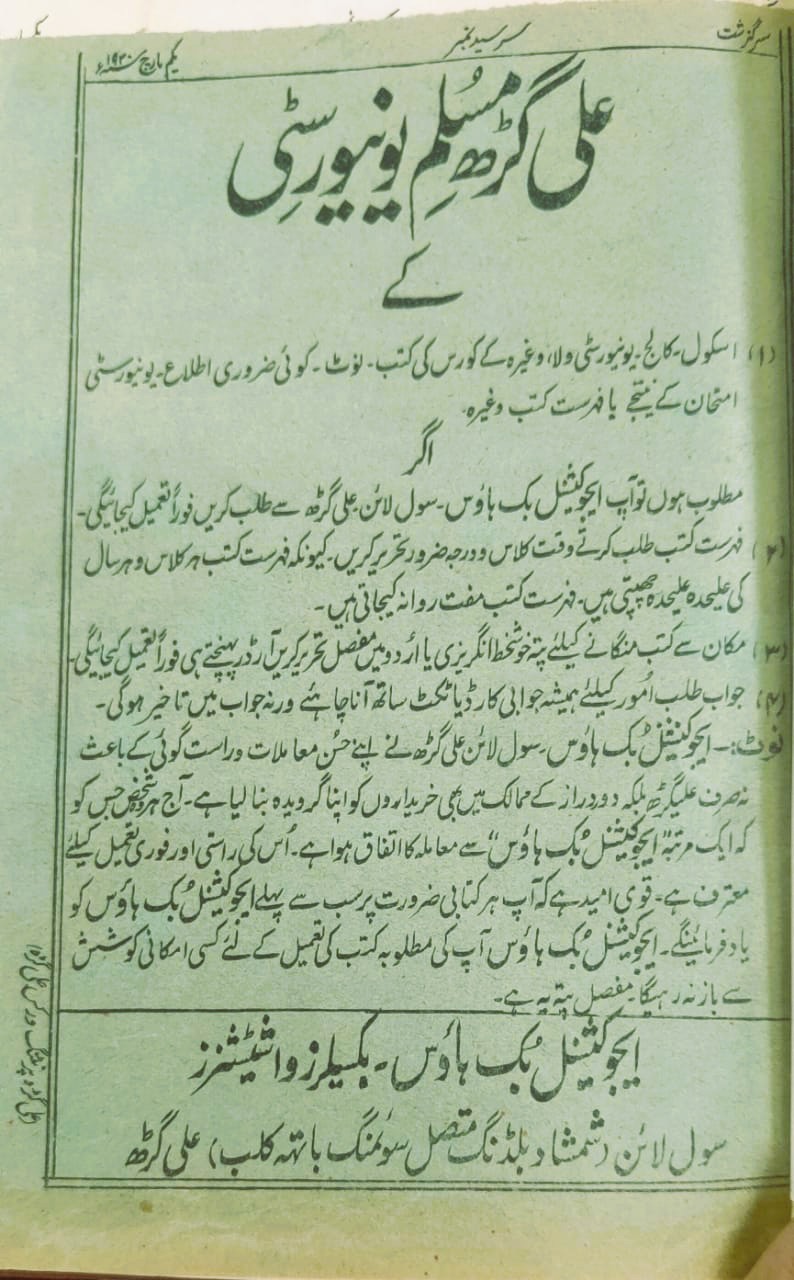
Responding to this need, Abdul Shaheed Khan, an alumnus of MAO College Aligarh from Meerut, opened a small stationery shop in 1925, named this establishment “Educational Book House”, marking the beginning of a new chapter in Aligarh’s literary landscape.
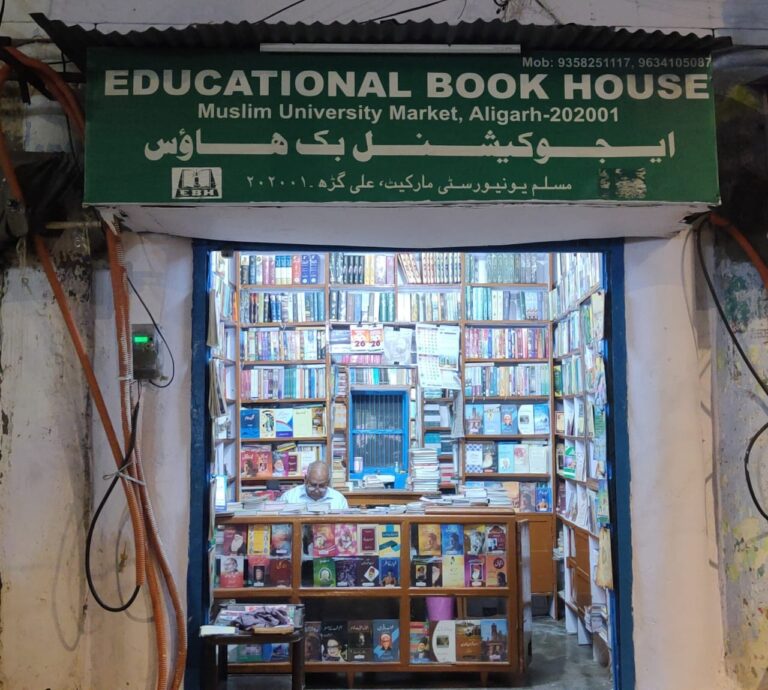
Aligarh Muslim University, renowned as a beacon of knowledge and service to the nation, has nurtured multiple institutions dedicated to education and culture since its inception. Among these, the Educational Book House (EBH) stands out as a distinguished establishment, symbolizing a century of dedication to the dissemination of literature and learning.
Established in 1925, EBH is more than an ordinary bookstore; it holds a revered position among bibliophiles, scholars, and literary circles both nationally and internationally. Over the past hundred years, EBH has played a pivotal role in spreading the literary and academic works of Aligarh across a broad audience, ensuring its legacy endures today. Its contribution to the development and promotion of Urdu language and literature is of profound importance in the history of book publishing
Historical Roots of Book House at Aligarh:
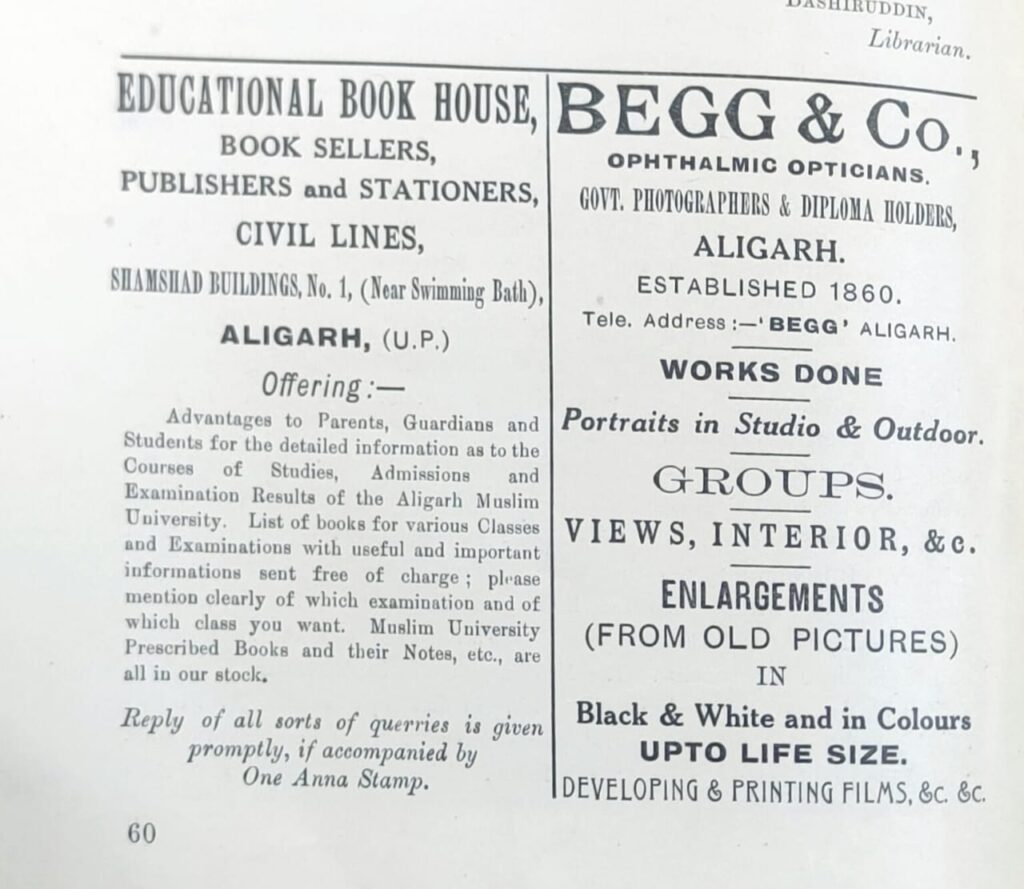
The story of Book house in Aligarh is intertwined with the visionary efforts of Sir Syed Ahmad Khan (1817-1898) and his pioneering movement to elevate Muslim education in India. As early as 1888, Sir Syed aimed to establish a bookstore in Aligarh to serve the students and teachers of his educational institutions. He launched a campaign to establish a bookstore in Aligarh and even raised funds for this purpose. An advertisement in the Aligarh Institute Gazette dated 7th July 1888 announced the opening of a bookshop: “Aik Tijarti Dukan Kitabon aur Stationary yani Saman Nosht wa Khwand Kay Farokht Ke Aligarh Mein” – a commercial shop for books and stationery in Aligarh. (see AIG, 7th July 1888)
This initial venture was called the “College Book Depot” which quickly became a vital hub for literature, academic materials, and stationary. It functioned as a bridge connecting scholars, students, and the wider community, fostering a culture of learning and intellectual curiosity in Aligarh. The original depot thrived under the stewardship of Mir Wilayat Hussain (1862-1949) but faced decline after his retirement in 1920, eventually closing down. (see Aap Beeti ya MAO College Ke Kahani, Mir Wilayat Hussain Ki Zubani, Sir Syed Academy, Aligarh, 2024, p.126).
The Birth of EBH
The establishment of Aligarh Muslim University in 1920 created a renewed demand for a dedicated bookstore that could cater to the needs of students and faculty alike. Responding to this need, Abdul Shaheed Khan (1898-1968), an alumnus of MAO College Aligarh from Meerut, opened a small stationery shop in 1925 near Fuller Road, close to Tasweer Mahal. He named this establishment “Educational Book House”, marking the beginning of a new chapter in Aligarh’s literary landscape. His vision was to provide affordable and accessible academic books and stationery, supporting the educational aspirations of students and teachers.
Abdul Shaheed Khan, Founder EBH
Moving to Shamshad Market:
In 1928, Sahibzada Shamshad Ahmed Khan (1888-1954), son of eminent educationist and vice-chancellor of AMU, Sahibzada Aftab Ahmed Khan (1867-1930), built a bustling commercial complex known as “Shamshad Building” in civil line Aligarh near AMU. This market was designed to serve the needs of the university community and local residents, housing shops for tailoring, groceries, milk, bread, bicycle repairs, and more. A mosque was also constructed within the complex, serving as a spiritual and community center.
Recognizing the importance of proximity and accessibility, Sahibzada Shamshad Ahmed Khan requested Abdul Shaheed Khan to relocate EBH to this new marketplace. The bookstore shifted there in 1929, anchoring itself within a vibrant hub of activity. This move significantly increased EBH’s visibility and accessibility, making it a central point for students and scholars seeking academic and literary materials.
The Aligarh Magazine (1929-30) praised Shamshad Market as a vital institution, emphasizing how it simplified the lives of students by providing essential books and stationery close to their place of study. In an editorial note, editor write:
“The Shamshad building has undoubtedly rendered an invaluable service to the student community of the University, for all the requirements of the students are to be found in the shops contained in the building and they have no more to worry themselves by running down to the city to fetch even the most ordinary things of everyday use. Sahibzada Shamshad Ahmad Khan deserves the thanks of all those whose life has been made easy and pleasant by the erection of this splendid building and we most cordially congratulate him on this.” (see Editorial Notes, Aligarh Magazine, 1929-30, p.11)
According to renowned historian Prof. Iftikhar Alam Khan, in his authoritative work “Muslim University Ki Kahani, Imarton Ke Zubani 1920 to 1947”, the Shamshad Building was constructed in 1929 at a cost of Rs. 30,000, financed by Sahibzada Shamshad Ahmed Khan’s mother. The building housed 18 shops, including EBH, and was a bustling center of commercial and cultural activity.
EBH’s shop within this complex charged the highest rent—Rs. 31—indicating its prominence and importance in the market. Its strategic location made it an essential resource for students, teachers, and literary enthusiasts, solidifying its reputation as a hub of education and culture. (See “Muslim University Ki Kahani, Imarton Ke Zubani 1920 to 1947”, EBH, Aligarh, 2006, pp. 161-165)
Early Contributions to Literature and Publishing:
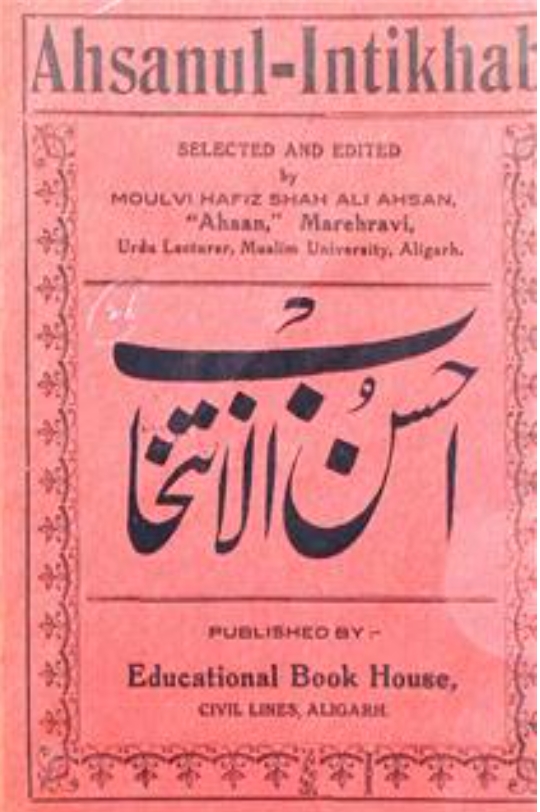
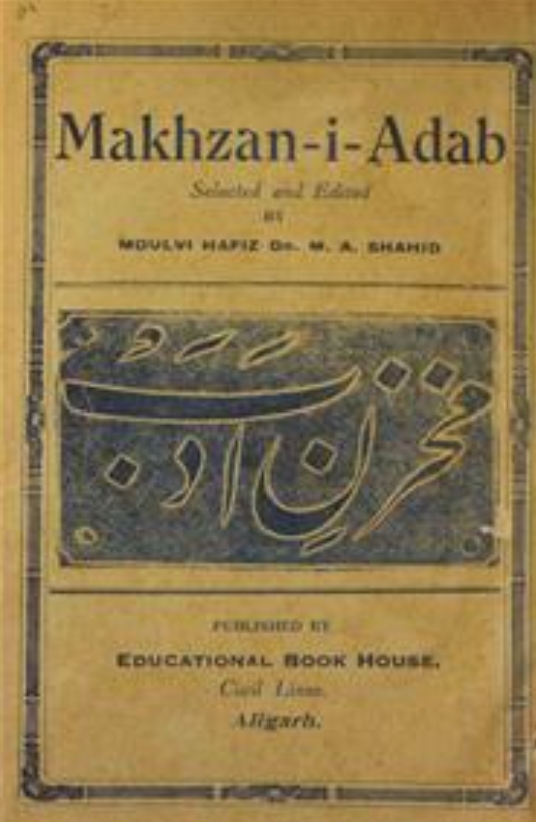
Even before India’s independence, EBH distinguished itself as a publisher committed to a broad spectrum of subjects. Unlike many publishers focused solely on literature or religion, EBH ventured into publishing works on children’s psychology, social sciences, philosophy, history, linguistics, and sciences. Its publications catered to the academic community and the general public, fostering a culture of knowledge dissemination. Notable early publications included: “Kainat Adab” by M. A. Hameed Alig (1935) editor Nazara Meerut, “Ahsan-ul-Intikhab’’ by Ahsan Marehrawi, “Makhzan Adab” by M. A. Shahid, “Sukhna Nau”, “Husn-e-Intikhab’’ by Abdul Jaleel Kidwai, “Delhi Ka Ek Madar Akhiri Mushaira” by Mirza Farhatullah Beg, “Dastan Rani Ketki Aur Kanwar Uday Bhan Ki” by Syed Inshallah Khan Insha, “Bachhon Ki Tarbiyyah” by Musarrat Zamani, “Al-Aqeedah Al-Hasna” by Molvi Sham and Maulana Abdussalam etc.
These works reflected EBH’s commitment to educational and literary growth, providing resources that supported scholarly pursuits and cultural development.
Post-Independence Challenges and Resilience:
The partition of India in 1947 was a tumultuous period that resulted in massive migrations and upheavals. Many families left their ancestral homes, but Abdul Shaheed Khan chose to remain in Aligarh. His son Asad Yar Khan says that just after independence many of his father’s relatives and friends asked him, he also migrate to Pakistan, but Professor Rashid Ahmed Siddiqui and Dr. Aale Ahmad Suroor advised him to continue his work from here, thus his father put this idea out of his mind.
His dedication ensured that EBH continued serving the community, moving from Shamshad Market to the Conference Market in 1951 to accommodate expanding operations.
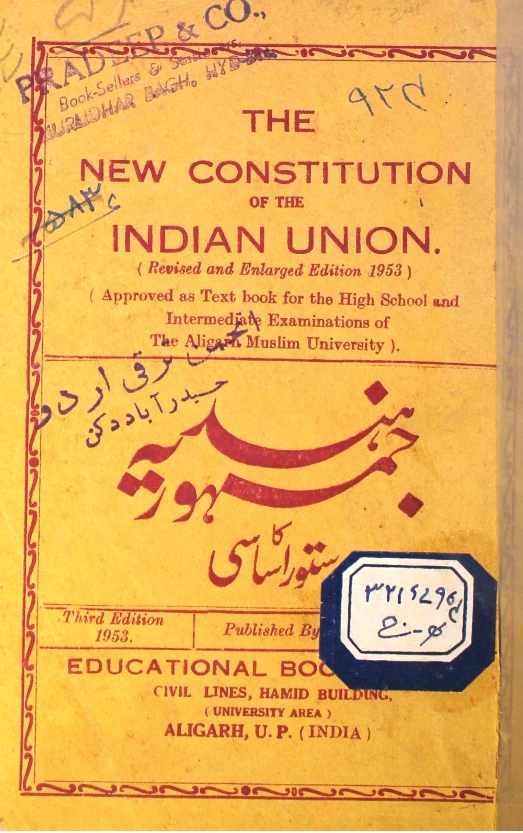
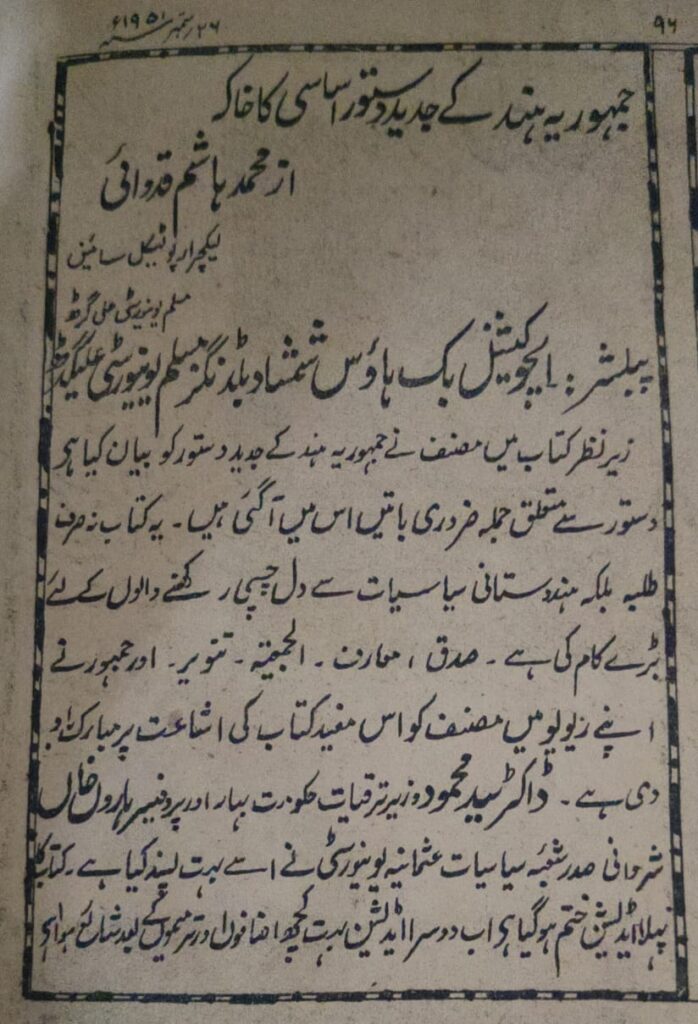
In this period, EBH expanded its publishing activities further. It published influential titles on Indian politics and governance, including Dr. Hashim Kidwai’s“Jhamooriya Hind” (1951), which analyzed India’s political system and constitution. Apart from Jhamooriya Hind, some of his titles are: Mubadiat Ilm Madniat (1951), Duniya Ke Hukoomatain(1961), Mubadi Siyasiyat (1971), Tareekh-e-Afkar siyasi (1982), Usool-e-Tammaddun, Usool-e-Siyasiyat (1988).
An Advertisements of book highlighted the importance of such works for students, scholars, and policymakers appeared in Weekly Jhamoor Aligarh dated 26th December 1955 states:
“In the book under consideration, the author has described the modern constitution of the Republic of India, all the essential things related to the constitution have been included in it. This book has done a great job not only for students but also for those interested in Indian political science. Sadq, Maarif, Jamiyat, Tanveer and Jamhur in their reviews congratulated the author for publishing this useful book. Dr. Syed Mahmood, Minister for Development, Government of Bihar, and Professor Haroon Khan Sherwani, Head of the Department of Political Science, Osmania University, have liked it very much.”
Supporting Urdu Education and Literature:
A vital aspect of EBH’s mission was promoting Urdu language and education. The bookstore provided textbooks for institutions such as Jamia Osmania, Hyderabad, Aligarh Muslim University and Jamia Urdu, Aligarh and collaborated with teachers from Aligarh Muslim University to develop curricula that emphasized Urdu literature and linguistics.
This support helped to sustain and foster Urdu’s growth as a language of scholarship and culture across the region.
Asad Yar Khan
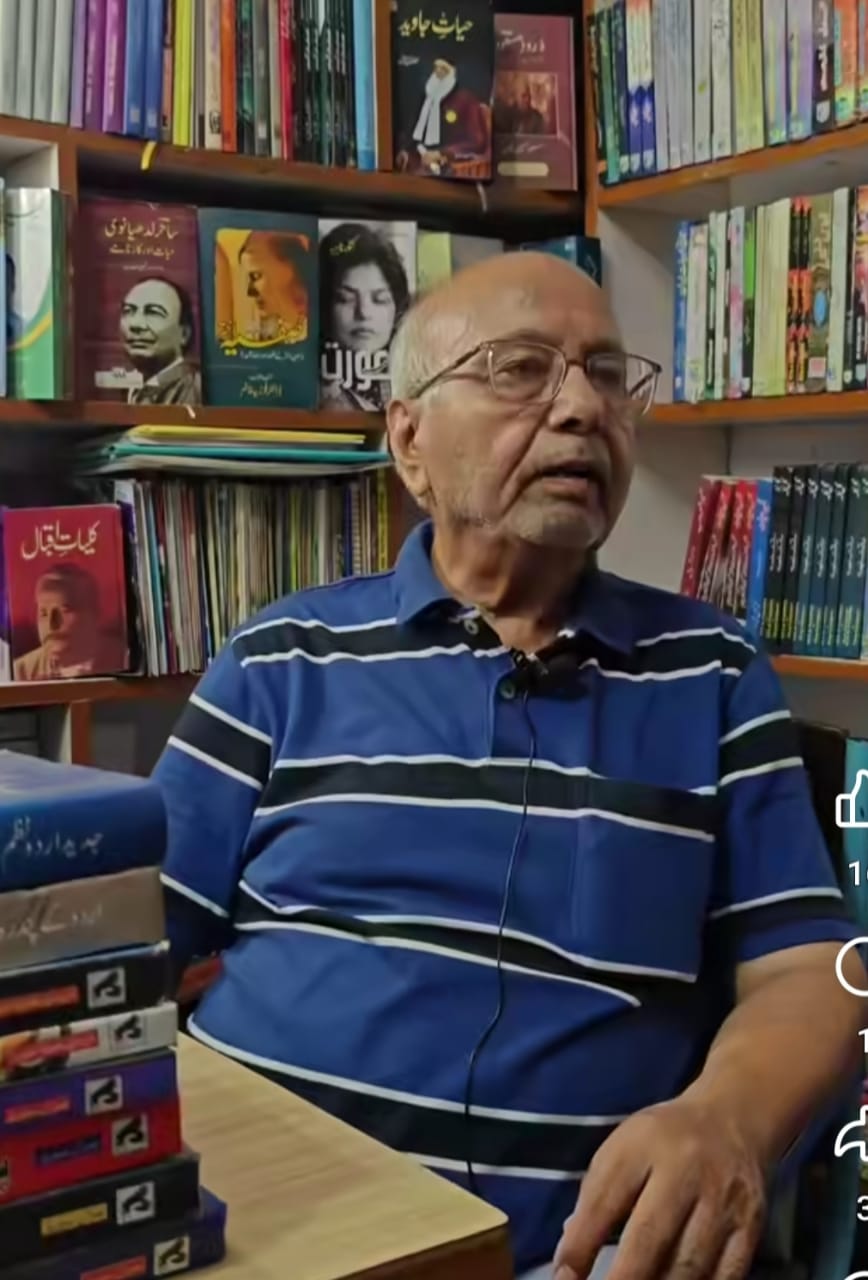
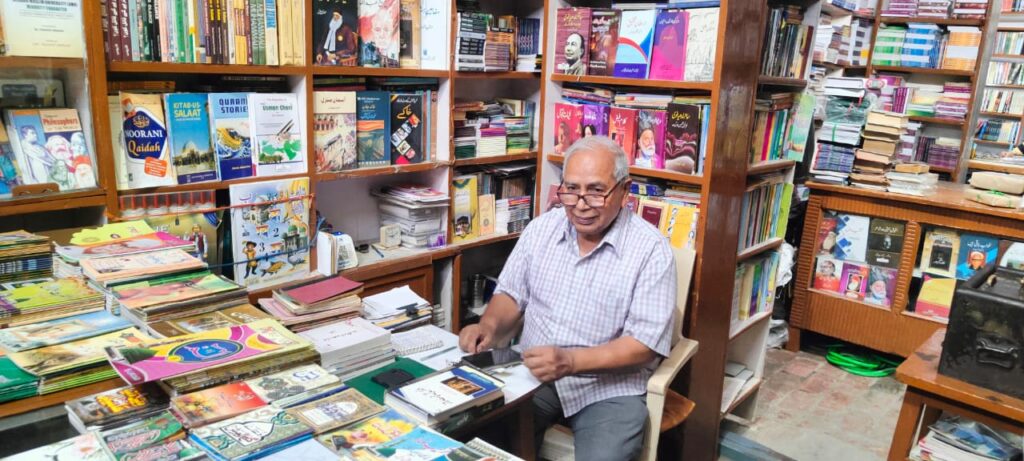
Following the death of Abdul Shaheed Khan in 1968, his sons, Asad Yar Khan (b. 1941, famously known as Kaptan Sb. as he served the Captain of Horse Riding in AMU several years) and Ahmed Saeed Khan (b.1948, affectionately Bhayya of all known people), inherited the legacy. Under their leadership, EBH grew into one of the most respected Urdu publishing houses in the subcontinent. They enhanced the quality of printing, expanded their catalog to include works of eminent poets, scholars, and political thinkers.
Ahmed Saeed Khan
Works of Prominent literary figures such as Iqbal, Faiz Ahmed Faiz, Khalifa Abdul Hakeem, and Ghulam Sarwar published and promoted through EBH, significantly contributing to the Urdu literary renaissance.
It also published works of Wazir Agha, Abu Lais Siddiqui, Hassan Askari, Masood Hussain Khan, Akhtar Ansari, Syed Abdullah, Khaliq Ahmed Nizami, Muhammad Hashim Kidwai, Vaqar Azeem, Majnoon Gorakhpur, Ateeq Ahmad Siddiqui, Ibadat Barelvi, Raza Ali Abidi, Qurratul ain Haidar, Aal-e-Ahmad Suroor, Khurshid-ul-Islam, Abdul Qadir Sarwari, Waheed Quraishi, Athar Parvez, Zaheer Ahmad Siddiqui, Khadeeja Mastoor, Ziauddin Alvi, Abdul Mughni, A.A. Hashmi, Rasheed Hasan Khan, Masood Hasan Khan, Masood Hassan Rizvi, Shaharyar, Manzar Abbass Naqvi, Mirza Khalil Beg, Abul Kalam Qasmi, Iftikhar Alam Khan, Asghar Abbas, Surraya Hussain, Sagheer Afrahim etc.
The Literary Magazine “Alfaaz”: A Cultural Milestone:
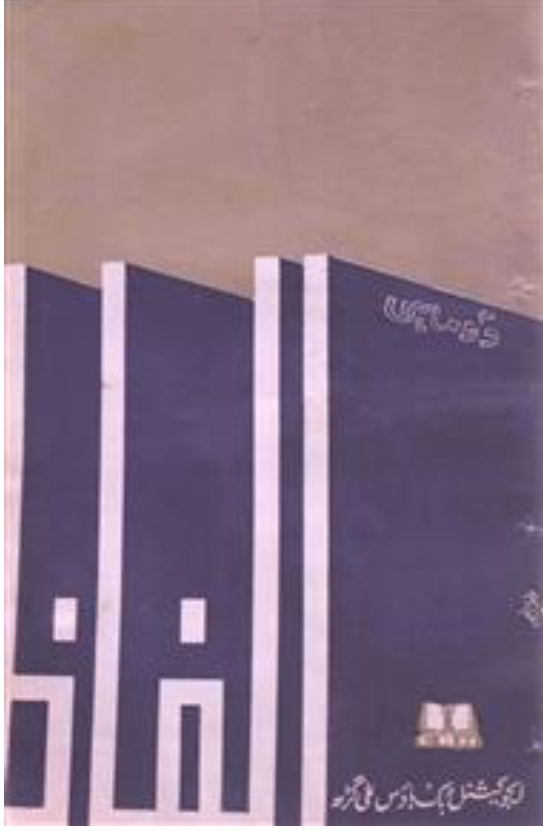
In 1975, Asad Yar Khan launched “Alfaaz”, a literary magazine dedicated to Urdu literature. Edited initially by Abul Kalam Qasmi, Alfaaz became a vital platform for poetry, literary criticism, and cultural dialogue. It provided a space for emerging writers and established intellectuals to exchange ideas, debate, and showcase their work.
The magazine’s editorial board included notable scholars such as Khurshid-ul-Islam, Khalil-ur-Rehman Azmi, and Naseem Qureshi. Over nearly two decades, Alfaaz played an essential role in nurturing Urdu literature, fostering new talent, and preserving the cultural heritage of Urdu language and thought.
Personal Reflections:
The author’s personal association with EBH began in 1995, when as a seventh-grade student, he first visited the bookstore to buy storybooks and magazines. Over the years, this relationship deepened, leading to interactions with notable scholars, poets, and literary figures, including Professor Hashim Kidwai, Professor Mushir-ul-Hasan, Professor Qazi Abdul Sattar, Manzoor Hashmi, Professor Abul Kalam Qasmi, Qurban Ali (BBC Hindi), Tariq Hasan (Prominent Journalist), Mirza Masood Beg (Prominent Linguists) and many others.
In 2016, EBH published the author’s book on Aligarh’s journalism, “Aligarh Ke Urdu Sahafat”, a testament to their ongoing support for young writers and scholars.
Celebrating a Century of Service:
Today, as EBH celebrates its hundred years of existence, it stands as an integral part of Aligarh’s intellectual and cultural heritage. The dedication and honesty of Late Abdul Shaheed Khan and later his sons have made EBH a symbol of Urdu literature’s resilience and growth. Their efforts to promote Urdu, support education, and foster literary excellence have left an indelible mark on the Urdu circle.
A Legacy for the Future:
It is hoped that EBH continues to serve as a beacon of literary and educational excellence, nurturing new talents, publishing significant works, and promoting the Urdu language. As it celebrates a century of remarkable service, the entire community extends heartfelt congratulations and best wishes for its future endeavours.
The Educational Book House’s journey over the past hundred years stands as a shining example of dedication to knowledge, culture, and language. Its legacy is a reflection of the enduring power of literature to unite, educate, and inspire. May EBH continue to flourish and illuminate the path of learning for many more generations to come.
source: http://www.heritagetimes.in / Heritage Times / Home / by Dr Asad Faisal Farooqui / July 27th, 2025
Veteran Urdu journalist Abdul Wahed Farooqui has been honoured with the Maharashtra State Urdu Sahitya Academy Award for his outstanding contribution to Urdu journalism. The award, presented by the Department of Minority Affairs, recognises his long-standing commitment to promoting Urdu language and literature through the press.
Farooqui has been editing an Urdu weekly since 2014, shaping public opinion through thoughtful commentary and consistent coverage of social and cultural issues. Colleagues and readers describe him as a voice of balance and integrity in Urdu media. His work has strengthened the role of Urdu journalism in highlighting issues affecting the community and preserving linguistic heritage.
At the award ceremony held in Mumbai, officials praised his dedication to nurturing young journalists and maintaining high editorial standards. The honour reflects growing recognition of Urdu journalism’s importance in sustaining India’s literary diversity.
Farooqui’s recognition also highlights the evolving role of minority-language media in today’s digital environment. Despite challenges such as limited funding and readership competition, Urdu publications continue to serve as a bridge between communities, preserving both cultural and linguistic identity.
The Maharashtra Urdu Sahitya Academy Award is one of the state’s top honours for contributions to Urdu language, literature, and journalism. Farooqui’s selection reaffirms the value of responsible journalism rooted in linguistic and cultural commitment.
source: http://www.radiancenews.com / Radiance News / Home> Latest News> Report / by Radiance News Bureau / October 14th, 2025
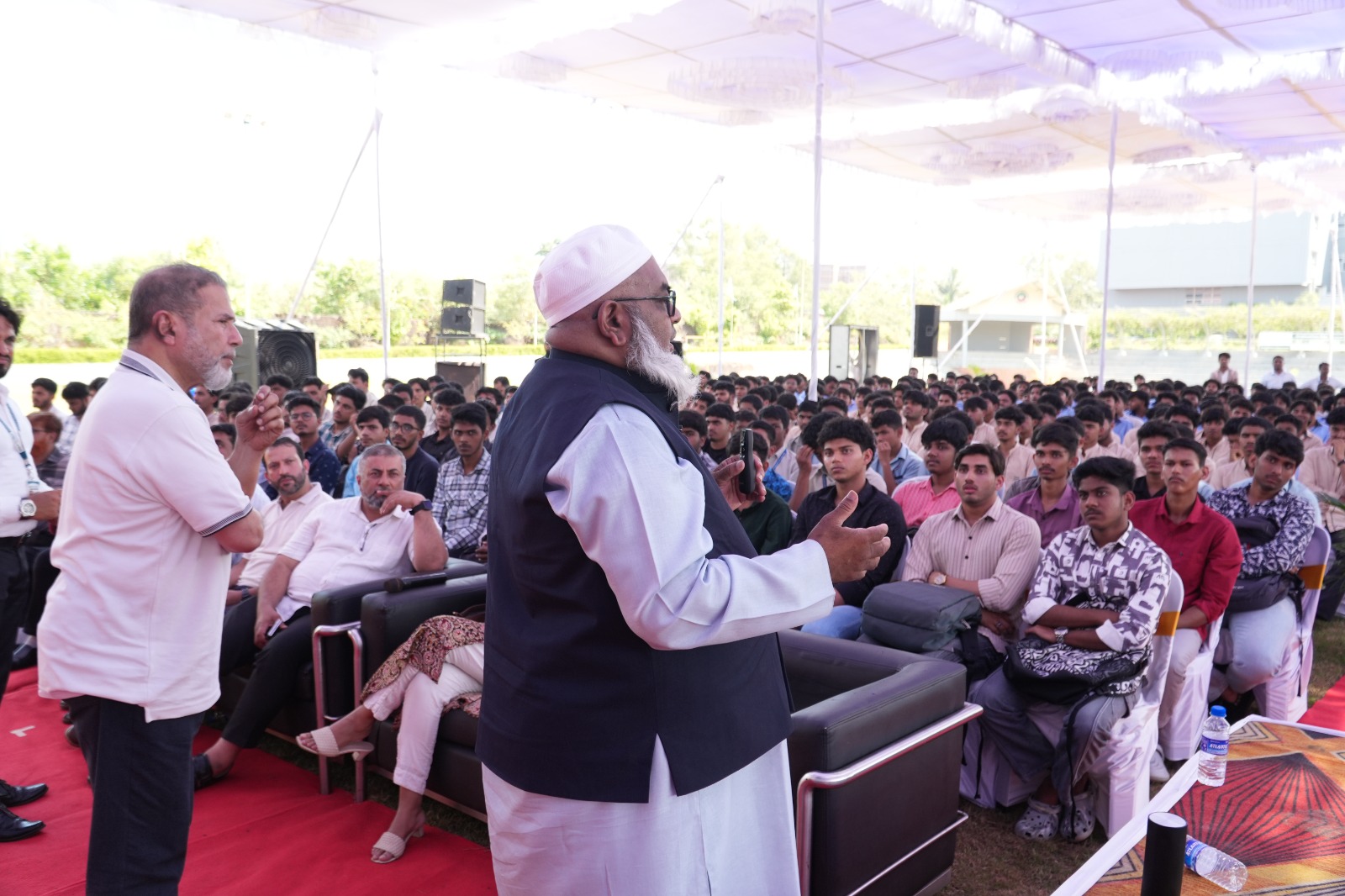
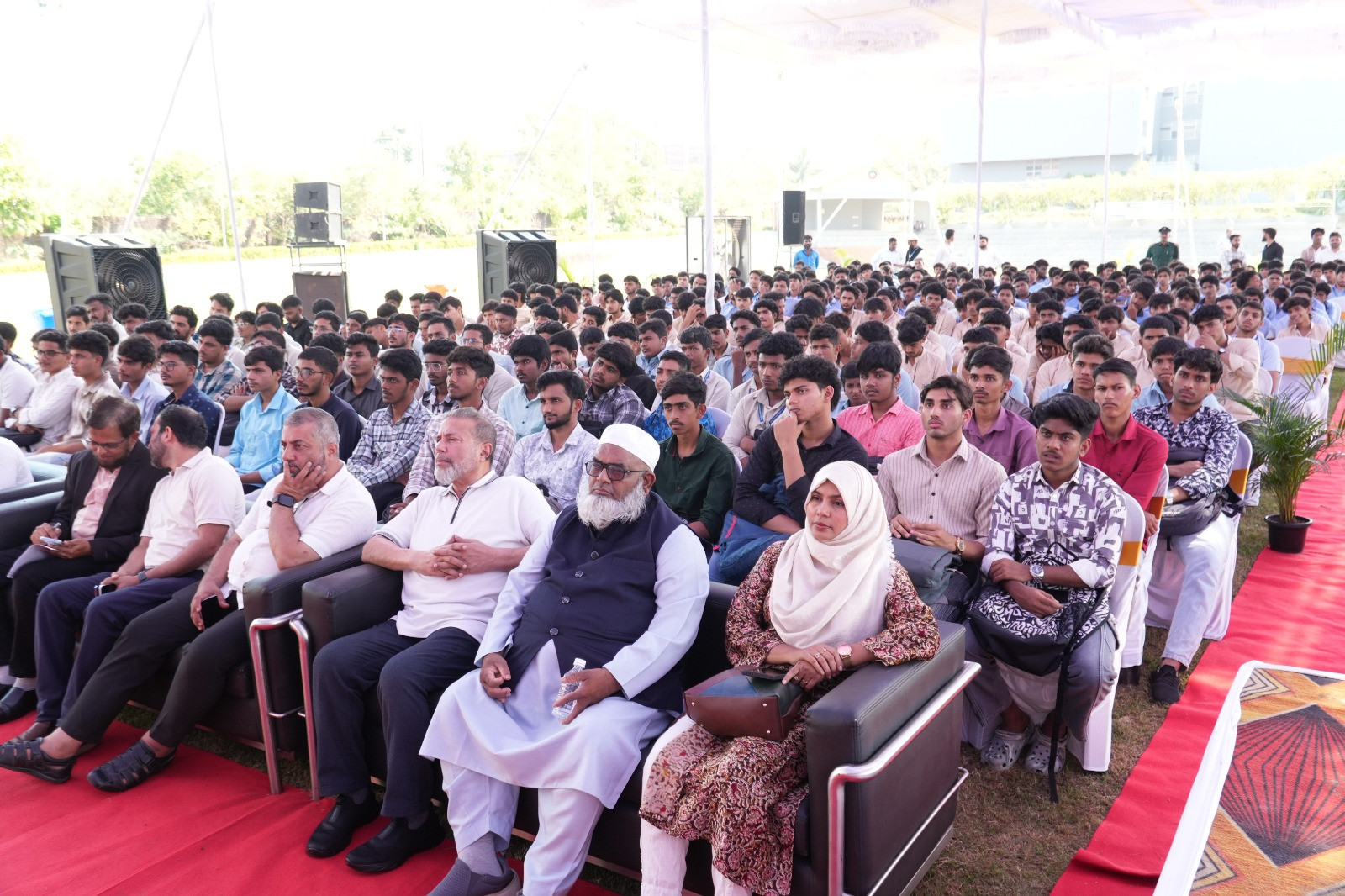
A career guidance session titled “Exploring Careers in Defence: Opportunities and Preparation” was held at Bearys Academy of Learning (BAL), Bearys Knowledge Campus, Innoli, on Sunday, October 12, 2025. The programme aimed to guide and motivate students from diverse academic streams to explore career opportunities in the Indian defence services.
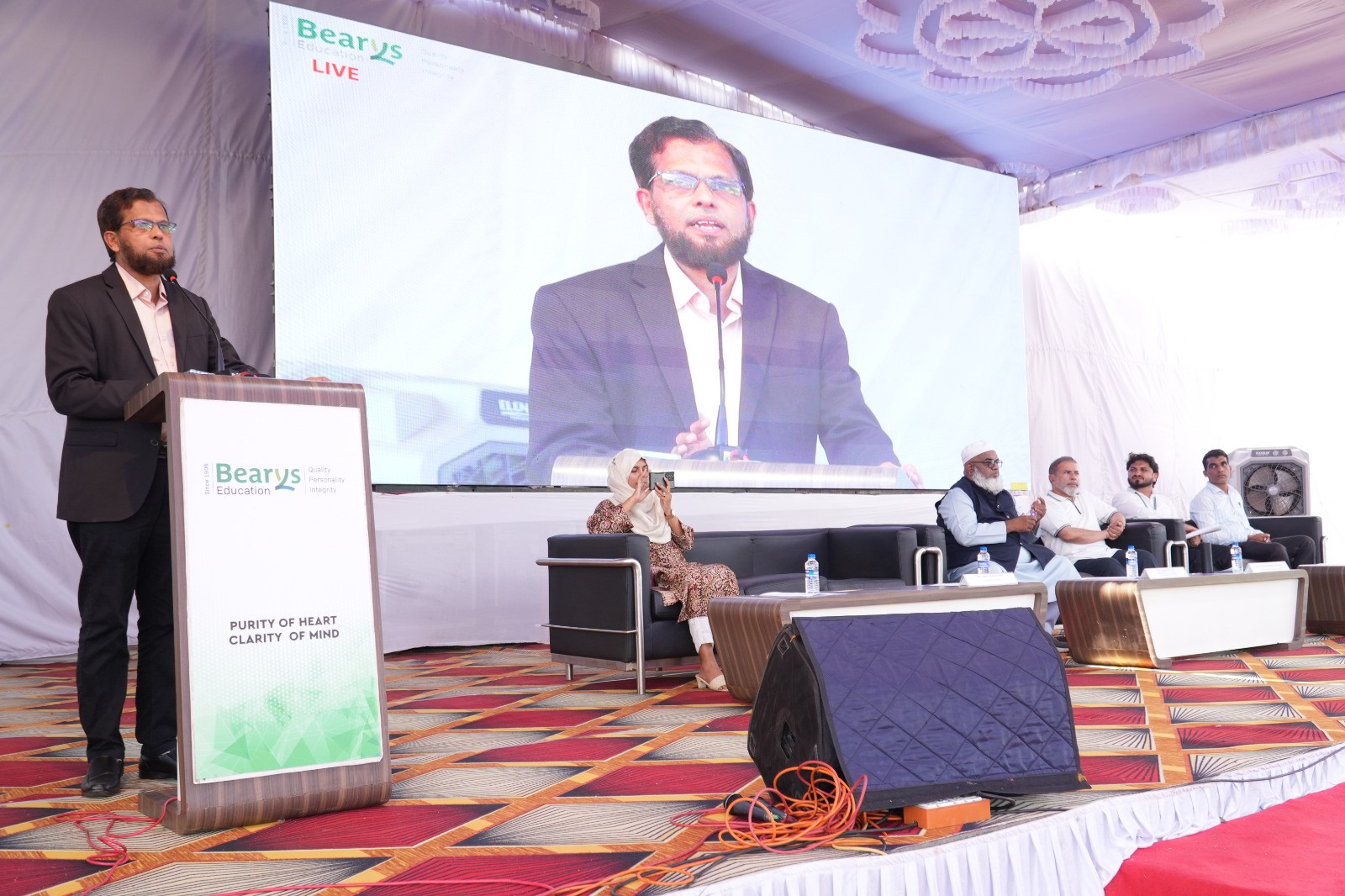
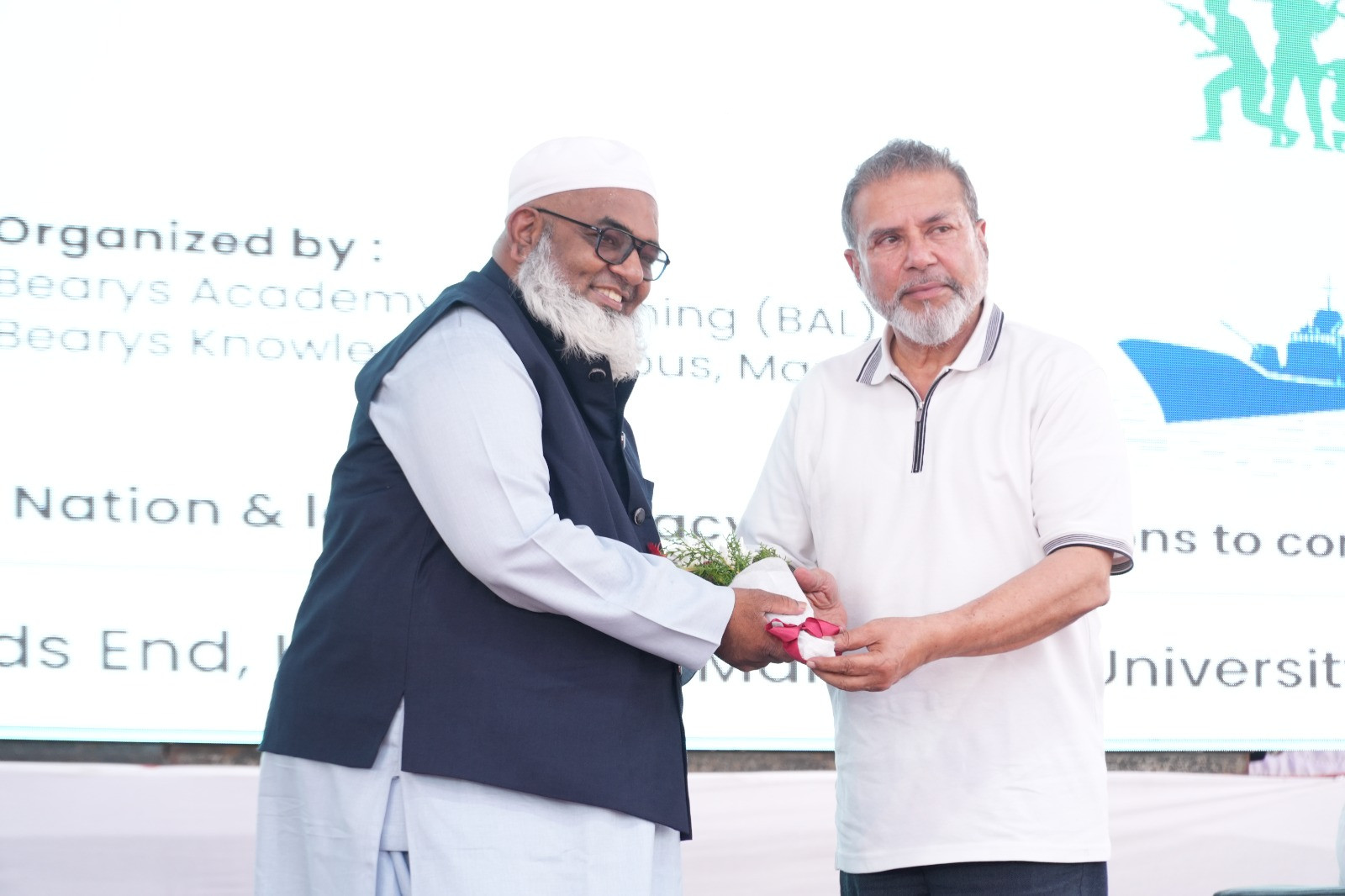
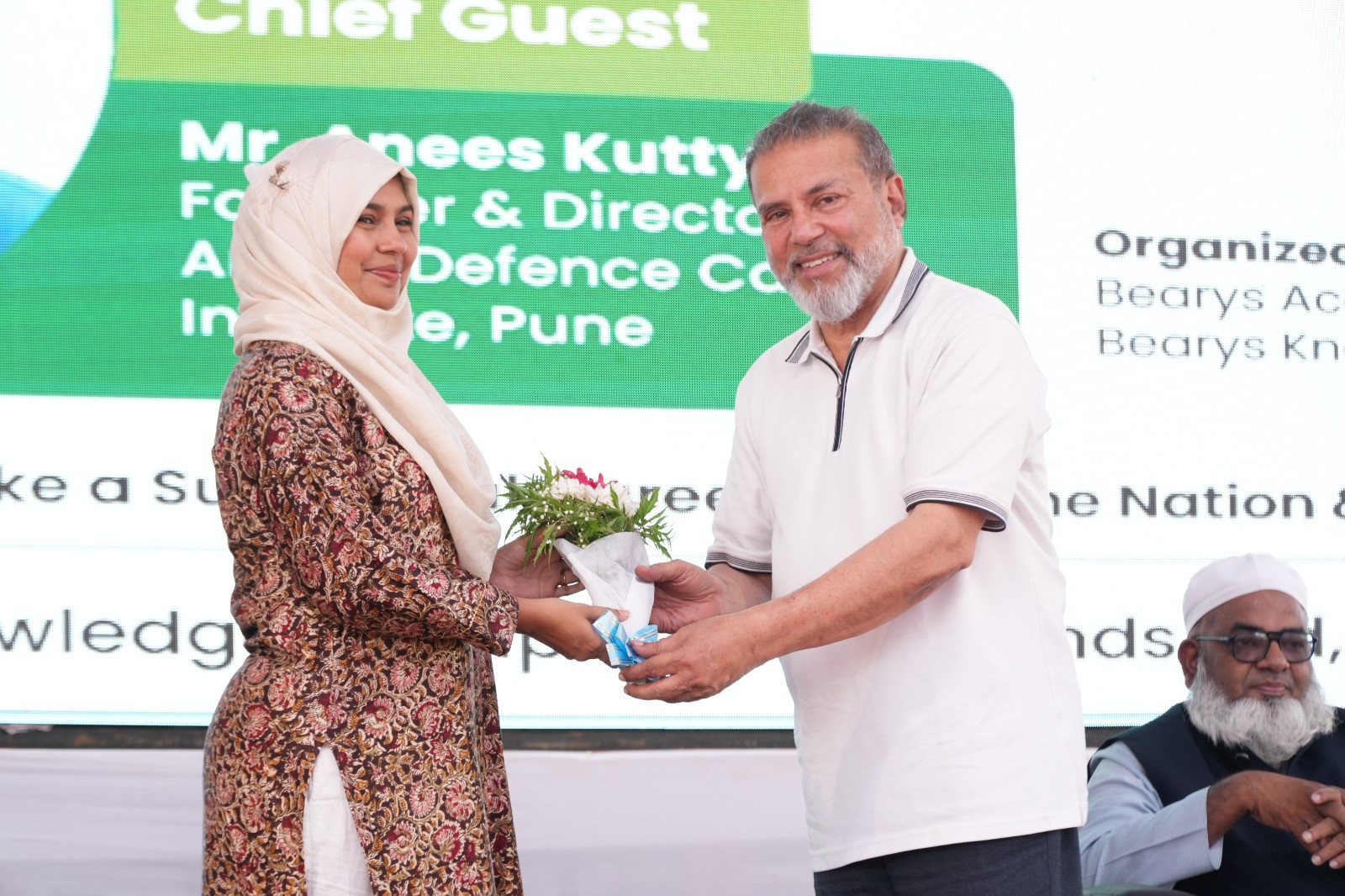
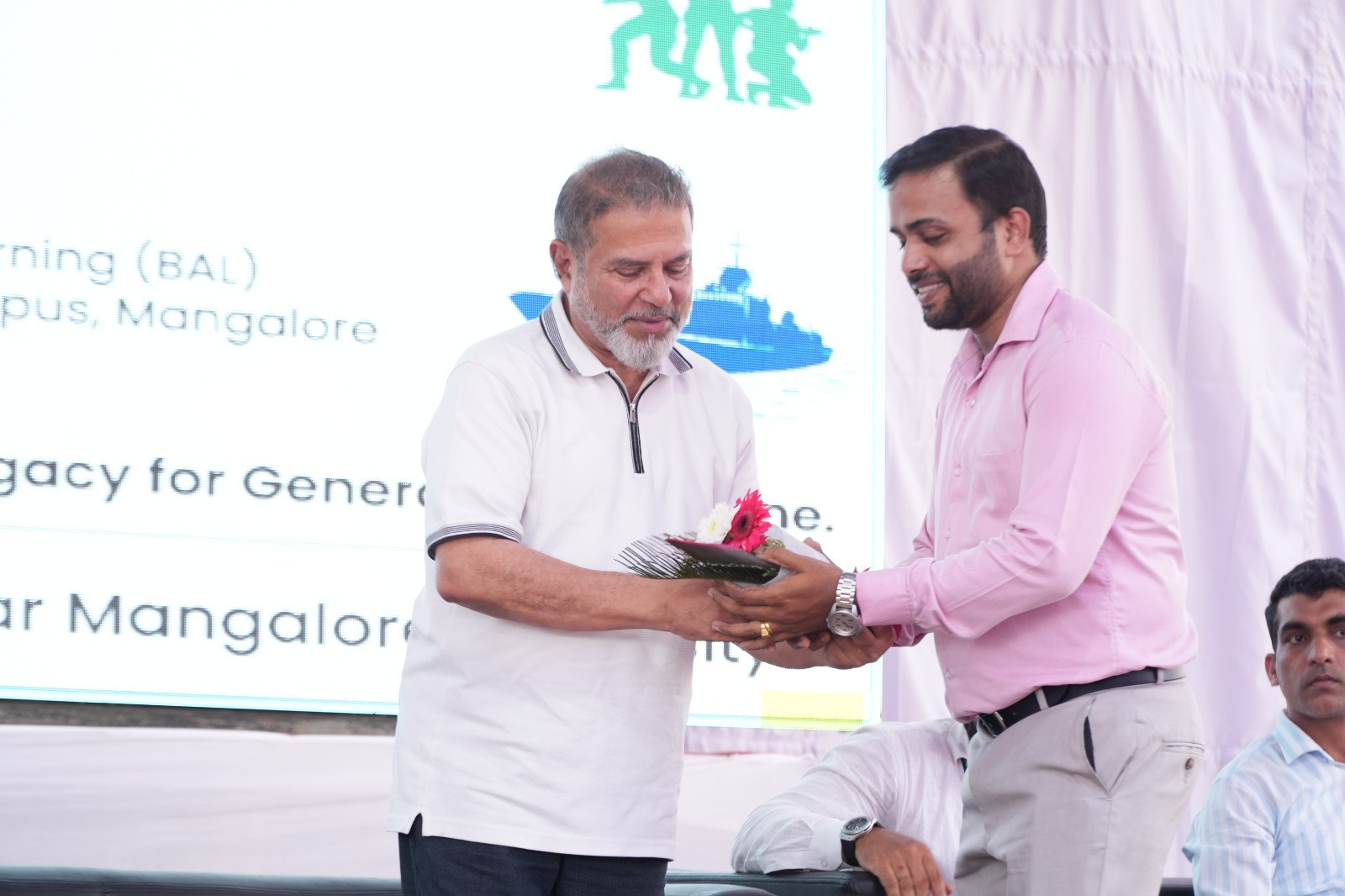
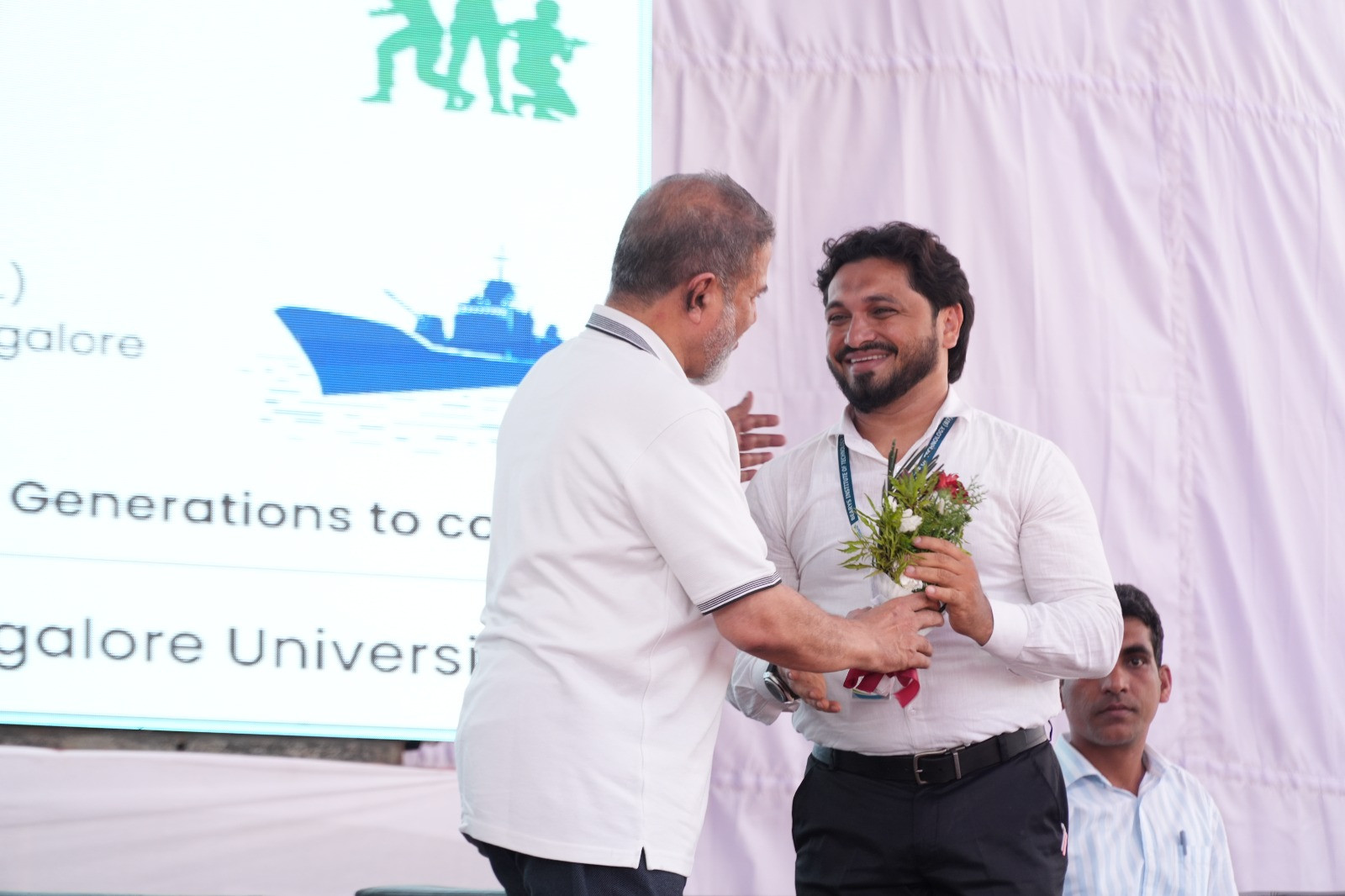
The session was inaugurated by Syed Mohamed Beary, Chairman of Bearys Academy of Learning, who delivered the opening remarks. He highlighted the valuable work done by Anees Kutty, Founder and Director of Anees Defence Career Institute (ADCI), Pune, in mentoring and preparing youth for careers in the armed forces.
Beary observed that many young graduates from Mangaluru often seek employment in Gulf countries after completing their studies. Drawing a comparison between conventional jobs and defence careers, he said that serving in the armed forces brings immense pride not only to the individual but also to the entire family.
He further remarked that a majority of personnel in the Indian defence forces hail from northern parts of the country, and it is time for youth from southern India, particularly from Dakshina Kannada to take active interest in this sector. Citing the example of Kodagu, a region known for its significant representation in the armed forces, he urged students from the coastal belt to follow suit. He also encouraged female students to explore various roles and opportunities available in the defence sector.
The keynote session was conducted by Anees Kutty, who has over 36 years of experience as a Defence Career Counsellor. Through a detailed two-hour interactive presentation, he explained different career pathways in the defence sector, covering examinations such as NDA, CDS, AFCAT, and SSB, and discussed career prospects in premier institutions like ISRO, DRDO, Agniveer, RMS, RIMC, and Sainik Schools.
Kutty also elaborated on how various engineering specializations can help candidates qualify for technical and research roles within the defence services. He highlighted the scholarships and government-sponsored programmes available for aspiring candidates, emphasizing that both the government and the defence forces provide financial and institutional support for education and training before official recruitment.
He reminded students that success in the defence sector demands passion, consistency, and perseverance, noting that the preparation process is long and requires dedication and discipline.
In his concluding remarks and presidential address, Syed Mohamed Beary announced three major commitments for Bearys Academy of Learning: Establishment of a National Cadet Corps (NCC) unit at the campus, Appointment of a Colonel as campus administrator, who will also provide SSB training to students, Setting up of a Defence Career Counselling Centre within the campus to assist students aspiring for defence services.
The programme was hosted by Joyson Miranda.
Dr. Manjur Basha, Principal of Bearys Institute of Technology (BIT), Mangaluru, welcomed the gathering, while Abdul Latif, Principal of Bearys Pre-University College (BIPUC), proposed the vote of thanks.
Dr. Sadaf, Administrator of Anees Defence Career Institute, and Prof. Mohamed Sinan, Head of the Department of Computer Science and Engineering at BIT and the coordinator of the event, were present on the dais.
source: http://www.english.varthabharati.in / Vartha Bharati / Home> Karavali / by Vartha Bharati / October 12th, 2025
Prof. Faisal Devji (L) and Dr Abdul Qadeer to receive Sir Syed Excellence Awards
Aligarh:
Aligarh Muslim University (AMU) has announced the recipients of the 2025 Sir Syed Excellence Awards, which will be presented during the Sir Syed Day Commemorative Ceremony on October 17, marking the birth anniversary of AMU founder, Sir Syed Ahmad Khan.
Prof. Shafey Kidwai, Director, Sir Syed Academy, and convener of the jury informed that the International Sir Syed Excellence Award will be conferred upon Professor Faisal Devji, Beit Professor of Global and Imperial History, Balliol College, University of Oxford. Widely regarded as a leading scholar of South Asian studies, Islam, globalisation, and ethics, Prof. Devji holds a Ph.D. and M.A. in Intellectual History from the University of Chicago and a B.A. (Double Honours) in History and Anthropology from the University of British Columbia.
Born in Tanzania, Prof. Devji has taught at institutions, including Yale, Cornell, Harvard, and the University of Chicago. His acclaimed works include Waning Crescent: The Rise and Fall of Global Islam, Muslim Zion: Pakistan as a Political Idea, and The Impossible Indian: Gandhi and the Temptation of Violence. His influential essay Apologetic Modernity explores the 19th-century Muslim engagement with modernity, particularly through the lens of Sir Syed Ahmad Khan and the Aligarh Movement.
The National Sir Syed Excellence Award will be presented to Dr. Abdul Qadeer, Chairman of the Shaheen Group of Institutions, for his transformative contributions to education among marginalised communities. Founded in 1989, the group now educates over 20,000 students with a faculty of 500+ across 13 Indian states. It operates schools, PU and degree colleges, and offers coaching for NEET, JEE, UPSC, as well as runs Hifz-ul-Quran Plus and Madrasa Plus programmes.
The awards, carrying cash prizes of ₹2,00,000 (international) and ₹1,00,000 (national), recognise exceptional contributions in Sir Syed Studies, South Asian Studies, Urdu Literature, Medieval History, Social Reform, Communal Harmony, Journalism, Interfaith Dialogue, and related fields.
Awardees were selected by a distinguished jury chaired by Prof. Azarmi Dukht Safavi and comprising Prof. Anisur Rehman, Prof. A.R. Kidwai, Prof. Imtiaz Hasnain, and Prof. Shafey Kidwai, with final approval by AMU Vice Chancellor Prof. Naima Khatoon.
source: http://www.radiancenews.com / Radiance News / Home> Pride of the Nation> Awards> Latest News / by Radiance News Bureau / October 09th, 2025
Qureshi traces his lineage to chefs who served Awadh rulers more than 200 years ago.
Chef Imtiaz Qureshi receives Padma Shri award in 2016 from former President Pranab Mukherjee
Culinary legend Imtiaz Qureshi, who was credit with making the dum pukht style of cooking popular, died in Mumbai on Friday at the age of 93.
His eldest son and chef Ishtiaque Qureshi said the 93-year-old had issues with his vital organs and was hospitalised for some weeks due to old-age issues.
Who was Imtiaz Qureshi?
Born in a family of chefs in Lucknow on February 2, 1931, he traces his lineage to chefs who served Awadh rulers more than 200 years ago. His culinary journey started at the age of nine when his uncle was tasked with cooking for a British regiment. He later joined Krishna Caterers, a catering company that served the Indian Army during the 1962 war with China. He had even cooked for a state banquet hosted by former Prime Minister Jawaharlal Nehru. Along with this, he cooked for state banquets for visting foreign leaders including Queen Elizabeth II, Bill Clinton and Tony Blair on different occasions.
The Padma Shri awardee was also known for giving a fillip to the culinary excellence of ITC Hotels after he joined there in 1979. He established restaurants like Bukhara and Dum Pukht. Dum Pukht is a traditional slow-cooking technique.
He won the Padma Shri award in 2016. He is survived by two daughters and five sons. All seven of them are working in the culinary field.
‘Lucknow lost its biggest ambassador’
Chef Kunal Kapur posted on X, “His culinary legacy and contributions will forever be remembered and cherished. May his soul find eternal peace and may his memory continue to inspire us all.”
Singer Adnan Sami said, “Sad to learn that Padma Shri Master Chef Imtiaz Qureshi has passed away. He was a culinary genius & a man full of zeal for life!! He was also the modern day father of Awadhi Cuisine & his Biryani was legendary amongst everything else he fed the world. My deepest heartfelt condolences to his family.”
Chef Ranveer Brar paid tribute to the legend, saying, “Lucknow has lost its biggest ambassador. As a Lucknow boy with dreams of becoming a chef, the folklore of Imtiaz Qureshi is something I grew up with. It was around 1999 when I was working as a trainee chef at the Taj in Delhi. I remember once taking the Rs 612/- I had earned to ITC Maurya next door and trying out the Galouti Kebab. It’s an extremely sad moment for me, for everybody in Lucknow. (I) am currently in a state of shock.”
“Every interaction of mine with the maestro, was about Lucknow, his growing up years in Lucknow, his time at the Raj Bhavan, his time when he opened the beautiful Clarks restaurant.. And so much more,” he wrote on Instagram, “Sometimes you just can’t accept that someone’s no more. This is one of those moments…
“The fact that I was eating Imtiaz Qureshi’s food in an ITC hotel was life changing for me. Not only had he pulled the dum pukht technique out of Lucknow, he had given it a personality, an unmistakable refinement,” Brar added. “RIP chef, your legacy lives on forever…”
source: http://www.theweek.in / The Week Magazine / Home> News> Entertainment / by Web Desk / February 11th, 2024
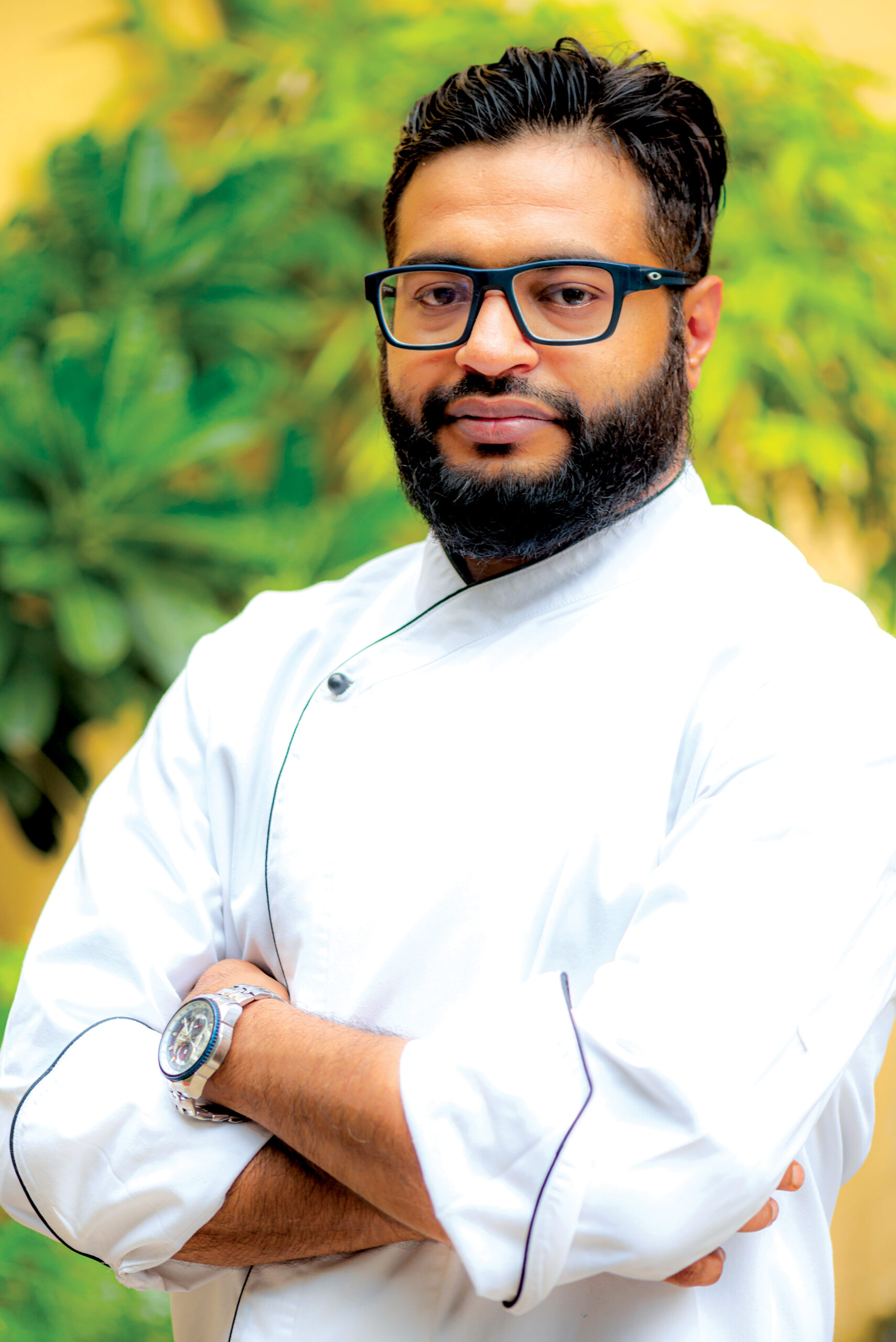
Ishtiyaque, the eldest son of chef Imtiaz Qureshi, a Padma Shri awardee, has worked in various departments, from bakery to butchery.
Chef Ishtiyaque Qureshi preparing kebabs at the Jashn-e-Lucknow food festival in Delhi | Photo: Tina Das | ThePrint
New Delhi:
When he offered his guests a bowl of kheer, a traditional dessert made with thickened milk, chef Ishtiyaque Qureshi had a wicked twinkle in his eyes. He knew he would leave them flabbergasted when he revealed the key ingredient—garlic.
Not just the guests, but even other chefs had no clue that the pearly pods in the dessert were not almonds. The kheer was part of a delectable spread of Awadhi cuisine at the Jashn-e-Lucknow food festival at Delhi’s JW Marriott.
“When he (Ishtiyaque) asked me to taste it, I could never guess what it was. It has truly been quite the experience watching him work tirelessly from morning to night,” said Yashasvi Yadav, a management trainee at JW Marriott.
Yadav had been working closely with Ishtiyaque to prepare 23 dishes using 20 ingredients for the festival held between 21-23 February. With rajanigandha in vases, lanterns, and roses, the tables were set to complement the Awadhi cuisine.
From melt-in-the-mouth Kakori kebabs to the rich dum gosht biryani, and the experimental narangi chicken korma, the slow-cooked dishes had people going for multiple servings.
These dishes reflected the artistry of Ishtiyaque, the eldest son of chef Imtiaz Qureshi, a Padma Shri awardee. Ishtiyaque has been carving out a niche for himself—from opening the Kakori House restaurant in Mumbai to working as a consultant for several popular hotels in India, dabbling with the frozen food industry, and now starting the restaurant Murgori, which serves chicken Kakori kebabs.
Ishtiyaque was on his feet for 14 hours on the first day of the festival, in a kitchen shared with another food pop–up. “We made 23 dishes in just three stoves,” he said, smiling, as he talked to guests in detail about the dishes.
Deeply appreciative of his legacy, Ishtiyaque has, however, charted a course very different from his father, who spent his career with the ITC group.
Ishtiyaque has worked with various brands like The Leela, Kempinski, and InterContinental. He has also been instrumental in the makeover of several brands, including Aafreen, a fine–dining Indian restaurant of JW Marriott Pune.
Ishtiyaque learned from the best—his father—while working through school. “When I was 12, during school holidays, my father skilfully lured me to the Maurya operations. With the temptation of swimming in the pool and eating at the bakery, he put me in the kitchen,” said Ishtiyaque.
He worked in various departments, from bakery to butchery, and credits that hands-on training for building a solid foundation for his career.
Culinary artistry
The young boy didn’t want to cook; he wanted to join college instead. But with a big family to support, another earning member was necessary. He initially worked at ITC Maurya during the day while attending classes at Delhi’s Ram Lal Anand College in the evening.
Ishtiyaque later left for Jeddah, Saudi Arabia, in 1986 after his father helped him get a job there. Three years later, he returned home and interviewed with ITC’s then-chairman, YC Deveshwar, at ITC Maurya in Delhi. He soon found himself at the Dum Pukht restaurant in Mumbai, which was then part of the Sea Rock Hotel.
He also worked with legendary French chef Roger Moncourt, who was the executive chef at ITC Maurya in New Delhi. “I remember he removed beef and pork from the Indian restaurant,” said Ishtiyaque. This separation—which he also recently recommended at a new restaurant—helped increase the clientele for fine Indian dining.
This was around the time when Datta Samant’s trade union raised slogans like ‘Dilliwale murdabad’. Nevertheless, Ishtiyaque found his space, experimenting with slow-cooked delicacies and reviving age-old techniques that define Awadhi cuisine.
Over the years, he has also mastered techniques from the frozen food industry, blending science with culinary artistry—all while carrying forward his father’s legacy.
Food innovations
The father-son duo often cooked together, especially after doctors advised both parents to stop consuming red meat. This led to one of Ishtiyaque’s innovations—the chicken Kakori kebab.
“For three years, they never guessed it wasn’t made of mutton but chicken. That’s when I realised this is a great option for the market, for those who cannot or don’t want to consume red meat,” said Ishtiyaque.
His father always made sure to have dinner at home, where his mother would rustle up delicacies like aloo gosht, saag gosht, or meat cooked with seasonal vegetables. Ishtiyaque prefers home–cooked meals and staying in rather than travelling, even though work often keeps him on the move.
One dish that had people queuing up for second and third helpings was the narangi chicken korma. “While making the list of ingredients, the chef asked me to get oranges. Even the person in charge of the hotel’s vegetable and meat stock was curious why Awadhi food might need oranges,” said Yadav.
The result of Ishtiyaque’s experiment was a refreshing, aromatic stew. “To me, that is fusion food—when you marry one ingredient with another, instead of overpowering the dish or just laying a few strands of microgreens on a plate. That is just scamming,” said Ishtiyaque.
According to him, training chefs today isn’t what it used to be, as people no longer want to invest the same time or energy. The way his father worked and taught now feels like part of a bygone era.
“I was lucky that we could spend his last years together. He was charismatic and an extrovert. Even till the end, he wanted good food and was joking with the nurses,” said Ishtiyaque.
“But I will always be there for my guests,” he added, pausing briefly to speak to someone dining alone.
Ishtiyaque often cooked for his parents and was always eager to hear his father’s feedback. “He would suggest improvements, and sometimes my mother would be like, ‘Your son has cooked, let it be.’ But that is who he was. And I think like him and have the same kind of passion that he did,” he said.
(Edited by Aamaan Alam Khan)
source: http://www.theprint.in / The Print / Home> Features> Around Town / by Tina Das / March 02nd, 2025
His grandfather taught Gordon Ramsay the secrets of dum cuisine. Chef Zoheb Qureshi hails from what is considered as the First Family of food in India. His grandfather, Chef Imtiaz Qureshi, is one of the two chefs to receive a Padma Shri honour and his father, Gulam Qureshi has been the brand custodian at Dum Pukht, ITC Maurya, Delhi for the last 15 years.
Zoheb’s preparations exemplify the philosophy of Giza-e-Khusus meaning cooking delicious food while retaining its nutritive value. He has taken upon himself the daunting task of running the first chef-led online food delivery format in the country, Cross Border Kitchens. He says, “I am on a mission to make people taste what authentic Nehari or Mirch Baigan ka Salan is or what an original dum biryani tastes like.”
In a candid conversation, he talks more about himself and his work:
Your philosophy of food?
It’s a common ground offering people a universal experience. It brings people together belonging to varied cultures and beliefs.
Your fav cuisine?
Awadhi
Your idol?
My father – Gulam Qureshi
Your fav spice?
Cardamom
Your hot selling dish?
Awadhi Gosht Biryani
Lessons learnt in the kitchen?
Every day is a new day in the kitchen that teaches you something new. However, my evergreen lesson that I stand by daily is to never go to the cooking range without all the ingredients.
How do you like to de-stress?
Listening to music calms me down.
How do you define yourself?
Someone who’s forever eager to learn & unlearn.
What are you passionate about?
About different techniques in cooking and travelling to new places to learn about its food culture.
Last meal on earth, what would you choose?
Phirnee
Recipe: Murgh Rampur Biryani
Ingredients:
Chicken (50 gm) piece 400 gm
Basmati rice 250 gm
Brown onions 25 gm
Desi ghee 50 gm
Cloves 4
Cinnamon sticks 2
Bayleaf 1
Green cardamom 4-6
Cream 25 ml
Beaten curd 75 gm
Salt to taste
Yellow chilli powder 10 gm
Mace cardamom powder 15 gm
Ginger garlic paste 25 gm
Rose water 5 ml
Kevda water 5 ml
( screwpine)
Sweet ittar 1 drop
Slit green chillies 25 gm
Mint leaves 25 gm
Ginger julienne 10 gm
Royal cumin seeds 2 gm
Lemon juice 20 ml
Water ½ litre
Whole wheat flour dough
(for lining the lid) 100 gm
Process:
Step 1 : Cooking of chicken
Marinate the chicken with Biryani masala powder, hung curd, rose water, red chilli powder and cook in tandoor
Cook the chicken with jhol, yellow chilli powder, mace cardamom powder, saffron, ittar, kewra and rose water.
Step 2 : Boiling rice
Wash, soak basmati rice for 10 minutes. Boil water in a pan and add the wholespices, salt to taste and lemon juice.
Add the rice and cook till 2/3rd done.
Step 3 : Cooking on Dum
Layer the chicken. Add a mixture of ghee and cream.
Garnish with mint leaves, ginger juliennes, brown onions and saffron dissolved in water.
Line the lid with flour dough and seal the vessel.
Put the vessel on an iron griddle and cook for 15 minutes.
Once the biryani is cooked, serve it with raw onions, lemon, chutney and raita.
source: http://www.thepatriot.in / The Patriot / Home> Specials / by Sharmila Chand / October 04th, 2019