Address : ITC Windsor hotel, Vasanth Nagar, SEE MAP
The restaurant is shedding its colonial hangover by dropping “Jolly Nabobs” from its title and focussing on biryanis and kebabs.
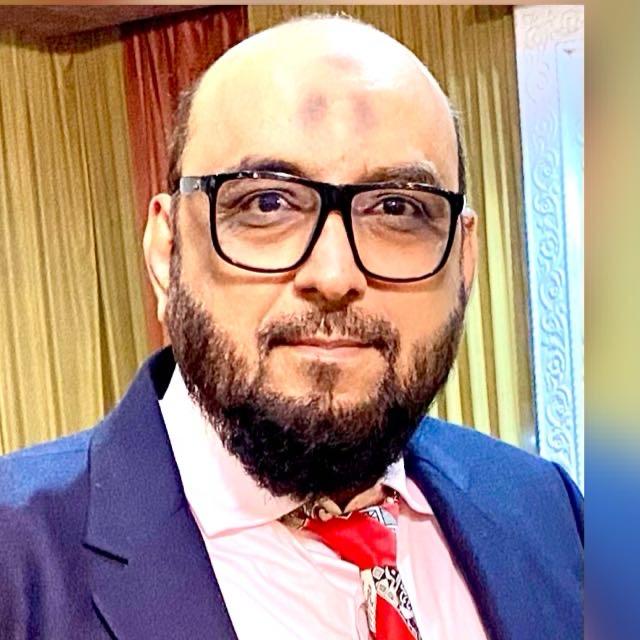
Master Chef Ghulam Qureshi | Photo Credit: Special Arrangement
ITC Hotels’ Dum Pukht restaurant is an institution with a storied legacy. At ITC Windsor in Bengaluru, the restaurant was called Dum Pukht Jolly Nabobs; for the past 25 years, it was known for its Anglo-Indian and colonial-era dishes. Think mulligatawny soup, pomegranate chops, and forest officer’s pulao. But now, with a menu curated by Master Chef Gulam M Qureshi, they are harking back to the brand’s Lucknowi roots. The restaurant is dropping “Jolly Nabobs” from its name and introducing some classic Awadhi dishes. Over a leisurely lunch, Qureshi treats me to the new menu, delighting me with tales of nawabs and begums.
Chef Qureshi is the seventh generation chef from his family. He is the son-in-law of the pioneering chef Imtiaz Qureshi, who was awarded the Padma Shri for his contributions. The family has been cooking for the nawabs of Lucknow for 200 years. The chefs of Awadh invented the dum style of cooking and take great pride in their kebabs and biryanis.
The succulent Kakori kebabs
Our lunch begins with a selection of kebabs. The Kakori is, of course, legendary. Minced lamb, flavoured with cloves and cinnamon, are skewered and char grilled. Saffron completes the dish. The seekh nilofari kebabs are made of lotus stem and puffed lotus seeds. Spices like mace, green cardamom and herbs are used to add masala to the kebabs. We are also served the jumbo prawns cooked in the tandoor and then finished in a dum preparation. Flavoured with cheese and yoghurt, this dish is mild and delicate.
The highlight of the meal is the murgh khushk purdah. The main chicken dish is brought to the table in a platter that is topped with the baked pastry, then carved at the table by the team of chefs.
“My forefathers have been making this dish since the 1820s. The nawabs used to farm the poultry at home, because they were very particular about the quality. On the day of the feast, the chicken was marinated for five or six hours. It was then cooked in the dum with the purdah,” Qureshi shares.
Jaitoon ka tel or olive oil, imported from West Asia, makes the dish light and silky. Under the pastry, succulent pieces of chicken, along with chunks of onions, tomatoes and pineapples, are enveloped in a gravy, which has notes of mace and star anise. It pairs very well with the warqi parantha.
The specialty gucchi pulao
Try the gucchi pulao, made with morel mushrooms that are a delicacy from Kashmir. They are stuffed with cheese and cooked with basmati rice.
We end with shahi tukra and saffron rabri, topped with pistachios, almonds and a silver leaf. While the Anglo-Indian dishes may be missed, I won’t complain about the new direction taken by the restaurant because of the quality and authenticity of the dishes.
Cost for two ₹6,000. At ITC Windsor. For details, call 8061402610
source: http://www.thehindu.com / The Hindu / Home> Food> Dining / by Anagha Maareesha / June 17th, 2024
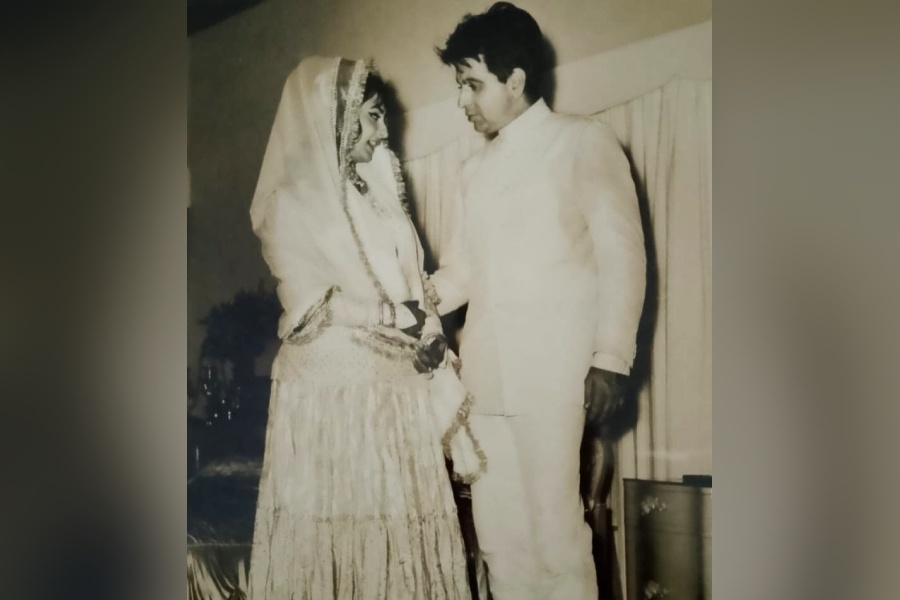
Banu had tied the knot with the late Dilip Kumar on October 11, 1966
Saira Banu and Dilip Kumar on their wedding day / Instagram
Bollywood veteran Saira Banu’s wedding with the late Dilip Kumar on October 11, 1966, was ‘dreamlike, unscripted and full of delightful chaos’, the actress recalled on her 59th marriage anniversary on Saturday.
In a long note on Instagram, Banu noted that her wedding was not extravagant. Instead, it was marked by ‘simplicity, hurried excitement and heartfelt emotion’. Though Banu and Kumar were to tie the knot in November, Kumar insisted on an early nikkah. The couple tied the knot in an ‘unscripted’ ceremony, nine days after their engagement on October 2 that year.
Banu hardly had any time for preparation. Her bridal ensemble was stitched by a local tailor and she got married without any printed cards or detailed plans.
“The song Do Sitaron Ka Zameen Par Hai Milan Aaj Ki Raat floated through the air like a blessing that wouldn’t fade. It played all night long, echoing the joy in my heart, and I remember thinking that if someone told me I could truly fly that evening, I would have believed them. That’s how unreal, how dreamlike it all felt,” wrote the 81-year-old actress, alongside pictures from the ceremony.
“Nothing about that day was extravagant, yet it was perfect in its simplicity. My wedding joda was lovingly stitched by our local tailor; there were no grand designers, no detailed plans, no printed cards, just hurried excitement and heartfelt emotion. The Nikaah was meant for November, but destiny had other plans. I can still hear Sahib’s gentle but firm voice over the telephone from Calcutta saying, “Aap ek Maulvi ko bulaiye aur Nikaah karwa dijiye!” And just like that, the most important day of my life unfolded before I could even blink,” she continued.
Reflecting on her wedding day and the crowd of Kumar’s admirers who had gathered outside her house to witness their special day, Banu wrote, “The wedding itself was full of delightful chaos. Sahib and I lived close by, and when his Baraat came down the lane, the Ghodi descended a small slope, the umbrella brushing against his Sehra, a sight so charming that it still makes me smile. In no time, word spread that Dilip Kumar was getting married, and hundreds of admirers found their way into my home. The house was overflowing with laughter, noise, and strangers who felt like family.”
Banu recalled that the sheer number of guests left them short of food. “The crowd was so large that we even ran short of food, people began pocketing tiny souvenirs, a fork here, a spoon there as if they were collecting tokens from a fairytale,” she wrote.
“Oh, what a day that was. Unscripted, imperfect, and yet filled with a kind of joy that words can never truly capture. That night remains etched in my heart a memory that still glows softly, even after all these years,” the actress concluded.
Banu, who made her Bollywood debut opposite Shammi Kapoor in the 1961 film Junglee, starred alongside her husband in films like Gopi (1970), Sagina Mahato (1971) and Jwaar Bhata (1973). Kumar passed away on July 7, 2021, at the age of 98.
source: http://www.telegraphindia.com / The Telegraph Online / Home> Entertainment / by Entertainment Web Desk / October 12th, 2025
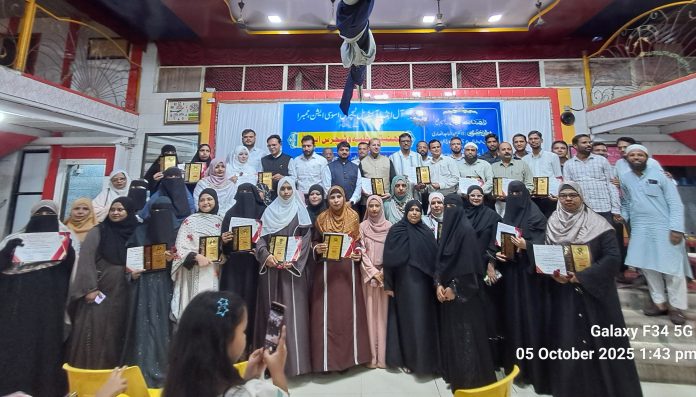
The Maulana Afzal Hussain Ideal Teachers Award 2025 and Students’ Felicitation Programme were held here Sunday to celebrate dedicated educators and outstanding students.
Teachers play a pivotal role in shaping a nation’s future, and societies that honour their teachers set a benchmark for others to follow.
Reflecting this spirit, the All India Ideal Teachers Association (AIITA), which has been active in Mumbra since 2019, organised the event to recognise exemplary teachers for their service and commitment to education.
The award is named in the memory of Maulana Afzal Hussain, a distinguished educationist and author of several books. This year, the AIITA Mumbra Award Committee selected 26 teachers from various institutions for the honour. The awards, presented annually on World Teachers’ Day, cover multiple categories including Primary, Secondary, and Headmaster levels, from schools in Mumbra, Thane, and Mumbai Municipal Corporation areas.
The Award recipients at the level of private educational institutions included Khan Safia (Al-Ehsan School), Altaf Patel (Abdullah Patel School), Lubna Khot (Central Public School), Khan Sadaf (Rafiqah School), Qazi Alia (Dr. Asadullah School), Syed Rizwana (Mumbra Public School), Syed Feroza (National School), Sheikh Zaheer (Nice School), Zahida Chotani (Patel School), Ansari Nasreen (Sameeya English School), Rukhsanda Khan (Saadia School), Shabana Azmi (Shoaib School), and Sadiqa Sheikh (Saadia Primary School).
In the Mumbai Category, the Award recipients included Arshia Shah (Vakola Municipal School), Mehboob Makandar (Vanoba Bhave School), and Ismail Bagwan (Anjuman Khair-ul-Islam School),
In the Thane Municipal Corporation Category, the Award recipients included Fatima Naz (TMC 116), Halima Qazi (TMC 117), Tabassum Khan (TMC 124), Syed Sameena (TMC 125), and Sufyan Ansari (TMC 40),
Thane Headmaster Category, the Award recipients included Mansoori Tehzeeb (Sameeya School), Ansari Tasneem (TMC 13), Syed Sana (Leader School), and Sheikh Khairul-Nisa (Abdullah Patel School).
A posthumous award was also conferred upon Late Naheed Fatima Zainuddin Jamali Sahiba of Abdullah Patel School in recognition of her lifelong contribution to education.
The event was presided over by Advocate Jasim Sheikh, with Dr. Abdul Majid Ansari serving as the Chief Guest. Distinguished guests included Professor Javed Sheikh (JIH Local Ameer of Mumbra), Khan Najma (President, GIO Mumbra), and Ansari Nasir of Khidmat Khalq Trust.
In addition to teacher awards, students from 24 schools were felicitated for their academic achievements in the 10th and 12th board examinations.
The event, held at Sania Hall, witnessed an enthusiastic turnout of teachers, students, and community members. Members of AIITA Mumbra and the Markazi Talimi Board Mumbra played a key role in organising and ensuring the success of the programme.
source: http://www.radiancenews.com / Radiance News / Home> Pride of the Nation> Awards> Latest News / by Radiance News Bureau / October 07th, 2025
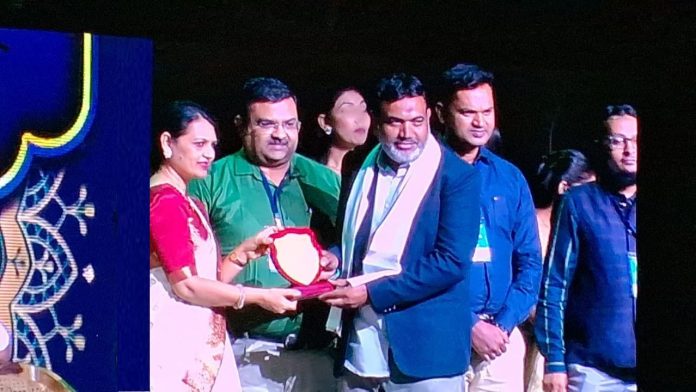
Urdu journalist Zameer Ahmed Khan Jaleel Ahmed Khan has received the Maharashtra Rajya Urdu Sahitya Academy’s Exemplary Journalism Award 2020 for his dedicated contribution to Urdu journalism. He described the award as recognition of all sincere individuals serving society through honest and conscious reporting.
Khan, known for his association with Roznama Inquilab, Munsif TV, and MCN Urdu News, expressed gratitude to his teachers, colleagues, and readers. He said their encouragement and prayers strengthened his resolve to pursue truth and integrity in journalism.
Speaking about his professional journey, Khan said his goal has always been to guide journalism in a positive and dignified direction. He emphasized that journalism should be rooted in honesty and social awareness to enlighten the community with knowledge and justice.
He thanked Allah for the success and prayed for continued sincerity and dedication in serving society through the power of the pen. Khan also urged his peers to maintain faith and commitment to the principles of truth and responsibility in media work.
The award highlights the importance of Urdu journalism in promoting social consciousness and ethical reporting, and serves as inspiration for young journalists to pursue their work with humility and integrity.
source: http://www.radiancenews.com / Radiance News / Home> Pride of the Nation> Awards> Latest News / by Radiance News Bureau / October 10th, 2025
In the small town of Kandhar, Nanded courage takes an unusual form. Muhammad Talib, a young man known as the “Snake Friend,” has earned respect for his rare mission—saving both snakes and people from harm. While most run from the sight of a snake, Talib runs toward it.
Trained in snake handling, Talib learned how to catch venomous snakes safely without injuring them. He relocates the reptiles to the forest instead of killing them. Despite dealing with dangerous species, he has never been bitten. His belief is simple: every creature has a right to live.
People in Kandhar admire his bravery and call him whenever a snake appears in homes, offices, or schools. Instead of fear, his name brings comfort. Smiling, Talib says that his work reflects the true spirit of Islam, which teaches kindness and protection for all living beings.
“I see this as an act of goodwill,” he explains. “When I save snakes from humans and humans from snakes, I am doing khair, the good that Islam calls for.”
For the people of Kandhar, Muhammad Talib is more than a snake catcher. He is a reminder that courage is not about destroying what we fear, but about understanding it.
source: http://www.radiancenews.com / Radiance News / Home> Amazing Facts> Features> Latest News> Report / by Radiance News Bureau / October 12th, 2025
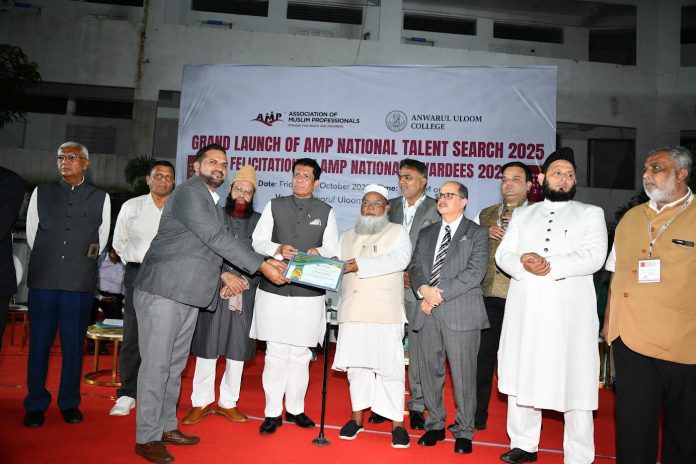
Dr Shahnawaz Ahmed Malik, Assistant Professor, Department of Law, Aligarh Muslim University Malappuram Centre, Kerala, has been conferred the AMP National Award for Educational Excellence 2025 by the Association of Muslim Professionals (AMP) in recognition of his distinguished contribution to legal education and institutional development.
The award was presented during the AMP National Awards Felicitation Ceremony 2025, held at Anwarul Uloom College, Hyderabad, in the presence of AMP President Aamir Idrisi and several eminent educationists and community leaders.
Dr. Malik, who has been associated with AMU Malappuram Centre since 2013, has played a key role in developing its Department of Law. He has established several academic and professional societies to promote advocacy skills among students and contributed to enhancing the Centre’s academic profile.
His teaching and research focus on Constitutional Law, Administrative Law, Human Rights, and Legal Theory. He has also served as a member of the AMU Court and Academic Council and currently holds the positions of Deputy Proctor and Coordinator, Department of Law, at the AMU Malappuram Centre.
source: http://www.radiancenews.com / Radiance News / Home> Pride of the Nation> Awards> Latest News / by Radiance News Bureau / October 11th, 2025
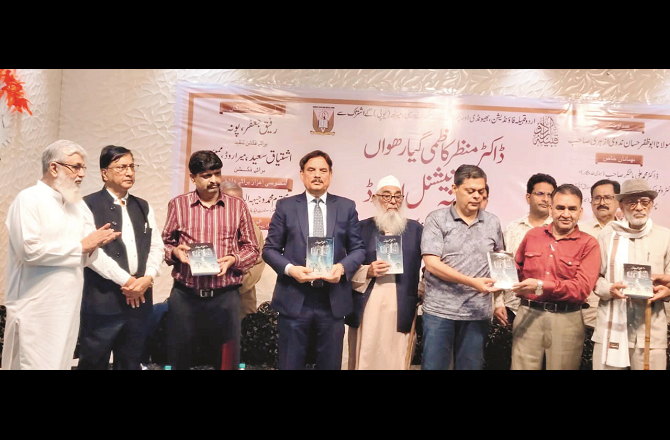
Renowned Urdu author Shama Akhtar Kazmi launched her latest works, “Aitraf Nama” and “Naqosh Pindar”, during the Dr. Manzar Kazmi National Award Function. The event was jointly organized by the Urdu Qabeela Foundation and the Department of Urdu at Chaudhary Charan Singh University.
The books were released by Dr. Vinod Kumar Tripathi (IRS), who served as the chief guest. The ceremony was presided over by Maulana Abu Zafar Hassan Nadvi Azhari and attended by distinguished literary figures including Prof. Aslam Jamshedpuri, Rafi Jafar, Darraj Kamankar, Mohammad Wajihuddin, Fayyaz Ahmed Faizi, Shakeel Rashid, Akhtar Kazmi, and Irfan Arif.
The event celebrated Shama Akhtar Kazmi’s enduring contributions to Urdu literature, highlighting her ability to blend personal reflection with literary insight. Both books were described as a reflection of Kazmi’s literary depth and engagement with Urdu heritage, showcasing her skill in addressing contemporary themes while maintaining classical literary elegance.
Speakers emphasized the importance of initiatives that preserve and promote Urdu literary traditions, noting that events like these strengthen cultural continuity and encourage younger generations to engage with Urdu literature. The launch also served as a platform for scholars and enthusiasts to discuss the evolving role of Urdu writing in modern India.
Through her work, Kazmi has reinforced the relevance of Urdu as a medium for both intellectual discourse and creative expression. The successful launch of “Aitraf Nama” and “Naqosh Pindar” demonstrates the continued vitality of Urdu literary culture and the role of dedicated authors in sustaining its prominence.
source: http://www.radiancenews.com / Radiance News / Home> Latest News / by Radiance News Bureau / October 11th, 2025
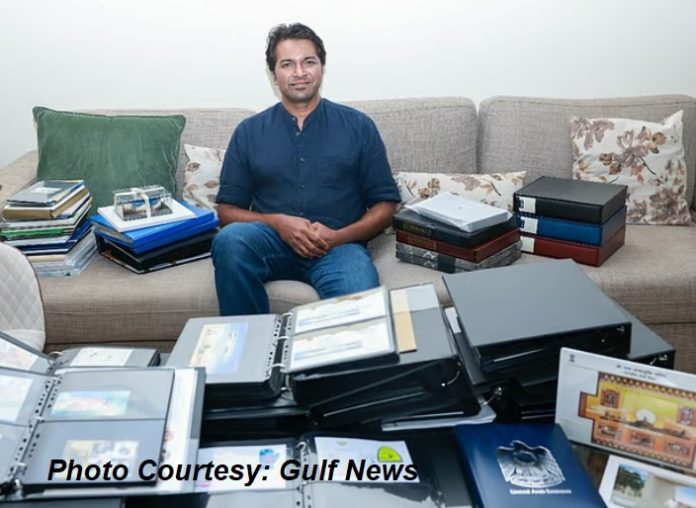
Indian expatriate and philatelist Imtiaz Qureshi has built a one-of-a-kind stamp collection that redefines the boundaries of design and material. With over 10,000 stamps gathered from more than 100 countries, Qureshi’s collection is a living archive of creativity and heritage.
His stamps go far beyond paper. Some are made from wood, silk, lace, metal, or even gold and diamonds. Others engage the senses through scents of coffee or chocolate. Qureshi’s favourites include a Bhutanese stamp embedded with a real seed, a Swiss lace stamp, a UAE stamp crafted with gold foil, and a diamond-studded edition from Dubai marking the UAE’s 50th anniversary.
Qureshi views each stamp as a storyteller capturing moments of history, culture, and technology. He says philately connects him to the evolution of human progress, from early postal systems to modern innovations in design. For him, collecting is not a hobby but a mission to preserve global narratives in miniature form.
He regularly exhibits his collection at cultural events and local forums across the UAE. His aim is to inspire young collectors and revive interest in philately, especially among students who are growing up in the digital era.
Qureshi’s journey reflects the spirit of patience, curiosity, and respect for craftsmanship. His stamps celebrate both cultural diversity and creative innovation, proving that even a small piece of paper—or lace, or gold—can carry the weight of history and imagination.
source: http://www.radiancenews.com / Radiance News / Home> Arts & Culture> Latest News / by Radiance News Bureau / October 10th, 2025
Discover the transformative story of women in maroon berets rewriting their community’s narrative.
In the heart of Chhattisgarh, where challenges of illiteracy, alcoholism, and crimes against women cast long shadows over communities, a remarkable force has emerged to rewrite the narrative. In the villages of Gunderdehi region, groups of women wearing maroon berets stand as a testament to resilience, empowerment, and the unwavering spirit of change. This is the brigade of Mahila Commandos, a force initiated in 2006 by the indomitable Shamshad Begum, an activist and Padma Shri recipient.
The journey began with a stark reality: women voicing the anguish of living in households marred by alcohol abuse, domestic violence, and the perils of substance abuse engulfing their children. The Mahila Commandos emerged as a response to this cry for change. Shamshad Begum, the founder and guiding force behind this brigade, transformed the pain of these women into a movement that has since become synonymous with hope, empowerment, and courage.
Shamshad Begum’s vision reached beyond the constraints of societal norms, and the Mahila Commandos became the embodiment of strength and resilience. From homemakers to labourers, these women found a new identity in the title of “Mahila Commando.” Voluntarily patrolling their villages at night, they became the frontline warriors against fights, gambling, and substance abuse, tirelessly combating domestic violence, dowry, female foeticide, and gender discrimination.
What sets the Mahila Commandos apart is their commitment to creating a safer and more just society. Recognizing the importance of their mission, the Chhattisgarh Police conferred the title of Special Police Officer to 200 Mahila Commandos as a testament to their dedication and to the impact they’ve had.
Beyond their role as guardians of societal norms, the Mahila Commandos have also extended their impact to education and economic empowerment. They have reached out to help over 9,000 underprivileged girls with their education. The Mahila Commandos also engage in economic activities, producing and selling items like cow dung diyas, leaf plates and vermicompost, in addition to cultivating flowers and engaging in agricultural work.
Shamshad Begum’s transformative work goes beyond the immediate impact on families. Under her guidance the Mahila Commandos have helped form 5,000 self-help groups, empowering 75,000 women with an outstanding 98% loan recovery rate from banks. A movement that began with a hundred women has now blossomed into a movement involving 65,000 women across 14 districts of Chhattisgarh. The Mahila Commandos are not just protectors; they are catalysts for change. Shamshad Begum’s vision, courage, and determination have created a network of empowered women who refuse to be silent spectators to the challenges that plague their communities.
To honour stories like Mahila Commandos and Shamshad Begum, AU Small Finance Bank presents Badlaav Humse Hai Season 2, in association with Network18. Just like the first season, Season 2 celebrates 25 stories that showcase changemakers whose unsung work has helped carve out cultural identities for communities, lifted them out of poverty; created access where only barriers existed; shown communities how to work with nature to create true sustainability; changed hearts and minds about othered communities; changed the lives of many through economic, social or educational empowerment, and much, much more.
Shamshad Begum’s Mahila Commandos Transforming Balod’s Safety Landscape | Badlaav Humse Hai Season 2 / youtube.com / moneycontrol.com
source: http://www.moneycontrol.com / MoneyControl.com / Home> Badlaav Humse Hai
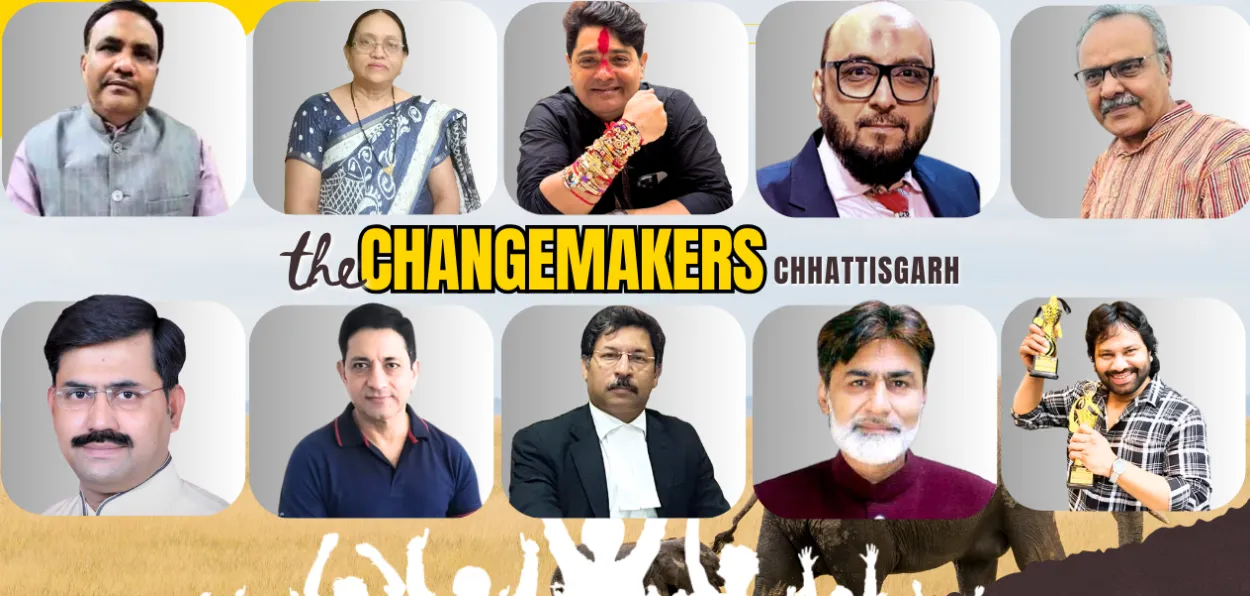
Chhattisgarh, the youngest of Indian states, is a repository of culture and antiquity and also home to spirited people. Some of them have set the trends and become changemakers. Here, we present 10 Changemakers from Chhattisgarh, whose work, grit and initiatives not only set examples for their state but also changed the lives of millions.
These 10 personalities are establishing benchmarks across art, politics, education, science, health and social servicein the state.
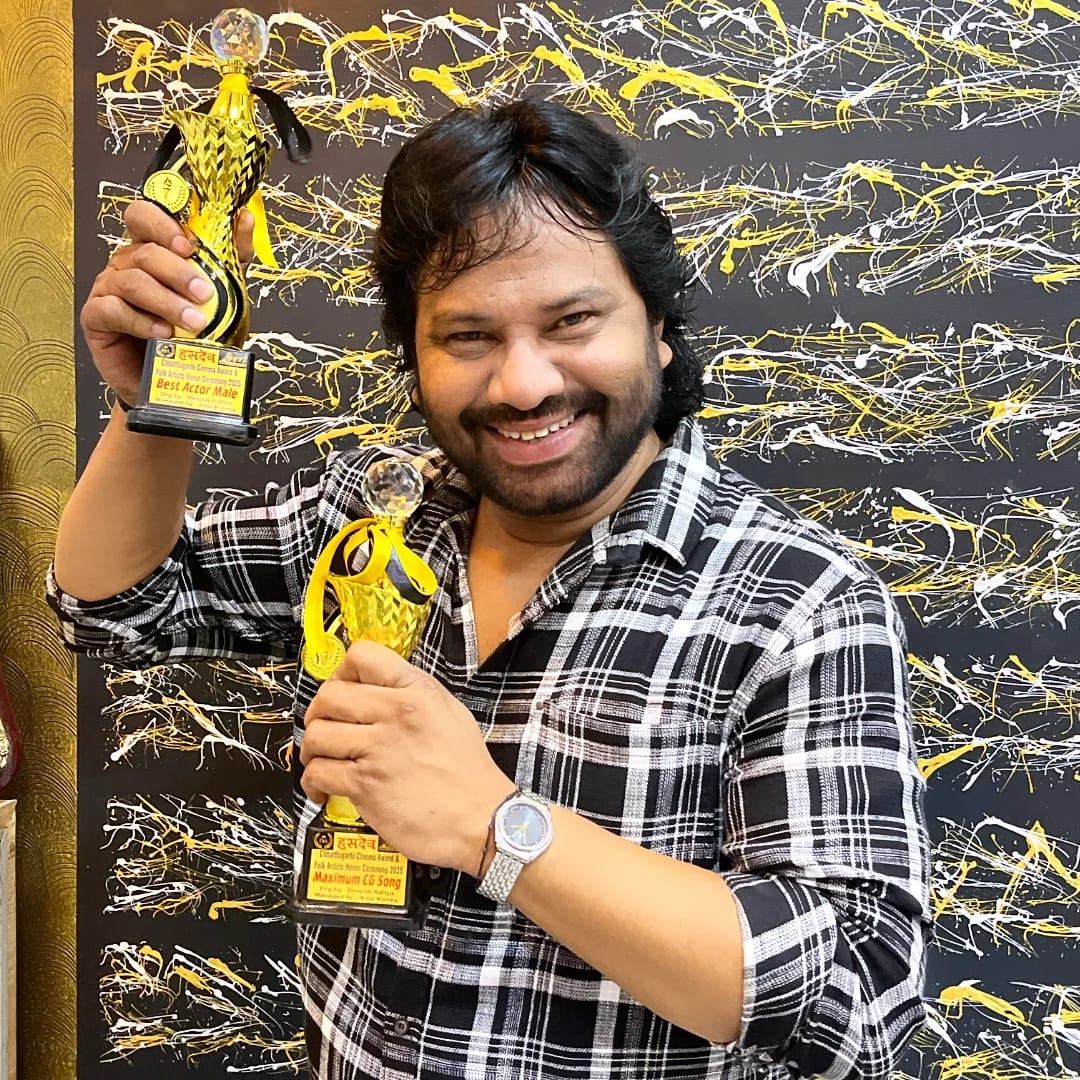
Karan Khan: Superstar of Chhattisgarhi Cinema
Karan Khan is a superstar of the Chhattisgarhi cinema, popularly known as “Chhollywood.” His work extends beyond feature films into music albums, video songs and live cultural events. In recent years, he has appeared in hundreds of Chhattisgarhi songs and albums, many of which have gone viral on YouTube and other platforms, such as the “Ditto Karan Khan Mona Sen” album.
Born Syed Tahir Ali, Karan Khan worked from cinema and music to broaden his reach and fan base. He has been a strong advocate of raising production quality in the regional films. His upcoming filmis being shot on an Arri Alexa—a professional-grade camera rarely seen in Chhattisgarhi productions, which usually face limited budgets and access to high-end technology. Khan strikes a balance between tradition and contemporary presentation to meet the expectations of changing audiences.
Mir Ali Mir: Poetic genius
When you hear the lines “Nanda jahi ka re… kamra au khumari, araitutari…” one name instantly comes to mind: Mir Ali Mir. His real name is Syed Ayyub Ali Mir, but in the world of literature, he is popularlyknown as Mir Ali Mir. Famous for expressing deep thoughts about life in simple words, his ghazals portray love, longing and life’s contradictions, while his Chhattisgarhi compositions are steeped in the fragrance of folk life.
Chhattisgarh has always been fertile ground for literature, art and culture, and Meer Ali Meer carries this legacy forward. His writings strengthen the pride of the Chhattisgarhi language and give voice to the pain, struggles and sensitivities of common people. Born on 15March 1953 in Kawardha, Meer Ali Meer enriched the Chhattisgarhi language and gave it a new identity.He is not only a poet but also an indefatigable promoter of Chhattisgarhi literature, actively working to connect younger generations with the region’s poetry and verse.
Aijaz Dhebar: transforming Raipur
The story of Chhattisgarh’s transformation is incomplete without the mention of Aijaz Dhebar’s name. He is more than just the mayor of Raipur, the capital of Chhattisgarh; he is a symbol of struggle, commitment and secular politics.
Born in a modest Muslim family in Maulana Abdul Rauf Ward of the Old Raipur, Dhebar helped run his household while pursuing his education. “My circumstances didn’t hold me back; they propelled me forward,” he often says. In January 2020, he was elected Mayor of Raipur Municipal Corporation, defeating his opponent, Mrityunjay Dubey. “I never considered myself a representative of just one religion,” he says. Recognising his leadership, he was appointed National Vice-President of the All India Mayors Council—the first mayor from Chhattisgarh to hold this post. His message to youth: “Don’t waste your energy on hatred and negativity. Politics and society today need constructive, innovative young people.”
Dr.Saleem Raj: Restructuring Waqf Board
Dr.Saleem Raj stands tall among a few who have played a crucial role in Chhattisgarh’s minority politics and social reform movement. A long-time member of the Bharatiya Janata Party, Raj serves as Chairman of the Chhattisgarh Waqf Board, a position with cabinet rank.
His rise is not just a story of political success but of a man determined to transform religious institutions from centres of controversy into engines of social and national development. “Religious institutions should be partners in the nation’s progress, not centres of disputes,” he often says. Raj joined the BJP in 1992 and steadily rose through the ranks, serving at district, state and national levels in the party’s Minority Morcha. From 2016 to 2020, he chaired the state Minority Morcha, earning a reputation for Muslim outreach and consensus-building.
Tauqeer Raja: Accessible Politician
Tauqeer Raja embodies a rare blend of political activism, entrepreneurship, sportsmanship and cultural pursuit—serving as a model of dedication in Chhattisgarh’s public life. He is widely recognised as the BJP’s state spokesperson, a sharp debater, a successful entrepreneur, a sports and music enthusiast, and a committed social worker.
What sets him apart is his ability to pursue society, politics and business with equal commitment. He focuses on issues likeeducation, healthcare and employment, with special attention to integrating youth into the mainstream. Born on 15 September 1973 into a modest family, Raza displayed leadership qualities from an early age, excelling in studies as well as sports and cultural activities. Today, he is actively involved in all three fields and is known for his approachable nature—equally accessible to the public and party workers.
Dr Shams Parvez: Keeping air clean
Professor Dr Shams Parvez guides students and the public with an approach that blends scientific rigour with social responsibility. An expert in air pollution, environmental health and chemistry, Dr Parvez is one of the few scientists in Chhattisgarh to link academic research with societal needs.
His extensive studies on changing air quality in Raipur and surrounding areas have given policymakers a solid scientific basis for interventions. Defined by simplicity, rigour and dedication to students, he is a key figure in Chhattisgarh’s academic landscape for environmental protection. His research has been published in numerous national and international journals, informing state environmental policies and public health programmes. Collaborations with prestigious institutions such as NASA and the Chinese Academy of Sciences reflect the high quality of his work, through which he has led multimillion-dollar projects.
Dr Abbas Naqvi: Building a Medical Centre with a Human Touch
Dr Abbas Naqvi is a prominent name in Raipur’s healthcare sector. He is not just any other doctor but is known for his unmatched dedication, honesty and an unshakeable spirit of service. Dr Naqvi is among a select few who take their profession not just as a career but as a means to serve society.
In 2004, Dr Naqvi founded Ramkrishna Hospital, which has become one of Chhattisgarh’s leading multi-speciality healthcare centres. He currently serves as Director and Consultant in the Department of Medicine. Patients know him as a sensitive human being. Born and raised in Raipur, he chose to return to his hometown after completing his medical education rather than seek opportunities in larger cities. He treats thousands of patients daily using a blend of modern technology and empathy and compassion.
Mohsin Ali Suhail: Positive Reporting
Amid a changing media landscape, Hajji Dr Mohsin Ali Suhail has preserved the dignity, integrity and responsibility of the profession of journalism. He is one of Chhattisgarh’s most respected journalists, known for fearless, people-centred reporting and an unwavering commitment to truth.
Suhail hopes the next generation of reporters will retain honesty and care for depth in their stories. His advice: “Don’t just chase breaking news. Dig deep into society’s roots. Journalism means bringing change, and change comes only when we show the truth.”
Born on 7 May 1953, Suhail displayed curiosity and social awareness from an early age. He recalls deciding as a child that he would speak up whenever his village faced problems.
Shamsad Begum: Chhattisgarh’s Women Commando
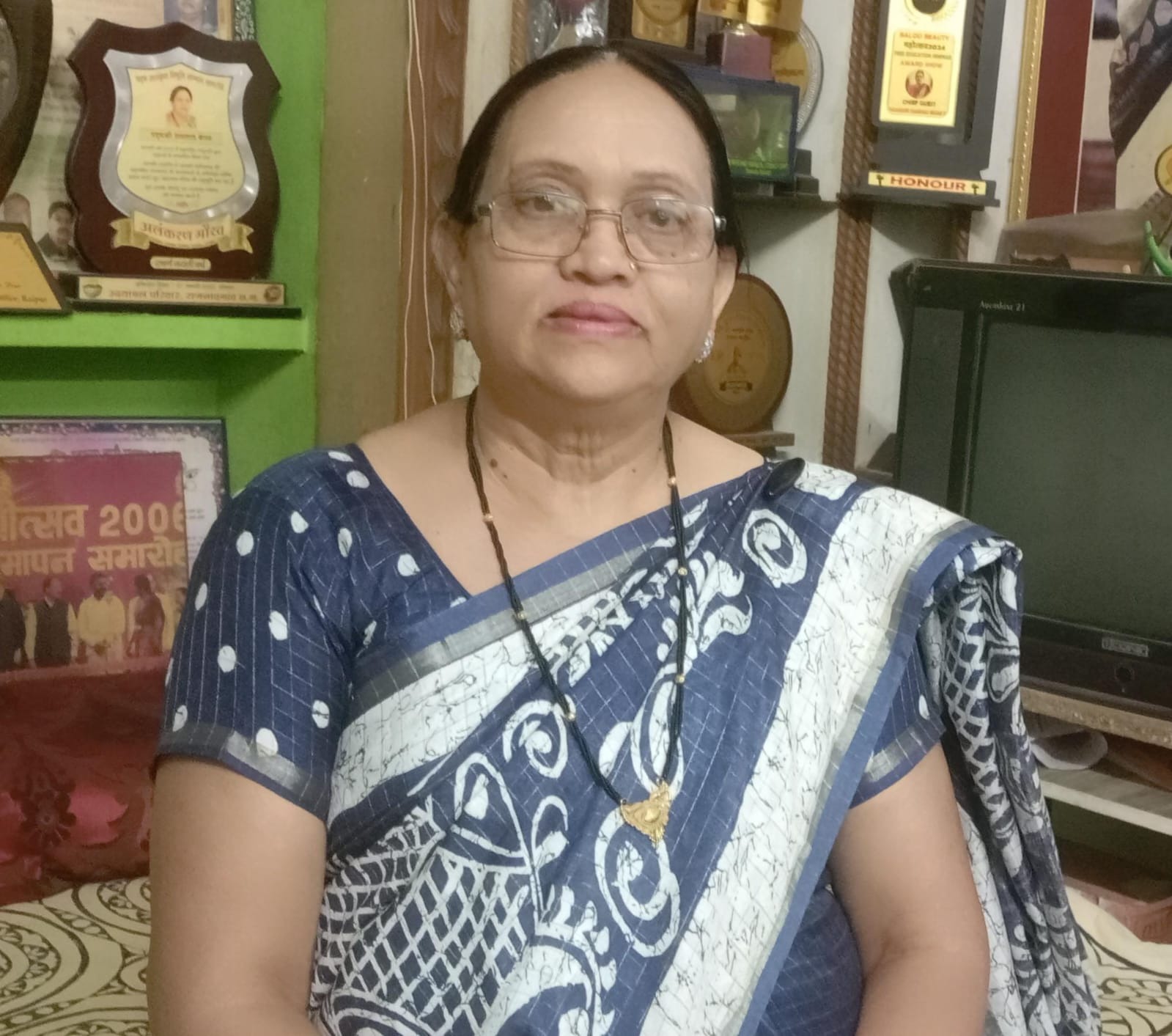
Padma Shri awardee Shamsad Begum is living proof of how a woman’s determination can transform an entire community. With unwavering honesty and a focus on inclusion, she has built one of India’s most inspiring grassroots networks, empowering thousands of women in Chhattisgarh to live safer, more self-reliant lives. She is the driving force behind the women’s commando movement.
Her journey began in the small town of Balod, where she witnessed firsthand the obstacles women faced. “If I ever get the chance, I will work for women’s education and empowerment,” she resolved. Coming from a modest family, she drew inspiration from her mother, Aamna Bee, who balanced work and education to ensure all six of her children studied. Her impact was nationally recognised when she was included in the list of 100 Muslim women honoured for their role in India’s development.
Faisal Rizvi: A Lawyer with an Unyielding Sense of Justice
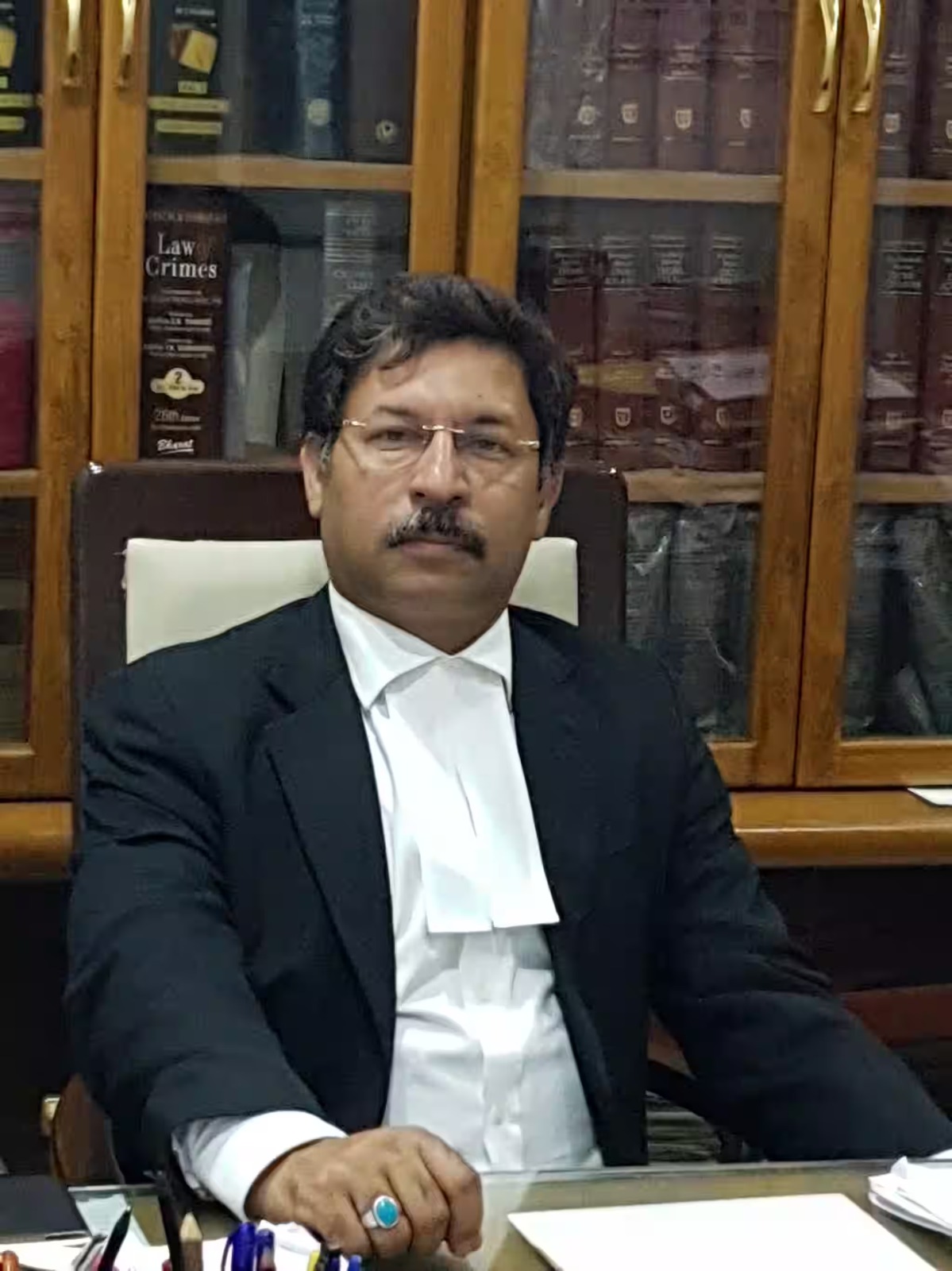
Faisal Rizvi has made his nameas a leading criminal lawyer in Raipur. His arguments, cross-examination skills and strong command of legal intricacies have made him one of Chhattisgarh’s most respected legal figures.
From a young age, Rizvi displayed keen observation and a natural inclination towards law, with a deep interest in social issues and legal awareness. Understanding the importance of nurturing the next generation of lawyers, he has distributed more than10,000 books on the Indian Penal Code and Constitution to law students in memory of his father. Born into a cultured, educated family, Rizvi completed his LL.B. from CLC College, Raipur in 1995 and later earned an LL.M. During his studies, he immersed himself in judicial perspectives, constitutional principles and the workings of society and administration.
source: http://www.awazthevoice.in / Awaz, The Voice / Home> The Changemakers / posted by Aasha Khosa / October 05th, 2025