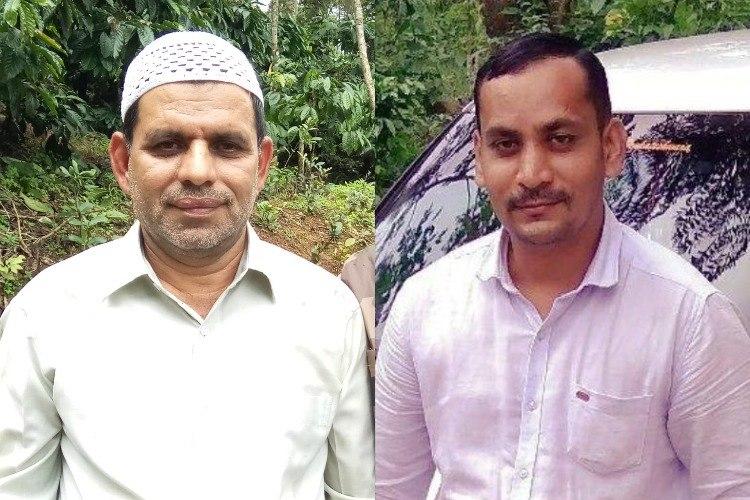
While Haji gave the land for the new houses, Lokesh pledged his for an accessible road that can be built towards the plot.
In the face of terrible tragedy, the only glimmer of hope is often people coming together in solidarity and healing each other with love. Placing humanity ahead of religious differences, a Muslim man and his Hindu counterpart from Kodagu district have united to donate over 1.5 acres of agricultural land for the rehabilitation of flood victims.
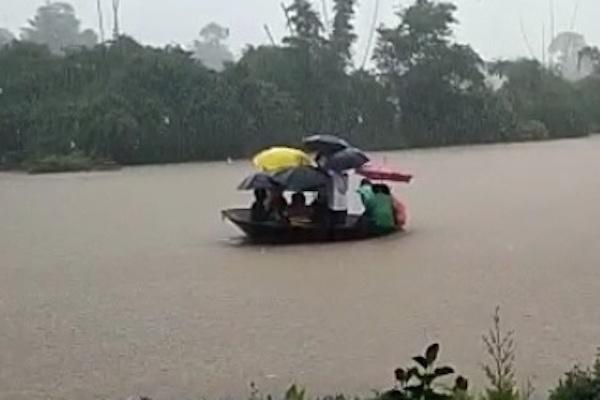
According to Kodagu Deputy Commissioner Annies Kanmani Joy, the recent rains accompanied by flood in the Kodagu region have washed away over 5000 homes in several villages close to the Kaveri river, including Kondangeri.
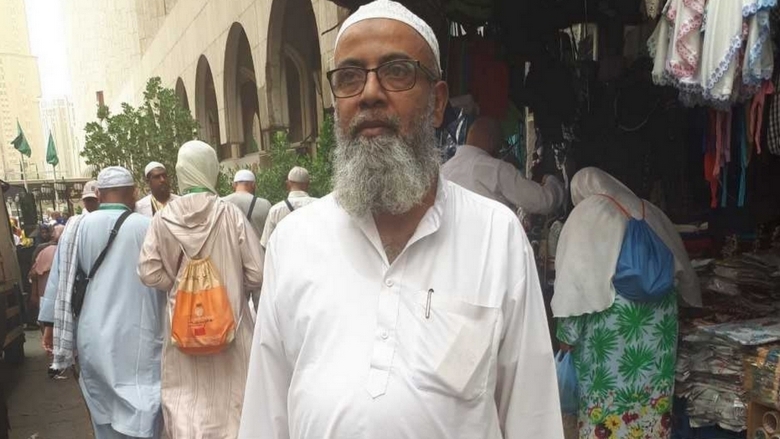
It was then that 55-year-old Abdulla Haji came forward with an offer to part with 1.5 acres of his 6-acre agricultural land and donate it to the Kondangeri Masjid Committee, so that the government can put it to use.
“When a person sees the people around him suffering so much, it is only natural that he would go and help others. Although I’m a not a rich farmer, I’m in a position to help them. I hope that the bereaved people get some strength from God to overcome their losses and grief,” Haji said.
As per Haji’s proposal, the land is suitable for building permanent houses for the flood victims. But while the Masjid committee was considering the housing proposal, they soon realised that the construction site will face the problem of an inaccessible road.
“But without any hesitation, another Kondangeri resident, Lokesh, approached the Masjid committee and pledged that the Masjid may attach his part of land to the charitable cause and lay down a road towards the residential project,” said Yusuf Haji, President of Kondangeri Muslim Jamath.
According to the Masjid authorities, most of the flood victims are labourers who’ve lost whatever little they had.
“Almost all the flood victims whose houses have been destroyed are labourers from coffee plantations. They had to forcibly leave their homes as the water level rose and in the process, they also lost their possession and valuables along with their home,” said Yusuf.
While government authorities are engaged in the rehabilitation process, there is a lack of temporary relief centres built by the government at Kondangeri village. Hundreds of victims, including women and children, irrespective of their religious beliefs, have taken shelter in relief centres at the Kondangeri Masjid while mourning their losses.
“Haji was thoroughly involved in serving the needy at the Masjid when they had started coming to this shelter. We think he was overwhelmed by their losses and felt that it was necessary to look into providing the people with long-term solutions,” Yusuf said.
This duo’s decision was hailed by the local authorities who confided that the district was facing a shortage of land to rehabilitate the victims of floods and landslides.
“There is already an ongoing process undertaken by the district administration to identify government land that has been encroached by a few agriculturists. The process of its recovery will commence. In the meanwhile, the generosity of people like Lokesh and Haji is really commendable,” Assistant Commissioner T Javare Gowda said.
This is not the first time that ordinary people in the flood and landslide prone coffee belt have rushed to help others. Last year, Abdul Latif of Suntikoppa had come forward and donated 2 acres of his estate land for the rehabilitation of victims.
Story by Story Infinity (Subs and Scribes Media Ventures LLP.)
source: http://www.thenewsminute.com / The News Minute / Home> Karnataka Rains 2019 / by Mubarak / August 20th, 2019
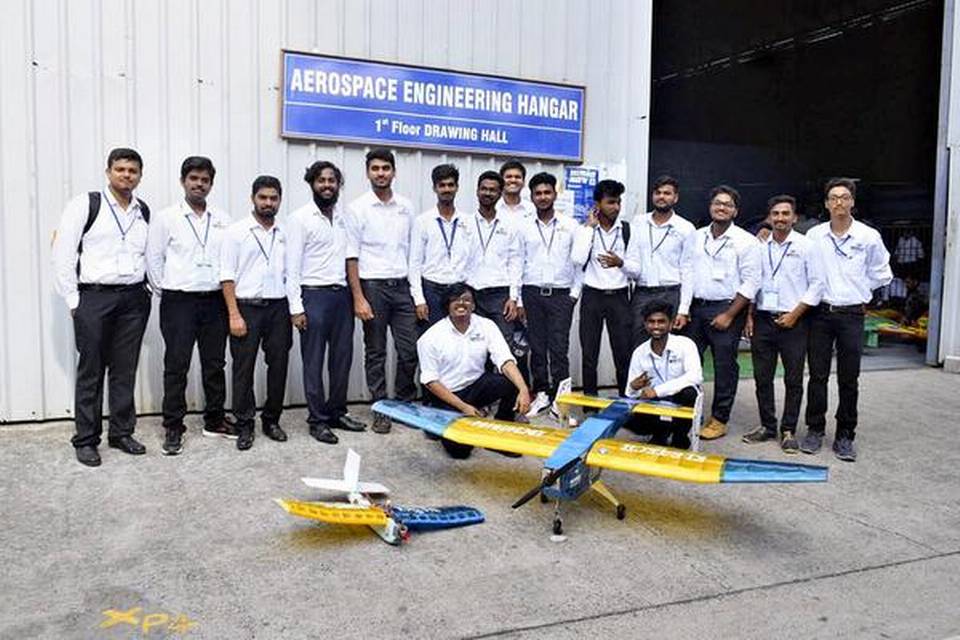
The AeroKLE team with their working models. | Photo Credit: Special Arrangement
They come first in regular class and third in micro class in national tournament
AeroKLE, a team of 17 students of KLE Technological University (KLETU), has secured the top place, in the regular class, at the national-level SAE India Aero Design 2019 competition held in Tamil Nadu.
In the recent competition, organised by SRM Institute of Science and Technology, they also secured the third rank in the micro class. As many as 146 teams from across the country took part in the competition.
The team comprised Vineet Anand Bedarman (captain), Amit Allimatti, Sayyed AhmedZuhair, Rohit Anvekar, Rahul Pattar, Shridhar Hadimani, Om Prakash Patel, Yajnesh Poojari, Koustubh Annigeri, Sujay C, Nilesh Bandekar, Mallikarjun Pattanshetty, Yeshwanth Kumar, Ajey Joshi, Alex Steven Dharmdas, Calvin Lobo, and G.V. Srikar.
The team was guided by Head of School of Mechanical Engineering, KLETU, B.B. Kotturshettar; Head of Centre of Material Sciences Nagaraj Banapurmath, and faculty coordinator G.M. Hiremath.
They were involved in designing and testing different prototypes in Hubballi.
They also optimised the final aircraft designs and submitted the technical design report at the event.
The report too was praised by judges and was has adjudged the ‘best technical design report’ at the event.
The students have bagged a purse of ₹1.35 lakh.
At the contest, the regular class demanded the highest payload to be lifted, whereas the micro class demanded the highest payload fraction.
The teams had to conform to the mechanical and electrical limitations as prescribed by Society of Automotive Engineers (SAE), India.
Experts from the Indian Space and Research Organisation, the Defence Research and Development Organisation, Hindustan Aeronautics Limited, and National Aerospace Laboratories were the judges for the event.
source: http://www.thehindu.com / The Hindu / Home> News> States> Karnataka / by Special Correspondent / Hubballi – August 02nd, 2019
The award will be conferred on him by the President of India on August 29
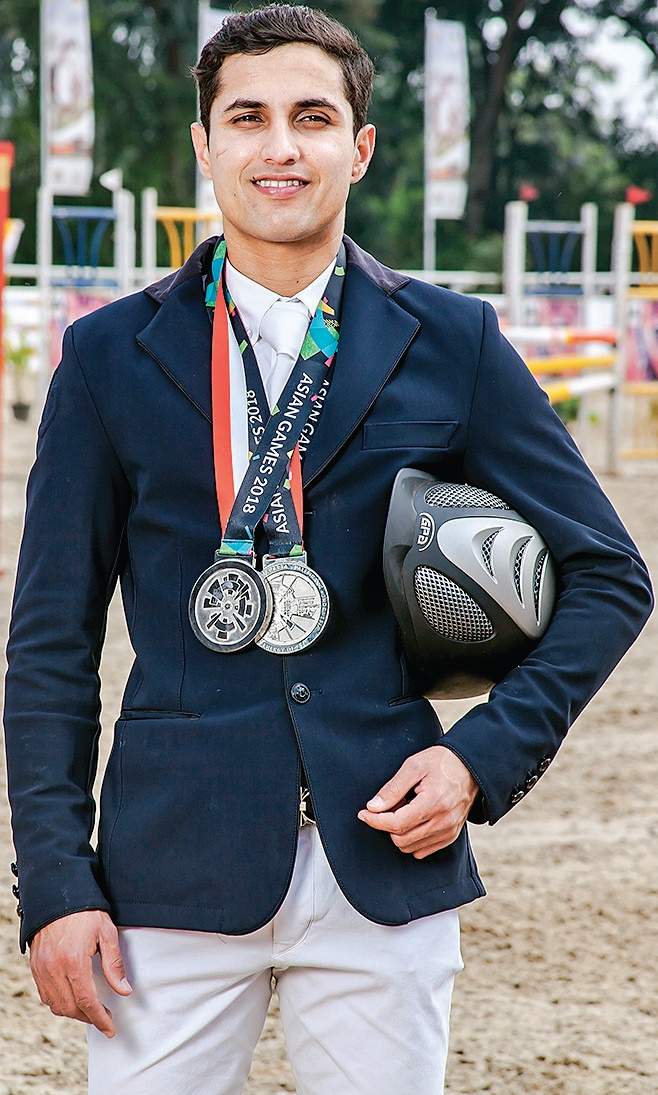
In 2018, Mirza won two silver medals at the Asian Games in Jakarta
Bengaluru :
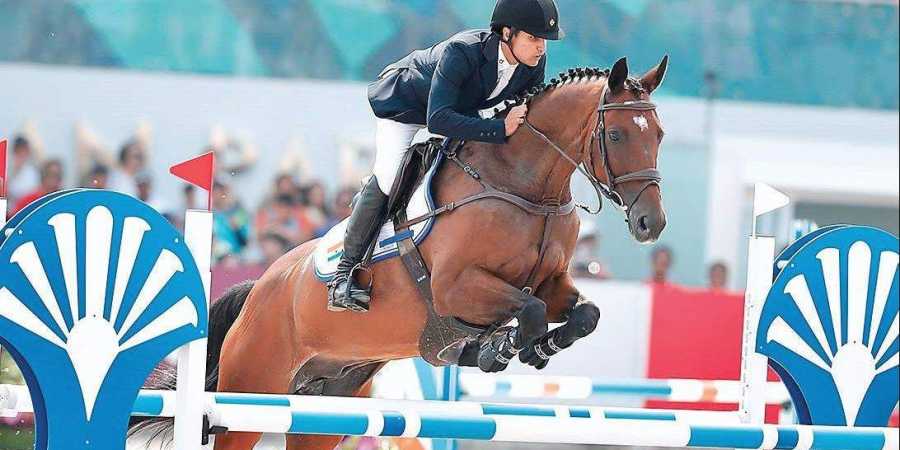
Bengaluru’s Fouaad Mirza is currently on cloud nine. After having brought laurels to the country with two silver medals in the 2018 Asian Games, the equestrian has now made it to the list of Arjuna awardees this year. The award will be conferred on him by the President of India on August 29. Speaking to CE, the 27-year-old expressed his elation, saying, “I did not believe it at first, it took some time for me to wrap my head around it. This is a true honour.” A dedicated sportsman, Mirza, who is in Germany, said his current focus is on training but upon returning to the country, his focus will be on the award.
In 2018, Mirza ended the country’s 36-year long wait for an equestrian win by bagging two silver medals at the Asian Games in Jakarta. “A lot of hard work went into achieving this feat. One has to be physically prepared, especially for a lot of hours on the saddle and in training. We started training for the Asian Games a year in advance in order to ensure smooth execution,” he recounted.
Taking us back to where it all began, Mirza recalled his childhood as the time when things began to take shape. An avid animal lover, Mirza would spend ample time with dogs, cats and other four-legged creatures. His father, Dr Hasneyn Mirza, who is a veterinarian and specialises in horses, had a great impact on him. At the age of five, Mirza started to ride at The Embassy Riding School as a hobby but little did he know that this hobby would lead to a competitive calling.
The biggest difference over the years, however, has been the upgrade in the infrastructure of training facilities and on the young talent in the field.Talking about his next big challenge, Mirza says he has blinkers on and is focused on the 2020 Tokyo Olympics, where he aims to qualify and represent the country.
source: http://www.newindianexpress.com / The New Indian Express / Home> Cities> Bengaluru / by Muneef Khan / Express News Service / August 20th, 2019
Around 50 residents of Kodagu’s Goodugadde village were stranded in their flooded homes on Friday morning.
Around 50 residents of Kodagu’s Goodugadde village were stranded in their flooded homes on Friday morning, hoping that help would come before the river Cauvery would take away their lives.
Luckily for Goodugadde’s residents, help came in the form of eight Good Samaritans, who ferried them to safe places through small iron-made coracles.
Mustafa, a 32-year-old activist from Kodagu, suspected that people were stranded in Goodugadde and other villages along the banks of the Cauvery river. Mustafa had heard from the local grapevine that many people had not left their homes despite a flood warning.
At around 6 am on Friday, Mustafa and his friends Ranjith Kumar, Afzal, Iliyas, Shafiq and four others from Siddapura, were anxious as the Dubbare Rafting Team was busy with rescue elsewhere.
Mustafa and his friends rushed to the Siddapura Police Station and requested the police to lend them the iron-made coracle lookalikes that the police had kept in the evidence room, which they had seized when they busted an illegal sand mining ring.
“We call it thappe in Kannada. They are circular, iron made vessels sand miners use to transport sand. It’s smaller than a coracle but bigger than the round vessels used to carry sand in construction sites. We wanted those so we could row it and look for stranded people,” Mustafa explains.
When the group reached Goodugadde, they found several senior citizens, children and middle aged people stranded in their flooded homes. Many were sitting on their rooftops, while some of them clung to trees, waiting for help.
“There were about 50 people. We began rescue at 7am and it went on till 11 am. We lost count of the number of trips we made to bring all of them to safety. They were sent to relief camps in Siddapura. By 12 pm, the Dubbare Rafting Team came to help us and we continued rescue operations in Baradi and Kakkattagadu villages,” Ranjith Kumar says.
Mustafa, Ranjith and the team of local rescuers claim that they are experienced swimmers and that they had volunteered during rescue operations in the floods that hit Kodagu in 2018.
“We have lived along the banks of river Cauvery all our lives. We have a very close relationship with the river and swimming is the first thing we learnt as children. We are expert swimmers and if our skill could be put to use to help people in need, then it’s our duty to help them. What is the point of being an expert at something and not helping those who could benefit from it?” Mustafa says.
Mustafa and his motley crew continue their rescue operations even now. “We will help as much as we can. Our people have seen too much damage due to rains and floods. Currently, we are going back and forth Goodugadde and recovering their belongings,” Mustafa adds.
source: http://www.thenewsminute.com / The News Minute / Home> Karnataka Floods / by Theja Ram / August 10th, 2019
Taqiullah Khan leads at least five Umrah groups to the holy city every year (Photograph: Sahim Salim / Khaleej Times )
62-year-old Taqiullah Khan has also performed Umrah an epic 126 times.
Indian national Taqiullah Khan performed Haj for the first time in 1994. The Bengaluru resident, now 62, has undertaken the journey 25 times in as many years ever since.
Khan is now back in Makkah to perform his 26th Haj.
Khan has also performed the lesser pilgrimage, Umrah, an epic 126 times!
For most Muslims, the holy journey is a once-in-a-lifetime experience due to the costs, difficulties and sacrifices involved. For Khan, it’s an annual affair, thanks to his tours and travels company.
“I have been coming here so many times that I know Makkah and Madina better than Bengaluru,” he quipped.
The first Haj
Interestingly, Khan’s mother had “predicted” that Haj would become an annual journey for him.
A year before he went for his first Haj, he had sent his parents for the journey in 1993.
“I requested that they pray for me to be able to visit the blessed land. When my mother came back, she told she had made this particular dua (supplication) so much that she believed I would perform Haj every year.”
Just like his mother predicted, Khan’s journey began in 1994. “I went as a Haji (pilgrim) like any other Muslim back then. I went back again the next year with my wife.”
He founded Tawakkul Tours and Travels in 1996 and applied for the Haj quota. He has been coming as a Haj guide ever since.
The father of three doesn’t necessarily have to come to the holy city along with the groups that his firm is responsible for. “For me, this is an honour from Allah and I wouldn’t miss it for the world. Most people consider themselves lucky if they are able to undertake the journey once in their lifetime. Allah has blessed me to perform Haj every year.”
Khan also leads at least five Umrah groups to the holy city every year.
He holds something called the Munazzam licence, which is granted to Haj organisers. “So you see, Allah has blessed me so much that this is actually my bread and butter, too.”
The Indian’s wife and two of their three children are Hajis as well.
The ‘missed’ Haj
Khan has just missed the Haj of 1999 since 1994. He had suffered a motorbike accident and his doctor asked him to avoid undertaking the arduous journey.
“But I have still performed Haj 25 times in 25 Gregorian years because I was lucky enough to get two pilgrimages in 1996.”
That year, Dhul Hijjah – the Islamic calendar month in which the journey is undertaken – came twice in 1996: January and December.
Preparations
Khan’s company gets a quota of 100 pilgrims every year. “This time, our quota increased by seven, Alhamdulillah.”
Khan said he starts preparing for the Haj season as soon the fasting month of Ramadan ends. “That’s when the government of India announces the Haj quotas.”
Khan’s biggest strength is his family. “They have been very supportive of my endeavours. Not once have they asked me to depute someone else to lead the groups since they, too, believe that this is an honour.”
Safety guaranteed
Khan is most impressed with the way the annual pilgrimage is organised.
“In the 25 years I have been leading Haj groups, not once have I heard a Haja (female pilgrim) complain about harassment. Not once has anyone complained about robberies or any serious crimes.
“It is amazing how the government manages to organise all this so efficiently year after year despite receiving in excess of two million pilgrims.”
Most memorable Haj
Though Khan maintained that each of his 25 pilgrimages was special, his first Haj in 1994 is the “most memorable”. “Haj season fell in the month of May. It was very hot then. But it remains the most special Haj for me. I remember every single aspect of that maiden trip. I enjoyed it.”
During the Haj of 1997, when a massive fire broke out in the tent city of Mina, Khan and his group of 60 Hajis were just 500 metres away from the tent in which a cylinder exploded. The tragedy had claimed over 200 lives.
“The police evacuated us and we managed to escape. We came back to the holy city. Thanks to the government’s efficiency, we were able to go back to Mina the very next day. That’s another Haj memory that will always remain with me.”
When asked how long he plans to continue the annual journey, pat comes the reply: “As long as my health permits, I don’t plan to give this up.”
1. Photo ban lifted: According to Takiullah Khan, photography was banned in the holy sanctuary till about a decade ago.
2. End of ‘rocket stretchers’: In the 90s, elderly or disabled pilgrims would be taken for circumambulation on a stretcher by four men, who would “speed through the crowds”. “It was a very dangerous practice and people would just move out of the way as they were afraid of getting hurt. Thank God, we have wheelchairs now,” said Khan.
3. Drinking Zamzam from the source: Till about five years ago, pilgrims could descend to the Zamzam well and drink the holy water from its source.
4. Just two ‘mataf’ areas: Masjid Al Haram has four Mataf (areas to circumambulate the Holy Kaabah) floors today. It used to be just two when Khan first went for Haj.
5. Ascending Mount Safa: Pilgrims could previously ascend the Mount Safa and look at the Holy Kaabah while praying. Today, it stands behind a glass enclosure.
source: http://www.khaleejtimes.com / Khaleej Times / Home> Region> Saudi Arabia / by Sahim Salim (reporting from Makkah) / August 08th, 2019
Karnataka’s BJP govt has cancelled Tipu Jayanti, celebrating a ruler once hailed for his bravery and genius, but seen by the right wing as a bigot. We must reexamine Tipu Sultan.
The BJP government in Karnataka has done away with Tipu Sultan celebrations. But, as it is vital to remember Tipu Sultan, in this first-part series, I lead you into the life of Tipu Sultan, the ruler of Mysore.
The recent efforts of the Hindu right to project him as a Muslim bigot show that their political stakes in him have changed.
Any opinion on the rule of Tipu Sultan in Mysore will in fact be incomplete without mention of the political situation prevailing in and around Mysore towards the end of the 18th century. Mysore, which had emerged from the ruins of the Vijayanagar empire, was moulded into a small but dynamic Hindu state primarily during the rule of Chikka Devaraja Wodeyar in the early decades of the 18th century.
The Wodiyar kings, who had been ruling Mysore for over 300 years, were only nominal rulers by then — the actual power was wielded by their prime ministers or ‘dalavai’.
Tipu’s father, Haider Ali, began his career in Mysore around 1749, as a soldier under one of these powerful ministers.
He used his tact and bravery to stave off Maratha raids into Mysore, fought against the British and expanded Mysore’s territory down south to the coast of wealthy Calicut. He thus eased himself into the title of the ‘sarvadhikari’ or ‘regent of the kingdom’ in 1760.
After Haider’s death in 1782, Tipu took over his father’s position, keeping the Wodeyar king as a proxy but publicly continuing to put on a show of respect. Tipu’s appropriation of this position would not have been possible without the assistance of some of Haider’s closest friends and advisors as well as the acquiescence of the local populace, who had by then come to see a stronger and more prosperous Mysore under Haider and the young Tipu.
From Madras, the British were cautiously observing the rise of Mysore — and resented Haider’s and Tipu’s push into Malabar.
Tipu Sultan took over Mysore in 1782: He remains its most iconic ruler. (Still from The Sword of Tipu Sultan: Via Author)
A 17-year-old Tipu had given the British a fright by galloping with his army into the East India Company’s garden house near the beach in Madras.
He rattled them so much that the governor there fled offshore in a small boat. A series of four Anglo-Mysore Wars started in 1767. These propelled the hitherto unknown Kingdom of Mysore into the powder rooms of Europe and America.
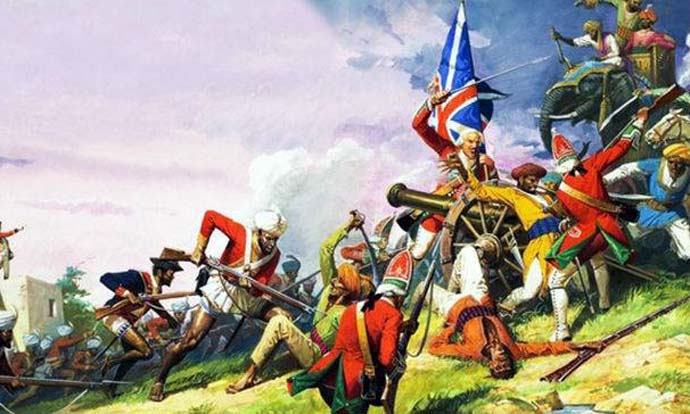
The first war saw Mysore dictating terms to England at the gates of Madras; the second war was Tipu’s brightest moment. At the battle of Pollilur (1780), the sun-and-tiger-stripes banner of Tipu’s Mysore oversaw the worst disaster that ever befell an English army in India — out of 3,000 men in the British army, only about 400 survived.
With these two victories, the mood in England began to change — and a vicious propaganda and diplomatic campaign against Mysore began.
By 1785, one in seven Englishmen in India was imprisoned by Tipu. By this time, the British had won in Plassey and Buxar; the whole of India except the Punjab and the Marathas had capitulated to them. Tipu’s Mysore stood as a bulwark against the British. What rankled the British even more was that here was a native ruler — or ‘despot’, as they branded all of them — who was different from the others.
He did not while away his time in pleasure orgies, nor leave the management of state to some palace coterie; and not once did he ask the British for help against his neighbours. He created an army which, in the words of his nemesis, Arthur Wellesley (later Duke of Wellington), was “the best fighting force in the whole of India”.
He took advantage of the enmities being played out in Europe, recruited the French as willing allies and drilled his army in modern European manoeuvres.
Giving It Back: Unlike several other princely states, Tipu Sultan took the British head-on in ferocious battles. (Picture: India Today)
Mysore was the first state to demonstrate the efficacy of rockets in war by modifying what was until then a mere firecracker into something that could carry a sword or wooden blade with it. Tipu even sent back French weapons with a letter stating they were substandard compared to the ones in his arsenal.
Working almost 18 hours a day, he kept meticulous records of revenue and personnel across his kingdom. He created a set of revenue regulations that rationalised land taxes — and even offered subsidies to farmers if they farmed more land. Landowners and temple trusts with excess landholding were asked to hand it over to landless or tenant farmers. He created a navy that sent ships with his diplomats to meet the Ottoman sultan in Constantinople and the French emperor in Paris. He built a powerful navy, consisting of 20 battleships of 72 cannons and 20 frigates of 62 cannons.
A separate board of admiralty was established in September 1786 and massive dockyards at Jamalabad, Wajidabad and Majidabad were constructed on the west coast to build 40 warships and a number of transport ships to strengthen the naval power. The 200-odd forts under Tipu’s reign were mostly named on Hindu script ions.
An elite group of Brahmin civil servants was nurtured during his early rule to make sure that revenue was properly collected. His forts were among the strongest in south India and his currency so beautifully minted that the Mughal emperor apparently felt slighted at receiving coins more beautiful than his own — he even minted coins with Hindu deities on them.
Deep in the midst of war, he wrote of receiving silkworms to create the silk factories of Mysore.
Sugar and paper factories were established for the first time under him. Sword blades and gunpowder were manufactured locally. He was also liberal with gifts to Hindu religious establishments in Mysore and Malabar after subduing it.
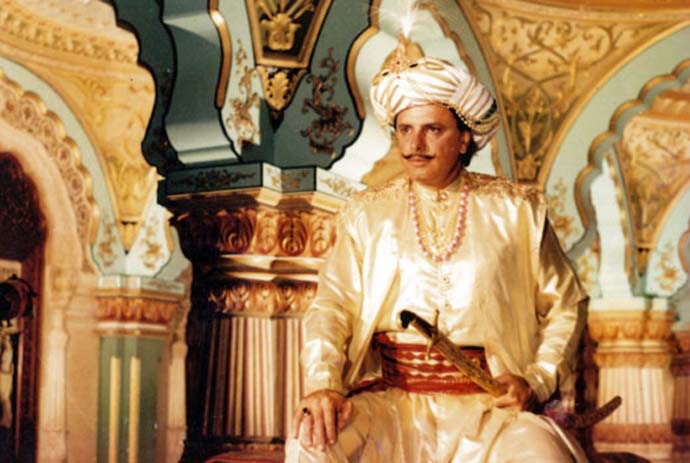
A Visionary Leader: Tipu Sultan was an extraordinary mix of courage, skill and heart. (Still from The Sword of Tipu Sultan: Via Author)
The third Anglo-Mysore war in 1792, with Cornwallis at the helm of the British army, did not go well for Tipu.
He was hard-pressed by the British-Maratha-Nizam allied powers to surrender half his kingdom, submit to a war indemnity of ₹3.3 crore — and deliver two of his sons as hostages to the British. Thanks to his financial prudence, he managed to pay the British their ransom and have his sons released a year earlier than the stipulated three years.
This period between 1792 and the fourth Mysore war in 1799 was one of great tribulation for Mysore — rebellions raged and finances were tight on account of the indemnity paid. However, it is to Tipu’s credit that not once during his rule, in the midst of almost incessant war, did his subjects suffer from famine or pestilence.
At the same time in British Bengal, millions of Indians perished in a famine…
(To be continued).
source: http://www.dailyo.in / DailyO / Home> Open To Opinion> Politics / by Sanjay Khan / August 03rd, 2019
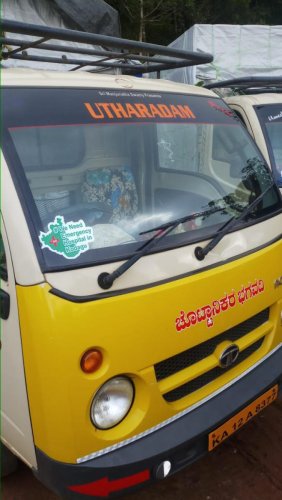
A sticker supporting the campaign for an emergency hospital in Kodagu pasted on a vehicle in Mahadevpet.
In support of the social media campaign ‘We need emergency hospital in Kodagu’, people pasted stickers on their vehicles in Mahadevpet on Tuesday.
During a campaign carried out by the members of Team Coorg, in association with Social Democratic Auto Union, the stickers were distributed to the vehicle riders free of cost.
The riders pasted the stickers on their vehicles, supporting the demand to provide a speciality hospital for Kodagu. The stickers are published by Team Coorg.
Team Coorg Founder President M N Nasir said that the campaign has gathered good response from the people.
Social Democratic Auto Union President Suleiman said that there is a need for a multi-speciality hospital in Kodagu to save lives.
Surpassing all barriers, people should support the movement urging the government to sanction the hospital, he added.
The members of Team Coorg requested the general public avail the stickers and paste them on their vehicles.
Team Coorg members Shamir, Khalil Pasha, Faizal, auto union members Rafique, Jagadish and Akram were present.
source: http://www.deccanherald.com / Deccan Herald / Home> State> Mangaluru / by Adithya K A / DH News Service, Madikeri / July 16th, 2019
Dr. Salma Suhana, who is is currently pursuing Superspeciality Neurology at S S Institute of Medical Sciences and Research Centre, Davangere, has won the American Academy of Neurology’s prestigious 2019 International Scholarship Award.
She has been awarded the scholarship in recognition of her study on Cerebral Venous Thrombosis.
A native of Mangalore, Dr Salma completed her MBBS at Fr Muller Medical College and Hospital in Mangalore and has won two gold medals from the Rajiv Gandhi University of Health Sciences. She completed her MD at Kempegowda Institute of Medical Sciences in Bengaluru.
American Academy (AAN) of Neurology has invited her to participate in the annual meeting of international neurologists to be held in Philadelphia in the US in May 2019. She is one among 30 selected recipients of the prestigious honour from across the world.
source: http://www.thecognate.com / The Cognate / Home> Inspiring Muslims / by Shaik Zakeer Hussain / January 11th, 2019
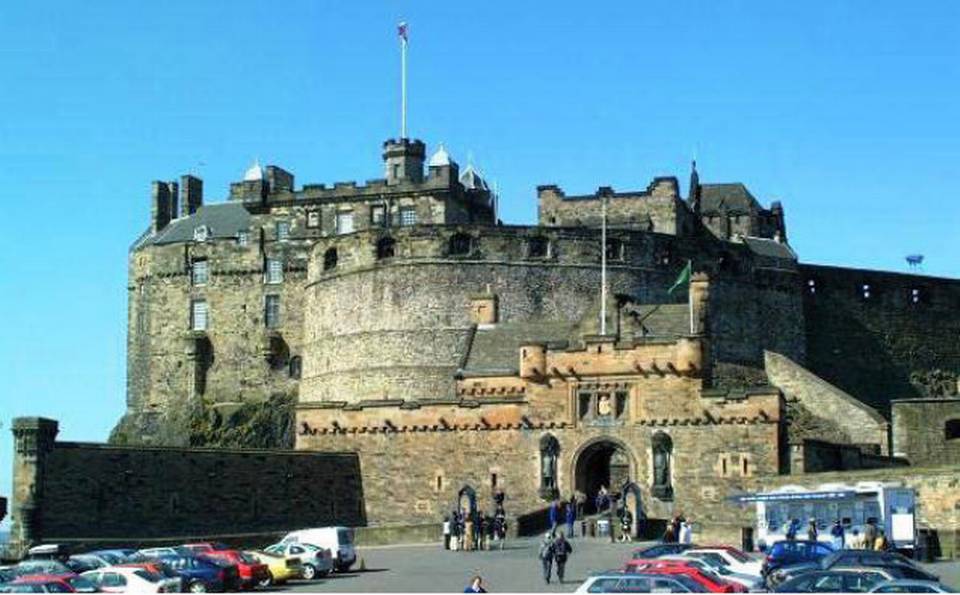
The view of the 12th century edifice at Edinburgh castle that houses the National War Museum.
The legend of Tipu Sultan is still alive in far away Scotland
It is an irony that Tipu sultan, the ‘Tiger of Mysore’, whose birth anniversary celebrations in India became a contentious issue recently, in Scotland whose soldiers and commanders fought for the dissemination of this great warrior king, the only Indian monarch to have died on the battlefield fighting the British, is cherished and commemorated in song, dance, drama, opera, in novel and in paintings. A wealth of personal effects and curiosities of Tipu Sultan have found way to numerous art galleries and museums in Scotland, particularly in its capital Edinburgh.
The participation of the Scots in the affairs of the East India Company began immediately after the unification of Scotland with England through an Act of Union in 1707. Since then Scottish people began coming to India as soldiers, generals, writers, administrators, traders, merchants and missionaries. But they excelled in their service as military generals and commanders. A separate Regiment of foot, the ‘75 Highlanders’ 75th .Highlanders was raised in Scotland to deal with Tipu Sultan. Scottish generals like Sir Hector Munro, Baillie, Beatson, Fraser, Gordon, Dunlop and others participated in the military operations against Tipu. The Scots, more than the English were in the forefront of the British forces in almost all the Mysore wars fought between 1760 and 1799.
After Tipu was finally dismembered by the British under the command of General Arthur Wellesley, the future Duke of Wellington, the images of Tipu Sultan as well as Srirangapatnam proliferated in Britain. No other Indian ruler, against whom the British fought and won, captured the imagination of the average Britisher at home, as much as that of Tipu Sultan. There were tales of mythical proportions in circulation about his valour, reckless energy and merciless acts of tortures meted to the captured British soldiers. It is said that British housewives used to threaten their weeping babies with the ‘arrival of Tipu’ to silence them
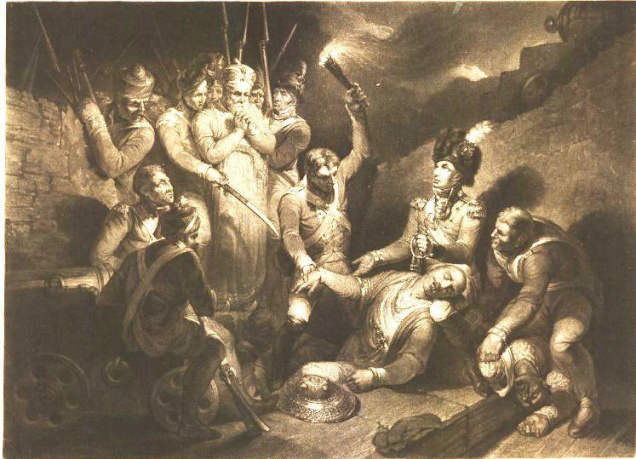
The images of Tipu Sultan and his capital, Srirangapatnam became subjects for paintings and art sketches throughout Britain. When Ker Porter’s Panorama a single large painting of Tipu Sultan was displayed in Edinburgh, there was euphoria among the Scots to have a glimpse of it. The celebrated British painters J.M.W. Turner and J.S. Cotman painted scenes of Srirangapatnam and other places in Mysore besides the portraits of Tipu. Sir David Willkie, the famous painter of the day was commissioned by the widow of Sir David Baird, and his poignant painting Discovering the body of Tipu Sahib on 4 May, 1799, was exhibited in 1838 in the Royal Academy of Arts in London. The Scottish General David Baird had spent several years in Srirangapatnam as a prisoner of Tipu before avenging in the final assault on Tipu.
Alexander Allen an artist of great repute travelled to India to personally see the hill forts in Mysore kingdom before he produced captivating sketches. William Darnell and Beckford also produced several sketches that survive even today. Holmes’ Select Views of Mysore, and Hunter’s Picturesque Scenery in the Kingdom of Mysore also evoked great enthusiasm in Britain. The Mysore wars offered exciting subjects and artists who never even visited India responded to the popular appeal of the Tiger of Mysore. As a result of such prolific paintings, the image of Tipu was so much etched in the collective memory of the Britishers that decades later, when Raja Ram Mohan Roy visited England, he had to confront hostile crowds as he was mistaken to be a descendant of Tipu Sultan. The head gear he wore was similar to the huge turban Tipu wore.
Returning soldiers of Scotland provided Sir Walter Scott with anecdotes for his novels on India. Several dramas and stage plays depicting Tipu and his fall were written and enacted at the Royal Corbug theatre in Edinburgh. Events at Srirangapatnam also appear in the writings of the novelists like Charles Dickens, Wilkes Collins and Jules Verne.
The remnants of Tipu Sultan’s dismantled throne, his numerous swords, daggers, bejewelled sword-belts, hukkas, ivory caskets, and several other artefacts were displayed in Glasgow and Edinburgh besides London.
Tiger in Museum:
In 1999, National Museum of Scotland, Edinburgh, as a part of the bi-centennial celebrations of Tipu’s death, held a special exhibition and decided to make Tipu’s Toy Tiger as a special exhibit along with several other Tipu’s memorabilia. But as the antique Toy Tiger was advised by exerts not to be moved from Victoria & Albert museum, fearing damage in the transit, a replica of it was made for the occasion.
The Toy Tiger is an awesome life size wooden toy seen devouring a European in military uniform. This impressive toy has cast a spell over generations of admirers since 1808 when it was first displayed in the Indian section of Kensington Museum now called Victoria & Albert Museum. The Toy in its body has a mechanical pipe organ hidden and by turning a handle, creates wailing shrieks and a loud roar. The design of this Toy Tiger is said to have been inspired by the death of the son of the Scottish General, Sir Hector Munro, a bête Notre of Tipu Sultan.
Tipu’s Memories at Edinburgh Castle:
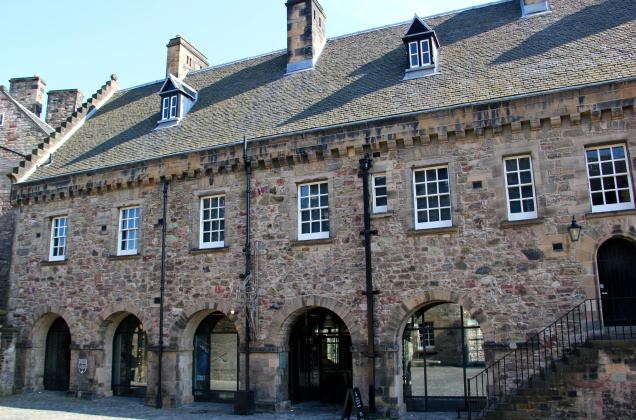
The most significant of Tipu’s memories lay at the imposing castle in Edinburgh, Scotland’s capital. This historical castle, perched on a hillock with a commanding site, is a national symbol of Scotland. Inside the castle is located ‘National War Museum’in which the ‘the Battle Honors” of the Scottish Regiments are displayed. Here are seen numerous ornamental swords belonging to the several prominent Scottish Generals who saw action in the Mysore wars. Swords presented to Generals as souvenirs and medals are also on display What is surprising is the words, ‘Carnatic’, ‘Mysore’, and ‘Srirangapatnam’ carved in stone, are seen on the wall of this Museum indicating the importance the Scots bestowed on their combats during the wars against Tipu.
At the Edinburgh International Festival (EIF), held annually in August with several programmes of music, theatre, opera and dance, Tipu’s memories also come alive . The closing ceremony of the EIF held at the Castle is marked by spectacular display of fireworks. The scene is suddenly shrouded in darkness and bellowing smoke as rockets and explosives presents dramatic images of a big hill-fort under siege. This is an imitation of the Mysore wars when Scottish soldiers in India were familiar with such sights when deadly fires were showered on them from the impregnable forts like Nandidurg, Savandurg and Ootradurg in Tipu’s kingdom. It is said that four tons of explosives are used that evening for the celebration of such fireworks. Tipu Sultan, the ‘Tiger of Mysore’ must have died two centuries ago, but his enduring legend continues to be celebrated in far away Scotland with genuine nostalgia.
source: http://www.thehindu.com / The Hindu / Home> Friday Review / by K.S.S. Seshan / Hyderabad – March 17th, 2016
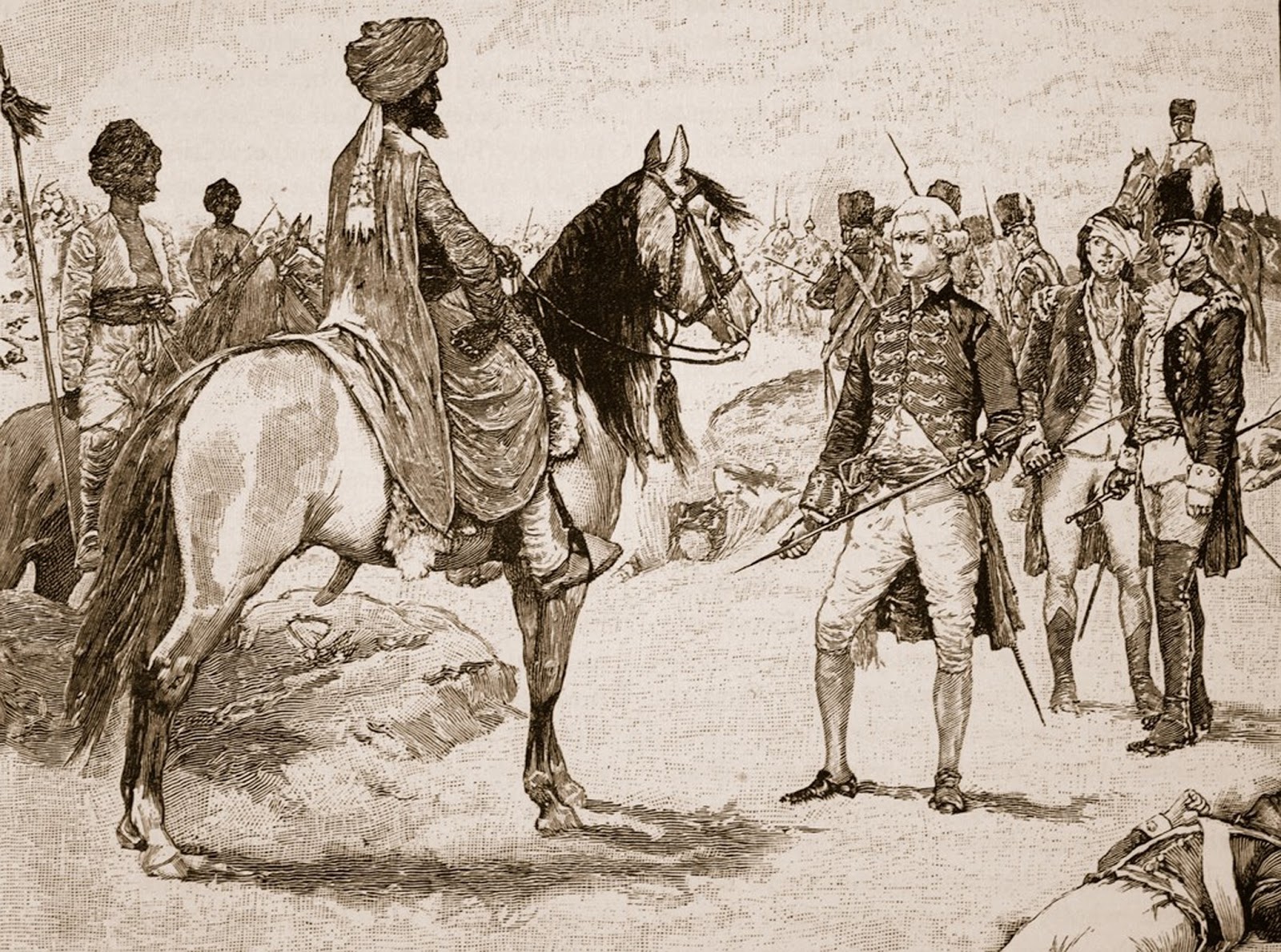
Surrender of Baillie to Hyder Ali, 1780, illustration from ‘Cassell’s Illustrated History of England’ (20th century) 1780
It was 1765 and a Duke in faraway England known for breeding race horses named his foal Hyder Ally. A few years later in 1782, and many more thousand miles away at the other end of the world, a single mast ship named Hyder Ally gave the fledgling navy of United States of America one of its greatest victories. How are these two events related and what connection did they have with the people of the erstwhile Kingdom of Mysore, the precursor to modern day Karnataka state, India?
In 1749 a 27-year old youth Haidar Ali (Hyder Ally as the British spelled his name), born at Budikote in modern day Kolar district, Karnataka put his military skills in action for the Mysore Army during the nine month siege of Devanahally Fort against a Poligor. Poligars (or Palegaras in Kannada language) were the local strong men, each controlling a few fortified settlements prior to the British rule. In early 1750s Haidar was also part of the action between the French and English in their struggle to install a person of their choice as Nawab of Arcot in which the Mysore Army sided with the English. Haidar Ali increased his stature among the military circles of the Mysore Army and was elevated asFaujdar of Dindigul in 1755. He successfully led Mysorean resistance to the Maratha invasion in 1759 and was consequently elevated as the Chief Commander of its army. Haidar’s perseverance in fighting his political foes paid off and in 1761 he was the lone survivor around the utterly weak Mysore King of the Wodeyar dynasty. He proclaimed himself a Nawab soon and found himself the de-facto ruler of Mysore Kingdom, being the most successful in protecting it from invasions by both other Indian kingdoms as well as Europeans 1. By then the British East India Company had its eyes set firmly on peninsular India having taken control of Bengal in 1757 as a consequent of the Battle of Plassey.
Back in England, Peregrine Bertie was the 3rd Duke of Ancaster in England having succeeded his father in Jan 1742 2. He raised a regiment of foot for the King of England during the rebellion in Scotland in 1745 3. He was subsequently promoted to the rank of a General in the Army in 1755 and later as a Lieut. Gen., in 1759 4. Peregrine was a leading horse racer who started a number of famous racing lines 5. He was appointed Master of the Horse to Queen Charlotte, Queen of Great Britain and Ireland in 1765. Peregrine as a military administrator was probably aware of the military and political happenings in India. In fact he was transferred in a year from the post of the Master of the Horse to the Queen to that of the King, where he was ‘responsible for overall management of all the royal stables, horses, carriages’. This transfer was due to the changes affected by the stock-holders of East India (EI) Company in England. The stock-holders were apparently alarmed by the acts of the English Prime Minister Lord Chatham to curb the influence of EI Company which by then controlled huge resources and land across in India. Given this background Peregrine was probably informed of the meteoric rise of Haidar Ali in south India’s political and military theatre. Indeed in 1760 an overconfident English Army detachment under Major Moore tasted its first defeat at the hands of Mysoreans under Haidar Ali at Trivadi near Pondicherry. And through that decade Haidar continued to spoil the political, economic and military aims of East India Company in Peninsular India with ramifications beyond this country given the global nature of the company’s trade. Did the military acumen of this Mysorean soldier play a role in Peregrine in naming his foal Hyder Ally in 1765 6,7? This may not be surprising as another race horse breeder in England named a foal Tippoo Saib in 1769 8, 9. Just a couple of years ago in June 1767, 17-year old Tipu Sultan (or Tippoo Saib as the British preferred to call him), heading a small force of the Mysore Army, stormed East India Company’s HQ in south India at Madras and nearly imprisoned the Madras councillors who threw themselves into the sea and escaped in a dingy. A year later Tipu recovered Mangalore from the British who fled the fort leaving behind their sick and wounded 10. The military and political deeds of this father-son seem to have left an impression on the British psyche.
US Navy’s tryst with Hyder Ally
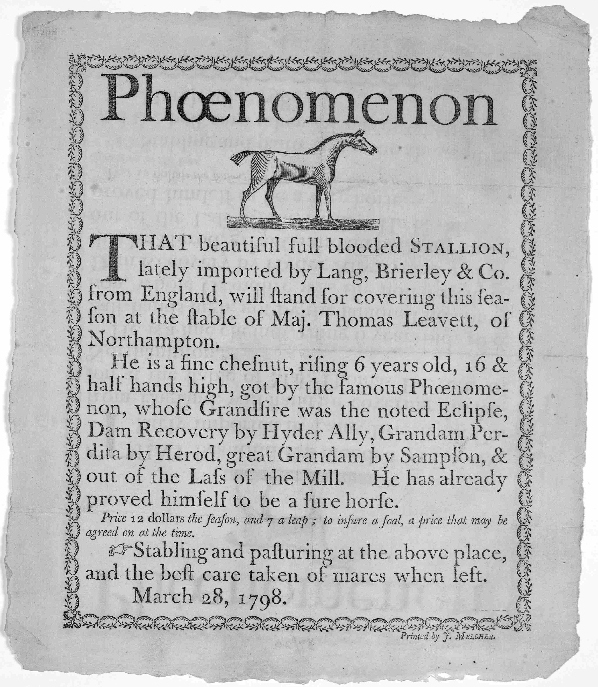
Chance a race horse imported into USA by Col. Tayloe was a line of Peregrine’s Hyder Ally 8,11. Interestingly foals within America were also being named Hyder Ally (and Tippoo Saib) in 1770s.
A pamphlet advertisement for a stallion of Hyder Ally’s line published in the city of Portsmouth, USA in 1798. Accessed from Library of Congress, USA on November 5, 2017 from this link.
The first Hyder Ally to be foaled in America was in 1777 and four other foals were recorded with the name in 18th century 12, 13. But something very interesting was recorded in eye witness accounts of America’s history in 1770s. An upheaval overtook the country in 1775 as ordinary Americans rose against the Government of Great Britain, declared independence and flew their own flag 14, 15. Apparently the first flag of the Union, now the US national flag- the Stars and Stripes, sent to the state of Maryland was hosted on a sailboat by teenaged Joshua Barney at Baltimore in October 1775 who served the US Navy since then.
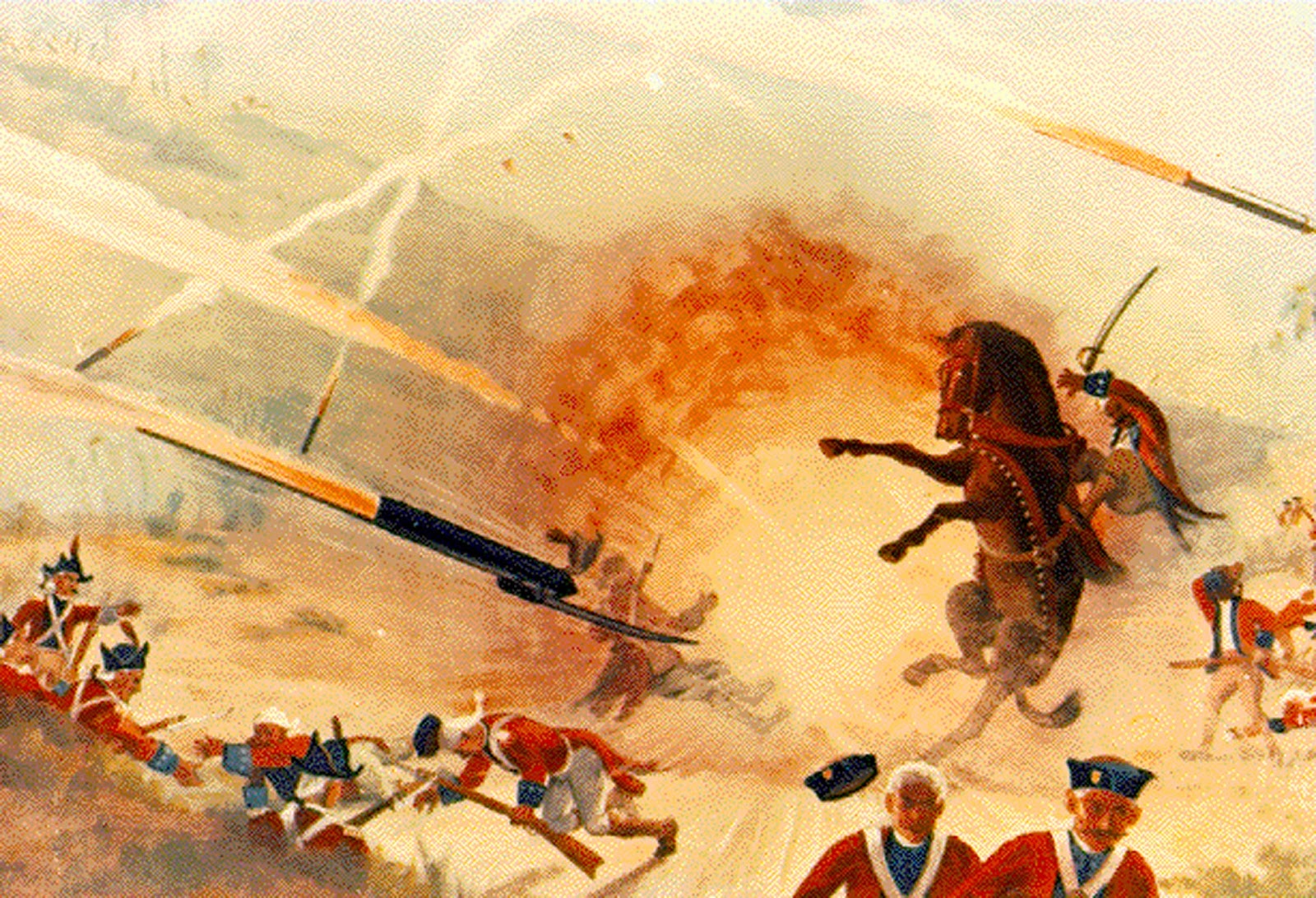
‘Rocket Warfare’, by Charles H. Hubbell (1898–1971) captures the humiliation of British at the Battle of Pollilur (Sep. 1780) by Mysorean war rockets
In 1780, in far-away Mysore Kingdom, America’s ally against the British through the French, the East India Company was suffering one of its worst reverses in its military history. The reverberations of the humiliation of British at Battle of Pollilur in September 1780 inspired the Americans who received the news 16 on 23 August 1781. On 19 October 1781, the British land force led by Charles Cornwallis (who later led EI Company’s army and its Indian allies to defeat Haidar Ali’s son Tipu Sultan in the 3rd Anglo Mysore War) surrendered to the Americans led by George Washington. Nine days later Cornwallis’ surrender was celebrated at Trenton, New Jersey with the town being decorated with American colours. The town’s who’s who along with inhabitants attended a service at the Presbyterian Church, where a discourse highlighting the occasion was delivered by a Reverend. In the afternoon the gathering drank 13 toasts accompanied with a discharge of artillery one of which was for ‘The great and heroic Hyder Ali, raised up by Providence to avenge the numberless cruelties perpetrated by the English on his unoffending countrymen, and to check the insolence and reduce the power of Britain in the East Indies’.
In October 1781, the British land force led by Charles Cornwallis surrendered to the Americans led by George Washington (Incidentally a decade later Cornwallis gave EI Company and its Indian allies victory over Haidar Ali’s son Tipu Sultan in the 3rd Anglo Mysore War in India). But America was far from being an independent nation. The British still ruled the seas. They kept a keen watch on the ships entering and exiting the ports of north east USA, often capturing the vessels and looting goods 17.
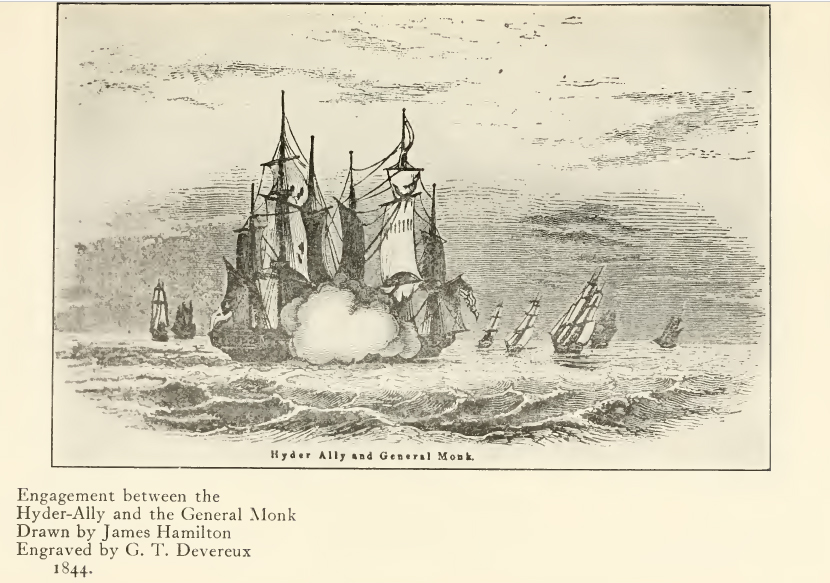
General Washington an American sloop-of-war was captured by Admiral Arbuthnot, and placed in the king’s service under a new name The General Monk, which was then used to pirate American ships. By 1782 the commerce of Philadelphia City as well as the ordinary life of the residents of the coast and nearby streams was deteriorating. As the fledgling American Union was not in a position to protect the affected vessels the State of Pennsylvania, at its own expense, fitted a number of armed vessels that operated in waters leading to Philadelphia. The state purchased Hyder Ally, a small sloop (single mast ship) equipped it with sixteen six-pounder guns to help protect the American vessels. 23-year old Lieutenant Joshua Barney, now in the US navy, arrived at Philadelphia where he was honoured with the command of Hyder Ally17. Assigned with recruiting men, Barney used a poem penned by Philip Morin Freneau18 to attract young American men to the ship. The poem exalted Haidar Ali’s bravery against the British with the following lines:
Come, all ye lads who know no fear,
To wealth and honour with me steer
In the Hyder Ali privateer,
Commanded by brave Barney.
From an eastern prince she takes her name,
Who, smit with freedom’s sacred flame,
Usurping Britons brought to shame,
His country’s wrongs avenging;
Come, all ye lads that know no fear.
With hand and heart united all
Prepared to conqueror to fall.
Attend, my lads! to honor’s call —
Embark in our Hyder-Ally!
And soon Barney led a force of a hundred and ten men. On April 8, 1872, he received instructions to protect a fleet of merchantmen to the Capes just before the sea, at the entrance of Delaware Bay. Dropping the convoy at Cape May road he was awaiting a fair wind to take the merchant ship to sea when he saw three ships19 which he realised were waiting to plunder the convoy. Barney immediately turned the convoy back into the bay, using Hyder Ally to cover the retreat. Soon the bigger General Monk under the command of Captain Rogers of the Royal Navy nearly double his own force of metal, and nearly one-fourth superior in number of men caught up with Hyder Ally. Despite being fired upon, Barney held Hyder Ally’s fire till within pistol shot when both the two vessels got entangled. A desperate fight, lasting for only 26 minutes though, resulted in the lowering of flags by General Monk indicating her surrender. Both vessels arrived at Philadelphia a few hours after the action, bearing their respective dead. The Hyder Ally had four men killed and eleven wounded. The General Monk lost twenty men killed and had thirty-three wounded including Captain Rogers himself, and every officer on board, except one midshipman!20
Source: ‘Life of Commodore Joshua Barney, Hero of the US Navy (1776-1812), 1912
A hero is celebrated
Philadelphia burst in celebrations. Ballads were made upon this brilliant victory and sung through the streets of the city! And echoing with Barney’s name was that of Hyder Ally. Here are some lines 14:
And fortune still, that crowns the brave
Shall guard us o’er the gloomy wave —
A fearful heart betrays a knave!
Success to the Hyder-Ally!
While the roaring Hyder-Ally
Cover’do’er his decks with dead !
When from their tops, their dead men tumbled
And the streams of blood did flow,
Then their proudest hopes were humbled
By their brave inferior foe.
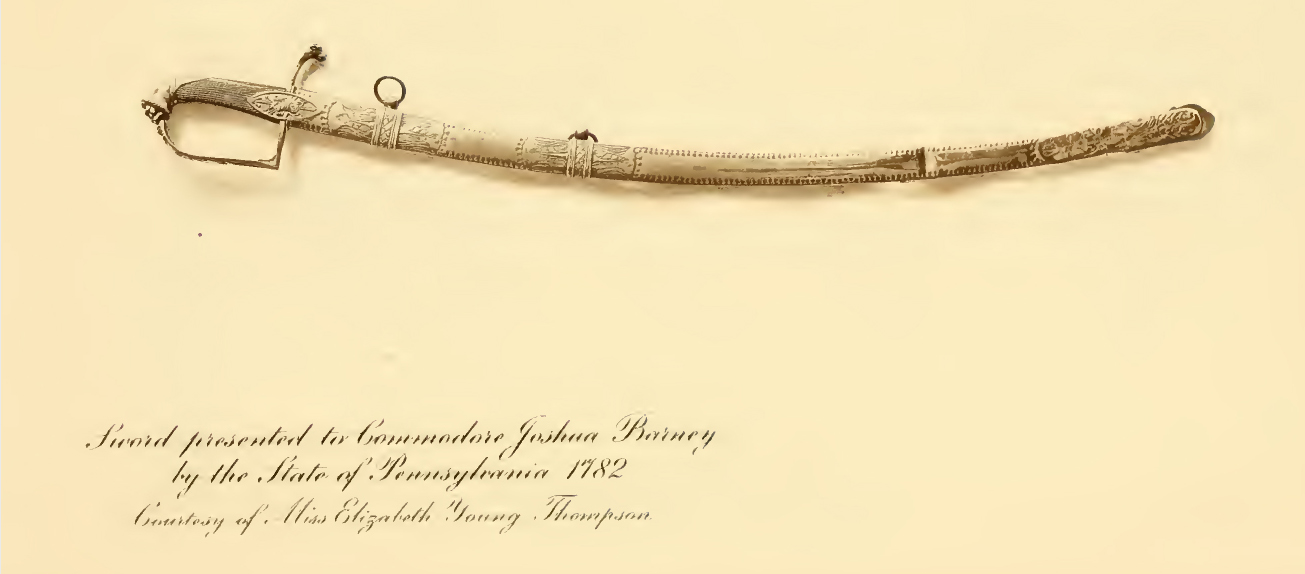
In 1782 the Legislature of Pennsylvania passed a vote of thanks to Captain Barney and ordered a gold-hilted sword to be prepared, which was afterwards presented to him in the name of the state by Governor Dickinson. It was a small sword with mountings of chased gold- the guard of which on the one side had a representation of the Hyder Ally, and on the other the General Monk 14. Barney was the last officer to quit the Union’s service, in July, 1784, having been for many months before the only officer retained by the United States.
Source: ‘Life of Commodore Joshua Barney, Hero of the US Navy (1776-1812), 1912
Barney was sent by the American Government to Paris. A reception was given in France him as a hero of dashing naval exploits during the Revolutionary War 21. A painting representing the action between the two shipswas executed in 1802 by L. P. Crepin in Paris by order of Barney, while in the service of the French Republic. The same was presented by him on his return to the United States, to Robert Smith, Esquire, then secretary of the navy 22. The painting is now in the United States Naval Academy, Annapolis, Maryland 14. Barney was an intimate friend of Count Bertrand, one of Napoleon’s generals 15. Napolean incidentally had an alliance against the British with Haidar Ali’s son Tipu Sultan, during the latter’s life time 23.
Barney was appointed a Captain in the Flotilla Service, US Navy on 1814 April 25 24. He took part in seventeen battles during the Revolutionary War and in nine battles during the War of 1812. A British Musket-ball lodged inside his body in battle at Bladensburg, Maryland in August 1814 25. He passed away on December 1, 1818, aged 60.
70 years after Hyder Ally’s victory over General Monk, James Cooper wrote “This action has been justly deemed one of the most brilliant that ever occurred under the American Flag. It was fought in the presence of a vastly superior force that was not engaged, and the ship taken was in every essential respect superior to her conqueror.”17
The world today is considered a global village thanks to the scaling down of boundaries between nation states and individuals alike. But it may surprise us even in the 18th century seemingly local political events and humans made an impact on lands and societies far away. The name Haidar Ali, after an adventurer from an obscure place in the erstwhile Kingdom of Mysore who gave many a lesson in military and political strategies to global colonial powers of England and France, echoing across the proverbial seven seas in distant North America for nearly a century is testament of this 26, 27.
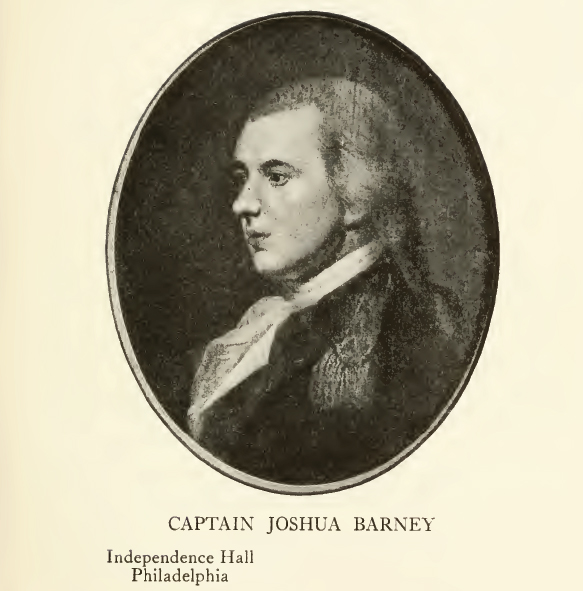
Painting of Commodore Joshua Barney at Independence Hall, Philadelphia, ‘Life of Commodore Joshua Barney, Hero of the US Navy (1776-1812), 1912
Sources/ Notes:
Col. Mark Wilks, Historical Sketches of the South of India, Volume 1 of 3, 1810. Wilks traces the origins and political lives of Mysore Kingdom’s rulers and provides an insight into their military campaigns.
The New Peerage, or Present state of the Nobility of England, Vol. 1 of 4, 1784
The Gentleman’s Magazine, Vol.78, Part 1, 1808
George Cokayne, Complete peerage of England, Scotland, Ireland, Great Britain and the United Kingdom, 1887
Allan Chivers, The Berties of Grimsthorpe Castle, 2010. Peregrine established the racing lines of Blank, Paymaster and Pacolet which were well-known in England. Their foals went to establish themselves in the US.
Blank was one of his favourite horses and he named a foal sired by it as Hyder Ally.
Hyder Ally was later sold by Bertie to C.Blake who then sold it to Richard Vernon. The later, in Oct. 1773, raced it at New Market, considered the birthplace and global centre of thoroughbred horse racing. Many of this horse’s progeny were imported into America and entered racing.
allbreedpedigree.com Online database on Pedigree horses. Downloaded Oct. 10, 2017.
It is interesting that it was not uncommon for race horses to have names originating in the east. Such names in 1700s included Mumtaz Mahal and Salim7. But Pergerine’s only horse named after a human was Hyder Ally.
Prof. B Sheikh Ali, Tipu Sultan – A Crusader for Change
American Turf Register and Sporting Magazine, Vol. 2, 1831
J.H.Wallace, American Stud Book, Vol. 1, 1867
Other books that document Hyder Ally foals and sires are William Pick and R.Johnson’s The Turf Register, and Sportsman & Breeder’s Stud-Book (1803) and Patrick Nisbett Edgar’s The American Race-turf Register, Sportsman’s Herald, and General Stud Book, Vol. 1 of 2 (1833)
A biographical memoir of the late Commodore Joshua Barney (1832) by Mary Barney sister of Joshua Barney provides in-depth information of the latter’s personal and military life.Born on July 6, 1759, 13-year old young Philadelphia Joshua Barney set sail on his maiden merchant ship journey to Ireland in 1771 with his brother in law Captain Thomas Drysdale. He sailed back home the following year and made trips to ports in Europe again. He set sail for Nice, France in December 1774 during which journey Captain Drysdale died. He took control of the ship which needed urgent repairs and therefore docked at Gibraltar, Spain instead. In a few months he sailed to Algiers, Algeria from Alicant, Spain to deliver Spanish troops during which he witnessed the annihilation of these troops by the Algerians which made him return to Alicant soon. He immediately set sail across the vast Atlantic Ocean for Baltimore, USA. As he entered the Chesapeake Bay on 1st October he was surprised by the British Sloop of war Kingfisher. An officer searched his ship and informed him that Americans had rebelled and that battles were being fought. He was fortunate enough to escape detention. Returning to Philadelphia he was determined to serve the Americans fight against British. At that time a couple of small vessels were under at Baltimore ready to join the small squadron of ships stationed then at Philadelphia and commanded by Commodore Hopkins. Barney offered his services to the commander the sloop Hornet, one of these vessels. He was made the master’s-mate, the sloop’s second in command. A new American Flag, the first ‘ Star-spangled Banner’ in the State of Maryland, sent by Commodore Hopkins for the service of the ten gun Hornet, arrived from Philadelphia. At the next sunrise, Barney unfurled it in all pomp and glory. In 1776, Robert Morris, President of the Marine Committee of the Congress offered him a letter of Appointment as a Lieutenant in the Navy of the United States in recognition of his efforts during a naval battle engagement in Delaware.
A summary of Mary Barney’s book14 is well recapped with notes in William Frederick Adams’ Commodore Joshua Barney: many interesting facts connected with the life of Commodore Joshua Barney, hero of the United States navy, 1776-1812 (1912).
Frank Moore, ‘Diary of the American Revolution’, Volume 2, 1860
James Fenimore Cooper in History of the Navy of the United States of America (1853)
‘The sailor’s invitation’, Freneau’s Poems written and published during the American Revolutionary War (1809)
Two ships and a brig- a sailing vessel with two masts
As explained by Barney himself in his painting of this war commissioned later
A. Bowen, The Naval Monument,1815, Concord, Massachusetts, U. S. A. gives an account of the reception received by Barney in France
The painting was accompanied by a description, in the hand-writing of Commodore Barney, which is reproduced in Mary Barney’s book
Record of Service, Bureau of Navigation, Navy Department, United States Navy
The conduct of Commodore Barney, at the battle of Bladensburgh, was appreciated by his military opponents as well. He was wounded in the engagement and was taken prisoner by General Ross and Admiral Cockburn but paroled on the spot. At the time of his death in 1818, the ball was extracted and given to his eldest son. For the valuable services of her husband, Congress granted Mrs. Barney a pension for life.
William Goold, Portland in the past, 1886 has information of at least one more well-known ship named Hyder Ally built in the US in 1800s after the one described in this story. This ship, like many other US ships, resorted to pirating British ships in the Indian Ocean all the way up to the island of Sumatra and around the Cape of Good Hope in South Africa in the run up to the British-American War of 1812.27. Corbett’s Annual register (1802) documents the ship ‘Tippoo Saib’ registered in Savannah, Georgia, the southern most of the 13 colonies that declared independence from the British in 1776 and formed the original ‘United States of America’.