Category Archives: Karnataka (under research project)

Victoria’s secret: Karim’s great grandson lives in Bengaluru!

Bengaluru, KARNATAKA :

The family had moved to England at the Queen’s behest, bringing great solace to an increasingly homesick Karim, said Mahmood.

 Javed Mahmood, Abdul Karim’s great grandson
Javed Mahmood, Abdul Karim’s great grandson

It was an April morning in Bengaluru and Javed Mahmood, as was his custom, sat down to flip through the newspapers. The year was 2010, nearly two decades since he had moved to the city to live a quiet retired life. His relatives were scattered between Bengaluru and Karachi, as they had been since Independence. Very little remained of the family’s rich history, much of what they had left was lost in the traumas of Partition and mostly forgotten. That summer morning in 2010, however, everything changed. Mahmood found, to his astonishment, that Indian author Shrabani Basu’s Victoria and Abdul: The True Story of the Queen’s Closest Confidant had uncovered the truth behind his great grandfather Abdul Karim telling a tale of friendship and loyalty. Mahmood talks to Darshana  Ramdev about a family that has been steeped in history since, with his father, Anwar being a founding member of Bata in 1933.

“I rushed at once to the British Council and asked them to help me contact her,” said Mahmood, whose grandfather, Abdul Rashid, was Karim’s adopted son. “We didn’t actually know he was adopted until Karim’s death in 1909 and the inheritance had to be dealt with.” The family had moved to England at the Queen’s behest, bringing great solace to an increasingly homesick Karim. “The Queen made them feel very much at home my grandfather received the same education that Edward VII and the rest of her children had earlier received.” The Queen, who was aware of the couple’s inability to have children, sent her personal physician, Dr. John Reid, to examine (much to his horror) Karim’s wife.
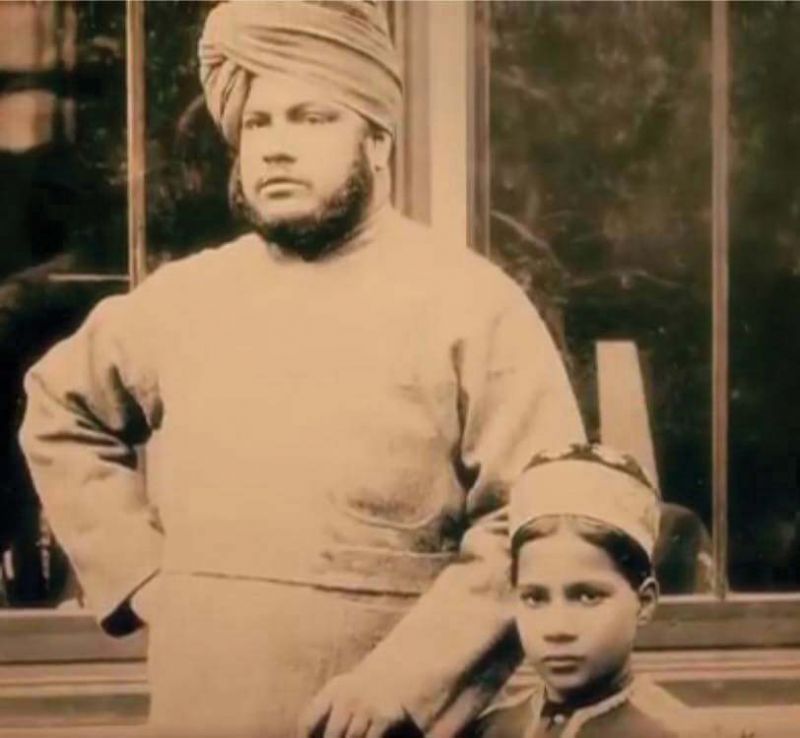
Abdul Karim with his adopted son, Abdul Rashid in England

“Abdul Karim had been greatly maligned by historians the Queen’s family may have wanted to destroy all trace of his presence in the court. Ms Basu had gained access to hidden archives, however. Our family still had a few documents – the diary being one of them, so Shrabani and I hopped on a plane to Karachi at once!” Karim’s descendants there were understandably wary, but Mahmood succeeded in coaxing them to part with the diary. Like most people of the time, Karim maintained meticulous written records into his life, which helped set the record straight on the stream of allegations that had been made against his character. “The diary proved beyond doubt that their relationship was marked by great affection, but had remained platonic always,” said Mahmood.
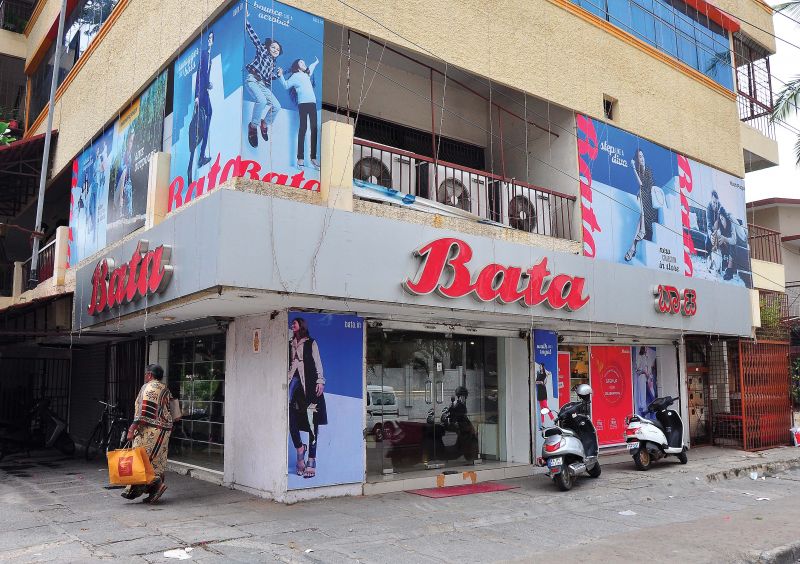
Javed Mahmood’s father, Anwar Mahmood, was one of the founding members of Bata in 1933. He started the Trot Shoe Company in 1963, setting up a second factory in Whitefield in 1970.

It contained valuable insights into Queen Victoria’s much loved Munshi, or teacher, the prepossessing young man who won the affections of a foreboding monarch with a reputation for a heart of stone. He was presented as an orderly to the Queen, which he didn’t like it was not a fitting position for the son of a landed ‘doctor’.  He soon found himself promoted to Munshi, leading the now ailing Empress to a discovery of India. The Queen’s love for her young munshi drew jealousy, hatred and racial prejudice in a society known for its repressive puritanical leanings. Neither cared, however, with the Queen sticking her neck out on numerous instances to defend her young friend. “She was always caring and appreciative of our customs every Eid, she would walk across the grounds to Karim Cottage (on the Osborne House estate) to visit the family.” They were, in turn, invited up to the palace for tea during Christmas “The Queen would even have the windows covered with silk curtains so Karim’s family could keep the purdah. He was also a wonderful cook  he would cook for her on occasion, as an act of love.”

Little was known of his life after the Queen’s death in 1901: Karim and his family were unceremoniously deported, almost at once, by a jealous Edward VII, who been aroused to such fits of rage that he had even attempted to force his mother to abdicate from office, on grounds of insanity. “Soon after the Queen’s death, King Edward arrived at Karim Cottage in Osborne House and ordered Rashid, who was a teenager at the time, to scour the house for any heirlooms or documents that contained the royal insignia. The little they could salvage, including Karim’s diary, returned with him to Agra in 1901, where he died eight years later. “He died at the age of 48 and the family was given his inheritance,” said Mahmood.

These remained with the family for some decades, until talk of Partition began to do the rounds. “We were a fairly prominent family and were advised at the time to shift temporarily to Bhopal, until the trouble blew over,” said Mahmood. This they did, greatly underestimating the scope of the problem and packing only the essentials. When the Partition took place, the family was evacuated to Mumbai, but many of the treasures were lost in transit. “The diary was with my grandfather, who was the custodian of Karim’s things.” The family moved to Karachi, save for Mahmood’s mother, Begum Qamar Jahan and two sisters. The diary went to Pakistan with them. “One of the sisters eventually shifted to Pakistan too,” he explained.

Meanwhile, in 1933, Bata, which was a burgeoning Czech company, found itself in hot water after the nation was declared Communist. The company decided to set up a factory near Calcutta, where leather was widely available. The large Muslim population in the area was another perk, providing the tannery services they so badly needed. “My father, Anwar Mahmood, was one of the founding members of the company,” he said. He joined the company at the age of 16 and worked there for nearly 30 years before he started his own business, the Trot Shoe Company. The first factory was set up in Kolkata in 1963 and the second in Whitefield, in 1970. “The organised shoe industry didn’t exist in South India and the Karnataka government had offered businesses a number of benefits, which led us here,” said Mahmood. Natural rubber, an important raw material and was grown abundantly in Kerala, making it easily accessible.  “My elder brother managed the factory here, I handled the one in Kolkata and my parents shuttled between the two cities. When my younger brother was ready to start work, we established a third branch in Hosur.” Javed Mahmood and his younger brother still call Bengaluru home.

Mahmood tells his story from San Francisco, where calls have been pouring in from across the world since the release of the film, Victoria and Abdul. “The film is doing very well, it’s being shown at local theatres here as well and friends have been getting in touch to tell me how much they enjoyed it,” he smiles.

“My great grandfather’s relationship with the Queen had been presented as scandalous and sleazy he was falsely accused of every imaginable sin. Ms Basu read Karim’s diary cover-to-cover and brought those insights into the second edition of her book.” And that’s how Abdul Karim’s story received its long overdue re-telling, well over a 100 years after his death in 1909. “Queen Victoria was a woman far ahead of her times, rising well above the prejudices that so plagued her society, to defend the young Indian man she called a friend. I think there’s a lesson in it for all of us even today.”

source: http://www.deccanchronicle.com / Deccan Chronicle / Home> Nation – In Other News / by Darshana Ramdev, Deccan Chronicle / October 14th, 2017

Remembering what was

Chennai, KARNATAKA / Bengaluru, KARNATAKA :

ShabbeerAhmedMPOs05oct2018

RJ and entrepreneur Shabbeer Ahmed turns back the pages to simpler times in a smaller city

I first moved Bengaluru in the year 1995. Back then, all the roads were lined with trees, which looked wonderful when they bloomed, and the traffic situation was not so bad. My favourite road in fact was Bannerghatta road, which in those days was considered the fringe of the city, where people came for a relaxing drive. I actually used to stay near the Meenakshi temple in Hulimavu, areas which were barren a few years back. There used to be a water theme park near Bannerghatta which is no more, and now the area is just like any other part of the city. We spent many days on motorcycle rides in this area, stopping to buy egg puffs from the lovely bakeries that dotted the route.

There are fewer migratory birds these days as well. Until a while back the areas surrounding Madiwala Lake had a lot of birds come around, which has lessened and now you see birds on terraces instead. We even saw water snakes on the banks of the lake, and we’d give them names, like Ka from Rudyard Kipling’s The Jungle Book.

Personally, since I’m a massive food lover, I like to go to Fanoos to grab a roll and then head to Makkah cafe in Johnson Market, where I can sit with a suleimani tea and chat with people. Being a nature lover, I also enjoy trips to Bannerghatta National Park when I can. And there’s nothing like a trip to South Bengaluru for some authentic idli, vada, and dosa.

It is true that Bengaluru has become very commercial and industrial, but that has also led to it gaining in infrastructure and opportunity. There are so many options for youngsters here.

As told to Sooraj Rajmohan

source: http://www.thehindu.com / The Hindu / Home> Life & Style – Insider / by Sooraj Rajmohan / October 03rd, 2018

Mangaluru: C M Mustafa elected president of Meenu Marata & Commission Agentara Sangha

Mangaluru, KARNATAKA :

Mangaluru :

The general meeting of Meenu Marata & Commission Agentara Sangha was held at the office of the sangha here recently.

C M Mustafa was elected president, Bharath Bhooshan elected honorary president, K Ashraf as executive president, K E Rashid as vice president, K Abdul Azeez P P A as treasurer, K M Ibrahim as chief secretary, J B Shiva as joint secretary and C B Azharuddin, K M Bava and S A Saleem were elected executive committee members on the occasion.

source: http://www.daijiworld.com / DaijiWorld.com / Home> Karnataka / by Spoorthy Ullah, Daijiworld Media Network – Mangaluru(EP) / September 21st, 2018

Cheil WW India makes two senior appointments

Mumbai, MAHARASHTRA / NEW DELHI :

The agency hopes in Moosa Khan and Nitin Pradhan

MoosaKhanMPOs27sept2018

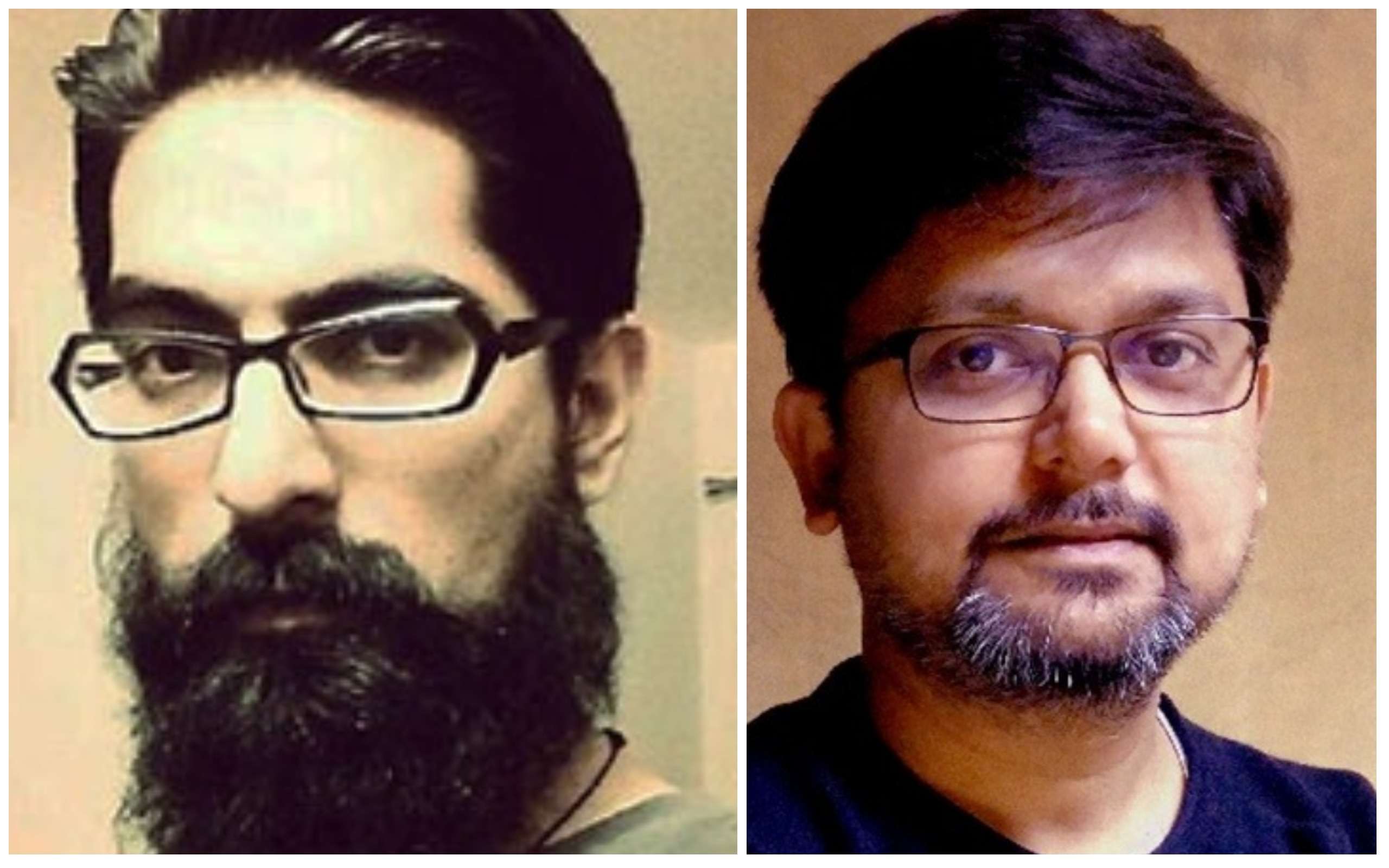
Cheil India has appointed Moosa Khan and Nitin Pradhan in their senior creative leadership. The duo will report to Sagar Mahabaleshwarkar.

Khan joins as head of digital (creative) and Pradhan takes on the role of senior executive creative director.

Speaking on the appointment, Atika Malik, chief operating officer, Cheil WW India, said, “We are the Agency of Now where creativity is inspired by technology. I am extremely happy that Moosa and Nitin will add their digital capability, creativity and energy to Cheil. I look forward to working closely with them to inspire new ideas and solutions for our progressive brands. For 15 years Cheil in India has provided brand solutions across retail, experiential, digital and communication to transform our client’s businesses. They will be a great asset to our creative strength and we welcome them warmly into the Cheil family.”

“I am delighted to welcome Moosa and Nitin to our team. Both of them are exceptional creative talents to have on board. While Moosa has immense understanding of new age digital media, Nitin is a fantastic creative talent with great ability of storytelling. Most importantly, we all have a shared passion for creative excellence and digital innovation. With these beliefs firmly at the heart, Moosa and Nitin will be a tremendous asset to our bold creative ambitions. Wait and watch as magic happens!” added, Sagar Mahabaleshwarkar, chief creative officer, Cheil WW India.

Khan brings with him over 10 years of experience in digital as well as traditional advertising. He has worked across agencies such as Dentsu Webchutney, Madison, TBWA and Jack in the Box Worldwide.

Pradhan, a known name among the advertising fraternity, has 17 years of experience working with– Ogilvy, JWT, McCann, Leo Burnett and the likes.

source: http://www.brandequity.economictimes.indiatimes.com / ET Brand Equity / Home> The People Report / June 02nd, 2018

Gunning For ‘Gun House’ Once Again!

Mysuru, KARNATAKA :

GunHouse01MPOs26sept2018

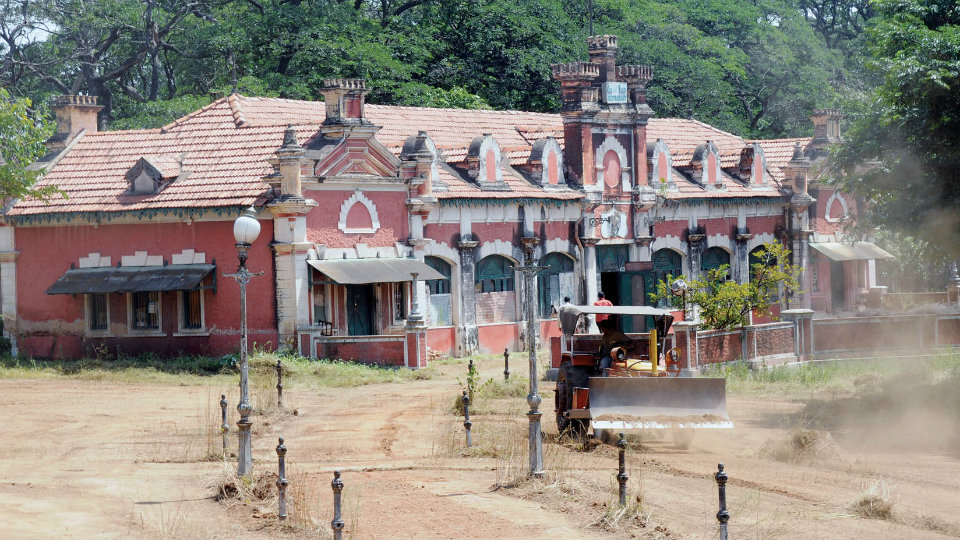
Yesterday evening as I was turning the pages of SOM to scan the headlines, I literally jumped out of my skin in excitement upon stumbling on the news that the Gun House Imperial Restaurant that used to once function from the Palace Gun House was soon going to throw its doors open once again to customers after a gap of thirty long years. I do not know what this bit of news is going to mean to other people but to me it perhaps is the beginning of the coming true of a long cherished dream and the end of a sense of anguish that had been gnawing at my heart strings ever since the hotel suddenly shut its doors without as much as a hint that it was going out of business.

My first memory of this once very beautiful landmark of our city is from the early sixties when I used to go there once a year in the company of Prof. M. Salar Masood, the younger brother of my maternal grandfather Alhaj M. Khaleelur Rahman. He was a Professor of Geography at Manasagangothri and it was he who usually took all the children of the large household on frequent excursions to the Palace, the Jagan Mohan Art Gallery, the Zoo, the Brindavan Gardens and Srirangapatna.

The large household that I am talking about was more of a hostel than a home as at any given time it used to have at least a dozen children of all shapes, sizes and ages! This was the result of my grandfather’s penchant for inviting all his relatives, especially those from the Malnad areas, to leave their children under his care here in Mysuru for their education. That is how I became an inmate of this warm and cozy nest of immeasurable happiness when I joined the Good Shepherd Convent School in the year 1960.

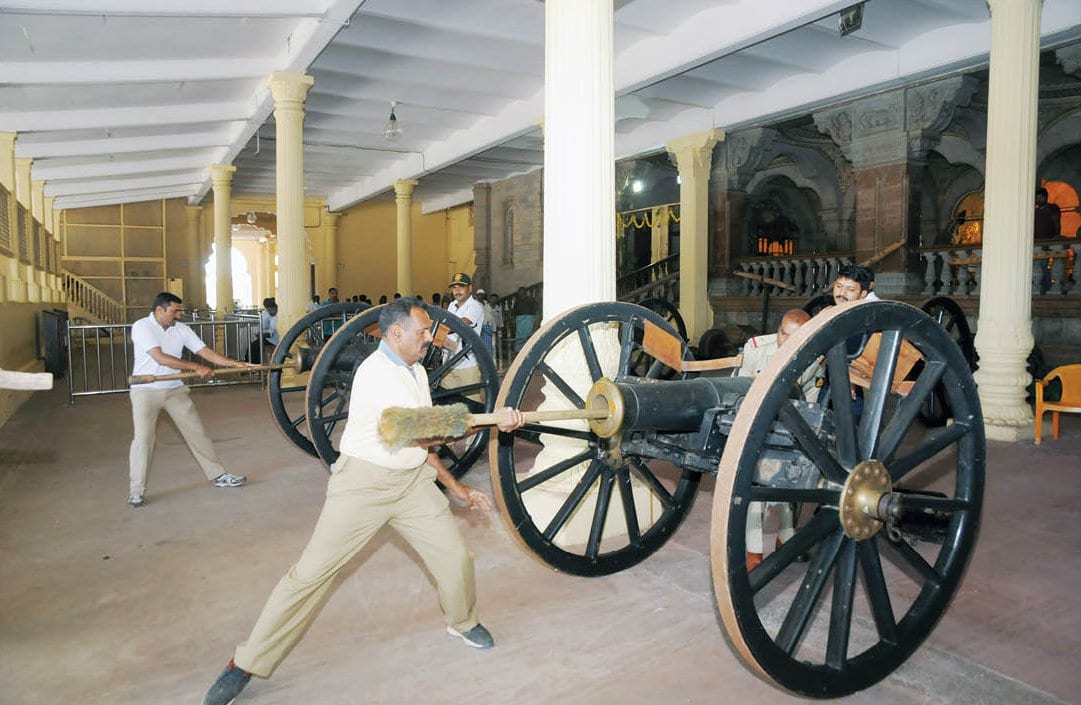
Our visits to the Palace Gun House used to be an annual affair to watch the ceremonial firing of the canons housed there to mark the beginning of the Dasara festivities. It used to be a very exciting moment with all of us expectantly staring with unblinking eyes at the red-turbaned guard on horseback at the Southern Gate of the Palace. Upon a cue from the Durbar Commandant that the Maharaja had arrived, he would raise the red flag which used to be the signal for the head of the battery to shout “Fire” at the top of his voice. That was when the gunners in green tunics and red turbans would start touching the firing holes of their loaded canons with smouldering wicks in a sequence. The almost blinding orange flash would be accompanied by a deafening boom followed by a thick cloud of acrid black smoke that I would find intoxicating!

The batch of seven cannons would be reloaded twice to complete the volley of the twenty-one shots that had to be fired for the occasion. And, this reloading had to be done only after thoroughly rinsing the barrels with cold water and brushing them dry once again. This precaution was most essential to ensure that there were no traces of smouldering gunpowder inside that could prematurely set off the powder charge the moment it was rammed down the barrel!

A team of City Armed Reserve (CAR) Police personnel conducting dry practice of cannon firing at the Mysore Palace

Somewhere down the years, for some inexplicable reason, these seven cannons along with their four accompanying ox-drawn powder carriages were shifted to the long verandah of the Palace where they now stand all through the year except when they are taken to the Bannimantap Grounds on Vijayadashami Day for the breathtaking Torchlight Parade that is undoubtedly the pride of our annual Dasara!

Now, it is not just for the annual firing of the cannons that the Palace Gun House had become dear to me. Long after the show had stopped there and well after I had grown up into a man from the school boy that I was, I found myself drawn to it for a completely different reason. Very soon after I joined the Mysore Medical College to do my MD in Medicine the Mysore royal family converted the place into a restaurant. Because of its unique ambience and the excellent food it served, most of our unit get-together and dinners used to take place there. Then, when I got married, soon after passing my MD, it also became the favourite dining-out place for me and my wife, especially on every Saturday evening!

Incidentally, on the days when my practice was unusually good, I would invariably take her to the Metropole Hotel, which was again in a building that was once a royal Guest House. These two places were the ones that served the best chilli chicken and egg fried rice, which accompanied by some chilled Torino and the timelessness of each others’ company  was nothing but pure Nirvana for the two of us!

Gun House also had a live band where Sebastian Deniz, my favourite singer, used to perform with his fellow musicians on weekends. Fondly known to all as ‘Singing Seby,’ he knew all my favourite Jim Reeves and Frank Sinatra numbers so well that without the slightest need to be told he would start singing them the moment he would see us walking in! He had a voice that could make even unwilling hearts melt which was why perhaps we used to see so many boys taking their still undecided lady loves there for dinner!

Along with Seby’s voice the irresistible chilli chicken too perhaps played its part in breaking down any remaining traces of indecision and resistance to the proposals they made! So when the magical Gun House suddenly shut shop, it was sudden heartbreak for my wife and me and ever since then it has always been a bitter-sweet experience to drive past it. Sweetness from the warm recollection of the almost magical time we once had there and bitterness that it was the end of an era that was so dear to us! Hopefully, the clock is now all set to turn back and the good old days of our nostalgia are poised to come back once again!

source: http://www.starofmysore.com / Star of Mysore / Home> Columns: Over A Cup of Evening Tea  / by Dr.K. Javeed Nayeem MD – email:kjnmysore@rediffmail.com / September 21st, 2018

Kodagu floods: Pouring out a cupful of compassion

Sakleshpur Taluk, Hassan District , KARNATAKA :

Shaik Ahmed, a roadside tea seller, plans to contribute his earnings on Saturday for rain relief works in Kodagu. | Photo Credit: Special Arrangement

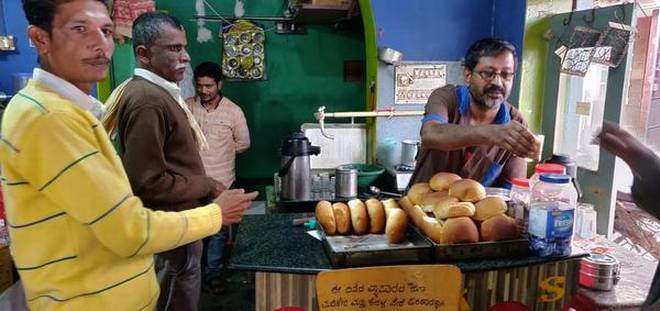
A tea seller at Channarayapatna has contributed his day’s earnings towards the relief works in flood-affected Kodagu. Shaik Ahmed, 60, opened his shop on Bagur Road at 5 a.m. on Saturday with a board stating that whatever he got on the day would go to the flood relief funds.

Till 6 p.m., he had collected a little over ₹7,000. “My aim is to collect at least ₹10,000 for the relief work. I will keep the shop open till 9 p.m. and will hopefully reach the target,” he said.

Mr. Ahmed, a native of Sakleshpur taluk, has been living in Channarayapatna for the past three decades. For years he worked in hotels, but about six months ago he decided to open a tea stall of his own.

Mr. Ahmed, a father of three, was moved by the plight of the victims on news media. “I felt bad for the people affected. My wife and children also supported my decision. We have decided to make Bakrid a simple affair this year,” he said. He added that the business on the day was better than most days. On a normal day, he requires 25 litres of milk, but on Saturday he needed 40 litres.

“I did not give tea or coffee to any customer on credit today.My customers obliged. Many of my friends came to my shop just to give me some business,” he said. He plans to hand over the money to the authorities on Sunday.

Many organisations, including the Hassan unit of Red Cross, have collected donations from people for relief works in Kodagu and Kerala. Members of Prakruti Seva Samudaya, which works for the welfare of transgenders, have also raised funds for flood victims.

source: http://www.thehindu.com / The Hindu / Home> News> States> Karnataka / by Special Correspondent / Hassan – August 18th, 2018

A forgotten freedom fighter

Ganjam(near Srirangapatna) –  Bengaluru, KARNATAKA :

MuslimVelloriMPOs09sept2018

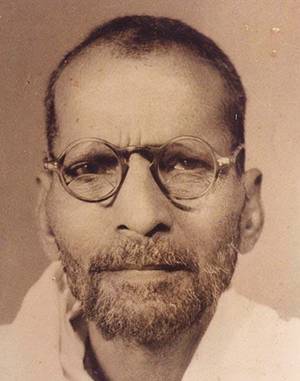
Muslim Vellori, a prominent but not so well-known freedom fighter, did not restrict his public role to the freedom struggle but also played a prominent role in social service

The name of Muslim Vellori does not ring a bell now, but for an older generation of Bangaloreans, particularly Muslims in the city, that name is remembered with a sort of awe as he was a valiant freedom fighter. Born Mohammed Abdul Wahid Khan in 1883 in Ganjam near the historic town of Srirangapatna, Khan grew up to be known as ‘Muslim Vellori’ as he spent most of his childhood studying in a madrasa (Islamic seminary) in Vellore. Even though his father was in the army, Vellori grew up to develop an aggressive anti-British sentiment.

Vellori began working in a shipping company owned by his relatives in Bombay (now Mumbai) after completing his studies in Vellore. His granddaughter Dr. Shakira Khanum, who now teaches in Al-Ameen College, recalled an incident that Vellori had narrated to her. “Once, in Bombay, a Britisher made fun of his beard. My grandfather, who hated the British, was so livid that he almost shot the man,” said Khanum. Working in a shipping company at the time also ensured that he was among the few privileged Indians who could travel as his work took him beyond the shores of India. Vellori travelled to Burma, Sumatra and Java (now part of Indonesia), Mauritius, Ceylon (now Sri Lanka), Madagascar and to several cities in the Middle East. It was during his travels that he met Mahatma Gandhi in Durban. Gandhi and Vellori supposedly became quite close and the former had a formative influence on Vellori’s life.

As Vellori came of age, he came to acquire a reputation of being a fiery orator and through the course of his life took part in many anti-colonial struggles all over the country. He is particularly remembered for his role during the Khilafat movement (1919-1922) where he met many prominent freedom fighters including Mahatma Gandhi, the Ali brothers: Mohammed Ali and Shaukat Ali, Dr. Mukhtar Ahmed Ansari, Hakim Ajmal Khan, Saifuddin Kitchlew. Even the great poet Mohammed Iqbal is supposed to have lauded him for his passionate speeches when he exhorted the audience to support the Khilafat movement in Mumbai. Vellori was jailed several times for his provocative speeches and was even incarcerated in Bangalore Central Jail between 1924 and 1927. Even in prison, he is supposed to have been a recalcitrant internee and often questioned the authority of the jailers.

Vellori did not restrict his public role to the freedom struggle but also played a prominent role in social service. He raised funds to found orphanages in Mysore (now Mysuru) and Cuddapah (now Kadapa). Considering that he was close to several Congress leaders in the state and was recognised as a prominent Muslim leader who staunchly opposed the two-nation theory, he was nominated to the Mysore Legislative Council and was a member in the 1950s during the chief ministership of Kengal Hanumanthaiah. In later years, Jawaharlal Nehru called on him when he visited the state. Towards, the end of his long life Vellori became bitter as he was marginalised by the state leadership of the Indian National Congress and was ignored by the Muslims of the state who no longer felt that he was a suitable leader. An early resident of Jayanagar, Vellori died on Oct. 31, 1977.

(Information for this article has been gleaned from a short booklet published by Vellori’s granddaughter, Dr. Shakira Khanum, who teaches Hindi at Al-Ameen Degree College in Bangalore. Dr. Khanum has also painstakingly collected much of the supporting evidence for her grandfather’s illustrious life including a letter from Tulsidas Jadhav, who was Gandhi’s secretary briefly, attesting to Vellori’s close connections with the father of the freedom movement.)

source: http://www.thehindu.com / The Hindu / Home> Society> History & Culture / by Vikhar Ahgmed Sayeed / August 02nd, 2018

Bhatkal: A food story

Bhatkal, KARNATAKA / Bengaluru, KARNATAKA  :

This sleepy and now maligned town on the Karnataka coast boasts of a unique cuisine embracing Konkan and Middle-Eastern influences

Bhatkali biryani is topped with fried onions, curry or mint leaves.

Bhatkal is a small port town on the Arabian Sea, near Mangaluru. Between the 8th and 15th centuries, it was one of the chief ports on the western coast, specializing in the trade of rice, sugar, spices and horses. Yemeni horses would be brought from the port of Hormuz in Iran to Bhatkal, and traded across the country. Over the centuries, traders from Iraq, Iran and Yemen settled in Bhatkal and formed the Navayath (newcomers) community. Some of them intermarried with the locals, many of whom belonged to the Jain community, and were influenced by their customs, languages and culture. This, in turn, led to a unique and multicultural food practice.

In recent times, however, whenever Bhatkal shows up in the news, it is with reference to radical Islamist elements and polarization between religious communities. As a result, the spotlight is rarely turned on this unique cuisine. Other than the Bhatkali biryani, little else is known and even less represented in mainstream restaurants, even in its home state of Karnataka.

The Alibaba Cafe and Restaurant on Bengaluru’s busy MM Road in Fraser Town is one of the few places that is changing this trend. The décor seems straight out of an Arabian Nights tale. Coloured glass lanterns hang from the ceiling and the mud-plastered walls are reminiscent of a Yemeni village home. There are Indian references too. The restaurant’s heavy wooden door has a lotus motif and large copper cooking pots in the corner look curiously Mangalurean. Shaad Hassan Damudi, the owner, greets visitors while taking orders on the phone in rapid-fire Konkani.

Damudi is from the Navayath community and his restaurant’s menu reflects his heritage. “What you see on the menu here is centuries of cultural amalgamation between the various communities, resulting in a very unique cuisine,” Damudi explains. The meat-heaviness is also reflected in the star dish on the menu—the Shaiyyo biryani, made from vermicelli (shaiyyo) instead of rice. The vermicelli adds a uniquely Konkani touch to the distinctly Middle-Eastern flavours of the dish, featuring layers of delicately spiced meat and a generous helping of browned onions. Shaiyyo is sun-dried in vast quantities in early summer, so it can be prepared and enjoyed throughout the long west-coast monsoon. “Navayath cuisine tends to have milder flavours than traditional south Indian coastal cuisine,” says Damudi. “We use local Byadagi red chillies, known for their bright red colour and slightly sweeter taste.”

Any conversation about Bhatkali food always turns to Bhatkali biryani, made with basmati rice flavoured with saffron and whole garam masala. Tender pieces of mutton, chicken, fish or prawns are cooked separately with spices. Some even describe it as a korma and rice dish which is assembled in layers and finally topped with fried onions, curry or mint leaves.

Seafood is a staple of Bhatkali cuisine. Fish, prawns, mussels, clams, oysters and squid, available in plenty along the Konkan coast, are combined with local spices to create preparations like the laun miriya mhaure, where sliced fish (typically seer) are cooked in a traditional salt and red chilli paste, or shinonya nevri, steamed mussels stuffed with a spicy rice and coconut mixture.

Aftab Husain Kola, a Bhatkal native and a food and travel writer, says that although modern influences have crept into traditional Navayath cuisine, many of the old traditions of seasonal food have been preserved. He also throws light on some of the other Navayath home specialities like haldi pana nevri, rice pancakes steamed in turmeric leaves, and mudkuley, tiny steamed rice-flour balls in a delicately spiced curry. The community also gets together during weddings and festivals, for dawats or feasts which celebrate Navayath fare.

The wide range of Bhatkali desserts reflects the cultural intermingling of communities. Shaufa pana (dill leaves) feature in a variety of desserts, from poli (bread) to appo (pancakes), even puddings. Saat padra navariyo, a baked, layered dessert, reminiscent of Goa’s bebinca, and tariye khawras, a semolina, coconut and cashew pudding, are unique to the region. Some of the desserts have interestingly Middle-Eastern hybrid names too. Al basra poliand aflatoon poli are two such delicious concoctions—baked pancakes made with combinations of milk, coconut, egg and sugar. The Bhatkal version of kheer is godan—it has various manifestations, but the base always comprises coconut milk and jaggery.

The culinary diversity of this little coastal town is quite mind-boggling and more conversations about this and other aspects of Bhatkal’s rich culture could present an alternative narrative to those of terror and violence.

Aflatoon poli

Serves 4

Ingredients

2 tbsp refined flour

2 cups milk

4 eggs, beaten

1-2 tbsp sugar

1 tbsp broken cashews

1 cup coconut milk

K cup condensed milk

2 tbsp ‘ghee’

Method

Add the refined flour to the milk and stir over a low flame until it thickens. Leave aside to cool. Add in eggs, sugar, nuts, coconut milk and condensed milk, and mix thoroughly.

Grease a baking tin with ‘ghee’ and pour the mixture into it. Bake at 160 degrees Celsius for about 20 minutes. Check if it is done by inserting a toothpick into the pancake; it should come out clean. Remove from the baking tin and serve warm.

source: http://www.livemint.com / LiveMint / Home> Leisure / by Sriram Aravamudan / September 02nd, 2018

A stylish ode to anti-air pollution

Bengaluru, KARNATAKA :

Bengaluru-based designer has collaborated with fashion guru Prasad Bidapa and a top-knotch IT company and has created a fashion collection.

City models sporting a piece from Tahera’s latest collection.

Indeed, collective effort is what brings about a herculean change. But, there’s also no denying how it is those little acts of thoughtfulness and kindness that go on to make a world of difference. For, Bengaluru designer Tahera Peeran, landing a lofty yet creatively fulfilling collaboration with two tech companies and Prasad Bidapa is what has kept her busy and beaming in the recent past. Her latest collection oozes sparks of sustainability and the bespoke aura of all things handmade while focusing on an ingenious ink innovation by Dell. In a candid chat, she shares the inside track…

“I believe corporate social responsibility and giving back to the community improves the quality of our lives, creates sustainability and promotes a better and brighter future,” begins Tahera, who describes her collection best as, ‘Handmade, environment friendly.’ It’s done specifically to promote anti-air pollution, and to promote handmade, hand-looms and hand-weaves. Speaking of which, she elucidates, “I have worked with pure handlooms and Khadi to create a Japanese minimalist look with classic, relaxed and layered silhouettes.”

But team effort is what takes the cake.” This has been a collaboration of many people from varied strata. It was amazing to see how it came together and everybody contributed and the end results were remarkable,” shares the 37 year old.

The NIFT graduate, who’s label mixes quirky and contemporary designs with comfort and functionality, didn’t always knew this was her calling. “I dont think I always wanted to become a designer. It took me a while and the support of my family to help me zero in on design as a professional pursuit. I wanted to become a writer, so I grew up reading a lot of books. I was always interested in art. And, from there, I got interested in design — graphics, architecture. I remember sketching a lot of girls in my notebooks, with dresses and different clothes.”

She loves to juggle too many things at a time, so it doesn’t come as much of a surprise to see her indulge in a tonne of activities whenever time permits. On how her typical day looks like, she says, “I love to go out for a way. I need that time in the morning, I like to spend time around greenery. It leaves me feeling energized. I have a little daughter, and we get into the DIY projects. I also love watching old English movies and world cinema as well. Right now, I’m reading Rupi Kaur.”

The  current collaboration is yet to become commercial. But, Tahera has all her hopes pinned on its success. “It’s a great step towards being sustainable, it needs to be developed further. I see a lot of potential in it. I’m hoping it will be commercial and accessible soon. It’s a way to move forward. People need to get together more and do collaborations like this. It takes a group of people to come together and work an idea like.That aside, I’ll be flaunting my free fall collection next. It’s a black and white line. I’m excited for the time ahead.”

source: http://www.asianage.com / The Asian Age / Home> Life> Fashion / The Asian Age / Pooja Prabban / July 23rd, 2018

1000 War Rockets of Tipu Sultan Discovered in Karnataka Highlight A Legacy That Needs to Be Invoked

KARNATAKA :

Tipu Sultan remembered by Presidents of India

TipuSultanMPOs31jul2018

 Over 1000 war rockets of Tipu era have just been found in a fort in Karanataka. Tipu Sultan was the first warrior in history to have used rockets in his warfare against the British.

Recall Tipu Jayanthi celebrated by the Karnataka Government under Siddaramaiah and the violent opposition it evoked from the BJP and Hindutva forces who overlooked Tipu Sultan’s fierce fight against British rule and only focused on his Islamic identity. An Union Minister publicly refused to participate in the Tipu Jayanti celebrations.

The fanatical opposition to Tipu Sultan by BJP and its top leadership has been so intense that it did not even accept the speech of President of India Ramnath Kovind who while addressing the Karnataka Assembly appreciated Tipu Sultan, among others, and flagged his pioneering role in employing the first ever rocket in the history of warfare against the British.

In their blind opposition to Tipu Sultan just because he was a Muslim, the BJP leaders of Karnataka did not hesitate even to diminish the dignity of the President of India by refusing to acknowledge his speech and dismissing it as as a draft prepared by the then Karnataka Government. Even Prime Minister Narendra Modi while campaigning for BJP candidates in the Karnataka elections sarcastically said that the Congress Government was celebrating the Jayanti of “Sultans”.

Let us be mindful of the fact that a sketch of Tipu Sultan finds a prominent and place in the calligraphed copy of the Constitution where the sketch of Lord Ram, Akbar and other outstanding figures of Indian mythology and history occupy a hallowed place.

It is not that President Kovind is the first President of our Republic who invoked Tipu Sultan’s glorious legacy. Earlier President K. R. Narayanan in his speech delivered at the banquet hosted by the President of the French Republic, Jacques Chirac, on April 17, 2000 in Paris referred to the correspondence exchanged between Tipu Sultan and Napoleon Bonaparte for the purpose of forming a grand alliance to defeat the British and throw them out of India.

In an appendix of the publication, The Sword of Tipu Sultan, authored by Bhagwan Gidwani, there is a text of letter written by Napoleon to Tipu Sultan bringing out the strategic affinity and understanding between India and France in the late 18th century.

Napoleon wrote in the letter to Tipu Sultan : “You have already been informed of my arrival on the borders of the Red Sea, with an innumerable and invincible Army, full of the desire of delivering you from the iron yoke of England.”

Before the letter could reach Tipu Sultan, the British intelligence succeeded in intercepting it. Then President Narayanan in his aforementioned banquet speech rsaid: “…Napoleon’s demarche perhaps underlined the strategic affinity that links India and France and the responsibility we hold in creating a more equal and democratic inter-national order in the multipolar world.”

It is all the more significant to note that the concept of ” creating a more equal and democratic inter-national order in the multipolar world ” was taken up by Narayanan by invoking Tipu Sultan along with Napoleon who is a national hero for the French. I recall that the leadership of France deeply appreciated this speech and thanked the then Indian President for contextualizing the strategic dialogue started between the two countries in the 21st Century by referring to the strategic understanding forged in the 17th Century.

Abdul Kalam in his writings published before he became President of India had outlined Tipu Sultans stellar contributions as the first warrior in history of warfare for having used rockets against the British who were completely on the defensive. The account given by President Kalam of the rockets used by Tipu Sultan in his war against Britishers makes a fascinating read and the younger generation should be educated about it. He also refers to the Royal Artillery Museum, London that has exhibited the rockets used by Tipu Sultan with the claim the he became the first warrior to do so.

It is rather fascinating to note that the French Revolution and its ideals deeply impacted Tipu Sultan and he celebrated the Revolution with great fervour. Possibly he was the first monarch in India who remained wedded to the enduring ideals of the Revolution- liberty, equality and fraternity- and planted a tree in Srirangapatnam to commemorate it. He enlisted himself as a member of the Jacobin Club which constituted one of the prominent political formations of the Revolution proclaiming egalitarianism and affirming a social order informed by liberty, equality and fraternity.

His strategic vision encompassed in its scope a modern navy which he founded in 1796 and set up two dockyards where ships could be used and equipped with necessary facilities for conducting warfare. It greatly supplemented his military capability based on his land based armoury and armed forces.

His critical understanding that a strong economy could sustain a strong military paved the way for him to take manifold measures to augment and expand trade and commerce and set up a chain of industries. His farsightedness in understanding the danger posed by the advancing British forces in the 18th century stood him out as an unparalleled leader with a firm grasp over military and strategic affairs. British historians have recorded his accomplishments with admiration. And recorded the fact that the conditions of the peasants of Mysore were far better than their status in the British provinces of that era.

Historians have recorded that Tipu Sultan liberally gave grants to numerous Hindu shrines and respected the faith of others. Such a legacy rooted in respecting all religions makes Tipu Sultan relevant for our contemporary period which is witnessing majoritarian tendencies.

He relentlessly fought against British occupation and aggression and eventually attained martyrdom. His heroism and bravery to fight against colonial subjugation constitutes an important portion of Indian history. It is important to celebrate that legacy and enrich it.

Jawaharlal Nehru in his Discovery Of India wrote “Haider Ali and Tipu Sultan .. inflicted a severe defeat on the British and came near to breaking the power of the East India Company.” Such a glorious phase of Tipu Sultan who almost broke the power of the East India Company and who remained wedded to ideals of French revolution inspires India of twenty first century. We need to immortalize it by affirming its enduring value which is far above party politics and ideological rivalry.

As the twenty first century India faces threat from Hindutva forces engaged in lynching people and polarizing them in the name of cow protection, love jihad and religion we need to reinvigorate the legacy based on liberty, equality and fraternity which remained at the heart of the French Revolution, guided Tipu Sultan and inspired our freedom fighters and the framers of our Constitution to shape the destiny of India based on progressive values.

(S.N.Sahu served as Officer on Special Duty to late President of India K.R.Narayanan and also as Director in Prime Minister’s Office under Manmohan Singh).

source: http://www.thecitizen.in / The Citizen / Home / by S.N. Sahu / July 30th, 2018