Rituals a mix of Hindu-Muslim traditions, says committee
The experts’ committee, constituted by the State government to look at the nature of rituals and worship at the controversial Bababudangiri shrine in Chikkamagaluru, has made it clear that Shah Khadri is the administrator of ‘Sree Dattatreya Bababudan Swamy Dargah’ and also the performer of the rituals.
The committee, headed by Justice Nagamohan Das, said the issue of management of the shrine was part of the “concluded findings” from the historical records.
Shah Khadri is Sajjada Nasheen (hereditary administrator) of the shrine. Syed Ghouse Mohiyuddin Shah Khadri holds the post at present.
The three-member committee submitted its report to the State government and the same has been accepted by the State Cabinet. The government has said that the report would be submitted to the Supreme Court, as the hearing of contempt petition against the government is coming up on April 6. Shah Khadri had moved the SC alleging that the government had been delaying to settle the issue, despite clear instructions from the court.
Ritual status
The committee, after verifying historical records and previous legal proceedings held since 1837, listed seven findings on the dispute. They include the name of the place (which is Sri Guru Dattatreya Bababudan Swamy Dargah) and location of the shrine on the hills. Both Hindus and Muslims are the devotees of the institution, it says. Regarding the rituals at the institute, the report states that the practice of reading Fateha, offering food items, placing flowers on the tomb and paduka, applying sandalwood paste, burning of incense, lighting of Nandadeepa, raising flags, beating of nagara (drums) and offering holy water to the devotees are performed by Shah Khadri. The institution is declared not a wakf property, but one under the jurisdiction of the Muzrai Department.
With regard to allegations against the administrator, the committee states that whenever Sajjada Nasheen committed acts of mismanagement, misappropriation etc., the Muzrai Department had taken action in accordance with the law.
Based on these findings, the committee rejected the Endowment Commissioner’s recommendations filed before the Supreme Court on March 10, 2010. The commissioner had recommended the appointment of a Hindu priest to offer prayers in accordance with Agama. Citing the Places of Worship (Special Provisions) Act, 1991, the committee opined that the Endowment Commissioner’s report was liable to be rejected. The Act prohibits a change in the religious character of any such place after August 15, 1947.
The Endowment Commissioner’s report had cited historian Suryanath Kamath’s article titled ‘KarnatakaDattatreya Aradhane’ to recommend the appointment of a Hindu priest. The experts’ committee stated that Mr. Kamath’s article was “not based on any authentic evidence.”
source: http://www.thehindu.com / The Hindu / Home> News> States> Karnataka / by Sathish G.T. / Chikkamagaluru, March 15th, 2018
Dr Iffat Faridi, a social activist is trying to urge the government to include Kannada Language in Open School System as the poor and Kannada Medium School Children are facing difficulties in continuing their study in Open School System.
Educationist Iffat Faridi wants NIOS to alter its policy so that vulnerable students can go beyond Class 9 — the last class where they are given questions in Kannada
For students like Maya, a Std 4 dropout from a Kannada medium school, the National Institute of Open Schooling (NIOS) would seem like a Godsend.
Far removed from the rigid structure of conventional schools that require compulsory attendance, the NIOS allows for students to have access to education, with many conveniences, distance being one of them.
When Maya, who could read, write and speak fluently in Kannada, heard about the NIOS, she thought it was a dream come true. She could continue her education despite the gap and her long-cherished dream of getting a school certificate would be fulfilled. However when she decided to enroll herself in NIOS for the Std 10 exam, she realised that Kannada was not included as the medium of instruction for Std 10, although up until Std 10, it is. At the Std 10 level, students like Maya would have to choose either Hindi or English as a medium of instruction, for study material and for questions papers.
However, she was told that she could answer the question paper in Kannada since she was not fluent in Hindi or English.
The most crucial exam of a student’s life had become a battle of languages.
Fortunately, students like Maya, have in Iffat Faridi, an educationist and a resident of Bengaluru, a saviour who understands the challenges of studying in one language and being tested in quite another. And Faridi is leading the fight for giving girls like Maya the advantage of doing their Std 10 exams in a language they have fluency in.
Besides taking education to the people from underprivileged sections of society, Faridi is championing the cause to have Kannada as one of the languages of instruction in the NIOS system for Std 10.
Speaking to BM, Faridi said, “A blessing in disguise, the National Institute of Open School plays a pivotal role in the distance education system of India. It is a ray of hope for children who are not fortunate enough to join regular schools or who could not continue their schooling. Despite its obvious significant contribution to the Indian education system, NIOS has a serious issue in its system which needs to be highlighted and must be resolved,” she added.
Not just Maya…
She recounts the story of Renuka, a child of a migrant labourers from Gulbarga district, who is facing similar issues. Renuka started her schooling almost at the age of 10, after going through bridge courses based on modules developed by the Azim Premji Foundation in Kannada, Environmental studies and Math. She was admitted to a Kannada medium school, and initially enrolled in Std 1 as per rules. Later, based on performance tests conducted by the school, she was promoted to Std IV. At the moment, the 14-year-old wants to apply for Std 10 exams through NIOS and she faces the same issues as Maya. She has good command over Kannada but will have to master Hindi or English to learn the study material.
Faridi’s fight
Says Faridi, “Lack of study material in Kannada is a huge setback and injustice to the aspirations of those children who have done schooling purely in Kannada medium. Kids referred to NIOS belong to a class where parents are daily wagers. They earn very little and that too after working very hard from morning till evening. These children have taken the initiative for further education, on their own. Having travelled a fair distance on the road to being fully literate, they are facing setbacks in their path due to non-availability of study material in Kannada. They need full support from NIOS to pursue their dream of completing their education and get on a career path.”
NIOS reacts
When BM contacted Chandrashekar S, director of NIOS, Bengaluru branch, he said, “There is Kannada up to 10th. The 10th class study materials and examinations will be bi-lingual and the students can answer in Kannada. There is no problem in that. The next set of Kannada books are getting ready. Once it is released, students will be getting it.”
KDA slams the system
Reacting to the limitations for Kannada medium students in NIOS, SG Siddaramaiah, Chairman, Kannada Development Authority told BM, “What kind of unscientific methods are these? How can someone who knows only Kannada be made to read in English or Hindi and again write answers in Kannada? How is it even possible? Who is going to punish these type of people who deny access to education to Kannada medium students? This is coming to light now. What about all these years? Thousands of children have been denied education only because of this option.’’
While Faridi continues her fight with NIOS, she’s preparing her students to brace themselves for the language challenge ahead. She has already brought Hindi books from Delhi to prepare her students to learn from study materials in Hindi and English at the Std 10 level.
Why Open School?
Students who fail to qualify for regular school or are unable to pass a class despite multiple attempts have the option of completing studies through Open School. Also, mature students who wish to return to school after a break in studies or those children who have to shoulder the family’s burden pursue studies through Open School.
Are questions set only in English or Hindi?
No. Seven other options are available apart from English and Hindi. These are Urdu, Marathi, Telugu, Gujarati, Malayalam, Odia and Tamil. Note that all South Indian languages are available except for Kannada.
Can they learn and answer in Kannada?
Yes, but only till Class 9. In Class 10, the questions are set only in Hindi or English which is highly unfair for students already struggling with the system.
How many students benefit from Open School?
Last year, 1,64,192 students completed Secondary (equivalent to Class 10) through Open School. Around 500 students study in Kannada each year.
source: http://www.bangaloremirror.indiatimes.com / Bangalore Mirror / Home> Bangalore >Cover Story / by Kumaran P, Bangalore Mirror Bureau / March 16th, 2018
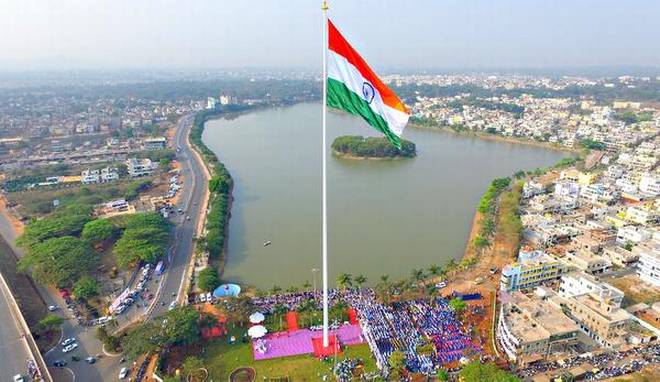
Proud moment: The 110 m tall monumental flag being inaugurated by district in-charge Ramesh Jarkiholi in Belagavi on Monday.
The 110 m tall flag post at Kote Kere is near the historic Belagavi fort
It was a joyous morning in Belagavi on Monday. Schoolchildren, NGO members, leaders and others gathered at the Kote Kere lake front to witness a unique celebration: the unfurling of what is claimed to be the country’s tallest national flag.
The 9,600 sq.ft flag on a 110 m flag pole was unfurled by Ramesh Jarkiholi, District in-charge Minister.
Religious leaders of Hindu, Muslim, Christian and Sikh institutions were present. MLA FirozSait, who has been pushing for the project, was present along with other district officials.
Mr. Jarkiholi said the flag was a testimony to the culture of harmony and togetherness of Belagavi. “BJP is not the sole custodian of nationalism. We are all proud Indians. We respect the principles of unity and harmony enshrined in the Constitution. India is a country of many faiths and all are equal here,” he said.
Mr. Sait observed that various religious and social and cultural groups had flags of different colours, but the national flag symbolised the cultural unity of all. He described this as a historic day and said the people of Belagavi had one more reason to be proud of their city.
Deputy Commissioner S. Ziyaullah, Police Commissioner D.C. Rajappa, ZP CEO R. Ramachandran, City Corporation Commissioner Shashidhar Kurer, Maratha Light Infantry regimental centre officers, and others were present.
The 110 m tall flag post at Kote Kere is near the historic Belagavi fort in the city. It is taller than the post in Pune (107 m) and the one at the Indo-Pak border at Attari (105 m).
“The monumental flag will be flown at all times, and will be well-lit at night. It should be seen by residents of Belagavi from afar and remain visible at all times,” Mr. Sait said.
The flag is made of weatherproof Denier polyester fabric. Two shorter poles with flood lights have been erected around the flag.
Permission granted
Following a judgment of the High Court of Bilaspur in 2010, the Union Home Ministry allows the flying of national flags beyond sunset. However, these flags are considered monumental flags and special permissions are issued on a case by case basis. The Union government has issued a permission for the Belagavi monumental flag.
The Belagavi City Corporation has completed the work under the Chief Minister’s special grant. The flag post is 2 m in diameter at the base and 0.6 m at the top. It has a three horsepower motor to raise the flag to the top.
New park
A park will come up in 1.5 acres around the flag. A committee comprising citizens, district administration, revenue, police and cantonment board officials will be formed to manage the park.
Earlier, the plan was to erect the flag post on an island in the centre of the lake. However, the soil there proved unstable for such a tall structure. Hence, it was shifted to the bank, an officer said.
Five flags
Officers are keeping five flags on standby. “Khadi fabric could not be used for the flag as looms cannot produce a flag of that size and the flag code does not allow stitching of small pieces,” a city corporation engineer working on the project, told The Hindu.
Officials have got Civil Aviation Ministry’s permission to fly the flag that within 25 km of the Sambra airport. A red light is affixed on top of the post to indicate its height to pilots.
source: http://www.thehindu.com / The Hindu / Home> News> States> Karnataka / by Special Correspondent / March 13th, 2018
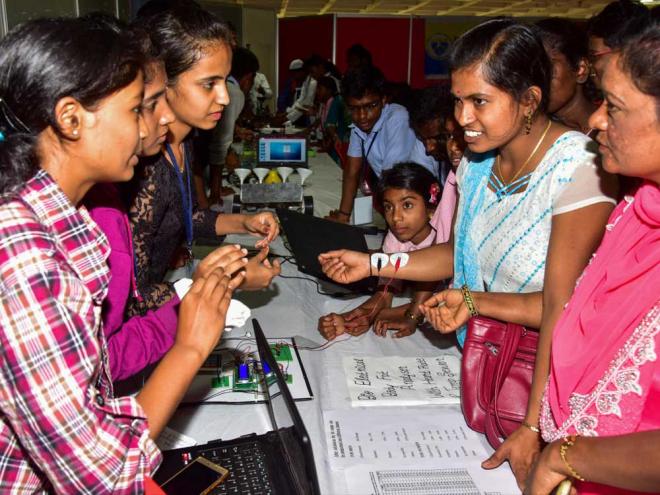
Ramanagara GWPTR College student Arpita B(Ext. Left) and her friends displayed their Invention Bio- Electrical Body Fat Analyser, at the three day ‘Engineering Fair’, at Visvesvaraya Industrial and Technological Museum, in Bengaluru on Thursday. DH photo
Arpita B enthusiastically clamps the sensors to the wrist. With deft plucking of the keys, she feeds her subject’s age, gender and body weight.
Then, five pairs of eyes excitedly watch the display of the gadget as it flashes some numbers. “Here’s your body fat,” 18-year-old Arpita said with a smile.
Know your body fat
The group of five girls from GWPTR College in Ramanagaram, which Arpita is part of, are proud of their invention – bio-electrical body fat analyser.
The model was one of several exhibits at the three-day engineering fair at the Visvesvaraya Industrial and Technological Museum, which showed potential for future mass production.
The girls made this device in two months at Rs 15,500. “We’ve done successful tests on people and several doctors have verified the readings,” Arpita said.
Organised by the ministry of culture for industrial training students between the ages of 18 and 23, the fair displayed several simple innovations that had practical applicability.
Bomb-detection robot
Mohammed Nuhid’s bomb-detection robot is one such invention. The fourth-semester industrial training student from the Government ITI College came up with the solution as he was moved by the scenes of soldiers being ripped apart by IEDs and landmines.
The robot can detect metal, batteries and explosive substances from a distance, Nuhid said. The battery-operated device can crawl several miles, saving the user from harm. Nuhid put the device together in 10 days, spending Rs 4,000.
Wireless CNC tractor
The wireless CNC multi-purpose tractor was one more incredible piece of innovation that five boys from the MEI Polytechnic made for cash-strapped farmers.
“This tractor can perform multiple tasks like removing weeds, tilling land, and sowing and levelling the ground to prevent birds from eating the seeds,” said Dhanush S, who is part of the team that came up with the tractor.
“We designed this exhibit after learning about the troubles farmers go through to hire field hands. This will significantly cut down their labour cost,” Dhanush added.
The team tested the tractor, which they designed in a month and made with just Rs 17,500, at a farm in Hoskote.
Automated sericulture gadget
Three innovators proudly demonstrated the Sericulture and Automation Centre, which would allow farmers to double their silk produce while halving their workload. Works are automatically fed to the centre, where temperature and moisture are moderated. The farmer can monitor the progress on CCTVs or mobile phones.
Hemanth Kumar H A, co-inventor of the technology with fellow students of APS Polytechnic, said the model can also work well for poultry, livestock and pisciculture.
In all, the fair displayed 85 different models ranging from automated money transfers with debit/credit cards, accident safety chambers in aircraft (to ensure passengers do not die in crashes), laser-based thermocol cutters, mobile phone-based home-monitoring devices to automated helmet connector with motorbikes.
A special platform had been given to students from the Association of People with Disability.
source: http://www.deccanherald.com / Deccan Herald / Home> City / DH News Service / Bengaluru – March 16th, 2018
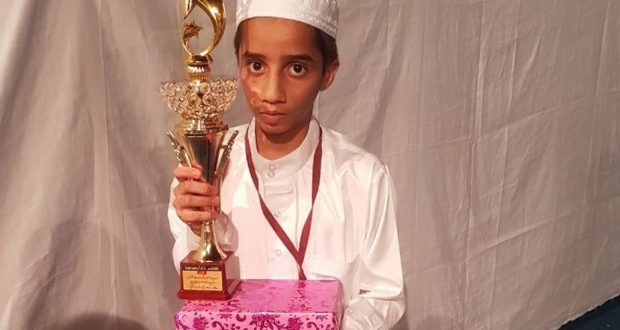
With his mesmerizing voice a little boy from Bhatkal has emerged the overall winner of at ‘All India Qirat and Hifz Competition’ organized by Idara-e-Dawatul Sunnah held in Mumbai on Sunday, March 11.
Jafer s/o Moulana Abdul Azeem Kazia(Vice Qazi, Jamatul Muslimeen Bhatkal) and a student of Maktab Jamia Islamia(Kargedde) has bagged first position in ‘All India Qirat and Hifz Competition’ while competing against 41 participants from across the country including 7 from his own hometown Bhatkal.
Jafer is also awarded an Umrah package for him and his parents by the organizers as a part of the winning prize.
The competition commenced on the morning of Sunday and continued till evening.
As soon as the news reached Bhatkal, social media platforms were full of congratulatory messages for the kid, as he turned a local social media sensation in no time.
Moulana Maqbool kobatte, President Jamia Islamia Bhatkal and other local institutions and their management congratulated the boy on his success.
Bhatkallys.com also takes this as an opportunity and congratulate Jafer, his family and his mentors and management of Jamia Islamia, and also prays to Almighty Allah to protect the kid from all the evil eyes and grant him more success in years to come so as to turn him into an asset for the community and to Islam.
source: http://www.bhatkallys.com / Bhatkallys.com / Home> Latest News / by Bhatkallys News Bureau / Mumbai – March 12th, 2018
Marzooq Ahmed during his ‘Whole Week Only On Wheels’ initiative in Mangaluru.
Marzooq Ahmed keeps his vow and uses non-motorised transport for a week
This lecturer with a polytechnic believes in practising and not preaching as he has kept his vow of pedalling for a whole week to spread awareness on non-motorised transport.
Marzooq Ahmed, lecturer in Civil Engineering with P.A. Polytechnic, Konaje, took up the initiative — Wwoow Factor (Whole Week Only On Wheels) — on February 26. Till Sunday, he either rode a bicycle or walked to any place he happened to travel.
To begin with, Mr. Ahmed rode to his institute every day instead of using any motorised transport. With the support of the principal, K.P. Soofie, and his colleagues in the institute, Mr. Ahmed also conducted awareness programmes to 750-odd students explaining to them the benefits of non-motorised transport, including reduced carbon footprint.
He told the students: “I believe that as an individual I cannot do escalating work but as a socially responsible citizen I can sit on a saddle and steer my thoughts and actions by pedalling to make a small drop in the ocean accountable, to improve the quality of the air that we all inhale.”
Students do their bit
Students too shared a bit of their knowledge and practice on non-motorised transport. While Vishnu and Fareen highlighted the importance of carpooling and reduced dependence on motorised vehicles for short distances, Tilak spoke about the benefits of cycling and how it helps environment conservation. Sapnaz added the concluding statement at the awareness programme by saying, “The actions we show now will reflect in our future. We need to uphold and undertake right measures to control pollution now.”
While Mr. Ahmed is used to regular rides being a member of Mangalore Bicycle Club (MBC), he rode from the institute to Circuit House in the city on Thursday afternoon when the Karnataka State Pollution Control Board opened its continuous weather monitoring centre to show his commitment.
Besides riding bicycle and inspiring his students, Mr. Ahmed is also interacting with the public to create awareness about environment conservation. On Saturday, he spoke to several students in Belthangady taluk as part of his mission.
source: http://www.thehindu.com / The Hindu / Home> News> States> Karnataka / by Anil Kumar Sastry / Mangaluru – March 04th, 2018
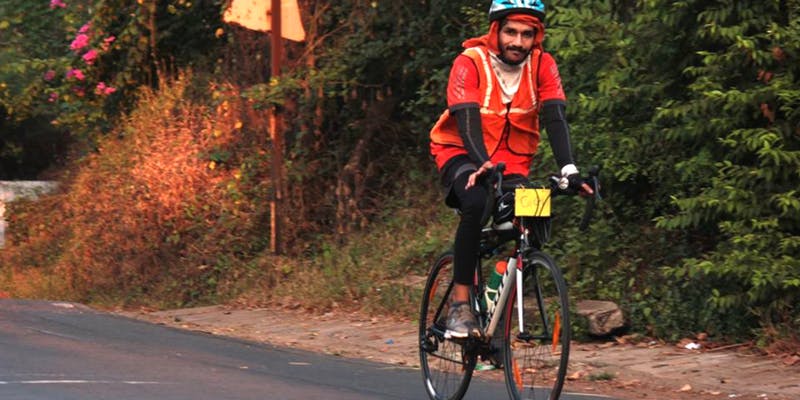
Prof SS Shameem cycled 2,140 kms across Malaysia to spread awareness on the Polio Virus and global eradication of the disease.
The World Health Organization reports Polio cases have decreased by 99 percent across the world since 1988. Yet, even if one child contracts the disease today, the fear of it spreading to 200,000 cases a year lingers.
While awareness campaigns, and health camps, have achieved much in terms of spreading awareness, one man embarked on a solo journey on his bicycle, riding the length and breadth of Malaysia, to spread the word.
SS Shameem, an assistant professor in the Department of Computer Applications in Manipal Institute of Technology, Karnataka, who is posted at Manipal International University, Malaysia, cycled 2,140 km over two weeks from January 31 to February 14 to spread word on eradication of polio.
“Malaysia was declared a Polio-Free country a decade ago; but as it’s known – polio can spread anywhere, anytime unless properly taken care of. I am currently located at Malaysia; so it was decided that the expedition would be held here. Earlier, I had done similar events back in India for causes like Green and Healthy India, among others,” says Shameem.
The campaign
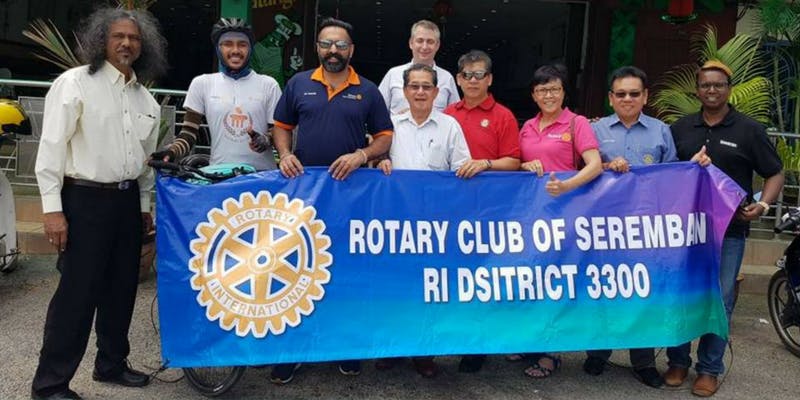
The cycling campaign helped raise Rs 3 lakh (over 18,000 Malaysian Ringgit) for the global EndPolio mission of Rotary International. Operation Polio Eradication by Manipal is a movement by Manipal Academy of Higher Learning and Manipal Global. Shameem’s cycling expedition also promoted the institution’s Green-Health Awareness Campaign.
“Globally, most governments and NGOs are working on eradicating polio from the face of the earth. But we’re still yet to achieve 100 percent on this. As long as there’s one case, it can spread. Rotary International has been working tirelessly for many years with its EndPolio mission. This cycling expedition was in association with Rotary’s initiative. Manipal, having a strong presence in the medical sector in Malaysia as well, promoted this expedition for the same cause,” Shameem said.
In India, which reported its last case of polio virus in 2011, awareness to ensure the disease doesn’t make another appearance is imperative. Once known as a hotbed for the virus, various pulse polio campaigns led to the successful eradication of the disease.
“A lot of initiatives were taken; but as all would agree, content on an official document and facts/reality have a lot of difference. Much work is needed on the ground level; which needs lot of funding, and more importantly public awareness. At least, I can do my part through such cycling expeditions and campaigns,” he adds.
His journey also translated into a knowledge sharing space, where misunderstandings about the disease were cleared and information spread.
For the love of cycling
While there are many methods to spread awareness on health issues, Shameem believes that to reach out to as many people as possible, one needs to travel. To support the cause of polio eradication, he cycled 100-200 km a day. He began the two-week voyage from Nilai, passing through Kuala Lumpur, Rewang, Taiping, Ipoh, Penang, Perlis, Kedah, Mersing, Johor, Bahru, Muar, Melacca, Tampin, Seremban, before ending it at Nilai. The expedition covered the whole of Malaysian mainland.
“The attempt caught people’s attention and they wanted to know more about it. That serves our purpose. Also, seeing a solo effort of riding 100-200 km per day, 2000+ km straight, people helped out; which helped in our EndPolio Fund-raising campaign. I don’t think we could have gotten a better response, or raised more money in a Greener way, through a mode other than this.”
Back in India, Shameem has had successful cycling expeditions. In 2016, he rode solo from Kanyakumari to Kashmir, covering a distance of 3200 km in 23 days. His other feats include a solo 1500 km expedition from Bengaluru to Odisha in eight days in 2015, a group stint from Manipal to Jaipur covering 2500 km in 20 days in 2016, and from Okha to Dibrugarh, covering 3200 km in 19 days in 2017.
At the Manipal Institute of Technology, Karnataka, students, alumni and staff have created cycling clubs, and participate in various local and national circuits. Shameem believes the youth needs to be enthused about cycling and using it as a means to create greater community engagement.
“I love cycling. I like to push myself beyond limits; I want to try the tough things. Exploring places on cycle defines me; and that’s why I do it.”
From the cyclist’s journal
The only concerns were wildlife and reptiles. A particular 250 km stretch in northern Malaysia is full of mountains and thick forest, with no trace of human life for miles. Wild-pigs, elephants, even tigers are seen roaming freely on highways. I was lucky to have not encountered any at all. I was carrying two small knives at hands’ reach while cycling on the stretch. – Shameem
source: http://www.yourstory.com / YourStory.com / Home> Social Story / by Deepika Rao / March 02nd, 2018
M&C Saatchi India has appointed Parveez Shaikh as their senior vice president and executive creative director.Shaikh is best known for building Contract’s creative reputation during the 11 years that he spent at the agency before he quit, in 2003. He has worked as a creative consultant with a few leading agencies for a few years after that.
M&C Saatchi India has appointed Parveez Shaikh as their senior vice president and executive creative director.
Shaikh is best known for building Contract’s creative reputation during the 11 years that he spent at the agency before he quit, in 2003.
He has worked as a creative consultant with a few leading agencies for a few years after that.
Shaikh has worked on premium, blue-chip clients such as Philips Audio, Franklin Templeton AMC, Asian Paints, Shoppers’ Stop, ICICI Bank and Cadbury India.
He has won over a hundred national and international awards, including two Cannes Lions and five finalists at the prestigious Cannes Advertising Festival, an entry in the D&AD, the One Show, the New York Festival and the ‘Copywriter of the Year’ award.
He has also featured in the Indian Copy Book as one of the 16 best Indian copywriters of all time. Shaikh will be based in Mumbai.
source: http://www.campaignindia.in / Campaign India / Home> Advertising / by Campaign India Team / May 22nd, 2008
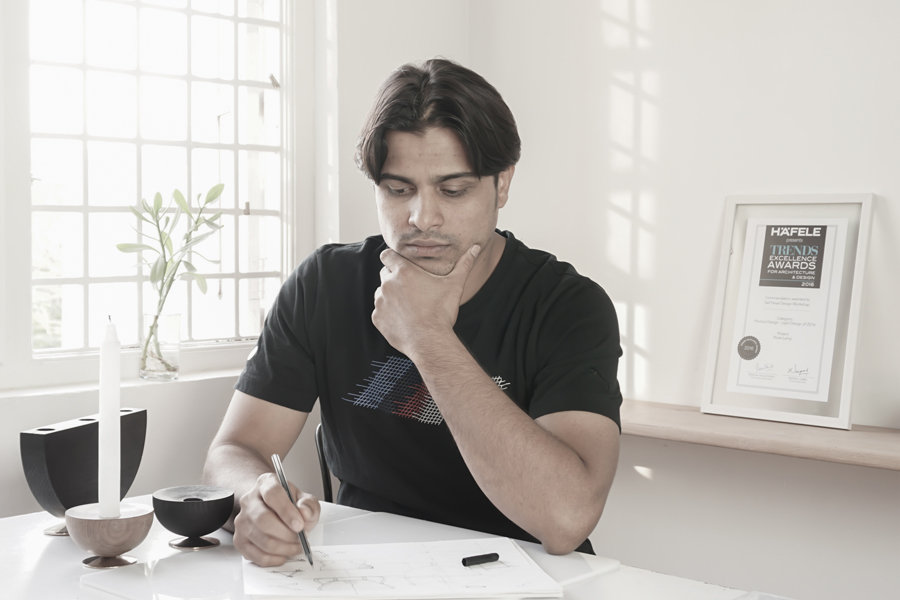
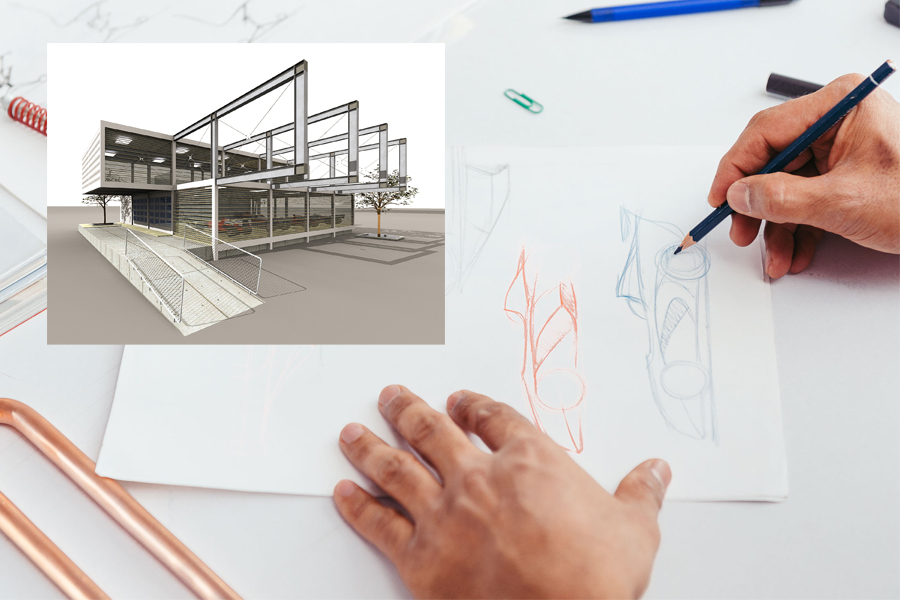
It all started with cars, as Saif explained to us. His dream of becoming an Automotive Designer started early on to which point he even enrolled into an Architecture Undergraduate program near Bangalore just to be able to pursue a Master’s degree in car design. There, in college, he also joined the Formula Student Racing Team, where he acquired diverse experience in design and technical know-how. Now that’s real commitment.
But things took a U-turn when later he dropped the plan to go ahead with his Master’s, thinking that it was too restricting to be involved in just one specific field. At that point, he had discovered that only an Industrial Design course could give him the freedom to be multi-disciplinary, and to be able to work on Architecture, Product design, Automotive design and more. Then, the rest is history.
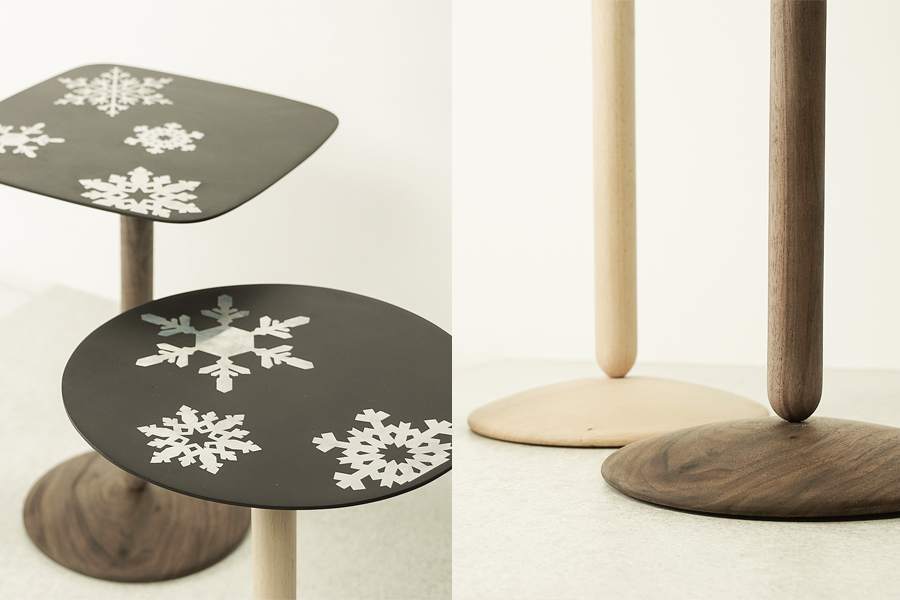
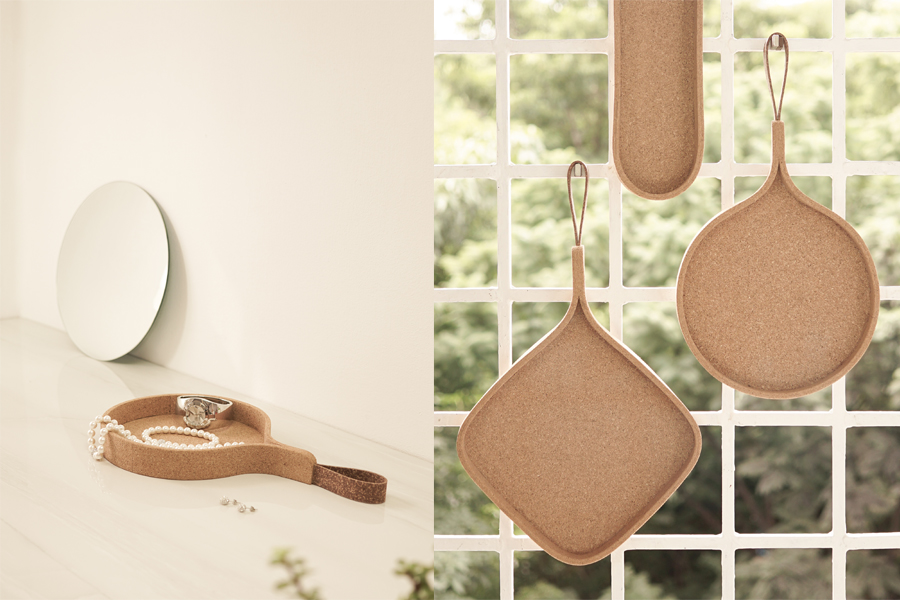
Winning design from EDIDA INDIA 2017: Qaiser Series (T) and Cork Trays (B).
“Design, in general, is what gets me going,” he said, “So it is all a playful adventure.” Since setting up his creative office in 2014, Saif had been steadily creating designs that draw heavily from his appreciation of technology and processes. But it wasn’t until he won the recent EDIDA India for furniture and tabletop with the Qaiser Series and Cork Trays that he finally caught the eyes of the global design industry.
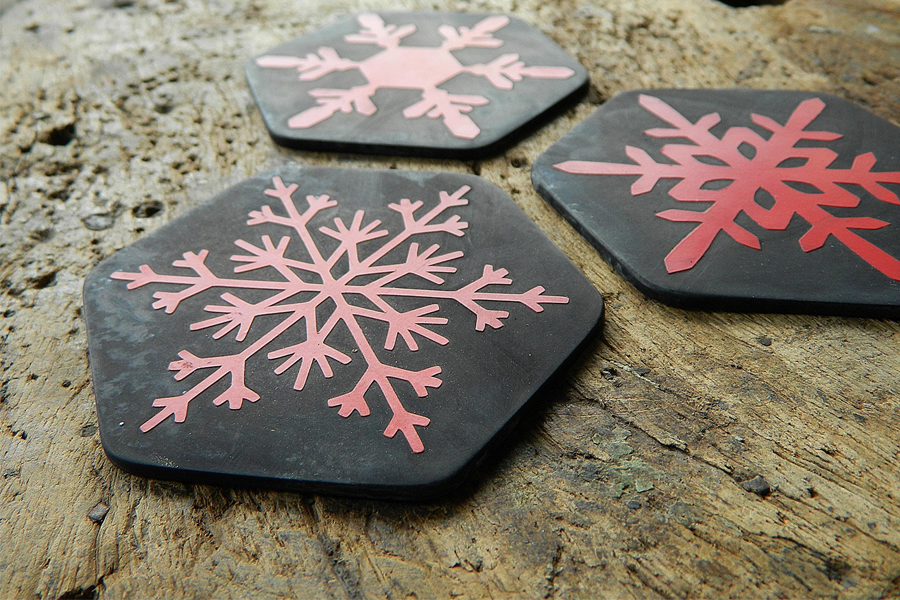
The former is a series of side tables with tops that used a unique craft form called ‘Bidriware’. “One of its kind in the world,” explained Saif, “It uses a special mud from the medieval fort in Bidar, in South India. So it is made by us with local craftsmen.” The latter, a quite self-explanatory design, takes the shapes of typical hanging cutting boards, but with a thick border to hold objects in their place. Akin to Enzo Ferrari who used to build and sell cars to fund his racing, the trays are currently self-produced by Saif but would definitely like to be mass-produced. “Maybe by a manufacturer from Scandinavia perhaps…” he hoped. And so do we.
We talked to him about his journey so far and his future endeavours.
Qaiser Series used a unique craft form called ‘Bidriware’.
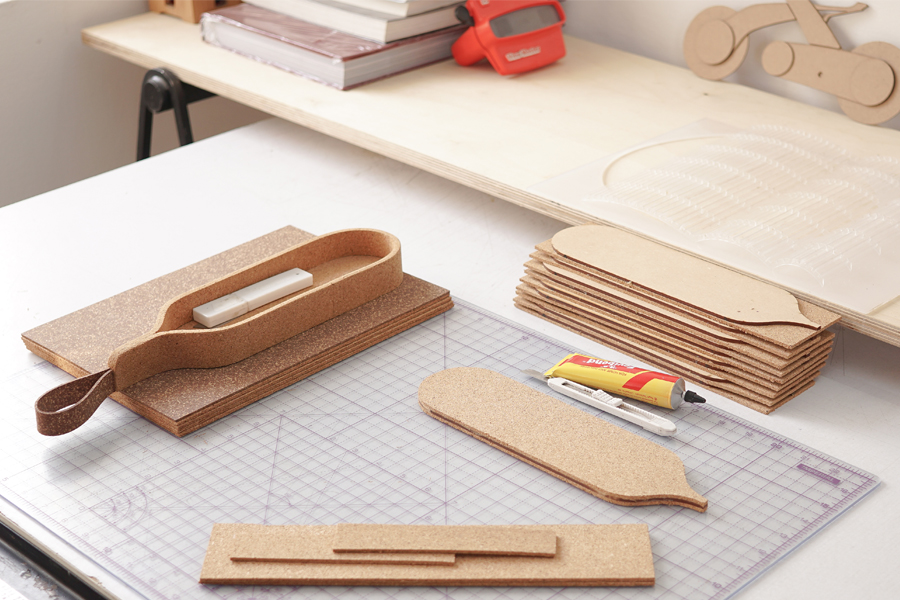
In the process of making the Cork Trays.
For people who are not yet familiar with you, tell us about your background.
I’m an Industrial designer working on Architecture, Interiors, Product design, Brand Identity, Design Development, Creative Direction, Motorcycle design, Automotive racing, Furniture, Lighting, Craft & Jewelry. I’ve always had an admiration for things and objects: their materials, beauty and how they were made. I always found it fascinating to watch a carpenter or a mason engaged in his craft. I could make stuff out of anything that was around; I used to make miniature farms with plantations and worked on irrigation, inspired by the country life I experienced during the summer stays at my grandfather’s farm. I’d also make models of scooters and bikes out of wheat flour dough. That’s one of the reasons I still love scale models so much, making them and collecting them. It was around 16 that I discovered design could be a legit career. I wanted to become an automotive designer. I’m an autodidact, and it’s quite natural for me to pick up something that interests me and pursue it with certain passion on my own, learning and doing on the way.
How do you describe your design aesthetic?
I’m an ‘ESSENTIALIST’; my focus is on sensitive, thoughtful and meaningful design. I have quite a contrasting way of looking at things; some designs are practical and functionalist while others are poetic expressions that can have certain humour and curiosity. All in all, everything has to have that beauty. Making stuff has been a huge part of the process; so much so that some of the products hardly have any drawings or detailed sketches – it’s just straight from the concept sketches to the making of the prototype.
Designing cars, including racing architecture has always been Saif’s dream.
Lots of your pieces used natural materials like wood and cork. What's your fascination with these materials?
I love working with beautiful, humble natural materials; they have great quality regarding how they age gracefully. I love exploring their properties in new and expressive ways, for instance, the Cork trays have two variations of cork, the rubberised one for the strap and the hard one for the tray body, perfectly coming together, not to mention the ecological aspects of these materials.
Where are you based now? What made you want to be here? What are the advantages?
I’m based in Bangalore at the moment; I came here for my undergraduate about 12 years ago, while doing my Architecture I was part of the Formula SAE team which mostly had Mechanical engineering students, I used to design the Chassis, Ergonomics, Suspension, Brakes, Safety and Packaging. During this time I developed a great network of vendors and suppliers. This field felt quite indispensable when I wanted to start my multidisciplinary studio. But I seem to have exhausted the potential of the city. Maybe I will shift to Scandinavia in future; you’ll never know…
What is the current design scene in India?
Its still evolving and not that refined at the moment. There is this underlying fascination with Bollywood and Kitsch with a ‘Royal’ hangover from the bygone era of the ‘Maharajas’ that I feel is quite hindering. But otherwise, there is new breed of young designers with a more progressive perspective that is doing some significant work that I feel would be worth something in the coming years.
Where do you find your inspiration?
Inspiration to me comes from a social concern, a beautiful material, an inspiring craft, a practical need, a curiosity… I look to other creative fields too. At this moment, in particular, I’m fascinated with the contemporary culinary scene. Also, it’s quite difficult not to notice the tech-innovations of late…
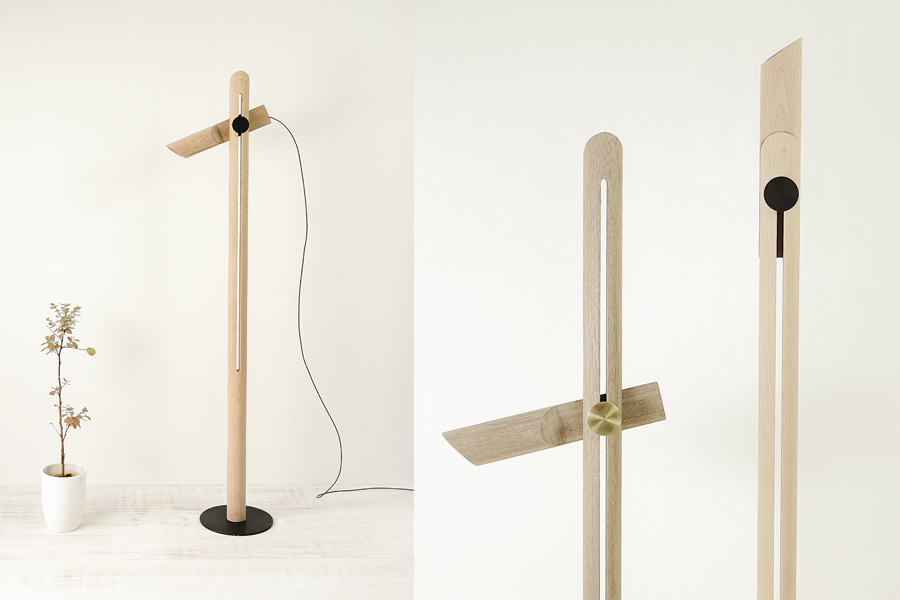
Another EDIDA winning design from 2016: Poise Lamp.
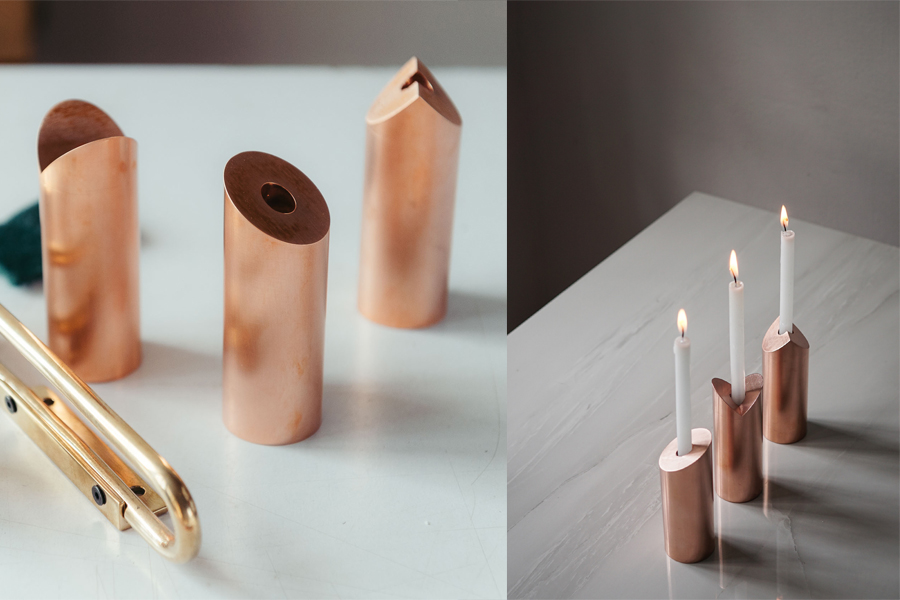
The new Euclid Series of candleholders.
Where will we see you next?
We have several projects that we have completed and are speaking to different manufacturers to get them in production. Among other stuff, I’m working on an electric Café racer that will host a couple of very innovative features in response to the whole Autonomous vehicle scene. Also, I’ve been approached for an electric car; it’s more on conceptual lines at the moment focussing on the future of urban mobility in developing nations like India, I’m working on the Packaging, Interiors & Styling. One important thing at the moment is we are working with a manufacturer who is looking at working with a couple of craft form to launch innovative contemporary Art-Design pieces soon, hopefully during I Salone 2018 in Milan. This is a new direction for my work; I’m quite pleased with the progress at the moment.
Mysuru girl Rifah Taskeen drives into the Golden Book of World Records.
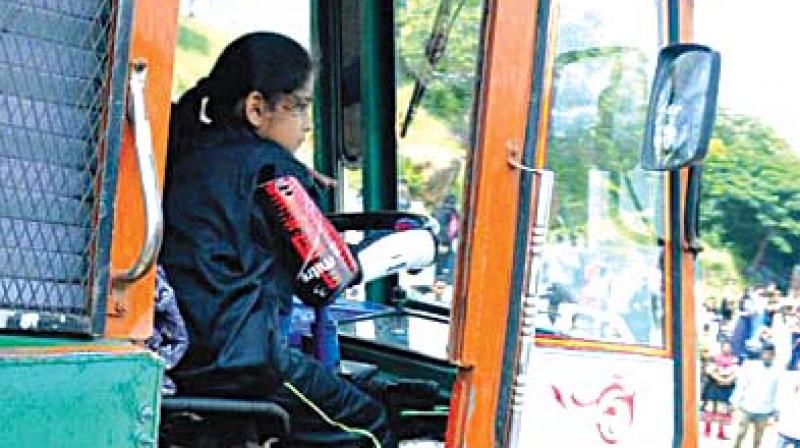
Rifah Taskeen drives a truck in Mysuru on Sunday.
Mysuru:
Amazing though it may seem, seven-year-old Rifah Taskeen at last got permission from the state government to participate in a record breaking event and drove 16 vehicles, in a bid to become the youngest to drive multiple wheeled vehicles at Idgah ground and St Joseph’s school ground at Bannimantap here on Sunday
In her bid to enter the Golden book of world records, the tiny wonder drove a lorry, Mahindra Bolero, Tata Ace, Mahindra Scorpio, Toyota Fortuner, Maruti 800, Maruti van, Maruti Esteem, Maruti Zen, Santro, Ford, an ambulance, a Hyundai Verna, a Tata Indica and a Quad bike among others (Her father had modified and lowered the level of the seats in the vehicles to suit her height).
Mr Santhosh Agarwal of Golden Book of World records, who represents South India, participated as an observer in the event. Rifah aimed for the record after permission was granted by Primary and Secondary Education minister Tanveer Sait and Mysuru city police Commisioner Dr A Subramanyeswara Rao. Her aim now is to become the youngest pilot. Her parents are in touch with a few airlines and a firm has agreed to train her, according to her father Tajuddin.
Tears flooded the eyes of Bibi Fathima, mother of Rifah, a class 2 student of St Joseph’s school at Bannimantap after seeing her feat. Principal of her school Maria Gracilda had no words to express her happiness as Rifah stunned people at the event, with her amazing confidence.
Rifah’s father Tajuddin, a contractor of floor tiles and a former racer who has won several national level contests, has worked as stuntman and dancer in several movies while her mother is a government school teacher. They reside in NR Mohalla here. Owing to constraints, Tajuddin couldn’t fulfill his dream of contesting in races at the international level. He started training Rifah ever since she was a baby. “I used to put her on my lap when I used to drive. She learnt driving at the age of 3,” Mr Tajuddin disclosed.
Rifah has performed stunts at school during Republic Day and Independence Day programmes. She even launched Chinnara Dasara hosted by the department of women and child development, in the presence of chairperson of Karnataka Commission for the Protection of Child Rights Krupa Amar Alva, during Dasara recently. But due to lack of permission from the authorities, the event to break the record was delayed. “My only aim is to drive a Formula 1 car and also become a pilot,” Rifah said.
source: http://www.deccanchronicle.com / Deccan Chronicle / Home> Nation> Current Affairs / by Deccan Chronicle / by Shilpa P / November 06th, 2017