One such is a miniature version that can be worn as an amulet
Ramzan marks the revelation of Koran and families go into a huddle reading it through the night. The Abul Kalam Azad Oriental Research Institute in Public Gardens is now hosting an exhibition of copies of some rare Korans.
One of them has been created in Hyderabad with Persian and Urdu translation and explanatory passages on the side. Another Koran is a miniature version which could be worn as an amulet. “This is among the 5,000 Koran amulets commissioned by Hasan Nizami, a legatee of Nizamuddin Aulia of Delhi. It is a priceless object as very few are in circulation,” informs S.M. Ahmed Ali of the institute.
Then there is a Koran which is a gift of Reza Shah Pehlavi, first Shah of the House of Pahlavi of the Imperial State of Iran, when his wife visited the city in 1960. It has the Persian translation along with the Arabic original.
A few facsimile copies show how different writing styles have evolved. A 7 th century Koran in Kufic script is without the diacritical marks. “This is one of the earliest copies and unique. It will be difficult to read as we are used to seeing the sound markers,” adds Mr. Ahmed.
source: http://www.thehindu.com / The Hindu / Home> News> National> Telangana / by The Hindu Bureau / Hyderabad – April 14th, 2022
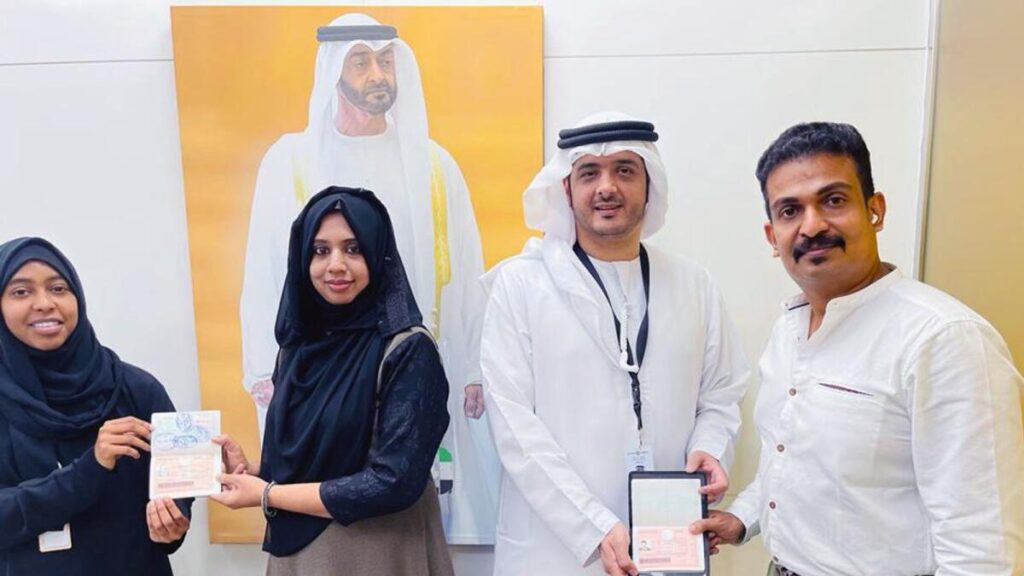
Abu Dhabi-based dentist couple Abdul Rahiman Nizar and Simi are the latest recipients of the 10-year UAE Golden Visa.
Abu Dhabi :
Abdul Rahiman Nizar gained popularity for amassing a rare collection of all the teeth extracted so far in his career.
Abu Dhabi-based dentist couple Abdul Rahiman Nizar and Simi are the latest recipients of the 10-year UAE Golden Visa.
Dr Nizar has served in Abu Dhabi for 20 years, including 18 years at Ahalia Group. However, the Indian doctor gained popularity for amassing a rare collection of all the teeth extracted so far in his career.
“Teeth are the strongest part of your body. I have always liked teeth. And once into my job, I started collecting it. Soon, it became a hobby. And I began to have a varied collection, which has been helping students in their dental studies,” said Dr Nizar, who is from Kerala, India.
“Over the years, I have collected nearly 15,000 teeth. I clean each tooth with antimicrobial hydrogen peroxide and then treat it with disinfectant. Once dried, I preserve them in a box. I am aiming to see my name in record books,” said the general practitioner dentist.
Dr Nizar urges people to take care of their teeth and visit a dentist every six months.
“Early detection of any tooth decay will help to avert a situation of tooth extraction. I always try to save a tooth and opt for extraction only as a last resort,” he said.
Dr Simi, who works at Al Mafraq Medical Centre in Baniyas, has also been collecting teeth.
“We are very excited to have bagged the Golden Visa. During this pandemic, both of us served the community, sacrificing our off days,” Dr Simi said.
The couple have four daughters: Grade 12 student Neha, Naila in Grade 8, Naima in Grade 3 and Naira is eight months old.
Dr Nizar, who also holds a 10-year US visa, added: “We plan to spend the rest of our lives in the service of Abu Dhabi. I thank the leadership for this honour and our hospital for the support in building our careers.”
source: http://www.khaleejtimes.com / Khaleej Times / Home / by Ashwani Kumar / September 29th, 2021
42-year-old Rahmathulla passes exam in fourth attempt, says it is one of the happiest moments of his life.
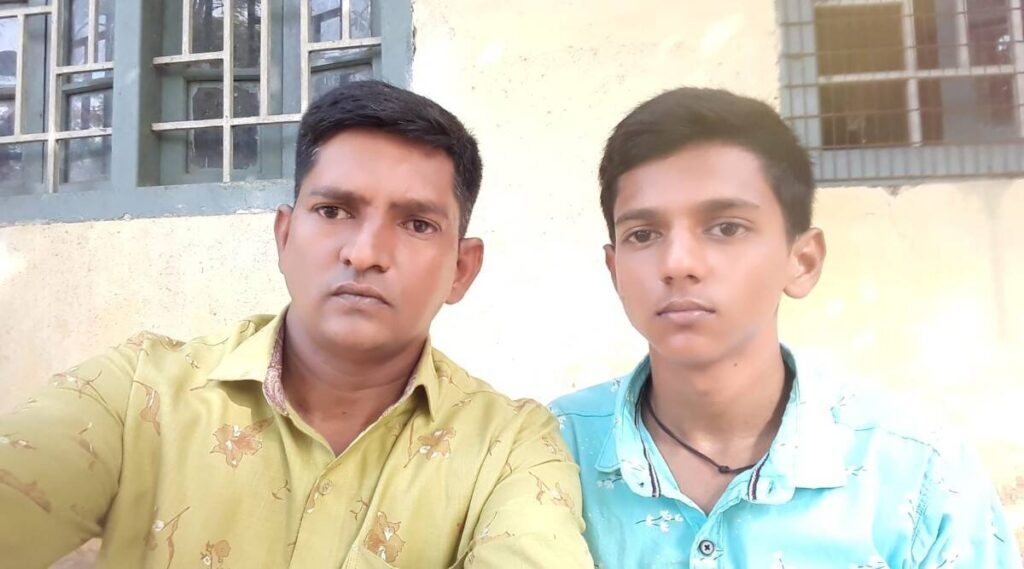
Rahmathulla with his son Mohammed Faraan (Express Photo)
After 28 years and three failed attempts, 42-year-old Rahmathulla finally achieved his lifelong dream of clearing his Class X exams when the results were declared in Karnataka and he learnt that he had passed with 333 marks. What made the accomplishment sweeter was that he shared the achievement with his son Mohammed Faraan, who scored 98 per cent.
“My father always insisted that I study and pass the 10th standard…which I did not do. But now, after nearly 30 years, I have achieved this only because of my son,” said a teary-eyed Rahmathulla, crediting son Faraan for his success.
A Mysuru resident who works in a cloth merchant’s shop, Rahmathulla said that clearing his Class X exams was one of the happiest moments of his life. “I come from a poor family but despite this, my father always asked me to study and at least pass 10th standard. However, I did not pay any heed to his words and started working as our family was not in a position to afford to feed us,” he said.
After his first attempt in 1994, Rahmathulla decided to give the exams another shot in 2004. “I felt I should give it a try but I only ended up securing 82 marks. Then, last year when the state government announced that they would pass all candidates, my son forced me to appear again. I did, but again I failed as I was able to score only 316 marks,” he said.
After his first attempt in 1994, Rahmathulla decided to give the exams another shot in 2004. (Express photo)
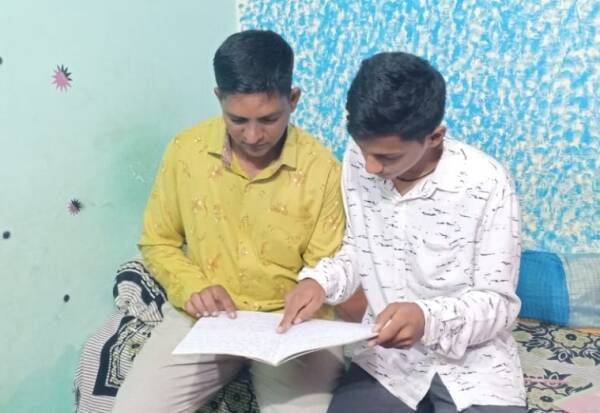
It was then that Faraan stepped up and refused to let his father give up his dream. “I had given up and thought I would not appear for the examination again, but my son did not leave me. He said he would train me to at least pass by attending a few questions and writing less. He used to teach me after I returned home after work. I managed to secure 333 marks to pass the examination. This was really one of the biggest moments of my life,” said Rahmathulla.
Faraan, who secured 613 marks (100 marks in Mathematics, Hindi and Social Science), dreams of becoming a software engineer or scientist. “I have got admission to CPC Polytechnic College in Mysuru where I will pursue Diploma in Computer Sciences,” he said.
Speaking about Rahmathulla, Faraan said, “Today, passing 10th standard is the minimum criteria for anything. My father may have wanted to but did not get the guidance he needed. I made him enroll for the examination and when the examination neared, after his working hours, I used to teach him a bit. Along with that, I also studied. I am really happy that he was able to clear the exam.”
Asked if he now wants to pursue education, Rahmathulla said, “I am glad I completed 10th standard. Now, let my son decide.”
source: http://www.indianexpress.com / The Indian Express / Home> Cities> Bangalore / by Kiran Parashar, Bengaluru / May 25th, 2022
Students of Cauvery Institute of Health Sciences, Mysuru, affiliated to Rajiv Gandhi University of Health Sciences (RGUHS), have bagged a gold medal and 23 ranks in the recent 24th annual convocation of RGUHS.
Rohith, a student of Cardiac Care Technology, has secured first rank and a gold medal.
Sandra Sabu and Sandra Shibu, students of Operation Theatre Technology, have bagged 2nd and 5th ranks respectively. Ashley, a student of course in respiratory technology, has secured 7th rank. Adil Mubarak, Laveena Jose, Anagha, Anju David, Shalu Reji, Amulya Celestina, Bharathan R., Anjana Rajan, Santuna Saji, Mariya Linet, and Shilpa are the other students whose names figure in the list of rank holders, a press release from the institute said.
Principal Aravind R.M. congratulated the students and faculty for their efforts in bringing accolades to the institution. Chandrashekar G.R., Chairman, Cauvery Group of Institutions, called upon the students to consider the healthcare field as a career option which has huge demand and potential for growth in India and abroad.
He said in the release that the Cauvery College of Nursing has entered into a Memorandum of Understanding with NHS, United Kingdom, for training and recruitment in various hospitals in the United Kingdom.
source: http://www.thehindu.com / The Hindu / Home> News> National> Karnataka / by Special Correspondent / Mysuru – April 14th, 2022
A student with high functioning autism and has been breaking academic records since his high school days.
Manipal Academy of Higher Education student Aman Maqbool has been breaking academic records since his high school days. Supplied photos
Indian student of determination Aman Maqbool is the latest recipient of the UAE Golden Visa.
A 20-year-old student of Manipal Academy of Higher Education (MAHE), Aman is a student with high functioning autism and has been breaking academic records since his high school days.
Aman first made headlines , including a report in Khaleej Times, after scoring an impressive 94.2 per cent in his Central Board of Secondary Education (CBSE) Grade 10 examinations.
A former student of Delhi Private School, Sharjah, Aman has found immense support from his family, teachers, and counsellors at school and university.
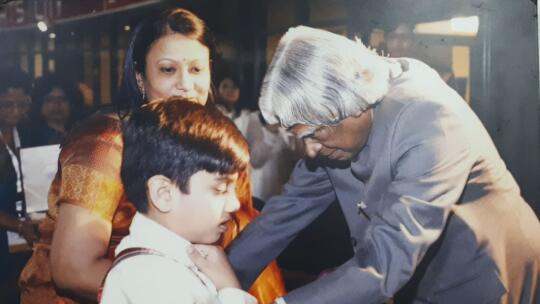
Aman Maqbool with former Indian President A.P.J. Abdul Kalam
“He scored 95 per cent in his Grade 12 CBSE examinations,” his father Maqbool Ahmed told Khaleej Times. Aman is a BSc information science and technology student at MAHE Manipal, Dubai campus.
“After Grade 10, he chose commerce. He decided to pursue a BSc in computer science since computers are his passion,” added Ahmed, a Kerala native.
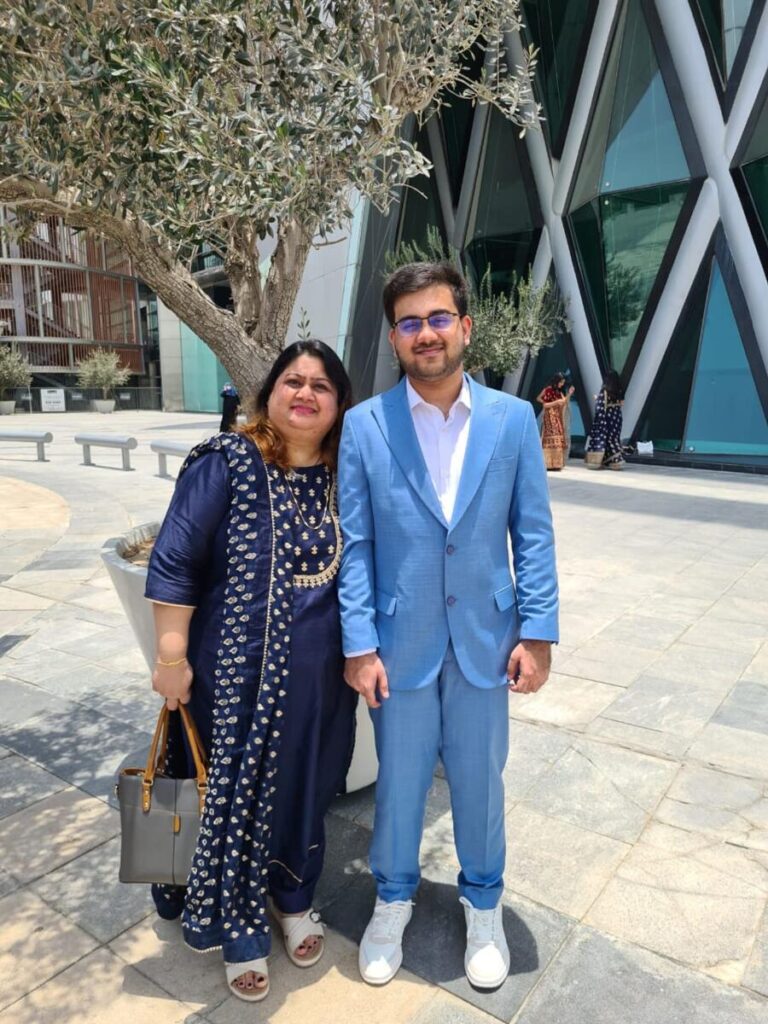
The family, including Aman’s most significant pillar of support – his mother Anitha and younger brother Ayaan, have been UAE residents for over two decades. “Aman is very passionate about studies. He loves going to campus and loves learning and studying,” said his mother.
“We did not think he would get the golden visa. I applied on behalf of Aman because it was a token of appreciation for all the hard work he has put into his studies,” said his father. While Aman is brilliant and has a photographic memory, he struggles to communicate in a manner that is considered “socially acceptable”.
Aman Maqbool with his mother
Aman was diagnosed with high-functioning autism aged three to four years old, said Anitha. “He studied in Delhi Private School all his life before moving to MAHE for higher education. Our aim now is to help Aman become a lot more independent,” she added.
He underwent several speech and functional therapies as a child, including brain gym. “For children with autism, every action and word is a form of therapy. Aman is also active in sports, cycling, swimming, and exceptional musical skills. He plays the keyboard very well,” said Ahmed.
“What’s important for Aman is that he has a never-give-up attitude and is extremely hard working. We are sure he will reach much greater heights,” said his parents.
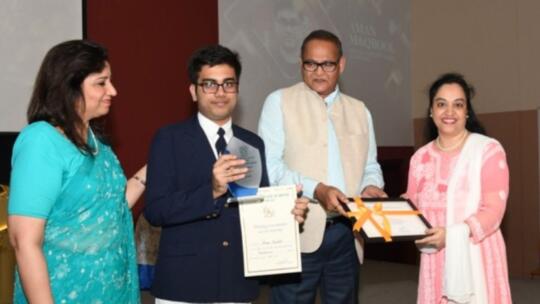
Aman receives an award.
Commenting on Aman’s impressive achievements, Nasreen Bahar, the inclusion champion at DPS, Sharjah, told Khaleej Times, “Aman has been a student with DPS since KG1. I worked with him after he reached Grade 6. He has a lot of potentials. He is academically gifted and well-versed in music. He can recall any day of the calendar day and date from the 1970s to 2030.” While his social skills are not indicative of his intelligence, Nasreen remembers Aman getting along well with his peers at school.
Similarly, Kritika Mathur, the deputy manager at the office of student affairs (student engagement and inclusion), said, “I’ve been working with schools for ten years now, and I’ve come across multiple stories of children who have family support and students who do not have family support. Aman has several major challenges, but his family efforts are solid, and his parents are determined.”
She added, “They are not victimising themselves in any way. They work with Aman to achieve his dreams. At present, Aman is going through several changes as he grows older. However, his parents are so forthcoming with these changes.”
Mathur said her message to all families with children of different abilities is that the issue is ‘not what’s happening with their child. “Parents need to educate themselves on how to grow with their child of determination,” she added.
source: http://www.khaleejtimes.com / Khaleej Times / Home> UAE> Education / by Dhanusha Gokulam / March 12th, 2022
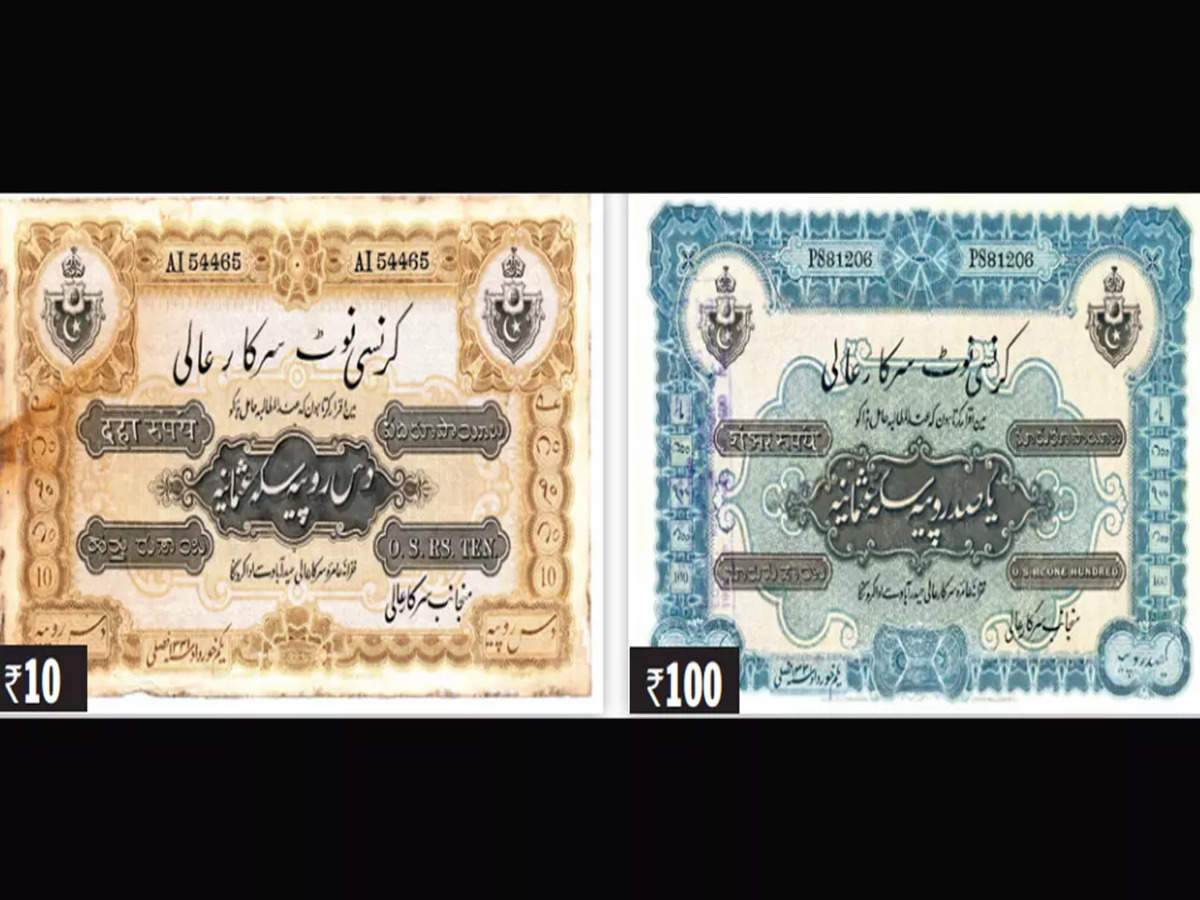
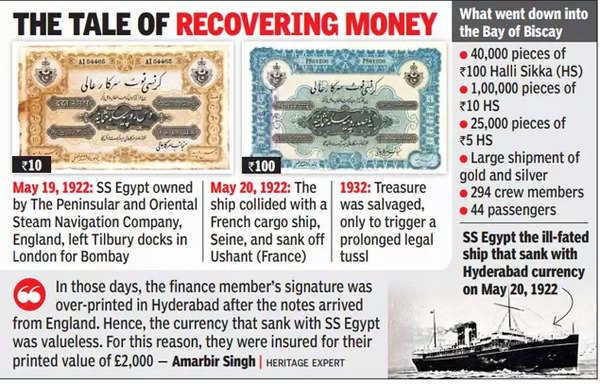
The Hyderabad currency comprised 40,000 pieces of 100 Halli Sikka (HS), 1,00,000 pieces of 10 HS, and 25,000 pieces of of 5 HS, totalling 1,65,000 pieces
After the ocean liner, SS Egypt , sank in the Celtic Sea on May 20, 1922, the events that unfolded over the next 17 years forced the Nizam VII, Mir Osman Ali Khan, to shift the printing of Hyderabad currency from England to Nashik.
On this day (May 19) 100 years ago, SS Egypt owned by The Peninsular and Oriental Steam Navigation Company, England, left Tilbury docks in London for Bombay (Mumbai). It had 44 passengers and 294 crew members, besides a large shipment of gold and silver and 1. 6 lakh pieces of Hyderabad currency, which had a face value of Rs 51,25,000.
The next day (on May 20, 1922), the ship collided with a French cargo ship and sank off Ushant in France. The Hyderabad currency shipped by Waterlow and Sons to the princely state of Hyderabad too went down into the sea. The treasure was salvaged a decade later in 1932, only to trigger a prolonged legal tussle.
“The Hyderabad currency comprised 40,000 pieces of Rs 100 Halli Sikka (HS), 1,00,000 pieces of Rs 10 HS, and 25,000 pieces of Rs 5 HS, totalling 1,65,000 pieces. The face value was Rs 51,25,000,” eminent numismatist and heritage expert . Amarbir Singh told TOI, adding that since the currency notes were unsigned, they did not legally carry value.
“In those days, the finance member’s signature was over-printed in Hyderabad after the notes arrived from England. Hence, the currency that sank with SS Egypt was valueless. For this reason, they were insured for their printed value of £2,000,” Amarbir said.
Stating that few of the notes salvaged had made their way to Hyderabad, resulting in a spate of legal fights, Amarbir said the issue was closed 17 years after the notes were printed which entailed seven years of negotiation and litigation.
“The government of Hyderabad decided it would be safer to print currency in India. The outbreak of World War II shortly after proved it was indeed a wise decision,” Amarbir said, explaining how the princely state changed location of currency printing from England to India.
The Hyderabad government requested Waterlow to destroy the notes and ordered a replacement stock from the printers, with the same series repeated, but in a slightly different type of font used in the serial number to indicate the difference. These were received and duly circulated, and the matter was regarded as closed, he said.
source: http://www.timesofindia.indiatimes.com / The Times of India / Home> City> Hyderabad> News> City News> Hyderabad News / by Syed Akbar, TNN / May 19th, 2022
By directly procuring ingredients such as wheat, raggi, millets and almonds needed for products directly from farmers, Shamila ensures a profit for them as well.
Shamila with her husband Muhammed Shahabaz
Ernakulam : :
With adulterated food posing a serious hazard, staying healthy now depends as much on trustworthy sources as on a balanced diet. Worried parents face a difficult time trying to get their children to eat nutritious food.
Doctor-turned-entrepreneur Shamila Shahabaz, 30, is aiming to make life easier for such parents. ‘Mama Papa Zay’, Shamila’s venture, aims to provide a variety of fully homemade and preservative-free products for children, right from eight months old. By procuring ingredients like wheat, ragi, millets and almonds directly from the farmers, the venture is earning profits for them as well.
“The idea struck me when I became a mother,” said Shamila, who is also a certified child nutritionist.
“People, generally, don’t have the habit of reading labels and ingredients before buying a product. This should change. You will stop buying so many products just by reading the ingredients list such as added sugar, artificial flavours and preservatives. It shocked me too and I wondered what to feed my baby. When I started sharing my recipes on social media after my pregnancy, people asked me whether I could make the products myself on a larger scale. Now we are getting orders from all over the world.”
Local farmers are benefiting greatly from Shamila’s initiative. “Kannankaya is the key ingredient used to make banana powder. We have a few local farmers cultivating it, and we directly deal with them. Shops charge Rs 35-40 per kg for the fruit. We pay Rs 20-25 directly to the farmers, who thus get a better deal than selling their produce in the market. Millets, ragi, nuts and other ingredients are similarly sourced from farmers in Salem and Mysuru,” said Mohammed Shahabaz, Shamila’s husband.
“We are playing a small part in trying to transform our society’s health as a whole, by cultivating healthy food habits. This is just a small step, we hope to be known as a trustworthy source of nutritional food for children. Young mothers should never find themselves in the quandary I was in, to identify unadulterated baby food,” said Shamila.
source: http://www.newindianexpress.com / The New Indian Express / Home> Good News / by Anuja Susan Varghese, Express News Service / May 22nd, 2022
A view of the dargah of Moinuddin Chishti in Ajmer
Ajmer’s dargah of Moinuddin Chishti is undergoing massive restoration work
The dargah of Moinuddin Chishti, fondly remembered as Khwaja Garib Nawaz, or the benefactor of the poor, in Ajmer, will, in two years’ time see a restoration and an incorporation of modern facilities. Considered a holy place of hope, where people from different denominations believe their prayers will be answered, the dargah was built in the 13th century. The tomb was constructed in wood, later covered with a stone canopy. In 1579, Akbar reconstructed the sanctum sanctorum and built the dome. It was renovated in later years by Jahangir, Shah Jahan, and Jahanara.
The project, a part of the CSR wing of Hindustan Zinc Limited, is headed by architect Surbhi Gupta, a heritage management consultant. At present, the dargah that was organically built with various materials, ranging from brick and marble to sandstone, is seeing restoration and redevelopment of the interiors of the Mehfil Khana, widening of gates, structural consolidation, facade work in the courtyards, cleaning of stone surfaces, and new terracing in lime concrete.
“There is no single language of design or material as the dargah was never planned systematically,” says Surbhi, working on one of the most important pilgrimage sites of South Asia with members of her studio Rasika that specialises in heritage management.
The square structure of the royal darbar (Mehfil Khana),was built in 1888 AD. She says it “has been painted over as a part of living tradition. The idea is to bring out its character as a space meant for performances. The architectural character needs to be revived to bring back the original identity of the structure. The patterned ceiling will be designed on the lines of Kashmiri Khatambandh (a woodwork ceiling with a carved geometric pattern), and Mughal stone inlay flooring,” says Surbhi.
Work is also going on at the famous Shahjahani Gate, built by the Mughal emperor Shahjahan to mark the expansion of the dargah complex beyond the Buland Darwaza.
The project — under the Swacch Bharat Abhiyan — also revolves around sanitation, cleanliness, and waste management within the dargah’s periphery. The work entails providing clean drinking water for pilgrims, building toilets, and kiosk management.
“Every day, seven tonnes of rose petals are wasted. For the flower-waste disposal, a compost waste converter has been installed.” As the Khwaja was known far and wide for his large-heartedness and hospitality, the dargah distributes degh ka khana (food from a cauldron) comprising rice, almonds, cashew nuts, raisins and ghee. “The food is prepared in two big deghs , which were made during Mughal emperor Akbar’s reign. A retort packaging machine (sterile packaging of plastic and foil) has been installed to increase the shelf life of food from three hours to three months.”
Feeding into the Swacch Bharat Abhiyan, Surbhi says that her team is working on the revival of wudu (Islamic ritual purification) points so that pilgrims can wash their hands, face and feet before offering namaz. Right now, the overflow leads to a cesspool of water. “We are also building newer ones that are aesthetic as well as functional,” says Surbhi, who from her days in college at CEPT, Ahmedabad, has been interested in heritage structures.
She chose Chunnamal ki haveli in Old Delhi, as a research project. “On the ground floor were shops, first and second floors were residential spaces. It had five chowks (internal courtyards). And it was built as an organic edifice over many decades during the 18th century,” she says.
Meanwhile, she hopes to look at the parts around the dargah. “The approach street is famous for food, craft and gota work done on the chadar laid at the dargah by devotees. We have proposed a facilitating centre that includes a large shopping space, kiosk, and toilets inside the complex,” she says.
source: http://www.thehindu.com / The Hindu / Home> Society> History & Culture / by Madhur Tankha / Septemeber 03rd, 2019
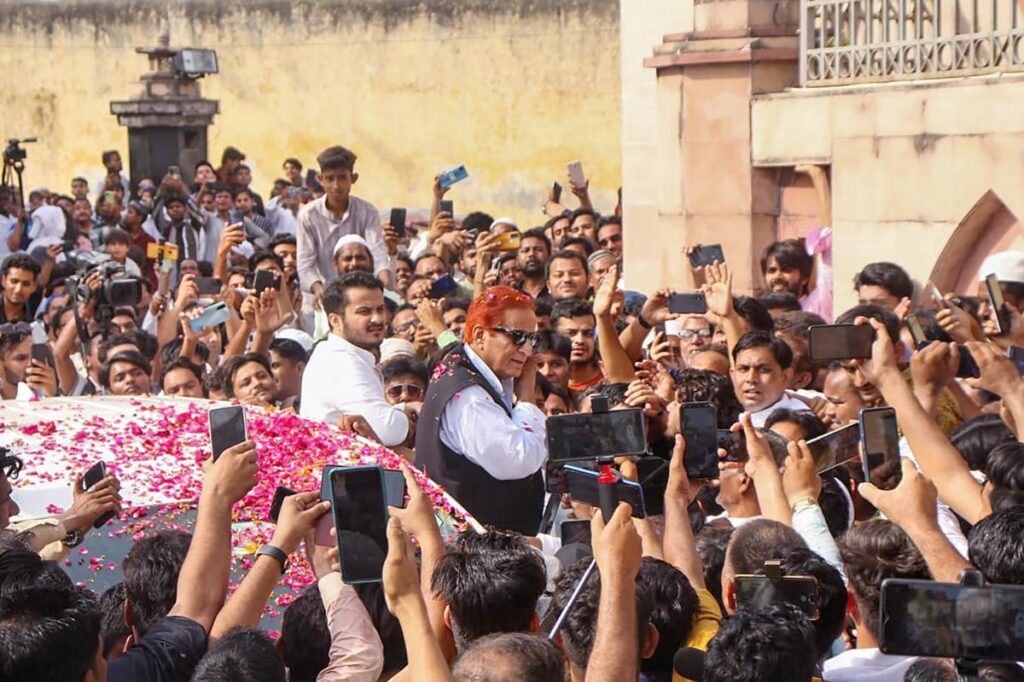
Samajwadi Party leader Azam Khan is greeted by supporters after his release from jail in Sitapur on May 20, 2022. | Photo Credit: PTI
Supreme Court had invoked Article 142 to grant him interim bail
The Uttar Pradesh police’s efforts to keep Samajwadi Party stalwart Mohd Azam Khan in custody were interrupted as the SP leader walked out of the Sitapur Jail on Friday after more than two years in custody.
While invoking its powers under Article 142 of the Constitution of India to grant him the relief, the Supreme Court had outlined the circumstances under which Khan was implicated in the 88th FIR against him.
To begin with, the court noted that even though this FIR was registered in March 2020 and a charge sheet filed, the U.P. police did not consider implicating Khan in the said case until the Supreme Court started hearing his case this year.
Moreover, the court also noted that while opposing interim bail to Khan in this case, the police had alleged that he had threatened the investigating officer of the case. However, it also pointed out the “sheer coincidence” in the timing of this threat, which was registered by the police as a General Diary entry at 3:04 a.m. on May 17, only hours before the top court was to hear the matter.
Noting that Khan was implicated in this case 1 year and 7 months after a charge sheet had been filed, the court said, “It is not as if that the allegations which are now sought to be made against the petitioner (Khan) could not have been made at that point of time.”
When Khan had approached the Supreme Court earlier this year, there were 87 criminal cases pending against him, of which he had secured bail in 84. As the top court started hearing his plea regarding the delay in bail being granted in the remaining three cases, he was further granted bail in two of them, leaving just one more case for him to get relief in as of the beginning of May.
It was at this point that the U.P. police acted to implicate Khan in the 88th case, where he was not an accused or suspect till May 5, when the police first requested to summon him in the case. As the Supreme Court was told on May 6 that the Allahabad High Court would soon deliver its judgement in the last remaining case, the Additional Chief Judicial Magistrate (Rampur) on the same day passed an order remanding Khan in custody in the 88th case.
While hearing Khan’s case last week, the Supreme Court had also noted a pattern in the police action against him, orally pointing out that the 9-time SP MLA was being arrested in a fresh case every time he was granted bail in a previous one to prolong his incarceration.
Khan, once among the most powerful ministers in the SP-led U.P. government, faced a barrage of FIRs soon after the Bharatiya Janata Party came to power in 2017, the first of which came on allegations of forging his son’s birth documents. The bulk of the FIRs (81 out of a total 88) then came in 2019, immediately before and after the Lok Sabha elections that year, all in quick succession.
As per the most recent election filing in 2022, charges have been framed against Khan in just 14 of the 88 cases.
Therefore, considering that he had been granted bail in 87 cases and the circumstances under which he was implicated in the 88th case, the Supreme Court invoked its power under Article 142 for the second time in two days to grant interim bail to him.
The top court had just a day before invoked the same powers to free Rajiv Gandhi-assassination convict A.G. Perarivalan.
Article 142 gives the Supreme Court sweeping powers to pass any such orders or decrees as it may deem fit in the interest of ensuring that “complete justice” is done in any cause or matter pending before it.
These powers are rarely invoked by the court and it has done so notably in its Ayodhya-Ram Janmabhoomi land dispute judgement in 2019, in 1989 while asking Union Carbide to pay $470 million in compensation to Bhopal gas tragedy victims, and in 2016 while banning the sale of liquor within 500 metres of state and national highways in a bid to curb driving accidents.
source: http://www.thehindu.com / The Hindu / Home> News> National> Other States / by Abhinay Lakshman / New Delhi – May 20th, 2022
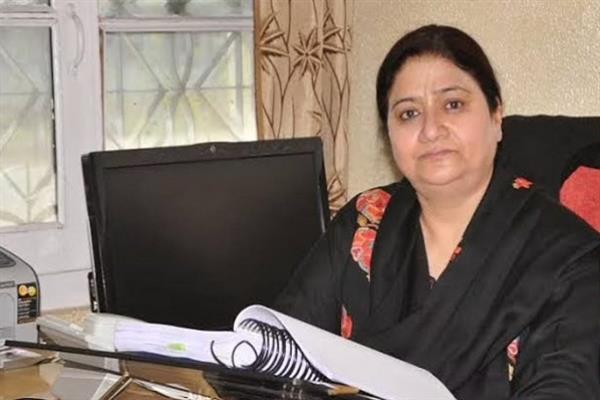
Professor (Retired) Nilofar Khan, who was yesterday appointed as new Vice Chancellor of the University of Kashmir, assumed charge of the office of VC on Friday.
Professor (Retired) Nilofar Khan, who was yesterday appointed as new Vice Chancellor of the University of Kashmir, assumed charge of the office of VC on Friday.
According to official sources, Khan assumed the charge of the office of Vice Chancellor this morning and was welcomed by the officials on her arrival at the varsity.
However, since morning a number of people have made a beeline to the office of VC, congratulating her on becoming the head of the valley’s premier institution.
Prof. Nilofer Khan was appointed as the first female Vice chancellor of Kashmir University by Lieutenant Governor, J&K, Manoj Sinha, who is also the Chancellor of the varsity, by exercising power vested in him under section 12 of Kashmir and Jammu Universities Act 1969.
source: http://www.risingkashmir.com / Rising Kashmir / Home / by RK Online Desk / May 20th, 2022