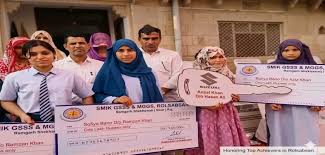
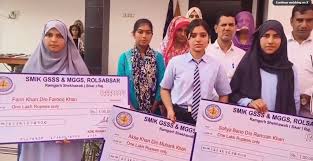
In a remarkable gesture, a spirited villager in Rajasthan gifted a car to a girl who topped in her government school, along with cash rewards to other high-performing students, in the Class 10 examination conducted by the Rajasthan Board of Secondary Education.
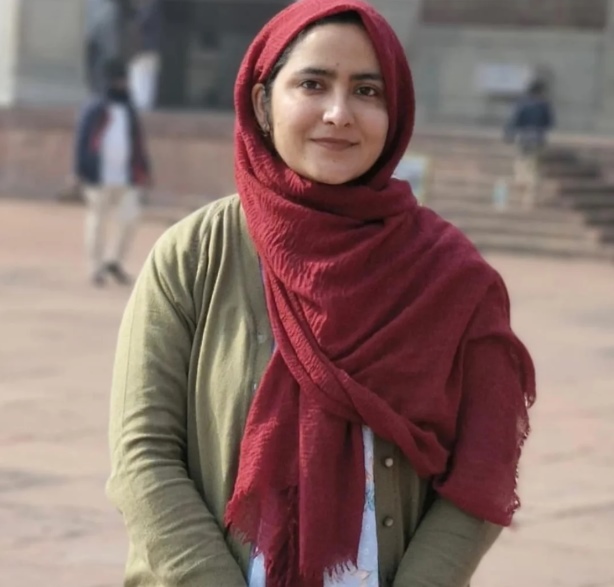
The incident took place in Rolsahabsar, a small village in Sikar district, where the generous benefactor, and a social worker Adil Khan, presented a Swift Dzire car to Anzal Khan, who scored an impressive 95.5 per cent.
Such an initiative is rare, especially at a time when media attention often focuses on the achievements of private schools in board examinations. Against this backdrop, Adil Khan’s effort stands out as a meaningful recognition of both girl power and the improving standards of government schools.
Anzal Khan, a student of Government Higher Secondary School, Rolsahabsar, was handed over the keys to the car—valued between ₹8–12 lakh—at a function held in the village’s main square.
In addition, Adil Khan awarded ₹1 lakh each to five other girls who scored above 90 per cent in the board exams. The recipients included Aksha Khan, Sophia Khan, Payal Kumari, Ruqya Bano, and Farheen Khan.
The joy and pride on the faces of the award-winning students were evident. The recognition not only boosted their confidence but also inspired others in the community.
The ceremony was attended by Bajrang Lal Swami, Additional Director of RSCERT Udaipur, and Fatehpur MLA Hakeem Ali Khan, who graced the event as chief guests. They praised Adil Khan’s initiative, noting that such efforts bring positive change to society and reinforce the importance of education.
Other meritorious students from the village were also honoured, along with teachers from three government schools for their outstanding results. The event became a platform to celebrate hard work, dedication, and commitment.
What makes Adil Khan’s gesture even more noteworthy is that he is not a prominent industrialist but an ordinary villager who funded the entire initiative with his own earnings. His actions have struck a chord with people, demonstrating that meaningful change requires not just resources, but also conviction and purpose.
Though not among the wealthiest in the village, Adil Khan has a big heart and a strong vision. He expressed his desire to see the daughters of Rolsahabsar rise to top positions in services such as the IAS, IPS, and judiciary. He also said that the village should be known not only for politics but for its commitment to education.
He has announced that he will continue to honour meritorious female students over the next three years.
The announcement has generated fresh enthusiasm in the village. Parents are increasingly motivated to educate their daughters, while students are striving harder to excel academically and qualify for such recognition.
Adil Khan’s initiative is gradually transforming the social fabric of the village. Where once there was hesitation in sending girls to school, there is now a sense of pride.
The ceremony drew a large gathering of villagers, teachers, students, and public representatives, fostering a new mindset and a progressive way of thinking.
His initiative has been widely appreciated across the region, sparking conversations about the importance of educating girls. The celebration has sent out a powerful message: when given the right opportunities, daughters can achieve anything.
source: http://www.awazthevoice.in / Awaz, The Voice / Home / by Ashfaq Qaymkhan, Sikar,Rajasthan / April 20th, 2026
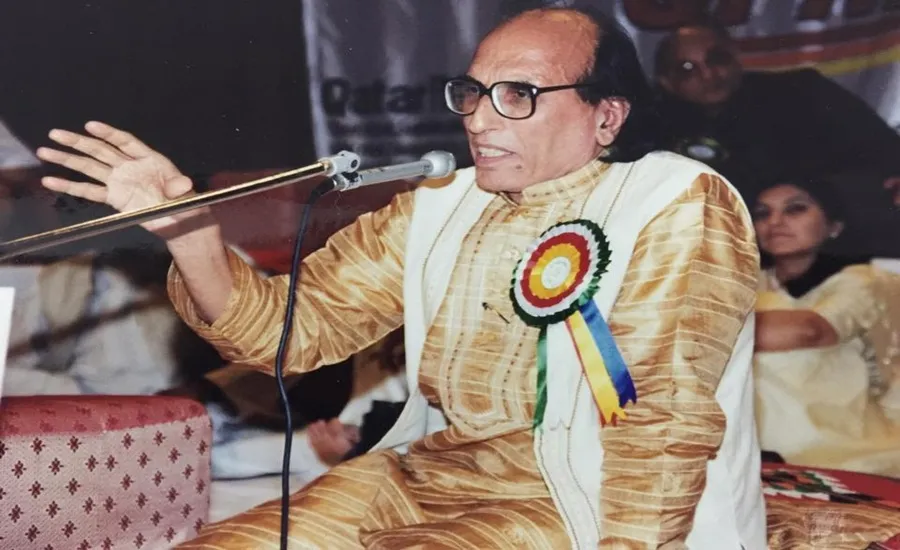
Legendary Urdu poet. a Padma Shri awardee, Dr Bashir Badr, known for his expressive and evocative ‘shayri’ passed away in Bhopal on Thursday afternoon, leaving behind a rich literary legacy that spanned decades. He was 91.
He breathed his last at around 12 noon at the age of 91.
According to family members, Badr had been suffering from dementia for a long time, a condition that gradually eroded his memory and left him unable to recognise even close acquaintances. His health had been deteriorating steadily in recent months, and despite medical care, his condition worsened until his demise.
His mortal remains were laid to rest at the Bada Bagh Cemetery in Bhopal in the evening on Thursday.
His passing marks the end of an era in Urdu poetry, as Badr was celebrated for his evocative verses, like “”Ujale apni yaadon ke hamare saath rahne do/Na jaane kis gali mein zindagi ki shaam ho jaaye“, or “Kai sitaron ko main jaanta hoon bachapan se/Kahin bhi jaaun mere saath saath chalte hai”, or “Sar jhukaoge to patthar devtaa ho jaayega/Itna mat chaaho use wo bewafa ho jaayegaa“, “Khuda ham ko aisi khudaai na de/Ki apne siva kuch dikhai na de”, Kuch to majbooriyan rahi hongi/Yun koi bewafa nahi hota”, and many more, that captured the complexities of love, longing, and human emotion with unmatched simplicity and depth.
His literary journey was not only prolific but also profoundly inspiring, influencing generations of readers and writers alike. A familiar figure in ‘mushairas’ across India, he was much admired for the art with which he not only recited his sparkling couplets, but frequently elaborated on their creation and his inspiration.
Born in 1935, Bashir Badr rose to prominence in the post-Independence period, becoming one of the most widely read and quoted poets in contemporary Urdu literature. His ghazals, often laced with poignant reflections on life and relationships, earned him admiration across India and beyond. He was known for bridging the gap between classical traditions and modern sensibilities, making Urdu poetry accessible to a broader audience.
His couplets, frequently shared in everyday conversations and on social platforms, remain etched in public memory. Despite his illness in later years, Badr’s contributions continued to resonate, reminding admirers of the enduring power of words. He once wrote: “Ham bhi darya hain hamen apna hunar maaluum hai/Jis taraf bhi chal padenge raasta ho jaayega”.
His decline due to dementia was a painful chapter, as the poet who once illuminated minds with his verses gradually lost his own connection to memory and recognition. Yet, his work stands as a testament to resilience and creativity, ensuring that his voice will echo long after his departure.
As the literary community mourns his loss, tributes are pouring in from writers, scholars, and admirers who regard him as a towering figure in Urdu poetry. Dr Bashir Badr’s death leaves a void that cannot be filled, but his words will continue to inspire and console countless hearts.
As he wrote: “Musafir hai ham bhi musafir ho tum bhi/Kisi mod pe phir mulaqaat hogi“. — IANS
source: http://www.clarionindia.net / Clarion India / Home> Editor’s Pick>India> Indian Muslims / by Clarion India / May 29th, 2026
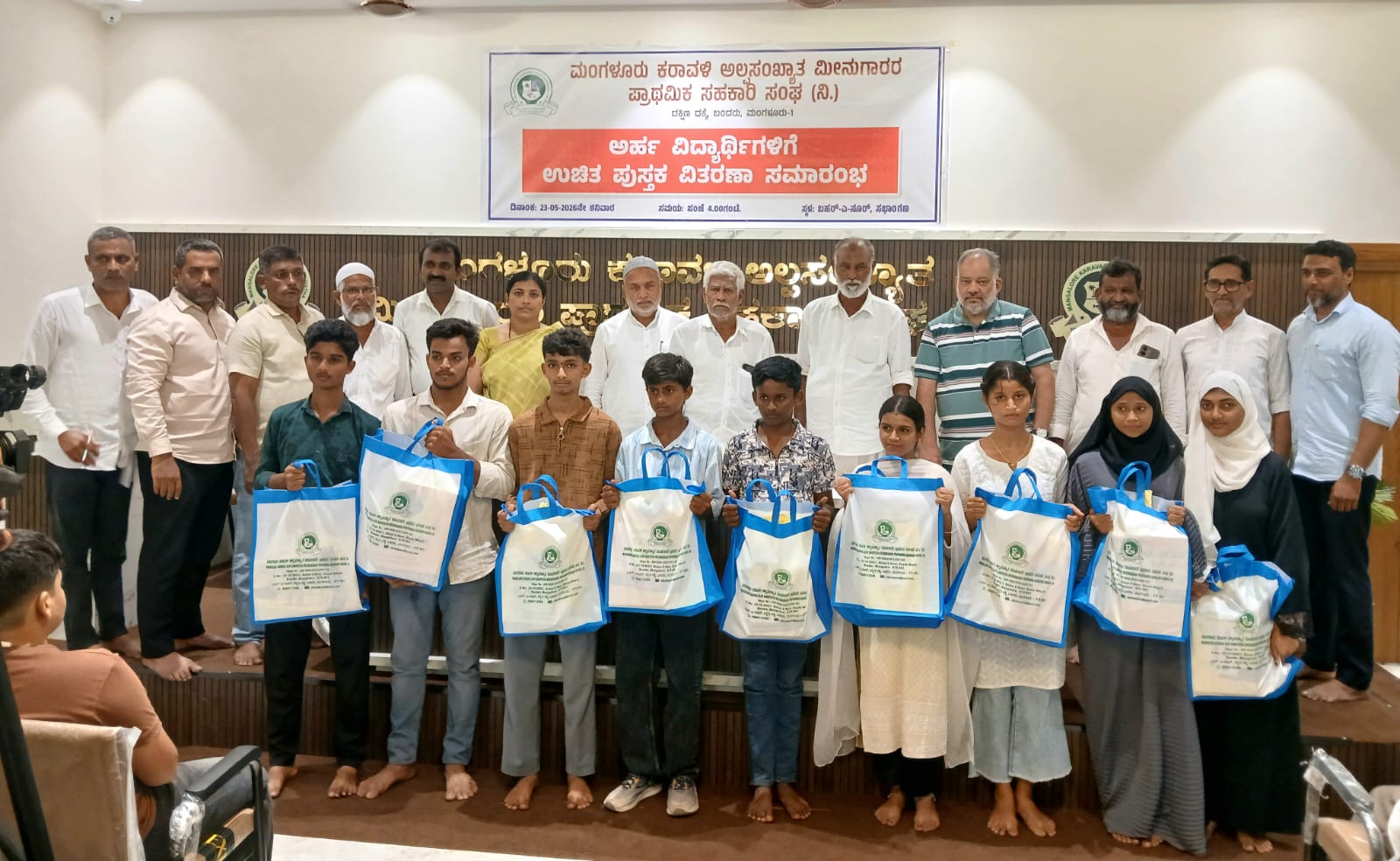
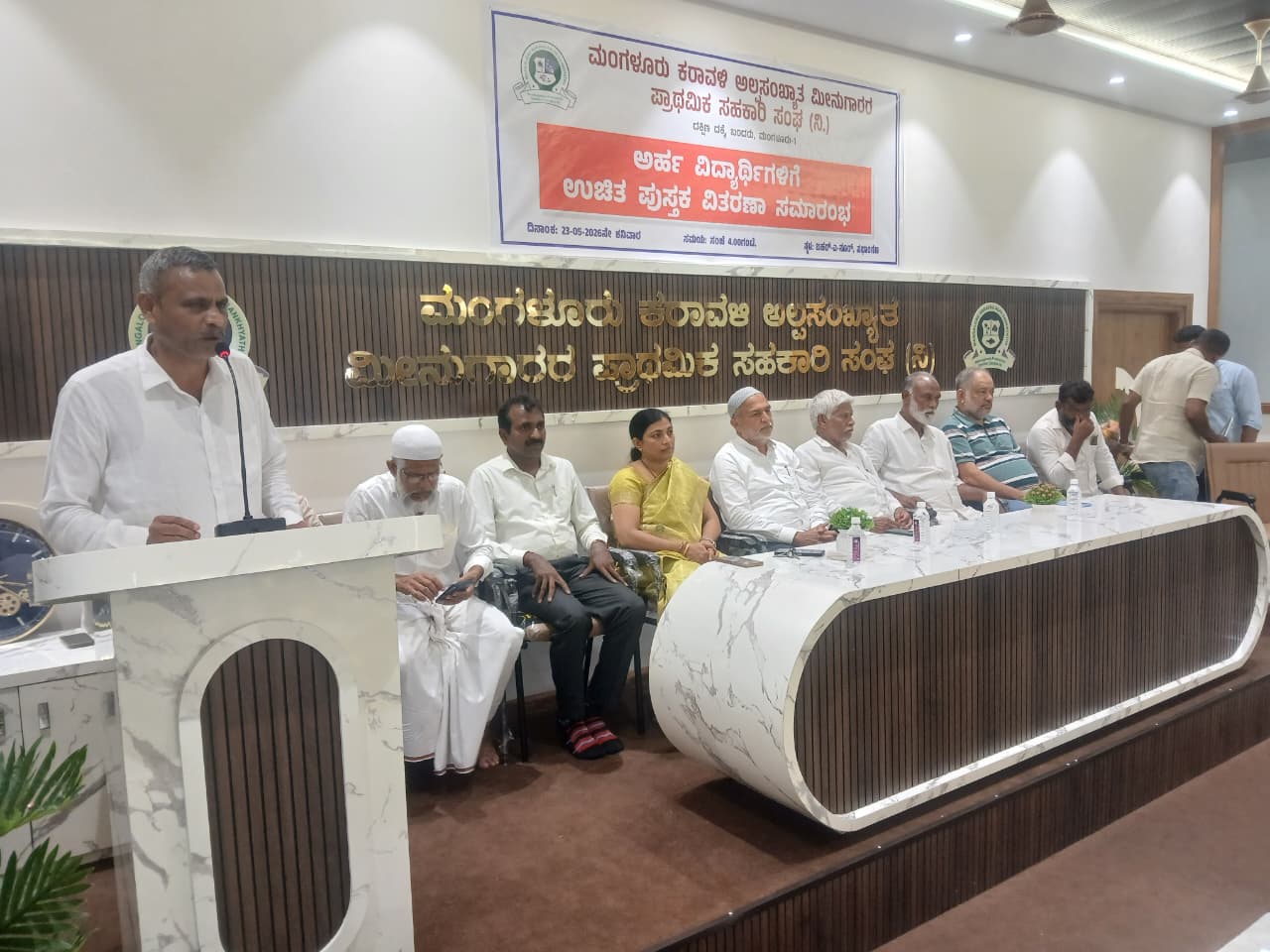
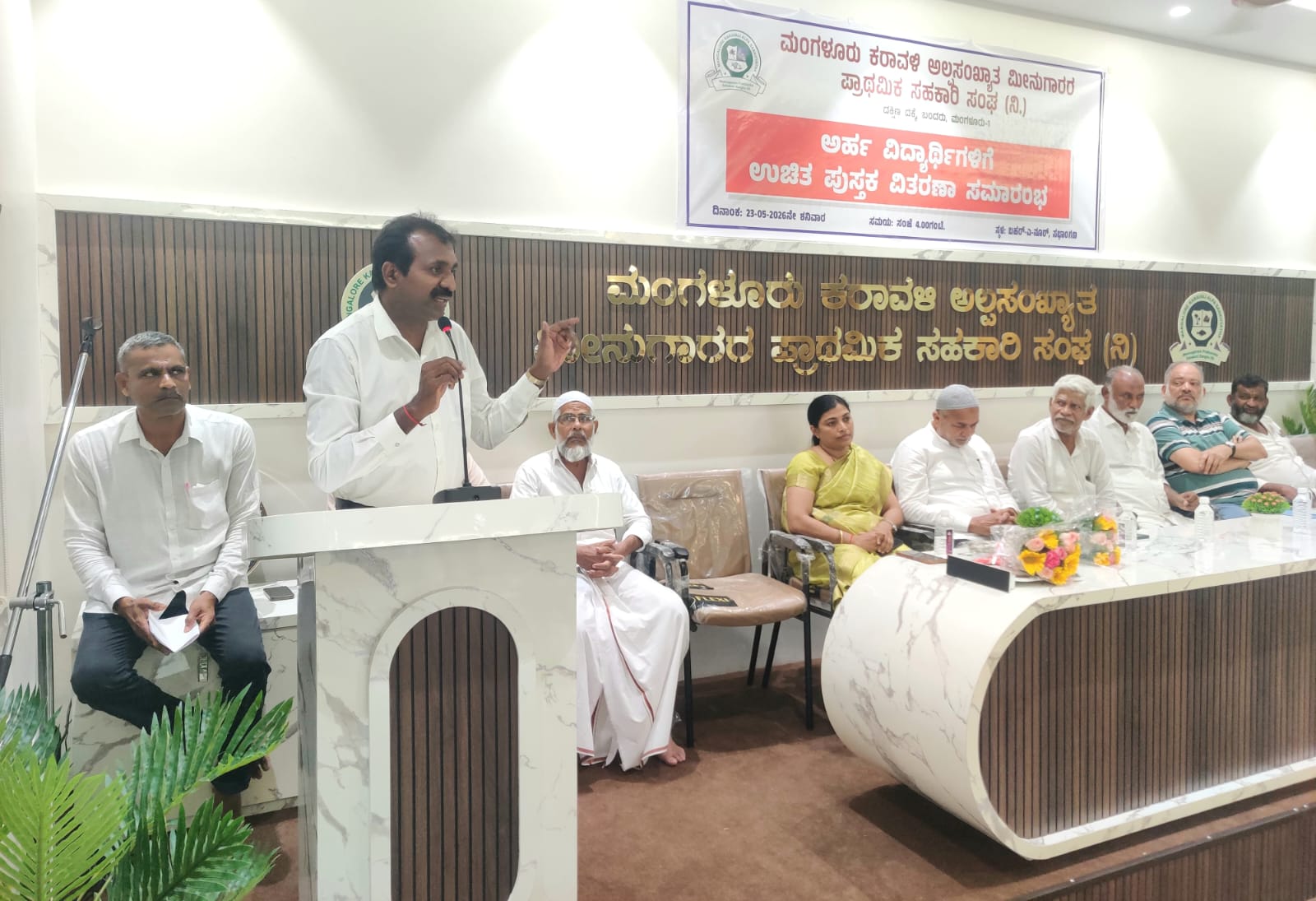
Emphasizing the importance of education as the foundation for a successful future, deputy director of the Fisheries Department Revathi said that many distinguished personalities in society have achieved success through hard work and education, and today’s children can also attain great heights through dedication and perseverance.
She was speaking at a school book distribution programme organized by the Karavali Minority Fishermen’s Primary Cooperative Society at Bahar-e-Noor Hall on Saturday, where school books were distributed to nearly 1,000 students from economically disadvantaged families.
Revathi stated that education is the greatest gift parents can give their children and stressed that no child should be deprived of learning opportunities due to financial difficulties. She praised the cooperative society for its commitment to social service, noting that it has been carrying out community-oriented activities for the past 24 years without focusing on profit or loss.
Addressing the gathering, Tyagam Harekal, state general secretary of the Physical Education Teachers’ Association, said that it is the true responsibility of every institution to contribute to society from its earnings. He lauded the cooperative society for extending support to underprivileged students irrespective of caste or religion and for encouraging education as a means of nurturing responsible citizens.
The programme was presided over by J Mohammed Isaq, president of the Karavali Minority Fishermen’s Primary Cooperative Society. Vice-president Ahmed Bava Bajal, directors B Ibrahim Khalil, S M Ibrahim, Mohammed Ashraf, M A Gafoor, B Mohammed Shali, S K Ismail, and Anwar A N R, along with chief executive officer D Abdul Latheef, were present on the occasion.
The event commenced with a Quran recitation by Ansar, a student of Harekal Twaiba Madrasa. The programme was compered by the Society’s Advisor Mohammed Mustafa Malar Harekal.
The initiative once again highlighted the cooperative society’s continued commitment to supporting education and empowering students from economically weaker sections of society.
source: http://www.daijiworld.com / Daijiworld.com / Daijiworld Media Network – Mangaluru (NJC) / May 23rd, 2026
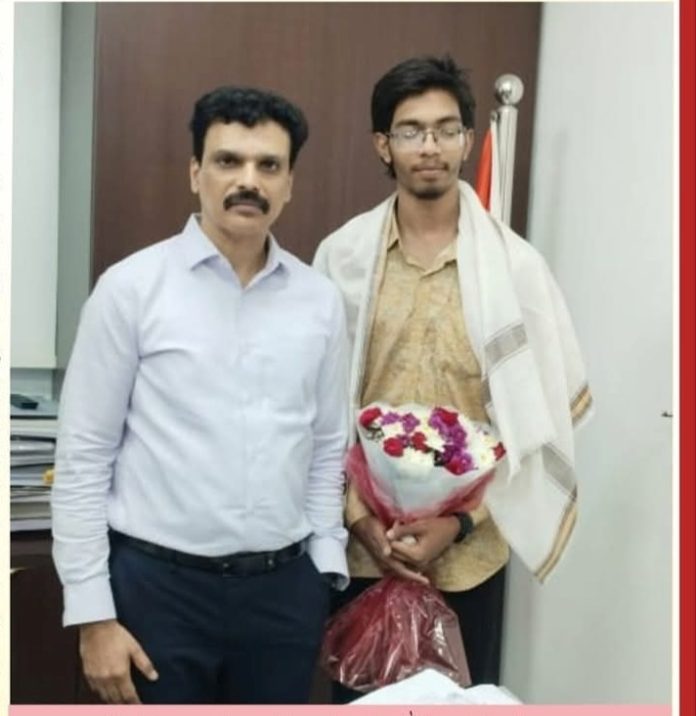
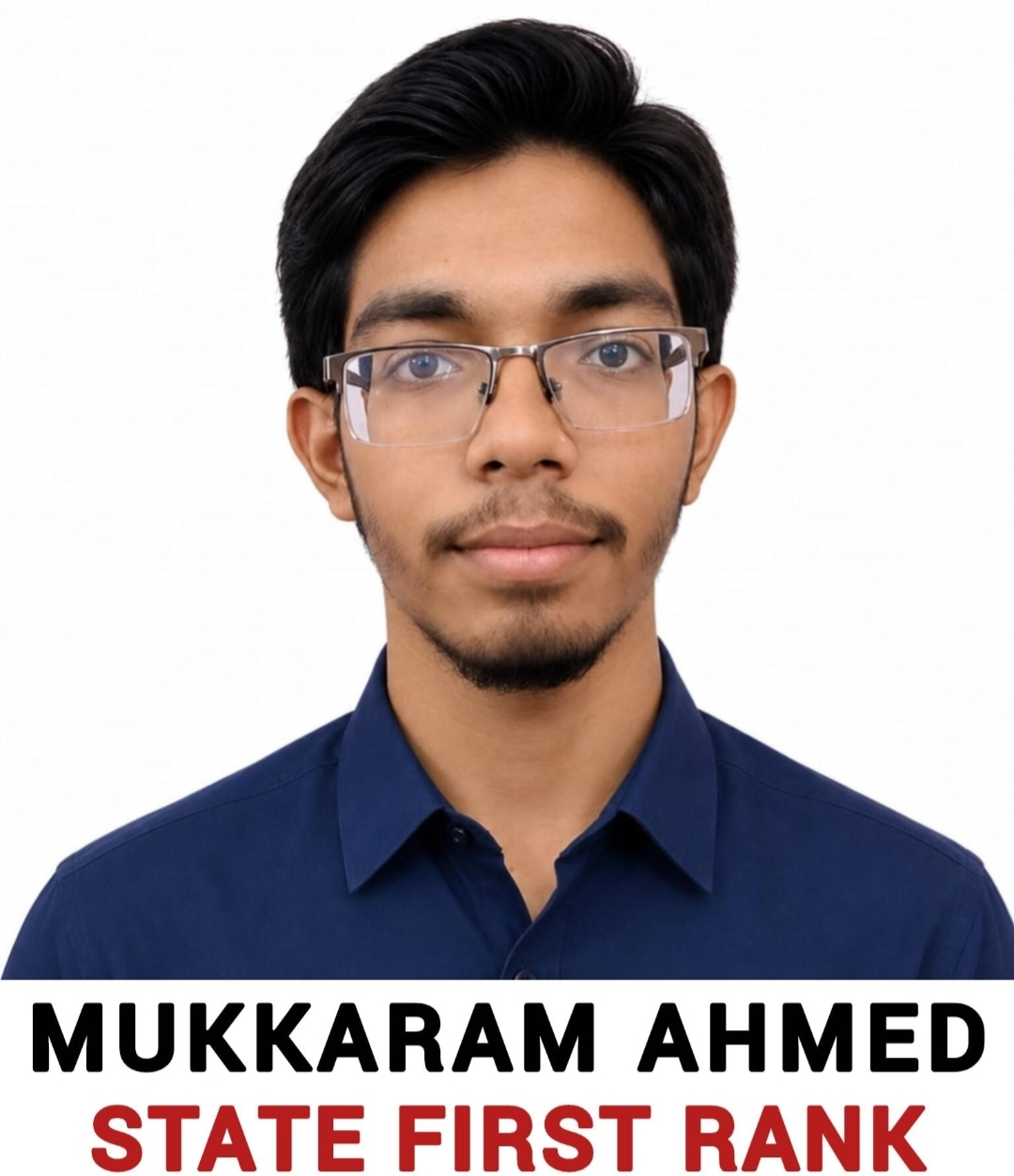
From the traditional corridors of a madrasa to the absolute pinnacle of state-level academics, Mukaram Ahmed’s extraordinary triumph in EAPCET-2026 shatters deep-seated social stereotypes and redefines the narrative of grit and determination.
Hyderabad:
In a society where success is increasingly equated with high-decibel corporate coaching, astronomical school fees, and elite English-medium backgrounds, a quiet revolution has taken place in the heart of Telangana. Breaking through every conventional glass ceiling, Mukaram Ahmed, a young boy from a modest madrasa background, has script-written a phenomenal academic folklore by securing the State 1st Rank in the Agriculture and Pharmacy stream of the TS EAPCET-2026.
Overnight, Mukaram has not only become a household name but has also effectively demolished a long-standing social stereotype, proving that traditional schooling and a lack of elite resources are no match for unyielding willpower.
Bridging Two Worlds: The Paradigm Shift
The transition from the traditional rote learning of an Urdu-medium madrasa to the highly competitive, technically demanding arena of a state-level entrance exam is nothing short of a Herculean leap. Yet, Mukaram managed this transition with poetic grace.
After completing his initial education within the structured, spiritual environment of a madrasa, his raw talent found its perfect catalyst in the Telangana Minorities Residential Educational Institutions Society (TGMREIS). Provided with high-quality, free residential education and targeted competitive training, Mukaram didn’t just compete; he dominated.
His spectacular feat was prominently splashed across the front page of the prominent Urdu weekly GAWAH, serving as an immediate validation of his hard work.
Inside the Topper’s Playbook:
The 10-Hour Grind: Unflinching commitment of studying 8 to 10 hours daily with meticulous planning.
Bilingual Master Notes: Synthesising complex scientific concepts by creating personal notes that bridged Urdu terminology with technical English.
The Gurukul Catalyst: Leveraging the rigorous, specialised competitive coaching and constant mentorship offered by the TGMREIS faculty.
A Household of Twin Triumphs: Spirit and Science
Mukaram’s family background is rooted in deep humility and discipline. Raised by parents who viewed education as the ultimate equaliser, the household is currently celebrating a unique, dual milestone that balances both spiritual and secular heights.
While Mukaram’s sister recently memorised the entire Holy Qur’an to earn the revered title of ‘Hafiza’, Mukaram went on to outpace lakhs of students across the state to become the EAPCET topper. For the proud parents, their home has become an emblem of balanced excellence, where deep-rooted values effortlessly coexist with cutting-edge academic ambition.
Healing the Unheard: A Vision for the Future
Unlike many toppers who immediately eye lucrative corporate or tech careers, Mukaram’s heart lies in a much more empathetic domain. When asked about his immediate career roadmap, his eyes light up with a very distinct focus.
“My dream is to secure a seat at the P.V. Narsimha Rao Veterinary University and specialise in Veterinary Science. Human beings can articulate their pain, find words for their suffering, and ask for help. Speechless animals can’t. I want to spend my life understanding their silent agony and becoming a voice for those who cannot speak.”
A Beacon of Inspiration
Mukaram’s victory comes at a time when the Telangana government, under Chief Minister A. Revanth Reddy, is heavily focusing on strengthening minority residential schooling. Prominent officials, including Minorities Welfare Minister Mohammed Azharuddin, TGMREIS Vice Chairman Mohammed Faheemuddin Qureshi, and Secretary B. Shafiullah (IFS) have hailed the achievement as a watershed moment for minority education in the state.
Mukaram’s journey is a powerful reminder that talent is ubiquitous, even if opportunity is not. By rewriting his own destiny, this young boy from Hyderabad has provided a magnificent blueprint for thousands of underprivileged students across the state, proving that with the right guidance, the sky isn’t the limit; it’s just the beginning.
source: http://www.radiancenews.com / Radiance News / Home> Focus> Markers of Excellence / by Muhammed Mujahid / May 21st, 2026
Dr. Naila Majid has been selected for the IAUA Outstanding Ph.D. Thesis Research Award 2025 under the Social Sciences category.
Hailing from Hazratbal, Srinagar, Naila did her Ph.D. in Fisheries Extension from Central Institute of Fisheries Education, Mumbai in 2025 under the Indian Council of Agricultural Research (ICAR). She is currently working as assistant professor in Sher-e-Kashmir Institute of Agricultural Sciences and Technology (SKUAST), Srinagar.
This prestigious recognition by the Indian Agricultural Universities Association (IAUA) highlights exceptional research contributions across key disciplines including Crop Sciences, Horticultural Sciences, Animal Sciences, Fisheries Sciences, Natural Resource Management, Agricultural Engineering, and Social Sciences.
Her achievement reflects dedication, innovation, and commitment to advancing knowledge that contributes to sustainable development and society.
source: http://www.radiancenews.com / Radiance News / Home> Pride of the Nation> Awards / by Radiance News Bureau / May 23rd, 2026
Two of South Africa’s internationally recognised, Indian-origin scientists were among the 38 people awarded the country’s highest civilian awards in recognition of their outstanding contributions toward public health.
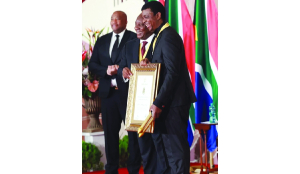
Professor Salim Abdool Karim and Professor Keertan Dheda, were formally awarded the prestigious Order of Mapungubwe by President Cyril Ramaphosa at Pretoria.
This specific order recognises South African citizens who have achieved excellence and exceptional accomplishment to the direct benefit of South Africa and the global community.
The citation for Karim, who was awarded the Order of Mapungubwe in Gold, honours his monumental contributions to medical science and public health, particularly his groundbreaking research into HIV/Aids and tuberculosis (TB) epidemiology, and his exceptional leadership in national health policy development.
source: http://www.dailypioneer.com / The Pioneer / Home / by Fakir Hussain / May 21st, 2026
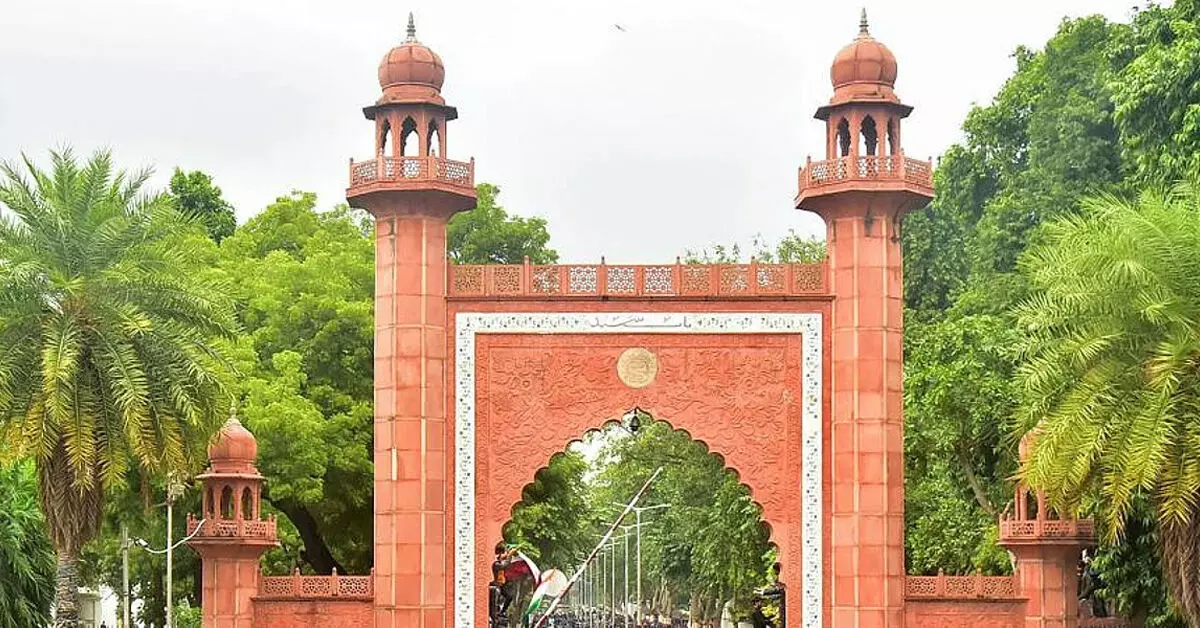
Researchers at the Interdisciplinary Biotechnology Unit of Aligarh Muslim University have identified a new multidrug-resistant bacterial genome in wastewater flowing through Aligarh city, raising concerns over the growing threat of antibiotic resistance in densely populated urban areas.
The findings, published in the April edition of the scientific journal ‘Molecular Biology Reports’, are based on a long-term study by a team of scientists led by Asad Ullah Khan, Shamsi Khalid and Absar Talat, who have been tracking the evolution of antibiotic resistance genes (ARGs) for over a decade.
According to the study, genome sequencing of a bacterial isolate, identified as ‘AK 633’ from a major city drain revealed the presence of a rare “mosaic plasmid” carrying the NDM-7 gene, which is associated with resistance to multiple antibiotics.
In microbiology, plasmids are small DNA molecules inside bacteria that can transfer genetic material, including drug-resistance traits, from one bacterium to another. A “mosaic plasmid” refers to a plasmid formed through genetic recombination, enabling it to carry resistance traits from different bacterial sources.
The researchers said the NDM-7 gene belongs to the New Delhi Metallo-beta-lactamase (NDM) family of resistance genes, which make bacteria resistant even to “last-resort antibiotics” such as carbapenems that are often used when other antibiotics fail.
The study noted that the sequencing of AK 633 pointed to the role of the plasmid ‘p1550’ in the possible global spread of high-risk antibiotic-resistant bacterial clones.
Talking to PTI, researcher Asad Ullah Khan said the findings underscore the urgent need for a wider national surveillance and awareness programme to monitor and contain the growing menace of drug-resistant bacterial genomes.
He said antibiotic resistance has emerged as a major public health challenge worldwide and pointed to untreated waste disposal, particularly hospital waste, and poor drainage management as important contributing factors.
Khan also stressed the need for vigilance during drain-cleaning operations in urban areas.
“Very often after drains are cleaned, the sludge is left on the roadside for long periods instead of being immediately removed. Such practices can contribute to the spread of resistant organisms,” he said.
According to the researchers, genotypic analysis — the study of the genetic composition of bacterial isolates — is essential to understand how resistance genes spread between bacteria in community and hospital settings.
Khan said at least 94 variants of NDM genes have so far been identified globally, many of which are increasingly being found both in hospitals and in the community.
“These are among the main causes of resistance against last-resort antibiotics,” he said.
The researchers noted that while similar work is being carried out in a limited number of laboratories in India, a much larger scientific and public health effort is needed to combat the growing threat posed by multidrug-resistant bacterial genomes.
source: http://www.english.varthabharati.in / Vartha Bharati / Home> India / by Musthafa / May 20th, 2026
Young writer, academician, and social commentator Faheem Ul Islam from Achan, Pulwama, has been honoured with the prestigious Rashtra Ratna Sahitya Puraskar 2026 by the Indian Literature and Arts Society for his remarkable contribution to literature and society.
Faheem Ul Islam, who holds academic qualifications from Aligarh Muslim University (AMU), has gained recognition for his literary works focusing on youth, society, education, and contemporary challenges. His writings reflect social awareness, intellectual depth, and a strong commitment towards positive change.
Apart from literature, he has also remained actively involved in educational and youth initiatives, media programs, and social awareness campaigns. His contribution as a writer, columnist, television host, and mentor has earned appreciation from various sections of society.
The award recognises his dedication to promoting literature and inspiring young minds through meaningful writing and public engagement. People from different walks of life have congratulated Faheem Ul Islam on this significant achievement and wished him continued success in his literary journey.
source: http://www.kashmirvision.in / Kashmir Vision / Home / by KV News / May 21st,2026
The book reads more like a collection of anecdotes
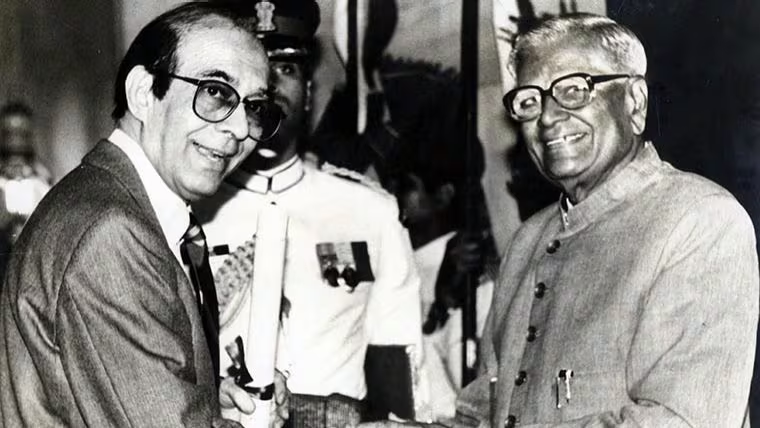
Nation’s pride: Talat Mahmood receiving Padma Bhushan from president R. Venkataraman in 1992 | P. Musthafa
To encapsulate the life of a man often described the ‘King of Ghazals’, though he was much more than that, is no easy task. Just for attempting that, Sahar Zaman deserves applause.
” Mahmood’s musical life was a rich amalgamation of traditions and languages “
Talat Mahmood, born in Lucknow and trained at what was then the Marris College of Music (now Bhatkhande Sanskriti Vishwavidyalaya) was a singer unlike any other. His natural velvet voice bore a slight quiver. It is a quiver which singers take years to cultivate. Musically termed vibrato, this quick and subtle change of voice between notes which are pitched very closely conveys emotions more powerfully than lyrics. When used without dedicated cultivation, a vibrato sounds contrived and the unevenness of breath can be made out by the trained ear; but when it comes naturally, it is as smooth as the wax and wane of emotion. Yet, in his early years in Mumbai, Mahmood strove to hide this unique quality, attempting often to sing in the nasal tones of his idol K.L. Saigal. This would not last long as Anil Biswas, a composer he had worked with for long, angrily walked out of a recording studio asking Mahmood to return only when the real Talat was found.
Ghazals came first to Mahmood because of his affinity with Urdu, and also because of the cultural bearings at home. His father, Manzoor Mahmood, who was a member of the Indian Medical Mission to Ottoman, would often sing to pep up his fellow travellers, while his sisters were flawless renderers of the nath (songs in praise of the Prophet), and his elder brother, Kamal, too, had a rich singing voice. While everyone in the family had strong voices with good throws, Mahmood’s was tuned differently. It was far gentler, almost like a dewdrop caressing a rosebud. It was the kind of voice that could dull the impact of the unkindest of blows. In the 2022 release Gangubai Kathiawadi, for instance, when the lead character learns of being sold to a brothel by her boyfriend, there is a snippet of a song that plays in the background. Mahmood’s voice is like a gentle nuzzle that softens the harsh truth.
Pathos was the most marked emotion of Mahmood’s voice. It was the embodiment of a disembodied, deep sadness. No wonder then that ‘Tragedy King’Dilip Kumar spoke of him as the ‘true musical speaker of my soul’.
Mahmood’s musical life was a rich amalgamation of traditions and languages. Under the name Tapan Kumar, he was a leading voice of the modern Bengal Music movement in which lyrics became as important as the music. He sang in 16 languages including Malayalam, Tamil and Kannada. And while you can close your eyes and imagine him most readily as a dejected Dilip Kumar pictured behind gauzy, fluttering curtains singing ‘Shaam-e-Gham ki qasam’ (On the promise of this sadness soaked evening), close them for some more time and you will just as easily picture him as a boyish Raj Kapoor singing ‘Main dil hun ek armaan bhara’ (I am a heart full of desires), a song that lends itself most readily to the waltz.
As a singer he had many firsts to his name, including being the pioneer of world tours. His pleasant face (which incidentally is also the meaning of Talat) made him a singing-actor and he also dabbled in composition. To audiences in the USA, he was introduced as the Frank Sinatra of India. He became a recognised voice, courtesy All India Radio, at just the age of 16. The book records a delightful incident in which the young Mahmood was accosted by a group of girls in Lucknow to sing as he cycled his way to his music college. Among that gaggle of fans was Qurratulain Hyder, who would go on to become a famed Urdu writer.
He was also a man deeply devoted to the larger cause of his art. He raised his voice for the payment of royalties to singers and also became a part of programmes to raise funds for senior, out-of-work artists. He joyfully gave away songs to Mukesh when he was going through a rough patch. His delight in singing for troops and in encouraging new talent all made him a perfect gentleman, a word often used in the book to describe him.
Biographies can never be divorced from the times that their subjects lived in. Thus, we read in bits about the decline of the film industry in Kolkata after the partition of Bengal, the government’s press for the Bhoodan movement, for which Mahmood sang; the start of recordings in sound-proof rooms; the introduction of multi-instrument orchestra for playback singing; and the rise of version songs. We also read of how the Partition tore apart Mahmood’s family. In a particularly poignant recollection, his father asked his elder son who would water the plants in the courtyard if he left for Pakistan (he did anyway).
The book at places digresses from a linear telling of Mahmood’s story and moves to talking about other stars of the time. This could appear jarring to some, but it is perhaps inevitable given that Mahmood’s journey was intertwined with those of others. One example being that of the actor Shyam, whose death resulting from an accident on a film set is talked about in some detail, to later merge it with the fact that his last three songs, sung by Mahmood, became ‘locked’in his voice.
If you are looking for a book which offers an undeviating narrative of Mahmood’s life, this perhaps is not it. This book reads more like a collection of anecdotes―some known, some not so well known. His gentleness is a quality emphasised throughout the book. He earned it perhaps from spending his formative years with his paternal aunt Mahlaqa Begum. We also come to know that he was a keeper of his words―both to friends and the girlfriend he left in Kolkata.
To those who have known the music of Mahmood, this book is a ready reckoner of his songs and will send you to listen to those you have loved and search for those you have forgotten. To those who do not know the music of Mahmood, take this as a befitting introduction to a singing genius. To do both in under 500 pages, in easy language, peppered with countless photos of the handsome Mahmood, is Zaman’s biggest achievement.
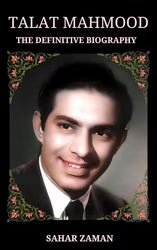
TALAT MAHMOOD: THE DEFINITIVE BIOGRAPHY / Author:Sahar Zaman / Pages: 480
source: http://www.theweek.in / The Week / Home> TheWeek / by Puja Awasthi / February 11th, 2024
In a rapidly modernising world where old buildings are demolished overnight and family trunks filled with history are often discarded as junk, one man in Indore has spent the last 34 years fighting against time.
On International Museum Day, observed globally on May 18, the theme announced by the International Council of Museums (ICOM) for 2026 speaks about the role of museums in uniting a divided world. At a time when societies appear increasingly fragmented, museums continue to connect generations through memory, heritage and identity.
Historian Zafar Ansari
In Indore, historian Zafar Ansari has quietly turned that idea into a lifetime mission.
What started as a small personal collection in 1992 has today become one of the country’s largest archives dedicated to the history of a single city, preserving over 15,000 rare objects linked to Indore and the Holkar dynasty.
For Ansari, this collection is not about nostalgia. It is about ensuring that future generations can still see, touch and understand the city they inherited.
Indore once had its first museum in Krishnapura
Long before modern museums became part of urban conversations, Indore had already established one.
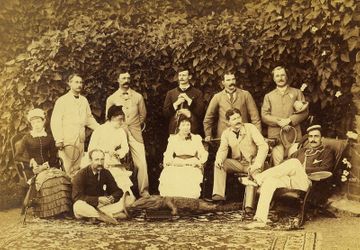
A rare 19th-century photograph of the Indore Residency, established by the East India Company after the 1817 Battle of Mahidpur, featuring British officers posing with a crocodile in the Residency gardens.
In 1923, Maharaja Tukojirao Holkar III established Nar Ratna Mandir in Krishnapura as the city’s first museum. After Independence, the historical objects housed there were shifted to the Central Museum near the zoo, and the old structure was later converted into the Devalalikar Kala Vithika, dedicated to renowned artist D.D. Devalalikar.
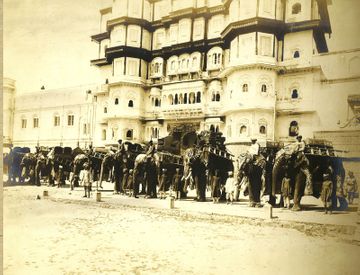
A rare 1912 photograph showing a grand procession of decorated Holkar State elephants lined outside Indore’s historic Rajwada for the arrival of special guests. Adorned with silver embellishments, the elephants reflected the royal grandeur of the Holkar dynasty.
Despite Indore’s deep Holkar-era legacy, only one major historical museum emerged in the city over the next century. For Ansari, that gap became a calling.
Started collecting history in 1992
Ansari began collecting historical material on January 12, 1992.
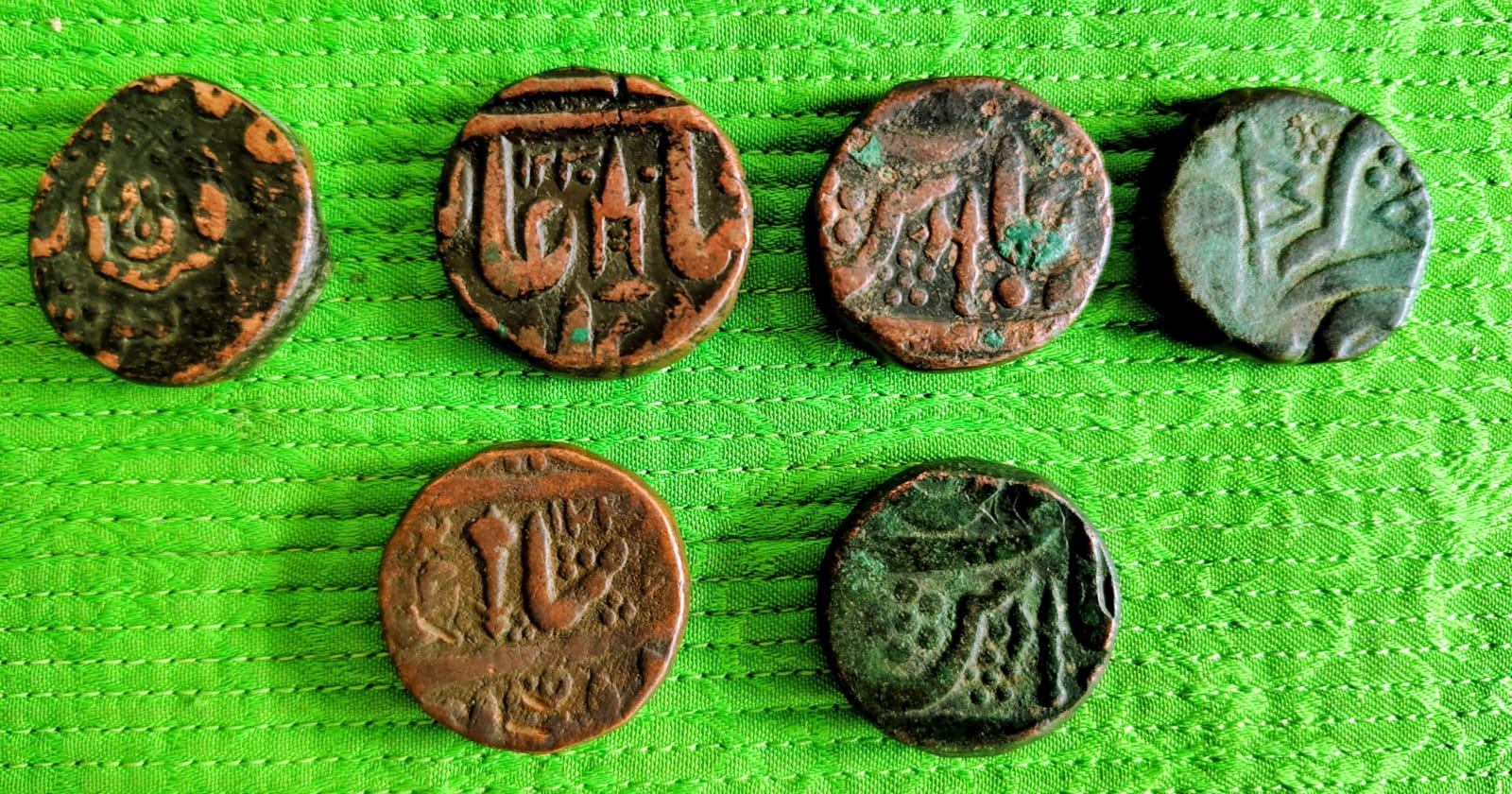
Rare copper coins from the reign of Yashwantrao Holkar I featuring military symbols such as daggers, spears, state flags and cannons of the Holkar army, reflecting the ruler’s deep connection with warfare and military camps.
At a time when old coins, royal documents, maps and photographs were considered useless by many families, he began travelling across cities, meeting collectors, historians and antique dealers to save pieces of Indore’s forgotten past.
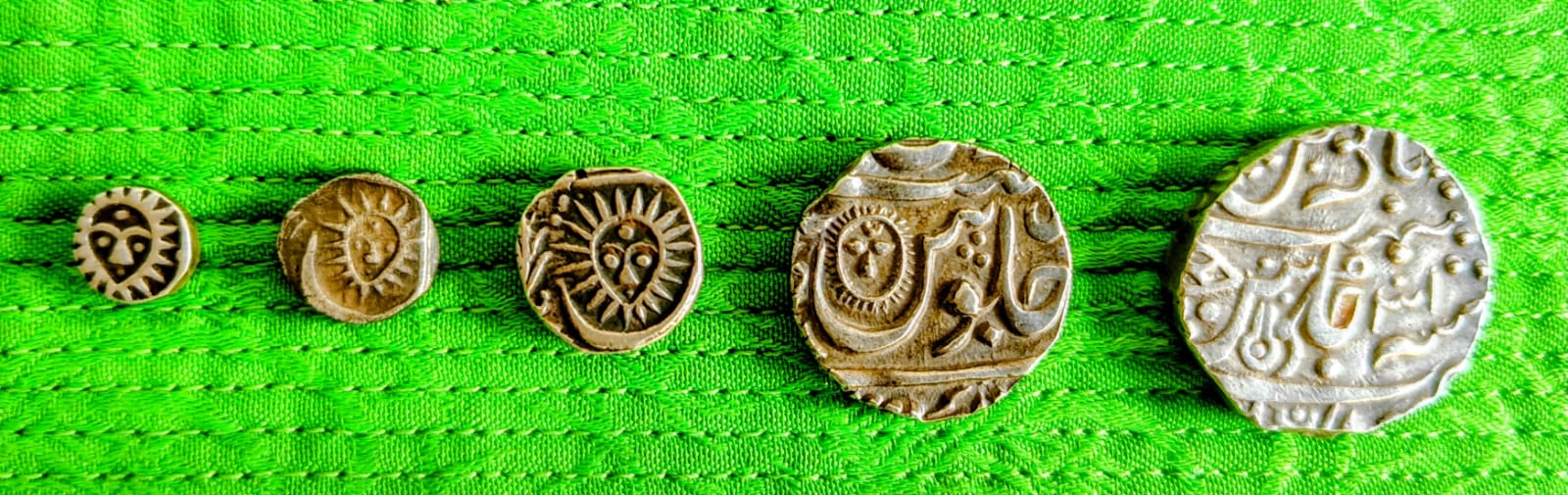
A rare complete set of silver coins issued by Ahilyabai Holkar from Maheshwar in the late 18th century, including one rupee, athanni, chavanni and other denominations featuring Shivling, belpatra and sacred symbols
Over the decades, the collection expanded into a massive archive covering nearly 300 years of the city’s journey. Today, the archive has been divided into three sections, museum, archives and library.
20 galleries envisioned inside the museum
Ansari has envisioned the museum in 20 thematic galleries, each narrating a different chapter of Indore’s social, cultural and political evolution.
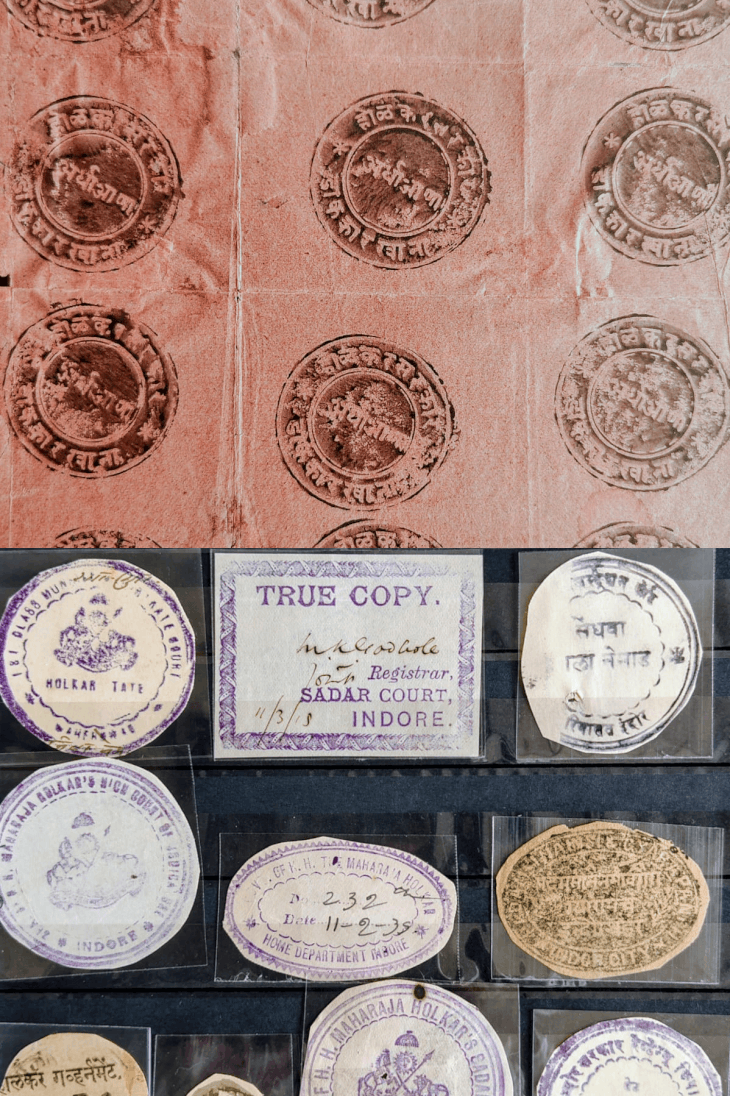
Rare Holkar State postal treasures, including the first stamp published in London in 1886, the extremely rare 1889 half-anna circular stamp issued on indigenous paper, and over 200 official seal impressions of various state departments
The collection houses hundreds of rare 19th-century photographs, original Holkar-era maps and lithographs, silver and copper coins, medals, royal turbans, copper buckles, badges, weight and measurement instruments, royal stationery and documents linked to Ahilyabai Holkar.
Among the rarest possessions are handwritten letters by Maharaja Yashwant Rao Holkar and Maharaja Tukojirao Holkar, along with original correspondence of Sir John Malcolm and Robert Hamilton.
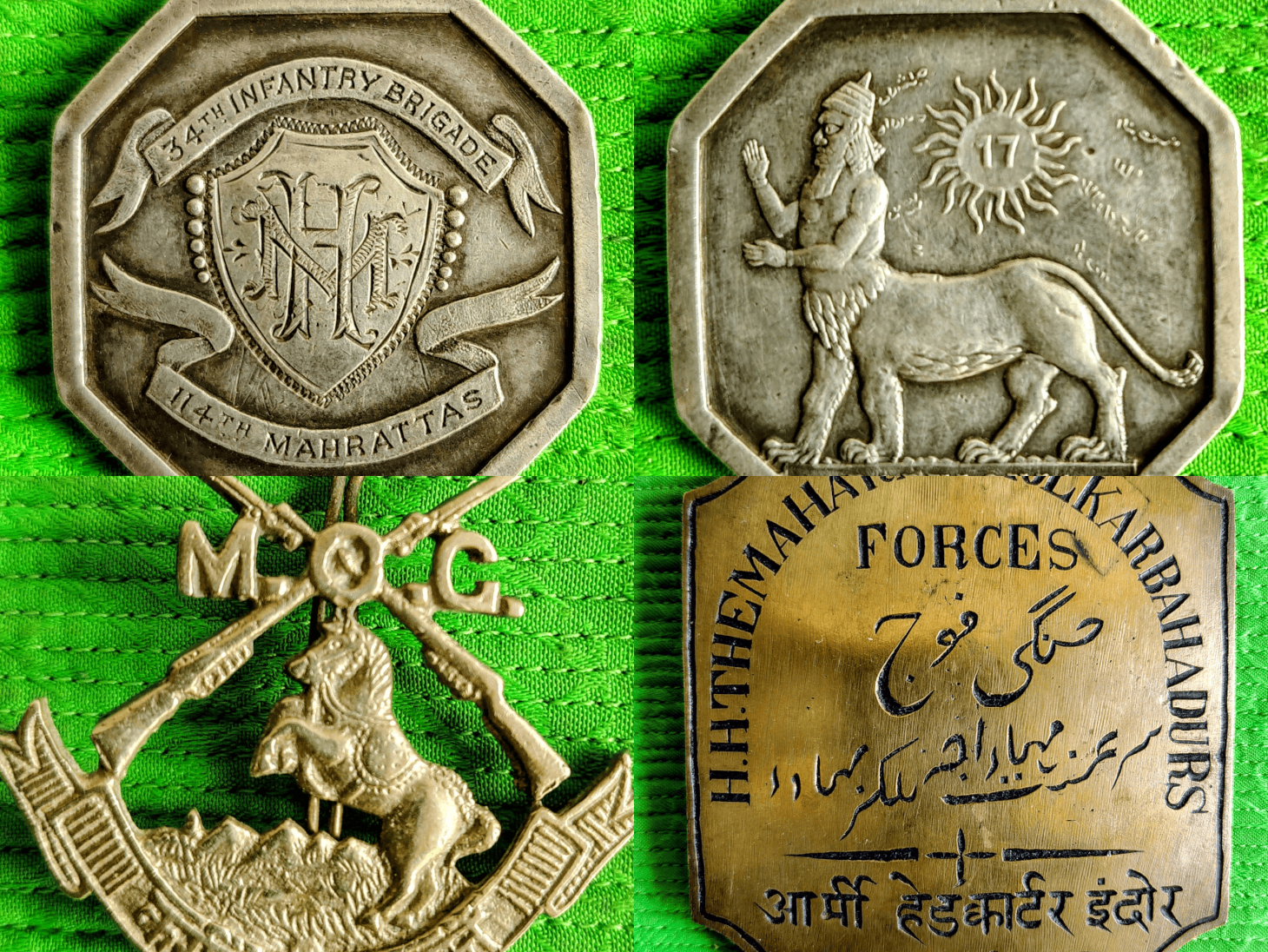
Rare Holkar State military artefacts including a World War II silver medal linked to Indore soldiers posted in Iran and Iraq, a historic MOG Line badge, and an Army Headquarters insignia, preserved at the Zafar Ansari Museum of Indore, reflecting the city’s rich royal military heritage.
The museum also preserves Holkar-era copper plates, utensils and administrative records that provide a glimpse into governance during the princely state period.
Rare newspapers, Gandhi documents and vintage music records
The archive is not limited to royal history. Ansari has also preserved rare newspapers and magazines published in Indore during the 19th and 20th centuries, creating a timeline of how the city evolved socially and politically.
The collection includes photographs and documents related to Mahatma Gandhi’s visits to Indore in 1918 and 1935, along with rare 78 RPM records of maestros associated with the Indore gharana. Memories connected to Lata Mangeshkar and Kishore Kumar, both deeply linked to Indore, are also part of the archive.
Thousands of Holkar State gazettes, books on Indore, records of the city’s cotton and opium trade, and models of heritage buildings have also been carefully preserved.
“I sold my house to save history”
Preserving the city’s history came with enormous personal sacrifice. Ansari says there were years when financial survival became difficult, but he continued investing in the collection. At one point, he even sold his own house to sustain the archive.
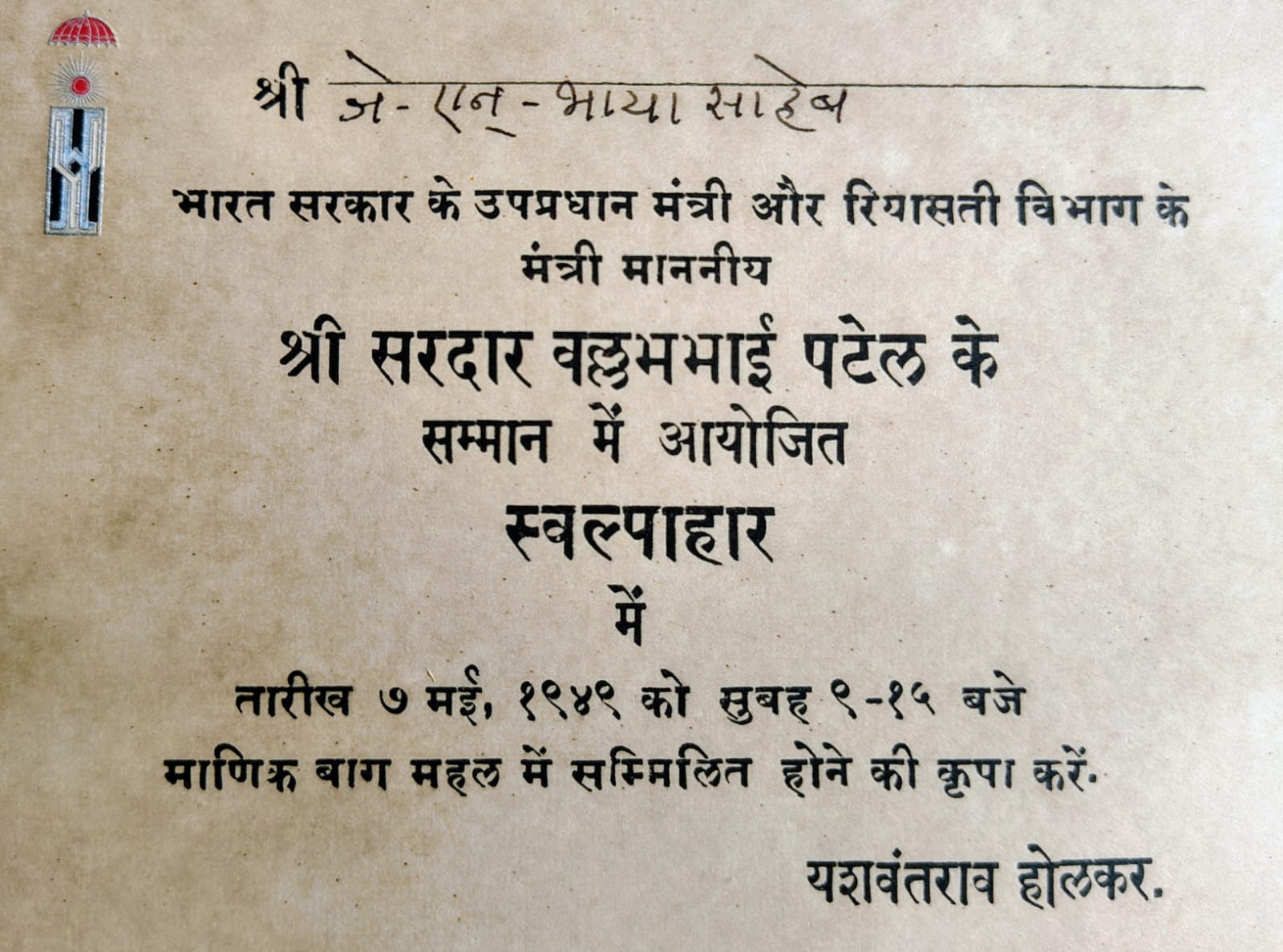
A rare May 7, 1949 invitation sent by Yashwantrao Holkar for the Indore visit of Sardar Vallabhbhai Patel, displayed from the collection of Zafar Ansari Museum of Indore.
Even today, nearly 70% of his earnings are spent on acquiring, restoring and preserving historical material. He describes the museum as ‘a public collection belonging to the people of Indore.’
School students see history through heritage walks
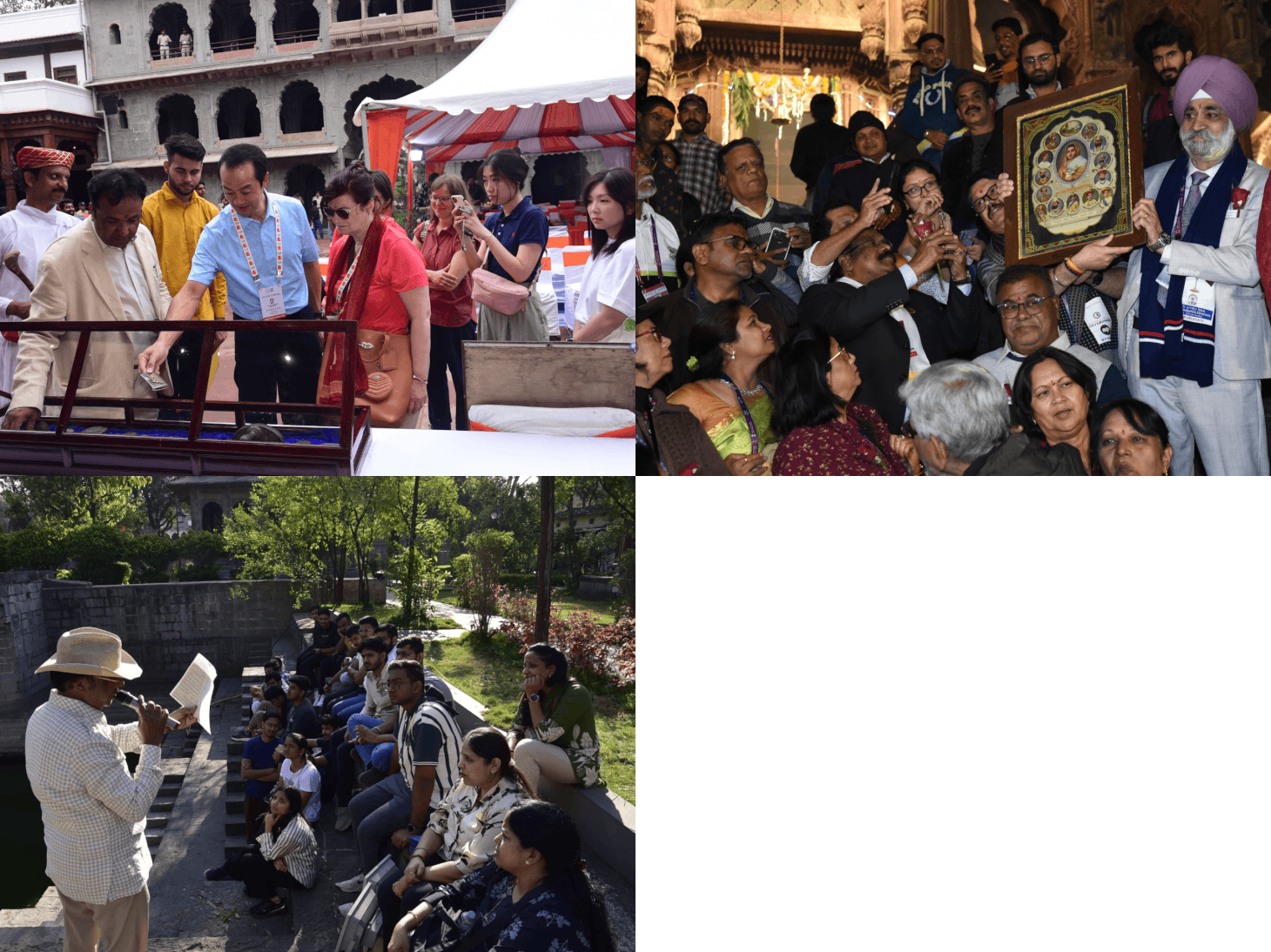
Beyond collecting objects, Ansari has worked continuously to connect people with the city’s heritage. For decades, he has conducted heritage walks across Indore, introducing students and residents to forgotten buildings, old markets and Holkar-era architecture.
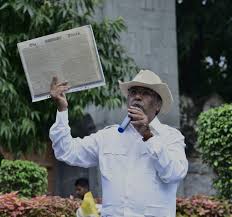
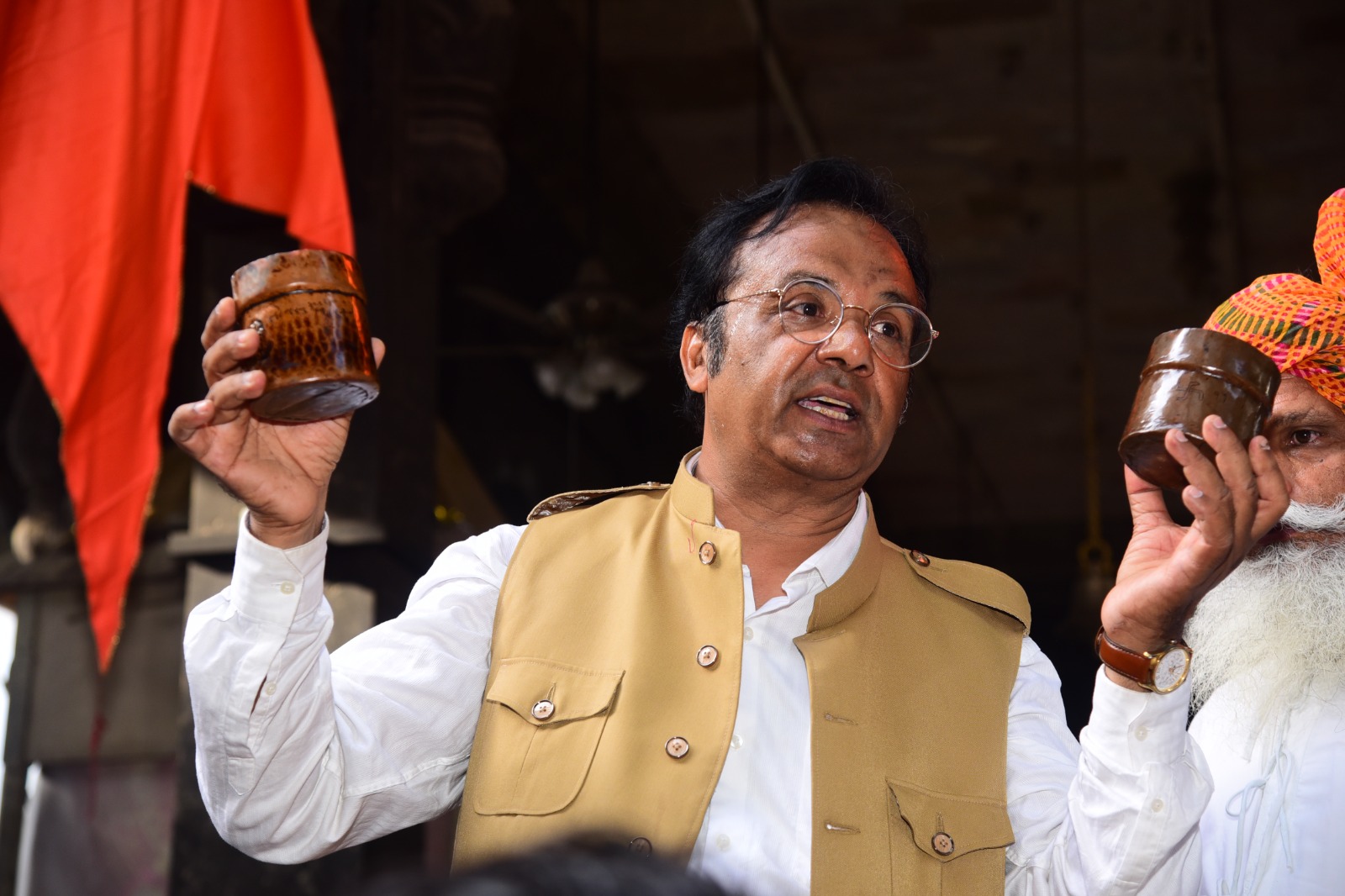
Ansari shows rate artefacts during the visit of International delegation for Heritage Walk in Indore
During these walks, he often displays original artefacts from his museum before school students, helping them visualise the city’s past beyond textbooks. He has also delivered more than 300 lectures on Indore’s history and cultural legacy.
Indore’s ‘Time Machine’
Among heritage enthusiasts and researchers, Ansari is popularly known as Indore’s ‘Time Machine.’
During unique heritage walks organised across Indore, historian Zafar Ansari has introduced thousands of students to rare Holkar-era artefacts and the city’s historical legacy from his personal collection, believing that history is best learned beyond classrooms at real heritage sites
His collection has been displayed during several major international events hosted in the city, including the G20 Summit and Pravasi Bharatiya Divas, where delegates and international visitors were introduced to Indore’s historical journey through original artefacts.
Tourism experts believe that his continued heritage outreach has significantly contributed to the growing interest in Indore’s cultural tourism and Holkar history over the last decade. Recently, Usha Devi Holkar also sent a letter appreciating his efforts in taking the historical legacy of Indore to national and international platforms.
More than a museum, it is a memory archive
For Ansari, museums are not buildings filled with lifeless objects.
Historian Zafar Ansari showcased rare Holkar-era portraits and artefacts from his personal collection before international delegates, including ministers from Argentina and Japan during the G20 Summit and overseas guests at the Pravasi Bharatiya Divas at Krishnapura Chhatri in Indore.
Every old coin, photograph, handwritten letter and newspaper clipping in his archive carries a story of the people who built Indore. At a time when cities are racing toward the future, his museum attempts to protect the memories that risk being left behind.
And perhaps that is why his collection feels less like a museum and more like a living time machine, one that allows Indore to remember itself.
source: http://www.bhaskarenglish.in / Bhaskar English / Home> English News> Local> MP/ by Tarun Tiwari / May 19th, 2026