Category Archives: Defence Services – Army, Air Force, Navy, Coast Guard, CRPF & others (wef. February 21st, 2026)

Rear Admiral (retd) Khurram Shahzad Noor’s fascinating journey

Nagina Village (Bijnor), UTTAR PRADESH :
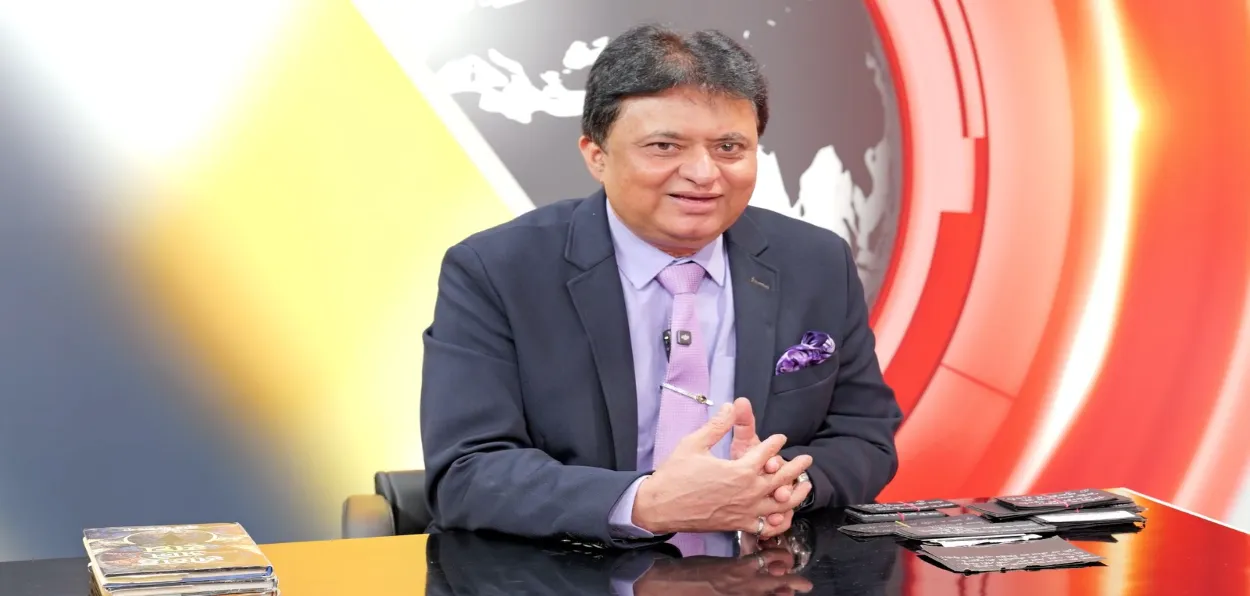
Rear Admiral (Retd.)Khurram Shahzad Noor

The thought of joining the Indian Navy never occurred to a young Khurram Shahzad Noor while he was growing up in a village of Western Uttar Pradesh.

It was a meeting with a colonel while he was attending a tuition class. The Army officer encouraged him to consider a career in the armed forces. Today, after retiring from the Indian Navy at the rank of Rear Admiral, a fairly senior leadership position, he remembers the encounter with the stranger who changed his life.

Today, he has a distinguished career in the Indian Navy behind him and is active as a poet, writer, and motivational speaker. His life demonstrates that a person need not have to choose between discipline and imagination, or public service and passion. Both can coexist and enrich life.

Though the armed forces do not believe in flaunting the religious identities of the officers and men, Dr Rear Admiral (retd) Khuram Shahzad Noor is the first Muslim to reach such a top position in the Indian Navy.
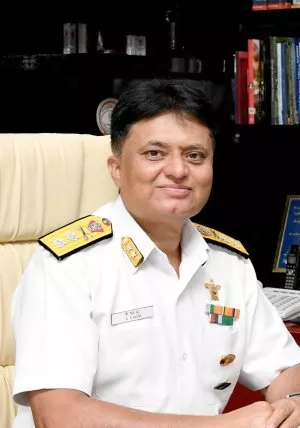
Rear Admiral Khurram Shahzad Noor

Born into a family with roots in the village of Nagina, Bijnor, Noor’s childhood did not suggest the extraordinary career that lay ahead. Born prematurely at around seven months, he was physically weaker than many children of his age. He took longer to learn to walk and found ordinary sporting activities demanding. Running for a short distance could leave him exhausted.

For a child growing up with such limitations, the prospect of joining the armed forces might have appeared distant. Yet those early difficulties eventually became a source of strength. Rather than allowing physical limitations to define his future, Noor chose to challenge them.

The road ahead required discipline, education and perseverance. Noor eventually joined the Indian Navy and went on to serve the country for approximately 35 years. His professional journey was closely associated with technology, education and training. He developed expertise in anti-submarine warfare, a specialised field that requires precision, patience and the ability to understand complex underwater operations.

Reflecting on his professional responsibilities, Noor says, “I teach anti-submarine warfare, where I look after the training of Navy officers.” The statement offers a glimpse into another important aspect of his career: preparing the next generation of naval officers for the responsibilities that come with serving at sea.
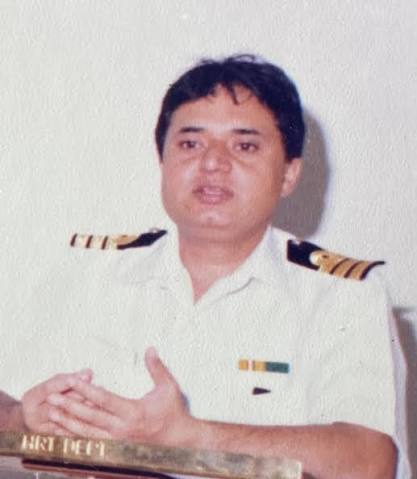
Rear Admiral Khurram Shahzad Noor at an event

Submarine warfare is a highly specialised domain in which knowledge, technology, judgment and teamwork have to work together. Noor’s role as an instructor placed him not merely in the position of an experienced officer but also that of a mentor responsible for transferring knowledge to those who would eventually shoulder the nation’s maritime responsibilities.

Speaking about the Navy’s role during Operation Sindoor, Noor explained that naval operations have a distinct character. “The role of the Navy in wars is very specific. We do not come out in the open until it’s a full-fledged war declared,” he said.

For Noor, the Navy’s contribution is not limited to moments when ships are deployed in direct combat. He highlights the less visible but equally significant role of maritime engagement.

“The Navy does a lot of Sea Diplomacy, which no other armed forces get to do. This is a positive part that the Navy contributes to,” he said. “Sea diplomacy allows a country’s naval presence to serve strategic and diplomatic purposes during peacetime. Through maritime cooperation, international engagements and interaction with other nations, naval forces can help strengthen relationships while simultaneously protecting national interests”, Noor added.

Noor also explained the distinction between the Navy’s role during a declared war and its responsibilities at other times. “When it’s a properly declared war, we cut lines and follow orders at sea. Otherwise we are never in attack mode, but in support of what is going on the borders, to make things easy for the army,” he said.

His observations underline the coordinated nature of India’s defence structure. Different branches of the armed forces have distinct responsibilities, but their larger objective remains common, safeguarding the country and supporting one another when circumstances demand it.

Recalling tough days during his training, a young cadet ran away from the academy. Five days later, the boy returned with a letter from his father. The letter said the boy had two choices – face his father’s wrath at home or return to the Naval forces.

Recalling the incident with a laugh, Noor said the young cadet chose to return to the academy.
Rear Admiral Khurram Shahzad Noor

Yet behind the uniform and military responsibilities was another personality, one connected with words. “I deeply believe in languages”, Noor shared.

Noor’s love for poetry did not disappear amid the demands of naval life. Instead, literature became another way through which he could explore human emotions, relationships and society. The contrast is striking: a professional trained to listen for faint signals beneath the sea also became a poet attentive to the quieter signals of the human heart.

His creative interests extend beyond poetry. He has also explored short filmmaking and storytelling, using creative expression to examine human relationships and social themes. These pursuits reveal a personality that refuses to be confined to a single professional identity.

Noor’s life challenges the assumption that a person’s early circumstances determine the limits of his future. The child who struggled to keep pace on a football field eventually spent decades undertaking demanding naval responsibilities. The officer associated with submarine warfare also became a teacher and mentor. The military professional developed into an educator, poet and communicator.

source: http://www.awazthevoice.in / Awaz, The Voice / Home> Stories / by Vidhush Gaur, New Delhi / August 23rd, 2026
Drove an Uber in Delhi, rower Salman Khan now has an Asian Games medal

Pure Dhingar (Amethi District), UTTAR PRADESH :


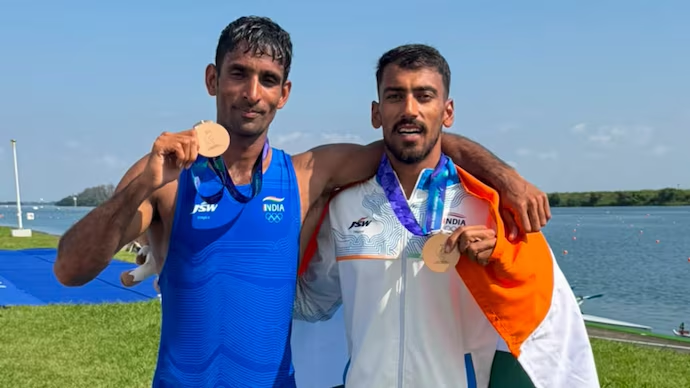
Salman Khan used to drive a cab in New Delhi, now he has a medal at the Asian Games. Alongside Satnam Singh, Salman won India’s first ever bronze medal in the men’s double sculls on Thursday, September 24.

Salman Khan (left) and Satnam Singh (right) win India’s first ever bronze medal in double sculls at the Asian Games. (PTI Photo)

Indian rowers Satnam Singh and Salman Khan won bronze in the men’s double sculls at the Asian Games 2026 in Aichi-Nagoya on Thursday, September 24, securing India’s first-ever medal in the event. The Indian pair clocked 6:13.25 in the final to finish behind China’s Yi Xudi and Yide Nie, who won gold, and Uzbekistan’s Pavel Sorin and Mekhrojbek Mamatkulov, who took silver.

Satnam and Salman were firmly in medal contention for much of the race, staying second at the 500m, 1000m and 1500m marks. They were eventually overtaken in the closing stages, slipping to third in the final 500m, but held on to secure the bronze.

For Salman, the medal marks his first podium finish at the Asian Games and another major step in a rowing career that began only after he joined the Indian Army. Before he found his way into the sport, Salman was driving an Uber in Delhi to support his family.

WHO IS SALMAN KHAN?

Salman Khan was born in Pure Dhingai in Uttar Pradesh’s Amethi district and grew up as the eldest of four brothers and two sisters. His father, Mohd Kasim Khan, worked in truck-body construction in Tauru, Haryana, where Salman completed his schooling.

His life changed when his father died of dengue when Salman was 18.

With the responsibility of supporting his younger siblings falling on him, his plans of joining the Indian Army were put on hold. Salman instead moved towards earning a living, driving an Uber cab in Delhi and working day and night to help support his family.

His Army dream eventually returned.

A friend pointed out that Salman’s height and physical build could make him suitable for the armed forces. He handed the cab over to another driver and spent four months preparing for recruitment before clearing the recruitment rally, medical and written examinations.

Salman joined the Bombay Engineer Group in Pune on September 25, 2018.

It was after joining the Army that he was introduced to rowing.

Coaches Satywan, Satish Siraat and Prabhat Mishra noticed his physical attributes and encouraged him to try the sport. Salman was initially reluctant, as rowing was not something he had planned to pursue. But his coaches persisted and eventually put him into the boat.

His first inter-centre regatta brought a silver medal, giving him confidence to continue. He went on to win medals at battalion and inter-centre competitions before clearing the ergometer benchmarks in 2021 and earning selection for the Army Rowing Node at CME Pune.

Training alongside some of India’s leading rowers helped Salman see rowing as more than something he had been encouraged to try.

He twice came close to quitting the sport, but his coaches convinced him to continue. Senior coach Kudrat Ali and Training Officer Major Nagendra Hooda were among those who guided the next stage of his development.

The results soon began to reflect that progress.

Salman won gold at the 36th National Games in Gujarat in 2022 and also claimed gold at the 5th Indoor National Championship that year. In 2023, he won silver at the Senior National Championships and gold at the Open Sprint National Championships.

He also represented India at the World Rowing Cup III in Lucerne in 2023.

Salman was inducted into the Target Olympic Podium Scheme in 2023, receiving Rs 4,09,100 in support under TOPS. He also received Rs 12,16,589 under the Annual Calendar for Training and Competition programme.

He won gold at the 37th National Games in Goa later that year before claiming gold at the Asian Rowing Cup in 2024. The result also earned him a promotion to the rank of Naib Subedar in the Indian Army.

His international record continued to grow, with silver medals at the Australian Rowing Championships in Tasmania and the Asian Rowing Championships in Vietnam in 2025. He also won gold at the 38th National Games in Uttarakhand and the 42nd Senior National Rowing Championships in Bhopal that year.

The Asian Games medal was the next significant addition to that record.

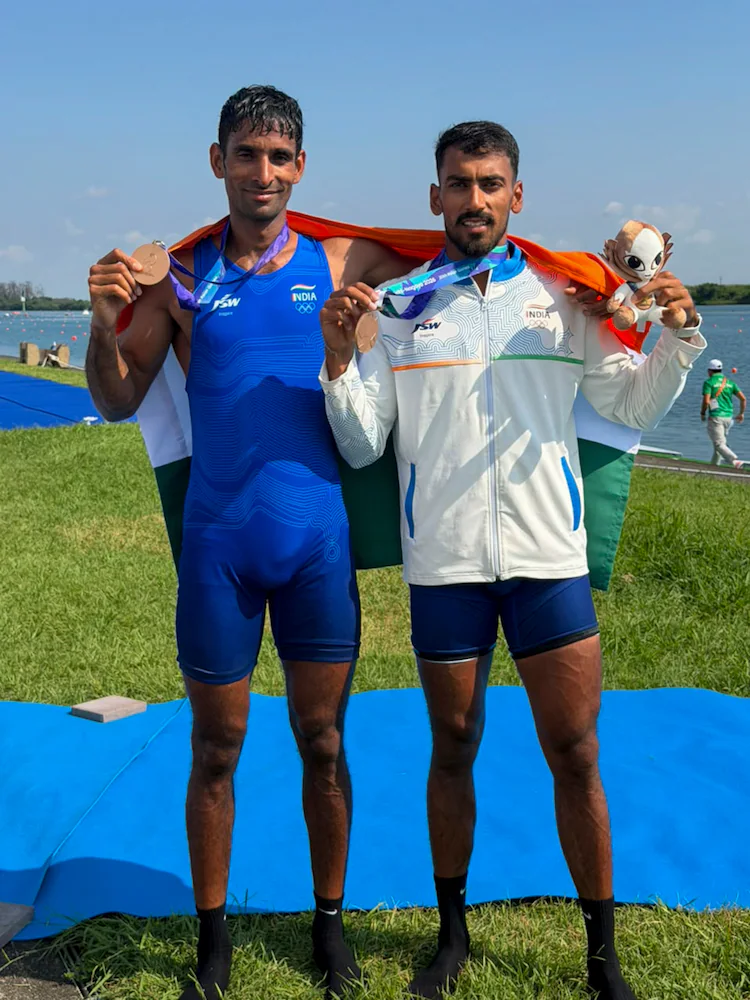
India’s bronze winning team in men’s double sculls at the Asian Games 2026. (PTI Photo)

WHO IS SATNAM SINGH?

Salman’s partner in the historic bronze, Satnam Singh, also arrived at rowing after starting out in another sport.

Satnam was a national-level handball player before switching to rowing in 2018. Olympian Swarn Singh Virk recognised his physical potential and encouraged him to take up the sport.

The move quickly developed into a career.

Hailing from Punjab’s Mansa district, Satnam represented India at the 2018 Youth Olympic Games, where he finished eighth in the men’s pair. He later established himself among India’s leading rowers and won the men’s single sculls title at the 40th Senior National Rowing Championships, becoming the first Indian Navy rower to win the event.

Satnam’s first Asian Games medal came at Hangzhou in 2023, when he was part of India’s men’s quadruple sculls crew that won bronze.

He added more international success in 2025, winning gold in the men’s quadruple sculls at the Asian Rowing Championships in Vietnam. He also won silver in the indoor Asian Championships in the men’s double sculls.

The pairing with Salman at Aichi-Nagoya came after India’s rowing team underwent a late reshuffle.

Satnam and Salman had initially been part of the men’s quadruple sculls crew but were moved into the double sculls, while other rowers were shifted between events. The changes came just days before the rowing competition and led to frustration among members of the Indian team.

The two adapted quickly to their new combination.

On Thursday, they stayed in the medal positions throughout most of the final before securing bronze in 6:13.25. For Satnam, it was another Asian Games medal. For Salman, it was the first. And for Indian rowing, it was a historic first in the men’s double sculls.

source: http://www.indiatody.in / India Today / Home> Sports> Asian Games / by India Today Sports Desk – Kingshuk Kusari / September 24th, 2026

Shahnavaz Khan wins bronze medal in long jump in World Athletics U-20 Championships 2026

Madhaipur Village (Pratapganj District), UTTAR PRADESH :

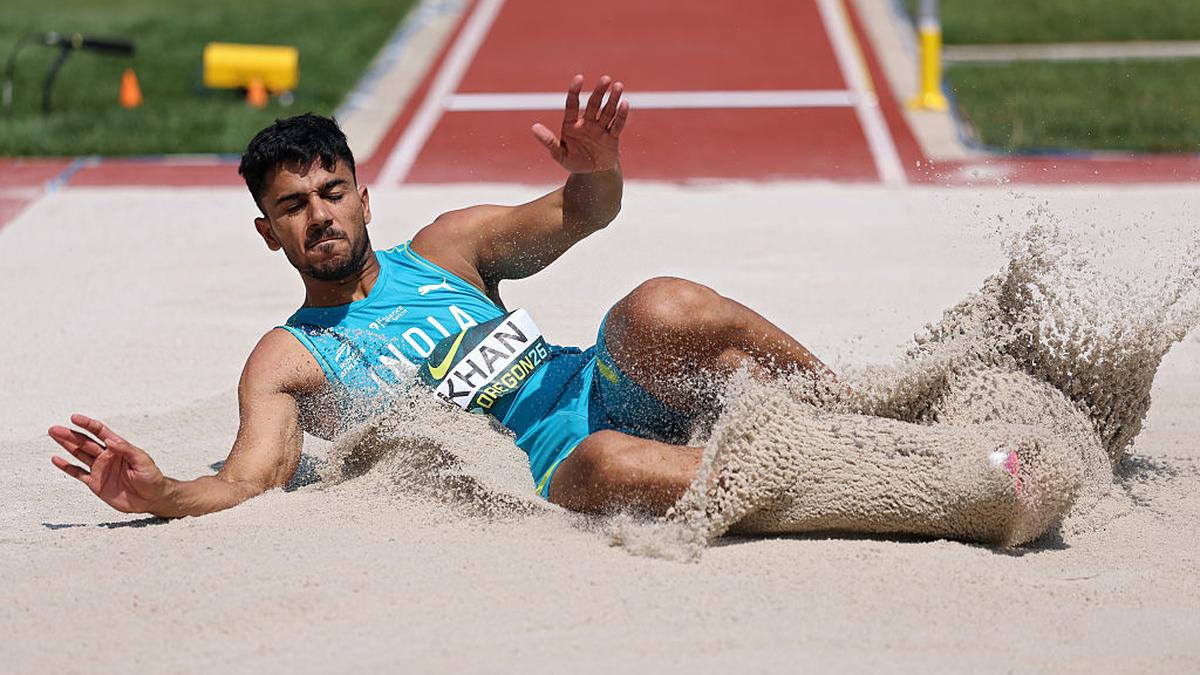
Shahnavaz Khan is now the first Indian man to win a long jump medal at the World Athletics U-20 Championships; Shaili Singh had won silver in women’s long jump in 2021.

File – Shahnavaz Khan in action during qualification at the 2026 World Athletics U20 Championships. | Photo Credit: Getty Images

Shahnavaz Khan bagged the bronze medal in the men’s long jump event in the World Athletics U-20 Championships 2026 in Oregon on Saturday.

Shahnavaz Khan bagged the bronze medal in the men’s long jump event in the World Athletics U-20 Championships 2026 in Oregon on Saturday.

This is now India’s third medal of the championships, following silvers from Ashish Yadav (javelin) and Basant Kumar Meghwal (high jump).

Shahnavaz is also the first Indian man to win a long jump medal at the World Athletics U-20 Championships; Shaili Singh had won silver in women’s long jump in 2021.

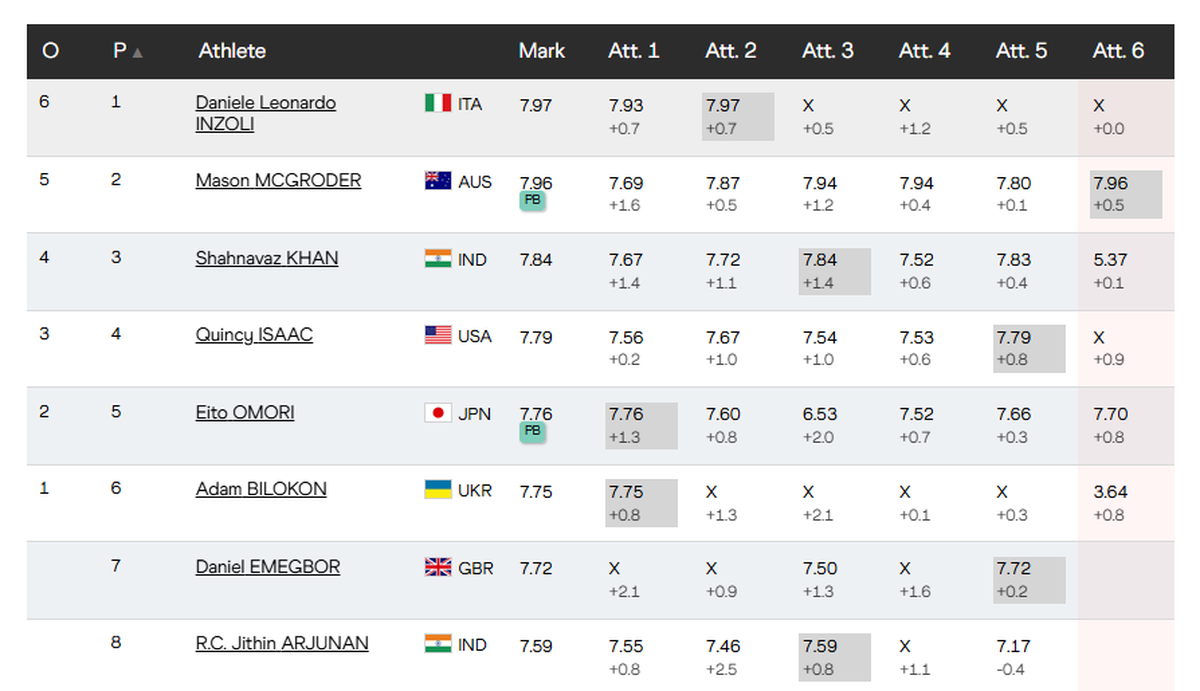
The bronze, though, might feel like a missed opportunity for Shahnavaz, whose best leap on Saturday (7.84m) was significantly shorter than his personal best (8.30m).

Similarly, R.C. Jithin Arjunan, the other Indian finalist in Oregon, too failed to get close to his personal best (8.12m), as he finished eighth with a best jump of 7.59m

Daniele Leonardo Inzoli of Italy won gold with a 7.97m leap. Silver medallist Australia’s Mason McGroder came agonisingly close to winning the championship, when he touched 7.96m (personal best) with his last jump.

source: http://www.sportstar.thehindu.com / Sportstar / Home> Athletics / by Team Sportstar / August 09th, 2026

Mangaluru: Former Army (Retd) D.M. Nizamuddin passes away

Mangaluru, KARNATAKA :

Mangaluru:

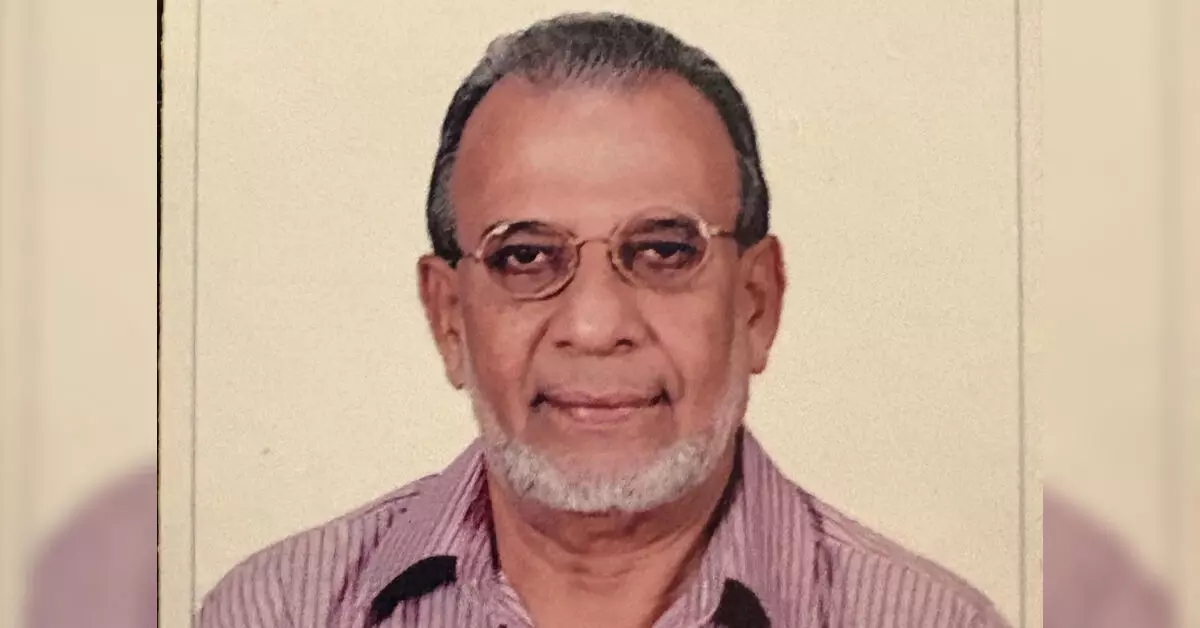
Major (Retd) D.M. Nizamuddin, a respected former Indian Army officer, war veteran and long-time Treasurer of Bolar Juma Masjid, passed away on Monday. He was 86.

Born on October 6, 1939, Major Nizamuddin was the son of late D.M. Shamshuddin and a resident of Faiq House at Yemmekere Cross Road in Bolar, Mangaluru.

Major Nizamuddin had a distinguished career in the Indian Army and served the nation during the Indo-Pak wars of 1965 and 1972. He sustained injuries while fighting in the 1972 war.

After retiring from the Army, he remained actively involved in community service. He served as the Treasurer of Bolar Juma Masjid for many years and was known for his commitment and sincerity in carrying out his responsibilities.

The mortal remains will be kept at his residence, Faiq House, Yemmekere Cross Road, Bolar, for the public to pay their last respects until 11 a.m. on Tuesday.

The Janazah (funeral prayers) and burial (Tadfeen) will be held after Duhr prayers on Tuesday at Bolar Juma Masjid.

source: http://www.english.varthabharati.in / Vartha Bharati / Home> Karavali / by Vartha Bharati / August 03rd, 2026

Why General Shah Nawaz Khan Deserves to Be Remembered This Independence Day

Punjab (British India) / NEW DELHI :

EVERY year on August 15, India’s Prime Minister addresses the nation from the ramparts of the Red Fort in Delhi. It was at this same fort, in 1945, that Major General Shah Nawaz Khan stood trial for waging war against the British Empire. A Muslim officer in Netaji Subhas Chandra Bose’s Indian National Army, he had led troops into battle against colonial forces across Southeast Asia, been captured, and was sentenced to death. His court-martial, alongside Colonel Prem Kumar Sehgal and Colonel Gurbaksh Singh Dhillon, provoked mass protests across the country and became one of the final catalysts for British withdrawal from India. The slogan that echoed through the streets of Delhi became a rallying cry of the independence movement: “Lal Qile se aayi awaaz, Sehgal, Dhillon aur Shah Nawaz.”

After his release, Shah Nawaz Khan chose the path of non-violence at Mahatma Gandhi’s urging, joined the Indian National Congress, and went on to serve as a Union Minister for over two decades. He represented Meerut in Parliament through four terms, held portfolios ranging from Agriculture to Petroleum, and chaired the commission that investigated the circumstances of Netaji Bose’s death. He was buried near the Red Fort with full state honours in 1983.

Beyond politics, Shah Nawaz Khan was connected to one of India’s most recognizable families. The Bollywood actor Shah Rukh Khan’s father, Mir Taj Mohammed Khan, was his cousin and migrated from Pakistan to India alongside him after Partition.

His story traces an arc from armed resistance to democratic nation-building, from a death sentence in a colonial courtroom to the highest levels of Indian government.

Early Life and Military Career

General Shah Nawaz Khan was born on 24 January 1914 in the village of Matur, in the Rawalpindi District of British India (now in Pakistan). His father, Lieutenant Sardar Tikka Khan, served for nearly three decades in the British Indian Army with the 58th  Vaughan’s Rifles (Frontier Force), instilling in him an early exposure to military life.

After completing his early education, Shah Nawaz Khan went on to study at the Prince of Wales Royal Indian Military College in Dehradun, one of the premier institutions established to train future military leaders in colonial India.

From Prisoner of War to Leader of the Indian National Army

In 1940, Shah Nawaz Khan was commissioned as an officer in the British Indian Army. In December 1941, as part of the Second World War, Japanese forces launched a major offensive against Singapore, and the British deployed nearly 60,000 Indian soldiers, including Captain Shah Nawaz Khan.

The British forces were ultimately defeated, and Khan, along with thousands of other soldiers, was taken prisoner of war. During his captivity, he came into contact with Indian nationalists and revolutionaries aligned with Netaji Subhas Chandra Bose. Deeply influenced by their vision of an independent India, he joined the Azad Hind Fauj, also known as the Indian National Army (INA), and rapidly rose to positions of leadership.

Role in the Freedom Struggle

Recognized for his leadership abilities, Shah Nawaz Khan was inducted into the cabinet of the Indian National Army’s (INA) Provisional Government of Free India. Between 1942 and 1945, the Azad Hind Fauj engaged British forces across Southeast Asia and, for a period, established control over large stretches of territory during its campaign against colonial rule.

In December 1944, he was appointed commander of the INA detachment stationed in Mandalay, Burma (now Myanmar). Owing to the close trust placed in him by Netaji Subhas Chandra Bose, he was later selected to lead the Subhas Brigade—a special unit formed from elite INA soldiers.

During military operations in Burma in 1945, General Shah Nawaz Khan and several of his comrades were arrested by British forces. The INA’s senior leadership at the time included Major General Shah Nawaz Khan, Colonel Prem Kumar Sehgal, and Colonel Gurbaksh Singh Dhillon. In 1946, all three were put on trial for mutiny at the Red Fort in Delhi.

These trials ignited widespread public protests across India and became a turning point in the independence movement, significantly intensifying popular resistance to British rule. Facing overwhelming public pressure, the British government was ultimately compelled to release Shah Nawaz Khan and his associates. During this period, he remained in contact with leading figures of the national movement, including Mahatma Gandhi, and was defended in court by Jawaharlal Nehru.

Gandhi’s Colonel of Non-Violence

General Shah Nawaz Khan was regarded as one of Mahatma Gandhi’s close associates, a relationship reflected in Gandhi’s letters and public speeches, in which he frequently referred to him by name. Their association symbolized the bridge between armed resistance and the philosophy of non-violence that shaped India’s independence movement.

On the occasion of the 50th birth anniversary of Netaji Subhas Chandra Bose, Shah Nawaz Khan declared, “While living outside India, we fought for our country’s freedom with arms; now we shall serve India through non-violence.” Mahatma Gandhi echoed this sentiment while addressing members of the Indian National Army in Madras on 22 January 1946 and later reiterated it during his prayer meeting in Mumbai on 18 February 1946.

Contemporary records further document their close interaction. According to a report in the Bombay Chronicle dated 13 March 1946, Shah Nawaz Khan met Gandhi at Birla Bhavan in Delhi on 12 March, where the two held discussions for nearly ninety minutes. On 22 March 1946, Gandhi visited a military camp in Aravalli Kanchan, Maharashtra, and once again mentioned Shah Nawaz Khan while addressing the soldiers. Their engagement continued through personal meetings as well as an exchange of letters, many of which survive as historical evidence of their dialogue.

At Gandhi’s urging, following the dissolution of the Indian National Army in 1946, Shah Nawaz Khan joined the Indian National Congress. Later that year, he worked in Bihar to assist victims of communal violence, alongside Khan Abdul Ghaffar Khan. He remained in the region during this period of unrest, and was present at the funeral of Professor Abdul Bari, who was assassinated in Bihar in March 1947.

Gandhi repeatedly acknowledged and praised Shah Nawaz Khan’s relief and peace-building efforts in Bihar during 1947. He spoke at length about Khan’s work during his prayer meetings on 29 April and 1 May 1947, and earlier, on 15 April 1947, the two were together at Gandhi’s camp in Patna. During one such conversation, Gandhi expressed his faith in him, saying: “I have great hopes for you. I wish to make you a complete soldier of non-violent weapons. You became a colonel under Netaji; in the same way, I want to make you a colonel of non-violence.”

Political Life After Independence

Even after India achieved independence in 1947, Shah Nawaz Khan continued to work in Masurhi, Bihar, focusing on relief and rehabilitation efforts. In a letter dated 7 October 1947, Mahatma Gandhi wrote to him: “Dear General Shah Nawaz, If the work you are doing there does not go to the dogs in your absence, you may leave it to go to the Punjab-Pakistan.” Despite this, Shah Nawaz Khan chose not to return to his ancestral home in what had become Pakistan; instead, his family migrated to India.

Shah Nawaz Khan entered electoral politics in independent India and was elected to the first Lok Sabha (India’s lower house of Parliament) in 1952 from Meerut, representing the Indian National Congress. He went on to win the same constituency in 1957, 1962, and 1971. Over the course of his political career, he served as a Union Minister for a total of 23 years.

Beginning in 1952, he served as Parliamentary Secretary and later as Deputy Minister for Railways. From 1957 to 1964, he held the portfolio of Food and Agriculture. He was again appointed Minister of Agriculture in 1965, followed by his tenure as Minister of Labour, Employment, and Rehabilitation in 1966. Between 1971 and 1975, he served as Minister for Petroleum and Chemicals, as well as Agriculture and Irrigation. From 1975 to 1977, he additionally served as Chairman of the Food Corporation of India while continuing as Union Minister for Agriculture and Irrigation.

In 1956, the Government of India constituted a commission to examine the circumstances surrounding the death of Netaji Subhas Chandra Bose. Shah Nawaz Khan was appointed chairman of this commission, underscoring the trust placed in him by the national leadership. He also authored a memoir on the Indian National Army and Netaji Subhas Chandra Bose, regarded as an important firsthand account of the INA movement.

Representing the Meerut constituency for decades, Shah Nawaz Khan played a stabilizing role in public life, and the city remained free of major communal disturbances during his tenure. From 1977 to 1983, he served as the national in-charge of the Congress Seva Dal, the party’s volunteer organization. He remained associated with the Indian National Congress until the end of his life, continuing his commitment to public service and national unity.

General Shah Nawaz Khan passed away on 9 December 1983 while still serving the Indian National Congress. His life—spanning armed resistance, political leadership, and a steadfast commitment to unity and nation-building—remains a powerful testament to the ideals of freedom, sacrifice, and service. He is remembered not only as a soldier and statesman, but as a figure whose legacy continues to inspire generations in independent India and beyond.

— IAMC

source: http://www.clarionindia.net / Clarion India / Home> Editor’s Pick> Opinion / by Afroz Alam Sahil / August 08th, 2026

Kupwara’s Meer Sehrish among India’s 24 girls selected for NDA

Kupwara District, JAMMU & KASHMIR :

Kupwara :

Meer Sehrish from Kupwara district of Jammu & Kashmir has brought pride to the Union Territory by clearing the prestigious National Defence Academy (NDA) examination and securing a place among the only 24 girls selected across India.

Her achievement is being hailed as a major milestone for the region and an inspiration for young girls aspiring to join the armed forces. Residents, teachers and local officials congratulated Meer Sehrish for her dedication and hard work in cracking one of the country’s most competitive defence entrance examinations.

The NDA examination, conducted by the Union Public Service Commission (UPSC), is the gateway for entry into the Indian Army, Navy and Air Force. Since the inclusion of women candidates in NDA, the competition among aspirants has remained extremely high.

Meer Sehrish’s success highlights the growing participation of girls from Jammu & Kashmir in national-level competitive examinations and defence services. People across Kupwara expressed hope that her accomplishment would motivate more students, especially from remote areas, to pursue careers in the armed forces.

Her selection is also being viewed as a positive sign of changing aspirations among the youth in Kashmir, where students are increasingly excelling in academics, sports and national competitive platforms.

source: http://www.kashmirahead.com / Kashmir Ahead / Home / by News Desk Kashmir Ahead / May 09th, 2026

Last rites of soldier Althaf performed with State honours in Virajpet

Meenupete (Virajpet Taluk, Kodagu District), KARNATAKA :

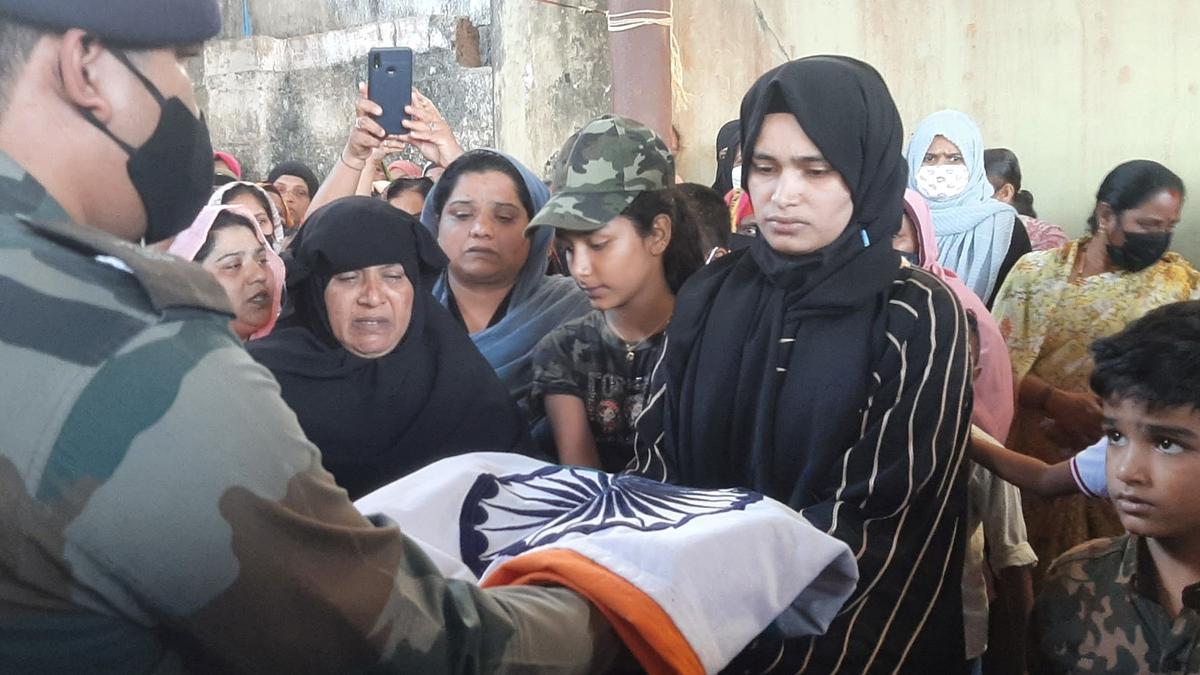
Army personnel handing over the tricolour to the wife of Hawaldar Althaf Ahmed, who died in Kashmir on February 22. | Photo Credit: Special Arrangement

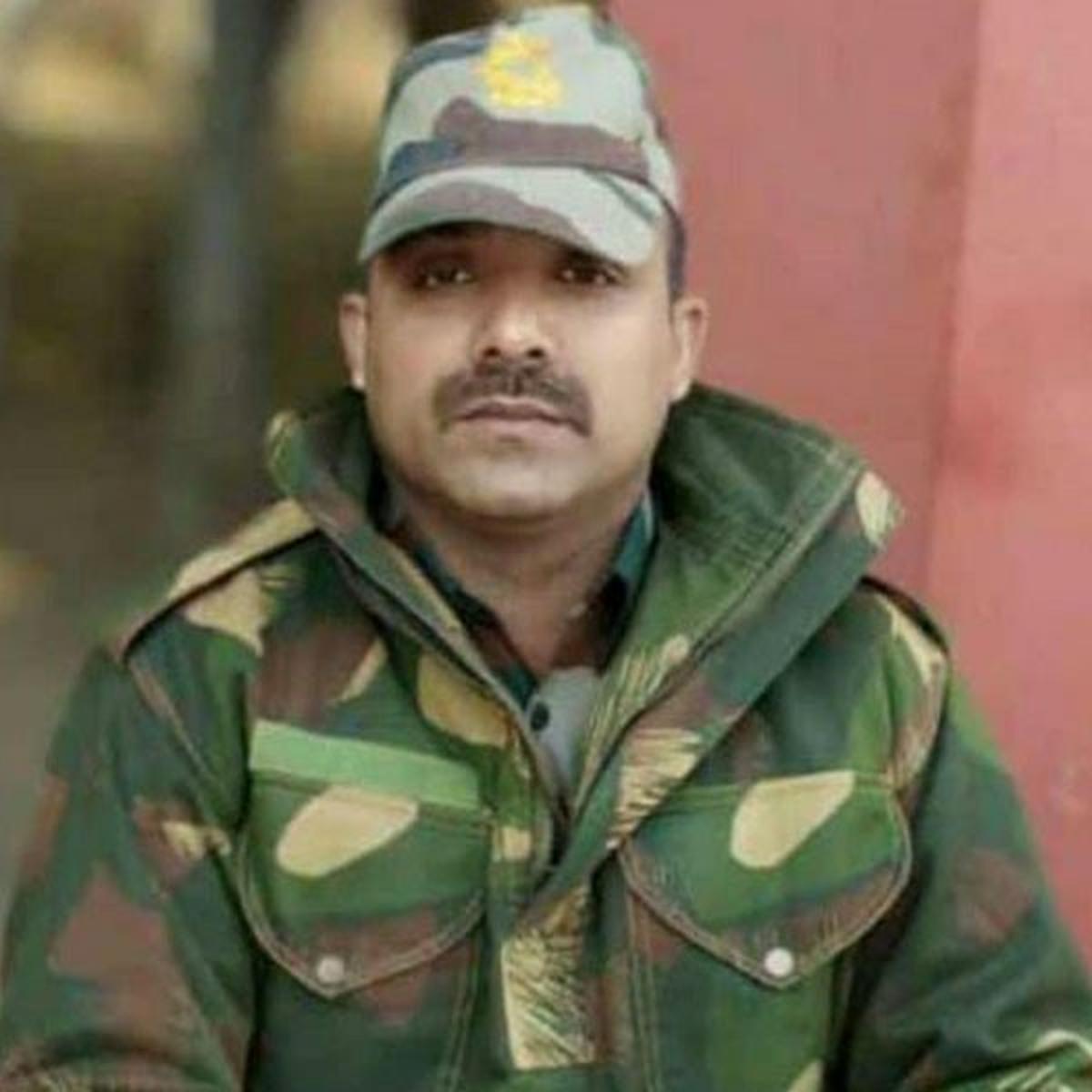
Althaf Ahmed | Photo Credit: Special Arrangement

The last rites of 37-year-old Indian Army Hawildar Althaf Ahmed, who died in a blizzard while on duty in Kashmir, were performed in his native in Meenupete in Kodagu district’s Virajpet taluk with state honours on Saturday.

The body of Althaf Ahmed, who had died on February 22, arrived in his native in Kodagu early on Saturday as its departure by air from Srinagar was delayed owing to bad weather. The body was kept at Eidgah Maidan in Meenupete for the public to pay their last respects before it was laid to rest at the burial ground as per Islamic rituals.

Virajpet MLA K.G. Bopaiah, MLCs Suja Kushalappa and Veena Achaiah, besides Deputy Commissioner B.C. Satish, Kodagu Superintendent of Police M.A. Aiyappa and other senior officials of the district administration were among the large number of people, who paid their last respects.

According to sources, Althaf Ahmed grew up in Meenupete and completed his SSLC in St Anne’s School in Virajpet and Pre University Education at the Virajpet Government Junior College. He later joined the Army Ordnance Corps (AOC) regiment. He had been serving the Army in various places since the last 19 years.

While guarding the border in Kashmir, Althaf Ahmed was caught in a blizzard on February 22 and died.

After the ceremonial gun salute during the funeral of the martyred solider, Army personnel handed over handed over the tricolour that draped Althaf Ahmed’s body and his uniform to his wife and two children. He leaves behind his mother, wife, a son and a daughter.

source: http://www.thehindu.com / The Hindu / Home> News> India> Karnataka / by Special Correspondent / February 26th, 2022

Muslim women donning uniforms are breaking gender and social barriers

INDIA :

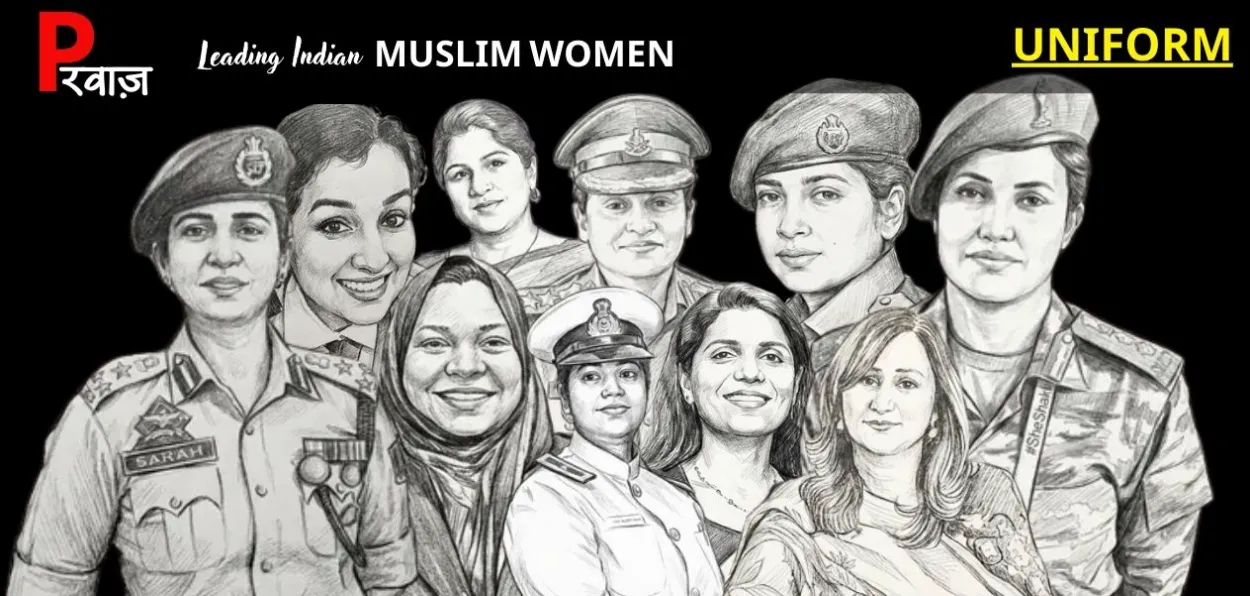
Muslim women in uniform

New Delhi

Col. Sofiya Qureshi’s briefing the media during Operation Sindoor surprised the world, for not only an Indian woman but also one from the Muslim community,  was briefing the media in the utmost professional manner, befitting an Indian Army Officer. Forget about the world; even many Indians could not believe that the Indian Army had women officers. The fact is that Muslim women have been part of the armed forces and technical workforce for many years.

Awaz-the Voice is bringing you ten stories of such women to inspire the younger generation:

Ajeetha Begum Sulthan stands as a compelling example of determination, discipline, and empathy in policing. Rising from a modest background in Coimbatore to become the Inspector General of Police (Crime Branch) in Kerala, she has built a reputation for tackling complex issues ranging from trafficking and drug networks to crimes against women and children. Known for her simplicity and strong sense of duty, Ajeetha believes that a police officer “cannot afford to go wrong,” a principle that has guided her through challenging postings and high-profile investigations.

Her journey reflects not only professional excellence but also a deep commitment to social responsibility and mentoring the next generation through initiatives like the State Police Cadet programme.

Anisa Nabi represents a rare blend of administrative commitment and athletic passion in Jammu and Kashmir. A 2012-batch JKAS officer and currently the Chief Sports Officer at the J&K Sports Council, she has consistently worked to promote sports, fitness, and youth engagement while building an impressive record as a runner who has completed major races like the Vedanta Delhi Half Marathon and the Tata Mumbai Marathon.

Through her initiative “Wondrous Women,” Anisa encourages women to embrace fitness and mental well-being, while her work in government—from GST awareness to grassroots livelihood programmes—reflects a strong commitment to empowering communities. By promoting sports as a positive pathway for youth, she continues to inspire many to lead healthier and more purposeful lives.

Ishrat Ahmed, hailing from the village of Nuaan in Rajasthan, embodies a remarkable legacy of service, discipline, and patriotism. Commissioned into the Indian Army in 2001, she has risen through the ranks to command an Ordnance Unit in Meerut, becoming the first woman from the Qaimkhani community to hold such a significant role. Coming from a distinguished family of military and civil service officers, Colonel Ishrat’s journey reflects both inherited values and personal determination.

Beyond her achievements in uniform, she continues to inspire young people—especially girls from rural backgrounds—to pursue careers in the armed forces and public service, making her story one of courage, leadership, and lasting inspiration.

Bushra Bano’s journey from a small village in Kannauj to the ranks of the Indian Police Service is a story of resilience, faith, and unwavering determination. A scholar who completed her PhD at Aligarh Muslim University, Bushra balanced motherhood, professional responsibilities, and intense preparation for the civil services examination.

Remarkably, she appeared for her UPSC interview while eight months pregnant and eventually secured a place in the IPS, serving in the West Bengal cadre. Her journey—from lecturer and corporate employee to SDM and now a police officer—stands as an inspiring example for young women, proving that determination, family support, and education can turn even the most challenging circumstances into milestones of success.

Hana Qureshi has emerged as a leading voice in infertility treatment at the Cradle Fertility Centre in Kolkata, where she serves as the Centre-in-Charge of its Garia branch. Specialising in IVF procedures and advanced reproductive diagnostics, she combines cutting-edge medical science with compassionate patient care to help couples realise their dream of parenthood. Honoured with the ISAR Youth Icon Award in 2024, Dr Qureshi believes that discipline, perseverance, and continuous learning are key to success.

Through her patient-centred approach and commitment to innovation, she has become a trusted figure offering renewed hope to families facing infertility challenges.

Reshma Niloufer Naha has made maritime history by becoming the world’s first woman river pilot at Kolkata Port Trust in Kolkata. Trained at the Academy of Maritime Education and Training, she spent years sailing across the world before undergoing rigorous pilot training and earning her position in 2018.

Guiding massive ships through narrow and challenging river channels demands exceptional skill, physical strength, and quick decision-making—qualities that Reshma has demonstrated consistently. Honoured with the Nari Shakti Puraskar, her journey stands as a powerful symbol of perseverance and women’s empowerment, inspiring young women to pursue careers even in the most challenging and traditionally male-dominated fields.

Sara Rizvi, a 2008-batch officer of the Indian Police Service from the Gujarat cadre, has built a distinguished career marked by resilience and dedication to public service. Currently serving as Deputy Inspector General of the Udhampur–Reasi range in Jammu and Kashmir on inter-cadre deputation, she is the only woman officer in the region to hold the DIG/IG rank.

From overcoming early financial struggles and personal loss to handling critical assignments such as elections, intelligence operations, and security challenges, Rizvi has consistently demonstrated leadership and commitment. Her journey—from a determined civil services aspirant in Mumbai to a senior police officer serving in sensitive regions—stands as a powerful testament to perseverance, courage, and a deep sense of social responsibility.

Col Sofiya Qureshi has emerged as a powerful symbol of perseverance and merit in the Indian Army, challenging long-standing stereotypes about gender and identity in the armed forces. Rising through the ranks with discipline and professionalism, she has taken on demanding leadership and operational responsibilities, demonstrating that capability—not background or gender—defines a soldier’s worth.

Through her quiet determination and consistent excellence, Sofiya has inspired many young women to envision a future in uniform, proving that dedication to service and nation can break barriers and reshape perceptions.

Tuba Sanobar, a young lawyer from Seoni now based in Bengaluru, is emerging as a powerful voice for civil rights, women’s empowerment, and data privacy. With an LLM in Criminology from Osmania University, she blends legal expertise with grassroots activism, working closely with the Association for Protection of Civil Rights to raise awareness about domestic violence and minority rights.

Through initiatives like the SOZ programme and her advocacy on digital privacy and community participation, Tuba represents a new generation of lawyers who see the law not merely as a profession but as a tool for social change and dignity.

Hana Mohsin Khan has carved an inspiring path in aviation, proving that determination can overcome social labels and late beginnings. Born in Meerut and educated partly in Saudi Arabia, Hana’s journey to the cockpit was anything but conventional—moving from journalism and entrepreneurship to pursuing aviation after discovering her passion later in life.

After rigorous training in the United States and Greece, she eventually flew her first commercial flight in 2020, becoming one of the few Muslim women pilots in India.

Her story reflects resilience, curiosity, and a refusal to be confined by stereotypes, inspiring young women to pursue their ambitions with confidence and courage.

source: http://www.awazthevoice.in / Awaz, The Voice / Home> Stories / by ATV / posted by Aasha Khosa / March 12th, 2026

Memorial service held in honour of Maj Gen Hasnain

Prayagraj, UTTAR PRADESH :

Maj Gen SM Hasnain’s contributions to the Indian Army, including his leadership of the 4 Garhwal Rifles, were remembered with reverence.

Tributes being paid to Maj Gen Syed Mahdi Hasnain on Sunday. (HT)

A solemn remembrance and memorial service was conducted at Prayagraj Military station to honour the legacy of Maj Gen Syed Mahdi Hasnain here on Sunday. The service paid tribute to his distinguished military career and unwavering commitment to duty.

Maj Gen SM Hasnain’s contributions to the Indian Army, including his leadership of the 4 Garhwal Rifles, were remembered with reverence, said Group Captain Samir Gangakhedkar, public relations officer (defence), Prayagraj region.

The speakers reflected on his valour during WW-II and his role in safeguarding refugees during the Partition. In his sterling military career Maj Gen SM Hasnain commanded a Mountain and an Infantry Brigade, an illustrations Mountain Division and was the first Inspector of Infantry at Army Headquarters. The service served as a reminder of Maj Gen SM Hasnain’s enduring impact on the nation, the Indian Army and Prayagraj town where he lived his post service life, he added.

Lt Gen NS Raja Subramani presided over the function as the Colonel of the Regiment of the Garhwal Rifles and Garhwal Scouts and paid his tributes to the legend.

Lt Gen (Retd) Syed Ata Hasnain, son of Maj Gen SM Hasnain, also served the Indian Army in his father’s regiment and went on to command the prestigious 15 Corps. Presently, he continues his service to the nation as member of the National Disaster Management Authority.

source: http://www.hindustantimes.com / Hindustan Times / Home / by HT Correspondent, Prayagraj / February 26th, 2024

Lt. Gen. (Retd) Syed Ata Hasnain: the new Governor of Bihar

INDIA :

Lt. General (retired) Syed Ata Hasnain has been appointed to one of the country’s key constitutional positions, bringing with him decades of military leadership and public service.

Lieutenant General (retired) Syed Ata Hasnain in Srinagar. File | Photo Credit: Nissar Ahmad

Lt. General (retired) Syed Ata Hasnain has been named the Governor of Bihar on Thursday (May 5, 2026) as part of major gubernatorial appointments effected by President Droupadi Murmu.

Mr. Hasnain succeeds Arif Mohammed Khan, who took oath as Bihar Governor on January 2, 2025.

A decorated former officer of the Indian Army, he has been appointed to one of the country’s key constitutional positions, bringing with him decades of military leadership and public service.

Early life

Born into a military family, Mr. Hasnain did his schooling at Sherwood College in Nainital and later attended St Stephen’s College, Delhi. King’s College, University of London. He also studied in the Royal College of Defence Studies, King’s College London, and the Asia Pacific Centre for Security Studies, Hawaii.

Hasnain’s military career

Mr. Hasnain was commissioned into the 4th Battalion of the Garhwal Rifles in 1974 after graduating from the Indian Military Academy. Over nearly four decades of service, he went on to hold several key command and staff appointments, many of them in Jammu and Kashmir.

He served in a range of critical assignments from Sri Lanka to Siachen Glacier, from the North East to Jammu & Kashmir (J&K), and in U.N. operations from Mozambique to Rwanda.

Gen. Hasnain commanded the Srinagar-based 15 Corps, one of the Army’s most critical formations responsible for operations in the Kashmir Valley. He also led the 21 Corps, a major strike formation of the Indian Army.

His final posting before retirement was as Military Secretary of the Indian Army, a crucial position responsible for overseeing senior officer appointments and administrative functions within the force.

Hasnain’s role after retirement

After retiring from the Indian Army in July 2013 following 40 years of active service, Mr. Hasnain continued to contribute to public life through academic and institutional roles.

He writes on Jammu and Kashmir, Pakistan, the West Asia, and transnational extremist violence and speaks on national security at various military, civil services and corporate institutions.

In 2015, he was nominated as a Member of the Executive Council of the Prime Minister’s Library and Museum, one of the country’s key institutions preserving modern Indian history.

On July 13, 2018, the President of India appointed him Chancellor of the Central University of Kashmir.

He has been awarded six decorations by the President of India and two by the Army chief.

He currently serves a member of National Disaster Management Authority (NDMA).

source: http://www.thehindu.com / The Hindu / Home> News> India / by The Hindu Bureau / March 06th, 2026