A total of eight members are elected to the Sunni Waqf based on a system of quota from different sections.
TWO CANDIDATES who had filed nomination for election to the membership of the Sunni Waqf Board withdrew their papers on Friday, paving the way for eight members to be elected unopposed and without an election. Only Sunni Muslims are allowed to contest polls for the Uttar Pradesh Sunni Central Waqf Board and the election was scheduled to be held on March 7, Sunday.
A total of eight members are elected to the Sunni Waqf based on a system of quota from different sections. Of the eight members, two are selected from mutawalli (caretaker) quota, two from MP quota, two from MLA/MLC quota and two from bar council quota.
A total of 10 candidates had filed their nomination on Thursday. Two of them withdrew their papers on Friday: Samajwadi Party MLC from Amroha Parwez Ali and SP MLA from Sambhal Iqbal Mehmood. They had filed their papers under the MLA/MLC quota.
“The two withdrew their nomination on Friday. Now, no election will be needed as there are eight candidates and the same number of seats,” said Election Officer and special secretary of UP Minority Welfare and Waqf Department, Shiwa Kant Dwivedi.
About the election of chairman of the board, he said, “Once the notification for election of these members is done, a date will be decided when the eight members can elect a chairman.”
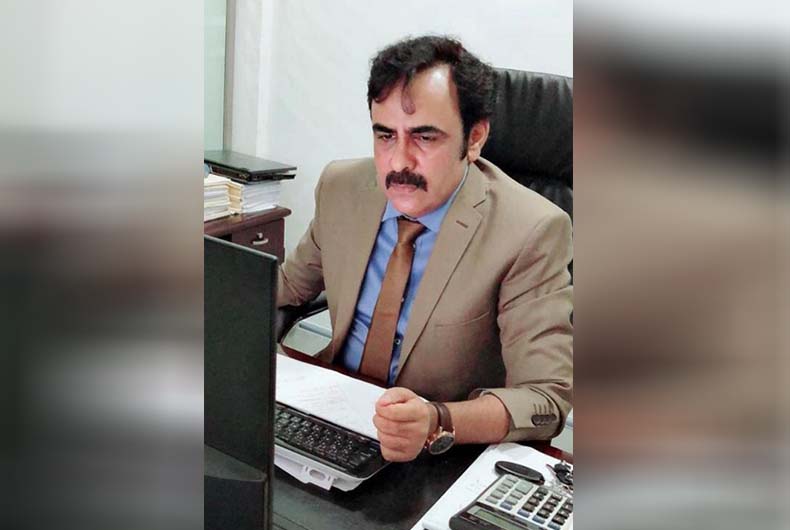
The members who will be elected as board members are former chairman Zufar Ahmad Farooqui, Indo-Islamic Cultural Foundation (IICF) Trust member Adnan Farrukh. The two had filed their nomination under the mutawalli quota which permits caretakers of Waqf properties with an annual income of Rs 1 lakh or more to file for getting elected as a member of the Board.
The two candidates who filed under the MP quota are Samajwadi Party MP from Moradabad S T Hasan, and BSP MP from Amroha Kunwar Danish Ali. Under the MLA/MLC quota, SP MLA from Isauli (Sultanpur) Abrar Ahmad and SP MLA from Gopalpur (Azamgarh) Nafees Ahmad.
Under the Bar Council quota, lawyers Imran Mabood and Abdul Razzaq had filed their nominations and will be elected as members.
On January 25, the Allahabad High Court had set aside the state government’s order extending the term of the UP Sunni Central Waqf Board. The court appointed the Principal Secretary of Minority Welfare and Waqf the board’s administrator and the official was told to ensure that polls are held, and hand over charge to an elected board by February 28.
The last Board was appointed as per the Waqf Act of 1995 on April 1, 2015, for a five-year term. Due to the Covid-19 pandemic , the state government extended its term by six months, and on September 30 last year, extended it by six more months.
source: http://www.indianexpress.com / The Indian Express / Home> Cities> Lucknow / by Express News Service, Lucknow / March 06th, 2021
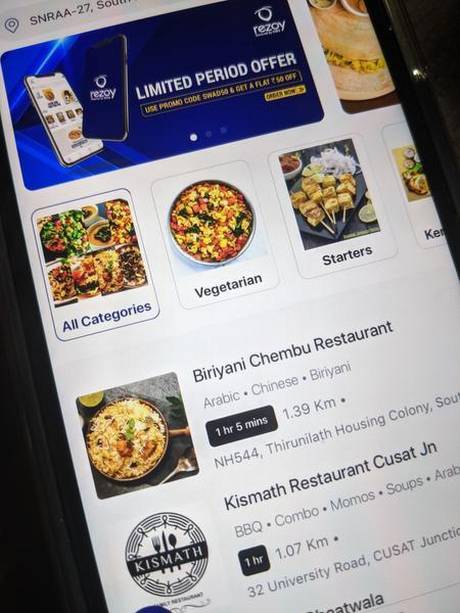
Starting with Kochi, Rezoy — launched by Kerala Hotel and Restaurant Association — is set to start full operations in other parts of the State. We explore how the app works and why it benefits the industry:
When Kerala Hotel and Restaurant Association (KHRA) launched Rezoy, the Kerala-based food delivery app, the intention was as much to support restaurateurs as much as customers, says Azees Moosa, Ernakulam district president of KHRA.
What makes Rezoy unique is that it is one of the country’s first food delivery apps by a restaurant association. The app, available to both iOS and Android users, has been developed by Ludhiana-based developer Jungleworks for KHRA.
Although the beta version was available in December 2020, it was finally formally launched in May, in Kochi. For now, the app’s reach is limited to parts of Kochi; the plan, however, is for it to be available across Kerala.
Going online was inevitable since doorstep delivery became a reality, a lesson learnt during the lockdown. “We are increasing our geo-fencing to cover a wider area. Although the app is available in Thiruvananthapuram, Malappuram and Thrissur, Rezoy does not have delivery executives there yet. We are working out the logistics and payment gateway. For now, the restaurants in these cities use their own delivery staff,” Azees says.
Working through the lockdown
Lockdown restrictions and containment zones in Kochi have thrown a spanner in KHRA’s expansion plans. “It will take time, but we are committed to this app and making it work. So far we have 300 listings [of hotels and restaurants] in Kochi . We don’t have the financial resources of the large food aggregators; our growth is bound to be slow in comparison,” he adds. Business owners have invested in developing the app and get it running, he says, adding that contributions vary based on how much a business owner can afford.
Rezoy charges a 10% commission from restaurant owners, towards salary for delivery staff and expenses incurred on delivery.
Since it is one of the first in the country, all eyes are on it. “We are the first food delivery app launched by an association such as ours, hence we have been getting enquiries from peers in neighbouring states about how it works,” says Azees.
source: http://www.thehindu.com / The Hindu / Home> Life & Style> Food / by Shilpa Nair Anand / Kochi – May31st, 2021
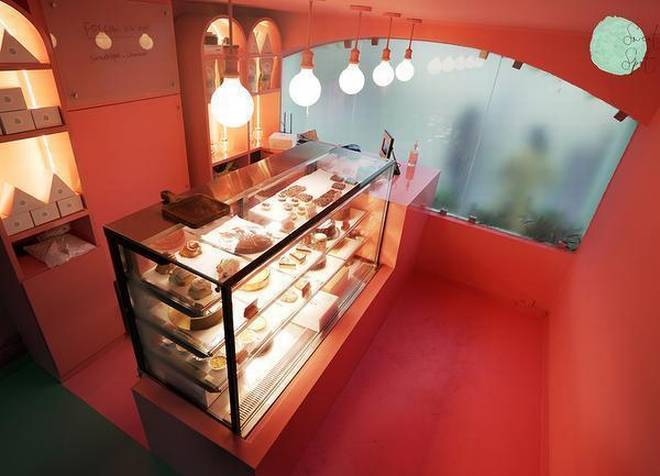
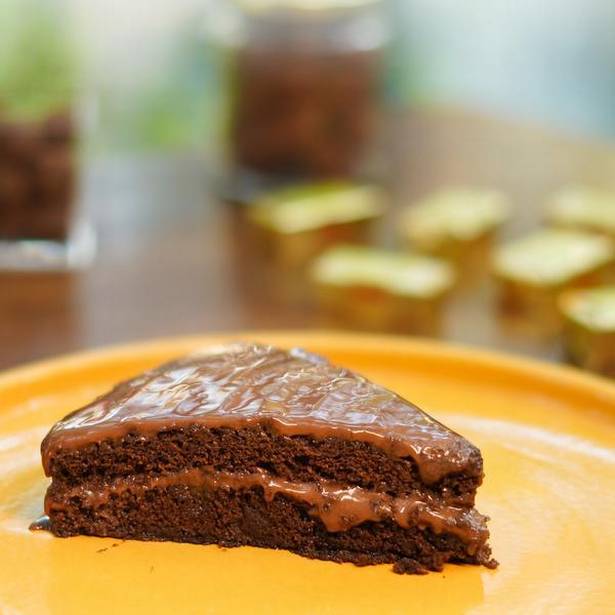
Sweet Spot’s best-sellers include milk chocolate salted caramel cake, baklava tart and dark chocolate cheesecake. The latest entrant on the menu is sheer shahi kurma
There is a lot one can discover over dessert. As I plunge my spoon into a gooey chocolate cake, my palate is surprised by what lies beneath: shreds of coconut, coated in luscious Belgian chocolate.
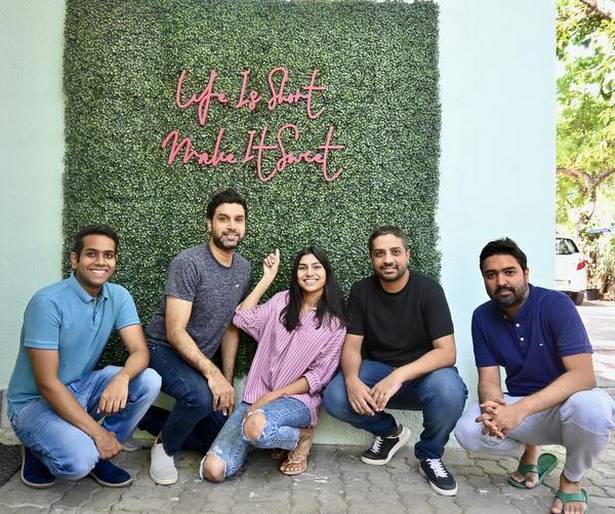
Keeping me company is a soulful Nepali track — a recommendation by the Sweet Spot team. It came written on a neon sticky note, attached to the neat box laden with brownies, tarts and cookies. Sweet Spot, started in April by Zeeshan Anees, Ahad Anaikar, Mohamed Faraaz, Pooja Reddy and Mohamed Samee aims to give home bakers a platform to promote their products.
The desserts are sold under the label of the person who created them, explains Samee. The idea is not to monopolise the dessert market, but to even out the playing field. And along with the goodies come song recommendations from the team. These include: ‘Hataarindai, Bataasindai’, ‘Parchaiyon Main’, ‘Heat Waves’, ‘100 words’…
“The idea came to us during the last lockdown, when we noticed an increase in home bakers. We were ordering a lot of desserts from them,” says Samee. Soon, they transformed a small space, in the same compound as the old Nolita (in Nungambakkam), into a dessert parlour.
The team put all interested home bakers through a series of quality checks, filtering out what did not work for them. “Earlier, the concern most clients had with home bakers was, they had to order two days in advance or buy a full kilogram of cake, even if all they wanted is one slice,” says Samee. Now, these wrinkles have been ironed out.
Empowering the homebaker
On an average, the boutique features items by 15 home bakers, the number goes up to 20 during the weekends. Each bakers typically stocks two to three of her creations. “Sixty to 70% are products by our anchor brands such as Meltz by Aishwarya, Whisk by Safra, Serendipia, Chef Srishti, Coucou, Baked by Faz, Zoya’s bakes, and the rest are from upcoming bakers,” says Samee.
The best-sellers include milk chocolate salted caramel cake, baklava tart and dark chocolate cheesecake. The latest entrant on the menu is sheer shahi kurma. They are trying to bring in variety with Indian desserts as well as savoury snacks like quiches and cream cheese-filled Korean buns.
On weekends they sell out. Their clients order from as far as ECR, Chrompet, Madipakkam and Velachery. The number of orders range from anywhere between 70-100 a day.
Order via their Instagram page, @sweetspot_chennai.
source: http://www.thehindu.com / The Hindu / Home> Life & Style> Food / by Priyadarshini Paitandy / Chennai – June 02nd, 2021
Close to 24 lakh candidates had appeared in the national level test conducted under the Craftsmen Training Scheme.
Bhubaneswar:
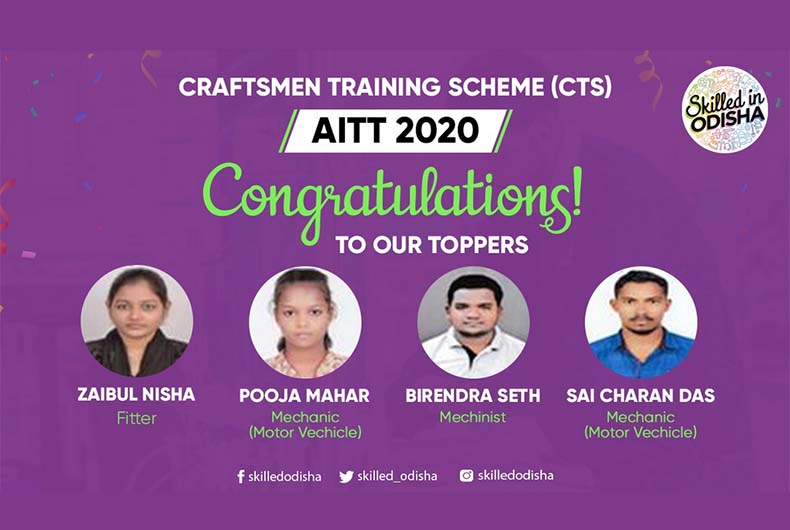
Zaibul Nisha, a Muslim girl from Odisha, is among the four toppers of All India Trade Test (AITT) 2020.
Close to 24 lakh candidates had appeared in the national level test conducted under the Craftsmen Training Scheme.
In an impressive performance, all top four positions of AITT 2020 have been secured by Odisha professionals.
“All four AITT toppers from Odisha”
Besides Zaibul Nisha, other AITT toppers are Pooja Mahar, Sai Charan Das and Birendra Seth.
A beaming Chief Minister, Naveen Patnaik, has congratulated the four on their historic success.
“CM @Naveen_Odisha congratulated @skilled_odisha professionals – Zaibul Nisha, Pooja Mahar, Sai Charan Das & Birendra Seth for making it to top 10 in the Craftsmen Training Scheme. CM expressed happiness that concerted effort to build a robust skill ecosystem is being recognized”, a message posted on CMO Odisha official Twitter handle said.
Odisha Skill Development Authority too is on cloud nine after the success of Odisha professionals.
“#SkilledInOdisha professionals ace it again at the national level! Glad to share that 4 of our professionals – Zaibul Nisha, Pooja Mahar, Sai Charan Das & Birendra Seth are national toppers Craftsmen Training Scheme (CTS) – All India TradeTest 2020”, it wrote on its Twitter handle.
“About All India Trade Test”
All India Trade Test (AITT) is conducted by the Directorate General of Training under the aegis of National Council for Vocational Training (NCVT) for its various schemes. The exam is held twice a year.
The Craftsmen Training Scheme is implemented through about 15,000 Industrial Training Institutes (it is) in 137 trades.
The AITT is held at the end of the training year. Candidates who qualify in the AITT are awarded National Trade Certificates (NTC).
source: http://www.ummid.com / Ummid.com / Home> Education & Career / by ummid.com News Network / June 04th, 2021
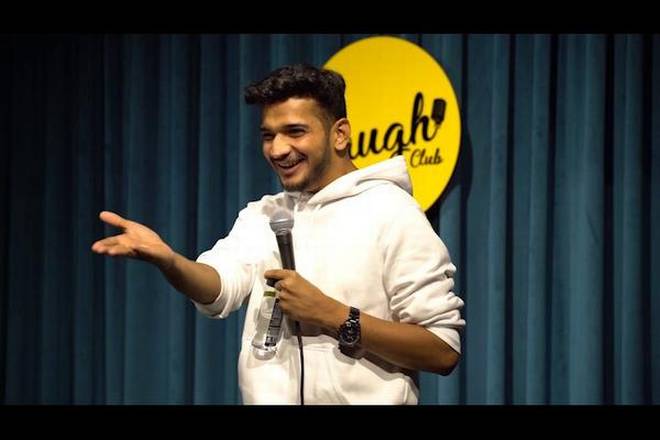
Munawar Faruqui has been entertaining audiences with his satire routines for over a year. Photo: Special Arrangement/THE HINDU
Out on bail, the stand-up comedian is dusting himself off and moving on, strengthened by poetry and rap music
The year began on a serious note for stand-up comedian Munawar Faruqui, when he was arrested for allegedly offending religious sensibilities, along with five others, just before he was about to begin his act at a café in Indore, Madhya Pradesh. Munawar spent 37 days in jail until the Supreme Court granted him interim bail on February 5.
While the comedian in him does see the absurdity in the situation — “they caught me even before I said anything,” — the 27-year-old YouTube sensation is astute enough to not discuss the matter further as it is sub judice.
“I don’t want to revisit this experience ever again in my life, and I wouldn’t want to send my worst enemies to jail. But I don’t really want to talk about it, especially on social media,” he says over a video conference call from his home in Mumbai.
Munawar got back to work barely a fortnight after his ordeal, releasing a music video titled Aazmaish featuring rapper Nazz, which earned over a million views online.
“Quitting comedy was never an option, mainly because I didn’t want to prove my detractors right,” says Munawar. “I was hurt by this whole false narrative that they had started about my ‘guilt’ that would have got confirmed, if I gave in to the pressure.”
In April, he started a new YouTube channel called Munawar Faruqui 2.0 that already has over 50,000 subscribers. (His first official channel has over 10,80,000 subscribers with 57,594,259 views for his monthly video releases).
It is hard to believe that Munawar has been on the comedy scene only since January 2020. His first ticketed show opened in Mumbai in February last year, to rave reviews. His sidelong look at society and politics is sharp and funny, with unexpected depth. “Comedy is essentially saying what you feel, especially about things that you see daily,” he says. “Sometimes a joke can highlight a major truth.”
When he is not penning his biting satirical comedy routines, Munawar indulges in his other passions: Urdu poetry and rap music. “Music is the world’s best art form. A song can convey in minutes, what a story can take four hours to narrate,” he says.
A resident of Dongri in Mumbai, the comedian is originally from Junagadh in Gujarat. After a tumultuous time in their hometown, his father, a driver, shifted the family (Munawar and his three sisters) to Mumbai in 2007, to make a fresh start.
“My father fell sick and was bed-ridden from 2008, so I had to take charge from the age of 17. I worked at a utensil store from 2007, while attending school. I taught myself English and Hindi from the newspapers that my boss used to buy, and by watching films,” he says.
Becoming a stand-up comedian wasn’t easy, though. Struggling with rejections, Munawar released his first video on YouTube on January 24, 2020 titled Politics in India, that marked his breakthrough moment.
“Last year has been testing. I lost my father in February, but also got my first shows in Mumbai, the same month,” he says.”There have been days I’d be crying in the green room just before being called up to the stage.”
source: http://www.thehindu.com / The Hindu / Home> Entertainment> Theatre / by Nahla Nainar / June 02nd, 2021
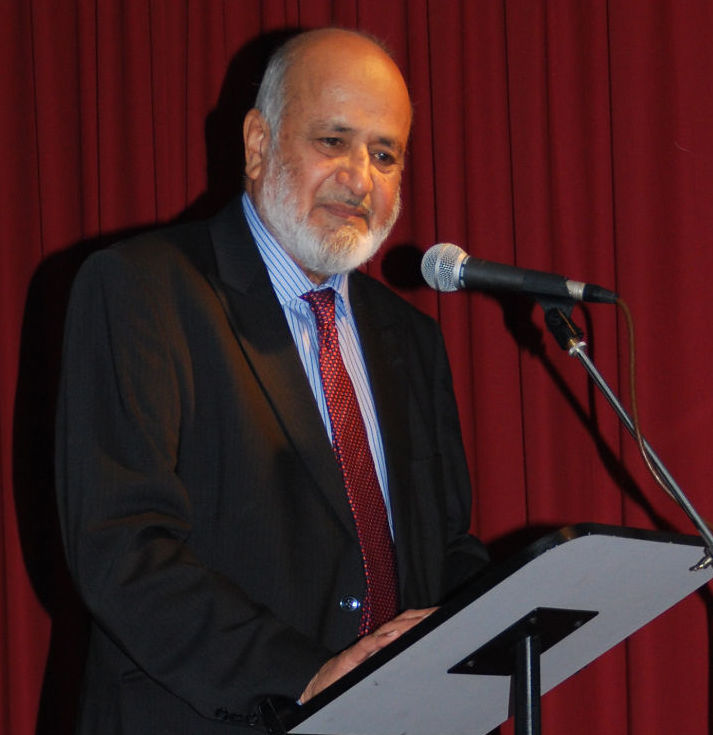
Born on 21 October 1933, Shakeb grew up in Hyderabad and Aurangabad . He received a BA in Political Science from the Osmania University , and an MA from the Aligarh Muslim University in 1956. He completed his doctorate on Relations of Golkonda with Iran from Deccan College in 1976.
Shakeb together with Vasanth Kumar Bawa, setup the first-ever Hyderabad Urban Development Authority which is now referred to as Hyderabad Metropolitan Development Authority.
In 1962, he was appointed as an archivist at the State Archives of Andhra Pradesh in Hyderabad. Whilst here he created the Mughal Record Room. His publications include Mughal Archives Vol I: A Descriptive Catalogue of the Documents Pertaining to the Reign of Shah Jahan, in 1977 which remains critical reading for those seeking to learn how to read administrative documents in Indo-Persian. He went on to write many publications for The British Library , State Archives Andhra Pradesh and other repositories, universities, and auction houses.
From 1980 to 1987, Shakeb taught Indian history and the history of Indo-Islamic art and culture in the Department of Indology at the School of Oriental and African Studies, University of London.
He later on worked as a consultant for Christie’s in their department of Islamic and Indian Art as their leading expert on Persian and Arabic manuscripts for 30 years.
He also continued to work on Indo-Persian manuscripts and Mughal documents and catalogued such manuscripts in the British Library, such as the Batala Collection of Mughal Documents 1527-1757 in 1990. Throughout this time he supervised many doctoral researchers in the fields of Mughal history, Deccan studies and Urdu and Persian literature.
Shakeb was also the Director of Urdu teachers training at Middlesex University up until 1998.
He also played a key role in setting up the Haroon Khan Sherwani Center for Deccan Studies at Maulana Azad National Urdu University and had been a member of the center’s first advisory board. He was considered a pioneer, having helped lay the foundations of Deccan Studies
Shakeb was an authority on various poets from the Indian subcontinent and Persia, writing books and organising and speaking at conferences on Bedil, Amir Khusrau, Iqbal, Ghalib and Rumi .
Shakeb died in London on 20 January 2021, aged 87. He is survived by his wife, Farhat Ahmed, two daughters, a son and nine grandchildren.
source: http://www.indianmuslim.org.uk / Indian Muslim UK / Home> Obituary / by Mohmed / April 03rd, 2021
Aligarh Muslim University (AMU) has seen unprecedented number of cases and deaths during the second wave of Coronavirus pandemic
Bareilly , UTTAR PRADESH / Jubail, SAUDI ARABIA :
Rehan Alam Siddiqui
Aligarh:
At a time when universities across the country are been adversely affected by the pandemic, Rehan Alam Siddiqui, a Non Resident Indian (NRI) based in Jubail, Kingdom of Saudi Arabia (KSA) has donated Rs 15 lakhs to Aligarh Muslim University (AMU) to set up an oxygen generation plant at its Jawaharlal Nehru Medical College (JNMC).
Aligarh Muslim University (AMU) has seen unprecedented number of cases and deaths during the second wave of Coronavirus pandemic which is yet to be brought under control.
As per the last update , as many as 18 working faculties besides a number of other retired professors and serving employees have become victim of the deadly virus so far.
“Alarming death toll”
The alarming death toll has sent shock-waves leading to apprehensions that a deadlier ‘AMU strain’ of the virus is wreaking havoc. It was also reported that for the first time in the history of the university, the AMU cemetry is running short of space and old graves are now being dug up to bury the dead.
Against this backdrop the university had issued appealed to the government and other public and private organisations and individuals for help and support.
True well wisher of AMU”
Rehan Siddiqui obliged and donated the huge sum to his alma mater. Extending gratitude on the largesse, AMU Vice Chancellor, Prof Tariq Mansoor said:
“Mr Rehan is a true well wisher of the university, whose donation will be very beneficial to upgrade the existing health infrastructure for an effective Covid Response”.
“We at AMU are making all possible efforts to contain the spread of this pandemic and Mr Siddiqui’s donation will go a long way in serving the sick and the distraught with the lifesaving oxygen supply”, he added.
Born and brought up in a middle-class family in Bareilly (UP), Rehan Siddiqui has emerged as one of the fastest growing businessmen and industrialists in the Eastern Region of KSA.
Rehan Siddiqui is promoting better relations of the Indian community with the Indian consulate in KSA. He also organises cultural and academic programmes.
“Rs 3L donation by TSA”
In another development, members of the Technical Staff Association (TSA), Aligarh Muslim University (AMU) donated Rs 3 lakhs to facilitate Medical Attendance Scheme (MAS) to purchase equipments to be used for the treatment of registered employees and to strengthen the MAS Covid Response team.
The cheque was handed over to the university officials after the TSA members, Faisal Rais (TSA President), Abid Ali Zaidi (TSA Secretary General) and Kamran Husain (TSA Treasurer) met the Vice Chancellor, Prof Tariq Mansoor and Registrar, Mr Abdul Hamid (IPS).
source: http://www.ummid.com / Ummid.com / Home> India / by ummid.com News Network / May 31st, 2021
This is the eighth part of the series called `Scientist Says’, where we bring for our readers significant research works of young scientists in various fields.
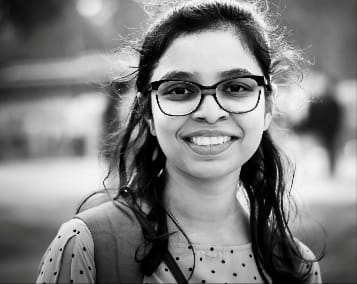
Dr. Hina Khan started her research journey in year 2014 with Prof. Tushar K. Chakraborty research group, Department of Organic Chemistry, IISc Bangalore. After completing her PhD in July 2019, she worked as a Research Associate in the same lab for a year. In September 2020, she joined a Biocon-group company as a Research Investigator where she worked in collaboration between Bristol Myers Squibb and Syngene International. Currently, she is a postdoctoral fellow at the University of Pittsburgh, United States. She shares her significant research work with Rashida Bakait of India Tomorrow. Here are the excerpts of the interview.
Q. Please briefly explain your research.
Ans. Chemistry is frequently described as the central science and chemical synthesis lies at the heart of the subject. Synthetic organic chemistry underpins several areas of chemistry, including drug discovery, chemical biology, materials science, and engineering. However, the practice of total synthesis of natural products has a rich history of achievements and benefits to science and society that ranges from replicating the molecules of nature in the laboratory to the preparation and production of pharmaceuticals, developing new synthetic strategies and methods, and also synthesizing designed molecules for biology and medicine.
In contributing to the everlasting field of “the art of making molecules”, my research work mainly focuses on the discovery of new organic transformations which are of significant interest to the fields of medicinal chemistry and pharmaceutical development and also uncovering the practical application of Titanocene (III)monochloride in the synthesis of architecturally challenging and biologically important natural products and their inspired synthons.
Q. When did you start and complete your research?
Ans. I started my learning to be a researcher in Aug 2014 with Prof. Tushar K. Chakraborty at IISc, Bangalore, submitted my doctoral thesis in July 2019, and defended the thesis in March 2020. Later in the year 2020, I joined Biocon-group company as a research investigator and worked till April 2021. Currently, I am working as a postdoctoral fellow in University of Pittsburgh, United States.
Q. What was the objective of your research?
Ans. With the ever increasing demand of developing new, efficient, and cheaper methods to construct biologically relevant molecular frameworks, my research aims on the design and developing new synthetic strategies for concise entry to important functionalized bioactive synthetic scaffolds/target.
Q. What were the findings of your research?
Ans. The research findings revolves around two main areas:
I : In developing a synthetic methodology which is flexible and provide single potential route for the diastereoselective construction of diversely substituted 1,3-X,N-heterocyclic variants as valuable scaffolds for natural products and pharmaceuticals, in a diversity-oriented approach. The methodology is amenable for a broad range of substrates based on a metal-free approach.
II. In exploring the synthetic utility of Titanocene(III)monochloride-promoted radical cyclization protocol on to the findings:
a) We have developed a concise and unified approach to gain access to handful iridoid monoterpenes that exhibit wide range of pharmacological activity.
b) We have portrayed a synthetic route to a bicyclic lactone containing a bridgehead hydroxy group, a structure that is present in many natural products of biological and medicinal relevance.
c) Furthermore, an efficient route for the construction of pyrrolo/piperidino[1,2-a]indole derivatives have been developed.
During my research endeavour I have also been involved in the synthesis of sugar amino acid (δ-SAA) based linear lipopeptides (Almiramide analogues) that were screened for their biological activities, viz. antileishmanial and anticancer and the extension of this work is currently active.
Q. What was the conclusion of your research?
Ans. Driven by the ever-increasing demands for small functionalized bioactive scaffolds and the need of broadening the toolbox of unexplored chemical space, our designed strategy provides a flexible route to construct the unique five/six membered 1,3-heterocycles by exploring the synthetic utility of α-phenyl-β-enamino ester following a Mitsunobu-Michael reaction sequence. Next, taking advantage of Cp2Ti(III)Cl-mediated reductive epoxide opening-cyclization, we have developed an expedient and the most concise and unified approach till date in the total synthesis of iridoid monoterpenes in an enantiomerically divergent manner starting from (+)-β-citronellene. Further expansion of the strategy was made to fix hydroxylated bridgehead chiral centre, in the fused/bridged bicyclic lactone, a structure that is present in many natural products of biological and medicinal relevance. Furthermore, as part of our ongoing research interest, we have successfully extended yet another practical application of Ti(III)-mediated epoxide opening-cyclization protocol to devise a simplified route to a pyrrolo/piperido[1,2-a]indole framework, featuring many useful functionalities on the saturated ring, which is ideally suited for further manipulation.
Q. What kind of challenges did you face?
Ans. A doctorate is a long project so your motivation will dip and peak along the way. In multi-step synthesis, designing a synthetic route to the target molecule, optimizing every step of the synthetic plan with the best possible outcome, revising the plan, if needed and starting all-over again is really a burnout process. I would say you can learn more from your failures than successes. They are often catalysts for positive change in the long term. And remember one thing that you are training to be a researcher.
Q. Any scholarships or awards for research?
Ans. For my Ph.D. and Research Associateship (Aug 2014 – Jul 2020), I have received funding from Indian Institute of Science. I have received award for my research work in Indian Peptide symposium, in 2017. Currently, for my postdoctoral program I am receiving scholarship from University of Pittsburgh, United states.
Q. How do you think your research would be beneficial to the industry or society?
Ans. Organic synthesis, the art and science of constructing substances, natural or designed, in the laboratory to replicate the molecules of living creatures, and create other molecules like them, is a remarkable development in human history. Organic synthesis in general, have led to an impressive host of benefits to society, including useful products ranging from pharmaceuticals, dyes, cosmetics and agricultural chemicals to diagnostics and high-technology materials used in computers, mobile phones and spaceships. My research on designing and developing synthetic route to construct heterocycles, terpenoids, alkaloids will provide a new synthetic approach and scope to replicate some of the most intriguing molecules of living nature in the laboratory and apply the developed synthetic strategies to construct variations of them to facilitate biology and medicine.
Q. Any new research you are working on now.
Ans. My current research at University of Pittsburgh, as Post-doctoral fellow is to rationally design and synthesize more efficacious 2-Pralidoxime analogs (2-PAM) which is the only therapeutic countermeasure that is approved by the United States Food and Drug Administration for treating Organophosphorus nerve agents (OPNA) poisoning. However, 2-PAM is not centrally active due to its hydrophilicity and resulting poor blood−brain barrier permeability; hence, these deficiencies warrants the need for antidotes with the development of more hydrophobic analogs.
Q. How do you think your research can be carried forward?
Ans. Taken together, the simplicity and efficiency of the designed strategies can further be adopted to obtain other enticing heterocyclic variants, highly functionalized iridoids/cyclo-pentanoid natural product, also having bridgehead hydroxyl group in a bicyclic lactone, [a]-annulated indole frameworks, which are beneficial to the science of organic synthesis for further innovative applications.
Q. Please give few tips and suggestions to the budding scientists.
Ans. Research is a never-ending journey of learning something new, honing your problem-solving skills and challenging yourself in new ways. I would advise the young scientists to stay curious and stay determined. Science is not easy, become comfortable with failure because a major component of the scientific process is trial and error. Failure is okay! Failing provides some of the biggest learning opportunities and finding new scientific discoveries.
It is not about perfection but curiosity and perseverance. Keep exploring, keep experimenting, keep learning, keep improving. Avoid burnout and look after your mental health to make you more productive in the long run.
Remember to take five-minutes brain break by walking away for a moment, rest that brain and then resume.
source: http://www.indiatomorrow.net / India Tomorrow / Home> Education> Featured / by Rashida Bakait, India Tomorrow / May 19th, 2021
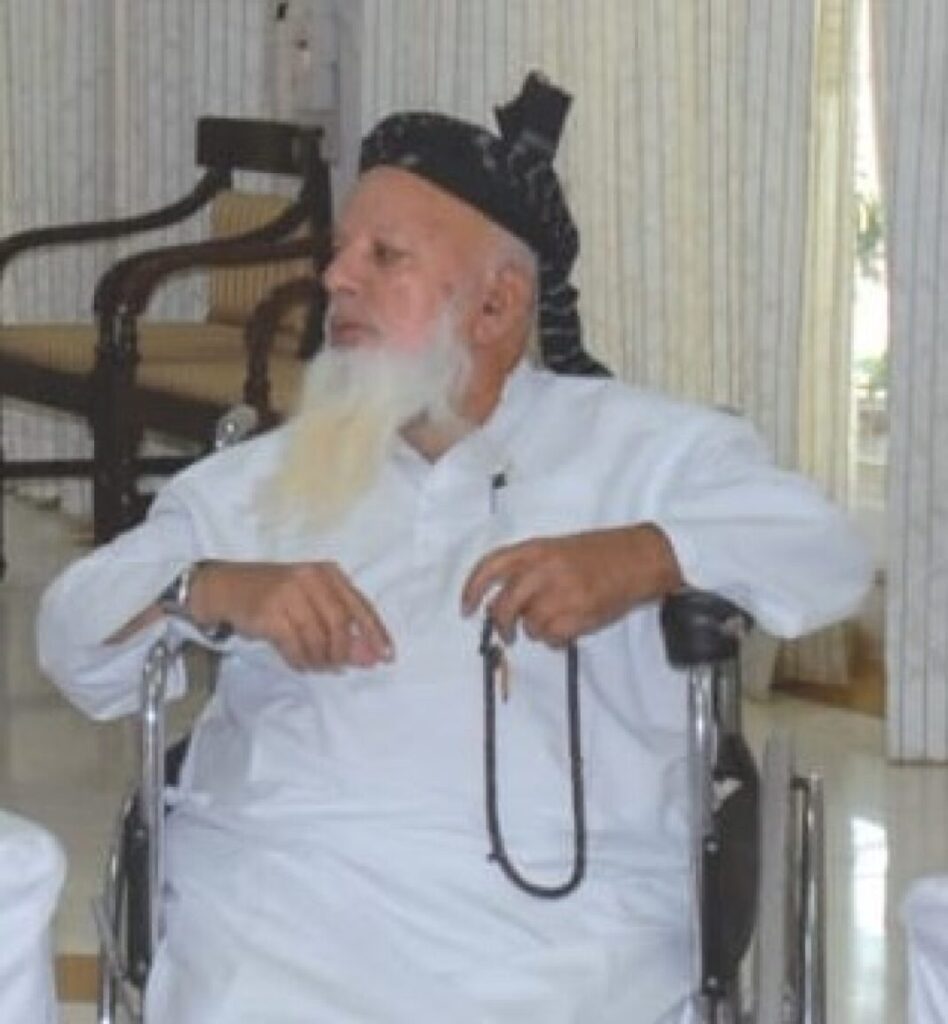
A leading Islamic scholar and freedom fighter Mufti Abd-ur-Razzaq Khan of Bhopal, who was national vice president of Jamiat Ulema-e-Hind (Maulana Arshad Madani faction), breathed his last after a prolonged illness here on May 26. He was about 96 years of age.
Mufti Abd-ur-Razzaq was laid to rest on May 27 afternoon with state Guard of Honours granted by the Madhya Pradesh Government. Since he was a popular figure and had followers cutting across the barriers of religion, cast and creed, the funeral was held amidst tight security apprehending mass turnout in the face of prevailing lockdown and Corona curfew in the city.
He had authored more than 50 books including Sarzamīn-e-Hind: Ambiyā kirām aur Islām; Qur’ān mai kya hai?, Āzādi; Aslāf aur Jamiat Ulama-e-Hind; Islāmi zindagi: paidā’ish se jannat tak; Ahle Qur’ān aur ahle kitāb etc.
Police sealed walled city
Meanwhile, considering the popularity and his large number of followers, police took precautionary measures to avoid large congregation during his last rites because of corona curfew. The police put up barricades at prominent squares and roads of old city areas and police officers along with district administration also appealed people to avoid gathering because of the Corona curfew. Bhopal entry points from all sides were also sealed to prevent followers and admirers of the cleric from all the districts of the state from entering the city.
Police barricaded the roads in old Bhopal. Only family members and limited people were allowed to attend the funeral. The heavy police force was deployed at all the prime squares and areas including Tarjama Wali Mosque, Iqbal Maidan, Peer Gate, Bhopal Talkies, Nadra bus stand, Alpana Talkies, Sangam Talkies, Moti Masjid, Ret Ghat, Kamla Park and adjoining areas. In addition to barricading all the routes to old Bhopal, the old city area was guarded by additional force of 700 policemen. The routes connecting Bhopal from borders and the roads towards old city areas remained closed.
Equally respected in all circles
Mufti Abd-ur-Razzaq in 1958 had established the Madrasa Islamia Arabia in Bhopal and a mosque popularly known as Tarjama Wali Masjid of Bhopal. He used to teach Islamic preaching in Indian language because of which the mosque gained the name Tarjama (translation) mosque. He was an Indian Muslim scholar, mufti and an activist of Indian freedom struggle, who was equally respected in political, social, civil and all circles. The Governor of Madhya Pradesh, Anandiben Patel, honoured him in January 2021 for his participation in the Indian freedom struggle.
The high point of his life was that he was able to establish a chain of Madrasas/Maktabs all over Madhya Pradesh and Chhattisgarh wherein thousands of students receive Deeni Taleem (Religious education). He was revered by leaders of all religions. He used to organise meetings of leaders of various faiths to establish inter-religious dialogue with objective of creating communal harmony among the people. He was among those religious leaders who ran one of the oldest Gaushala on the outskirt of the city.
Madhya Pradesh Chief Minister Shivraj Singh, MP Congress Committee president & former chief minister Kamal Nath, Rajya Sabha member and Digvijay Singh expressed grief over his demise.
Mufti Abd-ur-Razzaq was born on 13th August 1925. He was schooled in “Masjid Malang Shah”, Jamia Darul Uloom Ilāhiya and Jamia Aḥmadiya in Bhopal. In July 1952, he joined the Darul Uloom Deoband to complete his studies. He studied Sahih Bukhari with Hussain Ahmad Madani; Sahih Muslim with Fakhrul Hasan Moradabadi; Jami’ al-Tirmidhi with Muḥammad Ibrāhim Balyawi; Sunan Abu Dawud with Bashīr Aḥmad; Sunan Nasai and Sunan ibn Majah with Mubārak Hussain; Muwatta Imām Muḥammad with Meraj-ul-Haq Deobandi; Muwatta Imam Malik with Sayyid Hasan; Shama’il Muhammadiyah with Muhammad Tayyib Qasmi; and Sharah Wiqāyah with Muhammad Salim Qasmi. He completed studying the “Dars-e-Nizami” course in 1377 AH and then specialized in “Ifta” with Mahdi Hasan Shahjahanpuri.
Participated in freedom struggle
Mufti Abd-ur-Razzaq participated in the Indian freedom struggle. In 1947, he was part of a fight that took place in Bhopal’s Qazi camp against the British colonialism. In 1958, he established Madrasa Islamia Arabia, one of the oldest and largest Islamic seminary in Bhopal. He was patron of various Islamic seminaries in Madhya Pradesh. He was also the state-president of the Darul Uloom Deoband’s “Rābta Madāris-e-Islamiya” for Madhya Pradesh. He is credited with the growth and development of Jamiat Ulama-e-Hind in Madhya Pradesh. He served as its national vice-president and the state-president for Madhya Pradesh. In 1958, he was appointed the vice-mufti of Bhopal’s “Dārul Qadha” (Islamic court); and chief-judge in 1968. He served as the Mufti of Bhopal city from 1974 to 1983. He promoted inter-religious harmony by organizing meetings with leaders of various faiths.[10] He was a vivid speaker and instructed Muslims to cope with communal riots with ways befitting the situation.
In 2016, denouncing the RashtriyaSwayamsevak Sangh, Vishva Hindu Parishad and Bajrang Dal activities in Madhya Pradesh, he told Muslims to maintain peace and not to engage in rioting or other things that could damage the peaceful atmosphere in the State. He expressed, “if someone attacks you and you don’t have any other solution but to kill him or to die for saving others from rioters, do not hesitate and go ahead. He also asked the political leaders of Madhya Pradesh to control these right-wing organisations and stop them from attacking and abusing Muslims.
source: http://www.indiatomorrow.net / India Tomorrow / Home> Featured> Religion / by Parvez Bari, India Tomorrow / May 31st, 2021
Dhangri Village (Rajouri District), JAMMU & KASHMIR :
Dr. Shakeel Ahmed
Srinagar :
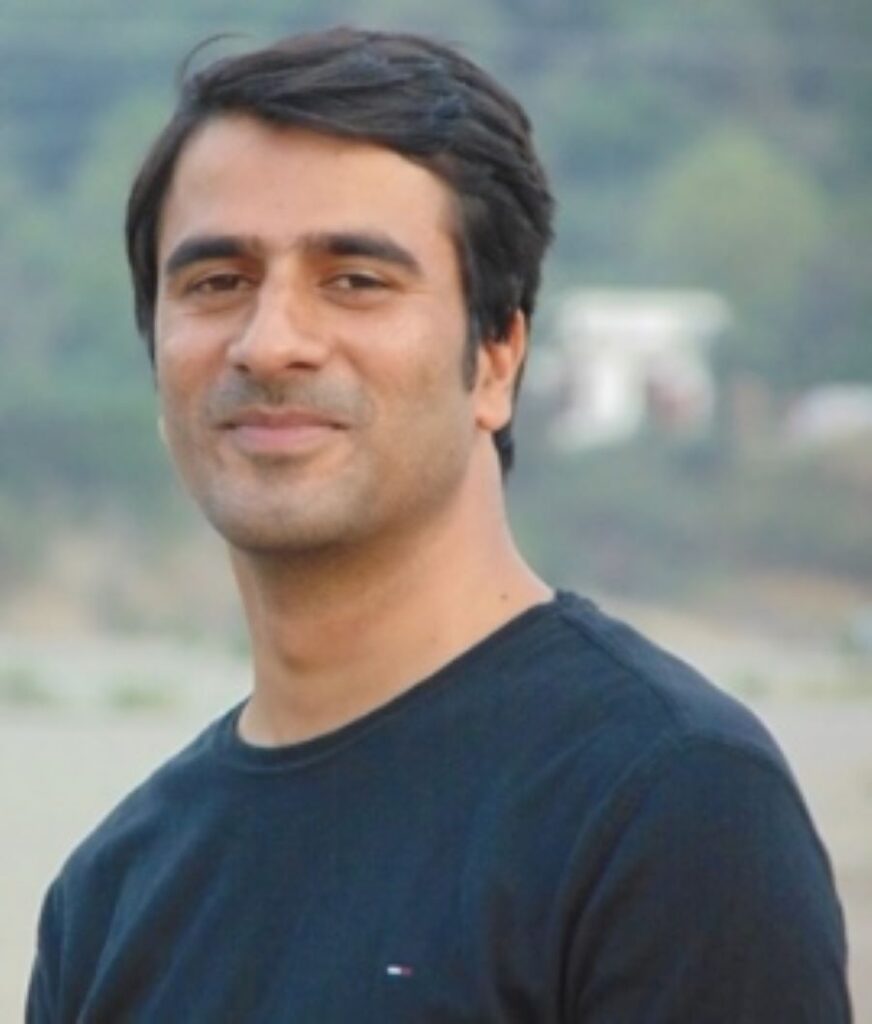
Life has come full circle for a 31-year-old scientist from the border district of Rajouri, who has become one of the youngest Indians to figure on Stanford University’s list of top 2 percent scientists in the world.
Dr. Shakeel Ahmed, Assistant Professor at the Department of Chemistry in Government Degree College, Mendhar, has published research papers on green nanomaterials and biopolymers for various applications including biomedical, packaging, and water treatment.
He has penned more than 15 books on polymers, nanomaterials, and green materials. The database of the independent study has been published in one of the highly-rated journals, `PLOS Biology’. He is a member of American Chemical Society and Royal Society of Chemistry.
“It is a moment of gratification to be on the list. It will inspire the young generation of Jammu and Kashmir to work for furthering science especially from Pir Panjal region”, Dr. Shakeel said.
It was a hard-earned success for a 31-year-old scientist who lost his father when he was just a year old.
“I was just one year old when my father passed away. At that time there was no breadwinner in my family. I had suffered a lot during my childhood and sometimes it was difficult for me to continue my studies. I am first generation learner in my family”, he said.
Principal of GDC, Mendhar, Dileep K. Raina said it is a matter of great pride that Dr Shakeel has featured on the prestigious list. “It is a matter of great pride for Government Degree College Mendhar that Dr. Shakeel Ahmed of the Department of Chemistry (GDCM) has been named among the top 2% scientists of the world in the field of polymer chemistry,” said the college in a statement.
Stanford University recently released a list of 1,59,683 top 2 percent of most-cited scientists in various disciplines. It includes 1,500 Indians and most of them are from IITs, IISc, and other top institutions.
Hailing from Dhangri village, Dr. Shakeel completed his B.Sc from Government PG College, Rajouri. He completed M.Sc in 2012 from Dr. Saiqa Ikram Department of Chemistry, Jamia Milia Islamia. In 2016, he completed his Ph.D. from Jamia Milia Islamia.
For the last three and a half years, he is serving as an assistant professor in GDC, Mendhar in Poonch district. He has authored numerous books that are available on Amazon and other platforms.
Some of the books include `Green and Sustainable Materials: Processing and Characterization’, `Alginates: Applications in the Biomedical and Food Industries and `Marine Polysaccharides: Advances and Multifaceted Applications’.
source: http://www.indiatomorrow.net / India Tomorrow / Home> Education / by Ishfaq-Ul-Hasan , India Tomorrow / Srinagar – November 10th, 2020