All posts by mpositiveone@gmail.com

Last rites and a spiritual journey

Surat, GUJARAT /  Kolkata, WEST BENGAL :

Lives of others
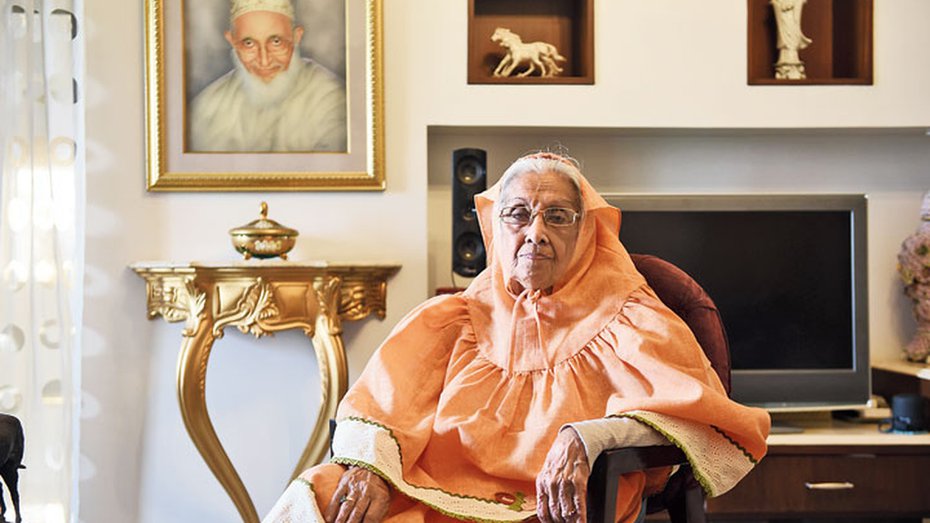
Zainab Saifuddin Bhaimia. / Picture by Subhendu Chaki

Death is a form of knowledge. And the care of the dead is one way of arriving at it.

Zainab Saifuddin Bhaimia was initiated into her life’s work almost by chance. A death had occurred in the Bohra Muslim community of Calcutta, to which Zainab, “Zainy” to everyone who knows her, belongs. A body, according to the practice of the community, has to be cleansed, bathed and embalmed before it is buried. The last rites are performed by a group of about three or four.

Zainab was called to help when the death occurred. That was in the 70s. Since then Zainab, now 86, has been performing the last rites — ghusul — for individuals of her community. The rituals are elaborate, and they take time. The body is cleansed perfectly so that when its owner reaches the other world, he or she should be perfectly clean.

Zainab stopped only recently, about five years ago, when her health began to deteriorate. Treasured by her 4,300-strong close-knit community in Calcutta as someone devoted to its good, she feels blessed that she was given such an opportunity to serve it.

Though frail now, taking the help of a walking stick to move, she remains active. A graceful, smiling woman, she walks gently into the drawing room of the well-appointed Middleton Row flat where she lives with her son’s family. She is wearing a blue traditional Bohra ghagra and dupatta, trimmed with intricate red lace.

When she goes out, she puts on the rida, the women’s headdress. She has just returned two days ago from a visit to her relatives in the US, and jet lag is still troubling her, but she has not allowed it to subdue her. With her is her daughter-in-law Nafisa, who, says Zainab, is like her daughter. Nafisa helps to explain some of the things that Zainab talks about.

For four decades, Zainab has witnessed death from close. She has performed the last rites as a volunteer, always as part of a group. She cannot put a number to the deaths she has attended. But whenever a death would occur, the community knew she would be there.

It was also possible for her to be there because she then lived in Pollock Street, where Saifee Masjid, the century-old masjid of the Bohra community, is located. Now a new masjid, Burhani Masjid, has been built just behind Science City. The last rites are performed in a chamber at the masjid. The ceremony remains completely private; a code of conduct stops anyone from speaking about it.

Zainab would be called at any hour, midnight or later, for death hardly comes announced. She went, because she felt it was her duty to be with someone in the last hour. In the long years of performing ghusul, she has even had to attend to those who had been very close to her.

Women perform the rites when a woman dies; and men perform them for a man.

It obviously takes great courage to be able to carry out one’s work for decades in the presence of death. And wisdom. But Zainab is dismissive about herself. She looks at herself as just a worker. She will only express her gratitude for being able to render this service, especially to Syedna Mohammed Burhanuddin, who was the leader of the Bohra community from the 60s and personally asked her to dedicate herself to community work. Syedna Mufaddal Saifuddin, Syedna Mohammed Burhanuddin’s son, is the current leader of the community.

“Why wouldn’t I do it?” she asks, referring to the first time she was called for ghusul. But she has learnt so much from her work, about life, about mortality, and about immortality.

One is the reality of death, which many of us ignore till we cannot anymore. But the continuous performance of last rites cures one of the last doubts about mortality. “It helps to prepare you for your own death,” she says serenely, without the slightest touch of morbidity. “You should also know what death is like,” she adds.

She also finds in rendering the service a spiritual satisfaction. “The cleansing practice is also like a cleansing for me,” she says.

Has she ever felt scared? “No, why?” she asks, looking almost surprised. Her work has also taught her the importance of good acts. “Don’t do anything bad,” she says. Whatever one does, stays, long after the body has departed.

Not that she has never felt disturbed. She could not sleep on occasions. But then she is only human.

She was motivated into working for her community by Syedna Mohammed Burhanuddin. He personally asked her to work for her community. “His blessings were always with me,” says Zainab.

She is from Surat. The Indian Bohra community, which is now spread everywhere in the country and abroad, originated largely from Gujarat. Zainab came to Calcutta after her marriage in the early 50s. Initially, Syedna Mohammed Burhanuddin’s sister asked her to join Bunayyat Ul Ediz Zahabi, the women’s organisation of the community. Zainab performed her duties faithfully there. She was also involved in the community kitchen, an important institution.

At the beginning, when she took up performing ghusul, there were not many performing it. “Now about 20 women perform the rites.” Zainab has trained a number of them.

Community work took up much of her time. She was also devoted to her family, raising two sons and a daughter.

Her work has been recognised. Very proudly, Zainab asks Nafisa to show me the certificates The Syedna personally honoured her with the certificates. One is signed by Syedna Mohammed Burhanuddin, mentions ‘Wisamo istehsan al khidmat’, a recognition of her service to the community. The other confers the title of “Mafsuhiyat” on Zainab, for the same reason.

A few days after our conversation, Zainab let me know that she would like to thank a few people and institutions again.

Bunayyat Ul Ediz Zahabi, the women’s organisation, was formed by Syedna Taher Saifuddin, she says, and she is very grateful to it for allowing her the opportunity to work. All the work that she has done was possible with the permission of the Aamil, the local head priest. Finally, Hizbe Husaini is a committee in Calcutta which takes part in organising the last rites. It informs the women’s committee when there is a death. Zainab is very grateful to Hizbe Husaini.

source: http://www.telegraphindia.com / The Telegraph, online edition / Home> West Bengal / by Chandrima S. Bhattacharya in Calcutta / January 20th, 2020
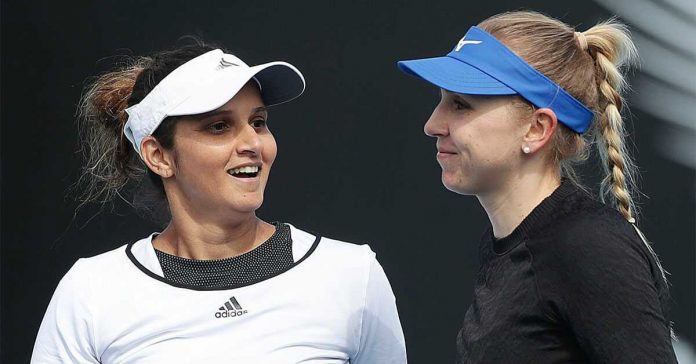
Sania Mirza scripts remarkable comeback to clinch Hobart International title

Hyderabad, TELANGANA :

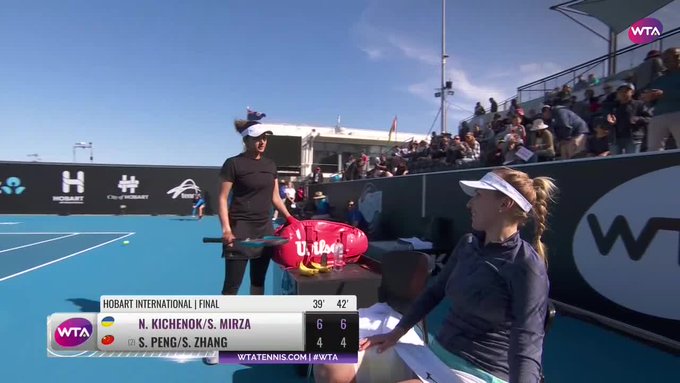
Indian tennis ace Sania Mirza made a winning return to the professional tennis circuit as she clinched her first tournament after childbirth.

SaniaMirzaMPOs21jan2020

Indian tennis ace Sania Mirza made a winning return to the professional tennis circuit as she clinched her first tournament after childbirth. Partnering Ukranian Nadiia Kichenok, the duo defeated the Chinese pair of S Zhang and S Peng in the women’s doubles finals in the Hobart International 6-4, 6-4 to kick start the year on a triumphant note.

Sania and Kichenok were hardly troubled in the summit clash, as they took the game without breaking into much of a sweat. The Indian now gears up for the Australian Open, where she will team up with Rohan Bopanna in the mixed doubles category. She was expected to play the Grand Slam with American Rajeev Ram, who has, since, pulled out of the tournament.

WTA

@WTA

Straight sets win 🤩

Nadiia Kichenok and @MirzaSania are your @HobartTennis Doubles Champions after defeating Peng/Zhang, 6-4, 6-4!

Embedded video

184 people are talking about this

This would also be the first time that Mirza and Bopanna would be playing mixed doubles together since they teamed up in the Rio Olympics 2016, where they had finished fourth.

Mirza, who had emerged as an inspiration to young girls in India when she forayed into the competitive world of tennis and started returning with impressive results that even saw her clinch the world number 1 ranking in the doubles circuit, had taken a break when she was at the peak of her career to have a child. Her son Izhaan was born to Mirza and Pakistani cricketer Shoaib Malik in 2018, after which the tennis star spent another year getting fit to return to the professional world.

Her fitness regime, her inspiring videos on Instagram, where she is committed to losing weight and not getting bogged down, have been a hit, and with this win, Mirza has also sent out another vocal message to the youth in India. She stands as an icon of strength, one who has not been afraid to take on the naysayers, proving them wrong with results on the field.

source: http://www.thebridge.in / The Bridge / Home> News / by Sarah Waris / January 18th, 2020

Imran Pasha of TVS Racing wins the Indian National Rally Championship

Mysuru, KARNATAKA :

ImranPashaMPOs20jan2020

Wins sixth and final round at Devanahalli

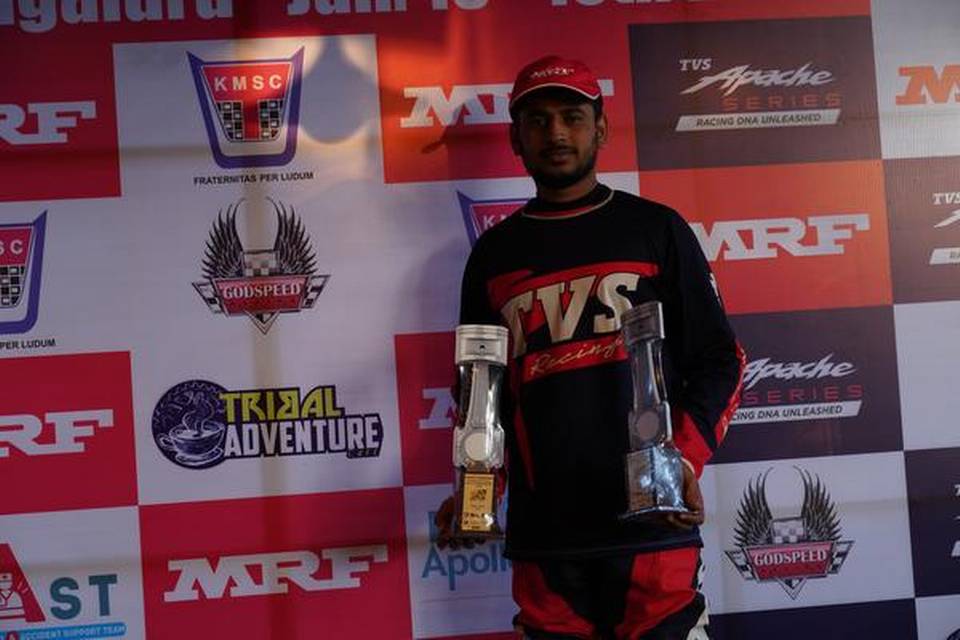
Imran Pasha of TVS Racing emerged victorious in the sixth and final round of the MRF Mogrip FMSCI Indian National Rally Championship for two-wheelers at Devanahalli near here on Sunday.

Riding an Apache RTR 200, Imran finished in 53 minutes 52.817 seconds, ahead of privateer Yuva Kumar (54:01.915) and teammate D. Sachin (54:25.149).

With the win, Imran was also crowned National champion in Class 4 as title rival Adnan Ahmed logged a DNF (did not finish).

Mangaluru’s Ishan Chandra (56:25.5) won the Class 3 event while local lad Rakesh Kumar triumphed in Class 2.

The results (provisional):

Overall: 1. Imran Pasha 53 minutes, 52.817 seconds; 2. Yuva Kumar 54:01.915; 3. D. Sachin 54:25.149.

Class 1: 1. Yuva Kumar 54:01.915; 2. B. Nikhil 57:41.844; 3. Santhosh Kour 1:15:44.990.

Class 2: 1. Rakesh Kumar 1:00:01.575; 2. Ajin Abraham 1:01:55.919; 3. Azeeb Muhammed 1:03:35.736.

Class 3: 1. Ishan Chandra 56:25.520; 2. B.K. Pavan 58:40.028; 3. P.U. Francis 58:52.540.

Class 4: 1. Imran Pasha 53:52:817; 2. D. Sachin 54:25.149; 3. Samuel Jacob 59:18.346.

source: http://www.thehindu.com / The Hindu / Home> Sport> Motorsport / by Special Correspondent / Bengaluru – January 19th, 2020

Tasneem Of JD(S) Is Mayor

Mysuru, KARNATAKA :

TasneemMayorMPOs20jan2020

C. Sridhar of Congress Deputy Mayor

Mysuru/Mysore:

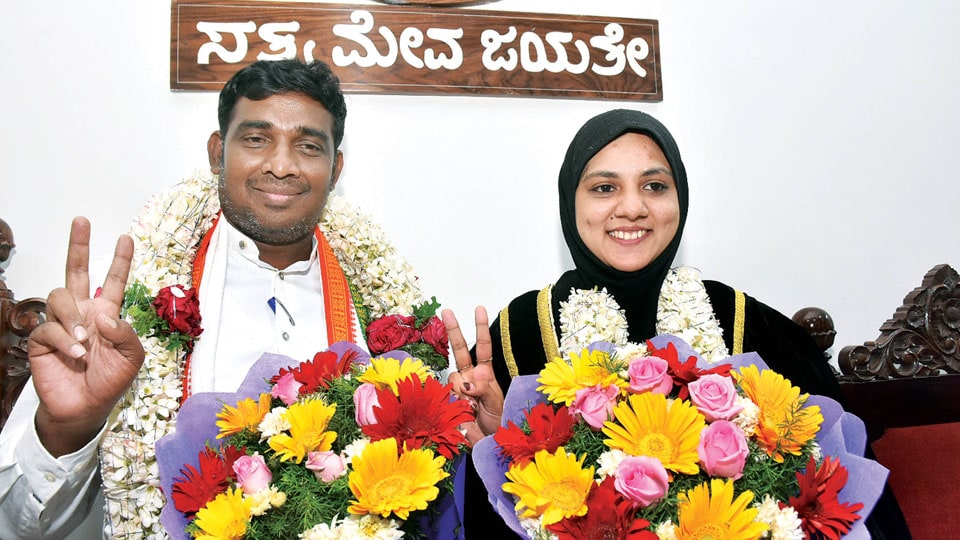
The city got its youngest Mayor when 31-year-old Tasneem of JD(S) was elected as the city’s First Citizen (Mayor) in the Mayoral election held at the MCC’s Council Hall this morning. Tasneem is the thirty-third elected Mayor.

Tasneem represents Ward 22 (Meena Bazar) in the 65-member civic body. With her election, Tasneem also earns the distinction of becoming the first-ever Muslim woman Mayor of Mysuru. The Mayor’s post for the second term of the current tenure of the MCC was reserved for BCA (Backward Class)  woman candidate.

C. Sridhar of Congress was elected as Deputy Mayor as that post was reserved for SC candidate. He represents Ward 38 (Giriyabovipalya). Both Tasneem and her deputy Sridhar bagged 47 votes, trouncing their respective BJP rivals Geethashree   Yoganand and Shanthamma Vadivelu, who could manage only 23 votes each.

The election process began with the filing of nomination papers at 7.30 am when Tasneem of the JD(S) and Geethashree Yoganand of the BJP filed their nominations. After the deadline ended at 9.30 am, the candidates were given five minutes for withdrawal of nominations. But as no nomination papers were withdrawn, the poll was held in which Tasneem bagged 47 votes out of 70, while her BJP rival managed just 23 votes.

The MCC has 73 voters, including 64 Corporators, four MLCs, four MLAs and the MP representing Mysuru. With the disqualification of Ward 18 BJP Corporator Guru Vinayak over fake caste certificate, the strength of the 65-member civic body has come down to 64. The by-poll to Ward 18 will take place on Feb. 9.

All the 64 Corporators, two MLAs — G.T. Devegowda and L. Nagendra — and all the four MLCs namely Sandesh Nagaraj, Marithibbegowda, K.T. Srikantegowda and R. Dharmasena took part in the poll process while BJP MLA S.A. Ramdas, Congress MLA Tanveer Sait and BJP MP Pratap Simha were conspicuous by their absence.

The process for electing the Deputy Mayor was similar to that of the Mayor’s election and C. Sridhar of the Congress was declared elected, defeating his rival Shanthamma Vadivelu of the BJP who secured just 23 votes which included that of 21 party Corporators, Chamaraja MLA L. Nagendra and M.V. Ramprasad, an independent Corporator. The BJP has 21 Corporators while the Congress has 19, JD(S) has 18, BSP 1 and there are 5 independents.

The newly-elected Mayor Tasneem is a two-time Corporator. She is a BA graduate from the city’s Maharani’s College and is married to Syed Samiulla, a businessman. The couple has a son and a daughter.

Deputy Mayor C. Sridhar is a resident of Kailaspuram. He is a BA graduate. His wife Anju is a home-maker and the couple has a son. Sridhar had defeated former Mayor Purushotham in the 2018 MCC polls.

Regional Commissioner Yashwanth, Additional Regional Commissioner Gayathri, outgoing Mayor Pushpalatha Jagannath and her Deputy Shafi Ahmed and other officials were present.

source: http://www.starofmysore.com / Star of Mysore / Home> News / January 18th, 2020

Two Hyderabadi students crack JEE Mains

Hyderabad, TELANGANA :

Hyderabad:

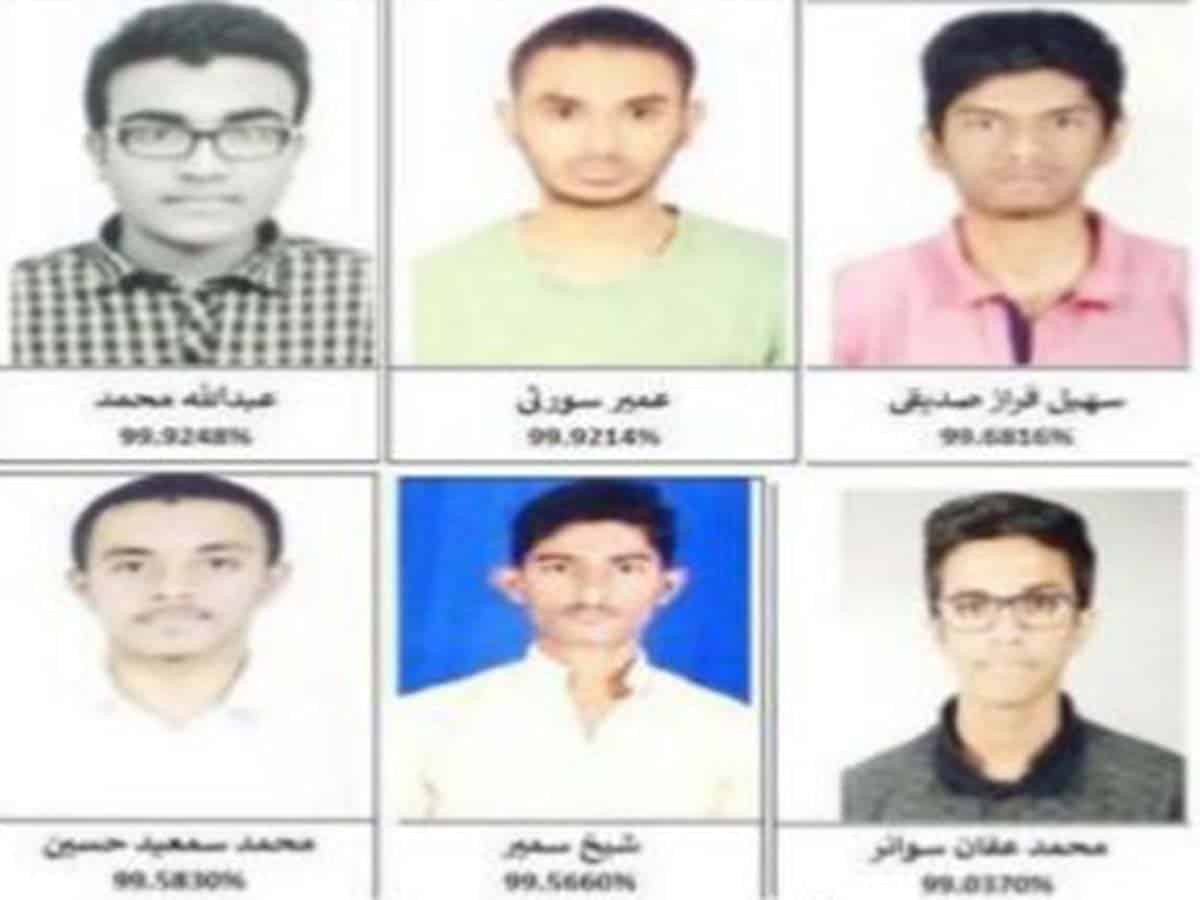
Two students of MS Education Academy namely, Abdullah Mohammed secured 99.92% marks in JEE (Mains) and Umair Surti secured 99.92%

MSeducationAcademyMPOs19jan2020

Mr. Moazzam Husain, Senior Director of the Academy congratulated both the students and said that they have created history.

He also mentioned that 6 more students of the Academy secured more than 99% marks whereas 37 students got more than 90% marks in the said examination.

www.siasat.com / The Siasat Daily / Home> News> Hyderabad / by Sameer / January 19th, 2020

Reverted Muslim Amir is building a mosque in Hyderabad

HARYANA :

BabriMasjidMPOs19jan2020

Hyderabad:

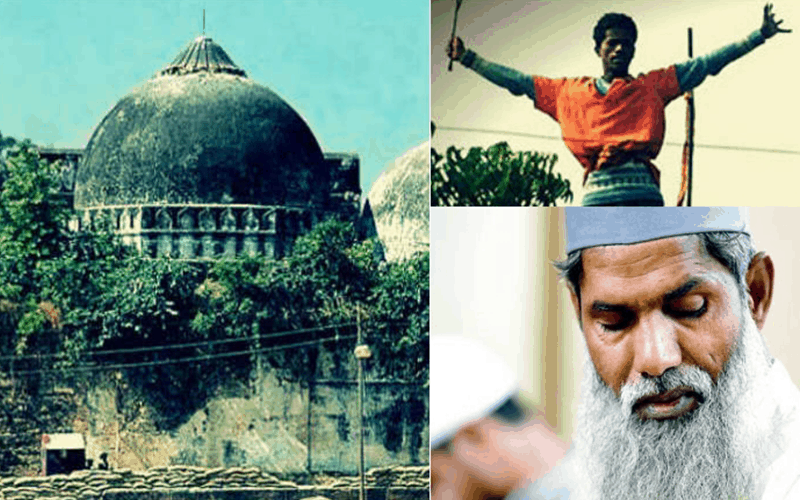
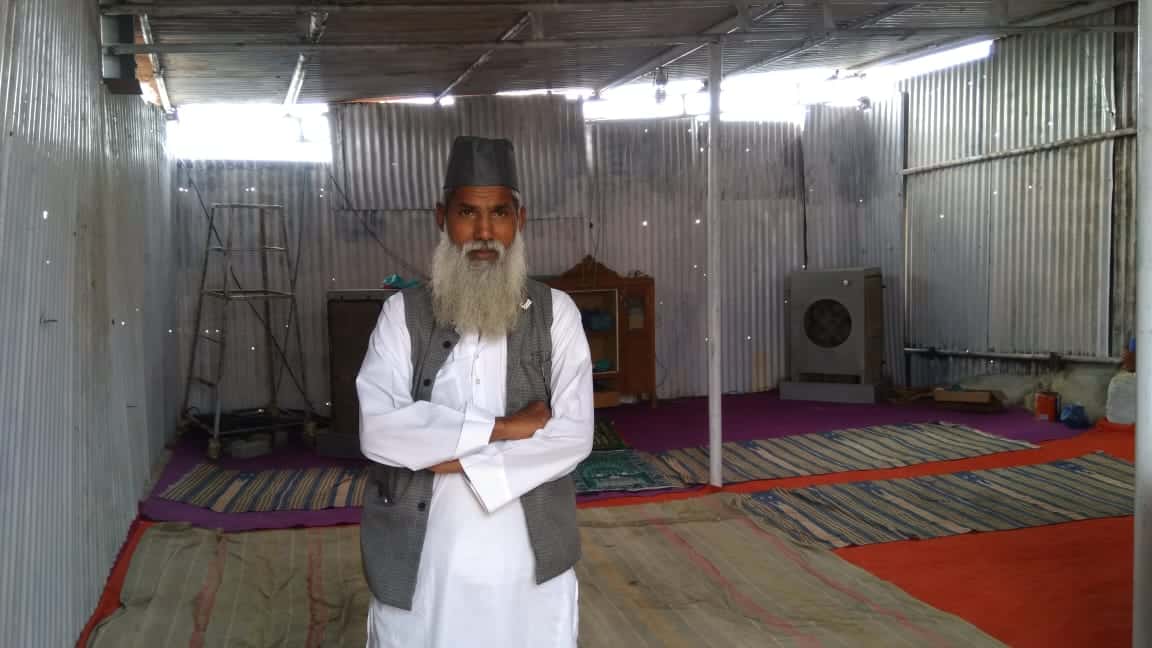
Mohammed Amir (formerly Balbir Singh), who was once an active Sangh leader and the one that climbed the dome to destruct Babri Masjid, now builds and protects mosques across India. He is building a mosque in Hafez Baba Nagar, Hyderabad.

After participation in destruction of Babri Masjid and later accepting Islam he has decided to build and renovate 100 mosques. He also pledged to protect mosques. With this in mind, he has completed the construction of 91 mosques, and more than 59 are under construction. This mosque which is being constructing in Hyderabad is his 59th which has named ‘Masjid-e-Rahimiya.’

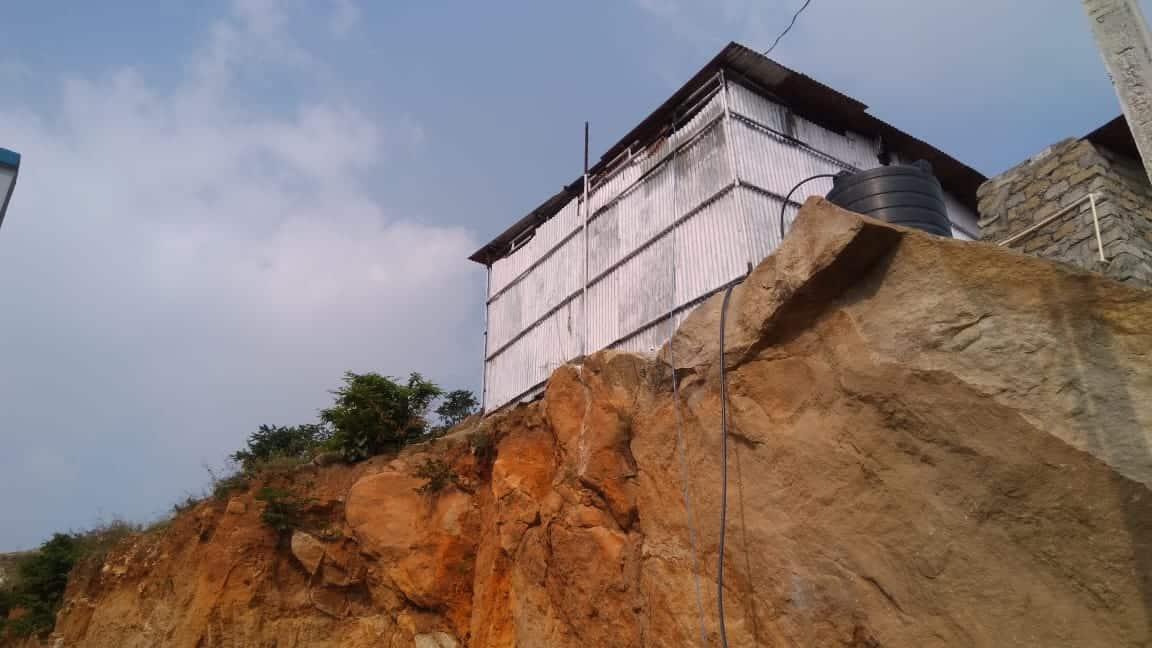
Mohammed Amir said that last year, on December 6 he had laid the foundation of Masjid-e-Rahimiya near Balapur road in Hafez Baba Nagar.  Since then the construction work has been going on. The local people have already begun to say prayers at a temporary shade. The mosque is being constructed with ground plus 6 floors on a 3200 sq yd land which also includes a madarsa (religious school) for those who have embraced Islam, he added.

MasjidMPOs19jan2020

Narrating the reason behind his drive to construct the mosques he said  as a karsevak involved in the destruction of Babri Masjid, when he reached home after the demolition he was given a hero’s welcome fby the public. But his family’s reaction shocked him. His secular family denounced his actions as a result of which he was feeling guilty. Later, when he fell sick and began having physiological issues he decided to consult with a Maulana.

He went to the Maulana Kaleem Siddiqui in Muzaffarnagar in UP and explained to him about what he does. He also sought forgiveness for what he had done. The Maulana explained to him the Islamic values through the Quranic verses. At that time he realized what he had done was sinfully wrong. On June 1, 1993 he accepted Islam sitting before  Maulana Kaleem Siddiqui. He also decided to build and protect 100 mosques.  With this aim he has built 91 Mosques in this 26 years and 59 were under construction.

Mohammed Amir built the first mosque in Haryana with and named it Masjid-e-Madina in 1994. In the next three months he laid foundation of another mosque in Haryana. Almost all of the mosque’s foundations were laid on December 6. He also built one of the most famous and popular mosques in Mendu near Hathra in UP, he noted.

MohammedAmirMPOs19jan2020

He built mosques mostly in the North and North-eastern states. He ia also brining about awareness and teachings about the Islam and running a mardassa for the reverted Muslims. He said that wherever he is building a mosque he and his family shift to that particular area and begin offering teachings of Islam.

source: http://www.siasat.com / The Siasat Daily / Home> Babri Masjid / by Mohammed Hussain / December 07th, 2019

National Seminar for Urdu teachers inaugurated at MANUU

Hyderabad, TELANGANA :

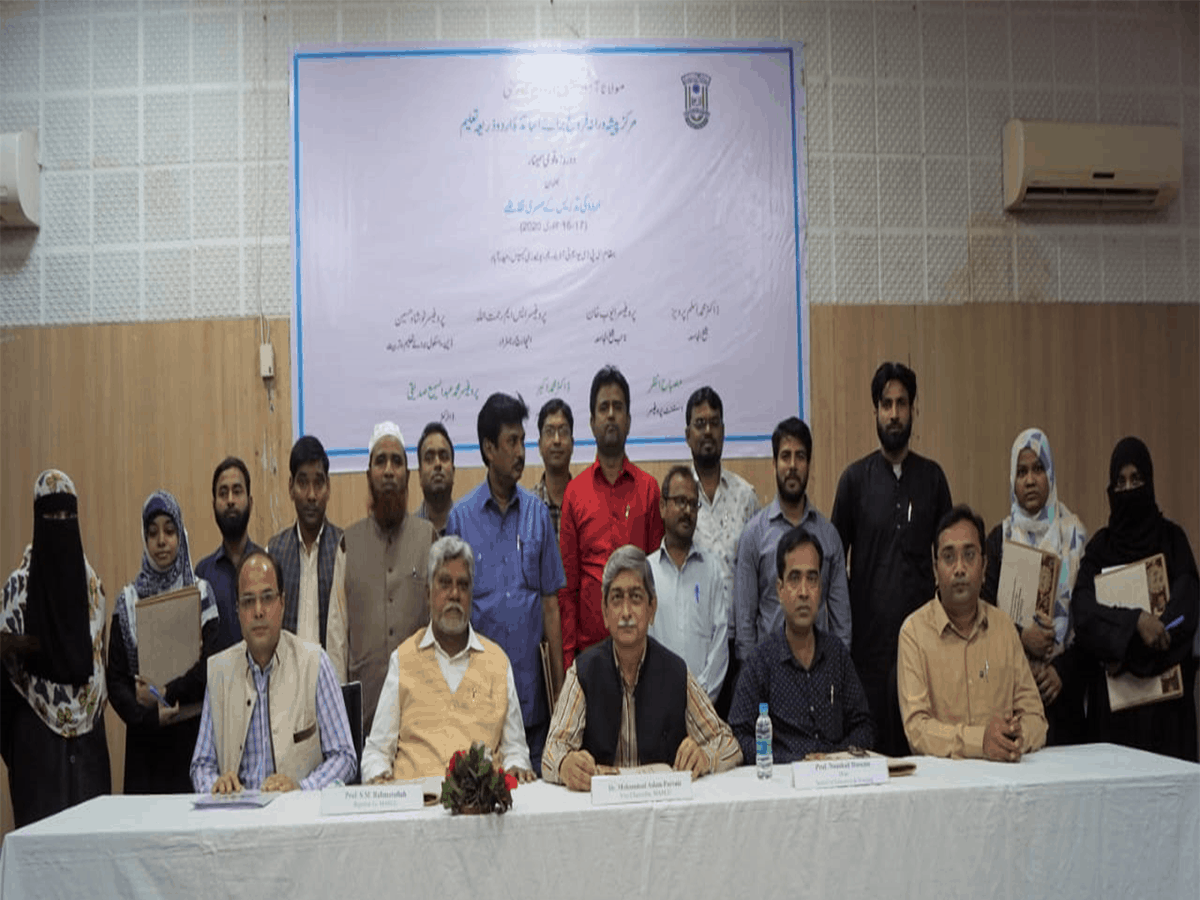
 Dr. Mohammad Aslam Parvaiz, Prof. Noushad Husain, Prof. Abdul Sami Siddiqui, Dr. Misbah Anzar and others are also seen.
Dr. Mohammad Aslam Parvaiz, Prof. Noushad Husain, Prof. Abdul Sami Siddiqui, Dr. Misbah Anzar and others are also seen.

Hyderabad:

Centre for Professional Development of Urdu Medium Teachers (CPDUMT) of Maulana Azad National Urdu University (MANUU) is organizing two days national seminar “Contemporary Issues in Teaching Urdu” for Urdu medium teachers on January 16 and 17.

The Vice-Chancellor, Dr. Mohammad Aslam Parvaiz presided over the inaugural session held today at CPDUMT auditorium, MANUU Campus. In his presidential address, he remarked that the main responsibility of the teachers is to ensure the all-round personality development of the students. Teaching is not a mere profession but it is a mission, he added.

Prof. S. M. Rahmatullah, the Registrar I/c, strongly supported usage of Urdu script to promote Urdu medium of education. Prof. Naseemuddin Farees, Dean, School of Languages, Linguistics & Indology delivered the keynote address.

Prof. Noushad Husain, Dean, School of Education and Training also spoke.
Earlier, Prof. Mohammed Abdul Sami Siddiqui, Director, Centre welcomed the gathering and briefed about the seminar.

Mr. Misbah-ul-Anzar, Assistant Professor, conducted the proceedings and Dr. Mohd. Akbar, Assistant Professor proposed the vote of thanks. The valedictory session of the seminar will be held on January 17 at 4.15 pm.

source: http://www.siasat.com / The Siasat Daily / Home> Education & Career / by Mohamme Hussain / January 16th, 2020

Hyderabad to host 1st edition of India international Halal expo

Hyderabad, TELANGANA :

Hyderabad:

IIHE (India International Halal Expo 2020) is staged to take place on the 18, 19, and 20 January 2020 at HITEX, Exhibition Centre in Hyderabad. With an expected 15000 visitors and more than 120 exhibitors, IIHE is set to be the Biggest International Halal Expo in India.

IIHE will be hosted by participants of major Halal Markets of the world (Indonesia, Malaysia, Turkey, , Thailand, U.A.E., Saudi Arabia, UK USA  and many other countries).

IIHE (India International Halal Expo 2020) welcomes all the major Halal Industries as exhibitors. Food & Beverage, Cosmetics, Healthcare, Tourism, Finance, Education, Real Estate & Modest Lifestyle to be a few of the major stakeholders in the Exhibition.

IIHE (India International Halal Expo 2020) intends to network all the major global Halal industries under one roof. We intend to enhance trade within the Halal Market and build an Eco-System which can sustain by itself.

Parallel to the Exhibition, IIHE (India International Halal Expo 2020) would also be having a 3-day International Halal Conference. The Halal Conference is expected to have regional as well as international dignitaries from the Halal industry of trade and commerce Along with Government officials

IIHE is partnered with Government Of Telangana, Federation Of Telangana Chamber Of Commerce & Industry,  “The Malaysia External Trade Development Corporation” (MATRADE-Chennai), “Istanbul Foreigners and Investment Centre” (IYMER), Salaam Gateway-Dubai, Indo-OIC  Islamic Chamber Of Commerce, American Halal Foundation, Halal-Welt (Germany ) , Halal Focus- UK, Collabdin- Singapore, and many more Halal trade organizations which will works as a binding force in trade negotiations for exhibitors to work on joint ventures regionally as well as globally.

As per the Latest research of Dinar Standard, Investments play an important role in driving substantial growth across the economy, there have been major developments. $1.2 billion was invested globally in Halal economy companies, reflecting a growth of 399% on comparable transactions across halal products, Islamic lifestyle & Islamic Finance compared to the prior year.

Muslims spends on food & beverages was valued at $1.4 trillion in 2018 and forecast to reach $2.0 trillion by 2024.

source: http://www.siasat.com / The Siasat Daily / Home> Business / by Mohammed Hussain / January 06th, 2020

Ramanagara ZP CEO turns mentor for SSLC candidates

KARNATAKA :

In 2018 SSLC exams, Ramanagara district ranked first and in 2019, it was in the second place in the state with 88.49 passing percentage.

Bengaluru :

In an attempt to get better results in the coming SSLC exams, an IAS officer from Ramanagara has given a task to his officials to take responsibility of one government school each and work towards ‘’good’’ results.

Meet, Mohammed Ikramulla Shariff, an IAS officer of the 2016 batch, who is the Chief Executive Officer of Ramanagara Zilla Panchayat and was transferred to this post some seven months ago. There are more than 100 government schools where around 13,000 students are taking SSLC exams this March 2020. Shariff has asked each official from various departments in Ramanagara to ‘’adopt’’ one school where students are writing SSLC exams this year.

Speaking to The New Indian Express, Shariff said that all his officials are well qualified and many of them struggled hard and reached this place. “We have assigned one officer per school. We have chosen them in such a way that their offices are located close to their ‘adopted’ government schools. These officers work in various departments including Horticulture, Revenue, Health and Education, whose offices are located across the district. This initiative is being taken as an attempt to utilise human resources,’’ he said.

In 2018 SSLC exams, Ramanagara district ranked first and in 2019, it was in the second place in the state with 88.49 passing percentage. “These officials have to visit the schools once or twice a week till SSLC examinations. We have instructed them to interact with the candidates, their parents and teachers. These officials will listen to their woes, if any. The same has to be reported to us. They have to encourage them, in case needed, take classes too,’’ he said.

When contacted, Minister for Primary and Secondary Education Suresh Kumar said there are many CEOs from various districts including Kodagu, Mandya, Chikkaballapura and Raichur, who are encouraging officials to be involved in the education sector. These CEOs who were limited to management and holding bigger responsibility has chosen education and giving more attention which is a positive sign.

There is so much healthy competition among them. While CEO from Kodagu is writing letters to student on SSLC exams, telling them to be write exams with confidence. CEOs from Mandya, Chikkaballapur and Raichur is pushing average students to get better results. Most of these officials are young IAS officers. “I can see hope that this year’s SSLC results will be good and better than previous year,’’ he said.

source: http://www.newindianexpress.com / The New Indian Express / Home> States> Karnataka / by Ashwini M. Sripad / Express News Service / January 14th, 2020

A master’s hand that scripts poetry in ink

Kolkata, WEST BENGAL :

Lives of others

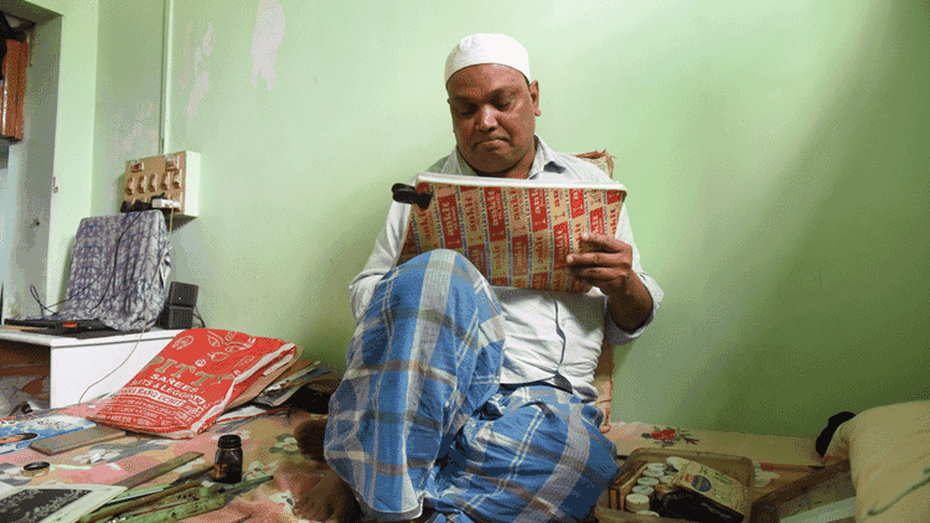
Mohammad Usman Ghani busy with work in his Belgachhia home that doubles as his workstation. / Picture by Subhendu Chaki
Mohammad Usman Ghani busy with work in his Belgachhia home that doubles as his workstation. /
Picture by Subhendu Chaki

Mohammad Usman Ghani hurries out of a crowded, narrow lane of Belgachhia Children’s Park area, a Muslim locality next to Belgachhia Urdu High School. He greets me warmly and guides me to his house in the lane. “Garib ka ghar hai,” he says apologetically, more than once.

The small room I am ushered into is occupied almost entirely by a double bed, which is his workplace. On it lie books and sheaves of paper in little piles, and a batch of wooden pens with wooden or metal nibs. A showcase stands against one wall and a desktop computer is wedged into a corner. Outside, small children shout and play, sometimes making a quick entry into the room, then a quicker exit.

As one approaches Ghani’s locality, one can see a few anti-CAA and anti-NRC posters.

Amidst all this bustle, Ghani, 38, sits quietly on his bed, his skullcap-covered head bent over a piece of paper that is filling up with beautiful Urdu lettering. Ghani is a calligrapher. The Urdu script, with its curves and swirls, is in itself quite lyrical. Urdu calligraphy, its more concentrated, cursive and complex form, is at its best like distilled poetry.

Ghani was drawn to this centuries-old art from a very early age. He was moved by its beauty. It is a very fine, elaborate and demanding art, he explains, in which every dot, dash or curl, if decorative, is also part of the lettering, and in a master’s hand they come together to fuse into an exquisite design. An ordinary name becomes a work of art.

“I was born here,” says Ghani. He first studied at the corporation school in the area, then went on to study at Mohammad Jan High School in Burrabazar. He studied for his master’s degree at Hyderabad Maulana Azad National Urdu University, passing out in 2008.

But after school, he had first enrolled at Urdu Academy in Calcutta to learn calligraphy along with graphic design. He teaches calligraphy at the academy now.

At home, he works on books, banners and signboards, but also on stone plaques for masjids or for homes, quite often with excerpts of The Quran in them. Calligraphy is central, sometimes literally, to Islamic architecture. “The gates of Taj Mahal are framed with calligraphy,” reminds Ghani.

But that is Arabic, he says. To understand the idea of Urdu calligraphy, one also has to understand the idea of Arabic calligraphy. Ghani practises both.

“A calligrapher is called a katib in Urdu. The wooden nib of the pen is called a sarkanda or a klich,” he says. They can be reed pens too. “The point is called a noqta. The curve is called a dayra,” Ghani adds. “Everything has a name,” he smiles. “How many can I name?” The elaborate terminology of calligraphy also explains how intricate the art is.

The artist M.F. Husain had trained in calligraphy, he reminds.

Arabic calligraphy, from which Urdu calligraphy evolved, was authored in the 10th century by Ibn Muqla, a Persian high official who later became a vizier in Baghdad, explains Ghani. He designed six styles. “Or fonts,” says Ghani.

Urdu calligraphy was formalised between 1330 and 1405, after Islam reached parts of India, in the Nashtaliq font by Khwaja Mir Ali Tabrezi. Urdu, the language too, was developing then from Khariboli, a north Indian dialect that had borrowed heavily from Persian words. “Urdu calligraphy uses eight fonts,” says Ghani.

Ghani cannot express enough gratitude to his two masters, ustads, Ghulam Murtaza and Wasey Ahmed.

To illustrate the differences between Arabic and Urdu further, Ghani brings out a pen and dips it in the special ink. Previously the ink would be manufactured by the calligrapher himself by burning wood, but now it can be bought. “For Urdu calligraphy, the pen has to be held at 63 degrees. For Arabic, at 75 degrees. In Urdu, the dayra is circular or oval. In Arabic, it is differently shaped.”

He offers to rewrite an Urdu phrase calligraphically and chooses a heading of a book of which he had composed the title in calligraphy.

“But Urdu is the language of love, of poetry,” he says. He begins to write on another piece of paper Faiz Ahmed Faiz’s ghazal: “Gulon mein rang bhare, baad-e-naubahaar chale/Chale bhii aao ki gulshan kaa karobaar chale… (May the flowers fill up with colours, may the early spring breeze start blowing again/ Please come back, so that the garden can resume its business again…).”

I later discover that the song was written when Faiz, a Communist, was thrown into prison in Pakistan in the 1950s for his political views. The ghazal, sung by Mehdi Hassan, was also used by Vishal Bharadwaj in his searing 2014 film on Kashmir, Haider.

But Ghani, since he is using calligraphy, selects only the first two lines, and transforms them into a sher, a couplet, and a love poem. For him, it is about the intense longing for the beloved.

Of course, the computer has changed calligraphy. Not too many calligraphers are to be found easily. “But the computer cannot do what the hand can do,” says Ghani. His work on books now mostly mean writing the title of the book in Urdu calligraphy. The rest of the text is composed on the computer.

“The keywords are composed by handwritten calligraphy,” says Ghani. Same for wedding cards, where the names of the bride and groom are written calligraphically; the rest is computer-generated. “The two are never the same,” stresses Ghani.

To supplement his income, he works at the computer himself. He, too, makes wedding cards, with the calligraphy done by hand and the rest written on the computer. He accepts orders for other kinds of commercial writing as well.

At Urdu Academy, about 25 students are enrolled in the calligraphy class, but about 12-13 attend classes. “The government should do something about promoting Urdu and Urdu calligraphy. Not only Urdu, for all other Indian languages like Bengali,” he says.

He says that once, especially in the Mughal court, many Hindus knew Urdu. Many Muslim women have contributed to enriching calligraphy.

But all these seem so far away. Now Ghani has to rush to meet someone for work. He promises to find me an Urdu book that he had handwritten himself, with calligraphy.

source: http://www.telegraphindia.com  / The Telegraph, online edition / Home> West Bengal / by Chandrima S. Bhattacharya in Calcutta / December 23rd, 2019