All posts by mpositiveone@gmail.com

60 mushroom species documented at Yenepoya campus

Mangalore , KARNATAKA :

MushroomsYenepoyaMPOs29may2018

Mangaluru :

In an unique initiative, Yenepoya (deemed to be university), has undertaken a comprehensive study of the mushrooms present on the Derlakatte campus.
The study, which was conducted over a period of six months, has yielded rich information on the macrofungal resources of the campus. About 60 species of mushrooms have been observed on the campus, out of which about 40 have been described in the book. Out of the 40 species published, 12 species are edible, 12 species are medicinal, two species ectomycorrhizal and one species is parasitic. Two species which are rare and known to be poisonous are also recorded.

The information was documented in a ready reference book titled ,‘Macrofungal resources of Yenepoya University’.  Yenepoya chancellor Abdullah Kunhi released the book at a ceremony held on the campus on Tuesday, in the presence of vice-chancellor M Vijayakumar and registrar G Shreekumar Menon. The book is dedicated to M Abdul Rahiman, former vice-chancellor, Kannur and Calicut Universities.

Yenepoya is the first educational institution in the region to initiate such a study of mushrooms on the campus. Though mushrooms play a unique role in the ecosystem, importance is always given to only flora and fauna, said sources. Yenepoya has initiated other similar studies to document the flora and fauna of the campus too.

The study of macrofungal life on the campus was undertaken by a research team led by K R Sridhar, Dr N C Karun and Dr Bhagya B Sharma from June-November 2016.

Yenepoya has striven to make its 32 acre campus into an eco-friendly zone. The institution has undertaken various measures for greening the campus with different landscapes like lawns, arboretum, bamboo thickets, medicinal plant garden, areca plantation and acacia grove. The campus includes a large rainwater harvesting pond, roof water harvesting facilities, waste water treatment and recycling plant, vermicompost unit and solar power generation facility. The university carries out a regular environmental audit of the campus and has an eco club for students. It is hoped that these activities will inculcate a love for nature among the students who study here, and inspire them to act as brand ambassadors for nature conservation in their future life.

source: http://www.timesofindia.indiatimes.com / The Times of India / News> City News> Mangalore News / by Kevin Mendonsa / TNN / May 23rd, 2018

Edit

Design lovers, open up this luxe box for personalised gifting options

Mumbai, MAHARASHTRA :

Hina Oomer of The Luxe Box has put together the perfect luxury gift boxes, exclusively for AD readers!

A Luxebox is a neat little box that is thoughtfully put together with an ensemble of gifts that look, smell, taste and feel good!

As much joy as searching for the perfect gift for our loved ones gives us, there’s an equal joy in finally getting it home and gift wrapping it! Some people like pretty-looking gifts and some prefer ones they can put to use, over and above other factors. The Luxe Box, a personalised luxury gifting service curated by stylist and image consultant Hina Oomer, offers all of this and more, in one gorgeously wrapped package. Essentially, a “luxebox” is a thoughtfully put together gift box that takes into account the likes, preferences, age, and interests of the receiver along with keeping in mind the occasion. The Luxe Box ensures that these personalised gift boxes can be presented across different occasions—Father’s Day, birth anniversaries, wedding anniversaries, farewell parties, bridal parties, graduation day parties, and more—as thoughtful and useful gifts.

Hina Oomer obliged us when we requested her to curate 5 exclusive design-meets-home decor inspired luxeboxes for our discerning readers. Here’s what she came up with:

Gift Guide: Rustic Home Box

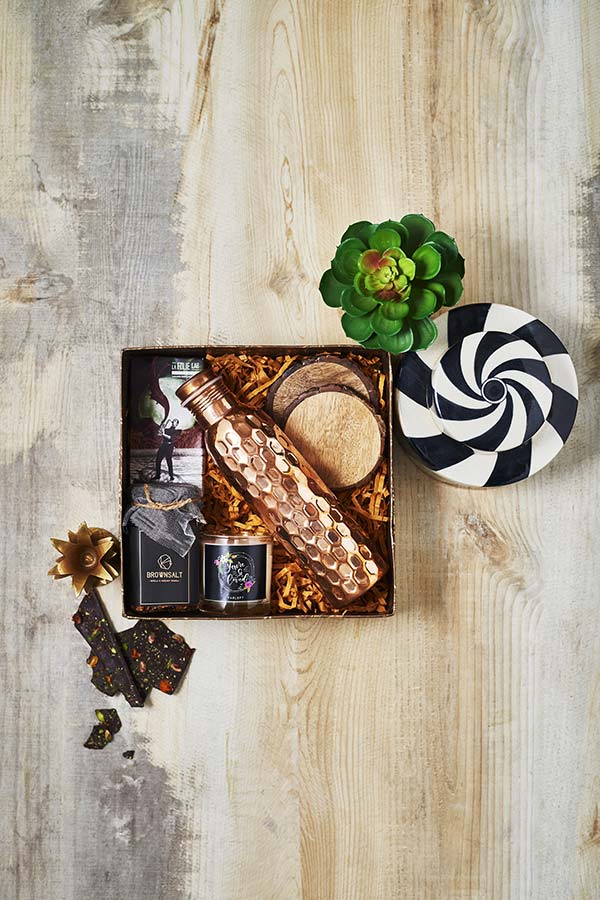
A copper bottle, set of wooden coasters, soy wax scented candle, jar of Brownsalt Nutella granola and a La Folie chocolate

The Rustic Home Luxebox

Guide Guide: Entertainment Box (Party Box)

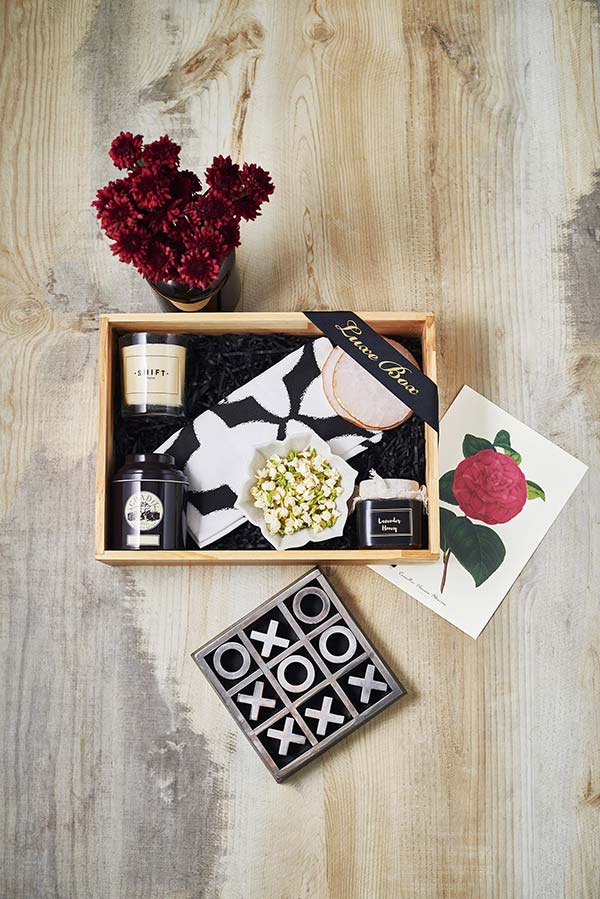
A set of agate marble coasters, marble lotus bowl, Chado green tea, lavender honey, Shift soy wax scented candle and Nomad table napkins

The Entertainment Luxebox

Gift Guide: Sunday Brunch Box

Packets of Slurrp Farm healthy superfood pancake mix, soy wax scented candle, jar of Sprig coconut palm sugar and a packet of Black Baza coffee

The Sunday Brunch Luxebox

Gift Guide: Netflix and Chill Box

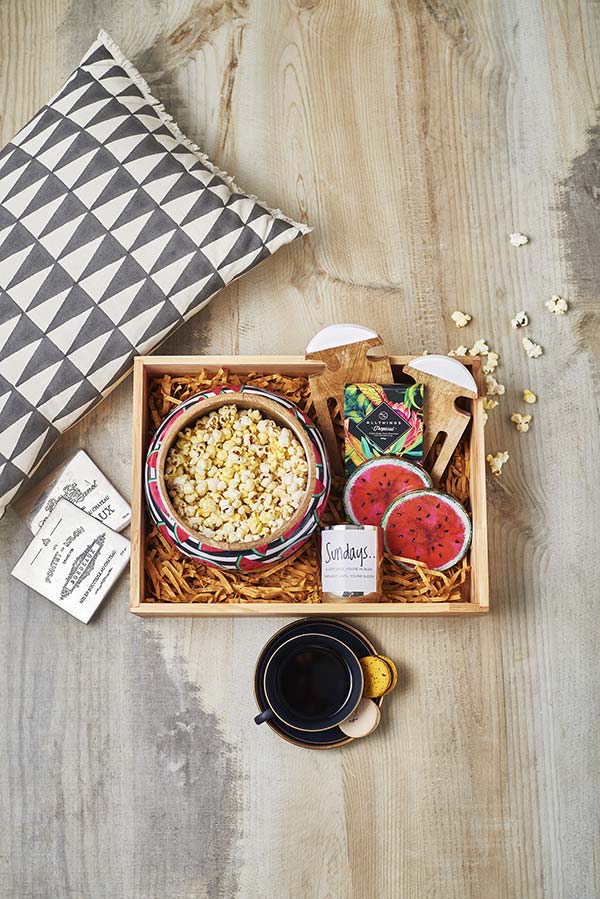
Faaya tropical themed wooden salad bowl with a set of salad mixers, a set of watermelon printed coasters, scented soy wax candle and an All Things Tropical chocolate

The Netflix and Chill Luxebox

Design Enthusiast Box

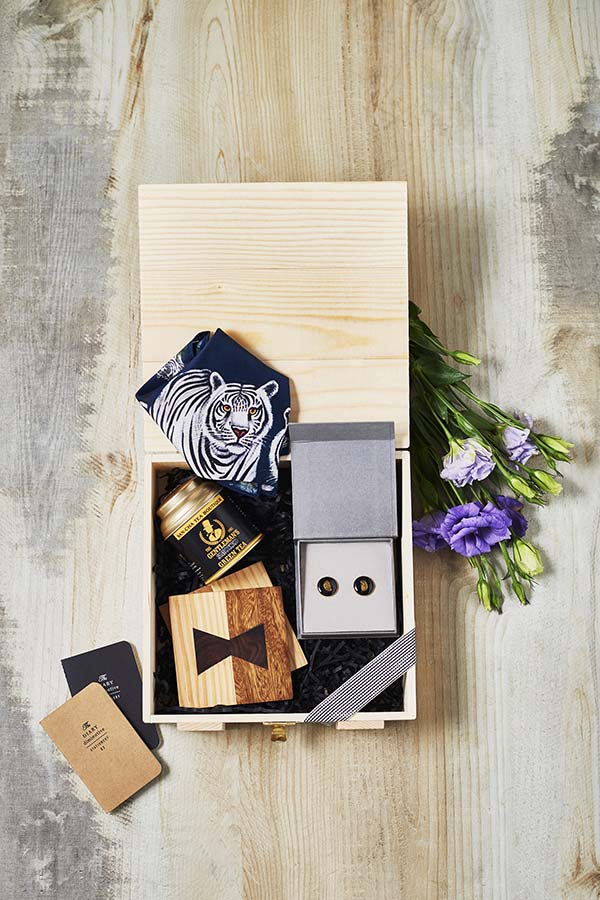
Meesha printed pocket square, Sancha tea, bow tie coasters and a set of Azga cufflinks

The Design Enthusiast Luxebox

source: http://www.architectural digest.in / Architectural Diges – AD / Home> Lifestyle> Style / by AD Staff  / May 24th, 2018

IPL 2018: Son of compounder, Syed Khaleel Ahmed who got Rs 3 cr wants to build house for family

Tonk, RAJASHTHAN :

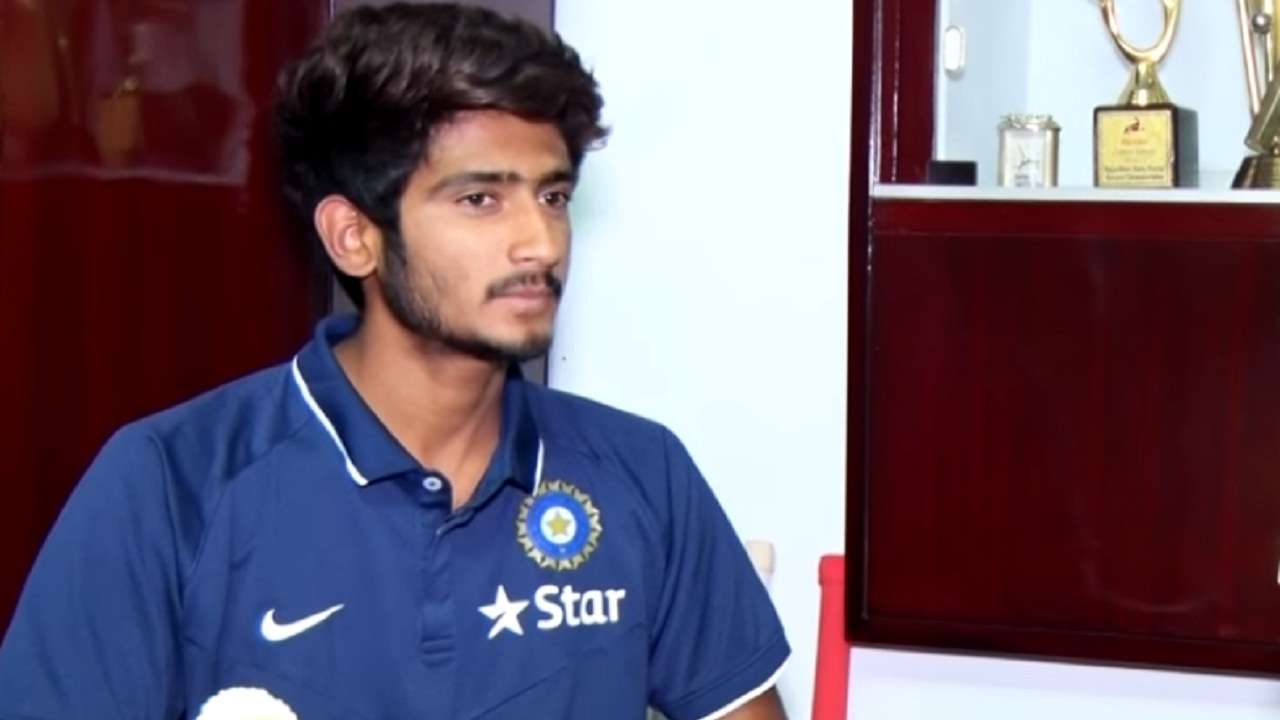
Syed Khaleel Ahmed
Syed Khaleel Ahmed

Every year the IPL throws up a heartwarming rags-to-riches story, reminding us of the human ability to triumph against adversity. One such story is of Syed Khaleel Ahmed.

Rajasthan’s left-arm speedster Syed Khaleel Ahmed was another one to get a big amount of Rs 3 crore by Sunrisers Hyderabad on the first day of  Indian Premier League (IPL) auctions

Born in a small town in Rajasthan, Ahmed is a son of a compounder.  He was part of U-19 team which reached the World Cup final in 2016. He has already spent two seasons with Delhi Daredevils.

Ahmed’s father used to hate cricket and even tried to dissuade him from playing, however, coach Imtiyaz Ali Khan, played a big part in convincing Khaleel’s father to let him continue playing.

“Back then cricket, for someone in Tonk, was just a threat to the children’s studies,” reported espncricinfo.com quoting Ahmed.

Speaking to SportsStarLive,  Ahmed said that getting Rs. 3 crore is a big thing for him and he wants to shift his family to Jaipur and buy a house.

“That will help me to focus on my training better. All the academies are in Jaipur, so I will be able to train harder if I move to Jaipur,” Khaleel said.

Indian players dominated the bidding wars on the first day as KL Rahul and Manish Pandey laughed their way to the bank with multi-million dollar deals but England all-rounder Ben Stokes once again emerged the costliest buy in the IPL auctions, here today.

Stylish opener Rahul and middle-order batsman Pandey bagged deals worth Rs 11 crore (USD 1.73 million) from Kings XI Punjab and Sunrisers Hyderabad respectively.

The Karnataka players had a field day at the auctions with India discard Karun Nair also triggering a bidding war before Kings XI Punjab got him for Rs 5.60 crore (USD 880,000).

Kedar Jadhav, one of Mahendra Singh Dhoni ‘Go To Man’ during his last stint as India captain, also fetched a healthy price of Rs 7.80 crore for his all-round qualities of batting, round-arm off-spin and back-up wicket-keeping. He was snapped by the Dhoni-led Chennai Super Kings.

Chennai, however, didn’t bid vigorously for Ravichandran Ashwin, who will now ply his trade for Kings XI Punjab at a salary of Rs 7.60 crore (USD 1.19 million).

Following is the complete list of sold players in the first day of Indian Premier League auctions

Chennai Super Kings: Kedar Jadhav (Rs 7.80 crore), Dwayne Bravo (Rs 6.40 crore), Karn Sharma (Rs 5 crore), Shane Watson (Rs 4 crore); Ambati Rayudu (Rs 2.20 crore); Harbhajan Singh (Rs 2 crore), Faf Du Plessis (Rs 1.60 crore), Imran Tahir (Rs 1 crore)

Delhi Daredevils: Glenn Maxwell (Rs 9 crore), Kagiso Rabada (Rs 4.20 crore), Amit Mishra (Rs 4 crore), Vijay Shankar (Rs 3.20 crore), Rahul Tewatia (Rs 3 crore), Mohammad Shami (Rs 3 crore), Gautam Gambhir (Rs 2.80), Colin Munro (Rs 1.90 crore), Jason Roy (Rs 1.50 crore), Prithvi Shaw (Rs 1.20), Avesh Khan (Rs 70 lakh) and Harshal Patel (Rs 20 lakh).

Kings XI Punjab: KL Rahul (Rs 11 crore), Ravichandran Ashwin (Rs 7.60 crore), Aaron Finch (Rs 6.20 crore), Marcus Stoinis (Rs 6.20 crore), Karun Nair (Rs 5.60 crore), Ankit Singh Rajpoot (Rs 3 crore), David Miller (Rs 3 crore), Yuvraj Singh (Rs 2 crore), Mayank Agarwal (Rs 1 crore).

Kolkata Knight Riders: Chris Lynn (Rs 9.60 crore), Mitchell Starc (Rs 9.40 crore), Dinesh Karthik (Rs 7.40 crore), Robin Uthappa (Rs 6.40 crore), Kuldeep Yadav (Rs 5.80 crore), Piyush Chawla (Rs 4.20 crore), Nitish Rana (Rs 3.40 crore), Kamlesh Nagarkoti (Rs 3.20 crore), Shubman Gill (Rs 1.80 crore), Ishank Jaggi (Rs 20 lakh).

source: http://www.dnaindia.com / DNA / Home> Sports> Cricket / by DNA  Web Team / January 28th, 2018

Life in black and white

Vernawada, Palanpur, GUJARAT :

In a career spanning 70 years, A.L. Syed became one of the important figures of 20th-century Indian photography. Working in black and white, his apparently neutral stance conceals a deeply compassionate vision of human existence,  says  HAVOVI ANKLESARIA.

THIS collection of 93 masterly duotone photographs by Abid Mian Lal Mian Syed is a tribute to the man and a selection of his work. In a career that spanned 70 years, he was perhaps one of the most important figures in the world of 20th-century Indian photography. Born in 1904, Syed spent his childhood in Palanpur where he and his brother became the official photographers of Palanpur State and much of their professional work was done for the royal families of various North Indian States.

In 1923 Syed won first prize in The Illustrated Weekly of India Photo Contest for his photograph of the sunrise at Chowpatty, unfortunately not included in this selection. He began publishing his work in 1925 and towards the end of his life claimed to have been published in every Indian magazine. In 1935, he won the Popular Photography award for his photograph “Traveller of the East, Palanpur” and, with it, instant international recognition.

For generations of viewers overwhelmed by colour, the black and white image is the medium of the master-craftsman and Syed does not disappoint. His eye is impeccable. These are wonderfully evocative photographs sans colour but with varying intensities of light and shadow. O.P. Sharma’s Foreword is slightly overburdened with accolades, but he does a good job of introducing his subject. Syed’s range was vast — from portraits of the rich and powerful to day-to-day village scenes. Much of the attraction of the photographs is the strong emphasis on line and form, particularly the section on his historical buildings and religious monuments. Like many of his generation, he was a keen hunter, but in this collection there are no trophies, only living birds and animals.

The book begins with a series of portraits of the royal families of Northern India in their resplendent gear. Most of the portraits are taken in isolation. The fixed frontal alignment, the expression of supreme assurance from individuals who know their social and political identity, symbolise a way of life and attitudes that are somewhat diminished in contemporary India. The portraits are nonetheless important as a part of the national archive. The first photograph is a long shot of a very young Gayatri Devi of Jaipur seated in a dark room. Her freshness and youth contrasts sharply with the antique grandeur of her surroundings and accentuates the loneliness of her surroundings.

Syed was obsessed with the desert, which penetrated his consciousness almost totally. The desert as star recalls the haunting scenes in the film “Lawrence of Arabia”, though Syed’s photographs predate the film by several decades. Most of his outdoor photographs have a feel of desolation. Even relatively busy scenes evoke a sense of vastness. One of the great classics of this collection and possibly in the history of photography is “Different Climb, Jaisalmer” in which a camel is being drawn up a sand dune. The camel and the man are not in prominent focus. What is emphasised is the sharp angle of the dune’s gradient, evoking the terror and seductiveness of this featureless terrain.

In “Desert Child”, child and lamb pose in front of the camera unselfconsciously. Innocence declares itself without surrendering to the “cutesy bunny” manipulations traditionally associated with photographs of children and animals. Their vulnerability is brought into focus in the context of a remorseless desert existence.

Perhaps one of the most extraordinary photographs in this collection is “Risky Balance” showing a man perched on a rope on one leg with a donkey strapped to his back. The upward tilt of the camera captures the perfect equipoise of the acrobat featured against a dull grey sky. But it is not simply the showmanship that amazes. The image resonates with a sense of perilous uncertainty of living on the edge with no guarantees and of having to depend on skills whose rewards are irregular. Indeed the title is ironic in a way that Syed may not have intended.

In 1971 Syed developed Parkinson’s disease, but continued to work. He died in 1991. Towards the end of his life, he was critical of contemporary Indian photographers and photo-journalists for parading the spectacle of poverty and human misery to satisfy the international market. Syed’s camera was not an instrument of authorship. There is nothing of the vicarious or the gratuitous in these pictures. The frame is a medium of documentation whose artistry is concerned with the simple, direct act of viewing. His apparently neutral stance conceals a deeply compassionate vision of human existence as one of isolation, loneliness and incompatibility.

Visions from the Inner Eye: Photographic Art of A.L. Syed, Introduction by O.P. Sharma, Mapin Publishing Pvt. Ltd., p.111, Rs. 1000.

source:  http://www.thehindu.com / The Hindu, Online Edition  / Home> Literary Review / January 06th, 2002

A. L. Syed (1904-1991)

Vernawada, Palanpur, GUJARAT :

ALSyed01MPOs26may2018

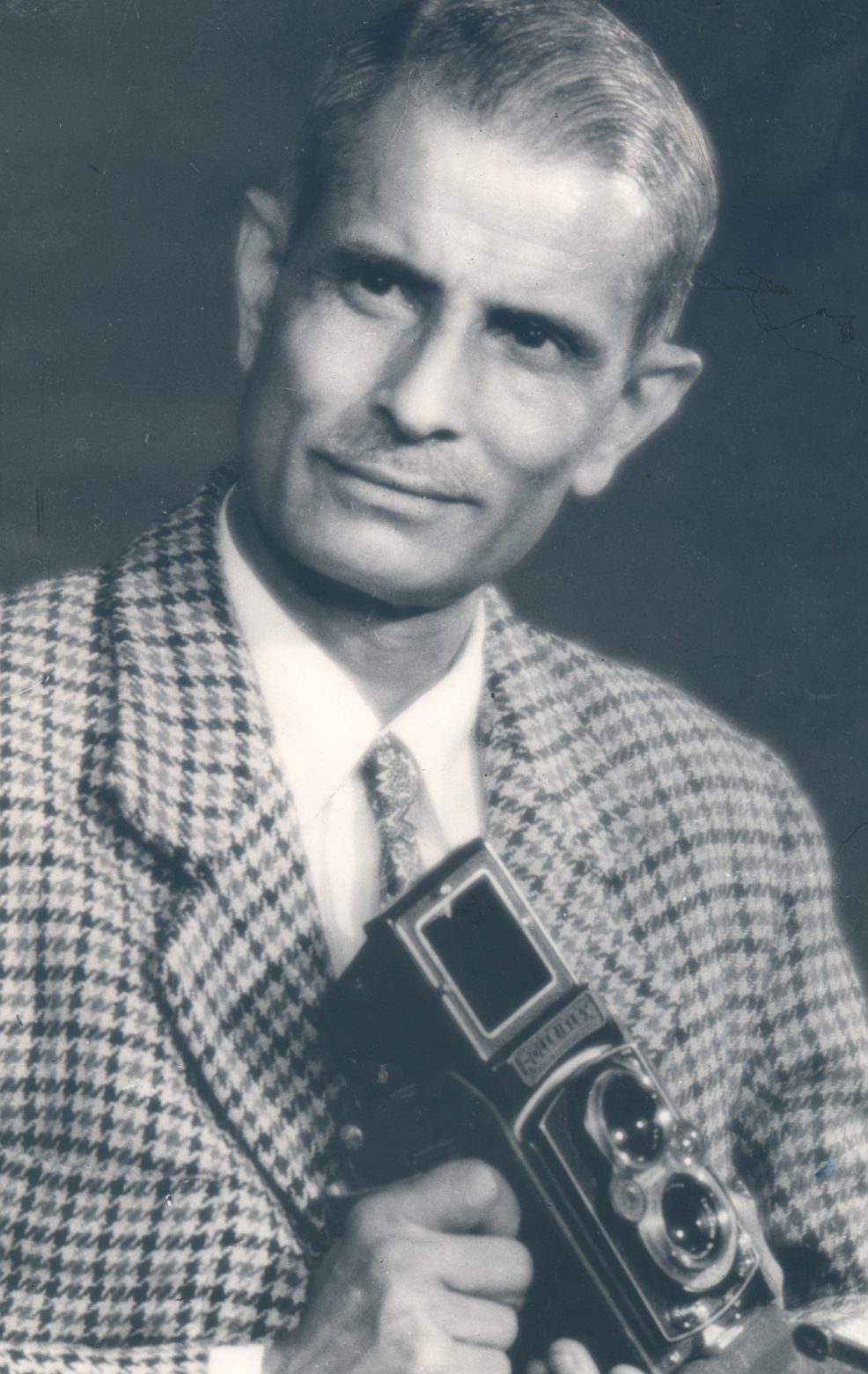
Abidmian Lalmian Syed (1904-1991), more popularly known as A.L. Syed, is the Doyen of Indian photography. He is regarded as one of the key figures whose works have captured the glory and aura of the Princely States of pre-Independence India.

Born on February 2, 1904, in Vernawada, a village 16 kms from Palanpur, he spent his early childhood in the town where his father was hakim of the Royal family. It was a school tour of Mumbai in 1923 that played an important role in shaping his life. On that trip, a photograph he clicked of sunset at Chowpatty won him the First Prize in Illustrated Weekly of India’s snap shot competition. For the next five decades, his photographs were regularly featured on the pages of the Weekly.

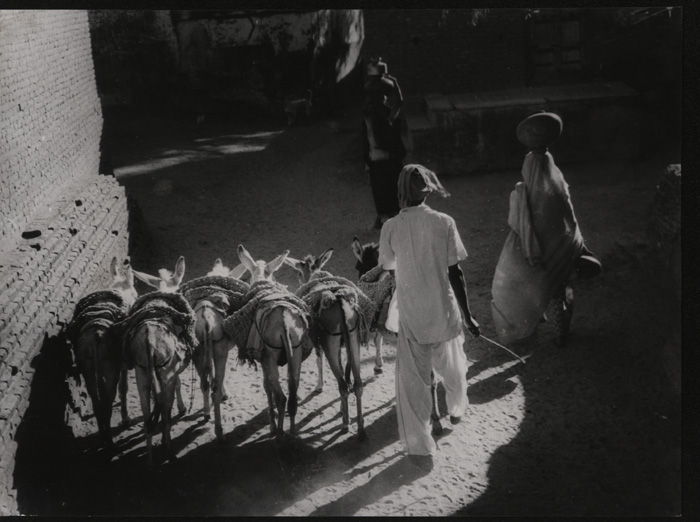
Morning Time In Dyara - 1938 - A. L. Syed
Morning Time In Dyara – 1938
– A. L. Syed

In 1925, his images first began appearing in Kumar, a Gujarati magazine, edited by well- known artist Ravi Shankar Raval, and he was a regular contributor, with photos and feature articles till the publication ceased in 1940. 

At that time he was already working with his elder brother, K.L. Syed, a well known freelance and also official court photographer in Palanpur. But unlike his brother, A.L. went beyond portraits, and his famous photograph ‘Traveller of the East’ taken in 1934, won international recognition and was published as one of the world’s best photographs in Odhan Press Home Library series. Since then it has been a part of over 40 international exhibitions and winner of the annual Popular Photography award in 1935, and later became part of the famous Hutchinson Collection in the USA.

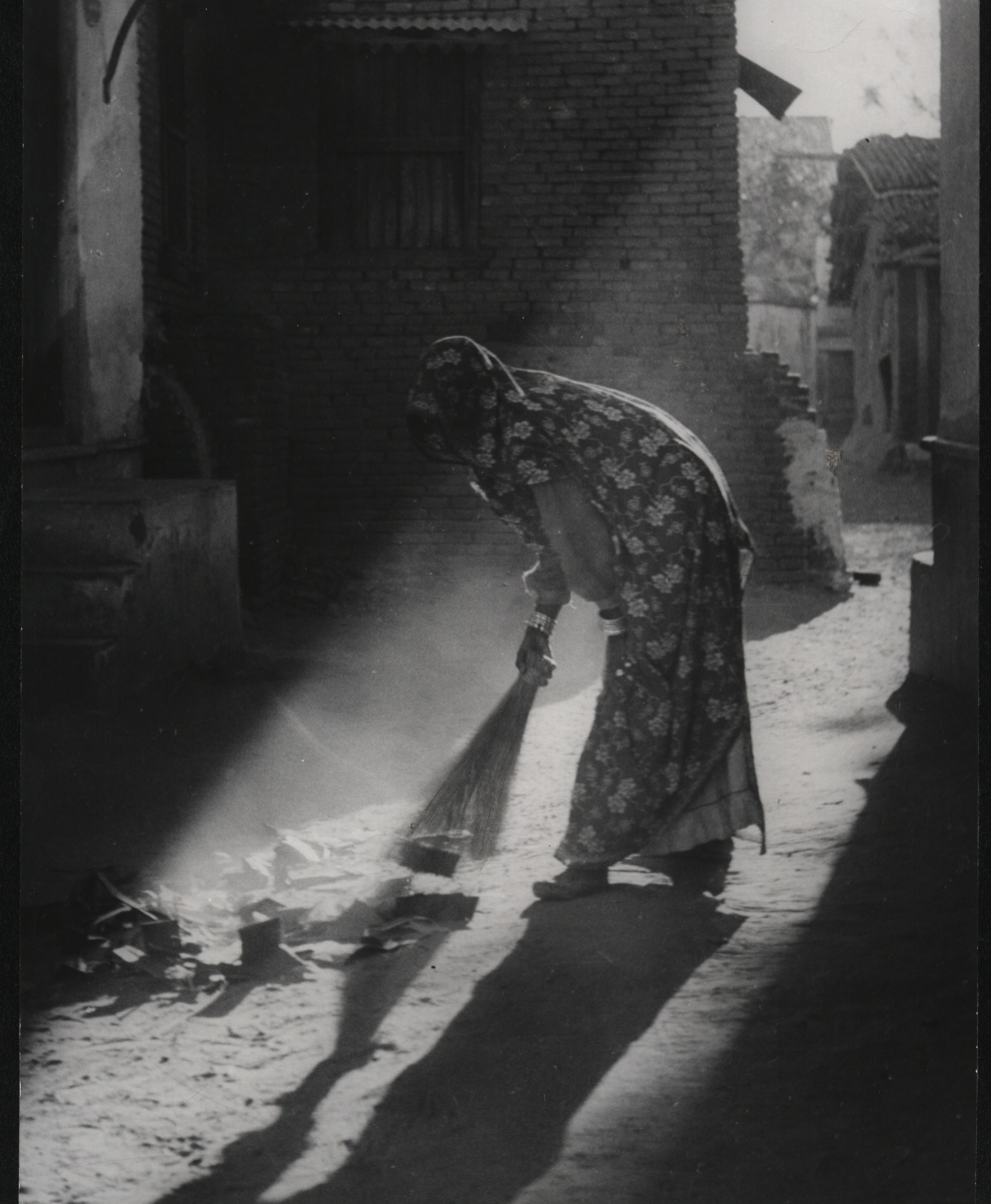
Street Sweeper - 1938 - A. L. Syed
Street Sweeper – 1938
– A. L. Syed

One of his many one-man shows was inaugurated by the then President of India, V.V. Giri, on the occasion of the 6th Convention of the Federation of Indian Photography hosted by the Camera Society, Delhi.

Another of his photographs, ‘Difficult Ascent’ was chosen for an award from among the 2,500 received from 15 Asia Pacific countries in the Asia Pacific Cultural Center for the UNESCO (ACCU) Photo Contest in Tokyo in 1977, and in 1980 he was given the honour of inaugurating a photographic exhibition organized by Illustrated Weekly of India to commemorate its centenary. Later in 1983, he was one of the 10 eminent photographers of the world to receive the India International Photographic Council’s highest honour, the Honorary Fellowship for outstanding contribution and service to various branches of photography. 

Mr. Syed was more than a photographer; he was a master artist, highly respected in Indiaand abroad, both professionally and personally. His skill in bringing alive remarkable images of day to day life around the country and crafting exquisite portraits have made his work live long after he passed away on August 30, 1991.

source: http://www.palanpuronline.com / Palanpur Online / Home> Personalities

Danish Ali’s moment in the sun

Hapur, UTTAR PRADESH / NEW DELHI / KARNATAKA :

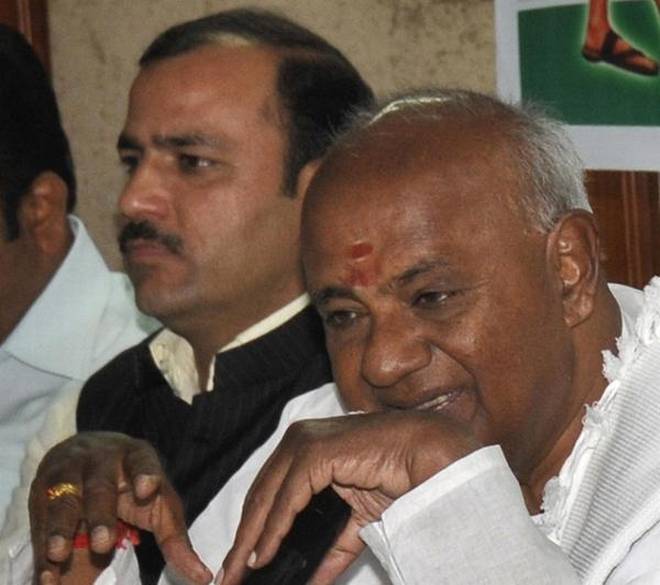
Key player: JD(S) leader Danish Ali (left) with party supremo H.D. Deve Gowda.

Gowda loyalist and JD(S) stalwart piloted alliance with Congress

The speed with which the Congress-Janata Dal(S) alliance came about on the afternoon of May 15 was a matter of much surprise to those who knew the strained relations between the two parties. That the alliance was stitched up, publicly announced and on the road to Raj Bhavan far ahead of the BJP’s move, was the product of three days of intense backroom talks between the two parties.

While the role of Leader of the Opposition in the Rajya Sabha Ghulam Nabi Azad is now well-known, the part played by JD(S)’ secretary general Kunwar Danish Ali remained unknown until he made it to all the photo-ops of Karnataka Chief Minister-designate H.D. Kumaraswamy with Congress president Rahul Gandhi.

According to sources, it was a midnight call between Mr. Azad and Mr. Ali on May 13, two days before the results were out, that set the ball rolling.

“It was clear to the JD(S) that talk of a secret deal with the BJP during the campaign had resulted in a desertion by minorities. The Congress, too, anticipated a less than stellar performance,” said a source. Mr. Ali was instrumental in speaking to both former prime minister Deve Gowda and Mr. Kumaraswamy about Mr. Azad’s call, but only on the night of May 14.

“Mr. Deve Gowda just told him to speak to Mr. Kumaraswamy, while the latter was a bit apprehensive after the bitter campaign by the Congress,” said a source. Mr. Deve Gowda was for a wait and watch approach, sources said, but Mr. Kumaraswamy, once convinced by Mr. Ali, issued a public statement sealing the alliance.

“He was convinced that this alliance would have far-reaching consequences for the 2019 polls too,” said a source.

Mr. Ali, 54, had also sewn up the party’s alliance with the Bahujan Samaj Party (BSP) and the All Indian Majlis-e-Ittehadul Muslimeen (AIMIM) before the polls, with the BSP contesting in 20 seats and winning one, a historic first for them.

He entered politics as the national president of the Janata Dal student wing in 1994, as a student in Delhi’s Jamia Millia Islamia University, and has stuck with the Gowdas through thick and thin. He came to the attention of the former prime minister especially during the 1994 Assembly polls in Karnataka when he was speaking at a rally in Ramanagara.

In his more than quarter of a century with the Janata Dal(S) and its earlier avatar, Mr. Ali has contested one Assembly poll from Garhmukhteswar in Uttar Pradesh, the State he hails from. Apart from his grand uncle, Kunwar Mahmood Ali, who owed allegiance to the Indian National Lok Dal under late prime minister Chaudhary Charan Singh, and was Governor of Madhya Pradesh between 1992-93, no one else from his family is in politics.

source: http://www.thehindu.com / The Hindu / Home> News> States> Karnataka / by Nistula Hebbar / New Delhi – May 23rd, 2018

First verse of the Koran in 6,000 different styles

Lucknow, UTTAR PRADESH :

New Delhi :

His inclination towards calligraphy was realised way back in school, when he frequently labelled the notebooks of his classmates with their names written in beautiful artistic forms.

However, for 60-year old Hashim Akhtar Naqvi, an architect by profession and calligrapher by interest, the inclination became a life-long devotion when he took upon the task of writing the first verse of the Holy Koran in as many stylised forms as possible.

At last count, the Lucknow based artist had already written the verse in over 6000 styles. His innovative faculties are still as enthusiastic as they were when he started the work, ensuring that he can smoothly go on to add more to his stock.

Recognised by the Limca book of records for his unique venture, the collection of the artist was recently displayed in the capital at the Indira Gandhi national centre for arts, as part of the programme, Aqeedat ke Rang, an exhibition of expressions of devotion in Islam.

When I started blending the verse into artistic designs, I felt I would hardly be able to proceed beyond 8 or 10 forms. But the ideas kept coming and the verse kept repeating itself through my fingers until there was a collection of over 6000 styles, and the venture has not yet ended says Naqvi.

The Arabic verse, Bismillah-ir-Rahman-ir-Rahim, translated as, In the Name of Allah, most beneficient, most merciful, which is recited by Muslims before performing any major or minor task is also represented by the number 786.

Blending his architectural vision to his innate artistic capacity, Naqvi who has been experimenting with the script of the verse for over 20 years, has produced some genuinely original work of calligraphy.

What makes it even more interesting is the fact that his calligraphic pursuits derive very little influence from the existing Arabic calligraphic forms but is largely innovative and in some cases adopts from the scripts of regional Indian languages. I have tried to include the influence of the script of a number of

Indian languages. including Hindi, Bengali, Telugu, Tamil, Punjabi, Gujarati, Malayalam and Kannada, he says.

PTI

source: http://www.financialexpress.com / Financial Express / Home> Archive> Fe300 / New Delhi – April 09th, 2008

Tributes paid to Vakkom Khader

Vakkom Village (Thiruvananthapuram District) , KERALA :

On September 10, 1943, a young man named Abdul Khader was martyred in the fight for India’s independence.

Also known as Vakkom Khader, he was a member of Subash Chandra Bose’s Indian National Army (INA) and was sentenced to death for “conspiring to wage war against the British King.”

Commemorating Khader on the occasion of the 73rd anniversary of his martyrdom, Chief Minister Pinarayi Vijayan said it was important for the younger generations to know about the struggles of Khader and his fellow freedom fighters, so that they appreciate the freedom and rights they enjoy.

This is especially important today, given that questionable interpretations of patriotism and nationalism have arisen of late, he said.

The Chief Minister inaugurated the memorial meeting organised on Saturday by the INA Hero Vakkom Khader National Foundation.

source: http://www.thehindu.com / The Hindu / Home> National> Kerala / by Staff Reporter / Thiruvananthapuram – September 11th, 2016

Free Heart Surgeries for Children at AMU Medical College

Aligarh, UTTAR PRADESH :

The collaboration with the Healing Little Hearts charity was initiated by AMU Vice Chancellor Tariq Mansoor, Tabassum Shahab (Pro Vice-Chancellor) and Shamshul Zoha, an AMU alumnus.

File photo of Aligarh Muslim University campus.

Aligarh:

Free heart surgeries will be available for children with congenital defects at the Aligarh Muslim University’s (AMU) Jawahar Lal Nehru Medical College (JNMC) after the varsity signed a deal with a British charity.

The collaboration with the Healing Little Hearts (HLH) charity was initiated by AMU Vice Chancellor Tariq Mansoor, Tabassum Shahab (Pro Vice-Chancellor) and Shamshul Zoha, an AMU alumnus.

Javaid Akhter (Registrar), Mohammad Hanif Beg (Chairperson, Department of Cardiothoracic Surgery) and Azam Haseem signed the Memorandum of Understanding (MoU) with HLH’s Sanjiv Nichani (Consultant Paediatric Interventionist) and Zoha.

“Since independent researches show yearly births of over 100,000 babies with congenital heart defects in India, it is high time to take necessary steps for helping these children with heart ailments,” said professor Beg.

Many children requiring corrective heart surgeries do not get treated due to financial constraints and even the affordable treatment available is sub-standard with poor expertise.

JNMC provides affordable treatment with state-of-art facilities to patients from underprivileged sections, he added.​

source: http://www.news18.com / News18 / Home> India / by IANS / May 24th, 2018

Man Breaks Ramadan Fast To Save 8-Year-Old Thalassemic Child

Gopalgang District , BIHAR :

The boy was rushed to the emergency of Sadar hospital by his father. The patient complained of uneasiness and weakness, and required immediate blood transfusion.

Patna :

A Muslim man in Bihar chose humanity over religious customs, broke his Ramadan fast to donate blood to an eight-year-old Hindu thalassemic boy and saved his life. Jawed Alam on Tuesday donated blood to Rajesh Kumar in Gopalganj district, a district health official said.

The boy was rushed to the emergency of Sadar hospital by his father. The patient complained of uneasiness and weakness, and required immediate blood transfusion.

There was no blood matching Rajesh’s blood group available in the blood bank. They said it would take at least two-to-three days to arrange it.

The boy’s condition deteriorated quickly. His father had travelled some 200 km from the Kuchaikote area and was fast losing hope as he waited in the corridors of the blood bank.

It was then that a hospital sweeper and cleaner, informed Anwar Hussain, a member of District Blood Donor Team (DBDT) about the child.

Mr Hussain requested his friend Jawed Alam, an active member of DBDT to rush to Sadar hospital.

“When my friend Anwar requested me to donate blood to a seriously ill thalassemia patient, I politely informed him that I was observing Ramzan fast.

“But he convinced me to arrive and consulted doctors. At first even the doctors refused my offer as I was fasting,” Mr Jawed said.

“They agreed only after I took their advise, broke my fast and consumed fruit juice and some solids,” the young Muslim man in his 30s said.

He said: “My religion teaches me to help a fellow human first, so I broke my fast and donated blood to save little Rajesh. Islam preaches that humanity is bigger than everything.”

Thalassemia is a blood disorder and a thalassemic patient needs blood transfusion after every three-to-four weeks.

source: http://www.ndtv.com / NDTV / Home> Sections> All India / by Indo-Asian News Service / May 23rd, 2018