All posts by mpositiveone@gmail.com

An interview with Sahar, founder of “Chamak Patti”

NEW DELHI :

SaharMPOs07sept2017

Hi Sahar, thanks for taking the time to chat with SIW. Tell us a little bit about yourself and your work.

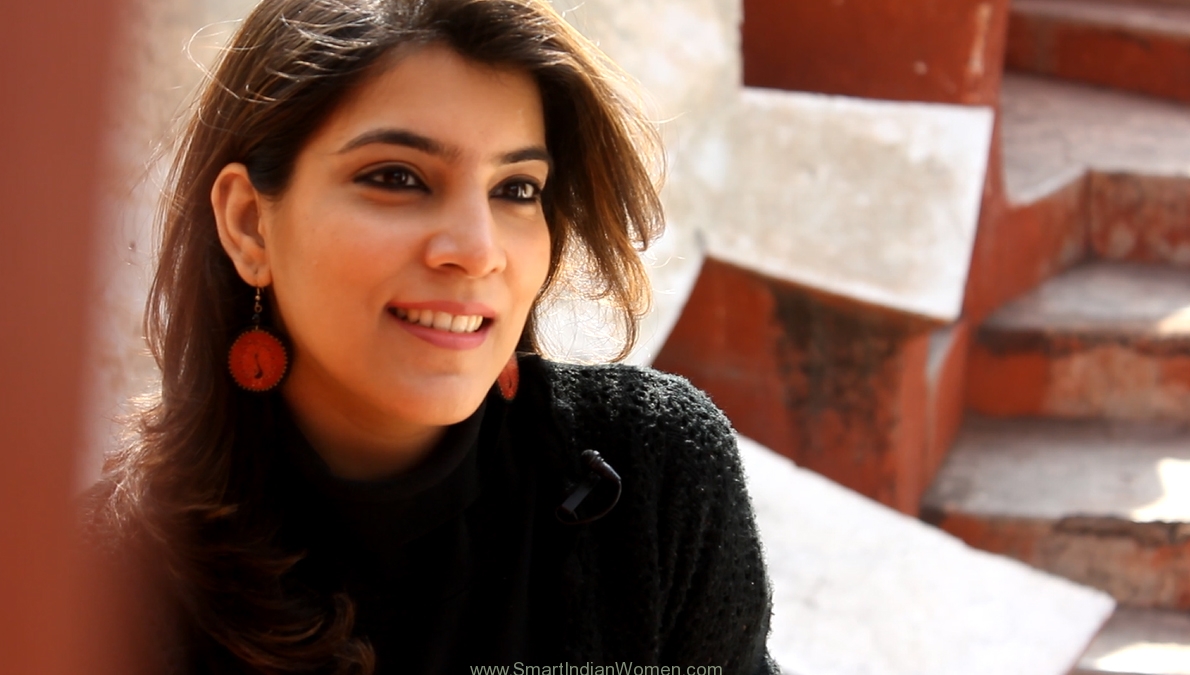
Sahar : I’ve been in business of television news for almost 15 years. Having done everything from reporting, writing and producing shows, I have settled into being a news anchor for mainstream political news and specializing in arts journalism. I am currently the Afternoon News face for News X. Apart from that, I have launched by own design brand for home decor and jewelry called Chamak Patti. This includes furniture, home ware and jewelry. More recently, I launched Asia’s first web channel on the arts, called Hunar TV. This includes catchy, peppy yet in-depth dialogues with artists from visual arts, music, theatre, dance, writing, etc. I have been invited by LimeRoad to be part of their style council to help create new looks for their customers.

What inspired you to get into this profession?

Sahar : In both the businesses that I run, the biggest inspiration has been the world of art. In Chamak Patti, I myself design and make the products. But these products are works of art. Since they’re personally executed, each piece is unique, like a collector’s item, not repeated for any second client. For Hunar TV, the main thrust for creating video capsules is to ensure people from outside the art world are introduced to this magnificent world of artists’ studio and their thought process.

What is your USP?

Sahar : In both my businesses, it is my twin understanding of news and art. I am aware how the real relates to the transcendent. It is this very understanding that helps me figure how design and art fits into our needs, our lives.

How someone can start the same business as yours in terms of investment, material procurement, production, and marketing etc?

Sahar : For Chamak Patti, I started on a very small scale and invested my own money. Today the sale of products takes care of more investment. From my personal experience, the simpler the formula, the less complicated the business. Material procurement has to be done after a lot of research on what your raw product is and where to get it best from. Marketing is relatively easier today. I trust social media and my own large data base of contacts.

For Hunar TV, investment was larger because there was expensive equipment to be bought and a team of experts to maintain. I strongly depend on sponsorship funds for each of the video capsules we create.  Marketing has been strong on social media and by strategic partnerships with well established names.

Any challenge you are facing in your profession and how you overcome that?

Sahar : The biggest challenge has always been to ensure that funds keep coming in for the next big step to be taken. You gradually learn how to overcome it. There’s never one single formula on how to overcome a challenge. Every formula that you can think of is put to test and you eventually realize which formula works when and how! But in your mind, it’s more important to ensure you take all the criticism and warnings in your stride, it’s important to willingly take the plunge and have the grit to make it happen.

What are your plans for the future?

Sahar : Team expansion for both my businesses is the future plan. Having Chamak Patti products available outside India by logistically making the current structure stronger. For Hunar TV, I would like to create more interesting video capsules on a daily basis and have it shared more frequently.

How you manage your personal and professional life?

Sahar : More than time management, what works better for me is task management. I am a brilliant multi-tasker and manage to slip in and out of my professional and personal engagements with great ease. I often take my toddler to client meetings and shoots. And I often have important con-calls while taking care of my child at home. But most importantly, it’s impossible to balance this without a helpful mother and a supportive husband. My family is my pillar of support. I would achieve very little without them.

What are your favorite books that you would recommend SIW family?

Sahar : I’m afraid I get very little time to read!! I will soon be recommending a self-authored book to be read! Ha!!

What advice would you give to young women readers of SIW who want to follow a similar career path as you?

Sahar : Believe in yourself because only you know yourself best. There are plenty voices out there to scare you from taking a bold step that could be different or experimental. It’s important to take the plunge for a career you believe in. And it also helps to have your family understand why you need to do what you want to do! If not, go ahead nevertheless…

All images are property of “Chamak Patti” and required permissions have been taken to publish it on www.smartindianwomen.com website.

source: http://www.smartindianwomen.com / 2015
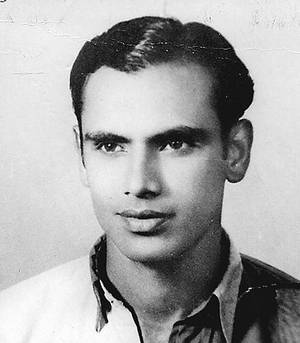
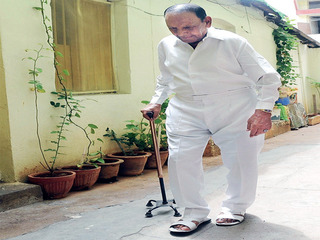
Air Marshal Jaffar Zaheer: Principled Indian Air Force officer

Lucknow, UTTAR PRADESH / NEW DELHI :

News, Obituaries 

Jaffar Zaheer’s impish irreverence hid a steeliness that emerged in the unusually principled stand he took against India’s omnipotent political establishment during the premiership of Indira Gandhi. As the first Indian Air Force (IAF) officer to head the country’s chaotic Directorate General of Civil Aviation, Zaheer refused, despite relentless political pressure, to withdraw the case against Gandhi’s unruly son, Sanjay, for flying a commercial airliner with passengers without a valid licence.

He also declined to apologise to Sanjay, an unforgiving thug who drew authority from being his mother’s political heir, for the “inconvenience” of charging him with the offence. The unrelenting Zaheer then further banned Sanjay Gandhi from flying a stunt plane and from executing dangerous aerobatics over the capital, Delhi, in violation of all safety norms. Sanjay ignored the veto and continued; Zaheer quietly resigned in June 1980.

On 23 June, Sanjay, unable to exit from a complex loop in his single-engine two-seater plane, crashed and died, changing the course of Indian politics. Zaheer was asked to withdraw his resignation, offered palliatives like ambassadorships and state governorships. But he declined, preferring instead the anonymity of running the small, private Khambatta airlines in the western port city of Bombay for the next five years.

But Zaheer’s impetuosity as a newly commissioned officer in the then Royal Indian Air Force (RIAF) in the early 1940s had almost ended his budding career after he poured a bottle of wine on his instructor whilst raising a toast during his “dining in” at an RAF mess in England. As the stunned senior officer glowered under the onslaught, Zaheer declared with aplomb to a speechless, but secretly pleased, audience of English fighter pilots that the drenched gentleman had needed a spring cleaning.

The only Indian cadet at the RAF base undergoing an aircraft conversion course, Zaheer had found the chief instructor’s behaviour racist, an assessment the commanding officer possibly shared, as he merely demanded to know whether the offending wine had been white or red. And, instead of the court martial that was under serious consideration, Zaheer’s eventual punishment was merely to reimburse the officer for the cost of dry-cleaning his uniform.

Zaheer was born in 1923 into an aristocratic Muslim family in Lucknow in northern India, the son of a renowned politician who after independence became a government minister and later a diplomat. Schooled locally, he joined the prestigious Allahabad University but left before graduating to join the RIAF in 1942. Soon after, along with other Indian cadets, he was dispatched to Canada to undergo flying training and was commissioned into service in September 1943 in the rank of Flying Officer.

The Second World War ended during Zaheer’s journey home by boat, but he did see some action strafing restive Pashtun tribesmen in the North West Frontier Province – now in Pakistan – in the region bordering Afghanistan that remains in ferment even today, having changed little in over a century.

Zaheer was one of a handful of IAF fighter pilots to graduate from the Institute of Armament Technology, a discipline that helped him formulate the Weapons Planning Directive of 1963 that remains the template for all such activity at Air Headquarters even today.

From 1964 until he retired 15 years later as IAF’s deputy chief in the rank of Air Marshal, Zaheer held various staff and operational appointments in which he oversaw the air force’s modernisation and streamlined its Byzantine financial procedures. During the 1971 war with Pakistan that led to the formation of Bangladesh, Zaheer commanded the critical Agra air force station near Delhi and was decorated for his services.

After retiring in 1979 he was appointed to head the Civil Aviation Directorate and almost immediately earned the ire of corrupt politicians by refusing to acquiesce to their demands to acquire a particular aircraft for which they were doubtlessly receiving backhanders. Zaheer’s scrapes with Sanjay Gandhi eventually led to his resigning in 1980, two years before his term expired.

His droll sense of humour and self-deprecation never left him. When Zaheer was suffering from the early ravages of Alzheimer’s, a youngster once asked after his health. “Never felt better,” Zaheer quipped. “Don’t remember a thing.”

Kuldip Singh

Jafar Zaheer, air force officer: born Lucknow, India 14 June 1923; Director, Air Staff Requirements, Indian Air Force 1973-74; Director-General of Civil Aviation 1979-80; married (three sons); died New Delhi 23 January 2008.

source: http://www.independent.co.uk / Independent / Home> News > Obituaries / by Kuldip Singh / Tuesday – April 08th, 2017

Restoration of Humayun Mahal to begin soon

Chennai, TAMIL NADU :

HumayunMahalMPOs31aug2017

Estimate to be presented in 2 weeks

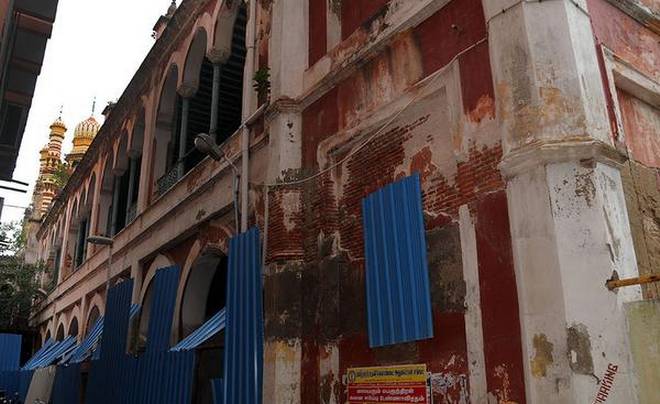
The Public Works Department (PWD) has set the ball rolling for the restoration of the historic Humayun Mahal on the Chepauk palace complex. It is set to submit a detailed estimate of the work necessary to renovate the structure in a fortnight.

After the successful restoration of Kalas Mahal, which will house the National Green Tribunal, Southern bench, from September 2, the PWD is now focussing on renovating the structure located next to it. This is the first structure that the new Building Centre and Conservation Division, formed by the PWD, will restore.

Constructed in 1770, the single-storey structure was once the residence of the Nawab of Arcot. Spread over 66,000 sq. ft., the building also has a connecting corridor to Kalas Mahal. Officials said nearly 50% of the roof has collapsed and needs to be rebuilt. “The estimate we will present will have details on the type of special materials needed, their availability and the special rates for renovating heritage structures,” an official said.

Unlike the other buildings, separate rates have to be arrived at for sourcing special construction material, such as limestone and flooring tiles. “We also need to collate data on places, such as Karaikudi and Virudhunagar, where these materials would be available. Once the estimate is prepared, we will be able to arrive at a uniform rate for the restoration of heritage structures,” the official said.

Based on the work taken up in Kalas Mahal four years ago, the renovation of Humayun Mahal is likely to cost at least ₹35 crore. The dilapidated structure once hosted various government offices, including those of the Agriculture Department, Social Welfare Department and the Directorate of Tamil Development.

Removing rubble

One of the main challenges is to remove the heaps of paper and rubble inside. Besides suffering the impact of the fire that ravaged Kalas Mahal in 2012, a portion of Humayun Mahal was affected due to a roof collapse and a minor fire in 2014. The search for funding is also delaying the project. Once the tie-up for funds is finalised, restoration work can begin in two months, the official added.

Meanwhile, the PWD is coordinating with various government departments to collate data on heritage buildings across the State.

source:  http://www.thehindu.com / The Hindu / Home> News> Cities> Chennai / bu K. Lakshmi / Chennai – August 30th, 2017

Barefoot footballer Ahmed Khan no more

Bengaluru, KARNATAKA  / Kolkata, WEST BENGAL :

Ahmed Khan. | Photo Credit: Handout E Mail

Ahmed Khan, the last of India’s glorious generation of barefooted footballers who made a mark on the 1948 Olympic Games, passed away here on Sunday.

He was 90 and died due to age-related issues. Khan, who was also part of the Indian sides that won gold at the Asian Games of 1951 and went to the 1952 Olympics in Helsinki, will be remembered as a gifted inside-left who mesmerised spectators with his ball control.

He played for East Bengal for a decade, and formed part of a feared five-member forward-line — Sale, Dhanaraj, Appa Rao and Venkatesh the others — nicknamed the ‘pancha pandavas’.

“His close control was so good that they called him the snake-charmer, for he could make the ball do his bidding,” recalled I. Arumainayagam, who turned out for India at the 1962 Asian Games.

“We used to call him paambati. His death is a big loss to Indian football.”

Khan was born in 1926 into a family of footballers. His father, Baba Khan, was captain of local club Bangalore Crescent, while two of his uncles turned out for Mohammedan Sporting in Kolkata.

Ahmed’s three brothers — Amjad Khan, Sharmat Khan and Latif Khan — all played football at various levels.

As early as 1938, Ahmed joined Bangalore Crescent, where he played alongside his father.

He is best remembered, however, for his role in the 1948 Olympics in London, where India lost its first-round match in heartbreaking fashion to France but made a deep impression on the public.

In a report for The Hindu dated September 25, 1948, A. Ramaswamy Aiyar wrote: “Raman and Ahmed, the left-extreme and the left-inside, hail from Bangalore. They showed uncanny control over the ball and had perfect understanding.

“It was a treat to watch them move with the ball, interchange positions and run rings round the defence. They kept the audience spellbound and moved with such ease that they were described as a pair of wizards.”

“After winning the Rovers Cup with Bangalore Muslims, he joined East Bengal in 1949 and played for the club for the next 10 years.”

In a statement, East Bengal general secretary Kalyan Majumder hailed him as a “barefooted genius” and perhaps the greatest player the club had ever seen.

“With outstanding individual brilliance the barefooted Khan was capable of deciding the fate of any match all by himself. Even after boots were made mandatory I recall his outstanding performance in the 1958 IFA Shield final when he along with Balaram destroyed Mohun Bagan to win the Trophy,” he said.

“One also recalls the spectacular goal he scored against Yugoslavia playing barefooted in the 1952 Helsinki Olympics.”

Khan’s death was condoled by the Karnataka State Football Association. He is survived by his wife, Rabia Begum, and children Majid Khan and Parveen Begum.

source: http://www.thehindu.com / The Hindu / Home> Sport> Football / by Special Correspondent / Bengaluru – August 28th, 2017

Life at a funeral

Bengaluru, KARNATAKA / Kolkata, WEST BENGAL  :

AhmedKhanMPOs29aug2017

As Ahmed Khan is laid to rest, kin feel blessed to belong to the same family as the football great; contemporaries remember him as a humble man who loved the game

Amjad Khan sat quietly sipping chai, unmindful of the cacophony raised by a line of four-wheelers jostling for space on the narrow, single-laned Mackan Road. His brother Ahmed, arguably India’s greatest footballer who passed away on Sunday, had just been laid to rest and the mourning — for now — was over. The multitude, that had turned out to pay their respects and attend the funeral, had departed and house #75 — the house of ‘Ahmed, the Olympian’ — was slowly returning to ‘normal’.

A smile spread across Amjad’s face when he was asked about his brother. With every sip of chai that he took, Amjad’s eyes took on an even more vacant look as his mind went back in time. “What makes a man great? This is how I analyse it,” Amjad, also a former India international, said. “You could say Ahmed played up to 1958, right? Public memory is generally short. We watch a good movie and don’t remember it a month later. But if people remember this man, after 60 years of his playing career, then he must have done something extraordinary.”

There was pride in Amjad’s every breath. It was the predominant feeling shared by those in house #75. A feeling that stemmed from simply being associated with the bloodline of India’s greatest dribbler, fondly nicknamed ‘the Snake Charmer’ by the English media. Even Mannan, a grandson who was born decades after Ahmed hung up his boots, said he was “proud to just be born in the same family as Ahmed”.

Inside the house, Mannan proudly pointed to Ahmed’s trophies, a collection that was put on display just above the freezer box that contained Ahmed’s remains only hours ago. Numerous tributes by East Bengal, Ahmed’s club in Kolkata, were laid out. “The Padmashri has lost a bit of its sheen today because it was never awarded to Ahmed,” Amjad remarked on the conspicuous lapse of the Central government’s attention to a man who had bagged the gold in the 1951 Asian Games.

Among India’s greatest football heroes, Ahmed is right up there. As an inside-left (withdraw striker), Ahmed played in two Olympics (1948 and 1952) and won every domestic trophy that was up for grabs with East Bengal. “You know the thing about cotton? Whatever you throw on cotton, it never bounces back. That was Ahmed’s dribbling prowess,” Amjad said. “My father used to say that if Ahmed had not become a footballer, he would have become India’s best athlete. You know, when he was studying in the St Aloysius School in the city, he never used to carry books to the school. Instead, he used to take a small ball, a tennis ball, and practise dribbling on his way to school and back. That explains his gift.”

Ahmed was part of the deadly ‘Panchapandavas’ of EB, a forward line also comprising P Venkatesh and PB Saleh on the flanks, Apparao as the inside right and Dhanraj in the centre. When asked whether the gold medal was Ahmed’s top moment as a player, Amjad laughed. “That was just okay,” he said. “Have you heard of Sahu Mewalal, the guy who scored the winner at the 1951 Asian Games? Every year in Calcutta, where he used to play for Railways, he was the top-scorer of the league. Dhanraj wanted to overthrow Mewalal and asked Ahmed to do something for him. In one game, this gentleman (Ahmed) dribbled past everyone, even the goalkeeper, and called Dhanraj to the post to tap it in. That year, Dhanraj became the top-scorer. Scoring goals was Ahmed’s wish when he was playing.”

I Arumainayagam, the 1962 Asian Games gold medallist from the other time that India ruled globally, called Ahmed an inspiration. “We used to learn from watching him play,” he said. “We used to name ourselves ‘Ahmed’, ‘Dhanraj’, ‘Basheer’ and emulate their style. We, of course, couldn’t play as well as they did, but they influenced us greatly.”

More than anything, Ahmed was a fine human being. The 1952 Helsinki Olympics showed that. India were humiliated 1-10 by Yugoslavia and Ahmed repents that he was able to score only one goal in that game. Outside the Olympics, he often used to skip practice sessions while playing for East Bengal which made people wonder at his talent. He also preferred to play barefoot, shunning boots when the occasion afforded it. He was also fond of playing cards and often drew players from rival club Mohun Bagan into a round after a football game. During one such game, he was up against Sailen Manna, Bagan’s top defender of that era. “Manna was trying to convince Ahmed to play for Bagan,” SS Shreekumar, a former journalist and Ahmed’s friend, said. “This was in a room packed with footballers from Bagan and their supporters who were watching them. Eventuall, Ahmed agreed to play for Bagan. The entire room was stunned on hearing it. But Ahmed had one condition.

Manna asked him what it was. He told Manna that he will have to play for EB and the room burst into laughter.”

Shreekumar wonders what could have been had Ahmed accepted an offer to play for Swedish club IFK Göteborg. “He was named East Bengal’s best forward of the millennium,” Shreekumar said. “But when IFK Göteborg contacted Ahmed, his father asked him to consult his club, East Bengal. Jyotish Chandra Guha, a former secretary of EB who had scouted Ahmed, was worried about losing him. He downplayed Ahmed’s future in Sweden by suggesting it would be too cold and that the locals might put him down because he would be the only Indian there.”

While the tributes kept pouring in, Amjad’s tea was done. But the smile remained. “There are two things which makes football interesting – scoring goals and dribbling,” he added. “Ahmed found it interesting because of the second reason.”

Today, Ahmed Khan is no more. But ‘Ahmed Khan Olympian’ will live on forever.

source: http://www.bangaloremirror.indiatimes.com / Bangalore Mirror / Home> Sports> Football / by Aravind Suchindran, Bangalore MIrror Bureau / August 29th, 2017

Nikhat Banu nails title

Hyderabad, TELANGANA :

Rithvik, Anjali, Varun too take titles at state table tennis event

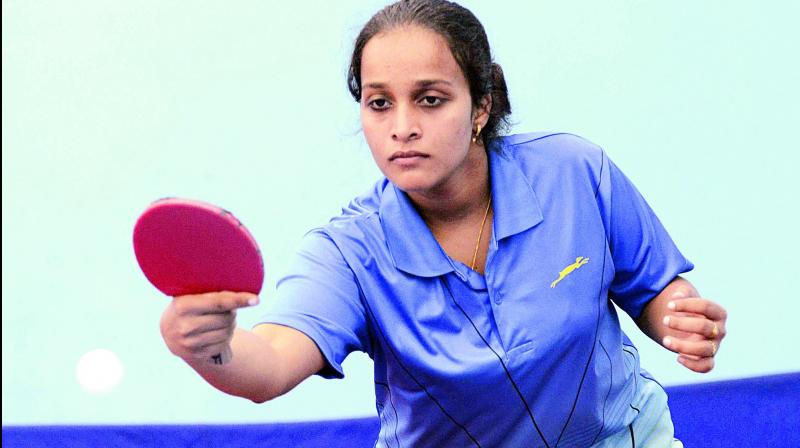
Nikhat Banu plays a shot on way to winning the women’s title at the 3rd Telangana state ranking tournament.

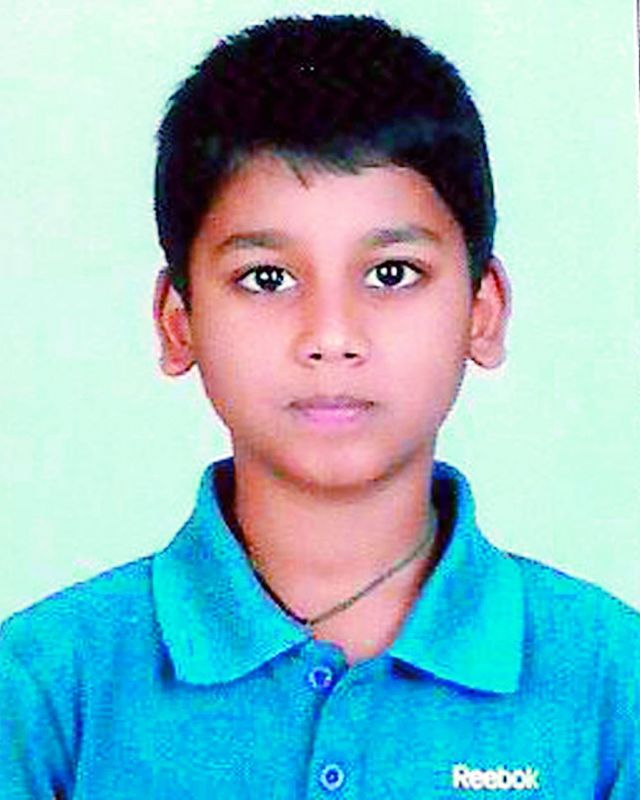
Rithvik U. from the Stag Academy continued his fine form as he emerged victor in the finals of the Cadet boys category of the 3rd Telangana State Stag Inter District and State Ranking Table Tennis championships being conducted by the Stag Table Tennis Academy under the auspices of Telangana State Table Tennis Association at Malakpet in Hyderabad. Rithvik outclassed AWA’s Raju (3-0) 14-12, 11-7, 11-8 to pocket the summit clash.

B. Varun Shanker won the finals in the sub-junior boys category.

In the women’s finals Nikhat Banu of Gujarati Seva Mandal proved too powerful for Naina from Lal Bhadur Stadium as she outclassed her 4-0 — 11-7, 11-7, 11-2, 11-4.

Meanwhile, in the boys sub-junior finals B. Varun Shanker comfortably won the match against Adavit, edging him 4-1 — 11-8, 10-12, 11-5, 11-7, 11-7 while GSM’s Anjali N. outclassed Ayushi G. to beat her 4-2 — 12-10, 2-11, 11-7, 11-9, 6-11, 11-8 in the finals of the sub junior girls category.

In the finals of the men’s inter-district championship, Hyderabad swept Nalgonda 3-0 to take the top honours.

The Results

Cadet boys finals: Rithvik U. (Stag Academy) bt Raju (AWA) (3-0) 14-12, 11-7, 11-8.

Inter-district team championship (men): Hyderabad bt Nalgonda 3-0.

Women’s finals: Nikhat Banu (GSM) bt Naina (LBS) (4-0) 11-7, 11-7, 11-2, 11-4.

Sub junior boys finals: B. Varun Shanker (GTTA) bt Advait (AWA) (4-1) 11-8, 10-12, 11-5, 11-7, 11-7. Quarterfinals: Kesavan Kannan (GTTA) bt SSK Karthik (AWA) (3-2) 12-14, 2-11, 11-7, 13-11, 11-8; B Varun Shanker (GTTA) bt Vishal A (GSM) (3-0) 11-8, 11-9, 11-3; Sai Venkata Dhanush (AWA) bt Ritesh Thomas (GTTA) (3-2) 18-16, 6-11, 11-8, 6-11, 11-6; Advait (AWA) bt B Vishnu (GTTA) (3-0) 12-10, 12-10, 11-9.

Sub junior girls finals: Anjali N. (GSM) bt Ayushi G. (GSM) (4-2) 12-10, 2-11, 11-7, 11-9, 6-11, 11-8. Semifinals: Ayushi G. (GSM) bt Bhaavitha N. (GSM) (4-1) 11-6, 11-7, 12-14, 11-4, 11-4; Anjali N (GSM) bt T Srivalli Ramya (Stag Academy) (4-0) 11-9, 11-6, 11-8, 11-6. Quarterfinals: T. Srivalli Ramya (Stag Academy) bt Aishwarya Daga (AWA) (3-0) 11-3, 11-8, 11-6; Anjali N (GSM) bt Keerthana (HVS) (3-0) 11-4, 11-7, 11-7; Bhaavitha N (GSM) bt Devyani G (GSM) (3-1) 11-6, 3-11, 11-7, 11-5; Ayushi G (GSM) bt Ruchira Reddy (AWA) (3-0) 11-3, 11-6, 11-5.
n Junior boys quarterfinals: Sai Tejesh (GSM) bt Arvind (AWA) (4-3) 9-11, 9-11, 10-12, 11-4, 11-4, 11-6, 11-9; SFR Snehit (GTTA) bt Ali Mohammed (Stag Academy) (4-2) 10-12, 12-10, 11-9, 8-11, 11-2, 11-8; Mohd Ali (LBS) bt Harsh Lahoti (HVS) (4-1) 9-11, 11-9, 11-4, 11-9, 11-4; V. S. Hari Krishna (GTTA) bt Saroj Siril (GTTA) (4-0) 11-4, 15-13, 12-10, 11-8. Pre-quarterfinals: Sai Tejesh (GSM) bt Sai Venkata Dhanush (AWA) (3-0) 11-7, 11-8, 12-10; Ali Mohammed (Stag Academy) bt B. Varun Shanker (GTTA) (3-0) 11-9, 11-8, 11-2; Saroj Siril (GTTA) bt Amaan-Ur-Rehman (Stag Academy) (3-1) 11-6, 11-6, 5- 11, 11-7; V S Hari Krishna (GTTA) bt Advait (AWA) (3-1) 11-6, 9-11, 11-9, 11-6; Harsh Lahoti (HVS) bt Govind Shah (Stag Academy) (3-0) 11-4, 11-6, 11-9; Mohd Ali (LBS) bt Anup Amara (STTA) (3-0) 11-3, 11-5, 11-2.

Junior girls quarterfinals: G. Pranitha (HVS) bt Vinichitra (Stag Academy) (4-0) 11-4, 11-8, 11-6, 15-13; Naina (LBS) w/o Ayushi G (GSM); Sasya (AWA) bt T Srivalli Ramya (Stag Academy) (4-0) 11-5, 11-8, 11-6, 11-4. Pre-quarterfinals: Laasya (AWA) bt Rachana A (GSM) (3-0) 11-7, 11-3, 12-10; Varuni Jaiswal (GSM) bt Anjali N (GSM) (3-0) 11-6, 11-7, 11-9; Sasya (AWA) bt Devyani G. (GSM) (3-0) 11-6, 11-3, 11-4; Vinichitra (Stag Academy) bt Bhaavitha N. (GSM) (3-1) 11-9, 11-9, 11-8; T. Srivalli Ramya (Stag Academy) bt Palak Shah (Stag Academy) (3-1) 11-9, 8-; 11, 11-7, 11-6; Ayushi G. (GSM) bt Vidhi Jain (GSM) (3-0) 11-2, 11-7, 11-2; Naina (LBS) bt Hanifa Khatoon (Stag Academy) (3-0) 11-3, 11-5, 11-3; Ayushi G (GSM) bt Hanifa Khatoon (Stag Academy) (4-0) 11-8, 11-1, 11-7, 11-7; G Pranitha (HVS) bt K Ikshitha (AWA) (3-0) 11-1, 11-6, 11-2. Round II: Naina (LBS) bt Sarnya S. (GSM) (3-0) 11-8, 11-2, 11-7.

Youth girls quarterfinals: Varuni Jaiswal (GSM) bt Laasya (AWA) (4-1) 9-11, 11-2, 11-9, 13-11, 11-5; G. Pranitha (HVS) w/o Ayushi G (GSM); Naina (LBS) bt Monica M. (GSM) (4-0) 11-6, 11-8, 11-5, 11-6; Sasya (AWA) bt Vinichitra (Stag Academy) (4-1) 11-1, 5-11, 11-8, 12-10, 12-10. Pre-quarterfinals: Vinichitra (Stag Academy) bt Bhaavitha N. (GSM) (4-1) 11-8, 11-9, 11-13, 11-5, 11-2; Naina (LBS) bt Devyani G (GSM) (4-0) 15-13, 11-7, 11-3, 11-4; G. Pranitha (HVS) bt Rachana A. (GSM) (4-1) 14-12, 11-8, 7-11, 11-9, 11-7; Sasya (AWA) bt K. Ikshitha (AWA) (4-0) 11-5, 11-6, 11-5, 11-5; Monica M. (GSM) bt Palak Shah (Stag Academy) (4-0) 11-5, 11-6, 11-9, 11-5; Laasya (AWA) bt Diya Vora (HVS) (4-0) 11-4, 11-3, 11-4, 11-6; Varuni Jaiswal (GSM) bt T. Srivalli Ramya (Stag Academy) (4-0) 11-3, 12-10, 11-5, 11-4.

Youth boys pre-quarterfinals: V. S. Hari Krishna (GTTA) bt Yeshasvin (GSM) (4-0) 11-9, 11-6, 11-6, 11-1; K Pavan Kumar (GSM) bt Amaan-Ur-Rehman (Stag Academy) (4-2) 11-8, 11- 8, 9-11, 11-7, 9-11, 11-9; Harsh Lahoti (HVS) bt Arvind (AWA) (4-3) 11-2, 5-11, 11-4, 9-11, 8-11, 11-2, 14-12; Mohd Ali (LBS) bt Sai Venkata Dhanush (AWA) (4-1) 11-5, 9-11, 11-8, 11-7, 11-8; Arvind (AWA) bt Piyush Agarwal (Stag Academy) (4-2) 11-9, 11-2, 9-11, 9-11, 11-8, 11-9; SFR Snehit (GTTA) bt B. Varun Shanker (GTTA) (4-1) 11-6, 11-4, 11-5, 8-11, 11-5; Saroj Siril (GTTA) bt Govind Shah (Stag Academy) (4-0) 11-5, 11-5, 11-6, 11-7.

Men pre-quarterfinals: Somnath Ghosh (SCR) bt K. Pavan Kumar (GSM) (4-1) 11-9, 8-11, 11-7, 11-7, 13-11; Chandrachud (GSM) bt Mohd Ali (LBS) (4-0) 12-10, 11-9, 11-7, 11-5; SFR Snehit (GTTA) bt Somraj Roy (IT) (4-3) 11-9, 11-7, 8-11, 10-12, 11-3, 7-11, 11-2; Zubair Farooqui (LBS) bt B. Manohar Kumar (OIC) (4-2) 11-7, 11-6, 5-11, 11-8, 9-11, 11-8. Round I: K. Pavan Kumar (GSM) bt Vipin (AWA) (4-0) 11-1, 11-8, 11-3, 11-4; SFRSnehit (GTTA) bt Agha Hussain (HVS) (4-0) 11-4, 11-8, 11-4, 18-16. Arvind (AWA) bt Mahinder (AWA) (4-1).

source: http://deccanchronicle.com / Deccan Chronicle / Home> Sports> In Other News / Deccan Chronicle / November 23rd, 2016

Ashish hurls hammer to new high

KERALA , MAHARASHTRA , TAMIL NADU :

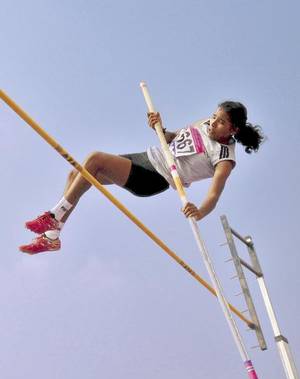
SOARING HIGH: A. Nisha Banu of Tamil Nadu, who won the pole vault gold in the girls’ under-20 category.

Coleshiya, Nisha and Hemamalini make it a golden day for TN

Ashish Jakhar of Haryana won the hammer gold in the under-18 boys’ category with a new mark of 75.45m on the second day of the Sri Krishna 32nd National junior athletics championship at the Nehru Stadium here on Friday.

The Asian junior champion and youth silver medallist improved his own mark of 72.04m set last year at the Goa youth Nationals.

Vikranta of Uttar Pradesh was probably inspired by Ashish as he too ended up bettering the record with a throw of 73.34m.

J. Coleshiya, A. Nisha Banu and N. Hemamalini made it a golden day for Tamil Nadu by finishing on top of the podium in the girls’ under-14 triathlon, under-20 pole vault and under-18 javelin respectively.

A student of St. Teresa’s School in Vadakankulam in Tirunelveli, Coleshiya tallied 1577 points for her maiden national gold.

“After I came up with decent performances in both the 100m (13.25s) and long jump (4.95m), I knew the gold would go my way,” said the little girl, who has battled several odds in life.

Nisha won the under-20 pole vault gold, clearing a height of 3.30m. Nisha was not at her best, but still managed to beat the rest with ease.

Hemamalini, who represented the country in the World School Games in Turkey this year, clinched the under-18 javelin gold with a 45.26m effort.

After two days of solid battle under the sun, Haryana was sitting pretty at the top of the combined table with 123 points followed by Uttar Pradesh (100), Kerala (95) and Tamil Nadu (80).

The results:

Boys: U-14: 600m: 1. Vinit Yadav (UP) 1:23.49s; 2. Shivam Chaudhary (Bih) 1:24.82, 3. C. Chandra Sekhar (AP) 1:25.88.

Triathlon: 1. Salman Khan (Mah) 1674 pts., 2. Ajay Sharma (Har) 1650, 3. Rout Singh (Odi) 1617.

U-16: 100m hurdles: 1. Punga Soren (Odi) 13.76s; 2. Babu Sona Gain (WB) 13.81, 3. V.K. Muhammed Lazan (Ker) 13.94Hammer: 1. Nitesh Poonia (Raj) 66.70m; 2. Arnav Yadav (UP) 61.90, 3. Mohit Rana (Del) 59.85.

U-18: 110m hurdles: 1. Alden Noronha (Mah) 14.20s; 2. G. Gopi Chand (AP) 14.40, 3. Kunal Chaudhary (Del) 14.60.

10,000m walk: 1. Amanjot Singh (Pun) 44:57.30s, 2. Naveen (Har) 46:11.50, 3. V.K. Abhijit (Ker) 46:13.70.

Hammer: 1. Ashish Jakhar (Har) 75.45m (NR), 3. Vikranta (UP) 73.34, 3. Damneet Singh (Pun) 70.56. Long jump: 1. M. Sreeshankar (Ker) 7.52m, 2. M. Mahesh (TN) 6.95, 3. Anil Kumar (Har) 6.94.

U-20: 110m hurdles: 1. Paras Patil (Mah) 14.18s; 2. Debarjan Murmu (WB) 14.34; 3. R. Logeshwaran (TN) 14.56.

Girls: U-14: 600m: 1. D. Bhagya Laxmi (TS) 1:36.57s; 2. U. Athira (Ker) 1:37.74, 3. Pallavi Jagdale (Mah) 1:38.22.

Triathlon: 1. J. Coleshiya (TN) 1577 points, 2. Poorva Sawant (Mah) 1459, Maisuri Timbadia (Guj) 1395.

U-16: 100m hurdles: 1. Aparna Roy (Ker) 14.47s; 2. Gurdeep Kaur (Pun) 14.92, 3. P.M. Thabitha (TN) 15.21.

U-18: 100m hurdles: 1. Ritwika Singh (UP) 14.42s, 2. Sapna Kumari (Jhar) 14.53, 3. Manasi Paravatkar (Mah) 14.80. Javelin: 1. N. Hemamalini (TN) 45.26m; 2. Sanjana Choudha (Raj) 43.10, 3. Runjun Pegu (Asm) 43.02.

Shot put: 1. Kachnar Chaudhary (Raj) 15.99m, 2. Anamika Das (UP) 15.11; 3. Kiran Baliyan (UP) 14.62.

U-20: 100m hurdles: 1. Anurupa Kumari (Jha) 14.30s, 2. C. Kanimozhi (TN) 14.48,, 3. Ankita Gosavi (Mah) 14.51.

10,000m walk: Ravina (Har) 52:27.33s, 2. Vandna (Kar) 53:17.56, Bandana Patel (UP) 54:26.84. Pole vault: 1. A. Nisha Banu (TN) 3.30m, 2. P. Anjaly Francis (Ker) 3.05, 3. Mahi Patel (UP) 2.90.

source: http://www.thehindu.com / The Hindu / Home> Sport> Other Sports / Coimbatore – November 12th, 2016

A souvenir from Bidar for the Prime Minister

Bidar, KARNATAKA :

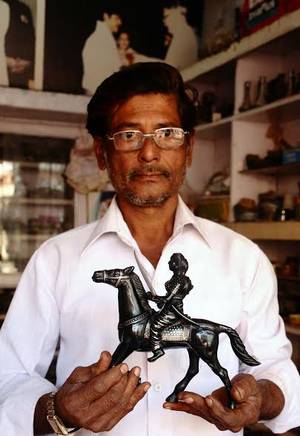
The souvenir that Prime Minister Narendra Modi carried back from Belagavi on Sunday was a statuette of valiant queen Channamma of Kittur made by the Bidri artisans of Bidar.

The queen who fought the British in 1824, 33 years before the first war of Indian independence, was born in a village in Belagavi district. But her stunning image in silver inlay on a black surface, was made using the soil of Bidar fort, 500 km away.

M.A. Rauf with the statuette of Kittur Channamma , one of which was presented to the PM Narendra Modi in Belgavai on Sunday. Photo: Gopichand T.

A team of six artisans led by Mohammad Abdul Rauf, national award winning craftsman, have been chiseling out 140 images of the queen for nearly 100 days now. They have spent hours working in the 100 square feet work shed doing jobs like starting from melting copper and zinc to form an alloy, create a master shield, prepare its copies, etch drawings on them, hammer silver into the slits and treat it with the soil from the Bidar fort, to give it a permanent black colour.

Though the artisans work in an assembly line method, each statuette takes three to four days to be completed. Mr. Rauf has sold the images to a Bengaluru-based jeweler for around Rs. 3,000 a piece. He does not know at what cost the souvenirs have been supplied to the KLE society whose centenary celebrations Mr. Modi attended.

Sadly, Mr. Rauf did not know that one of the souvenirs was meant to be given to the Prime Minister, till some one told him in the morning.

The artisan, who can read Urdu, said that the newspapers he read had not covered the event. “My friend told me a Kannada paper had carried the picture of the PM receiving the souvenir and since he had seen me working on it, he identified it. We are very happy that the Bidri artifact will find a place in the Prime Minister’s office,” he said.

“When Mr. Modi addressed a campaign meeting in Bidar in 2014, he had said he would address the problems of Bidri artisans if elected to power. We hope he remembers his promise,” Ashok Ram, another Bidri artisan who works with Mr. Rauf, said.

source: http://www.thehindu.com / The Hindu / Home> News> States> Karnataka / by Special Correspondent / Bidar – November 14th, 2016

18-year-old Ayesha Aziz set to become first Kashmiri woman pilot

Khawaja Bagh (Baramulla District) JAMMU & KASHMIR / Mumbai, MAHARASHTRA :

Mumbai :

Mumbai-based Ayesha Aziz is the youngest girl of Kashmir origin who will soon acquire the Commercial Pilot License (CPL) and is probably set to enter the Limca Book of Records with her feats.

Ayesha has completed a two-month advanced space training course at NASA, being among three Indians picked for it.

She even holds a student pilot license at the prestigious Bombay Flying Club. But Ayesha is clear that it wouldn’t have all worked without her parents’ support.

Having turned 18 on October 3, she is a member of Indian Women Pilot’s Association, besides holding the Flight Radio Telephone Operator’s License (FRTOL). Her Parents hail from Khawaja Bagh in Baramulla district of Jammu and Kashmir. Ayesha did her schooling from Mumbai and presently resides there along with her parents.

Setting an example of a role model for numerous youngsters, Ayesha’s pursuits have brought in a whiff of fresh air and inspired many girls who are following her to realize their dreams. Her achievements are not only being hailed in Kashmir, but all over the country.

She is immensely inspired by Sunita Williams. “I always used to think if she had ability to do such thing why can’t other girls”. Ayesha said Kashmir played a significant role in her life and she was emotionally attached to it. She also told girls in Kashmir not to be bothered by politics and to follow their heart.

source: http://www.muslimmirror.com / Muslim Mirror / Home> Indian Muslim> Youth / by admin / October 18th, 2013

Ibrahim Sulaiman Sait laid to rest with State honours

KERALA / Bengaluru, KARNATAKA :

Bangalore :

The last rites of the Indian National League President former MP, Ibrahim Sulaiman Sait, who died on Wednesday, were performed at the Khuddus Sab Idgah maidan here on Thursday, with State honours. The Minister of State for Labour and Wakf, Tanvir Sait, laid a wreath on the body on behalf of the Chief Minister, N. Dharam Singh.

The Governor, T.N. Chaturvedi has expressed shock over the passing away of Mr. Sait. In a message, Mr. Chaturvedi said, “In the death of Mr. Sait, the country has lost a distinguished parliamentarian, a champion of minority rights and an eminent national leader. A man of strong principles and simple living, Mr. Sait dedicated his life to the good of society.”

Mr. Sait was one those political leaders from Karnataka who were elected to Parliament from another State.

He was born in 1922 in Mysore and graduated from St. Joseph’s College here. His father, Mohammed Sulaiman Sait, had participated in the Khilafat movement. His uncle Abdul Sattar Sait left for Pakistan at the time of partition and was that country’s first ambassador to Saudi Arabia. Ibrahim Sulaiman Sait’s mother and wife were from Kerala.

He began his political career as the General Secretary of the Muslim League in 1948 after giving up a career as a lecturer in English. He had to shift his political activities to Kerala as the Muslim League failed to build a base in the erstwhile Mysore State.

Though the League had a Minister in the K.C. Reddy cabinet after Independence, some of the League leaders joined the Congress or other parties.

source: http://www.thehindu.com / The Hindu / Home> Karnataka / by Staff Reporter / Friday – April 29th, 2005