All posts by mpositiveone@gmail.com

Indore pacer Avesh Khan hopes for IPL high

Indore, MADHYA PRADESH :

Indore :

Years ago, when Mohammad Ashique Khan would chat about cricket with his customers while they would bide time in his paan shop outside SJSITS, one of the top engineering colleges here, like most ‘paanwalas’ tend to do across the streets of India, little did he realise that one day, his own son would come back to the town as the part of one of the most popular teams in the IPL.

Madhya Pradesh pacer Avesh Khan , who shot into the limelight after clocking 139.8kmph against Pakistan in the Under-19 World Cup in Bangladesh last year, is a part of the Royal Challengers Bangalore  squad, though he’s unlikely to play when they play the Kings XI Punjab at the MPCA Stadium here on Sunday night.

“I’m obviously excited. I’ll get to go home, but I wish that I get to make my IPL debut soon, so that I can prove my talent, express myself,” Khan told TOI from Bangalore, while packing his bags for the trip. The 20-year-old claims that despite his humble background, cricket was never a problem.

“My father had a paan shop five-six years back, when I wasn’t even playing cricket, but now he’s a finance manager in a firm. We never had financial problems. Through the earnings of his paan shop, my father ensured that we had food on the table twice in the day, and thanks to Allah, we never had to face financial problems. I was and am never feel embarrassed about what he did. No work is small or big,” he recalls.

Unlike most young cricketers these days, the flow of money hasn’t resulted Khan’s lifestyle becoming extravagant. “I don’t have too many indulgences. I never craved for a big flat, or a flashy car, or expensive clothes. I still don’t have my own car. I’m not an outgoing person, don’t and spend most of my day training.

“On Sunday, I like spending time with my parents. I just want to see my parents happy and proud of me. Twice, the Madhya Pradesh Cricket Association (MPCA) awarded me Rs 5 lakhs cash prize, but I gave that money to my father. I don’t keep more than Rs200 in my pocket. If I need more money, I ask my mother for it,” he says.

The IPL contract with RCB came just as he was feeling low at being ignored from the IPL auction list last year despite having impressed everyone at the Colts’ World Cup. “I was feeling bad as my name wasn’t there in the IPL auction, despite being the highest wicket-taker for India (12scalps@15.08) in the U-19 World Cup last year. Luckily, as RCB’s bowling wasn’t doing well at that point, Virat bhai (Kohi, India & RCB skipper) and Daniel Vettori (coach) summoned me for trials in Bangalore before the playoffs last year and I was signed up last year. I was retained this year on an Rs 11 lakhs contract,” he recalls.

 “He’s a sincere, hard-working boy. He can generate good pace-around the 140s. He’s sharp off the pitch. He’s just 20, and he’ll learn with time. He’ll be noticed because of his speed. The good thing about him is that he gets bounce from those ideas where the batsman doesn’t like it. He can finish off the game in a session, and tends to be quicker in his second spell, when the conditions a more in favour of the batsmen,” praises former India and Madhya Pradesh batsman Amay Khurasia, who has coached the youngster since he first came to the MPCA academy when he was just 15.

Khurasia feels that the India selectors haven’t groomed Khan well after the pacer’s talent was visible during the junior World Cup. “Considering that he was praised by cricket legends like Rahul Dravid (India U-19 coach) and Glenn McGrath, the selectors could’ve picked him for the Irani Cup. Even the MP Ranji selectors have goofed up by not picking him in the Ranji Trophy team initially,” he laments.

A knee injury, and a lack of vision on part of the selectors has meant that Khan hasn’t played for MP since the high of the U-19 World Cup.

Maybe, the IPL has a better fate in store for this rare talent.

source: http://www.timesofindia.indiatimes.com / The Times of India / Home> News> IPL / by Gaurav Gupta / TNN / April 10th, 2017

The Begum and the Mutiny

Kotwara, UTTAR PRADESH / FRANCE :

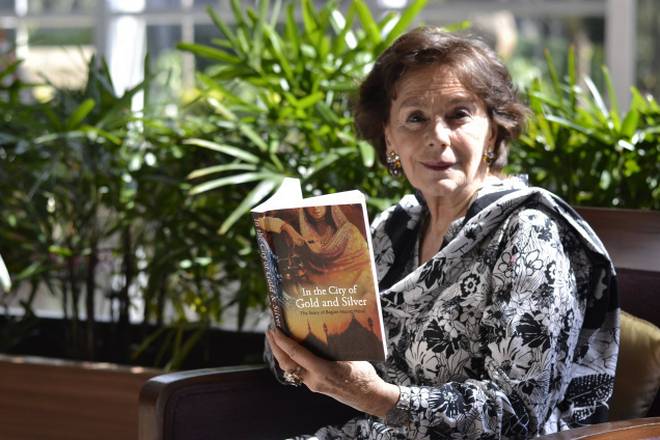
Kenize Mourad, author of ‘In the city of gold and silver – the story of Begum Hazrat Mahal’. Photo: Sangeetha Devi Dundoo

Hyderabad :

In the story of Begum Hazrat Mahal, Kenize Mourad found a story that belied misplaced notions of Muslim women of yore

Kenize Mourad, while researching for her book ‘In the City of Gold and Silver’, came across references to Begum Hazrat Mahal in documents written by the British. They referred to her as the ‘soul of the 1857 War of Independence’. “It is unfortunate and unfair that she has been forgotten in India,” says Kenize Mourad, in Hyderabad to launch her book ‘In The City of Gold and Silver – The Story of Begum Hazrat Mahal’ (Full Circle publications; Rs. 350).

Speaking to us in an interview, the author says, “Rani of Jhansi, Lakshmi Bai, is remembered because she died on the battlefield. She fought for about four or five months. Begum Hazrat Mahal fought the British for two years. It took the British nine months to gain control over Lucknow. The Begum continued her fight for a year after this.”

Kenize Mourad is of Turkish and Indian descent, Awadh to be precise. “I first visited Lucknow when I was 21 and heard about Begum Hazrat Mahal and her valour from my father (Raja Syed Sajid Husain Ali of Kotwara). Years later, I remembered the story and felt the Begum’s story had to be told,” says Kenize.

The author pored over documents and books in libraries of London, New Delhi and Lucknow. “It took me three years to find enough information. In Lucknow, I spoke to families whose ancestors had fought in the battle along with the Begum. Quite a bit of history in India follows an oral tradition,” explains Kenize.

She scouted libraries in London and came across six volumes of ‘Mutiny Papers’ documented by the British. An 1858 edition of The Times had stated ‘The Begum of Awadh shows greater strategic sense and courage than all her generals put together’. Kenize wanted to write about the Begum and dispel notions about Muslim women of yore. “The book is relevant in this time when Islam is misrepresented. The majority of Muslims, 95 to 98 per cent, is also being put in the same bracket as extremists, which is unfair. And these normal people are the first ones to suffer due to extremists,” says Kenize. “I wanted to show how a Muslim woman was strong enough to lead an army. The Begum was an intelligent woman who enforced justice and waived taxes on food for the poor,” says Kenize.

Kenize takes pride in raising her voice for underdogs all through her career as a journalist in France. “I’ve felt like a fighter for justice all my life. In my books, I have often written about the misrepresentation of the Quran,” says Kenize. History, she says, has intriguing accounts of women Muslim rulers. “There are instances of Turkish women holding important positions on their own right, not because they are mothers, sisters of wives of important men.”

Though Kenize was keen to present accurate historical facts in ‘In The City of Gold and Silver’, she took the liberty of weaving in a love story between the Begum and a dashing Hindu Raja. “I felt people will absorb an interesting historical novel than a dry book full of facts. Keeping the sociology of people in that era, I tried to recreate Awadh of those times,” says the author.

Kenize wrote the book in French. “In France, the book sold more than 70,000 copies. The pocket-friendly (abridged) version sold even more copies,” she says. The book has been translated in English by Anne Mathai and Marie-Louise Naville.

Talking about her roots in Lucknow, Kenize says, “During my first visit to Lucknow as a student, I was amused and spent six months there. Had it been a bigger city like Delhi or Mumbai, I might have stayed on. Opportunities for work were limited. And I wasn’t willing to sit at home and get ready to be married off,” she says. The topic of marriage reminds her of Hyderabad. “I was almost married off to a well-known Hyderabadi,” she says. “Through my cousin, Princess Niloufer, I happened to meet a gentleman from the Nizam’s family. He told Niloufer that he hoped for my hand in marriage. I found it odd that he hadn’t asked me directly. I was given to understand that I would be a ‘bird in a golden cage’. I turned down the proposal.”

This is Kenize’s first visit to Hyderabad. “I never visited this city thinking I may not be welcome here since I turned down the marriage proposal,” she laughs.

Next, Kenize wants to write about present-day Pakistan. “The country, as it exists today, is a tragedy. I want to write about Pakistan through fiction. It will take at least three to four years to work on the book,” she signs off.

source: http://www.thehindu.com / The Hindu / Home> Books / by Sangeetha Devi Dundoo / Hyderabad – January 17th, 2013

Meet City Girl Zainab Sayeed IRS from Kolkata

Chitpur (Kolkata), WEST BENGAL :

ZainabMPOs11apr2017

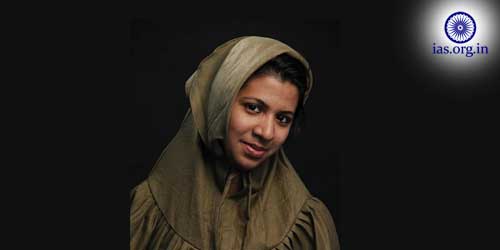
Zainab Sayeed, the first Muslim woman from West Bengal cracked the Civil Services Examination by achieving All India Rank 107 and has also topped the UPSC interview by scoring highest marks.

Marks Obtained

 Total Marks  Marks Obtained
Total (Written)  1750 731
 Interview 275  220
 Total  2025  951 (46.96%)

Topper of UPSC Interview

Interview is the last stage of the Civil Services Examination. Zainab Sayeed scored more than even the score of the first rank holder Ira Singhal. Ira scored 167 marks in the interview whereas Out of 275 marks, Zainab scored 220 in the interview that is 58 marks more than the top ranked Ira scored. She has made a record as the highest scorer in the interview round and ranked 107 in the examination.

Zainab Sayeed said that she hoped if she was allotted the Indian Administrative Service (IAS), it would be good for her if not then she would like to join the Indian Revenue and Customs Service.

Family Background

Zainab Sayeed comes from Chitpur in North Kolkata and belongs to an elite Bohra Muslim family. Her father Taiyab Sayyed is a hardware businessman based in Kolkata; her mother Farida Sayyed is a homemaker and assists her husband’s business. Zainab is second daughter of her parents. Eldest sister Tasneem Sayyed is running her own consulting firm. Youngest daughter Fatima Sayeed is pursuing BDS from Jamia Millia Islamia University, Delhi. Zainab Sayeed got married to Hussain Izzy, a hardware businessman.

Zainab Sayeed parents were very supportive and encouraged her to go for UPSC. During preparation of the Civil Services Exam her husband played an important role in motivating her and he used to set the time table for her to study which was of great help for Zainab. She says she is lucky to have parents and husband who always encourage her to go ahead.

Educational Background

Zainab Sayeed got graduated in English from St Xavier’s College. Again she went to Delhi and enrolled at the AJK Mass Communication and Research Centre at the Jamia Millia Islamia and completed her Masters in Convergent Journalism in 2011. While pursuing Masters in Jamia, she simultaneously signed up at the Jamia’s coaching centre for the UPSC exam preparation.

When she returned back to Kolkata she got a job in the English daily ‘The Telegraph’. She worked in the editorial department of The Telegraph, Kolkata till her final UPSC results were out.

Attempts by Zainab Sayeed

Zainab Sayeed of West Bengal has qualified UPSC Exam in her third attempt. She took the Civil Services Exam in 2012 and 2013, but could not clear the Prelims.

Preparation Strategy

Zainab Sayeed set a target, studied hard and displaying strong determination achieved her goal. She devoted six to seven hours a day seriously for preparations and her punctuality paid off in the end.

Dress Preference

Zainab Sayeed belongs to the Bohra community and wears the traditional ‘Rida’ since she was 13 years old. She wears “Rida, a headscarf, or Hijab every Bohra girl and woman wear”, and appeared for the UPSC personal interview in the same traditional attire.

The interviewers asked why she wore the attire which is a religious marker. She was neither ashamed nor apologetic. She said “Rida or Hijab is part and parcel of her persona. Besides there is a saying that one should wear clothes one feels comfortable in, she cited the instance of a Prime Minister who wore a turban which is also a religious symbolism”.

source: http://www.syskool.com / Syskool / Home> People / by Praful / March 31st, 2016

The Colours Of Kotwara

Lucknow, UTTAR PRADESH / NEW DELHI :
MuzaffarFPMPOsapr2017

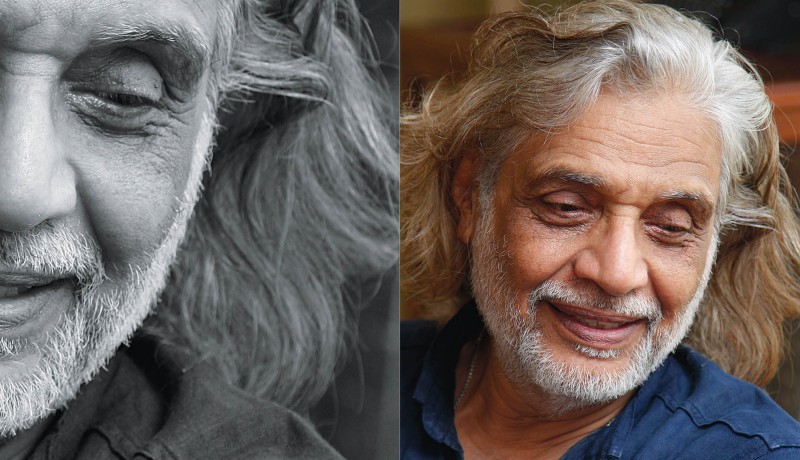
Muzaffar Ali wears many hats—filmmaker, painter, poet, fashion designer, revivalist, Sufi exponent, social worker—with consummate ease. As he prepares to release his latest labour of love, Jaanisaar, he speaks to Ambica Gulati about being in a ‘constant state of inspiration’

Filmmaker. Painter. Sufi exponent. Revivalist. Fashion designer. Music lover. Social worker. Just some of the ways Muzaffar Ali is described. But the man himself is loath to be labelled. For him, life is a singular pursuit: a quest for harmony and love as elucidated by the Sufi philosophy, “surrender of the highest order, which manifests through human compassion”.

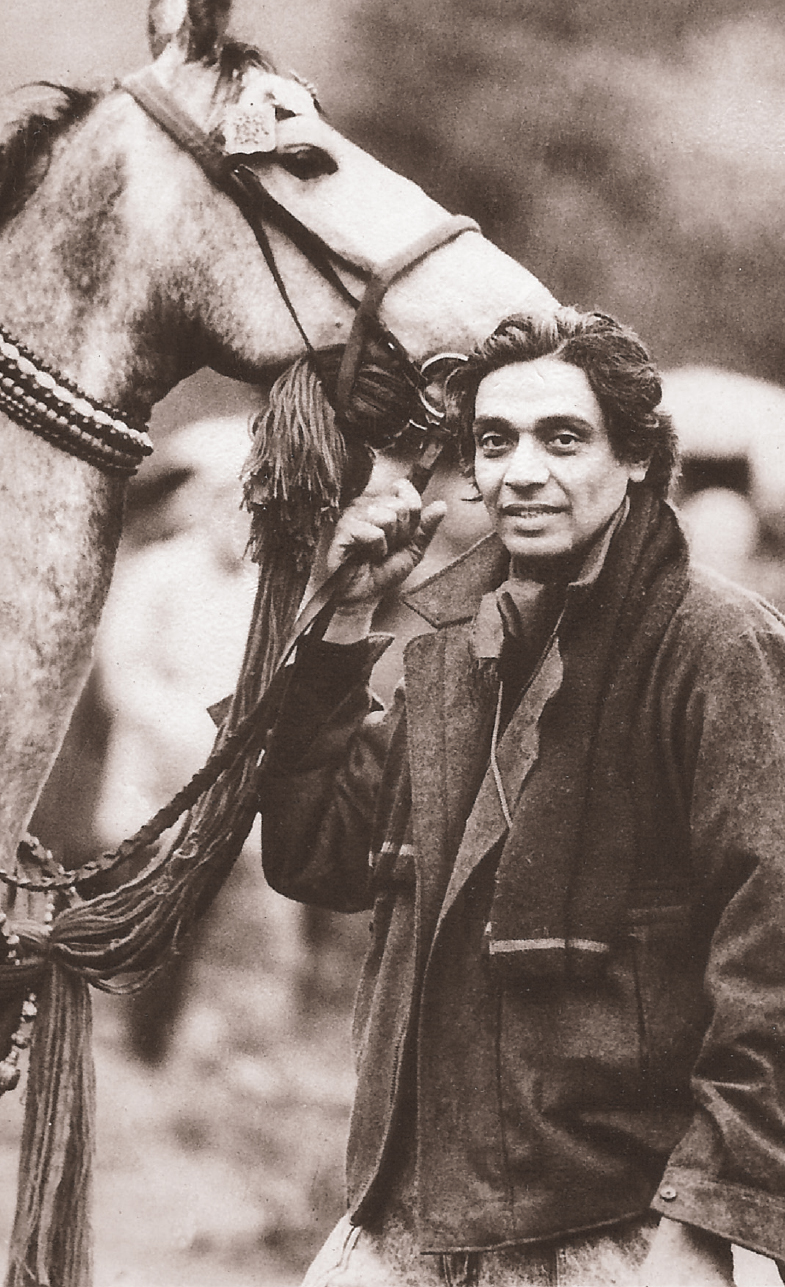
Our introduction to Ali takes place at his charming farmhouse in Gurgaon, where Barrack, his horse, runs freely in the grassy expanse while dogs laze contentedly in the morning sun. In another corner, vintage cars are parked in a shed, pregnant with stories of a royal past. Ali is the current Raja of Kotwara, a former princely state 160 km from Lucknow, but there is nothing pretentious about him or his lifestyle. Enter the farmhouse and you notice how mud, mortar and brick blend seamlessly, mirroring the owner’s constant quest for harmony and balance in keeping with the Sufi way of life. Inside the massive door, red pillars catch the eye, and once inside the glass doors, you are introduced to the sophisticated yet mellow world of a man with seemingly infinite creative nuances. Designed by his wife Meera, Ali’s farmhouse is a fusion of styles that perfectly capture the personality of the Raja—his paintings adorn the walls, old books lie open on tables, and a fireplace painted by Ali himself occupies pride of place in the centre of the room.

At the age of 70, white hair flowing across his elegant shoulders, Ali speaks with a quiet passion about his films, establishing the Kotwara clothing brand with Meera, spreading Sufism, creating beautiful minds, reinventing the lives of the people of Kotwara and his umbilical ties to the region. During the conversation, the Padma Shri (2005) recipient also sheds light on his soon-to-be-released film Jaanisaar, and receiving the Rajiv Gandhi National Sadbhavana Award (2014) for promoting peace and harmony.
Muzaffar01MPOsapr2017

EXCERPTS FROM AN INTERVIEW

Who really is Muzzafar Ali?

I am my parent’s child, shaped by my father Syed Sajid Husain Ali’s progressive thinking and groomed by my mother Kaneez Hyder’s cultural feathers. I grew up in an era of turmoil, when India was all for independence. Awadh had a prominent Nawabi culture. My father was the head of Kotwara, but he thought like the common man. He had studied in Scotland where he dressed up like the British, drove a sports car and was influenced by the philosophy of the Communist Party of Great Britain. He believed in an egalitarian society, and focused on health, education and work for all. In 1937, he fought his first elections against the Muslim League as he believed in a secular, democratic India. Humanism and secularism were his principles. My mother followed the purdah system. She was interested in art, culture, music and all the influences you see in Umrao Jaan.

What is common to Muzzafar Ali the filmmaker, social worker, painter, Raja and fashion designer?

An artist in quest for a balance between humanity and beauty.

Were you groomed for the arts at home? And was the pursuit of creativity a deliberate career choice?
I was studying science at Aligarh Muslim University. My father believed in the Nehruvian vision, which was progress through science and technology. He wanted me to be a part of that. After the zamindari system was abolished in 1957, he locked himself up and studied law. During India’s transition, he also transformed. He gave up wearing mill-made clothes and opted for khadi. Suddenly, there was a perceptible shift from a lavish lifestyle to a Spartan one. I guess something similar happened to me in university. I discovered poetry and poets like Faiz Ahmed Faiz and Rahi Masoom Raza, and my education became an art of science or perhaps it was the science of art that got to me. I read the works of Rumi and became passionate about the Sufi way of love and surrender.
Muzaffar02MPOsapr2017

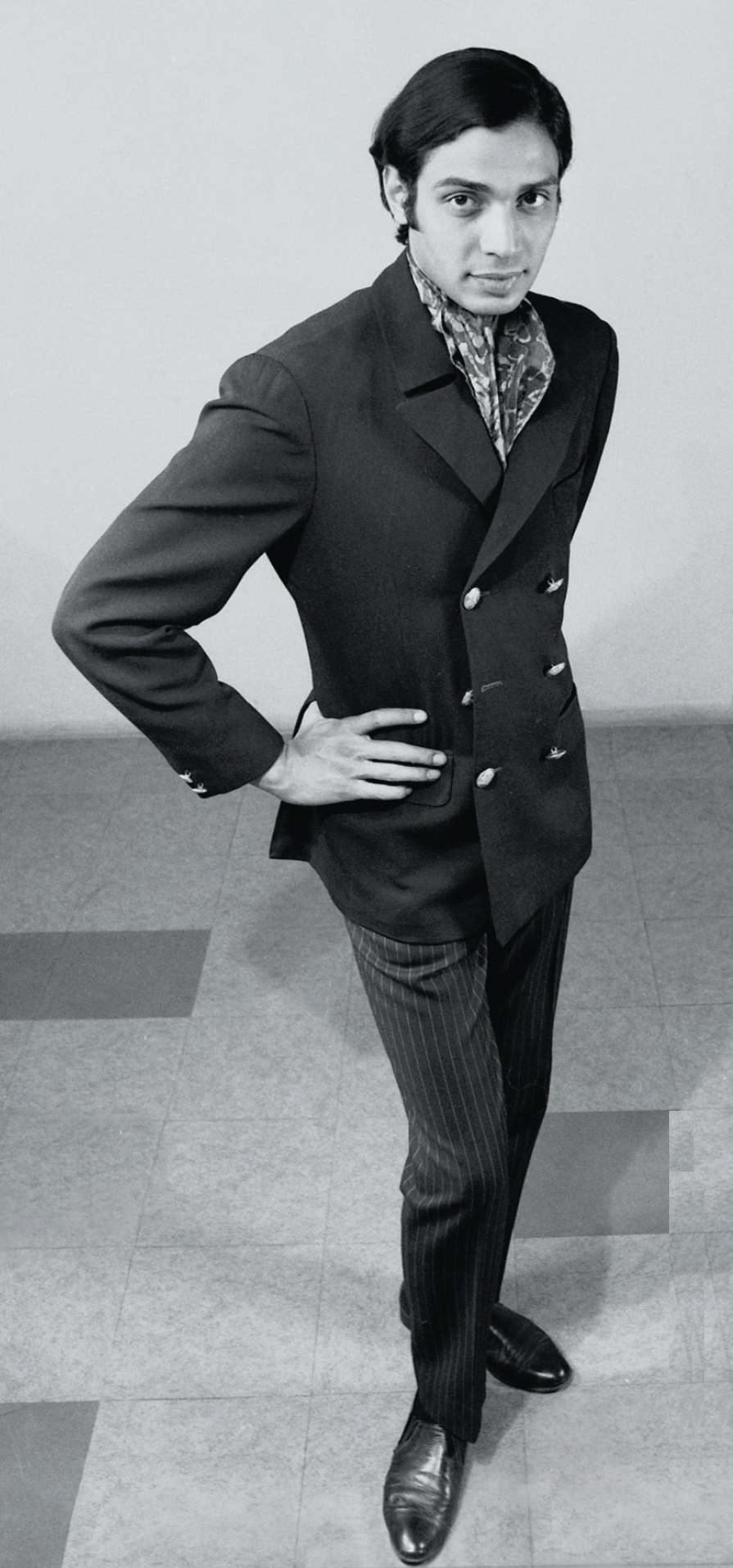
I completed my BSc but went to Kolkata to work in an advertising agency headed by renowned filmmaker Satyajit Ray. His thoughts and style were a strong influence on me. I realised that film was an interesting medium to express your beliefs. But my introduction to the arts was through painting. I loved to sketch and paint since childhood. I even won many prizes in school.

Do you still paint?

I still paint as much as I can create time for it. I like to live with my paintings, in constant dialogue with them. Therefore, I am in a constant state of inspiration. These works are in my own homes, mostly in the Gurgaon home. I have had 10 one-man shows; I would like to show soon if I meet the correct person through whom I should hold an exhibition.

Did you have any doubts when you chose a career different from the one you were being prepared for?

Nothing is impossible and I was brought up in an open-minded atmosphere. I had seen my father take a quantum leap from being a zamindar to giving people a voice and wearing hand-woven clothes. He did not believe in a capitalist society and always said ‘a penny saved is a penny earned’. My salary in Kolkata was ₹ 300 and my hostel fee was ₹ 150 per month. But I managed.
Muzaffar04MPOsapr2017

How did films happen?

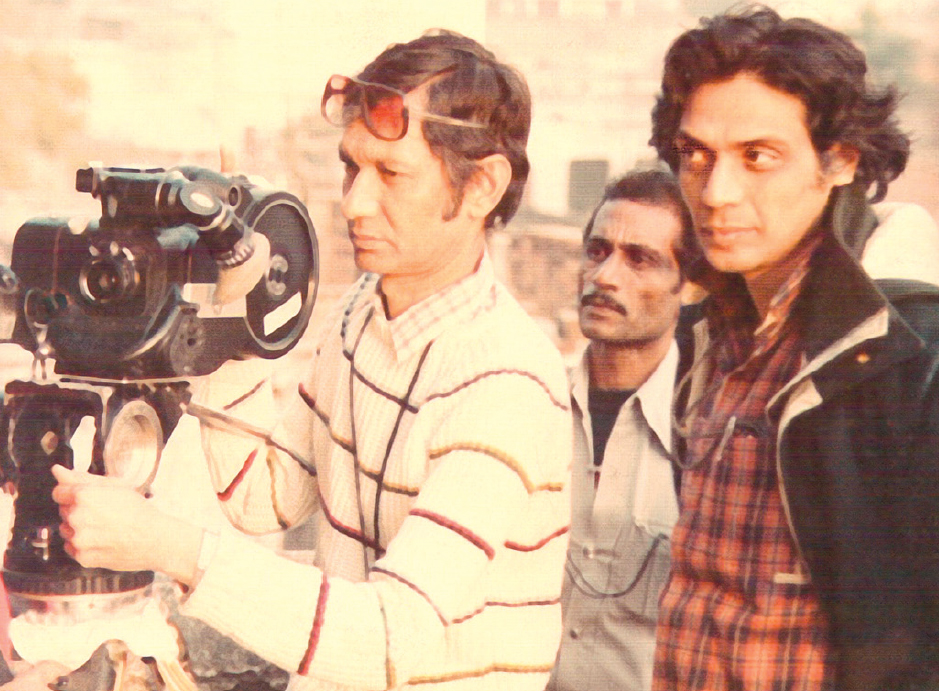
The first film I made was Gaman. Working with Satyajit Ray, I had realised what a camera could do. So my journey was from sketching to moving images. It’s a journey I continue to repeat every time I make a film. Each film, therefore, became a milestone in my understanding and expression of life and has been rooted in the soil of Awadh, Lucknow and Kotwara. They have been shot there, with natives featuring in them.

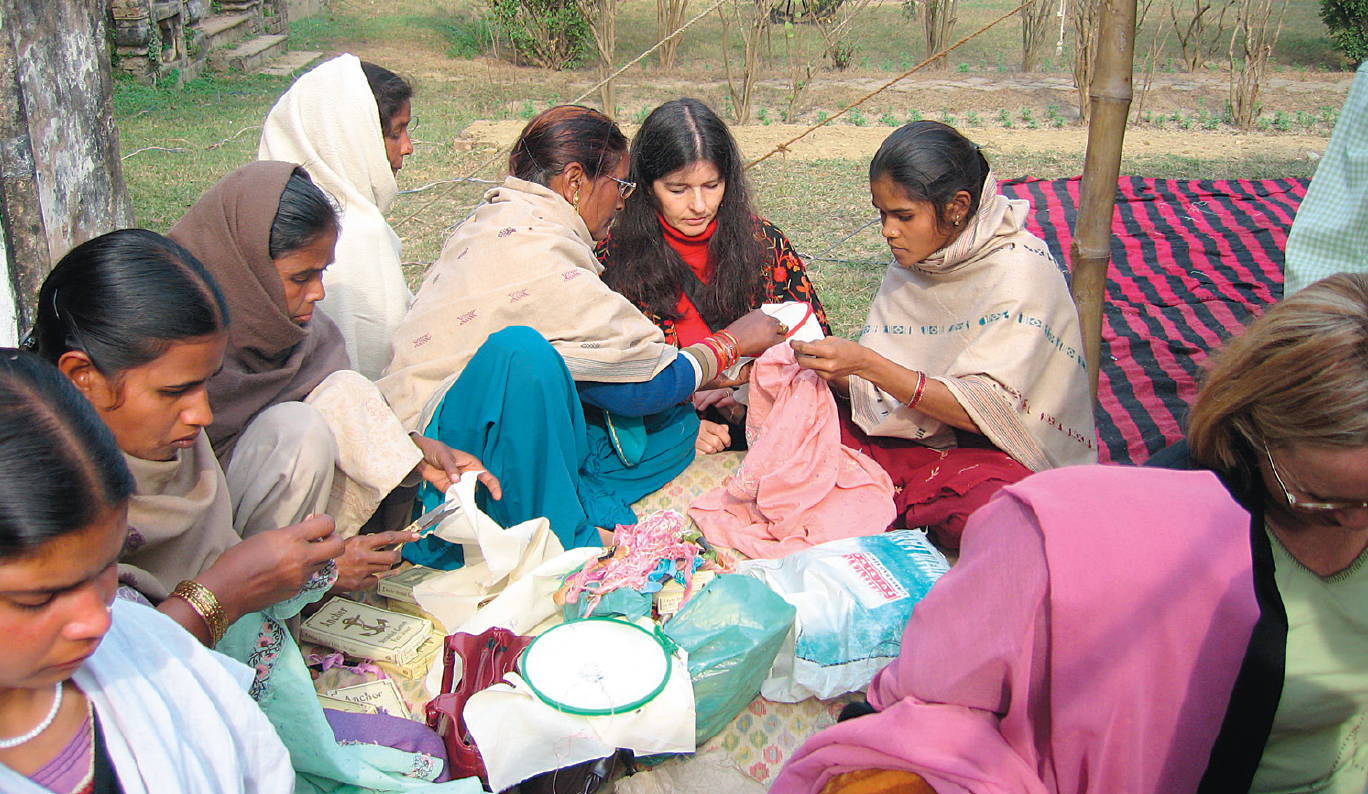
I had started working with Air India in the communications department in the 1970s. I worked there for 11 years. I lived in Mumbai and I would see people coming from villages to the city. They would lose their identity to earn a living. This was the theme of my film Gaman. Social issues and cultural ethos always influenced me. In 1976, I started Umrao Jaan. The film captured the culture of Awadh and times of Wajid Ali Shah. All the detailing in the movie was what I had seen and learnt at home. All the poetry and love and surrender I was in love with found its way into the songs. In Anjuman, I explored the lives of chikan workers and the exploitation of women.

What about your famed film Zooni, which is yet to see the light of day?

Zooni was based on the folklore surrounding 16th century Kashmiri poetess Habba Khatoon. It was my way of expressing pride in the beautiful state of Kashmir, my way of showing that violence will lead us nowhere. Zooni is a big exploration into the people and culture of the Valley and something that neither I nor the people are ready to undertake because of what has happened since 1989. It is an unfinished dream and if I meet the right people, it may become a reality. The script will need to be revisited to suit the audience of today but the spirit is universal and, therefore, it has to be a global film.

What can we expect in Jaanisaar? Is it a sequel to Umrao Jaan?

This film is centred on the siege of Awadh, the revolt of 1857, and romance between an Anglicised Raja and a courtesan. It stars newcomers Imran Abbas Naqvi and Pernia Qureshi. It is not a sequel to Umrao Jaan but takes off from where Umrao Jaan ends in the same region. This is my fifth feature film. Not counting Zooni, I have done several serials and short films on Sufism.

Umrao Jaan established Rekha as one of the most beautiful women in the country. It also had classical songs such as Dil cheez kya hai…. Will Jaanisaar offer something similar?

The focus is on the culture of Awadh. The rest is up to the audience, to see where it goes.

What will be your next artistic endeavour after Jaanisaar?

Plans after Jaanisaar will become reality only after the film is released and accepted. I think big but take small, measured steps. Every film is a dialogue with my audience.
Muzaffar05MPOsapr2017

The creation of the Kotwara brand—how did that happen?

Ambience is very important for me. Kotwara is a beautiful 14-acre, green land with mango groves. In films, my actors always look beautiful, so I thought why not clothes in real life? Kotwara has been my studio for all my creative shades. It was where I began painting and it is where my work with the revival of chikan began. It also houses a school for children and Jaanisaar is also being shot there.

Fashion happened during the making of Zooni in 1988. American fashion designer Mary McFadden visited us back then and after seeing Kotwara, she said it could be a haven for crafts. Fashion was still evolving in those days and even known names like Suneet Verma worked with Mary. In 1991, my father passed away and I was wondering what to do next with his huge legacy. Meera supported me and helped turn Kotwara into an asset. Sugarcane farming was the mainstay of the region but there was never enough. We decided to revive the crafts and got a few people from Lucknow to train a few willing workers. We looked at how to make new motifs suited to the changing world and new works with zardozi. And ‘Dwar Pe Rozi’ [a charitable society] was born. Now, there are 300-400 people working on this in different pockets. Then, we built a small school for children; there are 300 children studying there.

How did the brand hit the limelight?

We started participating in fashion weeks in 2000, and the rest is history.

What do you feel is the biggest contribution to your hometown through the Kotwara brand?

Kotwara is a concept, an idea. Inspired by my first film Gaman, it aims to provide employment at one’s doorstep under the Dwar Pe Rozi vision. In Kotwara, I have tried to pour in my creative skills with human resources from the village to create craft and couture in which my films could add value. I think it is a very slow process and is succeeding because of the thought and style that is going into it, from both Meera and I.

How did Jahan-e-Khusrau, the annual Sufi festival you have been organising at Humayun’s tomb in Delhi, happen?

The Sufi way of love and surrender has always been my approach to peace and harmony. The soul’s call is to create a union. The music albums I have brought out are centred on this Sufi spirit. Paigham-e-Mohabbat had lyrics by some of the most distinguished poets such as Rahi Masoom Raza, Ali Sardar Jaffery, Faiz Ahmad Faiz, Ahmad Faraz, Qazi Nazrul Islam and Jan Nisar Akhtar. Other albums are Jahan-e-Khusrau, a tribute to Hazrat Amir Khusrau, while Raqs-e-Bismil (Dance of the Wounded) is a collection of ghazal inspired by Rumi. I received the support of then Delhi chief minister Sheila Dixit for the festival. Delhi is the land of Sufi saints and has the dargah of 36 saints. This festival was a natural way of felicitating the Sufi spirit of union. We started in 2000. Given the chance, I would also like to organise a Wajid Ali Shah festival in Lucknow. In 2005, I also started the Rumi Foundation and published two motivational journals and poetry.

Are you also translating Sufi works? And how can Sufi music bring peace to the subcontinent?

For me, Sufi poetry is the final stage of love and surrender. Every time I use it in an album or in Jahan-e-Khusrau, I try to translate it. Although I am not very good at translation, I don’t want listeners to miss out on the meaning. Raqs-e-Bismil with Abida Parveen, selected, composed and translated by me, is one such effort.

Life’s journey has brought you to the Rajiv Gandhi National Sadbhavana Award. How does this make you feel?

I sometimes wonder if I even belong there. I have been graced along with a galaxy of people such as famous scientist Yashpal and Mother Teresa. The award is a significant recognition in our country. In a nation of such vast ethnic diversity, taking the route of religion to unite people can lead to unprecedented intolerance. We need to celebrate those who have upheld these human values. The award leaves you with the responsibility of living up to these ideals.

Have you ever felt that you may not be able to live up to the expectations of the people around you?

I feel I could do more for the school. But I focus on creating more beautiful minds and let the doubts out.
Muzaffar03MPOsapr2017

How did you meet Meera? Does the age difference ever make you feel insecure?

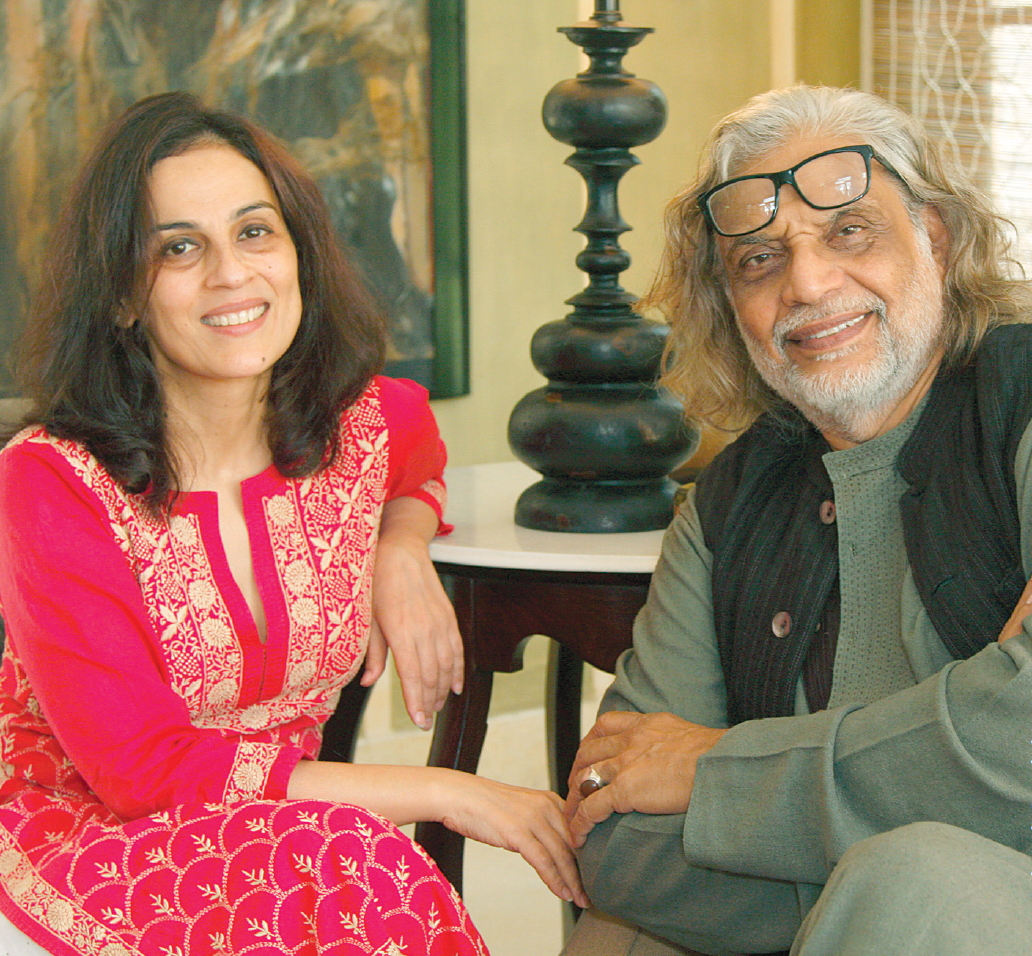
I met Meera in Delhi when I was uprooted from Kashmir with an incomplete film. I found her an extremely powerful anchor in my life. I was making an hour-long film on the life of Hazrat Khwaja Moinuddin Chishti of Ajmer, called Seena Ba Seena (From the Heart to the Heart). I gave her a small role and we married soon after that. That was 25 years ago. Age did not matter then, nor does it now. She is honest and dedicated. She thinks out of the box, is a talented architect, and open and receptive to new things and ideas.

Are your children also involved in creative pursuits?

My eldest son Murad [from his first marriage] is based in Delhi and is an actor; Shaad [from his second marriage] lives in Mumbai and is directing films; and my daughter Sana [with Meera] has started helping us with the clothing brand. But now I look at the whole world as a child. I do not think about my biological children only, but in a broader scope of creating happier worlds.

What is a typical day like for you?

Walk with my dogs. Playing with my horse. Work on my thoughts. Sharpen my aesthetics through poetry and music. Sketch and paint.

Has age made any difference to your life and work? Has it mellowed you or contributed to your growth?
By His grace, I have learnt to become sharper with age, and I believe this is the time to enlighten the youth with dreams to improve the world in which we live. Create open and questioning minds.

What is your future vision?

To create beautiful, open minds. I find pleasure in seeing the children in school. They are going to be the new harvest. In turn, they will create a happier world for others. I will keep sharing whatever I can, in my own way.

Photos: Avinash Pasricha
Featured in Harmony — Celebrate Age Magazine
January 2015

source: http://www.harmonyindia.org / Harmony India.org / Harmony – Celebrate Age Magazine / January 2015
M’lurean’s petition helped cyclists use major roads

Mangalore, KARNATAKA :

On A Mission : Raheem Teekay

Mangaluru :

If cycling enthusiasts can still use major roads in future, then they must thank a Mangalurean for making it possible.

A boorish remark by an Audi Q8 driver that ‘cyclists will be thrown out of the highways soon’ forced 64-year-old Raheem Teekay to launch an online petition on change.org against the recommendations of a parliamentary standing committee on banning cyclists and pedestrians from major roads. The petition on the website received 7,500 signatures in a few days.

Raheem, from Falnir in Mangaluru, started cycling just 13 months ago and has clocked 4,500 km so far. He said the petition was launched in the second week of March and more than 500 riders signed it by the end of the day and 2,000 in a week.

Ra heem said: “It was the day after TOI reported that cyclists may be barred from major roads. I was returning from my bicycle ride from Panambur. At Urwa Market, a high-end car was reversing, and I signalled to the driver for the right of way. The driver rolled down the window glass, stared at me and said in Tulu: ‘You people will soon be thrown out of the highways.’ I did not say a word and pedalled on.”

The bicycle activist said the remark made him launch a petition on change.org within hours of the incident. “I’ve signed many petitions posted by others, and this was my first. Days later, I started receiving congratulatory messages after Union minister Nitin Gadkari referred to the online petition at a press conference and ruled out any move to ban cycling on roads,” he said.

Talking of his experience, Raheem said “so-called illiterate” bus and autorickshaw drivers have a tolerant and sensitive attitude towards cyclists, and those driving high-end cars display loathing behavior and honk at cyclists nonstop.

source: http://www.timesofindia.indiatimes.com / The Times of India / News> City News> Stanley Pinto / TNN / April 07th, 2017

Collegians whip up a storm

Bengaluru, KARNATAKA :

CakeMPOs06apr2017

Nineteen-year-olds, Sana Azam and Rhea Agarwal balance studies and their baking business

Running a baking business when you are a full-time student is not a piece of cake. However, Sana Azam and Rhea Agarwal, both 19, prove all you need is passion to batter-up and bake away.

SanaMPOs06apr2017

The decision to start a baking venture happened organically for Sana, founder and baker at Pink Whisk. Having grown up in an environment where the oven was always in use — whether it was her grandmother making the more traditional Muslim recipes and bakes such as roat or her mother making a cake. It was from there that Sana developed a love for cooking. “I’d always been a sous chef,” she says laughing. “My earliest memories go back to holding the mixer while my mother handled everything else.” That gradually changed, as she began doing things independently and grew as a baker herself. Although she had received requests in the past from close friends and family, the decision to start Pink Whisk only happened towards the end of her 12th standard in school.

Sana, a first-year B.Com student at Mount Carmel College, has a Pink Whisk stall at MCC’s many fests. She is working on a launching a Facebook page soon but currently takes orders by phone or WhatsApp. Pink Whisk also has a WhatsApp group which keeps people updated about what is cooking.

Although she specialises in all things sweet, Sana also dabbles with savouries like chicken quiches, tarts, samosas, pastas and bakes. Apart from cakes and cupcakes, she also makes éclairs, cheesecakes, bars (something between a cookie and a cake), chiffon pies, and trifles. Pink Whisk’s white chocolate and raspberry and strawberry jam bars are extremely popular, mini cheesecakes accompanied by a berry compote and the signature Banoffee are favourites as well. Sana said her most challenging order was “baking a five-kilo cake for a software company. Any order placed less than two days before it is needed is always challenging.”


RheaMPOs06apr2017

Chance encounter

Rhea Agarwal, on the other hand, found her love for baking by chance. The 19 year old, first year BBA student at Christ University started It’s Whipped, with her sister Sakshi Agarwal. Rhea says: “I was maybe 12 or 13 when my mother enrolled me in a summer baking class.” And there was no looking back. Within a week, she had practiced everything she had learned. Whether it was a family function or a friend’s birthday, “Nobody asked me but I took it upon myself to make something for every occasion, I just got good with practice,” she says. Friends and family always suggested she start taking it more seriously and turn it into a business but it was only when a close relative placed an order for a chocolate cake and offered to pay her for it, that the idea to turn the hobby into a business venture arose.

Rhea runs It’s Whipped with the help of her mother and sister. They have a Facebook page and an Instagram account where they communicate with potential customers by posting pictures of desserts they make as well as inform their customers of new items they add to their ever-growing menu.

“We make everything from chocolates, cakes, cupcakes and pies to granola bars, cookies and herb crackers. We also have a list of egg-less recipes. Our teacakes are popular and we offer them in many flavours including lemon, walnut, chocolate chip, honey and date.”

Talking of her most challenging order yet, Rhea says, “It was an order for 600 chocolate-covered brownie bites that a corporate had requested for Diwali.”

Both It’s Whipped and Pink Whisk operate out of homes and they prefer when customers come to pick up their orders.

source: http://www.thehindu.com / The Hindu / Home> Life & Style> Food / by Harshala Reddy / April 05th, 2017

Armaan Ebrahim Steps Up To Pro Class Of Lamborghini Super Trofeo Asia Series

Chennai, TAMIL NADU :

armaanMPOs05apr2017

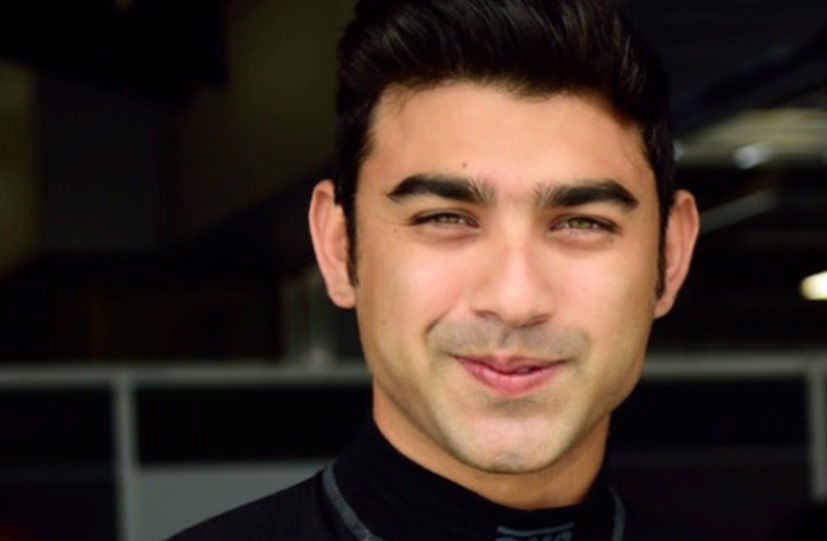
Indian racer Armaan Ebrahim has progressed to the highly competitive Pro Class of the Lamborghini Super Trofeo Asia Championship for the 2017 season. After two successful seasons in the Pro-Am class of the championship, the promotion is a major push for the Indian racer’s career and his dream of competing in the FIA World Endurance Championship. Armaan joined team FFF Racing and will partner with UK’s Jack Bartholomew in the race spec Lamborghini Huracan. FFF Racing will also have a second Huracan in the championship that will be piloted by teammates Carrie Schreiner and Richard ‘Spike’ Goaddard.

The 2017 Lamborghini Super Trofeo Asia series is a five round championship and commences this weekend on 7th April at Sepang, Malaysia. The next three rounds of the championship will be held at the Buriram circuit, Thailand; followed by Suzuka and Fuji tracks in Japan. The final race for this season will be held in Imola, Italy.

armaanLamborghiniMPOs05apr2017

Armaan won the 2016 Lamborghini Super Trofeo Asia series in Pro-Am class

For Armaan, the step up to the Pro-Class was only logical after winning the Pro-Am class in the Lamborghini Super Trofeo Asia series last year. The Indian driver along with Sri-Lankan partner Dilantha Malagamuwa managed to win 7 of 12 races in the 2016 season.

Speaking on his progress to the Pro-Class in the championship, Armaan said, “After winning the title last year, it was natural for me to get into the Pro Class. I have a good teammate and I am looking forward to making 2017 a grand one.”

Speaking on having Armaan on board, FFF Racing Team owner, Sean Fu Songyang said, “We are delighted to have Armaan in our Super Trofeo Asia programme. He is a proven race winner and, along with Jack, will be the car to beat”

Before making it big in the Lamborghini Super Trofeo Asia Championship, Armaan started his racing career winning the Formula LGB championship as a 16-year-old, and went on to race in Formula BMW Asia, Formula V6, GP2 Asia and A1GP. Armaan also raced in three season of Formula 2 before heading to the Super Trofeo Asia series in 2015.

source: http://www.auto.ndtv.com / NDTV.com / Home> CarandBike> Home> News / by Sameer Contractor / April 05th, 2017

Lulu Group commits 3 crores for girls hostel at JMI

DUBAI / KERALA / NEW DELHI :

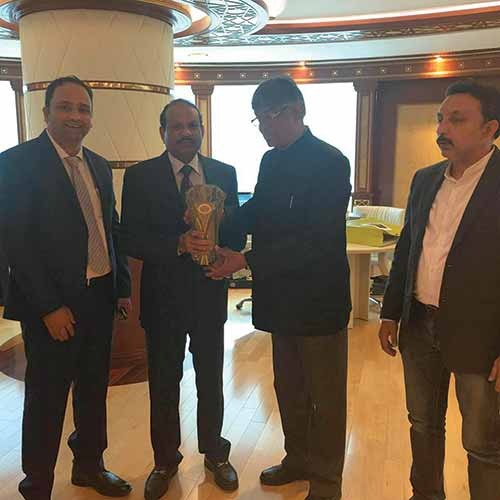
Gulf-based Lulu Group has committed 3 crore rupees to construct a school girls hostel in Jamia Millia Islamia.

The commitment was made by the group chairman Yusuf Ali during JMI Vice Chancellor Prof. Talat Ahmad’s UAE visit as Chief Guest of an event organised on 2 February by the UAE chapter of the JMI alumni. During this event Lulu Group chairman announced this commitment.

Yusuf Ali (centre) with JMI VC, Dr Talat Ahmad (right)

I am also thankful to all my near and dear Jamia fraternity in UAE who actively participated with hand-in-hand for the overall program.

Effort and sincerity with the highest level of commitment of Alumni organzing members Syed Nadeem Zaidi, Nadeem Hassan, Imtiyaz Ahmad, Ahmad Khan, Kashif Zamman, Riyaz Ahmad Khan, Shah Shams Alam, Muslim Ghayur, Salahuddin Ansari, Abdul Khaliq, Shamim Ahmad, Jalal Ahmad, Amjad Iqbal Khan etc were at par excellence and hope to have similar energy and synergy in future too Insha Allah. (Parvez Akram Siddiqui)

source: http://www.milligazette.com / The Milli Gazette /  Home> Special Reports / Print Issue: 16-29 February 16th – Online Aprl 04th, 2016

High five to 555

Hyderabad, TELANGANA :

Cafe555MPOs03apr2017


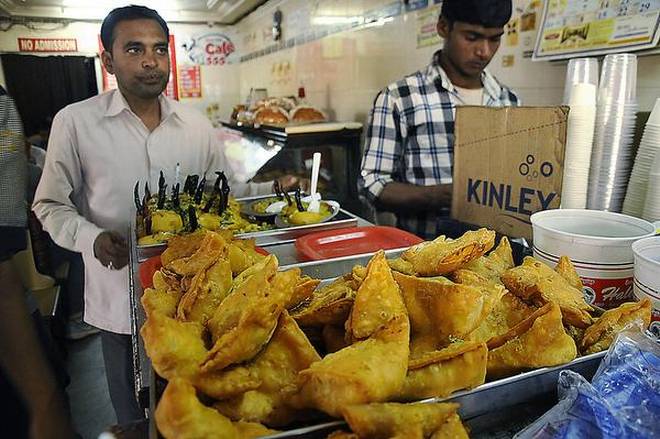
Cafe 555’s Irani chai and haleem draws crowds from most parts of Hyderabad

In a steep lane dominated by biryani joints and residential blocks at Masab Tank, Café 555 is just a few metres away from one of the busiest roads in the city that connects one to Jubilee Hills, Panjagutta and Khairatabad. Their chai is so well known that you’re not amused by their tagline that reads, ‘Don’t drink and drive, Drink only Café 555 ki chai and drive.’ The café that enters its silver jubilee year in 2017 is now owned by Ali Raza Jowker and draws most of its crowds from the nearby Ahmed Nagar apart from other parts of the city.

Their chai was first sold at Rs 1.50. Now priced at Rs 10, nothing betters the warmth that their cup of Irani chai to begin your day or energise you on a tired evening. Most customers prefer to savour it with the crisp irani samosa. If you with to indulge in something sweet to go with it, there is the popular ‘bun butter’ option.

The cafe is frequented by a number of actors from Telugu film fraternity. Sania Mirza too makes it a point to visit Cafe 555 when in town. It not just their chai that’s popular — the manager Mohammed Ali proudly shows us the award the café won for its haleem.

The sight of Cafe 555 during the Ramzan season is a delight to your senses with its multi-coloured lights during the night adding to the festive aura. The haleem prepared by Ali Raza’s grandfather was a hit with the Nizams too, says the manager.

A cafe has other options as well; their quintessential dal rice and poori are sought out items during breakfast and lunch times. No full-course meal feels complete without the Lassi here. What makes Cafe 555 ideal is also their ability to cater to foodies with diverse choices over the years.

Employees from the nearby Telugu Samkshema Bhavan, Tribal Musuem, tailoring and stationery shops continue to see the cafe as a companion that has transformed itself and evolved with changing customer tastes without losing its charming nativity.

source: http://www.thehindu.com / The Hindu / Home> Life & Style> Food / by Srivathsan Nadadhur / April 03rd, 2017

INTACH to hold prayer meet at Ustad Bade Ghulam Ali’s grave

Hyderabad, TELANGANA :

Charminar :

The Hyderabad chapter of the Indian National Trust for Art and Cultural Heritage (INTACH) will hold a prayer assembly at the grave of Hindustani classical music maestro Ustad Bade Ghulam Ali  Khan at Daira Mir Momin in Hari Bowli of Charminar on Sunday to mark his 115th birth anniversary. The prayer session will begin at 10.30 am.

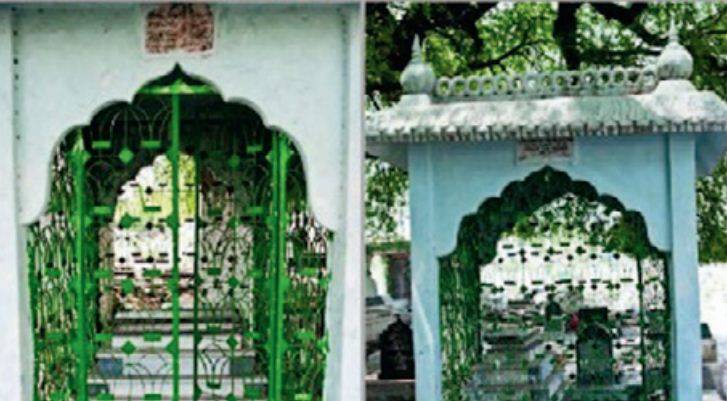
Ustad Bade Ghulam Ali Khan's grave in Sultan Shahi area
Ustad Bade Ghulam Ali Khan’s grave in Sultan Shahi area

Ustad Bade Ghulam Ali Khan, though born at Kasur village (now in Pakistan) of undivided Punjab on April 2, 1902, he spent a considerable time in Hyderabad where he passed away in 1968. The Ustad, who belongs to the Kasur Patiala Gharana, is considered as the  Tansen of the 20th century.

The state government named a road after him. His grave now lies in utter neglect.

The Ustad served in the special department of music and arts of the Nizam government. The Nizam had both Western and Indian music units. The Indian unit had 108 employees on its rolls including Bade Ghulam Ali Khan.

Other great musicians like Pandit Maniram, Pandit Motiram, and Begum Akthar were also part of the Nizam’s music department. News archives reveal that the highest salary offered was 50 a month. The Ustad and other maestro also received special allowances for every appearance.

source: http://www.timesofindia.indiatimes.com / The Times of India / Home> City News> Hyderabad News  / TNN / April 02nd, 2017