All posts by mpositiveone@gmail.com

India 20 Under 40 – This ‘modest fashion’ startup is giving Muslim women more than clothes

UNITED KINGDOM :

Muslim women are flocking to a startup that promises them fashionable clothes that fit with their faith.

Nafisa Bakkar and her sister, Selina, launched Amaliah from their mother’s kitchen table in 2015 as an Instagram page to curate Muslim-friendly clothes from top brands.

Since then, that page has grown into an online community of more than 250,000 Muslim women.

The sisters grew up in the U.K., born to Indian immigrants from the eastern city of Kolkata.

Nafisa Bakkar told CNNMoney they grappled with multiple identities throughout their upbringing, but soon realized how big a role Islam played — and the challenges they faced as a result.

One of those was how to find clothes that were stylish but allowed them to adhere to their religion.

“Amaliah started as a personal frustration,” the 24-year-old said. “We realized that it was a big pain point for Muslim women to find clothes that were modest but also fashionable.”

That Instagram page has grown into a platform that allows Muslim women to share their perspectives, experiences and, of course, find the right clothes. The company’s website  features a curated collection from leading stores such as H&M, ASOS and Zara, which customers can order directly online.

It also features blogs and articles with titles such as “My journey to being a part-time hijabi” and “Empowerment looks different to everyone.”

“I see Amaliah as a … tool for cultural change,” Nafisa Bakkar said. “I don’t really see us as just a clothing brand.”
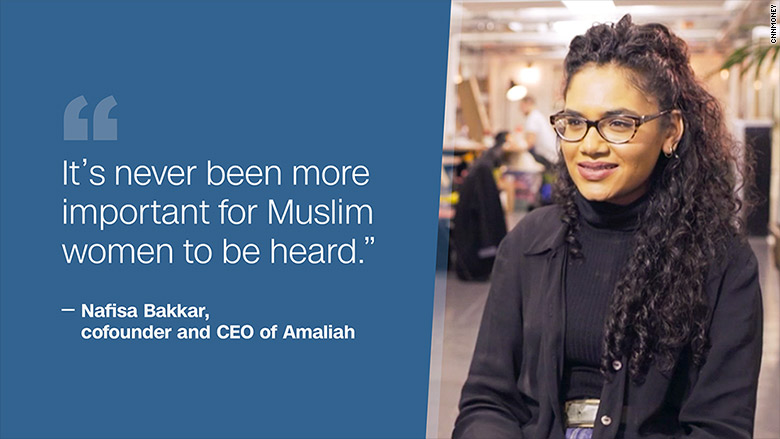
NafisaMPOs22mar2017

The ultimate objective is gradually to change the perception of Islam in an increasingly polarized world.

“In today’s political turmoil… it’s never been more important for Muslim women to be heard,” the young CEO told CNNMoney. “What we’re seeing in the Islamic economy [is] a lot of start-ups rising out of frustrations, out of feeling that we’re not catered for.”

That market is growing, and big global brands are beginning to notice. Bakkar says fashion powerhouses such as Dolce & Gabbana and DKNY have started catering more to Muslim women over the past couple of years.

But there’s still a long way to go.

“In an ideal world, Amaliah wouldn’t exist,” Bakkar said. “It wouldn’t be difficult for a Muslim woman to find the right clothes that she doesn’t feel compromises her culture and values, it wouldn’t be difficult to hear the opinion of a Muslim woman in the mainstream news.”
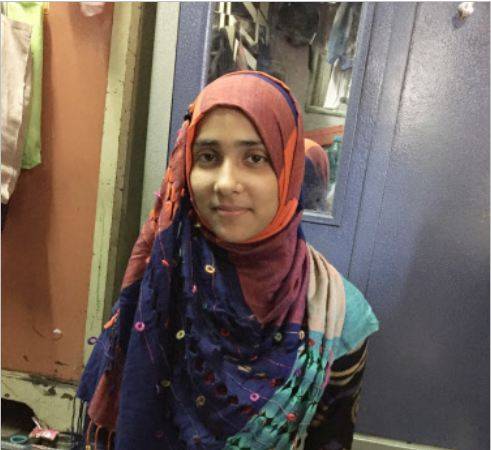
Abad group chairman Sait is dead

Kochi, KERALA :

Kochi:

Abad group chairman Hashim Usman Sait (85) passed away at his residence here on Saturday. He is survived by his children Anvar, Arif, Javeed, Yasmin, Nelupher, Jabeen, Suman and Kiran.

The funeral will be held on Sunday at Central Juma Masjid at noon.

The Kochi-headquartered Abad group was started by Mohammed Kasim Allana in 1894 and has branches across Kerala.

Hashim Usman Sait played a major role in expanding the business interests of the group, which is one of the leading players in hospitality field of Kerala.

source: http://www.timesofindia.indiatimes.com / The Times of India/ News Home> City> Kochi / TNN / February 26th, 2012

She lost her legs but not will to be a doctor

Mumbai, MAHARASHTRA :

Raushan Jawwad
Raushan Jawwad

______________________________________________________________

HIGHLIGHTS

  • The law allows only people with “up to 70% handicap” to study medicine, she was found to be 88% handicapped
  • Raushan lost both of her legs in a train accident, moved the Bombay high court to study medicine

________________________________________________________________

Mumbai :

In an instance of triumph of will over circumstances, Raushan Jawwad, the fiesty 24-year-old from Jogeshwari who lost both her legs to a train accident in 2008 and later moved the Bombay high court to study medicine, managed to get the prefix of “doctor” attached to her name on Tuesday evening.

Jawwad Shaikh, her vegetable vendor father, and mother Ansary Khatoon, a homemaker, had tears in eyes when they saw people clap for their daughter while she was being conferred with the MBBS degree during the convocation ceremony.

Nine years after the accident, Raushan has become the first doctor in her family.

A bright student, she scored 92.15% in her Class X exam in 2008. A few months later, on October 16, 2008, she was pushed out of a crowded local train near Andheri station. She was on her way home after writing her college exam papers at Bandra’s Anjuman-i-Islam Girls College in the train when she fell on to the tracks and lost her legs under the moving train. Hearing Raushan’s screams, some commuters pulled the chain and the train was stopped. It took her a year to pull herself out of the trauma and resume her education.

“I am thankful to Allah for giving me the courage to continue my studies. I am now preparing for MD entrance. I want to start a hospital in my ancestral village in Azamgarh where many people face medical problems due to non-availability of good hospitals,” Raushan told TOI on Wednesday. She has expressed willingness to work for the poor in villages near Mumbai too. Last year, Raushan secured a first class in the final-year MBBS exam at KEM Hospital.

While the law allows only people with “up to 70% handicap” to study medicine, she was found to be 88% handicapped post the accident. To continue her education, Raushan had to put up a fight. She approached the Bombay high court seeking its intervention to secure an admission. Despite qualifying for the entrance exam, the government found her “unfit” to study medicine. The then high court Chief Justice Mohit Shah directed the state to give her admission. “When she can come all the way to court, why do you think she won’t be able to come to class?” asked Justice Shah.

Raushan stays with her parents, an older brother and younger sister in a 10-by-10-foot rented room in a Jogeshwari chawl.

“While studying at KEM, I used to stay in a college hostel. All my classmates, colleagues and teachers helped me a lot. The credit for my success goes to them too. They would always be very helpful and I never felt disabled when in their company,” said Raushan. When TOI first reported the accident, several people came forward to help Raushan financially. But her family did not even have a bank account.

source: http://www.timesofindia.indiatimes.com / The Times of India / News> City News> Mumbai News / by Mateen Hafeez  / TNN / March 12th, 2017

Ajgar & Musthafa are the champions

Erode (TAMIL NADU ) & KOLKATA :

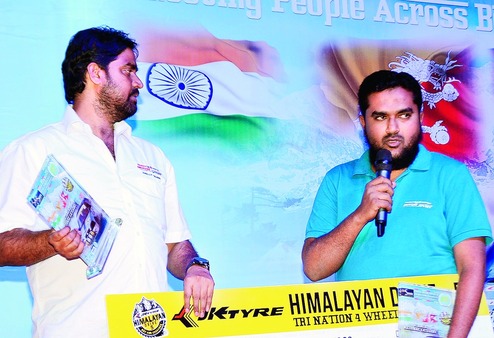
Ajgar Ali (left) and Mohammed Musthafa in Siliguri on Thursday

Siliguri:

Ever since they took the lead on Day I, Sheikh Ajgar Ali and Mohammed Musthafa never had to look back, emerging winners of the Biswa Bangla JK Tyre Himalayan Drive V – Tri-Nation 4-Wheeler TSD Rally – that concluded here on Thursday.

After driving more than 1250 km through forests, riverbeds, mountain roads and dirt tracks across India, Bhutan and Nepal over five days, the duo lifted the coveted HD 5 trophy.

Ajgar and Musthafa – the reigning National TSD (Time, Speed Distance) Rally champions – finished with 174 to win the competition for the second time. They had won the inaugural edition back in 2013. Deep Dutta and Prakash Muthusamy finished second, while Ashish Budhia and Calcutta’s Arindam Ghosh came third in the rally.

Talking about the experience, Ajgar, who comes from the village of Dighasipur (in Haldia), felt that things were more challenging for them on the first two days.

“The competition sector was really tough… The terrain was challenging. In Bhutan and Nepal the roads were really, really difficult. But I think it was far more challenging on Day I and II. Really hectic…,” the 36-year-old said after the prize distribution ceremony at a shopping mall.

Anurag Srivastava, district magistrate, Darjeeling, was the chief guest.

Ajgar added: “We started here (in Siliguri) and went to Paro. Thereafter, we went to Thimpu, then back to Paro again… Then Darjeeling, Hile (in Nepal) and back to Siliguri… So, one should understand how tough it was.”

Ajgar and Musthafa had to brave temperature of three-degrees Celsius in Paro. “In Nepal too, it wasn’t easy. The temperature was around 4-5 degrees Celsius,” Ajgar said.

“But thanks to the Himalayan Rally back in October, where the temperature was some minus five or six (degrees Celsius), we could survive the conditions in Paro and Nepal. That experience certainly helped.”

Ajgar’s navigator Musthafa thinks the duo were under more pressure, having taken the lead on the first day. “Look, this event was far more challenging for us because our performance in the past events weren’t too good.

“If you are the favourites in a competition, there’s bound to be extra pressure on you… The pressure of expectations… So, in that sense, the first day’s lead added to our pressure because everyone’s focus was on us and we were the team that others chased. Maintaining the lead was really difficult, from Day I to Day V.

“The rally was well and truly a roller-coaster…

“We, therefore, decided that we would just not look at the results and instead, concentrate on the basics. In any case, Ajgar and I share a wonderful rapport and we understand each other really well.

“The intensity was high and the end result is there for everyone to see,” said Musthafa, who comes from Erode.

The duo now look forward to the Uttarakhand Adventure Rally in April, where they will certainly be one of the favourites. “Honestly, our understanding developed ever since the first time we came together as a pair, which was at the Himalayan Drive (HD) I back in 2013.

“We won that as the understanding between the two of us had already developed well,” Musthafa said.

Ajgar and Musthafa, having won India’s premier rallies like the Raid de Himalaya and Desert Storm in the adventure categories, had come second in HD II and third in HD III.

source: http://www.telegraphindia.com / The Telegraph, Calcutta,India / Front Page> Sports> Story / by Sayak Banerjee / Friday – March 03rd, 2017

Ajgar-Mustafa rule the roost

Erode (TAMIL NADU ) & KOLKATA : 

Siliguri:

After traversing through the hills and the plains for over 1,250km in five days, Ajgar Ali (Kolkata) and co-driver Mohammed Mustafa (Erode) emerged a clear winner over nearest rivals Deep Dutta (co-driver Prakash Muthusamy) in the Biswa Bangla JK Tyre Himalayan Drive 5 here on Thursday.

Ajgar and Mustafa enjoyed the extra edge of a strong lead in the national class points table going into the final day. But the duo decided to stick to the basics. They showed great understanding from the start (Hile in Nepal) and reached here without having to nurse the car right through the journey.

“There was nothing much to do for us today. We had to just keep the car on the road for the title,” said Mustafa.

They were obviously thrilled to have clinched their maiden international title.

“We have driven together for five years and have been successful in about 50 TSD events. But this was our first international event. It was a totally new experience. We saw different countries, beautiful locations and lovely people and that set the winning mood for us,” he added.

Mustafa said they were under some pressure after taking the lead on the first day. “But we managed to come clean thanks to Ajgar’s brilliant drive. I was always confident of him. He also does not complicate things.”

Ajgar was pretty pleased as well and credited the title win to Mustafa’s clean work. “He did a great job right through.”

Having tasted success at the international stage, the former Himalayan

Drive champions promised to return next year. “We will be back and in

an even better shape to defend our title,” said Ajgar.

Ashish Budhia (co-driver Arindam Ghosh) had to rest content for the third place.

source: http://www.thehindu.com / The Hindu / Home> Sports> Other Sports / by Rayan Rozario / March 02nd, 2017

Sahul Hameed Ujire new president of Al Ameen Association Dammam-Jubail unit

 Dammam (SAUDI ARABIA ) / Ujjire (Dakshina Kannada) KARNATAKA   :

Dammam :

The third annual general body meeting of  was held on February 23. The programme began with Qirat by Maher Mohammed.

Imam of Ujire Central Masjid, Abu Sufyan H I Ibrahim Madani, Hamed Saeed Al Ghamdi, Anwar Hussain Goodinabali, Kamaruddin Goodinabali, Amjad Khan Polya, Qasim Tolhath president of Al Ameen Riyadh unit and Usman Kotrody senior vice president of Al Ameen Dammam-Jubail unit were the chief guests at the function.

Dammam-Jubail unit president, Sahul Hameed Ujire welcomed the audience and the chief guests. Vice president S A Azeez of Al Ameen Dammam-Jubail Unit anchored the programme.

Azeez S A delivered a brief introduction of the educational and other activities carried out by Al Ameen Association Ujire and explained how Al Ameen worked all these years back home. He also thanked each and every member of the unit.

Ubaidullah Ujire, general secretary, presented the audit reports.

Qassim Tolhath, appreciated the efforts of the unit and took up the responsibility to dissolve the old committee and announce the newly formed committee. He also wished the new committee.

Sahul Hameed Ujire was named president unanimously for the third time.

Abu Sufyan H I Ibrahim Madani Imam of Ujire Central Masjid expressed his gratitude to all the members and thanked them for their dedicated service to the community.

Hamed Saeed Al Ghamdi, Anwar Hussain Goodinabali and Kamaruddin Goodinabali called on the office bearers to exercise their team spirit and tireless effort to serve the community and their complete dedication toward the noble cause.

Ubaidulla Ujire proposed the vote of thanks.

Al Ameen Dammam-Jubail unit executive committee members for the year 2017-2018 are as follows:
Sahul Hameed Ujire (president), Azeez S A (general secretary), Usman Kotrody (vice president), Ubaidulla Ujire (vice president), Farook Alankar (treasurer), Mansoor Kuntini (joint secretary) Siddik Charmadi (joint secretary) and Asif QTF (auditor).

Advising committee:
Yakoob U A, Yusuf U H, Mohammad Ali and Bava Hussain

Executive members:
Mehboob, Salahuddin, Mohammed Anees, Irfan, Hudaifa, Suhail, Zameer, Mansoor Athaje, Hameed Athaje, Abdullah Muguli, Rafeeq Muguli, Abdul Khader Halepete, Rafeek vital, Ashraf Bellur, Amjad Khan, Raheem Arkula, Yusuf Vitla, Ibrahim Khader, Mohammed Iqbal and Shamsuddin.

source: http://www.daijiworld.com / DaijiWorld.com / Home> Middle East / Thursday – March 02nd, 2017

Survivor of cancer shows the way ahead

Bantwal (Dakshina Kannada District), KARNATAKA :

When 30-year-old Abdul Jabbar Ponnodi from Bantwal of Dakshina Kannada district was 20 years old and wanted to complete his UG course like many of his friends, he developed back pains.

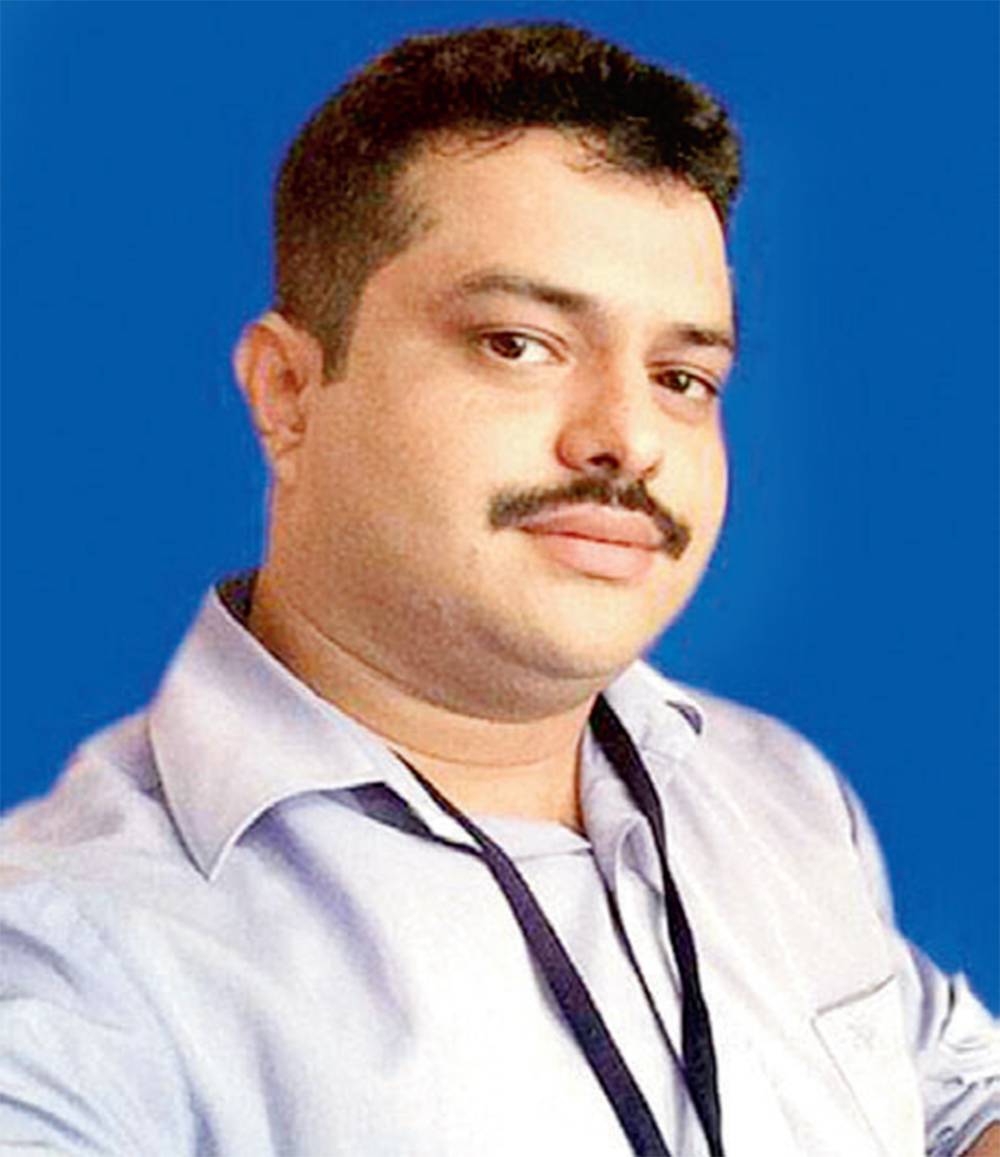
Abdul Jabbar Ponnodi

For nearly one-and-a-half years, he went to a local doctor and lived on painkillers. However, after two years when the pain increased, scanning and other medical tests revealed that Abdul had developed ewing sarcoma, a rare form of cancer.

Speaking to Bangalore Mirror, he said, “Gradually my legs lost strength, I lost bladder control. I was bedridden. I was operated upon, and after radiation therapy as well as chemotherapy for nine months, my condition improved. With almost two years of physiotherapy, my legs started regaining strength. With the help of special shoes, I started moving around, started using the scooter and also started working as a salesperson in a mobile phone shop.”

For almost seven years, he worked at the mobile centre. At the same time, he also started emceeing for programmes, worked on developing a mobile application for an online portal and was active on social media as well as writing short poems.

“Unfortunately, again there was a growth near my lungs last year. It was about 12 cm, but with medicines it was reduced to one cm. I was on medication for the next six months, only to notice the growth increase to 14 cm. With chemotherapy, it has been reduced to 8 cm. I have more sessions of chemo to go,” he said. In the last ten years, he has been counselling patients at a private nursing home and has also formed a WhatsApp group where they collect funds to help needy patients.

“Whenever I get to know that someone in a family or friend or relative is suffering from cancer, I go and speak to them. Disease should be restricted to the body and not to the mind. The body can be treated, but not the mind. It is important for people to follow a diet that has more natural food and avoid preservatives,” he said.

source: http://www.bangaloremirror.indiatimes.com / Bangalore Mirror / Home> News> State / by Bangalore Mirror Bureau / March 01st, 2017

No Raman effect: How his dream died a quiet death

Madras / Bangalore (KARNATAKA ) :

Sir C V Raman had planned to set up a scientific institute in 1959 on a four-acre land in Madras.

Sir Raman has clarified that he was not sent out of Mysore, but came from Calcutta to Bangalore in 1933, and received support from the Dewan for his scientific work.

Bengaluru:

A research institute – complete with a lab, a science museum, a science library, a lecture hall and office rooms – was late Nobel laureate Sir C.V. Raman’s idea of giving something back to Madras (Chennai), a city where he commenced his scientific career, and to make a “distinct contribution” to the scientific life of the city, but it has remained an unfulfilled dream.

Sir Raman planned the second institute in 1959, 11 years after establishing Raman Research Institute (RRI) in Bengaluru, on a four-acre land parcel owned by him in Mylapore (Madras), where “scientific work of the highest standard could be carried on”.  He estimated that the research institute could be built with a budget of a couple of lakhs of rupees and carry on work with a minimum recurring expenditure of Rs 2,000 a month. “My confidence in the usefulness of the proposed institute is indicated by my preparedness to find from other sources one half of the capital expenditure proposed and also to meet one half of the recurring expenditure necessary for the next five years. If the Government of Madras could see their way to make an equal contribution, the construction of the institute could be immediately taken up and proceeded with,” states the renowned physicist’s letter dated August 18, 1959, to the late C. Subramaniam, minister for finance education, Government of Madras,  unearthed by Deccan Chronicle on the eve of National Science Day, observed on February 28 to mark the discovery of ‘Raman Effect.’

Subsequent correspondence between Mr Subramaniam and Sir Raman point at the state government’s willingness to support the proposed institute, but with a suggestion that the Nobel laureate write to the Union government for non-recurring expenditure of the project. “I may say, however, that subject to the condition that the assistance to be given by the Government of India, if any, will be taken into account in fixing the actual grant, this Government will be willing to meet a maximum of half the non-recurring cost of establishing the research institute and to make a suitable annual recurring grant for five years in the first instance,” reads the late Mr Subramaniam’s reply.

With the erstwhile Madras government listing several conditions as part of the grant-in-aid code for half grant towards construction of the institute and repeated suggestions for securing the Union government’s financial support, Sir Raman’s subsequent letter to Mr Subramaniam points at his reluctance to seek help from New Delhi. “My past experience and present knowledge of the attitude of the Central Government in matters concerning scientific research alike indicate that any application for a building grant made to that Government for the proposed institute would be met with a refusal. Not until the institute has been fully established and proved itself useful would the Central Government feel at all inclined to extend a helping hand to it,” mirrors his disinclination to write to the Centre.

Sources in RRI Trust said Sir Raman had adopted a similar stand vis-à-vis RRI and the Union government. “It was only after Sir Raman’s demise that the Union government offered aid to RRI, and the Trust invited his son Prof V Radhakrishnan to head RRI,” sources added.

Sir Raman came to the rescue of Dewan Ismail
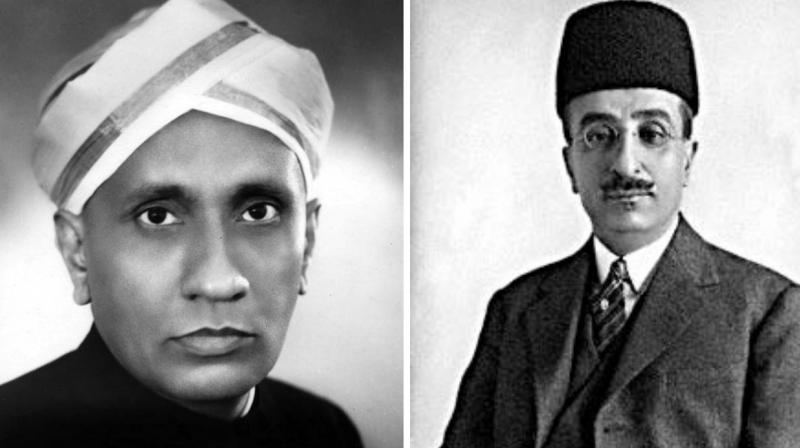
Another set of letters, exchanged between Sir Raman and Sir Mirza Ismail, the Dewan of Mysore, in 1939, illustrates how the Nobel laureate rushed to support the latter in the wake of an article published in “The Hindu Outlook”, accusing the Dewan of favouring Muslims in appointments in Mysore state.

Sir Raman has clarified that he was not sent out of Mysore, but came from Calcutta to Bangalore in 1933, and received support from the Dewan for his scientific work.

“Throughout this period, I have received nothing but kindness and consideration from Sir Mirza Ismail on all occasions, and indeed I have had reason to feel most grateful for the fact that he has held the high office of Dewan of Msyore during these years,” reads Sir Raman’s letter in response to an article published by Krishna Lal Anand in “The Hindu Outlook” on September 14, 1939, with a headline “Muslim Dewan over Hindu state.”

source: http://www.deccanchronicle.com / Deccan Chronicle / Home> Lifestyle> Viral and Trending / by B R Srikanth, Deccan Chronicle / February 28th, 2017

After years of neglect, glass top to complete Satkhanda.

Lucknow, UTTAR PRADESH :

Wikimedia Commons
Wikimedia Commons

Lucknow :

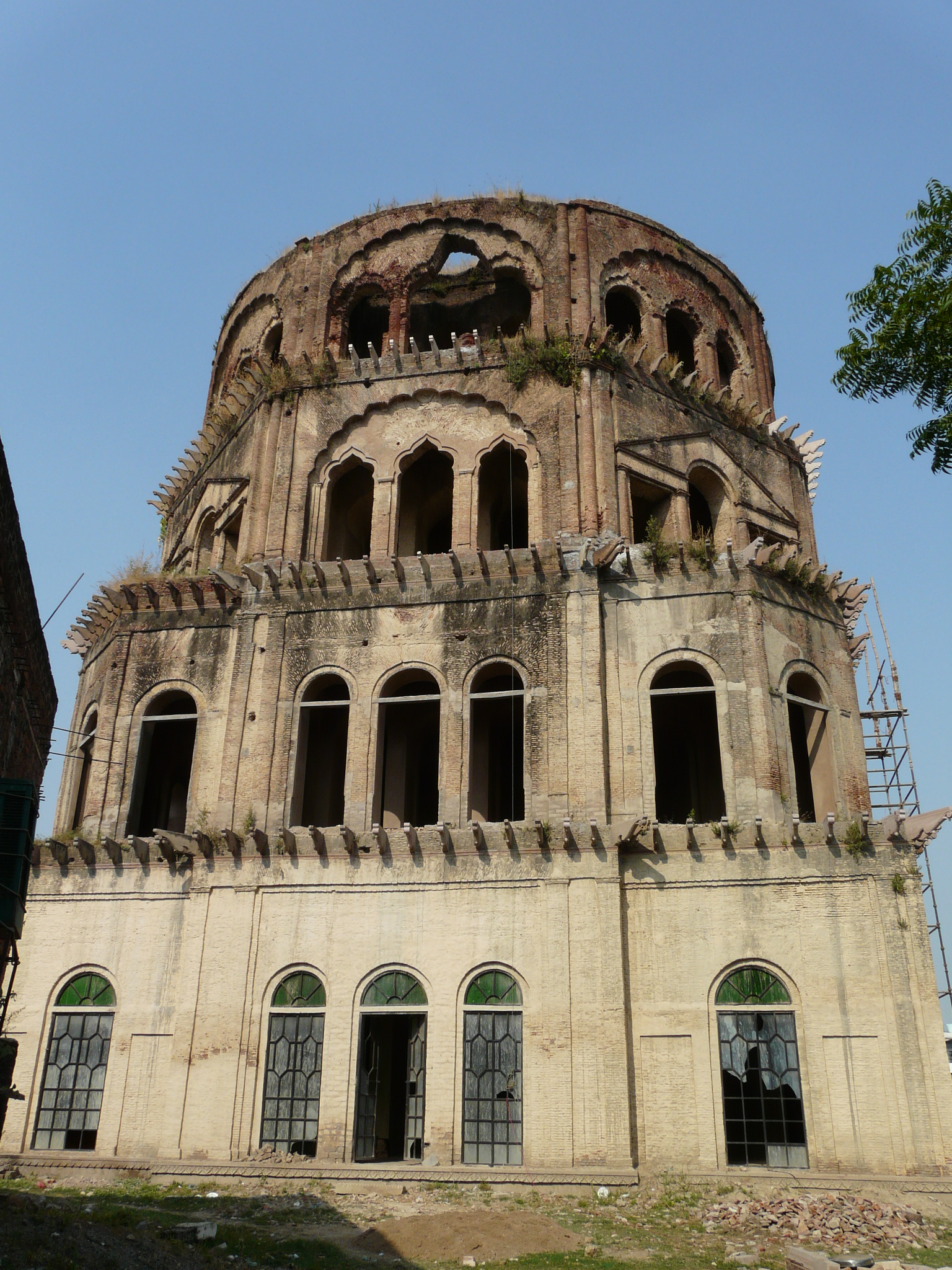
The 177-year-old iconic Satkhanda in Husainabad area of old Lucknow is finally going to live up to its name, of ‘seven storeys’, with the proposed glass roof to the monument taking shape, completing the unfinished Nawabi era structure. The iron storeys which will hold the glass have already come up. Part of the Husainabad beautification project, it is likely to be completed in six months.

Conserving the interiors of the monument along with keeping its circular staircase intact, the building will now provide people with an aerial view of the beautified area through the 360-degree glass facade. With a roof on top now, the monument won’t be subjected to rain water either.

“The plan is to conserve the monument and let people experience the building in its original form. Even though the glass roof covering will be on the uppermost storey, it will give the viewer the experience of being on the seventh floor because of the elevated height. The roof on top of this will be flat,” said Tracy, who is part of the Noida-based architecture firm working on the plan.

The Satkhanda, originally meant to be seven-storey-high was built in 1837 by Mohammad Ali Shah, the third King of Awadh, for moon-sighting by clerics. However, with his death, the monument was left incomplete at just four storeys. Considering it a bad omen, no other ruler bothered to complete it.

In the initial phase of the beautification work in 2014, only the park around then dilapidated monument was part of the plan. Converting the empty ground into a park with light fixtures, fountains, swings and a bridge was completed around November, 2014. Between 2011-13, restoration work on Satkhanda started. An approximate Rs 50 lakh was spent on the initial restoration that included getting rid of encroachment, grouting cracks, restoring parapet brackets, construction of a new roof and a Chhota Imambara-inspired dome. However, apart from removal of encroachment, nothing else was done then.

source: http://www.timesofindia.indiatimes.com / The Times of India / News> City News> Lucknow news / TNN / February 28th, 2017

Yakub Bee, an angel for the aged

Warangal, TELANGANA :

“Starting from two persons in 2007, we now provide shelter to 100 people,” says Mr Ali.

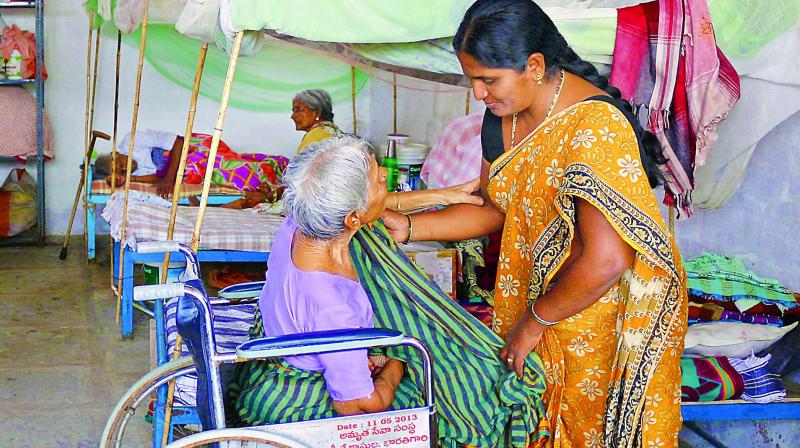
Yakub Bee helps dress a handicapped elderly lady, resident at the Sahrudaya old age home on Monday. (Photo: DC)

Warangal:

“Extending service to the needy is what makes my day; awards and applause subdue the anxiety and restore my confidence,” says Yakub Bee, the founder of Sahrudaya Old Age Home in Hanamkonda.

Yakub Bee and her husband Mahboob Ali have opened their home for elderly homeless and destitute people since 2007. Recognising her services, the World Peace Festival Society International (WPFSI) has conferred on her the Shanthi Dhootha award.

Yakub Bee lavishes love and affection on her charges and recognises no religious or social barriers. She looks after the food and medical needs of her charges and when it was required even performed the funeral rites of a Hindu man when her husband was not there to do it.

“Most of the people living in our home have been abandoned by their children. Some of them have no memory of their whereabouts. Such people deserve to be cared for. There is no human being in this world who does not deserve to be loved. It gives me immense satisfaction to be able to help such people,” says the compassionate lady.

Yakub Bee, who hails from Ellanda village in Wardhannapet mandal, used to work as a tailor. Her husband Mahboob Ali used to do petty jobs. Mahboob was inspired by a rickshaw-puller who ran an old age home in Khalsa in Amritsar.

“Starting from two persons in 2007, we now provide shelter to 100 people,” says Mr Ali. The WPFSI, founded in 1997, is based in Warangal. Its aim is to celebrate and encourage the pluralistic character of the Indian nation. People’s poet Kaloji Narayana Rao and Telangana ideologue, the late K. Jayashankar, have been involved in the formation of this society.

Yakub Bee will receive the award along with film maker Dr K. Vishwanath and historian Dr Lingala Pandu Ranga Reddy in Warangal on Tuesday.

source:  http://www.deccanchronicle.com / Deccan Chronicle / Home> Lifestyle, Viral and Trending / Deccan Chronicle – Anudeep Ceremilla / February 28th, 2017