No more the hassles of carrying multiple ATM cards, an innovator in Kerala has developed a ‘Prime Card’ that helps customers merge savings accounts of different banks in a single card. He affirms that it can replace the US-based VISA and Master card available in India and emerge an alternative to existing Indian domestic card ‘RuPay’ with high-end security features. He has applied for an Indian patent for his innovation.
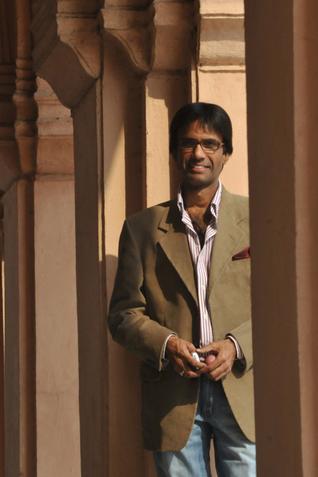
The 43-year-old innovator K Ummer Thalhath, a native of Malappuram opted out of his final year graduation in science at Farook College in Kozhikode. He went on to pursue an electronics course for three years and left that on an innovation spree.
Thalhath claims that the card has high-end security features and hence none would be able to duplicate or hack it. It will help the bank account holder draw money from any ATM. If the Prime Card is lost or stolen, the one who gets hold of it may not know which bank accounts are merged in the card and it has two pin numbers which cannot be easily cracked.
He is keen to develop it further with the support of industries here, who are willing to develop a domestic high-end electronic payment facility.
VISA and Mastercard are US-based global payments technology companies, while RuPay is an Indian domestic card scheme. He believes that his idea of ‘Prime Card’ payment technology if realized in association with Indian banks or domestic card company, will help India take a lead in floating a high-end secure card. He has held initial discussion with major banks including State Bank of India (SBI), Industrial Development Bank of India (IDBI) and Federal Bank.
The account holder can merge existing accounts or new account to the Prime Card with different personal identification numbers (pin) for different bank accounts. On high-end security feature of the card, he said Prime Card has two pin numbers, the customer should provide one pin when the card is inserted in ATM machine and another when selecting the bank for transaction. Other security modes are Matching Number System and Number looping system. Hence the security is much higher than ordinary cards, he said.
Responding to that, Federal Bank – Digital Banking assistant general manager Sunny KP told TOI that “the idea is good as it is handled by a single payment application software, yet there are practical difficulties in its implementation. It requires infrastructure, intermediary standing between banks to merge accounts and permit from Reserve Bank of India (RBI).”
National Payments Corporation of India (NPCI) chief manager Dheeraj Bharadwaj said over 50 crore cards are already in the market and to replace that with one card for various bank accounts would be tedious as it requires the consent of many banks. It was NCPI that launched RuPay to fulfil RBI’s desire to have a domestic and multilateral payment system in the country.
Centre for Science and Technology Entrepreneurship Development (C-STED) director Ajith Prabhu assured all possible support to take it forward in terms of exploring the commercial possibilities.
While, the innovator swears by his innovation that it can end the headache of banks over issues involving current ATM transactions. However, an electronic payment company or a financial institution with RBI permit should come forward to take it up, he said.
source: http://www.timesofindia.indiatimes.com / The Times of India / News Home> City> Thirvananthapuram / by Laxmi Ajai Prasanna / TNN / August 08th, 2016
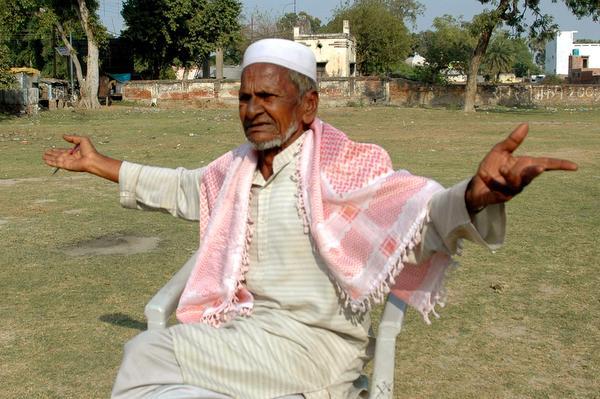
Hashim Ansari, the oldest litigant in the Babri Masjid case, passed away on July 20. / Photo: Special Arrangement
Justice may have eluded him but the amiable and persistent Hashim Ansari was the sanest voice in a deeply divisive debate
In February this year, reports of Hashim Ansari’s demise spread like wildfire on social media and WhatsApp. This was not the first time such a rumour had circulated but there was a particular sense of pessimism this time. At 95, Ansari, the oldest litigant in the Babri Masjid case, was on a pacemaker and had been brought to Lucknow after complaining of chest pain.
I decided to visit him at Lari Cardiology Centre at King George Medical University in Lucknow. At the entrance, an armed policeman was meticulously recording all visits in a book. The intensive care unit in Lucknow’s best-known hospital was overrun by cockroaches. And on the hospital bed lay Ansari, frail and quiet. “Sab theek hai?” he asked in a low yet stable voice when he noticed I was clicking pictures of the room.
“Ji, sab theek (all is well),” I replied, only to realise a few seconds later that I had misunderstood his query. He was not asking about my well-being but his own, anxious about the long line of visitors. The conversation ended on a positive note and everyone in the ward said Ansari would live to be a 100 — something I strongly felt myself. That was the last time I would see him — yet this final meeting did not truly represent the personality that Ansari was. Although he embodied the despair, the long wait and the futility of the Babri Masjid case, he will be best remembered for his tenacity and resolve in trying to secure justice through constitutional means. That is why his voice emerged as the sanest amid all the divisive politics and provocative posturing. One of the last persons to have personal knowledge of the Babri Masjid episode, his inclusive rhetoric and insistence on a peaceful resolution made him the middle ground. With his death, an era ends and a void is created.
Ansari was born to a tailor in Ayodhya. After studying till Class 2, he joined his father in tailoring till the Emergency, when he spent eight months in Bareilly jail. Apart from the usual clothes, Ansari also stitched garments for the gods in nearby temples, a service he offered in return for prasad. After his release from jail, he repaired cycles for a few years.
In 1949, Ansari was among those arrested when idols of Lord Ram were planted inside the 400-year-old mosque. Later, he was sentenced to two years in jail for giving azaan at Babri Masjid. In 1961, when the Sunni Waqf filed a case, he and six others became the main plaintiffs in the ‘Ayodhya title suit’. But why was Ansari picked? For his amiable and persistent nature. In her book, Portraits from Ayodhya, Scharada Dubey writes: “He was perceived as honest, because he didn’t hanker after big money or a high public profile. Instead, he needed only kind words, a small treat in the form of samosas and tea or similar offerings, to keep going faithfully to the courts for every hearing.”
His simplicity and integrity got him wide affection, including that of his opponents. His cordiality with Mahant Paramhans Ramchandra Das, head of Ram Janmabhoomi Nyas in Ayodhya, was hailed as an example of Ayodhya’s composite culture. “They were legal opponents over what is essentially a property dispute… But they were friends too and often travelled by the same car to court where they took on each other,” Dubey writes.
In contrast to the divisive political campaign, those actually involved in the legal battle — Hindus and Muslims — displayed a bonhomie that reflected Awadh’s famed ‘Ganga-Jamuni tehzeeb’. It was only befitting that prominent Hindu seers, including Acharya Satyendra Das, head priest at Ram Janmabhoomi Temple, were the first to visit Ansari’s house after his death.
Ansari lived in a humble dwelling just off the main road near the Tedhi Bazaar Chauraha, not too far from the disputed site. The words “Suraksha guard se poochkar andar jaye – Hashim Ansari” etched in red Devanagari font on his unassuming door were the only marker of his importance. And the four armed policemen camping outside. The district administration gave him protection in 1992, when he was attacked by a mob of Hindutva activists who tore down the mosque. Ansari was saved by his Hindu neighbours – scores of Muslim residents of Ayodhya lived to tell similar tales.
“Don’t you mistake that I am under threat from the common Hindu or any other person. I am under threat from the administration, the political parties,” he had told me in December 2012, on the 20th anniversary of the Babri demolition. Though he was highly spiteful of the VHP and RSS — despising them for playing “politics over Ram”– he harboured bitterness for the Congress, and this feeling aggravated after the demolition of the Babri Masjid. He held former Prime Minister P.V. Narsimha Rao personally responsible for the demolition and the violence in the aftermath. Yet, in his discussions and criticism, he was a voice of peace, least bit provocative or polarizing. He always propagated a peaceful solution to the long-standing dispute and once wondered, “What fighting over a few acres of land given us.” ‘Even if the case is won, the construction of the mosque will not start till the Hindus gave their support willingly,’ was his common refrain.
His quick humour and politically clever remarks made him a favourite with journalists, who played a role in making him the most recognisable face of the controversy. He used to offer his beedis to visiting journalists. On days of his bad temper, he could scold away a reporter for asking an unintelligent question or putting words in his mouth. Each time the Ram Mandir issue surfaced, or when December 6 approached each year, he was by far the most sought-after man in Ayodhya. Long chats with him gave you a hint of his sharp political wisdom and essential nuggets from the Babri episode.
Last December, while explaining to me the RSS-BJP projection of Dalits and OBCs as frontal faces to target Muslims, he made a jibe at a senior OBC BJP leader known for his role in the Hindutva movement. “Vinay Katiyar kehta hai Ram Mandir banaenge, lekin usse poocho kya woh pujari ban payega kya?” he said with scorn.
Ansari’s integrity and selfless nature came at a cost. He died a pauper, leaving behind a daughter and a son, who runs a tyre repair shop. Those close to him say his family members often criticised him for not making the most of his fame, just like some others associated with the case had. The governments too, did not give him his due. In 2014, when he was seriously ill and referred to Lucknow, his operation could not take place on time as his family did not have enough money.
For most of his life, Ansari hoped for a legal end to the dispute. In his later days, however, he gave in to disenchantment and the word insaaf or justice would get an irritated response from him. He vowed to dedicate his remaining time for maintaining communal harmony, and economic uplift of his community through a demand for reservations. “Justice, if any, should have come a long time ago. By the time the Supreme Court decides anything, I may not live to see it. Hum nahi ladenge yeh ladai, babri masjid ki ladai. Yeh film chalti rahegi.” (The film will go on.)
source: http://www.thehindu.com / The Hindu / Home> Features> Magazine / by Omar Rashid / July 30th, 2016
At a time when the tribe of Telugu litterateurs, especially from Telangana, with command over Urdu was becoming endangered, arrived a man from a village in West Godavari, who spent about two decades learning Urdu.
P V Suryanarayana Murthy a journalist by profession, has over the years, not only written Urdu shayeri (poetry) but with Mahak Hyderabadi as his takhallus (penname), also penned poems and ghazals. That’s not all.
He translated afsane (short stories) by Jeelani Banu and got them published in Telugu newspapers and magazines. When he counted them last it stood at 21; enough for a publisher to come forward with an anthology. The name of the collection, since released, is titled Guppita Jaare Isukaor Sookhi Raith (Dry Sand).
“I came from Coastal Andhra and settled down in Hyderabad for mainly two reasons-the city was warm towards people from all parts of the country and two, the Urdu language. The language struck me as a goldmine. Any researcher who has access to this language would get to know a rare portrait of India. The language has given me a better understanding of my country… I chose Jeelani Banu for translation because I could relate to most of her stories… They carry a message without being preachy or propagandist. They have the local flavour along with the halo of universality,” says Murthy.
Jeelani Banu is arguably the most recognised writers in the Urdu World. At 82 she is frail and facing age related issues, but still likes to oblige admirers by sitting down with them or attending meetings at their requests. Amazingly, she does not carry an iota of that intimidating celebrity aura.
Born in UP’s Badaun, in 1934, Jeelani Banu arrived in Hyderabad with her illustrious father Hairat Badauni at a time when the city was bubbling with a whole lot of activities-literary, social, religious and political. Perhaps the feudal life with all its glamour and flaws was at its peak. She got engrossed in observing that life and by 1954 she had her first afsana, Mom ki Mariyam (Mariyam of wax), published. The story created a stir as it dealt with the pathetic living conditions of people in a village near Hyderabad.
The episode associated with the publication of that afsana goes like this. One day, revolutionary poet Maqdoom Mohiuddin knocked on the door of his friend Hairat Badauni and said he would like to see her daughter. That was also the time when Jeelani Banu observed pardah. Hairat Badauni called her out. She apprehended that Maqdoom would chide her for writing that afsana because it was not soft on Leftists. Instead, Maqdoom gave her his blessings and said she should write what her heart dictates. Jeelani Banu, since then, never bogged down in the war between Progressive and Modernist writings.
“I had kept my eyes fixed on people. The happiness and trauma that followed the historic events of 1947 and 1948 became my area of interest. I am witness to the collapse of the feudal system and the rise of democracy. Those times and the changes reflect in my writings,” she has said.
Amena Tahseen, Director Centre for Women Studies at Maulana Azad National Urdu University, describes Jeelani Banu as a chronicler of time who has to her credit 22 books that include collections of her short stories and two novels. Shyam Benegal’s 2009 national award winning film ‘Well Done Abba’ was based on her afsana, Narsaiah ki Baudi (Narsaiah’s well).
Noted writer and Shagufta Editor Mustafa Kamal believes that Jeelani Banu is essentially a Progressive Writer who flowed into Modernism without losing out on the essential elements of story-telling. Her stories carry the flavour of Telangana. The way she presented women issues make her a feminist. But she does not flaunt her ‘feminism.’
Jeelani Banu’s afsane and novels have been translated in all major Indian languages and English. She was even conferred with the Padma Shri in 2001.
Tahseen compares Jeelani Banu with Mahasweta Devi, the Bengali writer who passed away on last week. “While Devi focused on the plight of tribals, Banu spoke about the under-privileged. In her works, woman comes across alive and ready to face the challenges. Like Devi, Banu too is an activist. There are several organisations with which she is either associated or extends support to,” she says.
Not surprisingly, Murthy feels privileged to have translated her afsane into Telugu. “In spite of so many awards, I think her works have not been properly appreciated by people among whom she lives. Hyderabad should be proud to have a writer like her,” he says.
source: http://www.timesofindia.indiatimes.com / The Times of India / News Home> City> Hyderabad / TNN / July 31st, 2016
The way the anniversary of A.P.J. Abdul Kalam’s death was observed in the country was revealing. It was naam-ke-wastay at establishmentarian levels. Media coverage was mostly of the beaten-path style; no editorials. No public meetings either. The Government satisfied itself with tokenisms — a formal statement by the Prime Minister that Kalam was irreplaceable, and the unveiling of a long-delayed statue at Rameswaram where the burial ground had remained neglected to the chagrin of the family and the locals. A big government advertisement announcing the foundation-laying ceremony of the Kalam National Memorial had the Prime Minister’s picture towering above all else.
The lukewarm attitude at official levels was in sharp contrast to the spontaneous enthusiasm at the level of ordinary people. It was a touching reiteration of Kalam’s title as the ‘People’s President’. That students were in the forefront of these expressions of love and admiration would have pleased the eternal teacher in Kalam. In a Chennai School, children created a large floral picture of their hero, then stood around his head forming a halo of tribute. In a school in Malabar children spent time reading Kalam’s words, then went out to tend plants and trees which he had told them, were precious. Students in Coimbatore planted a lakh of saplings. Another group announced a competition for school students to display their inventions. A sand artist livened up a beach in Puri with spectacular portraits of the Bharat Ratna. At the Indian Institute of Management in Shillong, where Kalam died in the middle of a speech, students planted trees in his memory and announced a series of lectures on how to make the world a better place.
Kalam inspired the youth of India in ways no other leader did. He never had the glamour of a Jawaharlal Nehru or the oratorical gifts of a Vajpayee. His English was heavily accented. But those very weaknesses turned out to be his strengths. His genuineness shone through every word and gesture of his. His faith in young people energised the young and the old alike. The directness of his simple words hit home. Who would not be stirred to high endeavour when Kalam, his eyes sparking, tells his listeners: “You have to dream before your dreams come true”. A 2011 movie about a poor Rajasthani boy who struggled to study was titled, I am Kalam.
With one or two exceptions, the Presidents of India were great souls who brought honour to the country. Some like S. Radhakrishnan and Zakir Hussain, were Internationally respected scholars. Two were remarkable for their ordinariness, yet they were the ones who conquered the hearts of the people — K.R. Narayanan and Abdul Kalam. Interestingly, those were also the Presidents the political system got rid of as fast as it could.
Narayanan was so punctilious that he said and did things that went against the positions held by the Government in power. This and his view that there was government-level conspiracy behind the Gujarat riots of 2002 turned the BJP-led NDA Government against him. Narayanan retired after his first term. Kalam’s adherence to the rule book made the Sonia Gandhi establishment turn against him. So he, too, became a one-term President. But both men carved for themselves positions in public imagination and in the history books that others have not matched. Narayanan, for example, was the first President who insisted on exercising his vote as a citizen. Kalam wrote more than a dozen inspirational books, 22 poems and four songs. In his 70s, he was nominated twice for the MTV youth icon.
In the Indian context, perhaps Kalam’s most significant achievement was that he exposed the meaninglessness of religious identifications. He bore a 24-carat Muslim name and did his namaz. But he was also a vegetarian, read the Bhagvad Gita, played the rudra veena and listened to Karnatak devotional songs every day. He was an Indian in the true sense of that term. And, with all his traditionalism, a very modernistic rock star Indian; how else could we explain that lovingly tended pop-culture hairstyle?
It was no less an achievement that in the political jungle of Delhi, sitting in the citadel of Rashtrapathi Bhavan, he remained defiantly a-political. In fact, he was dreaded by the politicians for they could not contain him within their political lines. He lived true to the message he conveyed to his young listeners: “Look at the sky. We are not alone. The whole universe is friendly to us.”
This was a man who belonged to the stars.
tjsoffice@epmltd.com / www.tjsgeorge.info
source: http://www.starofmysore.com / Star of Mysore / Home> Feature Articles / by T.J.S. George / August 02nd, 2016
Hundreds including Ministers Tanveer Sait and MLA Vasu pay last respects
Mysuru :
Dr. Nazeer Ahmed (94), Chief patron of Al-Ansaar Hospital, located at Mohamed Sait Block in city, passed away on Saturday evening at his residence in Subhashnagar. Namaz-e-Janaza was offered on Sunday at 2 pm after Namaz-e-Zohar at Siddiqia Arabic College on Mysuru-Bengaluru Road. He is survived by four sons, a daughter and host of friends and relatives.
Late Dr. Nazeer Ahmed’s son Dr. Ifthekar Ahmed led the Nama-e-Janaza in which hundreds of community members took part.
Last rites was held Muslim Burial Ground at Bada Makan near Tipu Circle.
Minister for Primary and Secondary Education Tanveer Sait, MLA Vasu, SJCE Principal Dr Syed Shakeeb Ur Rahman, Yenepoya University Former Vice-Chancellor Dr. Syed Akheel Ahmed, Mangalore and Goa Universities former Vice-Chancellor Dr. B. Shaik Ali, former Mayors Ayub Khan and Ariff Hussain, Corporators Suhail Baig, Mysuru District Wakf Advisory Committee Chairman Ariff Ahmed Mehkri and others took part in the last rites rituals.
source: http://www.starofmysore.com / Star of Mysore / Home> General News / Monday, July 25th, 2016
REAL ISSUES, GRAND PRESENTATION Mohammad Ali Baig / Photo: P.V. Sivakumar
Hyderabad , TELANGANA :
As Mohammad Ali Baig’s “1857: Turrebaz Khan” opens in Edinburgh Fringe Festival this August, the playwright-director-actor talks about the heroic figure in Deccan history
Already recognised as one of India’s best known theatre personalities and India’s youngest Padma awardee in theatre, playwright-director-actor Mohammad Ali Baig has received multiple national and global honours and awards. This time, beginning August first week, his well-known play, “Quli: Dilon ka Shahzaada”, as well as his new production “1857: Turrebaz Khan” have both been invited to the Edinburgh Fringe Festival 2016. While “Quli” has already seen several productions across the world, “Turrebaz Khan” will be premiering at the Edinburgh Fringe Festival, before travelling to London and then returning to Hyderabad.
Excerpts from an interview:
Tell us about your new play, “1857: Turrebaz Khan”, and its central character?
Turrebaz Khan was a heroic figure in Deccan history, known for his valour and courage. There is a slang in Hyderabad folklore, a positive one — “Turram Khan”. When you call someone that, you are calling him heroic. That comes from Turrebaz Khan’s name. He was a revolutionary figure freedom fighter, who revolted against the ruling design of the 4th Nizam of Hyderabad and the British. He attacked the British residency, which now houses the women’s college in Koti in Hyderabad, to free his comrade who was detained on charges of treachery without a fair trial by the British. He was caught and detained, but even the jail he was put in couldn’t hold him. After a year, he escaped, and then was caught in the forest of an area called Toopran, near Hyderabad. The man who caught him, Qurban Ali Baig, was the talukdar there. Turrebaz Khan was kept in captivity, then shot, and then his body was hanged in the centre of the city to prevent further rebellion. That is his story.
When you read about 1857, places like Delhi, Meerut, Lucknow, Jhansi and Mysore, all of them are mentioned, but Hyderabad isn’t. This is because the Nizams were allies of the British, and there was no reason to fight. But with Turrebaz Khan, there came a brief period when Hyderabad joined the struggle, the uprising.
Does the play follow Turrebaz Khan’s life?
No, the structure of the play is very interesting actually. It follows the last one hour of his life in captivity, and that one hour is also the duration of the play. It shows the difference between the man who has been captured, and his captor, Ali Baig. They are both sons of the same soil, are of the same colour, but they stand on opposite sides. Ali Baig has allied with the British. He is a man who is privileged in more ways than one, and he has no problem with who his allies are — Indians, British, French. His life is about his own family and prosperity. From his point of view, Turrebaz is “naïve”, and immature. For Turrebaz, Ali Baig has a self-serving agenda.
How does the play deal with this clear difference between the two men?
There are two people, one placating the system, another one going against it in the name of his motherland. Neither one is shown as the villain. Both are victims of their situation.
The play is about discrimination and about oppression, two issues that are relevant anywhere in the world. It can be discrimination of blacks and whites, of haves and have nots, east and west. The play brings both sides of the story out by bringing out both characters. There is very interesting wordplay between the two, philosophical debates which explore different sides of the story. At one point, Ali Baig says to Turrebaz that you talk about leaving your home to fight for your motherland, but what about your own mother at home? What about your aging father, who needs you? Before you, there have been so many others who tried to revolt against the British empire, and look what happened to them.
To this, Turrebaz replies that his motherland is more important to him than his mother; that if he is killed, the world will remember him. No one will remember Qurban Ali Baig.
There are many such debates and wordplay between the two characters and the play is an intense drama. I’ve used live percussion— marfa, dhol, etc.— to complement the dialogues.
The research must have been challenging. Do you supplement it with a lot of fiction?
A lot of research went into this play. It is definitely a challenge, because you can’t fictionalise plays like these too much. You have to pay due respect and maintain sanctity, when you portray these historical figures, since there is no one around to correct the errors. Forget political correctness, you have a responsibility of not putting them in a light that is not morally and ethically right. You can’t sit in judgement. For this play, we have picked the aspects of the story that are relevant to today’s global scenario, since it has to make sense to lot of audience everywhere.
My wife, Noor, who is also my co-playwright, has done most of the research, and a lot of it is also based on research by authorities who have written on Turrebaz.
You spoke about the need to make your play’s relevance to audience across the world. Tell us about the responses you get from these audience? How do you see them connecting to your work?
If you take “Quli”, which is the legendary love story on which Hyderabad is supposed to be founded, or “Spaces”, which is about the thought of sticking to your home and heritage, and about traditionalism versus modernism; both could be about people and lives anywhere in the world. We don’t stick to judgement; we don’t say who is right and who is wrong. Our purpose is to bring out an issue, and let the audience decide their own views.
I’ve taken these plays to English, Turkish, Romanian, Bosnian, Iranian, American audiences, to name a few. “Spaces” moves them to tears; many of them come backstage to me and tell me that this is their story. “Quli” too, sees the audience connecting to it. When they are moved, it moves me as a playwright; it shows me that the kind of theatre I believe in is working, that despite the barrier of language and context, people can connect with these plays. I hope that “1857: Turrebaz Khan” will do that same.
Your productions, held in forts and ruins, are known for usually being larger than life. How difficult is it to travel with these productions?
The earlier plays that I mounted were really huge and I was stuck with own vision of them, so we couldn’t travel. But since the last few plays, like “Spaces”, “Quli” and now “Turrebaz”, I’m still mounting them on a big scale, but I’ve tried to make them production sensible. I keep the portability in mind, so that now we are travelling light, but the end result is still grand. Of course, adapting a play I stage in forts and ruins to a festival setting is difficult, but so far, we have managed to do it successfully.
source: http://www.thehindu.com / The Hindu / Home> Features> MetroPlus / by Swati Daftuar / July 29th, 2016
Tanveer Sait to inaugurate Haj Camp-2016 on Aug. 1
Mysuru :
The District Haj Committee held its preliminary meeting under the Chairmanship of Abdul Azeez Chand at Muslim Girls Orphanage in city recently. The meeting elected Abdul Azeez Chand as Convener and Arif Ahmed Mekhri as Joint Convener for the orientation and inoculation for pilgrims of Haj-2016 from Mysuru, Mandya and Chamarajanagar.
The Haj Camp-2016 will be held on Aug. 1 at RK Palace in Udayagiri. Minister for Primary and Secondary Education, Minority Welfare and Wakf Tanveer Sait will be the chief guest.
Co-ordinator Mohammed Mumtaz Ahmed, Anwar Pasha, Syed Younus, Rafeeq Ahmed Khan, Rehman Khan, Irfan Silverline, Sohail Baig, Yusuf Jidda, Shabnam Sayeed, Akbar Aleem of Nanjangud, Mohiuddin of Mandya, Qurath Bhai and Khaleel, District Wakf Advisory Board Officers, were present.
For details, contact the Cordinator on Mob:97417-89000.
source: http://www.starofmysore.com / Star of Mysore / Home> General News / July 23rd, 2016
Four baking enthusiasts have joined hands in an attempt to enter the Guinness Book of World Records for making the largest dirt pudding cake in the world.
Danish Ali, Archana Diwan, Nidhi Bagri and Poonam Ankur Shrishrimal love baking and intend to take that to a new level altogether. The task that they are about to take on is a new experience for them, but they hope that they will be able to pull it off well.
Poonam, a glass designer by profession, says, “No one has attempted to bake on this scale and we are making a 1000 kg cake which will be displayed at The Park Hotel Bangalore.”
As to why they decided to take up the challenge, they say that it is their love and passion for baking that has made them come forward. Incidentally, the very same team was also a part of the seven participant group which made an entry into the Limca Book of Records for making India’s largest caricature cake — a Santa on one leg.
“The preparation will be done throughout Saturday night, July 30, beginning at 9 pm, and it will be completed by 7 am the next day,” says Nidhi, a professional blogger.
Archana, a dentist, says, “There are a lot of rules like using custom made equipment and weighing machines and also that a proper recipe should be followed with the measurements scaled up. We hope that we are able to meet all these requirements as a cake of this magnitude hasn’t been made before.” Danish, the only guy among the ‘Bangalore baking buddies’, has his own HP gas station and a catering unit.
How would you like to receive a surprise package of books, hand picked specially for you, at your doorstep every month? An initiative of Mohammed Musab, a fresh BBA graduate and his friends, ‘Read a Book Challenge’ is giving bookworms in the city a new excuse to curl up in bed and stay put.
Readers who register for the challenge on their Facebook page will receive three to four books, beautifully packaged along with a handwritten personal note. At the end of the month, the books are collected and a new package of surprise titles is delivered.
“I have been an avid reader from childhood and I used to tell my friends in college to develop the habit of reading. They told me that they couldn’t decide what to read. So I recommended books for them,” said Musab. That was how the idea behind the challenge came to him and he decided to give it a shot.
The first step was to convince ‘endorsers’ to let him lend their books to strangers. “Book-lovers are very possessive about their collections. I had to assure them that I would take care of their books,” he added. Besides, he offered them the incentive of earning money through their books. After the first month, the readers are charged a nominal amount of Rs 150 which is used to cover costs and pay the endorser between Rs 15 and Rs 20 for each book lent. “I really liked the idea and my book collection was lying idle at home. Being an avid reader myself, I saw this as a chance to help people inculcate the habit of reading,” said Mohammed Shuaib Mumtaz, the first endorser who has contributed 150 books to the inventory. Musab got his friends on board — Sneh Jain designs the packaging, HayattNoorul makes promotional videos and posters and Rishav Jain and Smriti Menon help with the execution. The team delivered the first batch of books on June 15. Already, they have over 100 readers and 10 endorsers on board contributing over 2,500 books to their inventory.
Word of their initiative spread and people in Mumbai, Chennai, Delhi and even Srinagar have requested them to bring the challenge to their cities. Though most of their readers are in the age group of 20 to 23, now even parents are showing interest.
Having received two packages so far, Ayesha Shuaib is happy with the variety her nine-year-old son is being exposed to. “He has got books on the themes of adventure, mystery and school amongst others. As a parent, it is a great relief for me because I don’t have to make multiple trips to the library to keep him engaged,” she said.
Monthly surprises
Meanwhile, they are preparing to deliver monthly surprises to their growing number of readers. An engineer is helping them develop a website and software to manage the inventory. They are also in the process of developing an algorithm to automatically select books based on the readers’ preference.
“I have received offers from investors. However, I haven’t accepted any for now because I am not sure what I am dealing with. I don’t know if this is going to be a small startup or the next big thing so I want to let it grow slowly,” said Musab.
source: http://www.deccanherald.com / Deccan Herald / Home> City / DHNS / Meghana Choukkar / Bengaluru, DHNS – July 29th, 2016
Former Rajya Sabha member and Congress leader Faiz Mohammed Khan (82), popularly known as F.M. Khan, who was residing at Balayatrie Estate in Kodagu, passed away yesterday after a brief illness.
He leaves behind his wife and three daughters.
According to family sources, Khan’s last rites were held at Rasulpur in Guddehosur in Kodagu this morning.
Khan entered politics during 1960s along with his friend former Chief Minister R. Gundu Rao and joined the Indian National Congress led by former Prime Minister Indira Gandhi.
He became the General Secretary of State Youth Congress before becoming a member of the Legislative Council in 1974.
Khan was a two-time RS MP, elected in 1976 and1982. He was also a former Vice-President of Indian Olympic Association (IOA). He had been away from politics for more than two decades.
Khan was famous for his annual flower show at his Balayatrie Estate in Kodagu.
source: http://www.starofmysore.com / Star of Mysore / Home> General News / July 22nd, 2016