All posts by mpositiveone@gmail.com

Rajasthan gets its first woman Qazi

JahanAraMPOs08feb2016

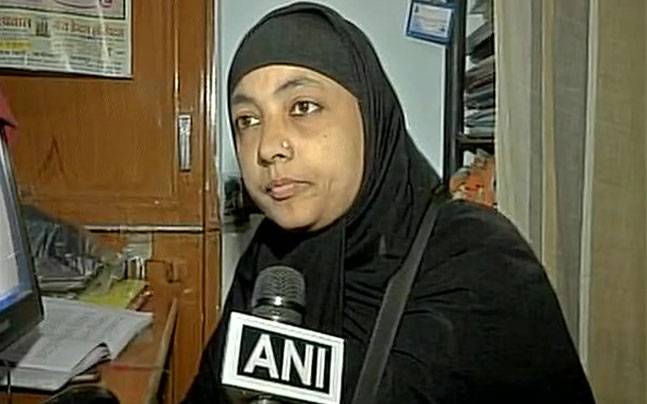
Jahan Ara became the first woman Qazi of Rajasthan after completing her two-year training course from Darul Uloom-i-Nisawa in Mumbai.

Jaipur-based Jahan Ara was handed over her certificate for ‘Qaziyat’ on Friday.

Apart from completing her course in the light of Quran, Hadith and Indian Constitution, Jahan Ara also learnt woman rights.

With this huge step, solemnizing nikaah will no longer be a male bastion in the state.

source: http://www.indiatoday.intoday.in / IndiaToday.in / Home> News> India / New Delhi – February 08th, 2016

Quaide Millath Documentary Film Released and Screened in Kuwait

குவைத்தில்காயிதேமில்லத்ஆவணப்படவெளியீட்டுவிழாநிகழ்ச்சி

QuaideMillath Documentary Film Released and Screened in Kuwait

A special  historic documentary film, explaining the chronicle, virtues of Marhoom Honorable QuaideMillathSaahib, was Launched in Kuwait on the cool pleasant evening of Thursday, 08.01.2015.

Muhammad Ismail(1896–1972) was an Indian politician belonging to the Indian Union Muslim League. He was a member of the Tamil Nadu Legislative Assembly, and a member of the Indian Parliament – both Rajya Sabha and Lok Sabha. He was also a member of the Indian Constituent Assembly which framed the Indian Constitution. He is popularly known in his native states of Tamil Nadu and Kerala by the title “Quaid-e-Millat” (Leader of the Nation).

For More details please click: http://en.wikipedia.org/wiki/Muhammad_Ismail /http://ta.wikipedia.org/wiki/முகம்மது_இசுமாயில்& http://ml.wikipedia.org/wiki/മുഹമ്മദ്_ഇസ്മായിൽ

The program was initiated and well organized by the Kuwait Tamil Islamic Committee (K-Tic), whose executive members are key associates in forming QuaideMillath Forum in Kuwait and candid members of Indian Union Muslim League, Tamilnadu State.

This documentary movie, was published by Muslim League Publication, and was directed by Aloor Sha Nawaas, renowned as “Ilam Oodaga Pooraalee” (Young Media Gladiator)a title conferred by K-Tic during his first visit to Kuwait. He was further designated as “AavanappadaAalunar” (Biopic Commandant), in the Grand Seerathun-Nabi (sal.) Convention, held at Masjid Al Kabeer on 02.01.2015.

The documentary was screened at the “Sirajul Millath” hall at Rowdha. This event was presided by K-Tic President, Moulavee Al-Haaj M.S. MuhammadMeeraShaFazilBaaqavee, and anchored by K-Tic’s General Secretary Moulavee A.B. Khaleel Ahmed Baqqavee M.A., The program started with Qur’anic Recitation by K-Tic’s Vice-President MoulaveeM. MuhammedNizamudeenBaaqavee, welcome speech by K-Tic’s Deputy General Secretary Al-HaajA.K.S. Abdul Nazar.

The Key Note was delivered by the Director of the Film, Aloor Sha Nawaas, where he mentioned the struggle on making the movie, for the great leader, whose roots are lost or forgotten by the blooming generation.

He mentioned, this movie was created from zero to this level, so that it shall be an immense tribute to the noble leader – not only for Tamil speaking community nor only for Muslims but for whole regions and religion allover India.

The movie enlightened the strengthening of early Indian Union Muslim League, when QuaideMillath, joined and servedearnestly.

The spectators astonished and shed tears on watching the movie.

Executives of Indo-Kuwait Friendship Society, Kuwait Kerala Muslim Cultural Committee, ThaimanKalaiIlakkiyaPeravai, Kuwait Tamizhosai Poet Association, Islamic Guidance Centre andTamil Nadu Islamic Student Association witnessed and greeted the outcome & efforts on the documentary and each observer was presented with a DVD copy of the film.

Representatives of various Tamil Associations, businessmen, social workers, community activists, admired on the missioned by Honorable leader of QuaideMillath. The event concluded with vote of thanks and Dua’a by K-Tic’s Deputy Treasurer Al-Haaj H. Mohammed Nasar.

——————————

Media & News Wing,  Kuwait Tamil Islamic Committee (K-Tic), Kuwait.

Hotline / WhatsApp / Viber /  Telegram / Mobile: (+965) 97 87 24 82 / Emails: q8_tic@yahoo.com / ktic1427@gmail.com / website: www.k-tic.com / Yahoo Group: http://groups.yahoo.com/group/K-Tic-group -/  Facebook Page:https://www.facebook.com/q8tic – /Facebook Group:https://www.facebook.com/groups/q8tic -/Ustream(Live): http://www.ustream.tv/channel/ktic-live  -/YouTube : www.youtube.com/user/Ktic12

—————————————————————————————-

source: http//www.indianfrontliners.com / Indian Frontliners.com / Home / Thursday – January 15th, 2015
Bags silver medal

Tiruchirapalli, TAMIL NADU:

HussainMPOs05feb2016

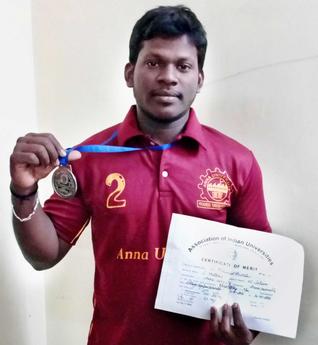
S. Mohamed Hussain, representing Anna University, won silver medal in the all-India inter-university weightlifting championship held in Guntur. Hussain, a final year MCA student of J.J. College of Engineering and Technology, Tiruchi, competed in the 62kg category and finished second with a total lift of 231 kg (102 kg in snatch and 129 kg in clean and jerk).

K. Ponnusamy, Chairman of the college, S. Sathiyamoorthy, Principal, K. Jayaraja, Director of Physical Education, and S. Chidambararajan, Assistant Physical Director, felicitated the youngster.

source: http://www.thehindu.com / The Hindu  / Home> News> Cities. Tiruchirapalli / by Staff Reporter / Tiruchi – February 05th, 2016

Yaqoob Koyyar – The Legend in Mathematics

Dakshina Kannada Distirict, KARNATAKA :

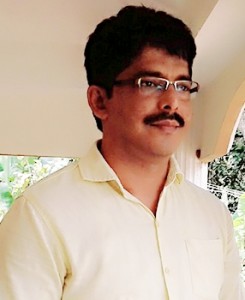
He is probably the only teacher to set up a mathematics lab. 

 Yaqoob Koyyar
Yaqoob Koyyar

by Shabana Sultana

Nada (Bethangada Taluk), Dakshina Kannada District :

Most of the students find mathematics the toughest subject. But if a hard working teacher puts his efforts wholeheartedly in this subject, students can begin to see a bright future and show a keen interest in those head-spinning numbers and graphs. They will no more find mathematics a scary subject.

If a teacher decides to do something for the students without worrying about the hurdles coming in the way, success is sure to come to their doorstep.

Yaqoob Koyyar hails from a small village called Nada in Belthangady taluk of Dakshina Kannada district. He belongs to that rare breed of teachers who are always ready to solve any math problem. But that’s not what makes him truly rare. He has inculcated qualities like sound thinking, hard work, interest, appreciation and broadmindedness in his students as well. It seems he was born only to spread knowledge.

Nowadays, teachers have an attitude which belies the noble work they render. They think just being teachers makes them great. But Mr. Koyyar isn’t one of them. He works extra hours in the class to teach students the nuances of mathematics and channelize their creativity.

I got to know about Mr. Koyyar through a WhatsApp group called MSTF (Maths Science Teachers’ Forum) run by Mr. Naveed Ahmed Parvez, a high school teacher from Shimoga. This group introduced me to many a local legend in mathematics and science.

Mr. Koyyar’s parents believed his birth brought light in their lives. He studied primary education at the Belthangady government school. There was no Urdu-medium school nearby, so he studied in Kannada medium. He did his secondary education at Manjunatha High School in Dharmasthala. He went on to study Bachelor of Science (B.Sc.). He studied Bachelor of Education (B.Ed.) at the Mangalore College of Teachers’ Education.

He isn’t one who just eyes destiny and does nothing. He is one who can change the atmosphere.

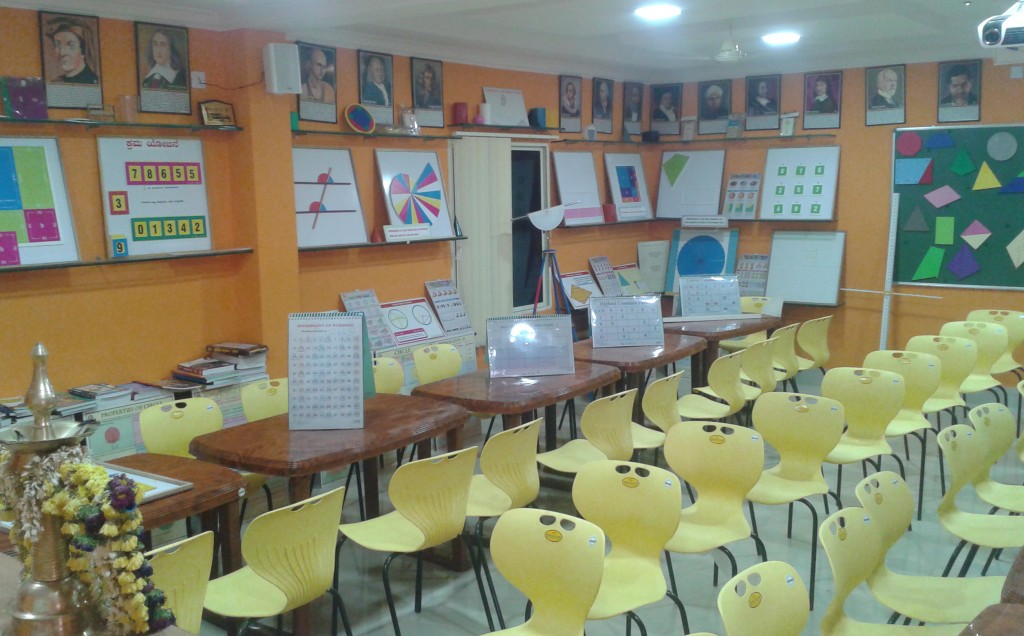
Mathematics lab established by Yaqoob Koyyar in Nada, Belthangady taluk of Dakshina Kannada district

Mr. Koyyar was posted at a high school at his native village. He achieved a lot in his career as a teacher. His students still admire his dedication. He made all of them to think that mathematics is the easiest of all subjects.

He became a tree, giving the fruits and shadow of knowledge to all in this world of selfishness. He himself bore the scorching sun. He evaluated his students with different tests and exams. He would teach most of his students till midnight during exams. He demonstrated so many exercises to the students to make them fall in love with mathematics.

Later, he was transferred as assistant director of Akshara Dasoha (mid-day meal) scheme. There too, he his did duties sincerely. He is popular as the math and science resource person. He was honored by many organizations, too.

Mr. Koyyar used his knowledge and set up a wonderful mathematics lab for all the teaching community of Karnataka. I salute him for his dedication.

His children inherited the same qualities. His daughter scored 611 out of 625 marks in SSLC exams in 2015, with centum scores in Kannada and mathematics.

Computer is known as a multi-tasking and programming machine. I would like to compare Mr. Koyyar with a computer, because he is multi-faceted, hard working and dedicated to spread knowledge.

(The writer is a teacher in Bangalore. )

source: http://www.karnatakamuslims.com / Karnataka Muslims / Home> Districts> Dakshina Kannada / December 21st, 2015

Artists remember multi-talented Bhand Ghulam Ali Majboor

Srinagar, JAMMU & KASHMIR :

Karam Buland, Khilat-e-Majboor award given to artists, culture activists and officials
Srinagar:
The artist community of Kashmir Saturday united for special performances to remember a talented folk artist Ghulam Ali Majboor and give ‘Khilat-e-Majboor’ awards named after him.
The event was organised by family, friends and artists of National Bhand Theater (NBT) Wathor to pay tribute to Majboor, who was popularly known as ‘Maagun’ (Multi-talented) of Kashmir’s Bhand Theater’.
Majboor was poet, writer, actor, director and folklorist and the founder of National Bhand Theater, well-known association of Bhand performers in Wathor village of central district Budgam.
The event, which starts at 2pm on Saturday, showcases a documentary on the life and times of late Majboor and special performance by musicians and actors of NBT.
On the occasion folk artists presented a satirical play ‘Kahan Gaav Yaad Thav’ written by Ghulam Ali Majboor. The play was directed by his student Shahjahan Bhagat.
The play depicts conflict and confusion in the Kashmiri society due to division among social and culture groups.
On the conclusion NBT also gave away Khilat-e-Majboor and Karam Buland awards to professionals for the promotion of art, culture and theater.
The Karam Buland award was given to artists associated with the Bhand Theater including Muhammad Maqbool Bhat, Abdul Hamid Bhagat, Manzoor-ul-Haq, Fayaz Ahmad Bhagat and Muhammad Ismail Bhat.
‘Khilat-e-Majboor’, which was constituted this year was conferred on well-known artists, culture activists and officials including a known theaterist Mushtaque Ali Ahmad, Academician and writer Dr Farooq Fayaz, Ex Additional Secretary Mehraj ud Din, former Director Doordarshan Dr Rafiq Masoodi, Editor Urdu Cultural Academy Ashraf Tak, Broadcaster and Playwright Nisar Naseem, Theater director Arshad Mushtaq, theater artist Ayash Arif, comedian Talha Jahangir, Dr Shabnum Rafiq, Gulzar Ahmad Ganai, Director Radio Kashmir Syed Humayun Qaiser, RTI activist turned politician Raja Muzaffar and writer Gulshan Badrani, Aijaz Ahmad Kakroo, Senior Superintendent of Police, Budgam, Fayaz Ahmad Lone.
source: http://www.risingkashmir.com / Rising Kashmir / Home / by Manzoor-ul-Hassan / Srinagar, February 01st, 2016

Free Glasses Distribution For Needy

Kalburgi (Gulbarga), KARNATAKA :

GlassesDistributionMPOs02feb2016

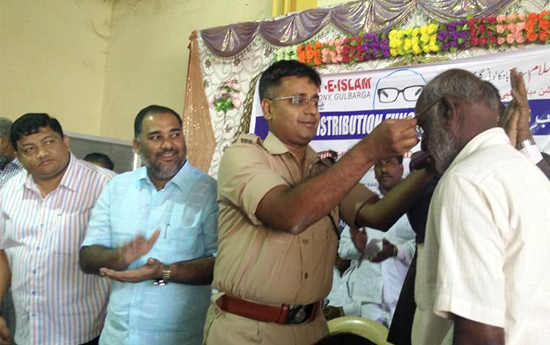
Anjuman-E-Islam Committee, Islamabad Colony Gulbarga organized free glasses distribution function at Islamabad Colony in Gulbarga.

Superintendent of police Amit Singh,  KUDA Chairman Asgar Chulbul,  Minority Chairman Rafi (Abbu), Ex Mayor Iqbal Ahmed Shirnifarosh can be seen.

source: http://www.gulbargatoday.in / Gulbarga Today / Home> News / by Gulbarga Today / Monday – January 11th, 2016

Mufti Mohammad Sayeed : A Life In Full

Kashmir, JAMMU & KASHMIR :
The late bloomer Mufti Mohammad Sayeed (1936–2016) leaves behind a legacy of reconciliation. Make use of it
 
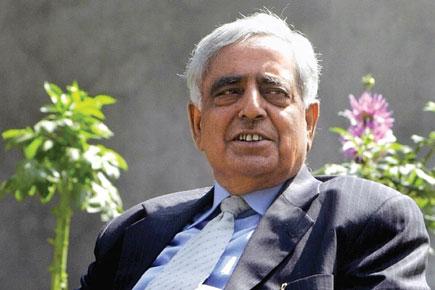
Mufti Mohammad Sayeed (Photo: SAJJAD HUSSAIN/GETTY IMAGES)

Sheikh Mohammad Abdullah, the ‘Lion of Kashmir’, died in September 1982. He was three months short of seventy-seven. He had been ailing, especially since a heart attack in 1977. Sheikh Abdullah’s funeral procession was gigantic. It may have been the single largest ever seen in the Subcontinent. The mass outpouring of grief was a measure of the stature he commanded among his people even in the twilight of his life. He had, after all, been the dominant figure of Jammu & Kashmir’s politics for a full half-century.

A decade later, Abdullah’s grave—near Srinagar’s Hazratbal shrine, on numerous occasions his base and pulpit over that turbulent half-century—was under guard by Indian paramilitary forces to prevent its desecration by armed militants and angry mobs.

The apparent reversal in the Sheikh’s standing among his people was not as astounding as it might seem. The accord he made with Indira Gandhi’s Government in 1975 in return for his personal liberty and political restoration—after 22 years mostly spent in prison—was widely viewed among his popular base and in his own organisation as an abject surrender to and for power. The Abdullah of 1975-1982 was a lion in winter, a far cry from the leader who had long defied and dared New Delhi. In his last years, he even fell out with a lifelong loyalist like Mirza Afzal Beg, the only one of his four cabinet colleagues who had stood with him against the Delhi-sponsored palace putsch of 1953 that deposed him from power (Beg also signed the 1975 capitulation on his behalf). The grand farewell he got from his people on his death was in recognition of his decades of suffering in the cause of ‘self-determination’. The same sentiment, coupled with his party’s grassroots machine, propelled his resounding election victory in 1977 and his son’s equally emphatic win in 1983.

Mufti Mohammad Sayeed, who has died a few days short of eighty, is not comparable to Sheikh Abdullah. For all his faults and flaws, the Sheikh is in a league of his own in Kashmir’s political history—the leader who brought mass political mobilisation to the Valley in the 1940s, emancipated the peasant masses from generations of serfdom through land reforms in the early 1950s, and challenged New Delhi’s machinations and stooges in Kashmir for more than two decades after his removal from power. Abdullah’s political capital was his mass base. The Mufti, for most (over two-thirds) of his nearly six decades in politics, was distinguished by the reputation he gained as a Machiavellian schemer and operator; he had almost no standing among his people and was disliked, distrusted, and perhaps even detested by most of his fellow-Kashmiris.

While I have not seen a single proper obituary of Mufti Mohammad Sayeed in the Indian (or specifically the Kashmiri) media, it has emerged in piecemeal life- sketches that he began his political life in the late 1950s in something called the ‘Democratic National Conference’. This was a dissident faction of a cabal that was installed in office in Srinagar after the 1953 coup, which was formally executed by the barely-adult Karan Singh in his Sadr-e- Riyasat capacity and was followed by the suppression through police and military action of massive protests against it, with dozens killed in firing and thousands arrested.

The cabal, which comprised many though not all of Abdullah’s former comrades (there were important exceptions like Afzal Beg and Maulana Masoodi), falsely appropriated the National Conference name. The real NC was reconstituted as the Jammu & Kashmir Plebiscite Front in 1955 with Beg as its first president and the incarcerated Abdullah as its ‘patron’, and existed under that name until 1975. But the cabal in power developed a schism in 1957 when Bakshi Ghulam Mohammad, Abdullah’s successor as J&K’s Prime Minister, failed to appoint any members of the faction clustered around GM Sadiq to cabinet positions after the first elections to the J&K Legislative Assembly. The ruling pseudo-NC had ‘won’ 69 of the assembly’s 75 seats in these elections; of the Valley’s 43 seats, 35 had been won without any contest (‘elected unopposed’). After the rift, 15 of the 69 legislators joined the rebel group led by Sadiq. The rift was papered over in late 1960 through New Delhi’s intervention and the pseudo- NC entered the 1962 Assembly elections formally re-united.

The young, ambitious Mufti Sayeed entered the Assembly in 1962 from his hometown, Bijbehara. It was not difficult— the official NC ‘won’ 68 of the 74 seats, and 32 of the Valley’s 43 constituencies were won without any contest. It was after these elections that Prime Minister Nehru, worried by adverse international media coverage, famously wrote to Bakshi Ghulam Mohammad mildly rebuking him for not having ‘lost a few seats to bonafide opponents’.

Mufti retained his seat in 1967. It was again a cakewalk. By this time Bakshi was in the doghouse and the ruling party—led since 1964 by Sadiq (who made Mufti a deputy minister in his government)—had metamorphosed in 1965 into the Jammu & Kashmir Pradesh Congress. The Congress won a four-fifths majority— 60 of the 75 seats—in the J&K Assembly in 1967. Of the Valley’s 42 constituencies, 22 saw no contest, and 118 candidates who filed nominations were rejected, 55 because they had not taken the compulsory oath of allegiance to India and the rest with no reason given.

Only a very few undesirables got through this gauntlet. A young Plebiscite Front leader, Ali Mohammed Naik, took the oath of allegiance, managed to get his papers approved, and was elected to the Assembly as an independent from Tral, a southern Valley town fairly close to Bijbehara. Another successful opposition candidate was none other than Bakshi Ghulam Mohammad, disgraced and sulking since his fall from power in late 1963. In 1967, J&K elected Lok Sabha members for the first time. The Congress won five of the six Lok Sabha seats, including two of the Valley’s three. The exception was Srinagar, where Bakshi stood on a platform of Kashmiri pride and won despite attempts by intelligence operatives sent from Delhi to ensure his defeat. When he turned chameleon and ran from Srinagar as a Congress candidate in the 1971 Lok Sabha elections, he lost badly to Shamim Ahmed Shamim, a journalist and Plebiscite Front supporter who contested as an independent.

The people’s interest and allegiance lay elsewhere, outside this ‘democratic process’. On 18 April 1964, Sheikh Abdullah arrived in Srinagar after being released from prison. The Central and J&K governments had decided to free him in a desperate bid to calm down the Valley, which had been in a state of uprising since end-1963, turmoil triggered by the temporary disappearance of Prophet Muhammad’s hair from the Hazratbal shrine but rooted in pent-up rage at the police-state repression and fraudulent governments since 1953. It was reported that Abdullah ‘entered Srinagar and was greeted by a delirious crowd of 250,000 people. Srinagar was a blaze of colour and everyone seemed out on the streets to give him a hero’s welcome… Addressing a gathering of 150,000 people on 20 April, Abdullah said that in 1947 he had challenged Pakistan’s authority to annex Kashmir on grounds of religion, and now he was challenging the Indian contention that the [Kashmir] question had been settled’. Abdullah remained at liberty until May 1965, when he was re-arrested under the Defence of India Rules, a colonial-era regulation used by the British against Indian freedom fighters.

In March 1968, during another, shorter spell out of prison, ‘almost the entire population of Srinagar turned out to greet him’ as he arrived in the city, The Times of India reported. It added that the hundreds of thousands were chanting: “Sher- e-Kashmir zindabad, Our demand plebiscite!” Days later, Abdullah told a 100,000-strong gathering in Anantnag that “repression will never suppress the Kashmiri people’s urge to be free”. In 1968, Abdullah also said: “The fact remains that Indian democracy stops short at Pathankot. Between Pathankot and the Banihal [Pass] you may have some measure of democracy, but beyond Banihal there is none. What we have in Kashmir bears some of the worst characteristics of colonial rule.”

Consistent with the normal pattern of progression of politicians, Mufti Mohammad Sayeed became a cabinet-rank minister in the J&K government after the 1972 state Assembly polls. The Congress had won a three-fourths majority, 57 of the 75 seats, under the leadership of Syed Mir Qasim, who became Chief Minister after Sadiq’s death in 1971. The 1972 election had a back-story. In 1969 the Plebiscite Front had run as independents in panchayat elections and swept the Valley. Then, in December 1970, the Front announced that it would contest both the Lok Sabha polls in March 1971 and the state polls in 1972. Qasim later wrote in his autobiography, My Life and Times (1992), that since its formation in the mid-1950s the Plebiscite Front had ‘reduced [the ruling group] to a non-entity in Kashmir’s politics’ and ‘if the elections were free and fair, the Front’s victory was a foregone conclusion’.

+++

Speaking in Jammu city on 23 December 1970, Prime Minister Indira Gandhi made it clear that she would not tolerate this scenario. Asked by journalists how it could be prevented, she replied cryptically: “Ways will be found.”

On 8 January 1971, ‘externment orders’ were served on senior Front leaders Afzal Beg and GM Shah (the Sheikh’s son-in- law), which required them to leave J&K. During the night of 8-9 January, 350 leading Front activists were arrested across the state under the J&K Preventive Detention Act. On 12 January, the Centre declared the Front illegal under the Unlawful Activities (Prevention) Act. The only reason the Congress did not cross the four-fifths majority mark in 1972 was that five Valley seats were given to the Jama’at-i-Islami in an underhand deal. The fundamentalist pro-Pakistan fringe entered J&K’s legislature through the backdoor.

During the subsequent phase of Indira Gandhi’s wary accommodation of the Abdullahs—on her own terms—Mufti Sayeed emerged as her chief in-state henchman as J&K’s top Congress leader. The Congress-NC rapprochement famously broke down in 1983 and it is more than plausible that Mufti was a key player in the Delhi-sponsored conspiracy that brought down Farooq Abdullah’s democratically elected government in mid-1984. When Farooq’s brother-in-law GM Shah, the Congress-backed replacement, had outlived his usefulness and needed to be disposed of two years later, an episode of rioting targeting Pandits in villages around Bijbehara in March 1986 provided the pretext for his government’s dismissal under Article 356 and Governor Jagmohan took over. Mufti bitterly quit the Congress and joined VP Singh’s bandwagon after Rajiv Gandhi cut his own deal, with its well-known disastrous consequences, with Farooq Abdullah in end-1986.

During the political and human tragedy that engulfed Kashmir through the 1990s, the small town of Bijbehara became one of numerous sites of massacres of civilians. In October 1993, BSF troops fired on a march in the town taken out in solidarity with Jammu & Kashmir Liberation Front (JKLF) militants besieged by the Army in Srinagar’s Hazratbal shrine. Some three dozen people were killed and double that number seriously injured.

The Mufti’s re-emergence at the end of that bloody decade in a brutalised Kashmir in a completely new political avatar alongside his campaigning daughter was nothing short of extraordinary. The platform and rhetoric—dignity, self-respect, rights, and ‘self-rule’—were reminiscent of the Sheikh Abdullah of yore, albeit expressed in a less confrontational, more measured tone. By standing—at last—with his distressed, traumatised people instead of serving the masters in New Delhi, Mufti was able to build a genuine popular following.

The metamorphosis can and does have different explanations, from the romantic to the cynical. Yet one thing is certain. The septuagenarian Sheikh Abdullah was a spent, defeated politician. The septuagenarian Mufti was not. He performed competently as Chief Minister from late 2002 to late 2005, as J&K struggled to move beyond the violence of insurgency and counter-insurgency, until he was compelled to prematurely step down. A decade later, he was able to negotiate, in a spirit of equality, an ‘agenda of alliance’ document with the BJP, which embodies a concrete vision of resolving the Kashmir conflict in its multi-dimensional totality. Because of his past, he retained credibility among Jammu Hindus and Ladakhi Buddhists even while seeking to give voice to the grievances and aspirations of the Valley’s Muslims.

The later political life of Mufti Mohammad Sayeed— 1999- 2015 —has left a genuinely valuable legacy. Jammu & Kashmir, and India, cannot afford to—and must not—lose this legacy.

source: http://www.openthemagazine.com / Open / Home> Open> Voices> Open Essays / by Sumantra Bose / January 15th, 2016

 SumantraMPOs02feb2016Sumantra Bose is Professor of International and Comparative Politics at the London School of Economics and Political Science. His most recent book, Transforming India (2013), includes an analysis of contemporary Kashmir as one of Indian democracy’s unresolved challenges

Where the Credit Goes to Human Generosity

Aurangabad, MAHARASHTRA :
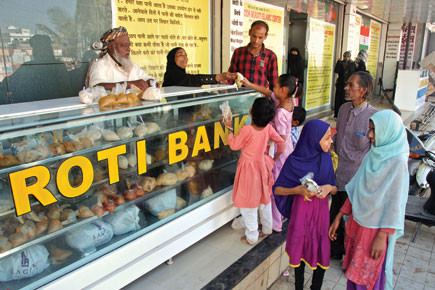
A recently launched Roti Bank that feeds the hungry has become a huge success in Aurangabad.
 

RotiBankMPOs02feb2016

An unusual food bank in Aurangabad, Maharashtra, which feeds the poor and the hungry with fresh food supplied by its ‘depositors’ has seen its membership double in less than two months of being operational.

This initiative has been launched by 38-year-old Yusuf Mukati, who opened the doors of the bank on 5 December with 250 members. Depositors had to fill out a form with their details and were given a specific code, which is akin to a bank account. The details of the depositor are stored under this number. As the founder of the Haroon Mukati Islamic Centre in Aurangabad, Mukati already had a long list of contacts. So when he bounced the idea of a Roti Bank off them, he found that people were quite keen to contribute. As a rule, this bank only deals in freshly cooked food items.

The Bank is open from 11 am to 11 pm. Each of its members has to deposit two chappatis and either a vegetarian or a non-vegetarian preparation. There is no bar on the number of times this can be done. Once the food comes in, helpers segregate the vegetarian and non-vegetarian food and repack it in plastic bags and containers.

This free food is handed out to all those who come to the Bank’s counters. Leftover food is frozen for reuse the next day. In case there is excess food, Mukati distributes it amongst his staffers.

Mukati grew up in a family of modest means where food was a dear commodity. He says, “Seeing poor and hungry people is a common sight. People feed them, but it is never fresh food. I wanted to create a place where people can get fresh food at no cost. It is not just beggars who go hungry. There are so many among the middle-class who have to forgo meals due to rising costs.”

source: http://www.openthemagazine.com / Open / Home> Open> Shorts / by Haima Deshpande / January 28th, 2016

Flower show in Madikeri today

Madikeri (Kodagu) , KARNATAKA :

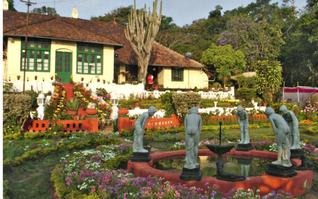
Vibrant:The flower garden at F.M. Khan's home at Boikeri in Kodagu. The annual flower show will be open for public on Saturday and Sunday.
Vibrant:The flower garden at F.M. Khan’s home at Boikeri in Kodagu. The annual flower show will be open for public on Saturday and Sunday.

Madkeri :

The annual flower show being organised at former MP F.M. Khan’s home at the Balayatrie Estate at Boikeri, on the Madikeri-Sunticoppa-Mysore Road, near Madikeri, is sure to become a hit when it opens for the public on Saturday and Sunday.

Mr. Khan played host to the presspersons at his home on Friday as they were taken around the flower arrangements made in front of his home in Boikeri. More than 80 varieties of flowers, all swaying to the gentle breeze and glowing in different hues, are bewitching to watch. Flower-lovers will be surely in for this annual treat, an arrangement being steadfastly followed by Mr. Khan and his family members for many years now.

Name them, the varieties are there. Dahlia, daisy, zerbera, anthurium, lady lock, cactus, marigold, chrysanthemum, bougainvillaea, bonsai, geranium, love in mist, orchids, exora, spider flower, rose, zenia, pinks, and keep counting them, there are more than 80 varieties providing a magnificent sight. It is not an easy task unless one gives personal attention, says Mr. Khan, who was once a firebrand politician and a close confidante of the late Prime Minister Indira Gandhi. However, Mr. Khan says transition from political arena to the kingdom of flowers was not difficult at all.

Mr. Khan had organised flower shows in New Delhi when he was the MP and came under lavish praise from the parliamentarians and flower lovers in the past. Dew drops settled on the flowers on a dewy morning had given a special lustre to the environment. Mr. Khan admits that rearing flowers was a tough task. He rues over the fact that many plants were lost due to unseasonable rains. He has plans to open seed bank in future for the benefit of flower lovers in the district.

Mr. Khan told presspersons that no person in the private sector had opened the flower show for public and he would set his eye on entering the Limca Book of Records in sometime.

A.M. Khan, brother of Mr. Khan, recalled how their father, Yousuf Ali Khan, loved flowers . The show would be open for public from 10 a.m. to 5 p.m. on Saturday and Sunday.

source: http://www.thehindu.com / The Hindu / Home> Karnataka / by Staff Correspondent / Mysore – January 21st, 2012

Annual Flower Show at Balyatri Estate near Madikeri Today, Tomorrow

Madikeri (Kodagu) , KARNATAKA :

F. M. Khan is taking a walk in his home garden. Picture right shows Dahlia in full bloom.

Madikeri :

Former Rajya Sabha member F. M. Khan is holding the annual flower show at his home garden for the public in Boikeri, near Madikeri, on Jan. 30 and 31.

The garden at Khan’s Balyatrie Estate, with more than 100 varieties of flowers — most of them rare — is spread over more than half-an-acre in front of his house.

Multi-hued roses, dahlia, chrysanthemum, jasmine are in full bloom to welcome the visitors.

Addressing media persons here yesterday, he said floriculture helps in the economic progress of the country and urged the government to support floriculture.

Stating that there is a huge demand for flowers at the international market, he said floriculturists should grow flowers in a natural atmosphere.

With the vagaries of nature, one needs to give special emphasis on protection of plants, he added.

Flowers like Jasmine, anthurium, marigold, salvia, Gerbera, Zenia, Dahlia, Cosmos, croton, colin, Plectranthus, Impatiens, Daisy, Gardenia, sun flower, Hollyhocks, Clarkia, Cockscomb, Lupine, Verbena, Fuchsia, pinks, spider flower, oster flower, calendula flowers, cupia, Gazania, Sweet pea, Cineraria, stock flower, love in a mist flower, devil in the bush and others are on display.

The flower show will be open to visitors from 10 am to 5 pm today and tomorrow.

source: http://www.starofmysore.com / Star of Mysore / Home> General News / January 28th, 2016