All posts by mpositiveone@gmail.com

Finding fish to make ends meet

How an adversity turned into an opportunity for Rajasthan’s Meo community farmers

They were never fisherfolk and had no idea how a net was cast. Living for generations in the landlocked Kaman block of Rajasthan, the farmers of Jeeraheda village only knew how to sow and harvest their grain. So, when in the late 1980s, water from the Gurgaon canal, which runs through Haryana and Rajasthan, began to slowly seep into their agricultural land and cause serious water-logging, they threw up their hands in despair.

The 240 families of the Meo Muslim community, which has its homes and farms along the canal adjoining the Haryana border, knew that growing a crop on these tracts was no longer possible. “We tried in vain for many years to make use of this land, but nothing at all would sprout. It would get inundated with water,” recalls 53-year-old farmer Aas Mohammad.

The flooding also meant the farmers had less acreage to cultivate and were unable to meet their food needs, leave alone store grain for a rainy day or sell it. Already left outside the mainstream of development and traditionally backward, the community found the going tough.

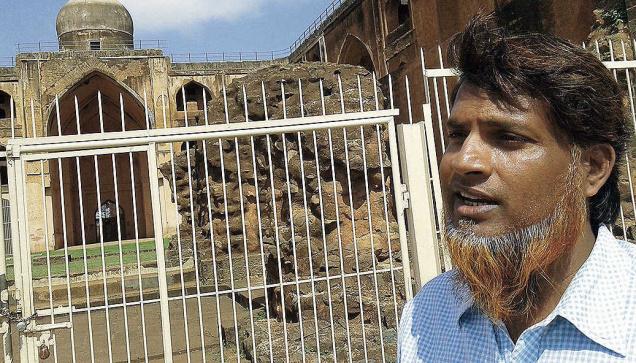
Teach a village to fish Aas Mohammad and his family draw in their fish catch at their field-turned-pond. Some of the fish will be sold to markets and some transferred to another farmer’s pond as fish seed KAMAL NARANG

All of a sudden, however, their fortunes turned for the better. “In the last 15 years there has been a lot of change. Our luck began when we introduced fish seed into the gram panchayat talab (large pond) and found it yielding good results. It grew into good-sized adult fish,” says farmer Khurshid, who is now the President of the Gram Vikas Samiti. Lupin Human Welfare and Research Foundation, which has been working on development projects here, advised the farmers to dig up the water-logged fields, transform them into talabs and introduce fish species for sale in cities.

There was no looking back after that. Khurshid says his village today has 55 such talabs in the 40-50 acres that is unfit for cultivation. Dull-blue waters and bright-blue fishing nets have become a part of the landscape, interspersed with green fields. “Our fish harvest brings us returns every day,” he says, naming the popular sweet-water species Rohu and Katla as the mainstay of their business along with the smaller mirgal, and common and grass carb.

Every day, 2-3 vehicles arrive in Jeeraheda village to cart away 5-6 quintals of fish each for markets across the State border in Gurgaon and Delhi. “We don’t have to go anywhere, our market comes to us… we do brisk business from 6-9am. We weigh the catch, fix the price and sell to the best buyer. This happens across all the four villages along the canal that have taken up fisheries,” says a satisfied Mohammad.

Kaman block alone has around 200 ponds with fish rearing. “Bharatpur district, of which we are a part, is producing 1,500 tonnes of fish and provides livelihood to 2,000 fish-farmers,” says Tarachand, Lupin’s Kaman block co-ordinator. He provides a back-of-the-envelope calculation of the profits earned by the farmers. “They spend around ?50,000 annually on seed, feed, cleaning, nutrition and so on for atalab the size of an acre. The output is about 40 quintals of fish. Per hectare, they earn ?3.5 lakh a year.”

“A problem was turned into a potential,” explains Dr Swati Samvatsar, Lupin’s Chief Programme Manager. To keep fish-farming alive and encourage the farmers, the organisation started a fish-seed hatchery in the Nineties with a capacity of one crore fry seeds; it supplied various fish species to the farmers at a no-profit, no-loss basis.
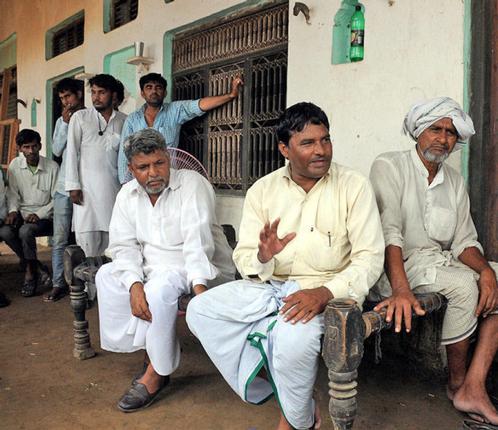
The houses are now concrete and every family has accident insurance

“Today, some farmers make their own seeds and provide them to others,” says Samvatsar. The results are there for all to see. The houses are now concrete and every family has accident insurance.

Unfortunately, however, prosperity and food security have not erased overwhelming social and cultural problems. Only a few girls go to school. “Women have their own role to play. They do not help in the fishery business. Instead they tend to the buffaloes, the home, the children… and to themselves,” Khurshid argues vehemently.

The good fortune has also meant that young boys in the village have become more complacent. Only a few have attempted to secure college degrees or turn to other professions. “The younger generation is more adept at swimming, fishing and growing the fisheries business,” admits Samvatsar.
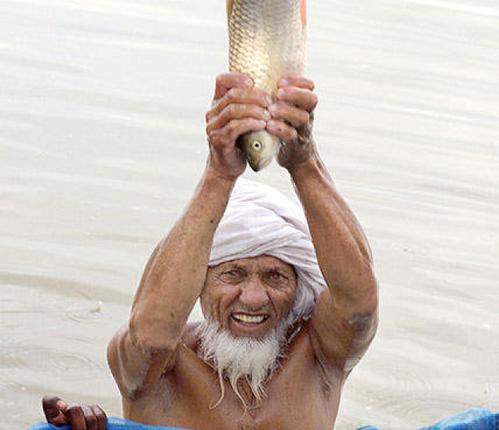
SHER MOHAMMAD Fish-farmer in Kaman block. Even the youngsters in the village know each and every detail about fish cultivation

Says 74-year-old Sher Mohammad, obviously proud of the training the young ones have been given, “They know each and every detail about fish cultivation.”

Fourteen-year-old Rahees sums it up as he plunges joyfully into the blue water to join the others in retrieving the submerged fishing net, “We study when we feel like it.”

(The writer travelled to Rajasthan at the invitation of Lupin Human Welfare and Research Foundation)

source: http://www.thehindubusinessline.com / Business Line / Home> Specials> India Interiors / by Preeti Mehra / September 11th, 2015

Sania Mirza-Martina Hingis win US Open women’s doubles title

New York  :

India’s tennis star Sania Mirza bagged her second consecutive Grand Slam title of the season, and fifth overall, as she won the US Open women’s doubles with Swiss partner Martina Hingis on Sunday.

The top-seeded Indo-Swiss team outplayed the fourth seed team of Casey Dellacqua and Yaroslava Shvedova 6-3, 6-3 in the final, which never rose to great heights.

Sania’s win capped off a memorable US Open for Indians as Leander Paes had won the mixed doubles trophy with Hingis on Friday, in a repeat show of the Wimbledon.

Kazakshtan’s Shvedova and Australia’s Dellacqua struggled to hold serve, making it too easy for Sania and Hingis. The contest was over in just 70 minutes as the top seeds asserted themselves.

Sania’s ground-strokes from the back of the court and Hingis’ agility at the net was too good for their rivals.

It was Sania and Hingis’ second major title in a row, having won the Wimbledon championships earlier this season.

Sania now has five Grand Slam titles in her collection. She won three Mixed Doubles trophies, the last one coming at this very venue with Bruno Soares in 2014.

In an extraordinary season, Hingis has won five Grand Slam titles this season, taking her overall number to 20. She won three titles with Paes and two with Sania.

“It’s a great year for us. Already been a great year, became world number one. We were a solid team and were in with a chance in all Slams. We are happy to come through. I won mixed doubles here last year, great to come back and win this,” Sania said after her win.

An elated Hingis said, “from the start we hit it off. Our games complement each other. Sania won her first Wimbledon, for me it is bonus. I volley better than what I used to. (in her singles days)”

Shvedova committed a double fault in the second game at 30-all to give top seeds a break point and then a superb return from Sania brought another opportunity but the fourth seeds saved both chances.

The top seeds did not have to wait much for next chance as they broke Dellacqua at love to take a 3-1 lead. But the advantage slipped soon as Sania was broken in the fifth.

Shvedova, who is getting married on Tuesday, surrendered her serve one more time, letting Sania and Hingis just walk away with the set.

Shvedova was far from the player she is as she was down by three break points in the very first game of the second set. Top seeds grabbed the opportunity and consolidated lead with a solid hold.

Sania fired two stunning service winners on Dellacqua’s serve as the Australian was broken at love in the seventh game. Hingis hit an overhead volley winner on the first match point after Shvedova’s double fault at 40-all.

source: http://www.timesofindia.indiatimes.com / The Times of India / News Home> Sports> Tennis > US Open 2015 / PTI / September 13th, 2015

Celia Bell researches Hyderabad’s Urdu poets

Celia Bell / Photo: Mohammed Yousuf / The Hindu

American researcher Celia Bell delves into the works of Hyderabad’s Urdu poets Mah Laqa Bai Chanda and Luft-un-Nisa Imtiyaz

At a time when Urdu language is losing patronage among native speakers, it seems to strike a chord elsewhere. Its poetic form in particular has many followers both within and outside the country. Interestingly, in the land of Uncle Sam too Urdu is making waves, and not just out of curiosity.

Celia Bell, a student of Columbia University, is a case in point. Charmed by the musical quality of the language, she has come all the way from New York to Hyderabad to do research on two women Urdu poets of the 18th century, poets that Hyderabadis themselves have almost forgotten. She has chosen little known poets like Mah Laqa Bai Chanda and Luft-un-Nisa Imtiyaz for her research. Their works have not generated much critical appreciation and this is precisely the reason why Bell would like to explore them.

Maha Laqa Bai was the first women poet with a diwan (published works) of her own. A woman of great beauty, she was a courtesan during the reign of Nizam II and III. Luft-un-Nisa was also a sahibaan-e-diwan poetess with a rich collection of ghazals and masnavis. She wrote under the penname ‘Imtiyaz’.

During the last one month she is here, Bell’s mission has stirred quite a bit of interest and is drawing quiet admiration among Urdu circles. “It is interesting to take up studies on writers on whom not many have researched. I hope I will be able to throw fresh light on these poetesses,” she remarks.

Bell plans to explore the ‘gendered voices’ in the poetry of Mah Laqa Bai and Luft-un-Nisa. She will also delve into the technical elements of their works and their impact on Deccani literature. This project will be of immense help to Bell who wants to do Ph.D on contemporary literature and South Asian Studies. She is in India as part of the Fulbright-Nehru Student Research Programme.

But why in the world she has chosen Urdu literature for research? “I am much drawn to Urdu. It is a sweet language. The best part is its poetry which casts a spell,” says the 24-year-old who is quite familiar with the language by virtue of having studied Hindi at the undergraduate level.

Main padh sakti hoon, bol sakti hoon aur likh sakti hoon (I can read, speak and write),” she says in Americanised accent. But she feels shy of speaking in Urdu for fear of committing mistakes. “That’s why I am conversing with you in English,” she laughs.

Bell is all appreciation for Dr Habeeb Nisar, her research guide at the University of Hyderabad. The University is her host institution during her nine-month long project work. A self driven resercher, Bell has been poring over books in libraries and has found little time to explore the nawabi city. She is looking forward to the trek to Maula Ali to look up the mausoleum of Mah Laqa Bai.

Who are her favourite Urdu poets? Mirza Ghalib, Iqbal and Faiz – she reels out the names. But she is more fond of Ghalib whom she considers the Shakespeare of Urdu. She backs her claim by reciting this famous couplet of Ghalib:

Baske hoon Ghalib aseeri main bhi aatishe zere pa

Mue aatish deedah, hai halqa meri zanjeer ka

(Whereas, even in bondage, there is fire under my feet Ghalib

The chain that binds me is merely curls of singed hair)

She further recites verses from the works of Faiz Ahmed Faiz –

Ye daagh daagh ujaala, ye shab-gazidar sahr

Ye wo sahr to nahin jiski aarzu lekar

Chale the yaar ke mil jaiegi kahin na khain

(The stain-tainted light, this night-bitten dawn

That we were waiting for, this is not that morning

This is not the morning, in whose yearning

We had set out full of hope that we will surly find)

Bell took to writing early in her life. A good number of her short stories in English have appeared in New York Times Magazine and literary journals like Five Points and Bomb Magazine. Will she write in Urdu too? She only flashes a big smile by way of answer.

source: http://www.thehindu.com / The Hindu / Home> Features> MetroPlus> Society / by J.S. Ifthekhar / Hyderabad – September 13th, 2015

Singer Najim Arshad Marries Dentist Thesni Thaha [PHOTOS]

Najim ArshadNajim Arshad/Facebook

Najim Arshad, who rose to fame after winning the Idea Star Singer title in its second season, married Thesni Thaha in Punalur, Kerala on Sunday.

The wedding reception is scheduled at 6 pm in Thiruvananthapuram later in the day. Another reception will be organised for celebrities and other guests on 17 September in Kochi.

Najim’s wife Thesni aka Kiki completed her BDS course in Bangalore. The two met each other through a friend in January 2014 and the marriage was extended for nearly one-and-a-half-year to let Thesni complete her studies.

The duo had got engaged on 16 April in a private ceremony attended by some close friends and families of the couple.

Najim, 29, has made a mark in the industry by rendering his voice for many popular songs in Malayalam, Tamil and Hindi films.

source: http://www.ibtimes.com / International Business Times / Home> News> Entertainment> Celebrity / by Anu James / September 11th, 2015

Islamic research scholar pens book on Jain iconography

Religion is irrelevant to the study of these structures and heritage, says Abdul Aziz Rajput Bijapuri, a researcher from Vijayapura.— Photo: Gopichand T.

Abdul Aziz Rajput Bijapuri has travelled extensively in the Deccan and visited every Jain historical place ‘at least twice in the last 10 years’

It is not often that one comes across a book on Jain iconography written by a scholar of Islamic art. Abdul Aziz Rajput Bijapuri, a researcher from Vijayapura, has just completed the book on Jain icons and sculptures of the Deccan, with special reference to Vijayapura, Kalaburagi and Bidar.

He is planning another book on the monuments relating to the Jain period in Karnataka. In Bidar to study Sri Parshwanatha temple at Kamthana village, he spoke to The Hindu on how Jain iconography fascinated him.

“The Kamthana temple was built by the Rattarasa kings in the 10th century. It served as a gurukul or school for several hundred years. However, it fell into disuse till it was renovated in 1987,” Mr. Bijapuri explains.

He has travelled extensively in the Deccan and visited every Jain historical place “at least twice in the last 10 years”. He has compiled history, architecture and present condition of the monuments, along with the statues, art plates and stucco and other craft in the buildings.

He has also documented Hindu temples in the Deccan and written treatises about their art and architecture. He has written 12 books, on monuments and religious places of Hinduism, Islam and Jainism.

“Religion is irrelevant to the study of these structures and heritage,” he said. He recalled how scholar late M.M. Kalburgi praised him during a seminar in Dharwad for focusing on his area of research, without bothering about criticism from some quarters about his religious affiliation. “Kalburgi had told me we need more people who study the heritage of religions other than their own,” he recalled.

Mr. Bijapuri has translated books between Arabic, Persian, Urdu, English, Kannada, Marathi and Hindi. He has also set up an NGO, Deccan Studies and Historical Research, that organises seminars, heritage walks and publishes books and brochures in Vijayapura.

source: http://www.thehindu.com / The Hindu / Home> National> Karnataka / by Rishikesh Bahadur Desai / Bidar – September 13th, 2015

Stories in stone

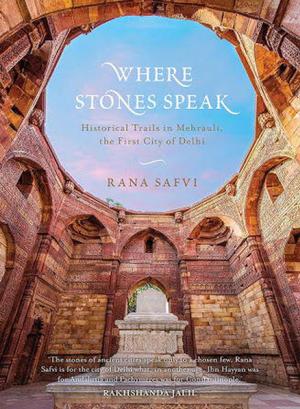
The book jacket
The book jacket

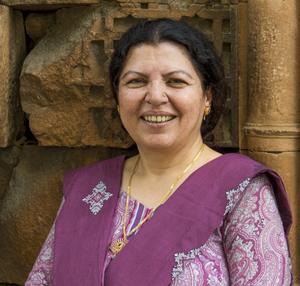
Historian and writer Rana Safvi’s blog, ‘Hazrat-e-Dilli’, is a little corner of the Internet dedicated entirely to the Capital — its new and old architecture, the dizzying variety of food, age-old traditions and much more. Her new book, “Where Stones Speak”, is another tribute to Delhi, and arguably its first city, Mehrauli. Safvi traces Mehrauli’s history through simple words and haunting couplets, takes us through its diverse monuments and weaves facts with storytelling in a way that paints a picture achingly beautiful in its richness and depth.

RanaSafviMPOs13sept2015

Excerpts from an interview:

What brought about the idea?

Delhi for us was just a transit point for changing trains to Lucknow or Nainital. Except for a visit to Red Fort and Qutub Minar with a university group I had never visited any of its beautiful monuments. It is only in the past few years when my daughter shifted here that I spent time in Delhi. I started going out for heritage walks with various groups. It was during these that I realised though there was a lot of material it was scattered and quite a lot of it was in Urdu so inaccessible to many. I wanted to write a book on the lines of Hearn’s “Seven Cities of Delhi” but when I reached Mehrauli the first city I realised that it had enough treasures to form a full book on its own. This book happened – I had set out to write something else. I feel it was blessed and willed by Mehrauli’s guardian saint Qutub Sahab.

It’s an ambitious book, one that would require you to go through reams of material. What kind of initial research did you do?

The first thing I did was to shift from Dubai to Delhi NCR as I accessed books for research. I did not want to rely on online resources only. I went through bibliographies of ASI (Archaeological Survey of India) and books written on Delhi. I went to the Urdu Bazaar. Then I bought the books. I feel I became Flipkart’s biggest customer, with books pouring in every week. I have built quite a library now and it’s ongoing. ASI itself has many books on Delhi especially on the Qutub Complex which I went through. Their library and photo section are treasure houses and I got a lot of help from them. There are many Urdu books available. A 1919 book by Bashiruddin Ahmed called ‘Waqi’at-Dar-ul-Hukumat Dehli’ is full of stories and anecdotes.

How difficult was it to find preserved records and materials for the book?

ASI publications are the best source for records and materials. Records of excavations and research done from the time of Sir Alexander Cunningham in Delhi in the latter part of 19th Century are all available with them. Carr Stephen’s 1876 book “Archaeology and Monumental Remains of Delhi” was also invaluable. Many British officers of ASI have written books on Delhi in late 19th and early 20th Century. Maulvi Zafar Hasan’s book, ‘Monuments of Delhi’, published in 1916 for the ASI details all the monuments of Delhi. Many of these are lost to us now. For contemporary history I relied on ‘The History of India, as told by Its Own Historians’ Henry Miers Elliot and John Dowson. Some of the books are now out of print or badly reprinted. I got these from the U.S. where there were second hand sellers.

Delhi’s history is a curious mix of facts and folklore. What kind of balance were you looking to provide in this book?

I have taught history in middle and senior school for many years. I know how bored people get if we just keep presenting fact after fact. I tried to use the same technique I used for my students: tell the story as accurately as I could and make it interesting. I have used anecdotes I found in my reference books as well as a few recounted to me. Wherever they are unsubstantiated by records I have mentioned that too. I have tried to enliven it by using Urdu verses which describe the stunning photographs taken by Syed Mohammad Qasim better than I ever could with my prose. It also embellishes the prose and breaks the monotony of facts. This is a style not used by any other English book on history (at least I haven’t come across it). It has been used in Urdu books though not to this extent.

What is the legacy of this past, and how you think it defines contemporary Delhi and its people?

In 1947, when India was partitioned, many of the old inhabitants of Mehrauli and Shahjahanabad left for Pakistan. The refugees who came here were shell-shocked by the trauma of being torn away from their native lands and having to start anew. For them it was survival that mattered the most. These old buildings held no meaning for them. There was a lot of encroachment those days. Those who didn’t migrate had different problems to cope with. Thankfully, the interest in heritage and our cultural legacy has once again been awakened. The younger generation is identifying with it and showing interest in preserving it. This can be seen in the wealth of books and programmes on our historical and cultural legacy.

Delhi is a juxtaposition of age old monuments and modern architecture. Do you think even by themselves these structures carry an impact?

For me every stone has a story to tell. It is up to us to tell those stories in such a way that these monuments speak to everyone. This can’t be done only through dry facts. It’s only when factual stories are associated with it that people will remember and talk of them fondly. For instance the feedback I get is that Sultan Razia’s story has made them look at Quwwatul ul Islam Mosque with new perspective. It is no longer a pile of stones but a place where a great historical event took place. Structures carry impact when we associate something which we found interesting with it. I don’t know how far I have succeeded but that has been my attempt.

source: http://www.m.thehindu.com / The Hindu / Home> MetroPlus / by Swati Daftuar / September 12th, 2015

10 QUESTIONS – Imran Sardhariya

ImranMPOs13sept2015

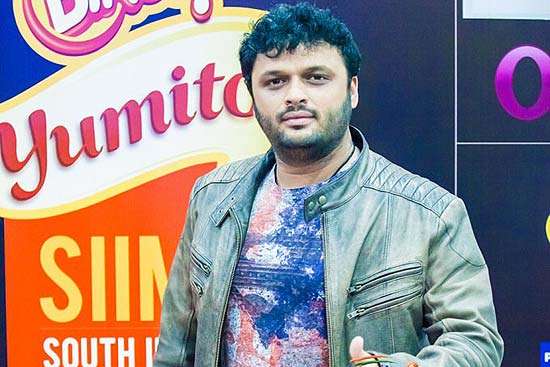
The Kannada-Telugu film choreographer and director on living the cinematic life

Stuti Agarwal interviews Imran Sardhariya

Why choreography?
I landed in choreography by chance. In school, people thought I was cute and put me up on stage in front of dancing girls. Before I knew it I was dancing.

Was getting into films easy?

No, but I have been lucky. I was introduced to the industry by Ramesh Arvind, whose daughter I taught in my dance academy. My third song, Stylo Stylo, won me great acclaim.

You are solely choreographing the SIIMA Awards 2015.

Over three years of SIIMA, I was bothered by its mediocrity. This year they asked me to choreograph it all.

It seems to have become a trend—from choreography to direction….

For me, the leap came after a friend pushed me in that direction saying it was the obvious next step.

Your first directorial debut, Endhendhigu, wasn’t a hit.

It does not deter me, but only spurs me to do better. I’ve seen this happen to many.

Like your movie, your life is a romantic filmi tale.

I guess that is where I get my love for romance. We moved to Bangalore after my dad passed away and it was there that I met my future wife. She was training at the studio where I was assisting; facing parental opposition, we had to elope!

Choreography or direction?

My first love is choreography. But film-making is also a passion.

You say cinema has taught you diplomacy.

I am straightforward and that landed me in trouble often. Over the years I have learnt to listen to people before I give my opinion.

What’s next?

Producing.

Any plans of getting into Bollywood?

Who doesn’t want to get into Bollywood!

source: http://www.outlookindia.com / Outlook / Home> Arts & Entertainment / Inteview – 10 Questions / by Stuti Agarwal / Magazine – September 21st, 2015

First national level Homeopathy conference to discuss about advanced medicines in the field

Kozhikode :

The national level Homeopathy convention organizing by Global Homeopathy Foundation in association with the Department of Ayush in Kozhikode on September 13 will witness eminent scientists and experts presenting various topics ranging from homeopathy medicines to treat HIV, Hepatitis B and Ebola.

Dr A R Khuda Bukhsh, an eminent molecular biologist who have demonstrated anti-cancer effects of homeopathy in cell line studies will present his recent studies related to his field and homeopathy.

Dr S Praveen Kumar of JSPS Government Homeo Medical College will present papers on research work he has done on action of Crotalus Horridus in Homeopathic dilution of 30 potency on reverse transcriptase enzyme involved in multiplication of HIV, Ebola and Hepatitis B viruses .

Dr E S Rajendran, Director, Vinayaka Mission’s Homeopathic Medical college, Salem will present paper on nano-studies of new drugs and the basics of nanoscience and also incorporate ideas regarding the biological action of drug potencies.

Dr Rajesh Shah, eminent homeopathic doctor and researcher, will present his latest research on HIV and Hepatitis C infections.

Dr. Upama Bagai, Immunologist will deliver a talk on efficacy of homeopathic medicines on chloroquine resistant and CQ sensitive strain of human malaria parasite, their cytotoxic studies on human cell lines and results in in-vitro antileishmanial activity against human.

Dr Eswara Das, consultant advisor in homeopathy to Government of India will deliver a lecture on schemes by the AYUSH Department which can be used by potential professionals to develop homeopathy.

source:  http://www.timesofindia.indiatimes.com / The Times of India / News Home> City> Kozhikode / by Sreedevi Chithranjan, TNN / September 12th, 2015

A cooperative wholesale store has come a long way

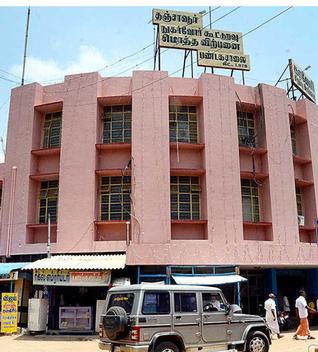
MAKING RAPID STRIDES: A view of Thanjavur Consumers Cooperative Wholesale Stores in Thanjavur.— Photo: R.M. Rajarathinam

Thanjavur Consumers Cooperative Wholesale Stores celebrating platinum jubilee

The Thanjavur Consumers Cooperative Wholesale Stores (TCCWS), a cooperative institution that has impacted the daily life of all sections of society here for the past 75 years, is celebrating its platinum jubilee anniversary by firming up a five-year plan to shore up its finances.

Registered on April 20, 1940, it commenced its commercial operations on May, 1940 with 16 members with a share capital of Rs. 390. Now, it has 2,634 members with a share capital of Rs. 41.14 lakh.

Under its control, there are 70 fair price shops in urban areas of the city through which the premier cooperative institution is channelising 1,137 tonnes of rice, 144 tonnes of sugar, 39 tonnes of wheat, 54 tonnes of toor dhal and 57,000 litres of palm oil every month to the attached 72,636 family cards.

Besides, there are six kerosene bunks in the city limits in its fold through which 29,444 family card holders were getting 75,870 litre of kerosene a month.

Serving as the lead society, the TCCWS has been facilitating supply of essential commodities to 2,00,315 family card holders attached to 467 fair price shops functioning under the aegis of 126 primary agricultural cooperative credit societies in Thanjavur, Orathanad, Pattukkottai, Peravurani and Tiruvaiyaru taluks, the TCCWS Managing Director M. Mohamed Rafi told The Hindu here.

The self-service section functioning in the main TCCWS complex has been doing a brisk sale of Rs. 15 lakh a month while the cooperative medical shop within the complex is extending 12 per cent discount for medicines and five per cent rebate for food items besides providing free door delivery facility to buyers on demand. Medicines and food items sale touches Rs. 5 lakh a month. The stationery section was recently refurbished to lure more customers and is doing a sales turnover of Rs. 2 lakh a month, Mr. Rafi said.

There are 119 employees against the sanctioned cadre strength of 133 and a democratically elected Board of Directors in administering the TCCWS.

One future plans, he says six new fair price shops were ready for opening in urban limits of the city while it was planning to carve out four new full-time fair price shops to serve specific area customers better.

Though the TCCWS has run up a cumulative loss of Rs. 6.24 crore up to the audited period of 2011-12, it has drafted an ambitious five-year plan to wipe off the deficit and turn the corner. Already, during 2012-13, the TCCWS earned a profit of 8.15 lakh due to efficient functioning and Mr. Rafi hoped to build on that performance in the years to come.

source: http://www.thehindu.com / The Hindu / Home> National> Tamil Nadu / by L. Renganathan / Thanjavur – May 02nd, 2015