All posts by mpositiveone@gmail.com

An Urdu poet and translator

KNOW YOUR NEIGHBOUR: Qaiser Shameem  Urdu poet
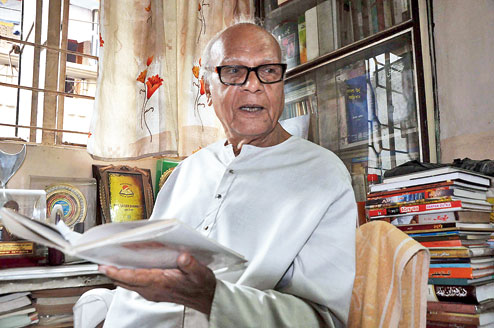
Qaiser Shameem recites a poem from his collection. Picture by Gopal Senapati

 His poetry is about life, society, relationships and his experiences. Those who read him feel that he evokes sentiments that are lost in everyday life. Qaiser Shameem writes in Urdu, the language in which he can express himself best. Living in one corner of Shibpur, Shameem’s works are recognised nationally and outside the country as well. He was invited as chief guest at an international shayari sammelan organised in London in 2006.

In 2013, Shameem was part of a team selected by the Department of Urdu in Jamia Milia Islamia, Delhi for translating selected Rabindranath Tagore’s works into Urdu. “We had to attend a five-day workshop and each writer was assigned a certain poem, novel or short story by Tagore to be translated into Urdu. I translated his poem, Jatri,” said Shameem.

Qaiser has always been involved with various literary activities. When he was a boy, he liked to study. Qaiser Shameem was born as Abdul Qayyum Khan in Angus in Hooghly district. He was the eldest among his siblings. His father worked in a factory, but the young Shameem always told him that he wanted to study. Since 1951, Shameem’s poetry, short stories and critical essays have been published in almost every Urdu magazine and journal in the country. Shameem was also a bright student. He passed the High Madrasa examinations with a first class and was a topper in the board in 1953.

Since he wanted to study further, Shameem had to shift to Howrah, closer to Calcutta for better opportunities. He took admission in Central Calcutta College, better known today as Moulana Azad College. “I had to give tuitions to students to earn a living. I had to send money back home to run the household and also run my own expenses here,” said Shameem. While studying and teaching, Shameem was also writing, attending literary meetings and doing other things. “I was a regular at the Progressive Writers’ Association, where I had met Subhas Mukhopadhyay and Pervez Sahidi and other well-known writers,” said Shameem.

After college, Shameem took up teaching Urdu in a number of schools in Howrah and Calcutta. He was also a professor at the Urdu department of Calcutta University from where he retired. He now teaches at his college, Maulana Azad College. Shameem was also the co-editor of two magazines, Azad Hind and Howrah Times.

From 2002 to 2005, he was the joint secretary of Paschim Banga Urdu Academy.

Shameem’s collection of poetry have been published as books like Saton ka Samandar (1971), Saans ki Dhar (1997) and Pahar Kaatte Huye published in 1998. Tridhara published in 1996 was Shameem’s collection of Hindi poetry. “I always believed that words and literature are a stronger medium than any other form of expression,” he said.

While writing, Shameem has also established Writers’ Association in Howrah in 1966. “The plan was to have a cultural exchange between Urdu writers and writers of other languages. I wanted to start a group where all writers would get an opportunity,” said Shameem.

Other than Tagore, Shameem has also translated the works of Kazi Nazrul Islam and Mahasweta Devi.

MORE ABOUT SHAMEEM

  • DoB: April 2, 1936
  • Born in: Hooghly
  • Education: MA
  • Family: Wife, son, daughter-in-law, grandchildren
  • Loves: Writing
  • Hates: Two-facedness

source: http://www.telegraphindia.com / The Telegraph, Calcutta,India / Front Page> Howrah> Story / Friday – July 03rd, 2015
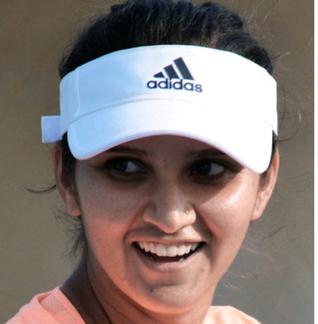
Yet another first for Sania Mirza

Three-time Grand Slam winner, Sania Mirza.

First woman tennis player from India to be top-seeded in Wimbledon

Twenty-eight-year-old Sania Mirza has become the first woman tennis player from India to be top-seeded in the ongoing Wimbledon or for that matter, any Grand Slam championship.

“It’s a great honour to be the top-seed in what is considered to be the ‘home of tennis’,” said Sania from London, before leaving for practice on Friday, ahead of the next match.

“It’s a proud moment and is an official acknowledgement of Sania’s sustained, consistent performances at the highest level,” said her father, Imran Mirza.

Ms. Mirza, incidentally, is playing her 15th year at Wimbledon. She won her first major title there in 2003 at the first junior Grand Slam, in the girls’ doubles category. Sania’s best at Wimbledon in women’s doubles has been the semi-final appearance with partner, Vesnina. It also means she is now a member of the ‘Last-four Club’ in Wimbledon and enjoys certain privileges for a lifetime, including use of a special locker etc.

“No matter how many times you’ve been here, it is still really exciting. I have several beautiful memories associated with the ‘BIG W’,” said Mr. Mirza. His daughter’s performances at Wimbledon have been memorable, including the three-setter in singles, which she lost to the then reigning US Open champion, Svetlana Kuznetsova, playing for the first time on the famed Centre Court, besides beating Japan’s Akiko Morigami.

The only Indians top-seeded in a Grand Slam earlier were Leander Paes and Mahesh Bhupathi in the 1999 French Open edition men’s doubles. Ms. Sania Mirza, a three-time Grand Slam winner, is determined to complete a career Grand Slam, having won the mixed doubles titles in the Australian, French and the US Opens earlier.

Becomes the first woman tennis player from India to be top-seeded in the ongoing Wimbledon

source: http://www.thehindu.com / The Hindu / Home> News> Cities> Hyderabad / by V.V. Subrahmanyam / Hyderabad – July 03rd, 2015

Collector’s Internship Programme

Kozhikode, Kerala :

The District Collector’s Internship Programme (DCIP), a first-of –its-kind initiative in the country, will be launched at the Indian Institute of Management – Kozhikode (IIM-K) at Kunnamangalam here at 9.30 a.m. on Thursday.

True to its motto of facilitating the development of a compassionate and professional civil society, the programme will be inaugurated by two students, Fatima and Fatima Baby, who are leading their lives after a series of struggles.

The two Fatimas, one of them an undergraduate at the Homoeopathy College at Kottayam, have been chosen for the inauguration considering their achievements in spite of their physical disabilities.

“They are not only a symbol of women empowerment but also role models for the youth.

In fact, the life of one has inspired filmmaker Anjali Menon to portray on celluloid the radio jockey Sarah in the blockbuster Bangalore Days , ” N. Prasanth, District Collector, told The Hindu on Wednesday.

The DICP is an unpaid multi-disciplinary internship programme for senior and junior development fellows.

source: http://www.thehindu.com / The Hindu / Home> News> Cities> Kozhikode / Kozhikode – July 02nd, 2015

They raise funds for cancer patient with Ramzan food

Bengaluru :

Every day, before the sun goes down, Khurrum Sheriff (22) and a bunch of other youngsters flock to the masjid at 3rd Cross, Benson Town. They wait for customers to arrive at their makeshift stall to break their fast. They dish out everything from piping hot samosas, spring rolls and biryani to juices and milk shakes, and ensure that all items are sold.

The money racked up from the sales doesn’t end up in their pockets, instead it’s handed over to the mother of a cancer patient.

This is how several residents of Benson Town, who ta ke turns to prepare food and sell it, are observing the holy month of Ramzan. And all this amid their work schedules.

It all started when Tasmeen Farzana Khan, counsellor at a government aided school, came to know about Sunandha R (name changed), a 13-year-old girl in her class suffering from blood cancer. “Sunandha’s father has passed away and her mother, who works as an attendant, is struggling to make ends meet. I learnt that the treatment costs around Rs 16 lakh. And it’s a challenge to keep Sunandha away from the fund-raising as she doesn’t know about her ailment,” she added.

When Tasmeen brought the issue to the Benson Town Youth Association’s notice, members came up with the idea of the stall.

The team comprises 17 members, say AS Nimra Khan (18), a PU student, and Sarah Yaseen (19), a college goer. “Every afternoon, we assemble at the basement of Sarah’s house to cook. We share the task of preparing different food items. By 5pm, we throw open the stall and sales go on till 7pm,” said Nimra.

Khurrum says the response to the initiative has been great and many volunteers have co me forward to offer monetary help. “The month of Ramzan is one wherein we have to donate whatever we can to the needy. Helping a cancer patient, we thou8ght, may be one of t he best ways to do that. We will carry out the exercise throughout the month,” he added.

Sunandha’s mother said she is overwhelmed by the support. “I just want my child to get relief,” she added.

source: http://www.timesofindia.indiatimes.com / The Times of India / Home> City> Bengaluru / by Rohith B R , TNN / July 02nd, 2015

He quits job to fight for ‘one nation, one road tax’

Bengaluru :

The IT City is a gateway of opportunities for many – corporate professionals, students, interns. No wonder, it’s home to a large floating population. But if you stretch your visit beyond a month and bring your vehicle along, you may be in for more than teething troubles.

If you use a vehicle with a non-Karnataka registration number for more then 30 days, you’ll have to shell out a bomb as road tax. For example, if your car costs Rs 20 lakh, you’ll have to pay 25% as tax, which amounts to Rs 5 lakh. Two Facebook groups have now become the epicentre for the fight against this draconian law, a cause of concern for owners of out-of-state vehicles. The man behind the movement, Waseem Memon, has quit his job to concentrate on the campaign. The crusaders seek the right to drive without fear, anywhere in the country.

Memon’s personal mobile number has now become a toll-free number for those in trouble with RTO officials.

He runs Facebook groups ‘Justice for non-KA registration vehicle owners’ and ‘Drive without borders’ (since 2014). The former clinical researcher has taken up the cause on a full-time basis. “Both groups, which have more than 50,000 members, are battling several court cases in multiple states, including Karnataka. We’ve had success in Telangana and are hoping to replicate it here too,” he said.

In 1998, Memon moved to Andhra Pradesh from Karnataka, with a KA registration vehicle. He moved on to Maharashtra and then returned to Hyderabad with an MH registration vehicle. He was pulled up by authorities. In 2010, when he moved back to Bengaluru after his numerous corporate stints, he landed in soup for owning a non-Karnataka vehicle. That’s when he decided he’d had enough.

“Although we started the fight with a Facebook page, we are doing much more. Every month, we hold meetings which are attended by people who face this problem. I get at least 30 calls every day from harried users. Our Facebook pages are flooded with grievances,” said Memon, for whom threat calls have become a norm.

The question Memon and his team want to ask the authorities is when technology parks and IT parks are coming up across the country, which require professionals to relocate frequently, why are these laws in place? “Our goal is one nation, one road tax. And we believe we’re getting close to that,” he pointed out.

source: http://www.timesofindia.indiatimes.com / The Times of India / Home> City> Bengaluru / by Arun Dev, TNN / June 02nd, 2015

Stanford Trio Launch Code Camp to Empower Girls through ICT

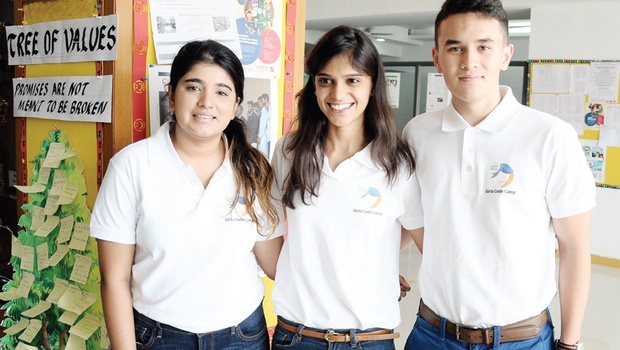
Stanford University students Aashna Shroff, Akhila Moturu and John Kamalu at the launch of Girl Code Camp at Chirec International School in Madhapur on Saturday | RVK Rao

Hyderabad :

An alumnus of city-based CHIREC International School, along with two of her undergraduate batch mates from Stanford University, has launched a concept named Girls Code Camp (GCC) which is aimed at creating a network of young women who are confident in their abilities to computer code and use technology to foster change. The Girls Code pilot boot camp at CHIREC is scheduled to be held from June 29 to July 4, 2015.

The trio – Aashna Shroff, Akhila Moturu and John Kamalu – is conducting GCC as a 6-day workshop in partnership with select schools in Hyderabad. Aashna Shroff is a sophomore at Stanford pursuing Computer Science and Economics; Akhila Moturu is a freshman majoring in Computer Science at Stanford University, seeking a minor in Education; and John Kamalu is a freshman interested in Computer Science and Linguistics at Stanford University.

Each workshop is being planned around an innovative theme that allows girls to align their interests with what they are learning. Workshops will be on Mobile App development, web development and hands-on tinkering for 8th to 10th grade girls.

Speaking at the launch of the pilot boot camp at CHIREC, on Saturday, BVR Mohan Reddy, founder and executive chairman, CYIENT and chairman, NASSCOM, told young girls to be fearless and compete with men in every field. He urged the students to make full use of technology around in creating social equity. “Technology today is all pervasive and accessible. It is constant though the velocity of change is increasing. Predictability of technology has come down and ICT is at the pinnacle of the change,” he said. Further, he opined that use of technology can bring about a social transformation in sectors like education, health, hygiene, and agriculture.

“The idea is to bridge the gender disparity in technological fields in India. With better exposure to computer science skills, girls can take charge of their lives and their communities,” said Aashna. According to her, there exists better awareness abroad for bridging gender disparity apart from combat mechanisms in the form of special scholarships for girls, and student groups.

Iffat Ibrahim, principal, explained about the efforts being taken by the school in empowering students. The GCC will be conducted at NASR girls school, Meridian International School, Sreenidhi International School, and Oakridge International School in the city.

source: http://www.newindianexpress.com / The New Indian Express / Home> Cities> Hyderabad / by Express News Service / June 28th, 2015

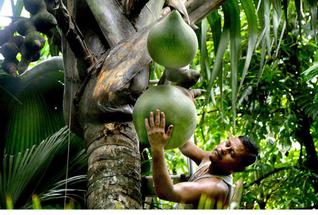
India’s only double coconut tree artificially pollinated

The palm species bears largest seed known to science

A double coconut tree stands at the Indian Botanical garden at Shibpur in Howrah district.— Photo: Sanjoy Ghosh

 Scientists at the Indian Botanical Garden in West Bengal’s Howrah district have carried out artificial pollination of the only double coconut tree in India, which bears the largest seed known to science.

One of the rare and globally threatened species of palm, the double coconut ( Lodoicea maldivica ) tree was planted at the botanical garden in 1894 and the artificial pollination is a result of decades of work by scientists of the Botanical Survey of India (BSI).

“The tree took almost a hundred years to mature and when it started flowering, we started looking for this particular palm species in this part of world. We collected some pollen from palms from Sri Lanka but could not successfully pollinate it. Finally, with the help of pollen from another tree in Thailand, the pollination process was successful,” BSI Director Paramjit Singh told The Hindu .

Longest surviving palm

The Double Coconut tree not only bears the largest seed known to science — weighing around 25 kg — but this unique species is also the longest surviving palm which can live for as long as 1,000 years, he says. The palm tree also bears the largest leaf among palms and one leaf can thatch a small hut.

“Successful pollination means that we can have another Lodoicea maldivica in the country. In fact we have two fruits and it might take them another couple of years to mature,” said S.S. Hameed, BSI scientist who has been working on the pollination project since 2006.

This species of palm is diecious (where male and female flowers are borne on different plants). “Fortunately at the Botanical Garden, we had the female plant which can fruit and produce seeds,” Mr. Hameed said. The Indian Botanical Garden which serves as the repository 12,000 trees from 1,400 different species is careful in nurturing the palm.

The palm tree is located in the large palm house of the Botanical Garden which has the largest collection of palms in South East Asia with around 110 palm species.

This rare tree can be found in only two of the 115 Seychelles islands and is also called Coco de Mer (coconut of the sea), says Mr. Hameed

Legend

Legend bestows the seed with the power to bring good fortune to its owners. “There has also been a tradition of making kamandals [drinking vessels] from the double coconut by bisecting the shell. It was believed that those who consume water from these kamandals will be protected from poisoning,” Mr. Hameed said. Subsequently, sadhus started using Kamandals and it got its place in religious rituals.

source: http://www.timesofindia.indiatimes.com / The Times of India / Home> National / by Shiv Sahay Singh / Kolkata – June 13th, 2015

A difficult stunt, with a smile

Budding off-road racer Hamdaan Khan performing a rare underwater driving stunt in Gokak.— PHOTO: BY SPECIAL ARRANGEMENT

For onlookers, it was a thrilling experience as a young off-road racer dived his four-wheeler into a make-shift water-track and emerged with a smile on his face after driving the vehicle underwater.

Hamdaan Khan, an 11-year-old budding off-road racer from Gokak town in the district, performed the stunt there on Monday.

Hamdaan Khan dived his vehicle, modified by his father Ayub Khan, a national-level off-road racer and who modifies four-wheelers to suit racing needs, into the six-ft deep and 120-ft long water-track and drove it to safety, to a thrilling applause from the onlookers.

This stunt, Mr. Ayub said, is rarely performed in India. Hamdaan Khan’s attempt could be a maiden successful attempt in the country but he was not sure, he said.

Hamdaan Khan, who is studying in the sixth standard in a school in Gokak town, has been learning off-road racing skills from his father. He enjoys it too.

He also accompanies his father in the latter’s wildlife rescue operations in and around Gokak.

Hamdaan Khan (11) dived his four-wheeler into a 6-ft deep water-track and emerged clean out of it in Belagavi

source: http://www.thehindu.com / The Hindu / Home> News> National> Andhra Pradesh / by Vijaykumar Patil / Belagavi – July 01t, 2015

Nadia gets U.N. pat forachieving total sanitation

The district Magistrate of Nadia along with chief of Nadia Zilla Parishad in West Bengal was on Saturday presented the United Nations Public Services Award 2015 for eliminating open defecation in the district.

Nadia district, located in south Bengal, had half of its population defecating in open till October 2013. The district administration, under a programme called Sabar Souchagar, built 3.56 lakh toilets in the district. As a result, the number of people continuing with the practice dropped to mere 0.2 per cent.

The award was presented by the acting Secretary-General of the U.N., Lenni Montiel, along with Head U.N. Women Stefani Senese, on conclusion of the U.N. Day celebrations 2015, on June 26 at Medellin in Colombia, District Magistrate P.B. Salim informed The Hindu over email.

Banikumar Roy, chief, Nadia ZP, was also present.

‘Unique model’
The U.N. has described Sabar Shouchagar (Toilets for All) as a “unique model developed to generate awareness, improve access to sanitary toilets, and bring substantial health improvement through improved sanitation.”

The U.N. added that the scheme has mobilised all stakeholders, “especially women and schoolchildren and saw involvement of faith-based organisations” and “if replicated, it has the potential to eliminate open defecation from across the world.”

West Bengal Chief Minister Mamata Banerjee had on April 30 held a programme in Nadia district highlighting the success of the scheme and announced that ‘Nirmal Bangla Divas’ will be observed across the State every year.

source: http://www.thehindu.com / The Hindu / Home> News> National / by Special Correspondent / Kolkata – June 28th, 2015

Kalyan group owner wealthiest jeweller in India

Kalyan Jewellers’ chairman and managing director T S Kalayanaraman, is the wealthiest jeweller in India with a personal fortune of USD 1.3 billion, says Wealth-X report.

KalyanRamanKERALA01jul2015

Kalayanaraman opened his first jewellery shop in Thrissur City in 1993 with only USD 100,000 capital, and his business has now expanded to 32 showrooms across South India. His personal fortune is worth USD 1.3 billion.

Nirav Modi was ranked second on the Wealth-X list of India’s wealthiest jewellers with an estimated net worth of USD 1.1 billion.

“Born into a family of Indian diamantaires, Modi left the family business in 1999 and launched his own company, Firestar Diamonds. In 2007, Firestar Diamonds acquired New York-based Sandberg & Sikorski,” it said.

The third on the list is M P Ahammed, with a personal fortune of USD 1 billion. Ahammed had opened the first Malabar Gold & Diamond showroom with only USD 70,000.

Others on the list include, Bhima Jewellers’ B Govindan with a personal wealth of USD 620 million, Kiran Gems’ Vallabhbhai S Patel (USD 590 million), Laxmi Diamond’s Vasant Gajera (USD 580 million), Dharmanandan Diamonds’ Laljibhai Patel (USD 480 million), Kiran Gems’ Babubhai Lakhani (USD 470 million), Kiran Gems’ Mavji Bhai Patel (USD 410 million) and Rajesh Exports’ Rajesh Mehta (USD 310 million).

Wealth-X provides insight into the ultra wealthy with the world’s largest collection of curated research on ultra high net worth individuals.

“The gems and jewellery industry is among India’s fastest growing sectors fuelled by UHNWs affinity for jewellery and the fact that they view it as an important store of value. For India’s ultra wealthy jewellers, all that glitters is gold!,” Sahil Mehta, director, Indian subcontinent at Wealth–X said.

source: http://www.deccanherald.com / Deccan Herald / Home> National / PTI / Singapore – July 01st, 2015