When Intizar Hussain writes, everyone pays attention. The India-born-Pakistani writer, well-known even beyond the boundaries of the sub-continent, recently wrote about the Jashn-e-Rekhta — the two-day Urdu literary festival held in Delhi earlier this month.
He said: “I am returning (to Pakistan) after witnessing the biggest literary festival. This festival of Urdu was celebrated under the title Jashn-e-Rekhta and held at the India International Center, a central place in the Indian capital.”
He added: “Friends and others believed that the tradition of Urdu has come to an end in Delhi. Oh! no. This is not the case. Like the sun, Urdu went down here and has reemerged there. It is the magic of Urdu that is mesmerizing the public. Such big gathering; such big crowds might not have been seen at the India International Centre before. The crowd was not that of the traditional Urdu audience that are seen at mushairas trying to bring down the roof with their wah wah, subhanalla and repetition demand. This crowd was that of the sons and daughters of Delhi who have got introduced to the thrill of Urdu through Hindi and English.”
Clearly, from the tone of his two-part article published by a Pakistani daily, it is certain that the Man Booker nominee of 2013 was suitably impressed with the language gathering new admirers.
A Hyderabad-based academic Shams Imran who attended the festival is baffled at the response the event received. “While there is no denying the fact that hordes of people from Gen X are flocking to Urdu for its emotional quotient, the event became a roaring success not merely because of the celebrity participants but because of the imaginative public-friendly planning,” he said.
But why name it Jashn-e-Rekhta (a name that preceded Urdu, the language as it is known today) and not Jashn-e-Urdu?
While the answer could be there in the tombs of information available on the popular Rekhta website, what comes to mind on hearing it is the history of Urdu, the language that represents one of the finest examples of the fusion of Indo-Islamic cultures.
According to some scholars, the first seeds of Urdu were sown with the arrival of Muslim groups from Arabia to India some 1,300 years ago, who brought with them the Arabic language. The later groups came from Afghanistan and Central Asia who carried with them the Persian language and Turkic dialects. It took a distinct form during the last phase of the Sultanate that coincides with the era of Amir Khusrau who used a language that had words from Sanskrit, Bhasha, Persian, Turkish, Arabic and Persian. As Persian or Farsi was taking roots during the Mughal era in Delhi, down in the Deccan, Mohammed Quli Qutb Shah was writing poetry-Piya baaj pyala piya jayena…It was called Deccani in the South then.
The Rekhta or an initial variant of Urdu was still not considered a language to pen poetry. It was merely the lingo of the common folk in bazaars, streets and lanes. Two men from the Deccan, Wali Deccani and Siraj Aurangabadi, discovered the potential of Rektha to be used as the medium of poetry. The popularity of their poetry reached the doorsteps of the North, especially Delhi. Rekhta was no more a language that could be looked down upon. Meer, Sauda and later Ghalib began writing in this language and in the process created a treasure trove of new words, compound words and adage. But by then, Rekhta had graduated to be called Urdu.
So Rektha, according to some, has returned as the language of all those who had felt some connection with Urdu.
The question here is this: When Hyderabad organised a literary festival with Urdu as the language in focus in January, only two months before Jashn-e-Rekhta in Delhi, why it did not click?
According to some observers the reason lies in the fact that except for Javed Akhtar and Rakshanda Jaleel, there were hardly any other popular names in the festival that could help in attracting crowds. The organisers had not even bothered to invite the two award winning writers from within Hyderabad–Padmashri Jeelani Bano and Padmashree Mujhtaba Hussain.
Guess the organisers back home need to take a leaf out of Sanjiv Saraf’s book – the man who made Jashn-e-Rekhta such a huge success.’
source: http://www.timesofindia.indiatimes.com / The Times of India / Home> City> Hyderabad / by Mir Ayoob Ali Khan, TNN / March 29th, 2015
A five-member team, including a woman, that has been paddling their fibre kayaks for six days on the scenic Gulf of Mannar Sea completed their expedition here on Sunday, doing so with the satisfaction that they have been able to educate at least some coastal communities on the need to keep beaches free of pollution and littering.
Jehan Driver, Arjun Motha, Rizwan Gani, John Suganth and Charmine Pereira from Quest Expeditions and Aqua Outback had set off from Kuntakal near Rameswaram in Ramanathapuram district on Tuesday, flagged off by Ramanathapuram district collector, K Nandakumar. They were received here by Coastal Security Group (Marine Police). The team paddled for 49km a day and camped in some beach at night. “We stopped at coastal villages and talked with local people. We told them how important it was to keep their coastal environment clean and protect their resources for sustained living,” said RizwanGani. Jehan Driver, who led the team, explained that the objective of the expedition was to create awareness about the vast natural reserves Tamil Nadu has to offer and the sustainable practices that will keep it pristine. The expedition also aimed to promote Kayaking as a sport and let people know the importance of preserving the natural environment of the marine biosphere to encourage other sportsmen and sportswomen to practice and enjoy their non-motorised sports.
“Gulf of Mannar is a marine eco-system in the country that has remained clean till now and it should be protected. We could share this message among the people we met in the coast during our paddling. We collected more information on the beaches, besides watching pristine islets to check if there are any poaching activities. We could see that marine life is still flourishing in the region and we should protect them together,” Driver said. The team also expressed their concern about untreated sewage mixing in Gulf of Mannar waters. Based on their findings, they will prepare a report which they will submit to concerned government agencies, they said. Government agencies like Indian Coast Guard and Coastal Security Group and additional director general of police, C Sylendra Babu were of great help, they said. Having succeeded in their first venture, they plan to turn this into an annual event to keep the tradition alive.
source: http://www.timesofindia.indiatimes.com / The Times of India / Home> City> Madurai / TNN / March 30th, 2015
Panambur Beach in Mangaluru will witness Indian Open of Surfing (IOS), national surfing event by Surfing Federation of India (SFI), from May 29 to 31.
International surfers from Australia and cricketer Jonty Rhodes, who is the International Surfing Ambassador of India, are expected to take part as judges for the event. IOS is being organised for the first time in Karnataka. More than 100 surfers from various states of the nation are expected to take part in four categories of Stand up Paddle Board surfing championship to be held in three days. Added attraction during the event will be demonstrations on kite surfing and wind surfing by expert surfers of SFI.
SFI vice-president Ram Mohan Paranjape said that the IOS event will be held in association with Karnataka tourism department, Dakshina Kannada district administration, Panambur Beach Tourism Development Project (PBTDP), Mantra Surf Club of Mulky, New Mangalore Port Trust and corporate sponsors. “We have made a presentation to tourism minister R V Deshpande and he has agreed to provide government support. Main objectives of SFI are promoting surfing and thereby provide platform for young talents. Surfing will be held in four categories – under 16 years, 17 – 22 years, 23 – 28 years and above 28,” he said.
While it will require nearly Rs 25 lakh for the conduct of the event, Rs 6 lakh will be reserved for prize money for winners in all categories, Ram said. “We will make all necessary arrangements including transportation, food and accommodation for surfers and judges during their stay in Mangaluru. All necessary arrangements will also be made to take care of the safety aspects of surfers. Lifeguards, on spot medical team, ambulance and professional surfers will be deputed for the safety of surfers,” he added.
Deputy commissioner A B Ibrahim said the district administration will extend all support for the success of the event.
source: http://www.timesofindia.indiatimes.com / The Times of India / Home> City> Mangalore / by Vinobha K T, TNN / March 30th, 2015
Campaign by Team Yuva saves a huge old banyan tree from the axe at Bidar fort
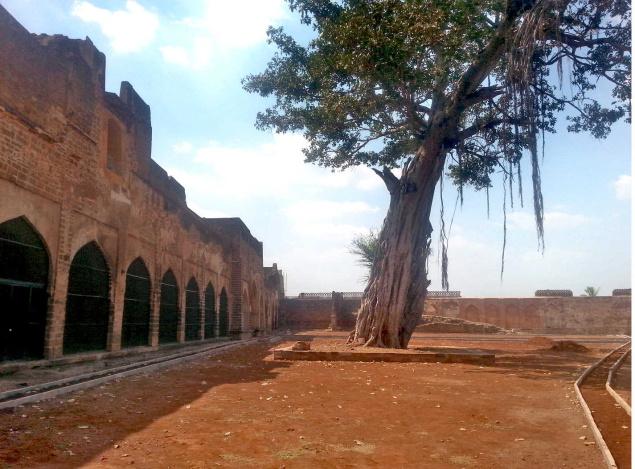
Campaigns to save trees are aplenty, but the one taken up by a group of youngsters in Bidar is unique because it is linked to history and a particularly quirky detail of history at that. At the centre of a campaign by Team Yuva is a banyan tree inside the Bidar fort, in front of the Rangeen Mahal. The Archaeological Survey of India (AIS) is rethinking its proposal to cut the tree thanks to this campaign.
The historical importance of the tree dates back to the time of Nawab Nasir Ud Daula Bahadur, the Governor of Bidar appointed by the Hyderabad Nizam. He had created a “department of monkeys” and appointed “monkey inspectors” (Daroga-E-Bandaran). They were supposed to keep a count of the langurs and feed them. Every day at noon, the guards fed the monkeys rotis, fruits and jaggery. This unusual ritual often happened under this tree, says Ghulam Yazdani in the book ‘Bidar: Its History and Monuments’.
The grants given by the Nizam for this purpose, started in early 19th century, continued till Independence.
“Losing the tree is like losing a part of our heritage. We have petitioned the State government, district administration and the ASI,” said Vinay Malge, secretary of Team Yuva. The team has asked ASI to include the tree in their landscaping plans.
Mouneshwar Kuruvatti, Conservation Assistant of ASI at Bidar, said they had asked the Forest Department to assess the health of the tree as it was old and could fall on tourists. “We will take steps to preserve the tree, after consultation,” he said.
Deputy Conservator of Forests S. Dhananjay said the ASI had earlier submitted a requisition to cut down the tree.
“However, we will assess the condition of the tree to see if it poses danger to passersby or nearby buildings. If it can be saved by pruning or by supporting, we will take those steps,” he said.
source: http://www.thehindu.com / The Hindu / Home> News> National> Telangana / by Rishikesh Bahadur Desai / Bidar – March 30th, 2015
With Mani Ratnam, there are many-layered feelings, according to the maestro. / by Special Arrangement
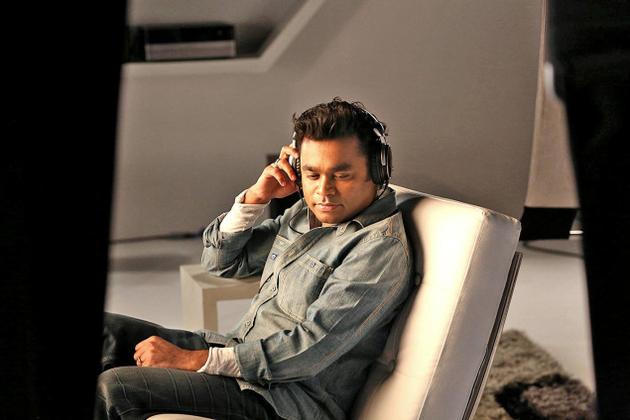
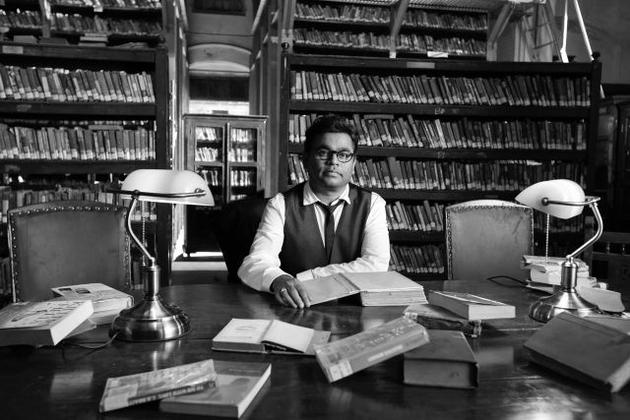
A.R. Rahman talks about his trendsetting musical journey, his forays into other areas of filmmaking and the inexorable charm of being himself
Allah Rakha Rahman is relaxed, worried and anxious — all at the same time.
As a composer, he’s happy; his Mental Manadhil from O Kadhal Kanmani (OKK)is doing well and the rest of the album will be out on April 1. As a son, he’s concerned; his mother took ill recently and is still recuperating. As a producer, he’s eager; things are neatly falling into place with his first project.
When I catch up with him on Thursday evening at his Kodambakkam studio, a few hours after India has lost to Australia in the cricket World Cup, he’s a picture of poise. In an hour-long interview, the musician — clad in a simple brown kurta and jeans — opens up on upcoming releases, working for the famed Iranian director Majid Majidi, his relationship with Ilaiyaraaja and life so far.
‘Mental Manadhil’, from his upcoming O Kadhal Kanmani, is a light-hearted song, he says. / by Special Arrangement
Your latest release, Mental Manadhil, which you’ve written, composed and sung is almost a sensation. How does it feel?
It’s supposed to be a light-hearted song. Lyricist Vairamuthu was off on a holiday and Mani wanted a song immediately. The two of us had already written Endrendrum Punnagai in Alaipayuthe and so, we plunged into that zone again.
What is it about Mani Ratnam that brings out the best in you?
With him, there are many-layered feelings. He introduced me to films, as you all know, but now, the three of us — Mani, Vairamuthu and me — have become a brand. Even if we want to be complacent, we cannot because of people’s expectations. It works like a trigger. We have done our bit in the last few years, but because people expect so much, we want to give them what they we want.
I was told that the three of you even have serious disagreements during composing sessions. Elaborate on that with respect to OKK…
I don’t like certain things. Sometimes, you have to compromise words for the sound — the sound is very important, it de-clutters from the words. People don’t have as much bandwidth as before; we have to catch their attention immediately.
In one of the songs in OKK (Naane Varuvaen), we had an antara that was beautiful but had very complicated words. So, instead of that, we came up with repetitive lyrics. The word (chinnanchiru) repeats itself again and again. It’s like the formula used in traditional performing arts. Take thumris, for example. They have the same thing again and again…. because the tunes get complicated, the words cannot. In songs like Yaad Piya and More Sajni, we keep hearing the same line because it’s easier for the mind to concentrate.
You’re writing a screenplay, producing a Hindi film… why are you branching out into areas other than music?
I want to see if my growth as an artiste can fill the void that I feel is missing in India. Mostly, our industry is driven by what’s going to click commercially. When something clicks, it is replicated. Very few people do it for the art. I do not want to be both — I want to find that balance between what people like and the lost flavour in our music. I’ve been working on it for four years to see if we’ve covered it in all aspects.
How disappointed are you when your films don’t do as well as expected? We hadKaaviya Thalaivan and Lingaa last year…
See, I made a mistake by doing too many films. I should have said no to some of them. As a team, our backs were broken. There was intense pressure, sleepless nights — I feel it’s just not worth anymore. Life has given me something that what I’m drawn to like naturally… when you’re overworked with too many demands and deadlines, it’s not a good thing.
So, you’re admitting that Lingaa was one of them?
We had to finish things fast to match the film’s release on Superstar’s birthday. People know exactly what happened with respect to that film. We had to deliver in three languages — Tamil, Telugu and Hindi — check the sound mixes, do the background score and everything. Simultaneously, I was also doing Kaaviya Thalaivan. It all happened came at once… it was so unfortunate.
There are a group of people who feel say your music now isn’t as good as it was in the 90s…
I am flattered; at least they like something of me! (laughs)
When you hear such comments, what goes through your mind?
As a creative person, I have to move on. There are fans for what I did then, and there are fans for what I’m doing now. You cannot go to a yesteryear actress and say, ‘I don’t like you anymore’, can you?
You worked with Vasanthabalan recently. You’re working with Vikram Kumar this year. Why are you going for newer combinations while you can safely opt for time-tested ones?
After a while, we take some people for granted. This is a good and a bad thing. With people like Mani or Ashutosh Gowarikar or Shankar, it’s never a bad thing because they present new challenges and anyway do movies once in two years. New directors give me the option of discovering something afresh.
What’s the status on Muhammad, your Iranian film, and why did you take that up?
It’s still a work in progress because the movie needs to be edited. I’ve been a big fan of Iranian films, especially Majid Majidi’s. Suddenly, one day, Imtiaz Ali called me to say that UTV got a message from Majidi that he wanted me for his project. I was like, ‘Wow’. It will be one of the most ambitious in the history of cinema.
But it wouldn’t have been easy…
His expectations were very, very high. In a way, it was good because I wanted to learn their school of thought. I wanted to know how they produce, how they way they write their scenes. I’ve been to Iran twice for two trips and it was an amazing experience.
You’re busy travelling all over the world, are you able to spend enough time with your three children?
We watch a lot of movies together, especially 3D animation films.
Is your mother still your emotional anchor?
That’s what you learn from life… where your priorities ought to be and why you should respect every family member. Amma has just recovered from a serious illness — she’s better now, but still, it’s not like before….
From being just a boy from Habibullah Road, Madras, to an international composer… how have you changed to fit the bill?
When climate and time zones change, everything changes. There, I’ve three more layers of clothing. The ease of resources, with respect to studios, we have here isn’t available there at times. All the musical notes need to be prepared in advance, not like how it works here. But then, you adapt. It took me 10 years to get used to all that.
It’s well-known that you played for Ilaiyaraaja before branching out individually. Are you still in touch with him?
The last I met him was at a music function. See, when I’m abroad, I bump into other composers all the time — at screenings or events. It’s unfortunate that Chennai isn’t that much of a social place for me; I’m usually caught up in my own work. And then, there’s family, the school… there’s not much social time. We have the respect in our hearts.
Do you read a lot?
(Thinks for a while) The last book that I read was… the screenplays of The Hundred Foot Journey andPele. Those are books anyway.
Coming back to music, there are several exciting new composers. There’s Santhosh Narayan, whom you’ve spoken highly of, and Anirudh and G.V. Prakash. In Hindi, there are many others. Would you say music is in safe hands?
There’s much more to explore in music. The demands should not be to make just hit songs. Each composer has to set a rule for himself to create timeless music. Why do we love works of the past? Because some of them are timeless; audiences still have a connection with them. That’s what I try to do and that’s what I’d like younger composers to do too.
There’s much more to explore in music, says Rahman. The demands should not be to make just hit songs. / by Special Arrangement
Your school, KM Music Conservatory, has come a long way since its inception. What are your future plans for it?
It was a huge task for us to have a new building and now we have that. It seems to be a great place to hang out and study music. Sometimes, I feel jealous of the kids studying in the school because I never had such a place while growing up. We want the students to serve in the entertainment business with a unique identity… and yes, make people smile.
You say you’re always running against time, but still do your daily namaaz (prayers)…
That’s my oxygen.
So, everyday life must be a balance…
You have to keep everything you do in multi-tracks. There’s no ‘I will do that tomorrow’. That’s what I’ve realised of late. I don’t say ‘I’ll do my prayers tomorrow, compose for this beautiful idea tomorrow, or say I love you tomorrow…’ If you want to do something, do it now.
source: http://www.thehindu.com / The Hindu / Home> Features> MetroPlus / by Srinivasa Ramanujam / March 27th, 2015
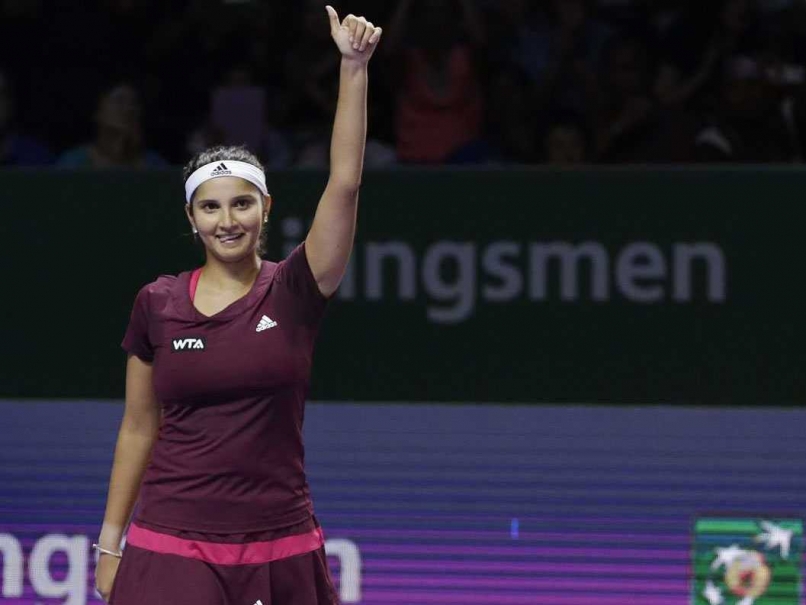
Sania Mirza gained two places to jump to career-best rank of three in doubles. Leander Paes slipped four places to 25.
File photo of Sania Mirza.
New Delhi:
Sania Mirza jumped to her career-best rank of three in the doubles, following her stupendous title win at the BNP Paribas Open with Swiss great Martina Hingis. Sania now sits at number three with 6885 points, behind Italians Roberta Vinci and Sara Errani, who share the top spot with 7640 points each.
Courtesy her win at the Indian Wells, Sania earned 1000 points and gained two places on the WTA chart. She had reached the final of the same tournament last year with Cara Black.
“It’s thrilling to achieve my career-best rank. Being the number one is a dream and I hope I can get there some day,” Sania told PTI from the US.
In the WTA singles chart, Ankita Raina continues to be numero uno player at number 253, up by two spots. In the ATP rankings, Somdev Devvarman maintained his 176th rank while Ramkumar Ramanathan was number two after gaining 10 places to be at 247.
Yuki Bhambri was the next best at 257 as he jumped 27 spots.
In the doubles, Leander Paes slid to 25, a loss of four places and just behind him was Rohan Bopanna, who lost one spot on the ladder.
source: http://www.sports.ndtv.com / NDTV Sports / Home> NDTV Sports> News / by Press Trust of India / Monday – March 23rd, 2015
Dr. S.K. Ghori is seen addressing the gathering during ‘St. Philos Milan-2015’ in city yesterday. Others seen are (from left) Juhi Singh, Thyagaraj, Dr. P.A. Kushalappa, Venkat Prasad, Dr. Snehashree Nirmal Kumar, Aftab Ahmed, Abdul Kadir and Dr. Ganesh Rao.
Mysuru :
St. Philomena’s College Alumni Association, Mysuru, had organised ‘St. Philos Milan-2015,’ a grand entertainment event, at St. Philomena’s College auditorium, Bannimantap, in city yesterday. The event featured a wide range of entertainment programmes comprising dance, drama, orchestra and comedy show.
The programme began with an orchestra by ‘Nav Ratans’ team led by Dr. S.K. Ghori, comprising Dr. P.A. Kushalappa, Venkat Prasad, Dr. Ganesh Rao, Dr. Snehashree Nirmal Kumar, Thyagaraj, Aftab Ahmed, Alfi and Abdul Kadir, a Nigerian. It was followed by the following programmes by the students of St. Philomena’s College: Linda and team performed a bollywood dance for the song ‘Barso re megha…’ Lingthong and team performed Manipuri folk dance. Shifa and team performed a bollywood dance for the song ‘Sheila ki jawani…’ Yeshi and team performed a folk dance of Arunachal Pradesh. Shirin and Angel performed dance to the song ‘Dolaare do…’ Tibetan students of the College presented Jabbawockeez dance.
Later, Mitra of Iran, a student of St. Philomena’s College, presented a video on ‘Nowruz’ — the new year of Iran. She expressed her happiness that Nowruz and Ugadi were celebrated on the same day this year (Mar.21).
Prof. Prabha, faculty, St. Philomena’s College, entertained the audience by staging a drama while Prof. Krishne Gowda entertained the audience with his humorous talk.
The highlight of the programme was a Nigerian student of the College Abdul Kadir singing hindi songs. He mesmerised the audience by his melodious voice. He sang ‘Kya khoob lagti ho badi sundar dikhti ho…’ and ‘Teri galiyan galliyan teri galliyan…’ for which the audience started whistling and dancing.
The nine singers were felicitated by Mohanlal Jain, a big fan of the nine singers.
College Principal Rev. Fr. Leslie Moras, in his address, said that the new indoor stadium-cum-auditorium, which is being constructed at the College campus, will be inaugurated in the month of April this year.
A lucky draw was held at the end of the programme where many people won attractive prizes.
Khadar Sait, an alumni of St. Philomena’s College, donated Rs.11,000 to the College.
Aftab Ahmed and Juhi Singh compered. Dr. Javeed Nayeem proposed a vote of thanks. A sumptuous dinner was served to all those present during the event that was a fund-raiser for the indoor stadium-cum-auditorium.
source: http://www.starofmysore.com / Star of Mysore / Home> General News / Monday – March 23rd, 2015
Hardly anyone among the younger generation of Kashmiris would know what is a ‘Shab Deg’ and yet the mere mention of the word triggers nostalgia and tickles the taste buds of middle and elderly people even today.
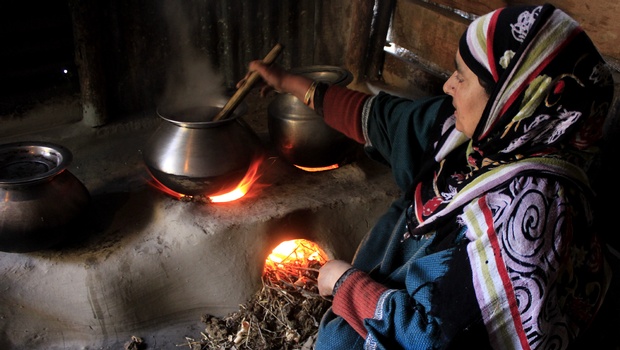
‘Shab’ means night and ‘Deg’ means a large cooking vessel. In local parlance, ‘Shab Deg’ means a special dish that is cooked through the night to bring it to the right flavour and thickness. In not very olden times, when Kashmiris still cooked food on firewood-lit hearths, ‘Shab Deg’ was a winter specialty.
Fatima Begum, 75, who lives in north Kashmir’s Haripora village in Ganderbal district, does not only remember the way the specialty was cooked but also recalls the memories of her youth and childhood associated with the dish.
“A heavy, fat rooster of ripe age is feathered carefully so that its skin remains intact. The bird is then cut into pieces depending upon the number of guests or the family members,” Fatima Begum told IANS, adding: “For large families and more guests, two birds weighing around three kilograms each were chosen in my youth when nuclear families had not come into existence.”
“Turnips stored underground for the winter months and called ‘ghoh gogji’ are washed and cut into small pieces. The bird and the turnips are lightly fried in mustard oil and then mixed with red chillies, cardamom, fennel seeds, garlic, onion scales, turmeric powder and salt.
“A little quantity of previously boiled mustard oil is also added with a sufficient quantity of water in the ‘Deg’ before it is sealed with dough. The dish is cooked over a simmering fire through the long winter night. The experience of the grandmother or the well-trained daughter would alone tell when the dish had achieved the right flavour and thickness so that its lid could be removed,” Fatima Begum added.
Haji Muhammad Sidiq, 78, living in Chanduna village of the same district still remembers the special occasions when his mother would cook the ‘Shab Deg’ – when all village roads remained blocked due to heavy snowfall and the only light the villagers of those times knew were oil lamps or kerosene lanterns.
“Mother would call the entire family to the kitchen, which had a cooking and eating space. Beaming with confidence, she would carefully remove the lid of the vessel as all of us held our breath to see if her nightlong toil had produced the desired result.
“The flavour of the dish would fill the entire kitchen and that would prompt us to line up for the feast. It still kindles memories of my youth and childhood,” Sidiq told IANS.
He, however lamented that today’s housewives “have neither the time nor the inclination to take such pains. Plus, where is the traditional hearth and the right heat of the firewood that is needed to make the ‘Shab Deg’ in addition to the heavy, fat, homegrown rooster?” Sidiq wondered.
Interestingly, Kashmiri homes used to have a small poultry farm of their own in those days. Mustard oil was locally available as villagers grew oilseeds in plenty.
“Dependence on markets, the growing tendency of eating out on weekends or dining out with friends and the habit of grabbing fast food on an impulse have made home-cooked food more of a formality and compulsion than an occasion to get together and identify with each other in a joint family system as it used to be in the past,” Farah Qayoom, who teaches sociology in the University of Kashmir, told IANS.
Whichever way one looks at it, unless delicacies like the ‘Shab Deg’ are re-introduced to the younger generation of Kashmiris, feasts like these would become extinct without anyone even batting an eyelid about what has been lost to fast food, cooking gas and microwave ovens.
source: http://www.newindianexpress.com / The New Indian Express / Home> LifeStyle> food / by IANS / March 26th, 2015
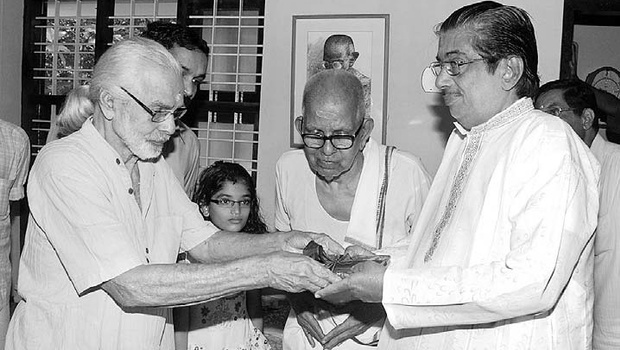
Lyricist Yusufali Kechery with Artist Namboothiri and Poet Akkitham (file photo)
Thrissur :
Kerala lost one of its master lyricist-cum-poets with the demise of Yusufali Kechery,81, who shared a high pedestal along with legends like Vayalar Rama Varma and P Bhaskaran, at a time when they strode like colossuses in the Malayalam film industry.
Yusufali, who was suffering from bronchial pneumonia for quite some time, has penned more than a thousand songs and poems in a career spanning more than five decades in the Malayalam film industry.
Yusufali, who born in 1934 as the younger son of Cheembayil Ahammed and Najmakutty of Elankulam in an ancient Muslim family at Kechery here, overcame the orthodox religious barriers prevalent in the 1950s to establish himself in the world of music. His evergreen songs have played a pivotal role in cementing the stardom of some of the superstars in the Malayalam industry including in the 1980s and 1990s. Some of the brilliant verses of Yusufali have even celebrated their golden, diamond and platinum jubilees. One cannot forget some of his evergreen and immortal songs like Omalale kandu njan, Anuraga ganam pole (Udyogastha), Surumayezhuthiya mizhikale (Khadeeja), Ikkarayanente thamasam (Karthika), Pathinalam ravudichathu (Maram), Ponnil kulicha rathri (Sindooracheppu), Nadapuram palliyile (Thacholi Ambu), Thedunnathare shoonyathayil (Ammu), and Kadale neelakkadale (Dweepu) and lot more.
Yusafali, who was encouraged by his elder brother, from whom he drew inspiration in the beginning of his career, started his career as a lyricist in the film ‘Moodupadam’ which was released in 1962. He also debuted as a producer-cum-screenplay writer with the film ‘Sindooracheppu’ in 1971. His directorial debut was in 1973 with the film ‘Maram’, scripted by M T Vasudevan Nair. In the 1970s, he directed movies like ‘Vana Devatha’ and ‘Neelathamara’, which was remade by director Lal Jose in 2009 with the same title. He had also served as Assistant Secretary in Kerala Sangeeta Nataka Akademi and a staff artist of All India Radio, Kozhikode, before making a foray into the world of music and films.
source: http://www.newindianexpress.com / The New Indian Express / Home> States> Kerala / by Dhinesh Kallungal / March 22nd, 2015
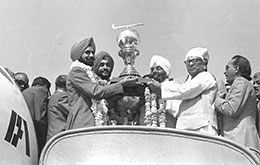
40 years back, on 15 March 1975, the Indian men hockey team accomplished a historic feat against Pakistan in the finals of the 1975 Hockey World Cup wherein they beat the opponents 2-1 to earn the title of ‘Champions’. It was a moment of pride that day and it is a moment of pride for every Indian today. Remembering the occasion and the achievement, Hockey India congratulates the team who made this possible.
Led by Captain Ajit Pal Singh, the team left no stone unturned to ensure that they got the Cup home. The team was placed in Group B of the tournament where they played against West Germany, Australia, England, Argentina and Ghana. Winning 3 matches, losing 1 and drawing 1 in the pool phase, India advanced to the semi-finals to play against Malaysia wherein they beat them 3-2. They had a close contest against Pakistan in the finals and it was Ashok Kumar the all important winning goal helping India win the title that year.
Speaking on the proud occasion Dr. Narinder Batra, President, Hockey India said “After 40 years I still feel proud of the moment when we earned the title of Champions. I would like to congratulate each member of the winning squad and would like thank them that they made this day possible for every Indian. It is this feat 40 years back, which gives us the motivation that we can repeat history and win the title again.”
Ajit Pal Singh captained and led the team to victory during the 1975 World Cup. He even has to his credit of representing the prestigious tournament on three occasions where he represented the team for 1971 World Cup, Barcelona wherein the team bagged the Bronze and in 1973 World Cup, Amsterdam where they bought back the Silver. He even was part of two Olympics Games in Mexico 1968 (Bronze) and 1972 (Bronze). He won the Arjuna Award in 1970 and Padamshree in 1992 for his contribution to the sport from the Government of India.
Ashok Kumar, son of legendary Late Major Dhyan Chand is the first of two Indians who represented India for 4 World Cup tournaments which included Barcelona 1971 (Bronze), 1973 Amsterdam (Silver), Kuala Lumpur 1975 (Gold) and Buenos Aires 1978. He was also instrumental in scoring the winning goal for India against Pakistan in the finale of the 1975 World Cup. Mr. Ashok Kumar also participated in the two Olympic Games in Munich 1972 (Bronze) and Montreal 1976.
Mohd. Aslam Sher Khan, defender and his contribution during the 1975 World Cup cannot be forgotten. He even represented India during the Olympic Games in Munich 1972 (Bronze), Brig.
Harcharan Singh VSM also represented India at three World Cups in Barcelona 1971 (Bronze), Amsterdam 1973 (Silver) and Kuala Lumpur 1975 (Gold) alongwith one Olympic bronze medal in Munich 1972.
Leslie Fernandez whose goalkeeping is still talked about after so many years was also part of the World Cup winning squad.
Dhyan Chand Life Time Achievement Awardee Varinder Singh was also part of the Indian Team that won Silver Medal at the World Cup in Amsterdam 1973 and represented India at two Olympic Teams in 1972 (Bronze) and 1976.
Ashok Diwan a Dhyan Chand Life Time Achievement Awardee in 2002.
Michael Kindo who played at the full back position and was honored with the Arjuna Award for his achievements. He represented India at 3 World Cups which also included Barcelona 1971 (Bronze) and Amsterdam 1973 (Silver) alongwith one Olympic Games in Munich 1972 (Bronze).
BP Govinda, current Chairman of the Selection Committee of Hockey India apart from being a part of the winning team in 1975 was also in the team of World Cup in Amsterdam 1973 (Silver) alogwith two Olympic Games in Munich 1972 (Bronze) and Montreal 1976, Brig.
HJS Chimni who played at the centre forward position during the World Cup and whose contribution was vital for the win.
V J Phillips who captained India at the Buenos Aires World Cup in 1978 was crucial member of 1975 World Cup winning team and also represented India at the two Olympic Games in Munich 1972 (Bronze) and Montreal 1978.
Onkar Singh, youngest member of the World Cup 1975 winning team, later participated in the 1981 World Cup held at Mumbai.
Kaliah P.E. the talented inside forward was also a part of the winning squad.
Late Surjit Singh who played three World Cups in Amsterdam 1973 (Silver), Kuala- Lumpur 1975 and Mumbai 1982 finally has to his credit of ensuring that the team won the tournament in 1975. He also played two Olympic Games in Munich 1972 (Bronze) and Montreal 1976, he was one of those players who scored 4 Olympic goals and which a player will be proud of on any given day. He even was part of the 1978 Asian Games and where the team bagged the Silver medal.
Late Shivaji Pawar the great center forward was also instrumental in the win of the 1975 World Cup. Late Mohinder Singh was also one of the key player of the 1975 winning squad.
source: http://www.indiansportsnews.com / Indian Sports News / Home> Hockey / March 15th, 2015