All posts by mpositiveone@gmail.com

Statues of Akbar’s ‘navratnas’ to come up in Fatehpur Sikri fort

Agra:

The nine gems of Akbar’s court will soon adorn Fatehpur Sikri Fort, with Agra Development Authority (ADA) and Uttar Pradesh tourism planning to install their statues in the premises of the monument.

Despite his illiteracy, Mughal ruler Akbar appreciated the presence of artists and intellectuals. His passion for knowledge and interest in learning from great minds meant that men of great intellect received patronage from the emperor. Such men went on to constitute the nine courtiers, also known as ‘navratnas’, of Akbar’s kingdom. The navratnas are Abul Fazl, Abdul Rahim Khan-I-Khana, Birbal, Mulla Do-Piyaza Faizi, Raja Man Singh, Raja Todar Mal, Fakir Aziao-Din and Tansen.

According to ASI, Mughal institutions such as the ‘Ibadat-Khanah’, ‘Din-i-Ilahi’, ‘Tarikh-i-Ilahi’ , Jharokha-Darshan, the doctrine of Sulh-i-Kul and policy of liberal patronage to indigenous arts and literatures, were founded here.

Under the plan, the statues of the nine courtiers would be built at a cost of Rs 10 lakh and will be set up in the interpretation centre coming up in the Fort complex. Fatehpur Sikri was the capital of Mughal Emperor Akbar for 13 years, from 1572 to 1585. The complex of monuments was declared a UNESCO world heritage site in 1986.

Dinesh Kumar, regional tourist officer, said, “We plan to install the statues the way Akbar used to hold court meetings with them. Tourists will also be provided information about them in detail. Although the place for their installation has not been finalized yet, we are trying to get it done in the interpretation centre. A meeting with the divisional commissioner will soon be held to get his permission.”

The interpretation centre will provide a glimpse of history and culture of the Mughal era as well as facilitate tourists’ visit to the Fort. Its construction work is likely to be completed by next month, Kumar added.

Perhaps the most famous of the ‘navratnas’ is Birbal, a Brahmin advisor in the court of Akbar. He is mostly remembered in folk tales that focus on his wit.

In 1586, he led an army to crush an unrest in the north-west Indian subcontinent, which failed tragically when he was killed along with many soldiers in an ambush by the rebel tribe.

Towards the end of Akbar’s reign, local folk tales emerged involving his interactions with Akbar, portraying him as extremely clever and witty. Birbal’s defeat was one of biggest military setbacks during Akbar’s reign and his death is said to have caused the Mughal emperor much grief.

In the folk tales, Birbal is mostly shown as being younger than Akbar, religious and surrounded by envious Muslim courtiers. These tales involve him outsmarting them and sometimes even Akbar, using only his intelligence and cunning, often by giving witty and humorous responses and impressing Akbar.

Mulla Do-Piyaza is a character from a series of folk tales featuring the Mughal emperor Akbar and his witty courtier Birbal. Mulla Do-Piyaza, also portrayed as witty, is Birbal’s rival. Even though these folk tales originated at the end of Akbar’s reign (1556-1605), Mulla Do-Piyaza began to appear later, popularized by writers in the late 19th century. Most scholars consider him to be completely fictional.

The next most heard of navratna was perhaps Tansen, a prominent Hindustani classical music composer, musician and vocalist, known for a large number of compositions. He was also an instrumentalist who popularized and improved the plucked rabab (of Central Asian origin). Akbar gave him the title Mian, an honorific, meaning learned man.

Abul Fazal was the vizier of the Mughal emperor and author of the Akbarnama, the official history of Akbar’s reign in three volumes, (the third volume is known as the Ain-i-Akbari). He was the brother of Faizi, the poet laureate of Akbar.

Abdul Rahim Khan-e-Khana, another ‘navratna’ was a poet known for his Hindi couplets and his books on astrology. The village of Khankhana, which is named after him, is located in the Nawanshahr district of Punjab.

A poet and scholar of late medieval India, Shaikh Abu al-Faiz ibn Mubarak was popularly known by his pen-name, Faizi. In 1588, he became the Malik-ush-Shu’ara (poet laureate) of Akbar’s Court. He was the elder brother of Akbar’s historian Abul Fazl. Akbar recognized the genius in him and appointed him tutor for his sons and gave place to him among his decorative ‘navaratnas’.

Man Singh, the Rajput Raja of Amber, a state later known as Jaipur in Rajputana, was a trusted general of the Mughal emperor Akbar, while Todar Mal rose to become the finance minister in Akbar’s darbar. He was born in Laharpur, Uttar Pradesh in a Hindu family.

Faqir Aziao-Din was a mystic and a chief advisor in emperor Akbar’s court. Akbar regarded his advice on religious matters in high esteem.

source: http://www.timesofindia.indiatimes.com / The Times of India / Home> City> Agra / by Aditya Dev, TNN / December 14th, 2014
MIM expands horizon with cop training

Hyderabad :

In what is known as a “passing out parade” of constables held at the police academy recently, more than 70 graduates were from the stable of the Majlis-e-Ittehadul Muslimeen (MIM). But what is interesting is that of this number, more than half are Hindu, Dalit and Sikhs while only 29 are Muslim candidates.

“As a part of the MIM initiative, we had trained around 200 people over a period of three months for the physical fitness and written tests. Also, of the 10 girls selected, only two are Muslims and the rest are Hindus. It is pertinent to point out that two of the selected youth are Mahesh Yadav and Vijay Kumar from Begum Bazaar. Those selected also belong to the Reddy community and other backward classes. Another two are Sikh recruits,” said Manzoor Ali Khan, in-charge of the constable recruitment training programme.

While the MIM has been vocal about its intentions of forging a Muslim-Dalit political alliance – which has gained momentum with the slogan Jai Bheem, Jai Meem – the move indicates that the party is keen to reach out to members of the majority community as well. The party in addition has proposed initiatives for training youth for employment.

“The top leadership wants an inclusive approach in all things we do. Therefore, we intend to train youth regardless of religion, caste, creed and sex. We are now waiting for the next constable recruitment notification to be issued,” Manzoor said. The number of Hindu recruits trained by the MIM has increased substantially this year, he claimed.

Meanwhile, the Millat Fund, a philanthropic arm of the Siasat Urdu Daily, too has had its share of success in sending candidates from its training rooms. According to the managing editor Zaheeruddin Ali Khan of the daily, around 170 cadets from a batch of around 300 was selected were a part of the parade held last week.

“Since 2003, most of those who have been selected are men and we have tried our best to train women as well. Of the 20 girls who sought training from us this year belong to the majority community. We are encouraging the participation of candidates from all religions,” he said.

source: http://www.timesofindia.indiatimes.com / The Times of India / Home> City> Hyderabad / by Syed Mohammed, TNN / December 13th, 2014

Darul Musannefin an excellent seat of learning

Azamgarh:

On November 21, 2014, Darul Musannefin Shibli Academy, Azamgarh, completed 100 years of its life. Widely acknowledged by scholars of Asian neighbours, this academy of letters specializes in research on Islamic learning, medieval Indian history and oriental studies.

Moulded in the scholarly tradition of India’s ancient centre of learning, Darul Musannefin Shibli Academy in the old Azamgarh town has taken its place alongside some known modern research institutions. A well-equipped library and a well-organised publication department, putting out original works or the fruits of modern research in oriental philosophy, history and culture, make it envy of many institutions in the field.

Darul Musannefin Shibli Academy was conceived by Allama Shibli Nomani and established by his disciples headed by Maulana Hamiduddin Farahi on November 21, 1914, three days after his death with the main objectives to nurture and sustain a body of scholarly authors, provide a congenial environment for scholars to create, compile and translate literary works of high scholastic and historical value and undertake printing and publication of literary works of the Academy.

Chairman Istiyaq Ahmed Zilli said that it was aimed at effectively meeting increasing intellectual and ideological challenges faced by the Muslim community of the sub-continent after the collapse of their political authority and its replacement by British power.

The Academy continued to create scholarly works in the fields of Islamic history and literature. It had so far published more than 250 books, including significant ones like Sirat-un-Nabi and Al Faruq. The Academy had maintained an unbroken tradition of publication of its Urdu monthly journal ‘Maarif’ in uninterrupted circulation since July 1916. The Academy had nurtured a rare environment of single-minded and selfless devotion to academic pursuits.

source: http://www.timesofindia.indiatimes.com / The Times of India / Home> City> Varanasi / by Binay Singh, TNN / November 29th, 2014

Kota Doria saris fascinate young women in Chennai

Chennai :

Once, these saris used to be woven by master craftsmen in Mysore. In the 17th century, Maharao Kishore Singh, a Mughal general campaigning for emperor Aurangzeb, took back with him some of these master weavers to reproduce these handcrafted, light and colourful saris in his town of Kota in Rajasthan. Over time, these saris came to be known as Kota Doria saris and the town itself became famous for this craftsmanship.

Centuries later, the Chennai youngster, so used to the heavier silk saris of the south, is taking a liking to these light saris. Catering to this demand, Noor Mohammed, 32, whose family has more than a hundred years of history in weaving Doria sarees, is bringing his wares to the city for the fourth time.

Noor Mohammed, who hails from Kaithoon village in Kota, says, where the weavers from Mysore came to between 1684 and 1695.

“This is the sole occupation of our village and we have more than 3,000 loom pits.”

Kaithoon is the biggest producer of Kota Doria in Kota. Mohammed primarily exhibits in Hyderabad, Delhi and Mumbai.

“A few years ago, our villagers were mazdooris (labourers) for businessmen who sold our sarees. Then, every family had an income of only Rs 4,500 a month. So we approached chief minister Vasundhara Raje and the government suggested that we weave and sell our own sarees. That’s when we formed our own weaving society, which has more than a hundred women. Now, the entire family weaves together.”

Mohammed says the family incomes have doubled now.

Kota Doria (Doria means thread) is made of cotton and silk threads in different combinations in warp and weft (vertical and horizontal weaving). The weaving produces square check patterns on the fabric known as ‘khat’. The skilfully made khat becomes transparent which is a unique characteristic of this fabric. An authentic Kota Doria is soft to touch with very little starch. Since the fabric is woven by hand on traditional pit looms, the edges on the side are slightly uneven.

“Contrary to the taste of south Indians, there is a separate crowd- mostly youngsters who go in for Kota because of its lightness,” says city based textile businessman C Balamurugan. “It weighs not more than a dupatta and it is particularly comfortable during summer.”

The exhibition will begin on December 20th at The Palace, T-23A, 7th Avenue, GOCHS Colony, Besant Nagar.

For details call 9840012523.

source: http://www.timesofindia.indiatimes.com / The Times of India / Home> City> Chennai / TNN / December 16th, 2014

City students selected for Natl. Level Athletic meet

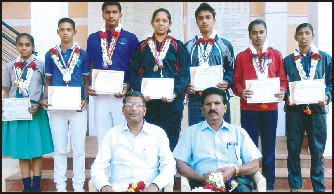
Picture shows selected students posing along with their medals and certificates. Also seen are H.R. Basappa, Deputy Director (Admin), Department of Public Instruction and C. Mariyappa, District Physical Education Officer.

Mysuru  :

The following students have been selected to represent the State in the National Level Sports Meet based on their performance at the State Level Sports Meet held recently.

Under 14 category: Long Jump: Tabrez (Srikanteshwara High School) & Sinchana Ganesh (Marimallappa High School).

100 mts and 200 mts run: Varshini (SVEI School).

Under 17 category: Shot Put: Ambika (Kaveri School)

Javelin Throw: Nagma (Govt. PU College, People’s Park)

Shot Put: Mohammed Saqlain Ahmed (Geeta Bharathi School) and Manush (CFTRI School).

800 mts and 3000 mts run: M. Veena (Sri Nirvanaswamy High School, Kurubur, T.N. Pur).

source: http://www.starofmysore.com / Star of Mysore / Home> Sports News /  Wedesday , December 10th, 2014

The old world charm

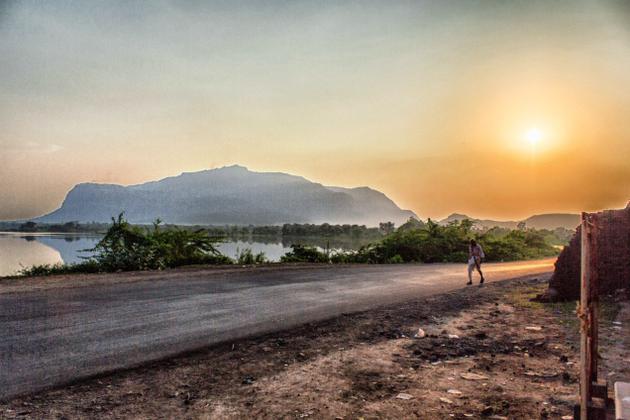
Sites of Champaner. Photos: Mohit Goel and Aakash Mehrotra / by Special Arrangement

History has shaped Champaner as a fascinating city,

A few faint images cross your mind when you talk of Champaner: a strategic trade route, the capital of arguably the most influential sultanate, a graceful example of urban landscaping, mesmerizing Muslim and Jain architecture. But the loudest of all images is that of a ransacked, deserted city. In Champaner, history speaks in its ruins. A city which grew from a town of moderate importance to become the capital of an influential sultanate, flourished for decades only to be attacked, ransacked and left deserted and lost to wilderness, all in one century.

Champaner has everything of the old world charm; there are mosques, an old palace, a fort, a step-well and ancient streets you can walk on. Along with the hill fort and temple of Pavagarh it is now called the Champaner and Pavagadh Archaeological Park. An hour’s journey from Vadodara, brings you to this UNESCO World Heritage site.

Champaner has a fairytale history. It was founded by the Rajput king Vanraj Chavda of the Chavda Kingdom in the 8th Century. The neighbouring city Pavagadh worked as a buffer area between Mandu and Gujarat, and a key strategic point on trade routes emanating from Gujarat to whole of India. After flourishing for years under the Rajput rulers, Champaner was captured by Mahmud Begda in 1484. He renamed the city Mohammadabad and moved the capital from Ahmedabad to here. In 1535, the city was captured by Humayun, and since the Mughals had control over both Gujarat and Malwa then, the city no longer enjoyed the status of a strategic buffer area. This marked the start of decline of Champaner and rise of Ahmedabad. When it was rediscovered by British, only 500 people inhabited the city.

Twenty years under the reign of Mahmud Begda gave this city models of urban planning to speak of. Being a capital and a strategic center, the city has huge fortifications. We entered through stoned road with huge ramparts on both sides. These ramparts led to mosques that still stand sound, with some wounds of history. The mosques of that bygone era lied unassumingly in the middle of the ruins of the citadel. One such elegant piece is the Jami Masjid. The intricate carvings in the pillars, walls and the mehrabs can give rise to many an artist. . One interesting thing about the mosque is the eclectic mix of Persian and Hindu style of design in the walls and the frescos. An evident piece is the kalash, a Hindu religious symbol on the mehrabs.

Our next halt was the Shehar ki masjid, contrary to its name which indicates it been a civilian place, it was the mosque reserved for the royal family. A little plain in design, the mosque is constructed on a raised plinth and the central arched entrance is planked by two minarets. At some distance in a secluded corner are the Nagina Masjid and the Kamani Masjid. Kamani Mosque is different from other mosques of Champaner as it follows the arcuate style (column and arch) indicating that it was built towards the end of sultanate period in Gujarat when this style had started gaining popularity.

Uphill enroute holy Pavagarh trail, is the Pavagarh Fort, located on the summit of the abrupt hills. The wide fortification walls, which once ran upto six kilometers, now stand in ruins with remains of variable height extants. Between the southern and the northern Gate, one can still find the patterns of the urban planning. In these complexes, one can find streets, civil baths, town patterns and even rows of shops, all having lived through the vagaries of time. The whole area is now an excavation site and the ASI never misses finding some rare jewels here. There are also graveyards, mausoleums and even richly decorated temples in these ruins.

As one moves uphill, following the Patha (pilgrim’s route) leading to the ropeway to the Kalikamata temple, one comes across many architectural structures that were forerunners of the architectural styles adopted later. The elements indicate a fine import of Hindu design in the Muslim architectural ideology. Unlike the present mosques styles, some tombs are almost all square in plan, with a dome resting on columns.

Another elegant structure on the hills is the seven arches (saat kamaan) of which only the six arches remain. Built from yellow sandstone in arch form, this served as a military base. One thing that makes Champaner stands out among all its contemporaries is the adroit townsman-ship, which one can still trace in the ruins. Arranged in a circle with the Jami Masjid in the center, the water arteries run upto all nine gates of the city. Over hills there are evidences of large reservoirs and earthen beams which drained into these reservoirs to collect the rain water running downhill. This entire series of arteries and water reservoirs, eventually ended into the largest lake, the bada talao, on the plain below the city. The big mosques like the Jami masjid also had elaborate water harvesting structures in their compounds.

We headed towards the bada talao, where another beautiful, dilapidated structure draped in bright orange of the dusk, was waiting for us. Even though only the walls remain of Khajuri mosque, this structure deserves a long stay.

With my feet tapped in the bada talao, I looked at the Pavagarh hill, and the mystery draped in the evening mist. I saw a small town spreading across the floor of valley and trailing up the bare hills, with a lake in the middle and ruins of a fort looking down at it as guardian; the setting seemed a miniature painting of a place inextricably caught in the web of history; tucked on the horizon.

The author is a blogger at handofcolors@wordpress.com

source: http://www.thehindu.com / The Hindu / Home> Features> MetroPlus> Travel / by Aakash Mehrotra / December 14th, 2014

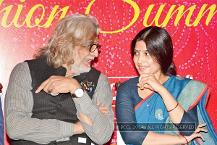
Muzzafar Ali and Dimple Yadav attend Oudh Fashion Summit in Lucknow

Pehnawa – The Oudh Fashion Summit-2014, was organized by CII-Yi, Lucknow Chapter, in the city recently. 

Muzzafar Ali and Dimple Yadav

Muzzafar Ali, who was the guest of honour for the event, earned many wah-wahs for his lines on Lucknow: “Nazakat aur nafasat tujhe virasat mein mili hai, naaz hai humein tujhpe pe ae Lucknow.”

The chief guest on the occasion, MP Dimple Yadav took note of the suggestions made by panelists to improve the work conditions for craftsmen working in the fashion industry, and promised to bring them to her husband and UP CM Akhilesh Yadav’s notice. “Work has already started on courses to train workers in chikankari,” she said.

source: http://www.timesofindia.indiatimes.com / The Times of India / Home> City> Lucknow / by Akash Wadhwa, TNN / December 14th, 2014

An ode to Akhtar

Vidya Shah / by Special Arrangement

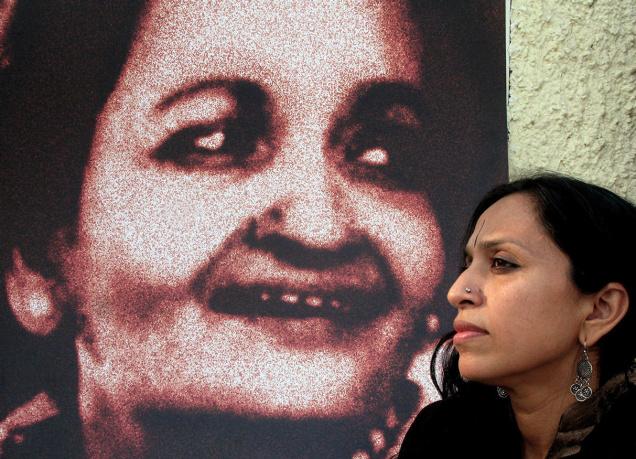
The Hindu Lit for Life 2015 – Poetry with Prakriti festival closes tonight with Delhi-based Hindustani classical musician Vidya Shah’s tribute to the music and poetry of the legendary singer Begum Akhtar in her centenary year. Excerpts from an interview with Vidya:

What drew you to Begum Akhtar and her work?

I learnt in the lineage of Begum Akhtar, taught by Shanti Hiranand, one of her senior-most disciples. So I grew up listening to vignettes about her life. Begum’s most important contribution to music was her singing of the ghazal, which is what drew me to her. Through this project, I’d hoped to highlight aspects of her life that reveal her greatness as a person, and the way in which she gave the ghazal a mainstream space in an otherwise hierarchical musical world. And since I’m presenting this at a poetry festival, I will look at the wonderful way in which she understood poetry, and the poets of her time, many of whom she had special relationships with. Her music was very much a part of that poetry, and it shaped her spirit and her singing.

Tell us about the process of creating this concert and its structure.

This concert is my understanding of Begum Akhtar, my perspective on her as a contemporary musician living in these times. I examine who Begum Akhtar was, her journey from being a bai to a begum, and in these journeys how she empowered herself with music and poetry. The performance is woven with a narrative that highlights interesting aspects of her life with anecdotes, some rare and others better known, which reveal how she could make such a fantastic impact on audiences even today. Choosing pieces from her vast repertoire was quite a difficult process. I was often overcome and overwhelmed with greed because I’d want to sing this song and that one too, because there are so many charming pieces she’s done. But ultimately, what I did choose are those that reasonably showcase the versatility of her singing, the richness in her choice of poetry and the journeys she made within her world of music.

What about Begum still resonates with audiences today?

It is musicians like Begum who paved the way for us. We don’t have the social baggage that they carried but we have the opportunities to present similar work. Begum was an assertive, independent feminist, who, despite the struggles in her life, was able to empower herself and others. For instance, in Hindustani classical music, the ritual of the ganda bandhan initiates one into a formal guru-shishya relationship. In her time, it was an entirely male practice. She was one of the first women to do it for her female students. So there was a lot of élan and strength to her as a person, and she found an amazing balance between her joie de vivre, and life’s struggles and sorrows. And that passion shows through in her music. Which is why she will remain relevant forever.

How has creating this project changed you?

Right at the start, I knew I could never reproduce or replicate Begum’s music. That would be impossible. The biggest advantage of her music, though, was the inherent quality that lets you imbibe it, absorb it, understand it, internalise it and make it your own. The project is now a year old and I’m still growing with it, still learning from it. It has given me a lot of humility and it’s been a humbling experience. It has also given me a lot of strength. I can now sense what must have been her greatness. And I’m excited to bring this now to Chennai, being a Tamilian myself, singing Urdu poetry here and sharing the life of a diva who wasn’t from here, but whose story still resonates here. I’m excited to be making that journey for myself.

source: http://www.thehindu.com / The Hindu / Home> Features> Lit for Life / by Esther Elias / December 09th, 2014

Usmani paves way for new Collectorate building

Varanasi :

UP Revenue Board chairman Javed Usmani’s Thursday visit paved the way for long pending project for replacing 195 years old Collectorate building by a multi-storied building.

For this already sanctioned project of Rs 17.47 crore, the first installment of Rs 3.5 crore will reach here within two days, said Usmani during a chat with reporters. District magistrate Pranjal Yadav said that with the arrival of first installment of sanctioned budget, the construction work will start in phases as demolishing the old buildings and court on the Collectorate premises together is not possible.

Built in 1820, the Collectorate building is now in a dilapidated state. Proposals to renovate and also replace the building have come up in the past and the building was declared unfit for use through a government order (no. 285/1-5-09-165/08 revenue section-5 issued on January 30, 2009).

The idea of replacement was floated during the last Samajwadi Party government when the building was found in a dilapidated state and then a government order was issued, declaring the building unfit for use. But, before the issuance of this GO, the then SP government had taken the decision to replace the old Collectorate building by a new one. In May 2006, the then officials had forwarded a proposal Rs 8.71 crore to the Revenue Board and state government in this regard. However, even after sanctioning of the project, its funds were diverted to west UP district by the then SP government.

In December 2010, another proposal was sent to the state government when the Revenue Board revised the budget of the project to Rs 7.25 crore. Instead of going with this proposal, the government initially engaged the construction and designing section (CNDS) of UP Jal Nigam to re-examine the project and prepare a new detailed project report (DPR) by keeping the actual requirements of the Collectorate in view.

After CNDS prepared new DPR of Rs 18.18 crore by proposing a multi-storied building, the Revenue Board decided to engage Rajkiya Nirman Nigam (RNN) to handle the project by revising the budget to Rs 17.47 crore.

After these developments, the RNN in 2011 decided for shifting the offices and courts from the Collectorate to the Cultural Complex to start construction work by demolishing all old buildings. But, before this process could be started, model code of conduct was promulgated in view of 2012 assembly election. After returning to power, the SP did not show interest in this project. The local authorities maintained correspondence with revenue board but officials did not show interest in ensuring that the project is seeing the light of the day.

But, the announcement of Usmani made it very clear that now this project will not linger. The DM said that “in the initial phase of construction, the offices and courts of ACMs will be demolished followed by pulling down of ADMs offices and court and also the Rifle Club”.

With the construction of new buildings at these places, the offices of the main Collectorate building would be shifted there, said Yadav adding, the new multi-storied Collectorate building will also have parking facility in its basement.

source: http://www.timesofindia.indiatimes.com / The Times of India / Home> City> Varanasi / TNN / December 12th, 2014

Supply Corps’ soldier saw first action as 21-year-old in WWI, recalls his daughter

Lucknow :

The Army Supply Corps, which completed 254 years of existence today, is undoubtedly one of the oldest units to serve the Indian Army. From World War-1 to Kargil conflict, the ASC’s has made its presence both during war and also during peace. And as the nation gears up to salute the officers and soldiers of the ASC, an octogenarian daughter of a World War veteran (who was a part of the Royal Indian Army Supply Core) recalls the life, action and time of her father during the turbulent period in the annals of world history.

Speaking to TOI, octogenarian Probhati Bose said that even before completing 21 years of age his father Bibhuti Bhushan Dey Majumdar had become a part of the British Army, and the first major action, which the young lad from Allahabad saw was the first World War (WW-1), which broke out on July 28, 1914 following the assassination of Archduke Franz Ferdinand, the heir to the Austro-Hungarian throne in Sarajevo by a Yugoslav nationalist.

“My father (Bibhuti Bhushan Dey Majumdar) was born in the summer of 1893, and in January 1914 he joined the British Army’s Royal Indian Army Supply Corps. Within few months of joining, he got to see the first major action in World War-1, when he along with his regiment went to Mesopotamia to extend support to the infantry soldiers, who were facing the enemy bullets,” said Probhati Bose.

Recalling some of the stories narrated by her father (which she could recall), Bose said, “As per my father, mostly Punjabi Muslims and Sikhs fought for the Allies (Britain, France, Russia, US and others) against Germany, Austria-Hungary and the Ottoman empire. The Lahore and Meerut infantry divisions had to stop the Germans on the western front (in Europe). The soldiers also saw significant action in Mesopotamia, East Africa and South-East Asia.”

As per the New Delhi-based Centre for Armed Forces Historical Research, India contributed immensely to the war effort in terms of both men and material. Her soldiers served in numerous battlefields – France and Belgium, Aden, Arabia, East Africa, Gallipoli, Egypt, Mesopotamia, Palestine, Persia, Russia, and even in China. By the end of the war 1,100,000 Indians had served overseas at the cost of 75,000 dead. They earned more than 9,200 decorations for gallantry including 11 Victoria Cross (VCs).

However, the daughter of the World War veteran lamented that military history, which is taught in most of the schools or colleges, is virtually devoid of India’s contribution to World Wars. She said, “It is really unfortunate that most of the news channels or newspapers are obsessed about the Indo-Pak wars. It is sad that the media gives comparatively less coverage to the illustrious history of India’s contribution in the World Wars. And it is only on few occasions, that the World War veterans are remembered.”

source: http://www.timesofindia.indiatimes.com / The Times of India / Home> City> Lucknow / by Arunav Sinha, TNN / December 08th, 2014