All posts by mpositiveone@gmail.com
Arbaaz Khan: Dabangg 3 will definitely happen
Arbaaz Khan , 47, has always taken all major decisions of his life based on his own gut without consulting anyone, be it the decision to debut as a villain at 29, get married to Malaika at 30 or turn director for ‘Dabangg 2’ at 43. Only time will tell whether his latest decision to release his production ‘Dolly Ki Doli’ with the Akshay Kumar-starrer ‘Baby’ was good or bad, but for now, Arbaaz seems happy and confident. Over a quick coffee, we grill the good-looking producer on his latest decision. He doesn’t duck any of our questions. Excerpts:
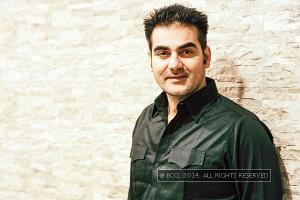
So far, smaller films have chosen to avoid coming on dates when big star films are coming. Yet, you have chosen to come with Akshay Kumar’s Baby.
Date of release of a film is just as important as the quality of the film. So everyone looks for an ideal release date. As far as I am concerned, I am still learning on what is a good time and what is not, but there are 4 holidays in a year when there is a certain spike in the collections. These dates can absorb 2-3 films. Realistically, there are only 52 weeks and thus, given the number of films we make, the chances of having a solo release might become more and more difficult. ‘Dolly Ki Doli’ is a fun, young film, substantially different from Neeraj Pandey’s ‘Baby’. It has enough commercial value for the single screens, and the aesthetics and freshness for the multiplex audience.
Also, given that December and January are great months for weddings, the film should do better in this period. Post the first weekend, Monday determines the final box-office numbers for a film, based on how the film holds on Monday. Given that Republic Day (January 26) this time is coming on a Monday, the film gets an automatic boost, improving the chances of it doing well. Had my film been the same genre as ‘Baby’, it would have led to a divide, but given that we are looking at only approximately 1,200 screens and ‘Baby’, about 2,500 screens, there is space for both to come healthily. If films of two big stars come together or if two similar films are coming together, they will eat into each other’s box office, as there is only that much box office to capture, but ‘Dolly Ki Doli’ and ‘Baby’ are very different films. We have also seen in many cases that a solo release also does not guarantee a box office. Only time will tell whether coming with Baby was a good decision or not, but weighing the pros and cons, we felt we should come.
Baby seems to be another outstanding film of Neeraj Pandey. Why do you feel that the audience should choose to see Dolly Ki Doli?
You should see both the films if both are good films.
Given the expensive ticket prices today, which one film would you recommend?
I can’t shove biryani down your throat if you like chola bhatura. ‘Baby’ and ‘Dolly Ki Doli’ are very different films and you should see what you would like to. ‘Dolly Ki Doli’ is very fresh and entertaining.
Your first two films Dabangg as a producer and Dabangg 2 as a producer-director were both with Salman Khan. Why did you choose to make a smaller film this time?
I did not have a film that I could have taken to Salman or any other big star. Amongst the few scripts that I heard, ‘Dolly Ki Doli’ got me excited despite it being a smaller film without a big star, but also that it is a woman-centric film. But I believe in mainstream cinema and even though ‘Dolly Ki Doli’ may not be a ‘Dabangg’, it has a mainstream approach. It may have taken much more effort to bring it to the silver screen, but I am pretty happy and confident about it.
Do you take a second opinion from anyone in your family before you take your decisions?
No. I have always gone by my gut for my major decisions in my life. Abbas- Mustan had initially offered me Akshay’s role in ‘Khiladi’ as my debut film, but since I was pre-committed to another film which did not finally happen, I could not do ‘Khiladi’. A few years later, I met Abbas-Mustan in the middle of the road while driving my car and they literally stopped me and said, ‘Ek picture hai. Tum second half mein aata hai. Tumhara negative role hai. An edge-of-the-seat thriller, karoge?’ And I immediately said, ‘Karoonga.’ That was the only narration I got from them for my role in ‘Daraar’. By that time, I was frustrated and was looking for work. Now I was debuting in a negative role, but it was my decision. Had I gone back home and asked daddy and Salman, I may have got confused. Like Sohail did once. He woke up in the middle of the night and said, ‘Daddy, this is the girl I am marrying.’ And daddy said, ‘Okay beta.’ So sometimes, you have to take the decision and say, ‘This is my girlfriend, this is my wife, this is the movie I have signed, this is the director.’ If you engage with too many people for your decision, it only confuses your head, especially when it is people whom you love. For the very, very important decisions in my life, I don’t allow people to take that for me.
Which were the most important decisions of your life that you took yourself?
Apart from the decision of my debut film, the decision of my marriage to Malaika and the decision to turn director in ‘Dabangg 2’. I had met Malaika on an ad shoot. We started dating and had a courtship of about 5 years before we got married. She was anxious and so, unfortunately, she didn’t allow me to pop the question to her. She asked me when we will get married and I immediately told her, ‘You decide the date and place and I will be there.’ I was 30 and she was 23 then. Even when it came to the decision to direct ‘Dabangg 2’, I had been involved in the first Dabangg in every aspect of the film. So when Abhinav decided to opt out of Dabangg 2, after considering so many big directors as options to direct it, I realised that I knew the film as well as anyone else could and took the decision to direct it.
Is Dabangg 3 a part of your future plan?
There are commitments Salman needs to honour to other films that he has signed for. So while there is no hurry, ‘Dabangg 3’ will definitely happen. It is a brand and a character both Salman and I respect and we will make it once we know what we want to do with the character.
How was your experience working with Sonam Kapoor?
She was excited about doing the film and has given it her all. She is hassle- free, down to earth and does not have any star tantrums. For instance, there is no protocol to her. You can speak to her directly, without neccesarily going through her managers. Some stars want that, but she does not give that impression. On a tightly-budgeted film like Dolly Ki Doli that does not have the luxury of extending shooting days due to costs, it was imperative for Sonam to come on time as the entire shoot was dependent on her. There were days when she needed to shoot long hours and she did that without any stress. She would always come on time and there was not even one occasion when the unit had to wait for her. Women take time to get ready and on top of that, she was dressed as a dulhan, that needed more time. So, if she would come late and take time to dress up with limited shooting hours, we would have a lot of pressure, but nothing of that kind happened. There were times when she had a viewpoint on the film, but unlike some other stars, she would put it across very beautifully and say, ‘I don’t feel comfortable about it. What do you think?’ And not like ‘I won’t do it.’
How important is the success of this film for you?
It’s extremely important. Much as people like to think that now you prove yourself without Salman, the fact is that a lot of people have failed despite having big stars. It’s not that I have not contributed to Dabangg and Dabangg 2, but people are watching to see, ‘Ab dekhte hain that Arbaaz kya karta hai.’ Many people have had opportunities to work with big stars, but not all have made Dabanggs. It’s easier to do it with a star and this might be tougher, but the success of this film determines my life as a producer in the future. The success will allow me to make films without big stars or directors.
What would be Salman’s point of view?
Salman will be happy that I have been able to deliver a movie minus him. Salman has been an elder brother, an inspirational factor and a guiding force in our life and he wishes well. Whether he is there or not, his support is always there. He feels that he has done so well for himself and wishes well for his siblings. He saw the first look and called me to say how he loved it. Dolly Ki Doli’s success will also give me a sense of confidence and respect in my ability to make a movie on my own. It will allow my production to grow and allow me to tell stories that I want to tell, without being dependent on very big stars. And I am pretty confident that it will happen.
Which of the factors made you choose Malaika to do an item song in your film — that she is your wife or your lucky charm or just the best dancer?
A bit of all, the least her being my wife, except for the fact that it just makes it easier for me to get her to do this. But the most important reason was that she is the best person for the item song.
Do you feel possessive when your wife is so glamorous?
Not really. You ask anyone in college, how would you like your wife or girlfriend to be? No one wants the ugliest girl in the world who no one wants to look at. Out of 100 people, all 100 will say that I want the most beautiful woman in the world. Somebody that everybody desires, somebody who loves me and is with me. And I have this woman. After that, if you get possessive, then it’s not on. You wanted the most desirable and beautiful woman, you wanted everyone to say how lucky you are and I wish I had a woman like that and when you do, then why would you worry yourself sick about it.
Watch: Dolly Ki Doli
source: http://www.timesofindia.indiatimes.com / The Times of India / Home> Entertainment> Hindi> Bollywood / by Priya Gupta, TNN / December 13th, 2014
Winning matters
Partha Varanashi from Puttur becomes first Austswim presenter, aims to boost standards
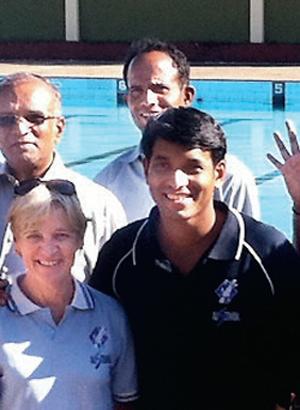
Partha Varanashi, a 29-year-old from the state, has become India’s first Austswim presenter for swimming and water safety.
With this accreditation under his belt, Partha can coach swimmers in India, instead of a representative from Australia visiting the country. This achievement is part of an initiative by former Indian Olympian Hakimuddin Shabbir Habibulla to improve swimming training standards .
Under the programme Winning Matters, Austwim, Australia’s national organisation for the teaching of swimming and water safety provided professional and systematic training to swimming teachers from across India.
Ceri Weeks, a representative from Austswim, conducted the courses in Mumbai, Bengaluru and Mangaluru.
“With Austswim making its presence felt in India, swimming training is expected to get a whole new dimension. Training is going to be holistic and systematic with a strong foundation. The curriculum is vast, which includes child psychology, behaviour patterns and safety and candidates have to under go online tests. There is a 200page manual and there is an option to interact online,” said Partha, who has received a soft copy of the accreditation and will travel to Australia for the actual presentation.
Partha who trains about 40 budding competitive swimmers at the Balavana swimming pool in Puttur and who was responsible to teach 900 students of a swim school in South Australia before returning to India two years ago, said this was just the first lap.
“Since I worked in Australia, I know the standards. The journey has just begun. In India, the focus is only on competitions, while Austswim focuses on technique. The change will not happen overnight. It may take years like it did in Australia, but I am confident that Austswim will bring in changes in swimming standards of India,” he said.
Partha was the Mangalore University’s champion swimmer for three years (20032005). He was also a threetime national Indian swimming finalist, South Australian Masters Swimming record holder (2009) and has over ten gold medals won in Aussie Masters, SA event in the year 2009 and 2010 and coached and trained over 900 swimmers in Australia.
source: http://www.bangaloremirror.com / Bangalore Mirror / Home> Sport> Others / by Deepthi Sanjiv, Bangalore Mirror Bureau / November 26th, 2014
Imran & Liyakat duo wins
Imran Salim Khan and Liyakat Ali of Maharashtra won the men’s doubles crown at the Canara Bank National tenpin bowling championship here on Wednesday, edging out their nearest rivals by 21 pins.
Maintaining a slim lead from the first game, the duo beat the Karnataka pair of Huned and Akash Ashok, who finished second. The team of Harshavardhan Sarda and Dhruv Sarda finished third, 34 pins behind the leader. Imran shone for the winners with scores of 235, 200 and 212 in his final three games.
The results: Men’s doubles: 1. Imran Salim Khan & Liyakat Ali (Mah) 2,422; 2. Huned & Akash Ashok (Kar) 2,401; 3. Dhruv & Harshavardhan (Del) 2,388. — Sports Reporter
source: http://www.thehindu.com / The Hindu / Home> Sport / Bangalore – December 13th, 2012
Arts College turns 95, not 75!
Last week, the media was abuzz with reportage on the launch of ‘Platinum Jubilee’ celebrations of the Arts College of Osmania University. Deans, heads of departments, faculty and students and several former principals and alumni of the college participated in the event to mark the 75th year of the Arts College. But the fact is that Arts College completed 95 years of its existence on 28th August this year itself. This prestigious institution would be completing its centenary in 2019, just a year after the centenary of Osmania University.
The seventh Nizam of Hyderabad, Mir Osman Ali Khan, had issued a firman for the establishment of Osmania University on 26th April 1917 for offering higher education through Urdu medium in the erstwhile Hyderabad State. The University became functional in 1918. Under the aegis of the University, the Arts College was inaugurated on 28th August 1919 and it was temporarily housed in eight rented buildings in Gunfoundry area in the city.
A faculty of 25 lecturers was recruited and 225 students were admitted in Intermediate first class in the first academic year of the college. Incidentally, Sir Ross Masood, grandson of Sir Syed Ahmed Khan and founder of Aligarh Muslim University, was the first principal of Arts College. Degree and postgraduate courses were started in 1925 and PhD programme in several disciplines in 1938.
The government acquired a vast extent of land (about 2,000 acres) at Adikmet for development of the campus of Osmania University in 1928. Engineer Ali Nawaz Jung and Architect Zain Yar Jung were sent abroad to study and suggest a model plan for the campus. Monsieur Jasper, a Belgian architect, prepared the detailed plans for the campus buildings. The Nizam laid the foundation for the Arts College building on 5th July 1934. The imposing building, in Indo-Saracenic style of architecture, was built in a record time of 5 years. The Arts College building was inaugurated by the Nizam on 4th December 1939.
The majestic and elegant edifice in pink granite stone retains much of it charm even today, though it has seen vicissitudes of fortune over the last 75 years. The college, being 20 years older than the building, has been witness to many more changes. While departments in modern disciplines as well as classical and Indian languages were opened, the medium of instruction was changed from Urdu to English, soon after police action in erstwhile Nizam State in September 1948. The Arts College made its name all over the globe for its academic excellence by producing eminent alumni and employing renowned academicians.
In 1973, degree courses were discontinued in Arts College and it became an exclusively postgraduate college, offering PG and advanced diploma courses and research studies in various disciplines. Though it was the hotbed of Telangana movement during 1968-71 and several Mulki agitations earlier, Arts College scaled new heights in the 1970s and 1980s. The college made its mark in both arts and social sciences, including economics, history, geography, political science, public administration, psychology, sociology, English and other foreign languages, classical and Indian languages and communication & journalism, linguistics, Islamic Studies and philosophy.
Those who studied in the Arts College or served on its faculty brought laurels. The alumni include not only great academicians but also bureaucrats, political leaders and educational administrators. Many of the erstwhile faculty or alumni of the college went on to become vice-chancellors of eminent universities in the state as well as other prominent universities across the country. Some made their mark abroad. Apart from its alumni in many other disciplines, the Arts College also produced many eminent media persons who studied at its department of communication and journalism.
Yet, after the mushrooming of colleges offering professional courses such as Engineering, MBA, MCA, B.Ed etc, there has been a marked drop in the students seeking postgraduate courses in social sciences and arts subjects. The severe financial crunch due to inadequate funding of the university through block grants by the government has led to a situation where the Arts College is forced to discontinue some courses or to keep several posts of faculty vacant. This is having its own impact on the academic excellence of the college. In the last few years, Osmania University campus witnessed intense agitation by students for separate Telangana State. Now, Telangana is a reality and it is time to strive hard to win back fame and pristine glory for Arts College before it celebrates its centenary in 2019.
(The writer is an MLC and a journalist)
source: http://www.timesofindia.indiatimes.com / The Times of India / Home> City> Hyderabad / by Syed Amin Jafri, TNN / December 08th, 2014
Talents on display, sans any barriers
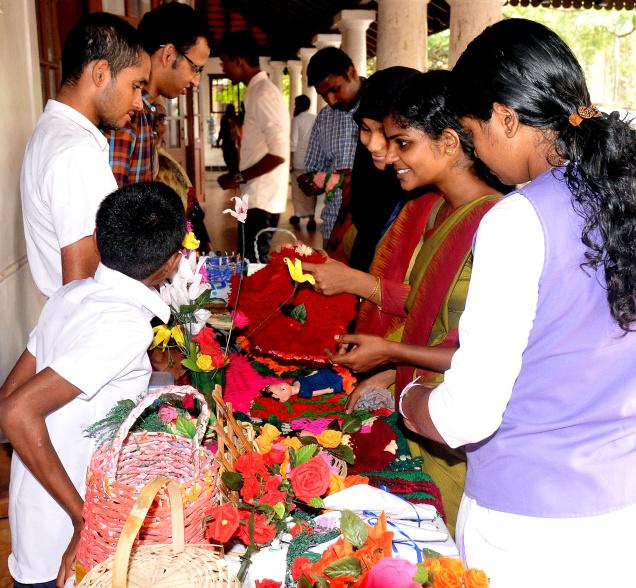
Seminar for teachers of special schools, competitions for students held
Rahmania School for Mentally Handicapped in association with the Association for the Welfare of Handicapped, the Parents Association of Intellectually Disabled, and a host of other organisations organised a quiz for mentally challenged students and a seminar for teachers of special schools here on Tuesday as part of the National Day for the Mentally Retarded observance.
As many as 52 teams from 26 schools across north Kerala took part in the quiz. The team from Emma’s Villa, Wayanad, consisting of Nimisha Banu and Sanil, emerged the winners.
Winners
The team from Love shore, Pannikkode, comprising Mohammed Mubarak and Faseela, and team from Pratheeksha, Mampatta, represented by Vipin and Adarsh, won the second and third prizes respectively.
The team from Manovikas School, Edarikkode, Malappuram, represented by Kabeer and Faisal, bagged the fourth prize.
Media person Y. Irshad was the quizmaster.
The seminar for special school teachers was inaugurated by Deputy Director of Education, Kozhikode, Gireesh Cholayil.
State Secretary of the National Convention of the Educators of Deaf, Kerala, V.K. Abdul Kareem, and Director of the Institute of Research in Learning Disability of Mahatma Gandhi University K. Muhammed Mustafa spoke on the subject ‘Effective Educational Practices in mental retardation.’
Exhibition
An exhibition of handicraft products made by the students of the Rahmania school was organised.
Various events, including painting and work experience competitions for students, were held on December 4 as part of National Day for the Mentally Retarded, which is observed on December 8.
source: http://www.thehindu.com / The Hindu / Home> News> Cities> Kozhikode / by Staff Reporter / Kozhikode – December 10th, 2014
Sports makes on physically fit : Dr. Saleem
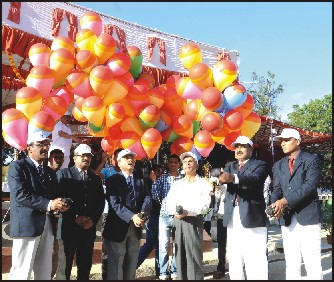
Mysuru :
The city police battled it out with each other at the annual sports meet that began here yesterday. Their lathis were replaced with javelins, while the heavy rifles with shot-puts, at the Police Parade grounds, the venue of the meet.
The cops were in a sportive mood on the first day of the three-day Annual Sports Meet -2014 organized by Mysore City Police. Speaking at the inaugural, KSOU Vice-Chancellor Prof. M.G. Krishnan said, “All sports should be treated equally but unfortunately this is not happening in India.” He said that cricket was the only sport that was getting more prominence in the country compared to others. Vice-Chancellor wished the Police personnel who were participating in the meet to show their best performance.
City Police Commissioner, Dr. M.A. Saleem said “Sports activities play a vital role in keeping policemen fit and healthy. So every year sports meet was being organised.” He advised police to develop sportsmanship and competitiveness even while carrying out their duties that would improve the health of the society.
Law and Order DCP A.N. Rajanna, Crime and Traffic DCP M.M. Mahadevaiah, Armed Reserve DCP Shivanna, Mounted Police Commandant Janardhan were present.
The event will see police personnel taking part in race, tennis ball throw, discus throw, passing the ball, shot-put, lemon-spoon race, tug-of-war, table tennis, shuttle badminton, long jump, javelin throw, etc.
Valedictory: The valedictory will be held on Dec. 7 at 4 pm. Retd. ADGP Kempaiah will be present on the occasion.
Results of the first day Men’s category
Javelin throw : Satyavelu (first), S. Manjunath (second), Shivakumar (third).
Shot put : Arogyaraj (I), H.R. Shivakumar (II), Lokesh (III)
Long jump: Jayakumar (I), Mylari (II), Vijaya Kumar (III)
200 m running: Mylari (I), Vijaya Kumar (II), Amarnath (III)
Women’s category
200 m running: Asha Rani (I), Rekha (II), Vani (III)
Javelin throw : Shylaja (I), J. Rekha (II), Zareena Taj (III)
Shot put : Shylaja (I), Rekha (II), Zareena Taj (III)
Long jump : M. Vani (I) Siddamma (II), Asha Rani (III)
source: http://www.starofmysore.com / Star of Mysore / Home> Sports News / Saturday , December 06th, 2014
Retro beauties roll down city streets
Lucknow:
Sunday was a fun day for city’s motor sports aficionados and patrons of vintage cars and motorbikes. It was time to enjoy the ride in the retro beauties rolling down the streets of Lucknow. From Austin Chummy 1926 and Ford A 1928 vintage cars to Nortan, Birmingham Small Arms Company (BSA) and Royal Enfield motorcycles the annual vintage car and motorcycle rally once again brought back memories of a bygone era.
Organised by Hindustan Petroleum Corporation Limited (HPCL) and Vintage Car and Motorcycle Club of Lucknow as a part of Lucknow Mahotsava, the vintage rally started from Koneshwar, Chowk after being flagged off by district magistrate Raj Shekhar.
Over 45 vintage beauties on wheels comprising 30 cars and 15 motorbikes were on the streets of Lucknow, the owners flaunting their priceless possessions.
Meandering through the roads of Old City passing through Rumi Darwaza, Chhota-Bada Imambaras, Hazratganj and also through the posh modern localities like Vibhuti Khand, the rally terminated at Indira Gandhi Prathisthan, Gotminagar.
Owner of the oldest vintage car Austin Chummy 1926, M A Khan, who has been participating in the rally for the past 21 years from the time Lucknow Mahotsava first organised such an event, said, “Old beauties always retain their charisma and preserving them helps conserve a cultural heritage.”
Along with the Lucknowites the rally comprised participants from other cities of Uttar Pradesh too.
Dr Tarun Sehgal, a resident of Sitapur and a proud owner of a treasured classic car, MGTC 1947 who has been participating in the event since past 11 years, said, “Every time I take out my MGTC 1947 model I enjoy the experience of driving and basking in the vintage glow.”
Secretary of Vintage Car and Motorcycle Club of Lucknow and also one of the participants, Sandeep Das believes though maintaining vintage or even for that matter classic vehicles is an expensive affair, the passion of the proud owners overrides the money spent and energy consumed.
In Car Parlance
Vintage cars– Cars manufactured before and till December 31 st 1939(Second world war) are called vintage cars
Classic cars– Cars manufactured between 1940-1962 are termed as classic cars.
ource: http://www.timesofindia.indiatimes.com / The Times of India / Home> City> Lucknow / by Uzma Talha, TNN / December 01st, 2014
Tales From a Vanished Past
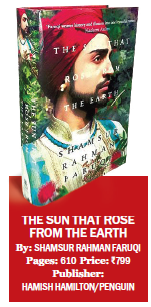
Asked to review a particular book, Abraham Lincoln is said to have responded by saying, “People who like this sort of thing will find this the sort of thing they like.” Shamsur Rahman Faruqi’s The Sun that Rose from the Earth is precisely the sort of book that those who like leisurely and erudite books will like. A collection of five stories, each a fairly long short story, originally written in Urdu and admirably translated into English by the author himself, The Sun that Rose… is not the right fare for light readers on the go or casual reading for the frivolous-minded; every single one of its 600-odd pages is a connoisseur’s delight, brimful with evocative detail and flavoursome with the choicest of Urdu verses. It requires patience and attention, not to mention stamina to read even one story in one sitting.
As in the case of his previous book, The Mirror of Beauty, first written in Urdu as Kai Chand Thhe Sar-e Asman and subsequently published in its English translation to great critical acclaim, The Sun… evokes a vanished past not merely with a historian’s eye for perfect detail but with an aesthete’s sensibility for all that is fine and rare in life and letters. The stories are set in a cusp of time when two worlds are fusing and merging: the rays of the setting sun are bathing Mughal India in the warm glow of its last rays and a colonial India—with its “English-style madrassas”, vilayati cloth and other commodities flooding the shops and bazaars that are rife with rumour and gossip about the latest political intrigues —is coming into its own.
Beni Madho Singh ‘Ruswa’, the young protagonist of the first story ‘Bright Star, Lone Splendour’, travels from Azamgarh to Delhi to meet an ageing Mirza Ghalib. By then a lion in winter, Ghalib recites a Persian verse of his to his callow provincial visitor:
My station cannot be discerned by any eyes but mine
For my star is so far up that it doesn’t shine bright.
Writing a memoir of that fateful meeting, Ruswa conjures up scores of people, Rajas and nawabs, dastango and poets, even a pretty hostess at an inn who spoke “beautiful Urdu with quiet elegance and who (still) regarded Mirza Ghalib sahib as an outsider and not a native of Delhi”—character, both real and imagined who were “gobbled up like a python swallowing a small bird” by the events unspooling from 1857, the annus horribilis.
Showing a propensity for deliberately using archaic words and expressions in keeping with the historical nature of his work as well as different registers and intonations for different characters to denote their class and caste distinctions, Faruqi studs his narrative with a profusion of Urdu poetry which convey the “culture” of his settings far more effectively than dialogues or reported speech. Wit and repartee, the cut and thrust of civilized banter, punning and wordplay, ingenious use of a word with many meanings, all this and more is inserted into the leisurely narrative through explanatory asides. For instance, “zila” meaning “side” was used “to mime the language from unlikely angles and use free play of association as a weapon of wit…With the decline of culture, the art of zila fell into disrepute, then desuetude. It was, in fact, not just frivolity, but could be used in poetry with much effect by the ingenuous poet. Mir used it often and with such subtlety that all but the most discerning listeners failed to get the zila angle. The effect of zila is impossible to reproduce in translation, but here are a few examples from the poetry of Mir, with the necessary commentary:
How I wish I was one of this garden: like the scent of flowers
I’d float with the morning breeze, enjoy myself, and then dissipate, like air.”
And so it goes on: leisurely commentary, erudite asides on poetics, keen observations on society, culture and manners coming together in a seamless whole. And so, while the five stories are neither long short stories, nor novellas or even novels in the conventional sense, they are a valuable introduction to a vanished past. That Faruqi has re-imagined many historical figures and real events and brought them to life for the modern reader in a richly textured, elegantly sprawling work of fiction is a testimony to his creative prowess.
source: http://www.newindianexpress.com / The New Indian Express / Home> LifeStyle> Books / by Rakshanda Jalil / December 06th, 2014
15th National Sqay Championship : GOA bags overall Championship
by Arafat Ahmed Aizaz
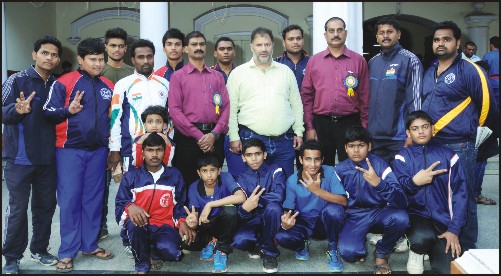
Goa bagged the ‘overall championship’ title in the two-day ’15th National Sqay Championship’ held on Dec.1 and Dec. 2 at Nanjaraja Bahadur Hall in city.
The competitions were held for boys and girls separately in four categories – Under 11 years, Under 14 years, Under 18 years and above 18 years.
A total of 118 medals were won by Goa out of which 74 were gold, 30 silver and 14 bronze medals.
Maharashtra won 99 medals (28-gold, 33-silver, 38-bronze) followed by Haryana – 49 medals (12-gold, 11-silver, 26-bronze), Jammu & Kashmir – 44 (11-gold, 17-silver, 16-bronze), Tamil Nadu – 37 (10-gold, 15-silver, 12-bronze), Karnataka – 26 (10-gold, 8-silver, 8-bronze), Madhya Pradesh – 15 (5-gold, 5-silver, 5-bronze), Delhi – 10 (5-gold, 2-silver, 3-bronze), Telangana – 7 (1-gold, 2-silver, 4-bronze), Assam – 7 (5-gold, 1-silver, 1-bronze), Gujarat – 6 (1-gold, 1-silver, 4-bronze), Kerala – 4 bronze and Chandigarh – 1 bronze.
Altogether 423 medals were given out of which 162 were gold, 125 silver and 136 bronze medals.
When Star of Mysore asked the Secretary of Mysuru District Sqay Association Anandaraju about why Karnataka’s performance was low in the Championship compared to other States such as Goa, Maharashtra and Jammu & Kashmir, Anandaraju said “In Karnataka, Sqay is gaining popularity at a snail’s pace unlike Goa, Maharashtra and J & K. Also, there were very less participants from Karnataka in this championship. In Karnataka when it comes to martial arts, many people take up Karate as they are not aware about Sqay. General Secretary of Sqay Association of Karnataka Mohammed Ali and I are working on creating awareness among people of Karnataka about Sqay martial Art. Once, more number of people start taking up Sqay in Karnataka, we will ensure that Karnataka becomes the top performing State in Sqay.”
Those who are interested in learning Sqay can contact Anandaraju on Mob: 99721 21673.
source: http://www.starofmysore.com / Star of Mysore / Home> General News / Friday , December 05th, 2014