Central Zone’s Ali Murtaza being congratulatd by teammates after scalping four South Zone wickets. Photo: R.V. Moorthy / The Hindu
Central openers delight in the second innings
Central Zone was well-served by left-arm spinner Ali Murtaza’s four-wicket strike that restricted South Zone to 379 in its first innings on the third morning of the Duleep Trophy final here on Friday. At close, Central had established an overall lead of 111 runs with six wickets in hand.
Resuming at 308 for four, South faltered and lost the momentum against Murtaza’s sustained spell. After skipper Piyush Chawla foxed K. L. Rahul on a defensive prod, the South innings crumbled with the last five wickets contributing a mere 20. This was in sharp contrast to the character the team showed on the second day.
Vihari was the one to impress with his exceptionally timed strokes. He had mostly played second fiddle to Rahul but gifted his wicket when looking set to dominate. Rahul was dismissed for 185 (233 balls, 19×4, 2×6) while Vihari, who faced 97 balls, hit ten fours and two sixes.
Central was a transformed side when it batted the second time with openers Faiz Fazal and Jalaj Saxena demonstrating a refreshingly positive approach. They played their shots and grew in confidence to put on a 128 runs.
Saxena (71, 119 balls, 15×4) fell to his first false stroke. Soon, Fazal, batting attractively for his 139-ball knock 72 (11×4), succumbed to indiscretion when he swung and unerringly found the only fielder in the deep. It was a tame end to a brilliant innings.
The scores:
Central Zone — 1st innings: 276.
South — 1st innings: Robin Uthappa lbw b Saxena 80, K.L. Rahul b Chawla 185, B. Aparajith c N. Ojha b Pankaj 21, Dinesh Karthik lbw b Pankaj 0, R. Prasanna c N. Ojha b Pankaj 0, Hanuma Vihari b Murtaza 75, S. Gopal (not out) 13, R. Vinay Kumar lbw b Murtaza 2, A. Mithun lbw b Murtaza 0, P. Ojha c Saxena b Murtaza 1, H.S. Sharath c & b Saxena 0; Extras (lb-2): 2; Total (in 90.3 overs) 379.
Fall of wickets: 1-168, 2-231, 3-231, 3-233, 4-233, 5-359, 6-363, 7-366, 8-370, 9-378.
Central bowling: Pankaj Singh 20-3-67-3, Ishwar Pandey 17-2-72-0, Faiz Fazal 3-0-13-0, Ali Murtaza 13-1-59-4, Piyush Chawla 20.3-3-95-2, Jalaj Saxena 17-0-71-1.
Central — 2nd innings: Faiz Fazal c Aparajith b Vinay 72, Jalaj Saxena lbw b Ojha 71, Robin Bist (batting) 26, Naman Ojha c Uthappa b Gopal 27, Ashok Menaria lbw b Gopal 0, Mahesh Rawat (batting) 11; Extras (b-6, lb-1): 7; Total (for four wkts. in 62 overs): 214.
Fall of wickets: 1-128, 2-160, 3-195, 4-201.
South bowling: Vinay Kumar 10-1-56-1, A. Mithun 8-1-25-0, Pragyan Ojha 22-7-52-1, S. Gopal 10-2-43-2, H.S. Sharath 9-3-22-0, B. Aparajith 3-1-9-0.
The following are the winners of the ‘Face of the Year- 2014′ fashion event, organised by Arris Ventures at a resort in city recently.
In the girls category, Shilpa Irdal was declared winner, Deekshitha – 1st runner-up, Priya – 2nd runner-up, Rooshan bagged ‘Miss Beautiful’ award and Nathasha bagged ‘Aspiring Model’ award.
In the boys category, Ali Sher was declared the winner. Daryl D’Souza – 1st runner-up, Faizan Khan – 2nd runner-up, Yaseen bagged ‘Mr. Handsome’ award and Salman bagged ‘Aspiring Model’ award.
The event was choreographed by Nousheer.
source: http://www.starofmysore.com / Star of Mysore / Home> General News / Thursday, October 30th, 2014
One of the things I find unique about Bengaluru is its tradition of public celebrations and ceremonial processions that have come to occupy a permanent space on the city calendar. These demonstrations often define community identity and unite its past with the present; ancient agrarian festivals (Kadle Kai Parishe) reclaim modern suburbs, temple and church `car festivals’ mark ritual routes across the city (Poo Pallakki and St Mary’s Feast), ooru habbas recall rural antecedents and the Karaga procession re-imagines a lost community identity. The events are marked by active public participation and are a valuable reminder of the all-encompassing nature of our city.
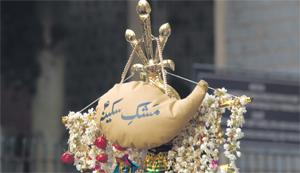
Hosur Road’s annual Ashura juloos (procession) too occupies a significant place on this list. While Johnson Market (a heritage municipal market in the area) is known primarily for its kebab joints, hole in the wall chai cafe’s and eateries, once a year, the coal burns here not for the epicureans, but for the pious. Sounds of mourning rent the air at public and private gatherings (majlis) in the locality as sombre men and women dressed in black gather during the holy month of Muharram, the first in the lunar Islamic calendar to commemorate the tragic Battle of Karbala. Men walk over coals in the symbolic fire walk or ‘aag ka matam’ on the 9th night and the grieving intensifies in a juloos (procession) on Ashura, the 10th and culminating day of battle.
The procession moves from Arab Lines near Johnson Market towards the 19th century Persian Shia Cemetery on Hosur Road. The road is closed to traffic. Sacred Alams, symbolising ancient battle standards, are carried. Nauhas and Marsias (elegiac poetic genres) are recited over loudspeakers. Children climb astride the Zuljenah, symbolising the Imam’s faithful horse, for blessings. A young man weeps as he carrys a blood-stained cradle. Curious bystanders watch the synchronised breast beating of the `matam’, a ritualistic sign of mourning. Zanjeers (blades attached to chains) connect with skin. The community understands its significance. It is a symbolic reliving of the battle, a personal declaration of solidarity with the martyrs.
The juloos has been a part of our cityscape for over a century. It finds its roots in the 7th century, a turbulent time in the history of Islam. Racked by schisms and discord, the tribes turned upon each other in a relentless quest for power. While on his way from Mecca to the town of Kufa in Iraq in 61 AH (around 681 CE) with his army-entourage, Imam Hussein, son of Imam Hazrat Ali Ibn Abi Talib and grandson of the holy Prophet Mohammed, was intercepted by the opposing army of the Ummayid Caliph and tyrant, Yazid I. Vastly outnumbered, they were denied food and water before being massacred on the scorching sands of Karbala. Hapless women and children from the Prophet’s household were then subjected to unparalleled atrocities.
The narrative is filled with powerful themes like pre-determination, martyrdom, suffering and sacrifice. It is renewed annually with fresh emotional intensity as Hosur Road transforms into a site of symbolic meaning – a blood drenched battlefield.
Across the country, non-Muslims too participate in Muharram rituals. They make paper ‘Tazias’ and offer water and `sharbat’ to processions. Poets of all faiths write eloquent elegiac poetry-nauhas and marsiyas. Several Islamic sects in Bangalore also commemorate it in different ways. The Ashurkhanas (shrines) and Imambaras are open to people of all faiths. Ashura blurs the distinctions between castes and communities. The language of grief is universal.
The writer is a cultural documentarian and blogs at aturquoisecloud.wordpress.com
source: http://www.bangaloremirror.com / Bangalore Mirror / Home> Columns> Others / by Aliyeh Rizvi, Bangalore Mirror Bureau / November 02nd, 2014
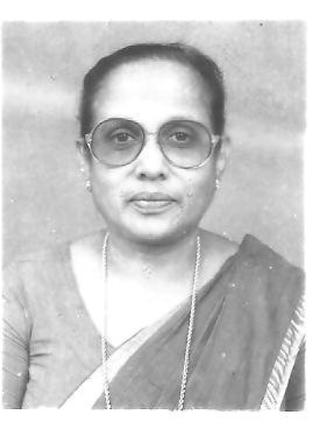
The name Aswathy Mathen may not ring a bell in today’s Malayalam cinema. But her name certainly deserves to be written in bold letters in its annals. Nearly five decades ago Aswathy set the industry agog by becoming the first woman scriptwriter in the language. And 2014, this year, marks the Golden Jubilee of the film for which Aswathy first wrote the script.
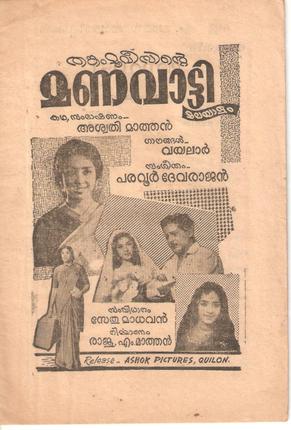
A poster of Manavatty
The film Manavatti was produced by her husband Raju Mathen for Thankam Films and released in 1964. Aswathy scripted a story with a Christian background thereby marking the beginning of a new era in women’s writing. In fact, Aswathy wrote this story much before Malayalam literature had such definite gender divisions. Before Aswathy came into the scene women in Malayalam films were limited to actors alone.
Born on October 18, 1930, in Kalloopparambil family at Pallom, near Kottayam, Aswathy completed her schooling at Balika Madom, Thiruvalla, and her higher studies at Women’s Christian College, Madras. She met Raju Mathen, son of C.P. Mathen a Quilon-based Industrialist, who was then studying at Loyola College, Madras. Their frequent visits blossomed into love and they got married on May 3, 1951.
Aswathy spent the early years of her marriage with her husband in Quilon. She was a typical homemaker involved in gardening, cooking and reading. She also assisted her husband in his bus service business.
In 1963, Raju Mathen decided to produce a movie. His decision had the strong backing of Aswathy. Both of them shifted to Madras as part of their new project. And when Aswathy expressed her desire to write the story and script Raju supported her to the hilt.
K. S. Sethumadhavan, the director of Manavatti, and noted dramatist K.T. Muhammed, gave her valuable help and Aswathy completed the script well within the time given to her. Manavatti was a box office hit. The songs from this film are still fresh and alive. Written by Vayalar Rama Varma and set to music by G. Devarajan the film had immortal songs like Idaya kanyake povka nee… andAshtamudikkayalile annanada thoniyile… These and the other songs contributed hugely to the film’s success. The film had top stars like
Sathyan, Ragini, K.R.Vijaya (her debut Malayalam film), Aranmula Ponnamma, Adoor Pankajam, Madhu, S. P. Pillai, Bahadur, Baby Vinodini, Bharathi, Gopinath (Suresh Gopi’s father) and others.
The thumping victory of Manavatti inspired Thankam Movies to produce four more films. But Aswathy did not write the story or script for any of these. One reason for this was that Aswathy disapproved of any changes in her stories. The other reason was that Aswathy, who was also well known for her original recipes, had started her own condiments business. She wrote a cookery book titled Ente Tharavadu Pachakom. Aswathy had two children, Thankam and Ashok Mammen. She died on July 4, 2007, while convalescing after a surgery.
source: http://www.thehindu.com / The Hindu / Home> News> Cities> Kochi / by Saju Chelangad / November 02nd, 2014
The Umar Alisha Rural Development Trust plans to plant 10 lakh trees in cyclone hit Visakhapatnam district to bring back the district’s greenery.
Addressing reporters after launching the project after planting a tree at their Viswa Vignana Spiritual Centre at Bheemjuniatnam in the district here today, Chairman of the Trust Umar Alisha said the trust would plant 10 lakh trees in the district within five years. He said 70 to 80 per cent of trees in Visakhapatnam have been destroyed due to cyclone.
‘Make Vizag Green’ is a project taken up by the Umar Alisha Rural Development Trust to replant lost greenery in Visakhapatnam.
He said it is everybody’s responsibility to protect the environment and plant trees which provide oxygen.
“Every tree will provide oxygen, which is very important for human beings,” he said.
Umar Alisha said that the trust would select trees which could withstand even wind speeds of 200 kilometres per hour during natural calamities like cyclones.
The project plans to use information technology, crowdsourcing, geocoding and social media to encourage people to participate.
He said the trust would plant 200 trees in various places in Bheemunipatnam today and also plant 1,100 trees in various places as well as both sides of the national highway.
source: http://www.business-standard.com / Business Standard / Home> PTI Stories> National> News / Press Trust of India / Visakhapatnam – November 02nd, 2014
Indians Ajai Appachu and Fouad Mirza of the Embassy International Riding School (EIRS) secured second and fourth place at the Hopetoun International horse trials in Scotland which launched the first Commonwealth cup in June.
According to an EIRS press release here Monday, Appachu finished second in the CCI event of the Commonwealth Cup with a cumulative score of 45.6 on Orleans II.
Mirza, who has been competing in the Junior National Equestrian Championships since 2002, won fourth place in the same event with a cumulative score of 49.2 on Penultimate Vision, the release added.
source: http://www.business-standard.com / Business Standard / Home> News-IANS> Sports / IANS / Bangalore – July 07th, 2014
Narcissism omnipresent now in the form of ‘selfies’—pictures people click of themselves—was manifest in the form of portraits the high and mighty got painted of themselves for posterity. Nawabs of Avadh contributed immensely to the Company School of Painting, a genre of portraits during the British Raj, providing opportunity for many artists. They created vivid testimonies of the socio-cultural practices of the period.
The nawabs’ patronage to painters became a tradition. At a workshop in the city, Indian and Bangladeshi painters drew inspiration from ‘How nawabs patronised the palette’.
* Tilly Kettle’s Father and Son
Tilly Kettle (1735-86) was a portrait maker from London who traveled to India with the East India Company. He met Shuja ud Daulah in Calcutta where he painted his portrait and later accompanied him to Faizabad. He captured many facets of the aristocratic life but his most famous work was portrait of Shuja-ud-Daulah with his heir apparent Asaf ud Daulah. “The nuances of their work are remarkable. The intricacies as in the bejeweled ‘bajuband’ (armlet), and poise on the face of the two kings is an inspiration,” says Vipul Varshney, a city architect. Painters from Delhi such as Mir Kalan Khan also found refuge in Avadh with Mughal aristocracy declining.
* John Zoffany’s Cock-fight
The tradition of patronising painters was inherited by Asaf ud Daulah. This benevolent nawab is given credit for making Lucknow a subject for painters. The grandeur of his personality was captured on paper by Johann Zoffany (1733 – 1810), a painter of German origin and the work became a stencil for many local artists. Myraid representation of cock-fight match in the court of Avadh speaks volumes of the times. Claude Martin and another painter Ozais Humphery (of the Jane Austen portrait fame) are also in the picture. Later, Martin became a route for entry to the nawab’s court. Ozais made the painting of Haider Beg Khan (1786), a royal in nawabi court. The work, now in Victoria and Albert museums of London, showed that painters found clientele in people other than nawabs too.
* William Hodges, the first professional
Better known for a voyage to the Pacific Ocean, Hodges came to Avadh in 1778, under the patronage of Warren Hastings. He was one of the first British professional landscape painters to visit the country. He remained here for six years, staying in Lucknow with Claude Martin in 1783. His painting of (Fatehpur Sikri) is in Sir John Soane’s Museum. His depiction of the nawabi palace in Faizabad is noteworthy.
King Nasir-ud-Din Haider’s role
This nawab would be remembered more for promoting local artists. One of the paintings of the King with an English lady, probably the wife of Lord Bentinck, is quite striking. It shows the influence of British lifestyle on Avadh. A research work by Neeru Mishra has studied over 300 paintings on Krishna done by artist Ram Prasad who was known to be patronised by Nasir-ud-Din Haider, bringing to fore the nawab’s faith in the Ganga-Jamuni tehzeeb.
Fusion of genres
Researcher Pran Neville has noted that Indian artists took the opportunity to work for their new British patrons, especially because the traditional patronage of Indian rulers and their courts was rapidly declining. “While adopting some features of Western art they took care to preserve traditional elements. Since their own skills were more than adequate, they did not need formal training from the British,” he writes. Scholars at Colombia University also noted that Zoffany was being imitated by local artists. One of his famous works, portrait of Nawab Asaf-ud-daulah, has seven versions besides the original.
Price of vanity
Getting a portrait made was a costly affair. Artists even advertised in newspapers to reach out to clients. One such advertisement that appeared in April 1798 was given by one lesser known artist named Morris. He charged 15-80 gold mohurs for different sizes such as bead size, three quarters, kit cat, half length and whole length. Zoffany charged Rs 2,500 from the wife of a British officer. “The well-to-do, in fact, were ready to spend any amount to get their portraits made for it was a fashion statement,” suggests Neville.
source: http://www.timesofindia.indiatimes.com / The Times of India / Home> City> Lucknow / by Shailvee Sharda, TNN / November 02nd, 2014
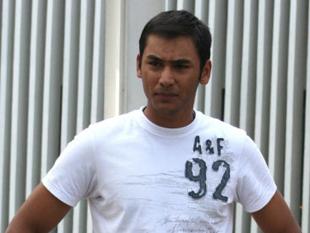
The Uttar Pradesh senior One Day squad that will take part in the Vijay Hazare Trophy today saw former India captain Mohammed Azharuddin’s son Mohammed Asaduddin being included just after appearing for trials at the state team’s nets a week back.
Asaduddin or better known as Abbas is a left-hander, who was a part of the Hyderabad U-22 squad, back in 2010, but could not break into the senior squad in these years.
Mohammed Asaduddin is…)
Asaduddin also gave trials in various IPL franchises including Kolkata Knight Riders back in 2009 without much success.
Today UPCA general manager Rohit Talwar today named the 15-member squad today and a lot of eyebrows were raised after finding Asaduddin’s name in the squad led by India discard Piyush Chawla.
It must be mentioned in this regard that Asaduddin appeared for state team’s trials a week earlier and now has been drafted into a senior state team within a week.
Squad: Piyush Chawla (captain), Akshdeep Nath, Prashant Gupta, Praveen Kumar, R P Singh, Ali Murtaza, Mukul Dagar, Ekalavya Dwivedi (wk), Amit Mishra Jr, Parvinder Singh, Ankit Rajpoot, Tanmay Srivastava, Kuldeep Yadav, Umang Sharma, Mohammed Asaduddin, Imtiyaz Ahmed, Dipendra Pandit, Israr Azim Khan.
source: http://www.articles.economictimes.indiatimes.com / The Economic Times / Home> Sports / PTI / October 31st, 2014
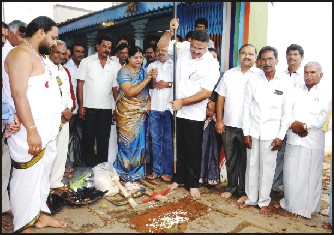
Narasimharaja Constituency MLA Tanveer Sait launched various developmental works at Yeraganahalli in city yesterday.
Speaking after launching the developmental works, MLA Tanveer Sait said that developmental works of roads, underground drainage system and other basic facilities would be taken up at a cost of Rs. 80 lakh and added that these works were being taken up due to demands from local representatives and the residents. He also said that developmental works in other areas in his constituency would be taken up soon.
Corporator Rajani Annaiah, Sahukar Chennaiah Block Congress President Manjunath, leaders Annaiah, Venkatesh, Swamy, Eeranna, Srinivas, MUDA officers Nagabhushan, Aradhya, Ramaswamy and others were present.
source: http://www.starofmysore.com / Star of Mysore / Home> General News / Tuesday, October 28th, 2014