This executive director unwinds on horseback, and admits to being emotionally connected to his horse
Faiz Rezwan (34) Executive Director, Procurement and Contracts, Prestige Group
As a 14-year-old child, Faiz Rezwan would watch his father and uncle ride their house — Matador, around their Hennur farm. Sometimes, his indulgent father would hoist him up too. That boyhood experience has translated into him owning two horses–Dragon Lady, a warm blood German mare bred for jumping, and Mr Bean, a thoroughbred ex-race horse that Rezwan has given to the Embassy Riding School to help children learn how to ride.
Despite a back problem, nothing stops Rezwan from riding at 5.30 am, at least five times a week. “I have to ride no matter what,” he says. “It’s important to stay in touch with the horse every day.” His beloved pets also get five-star treatment — a few years ago, at the stable at Equestrian Centre for Excellence, he flew down a saddlemaker from France, and around a year and a half ago, a vet was flown down from Germany to work on the acupressure points of the horses. Dragon-Lady is also given regular supplements for her joints, and her horse-shoes are changed every two weeks.
A rather expensive hobby, this. But his “investments” have also paid dividends. Five years ago, Rezwan, who also handles award-winning golf development Prestige Golfshire, got into show jumping. He even competes in the Equestrian Premier League at Embassy International Riding School every year, and took part in the Delhi Horse Show two years ago. “My passion is show jumping,” he says, hoping to make it to the Asian Games some day and even shows in Europe.
Being with Dragon-Lady keeps Rezwan fit and “is a stress buster,” he says. The animal-lover also owns a cat, two dogs, half a dozen birds, and fresh water and marine fish at home. But “Dragon-Lady is my star,” he says. “I’d never want to sell her and get another horse. Starting my day with her sets me up for the day,” he says, admitting to being emotionally connected to her. Rezwan recently bought another horse from Ireland, a Belgian-born warmblood called Valentino.
“If there was no work, I’d be riding all day,” he says. The dream life.
source: http://www.bangaloremirror.com / Bangalore Mirror / Home> Columns> Work / by Khushali P. Madhwani, Bangalore Mirror Bureau / May 19th, 2014
As their party suffered a rout in Delhi assembly election, Congress workers in Ballimaran had something to cheer about with Power Minister and four-time sitting MLA, Haroon Yusuf, retaining his seat.
Haroon Yusuf today defeated his closest rival BJP candidate Moti Lal Sodhi by a margin of 8,093 votes.
He was trailing Sodhi by over 2000 votes till the sixth round but after that the momentum was on his side.
As he inched towards the lead with each round, the lost zeal among his loyal supporters began to revive.
His party supporters took out a procession on the road outside the counting centre at the Industrial Training institute Pusa camps waving flags and shouting slogans.
This is the fifth time that Yusuf has gained victory in Ballimaran, a Muslim dominated Congress bastion.
source: http://www.indiatvnews.com / India TV / Home> Politics / PTI – December 08th, 2013
Noorjan briefly quit studies to support her family. Thanks to the chemistry of dad’s backing and her passion for academics, she excelled in her masters
Her father never made it past class VII, her mom dropped out after class II, her five siblings have gone through education with a yawn. They are not to blame; their circumstances were such. But Noorjan A R rose above all that. On Tuesday, Noorjan will rewrite her family’s history when she picks up six gold medals as postgraduate topper in Chemistry at the 49th convocation of Bangalore University.
Noorjan’s has been a long and arduous journey, but not a solitary one. Hailing from a remote town — Bagepalli — about 90 km from Bangalore, Noorjan’s father is a butcher. Despite his meagre earnings from the mutton shop, he made sure Noorjan never lacked the resources to chase her dreams. But an even greater gift the head of the conservative family gave her was freedom to make her choices and his unstinting support.
Given her family’s circumstances, Noorjan didn’t start out dreaming big. She says she passed Class X with a first class and then took up II PU (Science). Instead of thinking of higher studies, she decided to take a short cut and do a D Ed (Diploma in Education) so that she could support her family. But luck eluded her as she couldn’t get a job of her choice. Keen to help out, she worked as a teacher for a few years but realised the calling of higher studies was too strong to ignore. So she went back to her parents to tell them she wanted to join a college and do a BSc in Chemistry.
“I was really scared to speak to my father as I didn’t know what his reaction would be. My father works in a mutton shop and my mother is a homemaker. I was surprised when my father told me he would even take loans, but I should pursue my academic goals,” says Noorjan.
Coming from someone with a conservative background, Noorjan says it motivated her. She enrolled for a BSc course in her town. “The three-year course redefined my attitude as I came second in the state in Chemistry. My dreams got wings. Now, I wanted to pursue a postgraduation,” she says. But this would mean travelling to Bangalore and she was once again besieged by fears about her parents’ reaction. However, they stood rock-solid behind her decision. This was also the time she decided to start paying for her education by giving tuitions.
“Every day, I would get up early to take the bus to reach Bangalore University and come back home late. The two-three hours’ journey was definitely tiring but my passion kept me going.” Seeing her struggle, her teachers suggested she take up accommodation at the hostel as it would save time. Apprehensions came flooding back as Noorjan wondered if her parents would ever agree to such an idea. “But they had full confidence in me and finally I joined the hostel. However, during study holidays, I would go back to my town where a school used to give me one month’s work.” The chemistry classes gave her a chance to infuse her love for the subject among students in her home town. “It was a refreshing experience,” she says. Noorjan’s years of hard work have finally paid off with summa cum laude results. “I worked really hard but never expected to score first,” she says.
Her lecturer Dr Mohammed Afzal Pasha, HoD, Chemistry department at the varsity, lauds her as a “really bright student.” “Despite travelling so much and coming from an underprivileged background, she managed to get good marks.”
Her father Abdul Rafiq said, “I could not study much and became a daily wage labourer, while my other kids did not fare well in studies either. I was glad Noorjan was very interested in studies. I have told her come what may, she should pursue her dream.” Noorjan’s mother Shakila takes special pride in her daughter. “I am very happy that my daughter has done her post-graduation and secured first place, which is the highest academic achievement in my family by a long distance.”
Noorjan now dreams of pursuing a PhD and hopes to continue her research in Chemistry.
source: http://www.bangaloremirror.com / Bangalore Mirror / Home> Bangalore> Cover Story / by Sridhar Vivan, Bangalore Mirror Bureau / May 20th, 2014
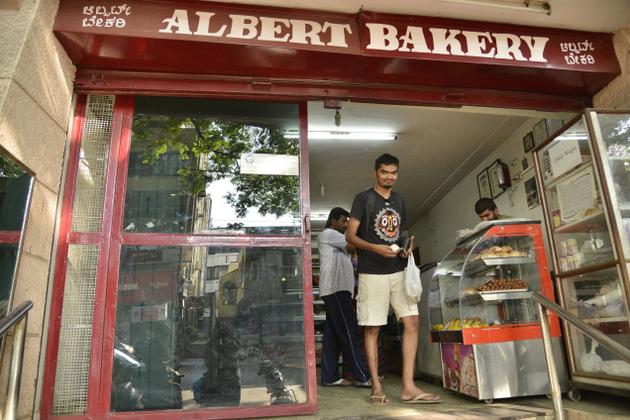
Tradition rules at Albert Bakery./ Photo Murali Kumar K. / The Hindu
Come one, come all to Albert Bakery and indulge in an array of nostalgic slices of confectionaries that are a rich part of Bangalore’s culinary heritage
Nestled in the heart of Frazer Town on the famous Mosque Road is a slice of the city’s history so unassumingly located that you would miss it entirely if you were walking or driving fast enough. And yet, Albert Bakery is one spot you would always want to stop by and taste their array of confectionaries. Bangalore is famous not only for its music and climate but also, over the years, for its food and Albert Bakery has been a major player in the city foodscape forever. The 112-year-old bakery is easily the city’s oldest and has been upholding a gastronomical tradition over the decades.
A thriving hotspot, the bakery is open only from 3 p.m. to 9 p.m. and is sometimes so packed that there are traffic snarls on Mosque Road.
And for those who frequent the street during the festive season of Ramzan, if you haven’t stopped at Albert Bakery to grab a bite of their goodies, then everyone will tell you that you haven’t lived life to the fullest.
Mohammad Sabir Faizan, the son of the proprietor Nawab Jan, says they strive to uphold the traditional baking practises. “We have always opened from 3 to 9 p.m. because we make the confectionaries fresh in the morning. Other bakeries may belong to a chain of supplies so they add preservatives and improvers which we never do. We make batches that are sufficient for each day.”
Established in 1902 by Sabir’s great grandfather Mohammad Yacoob, the bakery was initially a godown in Sangam lane off Kamaraj Road. “We used to deliver only buns and bread. That used to be the usual catering back then. We cycled down the roads with baskets of bread and buns delivering it to people in the locality. We shifted to Mosque Road in 1921 and since then we have stayed here,” recalls Sabir.
When my grandfather Mohammad Ibrahim was around, they had bread, biscuits, rusks, tea biscuits and other regular items. “It was only after my father Nawab took over that he introduced the kova naans, coconut cherry cookies, mini cocktail samosas and other specialities.”
From delicious hot kova and keema naans and mini cocktail samosas to butter salt biscuits and coconut cherry cookies, Albert Bakery boasts of a variety of foodstuffs that make mouths water at the mention of the bakeries name.
The spread available at Albert Bakery / Photo Murali Kumar K. / The Hindu
On the name, Sabir says back in the early 1900s, “My great grandfather felt it would appeal to everyone if it had an English name. There is a common misconception that the shop was started by some foreigner called Albert. We had a lot of Britishers as customers so a common name like Albert would make it easy to relate to and the name stuck.”
Being the fourth generation in this line, Sabir hopes to carry this legacy forward. “We may launch an outlet elsewhere but all the production will always be here. We don’t want to expand much because of the freshness factor. We will never compromise on quality.”
A bakery like Albert in a city like Bangalore is a blessing, says Sabir. “There were no shops in this area when we started. Now there is a huge boom in development. The city has helped us come up. We also have a lot of competition so that helps us strive to be more creative and innovative. We are proud to be part of Bangalore’s rich cultural and culinary heritage.” The bakery’s other specialties are the hot cross buns on Good Friday, marzipan Easter eggs on Easter Sunday, non-alcoholic plum cakes for Christmas and brain puff for Ramzan.
They also have daily specialties like the chocolate lava cake, chicken Swiss and mayo rolls, tarts, quiches, banana and grape muffins, chocolate croissants and donuts and pizzas.
source: http://www.thehindu.com / The Hindu / Home> Features> MetroPlus> Food / by Allan Moses Rodricks / Bangalore – May 16th, 2014
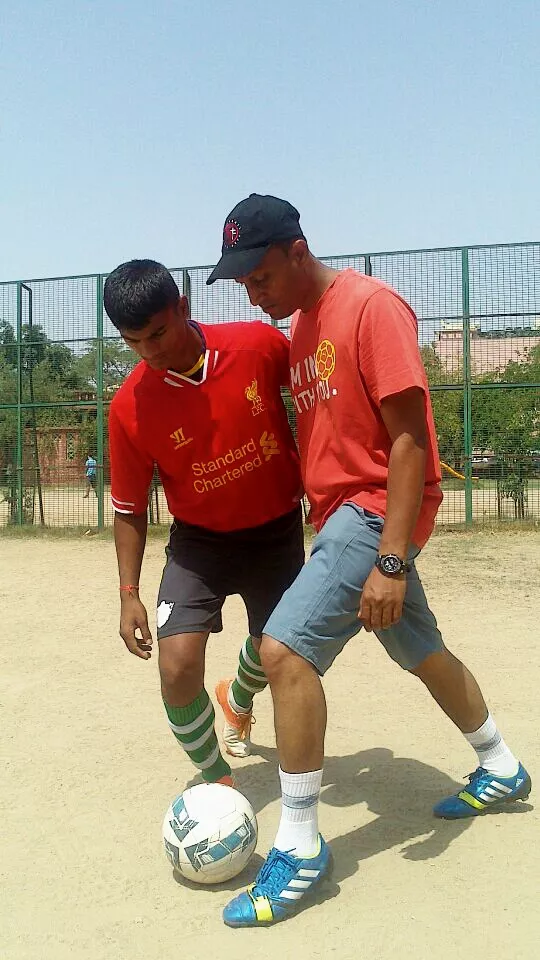
It’s 3:30 am, and the city of Delhi is in deep sleep. But just then, there’s a hint of some activity in the western corner of Vikaspuri slums, as Mohd. Tanjeer, a 16-year-old boy, is tying up his worn-out shoes to reach the public ground on time. Tanjeer has been selected from among more than 1,000 aspirants for a place in the DSK Liverpool International Football Academy in Pune and is looking forward to a new day where he can hone his skills further.
Soon after, Tanjeer is joined by many children from all age groups. All of them head to the ground where they wait for their coach. When Sylvester Peter, the coach, arrives, all of them rush to greet him. He is their beloved “Sylvester Bhaiya”. Sylvester Peter is the founder of My Angels Academy (A registered Trust for underprivileged children) and is the “life” and football coach of all these children whom he calls “Angels”.
Mohd. Tanjeer started his journey with Sylvester and My Angels Academy when he was 4. He comes from a poor family and his father is a construction worker and his mother works as a house maid to feed Tanjeer and his 3 other siblings. Till a few years back, Tanjeer was a rag picker, but with the sport of football, he now looks to rise up and succeed. He trains every morning along with other children of the Academy from 3:30 am till 6 am.
As the park is supposed to be off limit for slum children, almost daily the practice session is thwarted around 6 AM by security and other people. The going wasn’t easy for Tanjeer and he almost lost track by getting addicted to drugs. He would sit inside the large street-side dustbins and children used to tease him by calling him Kachhra (garbage). It has been the efforts of Sylvester which have brought about the drastic change in Tanjeer’s life. In Sylvester’s own words, he transformed the boy “through football and love”.
Sylvester says that the purpose of the academy is “to provide dignity to slum children by providing moral, theoretical and holistic learning so that they can be self reliant and live a good life”. “I named the academy ‘My Angels Academy’ as it invites everyone to help these Angels”, adds the coach.
The efforts of Sylvester and Tanjeer over the years bore fruit recently when Tanjeer was selected by DSK Liverpool International Academy in Pune, which is a full-time residential academy with world-class infrastructure and coaches with support from Liverpool FC. It was a remarkable achievement for Tanjeer to be selected along with the best football talent in the country, many of whom had the monetary resources to have access to the best facilities and training.
However, this excellent news was dampened by the fact that a significant amount was required to pay the annual fees of the Liverpool International Academy. Though My Angels Academy is a registered trust (Regd no 12110), it has been functioning mainly with the personal savings of Sylvester Peter and his friends for the past 18 years. There has always been a cash crunch and lack of resources to support the training of 120+ children.
Everyone at My Angels Academy has been trying hard to raise funds for Tanjeer. They want to give the youngster every chance to train with the best facilities and try to make a name for himself in the sport. They also feel that Tanjeer’s success can be a catalyst for the other “Angels” at the Academy and in fact all over the country and inspire them to rise up and chase their dreams despite the odds being stacked against them.
However, all this will be only possible if My Angels Academy are able to gather the required funds (approx Rs 5.3 Lakhs) to pay the fees of academy. It is a significant amount, but with contribution and assistance, it is possible.
My Angels Academy is reaching out to people for any kind of financial/non-financial help. Any contribution, big or small, is welcome. Your help and support can change Tanjeer’s life and help him carve out his own destiny by giving him the wings to rise from the slums of Vikaspuri to success, maybe even at Anfield.
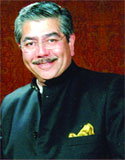
Did you know that Dr Pervez Ahmed, CEO, Max Healthcare Institute Limited, is an ardent reader of comparative religion and also loves adventurous sports? We give you a glimpse of his private world outside meetings and boardrooms.
He is a man who follows his heart. Piggybacking the success of his politician father (former President Late Fakhruddin Ali), he could have been a politician, but he chose to follow the profession of his grandfather, who was a medical professional during the British times.
Dr Pervez Ahmed, CEO, Max Healthcare Institute Limited, grew up in Shillong, nourishing the dream of becoming a doctor. A firm believer in ‘you will get what you want, provided you are ready to work for it!’, he left Shillong in 1964 for pre medical at Hindu College, Delhi University. He later joined AFMC, Pune for MBBS. He came to Delhi and joined Safdarjung Hospital. In 1972, he went to the US (SUNY Downstate and New York University) and finished his PG and fellowship in cardiology.
He wanted to come back to India after his studies, but decided to stay back on his father’s insistence that he garner practical experience. In the US, he was physician In-charge of ICU and Director of Critical Care Medicine at Brookdale Hospital Medical Centre, New York. He returned to India in 2005 and served as a Board Member of Max Healthcare from 2005 to 2007 and then in the capacity of Executive Medical Director from 2007-2009, before being designated as the CEO of Max Healthcare in January 2009.
So why did he decide to come back? “The desire was to impart the knowledge acquired in the other part of the world here,” he explains. As a CEO of one of the most popular names in healthcare, he wants to bring about a cultural change which starts by changing the mindset of people. He wants to reinforce teamwork, transparency, accountability and patient-centric approach. He affirms, “Today, healthcare should be safe, timely, effective and affordable and designed around a patient keeping these parameters in mind.”
So how important is money? “If money was important for me, I wouldn’t have returned to India,” he says. Besides, his efficiency and skills, he is also blessed with values like perseverance, hard work and integrity. Self-admittedly a very emotional person, he is known to be approachable at work— be it for professional or personal. He is known to be able to handle very crucial matters with utmost calmness.
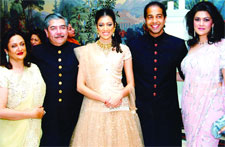
Dr Pervez Ahmed with his family
This quality may be attributed to his deep inclination towards comparative religion (a field of religious study that analyses the similarities and differences of themes, myths, rituals and concepts among the world’s religions) and his deep faith in God. A self-confessed God-fearing person, he believes in giving his best to life and leaving the results to God. He believes that if one takes care of one’s body and soul, there can be a better home and in turn a better society.
Because he is passionate about studying comparative religion, he reads books on Sufism, Islam and other religions and compares them. Right now, he is reading ancient Hindu culture. “Forget the politics, the two religions (Hinduism and Islam) are quite similar,” says the liberal administrator. He also appreciates God for giving him a very comfortable childhood and supportive parents.
A complete family man, his family is the centre of his life. He is blessed with two daughters. The elder one, Talaiya Ahmed (33) is an IT professional but runs her own business and the younger one, Asema Ahmed Amanat (30) is a lawyer and runs a law firm. Both are settled in the US. Besides studying comparative religion, it’s spending time with his grandchildren that gives him immense happiness. “One of the happiest moments in my life was when my grandson was born,” he confides with a sparkle in his eyes.
This sensitive person possesses an adventure streak too! He enjoys outdoor sports like golf, squash, tennis, fishing, hunting, shooting, trekking, hiking, and traveling. Once he retires, he wants to travel more with his family. His fathers’ political streak may still show up sometime. He may follow the footsteps of his father and become a politician once he retires. For now, we make him share some of his life memories with us.
The Mixed Bag
Your best prize in life so far
My children.
Your first day in school
My school was in Shillong. My first day was terrible. I joined school at the age of two and a half. I had a miserable day.
Your first ambition
To become a doctor.
Your first day at work
At Safdarjung Hospital, I was getting a salary of Rs 150 per month, which was quite decent at that time.
The first time you fired somebody
I have always fired people on issues of integrity. I have zero tolerance for any kind of dishonesty.
The toughest decision you have taken
To return back to India. There were so many aspects to it. I was leaving behind my children, my two grand children and I didn’t know exactly how things would turn out here.
The best memory of your childhood
Quite a materialistic one! The first time when my father went to the US as an UN delegate (in 1950’s), I gave him a whole list of the comic books. When he arrived back, he had all of them. I am fortunate to have a good childhood.
Your happiest moment
I have a very strong and supportive wife. When I first met her, she was an intern at Safdarjung Hospital. The fact that I still remember what was she wearing then, it must have been a happy moment.
Your funniest moment
Quite a few. It is very difficult to recall the one which stands out.
Three things you can not do without
My wife, freedom of choice and opportunity for personal growth. I can live without all material things.
One trait that you would like to change about yourself
I don’t hide my emotions. I always cry while watching a Hindi film (smiles).
Your first vehicle
With my own money, Dodge Dart (1973) was the first vehicle that I purchased.
One parental advice that you remember
Study-this advice has always helped me.
Sonal Vij
source: http://www.healthcare.financialexpress.com / Financial Express / Express Healthcare / Home> Weekend> Article> Time Out / by Sonal Vij / April 2009
Full name: Abu Nechim Ahmed
Born: November 5, 1988, Guwahati, Assam
Current age: 22 years
Major teams: Assam, ICL India XI, India Under-19s,Kolkata Tigers, Mumbai Indians, Royal Bengal Tigers
Playing role: Bowler
Batting style: Right-hand bat
Bowling style: Right-arm medium-fast
Fast bowling, sometimes known as pace bowling, is one of the two main approaches to bowling in the sport of cricket. The other is spin bowling. Practitioners are usually known as fast bowlers, fastmen, pace bowlers, or pacemen, although sometimes the label used refers to the specific fast bowling technique the bowler prefers, such as swing bowler or seam bowler.
The main aim of fast bowling is to bowl the hard cricket ball at high speed and to induce it to bounce off the pitch in an erratic fashion or move sideways through the air, factors which make it difficult for the batsman to hit the ball cleanly. A typical fast delivery has a speed in the range of 136 to 150 km/h (85 to 95 mph). The fastest delivery officially recorded was clocked at 161.38 km/h (100.3 mph) and was bowled by Shoaib Akhtar of Pakistan during a match against England in the 2003 World Cup. The batsman facing the delivery was Nick Knight, who guided it into the leg side. This speed is said to have been later matched by Brett Lee however this has been put down to an erroneous recording due to external interference of the radar’s signal. Two back-up radars recorded the correct speed of 142 km/h (88 mph) for the delivery.
In most cricketing countries, fast bowlers are considered to be the mainstay of a team’s bowling attack, with slower bowlers in support roles. In the subcontinent, especially India and Sri Lanka, the reverse is often true, with fast bowlers serving mainly to soften the ball up for the spinners. This is largely due to the condition of the pitches used in those countries which gives more help to spinners than to fast bowlers, but at international level it is also a reflection of the outstanding skills of their spinners compared to their pace bowlers. By way of contrast, the other major subcontinental country, Pakistan, has produced several generations of feared pacemen mainly due to that nation’s mastery of reverse swing and having pitches that provide relatively more assistance to fast bowlers.
The new name to the Indian fast bowling lineup is obviously Assam’s Md. Nechim. Pace bowlers like to hunt in pairs and Nechim and Yomahesh have formed a powerful combination at Under-19 level that could be extended to the top level. They shared 21 wickets at the last World Cup and Nechim decimated the England top order in the semi-final with 4 for 14 – his second four-wicket haul of the tournament – when he produced lethal movement under the Premadasa floodlights. He swings the ball both ways, at good pace, and already has impressive control, even with the white ball – an art that many more experienced bowlers are yet to master.
Abu Nechim Ahmed was on the fringes of the national team when he took a career best 6 for 9 against Bangladesh in the Under-19s Tri-nations tournament in July 2007. He was also set to take part in the 2008 Under-19 World Cup – a tournament that the Indian colts would eventually go on to win.
When he first burst on to the scene, there were constant comparisons made with former India fast bowler Ajit Agarkar. Nechim formed a lethal combination with Vijaykumar Yo Mahesh during the 2006 Under-19 World Cup in Sri Lanka. He swung the ball both ways, at good pace, and demonstrated good control over the white ball – an art that impressed all at the Premadasa.
However, Nechim’s decision to join the Indian Cricket League (ICL) later that year meant his ouster from all national squads and also from his domestic side Assam. Playing for the Royal Bengal Tigers in the ICl, Nechim took 21 wickets from 10 Twenty20 games at a decent average of 27. In three 50-over games, the 21-year old took 7 wickets at a good average of 28.
Nechim with his bowling has impressed the viewers. His average speed is 145km/hr.
source: http://www.theeasterpost.com / The Eastern Post / Home> Sport
Assam will be led by medium pacer Abu Nechim Ahmed, as Orissa and Bengal too have named their respective squads for 2011 edition of the Buchi Babu All-India invitation cricket tournament to be held in Chennai from August 11-30.
The Assam Cricket Association also announced the roping in of Abu Nechim`s Mumbai Indians teammate in IPL Rajagopal Sathish and Royal Challengers Bangalore`s left arm spinner J Syed Mohammad and retained veteran Maharashtra skipper Dheeraj Jadhav, though the trio will not be available for the TNCA tournament.
“It is the first time I am going to lead the side. The squad is a balanced one with good bowling and batting line-ups. I am looking forward to it,” Abu Nechim said.
Bengal and Orissa, on the other hand, picked new-look squad with the former side to be led by Subhomoy Das.
The experimental Bengal outfit has three from the current under-19 team, some new players and a few seniors including skipper Das.
Wicket-keeper batsman Haladhar Das has been retained skipper of the Orissa squad that has 11 newcomers.
Only five players in the Orissa line-up — skipper Das, Paresh Patel, Subit Biswal, Dhiraj Singh and Basanta Mohanty – have the experience of playing for the senior side.
Sixteen state teams and two local sides – TNCA President`s XI and TNCA XI- will vie for top honours in the tournament carrying a prize purse of Rs 1 lakh, while the runners-up will get Rs 50,000.
The Squads
Assam: Abu Nechim Ahmed (c), Tarjinder Singh (vc), Kunal Sakia (wk), Pallav Das, Rishav Das, Amit Sinha, Abhijit Singha Roy, Gokul Sharma, Swarupam Purkayastha, Prakash Bhagat, Dhiraj Goswami, Roshan Basfore, Sujoy Tarafdar, Arup Das and Prasanta Sonowal.
Assam’s promising fast bowler Abu Nechim Ahmed on Friday created history by becoming the first cricketer from the state to take a hat-trick in the Ranji Trophy, a feat which he achieved against Goa in a plate-B match at the Nehru Stadium in Guwahati.
Abu Nechim, who plays for reigning IPL champions Mumbai, scaled five wickets including a hat trick on day 2 of the match.
However, despite his heroics, Assam conceded a lead of 82 runs in the second innings as Assam failed to wrest the initiative after restricting minnows Goa to 101 for 7 before lunch.
Goa batsman RJ Pinto scored an unbeaten 115 to steady Goa past the initial hiccups. Talking to the media after the day’s play, Abu said that it was an exciting experience at becoming the first player in Assam’s history to scalp a hattrick and promised to work even harder on his bowling to help Assam reach Plate A in the Ranji trophy.
Abu Nechim had earlier achieved a hat trick in an under-19 match against a visiting Australian team. Nechim also said that if he continues to bowl as good as today, no one could stop him from breaking into the Indian team.
source: http://www.taratv.com / TARA Tv / Home> News> Sports> Article / November 11th, 2011
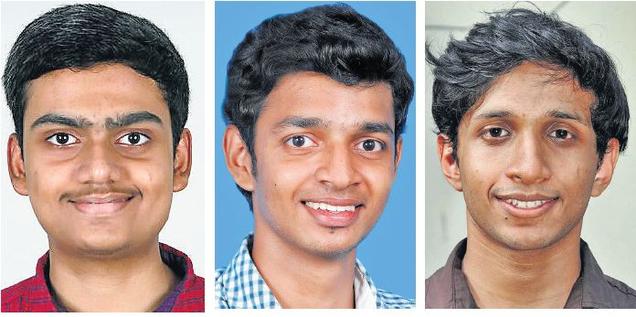
Basil Koshy Sajeev, Arun Ashokan and Abid Ali\ Khan who won the first three ranks respectively in the medical entrance examination. / by Special Arrangement / The Hindu
Engineering rank list in three weeks after standardisation
Boys cornered the top three ranks in this year’s medical entrance examination as 83,460 of the 93,897 students who wrote these examinations found a place on the rank list.
While Basil Koshy Sajeev from Odakkali, Ernakulam, bagged the first rank with a total score of 954.8936, Arun Ashokan from Muvattupuzha secured the second rank with a total score of 950.
The third spot went to Abid Ali Khan from Pathanamthitta; his score was 949.8936. The medical entrance results and the score sheet of the engineering entrance examinations were announced here on Thursday by Education Minister P.K. Abdu Rabb.
Among Scheduled Caste candidates, S. Sneha from Pathanamthitta bagged the first rank with a score of 871.3617 and N. Naveen from Purakkad, Kozhikode, the second rank with a score of 865.5319.
Among Scheduled Tribe candidates, B.I. Prasitha from Kasaragod bagged the first rank with a score of 881.1702 while the second rank went to Bhavya from Wayanad who got a score of 822.9362. Among the first 1,000 rank-holders, 491 are from the State higher secondary stream, 471 from the CBSE stream and 30 from the ISCE stream. Based on the district of permanent residence, Kozhikode returned the higher number of candidates in the top 1,000 list: 146.
Malappuram with 144 candidates comes second and Thiruvananthapuram with 124, third. Among the top 100 rank-holders, 22 are from Thiruvananthapuram, 17 from Kozhikode, and 12 from Ernakulam.
Among the top 100 rank-holders, 64 are boys. On the top-100 list, 63 candidates had written the entrance a second time.
Engineering
Of the 1,03,398 candidates who appeared for the engineering entrance examinations 74,307 candidates qualified.
The engineering rank list would be published three weeks later after combining the score in the entrance and the scores of Mathematics, Physics and Chemistry in the qualifying examinations — on a 50:50 basis — and subjecting them to a standardisation process.
source: http://www.thehindu.com / The Hindu / Home> News> National> Kerala / by Special Correspondent / Thiruvananthapuram – May 16th, 2014