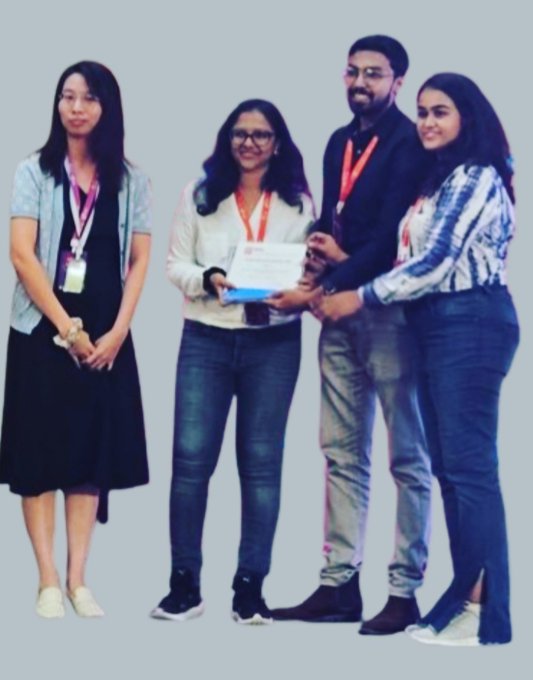
Professor Bushra Ateeq is Special Senior Fellow, and teaches at the Department of Biological Sciences and Bio-Engineering (BSBE) of the IIT Kanpur.
Kanpur:
Two professors of the Indian Institute of Technology (IIT) Kanpur, Bushra Ateeq and Nitin Saxena, have been awarded with the prestigious Indian National Science Academy (INSA) Fellowship for the year 2023-24.
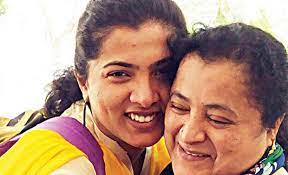
Professor Bushra Ateeq is Special Senior Fellow, and teaches at the Department of Biological Sciences and Bio-Engineering (BSBE) of the IIT Kanpur.
Professor Nitin Saxena, Founding Coordinator of the Center for Developing Intelligent Systems (CDIS) at IIT Kanpur, is from the Computer Science and Engineering Department of the institutions.
“I am delighted to share that two distinguished members of our faculty, Prof. Bushra Ateeq from the Department of Biological Sciences & Bioengineering, and Prof. Nitin Saxena from the Department of Computer Science & Engineering, have been honoured with the prestigious Fellowship of the Indian National Science Academy (INSA) for the year 2023-24”, Director IIT Kanpur, Abhay Karandika, wrote on social media platform X, earlier known as Twitter.
“The INSA Fellowship recognizes the research of scientists from diverse fields and supports them to further their research with necessary assistance”, he added.
Professor Bushra Ateeq
Dr. Bushra Ateeq joined Department of Biological Sciences and Bio-Engineering (BSBE) at the IIT Kanpur in February 2013. She was trained as a postdoctoral fellow in Dr. Arul Chinnaiyan’s group at Michigan Center for Translational Pathology, University of Michigan. Prof Bushra also served there as a Research Investigator (Junior Faculty) before joining IIT Kanpur.
Prior to this, she was a postdoctoral trainee in Dr. Shafaat Rabbani’s group at McGill University, Montreal. She served a brief stint as a Research Associate at All India Institute of Medical Sciences, New Delhi and National Institute of Immunology, New Delhi. She received her Ph.D. from Aligarh Muslim University (AMU).
Dr. Ateeq is primarily interested in exploring the genetic and epigenetic changes that initiate cancer and its progression by employing novel strategies and approaches. Her overarching goal is to explore the molecular events that drive cancer and facilitate the process of acquiring resistance towards chemotherapeutic drugs, in hopes that these discoveries can lead to the development of more effective therapies against specific causative pathways or alterations.
Professor Nitin Saxena
Professor Saxena has completed Bachelors in Computer Science from IIT Kanpur in 2002 and completed PhD under Manindra Agrawal in 2006. His interest area is Computational Complexity Theory, Algebra, Geometry and Number Theory.
Professor Saxena is a visiting Graduate Student in Princeton University (2003-2004) and National University of Singapore (2004-2005); a postdoc at CWI, Amsterdam (2006-2008) and a Bonn Junior Fellow (W2 Professor) at Hausdorff Center for Mathematics, Bonn (2008-2013).
source: http://www.ummid.com/ Ummid.com / Home> Education & Career / by Ummid.com news network / September 18th, 2023
Fouzia Tarannum started her preparation for UPSC in December 2010. She quit her job as a Business Analyst with Tata Consultancy Services Ltd. In CSE 2011, she cleared with AIR of 307, thereby joining the IRS (IT). The attempt in 2012 didn’t see any improvement in her rank/service.
Her preparation journey: Once posted she started feeling the difference in service – IAS and IRS. She felt that she should try one last time for her dream service and give one last attempt. A few weeks before 2014 prelims she jumped into preparation mode.
What made her successful this time? She reread the standard books, along with the sources available online. She feels that a big part of the improvement in rank to AIR 31 this year was due to her growth as a person, becoming more mature, having seen more of this world and a creeping sense of practicality and realism in approach, compared to an over-idealistic one earlier.
Her advice: She advises that UPSC is actually looking for more rounded personalities with problem solving approach and an analytical mind. The UPSC journey should be looked at in this light, and not merely reading of books.
How difficult it was to prepare with her job? She felt a deep sense of duty and responsibility towards her work that she doesn’t compromise on her present work while giving this attempt. She had to be more than justifying the salary that she was taking home.
Though it was tiring at times, but she made sure that at office, she would concentrate on work, and at home on preparation efforts.
How did she balance both? The balance came from management of time. There will never be enough time; rather we have to make time for everything. She took no leave before prelims, took 30 days leave before mains and 5 days leave for interview.
How did she plan her studies? She studied for atleast 2 hours a day, on working days – depending on her work day either early morning or late night – August to December 2014. She also managed to take a few Fridays off after the prelims results, so as to get 3 days of continuous studies.
She finished weekly newspapers that she piled up and studied for about 4 hours a day, on weekends and holidays.
How did she manage her different subjects? She focused on revising her strong areas (economy, geography, etc.) and re-prepared her weak areas (history, culture, sociology, etc.) along with preparing for the newly introduced topics.
She focused on current events and ensured that she remained updated with GS.
Optional Subjects: she chose Sociology as optional because it takes lesser time to prepare in comparison and enjoyed reading this subject, though she had never studied this subject academically.
Her tips for Ethics- GS Paper 4: She just read a few solved papers and looked up definitions on all the terms used in the syllabus and made short notes. She suggests that one must give true answers to most situational questions/case studies.
Did she practice writing answers? She says she couldn’t practise writing due to lack of time and also feels that if she had practised, she could have scored better.
Tips to write answers: She gave many examples in her answers, and tried to keep them interesting to whoever was to read them.
Time Management: There is a dire need for short, productive periods of reading through the day. For instance, she read the news feeds after returning from lunch at office, watched news/saved videos while travelling to and from office, etc. Such reading of 15 minutes in short bursts 4-5 times a day really adds up and contributes immensely to our efforts.
Whenever she felt low in her studies: She use to take up a subject that she liked and enjoyed when she would feel depressed. This really helps make our efforts more productive. She suggests one should be judicious in the time one allots to various “sub-subjects”.
Writing style: She feels short, to the point, bullet points, covering as many dimensions and aspects as possible is the best way to write answers. She didn’t focus much on word limits, for some answers she looked for more space and for some she just jotted down half a page. She suggests interlinking of topics and use of diagrams/charts. She also underlined important points while writing.
Her suggestion: A lot of resources are available online, one must have a look and settle for what works best and not waste time on internet unnecessarily.
Do not lose focus and never lose faith. Stay consistent in your efforts. Believe in yourself! Don’t forget to keep learning and to keep improving!
Though a certain amount of luck is required, hard work does pay!
” She says- “I have not studied in big “Ivy League” institutions, nor do I have any civil servants in my family. I come from a very simple, ordinary, loving household, where education has never been very important”.
source: http://www.civilsdaily.com / Civils Daily / by Root
Salima Khan is seen with Dr Pratibha Sharma and her great-grand daughter-in-law
Salima Khan is a new Internet sensation who enrolled herself in Chawli Primary School in Bulandshahr at the age of 92, becoming an inspiration to many.
Bulandshahr (Uttar Pradesh):
Remember Swara Bhaskar’s much acclaimed film “Nil Battey Sannata” released in 2016 where the ace actress goes back to school, attending class right with her daughter much to her dismay?
The plot is “recreated” in real life in Bulandshahr, Uttar Pradesh though for a different reason where a Muslim woman in a video is seen sitting in a classroom with her great-grand daughter-in-law.
Salima Khan is a new Internet sensation who enrolled herself in Chawli Primary School in Bulandshahr at the age of 92, becoming an inspiration to many.
The immediate reason behind Salima Khan’s inspiring endeavour at this age is to receive pension given to elderly citizens under the Indira Gandhi National Old Age Pension Scheme (IGNOAPS).
The government under this scheme gives a monthly pension of Rs. 200 to elderly citizens of 60 to 79 years and Rs. 500 thereafter.
“Amma used to come to me with a request to help her in getting pension. I promised her help provided she come to school every day for at least half an hour and learn something”, the Headmistress told media.
Despite facing a number of age-related issues, including hearing loss and weak eyesight, Salima Khan started coming to school and attend classes.
“Salima is a regular student and is never absent. She is attending the school since the last ten months. In this period, she has learnt a lot of things”, Dr Sharma said.
“Even at this age the interest and dedication with which Salima Khan learns is motivatinf for other students”, she added.
Salima who was unable to recognise letters is now able to write her name with fare fluency and can also confidently count up to 100.
“Acha lagta hai padhna. School aana bahut badhiya lagta hai. (I like to study and attend school)”, 92-year-old Salima Khan said in the video now going viral.
Inspired by Salima Khan, as many as 25 other women of the village, including her daughter-in-laws, have decided to go to school.
source: http://www.ummid.com / Ummid.com / Home> Education & Career / by ummid.com news network / September 29th, 2023
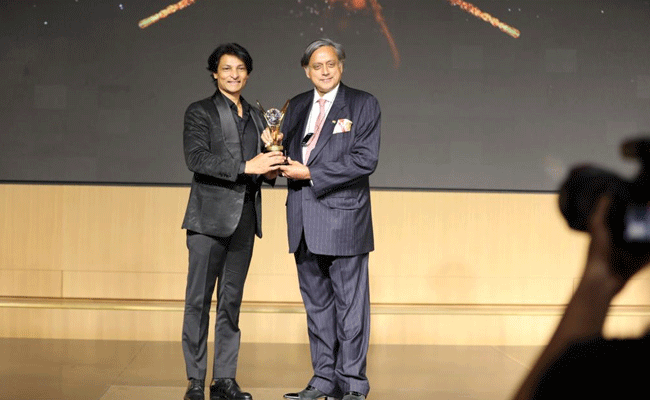
In a ceremony held at Taj Exotica, The Palm, Dubai, NRI entrepreneur Nasir Syed was honored with Business Icon award by NKN Media, celebrating the success stories of Indian business leaders in the UAE.
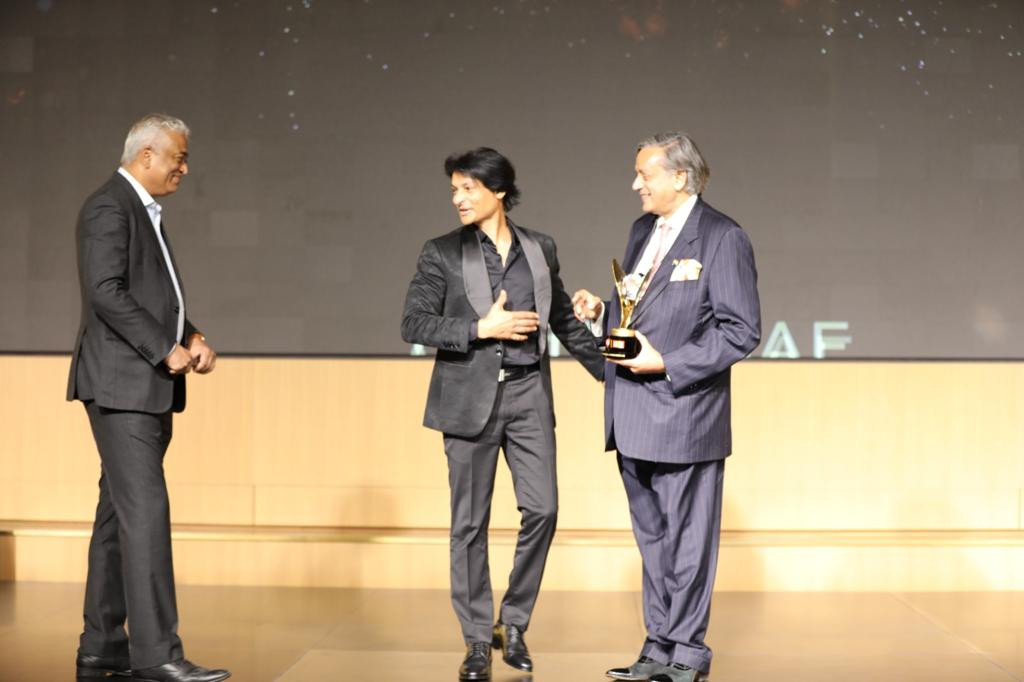
The event, boasting 16 icons from diverse industries, was graced by the presence of Dr. Shashi Tharoor, former Minister of State for External Affairs and acclaimed author, who handed over the award to Nasir Syed.
Nasir Syed, a prominent figure hailing from Moodbidri and the son of Syed Mohidin from Dakshina Kannada, has established himself as a renowned entrepreneur and international superbike rider in the UAE. He is the founder and CMD of Creative House Scaffolding.
The prestigious event was organized in collaboration with India Today Group, one of India’s leading media houses. The ceremony was broadcasted on India’s prominent news channels, Aaj Tak and India Today TV. The award aimed to celebrate visionary leaders and recognize their significant impact on the UAE’s business landscape and community.
Renowned actors and influencers, including Vivek Oberoi and Salman Yusuff Khan, shared exclusive video messages with their dedicated fan base, expressing their anticipation for the event.
In addition to these messages, India’s leading news anchor, Rajdeep Sardesai, graced the occasion with his presence.
The ceremony served as a platform to showcase the inspiring journeys and remarkable accomplishments of these business icons. Engaging 30-minute episodes highlighting their stories will be broadcasted, allowing viewers to gain insights into the experiences and achievements of these influential personalities.
source: http://www.english.varthabharati.in / Vartha Bharati / Home> Business / by Vartha Bharati / September 30th, 2023
The All India Ideal Teachers Association (AIITA) has announced a highly anticipated State-level program set to take place on October 1st, 2023, at Gulbarga, Karnataka.
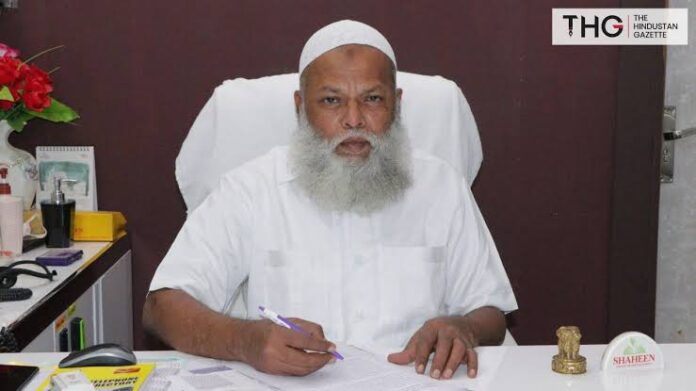
In a recent press conference, Muhammad Raza Manvi, the President of AIITA’s Karnataka Chapter, unveiled the event’s details, highlighting the prestigious State Level Education Award, the Afzal Hussain Shikshan Ratna Award, which will be bestowed upon Dr. Abdul Qadeer the founder of Shaheen group of Institutions, a distinguished figure in the field of education.
Dr. Abdul Qadeer has been selected to receive this distinguished accolade in recognition of his remarkable contributions to the field of education, setting an inspiring example for educators across the state. The award ceremony is expected to draw attention not only to Dr. Qadeer’s accomplishments but also to the importance of education and its transformative power.
The highlight of the event will be the presence of Dr. Fouziya Tarannum, the District Commissioner of Gulbarga, who has graciously accepted the invitation to serve as the chief guest.
The event is anticipated to be a gathering of educational luminaries, as teachers and educators from across Karnataka are expected to participate. This assembly will not only celebrate Dr. Abdul Qadeer’s exceptional achievements but also provide a unique opportunity for educators to come together, exchange experiences, share knowledge, and gain valuable insights into the evolving landscape of education in India.
The AIITA State-level program on October 1st, 2023, promises to be a momentous occasion, celebrating excellence in education and the dedication of individuals like Dr. Abdul Qadeer, who continue to shape the future of our nation through their unwavering commitment to learning and teaching. The event is expected to inspire and motivate educators, fostering a spirit of innovation and collaboration in the pursuit of educational excellence across Karnataka.
source: http://www.thehindustangazette.com / The Hindustan Gazette / Home> News> Education / by The Hindustan Gazette / September 30th, 2023
Jamia alumnus and Okhla resident Umar shines at Shanghai event
Jamia Millia Islamia alumnus and Okhla resident, Mohd Umar, shines at the BS2023 competition at Shanghai.
Son of Professor Asif Zameer and Gauhar Asif, he is a resident of Nazir Apartment in Okhla.
Four students from India – Arjita Gupta, Debanjana Das, Mohammed Umar, and Mohi Saxena – participated in the event.
Of the 19 entries received from the USA, Australia, China, Africa, and other European countries, the CEPT team from Ahmedabad, conducted an in-depth performance analysis of the Students’ Activity Centre (SAC) at Tongji University, Shanghai, China and brought home the trophy.
This year’s competition programme aims to design and optimise a nearly net zero carbon emission building by computer simulation, it said.
source: http://www.theokhlatimes.com / The Okhla Times / Home> JMI/EDU / by the okhla times (headline edited)/ September 15th, 2023
12-year-old Tania Begum is working as an ambassador of the Foundation for a Drug-Free World – India.
Tania Begum
Hyderabad :
“Who among you smokes?” Standing amidst the bustling Amberpet market, a little girl confronted a group of five to six people with this simple question. As the crowd pointed to one of them, she fearlessly launched into an impassioned speech about the adverse effects of cigarettes.
When not all kids of her age know much about addictions, 12-year-old Tania Begum is working as an ambassador of the Foundation for a Drug-Free World – India. Tania’s mind was sparked by the advertisements on television, prompting her to pose probing questions about drugs to her father. In response, her father, an activist himself, nurtured her curiosity and provided candid, age-appropriate answers to satiate her thirst for knowledge.
Gradually, Tania, the elder sibling in her household, began accompanying her father to various programmes in the city and marathons on Sunday mornings, related to addiction awareness. Witnessing the grim realities of addiction in the lives of many, Tania felt compelled to contribute. She found her voice and purpose in delivering heartfelt speeches during these events.
Reflecting on this unexpected turn of events, Tania’s father, Sallaudin Saikh, admitted, “As an activist, I never wanted my daughter to be part of any campaign. I even tried to dissuade her.” However, Tania’s passion only intensified as she delved deeper into her studies, devouring news articles, books, and YouTube videos on the subjects of addiction and drugs.
“I loved watching Doraemon, a cartoon with cool gadgets that help people. I always wished I had similar tools to fight addiction and drugs in real life,” Tania said. Her wish came true when a foundation gave her posters and booklets to help with her mission. It was like having a real-life Doraemon by her side.
When her video, showcasing her dedication to the cause, was shared on the social media platform, Drug-Free World – India, an international organisation approached her. They were so impressed that they appointed her as their youngest brand ambassador at the astonishing age of just seven. Armed with posters and booklets from the organisation, the young campaigner began spreading awareness in schools, colleges, markets, events, and wherever her tiny voice could make a big difference. With unwavering support from her parents and a dedicated team of two more individuals, Tania embarked on a mission to educate her community.
In her eyes, alcohol stood out as the most prevalent addiction in Telangana, followed closely by painkillers. She could rattle off a litany of drug names and toxic substances that many adults were unaware of.
Tania held a strong conviction that celebrities promoting such substances were setting a harmful example. “I couldn’t fathom how many young people, much like herself, might fall into the trap of addiction influenced by these stars,” she said. She took to Twitter to voice her concerns and request these celebrities to reconsider their participation in such advertisements. Instead of support, her account was banned, and she had to create a new one to continue her advocacy.
Tania’s dedication to combating addiction continues to evolve as she sets her sights on addressing the growing issue of student addiction, particularly concerning the rising prevalence of e-cigarettes among children her age. Having read about this concerning trend, she has taken it upon herself to gather information and raise awareness about the dangers posed by e-cigarettes.
Closing liquor shop near school Tania’s dedication knew no bounds. During her time at her previous school, Unison International, where she studied up to the 5th grade, she noticed a liquor shop in close proximity. Disturbed by the sight of her fellow students falling prey to addiction, she took it upon herself to approach the shop owner and advocate for its closure. With the support of her friends, she embarked on a daily mission to educate customers about the dire consequences of addiction. Their relentless efforts ultimately led to the shop’s closure, a testament to Tania’s indomitable spirit and unwavering commitment to creating a drug-free world.
source: http://www.newindianexpress.com / The New Indian Express / Home> Good News / by Renuka Kalpana, Express News Service / September 17th, 2023
A Muslim woman Principal of Mahatma Gandhi Government English Medium School in Jaipur has scaled new heights in educational excellence with her innovations, which have led to the inclusion of her school in the Rajasthan government’s pilot project for complete digitalisation programme. The school headed by her is among the first 11 institutions in the state which have been digitalized for their operations.
The new English medium co-educational schools named after Mahatma Gandhi have been opened by the Rajasthan government in all districts of the state as part of an ambitious drive to give the students a level playing field to enable them to compete with the elite private schools. These flagship schools are an attraction for the public at large in view of low cost of education and an assurance for upward social mobility with the proficiency in English.
Sarwat Bano, serving as Principal of Mahatma Gandhi Government School, Adarsh Nagar, Jaipur, for the last four years, has taken steps to impart quality education to underprivileged children and empowered them with knowledge and skills. Under her leadership, the school has progressed so much that the number of applications received for admissions at the beginning of each academic session are many times more than the seats available.
Since the school functioning in the same building earlier was a girls’ Hindi medium institution, which was converted into the Mahatma Gandhi Government School in 2019, the English medium was introduced first for the class VI students. This first English medium batch of students appeared in the State Board of Secondary Education’s X class examination this year and came out with flying colours. The school’s result for the Board exam was an impressive 96.25% pass percentage.
Bano, 53, has played multiple roles while bringing laurels to her schools and guided her colleagues as a Master Facilitator at the State Resource Group in the Rajasthan Leadership Academy at Goner, Jaipur, functioning under the State Institute of Educational Management and Training (SIEMAT). Her efforts for improvement of academic standards and skill development of students have been widely acclaimed.
As part of the digitalisation of operations, Bano’s school is set to get a new and robust infrastructure, sponsored by an educational technology company with its corporate social responsibility (CSR) fund, for e-education, smart classes, virtual reality lessons, robotics lab and information communication technology lab. The similar digital education facility, approved by the Rajasthan School Education Council, is being provided to nine other schools in Jaipur district and one in Rajsamand district.
The State government’s Education Department has shifted teachers from the pool of its regular academic staff who were willing to join the Mahatma Gandhi Schools to create a separate cadre of English medium teachers. Private teachers have also been appointed as the guest faculty to overcome the shortage of teachers. The schools have been adding one class every year to accommodate the promoted students.
Bano’s salutary initiative to introduce an English language proficiency programme for underprivileged children of all communities through a unique microscholarship scheme during the COVID-19 pandemic, for which she invited the U.S. Embassy’s Bureau of Education and Cultural Affairs to her school, has won her all-round praise. The programme has met with encouraging results. Incidentally, Bano has an educational background of chemistry, as she completed her post-graduation and M.Phil. in that subject.
The English access microscholarship programme has sought to strengthen the foundation of language skills among the selected students and enable them to avail of educational and employment opportunities in future. The children selected for the initiative were in the age group of 13 to 16 years. They learnt the linguistic skills with distinction and were later felicitated at a “graduation ceremony”.
After being taught in an online mode for more than a year, the students joined the after-school physical classes and intensive sessions in March 2022. The programme, implemented through New Delhi-based Learning Links Foundation, adopted a communicative approach to teaching English, infusing a spirit of participatory learning among the children and helping them groom their personalities. The students also attended the regular school for VIII to X classes.
Bano said the students selected for the programme had excelled in extra-curricular activities, with an all-round development visible in their personality, and they were winning awards in various other competitions as well. “Our students have developed confidence to overcome the impediments and improved their writing and speaking skills as well as critical thinking. Such a project is the need of the hour because students of government schools, coming from poor background, face language barriers,” she said.
American Embassy’s Regional English Language Officer Ruth Goode, accompanied by specialist Rachna Sharma, visited the Mahatma Gandhi School before the launch of physical classes. Goode interacted with the students and obtained their feedback, while informing them of the scope for studying in the U.S. through the exchange programmes.
The students trained in the programme will later be selected for attending the South Asian meets, where they will be exposed to the educational atmosphere in India’s neighbouring countries. The global microscholarship programme is operative in as many as 90 countries, where an assistance is provided for development of curriculum, textbooks and English as a Foreign Language (EFL) teaching methodology.
The learning material provided to the students in Mahatma Gandhi School laid emphasis on content creation by writing unified paragraphs, developing vocabulary with the talks about hobbies, interests and people, using visuals to support comprehension, identifying sequence of events, asking questions and understanding the cause and effect of natural phenomena. The science of fun, wonders of the sea, long ago and today and “good idea” were some of the lessons taught to the selected students.
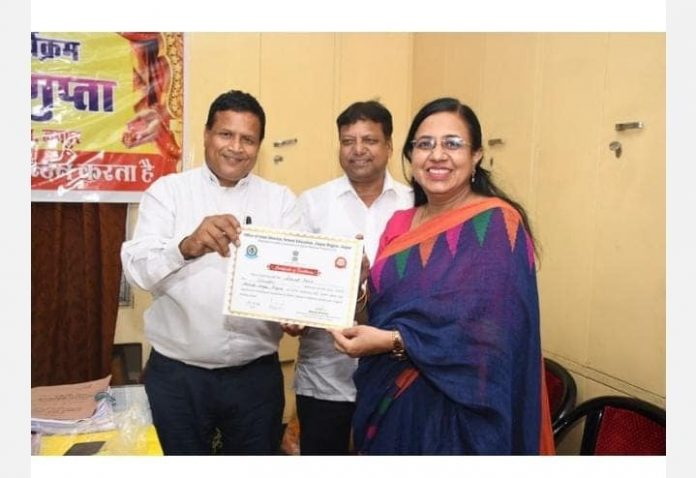
The State government has recently honoured Bano with a “certificate of excellence” in recognition of her leadership skills, tireless efforts and valuable role in building the foundation of children’s future in the school. The Joint Director, School Education, signed the certificate presented to the Principal on July 25. Muslim organisations of Jaipur, including the Association of Muslim Professionals, have also praised her educational innovations.
Bano told India Tomorrow that she was inspired by the Muslim woman from Tunisia, Fatima Al-Fihri, who had founded the world’s first university, the University of Al-Qarawiyyin, in Morocco more than 1,000 years ago. “If a Muslim woman in the 9th century could have the vision for promoting education in her community, nothing stops the women today from taking similar initiatives with the help of modern technology,” Bano said.
Bano shared an anecdote about a class IX girl student of her school, who was given the responsibilities held by the Principal for a day on International Women’s Day on March 8 as a fun activity. The student, Pragya Patel, played the role with perfection and said at the end of the day that she desired to become a Principal in future. “Her reaction made me think that if only one initiative can help a student in having a clear vision about her career, then we should continue to take such innovative steps in future as well,” she said.
source: http://www.indiatomorrow.net / India Tomorrow / Home> Education / by The Correspondent, IndiaTomorrow.net / September 19th, 2023
Also present at the event were Gujarat Congress MLAs Amit Chavda and Imran Khedawala, former Congress MLA Gyasuddin Shaikh, AMC leader of Opposition Shehzadkhan Pathan, and late Congress Rajya Sabha MP Ahmed Patel’s daughter Mumtaz Patel.
Arnazbanu Sipahi from Mehsana at the IMCR event on Saturday. (Express File Photo)
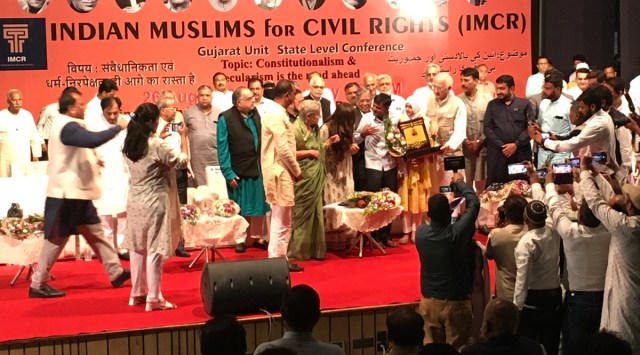
The Indian Muslims for Civil Rights’ (IMCR) Gujarat unit on Saturday felicitated 15-year-old Arnazbanu Sipahi from Mehsana, who was not called for a felicitation ceremony by her school despite holding the first position in the Class X board exams at her school, on Independence Day.
A former student of K T Patel High School, who had topped her school in Class X state board exams in March, Sipahi has now shifted to a nearby grant-in-aid school for her Class XI studies.
K T Patel High School principal has maintained that the August 15 award ceremony was organised by the school staffers and the school would felicitate Sipahi instead on January 26, next year.
Speaking to The Indian Express , Mehsana District Education Officer A K Modhpatel had earlier said, “I had checked with the school and learnt that the August 15 award ceremony for first three toppers from Class X and XII was organised by the teachers. They had collected funds to motivate school students. The girl and those who were not studying in the school (when the felicitation ceremony was held on August 15), will be awarded on January 26.”
Maintaining that she was “wronged” by the school, the IMCR – at a state-level conference on constitutionalism and secularism held in Ahmedabad – called Sipahi on stage to felicitate her in the presence of a host of Muslim leaders. Azam Baig, national general secretary (organisational) of IMCR, announced that he would personally fund Sipahi’s education, including higher studies.
Handing her a plaque and a flower bouquet on stage were former IMCR trustee and Congress leader Salman Khurshid, former member of Planning Commi-ssion, Syeda Saiyidain Hameed, as well as Samajwadi Party MLA Abu Azmi, among others.
Addressing the conference on the topic of ‘constitutionalism and secularism and the way forward’, Hameed cited Arnazbanu’s “experience” and the recent viral purported video of a Muslim boy being hit by his classmates upon being goaded by their teacher at a Muzaffarnagar school, as “examples where children are being discriminated against (on religious lines).” “We have to build a common front… work in an organised way (to counter the polarisation)… The Gujarat riots’ blueprint, which is now being attempted to be implemented elsewhere in India, we must not let it succeed.”
K Rehman Khan, former deputy chairman of Rajya Sabha , urged Muslims to be “givers” and not “seekers”, emphasising that they must empower themselves and “saving the Constitution should be the first priority”. “Only if the Constitution and secularism is saved, can we live a life of dignity,” Khan added.
Former Union minister Salman Khurshid said that “it is not acceptable that rule of law is replaced by rule of bulldozer”. He added that the “public must understand that what is happening today at someone else’s household can also happen at your household”. “We want that the majority speaks for the minority and the minority speaks for the majority,” Khurshid said.
Also present at the event were Gujarat Congress MLAs Amit Chavda and Imran Khedawala, former Congress MLA Gyasuddin Shaikh, AMC leader of Opposition Shehzadkhan Pathan, and late Congress Rajya Sabha MP Ahmed Patel’s daughter Mumtaz Patel.
source: http://www.indianexpress.com / The Indian Express / Home> News> Cities> Ahmedabad / by Express News Service, Ahmedabad (headline edited) / August 27th, 2023
Nooniya Basti under Mahingaon Gram Panchayat in Kishanganj district of Bihar is largely inhabited by Shershabadi Muslims, who trace their origins to Bangladesh.
It is in this conservative milieu, where girls are not allowed to even step out of their homes unchaperoned, that Ziratunnisa Khatun, 14, and her friends have been leading a campaign on family planning since the last two years.
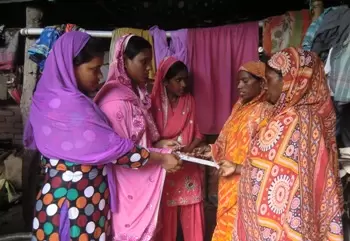
The Kishori group members of Nooniya Basti interact with older women showing them samples of contraceptive pills, Copper T and condoms and telling them about the merits of keeping a five-year gap between children (Photo: Ajitha Menon\WFS)
“Our group comprises girls between 12 and 18 years and we have been trained to create awareness on the need for family planning, the ill effects of child marriage, related maternal health issues and the importance of good nutrition, water conservation and sanitation,” informs an articulate Nasera Khatun, 16, President of the Nooniya Basti Kishori group.
Since October 2012, activists of the Bihar Voluntary Health Association (BVHA) have been running the Kishori programme, as part of the Department of International Development (DFID) supported Global Poverty Action Fund project, ‘Improving Maternal Health Status in Six States in India’, initiated by Oxfam India.
Shares, Meraj Danish, Thematic Coordinator-BVHA, Kishanganj, “I remember how tough it had been for us to convince the elders in the Shershabadi community to give permission to their adolescent daughters to get involved in our maternal health intervention.
“We drew them in by facilitating their access to rations given to teenage girls under the government’s Rajiv Gandhi Scheme for Empowerment of Adolescent Girls (Sabla scheme).
“The scheme provisions for three kilos of rice, two kilos of lentils and 40 iron supplement pills in a month to every out-of-school girl in the 11-14 age group and all girls between 14 and 18 years.
“As we managed to rope in more girls into Sabla, the trust quotient between us and the community increased. These were people who were anyway battling with poor infant and maternal health, anaemia and lack of nutrition in adolescents, so eventually they came around and agreed to let their girls attend our training sessions.”
Girls, for whom family planning had been a taboo subject, were in for a huge surprise at the training sessions conducted by the BVHA volunteers.
“The meetings were a real eye-opener. As we listened to the volunteers, we soon figured out the reasons behind our mothers always feeling weak and lacking energy. We realised that most of our brothers and sisters and, in fact, we ourselves, were suffering from the ill-effects of under nutrition.
“We also understood the need for family planning and the fact that spacing between children is critical for ensuring the good health of the mother and child. Above all, we learnt to improve our eating habits as well as maintain proper personal hygiene,” elaborates Habiba Khatun, 17.
Nooniya Basti’s Kishori group began its family planning advocacy by first speaking to their own family members, relatives and friends.
“We used to carry samples of contraceptive pills, Copper T (intrauterine device) and condoms and go door-to-door, talking to our mothers and their friends. Rather than insisting on use of contraceptives to limit the number of children, we told them about the need to have at least a five-year gap between each child,” explains Tanzera Khatun, 16, adding, “this automatically brings down the number of children per couple and removes any concerns regarding forced family planning.”
Till a couple of years back, most women living in and around Nooniya Basti had no clue about family planning and were mostly bogged down by three-four children, born within just a year of each other. Consequently, the mothers and their children used to be very weak and sickly.
“This is why the women immediately related to our conversations regarding the need for the body to fully recover between pregnancies and showed a keen interest in knowing how to use contraceptives to ensure spacing between children. By and large, we spread the message that it was alright to use contraception to achieve spacing between children even if family planning per se was taboo,” reveals Sabina Khatun, 16.
Of course, it certainly was not always smooth sailing for the girls. Many women were quite unwilling to talk to “children” on issues of family planning and contraception.
“The fact that we could talk proficiently about the use of contraceptive pills and their possible side effects and demonstrate how to use Copper T and condoms added to our creditability in their eyes. After a few interactions, during our house visits, there was no hostility or shyness and the women could voice their different issues and concerns openly before us,” adds Ruksana Khatun, 16.
Whereas the community women have benefited from the Kishori group’s active engagement, the girls too have learnt a lot in the process. This has prepared them well for the future and set them apart from their lesser fortunate peers across the country.
“Thanks to this intervention, most of us have become vocal against early marriages. Moreover, we have become particular about eating nutritious food and taking iron supplement pills to fight anaemia,” points out Nasera Khatun.
The other advantage for this group has been in the form of access to better education. “Once the community elders saw how well the girls were faring, it was possible for them to seek permission to join mainstream schools to acquire better quality education, along with studying at the local madarsa. Many girls in the group are now attending regular school,” says Danish of BVHA.
At present, there are three Kishori groups in Kishanganj. Though there are about 20 girls in each, the health awareness campaign related to family planning and contraception is spreading effectively across several villages in the district, as the peer and friend circles are absorbing the knowledge and experiences of the core Kishori units and putting them to good use by reaching out to women of their own localities.
by Women’s Feature Service
source: http://www.weekendleader.com / The Weekend Leader / Home / by Ajitha Menon, Kishanganj / Vol.6, Issue 12 / May 23rd, 2015