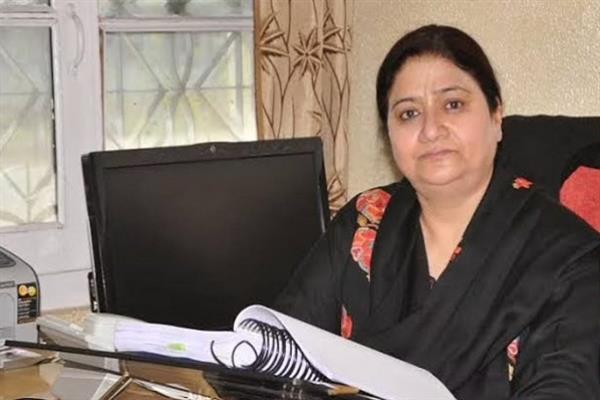
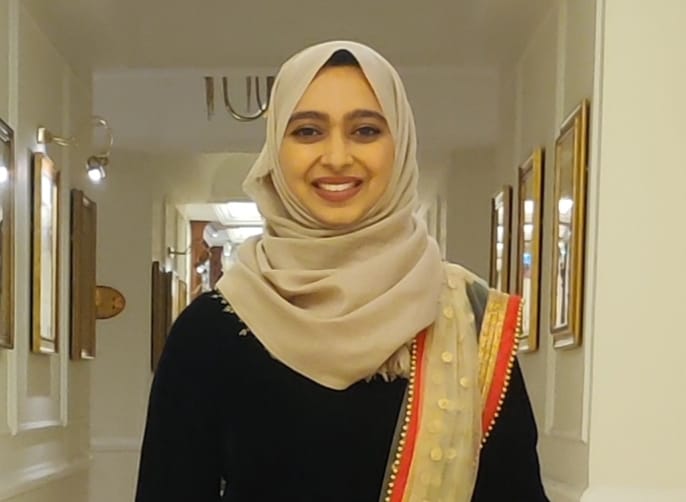
Professor (Retired) Nilofar Khan, who was yesterday appointed as new Vice Chancellor of the University of Kashmir, assumed charge of the office of VC on Friday.
Professor (Retired) Nilofar Khan, who was yesterday appointed as new Vice Chancellor of the University of Kashmir, assumed charge of the office of VC on Friday.
According to official sources, Khan assumed the charge of the office of Vice Chancellor this morning and was welcomed by the officials on her arrival at the varsity.
However, since morning a number of people have made a beeline to the office of VC, congratulating her on becoming the head of the valley’s premier institution.
Prof. Nilofer Khan was appointed as the first female Vice chancellor of Kashmir University by Lieutenant Governor, J&K, Manoj Sinha, who is also the Chancellor of the varsity, by exercising power vested in him under section 12 of Kashmir and Jammu Universities Act 1969.
source: http://www.risingkashmir.com / Rising Kashmir / Home / by RK Online Desk / May 20th, 2022
People Welfare Front’s candidate for Palayamkottai K.M.A. Nizam of MDMK. — Photo: A. Shaikmohideen; Fatima Babu, MDMK candidate for Thoothukudi.
A social worker for Thoothukudi and a retired teacher for Nagercoil
The Marumalarchi Dravida Munnetra Kazhagam, a constituent of Desiya Murpokku Dravida Kazhagam – People’s Welfare Front, has fielded party’s Tirunelveli city district secretary K.M.A. Nizam, popularly known among the Palayamkottai residents as ‘Nizam Maama.’
Though he has not contested any election in the past, Mr. Nizam, a Grade I contractor, has held various positions in the party and is quite popular among the residents of Palayamkottai, thanks to his ‘helping tendency,’ especially to the needy.
When over 3,000 government employees and the teachers laid siege to the Collectorate recently as part of their Statewide indefinite strike, Mr. Nizam provided them lunch – both vegetarian and non-vegetarian, tea and dinner for two days.
Whenever he is approached for providing lunch for the participants of conferences, seminars in colleges here, he would oblige gleefully, saying that those who teach the younger generation should not be allowed to run from pillar to post for their professional needs.
Mr. Nizam will take on DMK’s T.P.M. Mohideen Khan and AIADMK’s A. Thamizh Magan Hussein.
The MDMK has nominated former MLA T. Sadan Thirumalaikumar, a doctor, at Sankarankovil (reserved) segment. He was elected to the Assembly from neighbouring Vasudevanallur (reserved) constituency in 2006 and had unsuccessfully contested the Lok Sabha polls at Tenkasi (1991 and 2014), Assembly polls at Rajapalayam (1996) and Assembly by-poll in Sankarankovil (2012).
Nagercoil
Marumalarchi Dravida Munnetra Kazhagam has fielded a retired teacher, Rani Selwyn, in Nagercoil constituency.
Ms. Rani is the State deputy secretary of the party’s women’s wing. She unsuccessfully contested for the post of Nagercoil Municipal Chairperson in 1986 and 1996.
The party has fielded 68-year old Sampath Chandra, chairman of the Kanyakumari District Central Cooperative Bank, in Colachel constituency.
Tuticorin
Marumalarchi Dravida Munnetra Kazhagam , a strong ally of DMDK –PWF, has fielded Fathima Babu (64), former Associate Professor of English, St. Mary’s College, in Thoothukudi. Ms. Babu is a familiar face in Thoothukudi. She is a social worker and an environmental activist. Thoothukudi Mayoral election during 2011 saw Ms. Babu as one of key contenders.
She has held various responsibilities such as Executive Committee Member of Thoothukudi Town Beautification, Senate member of Manonmaniam Sundaranar University, and State Convener of Fishermen Movements of Tamil Nadu and Puducherry. This candidate was conferred with ‘Greenpeace International Award’ in recognition of her efforts to protect the planet’s environment. Thoothukudi district administration honoured her at the Republic Day celebration in 2011 for outstanding social service.
source: http://www.thehindu.com / The Hindu / Home> News> National> Tamil Nadu / by Madurai Bureau / Tirunelveli / April 17th, 2016
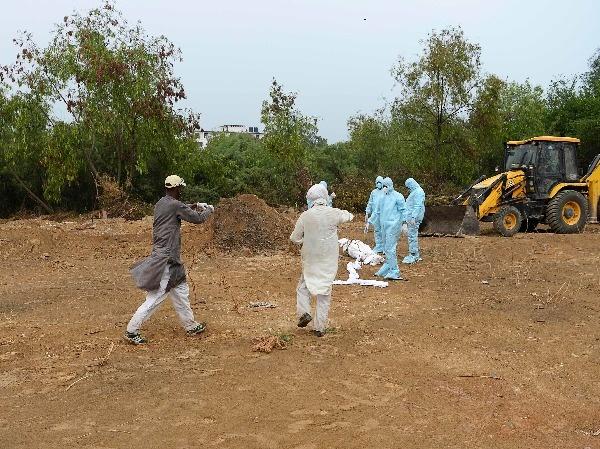
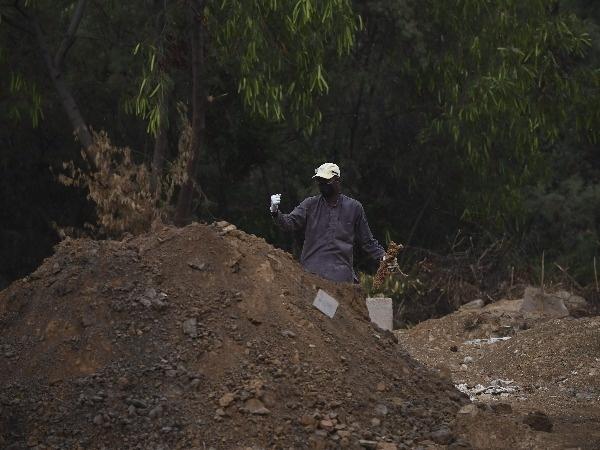
As the number of COVID victims rose in Delhi, more and more bodies needed a final resting place.
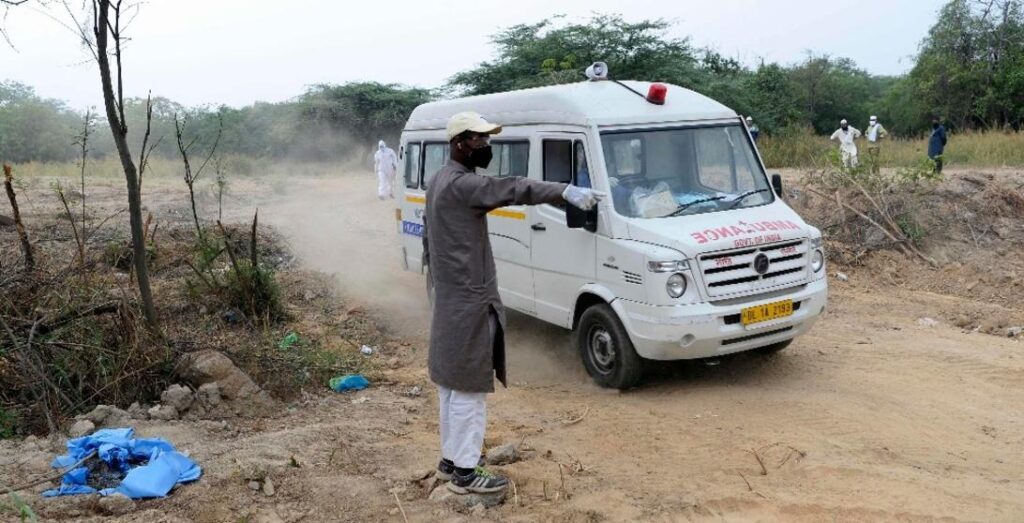
And that’s probably why Cemetery Supervisor Mohammed Shamim at ITO cemetery had no choice but to turn families away and risk his life to bury those who died of COVID-19. “I am fighting corona daily. I have not taken a single day off since the lockdown and come to the cemetery every day. I don’t even go to my home and sleep here only as no other person is ready to come here,” Shamim said.
afp
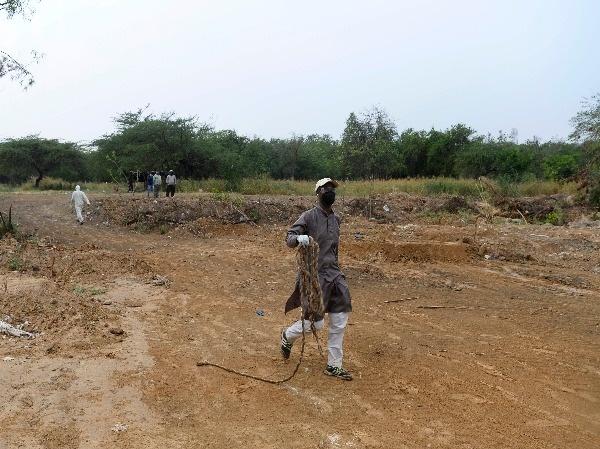
Gravedigger Mohammed Shamim brings a rope to use for burial of a coronavirus victim at a graveyard in Delhi. The death toll from coronavirus in Delhi has reached a reported 176.
afp
Shamim instructs relatives of a coronavirus victim before burial at a graveyard. As of May 20, the total number of confirmed coronavirus cases in India stand at 1,07,819.
afp
“I’ve been burying the dead for the last two decades. But until now, I’ve never been scared for my own life,” he said to AFP.
afp
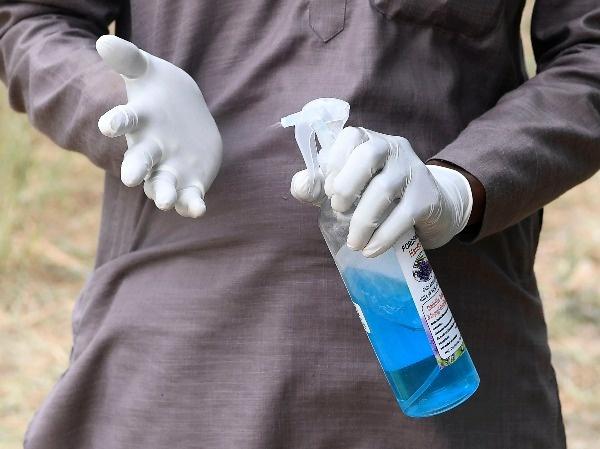
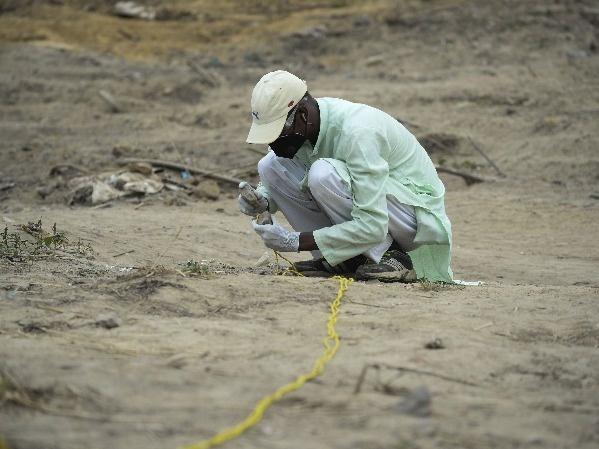
Shamim sanitises his gloves before the burial of a COVID-19 victim. He always keeps a santiser bottle with him.
afp
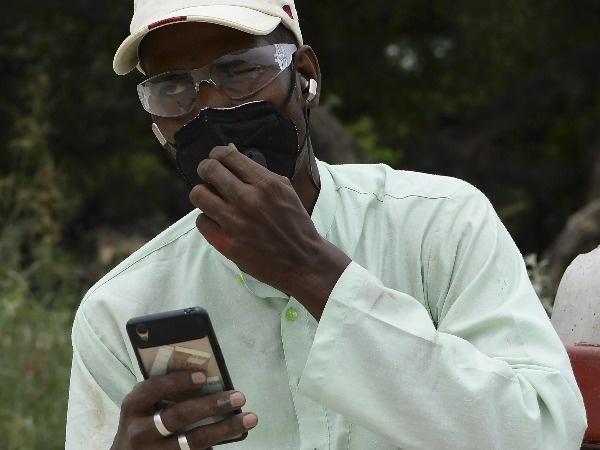
He uses his mobile phone after a burial.
afp
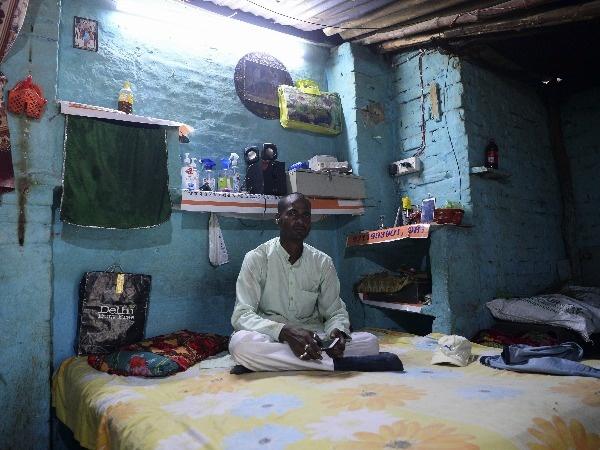
Shamim rests in his room after the burial of a COVID-19 victim. He has moved his four daughters to his parents’ house to prevent the risk of them catching the disease.
afp
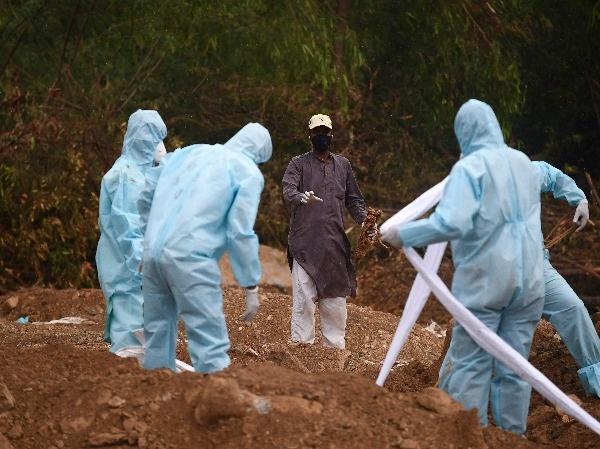
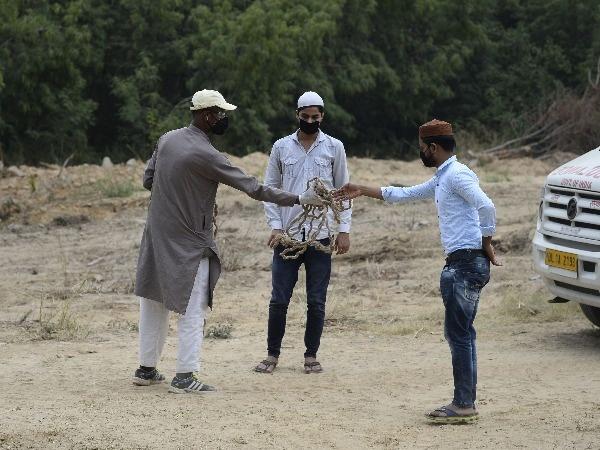
Mohammed Shamim prepares a rope to use it to lower a body into a grave.
afp
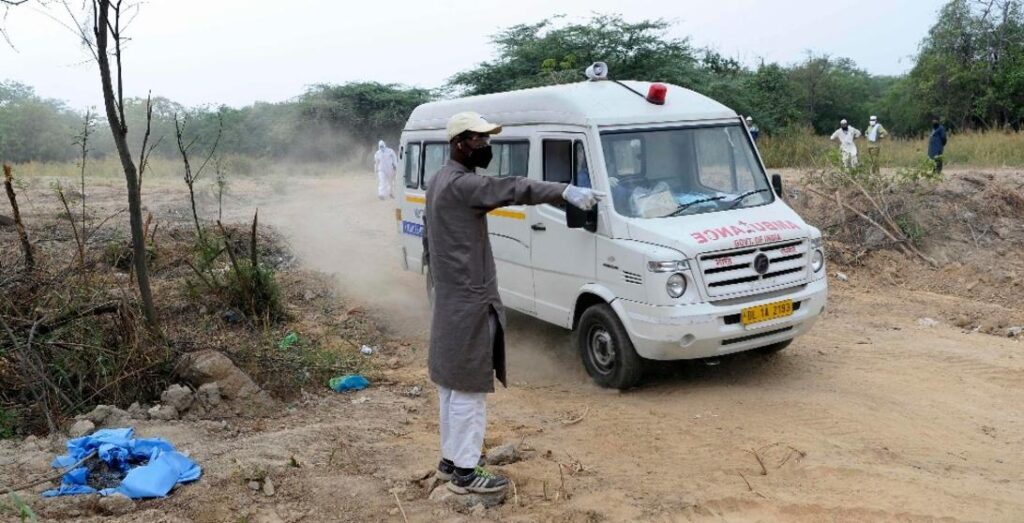
Here, he’s seen directing an ambulance carrying the victims of COVID-19.
afp
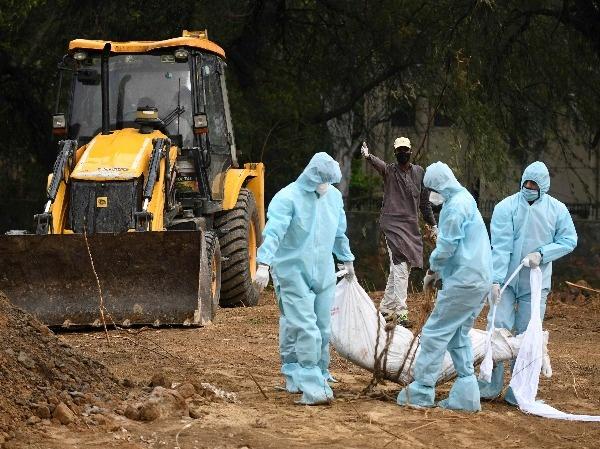
He talks to the relatives and asks them to put on protective suits, gloves, and masks for the burial ceremony.
afp
“People just refuse to come help with the burial. What can you do? I have to step in,” he said, describing “heartbreaking” scenes, like when only a wife and a small child came to the funeral of one man.
afp
Shamim receives a rope to use for the burial of a coronavirus victim at a graveyard. “I always felt safest around the dead and most vulnerable in the outside world. Now I find it difficult to sleep at night,” he said.
Inputs From AFP
source: http://www.indiatimes.com / India Times / Home> Trending> Social Relevance / by Bhupinder Singh / Inputs fr9om AFP / July 21st, 2020
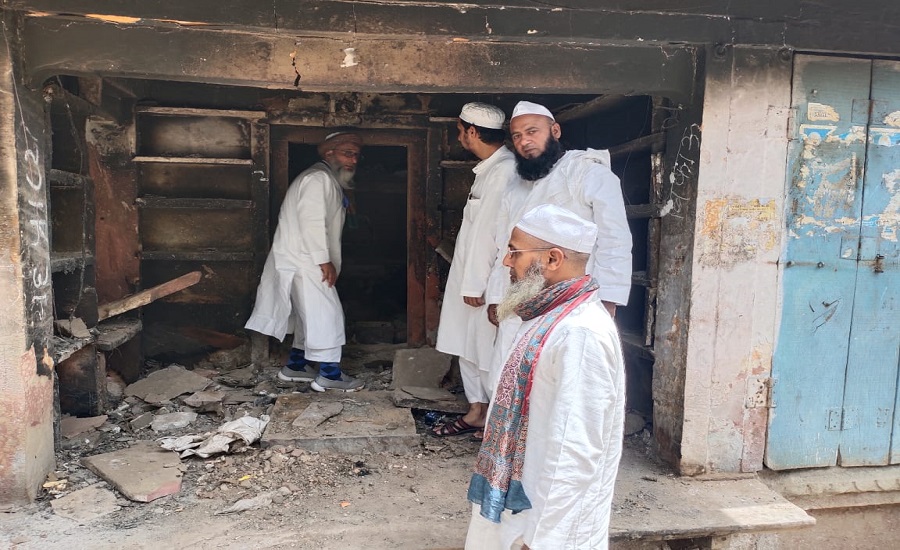
The Jamiat Ulama-i-Hind taking stock of the devastation in the aftermath communal violence in Karoli.
After visiting the riot-hit area, a delegation of the JUH held the district administration responsible for the riots saying if not for inept handling of the situation, the riots would not have taken place.
New Delhi :
A delegation of Jamiat Ulama-i-Hind (JUH) visited Karoli, Rajasthan, to take stock of the situation there in the aftermath of the devastating communal violence that took place there last month. During the visit the delegation met the victims of the riots and assured them legal assistance.
The delegation, on the direction of President of Jamiat Ulama-i-Hind Maulana Mahmood A Madani, assessed the on-going rehabilitation activities in the riot-hit area. During the riots, miscreants had burnt down 77 shops of which 67 belonged to Muslims. What’s shocking is that a large number of people belonging to the victim community have been arrested for the violence so far.
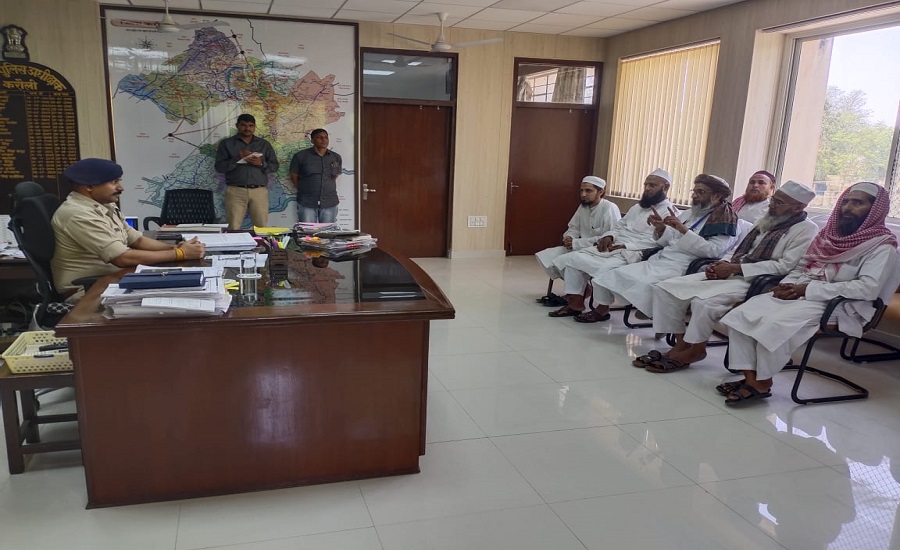
The delegation headed by Maulana Hakeemuddin Qasmi, JUH general secretary met with the district superintendent of police (SP) and district magistrate (DM) over the issue. During the visit, Maulana Hakeemuddin Qasmi noted that apart from tearing apart social fabric of the country such kind of riots adds to the woes of common man at a time when the country’s economy is going through a rough patch.
The delegation headed by Maulana Hakeemuddin Qasmi met with the district superintendent of police (SP) and district magistrate (DM) during their visit to Karoli.
He said, “No country is built in the air but it constitutes its people, houses, shops, cities and towns, trees, roads, and vehicles, harming any of them amounts to harming the nation.”
The JUH held the district administration responsible for the riots. It said if not for inept handling of the situation, the riots would not have taken place.
Maulana Hakeemuddin Qasmi asked the SP how the rally with DJ blaring hate-filled songs and slogans was allowed to pass through a sensitive area while it was banned for 20 years. The government and the administration should always be vigilant about the sensitive areas so that sectarian elements do not vitiate the atmosphere by holding such rallies.
The delegation noted that the riots were the handiwork of some vested interests who wanted to create a rift between the two communities for political gain. It demanded action against the communal outfit which engineered the riots. It said action against individuals won’t serve any purpose.
The delegation included Maulana Hakeemuddin Qasmi, Maulana Ghayyur Ahmad Qasmi, Senior Organizer of Jamiat Ulama-i-Hind, Maulana Noman, Vice-President of Jamiat Ulama-i-Rajasthan, Maulana Muhammad Younus, Maulana Anis, JUH district president Karoli, Mufti Islam, Hafiz Luqmanan, Maulana Mahboob, Hafiz Babuddin, Mufti Islam, Hafiz Liaqat, Haji Abdul Hai among others.
source: http://www.clarionindia.net / Clarion India / Home> Big Story> India / May 18th, 2022
Bihar,INDIA / North Carolina / Washington, U.S.A. :
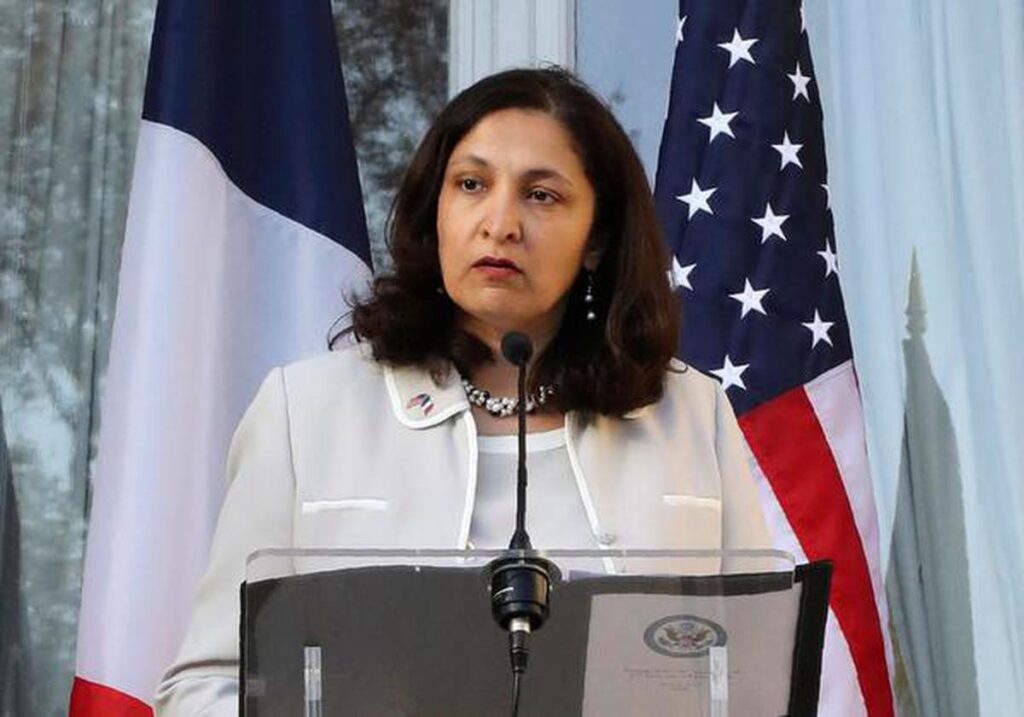
U.S. Special Coordinator for Tibetan issues Uzra Zeya. File | Photo Credit: AFP
U.S. Special Coordinator for Tibetan issues Uzra Zeya will travel to India and Nepal this week to deepen cooperation on human rights and democratic governance goals with the two nations, the State Department has announced.
Ms. Zeya, the Under Secretary for Civilian Security, Democracy and Human Rights and an India-American, is expected to visit Dharamsala in Himachal Pradesh during her visit to India.
Dharamsala is home to the Dalai Lama and the Tibetan Government-in-exile.
“Under Secretary for Civilian Security, Democracy and Human Rights and U.S. Special Coordinator for Tibetan Issues Uzra Ms. Zeya will travel May 17–22 to India and Nepal to deepen cooperation on human rights and democratic governance goals, and to advance humanitarian priorities,” the State Department said on May 16.
“She will also discuss partnering with India and Nepal during this Year of Action for the Summit for Democracy. The delegation will include U.S.AID Deputy Assistant Administrator for Asia Anjali Kaur,” it added.
It will be the first high-level contact between the U.S. and the Tibetan leadership after Joe Biden became President in January last year.
In New Delhi, people familiar with the development said last month that Ms. Zeya will hold talks with the Dalai Lama and other senior leaders of the Tibetan Government in exile in Dharamsala, signalling the Biden administration’s commitment to the Tibetan cause.
Last month, Tibetan exile leader Penpa Tsering paid a visit to Washington D.C. and met Ms. Zeya. Tsering — the elected head of Tibet’s India-based exile Government the Central Tibetan Administration — had also met House Speaker Nancy Pelosi and other congressional leaders.
China considers the 14th Dalai Lama as a political exile who has attempted to split Tibet from China under the guise of religion.
According to the people cited above, key issues relating to the Tibetan cause are likely to figure in the talks.
As the U.S. Special Coordinator for Tibetan issues, Ms. Zeya has been coordinating the Biden administration’s policies, programmes and projects relating to the Tibetan cause.
Ms. Zeya was sworn-in as the Under Secretary for Civilian Security, Democracy, and Human Rights by Secretary of State Antony Blinken on July 14 last year.
On December 20, she was concurrently appointed as the U.S. Special Coordinator for Tibetan issues.
The U.S. has been consistently supporting the Tibetan cause notwithstanding China’s strong objection.
In 2020, the U.S. came out with legislation reaffirming the absolute right of Tibetan people to choose a successor to the Dalai Lama and the preservation of Tibet’s environment.
After the U.S. Congress passed the legislation, China had accused Washington of meddling in its internal affairs.
China has been insisting that the selection of the next Dalai Lama has to be decided within Chinese territory and that it has to have a say in the matter.
The issue of a successor to the 14th Dalai Lama, who has been living in exile in Dharamsala since 1959, gained traction as he turned 86 in July last year.
Mr. Blinken had met a representative of the Dalai Lama during his visit to New Delhi last year.
source: http://www.thehindu.com / The Hindu / Home> News> International / by PTI / Washington, May 17th, 2022
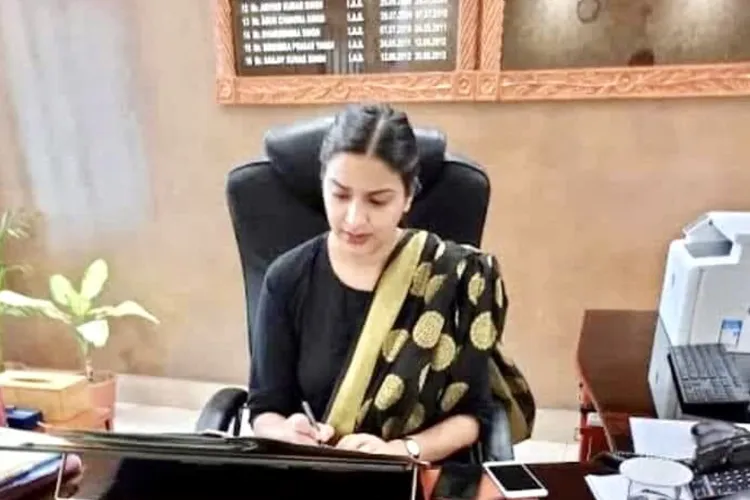
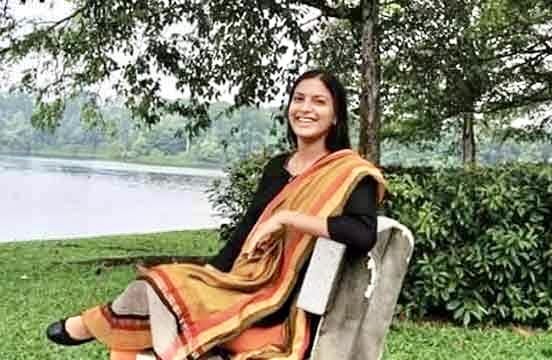
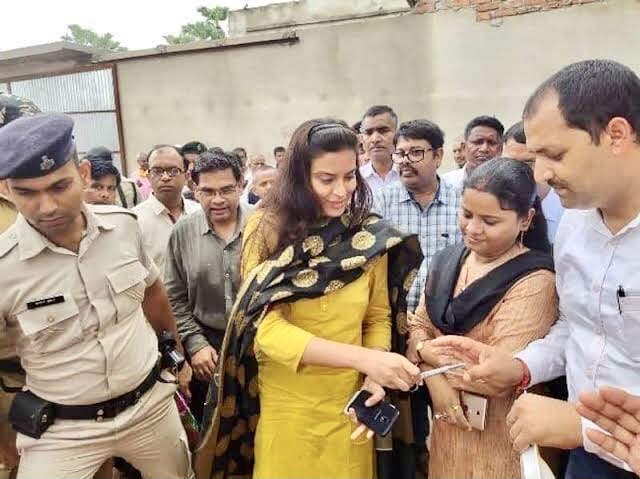
After Prime Minister Narendra Modi showered praises on IAS officer Inayat Khan for her phenomenal work as the District Magistrate of Sheikhpura, one of the backward districts of Bihar covered under the Aspirational Districts Programme for development, she has been posted to Araria in the Seemanchal region of Bihar.
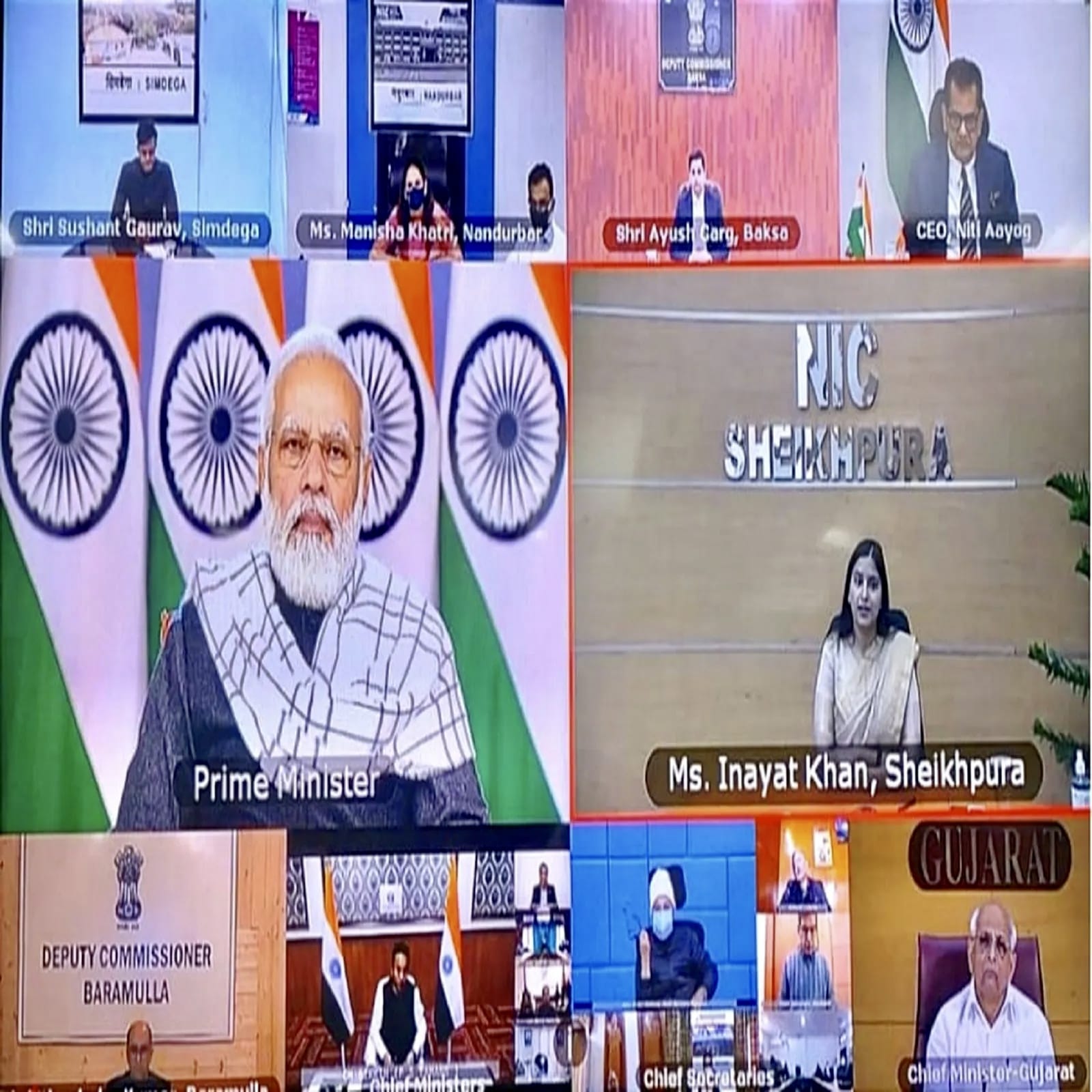
During the video conferencing on 24 January, the Prime Minister praised the young DM for her work related to women’s health, malnutrition and education.
The Prime Minister acknowledged Inayat’s efforts and said that the change in the Sheikhpura district of Bihar was only because of her constant efforts.
Inayat Khan interacting with Pm Narendra Modi in a virtual conference
Inayat Khan, 35, was born in Agra and did her B.Tech from Anand Engineering College. She cleared her UPSC in 2011 with an All-India rank of 176 and was allotted Bihar cadre.
After working for India’s leading IT firm for one year before writing her UPSC examination to become a civil servant. job to serve the country. She cleared the exam in 2011.
Inayat Khan’s first posting was as an assistant collector in the Patna district and the second one as the SDO in Rajgir.
It was in Bhojpur where she was posted as District Development Commissioner (DM) that Inayat Khan was nicknamed a ‘tough officer’ as she got officer CCTV cameras and biometric attendance installed in offices in every block.
She was a stickler for discipline and work culture. From surprise inspections to visiting the station premises personally to taking walks on foot in the district, Inayat did her best to improve the governance and service of the public at the hands of the government machinery.
Inayat Khan
Besides making news with her strict demeanor and work ethic, Inayat has also adopted the children of the martyrs.
The Aspirational Districts Programme is an initiative by the Government of India implemented by NITI Aayog with the help of various stakeholders to improve the living standards of people in aspirational districts. There are 112 Aspirational districts identified throughout the nation covering a minimum of one from each state in India.
Recently, the state of Bihar was appointed with new DMs in 13 districts. Inayat Khan was allotted Araria district .
The district is a Muslim majority area and people are socially and economically backward. Her posting has given hope to the locals that Inayat Khan would work out a solution to the problems of the area.
Inayat Khan made headlines when she adopted the kids of the martyr soldiers.
Inayat Khan during her inspection tour
After the Pulwama attack, Inayat Khan remained in the headlines for her duty. She never announced the adoption of the daughters of Ratan Thakur and Sanjay Kumar of Bihar, who were martyred in the Pulwama attack.
She not only donated her two-day salary but also made officers posted in Sheikhpura district donate their one-day salary to the fund for the families of the Pulwama martyrs.
On a personal front, Inayat lives a simple life. She even has a housing loan from LIC to pay off for the financial year 2021-22. This came to the fore when she declared her movable and immovable property at the end of the fiscal year.
According to the details as recorded on the website, the DM has about one kg of gold and Rs 3.50 lakh deposit in the bank.
source: http://www.awazthevoice.in / Awaz, The Voice / Home> India / by Seraj Anwar, Patna / May 13th, 2022
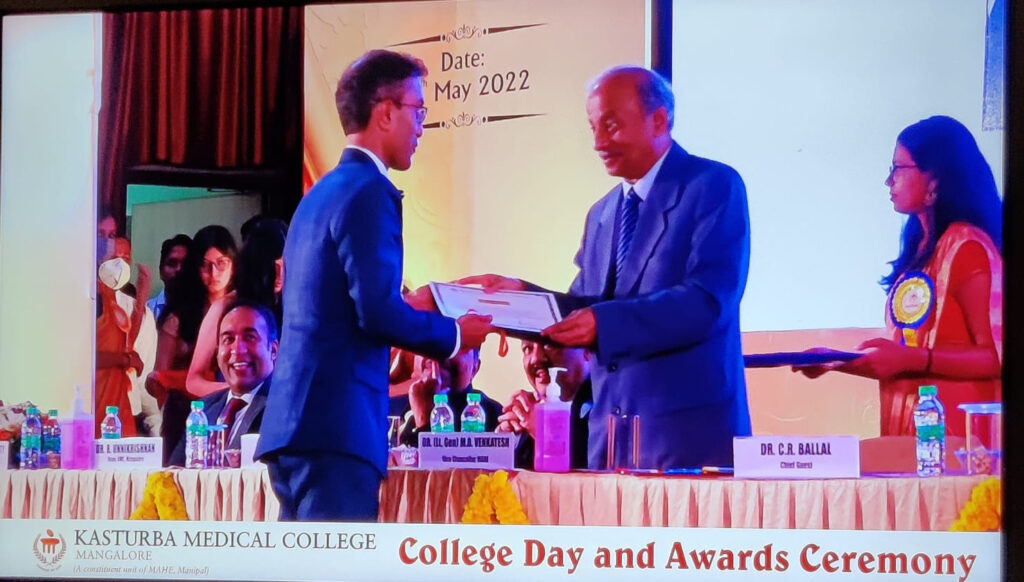
Dr Fathima Raeesa was awarded ‘Prapulla S Hegde Memorial Endowment’ Gold medal for the Best outgoing Post Graduate student in M.D Radiodiagnosis for the year 2021 at the ‘College Day and Awards ceremony’ held on 13th May 2022 in TMA Pai International convention center. This award has been instituted by Dr H.S Ballal, Former Vice Chancellor of Manipal Academy of Higher Education.
Dr Fathima Raeesa currently is working as a Senior Resident in the Department of Radiodiagnosis, KMC Mangalore. Dr Raeesa completed her schooling from Doha, Qatar. She is the daughter of Mr Mumtaz Hussain and Mrs Ishrath Jahan Khan, residents of Qatar. Mr Hussain is an Entrepreneur in Qatar. She is married to Dr Safwan Ahmed, Consultant Neurologist, who is currently working as an Associate Professor in the Department of Neurology, Father Muller Medical College, Mangalore.
Dr Santosh Rai, HOD Radiodiagnosis, KMC Mangalore, received the award from Lt. Gen. (Dr.) M.D. Venkatesh, Vice chancellor of MAHE, on behalf of Dr Raeesa, as she was out of station.
Sabir Ahamed leading a KYN walk. Photo: Special Arrangement
Neighbourhood walks resume after pandemic to promote communal harmony
While history has turned out to be a source of confrontation in some parts of the country, with the Taj Mahal and the Gyanvapi mosque once again in the news for the wrong reasons, history is building bonds between communities in Kolkata.
A social experiment called ‘Know Your Neighbourhood’ or KYN, which began in 2016, has returned after a pandemic-forced gap of two years, and is once again using history — through neighbourhood walks — to dispel apprehensions and promote communal harmony in West Bengal.
The next walk is in June, and the one held most recently — on April 23, during Ramzan — had led to the 1784-built Niyamatullah Ghat Masjid in north Kolkata. The mosque visit was held under what KYN organisers call Dosti-ki-Iftar, which has Muslims and non-Muslims breaking bread together, and saw about 150 participants, several of them non-Muslim women who were allowed into its premises for the first time.
“The idea came to me in 2015, when communal violence was taking place in parts of West Bengal — in Barasat, in Naihati. Rumours were being spread and there were cases of lynching. That’s when we realised that there was inadequate information and adequate misinformation about Muslims. KYN is an attempt to bridge the gap between communities using dialogue as a tool,” Sabir Ahamed, national research coordinator with the Pratichi Trust, and the convenor of KYN, told The Hindu.
“Neighbourhood walks in an important tool of dialogue because even though we share the same geography and live in the same city, we do not go to each other’s neighbourhoods or bother to find out about each other’s customs. Hatred breeds in this atmosphere of ignorance. Today, KYN has become a popular campaign, aiming to tackle religious prejudices and dismantle stereotypes,” Mr. Ahamed said.
The initiative, according to him, has succeeded in breaking new ground. During one of the walks, non-Muslim women climbed to the top of a minaret of the famous Nakhoda mosque for a majestic view of old Kolkata. Participants also discovered that water from the Hooghly river is used for ablutions before the offering of prayers at the mosque.
“Many young people admitted — after our events — that they harboured hatred because of misinformation and that they had changed their minds. A young lady told us that she never got into a cab if she found the driver to be a Muslim. Many students often refuse field surveys in Kidderpore (a locality with a large population of Muslims) because they fear something might happen to them, many believe that all you see in Muslim neighbourhoods is green flags — we need these ideas to change,” Mr. Ahamed said.
“That’s why we would like to work with colleges and univarsities to bring about a lasting change in the way we know each other. We are working with Presidency University and other colleges,” he said.
Samata Biswas, who teaches English at the Sanskrit College and University, said of her experience at recent walks in Kidderpore and in Taltala: “They reminded us of the confluence of faiths, cultures and people that has created modern Calcutta. From the Tamil church at Kidderpore to the historic Calcutta Madrassa which is older than both Presidency and my own institution — this aspect of Bengal’s history is often forgotten, the one that has Anglo-Indians, Jews, Parsis, Muslims, Tamils and Afghans living and working together in Calcutta.”
She added: “The trip to Baker Hostel, where Sheikh Mujibur Rahman was a resident, reminded me of the shared history of the two Bengals and Calcutta’s contribution to Bangladesh’s Liberation War. These are stories we seldom hear — stories that remind us that Calcutta is not merely for and by the Bengali bhadralok (elite), and that it has accommodated multiple cultures, institutions, cuisines and religious beliefs.”
source: http://www.thehindu.com / The Hindu / Home> News> Cities> Kolkata / by Bishwanath Ghosh / Kolkata – May 14th, 2022
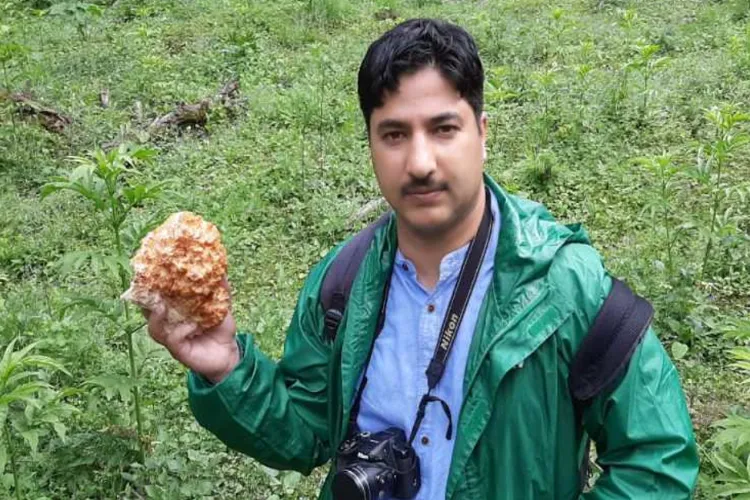
Dr. Rouf Hamza Boda has documented 100 indigenous and yet little known varieties of mushrooms in the Valley to earn the sobriquet of ‘Mushroom Man of Kashmir’. This includes the most expensive fungi in the world – Gucchi (Morel) – and the exotic Porcini.
Dr Boda is the author of Nano Mushroom Identifier, a Book that is beginners’ guide on mushroom cultivation. He belongs to Doru Shahabad of Anantnag and works as a lecturer in Government Higer secondary School, Verinaag in South Kashmir.
He says, “Since I come from a village (Doru Shahabad, Anantnag), I used to be part of the mushroom hunting groups in spring. I used to collect mushrooms in wicker baskets. Along the way, I often saw mushrooms of various shapes and sizes. Sometimes, seeing the large size of mushroom was intimidating.”
His childhood exposure made his pursue a Master’s degree in Botany and, he followed it up with a doctoral research on Mushrooms.
“My guide, Dr. Abdul Hamid Wani inspired me to research on wild mushrooms. I am the first person in the valley to research on wild mushrooms,” he says.
In his research paper, he has documented about 100 mushrooms from forest areas in South Kashmir and evaluated them for antioxidants. Rauf Hamza Boda says, “I have documented their nutritive value, cultivation pattern and studied their classification.”
He said that all mushrooms are fungi and they produce spores similar to pollen or seeds that are spread by wind. A mushroom mature only after this process is completed.In nature the mushroom grow in soil or on wood.
A local variety of mushroom on South Kashmir jungles
Mushrooms grow well on a pine tree. Hamza explains: “Mushroom extracts water and some minerals from the soil and gives it to the roots of these trees and the tree undergoes photosynthesis. This in turn produces many sugars for the mushroom.”
He says Kashmir has many naturally growing types of mushrooms, some of which are edible, including well-known species such as buttons, oysters, porcini and chanterelles, he said.
However, there are inedible ones too that can cause abdominal pain, or vomiting if eaten. Some can even prove fatal.
He says mushrooms are today known for their significant health benefits as these contain a variety of medicinal properties. “Mushroom is a low calorie food. It is rich in many health-boosting vitamins, minerals and antioxidants. Mushrooms have been recognized as an important part of the diet.
For example, mushrooms exposed to ultraviolet light are a good source of vitamin D, an important component in bone and immune health. In addition, many of them have anti-cancer properties.”
However, he pointed out that climate change and urbanization have affected many mushroom species. As a result, there has been a gradual decline in the mushroom production including that of Gucchi mushrooms.
“I have been tracking them for the last 10 years. It is estimated that their production has decreased as a result of climate change, deforestation and habitat destruction. Similarly, other mushrooms that grow in early spring, such as the monkey cap, are beginning to disappear. Earlier, they were seen in March and April.
He said that mushroom growing is a profitable venture for anyone who has the basic knowledge about the technique and art of growing mushrooms.
source: http://www.awazthevoice.in / Awaz, The Voice / Home> Youth / by awazthevoice.in / May 03rd, 2022
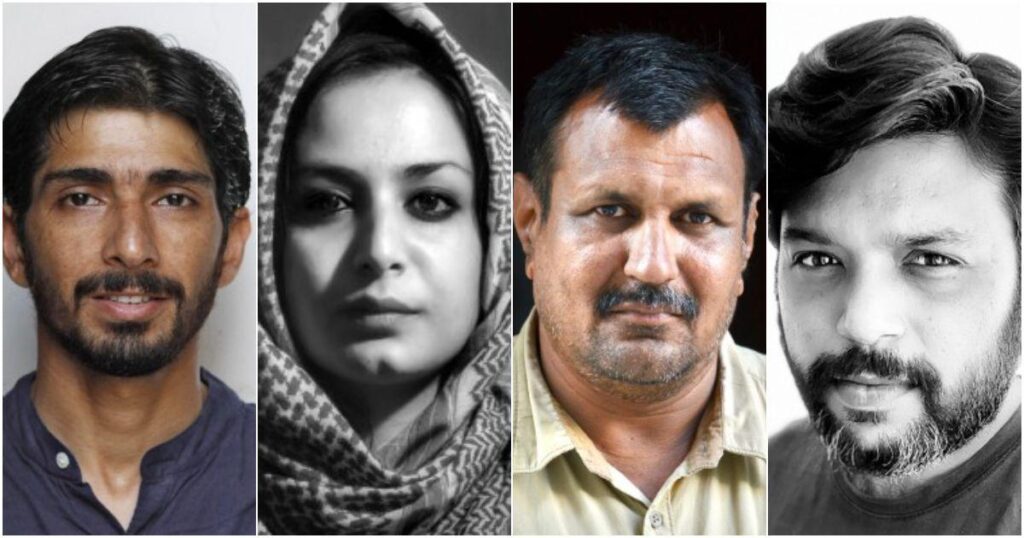
The late Siddiqui, Adnan Abidi, Sanna Irshad Mattoo and Amit Dave won the prestigious prize for feature photography.
Reuters photographers Adnan Abidi, Sanna Irshad Mattoo, Amit Dave and Danish Siddiqui. | The Pulitzer Prizes
Reuters photographers Adnan Abidi, Sanna Irshad Mattoo, Amit Dave and the late Danish Siddiqui won the 2022 Pulitzer Prize for feature photography on Monday for their coverage of the coronavirus crisis in India.
Siddiqui, 38, was killed while covering a clash between Afghan security forces and Taliban fighters near a border crossing between Afghanistan and Pakistan on July 16.
The jury said that the prize was awarded to the four photographers for their images of the crisis that “balanced intimacy and devastation, while offering viewers a heightened sense of place”.
This is Abidi’s third Pulitzer. Siddiqui had also won the prize before, in 2018.
_____
Twitter
______
Reuters Editor-in-Chief Alessandra Galloni said that the world was “jolted awake” to the scale of India’s Covid-19 outbreak after the news agency’s photographers documented it.
“To have Danish’s incredible work honoured in this way is a tribute to the enduring mark he has left on the world of photojournalism,” Galloni said in a statement.
A mass cremation of victims who died due to the coronavirus disease is seen at a crematorium ground in New Delhi on April 22, 2021. Reuters/Danish Siddiqui
While Abidi is based in New Delhi, Mattoo is a photographer from Kashmir. Dave is based in Ahmedabad, from where he covers local and national news assignments for Reuters.
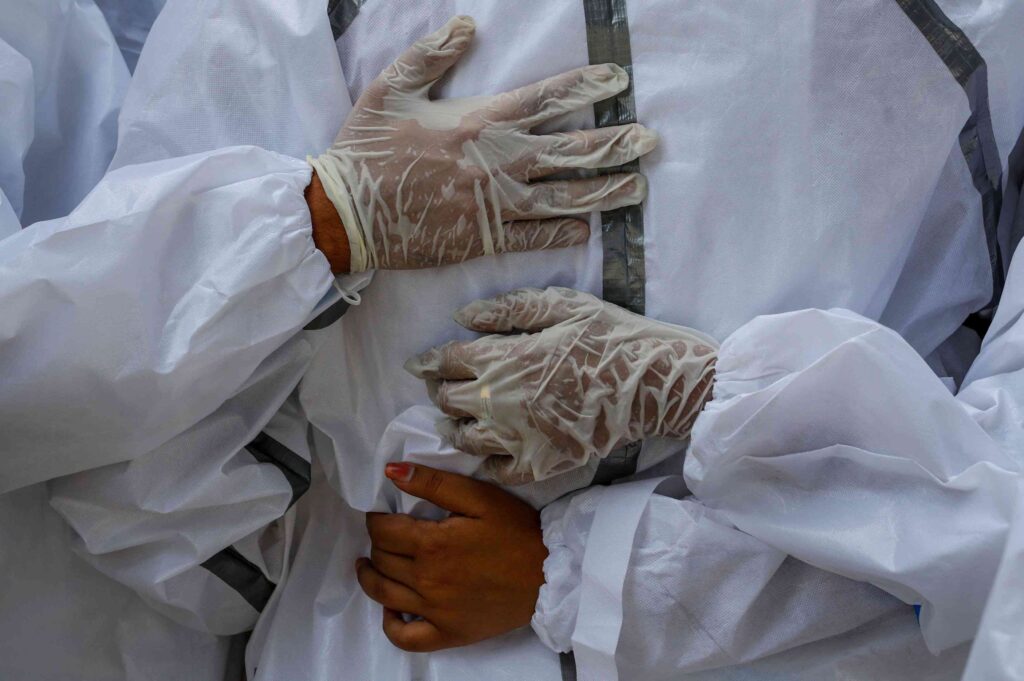
The body of a person, who died from the coronavirus disease, lies on a funeral pyre during a mass cremation at a crematorium in New Delhi on May 1, 2021. Reuters/Adnan AbidiFamily members embrace while wearing personal protective equipment as they mourn a male relative, who died from the coronavirus disease, during his cremation ceremony in New Delhi on April 21, 2021. Reuters/Adnan Abidi
Other winners
The New York Times won three Pulitzer Prizes and was named as a finalist in five other categories on Monday.
The Washington Post won the award in the public service category for its “compellingly told and vividly presented” account of the attack on Capitol Hill in Washington on January 6, 2021.
The journalists of Ukraine were also awarded a special citation for their coverage of the Russian invasion.
American journalists Corey G Johnson, Rebecca Woolington and Eli Murray of the Tampa Bay Times were awarded the Pulitzer for their investigative reporting.
The three had exposed highly toxic hazards inside Florida’s only battery recycling plant that forced the implementation of safety measures to adequately protect workers and nearby residents.
Novelist Joshua Cohen was awarded the Pulitzer in the fiction category for his book The Netanyahus. The book is based on the life of Benzion Netanyahu, the father of former Israeli prime minister Benjamin Netanyahu.
The Pulitzer Prize in music was awarded to Raven Chacon for his composition Voiceless Mass.