Category Archives: Amazing Feats

Ravutharpalayam villagers recall Hindu temple made by Muslim commander

Ravathurpalayam – Neduvacheri Village (Tirupur District) TAMIL NADU :

Villagers of Ravutharpalayam are aware of the Hindu temple built by a Muslim army commander under Hyder Ali in their locality and worshipping Goddess Mariyamman.

Tirupur :

Villagers of Ravutharpalayam are aware of the Hindu temple built by a Muslim army commander under Hyder Ali in their locality and worshipping Goddess Mariyamman. The temple is located 5 kilometres from Avinashi city in Neduvacheri village in Tirupur district.

Speaking to TNIE, Neduvacheri Panchayat President TG Varadarajan said, “Oral tradition point out the Mariyamman temple was built by a Muslim man. The small temple was built with Hindu style of architecture but has small dome on the top. The small dome instead of Gopuram was very unique.” Kumravel a local resident said, ‘Earlier I never believed that the temple was built by a Muslim man. Later, I got to know the facts from the local historians.

Goddess Mariamman is invoked several times a year to regenerate soil, fertility and protect the community against disease and death. Apart from the local villagers, residents from Coimbatore and Erode also visit the temple to get the blessings of the Goddess . According to Virarajendran Archaeological and Historical Research Centre, Director S Ravikumar, “The temple structure is similar village style Hindu temple. It is built in square type 8 feet by 8 feet.

Historical evidences point out, that Hyder Ali a powerful ruler of Mysore Kingdom, had the big influence over Kongu region such as Coimbatore and Erode in 18th Century. These places were ruled by several army commanders who were also in charge of revenue collection and administration. One such officer named Ravuthar was incharge of this region.

His daughter  reportedly fell ill with chicken pox. Despite medical treatment the infection couldn’t be cured. Villagers told him the idea of worshipping Goddess Mariyamman. After he made offering and prayers, his daughter was cured. He immediately built a temple dedicated to the Goddess. Currently the temple is more than 250 years old. The entire locality is known by his name Ravutharpalayam.” Neduvacheri Panchayat secretary Kannan said, “The temple attracts quiet a following in the village. Donors have donated several tracts of the land.”

source: http://www.newindianexpress.com / The New Indian Express / Home> States> Tamil Nadu / by Saravanan MP / Express News Service / October 05th, 2020

Conserving Native Varieties of Rice

Kiragavalu village (Malavalli Taluk, Mandya District) , KARNATAKA :

Syed Ghani Khan of Kirgavalu village has been conserving and propagating hundreds of native varieties of rice which are threatened with extinction in the race for high-yielding commercial varieties.

For Syed Ghani Khan of Kirgavalu village in Karnataka, preserving native varieties of rice is a lifetime passion.

This 42-year old has been cultivating virtually hundreds of varieties of rice on his 14-acre farm in the village located 20 kilometres from Mandya in the Cauvery basin. He preserves seeds of nearly a thousand of these varieties in a tiny museum that he has organized at his house in the village.

Walls of his first floor hall display these seeds, held in clusters of panicles neatly pinned on several panels with tags bearing the names of the varieties alongside.

Museum at Home
Son of a farmer and someone who does not fight shy of calling himself a farmer, Ghani Khan holds a degree in Archaeology and Museology from Mysore University.

Pained at the increasing use of chemicals, fertilizers and pesticides and loss of native varieties, Khan took up the task of preserving seeds of these varieties in packets. He would supply the same to local farmers around his village before the arrival of the next monsoon. But he was not satisfied. It needed a little more effort. He conceived the idea of a museum for promoting general awareness together with the supply of seeds. Two halls in the upper floor of his old, tiled house were readied for the purpose. The clustered panicles were arranged on wall panels in a hall, while those in bottles were arranged on shelves in the second one.


Ghani Khan feels that commercialization of farming has led to rejection of traditional varieties of crops, be they cereals, lentils, vegetables or fruits. The farmers were influenced by the publicity to seeds produced by large firms that promised better yield. This has resulted in en masse switching over to hybrid varieties like MTU-1001, IR-64, Jaya etc.

Sustainable
Ghani Khan says conservation of traditional varieties is critical to sustainable agriculture as several of them carry medicinal properties, some give out aroma on cooking, some can withstand drought and yet others can be grown with just one or two showers.

He wanted to conserve these varieties for future generations. So, he began collecting varieties like Ratnachudi, Gandhasalai, Rasakadam, Rajamudi, Ghamgadale, Doddibatta, Doddabyrenellu, Chinna ponni, Mysore Mallige, Zeerge Sanna, Parimalla Sanna, Basumati, Burma Black, Thai Jasmine etc.

Dedicated Zone
He says while agricultural colleges or universities used freezers to preserve seeds, he applied on-field conservation methods which can ensure a life of at least 18 months for the paddy seeds without pesticides. He has dedicated one acre of land in his farm in a demarcated zone where seeds of several varieties are sown in documented segments.

He even wrote to the Chief Minister of Karnataka to initiate measures to preserve and conserve native varieties. But no response has been received from him.

During the last two decades, he has supplied free seeds of native varieties to around ten thousand farmers and received positive responses from them. He keeps a meticulous record of all those who have visited him or sought seeds from him. Shiv Prasad, a farmer from the outskirts of Hyderabad has taken seeds of around 200 varieties from him and forwarded the seeds from the resulting crop to his associates. Krishna from nearby Maddur village has been a constant procurer of seeds from him. Rachanna from Hosamalangi village in T. Narsipur taluk has successfully grown around 25 varieties of rice after having taken from him.

Honours Conferred
A corner of his museum displays several trophies, medals and certificates that were presented to him in recognition of his work for propagation of native varieties. He was conferred Krishi Pandit Prashasti by the Government of Karnataka in 2008. Plant Protection Variety Forum conferred on him National Genome Seed-saver Recognition a year later. Directorate of Rice Research, Hyderabad selected him for Rice Innovative Farmer’s Award for 2011-12. Government of Karnataka chose him for Bio Diversity Award in 2010, while Suvarna TV channel declared him winner of the ‘Man of the Year Award’ in 2017.


According to Ghani Khan, India is home to thousands of varieties of rice and one should not be surprised to find one variety being replaced by another after every forty kilometres. He says several varieties are known for medicinal properties. If Navara of Kerala is good for those who have joint pain, Karigajvilli and Ambe Mohur from Karnataka are said to be good for lactating mothers. Mehdi is held to be good for healing of bone fracture, while Mapillai samba from Tamil Nadu improves virility. Khaima is said to be good for those suffering from piles.


Ghani Khan is a mobile encyclopaedia of knowledge on varieties of rice. He says it is wrong to presume that paddy is an aquatic plant. He refers to several varieties such Doddi Batta, Ghangadale and Biddi Doddi which can be grown in farms that receive just one or two showers. He says Ratnachudi, HMT, NMS-II are high-yielding varieties while Zeerge Sanna, Rasakadam, Gandha Sale, Parimala Sanna and Mugadh Sugandh emit pleasant aroma on cooking.


For the last few years Ghani Khan has taken up conservation of native varieties of mango too and has registered himself with the National Bureau for Plant Genetics, New Delhi. He has trees that have been there with his family farm for the last six to seven generations.

These trees yield native varieties like Mosambi ka Aam (tasting like sweet lime); Seb ka Aam (tastes like apple); Pheeka Aam (for diabetics); Kaale Malghoba, Bada Gola; Mangamari; Manji bi Pasand; Mittmia Pasand. Some of these varieties are procured from him by suppliers attached to Lulu Mall in Dubai.


Syed Ghani Khan can be reached at 99017-13351, email: muhinuha786@gmail.com.

source: http://www.islamicvoice.com / Islamic Voice / Home> Features / by Maqbool Ahmed Siraj / February 15th, 2019
Freedom fighter Capt Abbas Ali passes away

Aligarh, UTTAR PRADESH :

Aligarh (UP):

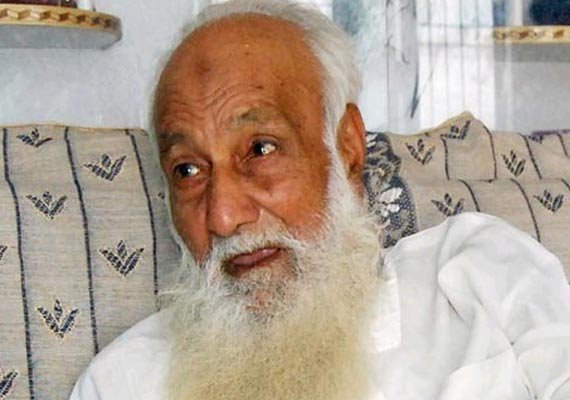
Freedom fighter Captain Abbas Ali who was part of the Indian National Army (INA) died of a cardiac arrest today at the Jawaharlal Nehru Medical College here.He was 94 and is survived by son Qurban Ali and two daughters.

freedom fighter capt abbas ali passes away

Aligarh (UP): 

Freedom fighter Captain Abbas Ali who was part of the Indian National Army (INA) died of a cardiac arrest today at the Jawaharlal Nehru Medical College here.

He was 94 and is survived by son Qurban Ali and two daughters.

“He will be laid to rest later this evening at Qila Road graveyard,” a family member said.

An alumnus of Aligarh Muslim University (AMU), Ali had joined the British Indian Army in 1939, shortly before the outbreak of World War II. In 1945, when Subhash Chandra Bose raised the banner of armed revolt, Abbas left the British army and joined the INA.

Shortly thereafter, he was arrested, court marshaled and sentenced to death. When India gained independence, he was released from prison before the death sentence was meted out.  Abbas Ali joined politics under the influence of socialist party leaders including Ram Manohar Lohia, Acharya Narendra Dev and Jai Prakash Narain.  In 1966, he was appointed State General Secretary of Sanyukt Socialist Party.

He was appointed as a member of the national executive of the Socialist Party.  He was arrested again during the national Emergency under the Defence of India Rule (DIR) and remained behind bars during the entire period of emergency.  In 1977, when emergency was lifted and his party merged with the Janata Party, he was elected to Uttar Pradesh Legislative Council and was appointed as the first President of Uttar Pradesh Unit of the Janata Party.

Shortly before his death, while attending a public function at Aligarh on the eve of 15th August, Captain Ali had said, “There is only one unfulfilled wish of my life and that is that the true story behind the last few days of my leader Subhash Chandra Bose should see the light of the day.  “West Bengal Chief Minister, Mamta Banerjee has assured me that she will leave no stone unturned to unravel the mystery behind his death”, he had said.

source: http://www.indiatvnews.com / India TV / Home> English News> India / by PTI / October 11th, 2014

Assam’s only woman CM passes way

ASSAM / AUSTRALIA :

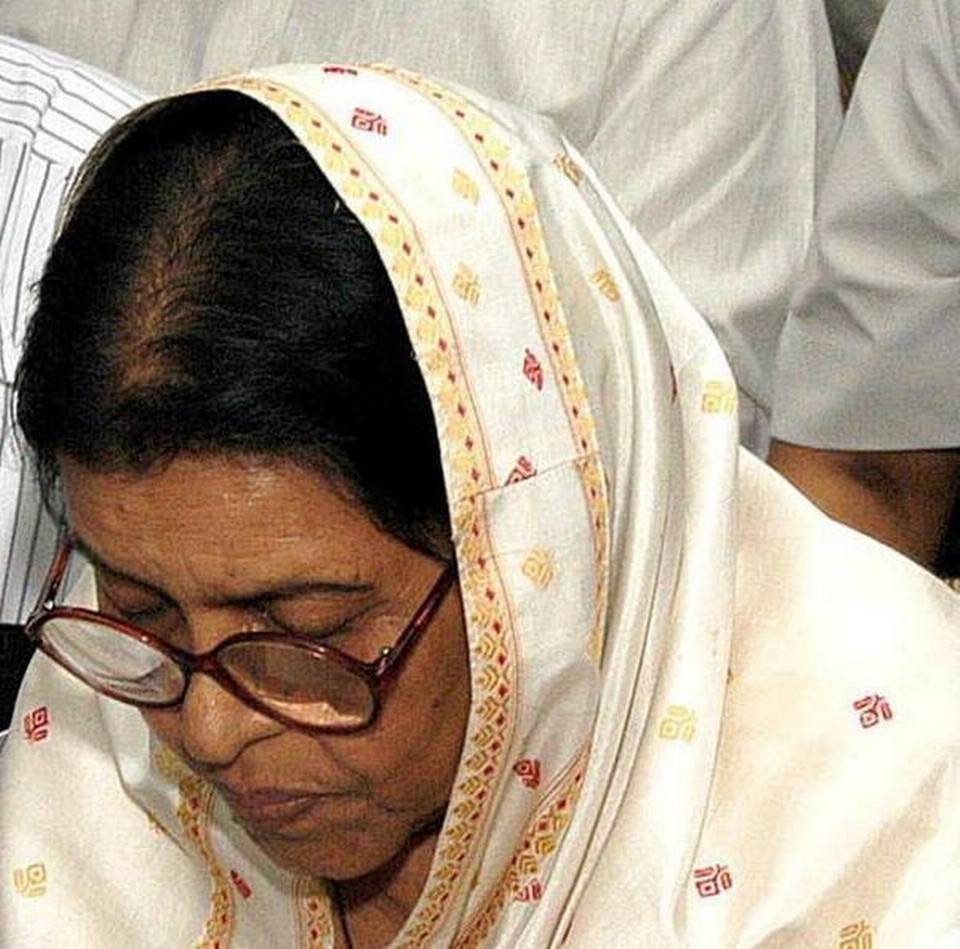
Former Chief Minister of Assam Syeda Anowara Taimur. File   | Photo Credit: The Hindu

Syeda Anwara Taimur had taken charge during the peak of the Assam Agitation; her name did not figure in the NRC

Syeda Anwara Taimur, Assam’s only woman Chief Minister passed away on Monday. She was 84.

A four-time Congress MLA who won her first election in 1972, Ms. Taimur became the Chief Minister for a little more than six months during the height of the anti-foreigners’ agitation in the State. Her tenure ended on June 30, 1981.

Ms Taimur represented the Congress in the Rajya Sabha twice before joining the All India United Democratic Front (AIUDF) in 2011.

She had made headlines in 2018 when her name did not figure in the updated National Register of Citizens. She later said members of her family might not have applied to get her name included in the list. Ms Taimur has been living with her son in Australia for the past four years.

Prime Minister Narendra Modi, Assam Governor Jagdish Mukhi and State Chief Minister Sarbananda Sonowal condoled her death and underlined her contribution for the development of the State.

State Congress president Ripun Bora, the party’s leader of opposition in the Assam Assembly Debabrata Saikia and AIUDF president Maulana Badruddin Ajmal also mourned Ms Taimur’s death reportedly due to cardiac arrest.

source: http://www.thehindu.com / The Hindu / Home> News> States> Other States / by Special Correspondent / Guwahati – September 29th, 2020

This team of four from Anantpur step in when even relatives look away to bury COVID-19 victims

Hindupur (Anantapur District), ANDHRA PRADESH :

The team swings into action whenever the administration finds it difficult to dispose of a body.

The team performs last rites of a Covid victim in Anantapur district | EXPRESS

Anantapur :

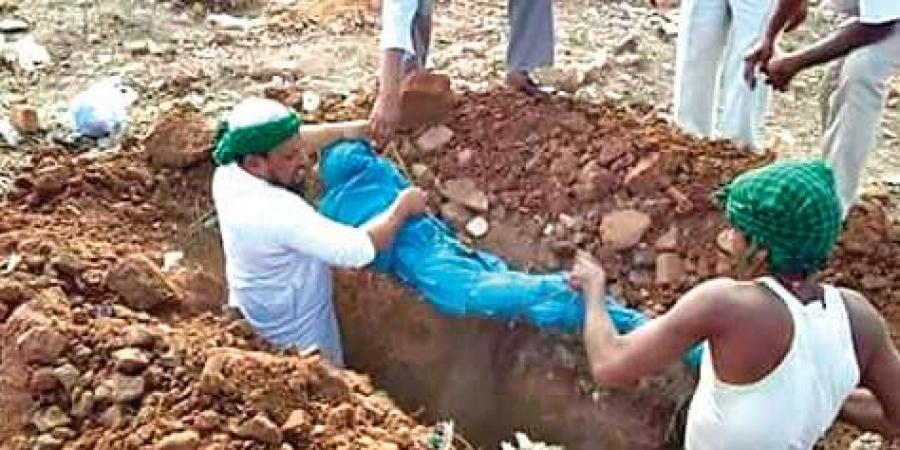
Remember the Rajendra Prasad-starrer Telugu hit movie Aaa Naluguru — about the importance of human relations and the need for at least four people who will take part in the last journey of a person? At a time when even relatives refrain from taking part in the last rites of Covid-19 victims, a team of four from Hindupur in Anantapur district has been volunteering to perform the last rites of bodies abandoned in morgues.

The team swings into action whenever the administration finds it difficult to dispose of a body. “It is appalling that even the families of victims do not come forward to give them a decent farewell,” says Uday, convenor of the Life World Charitable Trust in Hindupur.

He has been performing the last rites of unclaimed bodies ever since he saw an abandoned infant being preyed on by stray dogs on a street in Hindupur. Inspired by Uday, Umar Farooq Khan, of the Muslim Nagara organisation, started performing the last rites of unclaimed bodies.

Amid the Covid-19 outbreak, those who used to assist them backed out, leaving them with the support of just two friends, Sriramulu and Gangadhar. “We perform the last rites as per the religious tradition of the deceased. We do not look into caste, creed, or financial status,” Umar Farooq tells TNIE. Till date, the four have performed the last rites of over 50 Covid-19 victims both as individuals and as a team. Meanwhile, Uday himself has tested positive for coronavirus and is undergoing treatment. “I will continue the service once I recover,” he asserts.

source:http://www.newindianexpress.com / The New Indian Express / Home> States> Andhra Pradesh / by CP Venugopal / Express News Service / September 27th, 2020

Sons stitch together Kerala tailor’s dream of ‘longest’ Quran copy

Eruva (near Kayamkulam), KERALA :

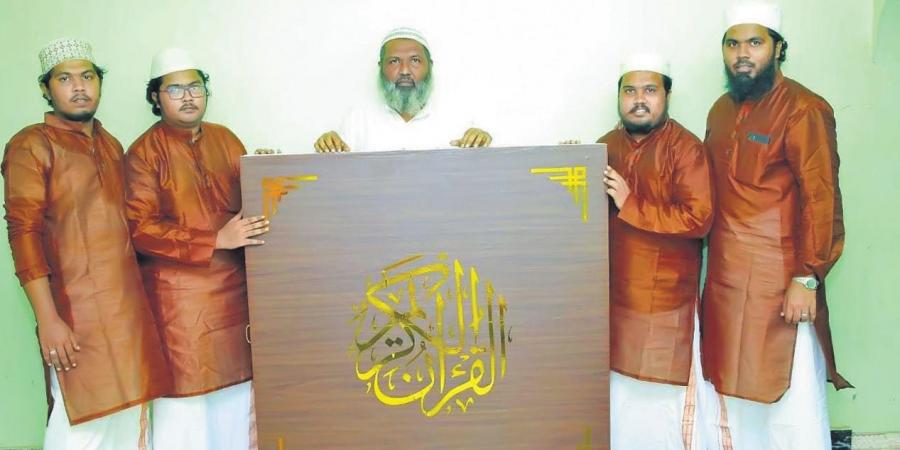
The dream of a tailor at Eruva near Kayamkulam was fulfilled by his four sons who created the 3.1-kilometre-long handwritten copy of the Quran in the world.

Noushad and his sons with the box in which the collar cloth rolls of handwritten Quran are fixed on a rotator | Express

Alappuzha :

The dream of a tailor at Eruva near Kayamkulam was fulfilled by his four sons who created the 3.1-kilometre-long handwritten copy of the Quran in the world. Kadharsha Moulavi, son of M K Noushad, said his father’s dream was to create the holy text on a cloth canvas as a handwritten copy.

The Quran teacher of Tharbiyya Madrasa at Palluruthy in Ernakulam said, “He had expressed his wish a few years ago, but the lack of time did not allow us to complete the task. In the Covid lockdown period, we decided to undertake it. We etched the text on the stiff collar rolls of 1.5-inch width stitched together. It took us around 111 hours to complete the writing. Ten green marker pens and 40 bottles of ink were used and  and the whole project cost us Rs 20,000.” 

Noushad himself had created records by stitching a huge shirt joining the flags of 54 nations and made the Indian Tricolour using buttons. When the then president, APJ Abdul Kalam, came to Kochi in 2003, Noushad was called there and felicitated by him.

His four sons are educated in the Quran and Arabic studies and all are teaching in different institutions. Muhammad Shafi, a teacher of KIT School, Kayamkulam, said the siblings started the work on June 8 and completed it by July 26.

“As many as 155 collar canvas rolls were used to create the long strip. One collar canvas is 20m long. The copy was written using marker pens in neat handwriting. The special box to fix the canvass roll was designed by our father. People can read from Volumes 1 to 30 without any difficulty. If the reader turns the rotator fixed in the box, the text starts unrolling for easy reading,” Shafi said. “As per our knowledge, such a long handwritten copy of the holy text does not exist in the world,” he added. 

Noushad said the national flag with buttons was a novel idea and he got several accolades for it. He had tried to get these recognised by the Guinness World Records but could not pursue it  then. “President Abdul Kalam felicitated me after hearing about the flag. I had stitched it using 20,454 buttons and presented it during the official Independence Day celebrations in Kayamkulam on August 15, 2003.

Another initiative was a shirt that was stitched together with the flags of 54 countries. Each flag was stitched in my shop and the shirt in the end had a height of 10 feet. It was released on the 54th Republic Day in 2003.

I had also created a floral arrangement using small pieces of clothes on the Thiruvonam day in 2004,” Noushad said.

source: http://www.newindianexpress.com / The New Indian Express / Home> Good News / by Biju E. Paul / Express News Service / September 26th, 2020

Community icon presented with Australian award

JAMMU & KASHMIR / AUSTRALIA :

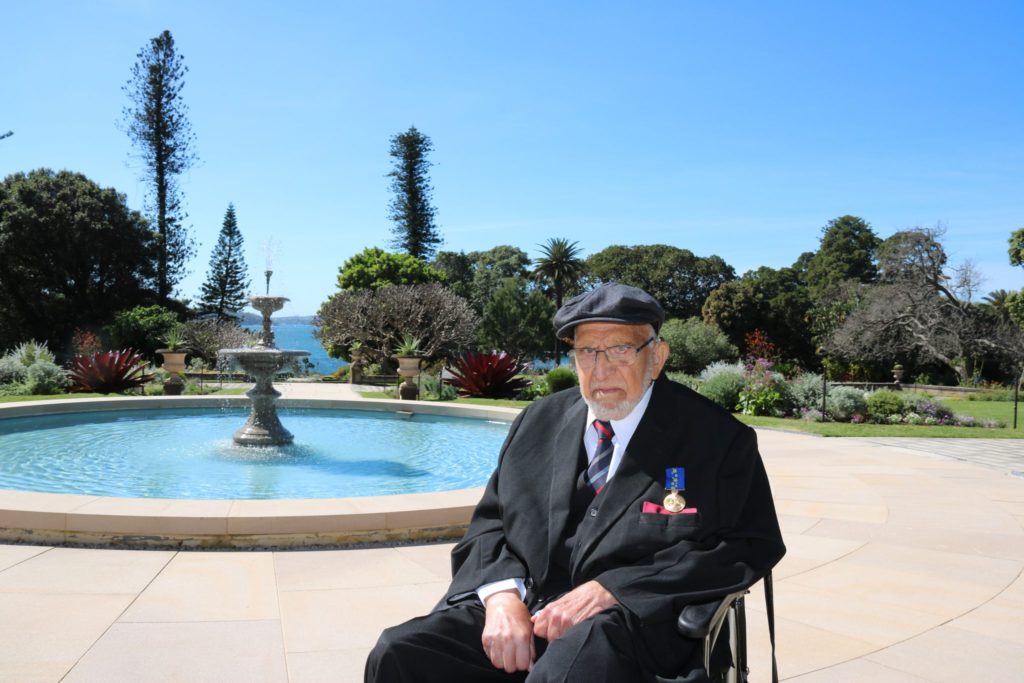
Reflections on half a century of community service in Australia: Dr Qazi Ashfaq Ahmad after the award ceremony on Tuesday 8 September 2020 at the front lawns of Government House in Sydney.

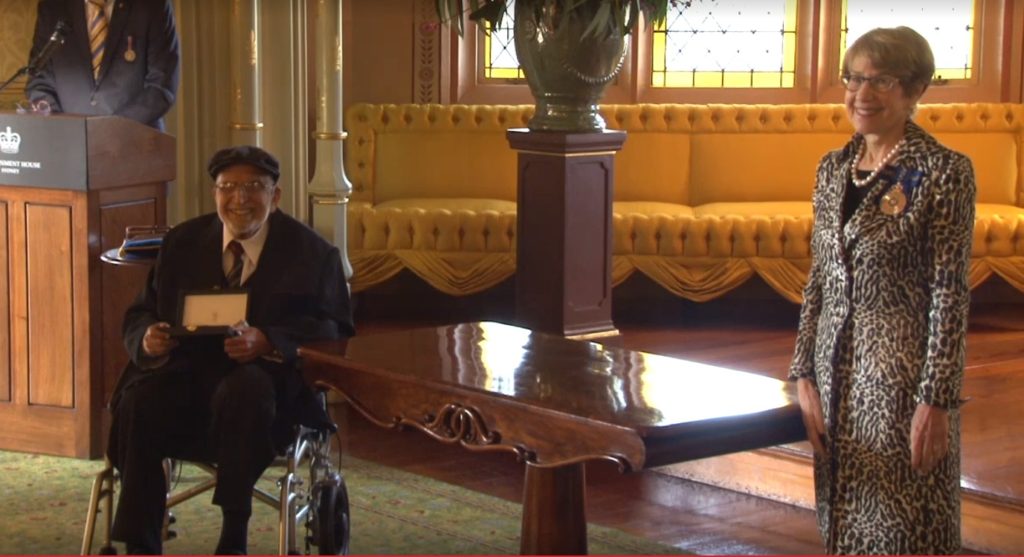
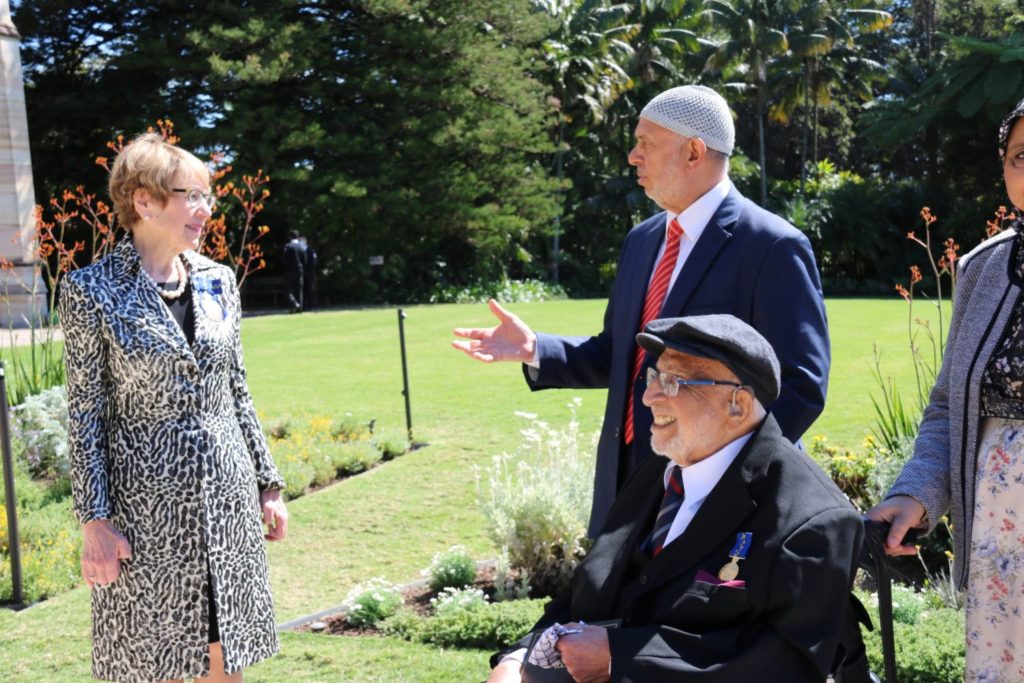
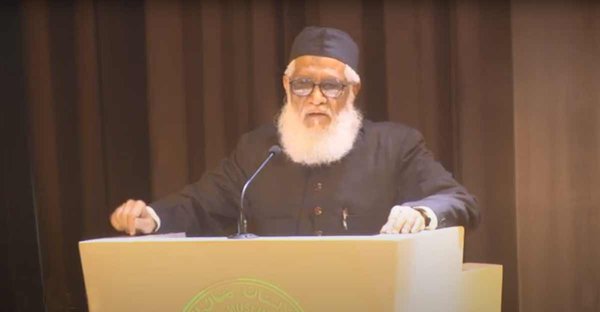
Dr Qazi Ashfaq Ahmad OAM, 90, a retired professor of mechanical engineering and a Quranic scholar and long time community leader was presented with his Order of Australia medals on Tuesday 8 September 2020 by Her Excellency the Honourable Margaret Beazley, AC, QC, the Governor of NSW.

Watch video of Investiture Ceremony and citation for Dr Ahmad for the award.

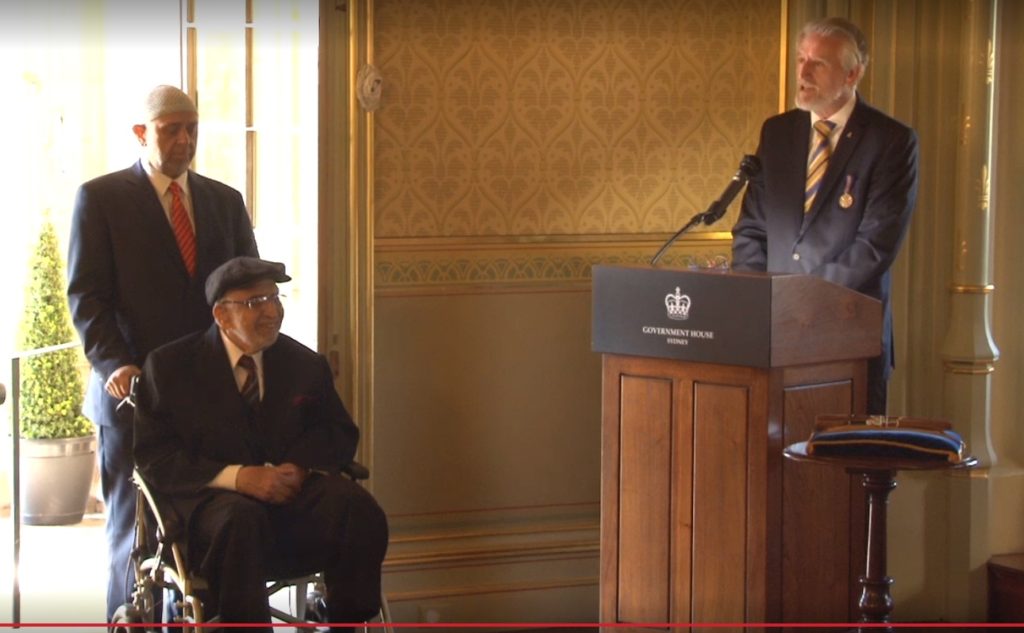
The award was announced on Australia Day 26 January earlier this year but the investiture ceremony was much delayed due to the pandemic and was held in September at the Government House in Sydney under COVID-19 restrictions.

Dr Ahmad, professor and head of department of mechanical engineering in Kashmir was forced to leave his job and arrived in Australia in 1971 and has been in the forefront of building Islamic institutions, founding community organisations and promoting interfaith harmony for almost half a century.

Dr Qazi Ashfaq Ahmad receiving the Award Medals from the Governor of NSW, Her Excellency the Honourable Margaret Beazley, AC, QC on Tuesday 8 September 2020 at Government House, Sydney.

This was the first of a number of investiture ceremonies to be held in stages for the recipients of Order of Australia medals this year in compliance with COVID-19 regulations and health advice.

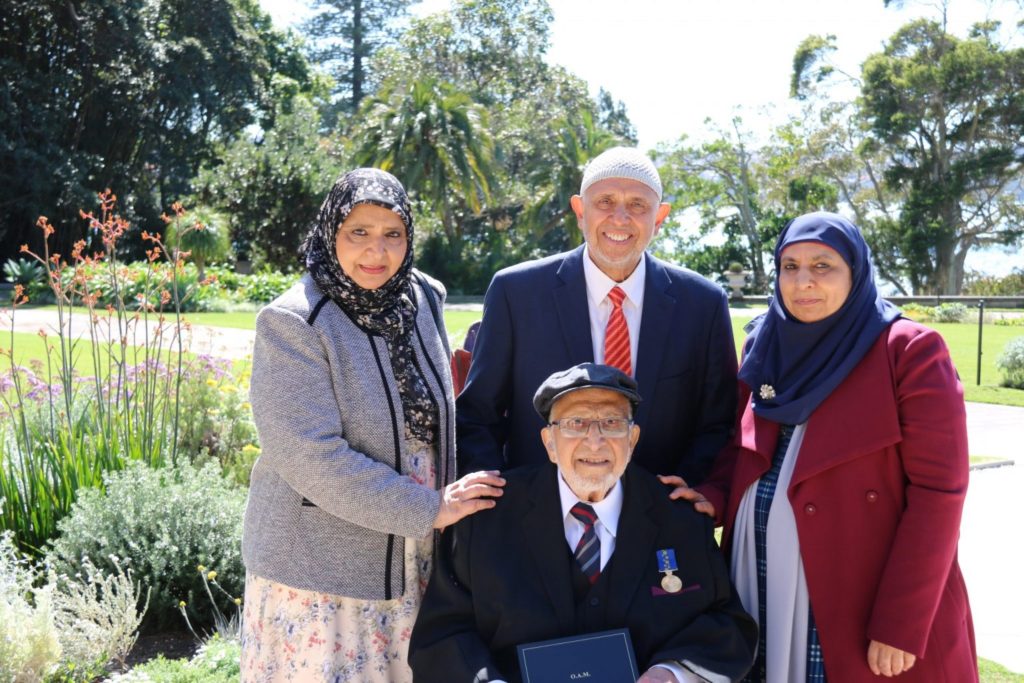
Dr Ahmad was accompanied by his eldest son Zia Ahmad and and daughters Fauzia Siddiqui and Najia Khalil at the award ceremony at Government House in Sydney.

Dr Ahmad with his daughter Fauzia Siddiqui (left), son Zia Ahmad and daughter Najia Khalil after the investiture ceremony at the Government House front lawn in Sydney on Tuesday 8 September 2020.

The Order of Australia was bestowed upon Dr Ahmad in recognition of his services to the Muslim community and for promoting interfaith harmony.

By profession, a retired engineer and academic having earned his major qualifications at Aligarh Muslim University, India, University of Wisconsin, USA and University of Sydney, Australia, he taught at various universities in India, Australia and Papua New Guinea.

A Quranic scholar of international standing, having obtained his Islamic education from original sources after mastering English, Urdu, Arabic and Farsi languages, his major passion in life is, and has been for most of his life, the application of Islam in the daily life of mankind, both for Muslims and people of other faiths and beliefs.

Dr Ahmad lives in Sydney with his wife Jamal Ara Ahmad surrounded by 70+ strong extended family and is a father, grandfather and great grandfather.

With the Governor of NSW at the front lawn of  Government House, Sydney.

The citation announced at the event for the award included a long list of services that he has been rendered by him to the Australian community during the last 50 years.

Citation for the award read at the Investiture ceremony

Below are some of Dr Ahmad’s community achievements:

  • Founding Secretary, Australian Islamic Mission (AIM) 1972.
  • Founding President, Muslims Australia (also known as Australian Federation of Islamic Councils AFIC) 1976-77.
  • Editor-in-Chief, Australian Muslim Times 1991; Chief Advisor, Australasian Muslim Times AMUST, 2014-current.
  • Member, Board of Trustees, International Council of Islamic Information (United Kingdom), since 1993.
  • Founder and Patron, Islamic Forum for Australian Muslims (IFAM) 1993.
  • Founder, Member and Patron, Aligarh Muslim University Alumni of Australia (AMUAA), since 1992.
  • Member, Association for Indian Muslims (United States), 1992.
  • Founder and Patron, Islamic Foundation for Education and Welfare, since 1986.
  • Co-Founder and Chief Organiser, Multicultural Eid Festival and Fair (MEFF), since 1985.
  • Founder and Member, Council of Islamic Affairs New South Wales (now ICNSW), 1974-1976.
  • Founding President, Sydney University Muslim Students Association, 1972-1974.
  • Assembly Member, Council of Parliament of World Religions, USA, since 1993.
  • Establishment of the Interfaith Youth Friendship Centre, 2006.

Awards and recognition of Dr Ahmad’s contribution include:

  • Lifetime Achievement Award, Australian Muslim Achievement Awards, 2011.
  • Sir Syed Award, AMU Alumni of Australia, 2003.
  • Centenary Medal for contribution to Australian society, 2001.
  • Services to Islam Award, Australian Muslim Professionals (FAMP), 1994.
  • Community Service Award in recognition of a valuable contribution to the Bicentenary, 1988.

Read more about Dr Qazi Ashfaq Ahmad’s life and achievements.

source: http://www.amust.com.au / AMUST (Australian Muslim Times) / Home> News> Top News / by Zia Ahmed / September 11th, 2020

Explained: Who is Bilkis, the Shaheen Bagh ‘dadi’ listed among TIME’s most influential people of 2020?

NEW DELHI :

TIME’s 100 most influential people 2020: In January, Bilkis had told The Indian Express from Shaheen Bagh, “We are old and we are not doing this for ourselves… This is for our children.”

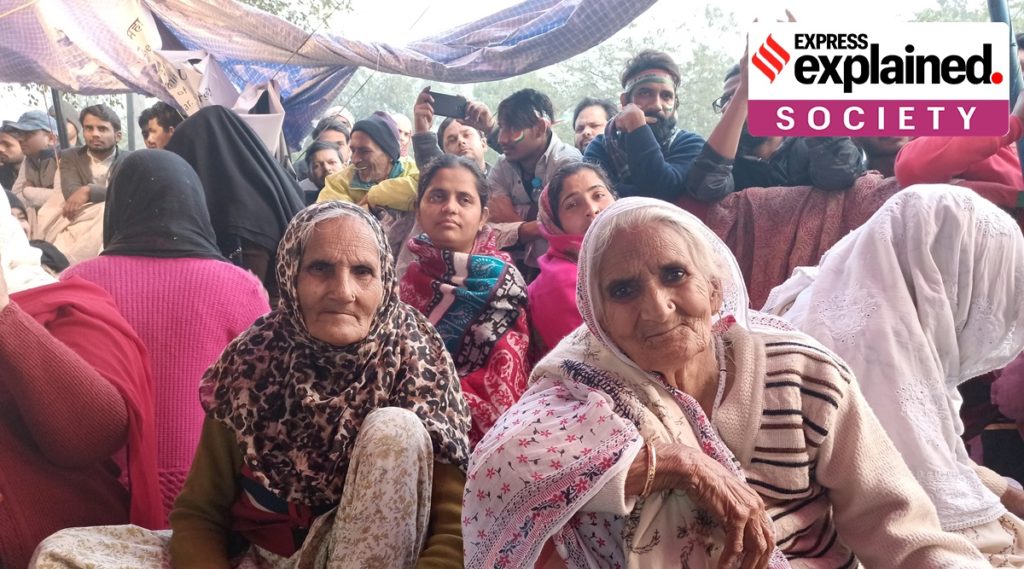
Bilkis (right) at Shaheen Bagh on January 14, 2020. (Express Photo: Somya Lakhani)

Even as Delhi braved its coldest winter in over a century, 82-year-old Bilkis — with a smile on her face and a shawl around her shoulders — sat with hundreds of women under a canopied tent at the national capital’s Shaheen Bagh anti-CAA/NRC sit-in protest for over three months. Within days, Bilkis and the other elderly women who participated in the protest became the symbol of resistance and hope, and came to be fondly known as the “Dadis of Shaheen Bagh.”

TIME magazine has now included Bilkis in its list of “The 100 Most Influential People of 2020.”

Journalist and author Rana Ayyub, who has penned the piece for TIME magazine, says, “Bilkis became the voice of the marginalised… Became the symbol of resistance in a nation where the voices of women and minorities were being systematically drowned out by the majoritarian politics of the Modi regime.”

The Shaheen Bagh protest went on for 101 days and was cleared by the Delhi Police on March 24 in the wake of the coronavirus pandemic .

bilkis, shaheen bagh bilkis, time most influential 2020, time most influential people list 2020, time most influential people 2020, shaheeb bagh dadi, times most influential people, times 2020 list
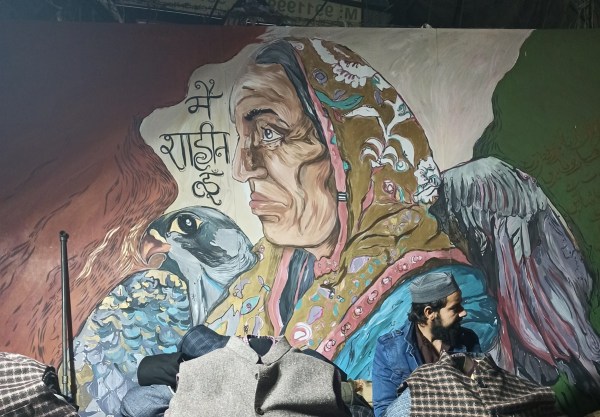
Graffiti of the ‘dadis’ of Shaheen Bagh. (Express Photo)

In January, as the Shaheen Bagh sit-in inspired similar protests across the country, Bilkis had told The Indian Express , “We are old and we are not doing this for ourselves… This is for our children. Why else will we spend our days and nights during the coldest winter of our lives in the open?”

On January 26, Bilkis, along with the mothers of Rohith Vemula and Junaid Khan, hoisted the national flag at Shaheen Bagh as hundreds of people showed up there for Republic Day  celebrations. At the time, the resilience of the “Dadis of Shaheen Bagh” was captured in songs, poems, slogans and graffiti as well.

In February, when an armed assailant fired at least two shots barely 50 metres away from the stage at Shaheen Bagh, Bilkis was at her spot near the stage. At the time, she told The Indian Express, “There was panic inside the tent but people eventually calmed down. We walked till the point where cartridges were found and offered prayers… These bullets don’t scare us.”

source: http://www.indianexpress.com / The Indian Express / Home> Explained / by Somya Lakhani / New Delhi – September 24th, 2020

7-year-old Kerala braveheart risks his life to save child from drowning

Elayadam (Kozhikode), KERALA :

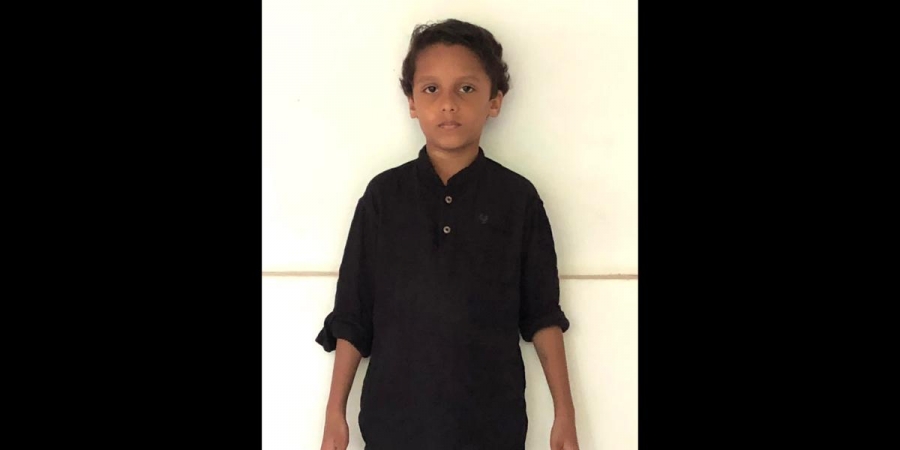
Muhammed Latheef, 7, emerged as the hero in his native Elayadam in Kozhikode and beyond after he showed excellent presence of mind to save Raaz, 3, from drowning.

Muhammed Latheef

Kozhikode :

Muhammed Latheef, 7, emerged as the hero in his native Elayadam in Kozhikode and beyond after he showed excellent presence of mind to save Raaz, 3, from drowning.Raaz was playing on the side of the Kurumberi Thazha canal and Muhammed, a Class II student of Sirajul Huda English Medium School, Nadapuram, saw his neighbour falling into the canal and drowning. Muhammad, who knows swimming, jumped into the water and saved him.

“Raaz was playing as his mother washed clothes on the canal side. When she went to hang wet clothes, the kid slipped and fell into the water,” Muhammed narrated. Muhammed, who was playing along with his cousin, did not wait and jumped in. 

“Though we are little worried that our son risked his life, we are happy that he saved a life,” said Latheef, Muhammed’s father.

source: http://www.newindianexpress.com / The New Indian Express / Home> Good News / byExpress News Service / September 19th, 2020

Aligarh Muslim University mourns Professor Yasin Mazhar Siddiqui’s demise

Aligarh, UTTAR PRADESH :

Aligarh :

Noted Islamic scholar and author, Professor Yasin Mazhar Siddiqui (76), former Chairman, Department of Islamic Studies, Aligarh Muslim University passed away today after a prolonged illness.

Professor Yasin Mazhar Siddiqui wrote more than 40 books and 300 research articles in Urdu, Arabic and Persian. His writings on the Prophet and his teachings got wide acclaim. He wrote extensively in reputed literary journal, ‘Nuqoosh’ and got international ‘Nuqoosh Award’, ‘Seerat-e-Rasool Award’ and ‘Seerat Nigari Award’.

Professor Siddiqui, an alumnus of Aligarh Muslim University worked for ten years at the department of History before joining the department of Islamic Studies as a Reader, and later he became professor and chairman of the department. He also served as the Provost of Aftab Hall.

Professor Tariq Mansoor, Vice Chancellor, expressed his deep sense of sorrow at the demise of professor Siddiqui whose profound scholarship explored new dimensions of Seerah writing. His death causes irreparable loss to the academic world.

Professor Nisar Ahmad Khan, Dean, Faculty of Social Sciences, Professor Muhammad Ismail, Chairman, Department of Islamic Studies and Professor Obaidullah Fahad deeply mourned his death.

source: http://www.milligazette.com / The Milli Gazette / Home> News> Community News / by The Milli Gazette Online / September 15th, 2020