Category Archives: Amazing Feats

Prof. Mahdi Hasan – The Man who put Lucknow on Medicinal Map

Lucknow, UTTAR PRADESH :
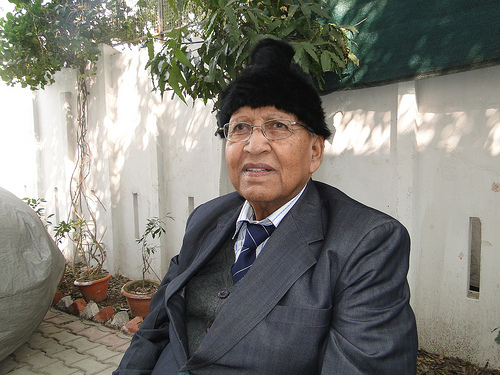
ProfMahdiHassanMPOs26aug2017

Prof. Mahdi Hasan was born on March 21, 1936 in a village Gadayan, Akbarpur (then in Faizabad, now in Ambedkar Nagar), in UP.

His father, Jawad Husain, was Tehsildar, posted at that time at Tehsil Mohanlalganj of the District Lucknow, and his mother was Tayyabunnisa Begun. Hasan’s father died when Hasan was four years old, and his mother, being ill, was unable to care for him. His brothers late Bakhshish Husain, a police officer, and Syed Ghulam Husain, an IAS officer, subsequently raised him.

However, this did not deter him from pursuing his life with zeal and devotion to his studies and dedication for sports. He used to study at night in the light of a kerosene lamp and play during the day in the fields of the village. He excelled in studies and was appreciated for his sporting prowess. His father wanted him to be a doctor. He himself wanted to be a teacher. Finally he became both, and a sportsman too in the bargain.

In 1950, Hasan enrolled in the Christian College at Lucknow, where he did his Intermediate. Thereafter he did his B.Sc. I year from Lucknow University and in 1952 he was selected in M.B.B.S. at King George Medical College.

After graduation, he joined the Department of Anatomy as a Demonstrator in the year 1958 and worked till early 1963. He did his post graduation in Anatomy from KGMC. Thereafter, he moved to the J.N. Medical College, Aligarh Muslim University, Aligarh, where he would spend the bulk of his career.

It was in 1958 that he got married to Abida Kazim, who was an MA in Urdu, a rare achievement at that time for a woman from a Muslim family.

His persistent endeavour was to pursue basic medical research and his main thrust was to study problems of national relevance, such as environmental pollution, pesticide and metal neurotoxicity and brain aging. His commitment and dedication to acquire and disseminate knowledge can also be judged from the fact that during the last 6 months of his life, when he was very seriously ill, he worked earnestly to complete a book on Treacher Collins Syndrome.

He would sit for long hours with swollen legs kept on stool writing the book, which he completed in December 2012, a month before his death. Fortunately, the book was published a few days before his death when he was in the intensive care unit.

Dr. Hasan, all through his illustrious academic career spanning around 55 years (1958–2013), fought a relentless battle and succeeded in giving a completely new orientation to the teaching of anatomy.

He has to his credit about five books, seven book chapters, 125 research papers in indexed journals. His research work has earned him over 600 citations including those in the prestigious Nature, Gray’s Anatomy, and NIOSH and in 38 other reference works. He was indeed a man of parts, combines excellent teaching and research capabilities with societal concerns and social commitments.

Hasan spent many years trying to establish a Brain Research facility at Aligarh.

With assistance from the German government, he succeeded in 1980 with the establishment of the first Interdisciplinary Brain Research Centre.

He has been an internationally renowned anatomist, a pioneering brain researcher and a reputed national expert of medical education and have been rewarded with a no. of awards.

A few to name are Dr. S.S. Misra Medal of National Academy of Medical Sciences (India), Dr. Dharam Narayan Gold Medal of the Anatomical Society of India (1977), Ati Vishisht Chikitsa Medal of College of Chest Physicians of India (1995), Sushruta Award of World Academy of Integrated Medicine (WAIM) 2002, Dr. Bachawat Life-Time Achievement Award of Indian Academy of Neurosciences (2004) and Dr. Tirumurti Award of Indian National Science Academy (2010).

Professor Hasan was a person who had utmost devotion, dedication and determination in acquiring, creating and disseminating knowledge. Seldom does one find a nucleus around which an institution is build, but it goes to the credit of Professor Mahdi Hasan that at least three premier medical institutions of North India will always fondly cherish his memory.

KGMC will always remember him as its illustrious student and teacher; Jawaharlal Nehru Medical College, Aligarh will always remember him as an excellent, dedicated and devoted teacher; and Era’s Lucknow Medical College, Lucknow (a medical institution founded around him) will find it difficult to overlook its founder Director-Principal and Trustee. Alas!

This renowned medical teacher breathed his last on 12 January 2013 after fighting a relentless battle against cancer of the prostrate. He had been at Imambara Gufran Ma’ab sahib. His wife, Mrs Abida Mahdi died soon after on 24 February 2013.

Many Firsts In India To The Credit Of Mahdi Hasan

  1. First in India to have obtained M.S. with Honours in Anatomy.
  2. First Anatomist of the Country to be selected by Govt. of India for German Academic Exchange Fellowship (DAAD) in 1965.
  3. First Anatomist of India to have learnt electron microscopy and published a large number of research papers using this technique from 1966 onwards.
  4. First and only Indian Anatomist to be chosen a Fellow of Alexander von-Humboldt Foundation (Germany).
  5. First to publish a new “in vivo” method of staining zinc (Experientia Switzerland) 1977.
  6. First Indian Anatomist to have earned both Ph.D. and D.Sc.
  7. First and only Indian Anatomist to be conferred both the Hari Om Ashram Alembic Award (1978) and Dr. B.C. Roy National Award (1991-92).
  8. First to establish an Interdisciplinary Brain Research Centre in India (1977).
  9. First Indian Anatomist to be appointed an Adviser in Neurotoxicology by WHO (Geneva).
  10. First Indian Anatomist who presided over the First Afro- Asian Oceana Congress of Anatomists organized by AIIMS, in September 1988 at Hotel Ashok, New Delhi.
  11. First and only Indian Anatomist to be appointed a member of the Governing Body of ICMR.
  12. First and only Indian Anatomist to be appointed chairman of the Medical Committee of the Indian Red Cross.
  13. First Indian Anatomist to be elected a Fellow of the Indian National Science Academy (INSA) and also its Senior Scientist.
  14. First in India whose academic and social contributions comprise the main theme of a Malayalam Short Story “Jeevacchavangal” (Living Cadaver) by Punathil Kunjabdullah in 1972 (translated into Hindi, Urdu, English, French and Russian language) and won the gyanpeeth puraskar for the same.
  15. First Anatomist in recognition of whose meritorious contributions to clinical anatomy, a Gold Medal Award was instituted by the Anatomical Society of India in 1990 (continues till date).
  16. First and only Indian Anatomist to be awarded Padma Shri by Government of India.

Positions held :

  • Demonstrator in Anatomy, King George’s Medical College, Lucknow (06.11.1958 to 30.04.1963)
  • Lecturer in Anatomy, King George’s Medical College, (01.05.1963 to 17.10.1963)
  • Reader in Anatomy, Jawaharlal Nehru Medical College, AMU, Aligarh (18.10.1963 to 31.03.1972)
  • Professor of Anatomy, Jawaharlal Nehru Medical College, AMU, Aligarh (1972-1996)
  • Director, Interdisciplinary Brain Research Centre, JNMC, AMU, Aligarh (1980-1993)
  • Medical Superintendent JNMCH, AMU, Aligarh (1983- 1985)
  • Principal and Chief Medical Superintendent, JNMC, AMU, Aligarh (1984-1987)
  • Dean Students Welfare, AMU, Aligarh (1988-1989) Dean, Faculty of Medicine, JNMC, Aligarh (1991-1993)
  • Guest Faculty, Department of Anatomy, KG Medical College, Lucknow University (1997-1999)
  • Emeritus Medical Scientist ICMR, New Delhi INSA Senior Scientist (2003-2006)
    (1998-2001)
  • Member of NAAC (National and Accreditation Council of Govt. of India) Feb 2010
  • INSA Hon. Scientist, Dept. Of Anatomy, CSM Medical University,Lucknow (2006-2011)

President of :

  • Indian Academy of Neurosciences -1986
  • First Afro-Asian Oceana Congress of Anatomists held at Hotel Ashoka, organized by All India Institute of Medical Sciences, New Delhi -1988
  • Association of Gerontology-India -1992 -Anatomical Society of India.

Fellow of :

  • National Academy of Medical Science (India) [FAMS] -Indian National Science Academy [FNA]
  • National Academy of Sciences, India [FNAS]

Writer a is student, an aspiring painter & calligrapher

source: http://www.lucknowobserver.com / Lucknow Observer / Home> Others / by  Akansha / January 26th, 2015 – / The Lucknow Observer, Vol.1, Issue 10 / January 05th, 2015
This Woman Was a Pavement Dweller, Today She Runs a Sanitary Pad Manufacturing Unit!

Mumbai, MAHARASHTRA :

With low levels of formal employment in slum communities, Myna employs women and trains them to be entrepreneurs who run franchisee businesses for women’s products.

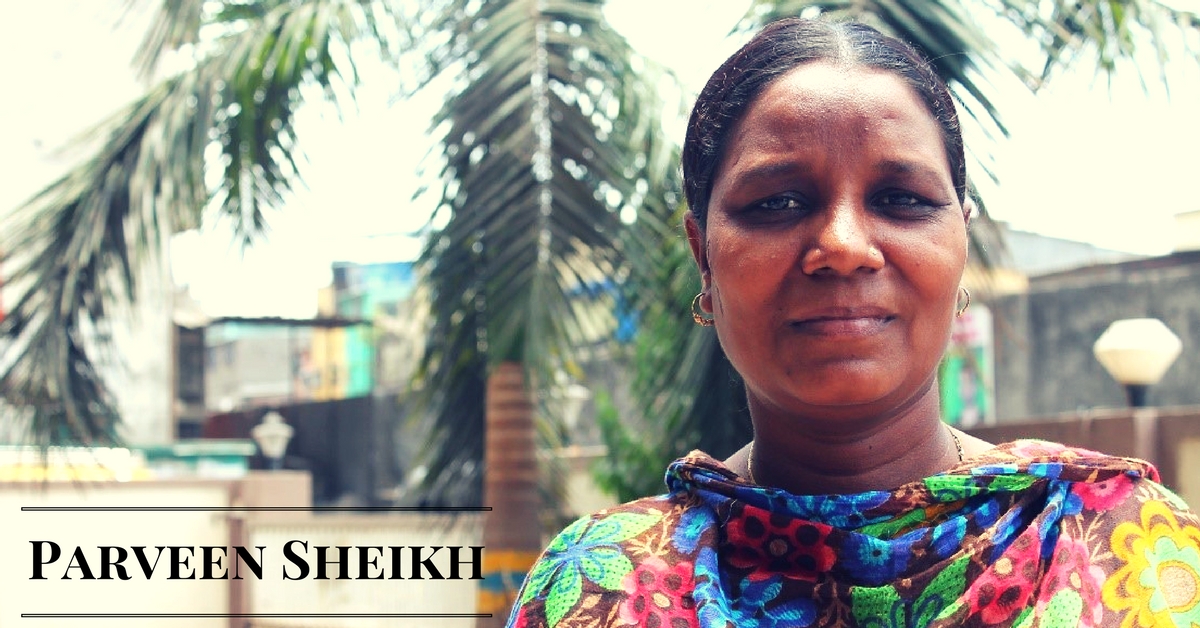
In 2008 when the jhopadpattis on the pavements of Sewri were demolished, Parveen Sheikh sat by the footpath with her friend Kanta Nada mourning her lost home.
Out of 680 homes, according the 1995 election rules, only 280 homes were rehabilitated — Parveen’s home was not on the list. The BMC assured the angered pavement dwellers to not lose hope, it was just the first phase of rehabilitation.

A 12-year-old boy ran to Parveen and said, “Aunty, they have come with weapons to kill you, run away.”

Myna01MPOs26aug2017

Running at a distance towards her was a crowd of people with every weapon she had possibly seen— knives, bamboos, sticks alike, bloodthirsty for a certain Mahila Milan leader responsible for their lost homes. Zia bhai, one of Parveen’s neighbour rushed with his wife’s burqa, she donned it and hid in the blue water drum in a neighbour’s movers and packers truck.

She remembers staying in hiding with her family for a month in a room in Mankhurd. A few days later, the same phone calls made their way back again. This time apologizing for their misunderstanding. Parveen Sheikh had had enough, she would give up social work. But she realised, it was perhaps their homelessness that led to their reckless actions. She crusaded for their rehabilitation again. Within a week after that, 122 more homes were passed and people thanked the same Mahila Milan leader again.

Who is Parveen Sheikh?

Myna02MPOs26aug2017

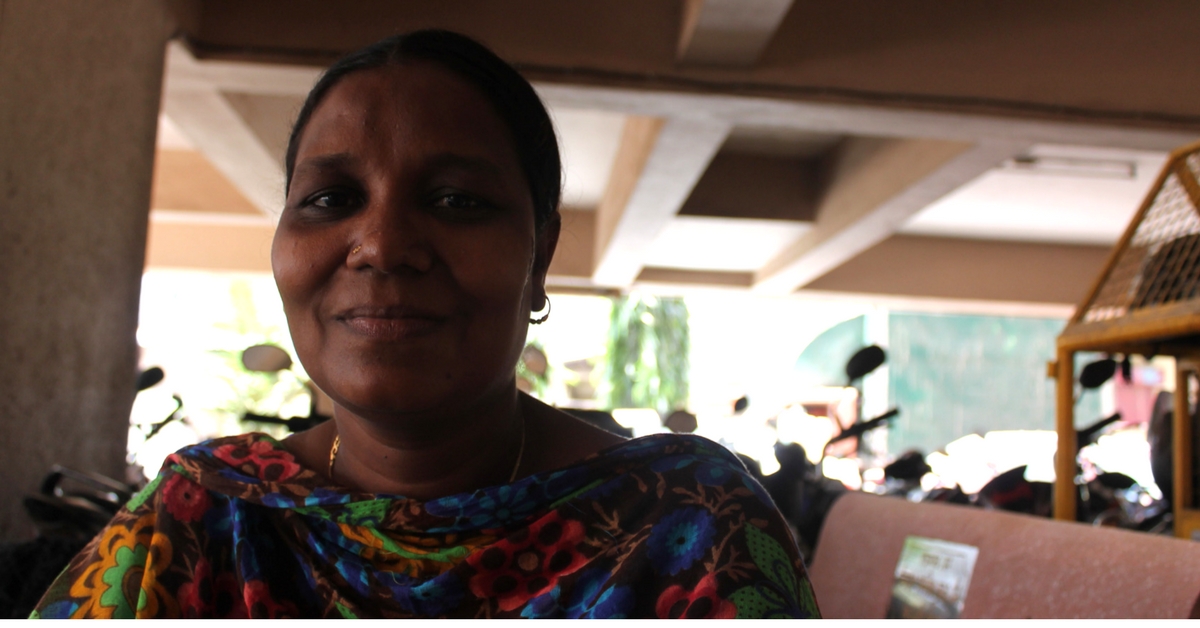
Parveen Sheikh, 48, member of Mahila Milan and NSDF (National Slum Dwellers Federation) for the past 20 years, was born on the footpath and lived most of her life on it. To be homeless plus a woman was nothing short of daunting. Everything she ate was measured to avoid the embarrassment of open defecating on the Sewri railway tracks.

“Sitting near the tracks was frightening because trains would pass regularly. And going in the night was unsafe for the fear of physical or sexual assault,” she recalls.

“So, when I opened the door to my new home in Govandi, I did not look left or right. The first thing I saw was the toilet. And the realisation that I owned this toilet and I could use it as many times as I wanted was empowering. My food intake no longer needed measurement,” she smiles.

”  Recalling the days she spent as a pavement dweller in Sewri, she says, “When we went to banks earlier, they would ask for residential proof and a guarantor who had an account in that bank. We did not have a roof over our head, where would we get residential proof from? In 2007, I connected to Mahila Milan, a saving unit where savings started from smaller amounts like Rs 5 and we did not need a guarantor. That one decision changed my life beyond words.  ”

Started in 1986, Mahila Milan is a decentralised network of poor women’s collectives that manage credit and savings activities in their communities. It currently operates as a savings co-operative for women slum dwellers across Mumbai. From micro door-to- door savings of less than Rs 5 per day in the 90s to the current day scenario, Mahila Milan today has become a self-sufficient unit of saving women.

Myna Mahila Foundation

Myna03MPOs26aug2017

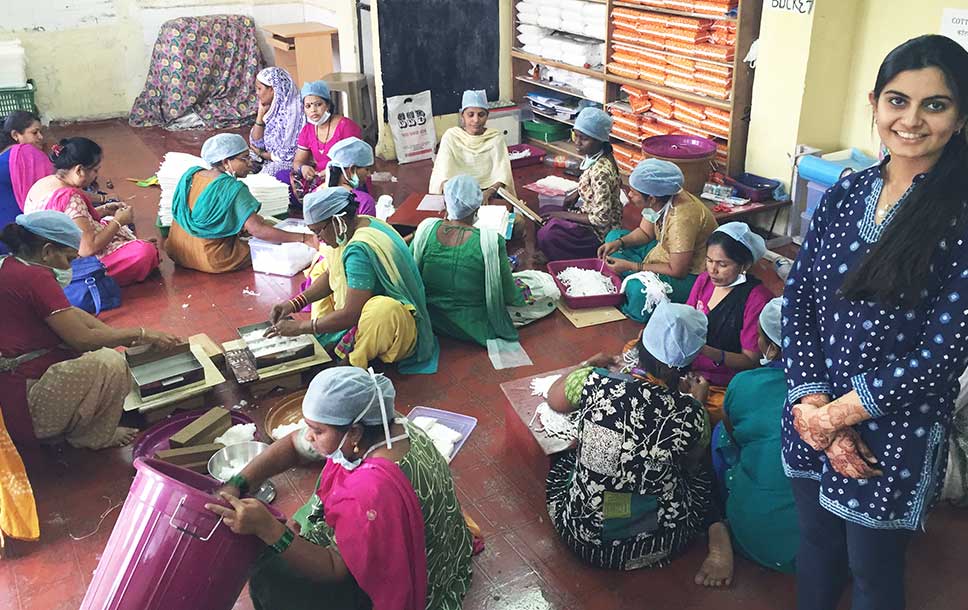
Today, Parveen heads the Mahila Milan Sanghatan at Govandi, and also runs a local sanitary pad manufacturing unit under the Myna Mahila Foundation that works in association with Mahila Milan. With low levels of formal employment in slum communities, especially among young women, Myna employs women and trains them to be entrepreneurs who can run franchisee businesses for women’s products.

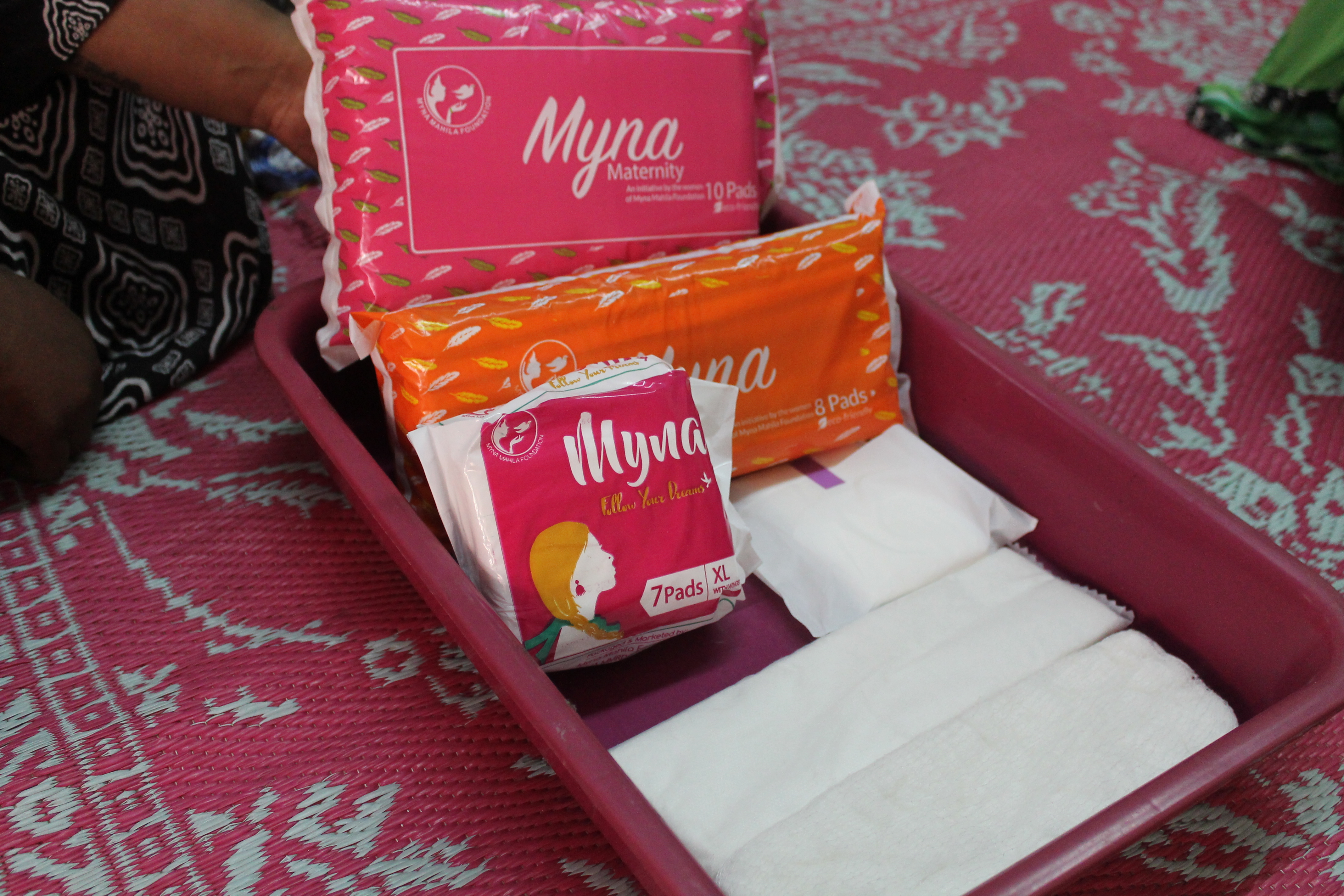
They make sanitary products, such as sanitary and maternity pads to improve women’s health, at subsidized costs.

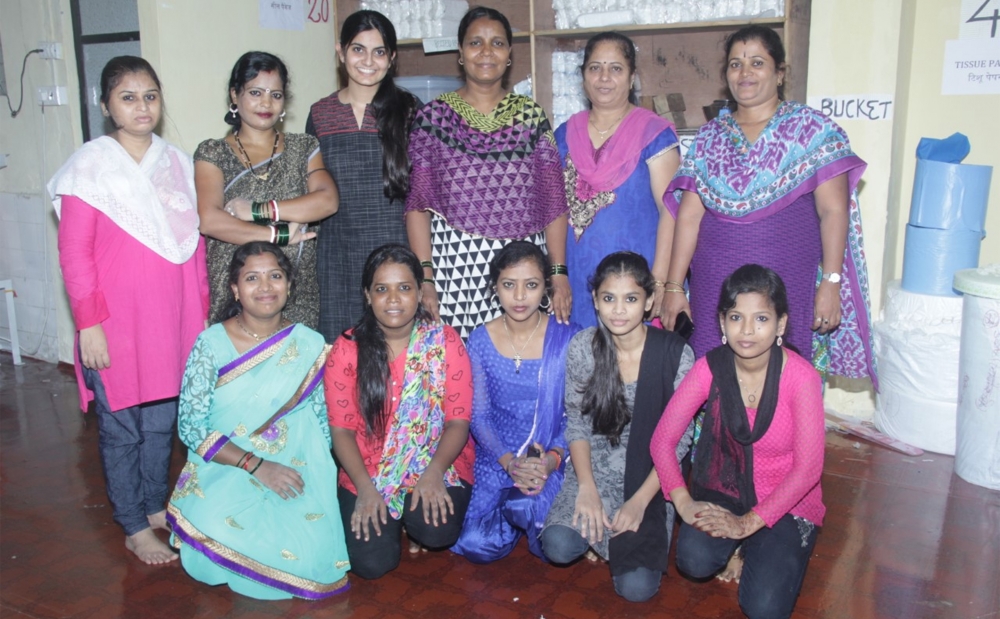
Women sell the pads door-to-door, in public toilets, balwadis, clinics and local NGOs, to other women who are bound by the societal taboo of leaving their homes to purchase sanitary pads. The company was established in June 2015 by Suhani Jalota and is run by Parveen with two other highly experienced women from the slums of Mumbai, Meena Ramani and Malati Ambre.

“  We started with a mere group of five women, today we have 20 women working with Myna. The road was rocky at the start, it almost took a month to train women to master the entire process of making a pad. We ourselves used to be shy about the kind of product we were making and promoting. Suhani spoke to us about how this was a natural process that we shouldn’t be ashamed of discussing. We felt empowered understanding the importance of menstruation to a woman’s fertility. Today when we have meetings, and there are men, we speak to them about it and encourage them to take sanitary products home,” says Malati Ambre  .”

Myna runs a factory in a slum redeveloped colony in Shivaji Nagar to provide employment to local women to make low-cost, high quality sanitary products that can be used locally.

Myna04MPOs26aug2017

“Our central aim was to create awareness about menstrual hygiene and encourage women to discard their old practices of using cloth and use sanitary pads instead. We never wanted to make a luxury product or collaborate with a brand name. The idea was clear, we wanted a simple and basic product –– made by women, for women and sold by women. We conducted extensive surveys and arrived at the result that 90% women in our slums used cloth. We spoke to experts and in turn showed women videos and conducted workshops to create awareness about the hazards of unhygienic menstrual practices,” shares Meena Ramani.

“ People were not ready to turn away from practices they had followed for generations. It took more than a year for our women to create that kind of awareness. When women went from door-to-door selling, people would turn their backs and mock them saying, “Aren’t you ashamed. Why are you selling this?” says Parveen.  “

Today 80% women are using pads. Donning goggles and patiyala suits, these women have trained their younger generations to ride the pink Myna auto rickshaw that is used for transportation too. They call it their ‘Myna sawaari.’

While Myna Pads are manufactured, and sold door to door to women, Myna Maternity pads are sold to local clinics and hospitals. “From the day we started till date, the cost of one packet of Myna, which consists of 8 pieces, is Rs. 25. While leading branded pads weigh 6-7 grams per piece, our pad weighs 11 grams,” she adds.

While Bombay Hospital is one of their most loyal customers with a prescription of 500 maternity pad packets per month, KEM orders 350.

On an average, Myna Pads sell 9,000 to 10,000 packets per month.

Myna05MPOs26aug2017

With newer demands and increase in usage of sanitary pads and feedback from users, Myna has also started manufacturing sanitary pads with wings. While the packet is priced at Rs. 40, they sell 3 packets on a subsidized rate of Rs.100 in slums. The women engage the users in a complete demo of 3 to 4 minutes where instructions from opening the pad, to using and disposing of it are covered. The packets bear their contact numbers for home deliveries.

For families with five to six women and girl children, packets are loaned that can be repaid once financially viable.

Connect to Myna Mahila foundation here. Write to them at mynafoundation@gmail.com.
The low cost sanitary pads can be ordered on the following numbers:
+91 98-70-504589 / +91 98-70-661620

Like this story? Or have something to share?
Write to us: contact@thebetterindia.com

source:  http://www.thebetterindia.com / The Better India / Home> Lede> Mumbai> Sanitation / by Jovita Aranha / July 2017

Obituary – A Teacher of Teachers passes on

Gadayan, Akbarpur (earlier Faizabad (now) Ambedkar Nagar)  – Lucknow, UTTAR PRADESH :

Mahdi Hasan   (21 March 1936–12 January 2013)

Professor Mahdi Hasan (born in Gadayan village, Akbarpur, then in Faizabad, now Ambedkar Nagar, Uttar Pradesh) was Senior Honorary Scientist of the Indian National Science Academy; Honorary Professor, King George’s Medical University, Lucknow; and formerly Principal and Chief Medical Superintendent (1983– 87), Dean (1991–93) and Head of the Department of Anatomy, Jawaharlal Nehru Medical College, Aligarh. He was an internationally renowned anatomist, a pioneering brain researcher and a reputed national expert of medical education. He had many firsts to his credit: he was the first in India to have obtained an MS with honours in anatomy; the first anatomist to be selected by the Government of India for the German Academic Exchange Fellowship (DAAD) in 1965; the only Indian anatomist to be chosen Fellow of Alexander von-Humboldt Foundation (Germany); the first Indian anatomist to be elected Fellow of the Indian National Science Academy (FNA) and to be awarded the Padma Shri. Professor Hasan’s initial education was in Akbarpur (Faizabad). Life in Akbarpur was rather tough in those pre-Independence days as he had already lost his father when he was 4 years old and had been separated from his mother who was ill. However, this did not deter him from pursuing his life with zeal and devotion to his studies and dedication for sports. He used to study at night in the light of a kerosene lamp and play during the day in the fields of the village. He excelled in studies and was appreciated for his sporting prowess.

Professor Hasan did his Intermediate from Christian College, Lucknow and BSc I year from Lucknow University. In 1953, he was selected for MBBS at King George’s Medical College (KGMC), Lucknow. After graduation, Professor B.N. Sinha (then Head of Orthopaedics and also ex-president, Medical Council of India) persuaded him to join the Department of Orthopaedics. However, within a week of joining he went to Professor Sinha and told him that he wanted to teach and in this branch he would seldom get a chance to do so. Professor Sinha took him to his friend Professor Dharam Narain (Department of Anatomy). Dr Hasan joined the anatomy department as a demonstrator in 1958. The same year he got married to Abida Kazim, who was an MA in Urdu, a rare achievement at that time for a woman from a Muslim family. In 1962, he did his MS in anatomy with honours, and after briefly working as a lecturer at KGMC, Lucknow, in 1963 he moved to Aligarh as a Reader in anatomy. Continuing his pursuit of knowledge, he went to Germany in 1965. He not only learnt electron microscopy and worked on ageing with the renowned Professor (Dr) Paul Glees at the University of Gottingen, but also got an opportunity to learn German. Very few people know that he was an external examiner of the German language at Jawaharlal Nehru University, New Delhi and Aligarh Muslim University, Aligarh for almost 17 years. Although in 1972 he was offered the citizenship of Germany, he politely declined and came back to India and established India’s first Interdisciplinary Brain Research Centre (IBRC) at Aligarh in 1980.

His persistent endeavour was to pursue basic medical research and his main thrust was to study problems of national relevance, such as environmental pollution, pesticide and metal neurotoxicity and brain ageing. His commitment and dedication to acquire and disseminate knowledge can also be judged from the fact that during the last 6 months of his life, when he was very seriously ill, he worked earnestly to complete a book on Treacher Collins Syndrome. He would sit for long hours with swollen legs kept on a stool writing the book, which he completed in December 2012, a month before his death. Fortunately, the book was published a few days before his death when he was in the intensive care unit. Dr Hasan, all through his illustrious academic career spanning around 55 years (1958–2013), fought a relentless battle and succeeded in giving a completely new orientation to the teaching of anatomy. Thousands of his former students, practising modern medicine around the globe, not only adored him but also respected his genius. Hundreds of them are professors/consultants in various specialties of medicine and surgery in India and abroad. His passion for teaching did not dip even after retirement. He continued to teach and do research and write for grants. He could take classes anywhere—even in corridors. Once at Aligarh Muslim University, a student asked him for time to seek some clarifications. Then and there on the street, using a bicycle seat as support for pen and paper, he spent over two hours explaining the matter to the student under street light.

Professor Hasan was a person who had utmost devotion, dedication and determination in acquiring, creating and disseminating knowledge. Seldom does one find a nucleus around which an institution is build, but it goes to the credit of Professor Mahdi Hasan that at least three premier medical institutions of North India will always fondly cherish his memory. KGMC will always remember him as its illustrious student and teacher; Jawaharlal Nehru Medical College, Aligarh will always remember him as an excellent, dedicated and devoted teacher; and Era’s Lucknow Medical College, Lucknow (a medical institution founded around him) will find it difficult to overlook its founder Director-Principal and Trustee.

Alas! This renowned medical teacher breathed his last at 6 p.m. on 12 January 2013 after fighting a relentless battle against cancer of the prostrate. His wife, Mrs Abida Mahdi died soon after on 24 February 2013.

ABBAS ALI MAHDI*

Department of Biochemistry,  King George’s Medical University ,Lucknow, Uttar Pradesh abbasalimahdi@gmail.com

source: http://www.archive.nmji.in / Archives – The National Medical Journal of India / Vol. No.26, No.2, 2013 / by Abbas Ali Mahdi

‘To have my son captain England in India. It couldn’t get any better’

Chennai, TAMIL NADU / UNITED KINGDOM : 

AT HOME in Madras, Joe Hussain was very keen on the tour. He was a great Fred Trueman fan. He waited by the nets and asked one of the bowlers: “Is Mr Trueman here?” The great Fred had declined this particular passage to India. “Who’s Mr Trueman?” the other bowler sneered.

That memory may seem another world, another lifetime away for the smokey-haired 61-year-old who now presides over the bat-on-ball echoes of the Ilford Cricket School tucked proudly, if a touch shabbily, round the back of Beehive Lane just off the A12. But Joe Hussain has reasons for that pride.

And not just because his son, Nasser, is having a net and Joe’s young hopefuls are queuing up to bowl at the England captain.

“Cricket is so important in India,” he says. “Hockey used to be the number one sport but cricket has overtaken it by miles. Now it’s like a religion. But cricket fans are very knowledgeable and very welcoming. It’s like here,” he says, looking round the obviously mixed ethnic group on Thursday afternoon, “it brings people together.”

Cricket has been important to Joe. He scored a hundred for Madras University against Hyderabad before he came to England in 1960. Over here it helped him meet his wife, Shireen, at an Ilford game and when the couple returned to India for 10 years, cricketing memories of Joe batting for Madras at the Chepauk Stadium were among the early inspirations for the young Nasser Hussain.

“I didn’t want to over-push the boys,” says Joe, whose daughter, Benazir, trained at the Royal Ballet and is now a principal ballerina in Perth, Australia. “But cricket has been something of a passport. When Nasser had already got a maths scholarship to Forest School, our elder boy, Mel, went and scored a hundred against their first XI and Mr Foxall, the headmaster, came up at tea and said: “We must find a way to get him here too.”

All four siblings are now successes in their own field, but with cricket so ingrained in Hussain senior, it was with real angst that he faced the possible cancellation of a tour to his homeland following an England team captained by his son. “It was something quite unbelievable for me,” says Joe with a smile of the purest, most wistful paternal pleasure playing around his lips. “To have my son captain England in India. It couldn’t get any better.”

Then came September 11 and all that has followed. Joe, like everyone else, furrows his brow at the memory. “Of course the world has changed,” he says, “and no one should ever forget what happened. But life must go on. All my friends are ringing up from India saying, `Are they coming? Please tell them how welcome they will be.’ I think we just have to go. I just hope that the security arrangements are not so tight that they can’t go out and see what a wonderful country India is.”

“Besides,” he adds as the conversation is momentarily silenced by a particularly loud report from Nasser’s bat as he takes the gun to the bowling machine in the net over to the right of us, “it will be such a challenge for the lads. To bowl against Tendulkar, to bat against Kumble and Harbhajan Singh in their own country is a terrific test. No one here can imagine how big Tendulkar is in India. Far bigger than Beckham or any sportsman is over here. He and the others aren’t just stars, they’re like gods.”

Discussion of such celestial beings is delaying attendance on younger earthlings. Tom Yallop and Ricky Royds have already played for South of England Under-14s, Varun Chopra has been to an England Under-15 training course at Old Trafford and a local paper cutting on the noticeboard pictures him receiving his award as Ilford young player of the year from Nasser himself.

All three live locally, all three can see the natural progression from this elderly three-net hall to the great cricket arenas of the globe, which has already been made by the likes of Graham Gooch, John Lever, Nasser Hussain and now young James Foster.

“I took over here in 1990,” says Joe. “By then Nasser was already on his way and I promised myself I would produce another Test player. James Foster is just 21 and he’s going on the tour. I’m so proud of him.”

When Foster had that much publicised spat with Andy Flower in Zimbabwe a month ago, it was Joe who got on the phone to keep his spirits up. He would do just the same for any of the three, or indeed for the scores of boys and, more recently, girls who follow this ageing, Indian, chain- smoking Pied Piper to put cricket in their dreams. Cricket’s new money finds its way to many places infinitely less deserving than this old hall, where the outer wrapping is at so much variance to the gleaming spirit within.

On winter weekends the place is heaving, as indoor tournaments take their turn. For a while the kids were predominantly Asian, but Joe has noticed more white children coming to cricket as football’s intensity squeezes too much of the fun out of the game. But another crack from the far net reminds you that colour has nothing to do with it, and how proud we are to have England captained by an Englishman called Nasser Hussain.

So far Tom Yallop has been on tour to Taunton, Ricky Royds has been to Folkestone and Varun Chopra has done best with a school trip to Barbados.

“It was great,” says Varun, already pushing six feet at just 14 and restlessly flicking the ball around his wrist as he readied himself to bowl. “I didn’t score a lot of runs but I got among the wickets and when our keeper was injured, I had to do that too,” he said.

In truth, the three kids are not hanging too heavily on Joe’s words this afternoon. They want the chance to bowl at their hero. One day they, too, will hope to tour India and other foreign parts. In cricket it was ever thus.

Long may it remain.

source: http://www.telegraph.co.uk  / The Telegraph / Home> Sport> Cricket / by Brough Scott / November 10th, 2001

Kodagu tops in implementation of podi file clearance, says minister

Kodagu, KARNATAKA :

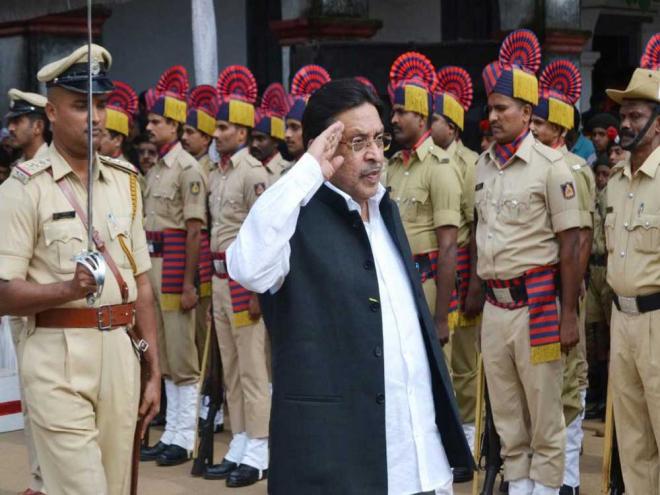
District In-charge Minister M R Seetharam receives guard of honour at the 71st Independence Day celebrations at Old Fort premises in Madikeri on Tuesday. Dh photo

District In-charge Minister M R Seetharam said that Kodagu district tops in the implementation of podi file clearance programme. Under the scheme, the officials have identified the exact boundary lines of land belonging to farmers and recorded them in relevant documents by awarding a new pahani in 115 villages of the district, for free of cost, he said.

Delivering the Independence Day address at the Old Fort premises in Madikeri on Tuesday, he said that 5,338 persons have benefited from the podi file-clearance programme of the government. This will be extended to all the villages in the district.

The minister said the concept of social justice and farsightedness is the guiding force behind the functioning of the State government. “We have to walk on the path laid down by our forefathers. By understanding the concept of freedom, we have to strive for the development of the country by shunning the differences,” he said.

Stating that the state government has taken up development works in the district in the last four-and-a-half years, Seetharam said that displaced Diddalli tribals have been rehabilitated near Kushalnagar. The title deeds will be distributed to them shortly. The department of Science and Technology will builtsub-regional science centre at the district headquarters at a cost of Rs 4 crore. It has been proposed to set up a mini planetarium, at a cost of Rs 5.75 crore in the district, he said.

Further, he said that Rs 50 crore has been released for repair of rural roads in the district. Under Kodagu package, 122 works will be taken up. A sum of Rs 38 crore has been released for the development of state highway and district roads.

He said the work on zilla panchayat administrative building is in progress and is likely to be completed by next June. In the backdrop of drought, the state government has waived Rs 151 crore loans borrowed by 34,000 farmers in the district.

SPC, Seva Dal, NCC, Scouts, Guides, students of General Thimmaiah School, Kodagu Vidyalaya, Rajeshwari Government PU College, GMP School, St Michael Convent, St Joseph Convent students took part in the march past. The students of St Joseph School, St Michael School, Rajeshwari School and Kendriya Vidyalaya presented cultural programmes.

P M Shailaja, Mohammed Rafeeq and M B Muneer, who have been selected for Jeevarakshaka Award were felicitated on the occasion.

Students collapse

Unable to bear the heat, two students collapsed during the march past. The students were given first-aid.

source: http://www.deccanherald.com / Deccan Herald / Home> District / DH News Service, Madikeri / August 16th, 2017

Maulana Mazharul Haque: A forgotten leader of Bihar

Bihar, PATNA :

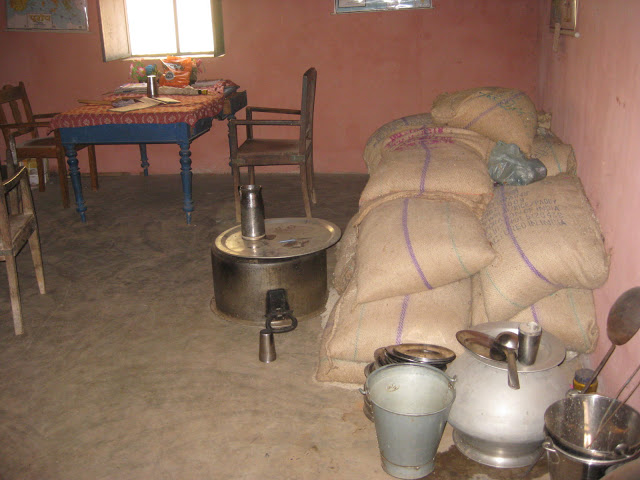
Maulana Mazharul Haque, the man who was a firm believer in complete Independence being “the birthright of every Nation”, has his birth place in office of a government run school that doubles as food storage.

Maulana Mazharul Haque was born to a rich landlord, Sheikh Ahmedullah, in Bahpura, Thana Bihta of Patna district on December 22nd, 1866. His primary education was at home by Maulvi Sajjad Hussain, but he passed his matriculation from the Patna Collegiate in 1886. He joined Canning College in Lucknow for higher studies but same year left for England to pursue a course in Law. He started legal practice in Patna after his return from England in 1891.

MazharulHaque01MPOs29jul2017

He made a significant contribution to relief efforts launched during the famine in Saran district of Bihar in 1897. Maulana Mazharul Haque’s public life actually commenced with the creation of the Bihar Provincial Conference, a move he supported as he believed in the need for the constitution of Bihar as a separate province.

In 1906 Maulana was elected Vice Chairman of Bihar Congress Committee. Mazharul Haque helped organize the Home Rule Movement in Bihar and was its President in 1916. He actively participated in the Champaran Satyagraha for which he was sentenced to 3 months imprisonment.

Subsequently, when the Non Cooperation and Khilafat Movements were launched, Mazharul Haque gave up his lucrative legal practice and his elected post as member of the Imperial Legislative Council and turned all his efforts to the freedom struggle. By now, he was a firm believer in complete Independence being “the birthright of every Nation”.

Mazharul Haque was also a fervent believer in democratic decentralization and he organized the Panchayats in Saran district towards meeting this vision. He also made many requests for better educational facilities in Bihar, especially for free and compulsory primary education.

Maulana Mazharul Haque actively participated in anti-purdah movement launched in Bihar in response to the Non-Cooperation Movement of 1920. Mahatma Gandhi sought to bring women also into mainstream politics, to strengthen the resistance against British rule as well as empower them to play a more active role in society. The purdah system espoused by Muslim and many Hindu families, especially in Bihar, meant that women remained behind men in all spheres of life.

MazharulHaque02MPOs29jul2017

In 1919, he gave up and burnt his western attire to adopt traditional Muslim attire. He was given title of “Desh Bhushan Faqir Mazharul Haque”.

1920, he donated his 16 bigha land on Patna- Danapur road for Sadaqat Ashram and Vidya Peeth which served as college for students who left government colleges in response to Non-Cooperation Movement. Sadaqat Ashram played important role in Independence movement in Bihar.

Maulana also launched his weekly magazine “The Motherland” from Sadaqat Ashram. He also jailed for his articles in this magazine. Sadaqat Ashram continues to serve as headquarters of Bihar Congress. But it is a tragedy that even Congress do not remember the person who has given so much to the party. Till few years back, even Maulana picture was now where to be seen in the ashram.

Maulana was firm believer of Hindu-Muslim unity. His famous quote sums up his conviction, “Wheather we are Hindu or Musalmaan we are in the same boat, we must sail or sink together”.

When in London, Maulana established Anjuman Islamia. This brought Indians of various religion, region and sects under one umbrella. This was also place to discuss about India’s problem. Mahatma Gandhi first met Maulana Mazharul Haque in Anjuman Islamia, London.

Person who gave everything for the country has not got due recognition. Maulana donated the house where he was born, to start Madrasa and middle school within same compound in 1926. Idea behind establishing both in one campus was to promote communal harmony.

MazharulHaque03MPOs29jul2017

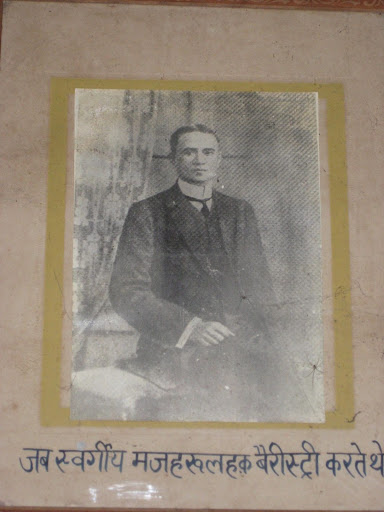
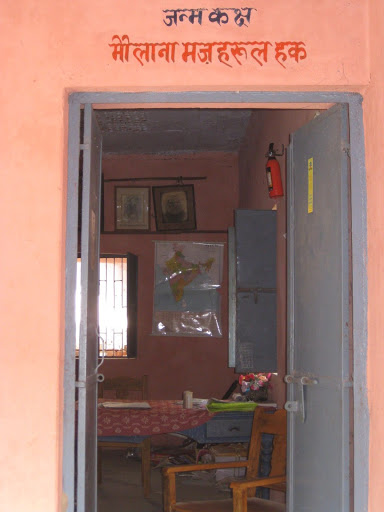
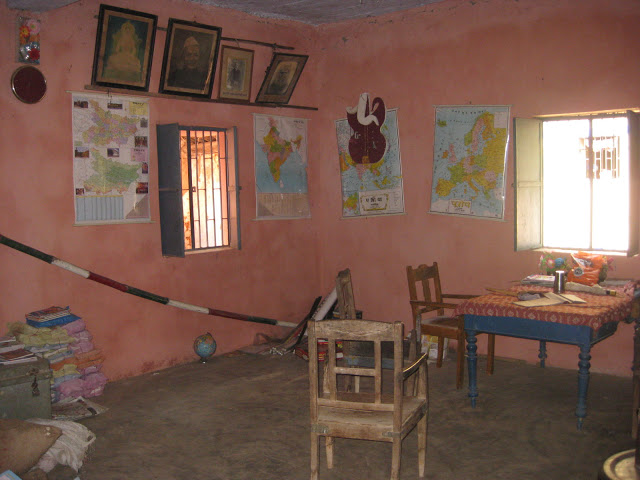
Now the very place where he was born is a principal office of government middle school. On the entrance door of principal office, a line is written in Hindi “Janam Kachh Maulana Mazharul ”(Birth place of Maulana Mazharul Haque). If you enter in the office apart from a picture of Maulana Mazharul Haque along side Dr. Rajender Prasad picture will not give any indication of place being birthplace of a person of such stature. Principal office house the ration for mid day meal scheme for the school apart from general school office stuff.

MazharulHaque04MPOs29jul2017

But this is an improvement from before. Before this school structure was build in 2004, place he was born was used as a toiler for villagers after original structure fell down. Because of the effort for few locals, this place was cleaned up and school building was build and place was marked as birth place.

MazharulHaque05MPOs29jul2017

On December 22nd politicians do come to shower words of praise on Maualana’s contributions but the pity condition of place has not moved anyone. Their promise has remained promise till date.

While talking to TwoCircles.net, Md. Yusuf Khushidi, former HOD Urdu department, Patna University said, “Locals have been demanding to build Library or Technical Institute in that place to commemorate but so far nothing has materialised.”

Yusuf Khhurshidi who belongs to Bahpura added, it is unfortunate that for a person, who sacrificed every thing for the country has been forgotten so fast. Maulana foresightedness can be judged by the fact that Maulana had emphasized on the communal harmony, democratic decentralization and education right from early stage of his life. Maulana was also in the forefront in establishing Bihar state which was carved out of Bengal.

Echoing Yusuf Khurshidi sentiments, Dananjay Yadav also demanded a memorial should be built for the one of the tallest visionary leader of Bihar.

Maulana’s family is living a struggling life in obscurity. It is disheartening to see family of a person who sacrificed everything from career to wealth for the sake of county is left high and dry.

Next birthday of Maulana Mazharul Haque is a month away. I am sure VIPs will be lining up to pay respect especially in election year. Few fascinating speeches will be delivered and few promises will be made. Politicians are known to have short term memory. So those promises will be forgotten sooner than later.

People in India too have selective memory, only very few are remembered for their part in freedom struggle and rests are still struggling to get freedom from obscurity.

source: http://www.twocircles.net / TwoCircles.net / Home> Indian Muslim / by M. Zajam, TwoCirlces.net / November 20th, 2009

Meet Mr Muscle Man Wasim Khan. This Bodybuilder Just Won Huge Titles For India

NEW DELHI :

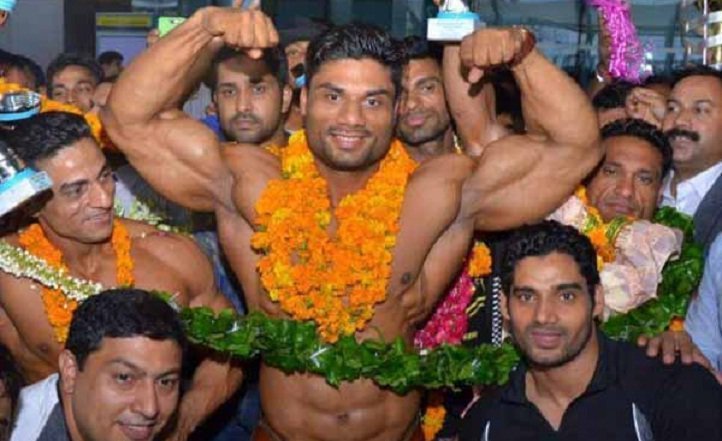
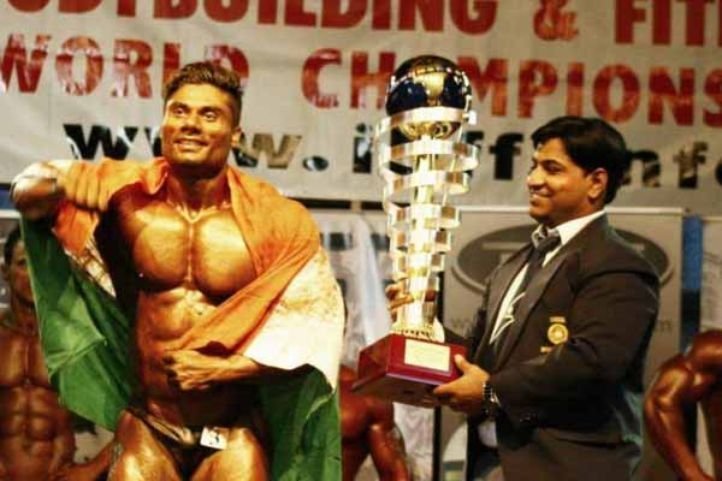
Indian bodybuilder Wasim Khan has won the International Bodybuilding Fitness Federation (IBFF) championship held recently on June 21 at Koper Slovenia, Slovenia

Khan not only won gold medal  in one category but also won the overall title. In total, he won three medals. About 350 body builders from 37 countries participated in this event.

Source: Sahara Samay

The Indian bodybuilding team created history at the World Championships by winning four titles. Suresh Kadam who is the general secretary of IBFF said that it was the first time in bodybuilding that the Indian team had performed so well and also bagged the most coveted title of ‘Mr World’.

Khan will be aiming for Mr Olympia next, which happens to be the most coveted title in bodybuilding. Kadam also said that Khan has the potential to win the coveted title of Mr. Olympia.

Khan said , “I want to thank all my fans who always there for me in my tough times and Allah who gave me power to move forward to follow my passion (sic).” He thanked his wife by saying that she was the only person who believed in him and supported him throughout his struggle in his career.

Source: Sahara Samay

He was also thankful to India for providing him opportunity to showcase his talent.

This is not the first time that Khan has made the nation proud. Last year he had won ‘Mr Universe’ title at IBFF event in Rome.

Two other Indian bodybuilders, Sashi Kumar and Tarun Dutta, also won silver medal in their respective categories.

We congratulate Khan and the Indian bodybuilding team for this landmark victory.  Here’s to more six packs!

source: http://www.scoopwhoop.com / Scoop Whoop / Home / by Saswat Singhdeo / July 06th, 2015

Meet Saad Nasser, 14-year Old Start-up Founder Building World’s First Autonomous Truck

Bengaluru, KARNATAKA :

Co-founder of Ati Motors, Saad Nasser hopes to release his first autonomous goods vehicle prototype in the next 2 years

14-year old Saad Nasser's start-up is building an autonomous goods vehicle
14-year old Saad Nasser’s start-up is building an autonomous goods vehicle

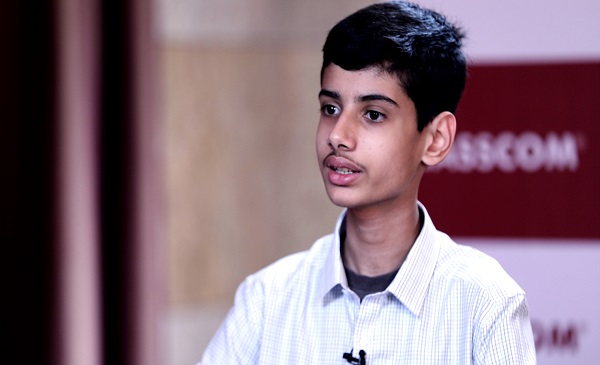
Saad Nasser, all of 14 years old, is no ordinary teen. Having read books on Java before the age of 5 and learnt C++ programming by the age of 7, Saad is a self-taught child prodigy with a lot to talk about. Saad is the co-founder of an autonomous vehicle start-up called Ati Motors, based out of Bangalore and is aiming to build the world’s first autonomous goods vehicle. But there is one more twist to this. This will be not like your regular goods vehicle but designed to offer the maneuverability of a two wheeler vehicle in order to run it on hilly areas apart from campuses.

Saad has been a winner at the Intel IRIS Science Fair 2012, 2013, 2014, 2016. His project on tiled processors won him the Sam Pitroda Award for Research and Creativeness as the best project of the fair.

BOOM caught up with Saad at the NASSCOM India Leadership Forum where we spoke to him about his entrepreneurial journey at such a young age.

source: http://www.boomlive.in  / Boom / Home> Uncategorized  / by Jency Jacob / February 24th, 2017

Tiger hunter turns tiger rescuer

Hyderabad, TELANGANA :

Hyderabadi shooter Nawab Shafat Ali Khan | Photo Credit: aranged

Maharashtra :

‘Man-eater’ successfully tranquillised

Reputed hunter from the city, ‘Nawab’ Shafat Ali Khan, who used to be frequently embroiled in controversies by shooting down ‘man-eating’ tigers, has, for a change, successfully tranquillised female tiger in Maharashtra that had reportedly turned man-eater.

The three-year-old tigress was captured alive on Monday evening from the outlying territory of Tadoba National Park, near Halda village, Mr. Khan informed over phone.

The tigress, named C-1 by the Forest Department officials, was from the spill-over population of 40 adult tigers and 19 cubs that struggled for survival in the Brahmapuri Division outside the national park, thickly populated with human habitations and sparsely with prey base.

The young feline had killed two humans and injured four, besides lifting away countless cattle and goats between April and June. After it had reportedly killed a man on June 21 and partially ate his body, villagers became furious leading to her being declared a man-eater, and ordered to be shot down.

Attempts by veterinarians to tranquillise the big cat turned futile, and Mr. Khan was invited by the Maharashtra Government to hunt her down. “I had noticed that the tigress displayed abnormal behaviour. She would kill the cattle during daytime, and when resisted, attack the villagers,” Mr. Khan recalled. However, he decided to capture her alive, after noticing from camera traps that she was beautiful and young. His team, including son Asghar, faced tough opposition from the villagers who wanted her shot down.

“They even attacked us once, seeing the tranquilliser guns in our hands. We had to sit with them, and make them understand our efforts,” he said. The cattle kills became very frequent, but almost always, the tigress abandoned her kills scared by the attempts to chase her away.

Tigress that was tranquillised.

“After a futile attempt at Padmapur village on July 4, she disappeared up to July 9, only to resurface near Halda village where she was conceived by her mother. Our task became very difficult as her mother and two sisters roamed in the five square kilometre vicinity,” Mr. Khan said.

Painstakingly, the stripes on the tigress’ body were memorised, and her presence was ascertained further through her odd tendencies of abandoning her kills.

“Monday afternoon, she killed a cow and ate five kilograms of meat. We set up a ‘machan’, tied the carcass with ropes and awaited her arrival. At 5.30 p.m., she came tearing out, lifted the carcass snapping the ropes, and almost galloped away, but not before I took a very fast shot. The dart went in her neck, and she fled dropping her kill,” Mr. Khan explained. She was noticed 200 meters away, captured and brought back to the Forest Department’s camp at Ekara village.

“I visited the tigress on Tuesday morning. She was in healthy condition,” Mr. Khan informed.

source: http://www.thehindu.com / The Hindu / Home> News> Cities> Hyderabad / by Swathi Vadlamudi / Hyderabad – July 12th, 2017

Meet Salim Sheikh, Gujarat bus driver who risked his life to save Amarnath yatris; to be nominated for bravery award

GUJARAT  / Amarnath Yatra (JAMMU & KASHMIR )  :

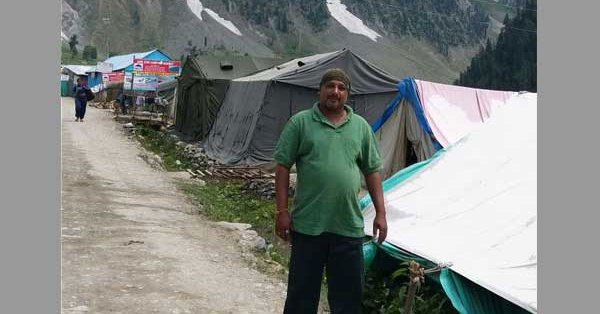
If Salim, the driver of the bus ferrying Amarnath Yatris, had not acted wisely and shown exemplary courage, the brazen terror attack would have certainly claimed more innocent lives.

SalimMPOs11jul2017

Ahmedabad:

If Salim, the driver of the bus ferrying Amarnath Yatris, had not acted wisely and shown exemplary courage, the brazen terror attack would have certainly claimed more innocent lives.

Salim, the Gujarati driver of the bus that was ferrying the passengers, has now emerged as a hero by saving so many innocent lives while risking his own.

According to reports, Salim drove the bus to safety amid continuous firing by a group of heavily armed terrorists who attacked the bus which was returning from the Amarnath Shrine.

Despite being reportedly hit by a bullet, Salim locked the door from inside, refraining terrorists from entering into the bus.

Realising that if he stops the bus, terrorist would kill many innocent yatris, Salim drove for nearly two kilometers before finally stopping near an army camp.

“I spoke to the passengers and they were all praises for the driver. He drove despite the firing and took them to safety. It made a lot of difference and lives were saved. He did not stop. Had he stopped, more lives could have been lost,” Munir Khan, IG, Kashmir, told reporters.

One of the survivors of the attack also praised Salim for his bravery and said, ”We were asleep and were woken up by bullet sounds. He continued to drive and took us to safety. If not for him, it would have been worse.”

Back home in Gujarat’s Valsad, Salim’s family also expressed satisfaction that he managed to save several lives.

“He called me at around 9.30 pm and said that there was firing. Salim did not stop when terrorists fired but only looked for a safer spot for the pilgrims. He could not save seven lives but managed to move over 50 people to a safe place. We are very proud of him,” said Javed, Salim’s cousin.

Later, speaking to reporters, Salim said, ”God gave me strength to keep moving, and I just did not stop.”

Gujarat Chief Minister Vijat Rupani, who announced ex-gratia of Rs 10 lakh to the kin of victims and Rs 2 lakh for injured, said that he will nominate driver Salim for bravery award.

There were initial reports that the bus was not registered for the Amarnath Yatra and the driver had committed some lapses on his part.

However, the Jammu and Kashmir Police has rejected such reports and stated that reports of the bus not being registered were far from the truth.

“The bus was very much registered for Amarnath Yatra and they were also in a convoy. “They had finished their darshan just two days ago and had plans of visiting a few tourist places. Yes, they were on a different route than the yatra route but the bus was registered and in a convoy,” Munir Khan added.

The bus, which came under a dastardly terror attack on Monday evening, was from Gujarat, and all pilgrims were from the same state.

The bus – GJ 09 Z 9976 – was registered in North Gujarat’s Sabarkantha district, but the owner had sold the bus to one Jawahar Desai of Valsad, Gujarat.

Of the seven pilgrims – five women and two men – who lost their lives, two were from Valsad, two from Dharampur, two from Pardi and one from Vansda. Another fifteen sustained injuries, four of them serious wounds.

source: http://www.zeenews.india.com / Z News / Home> News> States> Gujarat / by Zee Media Bureau / Tuesday – July 11th, 2017