Category Archives: Arts, Culture & Entertainment

‘I live in the now’

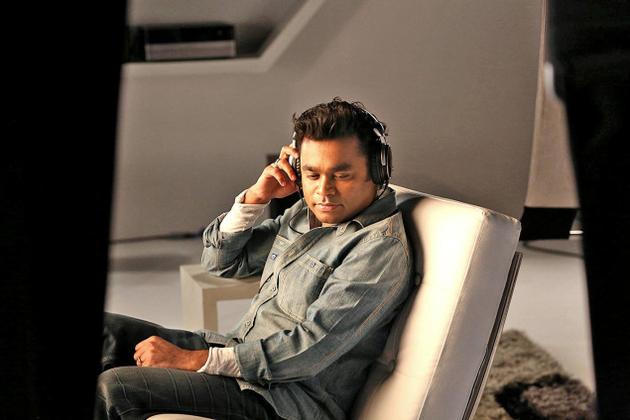
With Mani Ratnam, there are many-layered feelings, according to the maestro. / by Special Arrangement

A.R. Rahman talks about his trendsetting musical journey, his forays into other areas of filmmaking and the inexorable charm of being himself

Allah Rakha Rahman is relaxed, worried and anxious — all at the same time.

As a composer, he’s happy; his Mental Manadhil from O Kadhal Kanmani (OKK)is doing well and the rest of the album will be out on April 1. As a son, he’s concerned; his mother took ill recently and is still recuperating. As a producer, he’s eager; things are neatly falling into place with his first project.

When I catch up with him on Thursday evening at his Kodambakkam studio, a few hours after India has lost to Australia in the cricket World Cup, he’s a picture of poise. In an hour-long interview, the musician — clad in a simple brown kurta and jeans — opens up on upcoming releases, working for the famed Iranian director Majid Majidi, his relationship with Ilaiyaraaja and life so far.

'Mental Manadhil', from his upcoming O Kadhal Kanmani, is a light-hearted song, he says. / by Special Arrangement
‘Mental Manadhil’, from his upcoming O Kadhal Kanmani, is a light-hearted song, he says. / by Special Arrangement

Your latest release, Mental Manadhil, which you’ve written, composed and sung is almost a sensation. How does it feel?

It’s supposed to be a light-hearted song. Lyricist Vairamuthu was off on a holiday and Mani wanted a song immediately. The two of us had already written Endrendrum Punnagai in Alaipayuthe and so, we plunged into that zone again.

What is it about Mani Ratnam that brings out the best in you?

With him, there are many-layered feelings. He introduced me to films, as you all know, but now, the three of us — Mani, Vairamuthu and me — have become a brand. Even if we want to be complacent, we cannot because of people’s expectations. It works like a trigger. We have done our bit in the last few years, but because people expect so much, we want to give them what they we want.

I was told that the three of you even have serious disagreements during composing sessions. Elaborate on that with respect to OKK…

I don’t like certain things. Sometimes, you have to compromise words for the sound — the sound is very important, it de-clutters from the words. People don’t have as much bandwidth as before; we have to catch their attention immediately.

In one of the songs in OKK (Naane Varuvaen), we had an antara that was beautiful but had very complicated words. So, instead of that, we came up with repetitive lyrics. The word (chinnanchiru) repeats itself again and again. It’s like the formula used in traditional performing arts. Take thumris, for example. They have the same thing again and again…. because the tunes get complicated, the words cannot. In songs like Yaad Piya and More Sajni, we keep hearing the same line because it’s easier for the mind to concentrate.

You’re writing a screenplay, producing a Hindi film… why are you branching out into areas other than music?

I want to see if my growth as an artiste can fill the void that I feel is missing in India. Mostly, our industry is driven by what’s going to click commercially. When something clicks, it is replicated. Very few people do it for the art. I do not want to be both — I want to find that balance between what people like and the lost flavour in our music. I’ve been working on it for four years to see if we’ve covered it in all aspects.

How disappointed are you when your films don’t do as well as expected? We hadKaaviya Thalaivan and Lingaa last year…

See, I made a mistake by doing too many films. I should have said no to some of them. As a team, our backs were broken. There was intense pressure, sleepless nights — I feel it’s just not worth anymore. Life has given me something that what I’m drawn to like naturally… when you’re overworked with too many demands and deadlines, it’s not a good thing.

So, you’re admitting that Lingaa was one of them?

We had to finish things fast to match the film’s release on Superstar’s birthday. People know exactly what happened with respect to that film. We had to deliver in three languages — Tamil, Telugu and Hindi — check the sound mixes, do the background score and everything. Simultaneously, I was also doing Kaaviya Thalaivan. It all happened came at once… it was so unfortunate.

There are a group of people who feel say your music now isn’t as good as it was in the 90s…

I am flattered; at least they like something of me! (laughs)

When you hear such comments, what goes through your mind?

As a creative person, I have to move on. There are fans for what I did then, and there are fans for what I’m doing now. You cannot go to a yesteryear actress and say, ‘I don’t like you anymore’, can you?

You worked with Vasanthabalan recently. You’re working with Vikram Kumar this year. Why are you going for newer combinations while you can safely opt for time-tested ones?

After a while, we take some people for granted. This is a good and a bad thing. With people like Mani or Ashutosh Gowarikar or Shankar, it’s never a bad thing because they present new challenges and anyway do movies once in two years. New directors give me the option of discovering something afresh.

What’s the status on Muhammad, your Iranian film, and why did you take that up?

It’s still a work in progress because the movie needs to be edited. I’ve been a big fan of Iranian films, especially Majid Majidi’s. Suddenly, one day, Imtiaz Ali called me to say that UTV got a message from Majidi that he wanted me for his project. I was like, ‘Wow’. It will be one of the most ambitious in the history of cinema.

But it wouldn’t have been easy…

His expectations were very, very high. In a way, it was good because I wanted to learn their school of thought. I wanted to know how they produce, how they way they write their scenes. I’ve been to Iran twice for two trips and it was an amazing experience.

You’re busy travelling all over the world, are you able to spend enough time with your three children?

We watch a lot of movies together, especially 3D animation films.

Is your mother still your emotional anchor?

That’s what you learn from life… where your priorities ought to be and why you should respect every family member. Amma has just recovered from a serious illness — she’s better now, but still, it’s not like before….

From being just a boy from Habibullah Road, Madras, to an international composer… how have you changed to fit the bill?

When climate and time zones change, everything changes. There, I’ve three more layers of clothing. The ease of resources, with respect to studios, we have here isn’t available there at times. All the musical notes need to be prepared in advance, not like how it works here. But then, you adapt. It took me 10 years to get used to all that.

It’s well-known that you played for Ilaiyaraaja before branching out individually. Are you still in touch with him?

The last I met him was at a music function. See, when I’m abroad, I bump into other composers all the time — at screenings or events. It’s unfortunate that Chennai isn’t that much of a social place for me; I’m usually caught up in my own work. And then, there’s family, the school… there’s not much social time. We have the respect in our hearts.

Do you read a lot?

(Thinks for a while) The last book that I read was… the screenplays of The Hundred Foot Journey andPele. Those are books anyway.

Coming back to music, there are several exciting new composers. There’s Santhosh Narayan, whom you’ve spoken highly of, and Anirudh and G.V. Prakash. In Hindi, there are many others. Would you say music is in safe hands?

There’s much more to explore in music. The demands should not be to make just hit songs. Each composer has to set a rule for himself to create timeless music. Why do we love works of the past? Because some of them are timeless; audiences still have a connection with them. That’s what I try to do and that’s what I’d like younger composers to do too.
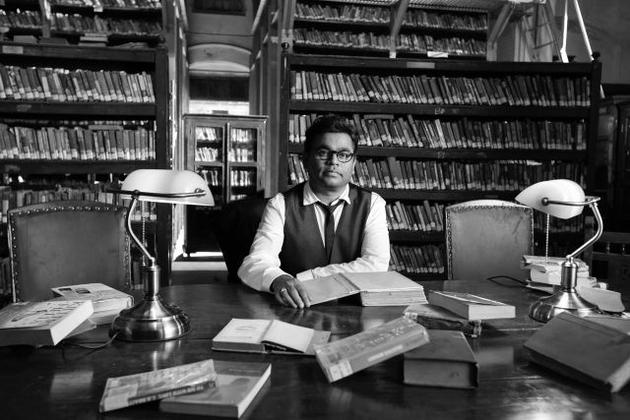
There’s much more to explore in music, says Rahman. The demands should not be to make just hit songs. / by Special Arrangement

Your school, KM Music Conservatory, has come a long way since its inception. What are your future plans for it?

It was a huge task for us to have a new building and now we have that. It seems to be a great place to hang out and study music. Sometimes, I feel jealous of the kids studying in the school because I never had such a place while growing up. We want the students to serve in the entertainment business with a unique identity… and yes, make people smile.

You say you’re always running against time, but still do your daily namaaz (prayers)…

That’s my oxygen.

So, everyday life must be a balance…

You have to keep everything you do in multi-tracks. There’s no ‘I will do that tomorrow’. That’s what I’ve realised of late. I don’t say ‘I’ll do my prayers tomorrow, compose for this beautiful idea tomorrow, or say I love you tomorrow…’ If you want to do something, do it now.

source: http://www.thehindu.com / The Hindu / Home> Features> MetroPlus / by Srinivasa Ramanujam / March 27th, 2015
St. Philos Milan – 2015

Music and humour programme held

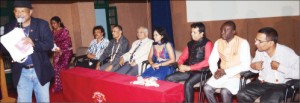
Dr. S.K. Ghori is seen addressing the gathering during 'St. Philos Milan-2015' in city yesterday. Others seen are (from left) Juhi Singh, Thyagaraj, Dr. P.A. Kushalappa, Venkat Prasad, Dr. Snehashree Nirmal Kumar, Aftab Ahmed, Abdul Kadir and Dr. Ganesh Rao.
Dr. S.K. Ghori is seen addressing the gathering during ‘St. Philos Milan-2015’ in city yesterday. Others seen are (from left) Juhi Singh, Thyagaraj, Dr. P.A. Kushalappa, Venkat Prasad, Dr. Snehashree Nirmal Kumar, Aftab Ahmed, Abdul Kadir and Dr. Ganesh Rao.

Mysuru :

St. Philomena’s College Alumni Association, Mysuru, had organised ‘St. Philos Milan-2015,’ a grand entertainment event, at St. Philomena’s College auditorium, Bannimantap, in city yesterday. The event featured a wide range of entertainment programmes comprising dance, drama, orchestra and comedy show.

The programme began with an orchestra by ‘Nav Ratans’ team led by Dr. S.K. Ghori, comprising Dr. P.A. Kushalappa, Venkat Prasad, Dr. Ganesh Rao, Dr. Snehashree Nirmal Kumar, Thyagaraj, Aftab Ahmed, Alfi and Abdul Kadir, a Nigerian. It was followed by the following programmes by the students of St. Philomena’s College: Linda and team performed a bollywood dance for the song ‘Barso re megha…’ Lingthong and team performed Manipuri folk dance. Shifa and team performed a bollywood dance for the song ‘Sheila ki jawani…’ Yeshi and team performed a folk dance of Arunachal Pradesh. Shirin and Angel performed dance to the song ‘Dolaare do…’ Tibetan students of the College presented Jabbawockeez dance.

Later, Mitra of Iran, a student of St. Philomena’s College, presented a video on ‘Nowruz’ — the new year of Iran. She expressed her happiness that Nowruz and Ugadi were celebrated on the same day this year (Mar.21).

Prof. Prabha, faculty, St. Philomena’s College, entertained the audience by staging a drama while Prof. Krishne Gowda entertained the audience with his humorous talk.

The highlight of the programme was a Nigerian student of the College Abdul Kadir singing hindi songs. He mesmerised the audience by his melodious voice. He sang ‘Kya khoob lagti ho badi sundar dikhti ho…’ and ‘Teri galiyan galliyan teri galliyan…’ for which the audience started whistling and dancing.

The nine singers were felicitated by Mohanlal Jain, a big fan of the nine singers.

College Principal Rev. Fr. Leslie Moras, in his address, said that the new indoor stadium-cum-auditorium, which is being constructed at the College campus, will be inaugurated in the month of April this year.

A lucky draw was held at the end of the programme where many people won attractive prizes.

Khadar Sait, an alumni of St. Philomena’s College, donated Rs.11,000 to the College.

Aftab Ahmed and Juhi Singh compered. Dr. Javeed Nayeem proposed a vote of thanks. A sumptuous dinner was served to all those present during the event that was a fund-raiser for the indoor stadium-cum-auditorium.

source: http://www.starofmysore.com / Star of Mysore / Home> General News / Monday – March 23rd, 2015

Of ‘Shab Deg’, Home-Reared Roosters and Grandma’s Magic

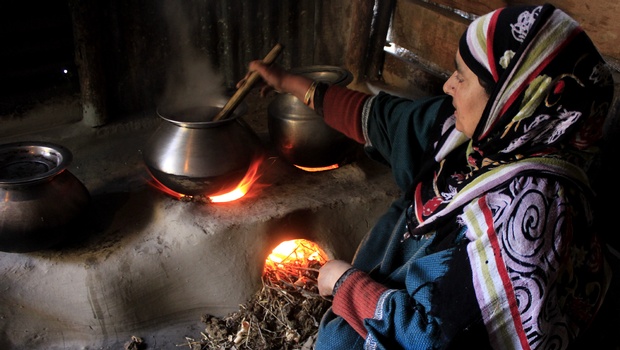
|Kashmiri woman preparing Shab Deg| IANS|
|Kashmiri woman preparing Shab Deg| IANS|

Srinagar :

Hardly anyone among the younger generation of Kashmiris would know what is a ‘Shab Deg’ and yet the mere mention of the word triggers nostalgia and tickles the taste buds of middle and elderly people even today.

‘Shab’ means night and ‘Deg’ means a large cooking vessel. In local parlance, ‘Shab Deg’ means a special dish that is cooked through the night to bring it to the right flavour and thickness. In not very olden times, when Kashmiris still cooked food on firewood-lit hearths, ‘Shab Deg’ was a winter specialty.

Fatima Begum, 75, who lives in north Kashmir’s Haripora village in Ganderbal district, does not only remember the way the specialty was cooked but also recalls the memories of her youth and childhood associated with the dish.

“A heavy, fat rooster of ripe age is feathered carefully so that its skin remains intact. The bird is then cut into pieces depending upon the number of guests or the family members,” Fatima Begum told IANS, adding: “For large families and more guests, two birds weighing around three kilograms each were chosen in my youth when nuclear families had not come into existence.”

“Turnips stored underground for the winter months and called ‘ghoh gogji’ are washed and cut into small pieces. The bird and the turnips are lightly fried in mustard oil and then mixed with red chillies, cardamom, fennel seeds, garlic, onion scales, turmeric powder and salt.

“A little quantity of previously boiled mustard oil is also added with a sufficient quantity of water in the ‘Deg’ before it is sealed with dough. The dish is cooked over a simmering fire through the long winter night. The experience of the grandmother or the well-trained daughter would alone tell when the dish had achieved the right flavour and thickness so that its lid could be removed,” Fatima Begum added.

Haji Muhammad Sidiq, 78, living in Chanduna village of the same district still remembers the special occasions when his mother would cook the ‘Shab Deg’ – when all village roads remained blocked due to heavy snowfall and the only light the villagers of those times knew were oil lamps or kerosene lanterns.

“Mother would call the entire family to the kitchen, which had a cooking and eating space. Beaming with confidence, she would carefully remove the lid of the vessel as all of us held our breath to see if her nightlong toil had produced the desired result.

“The flavour of the dish would fill the entire kitchen and that would prompt us to line up for the feast. It still kindles memories of my youth and childhood,” Sidiq told IANS.

He, however lamented that today’s housewives “have neither the time nor the inclination to take such pains. Plus, where is the traditional hearth and the right heat of the firewood that is needed to make the ‘Shab Deg’ in addition to the heavy, fat, homegrown rooster?” Sidiq wondered.

Interestingly, Kashmiri homes used to have a small poultry farm of their own in those days. Mustard oil was locally available as villagers grew oilseeds in plenty.

“Dependence on markets, the growing tendency of eating out on weekends or dining out with friends and the habit of grabbing fast food on an impulse have made home-cooked food more of a formality and compulsion than an occasion to get together and identify with each other in a joint family system as it used to be in the past,” Farah Qayoom, who teaches sociology in the University of Kashmir, told IANS.

Whichever way one looks at it, unless delicacies like the ‘Shab Deg’ are re-introduced to the younger generation of Kashmiris, feasts like these would become extinct without anyone even batting an eyelid about what has been lost to fast food, cooking gas and microwave ovens.

source: http://www.newindianexpress.com / The New Indian Express /  Home> LifeStyle> food / by IANS / March 26th, 2015

Poet Yusufali Kechery Leaves, Verses Orphaned


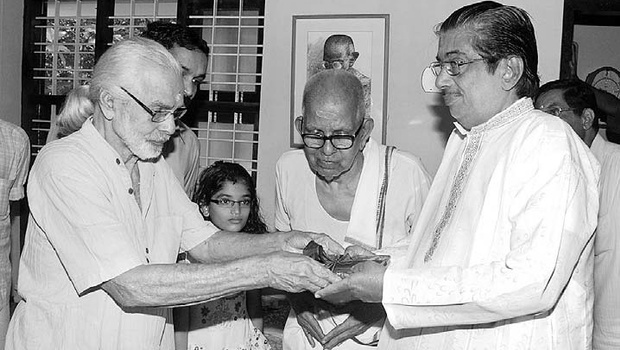
Lyricist Yusufali Kechery with Artist Namboothiri and Poet Akkitham (file photo)

Thrissur :

Kerala lost one of its master lyricist-cum-poets with the demise of Yusufali Kechery,81, who shared a high pedestal along with legends like Vayalar Rama Varma and P Bhaskaran, at a time when they strode like colossuses in the Malayalam film industry.

Yusufali, who was suffering from bronchial pneumonia for quite some time, has penned more than a thousand songs and poems in a career spanning more than five decades in the Malayalam film industry.

Yusufali, who born in 1934 as the younger son of Cheembayil Ahammed and Najmakutty of Elankulam in an ancient Muslim family at Kechery here, overcame the orthodox religious barriers prevalent in the 1950s to establish himself in the world of music. His evergreen songs have played a pivotal role in cementing the stardom of some of the superstars in the Malayalam industry including in the 1980s and 1990s.  Some of the brilliant  verses of Yusufali have even celebrated their golden, diamond and platinum jubilees. One cannot forget some of his evergreen and immortal songs like Omalale kandu njan, Anuraga ganam pole (Udyogastha), Surumayezhuthiya mizhikale (Khadeeja), Ikkarayanente thamasam (Karthika), Pathinalam ravudichathu (Maram), Ponnil kulicha rathri (Sindooracheppu), Nadapuram palliyile (Thacholi Ambu), Thedunnathare shoonyathayil (Ammu), and Kadale neelakkadale (Dweepu) and lot more.

Yusafali, who was encouraged by his elder brother, from whom he drew inspiration in the beginning of his career, started his career as a lyricist in the film ‘Moodupadam’ which was released in 1962. He also debuted as a producer-cum-screenplay writer with the film ‘Sindooracheppu’ in 1971. His directorial debut was in 1973 with the film ‘Maram’, scripted by M T Vasudevan Nair.  In the 1970s, he directed movies like ‘Vana Devatha’ and ‘Neelathamara’, which was remade by director Lal Jose in 2009 with the same title. He had also served as Assistant Secretary in Kerala Sangeeta Nataka Akademi and a staff artist of All India Radio, Kozhikode, before making a foray into the world of music and films.

source: http://www.newindianexpress.com / The New Indian Express / Home> States> Kerala / by Dhinesh Kallungal / March 22nd, 2015

Mir Anees’ tomb in for makeover

Lucknow :

Following interest shown by Chief Minister Akhilesh Yadav in the restoration of the tomb of 19th Century Urdu poet Mir Anees, it is poised get cleaner surroundings and to come alive with the sound of his ‘marsiya’. A group of around 50 persons, calling themselves Aashiqaan-e-Anees (lovers of Anees) welcomed on Thursday the government’s move to restore the monument.

The group shared its immediate plan of action of clearing the compound and organising a marsiya (elegy composed over the martyrdom of Imam Husain and his companions in Karbala) rendition in the tomb situated in Chowk on Sunday. The original possessions of Mir Anees, including his Lakhnavi Topi and manuscripts, his inkpot, etc will also be displayed.

“We have decided to map the area which has 10 more graves of important poets, along with Anees, some of whom are his family members. The tall grass will be cleared and anti-social elements will be removed,” informed Waqar Rizvi, chairman of Awadhnama Educational and Charitable Trust, who has initiated the process. The trust plans to involve an architect and extend the main structure into the vacant lands.

Belonging to the seventh generation of Anees, caretaker Syed Hasan Mohammad Zaidi said, “My great grandfather bought the plot in 1872 for a family graveyard.”

source: http://www.timesofindia.indiatimes.com / The Times of India / Home> City> Lucknow / by Yusra Husain, TNN / March 20th, 2015

Paruthiveeran honoured at Berlin festival

Tamil films are going places. After Vasantha Balan’s Veyil was selected in the Tous les Cinemas du Mondesection at the Cannes film festival last year, it is the turn of Paruthiveeran one of the most realistic films made in 2007 to shine.

Paruthiveeran, by Ameer Sulthan, was honoured with a “special mention” from the Network for the Promotion of Asian Cinema (NETPAC) at the 58th Berlin International film festival. The three-member NETPAC jury included Indian film critic Meenakshi Shedde.

 The main NETPAC prize went to “United Army” by Japanese director Wakamatsu Koji.

Both Paruthiveeran‘s director and the lead actor Karthi attended the film’s international premiere at the Berlinale.  

This is not the first award for the filmIt was adjudged the best film at the 9th OSIAN’s-Cinefan film festival for Asia and the Arab world while the lead actress Priya Mani won the Best Actress award.

Awards are not new to director Ameer Sulthan, either. His earlier film Ram won two awards — Best Film and Best Actor (Jeeva) at the Cyprus International film festival.

International awards to three of his lead performers — Jeeva, Karthi and Priya Mani — just shows how powerful the characters he creates.

ParuthiVeeranMPOs19mar2015

About performing for Paruthiveeran, Karthi told rediff.com last year, “I had faith in my director. He first told me to grow my hair and beard. I did that. He asked me to reduce my weight. Every week, I used to meet him and ask, are you happy with the progress I have made? He would then ask me to reduce again; and reduce my waist, increase my biceps, etc. Once the shooting started, it was Ameer who guided me. He can act very well, and he would act it out for me. But the toughest part was reproducing what he did.”

It was the same with Priya Mani too. She admitted that she followed the director’s instructions completely, as she was unaware of how a village girl from Madurai behaved and spoke. “If I have performed well, it’s all due to Ameer, the director. He overlooked every minute aspect of the character, from the body language to the modulation of the dialogue, to what my expression should be when the male lead delivered his lines. So, all credit goes to him.”

The film is a success because the film has a powerful story, excellent performances and a sincere director. No wonder Ameer Sulthan is reaping the harvest for all the hard work he had done.

source: http://www.rediff.com / Rediff.com / Home> Movies / by Shobha Warrier, Chennai / February 18th, 2008

An intimate portrait of the city’s many facets

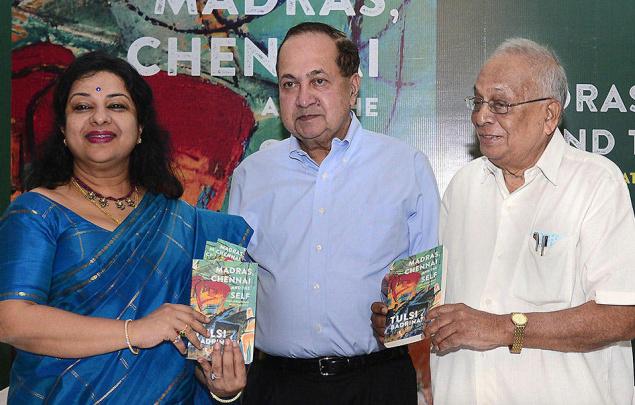
(From left) author Tulsi Badrinath, N. Ram and S. Muthiah at the book release function. Photo: R. Ravindran

‘Madras, Chennai and the Self: Conversations with the City’, a book that explores the metropolis through the personal stories of an eclectic cluster of 12 individuals, was launched on Wednesday.

The author Tulsi Badrinath paints a portrait of a city that is both rooted in tradition and dynamically modern. Launching the book, N. Ram, chairman, Kasturi and Sons Ltd., said, “There is a certain familiarity when one reads the book, but there are also many surprises that the author brings out through her writing.”

Historian S. Muthiah, who received the first copy of the book, said, “This book is by far the best among all the writing on Madras. It is a literary work on how the author sees the city of Chennai through the conversations she has with many people who call this place home.”

Some of the personalities featured are Dalit writer and activist P. Sivakami, the Prince of Arcot Nawab Mohammed Abdul Ali, actor Vikram and priest and karate enthusiast K. Seshadri to name a few. By bringing together disparate narratives of people and the spaces they inhabit, Ms. Badrinath attempts to capture the flavour of a city that is both intimate and contemporary.

The book launch concluded with a panel discussion with chronicler Sriram V. and scholar A.R. Venkatachalapathy interacting with the author.

source: http://www.thehindu.com / The Hindu / Home> News> Cities> Chennai / by Staff Reporter / Chennai – March 19th, 2015

Ameer and his film on Eelam Tamils

AameerMPOs19mar2015

Looks like director Ameer’s voice for the Eelam Tamils will go beyond stage speeches. The director, who was one of the vociferous speakers about the plight of Tamils in Sri Lanka, has already planned a script on their lives.

Despite Tamils and Tamil cinema’s support for the Tamils in Sri Lanka, which is a big market for our movies, only two movies have dealt with their plight: Mani Ratnam’s ‘Kannathil Muthamittaal’ and Bala’s ‘Nandha’. But director Ameer, who is completing his ‘Yogi’ currently, has decided on making a movie about these Tamils.

Having kept the script ready, it is now learnt that the director plans to call the film ‘Kilinochi’. Another director who plans to make a movie on the Lankan ethnic crisis is director Bharathiraja.

source: http://www.indiaglitz.com / IndiaGlitz / Home / Friday – June 19th, 2009

Kerala students steam up world’s longest puttu

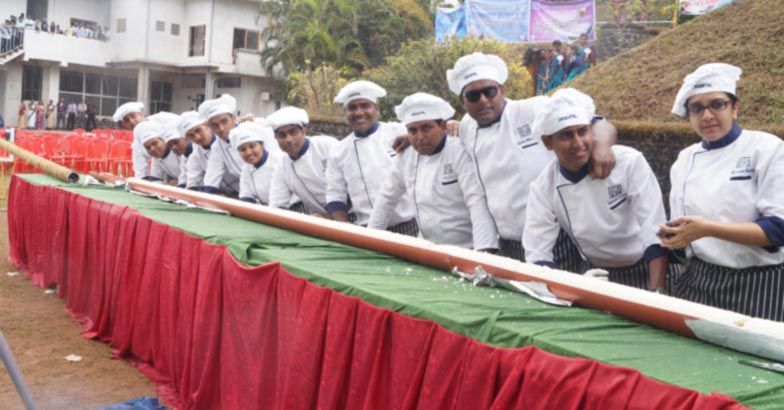
The twelve final year students of Oriental School of Hotel Management in Kerala who made the longest puttu.

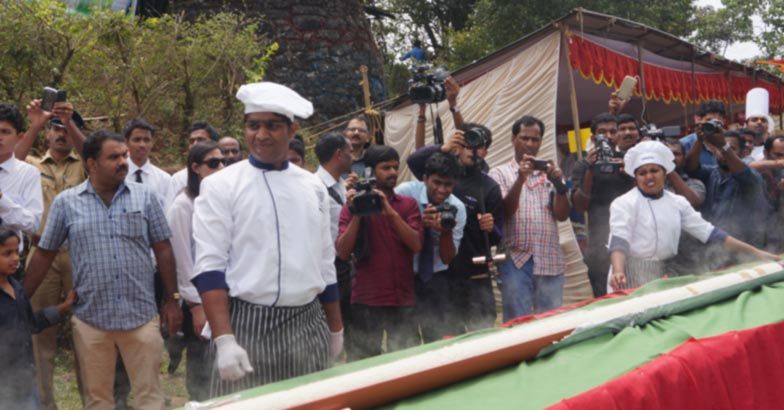
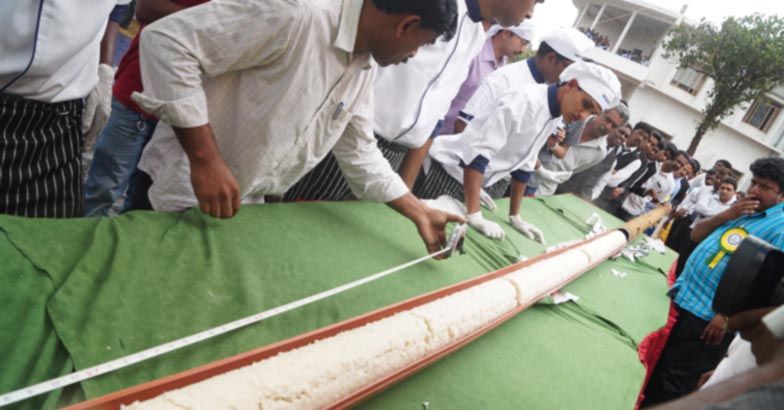
A world record was achieved by making the longest puttu in the world of 18.2 feet, by twelve final year students of Oriental School of Hotel Management, Lakkidi, Wayanad, Kerala. It was held on March 16th, 2015 at 3.00 pm in the campus of the institution. The longest puttu was made as per the guidelines and specifications of the Guinness World Records.

Students standing next to their creation, the longest puttu in the history of puttu in Kerala.

The twelve final year students who etched their names in the World Record attempt are Ms. Syama. M, Ms. Kavya Varghese, Mr. Akhil. B, Mr. Sivajith. S, Mr. Akshay Jain, Mr. Nithin George, Mr. Yadav Gurunathan, Mr. Jobu Ebin, Mr. Ebin Albert, Mr. Umesh. R. Nair, Mr. Jishnu. P. R and Mr. Mohammed Saif, all final year Hospitality Management students under the able guidance of Mr. K. C. Robbins, Principal of Oriental School of Hotel Management.

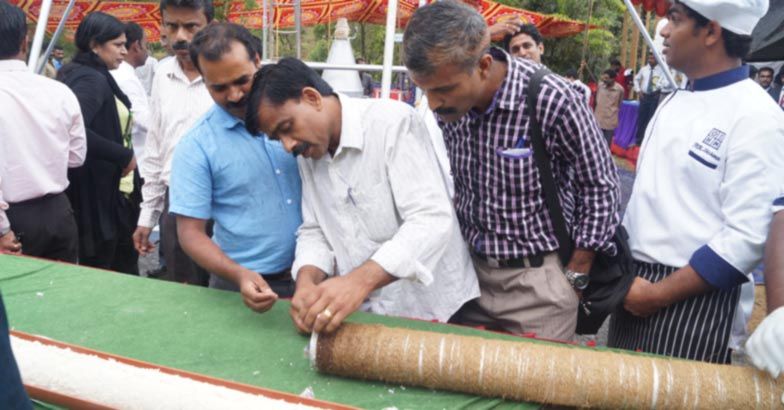
Puttu is an authentic Kerala breakfast dish of steamed cylinders of ground rice layered and blended with grated coconut. The ingredients for making the longest Puttu were 20 kg of ground rice flour, 15 grated coconuts, 15lts of water, salt, and a special equipment mould of aluminum was meticulously designed by the institution to prepare the longest puttu for the record breaking event. The longest puttu weighted 31.87kg.

Twelve final year students of Oriental School of Hotel Management in Kerala have managed to set a new Guinness World Record by steaming up the longest puttu.

 The students took an hour and 15 minutes to prepare the world’s longest puttu and this is the result of days of relentless hard work and detailed planning. The Oriental School of Hotel Management is managed and owned by Malabar Hotel Management and Catering Promotion Trust—a charitable Institution founded by the visionary and social icon—Dr. N. K. Mohammed, the guiding force and inspiration behind the challenging event.

Earlier in 2006, the students of this institution had made a ten feet long puttu by using 10 coconuts and 26 kg of powdered rice in a specially designed 12-foot-long aluminum mould which took one-and-a-half hours to be cooked. (Refer: Wikipedia- http://en.wikipedia.org/wiki/Puttu).

The world's longest puttu being examined at the Oriental School of Hotel Management in Kerala.
The world’s longest puttu being examined at the Oriental School of Hotel Management in Kerala.

 The world record attempt by the students of the institution has surpassed their own previous record, and will be appropriately certified and documented by the Guinness World Records. All the documents and supporting evidence have been sent to the Guinness World Records for appropriate verification and certification.

source: http://www.food.manoramaonline.com / On Manorama / by Correspondent, On Manorama / Home> Food> Foodie / Monday – March 16th, 2015

All-Women Police Station Opened in Howrah

An all-women police station was today opened in Howrah (rural) district.

The police station was inaugurated by state correctional home minister Hyder Azid Safi at the Uluberia police station.

Parliamentry secretaries and MLAs Nirmal Majhi and Pulok Roy alongwith DIS Subroto Mitra was present on the occasion.

source: http://www.outlookindia.com / Outlook / Home> Howrah / March 16th, 2015