Constructing Life, a digital artwork by Shibu Arakkal, son of noted artist Yusuf Arakkal, has won first prize at the prestigious Florence Biennale.
Based in Bangalore, Shibu said the event saw the participation of 475 artists under the categories of painting, sculpture, art on paper, video art, digital art, photography and installations. “Although, I applied under the photography category, the international panel of jurists awarded me under digital art due to the technique execution of my work”, he said. Shibu received the Lorenzo il Magnifico gold prize in digital art for 2013.
“Since none of us was told about the nominations, the winners were in for a pleasant surprise at the ceremony on December 8. My work measures 8 feet x 6 feet, comprising 12 panels. It’s a digital photo giclee print on canvas,” Shibu explained. The awards were presented by brothers Pasquale Celona and Piero Celona, president and vice-president of the Biennale.
Describing the artwork, he said: “Our daily lives and quality of life are not only signified by the physical buildings we inhabit but also speak about our tastes, culture and sophistication. One of our most serious endeavours in life is to create one such dwelling to exist and flourish in. Sophisticated and design-minded buildings are visually very different from the hard and weather-beaten appearances of the people who construct these structures. And yet there is such character in their form and faces! It is these ideas that have taken root in my mind to create portraits of the construction worker in a series that will question our ideas of what ‘interesting’ is.”
source: http://www.timesofindia.indiatimes.com / The Times of India / Home> City> Bangalore / by G S Kumar, TNN / December 17th, 2013
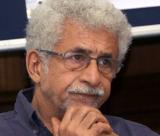
Actor Naseeruddin Shah, a veteran in the Hindi film world, says Indian filmmakers’ fascination for the Academy Awards is “laughable”. He believes “we are never going to win any”.
The 63-year-old, who has featured in films like “Masoom”, “Sarfarosh”, “Iqbal” and “The Dirty Picture”, was asked what he makes of the current scenario of Indian filmmakers fighting with each other to make it to the Oscars.
“The fascination with the Oscar…I find it laughable, because we are never going to win any. I mean those who are hoping about it just forget about it, because it’s never going to happen. It’s like chasing the rainbow,” he said.
This year, Gujarati film “The Good Road” is India’s official submission for the foreign language film category at the 86th Academy Awards.
Naseeruddin says the fascination for an Oscar is futile.
“It’s just a yearning for worldwide recognition and we feel that Oscars guarantees us that, so that’s why there is this hankering for an Oscar. It’s ridiculous. I think everybody should just keep making the kind of films they want to make,” he added. Meanwhile, the actor is currently busy promoting his film “Dedh Ishqiya”. He shares the frame with Bollywood’s dancing diva Madhuri Dixit and sets the record straight about his reported “steamy scenes” with her in the movie.
“There are no such scenes in the film. I think people just enjoy talking about this kind of stuff, so I am assuring those who want to see ‘Dedh Ishqiya’ that there are no steamy scenes between Madhuri and myself. It’s all poetry but its good poetry,” he said.
Directed by Abhishek Chaubey, “Dedh Ishqiya” also features Arshad Warsi and Huma Qureshi.
source: http://www.deccanherald.com / Deccan Herald / Home> Entertainment / IANS / Mumbai – December 16th, 2013
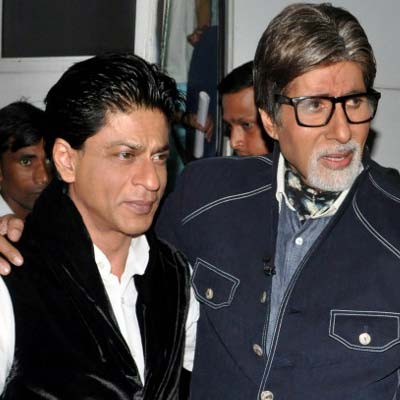
With divides like mainstream and parallel cinema, single screens and multiplexes, Indian cinema lives under a divide which is a deterrent to its own good, superstar Shah Rukh Khan said here Saturday, even as Amitabh Bachchan felt the need of the hour is to “blend in” to go global.
“Until we don’t inculcate a habit of collaborations, we won’t be able to inch towards global cinema,” Shah Rukh said at the Solutions Summit, a conclave organised by NDTV to celebrate 25 years of its existence.
The actor said it is important to be able to give to the world what it understands, in order to be accepted.
“If you want to be a part of global cinema, you have to tell what you want to tell, show the emotions which you want to show, but you have to put it in the way the world wants to see it,” he added.
Shah Rukh was joined on the panel with veterans like Amitabh Bachchan, Waheeda Rehman and Oscar-winning composer AR Rahman.
Rahman, who has created tunes for international projects like “Slumdog Millionaire” and “127 Hours”, says he finds himself in a situation when different things are expected from him in India and in foreign shores.
“I have been a victim of this. What is considered to be good here, is not good there…I have to switch between the two. However, there are some things which are common as well,” he said.
Amitabh, 71, who made his Hollywood debut with “The Great Gatsby” earlier this year, agreed with the fact that Indian cinema is unique, but added that we need to try and “blend in”.
“It is obvious that our cinema is unique. We need to blend with the west in order to be global,” he said.
Amitabh attributes this to the work of the current generation of actors and filmmakers, who are putting in efforts to make Indian cinema visible to the world.
“Shah Rukh Khan and Karan Johar are responsible in bringing commercial cinema to where it is now. The way they have marketed it has helped us a lot. I think that was a point when Indian cinema became global,” he added.
source: http://www.dnaindia.com / DNA / Home> Entertainment> Report / Place: New Delhi, Agency:IANS / Saturday – December 14th, 2013
(Pervez Bari): “The time has come for the entire Muslim world to introspect and get awakened to revisit five centuries, from 750 to 1258 AD – which is often described as the Golden Age of Islamic science — the teaching and practice of medicine in Europe was heavily influenced by the works of Al-Razi (d. 925), Al-Zahrawi (d. 1013) and Ibn Sina (d. 1037) to reinvent Islam’s image of peace, human values and service to humanity through Quranic injunction and Prophet Muhammad’s (PBUH) sayings (Hadees).
The difference between non-Muslims and Muslims is only that of service to humanity by the latter on the directives of Quran”.
The above observation was made by Mr. K. Rahman Khan Union Minister of Minority Affairs, who was the chief guest, while delivering the inaugural address of the three-day International Conference on “Revisiting Abul Qasim Al-Zahrawi’s Legacy in Medicine and Surgery” here on Friday evening at the India Islamic Cultural Centre.
Rahman Khan lamented that whole of Islamic world today is in turmoil despite it is blessed with wealth at its hand but no research is being conducted to benefit mankind. He called upon Muslims, especially youth, to emulate Al-Zahrawi, who has been called father of modern medicine and surgery, not only in medical but all other fields to serve the mankind.
The New Delhi-based Institute of Objective Studies, (IOS), in collaboration with MESCO (Muslim Educational, Social and Cultural Organisation, Hyderabad), and Maulana Azad Education Foundation, Ministry of Minority Affairs, New Delhi is organizing the three-day international conference on to mark the 1000th death anniversary of the pioneer physician and surgeon and highlight his wide-ranging contributions to medicine and surgery. The co-sponsors of the event are India Islamic Cultural Centre, New Delhi, and PARAS HEALTHCARE.
Prof. Omar Hasan Kasule, Sr. Faculty of Medicine, King Fahad Medical City, Riyadh, KSA, in his presidential address said that Islamic medicine is not specific medical procedures or therapeutic agents used in a particular place or a particular time. Islamic medicine is universal, all-embracing, flexible, and allows for growth and development of various methods of investigation and treatment of diseases within the framework described above’. The conceptual clarification from this definition opened the door to Islamization of modern scientific medicine.
Prof. Kasule Islamic Health Care Industry provides a value-added to medical care, spirituality, ibadat-friendly hospital, and Islamic ambience. The Islamic approach provides holistic care. Unlike Islamic finance, it started with professional training at faculties of medicine. All have a stake in health only a few have a stake in banking, he added.
Meanwhile, Harish Chandra Singh Rawat, Union Minister of Water Resources, in his address said that he salutes the sense of dedication and sense of inequality in Islam which Al-Zahrawi followed to serve whole humanity and not Muslims alone.
Dr. Fakhruddin Mohammad, Organising Secretary & Hony. Secretary, MESCO, Hyderabad threw light on the introduction of the theme of the international conference aptly.
Dr. Ahmad Abdul Hai, MD & Chief Consultant, Hai Medicare & Research Institute, Patna, in his key-note address said: “Islam has made a very glorious contribution to the art of healing. The basic impetus and the inspiration for this Islamic medicine came from the Noble Quran and the teachings of the Holy Prophet which took medicine away from the realm of superstation & fantasy and gave it a rational footing. This was the basis of Islamic Medicine”.
Dr. Hai quoted Dr. Ahmad Al Kadi of USA who had said: “the treatment in question may be spiritual, physical, exercises, nutritional adjustment, pharmaceuticals preparation (natural or synthetic) surgical procedures, implants, use of modern diagnostic tools (MRI & PET Scan), radiation therapy or a combination of any of these modalities”.
This definition of Islamic medicine may come as a surprise for some of us who feel that Islamic medicine is something limited to the therapy practiced by the revered old Hakeem’s, or is rooted only in natural herbs or is limited to the direct health related teachings found in the Quran & Hadith, or some faith healing manoeuvres, he added.
He said that Islamic medicine includes all the modalities of modern medicine but yet differs from it because it is rooted in divine faith & ethics. It strives for excellence. It is comprehensive, paying attention to the body, the psyche and the soul. It takes into account not only the individual patient but also the society. It is universal, utilizing all useful resources and offering its services to all mankind.
Earlier, Dr. Fakhruddin said that Abul Qasim Khalaf ibn al-Abbas al-Zahrawi (940-1013), known as Albucasis in the West, devoted his entire life, in Madinat al-Zahra, near Cordoba, in Muslim Spain, to medical research and practice. He made an outstanding and original contribution to medicine, surgery, orthopaedics, gynaecology and obstetrics, pharmacology and dentistry. He has been described as the father of modern surgery.
At the outset Maulana Abdullah Tarique recitated verses from the Holy Qur’an. Prof. M. Afzal Wani, Professor of Law, GGS IP University, Delhi, welcomed the dignitaries, guests and delegates. The inaugural session of the International Conference will be webcast live on the link http://vectraimage.com/webcast/ios/. Dr. Mohammed Iftekharuddin, Director, MESCO, Hyderabad conducted the inaugural function with aplomb.
Meanwhile, after the Maghrib prayers a plenary session was held on the theme of Islamic ethos in al-Zahrawi’s contribution to medicine and surgery which is still going at the time of going to the press. The plenary session is chaired by Maulana Dr. Saeed Al Azami Al Nadwi, Chancellor, Integral University and Chief Editor, Al Baas Al Islami, Lucknow. Prof. Hakim Syed Zillur Rahman, Founder President, Ibn Sina Academy of Medical Medicine and Sciences, Aligarh is the Co-Chairman of the session. (pervezbari@eth.net)
source: http://www.siasat.com / The Siasat Daily / Home> India / by Pervez Bari pervezbari@eth.net / Friday – December 13th, 2013
Rizwan Manji, an American actor of Indian origin, will be seen in Leonardo DiCaprio-starrer “The Wolf of Wall Street”.
The Outsourced actor plays the role of Khalil, a stockbroker in the firm of Jordan Belfort, portrayed by DiCaprio. Directed by Martin Scorsese, “The Wolf of Wall Street” also stars Margot Robbie and Matthew McConaughey, among others. Rizwan has also played small parts in Hollywood movies like The Guru and Transformers in the past, but this is the first time he has bagged a crucial role, said a statement.
The Wolf of Wall Street, distributed by MVP Entertainment and PVR Pictures, will release Dec 25. DiCaprio’s another film The Great Gatsby, which came out this year, saw Bollywood megastar Amitabh Bachchan in a small role yet interesting role.(IANS)
source: http://www.headlinesindia.mapsofindia.com / Headlines India / Home> Entertainment News> Hollywood / by IANS / December 11th, 2013
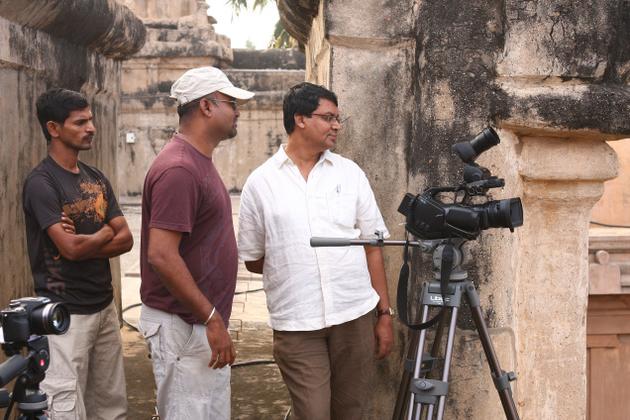
A journey within: The shooting of the documentary / by Special Arrangement / The Hindu
A documentarian sets out in search of his identity and comes up with the untold story of Tamil Muslims
“O Mankind! We created you from a single (pair) of a male and a female, and made you into nations and tribes, that ye may know each other…” Yaadhum, a documentary by the filmmaker Kombai S Anwar, opens with this quote from the Quran, and the image that follows is practically a counterpoint — the procession of Lord Ranganatha along the streets of Kombai, in the Theni district of Tamil Nadu, accompanied by traditional temple sounds from the nagaswaram and a large drum.
Then, as the procession passes the local mosque, we see the reason for this juxtaposition of word and picture: the investigation into the arrival of Islam in a place of Hindus and Tamils. In a voiceover, Anwar says, “While ‘who am I’ is never a question that bothered me during my growing-up years, it became quite important to me and to countless other Muslims, especially in these increasingly troubled times.” The documentary is labelled ‘A Tamil Muslim’s Journey In Search Of His Roots And Identity.’
Anwar told me that the idea for the film took shape from a paper he presented — Tamil Muslims: The Untold Story — at a national seminar. The paper was well received, and he was invited to give more talks on the subject. “After every presentation,” he said, “there would invariably be a few from the audience asking if a CD of the same material was available, so that they can pass it on to friends. With many such requests, and tired of the stereotyping of Muslims as well as the increasing polarisation, I thought I should make this the subject of a documentary film, so that it can reach a bigger audience.”
When he started about four years ago, he found it difficult to get funding, as Yaadhum was seen as a “religious project.” So he went ahead on his own, with money from his sister, a few friends, and his professional assignments in photography and filmmaking, which included a series of short films on the Big Temple at Thanjavur commissioned by the ASI.
Yaadhum, which loosely means “all” or “everything,” showcases the close relationship between Muslims and those from other communities. In one stretch in Madurai, we meet the Muslim family that has, for generations, been building the fence around the sacrificial pit in Puttu Koil, the site of one of the Thiruvilaiyadals of Lord Shiva. “These relationships have evolved into kinship in southern Tamil Nadu,” says Anwar, who found it difficult to get permission to shoot inside mosques and temples. To film the prayers at the Kombai mosque, for instance, he had to ask the jamaath leaders (office bearers of the mosque), who, in turn, asked the congregation during the Friday-afternoon Jumma prayer. Only after they agreed could Anwar go ahead. The officials at the temple, on the other hand, wanted some time to think about it; eventually they said he could go ahead. Later on, when they got to know him, they admitted that they were initially wary about a Muslim showing interest in the temple, so they checked with a friend from the CB-CID. Anwar told me, “It was my luck that the CB-CID asked them not to worry.”
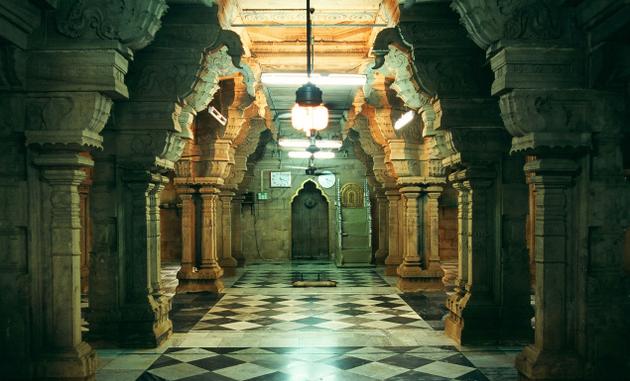
The Kilakarai Jumma Mosque / by Special Arrangement / The Hindu
It is precisely these rifts that the film intends to bridge, by showing how, once, these rifts didn’t exist at all. At the site of a dig near Kodungallur, a major port of the Chera kingdom, Prof. PJ Cherian, Director, Kerala Council for Historical Research, speaks of its “multi-cultural character 2000 years back”, and how “people belonging to different cultural groups, different belief systems, different practices, different traditions had an opportunity to come together and have interfaces. They all may have come here as traders. But you know trade doesn’t carry just goods. It brings in ideas, technology and new thinking… Multiple groups from the Mediterranean, from the Saudi Arabian region, from West Asia, from the Mesopotamian region, from the Indian Ocean rims, all were active here.”
This cultural overlap is found in Tamil Nadu too — say, in the Vaishnavite pilgrimage town of Alwar Thirunagari, where the mosque is built in the Dravidian architecture style. Dr. Raja Mohamad, Asst. Director of Museums (Retired), Govt. Museum, Chennai, says that there are no regulations with respect to Islamic architecture. “All that’s needed is a quiet place for prayer. And while building this space, the builders adopted the local architectural style.” Yaadhum is some sort of road movie, and Anwar’s stops along the way illuminate various aspects of Islam in the South and even Goa. He goes to Chola country, establishing the presence of Muslims through an inscription that refers to “Ahmed the Turk.” He goes to Kayalpattinam, which belonged to the Pandyas, and finds an almost 1000-year-old mosque to which additions have been made at different times. He narrates the history of the Tamil Muslims of Pulicat, most of whom are boat builders. He goes to Calicut, home of the Mapilla Muslims. Prof. MGS Narayanan, Director General, Centre for Heritage Studies, Dept. of Cultural Affairs, Govt. of Kerala, talks about a law which is supposed to have been passed by the Zamorin that at least one member of the fishermen families in Calicut must get converted to Islam so that there will be enough people to support naval warfare against the Portuguese who wanted to conquer Malabar in the 16th Century. (Hindus were generally reluctant to go to sea.)
We see venues, like Kottar in Nagercoil, where Tamil-Muslim literature flowered. The Arabic, Persian and Urdu influences introduced many new genres to Tamil literature — Kissa, Nama, Padaipor, and Munajaath. Among the most pleasant surprises of the film — and one that underscores the narrative crux of cultural osmosis — comes in these portions. We see a palm-leaf manuscript of Mihraj Maalai, poems written by Aali Pulavar in the 16th Century in memory of the ascent of the Prophet, and then we hear Isai Aruvi Seera Aboobacker sing these verses like a virutham (a free-style rendition, not set to a beat) in the Carnatic raga Kapi.
At the end of the film, Anwar says, “I am only halfway through my journey.” He still has many more miles to go and oceans to cross, this time in search of the Tamil Muslim Diaspora — but he has no more doubts about his roots. “I am a Tamil, a Muslim, and so many other things. In short, I am all of this —Yaadhum.”
source: http://www.thehindu.com / The Hindu / Home> Features> MetroPlus / by Baradwaj Ranjan / Chennai – November 29th, 2013
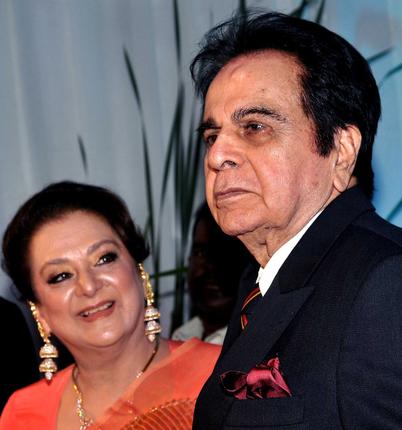
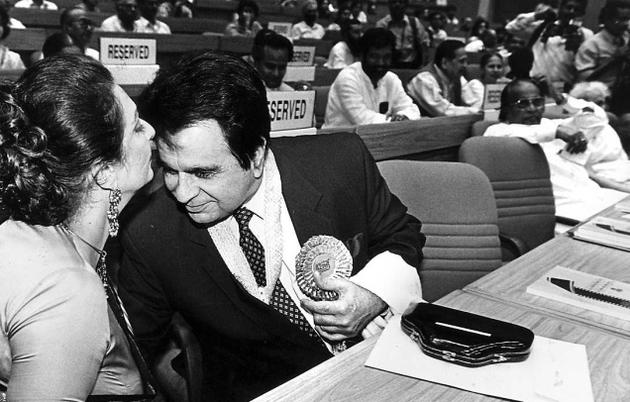
Described by Satyajit Ray as the ultimate method actor, Dilip Kumar stands tall as a polished performer though he retired from acting 15 years ago due to health reasons. (Publicity Material)
Dilip Kumar was not getting the right mood to shoot an intense scene prior to the climax in Footpath. Two days passed and director Zia Sarhadi was worried. He had to complete the film in time. Undecided about what he should do, the thespian went to Brabourne Stadium and concentrated on playing cricket.
Remembering the incident Dilip Kumar says, “I was totally involved in batting. After hitting a couple of boundaries I had a strange feeling within me. Putting an end to the game I came back to the pavilion. Then I called Zia Sarhadi directly and informed I was ready to shoot my scene that very day. Zia Sarhadi spent no time and organised the shooting at Ranjit Studio.”
Dilip Kumar broke down emoting, ‘Uth Bani Nashu Aa Gaya’ sans glycerin in his eyes. He was crying after the sad demise of his elder brother in Footpath. The shot was Okayed in one take proving Dilip Kumar was peerless in pathos.
Described by Satyajit Ray as the ultimate method actor, Dilip Kumar stands tall as a polished performer though he retired from acting 15 years ago due to health reasons. Till date he remains the actor most everyone – like Rajendra Kumar, Manoj Kumar, Amitabh Bachhan and Shahrukh Khan – has imitated. His piercing looks, highly medulative dialogue delivery balanced perfectly with his usage of the right palm makes him the acting icon whose assets have been dedication, intensity and versatility.
Dilip Kumar narrates an interesting anecdote, ”In Jogan, after Nargis leaves for her heavenly abode whilst praying, I was confused how to react. There were no dialogues. Director Kidar Sharma asked me to throw a stone in a pond, watch the water ripples and silently walk away. The shot created cinematic magic and it was the one with which the film ended.”
Dilip Kumar thinks highly of his late colleagues. He says, “We shared a mutual set of unspoken ethics and had a deep silent regard for each other. Raj Kapoor, Dev Anand and I slogged it to the top on basis of sheer merit and hard labour. We never went for unnecessary publicity.” According to him Amitabh Bachhan is the best star, actor in the past four decades and Sanjeev Kumar was an amazing actor who truly took over after Ashok Kumar, Motilal and Balraj Sahni, the gharana of natural subdued acting.
Andaz, Daag, Devdas and Gunga Jumna stand testimony of great acting abilities. When he was getting stereo typed in tragedy, Dilip Kumar opted for comedies and proved he was equally good at it. Explains Dilip Kumar, “I adopted for a natural design for my light hearted characters in Azad, Kohinoor, Leader and Ram Aur Shyam. They needed a great sense of timing. Whilst method requires rehearsals, preparations and efforts, comedy is spontaneous.”
The way he performed scenes with his heroines has also become classic. Dilip Kumar says, “I enjoyed best of relations with all of them. Kamini Kaushal, Meena Kumari, Nargis, Nimmi and Madhubala were highly gifted. So were Vyjayantimala, Waheeda Rehman and Rakhee. I fondly remember my histrionic interaction with late Smita Patil.
As I asked her, ‘Tum Vijay Ki Bahu Ho’, she conveyed an intense look of respect which spoke volumes. Smita was an accomplished actress.” Aye Mere Dil Kahin Aur Chal lipped by the thespian for Talat Mehmood is an immortal number. So are Shame Gham Ki Kasam, Suhana Safar and Nain Lar Gaye Re. Admits Dilip Kumar, “Talat understood the tragic lover in me too well. Rafi’s amazing versatility suited my songs of different moods. Mukesh also did true justice to songs. I lipped for him.”
source: http://www.newindianexpress.com / The New Indian Express / Home> Entertainment> Hindi / by Ranjan Das Gupta / Express Features / December 11th, 2013
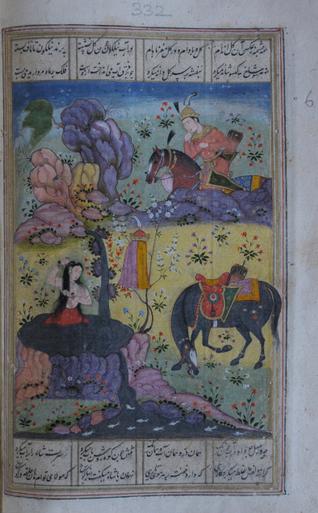
Khusrau espies Shirin bathing, a page from the ‘Khamsa-e-Nizami’ book. / Photo: Special Arrangement / The Hindu
Bearing excellent paintings, richly illuminated and gilded, the fine-bound manuscripts at Salar Jung Museum are real treasures
Salar Jung Museum contains some ‘valuable books of art’— illustrated manuscripts — of Persian and Deccani languages. Bearing excellent paintings, richly illuminated and gilded, fine-bound and owned once by royal personages the Museum’s manuscripts are real treasures.
Manuscript illustration was greatly prized by Mughal emperors, their nobles and Deccani Sultans. Akbar who had 100 artists – painters, illuminators, scribes, book binders – in his atelier had many manuscripts including Hamza Nama, Ramayana, Mahabharata illustrated. His principal noble at Ahmedabad, Khan Khanan, built up a world class library containing illustrated manuscripts. Ibrahim Quli Qutb Shah, who ruled Golconda from 1550 to 1580, had set up a studio in his palace for calligraphers, painters, gilders and book binders and had manuscripts of fine quality produced.
‘The art books’ of the royal workshops form a priceless heritage, “at times of regal splendour…. and always a joy to behold” (Karl Khandalavala).
Of Salar Jung Museum’s famous illustrated manuscripts, a description of four books is attempted here. They are: Tuhfe-e-Sami, Majalis-ul-ushshaq, Khamsa-e-nizami, and Diwan-e-sultan Muhammad Quli Qutb Shah.
1. Tuhfe-e-Sami: The author of this 229-folio Persian manuscripts is Prince Sam Mirza (1517-76), son of Shah Ismail, the founder of Safavid dynasty in Persia. Prince Sam Mirza dedicated Tuhfa containing biographies of poets, painters, calligrgaphers and other learned men to his brother Shah Tahmasp (1524-76), the ruler of Persia who, however, put ‘Sam’ to death in 1576 when he rebelled against him. The manuscript is gilded and highly ornamented. Done in Shirazi style of Persia the Thufa’s ten miniatures “are of excellent quality and very colourful with charming colour contrast’’ (Karl Khandalavala).
The manuscript scripted in fine Nastaliq bears a seal of the year of A.D. 1651 of one Mustafa Khan Lari, who was probably a Golconda noble.
2. Majalis-ul-ushshaq ( Assemblies of lovers): Purchased by Sir Salar Jung I (1829-83), ‘Majalis-ul-ushshaq’ is an account in Persian of the Sufi saints being in love with women and men. Sufi doctrines explain that to experience the beauty of the ‘unseen’ God the first step is the worldly love – love of women and men. The power and course of such love as experienced by some Sufi saints is depicted in majority of the 71 miniatures contained in the manuscript.
The book has a lot of gold used in decorating its 237 folios, headings and borders. The painting style of its miniatures is of Shirazi school of Persia.
The author of this manuscript is Mansur bin Baiqara (1469-1506) who wrote it in 1552. The script is good Nastaliq and the scribe is Amir-al-katib.
3. Khamsa-e-nizami: The Khamsa (five-piece verse collection) of the poet Nizami, a Persian poet, is one of the most famous Persian works and there are numerous illustrated copies of it in Persian and Mughal schools of painting. The Mughal style Museum’s Khamsa was purchased in 1739 for the library of Nawab Munirddoulah Wakil-us-sultan (Prime Minister). It consists of five ‘mathnavis’ (long poems) dealing with the stories of Laila-Majnun, Khusrau-Shirin, King Behraum Gaur, Sikandar and Sufism.
It contains five unwans (title pages), gilded and highly ornamented. Its 325 creamish folios are gold sprinkled. Its eleven full-page miniatures show animals, brilliantly drawn and figures, finely painted. Dated A.D.1618, the scribe of Khamsa is Fatah Muhammed bin Moulana Sahib Katib and the script is good Nastaliq.
The manuscript bears the seal of Lutfullah khan, a noble of Mughal family, who appears to have died in Golconda when Aurangazeb was engaged in conquering the fort.
4. Diwan-e-sultan Muhammad Quli Qutb Shah: Written in ‘Zubane-deccani’ by Sultan Muhammed Quli Qutb Shah who ruled from Golconda between 1581 and 1611 is regarded as the earliest poet in Deccani language(Urdu). He founded the city of Hyderabad and built the famous Charminar. His ‘Diwan’(odes) deals with subjects like sports and games, royal palaces, seasons and description of his 17 mistresses.
Dated 1595, the Diwan has eight miniatures, all gems of miniature art. It was written by Moulana Zainuddin, Khushnawis (calligrapher) of the Sultan. The paper used is gold sprinkled. The script is excellent Thulth. It has 138 handsome folios.
Deputy Keeper (Retd.), Salar Jung Museum
source: http://www.thehindu.com / The Hindu / Home> News> Cities> Hyderabad / by B. Kotaiah / September 19th, 2013
UNSURPASSED ; Dilip Kumar’s public persona, extraordinary performances and achievements are part of folklore
CINEMA – A rare peek into the life of the legendary actor Dilip Kumar DEEPAK MAHAAN
There are actors and then there is Dilip Kumar. Like Mount Everest, he is beyond comparison. His one-film-at-a-time rule means his body of work is meagre. But is it astounding! As the creator of film acting grammar, Dilip Kumar has not only endeared himself to masses across all continents but also set benchmarks that have become difficult to surpass.
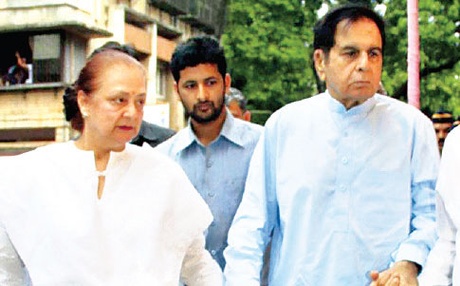
While Dilip Kumar’s public persona, extraordinary performances and achievements are part of folk lore, his personal domain remains largely untouched since he is fiercely protective of his privacy. However, by a wonderful quirk of fate, I recently chanced upon several fascinating facts about his personal life which revealed that he is a devoted home bird. The peep into this thespian’s life, courtesy his gracious and charming wife Saira Banu, only reconfirmed that ‘Sahab’, as Saira fondly addresses her hubby, “isn’t just a synonym for excellence but also a man of incredible traits”.
Inspecting the vast memorabilia of Saira Banu’s personal collection of photographs and videos, I discovered that the actor, who gave face to many Mohammed Rafi melodies on screen, is a fine singer himself. He may have enacted the bhajan “Sukh Ke Sab Saathi” in “Gopi” to perfection but he also sings the same with great relish at home. Sharing a video where Dilip Kumar sings in harmony with Kalyanji-Anandji’s harmonium, Saira confides, “Crooning Rafi Sahab’s love songs as well as recitation of Urdu couplets are Sahab’s way of teasing and romancing.” An old photograph makes her declare that Rafi magic rules their household and that she is one-up on her husband since she has sung a duet with Rafi Sahab in “Aman”! But she is convinced that none can beat her hubby at ‘Antakshri’ “since he remembers many old film songs… he knows an apt couplet for every occasion”!
Urdu and Persian poems acquire a spiritual eloquence on Dilip Kumar’s lips. Each word and inflection is adorned with such perfect caress and delicate throw that the simplest of couplets adorn a heavenly charm. Videos of his overseas tours show how he mesmerises audiences with his profound and extempore oration in English and Hindi and like his dialogue delivery; his repartee is equally stunning and enjoyable. “Contrary to his image of a serious man”, Saira discloses, “Sahab is a fun loving person who can keep you in splits for hours”. Videos of family functions show him regaling friends and relatives with witty anecdotes and his emotive eyes come into full play even in ordinary conversations.”
She reveals, “Sahab is like a child at heart who loves to live every moment”, even as we witness scenes from Kashmir where he playfully targets his wife with a barrage of snow balls! The beauty queen remembers “shooting outdoors with him was a lovely affair” as Sahab would “always take extra care of not just my comfort but the needs of an entire film unit”.
Saira says, “Sahab always had a penchant for cricket” but how good a cricketer he was is revealed on tape by none other than the sterling Indian cricket captain of yesteryears, Mansur Ali Khan Pataudi. Recalling the era when film stars and cricketers frequently collaborated for charitable causes, Pataudi elaborates, “Dilip Sahab was a difficult batsman to dislodge and once even hit the first ball of an established first class bowler for a six at Brabourne Stadium!” This vehement desire to excel made Dilip Kumar learn sitaar for “Madhuban Mein Raadhika Naache Re” song sequence of “Kohinoor”. While that effort is well recorded in media, not too many are aware that he is an equally proficient exponent of the trumpet. Not only does he play the difficult instrument in complete tandem with the local brass bands whenever the mood takes him he is also a robust dancer at family celebrations; some of his moves could surely make Shammi Kapoor or Helen envious!
As Saira shares pictures and stories of Dilip Kumar’s long and dedicated work for the National Association for the Blind (NAB), an old family aide tells me how the thespian never missed the annual event of the NAB train run for fund raising. Sipping tea and glancing at a TV advertisement, Saira informs “Sahab refused to model for many an august brand, despite lucrative offers over the years” since he deemed it “a demeaning way of money making”.
Going over the treasure chest of Saira’s sacred memories, I was surprised one day to find Dilip Sahab walk into the penthouse lounge. The affection with which Saira and he greeted each other showed how their celestial bond has grown stronger and fonder over the years. Even though I was meeting the legendary actor after several years, I felt time had not been able to dim his cherubic smile and spirit despite his poor health. Time stood still for me as he held my hand and patted my back; and though the silences were longer, his measured sentences were still worth their weight in gold. Like the whole nation, I wish and pray that this coming birthday (December 11) is one of many more to come in Dilip Kumar’s memorable journey.
source: http://www.thehindu.com / The Hindu / Home> Features> Friday Review / by Deepak Mahan / December 06th, 2013
Bangalore based Kaleem Pasha, the young multifaceted and multi-talented singer, sarod player, actor, poet and Co-writer will release a book titled Flashback… on late actor Bob Christo (bodyguard of actor-filmmaker Sanjay Khan) on June 14th at Crossword, Juhu Mumbai. Bob Christo during his last days was closely associated with Kaleem Pasha, who became a fan of his. Very few may be aware that Bob Christo was a Shaayar… too. The book will highlight never known facts of the late versatile actor known for his bad-man roles.
Kaleem Pasha has rendered songs and acted in Kannada films like Kaviya Kogile, Bangalore Raphrile amongst many others. He is also doing an untitled Kannada film where he is also crooning with Kavita Krishnamurthi. He has even played the lead in a Hindi film titled Saadu Mera Jaadu. Known as the title clone singer and fan of Pankaj Udhas he has bagged 9 awards from India; viz; Tipu Sultan Shahid Anwar award, Rajiv Gandhi Award, Proline India Achievers Society award, Lions Club Award from Delhi, etc. He has even bagged Sheikh Shahid award from Dubai. He has penned and rendered more than five albums on various chapters of life! . Zindagi Ki Dastaan, Zindagi Ek Ehsaas, Zindagi Ek Nashan and others. It may come in as a surprise that Kaleem who was closer to veteran singers like Mannadey, Mohd. Aziz, Anwar and hailing from Ali Akbar Khan gharana is an hotelier by profession too and holds a chain of coffee shop down south. He has even penned a book on poetry A Journey Of Successful Life…
Now he is soon stepping into Mumbai with a new pop album with a fusion of Indian melodies and the style of Mohd. Rafi sahib and it will appease the young and old alike. Welcome aboard ..
source: http://www.radioandmusic.com / RadioandMusic.com / Home> Channels> Indiatelivision / by RnM Team / June 06th, 2011