Category Archives: Community Involvement / Social Issues

Lakshmibai, Hazrat and the Revolt of 1857

Faizabad, UTTAR PRADESH / Kathmandu, NEPAL :

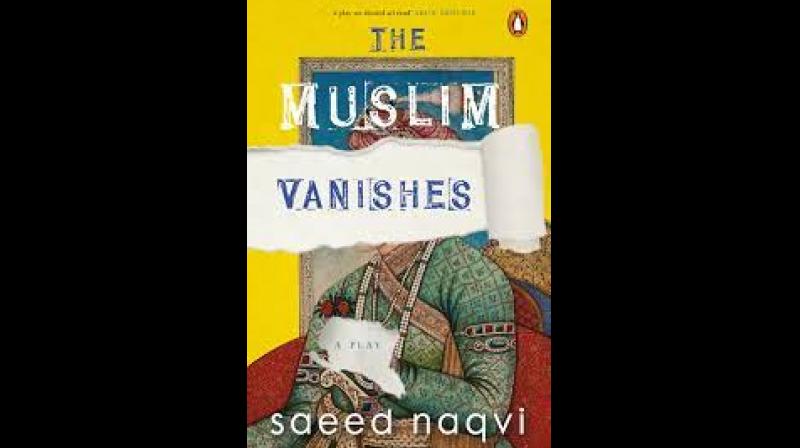
Two women, one war. What sets them apart? Professor Lakshmi Subramanian explores Rudrangshu Mukherjee’s ‘A Begum and A Rani’.

The focus of this work, as evident in the title, is two women who fought the same war in 1857 but who never met, whose lives were strangely similar and yet were recalled very differently. Why this was so, what made for a particular telling of their afterlives and how in course of the retrospective retelling, one became a legend and the other a mere trace, forms the core of Rudrangshu Mukherjee’s narrative.

It departs from his earlier work on the Revolt of 1857, where he placed emphasis initially on the diverse structural elements that made up the popular uprising in Awadh and subsequently on explaining the violence that characterised the actions of both the insurgents and their suppressors. Here, in contrast, Mukherjee prefers to focus on the individual as the actor of history and on the politics that animated the reconstruction of individual lives. He does so with elegance, ever attentive to the dictates of Clio, in unravelling the complexity of the context in which the two protagonists found themselves as they were sucked into the vortex of real politics and popular expectations.

(A Begum and A Rani was published by Penguin Allen Lane in July 2021. Buy it here.)

The first two chapters of the book give the reader a taste of the Revolt in its early stages, when a series of military mutinies collapsed into agrarian rebellion, bringing myriad elements into the fray, ranging from the aggrieved taluqdar to the oppressed peasant, from the disenfranchised ruler to the urban dweller. Amidst the clamour of the rebels for a return to Mughal rule and for an end to the unholy power of the hated firang, emerged a slow political front to embark on campaigns against the British forces and coordinate military activity. 

Two parallel centres of authority

In Lucknow, the discarded wife of Wajid Ali Shah found herself at the epicentre of protest, whereas in Jhansi, Lakshmibai was urged by the rebels to take up their cause. While the latter was found in active combat, Hazrat seems to have attended to the day-to-day requirements of the troops, making sure that they were provisioned and supported. Hazrat seems to have also been pitted against one of the most charismatic leaders, Maulvi Amir Ali, who insisted on Hazrat becoming his disciple — which Hazrat herself resisted. 

That these two individuals represented two parallel centres of authority is clear but what this implied in terms of differing conceptions of freedom is not readily apparent. However, in the analysis of the ishtahars or proclamations that were issued, Mukherjee makes the important point that religion was the integral and unifying idiom in the Mutiny.

The Afterlife

It is in the chapter titled Afterlife that the book really comes into its own. Here, Mukherjee tracks the moments in the emergence of a nationalist historical consciousness in Maharashtra, Bengal, and subsequently in North India, in which the status of the martyr queen gained traction. Analysing poetry, local memories, eulogies and early historical work on the Rani of Jhansi, Mukherjee tracks the making of a very particular historical memory and its amnesiac other, thereby engaging with the complex relationship between myth and history. 

He suggests that these categories were not necessarily oppositional. Rather, both were exercises in remembering and forgetting and reconstructing. It is to his credit as a practitioner of history that he reconstructs as well as he does the lives of two women — one of whom was subsequently pushed on to the centre-stage while the other was relegated to the margins.


Lakshmi Subramanian is professor of History in BITS Pilani, Goa. She is the author of several works on music and nationalism as well as on India’s maritime history. Her latest book is Singing Gandhi’s India: Music and Sonic Nationalism. When she is not steeped in teaching and research, she likes to travel to the hills.

source: http://www.telegraphindia.com / The Telegraph, Online / Home> My Kolkata / by Lakshmi Subramanian / December 03rd, 2021

Wins Best Project Of The Year Award

Mysuru, KARNATAKA :

The students of ATME College of Engineering have won Best Project of the Year Award in Electrical and Electronics Engineering Stream in the 44th Series Student Project Programme held under Karnataka State Council for Science and Technology, Smart Personal Protective Equipment for Healthcare Workers to Combat COVID-19.

Seen are (standing from left) Team members Mohammed Huzaif, Haseebulla Baig, Syed Rawoofur Rahman, Simrah Fathima with (sitting from left) R. Shreeshayana, Assistant Professor and Project Guide, Department of EEE, Dr. L. Parthasarathy, Professor and Head, Department of EEE, Dr. L. Basavaraj, Principal, ATMECE, Dr. Sachidanandamurthy, Administrative Officer and Dr. G. Rathnakar, Dean – Student Affairs.

source: http://www.starofmysore.com / Star of Mysore / Home> Photo News / December 02nd, 2021

Andhra Pradesh: YSRCP MLC Kareemunnisa passes away

Vijayawada, ANDHRA PRADESH :

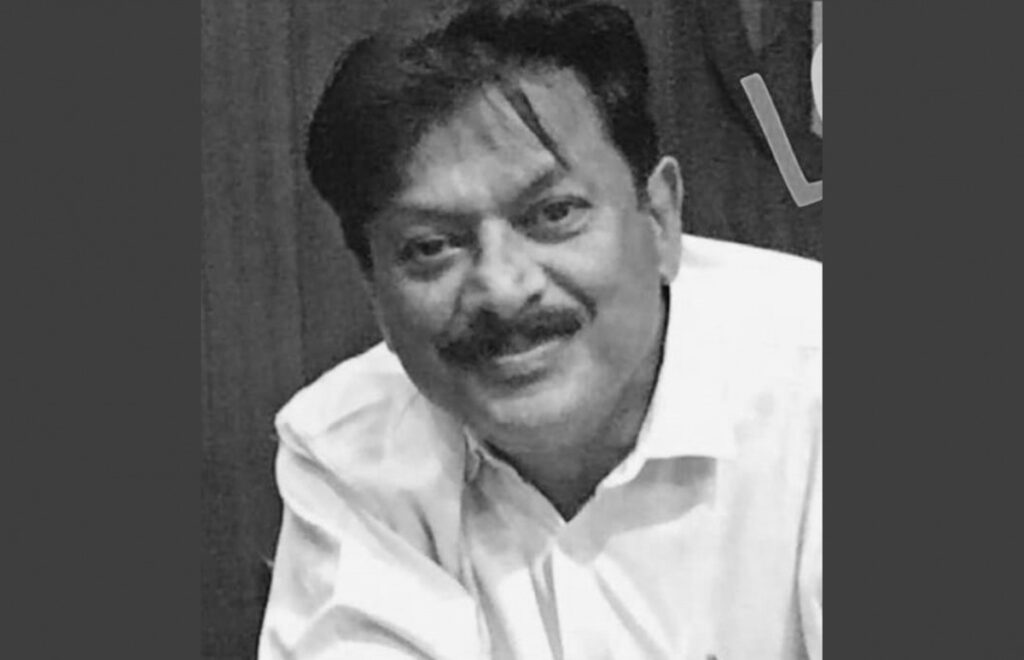
YSRCP MLC Kareemunnisa passes away

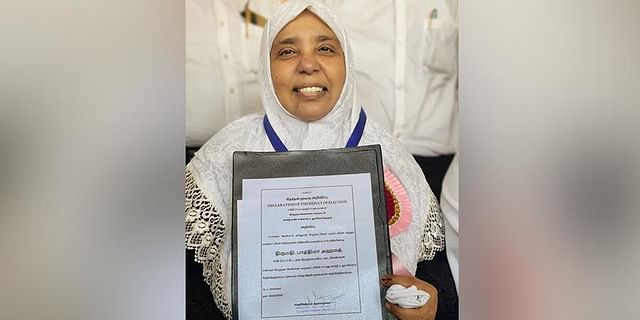
In a tragic incident, YSRCP MLC Muhammad Kareemunnisa passed away on Friday night due to a heart attack around 11 pm. She was 65.

According to the sources, Kareemunnisa was shifted to a private hospital after she fell ill where she breathed her last while undergoing treatment.

The YSRCP MLC attended the Assembly meeting on Friday morning.

She started her political career with the Congress party and later joined YSRCP. She was offered MLC seat by the YSRCP chief YS Jagan Mohan Reddy eight months ago.

YSRCP chief YS Jagan Mohan Reddy expressed grief over her death and offered heartfelt condolences to the bereaved family. He also said that the family members of Kareemunnisa will be given all support by the YSRCP.

source: http://www.thehansindia.com / The Hans India / Home> News> State> Andhra Pradesh / by Roja Mayabrahma / Hans News Service / November 20th, 2021

Five KU students invent rice cooker that sucks starch

Srinagar, JAMMU & KASHMIR :

Srinagar :

Five students from University of Kashmir have invented an automatic rice cooker. Apart from working automatically, the rice cooker also sucks out starch from the rice.  

The group of inventors said, “Rice cookers accessible these days are giving us undesirable food. They prepare food without expelling the destructive material like starch which can cause medical issues among some people.”

The main goal of this invention is to suck out the starch from the rice which is unhealthy for the diabetic patients.

Earlier, the people who used to cook rice in cooking pots, used to drain out starch from the rice manually which avoided health problems like diabetes, obesity etc. It was researched by innovators that diabetic patients were advised by doctors not to consume rice made in rice cookers as it doesn’t drain out starch.  

“The cooker is designed as such that it prompts the user whether to suck out the starch from rice or not because healthy people need starch for their body,” said Jehangir Hameed, a member of the group, who is currently pursuing M. Tech.

The rice cooker will cook food with a single text message sent by a user through the mobile phone. It will monitor the starch status of the rice being cooked. It will consistently screen the starch status and will expel when it is being discharged out of the rice.

Working of the project

It has inbuilt rice bowl and water tank which are controlled utilizing controllers and hence no physical intervention is required while cooking or keeping the prepared food warm.

The device is fully automatic as it is controlled by GSM and IoT based technology. The rice cooker is programmed and configured to receive a command from a mobile phone to cook rice for people ranging from 1 to 12.

With predetermined chambers for water and rice, it will automatically put the rice and water for cooking. At every stage of cooking, the device will send an alert to the user about the number of people for whom rice is cooked. When the food is cooked, it will again send a message to the user that the food is ready.

Jehangir said, “It’s good for everyone. People who work outside, or a student who lives in a hostel, people coming from outings and sports activities after being exhausted, have no capacity to prepare food. With a single text from a mobile phone or other source, it will accomplish the cooking work itself.”

Apart from Jehangir, Azraw Hussain, Sajid Noor, Ariez Koul and Imran Nazir are part of the project along with Dr. Bilal Ahmad Malik, the Scientific Officer from University of Kashmir.

The patent authority of India has accepted and published the details of their patent on the invention.

The innovators want support from government or private companies in order to convert their prototype into a marketable product.

source: http://www.risingkashmir.com / Rising Kashmir / Home / by Insha Latief Khan / November 03rd, 2021

Marriages in graveyard

KARNATAKA :

Arif Peerzade celebrated the marriages of his children at a Muslim graveyard in Shingalapur village near Gokak of Belagavi district on Monday.   | Photo Credit: P.K. Badiger

A family from Shingalapur near Gokak in Belagavi district celebrated the marriages of their children in a Muslim graveyard in the village on Monday.

Arif Peerzade, a member of Manava Bandhutva Vedike and a follower of Satish Jarkiholi, organised the marriages of his children and nephews in the graveyard. The family put up a tent in the empty land in the graveyard and organised the wedding rituals. “We wanted to send a message against blind belief. Hence, the choice of this venue,” Mr. Peerzade said. Several hundreds of well-wishers attended the marriages.

Satish Jarkiholi’s daughter, Priyanka Jarkiholi, and convener of Manava Bandhutva Vedike Ravindra Naik blessed the couples.

source: http://www.thehindu.com / The Hindu / Home> News> States> Karnataka / by Special Correspondent / Belagavi – November 23rd, 2021

New book focuses on caste system among Muslims

Shirva (Udupi District) / Mysuru, KARNATAKA :

Muzaffar Assadi’s book examines the ways in which the social space was documented during colonial times

The cover of the book written by Muzaffar Assadi.  

Muzaffar Assadi, professor of political science in the University of Mysore, has brought out a new book on caste among Muslims, a relatively unexplored area.

In the book Alpasankyakaru Mattu Jati Vyavaste: Asmite, Vasahatushahi Mattu Meesalati (Minorities and Caste System: Identity, Colonialism and Reservation), the author argues that Islam, one of the semitic religions known for its established rules and framework, is now tested against the remnants of caste practices.

Multiple factors

The book, which runs into 264 pages and is published by Bengaluru-based Bahuroopi, explores practices of caste that are not just the result of conversion but inherent in the logic of trade, the class interest of retaining property, social mobility from Central Asia, social identity, and political expansionism.

The author says that colonialism, while documenting various castes, did make a distinction between Hindu social order and Muslim social order. In the latter case, social space for internal mobility, spaces for enlisting as ‘Ashrafs’ (Sheikh, Sayyed), and for continuing traditional occupation was available. And social hierarchy and social distancing continued to perpetuate.

Noting that colonialism created new castes, Prof. Assadi pointed out that the larger agenda of documenting, enlisting caste was ultimately meant to hegemonise, control, and dominate. The book focuses significantly on the way Muslims became subaltern classes during the colonial rule.

“With the experience derived from colonial encounters, Indian Muslims were castigated and condemned again and again for their social backwardness. This was backed by enlisting hundreds of castes among Muslims, although enlisting remained incomplete,” the author argues.

Post-Independence

The legacy continued after the Independence with reports on backward classes/ethnographic studies identifying and enlisting social groups, known for practising caste. “This culminated in identity politics, demand for affirmative action and reservation policy,” Prof. Assadi notes.

The author painstakingly unearths issues of caste among Muslims by referring to material from history, including the colonial census reports, gazetteer, travelogues, missionary works, police records and writings of Muslim scholars. The book comes at a time when there is a demand to re-enumerate castes and a growing urge for enhanced reservation.

source: http://www.thehindu.com / The Hindu / Home> News> States> Karnataka / by Naghesh Prabhu / Bengaluru – November 28th, 2021

Cong MLC candidate declares Rs 1,744 crore assets, becomes Karnataka’s richest politician

KGF / Bengaluru, KARNATAKA :

He is the owner of a Rolls Royce worth Rs 2.01 crore and two Fortuners worth Rs 49 lakh each

Cong MLC Bengaluru candidate Yusuf Sharif declares Rs 1,743 crore assets, becomes richest politician of Karnataka. Credit: IANS

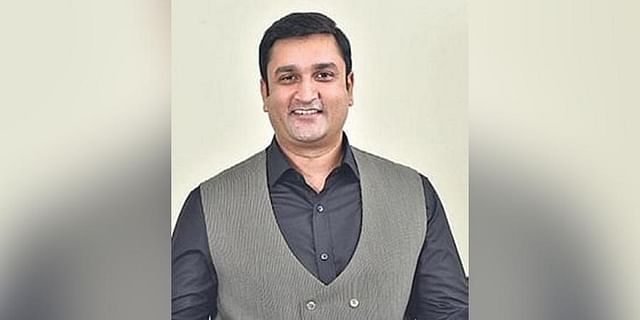
Congress’ Legislative Council election candidate Yusuf Sharif has declared assets worth Rs 1,744 crore belonging to him and his family in what is, literally, a rags-to-riches story making him arguably Karnataka’s richest politician.  

A native of Kolar Gold Fields (KGF), Sharif also goes by the monikers Gujri Babu and Scrap Babu as he was earlier into the business of selling scrap, before making a foray into real estate. 

Shariff, 54, a resident of Millers Tank Bund Road, is the Congress’ candidate from the Bengaluru local authorities’ seat in the Legislative Council, for which election is scheduled on December 10. Few in the party knew about his candidature until it was made official. 

According to his election affidavit, Sharif has two wives and five children. They have assets worth Rs 1,744 crore of which Sharif alone owns land currently valued at Rs 1,640 crore, non-agricultural. 

Sharif’s declared assets are worth more than Karnataka Congress president DK Shivakumar’s (Rs 840 crore in 2018) and BJP MLC MTB Nagaraj’s (Rs 880 crore in 2020). 

Sharif, who has studied up to Class 5, is said to be the owner of Umrah Developers, a realty firm. He also has stakes in five other private real estate companies. 

With 12 bank accounts, Sharif has declared liabilities worth Rs 67 crore. 

According to his own declaration, Sharif was raided by Income Tax authorities and levied on him tax dues worth Rs 13.43 crore. “…I have preferred an appeal before the Commissioner of Income Tax and same is admitted. The hearing of the case is yet to be done,” he stated. 

Also, Sharif has four criminal cases pending against him under various IPC sections. 

He is the owner of a Rolls Royce worth Rs 2.01 crore and two Fortuners worth Rs 49 lakh each.

How did he get so rich? “That’s a question I will answer to the I-T officials if they ask me,” Sharif told DH.  

According to one Congress MLA from Bengaluru, Sharif is not an active party man. “In fact, we were surprised that the party chose him for the Legislative Council election,” the MLA said, adding that Sharif was picked by Karnataka Congress president DK Shivakumar and senior leader Ramalinga Reddy. 

According to party sources, Sharif had bagged a scrap contract with the Indian Railways when CK Jaffer Sharief was the Railways Minister. 

source: http://www.deccanherald.com / Deccan Herald / Home> National / by Bharath Joshi, DHNS / Benglauru / November 24th, 2021

Assam’s legal luminary Abdul Muhib Mazumder dies at 89

Hailakandi / Guwahati, ASSAM :

Abdul Muhib Mazumder

Guwahati :

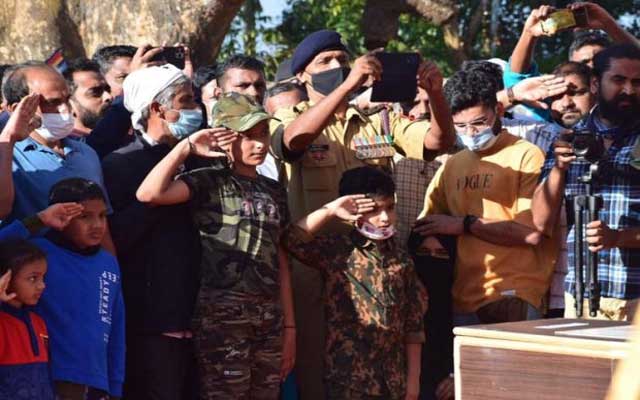
Abdul Muhib Mazumder, former Law Minister of Assam, breathed his last at the wee hours of Wednesday. He was suffering from old age ailments. Mazumder was born in Hailakandi town of Assam on August 20, 1932. His father, Abdul Matlib Mazumder, was a leading freedom fighter and a Cabinet Minister of Assam during 1946-1970.

After studying at Government Victoria Memorial High School in Hailakandi he obtained his B Sc (Hons) degree from Cotton College, Guwahati, and his MA and LLB from Aligarh Muslim University. While in college and university, he was an outstanding debater and won many awards in debating competitions. He married Alamara Mazumder on June 3, 1962 and had three daughters.

Mazumder was a Senior Advocate of Gauhati High Court as well as the Supreme Court of India. He initially worked with Fakhruddin Ali Ahmed, former President of India and a senior lawyer of Gauhati High Court, and Jagadish Medhi, a leading legal authority. He was Senior Government Advocate for several years. He was also a Lecturer in Economics and Political Science at Pragjyotish College, Guwahati (1956-1961) and at Gauhati University Law College (1961-1980).

He became Advocate General of Assam in 1980 and served in that capacity up to 1983. Later, he also served as the Advocate General of Arunachal Pradesh (1991-1996).

Mazumder entered politics in 1970s and represented LA-6 Hailakandi four times as Member of Legislative Assembly (MLA), during 1983-1991, 1996-2001 and 2011-2016. Incidentally, the same constituency had been represented by his father from 1946 to 1972. He became a Cabinet Minister of Assam in 1983 in the Congress Ministry headed by Hiteswar Saikia looking after law, power and municipal administration departments till 1985.

Abdul Muhib Mazumder (3rd from left) at the launch of his autobiography in Guwahati on July 29, 2016. Harsh Mander, Hafiz Rashid Ahmed Choudhury, and Justice Aftab Hussain Saikia are 4th, 5th, and 7th from left in the photograph. (File Photo)

In 1990s, Mazumder formed a new party called UPPA (United Peoples Party of Assam) and again became a Cabinet Minister of Assam in 1996 in the AGP-led coalition ministry headed by Prafulla Kumar Mahanta, looking after irrigation department till 2001. Subsequently he disbanded UPPA and became the President of Samajwadi Party in Assam. Later he came back to Congress. Mazumder was Deputy Leader of Opposition (1986-1991) and formerly Vice Chairman, State Planning Board of Assam. Other posts held by him were Member, State Security Commission; Member, AICC; Vice President APCC; Chairman APCC Minority Cell; and Adviser Minority Department of APCC among others.

Among his landmark cases was his defence of the late Prime Minister Indira Gandhi against her prosecution by the Tirkha Commission in 1977-78 in the High Court. Two other landmarks in his career were drafting of the IMDT Act (Illegal Migrants Determination by Tribunal Act) 1983 and Assam Accord 1985 as the then Law Minister of Assam.

Mazumder’s autobiography, Down the memory Lane, was published in four volumes. At one of the launches of the autobiography in Guwahati on July 29, 2016, Harsh Mander, then Director of Centre for Equity Studies & Special Commissioner to the Supreme Court of India in the Right to Food Case, was the chief guest. Interestingly, all the legal stalwarts on the dais that day including Justice Aftab Hussain Saikia, former Chief Justice of the J&K High Court, happened to be all his students at one time or the other.

Commenting on the demise of Mazumder, Hafiz Rashid Ahmed Choudhury, Chairman of the Bar Council of Assam, Nagaland, Mizoram, Arunachal Pradesh, & Sikkim, said, “Many successful lawyers of today learnt their ABCD of law under the guidance of Abdul Muhib Mazumder. Whenever any lawyer went to him for guidance, he was always ready to help them. His absence will be felt by everyone connected in any way with the legal process in the region.”

source: http://www.muslimmirror.com / Muslim Mirror / Home> Indian Muslim / by Nurul Islam Laskar / November 03rd, 2021

Ghizal Mahdi’s resolve in his farewell function in Riyadh

Nehtaur Town, Bijnor, UTTAR PRADESH / Riyadh, SAUDI ARABIA :

Ghizal Mahdi’s friends organised a farewell evening in his honour, on the occasion of his bidding good-bye to Riyadh, KSA, after spending an active social life for around quarter of a century.

The speakers paid rich tributes to Ghizal Mahdi’s immense contribution to the Indian community in Riyadh in general, and the Riyadh chapter of Jamia Millia Islamia Alumni Association in particular.

Speakers spoke very highly about his versatile self, sincerity and commitment towards the community.

Notably, Ghizal Mahdi was a founder member of two chapters of Jamia Millia Islamia Alumni Association (JMIAA) in KSA – Riyadh and Dammam.

He was elected president of the Riyadh chapter in 2014 for two years. The JMIAA-Riyadh Scholarship Program for bright and needy students of Jamia Higher Secondary School was initiated during his presidency. His team also brought out the first directory of Jamia Alumni employed in KSA.

In his farewell speech, Ghizal Mahdi highlighted the need to delve deep to understand the current sensitive situation of our country. He emphasised the importance of reducing socio-economic inequalities, religious and sectional antagonisms, and strengthening the brotherhood, and sharpening the joint struggle for the rights of socio-economically weaker sections and working class; and this is possible only when our thought process and actions are based on oneness of humankind.

Throwing light on his future plans, Ghizal Mahdi told that he would devote himself to the cause of creating health awareness in the countryside – and he would start this programme from his home town Nehtaur, Bijnor, U.P., and along with other activities, this Health Awareness Programme would include – organising medical camps, lectures for creating awareness about health and ailments, designing courses and motivating children to do voluntary service in the field of health, involve teachers and other socially conscious people in the project, launching awareness campaigns among children and youngsters against gutka-chewing, smoking and other harmful substances, establish diabetes centre so that the fast-spreading diabetes can be checked.

The farewell program was conducted by Aftab Nizami. Along with paying tribute to Ghizal Mahdi’s services, the following distinguished people also promised to extend support to the proposed health awareness program:

India Islamic Cultural Centre, Delhi’s Riyadh Branch convener, Murshid Kamal, senior Jamiaites – Baba Salman Azmi, Ex-President JMIAA-Riyadh Aftab Nizami, Ex Vice President JMIAA-Riyadh Ghayasuddin Ahmed, Prof. Anees Ansari, Prof. Afzal Ahmed, Arabic Translator Shahabuddin, religious scholar Shabbeer Ahmed Nadwi, Engr. Ghufran Ahmed, Economist Nisar Khan, Architect Ahmed Shukri, Flight Engineer Ateeq Ahmed, Engr. Anwar Pasha, Gulf Air Staff Neemu Khan, Arif Partapgadhi, Chaudhri Ehsan, Maulana Abdurrehman Alomri, Wasiullah Nadwi, Moosa Raza Amrohi, Shakir Jafri,– and Director Abdurrehman Al Mishari Hospital Dr Musharraf Ali, Dr Hameed and Naqi Ahmed Nadwi.

source: http://www.muslimmirror.com / Muslim Mirror / Home> NRIs / by Naqi Ahmed Nadwi / November 17th, 2021

Maeeshat Media All Set to Host 10th Minorities Business Summit in Kolkata

Mumbra, MAHARASHTRA :

An important feature of the two-day event, to be inaugurated on November 14, is participation of women entrepreneurs and management students

Kolkata : 

The city, an important business centre of the East, is gearing up to host a business event to promote and felicitate entrepreneurs from a minority background. The 10th All India Minorities Business Summit and National Brand Awards 2021 will be inaugurated on Sunday, November 14, at Kala Mandir.

This is the second time that the annual event has come to the state capital. The first-ever summit was held in Kolkata in 2010. Delhi, Mumbai and Bangalore are other cities which have hosted the summit during the last 10 years.

The event, being hosted by Maeeshat Media Pvt Ltd, promises to showcase the readiness of the businessmen belonging to minorities and also offer them investment opportunities.

The theme of the summit is “Trends, Challenges & Opportunities in West Bengal Industries” Businessmen from Hyderabad, Patna, Delhi, Bangalore, and other major business centres are expected to attend the event.

An important feature of the business summit is participation of women entrepreneurs and management students belonging to minority communities in India.

“Entrepreneurship has been recognised as a crucial facet of economic growth. With a view to promoting the spirit of entrepreneurship among young minds and introducing the domain as their career choice, we also welcome management students to our event,” says Danish Reyaz, Managing Director of Maeeshat Media.

The two-day event will discuss a range of topics that include investment opportunities and generation of halal income; availability of interest-free loan and finance; nuances of share market transactions; expansion of business network; etc.

source: http://www.clarionindia.net / Clarion India / Home> Editors Pick / by Clarion India / November 12th, 2021