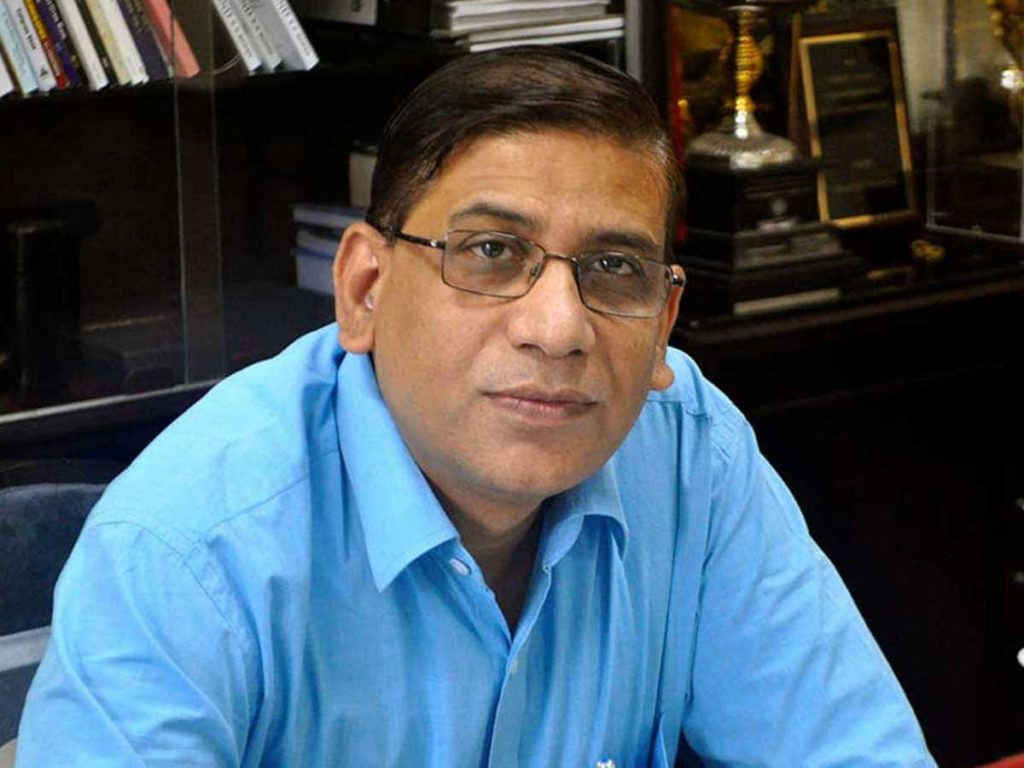
The National Academy of Law Studies and Research (NALSAR), Vice-Chancellor Professor Faizan Mustafa, has been elected president of the consortium of national law universities.
The consortium unanimously elected him president at its annual meeting.
Professor Poonam Saxena, Vice-Chancellor, NLU Jodhpur, was elected Vice President; Professor Vijender Kumar, Vice-Chancellor, MNLU, Nagpur, as convener, admission test for common law (CLAT) 2021; and Professor VC Vivekanandan, Vice-Chancellor, HNLU, Raipur, as a member of the Executive Committee for CLAT-2021.
After Mustafa virtually accepted his new role, he thanked the members for having confidence in him. He thanked the outgoing President, Professor V. Vijaykumar, for his visionary leadership.
Mustafa also thanked Professor Paramjit S. Jaswal, the outgoing vice-president, for his contributions to the issues fought by the consortium and his interventions in the executive committee and meetings of the governing bodies.
He seeks continued support and protection for Vijayakumar, who will continue as a member of the executive committee in his half-time position. The new executive committee will meet soon to finalize the details of CLAT-2021.
The governing body considered and approved the report of the grievance committee chaired by former Chief Justice of India Judge S. Rajendra Babu.
The members also thank Balraj Chauhan, Convener-CLAT 2020, for the successful completion of the process in an unprecedented year of Covid-19.
In his report, Chauhan gave details on CLAT-2020 and thanked the president and the members of the executive committee and governing body.
The governing body also appreciates the efforts of Mustafa, who fulfilled the duties of the secretary in the unusual circumstances of the sudden decision of the National Law School of India University to abandon CLAT 2020.
Mustafa said in his report that as many as eight meetings of the executive committee and six meetings of the governing body were held between September 3 and November 12 and that all decisions were taken in a consultative manner.
He also appreciated the efforts made by Sudhir Krishnaswamy to implement the reforms until the 3rd of September in the format of the CLAT paper and all other related matters.
Out of the 23 NLUs in the country, 22 students are increasing via CLAT.
source: http://www.deccan.news / Deccan News / Home> Local / November 14th, 2020
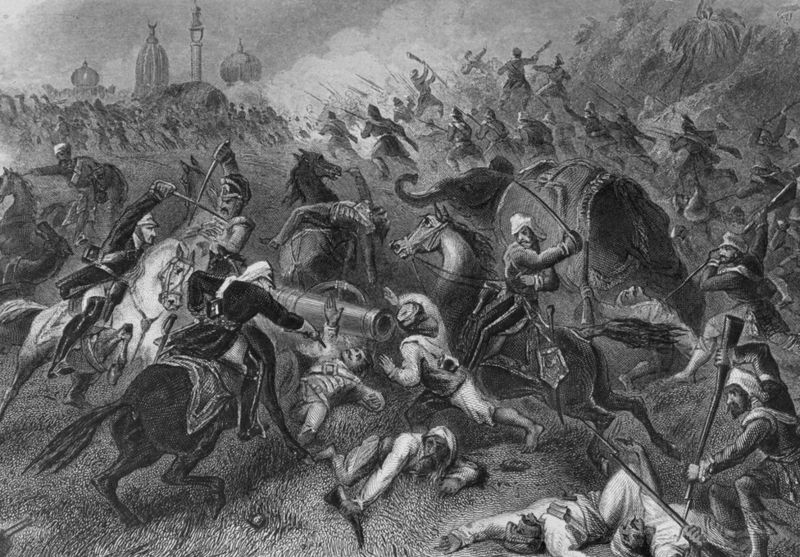
An old woman wearing green clothes, which fully covered her body (Burqa), carrying sword and gun, and riding a horse used to exhort the residents of Delhi to fight against the British forces during the summers of 1857. This old woman used to gather civilians behind her and attack the British forces stationed at ridge and Kashmiri Gate. People could never know her whereabouts. Out of nowhere, she used to appear on a horse and after the attack would disappear.
In a letter dated, 29th July, 1857, Lieutenant Hudson wrote to Deputy Commissioner of Ambala that this Muslim woman was very dangerous. The woman was weird and incited the Delhites to revolt against the British. She led the people into the skirmishes and was an able commander, who could manage untrained civilians into war against the trained British army. Hudson further noticed that she was excellent at fighting with swords and shooting with guns. She killed many British soldiers during the different skirmishes.
Hudson paid a tribute to the bravery of this woman by comparing her with Joan of Arc of France. He contended that the courage, leadership and valour of this green wearing Muslim woman was no less than Joan of Arc.
During one of the battles at the ridge in Delhi she fell from the horseback and was captured. Army General, looking at an old Muslim woman, felt unthreatened and ordered her release when Hudson intervened. Hudson told the General that this woman was the actual commander of the Indians and hence really dangerous. Afterwards, it was decided that the old woman would be shifted to a prison in Ambala.
This brave old woman was shifted to Ambala in July, 1857. Neither we know her name nor we have any idea of what happened to her in Ambala but surely this old Muslim woman clad in a green burqa is one of those unsung heroes of the 1857 who ignited a flame which later liberated India from the foreign rule.
source: http://www.heritagetimes.com / Heritage Times / Home> / by Saqib Salim / October 07th, 2020
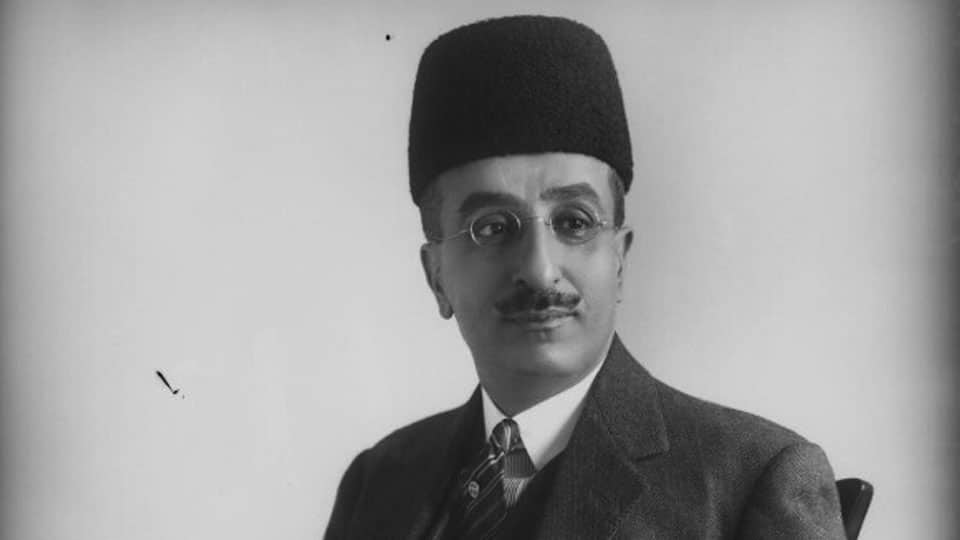
October 24th was the 137th birth anniversary of Sir Mirza Ismail, one of the Dewans of the erstwhile Mysore State who later went on to become the Dewan of the Princely States of Jaipur and Hyderabad too.
To mark this event, the Anjuman-E-Hadiqatul Adab, Mysuru, conducted a webinar that was well-received by the large number of viewers who logged in. I can say with some confidence that the Anjuman requires no introduction to most Mysureans because it is well-known for the annual Eid Milan get-together which it has been hosting over the past fifteen years to promote communal harmony and camaraderie among people of different faiths.
This event is as old as my column is because it is with my report of the first Eid Milan, which I filed for Star of Mysore, that my column was born! However, this year’s Eid Milan unfortunately could not be conducted because COVID-19 wiped out all celebrations from the entire face of this earth. Let’s all hope that things will change for the better before it is time to hold the Eid Milan next year.
Niranjan Nikam, the well-known senior journalist, who again does not need any introduction to most Mysureans, was the principal speaker at the webinar. He spoke on ‘The Unknown side of Sir Mirza Ismail,’ a topic which I suggested because I felt that by being slightly unusual, it would certainly be a crowd-puller! And Niranjan rose up to the expectations of his large virtual audience admirably well. Through some very painstakingly collected and well-curated references, Niranjan brought out many very interesting anecdotes from the life of Sir Mirza which were very noteworthy because I don’t think they are known to present day Mysureans.
Although it is understandable and expected too, that any speaker worth his salt will come well-informed and well-prepared for his talk, it quickly became evident to me that Niranjan was privy to much inside information which left me more than a little amazed. Take for instance the revelation that upon his death, the body of Sir Mirza that had already been interred was once again exhumed when there was a hue and cry from many grieving members of the public that they did not get a chance to see it and pay their last respects to their dear leader.
The body was once again displayed on a platform of sand for many more hours till late in the night and till all the people assembled there were satisfied that they had paid their homage to the man before it was interred into the grave once again. I have never heard of anything like this having happened, anywhere in the world in connection with the death of any public figure. DVG, the well-known Kannada writer, in his account about Sir Mirza has said that among the mourners was a frail old lady who was weeping bitterly saying that Sir Mirza, once while on his morning rounds, in response to her humble plea summoned one of the municipal engineers and ordered him to immediately provide a water tap to the street she lived in!
R.K. Narayan, the famous writer says in his autobiography, ‘My Days’ on page 138 that when his writing was not very paying, with him having got just 40 pounds for his book ‘The Dark Room’, it was Sir Mirza who got him a free railway pass and a government grant and commissioned him to write his book on Mysore, which Narayan was keen on writing.
As Niranjan’s talk progressed, the pieces of a most interesting jigsaw puzzle began to fall in place one by one. Niranjan revealed that his wife Pamela and he were associated for over ten months with the production of a book on Agha Aly Asker, the paternal grandfather of Sir Mirza, written by Sir Mirza’s very charming and graceful nephew Maj. Mohammed Mirza’s wife Syeda Mirza who stays in Bengaluru. The book which the speaker had brought with him, says that Sir Mirza who shared a very close working association and more significantly a very intimate friendship with the then Maharaja of Mysore, Sri Nalwadi Krishnaraja Wadiyar, would not have been a part of the history and growth of Mysore if his very enterprising grandfather, Agha Aly Asker, as a sixteen-year-old lad had not overheard a conversation between two people who were sipping tea in a chaikhana at his hometown, Shiraz in Iran. Learning that there was a great demand for Arab horses in the court of the Maharaja of a distant kingdom called Mysore, he decided to try his luck in selling them where they were in demand. So, he wasted no time in buying two hundred fine steeds and setting sail with them to India from Iran in the year 1824. The most surprising fact is that every one of those two hundred horses survived this long and arduous journey over sea and land, reaching Bangalore, alive and kicking!
The man who sold the horses to the Maharaja endeared himself to his customer and settled down in Bangalore which soon became his ‘Karmabhumi’ according to the writer Syeda Mirza. At that time Mummadi Krishnaraja Wadiyar, the then Maharaja of Mysore was about to become a victim of the very vicious Doctrine of Lapse imposed on Indian royalty by a very scheming British regime by which it could annex any kingdom if the ruler did not have a direct heir. It is reported that Agha Aly Asker became very close to the Maharaja because he could through his good relationship with Sir Mark Cubbon, the British Commissioner, get the Crown to restore the kingdom’s reins into the Maharaja’s hands, which understandably must have been a very difficult task. Meanwhile Sir Mark Cubbon commissioned Aly Asker to build more than a hundred bungalows around High Grounds, Richmond Town and the Bangalore Cantonment, many of which still stand in testimony to his abilities. We also have the Ali Asker Road named after him in Bengaluru on which his own house too still stands, although in a very vestigial state.
The close relationship between his family and the Mysore royal family continued down the line with his grandson, Sir Mirza Ismail becoming the classmate of the young Maharaja Sri Nalwadi Krishnaraja Wadiyar at the private royal school that was being run in the Summer Palace in Bangalore. Sir Mirza, who graduated from the Central College, Bangalore in the year 1905 and held many high posts was the first Indian to become the Private Secretary to the Maharaja. At the age of forty-two, he also went on to become the youngest Dewan of the State of Mysore in the year 1926 after A.R. Banerjee relinquished office.
His love for Mysore was so intense that in a speech that was aired on All India Radio, which can still easily be found on its archives in the internet, Sir Mirza says: I want Mysoreans to wash with Mysore soap, dry themselves with Mysore towels, clothe themselves in Mysore silk, ride Mysore horses, eat abundant Mysore food, drink Mysore coffee, sweetened with Mysore sugar, equip their houses with Mysore furniture, light them with Mysore lamps and write on Mysore paper!
Sir Mirza in his autobiography, ‘My Public Life’ says that the passing away of his dear friend, the Maharaja was the greatest sorrow that he had known! Towards the last phase of his active public life Sir Mirza seemed to have lapsed into a slightly disillusioned frame of mind. Here in Mysore he was seen by his detractors as a Muslim who was unusually close and influential with a Hindu Maharaja only because of his childhood friendship. At Jaipur he was seen as anti-Hindu while at Hyderabad he was seen as anti-Muslim because he did not support its existence as an independent State, without integration into the Indian Union!
It is said that once when the Maharaja and he were doing their morning rounds together on horseback, Sir Mirza, for reasons best known to him, expressed his desire to step down from his post. The Maharaja smiled and pointing towards the Chamundi Hill said: “You can do it when I go there.” He meant the cremation ground at the foot of the hill! And, that is how it was. Sir Mirza’s death came calling at the age of seventy-five while he was still very active. His demise was mourned not only here at home but across the world too, with newspapers in many countries writing about his very productive life.
Reporting on Sir Mirza’s resignation as Dewan of Mysore, The Ceylon News on May, 12th, 1941 said, Truth is a paradox and so is greatness. Sir Mirza too was a man of paradoxes. He was an autocrat with democratic instincts. A dictator with a weakness for having a constitution. A capitalist with socialist leanings. An idealist with an intense practical outlook. A dreamer with the astute mind of a businessman. A most charming man but a very stern and strict official. A perfect host but an indifferent friend. And he had no bosom friends, except the late Maharaja of Mysore!
The most amazing thing that Niranjan revealed in his talk was that the grand-old-man of India, Sir C. Rajagopalachari, fondly known as Rajaji, the first Indian to become the Governor General of India, at the time of the imminent partition told Sir Mirza to accept the invitation of Mohammed Ali Jinnah and go over to Pakistan. When a shell-shocked and very outraged Sir Mirza angrily asked him why, he said, “that way we will have someone in Pakistan who will love India and thus ensure that the Pakistanis too will do the same!” A wry but a terrific compliment indeed !
e-mail: kjnmysore@rediffmail.com
source: http://www.starofmysore.com / Star of Mysore / Home> Columns, Over A Cup of Evening Tea / November 07th, 2020
Two young girls going door to door to create awareness about family planning and the desirability to have fewer children may be quite unusual. But that’s exactly what Shazia Parveen and Afreen Khatoon have been doing to promote the idea of having a small family to overcome the wages of poverty and illiteracy.
Shazia and Afreen talking to village women during their drive to create awareness on gender bias and family planning.(HT photo)
Two young girls going door to door to create awareness about family planning and the desirability to have fewer children may be quite unusual. But that’s exactly what Shazia Parveen and Afreen Khatoon have been doing to promote the idea of having a small family to overcome the wages of poverty and illiteracy. By doing so, they have already carved a niche for themselves.
Hailing from a rural area of Muzaffarpur, the girls paddle their bicycles for 10 to 15 kilometres every day to create awareness among the rural folks about the problem of gender discrimination and virtues of family planning.
The effort has made Shazia and Afreen household names in over a dozen villages under Meenapur block of Muzaffarpur district and in the suburbs of the district headquarters town, also known as Muzaffarpur.
Their journey of disseminating the light of knowledge started some three odd years back, when they visited their maternal aunt’s house at Jamalabad village, which also falls in Meenapur block of Muzaffarpur.
There, they were shocked to see a beeline of women at the ‘aanganwadi’ centre, where their aunt Jamila works as an ‘aanganwadi sevika’.
“Seeing the sad plight of these women, many of them saddled with a large number of children, despite being poor, the idea to create awareness about family planning struck my mind and I decided to do something about the problem,” said Shazia the elder sister.
She discussed the issue with her younger sister, Afreen, who was pursuing her matriculation at that time. “She promised me to lend me her support in the noble mission,” said Shazia, who has just completed her graduation from Ram Briksha Benipuri Mahila College in Muzaffarpur.
Shazia said she was perturbed to find that most of the women who came to the aanganwadi centre run by her aunt discussed the problems associated with being saddled with big families.
“I found them chatting about only one thing – that they are busy all the time in struggling to manage their families and household work. They have not enough time to spare for themselves, so that they can do something for their own betterment,” Shazia told HT.
So she, along with her younger sister started moving on bicycles from door to door. “We started with our own village and later on started covering other nearby villages, after getting huge support from the people,” said Shazia.
Afreen, who topped in the matriculation examination in the district last year and is pursuing her intermediate course in the science stream, said they were enthused by the huge public support they were receiving.
“This boosts our morale and encourages us to go ahead with our mission. We are happy that we have made nearly 25,000 people aware of the need to practice family planning,” the younger sister said.
“Later, we added the need to stop sex determination tests and slogans against foetus killing, in our mission. This has also drawn great attention of the people,” said Afreen, adding, chief minister Nitish Kumar’s endeavour for women’s empowerment encouraged them.
Her one regret is, despite getting much public backing and appreciation for their mission, they failed to get support from government officials.
The girls said initially, they had to face much difficulties from some members of the Muslim community, what with people mocking them and hurling invectives at them. But these adversities only strengthened their resolve to continue.
“Now, we are planning to do it on bigger canvas after completing our studies. And for this we are looking for some helping hands,” said Afreen.
source: http://www.hindustantimes.com / Hindustan Times / Home> Patna / by Ajay Kumar, Hindustan Times, Patna / February 08th, 2016
First time ever Central Wakf Council has awarded the Mutawallis of Wakf Institutions for their Excellence in the management of Wakf Institution.
Sajjada Nashin and Mutawalli Dr. Syed Shah Khusro Hussaini Sahab of Dargah Hazrath Khaja Bandanawaz RH bagged this prestigious national award by the Ministry of Minorities Affairs through the central Wakf Council which was presented by the Janab Mukhtar Abbas Naqvi-Hon’ble Union Minister of Minority Affairs.
On Behalf, Janab Syed Ali al Hussaini received the award who is the Janasheen of Hzt Khaja Bandanawaz Darga & Pro-Chancellor KBN university.
The Darga has many modernized up-to-date systems like AC rooms for Visitors, Mist Cooling system in open area, Airconditioning inside the tomb, Cleaning machines, Cabbie for Old people, Research center and much more.
3 Awards per zone were to be distributed in four zones East West North South Out of the Five States in south zone Karnataka Bagged 2 awards out of 3.
127 years old “The Muslim Orphanage Bangalore “ also bagged this award from Karnataka, A gesture of appreciation from the minority ministry Govt of India.
source: http://www.gohash.in / Go Hash / Home> Gulbarga / July 31st, 2019
Nineteen Muslim candidates emerged victorious in the Bihar Assembly elections. Out of them, five belongs to All India Majlis-e-Ittehadul Muslimeen (AIMIM).
Newly-elected MLAs
Following is the list of Muslim candidates who won the election
Name
Constituency
Party
Akhtarul Iman
Amour
AIMIM
Abidur Rahman
Araria
Congress
Md Anzar Nayeemi
Bahadurganj
AIMIM
Syed Ruknuddin Ahmed
Baisi
AIMIM
Mahboob Alam
Balrampur
CPI-ML(L)
Md Zaman Khan
Chainpur
BSP
Md Kamran
Gobindpur
RJD
Shahnawaz
Jokihat
AIMIM
Shakeel Ahmed Khan
Kadwa
Congress
Md Israil Mansuri
Kanti
RJD
Md Afaque Alam
Kasba
Congress
Izharul Hussain
Kishanganj
Congress
Md Izhar Asfi
Kochadhaman
AIMIM
Shamim Ahmed
Narkatia
RJD
Ali Ashraf Siddiqui
Nathnagar
RJD
Mohammad Nehaluddin
Rafiganj
RJD
Akhtarul Islam Shaheen
Samastipur
RJD
Yusuf Salahuddin
Simri Bakhtiarpur
RJD
Saud Alam
Thakurganj
RJD
NDA obtain majority
Meanwhile, National Democratic Alliance (NDA) managed to obtain majority in the elections.
The Election Commission of India (ECI) announced results of Bihar Assembly polls in the early hours on Wednesday with the BJP winning in 74 of the 110 seats it contested and JD(U) bagged 43 seats out of the 115 seats it fought.
Among the NDA allies, four seats went into the accounts of the Vikassheel Insaan Party (VIP) and 4 to former chief minister Jitan Ram Manjhi’s Hindustani Awam Morcha (Secular).
The NDA won an absolute majority in Bihar winning 125 seats, three more than the halfway mark needed for a victory.
Mahagathbandhan
The opposition Mahagathbandhan, which began the day with a lead had to take a backseat by the end of counting settling for 110 seats in the election that saw counting continue stretching over 20 hours and wrapping up only in the early hours on Wednesday.
While the BJP put up a spectacular win, the show by RJD was also spectacular. Led by Tejashwi Yadav, the RJD scored a win all the 75 seats it contested to emerge as the single largest party in the 243-member Bihar legislative assembly.
The vote share of the RJD was recorded at 23.03 per cent, the highest for any single party in the elections. It was followed by the BJP with 19.5 per cent, JDU and Congress got vote share of 15.4 per cent and 9.5 per cent respectively.
2015 Assembly polls
In 2015 Assembly polls, RJD with 80 seats had emerged as the single largest party in the elections, followed by JD-U (71). BJP was reduced to 53 seats and got the largest vote share (24.42 per cent).
With indication of a NDA victory in sight, Prime Minister Narendra Modi took to Twitter to thank the people of Bihar whom he said clearly stated development as their priority.
“The poor in villages, farmers, labourers, merchants, shopkeepers and every section of Bihar have relied on the NDA’s mantra of sabka saath, sabka vikas, sabka vishwas. I again assure every citizen of Bihar that for the balanced development of every person, every region, we will continue to work with full dedication,” he tweeted in Hindi.
“Every voter in Bihar has clearly stated that he or she is an aspirant and priority is only and only development. The blessings of the NDA’s good governance again after 15 years in Bihar shows what Bihar’s dreams are, what Bihar’s expectations are,” PM Modi said.
source: http://www.siasat.com / The Siasat Daily / Home> News> India / by Sameer / November 11th, 2020
Premji pipped HCL Technologies’ Shiv Nadar, who had earlier topped the list collated by Hurun Report India and Edelgive Foundation, by a wide margin.
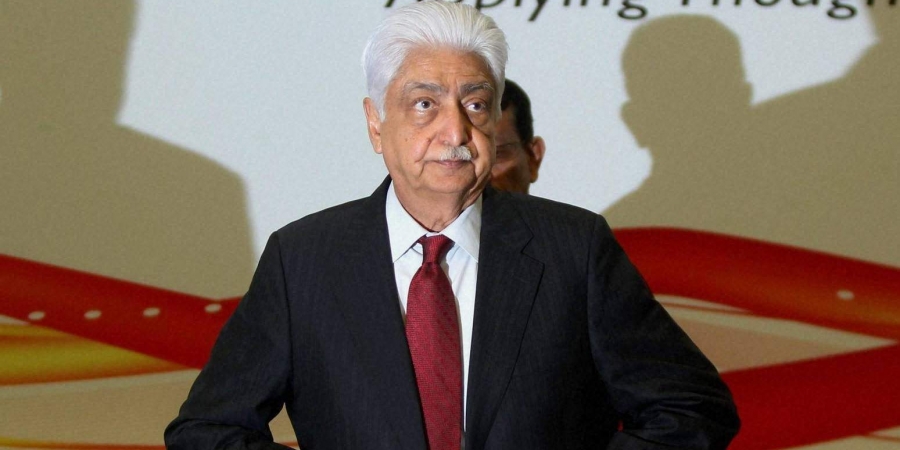
Wipro Chairman Azim Premji (File Photo | PTI)
Mumbai :
IT major Wipro’s Azim Premji donated Rs 22 crore a day or Rs 7,904 crore in a year to emerge as the most generous Indian in FY20 and top a list of philanthropy.
Premji pipped HCL Technologies’ Shiv Nadar, who had earlier topped the list collated by Hurun Report India and Edelgive Foundation, by a wide margin.
Nadar’s donations stood at Rs 795 crore for FY20 as against Rs 826 crore in the year-ago period.
Premji had donated Rs 426 crore in the previous fiscal.
Richest Indian Mukesh Ambani of Reliance Industries retained the third spot among the list of givers by donating Rs 458 crore as against Rs 402 crore a year ago, it said.
The raging pandemic had the corporate honchos repurposing their donations to fight the COVID infections, and the top giver on this turned out to be Tata Sons with a Rs 1,500- crore commitment, followed by Premji at Rs 1,125 crore and Ambani’s Rs 510 crore.
A bulk of the corporate commitments seemed to be given to the PM-CARES Fund, with Reliance Industries committing Rs 500 crore, and Aditya Birla Group donating Rs 400 crore, the report said.
It can be noted that Tatas’ commitment also includes a Rs 500 crore donation to the newly created fund.
Premji’s generosity pulled the total donations up by 175 per cent to Rs 12,050 crore in FY20, the list said.
Azim Premji Endowment Fund owns 13.6 per cent of the promoter’s shareholding in Wipro and has the right to receive all money earned from promoter shares, the report said.
The number of individuals who have donated more than Rs 10 crore increased marginally to 78 from the year-ago period’s 72, the report said.
With a donation of Rs 27 crore, Amit Chandra and Archana Chandra of ATE Chandra foundation are the first and only professional managers to ever enter the list.
The list has three of Infosys’ co-founders with Nandan Nilekani (Rs 159 crore), S Gopalkrishnan (Rs 50 crore) and S D Shibulal (Rs 32 crore).
The list of 109 individuals who have donated over Rs 5 crore has seven women, led by Rohini Nilekani’s Rs 47 crore.
Education is the highest beneficiary sector with 90 philanthropists, led by Premji and Nadar, donating Rs 9,324 crore, the report said, adding healthcare came second with 84 donors and was followed by disaster relief and rehabilitation with 41 donors.
The financial capital led by donor count at 36, followed by New Delhi at 20 and Bengaluru at 10.
E-commerce firm Flipkart’s co-founder Binny Bansal was the youngest donor at 37 with a commitment of Rs 5.3 crore and the average age of the donors on the list was 66 years, it said.
source: http://www.newindianexpress.com / The New Indian Express / Home> Business / by PTI / November 10th, 2020
Asman Khan, a 21-year-old female Congress candidate from Jaipur, recently became one of the city’s youngest councillors. Contesting from ward number 81 in Jaipur Heritage Municipal Corporation elections 2020, Khan won the seat in her first attempt .
Here are some things you must know about Asman Khan:
• Coming from a middle-class family, Asman Khan is the middle child among six brothers and sisters. She says she has received immense support from her family. ” I was scared initially but my family supported me “
• Her father Salim Khan has been associated with the Congress party as a party worker for quite some time now. He even had plans to contest the municipal elections himself. However, their ward became reserved for women. Consequently, he convinced his daughter to contest elections.
•Khan is currently an undergraduate student a Muslim Girls Degree College, Jaipur, and will take her final year exams soon . She will devote her entire attention to her ward’s welfare only after taking her final exams.
• Asman Khan became one of the youngest councillors in her first attempt. Describing her decision to contest elections as a “sudden” one, she told Times of India , “I always wanted to serve the public and this election has given me an opportunity to do so.”
• Talking to News18, Khan said that although there were a lot of contenders for the post, she emerged as a favourite because she is a young student.
• Khan has mentioned that she received a lot of love from her ward’s members during her campaigning. She also ensured that the public voiced their plight to her.
• As per Asma Khan, the major everyday problems being faced by her ward include mismanagement of garbage, sewerage, and dysfunctional street lights. She also wants to ensure that Muslim girls in her ward receive adequate training and opportunities. Khan hopes to work extensively for the development of her council in the next five years.
• Asman Khan has plans to pursue a post-graduation degree in humanities. She also aims to further her political career and ambitions in the future. Picture Credits: Times of India
Tarini Gandhiok is an intern with SheThePeople.TV.
source: http://www.shethepeople.tv / She The People / Home / by Tarini Gandhok / November 04th, 2020
Author Hemender Sharma re-examines activist and environmentalist Shehla Masood’s gruesome murder with detailed insight into the events leading to the conspiracy.
Author: Hemender Sharma
Publisher: HarperCollins
If an urban woman with ‘modern’ sophistication and a ‘questioning’ attitude is killed in our country, the investigation, in most instances, begins with a close examination of her character. Shehla Masood was one such gutsy woman – an Indian environmentalist, wildlife and RTI activist. Hemender Sharma, in his book, Shehla Masood: The Murder that Shook the Nation, peels many layers to understand her life, her murder and the ultimate resolution of her case
Stepping out of her house in Bhopal to attend Anna Hazare’s ‘India Against Corruption’ campaign, Masood was shot dead from point-blank range in broad daylight on August 16, 2011. With Masood featuring in the news ahead of her murder after exposing corruption rackets through ‘RTI Anonymous’ – a portal where individuals could file an RTI without disclosing their identity – the Indian media had covered her gruesome death extensively. Shehla came from a humble background, but convent education along with brave instincts made her a savvy Muslim girl endowed with big dreams.
The book unravels the circumstances that led to her murder, the politics that subsequently unfolded and the long fight for justice that ensued. Cover-ups and attempts to tarnish her image started soon after her death. The local police tried to label her death as a suicide, while the state chief minister ordered a CBI probe within 48 hours. Names of various political dignitaries and bureaucrats were in the suspect list, but when the verdict was declared in January 2017, Zahida Parvez, an interior designer who gave the contract to kill Shehla, along with three others, stood convicted.
Zahida, a mother of two girls, in her statement, revealed her affair with Darbar (pseudonym) who was the Chairman of Madhya Pradesh Tourism Department. After a few formal meetings, their friendship strengthened, leading to intimacy. Darbar, on the other hand, was already in a relationship with Shehla. Zahida was madly in love with Darbar and surely not fond of Shehla.
Darbar’s 53rd birthday was approaching and Zahida wished to celebrate it with grandeur. Bhopal has a tradition of politicians putting up their own hoardings and congratulating themselves on their birthdays. But to her disappointment, Darbar’s hoardings had no place for her, leaving her heartbroken.
She knew that Darbar was a Casanova, but couldn’t substantiate her doubt with palpable evidence. With her friend Sabah, she followed Darbar on instances to gather evidence and catch him red-handed. When Darbar went to meet Shehla on his birthday, Zahida was left fuming. Her anger and frustration usually subsided the moment she finished pouring her heart out in her diary. But this time, her anger knew no bounds. The man for whom she had waited the whole day, putting her family and daughters at stake, was drifting away from her. She assumed that Shehla was the culprit jeopardizing her illicit relation with Darbar, which was now showing visible cracks.
Zahida contacted Shakib, a contractor. When Shakib entered her office, she threw a file towards him with the initials ‘SM’ inscribed. It contained Shehla Masood’s newspaper cuttings from Hindustan Times and Free Press. She told him that she wanted this woman dead as she was negatively influencing girls. Besides, she had also lied to him about Shehla’s affair with her husband. She negotiated a deal worth Rs 3 lakh to get Shehla killed. Very soon, Shakib brewed the plan along with Irfan and Tabish, and it was only after a couple of failed attempts that they succeeded in executing the conspiracy.
On the day of her murder, Shehla walked towards her car around 11:19 am. She was about to ignite the car when Shakib pounced on her from the rear and shot her in the trachea. The detailed narrative furthers reveals Shakib’s call to Zahida confirming the murder, who further lets Sabah, her friend, know of their success. Irfan, Shakib’s partner in the crime, was let go as he turned an approver during trials. Zahida and Sabah were convicted under Section 302 (murder) with 120B (criminal conspiracy) of IPC and sentenced to life imprisonment. Shehla’s father, upset with the verdict, asserted, “Probably the real culprit will never be caught.”
The book also details how the CBI team, led by Joint Director Keshav Kumar and DIG Arun Bothra, painstakingly reached the killers after being severely misled.
source: http://www.millenniumpost.in / Millennium Post / Home> Book Review / by Arif Mohammad / May 04th, 2019
Twenty police officers of the state police will be awarded President Medal for their exemplary work in police department. Awards will be given in two categories: Vishishit Sewa and Sarahaniya Sewa categories.
The DGP announced the awards and congratulated the awardees for their achievements.
The Vishishit award will be given to the ADG training and the director of the MP Police academy Bhori Anuradha Shankar, inspector and Liberian DrFarid Vazmi, inspector and steno in PHQ Rakesh Mohan Dixit and Bharat Kumar Bhawsar.
The Sarahaniya Sewa Award will be given to AIG RRS Parihar posted at PHQ, deputy commandant of 23rd SAF Shanu Aftab Ali, SP radio training schoolIndore Santosh Kori, ASP narcotics Indore Dilip Kumar Soni, inspector Deepak Kadam, head constable posted in 7th SAF Bhopal Seetaram Tiwari, head constable posted in Pawai of Panna district Pyare Garg, head constable crime branch Bhopal Rajkumar Goutam, constable Mangal Singh Yadav posted in 7th SAF Bhopal, constable Rajesh Kumar Pandey posted in 25th SAF Bhopal, constable posted at in administration section at PHQ Ravi Naresh Mishra, Subedar Sunil Kumar Tiwari and Balram Singh Rajput posted at PHQ, inspector Ramraja Gupta of Hosangabad, inspector posted in EOW Bhopal Rajiv Choudhary and sub inspector Anil Kumar Nigam.
source: http://www.freepressjournal.in / The Free Press Journal / Home> Bhopal / by Staff Reporter / August 14th, 2020