Category Archives: Community Involvement / Social Issues

LOUNGE HEROES| Masrat Zahra: Conflict through her lens

Masrat Zahra
Masrat Zahra

The Kashmiri photojournalist has received the Anja Niedringhaus Courage In Photojournalism Award and been booked under the UAPA. She continues to tell stories from one of the most militarized zones in the world.

Afew days after 5 August 2019, when the Union government revoked Kashmir’s special status, 26-year-old photojournalist Masrat Zahra hopped on to her scooty and rode to Anchar, a locality in Srinagar’s Soura. The region had been plunged into a communication blackout, curfew imposed, military presence heightened and people detained as some of the mainstream media pushed the narrative of normalcy.

Soura was seen as a pocket of resistance—protests and rallies were commonplace.

When Zahra reached, Friday prayers had just ended and the protests began almost instantly—residents raised flags, chanted slogans and began to march towards the main road, Zahra recalls. “From the other end, the (Armed) Forces began to fire tear-gas shells and pellets; there was smoke everywhere. Smoke from the tear-gas shells, and from the cardboard people lit on fire to protect themselves,” says Zahra. “A few pellets hit me as well but did not penetrate (the skin) since I was further away,” she adds. Zahra began taking photographs with her DSLR from behind a tree.

Suddenly, she saw a young woman emerge from among the smoke and protesters. Her face was covered in salt (which helps neutralize the effect of tear gas) and she was screaming in Kashmiri, “Come out, the forces have enteredWe have to save ourselves!”, to the other men of the locality. For Zahra, this was a powerful visual. “Meri nazron se, I saw a courageous girl with anger in her eyes. It was so stunning in that moment,” she says.

It was a memory and photograph that endured. Zahra, who describes herself as “the only woman photojournalist in Kashmir”, reporting the conflict from close quarters, is driven by the need to inspire women. Documenting their role and space in Kashmir as more than grieving mothers or devastated kin presents a break from what Zahra calls “the male gaze with which Kashmir was previously seen”.

A woman in Kashmir puts salt on her face to neutralize the effect of tear gas shells fired by the forces. Credit: Masrat Zahra

In a span of two months, Zahra has been awarded for her work by an international forum and booked by the cyber police under the Unlawful Activities (Prevention) Act (Uapa) for uploading “anti-national” posts on social media. On 11 June, she was honoured with the Anja Niedringhaus Courage In Photojournalism Award by the International Women’s Media Foundation (IWMF)—named after German photojournalist Anja Niedringhaus, who was killed in Afghanistan in 2014.

“This award was for my work. When I was charged under Uapa, they didn’t even acknowledge I was a journalist, they called me a ‘Facebook user’,” she says. “But the outpouring of support has made my mother, who was initially reluctant about my profession, come around to accepting it.” So far, Zahra’s work has appeared in The Washington Post, TRT World, Al Jazeera, The New Humanitarian and several other media outlets.

The photojournalist grew up in the 1990s, at the height of militancy in Kashmir. As a young girl, she recalls looking out from her school bus at military personnel, jackboots entering her home during cordon and search operations, taking officers around the house when ordered. “We would talk to our friends about it in school the next day—yesterday the army men came to our home with guns, you know! We had no idea at the age of 8 or 9 what those operations were, we only found out much later,” she says.

A resident of the old town in Srinagar, Zahra is no stranger to clashes, rallies and funeral processions. As she grew older, she began noticing that every photojournalist in the field was male: “They were telling intimate stories even of women and I would wonder, is this profession made only for men?” She recalls she had no role models to cite to explain her aspirations to her reluctant family. She studied for the journalism entrance test in secret, heading for the exam amidst curfew the city.

“When I was in college (Central University of Kashmir), I would go on assignments with my friend, who was already a journalist. I learnt on the field from a group of photojournalists. Some of the first few things they taught me are things that have stayed with me even today,” she says. “They taught me not to take photographs from the protester’s side, otherwise we would get hit by pellets or bullets, we had to be alert to stones and slingshots, they taught me where to hide, where to get the most powerful shots,” adds Zahra.

She is driven by the conviction that as a Kashmiri, she is able to provide more authentic accounts of her home and people. “When everyone is supposed to be celebrating Eid with their families, I report clashes,” says the photojournalist, describing a time in 2018 when she was hit with pellets on the forehead. “But I know I will not stop doing my work, especially at a time like this when the authorities are trying to muzzle journalistic voices in Kashmir.”

Since 5 August, the government has not allowed high-speed internet access in the valley. Functioning on 2G speeds for nearly a year has made work difficult, particularly during a pandemic. In a region like Kashmir, Zahra maintains, social distancing is a distant dream. On 20 May, for instance, a gunfight between the Armed Forces and militants left a trail of tragedy—at least 15 homes were completely destroyed. “A 12-year-old boy died—small rooms packed with so many people grieving,” says Zahra. “Everyone says stay home, stay safe, but if homes are destroyed, where are people supposed to stay?” she asks.

Still, she has been reporting through the pandemic. Zahra files stories from the media facilitation centre for journalists set up by the government, where they are granted internet access for a few hours of the day. This, she says, increases the risk of contracting the coronavirus, given the number of people using the limited systems available.

But Zahra says nothing can deter her—not being “falsely branded a mukhbir” (informer), not “intimidation by the State” and certainly not any form of discrimination. “I remember on one of my first assignments covering clashes, a boy told me to go home because I will get hurt.

“It has always made me wonder, do male photojournalists not get hit by pellets? Would they not bleed the same way I do? Why must I leave?”

source: http://www.livemint.com / Live Mint / Home> Explore> Lounge> Features / by Asmita Bakshi / June 20th, 2020
NGO provides ration to the needy, feeds the hungry in Delhi

NEW DELHI :

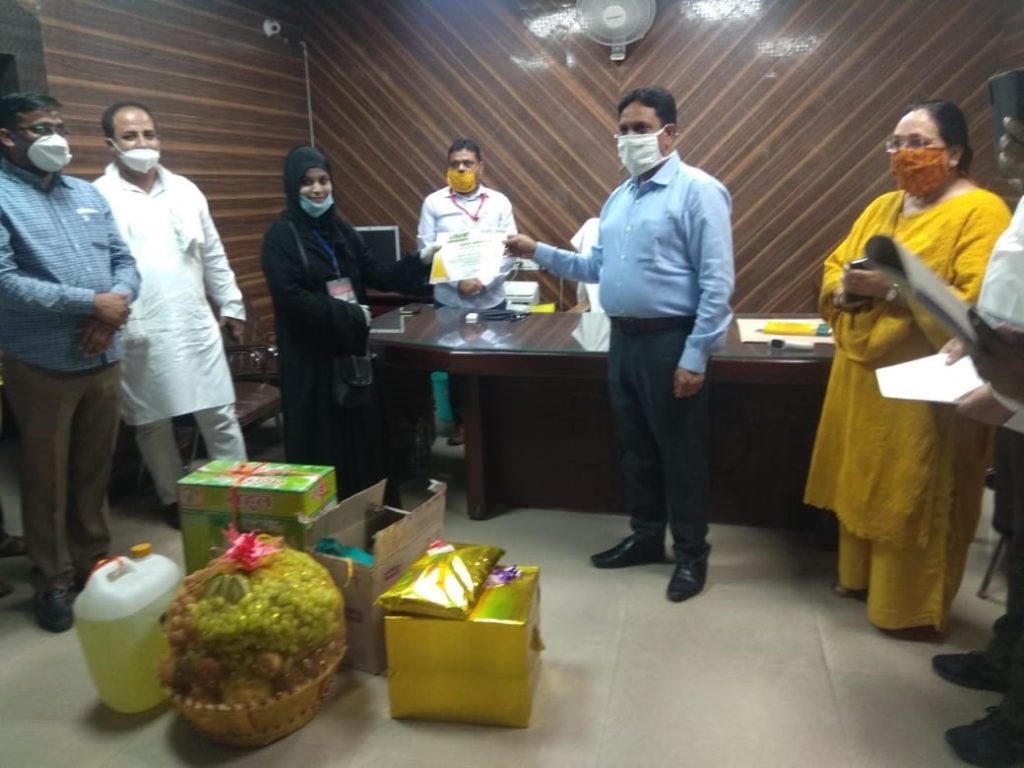
They simultaneously provided 14,100 kilograms ration to the office of Imran Hussain, Minister of Food and Civil Supplies, Government of NCT of Delhi.

They simultaneously provided 14,100 kilograms ration to the office of Imran Hussain, Minister of Food and Civil Supplies, Government of NCT of Delhi.

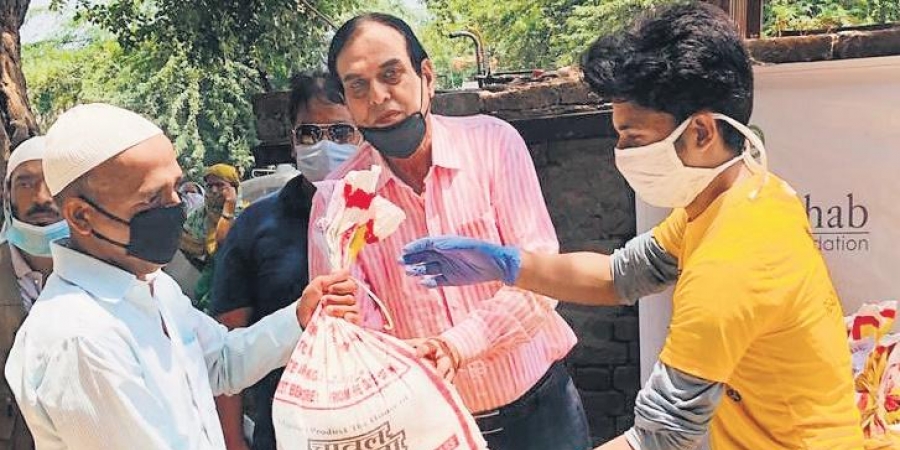
Hamdard National Foundation (India), formed in 1964 at New Delhi, under the aegis of the century-old Hamdard brand, extended its food distribution drive through identified NGOs and individuals who have been working round the clock to ensure that no one dies of hunger in the Capital.

Following the pandemic and subsequent nationwide lockdown, HNF had undertaken initiatives to provide food to the underprivileged who have been the most affected by the ongoing health and financial crisis.

Under the initiative, ‘Ration Distribution Drive’, HNF undertook food relief measures for migrant workers and daily wage labourers. In the second phase of their ration distribution drive, HNF distributed over 7,000 kilograms of dry rations to the Moemin Foundation, 5,305 kilograms of rations to Rehab India Foundation, and a similar quantity to the Society for Social Welfare and Development for direct distribution to poor and needy individuals.

They simultaneously provided 14,100 kilograms ration to the office of Imran Hussain, Minister of Food and Civil Supplies, Government of NCT of Delhi.

The organisation donated more than 20 Food Ration kits to the DM (South East) Delhi, for direct distribution to the families from where they were receiving distress calls, in addition to the 300 kits already provided in Phase-I of relief efforts.

Caring for the underprivileged

HNF has distributed over 7,000 kg of dry ration to the Moemin Foundation, 5,305 kg of ration to Rehab India Foundation, and a similar quantity to the Society for Social Welfare and Development for direct distribution.

source: http://www.newindianexpress.com / The New Indian Express / Home> Good News / by Express News Service / June 16th, 2020

Interview with Aftab Siddique

Bandra, Mumbai, MAHARASHTRA :

Aftab Siddique am born and brought up in Khar. She did her schooling from Duruelo Convent High School and R.D.National College. Aftab is a teacher by profession from last 27 years.

She says about her job as a teacher

As a teacher, we impart a specific syllabus but when kids face practical difficulties in real life, they are unaware of how to deal with them. Not only the children but as adults, individuals, professionals we too are unaware of our rights, Dos and Dont’s. This is what inspired me to contribute time to the community. Create awareness, bring people together , help, live together as one. Aftab is very attached to Bandra & Khar. Before becoming an activist, she used to unaware of BMC Ward , Police stations or any other government office. However after working with ALM, Citi Space and Federation, She met many like minded people who were very experienced.

Here is interview we did with her, do read below to know more.

1. How long have you been an activist? Do you take up issues on in your ALM or any issues in Bandra ?

It’s almost a decade , I am a social activist.I have been awarded by Bombay Catholic Sabha, H-W Federation, NDTV for my good work for contributing in bringing a change in community. and nominated by Mumbai Mirror as Top Ten Mumbai Heroes. I work not only with reference to my alm issues but across city BMC, Police, SRA , MHADA etc for all the distressed genuine people who need help or want to be a part to learn and contribute to the community.

2. Could you tell us what projects you have undertaken as an activist in the past and what have been their consequences ?

Various projects, I have taken till now.

a.) Deleted more than 2,700 names from Bandra Constituency of voters who didn’t exist .

b) Exposed 4000 crores SRA scam in Santacruz W Daulat Nagar. Already case is in criminal Esplanade court with help of EOW and lately an inquiry by Housing Secretary initiated with help of Hon CM .Almost 895 people from 17 years not rehabed and almost more than 150 residential and commercial sale buyers who paid 45-75 lakhs have not got possession. More than 125 crores is outstanding dues.

c.) Exposed the Maulana Azad Minority Scam which was bungled by Anti Corruption bureau in connivance with the accused . Inspite inquiry reopened by ACB Mr Nangre Patil other successors linger. Reason best known to them

d.) Got Educational Open plot 1751 sq mtrs on 15th & 33rd junction evicted in 2016 after pursue with Adtnl MC in 2012, lately learnt BMC has given it back after pressure from Bandra MLA.

e.) In December 2016, got BMC to reenter the Balgandharva Theatre but once again under Bandra MLA pressure it was given back . Issue now with Lok Ayukt where Hon Lok Ayukt has questioned MC in various breaches and flouts wilfully ignored. Waiting for MC to reply. Next hearing on 23/ 03/17 .

f.) Fernandez Chawl in Old Khar in 2016 got it signed for 27 families who were in deep trouble because of no proper procedures were followed and alot of violations in submissions. Project is initiated but cases we have not withdrawn as they are compoundable cases .

There was too much of political and Police pressure. Atrocities of police due to political pressure is very high in Bandra , Khar. This is not accepted by us.

g.) Lost files and missing files . Got an order in 2009 from Lok Ayukt to regenerate files of Mumbai City . The order directed BMC to upload all old and new files on BMC site, register FIR for the files which are lost.

h.) Formed a like minded group with people of H E/W and K (W) citizens where unanimous agenda is decided and pursued bimonthly or as on when its need of the hour.

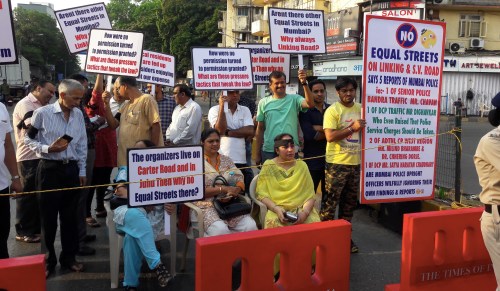
i.) Opposed Road Events ( Equal Streets) staying 19 days in Khar Police station as cops refused to help.The event caused inconvenience to residents confining residents and 16 hospitals and nursing homes. at a stretch of 3 kilometres. Service charges not paid to government. With support of Mumbai Police managed to cancel it. Last event in 2016, Mumbai Police ensured service charges was paid.

j.) Since 2011 ,Opposed illegal vendors during Ramadan in Kharie Village old Khar. Our representation to Adtnl CP was considered unlawful and under political pressure FIR was filed. Court cracked a whip on police for falsely accusing and I was acquitted in 2014. My agitation continued and ……

Last year , Khar police filed FIR on shop owners who put their ware on road and against anon people who set up boxes with help of local political karyakartas.

k.) Opposed poster banners and defacement on road . Under political pressure had faced FIR but was accepted as we had opposed in street with police who accompanied the protest March. Hon Home Minster Mr Jayant Patil and Mr Majeed Memon helped.

l.) In 2012-13 , Proposed the basement parking below Patwardhan Garden. In 2014, Jt CP traffic also gave his consent.I filed the same in DP revision in 2014 too. Presently, it is approved by BMC.

m.) In 2012-13 Proposed another full fledged Municipal Hospital opposite Bandra Rly Colony , SV road for people in HW along with Dialysis centre, OPD, OT, beds , Scan and pathology facility. Last year a five floor building has been approved. alm144 has received letter for BMC. .

n.) Proposed swapping of Khar Danda Police plot with present Khar Police station.Present place for police station is small and on lease. No space for citizens facilitation, filing documents, ATS is operated on road. The same has been filed in DP reservation suggestion, objections.West Region Police has also filed from their end. Police file in CP office, Kaksh- 8.

o.) Got the Mahatma Phule Hami Yojna room from political clutches and requested BMC to hand over to Khar Police .Now one sees Khar Police beat chowki nos- 1 on SV road.

p.) Next to Khar Police beat chowkie ,the open space garden got it redeveloped with BMC H/W funds with multipurpose play installed. Earlier, there was illegal garage being operated .

q.) Appealing from 2012 to all concerned BMC authorities for allowing children to play( Football,Cricket & other free play outdoor sports) in the Patwardhan Garden 14,571 sq mtrs open space Mid Circumference. There are no open space in 3 km for kids to play not only in H/W but also in H-EAST. After inspection, DMC Zn-III in 2014 has put up a report in favour of citizens. Last month we had signature campaign on this too. Almost more than 500 students from vicinity colleges and residents have signed.

r). Answered in question 3 below.

Presently, BMC has no plans on illegal hawkers and compound encroachments in 7 malls in 33rd road.

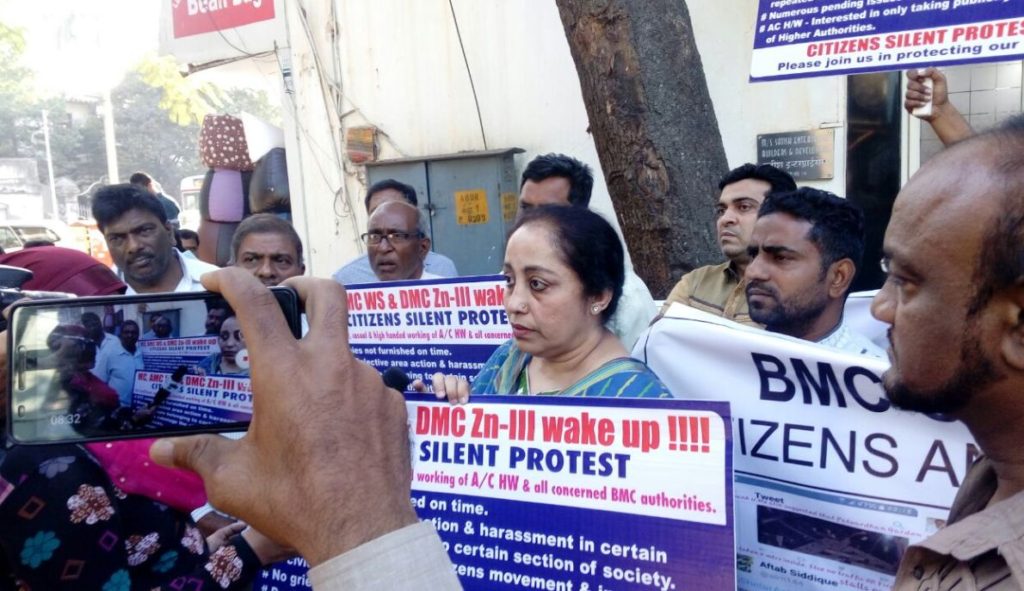
In Jan-Feb 2017,15 days residents and stall owners sat in Silent Protest against BMC demanding FIR against BMC.

Yesterday, too we filed a complaint against BMC for playing mischief, instigating people, creating riot like situation, damaging public property.

s.) Helped in Reunion of a female with her family in Andheri W, ( DN Nagar )where she was trapped in Saudi . Through agents in City, she was employed as nurse and once she reached Saudi , she was made to do odd jobs & suffered a lot of ill treatment. This was with help of His Excellency Mr Ahmed Jawed. Ex CP of Mumbai Police.

t. )With help if Sneha (NGO), Located a young lady who fled from the torture of her husband. Family disowned her. She fled from Muscat and is now living in a woman’s shelter home. She has started working to make ends meet.Issue related to Amboli Police stn.

u.) Got may over due officers, internally rotating officers transferred from BMC and Police. alm strongly objects officers patronizing politicians.

v.) From last 6 years a lot of individuals in their individual capacity donate books & basic amenities for poor deserving people.

w.) Disproportionate assets of Bandra Ex Councilor is still on in ACB.

x.) 7 illegal constructions inquiry in ACB is still on .

y.) SIC fined BMC BF Officer in 2008.Rs 25,000 for not providing information on time. 1st officer to be fined in BMC BF dept .

z.) alm144 with help of DMC Spl pursue initiated in Railway authorities paying fees to all hoardings to BMC.
& now we are also pursuing with agreement with Dairy Commissioner and BMC for all Aarey, Aarey Sarita.From last 60 years BMC has no agreement with Dairy Commissioner. Only ground rent of monthly fee Rs 150 is being collected.

3. What do you think about the current project of underground shopping mall at Patwardhan Park and what would be the eventual fall out of the hawkers?

From Dec 2015, Residents in support of licence stalls are having a strong fight with BMC opposing the mindless beautification proposal of linking road Khar opposite National College .The proposal is 100 crores and not approved by any authority but BMC wants to shift 167 licence stalls on road . Underground shopping mall is out of question as it’s unsafe not only for stalls but also shoppers as Mumbai City is in red alert most of the time. It will be a very costly affair for stall owners . Cost if A/C etc. Health hazard too. Concept of basement pedestrian walk of shopping plaza is a failure in Mumbai City.

4. Could you tell us, about your life in Bandra and what do you particularly think about bandra and some of your favourite places in Bandra?

My favourite place in H-W where I love to relax or just sit with my friends chatting or eating is at Carter Road. I’m a non vegetarian and relish food from quite a few restaurants. Fortunately H-W ward is blessed with many restaurants .

I am a foodie but not a party animal. I’m an introvert. I love to spend time with my family, friends and close associates which I hardly get time.

5. What are some of the changes you would like to see in Bandra which doesn’t conflict with the current governments vision of development?

The changes that I would like to see in Bandra, Khar, Santacruz is :-
I had carried a lot of Silent Protest agitation against BMC and Police high handedness demanding quality and timely services.

1.) Politicians should stop interfering with every government work and accept citizens perspective positively. Politicians seek help from alms and associations but both bureaucrats and politicians don’t like them and are always opposing in alm meetings.

2.) Curb encouraging illegal work.

3.) Greenery seems to be disappearing from HW ward. Our important main roads have started to look concrete.

4.) Organise Sporting Events in Public Spaces (RG and PG) for all age groups.

5.) Remove that major Bandra skywalk obstructing traffic.

6.) Presently all redevelopment projects in Bandra specially Khar and Santacruz ( W) are getting open space condition. In near future, how will roads be widened.

7.) There has to be a soft approach of BMC and specially Police officers. The West Region Police seems accountable to no one and is turning to be a shelter home for anti-socials. People are being assaulted , proper cases are not being registered. Every issues Police has started to ask people for sections and IPC or directing people to move to court.

8.) Install CCTV in sensitive and crime areas such as Linking Road KFC Jn , SV road at Khar Traffic junction, Lucky junction.Cameras installed by cops are not accurately focused.Seems deliberate. No proper PWD to maintain.

Police has a huge back log of inquiries. In hurry they end up diluting issues.

9.) Too many VIP bandobast in Bandra & Khar has to be stopped. Why so may Police staff is in Special duty of politicians. eg Narayan Rane , Sushil Kumar Shinde etc. When is Police going to serve a common man.

10.)I want youth to not only participate in organising programmes but also be a part of the system. Help being eyes and ears for good governance.

11.) I want the Gazdhar Bandh area, Daulat Nagar area and Road attached to Bandra Rly stn to look better. One can’t believe that in heart of city such areas and antisocial joints exist.

12.) Improve or Redevelop the Railway quarters on SV road , Police quarters at Carter Road. The conference room of Adtnl CP on ground floor.

13.) Improve all Municipal Markets.Implement Vendor Policy pending from 2014 so that people do not suffer and are not deprived of livelihood. This will make Roads free from illegal vending. (Loacl Police is responsible to put illegal vendors).

14.) Make parking slots or space for all heavy vehicles defacing SV road.

15.) Uplift Municipal schools infrastructure and standards. We have 7-8 major slums in HW ward and around 7 big Municipal schools.

source: http://www.bandra.info / Bandra.info / Home / by Bandra Info / March 13th, 2017

Despite risks, Muslim doctors in worst-hit Gujarat offer timely care, support to COVID-19 patients

GUJARAT :

Cured patients with Dr Muhammad Husain’s team

Gujarat:

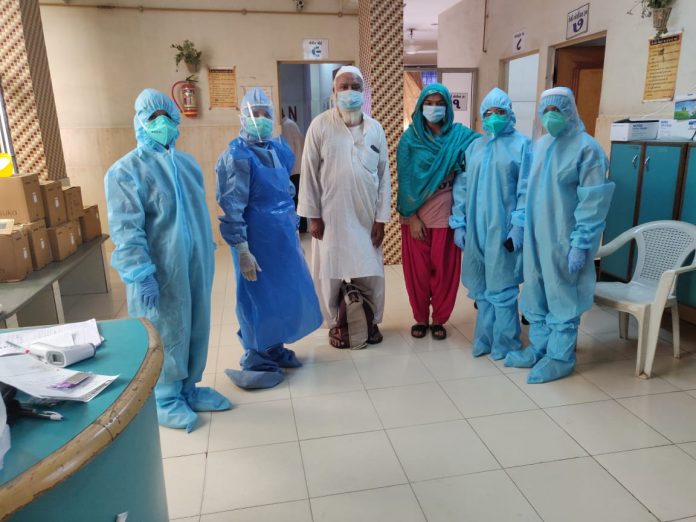
Muslim medicos in worst-hit Gujarat have been going an extra mile to fulfil their medical-course pledge for helping and curing run-down patients and have proved that not all white-coats are money-grubbing pill-pushers and bone-benders.

On March 1, the state government asked the medical fraternity to gear up for the pandemic and the medics of the minority community rolled up their sleeves to swing into action for serving the sick-as-a-dog patients of the dreaded coronavirus disease.

Even during the holy month of Ramadan and after, Muslim interns and resident doctors of the overcrowded state-run hospitals or physicians of private clinics not only sacrificed their comforts and academic studies but also risked their own lives to save precious lives with the situation worsening day every passing day – as one infected person expired every hour.

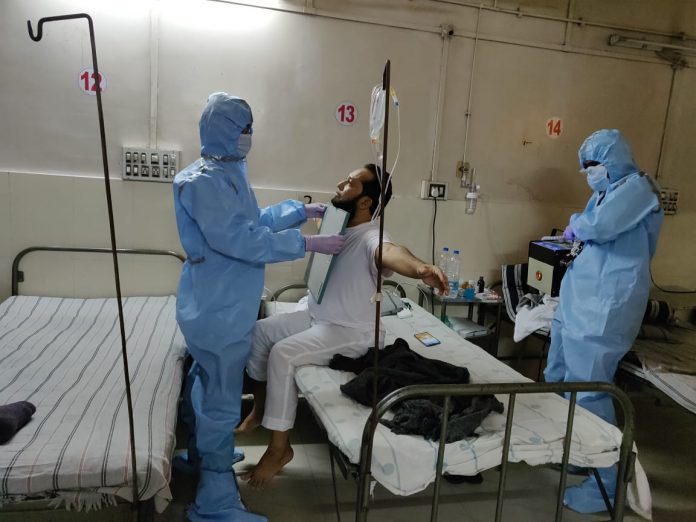
Doctors have to wear suffocating PPE suits for several hours.

Wearing suffocating plastic PPE suits for as long as 12 hours, the dedicated doctors in the frontline of the fight against the mysterious pathogen work in frightful COVID centres near infectious patients. And yet, they offer their services and personalized care gratis to all castes for a noble cause, not to mention the fact that some healers have to work without PPE kits, N-95 masks and proper gloves.

Not surprisingly, in Ahmedabad alone, some 200 doctors have tested positive and at least 11 of them have died with their boots on even as Gujarat registered the highest mortality rate of 6.2 per cent in India on June 15.

Besides creating awareness and sensitizing unlettered patients about the viral infection and dealing with uncooperative relatives, the hard-pressed medicos have had to stay away from their dear one’s back home lest the latter get infected by the coronavirus.

Dr Muhammad Husain

Dr Muhammad Husain of Vadodara has been a great inspiration for doctors of his community. As the corona crisis escalated, the local administration was worried stiff after senior doctors washed their hands off the global pandemic and in turn, the juniors had to meet the challenge of treating the patients in municipal hospitals.

But Dr Husain, who is also the chairperson of the Baroda Muslim Doctors’ Association, decided to pick up the gauntlet and presented proposals to set up four up-to-the-minute COVID care centres in Gujarat’s cultural capital. The beleaguered civic body was too happy to give its go-ahead with the result that hundreds of patients recovered in quick succession in fewer days compared to the discharge rate at other state-run facilities, thanks to round-the-clock monitoring by him.

When blood banks in the city ran dry and patients’ relatives running from pillar to post for the vital fluid, Dr Husain went round Muslim mohallas and sought the help of youngsters who, for the first time, donated blood on the day of Eid al-Fitr at a quickly-organized camp where 300 bottles were collected within just a few hours.

Community leader Zuber Gopalani told TwoCircles.net that, “Dr Husain, along with his bleeding-heart doctor friends, has stood on the road under the scorching sun and distributed immunity-boosting tablets bought from his earnings. All this has made him a real corona warrior.”

Dr Muhammed Dohadwala (right)

In Dahod city in central Gujarat, Dr Mohammed Dohadwala, a diabetologist, and his 67-year-old father Dr Kaizar, a senior consultant physician, kept their clinics open during the lockdown to help their regular patients even though most of the private doctors remained inaccessible, fearing the deadly viral infection.

“We decided that the work must go on and formulated a foolproof strategy for the safety of staff and patients, and even devised a video consultation platform in our centre for outstation patients,” he said.

Conscious of their social responsibility in these tough times, the Dohadwalas, with the help of a local NGO, distributed special kits of daily essentials among migrants, workers and other needy families in the city.

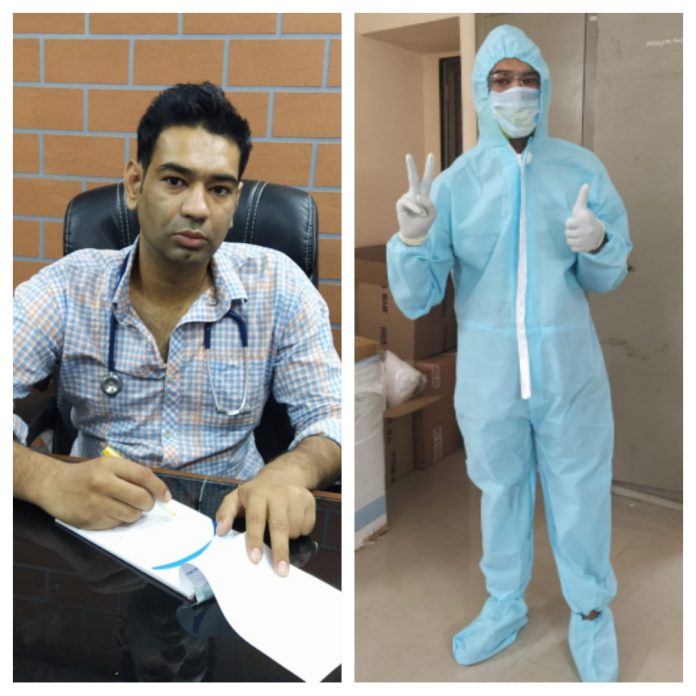
Dr Shakeel Vadaliwala (left) in PPE suit (right)

Ahmedabad-based Dr Shakeel Vadaliwala is a neonatologist specializing in the care of newborns but the dutiful doctor was so busy in serving COVID patients that he could not be near his wife when she delivered a baby girl last month. Even though he was away from home during Ramadan, he observed his fast and performed prayers and made do with simple food but he is happy that as many as 400 of the 800 COVID patients under his care at a government hospital were cured and discharged within a week.

Members of Ittehad Medicos’ Academy have not only kept their clinics open but have also been offering free services to COVID-hit men and women at three hospitals in Ahmedabad.

According to Dr Junaid Shaikh, who has a hectic schedule taking daily rounds at all these three care centres, he had to rent a house for several days to keep his family away from infection.

“I also had to use a PPE suit for three or four days because of shortage,” he told TwoCircles.net.

Mona Desai, president of the Ahmedabad Medical Association, said that Muslim doctors like Dr Didar Kapadia, Dr Murtza and Dr Iftekhar and others are doing a yeoman’s service in these tough times but wondered why cases of assaults on doctors by patients’ relatives were on the rise.

Mujahid Nafees, convener of the Minorities Coordination Committee, Gujarat sums up and says, that, “The sacrifices made by Muslim doctors fighting the pandemic are greater than even those of a soldier battling the enemy troops on the border. A soldier can see the enemies but for doctors, the coronavirus is not visible.”

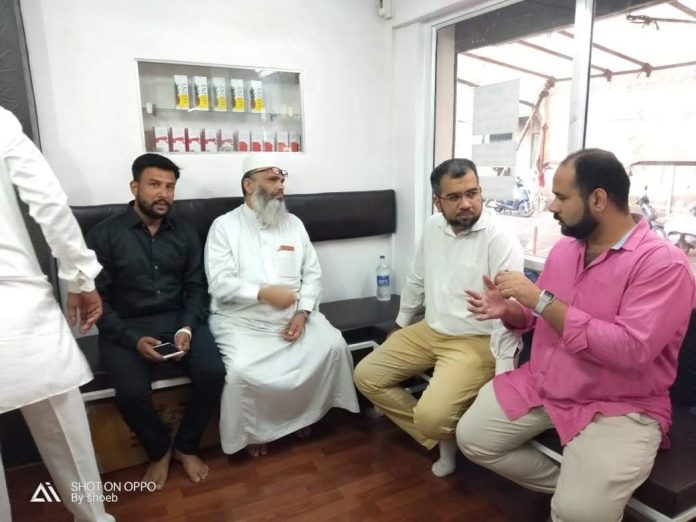
Dr Muhammad Husain (second from right) and Dr Zuber Gopalani (second from left)

source: http://www.twocircles.net / TwoCircles.net / Home> TCN Positive> Indian Muslim> Lead Story> Pandemic / June 15th, 2020

HT Salutes: Ameena, an Anganwadi worker feeding hundreds of migrant labourers

Nizamabad, TELANGANA :

With countless migrant labourers deciding to journey home on foot amid the Covid-induced lockdown, an Anganwadi worker in Telangana’s Nizamabad decided to take it upon herself to feed as many hungry travellers as possible.

She has been buying and cooking food with her own salary, savings, and her children’s monetary help.

Ameena, who wakes up at 3 am every day to cook the food, has also been receiving donations in the form of money and food to continue her noble work.

Watch the full video for more.

source: http://www.hindustantimes.com / Hindustan Times / Home> HT Salutes / June 10th, 2020

Animal lover in Bihar bequeaths his land to elephants

Janipur (Phulwari Sharif) , BIHAR :

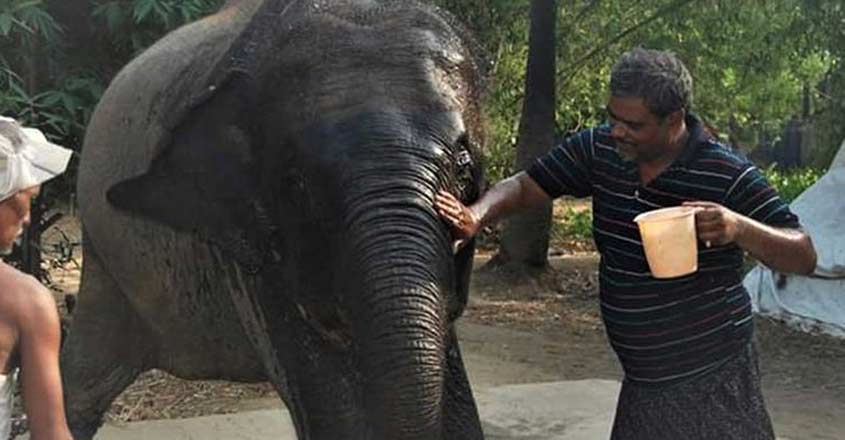
Mohammad Akhtar says elephants came to him as family heritage. Photo: IANS

Patna:

Even as the death of an elephant in Kerala in extremely tragic circumstances, is raging on social media, an animal lover in Bihar comes under the spotlight after he bequeathes his entire wealth to two elephants. He says one of them had saved his life from a criminal.

Mohammad Akhtar (50) from Janipur in Phulwari Sharif near Patna has two elephants aged 20 and 15 years. Moti and Rani live with him.

Akhtar says elephants came to him as family heritage, and that Moti and Rani are the “children” of those elephants. “I have lived with them since my childhood. The two are my family members,” he said, adding there are people who would like him to take care of the animal brought by them.

Akhtar is also chief of the Asian Elephant Rehabilitation and Wildlife Animal Trust (AERAWAT), an NGO. “I gave my 6.25-acre land to the two elephants to ensure that when I am not alive, the animals do not suffer hunger,” Akhtar told IANS.

He also revealed how Moti saved his life. “Moti had gone along with a mahout to Bhojpur district’s Shahpur area, where he fell ill. I had to rush there to treat him. One day, while I was asleep there, I was woken up by Moti’s roar. I saw one man pointing his gun just outside the window. I ran away to save my life,” recalls Akhtar.

He alleged that some of his own family members had joined hands with animal smugglers and were trying to sell the elephant by killing him.

Akhtar says he still fears for his life from his own family members because he has registered his land for the two elephants. He has written to Chief the Wildlife Warden and Patna police chief alleging threat to his life from his family members.

The elephant lover also trains mahouts. He says if the government does not intervene to protect the elephant, “the time is not far when we would see the elephant only in books. He says the elephants are headed for villages in search of food.

source: http://english.manoramaonline.com / OnManorama / Home> Lifestyle> News / by IANS / June 10th, 2020

Meet 10 women who are spearheading movement against CAA-NRC in India

In the wake of countrywide protests against CAA-NRC-NPR, India is witnessing a watershed massive movement led by women. From organizing to mobilizing to leading – women are at the forefront, often gaining stronghold over their male counterparts. Never in history we have seen such a political scenario where women leaders are emerging from every nook and corner, every village and metro city of the country.

To mark this International Women’s Day (IWD) on March 8, we have featured 10 women across India who have not only contributed to the changed definition of women empowerment but have also changed the way an Indian Woman is perceived across the globe. Through our feature, we honor and celebrate the courage of some of these inspiring women – those who have led the anti-CAA-NRC movement across India without any fear from state machinery. 

Sadiya Shaikh, Mumbai 

Sadiya, has visited several states to address anti-CAA-NRC rallies. She is a student of B.A at Rizvi college, Mumbai. Working to create awareness about NRC-CAA, she has shared the stage with the country’s foremost youth leaders –  Kanhaiya Kumar, Umar Khalid and many other activists. Recently, Umar Khalid posted that “Sadiya is only 17 years old, but one of the best speakers I have come across during the Anti CAA-NRC movement”.

Disturbed by the Jamia incident, she became a part of these protests to challenge the brutality of state sponspored violence on the students of Jamia in Delhi. “I thought if we choose to be silent now then distorting the constitution and atrocities on students will become a norm,”says Sadiya.

She feels proud discussing that she had studied democracy as a subject but now, she says, “I am practically trying to exercise what I was studying till now”. She had always dreamt to be a part of Young India Challenge, this year she got selected but gave up just to be a part of these protests. This movement has brought a change in her, she reads more about history now and she feels more confident. She is just 17 years old so her father accompanies her on travels to another city or state to address protest gatherings.

Ayesha Renna, Kerala

Ayesha is a 22 years old student from Jamia Millia Islamia. Coming from a small town Kondotty, in Malappuram district of Kerala, she became the poster girl after her photo went viral a day after the 15th December police brutality on Jamia students. In the photo with two other women students and a student journalist, Ayesha can be seen warning the policeman against their brutal behaviour. Ayesha became the icon of Women in Hijab breaking the stereotypes and struggling for her rights. 

Ayesha is associated with a Kerala-based NGO called ‘Yes India’ since 2016 which works for “educational development of students belonging from marginalised sections”. She started her protest for CAA-NRC on the very next day when the bill was passed in Parliament. She was the part of the JMI girls march to the parliament. Being a history student herself, she feels, “For me, history is not linear and it’s not only about recorded events.” She says that history is something which gives hope and energy in the age of political depression which is very similar to Nazi Germany.

Being a woman born and brought up in Kerala, specifically in a Muslim populated district, Ayesha is breaking the stereotypical image framed by the popular culture where a Woman in Hijab is hailed as “oppressed.” She says “My identity was always a subject of liberal saviours, the immediate possibility of a hijabi is limited into the immediate binaries of oppressed.”

Khalida Parveen, Hyderabad 

Khalida Parveen, a 64-year-old social activist from Hyderabad, was detained by the police while protesting. That did not dampen her spirits and since then, Parveen has been actively engaged in educating women about the impact of NRC and CAA by guiding them how to maintain peaceful protests.

“Muslim women have always been targeted for being inside their houses and not standing up for their right, this movement has shown that when necessary they can do every possible thing to safeguard their rights,” says Parveen, who also runs an NGO with the aim to empower the nation by empowering its women.

She has been arrested by the police during protests and has boldly faced it, advocating the weeding out fear psychology of police in society. She is currently working on the ground by reaching out to women in rural areas and slums to educate and aware them about CAA-NRC. Parveen sights every woman as a leader in these protests. “Our responsibility is to keep fighting against these unjust laws, I am not afraid even if I die struggling for the rights of our citizenship” adds Parveen. Her active participation in mobilizing women and appealing them to come out of their houses to protest has inspired many women, who see her as their role model.

Aman Mohammadi, Saharanpur 

Aman Mohammadi, 27-years-old artist from Saharanpur, is pursuing her PhD in Theatre and Performance from JNU. She is a performer who does theatre mainly on socio-political issues. Moving around in the protests she noticed that, women are leading the protests but when it comes to performance, mostly male were seen. To counter this, she became a part of the newly formed ‘Zanana Ensemble: Zanana ka Zamana.’

Anyone who identifies herself as a woman performer was open to join the group. The group has composed some very creative and engaging slogans, one of which is

                              “aya zanana ka zamana, hai zanana ka zamana,
                           khub pakaya ghar mai khana, inquilab ko hai pakana

The group did a musical protest Hawaon mein, yaaron jawaab milega, Fizaon mein, jawaab milega, which went viral on social media and was later covered by The Quint. They performed at several protest sites including Shaheen Bagh,Shahi Eidgah, Azad market, Inderlok and many more.

Aman has been very active and vocal on social media about the empowerment and rights of women. “This movement has brought up a beautiful form of resistance which is helping women to reclaim the space which was already taken by men, through this protest they are reclaiming these spaces” says Aman Mohammadi. Aman was deeply moved by the spirit of resistance among the ladies of mohalla who have come together to establish Shaheen Baghs at different places throughout the nation. She opines that despite the patriarchal set up of our society this movement has been able to break many barriers, the women have come out and led these protests which will always be remembered.

Shiba Minai, Hyderabad

Shiba, originally a 33-years-old journalist from Hyderabad, has now become an activist and protester. She is known for kick-starting the momentum of Hyderabad protests and also called as the Lady Flash protester of Hyderabad. 

Shiba calls herself an Urban Freedom Fighter who is fighting for the rights of the citizens of India and humanity.“Women have always been the backbone and very integral part of this society but were not acknowledged by the people because they were busy thinking that Muslim women are not capable,” says Shiba. She thinks this movement has given a beautiful realization to people with traditional mind-sets about women belonging to the household.   

Shiba is the mother of a 3-year-old but she manages to be an active part of these protests, just like hundreds of other women who balance their daily routine with protest schedules across the city. According to her, now “the protests are as important as having daily meals because there is nothing more patriotic than disagreeing with what is wrong and the voice of dissent is necessary.” She says that by bringing the CAA into force, we have wasted our democracy and now women must fight to save India one more time by setting an example for women throughout the world. Shiba was also detained by the police amid the protests but this didn’t stop her from voicing her dissent. She is very determined that these protests will surely bring victory and people like her will continue to resist even if it takes years.

Swati Narayan, Mumbai

Swati, originally from Mumbai, is a Visiting Fellow at the Institute for Human Development, Ranchi. She is a distinguished activist having previously worked on social issues like Right to Food, Right to Education and Social Justice for more than a decade now. She has been actively working at grassroots level, working closely with different groups and organizations to mobilize and aware people. Swati says to have Muslim women and students at the forefront have been a completely new phenomenon. 

“Through this movement they are countering fascism and patriarchy in the liberal establishment as well as right wing establishment,” she says. She believes anti-CAA movement is a strong inflection point which will empower Muslim women beyond today. She hopes that this sisterhood which has emerged out of organic and pure movement should grow stronger and stronger.

Rehna Sultana, Assam

Rehna is a research scholar from Guwahati University, Assam. She is an academician turned full-time activist owing to the social circumstances at her place. Some people from her village started getting the notice for D-voter and would come to Rehna’s family to help them understand about it. It was around that time she started enquiring about citizenship issues in Assam. Soon, she started helping people with the NRC process. In her village, people used to charge 1000 rupees per head for filling the form for NRC, which didn’t even ensure that the form would be filled correctly. So, she started filling up forms for people free of cost. In the wake of CAA, she is now currently working to help people across Assam through awareness drives. Through her reach-out programmes, she is countering misconception and misinformation about citizenship laws. She informs people about the know-hows of producing documents and dealing with government authorities.Rehna hails from Bengal origin Muslim community in Assam and  has been working for the upliftment of women by raising awareness against child marriage, domestic violence and education. Rehna says women and children have been worst affected as they are unable to produce the needed documents.“Birth certificate and matric certificate are two important documents to prove citizenship. Most of the women get married early and can not complete their formal education to obtain even the class 10 certificate,” she says.Rehna, who has been working tirelessly on the ground for women empowerment, believes education should be  the top most priority for women.

Dr.Shagufta Yasmeen, Ranchi 

She is an activist who runs a women empowerment group and recently have been very active in NRC-CAA protests. Jamia incident instigated her to join the anti CAA protest. She gradually started learning about the Act and then started the awareness program to inform people about it.

There were many misconceptions about CAA-NRC among the people. Some students and a ladies group came together to initiate the awareness drive. This movement has empowered the women in many dimensions, this has made them more confident. Shaguftais very confident in saying that “Our protest is a peaceful protest; it might take time but definitely it will be fruitful”

After her awareness sessions, people from all communities are coming and joining the protests. She considers women as more responsible and powerful which is the reason behind the success of these Anti CAA-NRC protests. It is the patience of women which has led to the strengthening of this movement and that is why everyday more people are joining the protest. 

Jacinta Kerketta, Ranchi 

Jacinta Kerketta from Ranchi is best known for her poetry which touches various social issues of Adivasi and Dalits. She is also a journalist and social activist. Working on the education of girls she has been travelling across the world, delivering her poetry on varied subjects including independent writing and environmental issues at the International level. Through her poetry she has also registered a protest against CAA-NRC at various public talks. Adivasis in this country have been struggling for dignified life which is yet to be actualized. Jacinta says CAA-NRC is not just Anti-Muslim rather it is also against Adivasis, Dalits and Women.For women to get empowered they need to pave their own way, aligning their own development with that of society. Only then we as society will get emancipation.

Ladeeda Farzana ,Kerela

Ladeeda, a 22 years old student of JamiaMilliaIslamia who hails from Mallapuram District of Kerela emerged as a face of resistance from the Anti CAA-NRC protests. She was seen as the one amongst the four girls protecting a male student from the police lathi-charge. Later, she has been to different states to convince people regarding CAA-NRC protests.

Ladeeda became an icon of resistance and have been very active through the movement. She has been to many universities and protest sites to encourage people to participate in the protests. She was brutally trolled but she didn’t give up. She is a role model for many of the student protestors. “The fight for justice is incomplete, unless we have solidarity from people of all faiths, ideologies and communities,” says Ladeeda. 

source: http://www.twocircles.net / TwoCiricles.net / Home> TCN Positive / by Nazish Hussain and Musheera Ashraf / TwoCircles.net / March 08th, 2020

Face of Lucknow Anti-CAA Protest, Uzma Sanitizing Temples and Streets during COVID Lockdown

Lucknow, UTTAR PRADESH :

Lucknow resident Uzma in two roles — sanitizing streets during COVID lockdown and earlier protesting against CAA-NRC-NPR

New Delhi : 

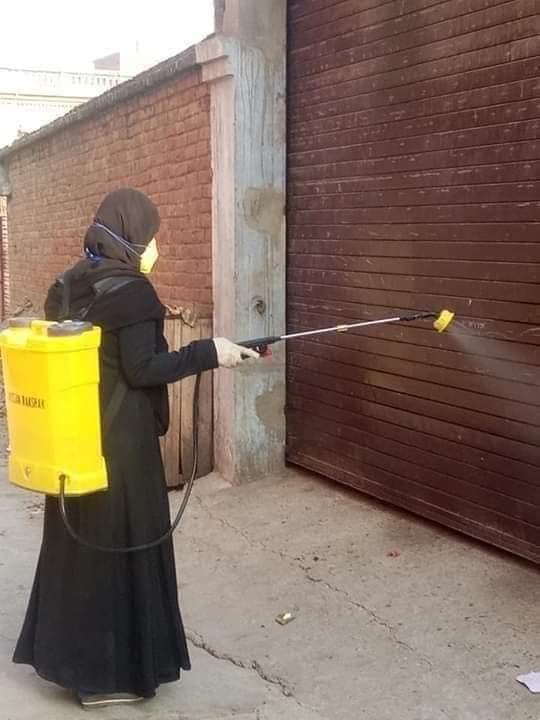
After the lockdown, when the country was facing Coronavirus and politicians were blaming religion and faith for the pandemic, a Muslim woman, away from Hindu-Muslim, temple-mosque TV debates, was carrying a spray machine on her back and sanitizing streets, temples and mosques and thus silently playing her role in the war against Coronavirus.

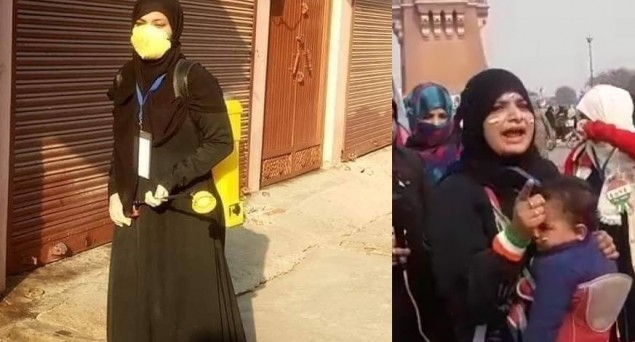
A picture and video of the protest against Citizenship Amendment Act (CAA) at Ghanta Ghar in Lucknow had gone viral on social media earlier this year – a woman in Hijab holding her kid in her lap was loudly raising slogans on mike. When the protest ended and the lockdown began in end-March, the same woman was seen carrying a spray machine one her back and sanitizing temples, mosques and 35 localities, and her pictures again became viral on social media. She is Lucknow resident Uzma.

Resident of Saadatganj in old Lucknow, Uzma has made struggle the mission of her life and her religious identity her strength. She has made her courage her ideal and struggle her way.

Talking to India Tomorrow, Uzma says she wants to make the country better, fight against evils, injustice and all types of epidemics so that the new generations could breathe in the air of love and peace.

Sanitizing Temples and Streets:

Uzma says: “Doctors, police and all others are engaged in the fight against Coronavirus across the country. I also thought to do my bit in this fight against the pandemic and began sanitization work in areas where employees of municipal corporation are not able to reach.”

Uzma doing sanitization work in Lucknow

Talking to India Tomorrow, Uzma further said: “I have a passion in my heart to do something for the country and I do whatever I can. Service to the nation begins from your home and neighbourhood, that is why I began my contribution in the fight against Coronavirus by sanitizing the lanes near my house and so far I have sanitized 35 lanes.”

Carrying Sanitization Work with Her Own Money:

During the continuous lockdown, Uzma is spending her own money on sanitizing the localities of her neighbourhood. When asked why she is using her own savings for this work, she said: “I had saved the money for the future of my children but this Coronavirus epidemic is taking away lives of our dear ones in the present. The municipal corporation is doing its efforts but wherever the civic body is unable to reach, I am doing sanitization work to save people from Coronavirus.”

Pictures and videos of Uzma sanitizing streets and localities of Lucknow have been viral on social media for the past couple of weeks. In the visuals, she can be seen sanitizing temples, shops and narrow lanes.

Uzma Was Active in Anti-CAA Protest:

This is not the first time that Uzma is in news and her work is being appreciated. Earlie, during the anti-CAA protest at Ghanta Ghar in Lucknow, a video of her raising slogans had gone viral on social media.

In that viral video, Uzma was holding her child with one hand and mike in the other and was raising slogans and inspiring the women audience there to continue the protest.

 Lucknow Municipal Corporation honoured Uzma for her exemplary sanitization work

Talking to India Tomorrow, a young lawyer from Lucknow Sajid Khan said: “Uzma was among the women who were leading the anti-CAA protest at Lucknow’s Ghanta Ghar and gave a new dimension to the anti-CAA movement. A video of her holding her child in the lap and raising slogan had motivated women across the country.”

He further said: “When her anti-CAA video went viral, police had gone to shut down the Ghana Ghar protest and misbehaved with women protesters – Uzma was one of them and her video had gone viral. But forgetting all this, the same woman has again got engaged in the service of the nation, which is indeed surprising.”

Several images have emerged from across the country during the lockdown which are enough to change the way we look at the government and society.

Muslim youths like Uzma and students played active role in the anti-CAA movement and when the lockdown was imposed they got engaged in distributing ration and food among the needy people and laborers across the country. Uzma and hundreds of youths like her have done what the government should have. Yet, during the lockdown, the Delhi Police continued arresting those students and youths who were doing relief work and serving the humanity.

Away from TV debates on Hindu-Muslim and temple-mosque issues, the youths of the country are striving to make a beautiful India. The government should also fix its role in this endeavour.

source: http://www.indiatomorrow.net / India Tomorrow / Home / by Masihuzzaman Ansari , India Tomorrow / May 29th, 2020

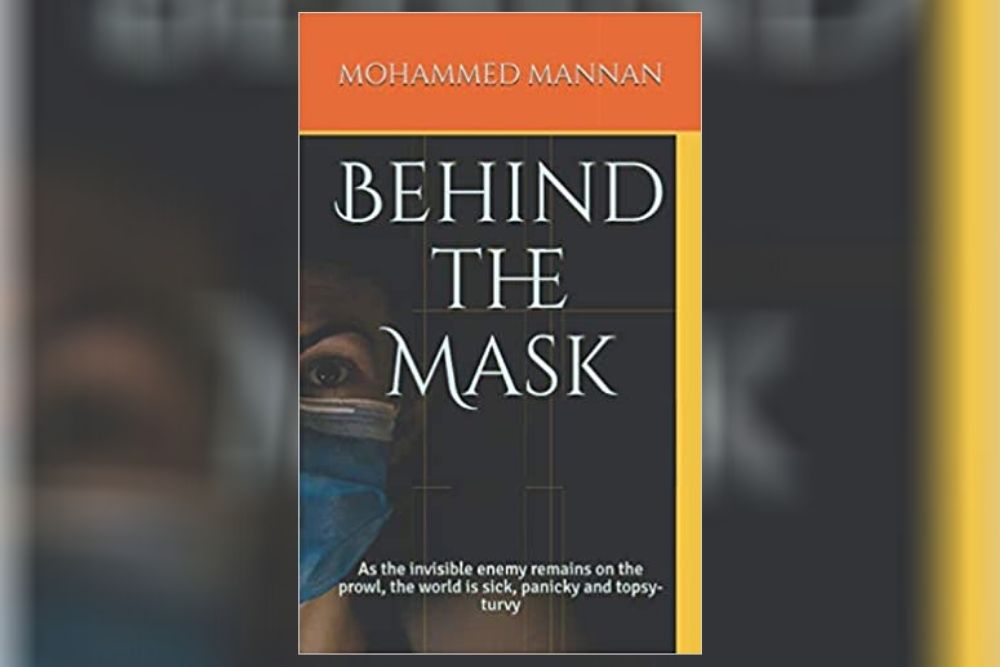
Behind the Mask: A Book On Covid-19 And Its Socio-Economic Impact

Hyderabad, TELANGANA / Dubai, UAE :

Mohammed Abdul Mannan’s ‘Behind the Mask’ details the origin and spread of the coronavirus and how it has made the world sick, panicky and topsy-turvy.

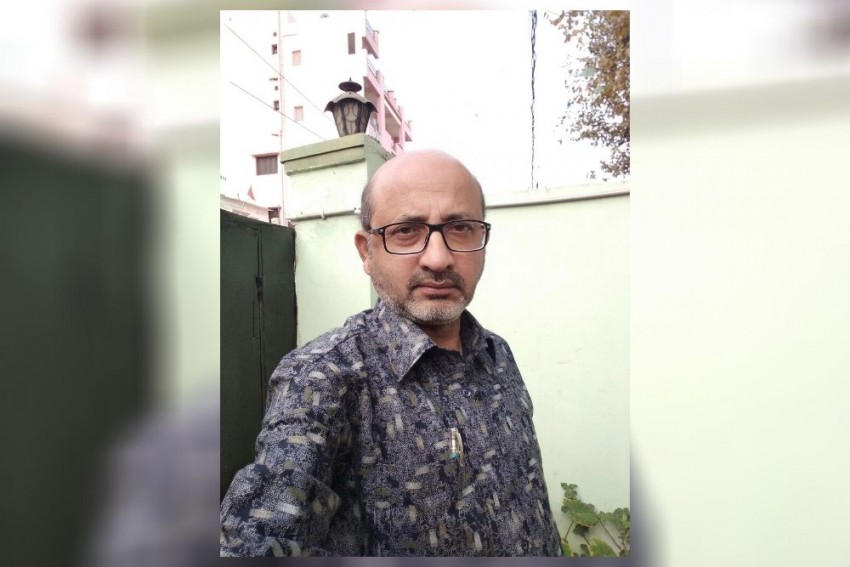
Mohammed Abdul Mannan

The novel coronavirus has infected over 5.5 million people across the world. As countries grapple to contain the Covid-19 crisis, it’s important to discuss the socio-economic fallout of the pandemic.

Mohammed Abdul Mannan’s Behind the Mask answers these questions. The book details the origin and spread of the coronavirus and how it has made the world sick, panicky and topsy-turvy.

How a virus one billionth of a metre size could trigger the 21st century’s second pandemic and why the 15th largest pandemic since the 14th century is massively disruptive on all-fronts. Can the world handle a ‘biblical proportions’ famine and will the world recoup from the US$9 trillion economic impact? The book discusses every aspect of socio-economic impacts of the global pandemic.

This is the eighth book by Mannan who has worked for Deccan Chronicle, Indian Express and India Today, Doordarshan and Zee TV in the past. He also worked as the launch News Editor of Qatar’s second English broadsheet daily, The Peninsula, and later joined Khaleej Times in Dubai. He took a plunge into PR and Corporate Communications with Dubai and Abu Dhabi tourism regulatory bodies. Winner of the first Qatar Tourism Award, his best-seller book had been Dubai – A City Making History.

Behind the Mask is available in print and digital format on Amazon.

source: http://www.outlookindia.com / Outlook / Home> Website / May 27th, 2020

Portrait of a poet

Indore , MADHYA PRADESH :

“My biographer has written the book so well I almost did not recognise myself. In order to be a big poet, the poet has to be a crazy lover. I could not become a big poet because I could not reach that stage.” – Rahat Indori, Poet

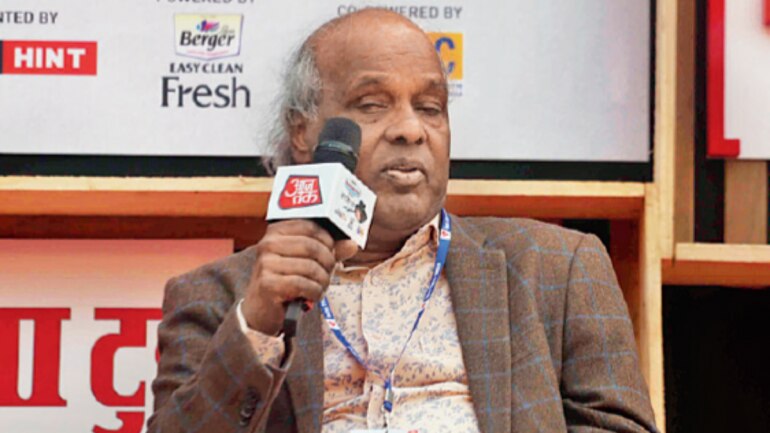
Celebrated poet Rahat Indori at Sahitya Aaj Tak on Sunday

Apne haakim kee fakiri par taras aata hai, jo gareebon se paseene kee kamaee maange, Saara din jel ki deevaar uthaate rahiye, aisee aajaadee ki har shakhs rihaee maange.

This was just one of the couplets recited during the unveiling of the biography of iconic poet and lyricist, Dr Rahat Indori, on the final day of Sahitya Aaj Tak on Sunday. The biography, Rahat Sahab: Mujhe Sunte Rahe Log Waqiya Mere has been written by Dr Deepak Ruhani. The author discussed the making of the biography with his subject, as well as singer-turned politician Hans Raj Hans.

Commenting on the association between Indori and Ruhani, Hans complimented Ruhani on his speed. “You have finished this biography in two years, when many writers take their time writing the and cannot complete them in one decade.”

Ruhani said his association with Indori goes back 17 years. While researching the book, one of the fringe benefits was listening to unforgettable shayari from Indori, he said. “I used to wait for a long time to come and hear him and sat on the grass while he recited the couplets.” Rahat Sahab will be officially released on November 10.

source: http://www.indiatoday.in / India Today / Home> News> Mail Today / by Mail Today Bureau / November 04th, 2019