A mosquito net-maker and an auto driver have been using their savings to feed the homeless and beggars every night.
Hyderabad :
A day after Chief Minister K Chandrasekhar Rao announced the state-wide lockdown and curfew from 7 pm to 6 am, the streets were uncharacteristically empty post nightfall.
While most of the residents stayed at home figuring out ways to procure essentials to sustain till the lockdown period, a group of youngsters from Sanath Nagar went around the city, braving the curfew and the police, to distribute food to the homeless and labourers at night.
Mohammed Qadeer, a mosquito net-maker, and his friend Mohammed Ghazi, an auto-rickshaw driver, have been using their savings from the day of lockdown to feed around 100-150 homeless and beggars every day at night. What they’re doing is of significance: though there are many people distributing food during the day, there is hardly anyone doing it at night due to the curfew.
The Express chanced upon the youngsters a few days ago at around 9 pm and accompanied them while they distributed food packets to the needy. While Qadeer rode a motorcycle alone, two others were on another bike holding a large crate filled with food packets – comprising dal and rice.
They moved slowly looking out for homeless or beggars sleeping on the pavements. When they approached one such person who was sleeping in front of a restaurant at Somajiguda, there was a look of disbelief on his face when he realised that he was being given food.
They were stopped by a bike-borne traffic police, who enquired what they were doing out at night. After Qadeer and others explained to the police of their service, they were let go. “This has happened every day till now. We are always stopped by the police, but they let us go when we tell them why we are out,” he said on Wednesday.
They have now started distributing food in different areas like Lakdi ka Pul. “We are not affiliated to any NGO and we do not have any external funding,” Qadeer told Express. The Sanath Nagar resident makes food at his house, with his family helping him in the cooking process.
“We take utmost care when it comes to hygiene and ensure cleanliness while cooking food,” he said. However, as of on Wednesday, Qadeer said they have been facing financial issues and that they may not be able to distribute food for two days.
source: http://www.newindianexpress.com / The New Indian Express / Home> Good News / by Ahik Sur / Express News Service / April 02nd, 2020
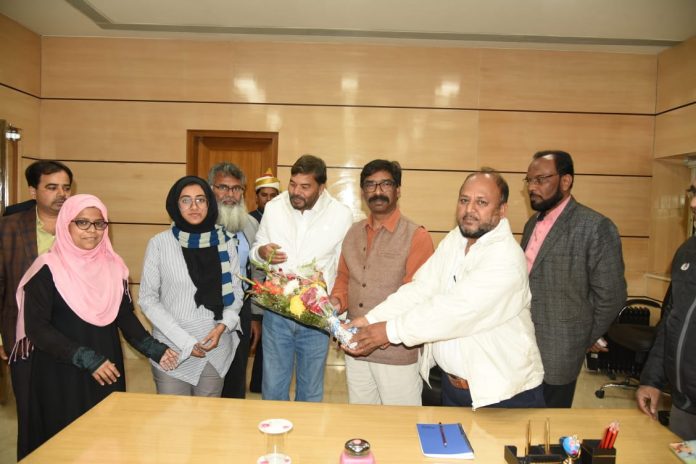
Afreen, far left, in meeting with CM Hemant Soren regarding CAA, NRC, NPR
Ranchi:
Jharkhand had been witnessing a wave of protests against CAA- NRC-NPR since December last year leading the State assembly to eventually pass a resolution against NPR-NRC on March 23, 2020. Kadru, Ranchi’s Shaheen Bagh was the major a sit-in protest site for women, running for two months until the latest shutdown for Coronavirus pandemic.
The sit-in registered massive student and women protestors, most of them young and old Muslim women on the forefront taking the movement ahead. Among them is Afreen Azad Khan, 30-year-old protester from Purani Ranchi who has been the most active on ground for creating awareness and mobilization of the masses. Afreen, along with her team had also met CM Hemant Soren urging him to stop the process NPR in Jharkhand.
TwoCircles.net reporter Nazish Hussain spoke to Afreen on the challenges, opportunities and experiences on the ground against CAA-NRC. Here are the excerpts:
CAA got passed in the Lok Sabha on 9 December, 2019, triggering protests across the country. What was your initial reaction and how did you follow the developments as the protests intensified?
I was getting news of NRC process being carried out in Assam. It didn’t hit hard until we saw names of distinguished government personnel and military officials out of the NRC list. It was then that I started following it closely, reading more about CAA. The whole exercise seemed to me as Anti-Constitution and Anti-Indian. It would affect not just Muslims but also Dalits and Adivasis, who are huge in number in my State. At this point there were many protests taking place across country and I felt the need to finally start learning about it and educating the same to people in Ranchi.
When and how did you decide to join the protest against CAA and took it to streets, campaigning against it?
Particularly after the police violence on students of Jamia Millia Islamia and Aligarh Muslim University I was very much affected. Many things have happened before this, like Gujarat riots, but this time I felt the jolts when I saw young, unarmed students being attacked inside a university. I decided then that I must do something against it, whatever was in my capacity.
How did your family respond to your decision of joining the protest and later leading them?
I have three sisters, a younger brother and my mother. I received full support from my family since day one as they got actively engaged at the protest site at Kadru Bagh readily. My mother and sisters would daily go to the sit-in and sometimes when they couldn’t, they never stopped me from going anywhere to these protests. There were times I reached home very late at night due to ground work but I had full family support and it never became an issue. My family let me do things form a free mind.
Being a Muslim woman activist, tell us about your experience of mobilizing and interacting with the community? What has been the biggest challenge you had to overcome?
The biggest challenge was to engage with women for their active participation. They were mostly fear-stricken and only knew that something against Muslims was happening. It took us a while to get them to fully understand the larger implication of the situation. We had to educate them about the broader perspective and motivate them to reach out to other communities for a dialogue on CAA-NRC.
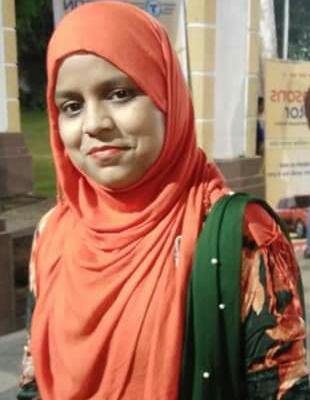
Afreen Azad Khan
Since many women, who are mostly housewives came out and continuously took part in the protests, how did it affect the traditional family dynamics? Tell us about the role male members played to support the participation of women.
Interestingly, there has been huge support from the male members of the families. Personally I have felt that usually mobility and safety are two of the important issues involving women protestors but thankfully it was the men this time taking that responsibility by cooperation and understanding. It would not have been possible to women to out in large numbers for a sit-in protest if they did not have support of the male members in their families.
It is no surprise that CAA-NRC would impact other communities including indigenous people of Jharkhand largely. Did you try to reach out to the indigenous communities of Jharkhand? If so, what response did you receive from them?
We went to remote localities and tried reaching out to them but the initial response was not good. Many were not interested to even listen to us. Few people dismissed saying these are mere rumors and nothing will happen. But we kept on our efforts and slowly we started getting responses from Adivasis and Sikh communities as well. Many Adivasi activists came to our support and they mobilized their communities. And to our success in one of the dharnas, near Raj Bhawan there was a mixed crowd. Many Adivasi women joined in along with Muslim women. In Jharkhand, if any community that came out in large numbers against Anti-CAA after Muslims, it was the Adivasi community.
You met CM Hemant Soren regarding CAA, NRC, NPR and he has now passed the resolution against it – which had been one of your demands. So, do you think your protest has been successful?
It was definitely great news for us and we all had a sigh of relief. We had been waiting for this since long seeing other states pass resolution against it. We formed a group and arranged a meeting with the CM with a list of appeals and finally met Hemant Soren on February 27, 2020. He was very responsive when we presented our case against CAA-NRC-NPR and finally we saw that the Jharkhand government considered our voices and passed the resolution against NPR -NRC.
What will be the future course of action now, would you continue with your Ant-CAA protests against the centre?
As of now everyone is more concerned of the Corona virus pandemic. So there are no more protests sites. I don’t know how long will it take for this virus threat to end completely. So we are not thinking of the protests now. But people are vigilant.
Do you think the momentum of the protest has been broken by the pandemic and it will be difficult to gather people again for a sit-in protest against Centre?
Women here at Kadru Bagh were not ready to clear the protest site, as Delhi’s Shaheen Bagh protest was still going on. It was hard to convince them but after we reasoned with them, they agreed. Things may have gone quiet for now, but if the Centre starts any exercise on NPR-NRC people will start protesting as well.
Even when the fear of COVID-19 has gripped the entire nation, a Keralite teenager has come forward to donate stem cells for a critically-ill patient at a Chennai hospital in neighbouring Tamil Nadu.
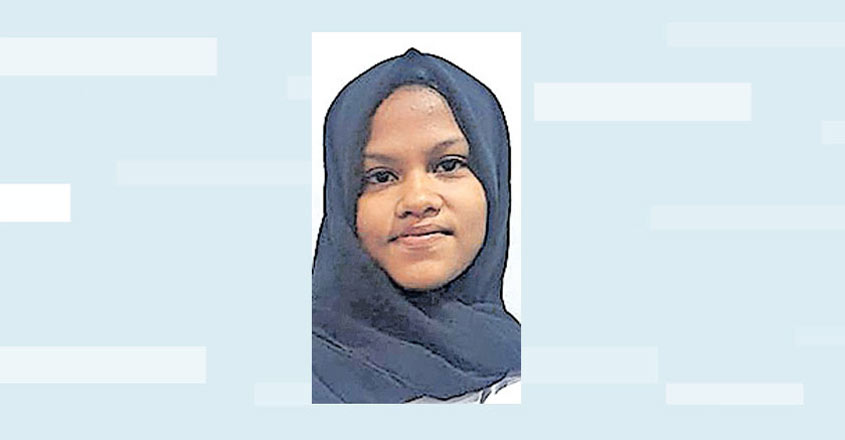
Hiba Shamar, a native of Pullepady in Kerala’s Ernakulam district, donated the stem cells recently.
A vehicle carrying the blood stem cells harvested from Hiba crossed over to Tamil Nadu the other day.
The 18-year-old has become one of the youngest people to donate stem cells in the state.
The daughter of N M Shamar and P M Seenath, Hiba is a first-year BCom student at the St Teresa’s College in Ernakulam. She had registered as a stem cell donor during a camp held at her college five months ago.
The camp was organised by Smile Makers and DATRI Blood Stem Cell Donors Registry.
Procedures were initiated after her stem cells matched with that of the patient in Chennai. Hiba readily agreed for the donation after the gravity of the situation was conveyed to her.
After taking all the necessary precautions, Hiba donated the stem cells at the Amrita Hospital in Kochi. Hiba reached the hospital along with her mother Seenath and maternal uncle A M Naushad.
After the stem cells were harvested, a Blood Stem Cell Donor Registry worker went to the Cheranallur police station and took permission to travel to Chennai.
At the end of the 13-hour travel, the stem cells reached Chennai the other night.
source: http://www.english.manoramaonline.com / OnManorama / Home> Districts> Ernakulam / by Manorama Correspondent / March 27th, 2020
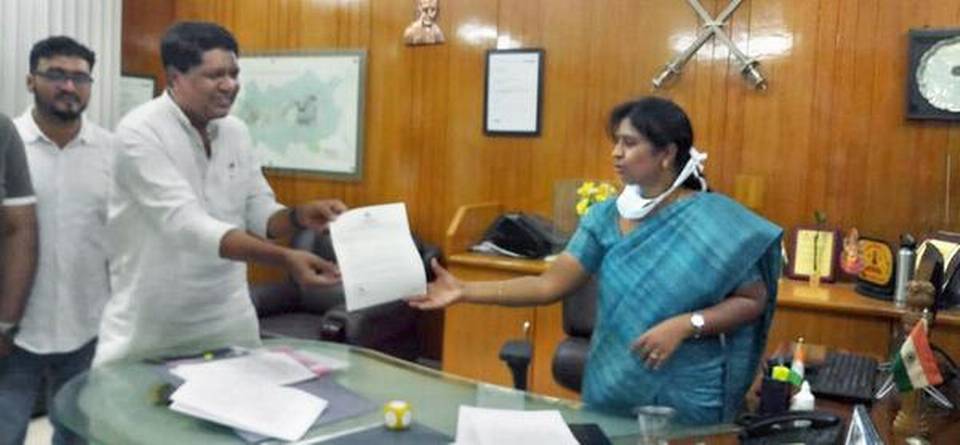
Managing Director of Hotel Metropolis handing over a letter to Deputy Commissioner Deepa Cholan in Dharwad on Tuesday offering 46 rooms of his hotel for quarantine purposes.
At a time when apprehensions about the spread of COVID-19 pandemic are increasing, a hotelier from Hubballi has offered a total of 46 rooms in his lodge for quarantine purposes of those who have returned from foreign countries.
Apart from providing 46 rooms in one section of Hotel Metropolis on Koppikar Road in Hubballi, Managing Director of the hotel Ashraf Ali Basheer Ahmed has offered to provide food to those quarantined.
Mr. Ashraf Ali handed over a letter on offering rooms for quarantine purposes to Deputy Commissioner of Dharwad Deepa Cholan here on Tuesday. Lauding the initiative by Mr. Ashraf Ali, Ms. Deepa Cholan termed the act of the hotelier as a model one.
Mr. Ashraf Ali requested Ms. Deepa Cholan to send a team of officials to inspect the hotel. He said that the Metropolis Group had already handed over 70 rooms owned by the group near the international airport in Mumbai to the Government of Maharashtra. The hotel group had taken up the initiative under its CSR activities, he said.
source: http://www.thehindu.com / The Hindu / Home> News> States> Karnataka / by Special Correspondent / Hubballi, March 25th, 2020
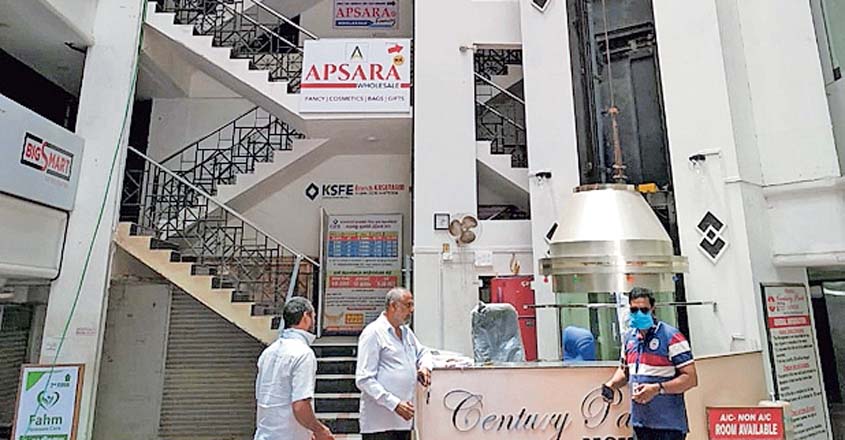
The Century Park building near the new bus stand in Kasaragod would be handed over to the authorities to be converted into an isolation ward
Kasaragod:
Even as authorities struggle to find accommodation facilities for quarantined people amid COVID-19 outbreak, responsible citizens have offered to help.
C I Abdullahkunji of Kudlu in Kasaragod district has informed the authorities that his three-star hotel can be used as an isolation facility for free.
The Century Park building near the new bus stand in Kasaragod would be handed over to the authorities. Eighty-eight rooms of the top three floors of the seven-storeyed building would function as isolation ward.
The daily rent of one room is Rs 1,500.
All rooms have two beds each and the bathrooms have geyser facilities. The hotel has a water tank with a storage capacity of 45,000 litres.
The hotel owner said the necessary precautions have being taken. The water tank has been sanitised and filled up. The hotel premises have also been cleaned.
Municipal secretary S Biju, and deputy DMO Dr Geetha Gurudas carried out an inspection at the building.
source: http://www.english.manoramaonline.com / OnManorama / Home> Districts> Kasargod / by Manorama Correspondent / March 27th, 2020
Arfa Khanum Sherwani works as senior editor with ‘The Wire’ while Rohini Mohan is a Bengaluru-based independent journalist
Arfa Khanum (left) and Rohini Mohan
The Chameli Devi Jain Award for an Outstanding Woman Journalist was awarded jointly this year to Arfa Khanum Sherwani, senior editor, The Wire and Rohini Mohan, a Bengaluru-based independent journalist. Rukmini S., an independent data-journalist from Chennai, received an Honourable Mention.
The annual award, which recognises social concern, dedication, courage and compassion, received over 40 entries from all over India representing the print, broadcast and online media. While most entries were in English, a substantial proportion was also in Hindi, Malayalam, Odia and Telugu.
A three-member jury, comprising of Zoya Hasan, political scientist and Professor Emerita, Centre of Political Studies, Jawaharlal Nehru University; Sreenivasan Jain, Managing Editor, NDTV and Manoj Mitta, senior editor and author, felt that Arfa Khanum Sherwani excelled in reporting from conflict situations in Kashmir and Uttar Pradesh. Through her online videos in Hindi, including field reports and studio discussions, she displayed exceptional courage and empathy in giving a voice to people on the margins and holding authorities to account.
The jury observed that Rohini Mohan’s reportage on the NRC exercise in Assam set a new benchmark for investigative journalism. In the highest tradition of watchdog journalism, the meticulous research on the ground, her humane engagement with affected people, and analysis of the arbitrary conduct of the institutions involved yielded findings that proved to be far-reaching.
Rukmini S. the jury said, deserved special recognition for pushing the boundaries of data journalism in India.
The presentation of the award, scheduled for Saturday, which was to be followed by the BG Verghese Memorial Lecture by Madan Lokur, former justice of the Supreme Court, was postponed due to the coronavirus threat.
The Media Foundation instituted the Chameli Devi Jain Award for an Outstanding Woman Journalist in 1980, named after Chameli Devi Jain, a legendary freedom fighter and community reformer who went to jail for her beliefs. The first award was given in 1982 and nearly 40 years later it continues to recognise some of the best known and respected names in Indian journalism.
The Media Foundation was started in in 1979 with the aim of upholding freedom of speech, expression and information and to encourage freedom in society and enhance the quality of life through the media and process of communication. Its founding members were media luminaries including B.G. Verghese, L.C. Jain, Prabash Joshi. N.S. Jaganathan and Ajit Bhattachrjea. Currently, Mr Harish Khare, former editor, The Hindu and The Tribune is chairperson of the Foundation.
source: http://www.nationalheraldindia.com / National Herald / Home> India / by National Herald Web Desk / March 14th, 2020
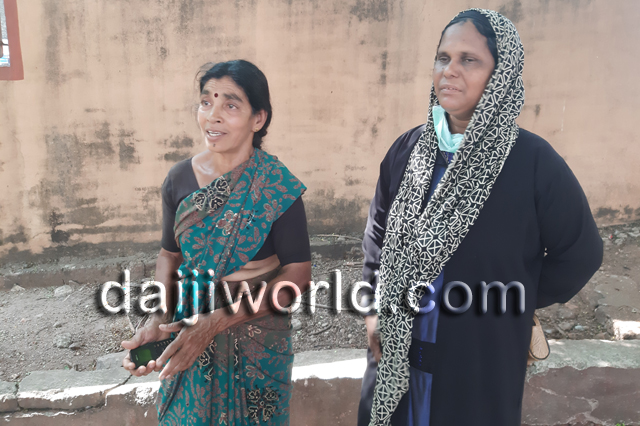
A Muslim woman turned Good Samaritan for her Hindu neighbour. In a heart-warming incident which speaks volumes on humanity, Fathima from Madikeri has travelled all the way to Mangaluru to ensure her 35-year-old neighbour Raju’s life is saved with timely treatment.
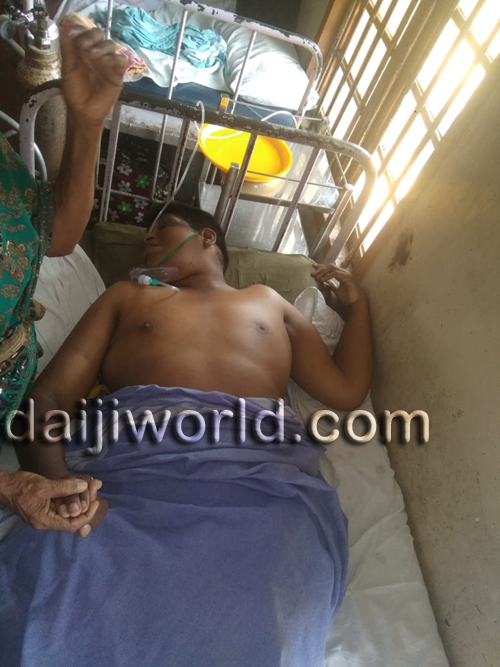
Raju, a resident of Madikeri Siddapura Nelyahudhukeri has been paralyzed for the last 12 years. He suffers from kidney problems and his condition turned critical since the last couple of days. Raju is taken care by his mother Leelamma aged 65, who earns a living by growing vegetables.
The house they live in is on a verge of collapse and the family is suffering due to lack of finances. Moved by the plight of the mother and son, a Muslim woman named Fathima, who is Raju’s neighbour, took him to Madikeri hospital. But doctors suggested her to take him to a hospital in Mangaluru for further treatment.
Raju and his mother had no money to pay for ambulance to shift Raju to Mangaluru from Madikeri. So Fathima obtained a loan by pledging her daughter’s jewellery and succeeded in bringing Raju along with his elderly mother to Mangaluru for further treatment.
Fathima is taking all kinds of initiative to help her neighbour Raju recover. Raju’s mother who has difficulty in walking was unable to attend her son. However, Fathima is taking care of them.
SKSSF Vikaya Dakshina district vice chairman Taajuddin Tarly appreciates Fathima’s selfless service towards her neighbour. “We visited Raju. He is in need of ICU facility but there is no ICU facility in the hospital to get dialysis done. The doctor has assured to move Raju to another hospital. People like Fathima, instill people’s faith in humanity,” he said.
source: http://www.daijiworld.com / DaijiWorld / Home> Top Stories / by Daijiworld Media Network – Mangaluru (ANK) / March 17th, 2020
At a time when pharmacies are running out of or charging exorbitant prices for face masks, the commonly used personal protective gear against coronavirus, a pharmacy shop in Kochi in Kerala is selling masks just for Rs 2 to the neediest.
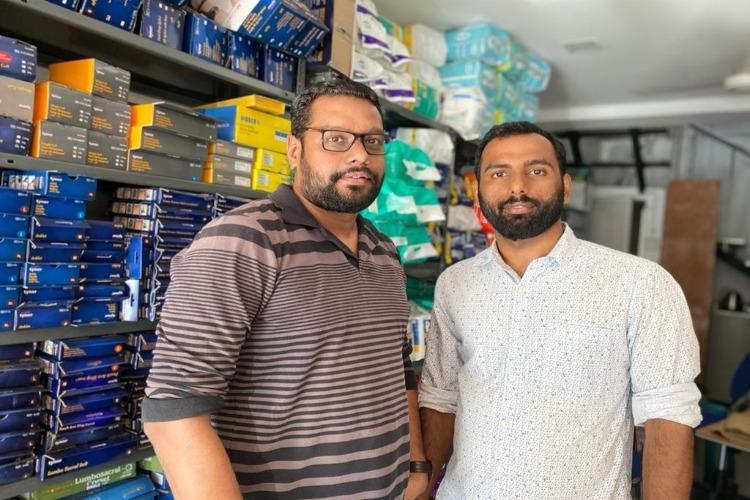
Cochin Surgicals, a surgical store owned by Kochi residents Thasleem and Nadheem, has sold more than 5,000 face masks in just two days for Rs 2, while others are selling at Rs 25.
Nadheem, the co-owner of the shop, told ANI: “We have sold around 5,000 masks at Rs 2 each in two days. We decided to sell masks at a reasonable price especially to the common people like hospital staff and students.”
Thasleem PK, co-owner of Cochin Surgicals, said: “We have been selling masks at ₹2 for the last 8 years. But now, the rate has gone up everywhere. We bought the masks at Rs 8 or Rs 10 and are selling at Rs 2, while others are selling at Rs 25.”
A total of 27 people have been tested positive for coronavirus in Kerala, among who three have been cured. As many as 12,740 persons are still under observation in the state for chances of COVID-19 infection.
Across India, confirmed novel coronavirus cases have risen to 128, the Union Ministry of Family and Health Welfare said on Tuesday.
As the coronavirus scare rises, pharmacies have jacked up the prices of masks and sanitizers, despite the Central government invoking the Disaster Management Act 2005 to allow the National Pharmaceutical Pricing Authority (NPPA) to regulate the availability and prices of surgical and protective masks, hand sanitizers and gloves.
“Kerala is going through a one-of-a-kind situation now. We don’t know what’s going to happen, maybe tomorrow I might contract the disease. When we heard there was a shortage of masks, especially for hospital staff, we suddenly decided to sell all the stock we had at a low price. And within two days, our stock has been completed. Most was sold to medical teams and hospitals,” The News Minute quoted Thasleem as saying.
The duo hopes their act inspires others to stop hiking the prices of essential commodities in the larger interest of public good.
source: http://www.thecongnate.com / The Cognate / Home> News / by The Cognate News Desk / March 17th, 2020
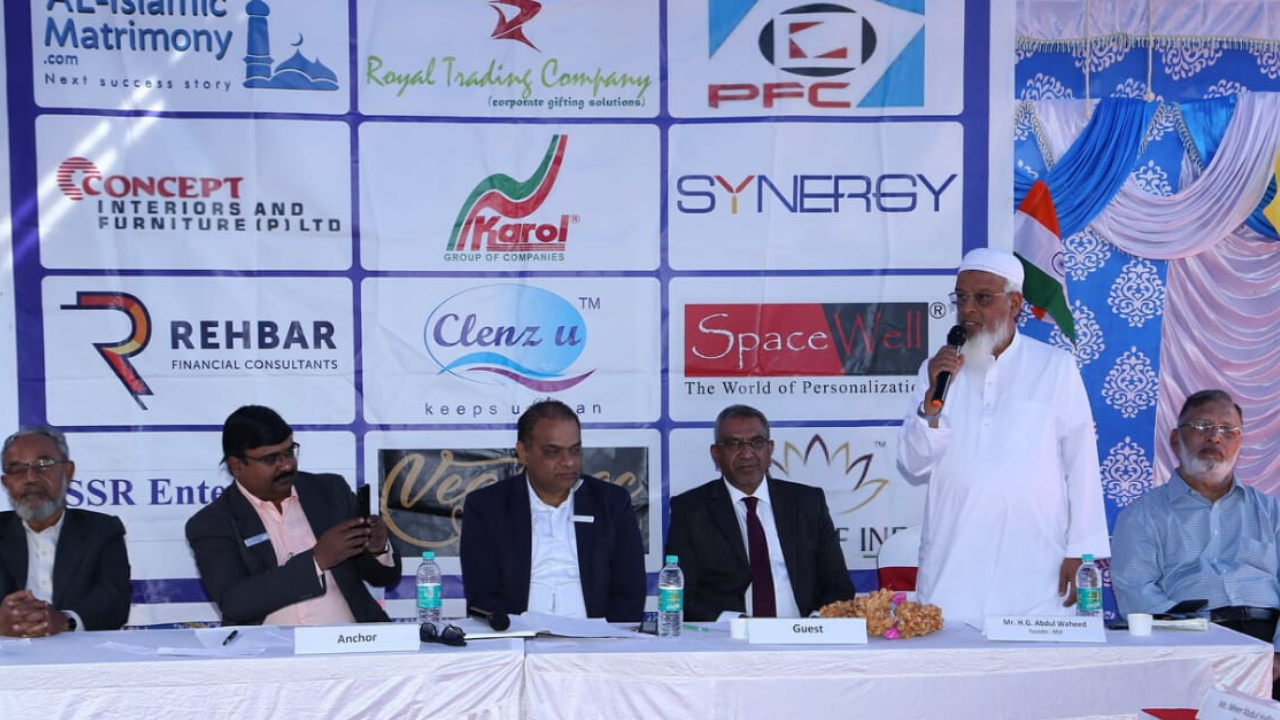
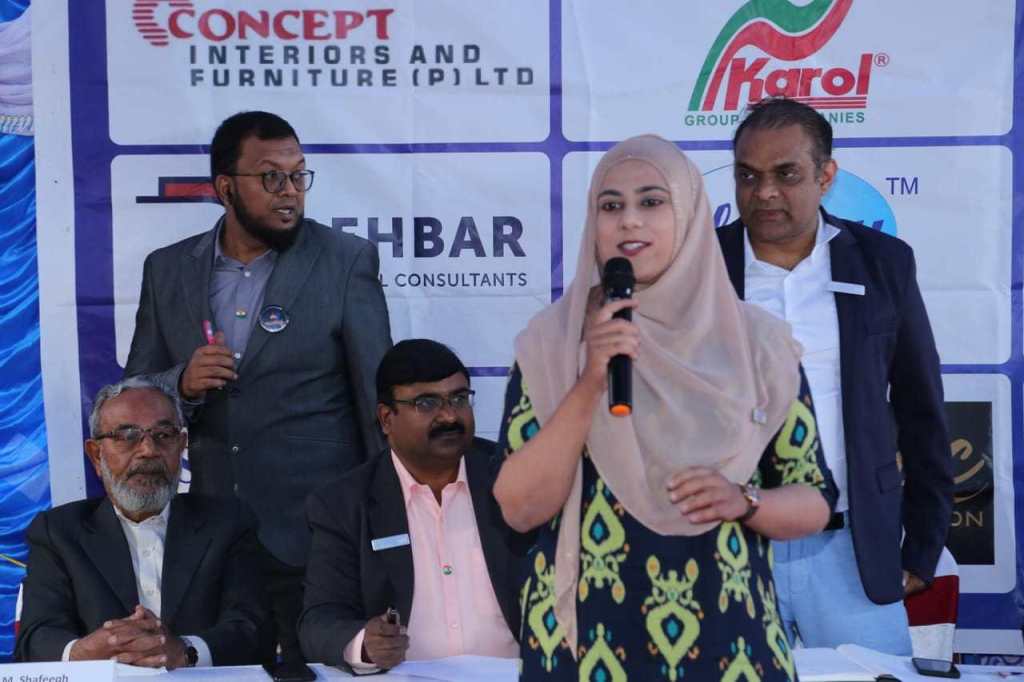
The Bangalore-based Muslim Industrialists Association (MIA) successfully held a business matching and networking event to bridge the gap between industrialists, entrepreneurs and startups, over a luncheon gathering on Saturday.
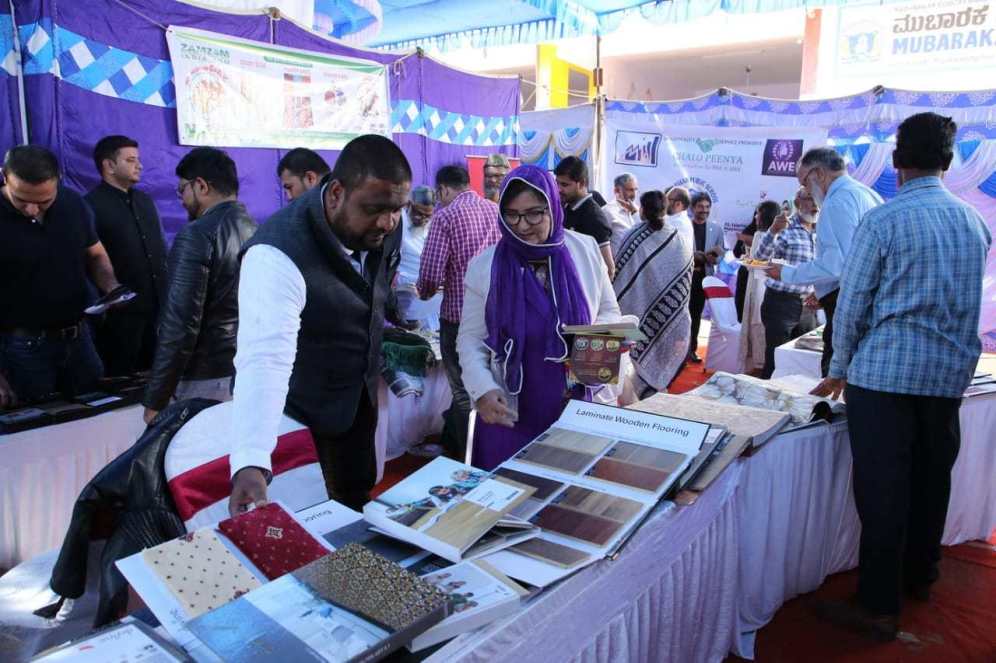
‘Peenya Chalo’, so-called because the event was held in the city’s Peenya Industrial Area, was intended to be an opportunity for industrialists and entrepreneurs to learn, network, and access resources, so they can take their business to the next level.
The day-long event saw participation from around 40 industrialists and 50 entrepreneurs from across Bangalore and beyond who showcased their products and services ranging from the sectors of Construction Materials, Furniture, Interior Design, Modular Kitchens, Food, Stationery, Cosmetics, Bio-Fertilizers, Lubricants, Education, Media to name a few.
An opportunity was also provided to startups led by young entrepreneurs to pitch their fledgeling companies to the business leaders gathered at the event.
The event’s guest of honour was Mr N.A. Afzal, Founder, Managing Director & Principal Real Estate Advisor of Home Makers & Realtors. He was facilitated by MIA’s Founding Member, Mr Abdul Waheed, Managing Director & CEO of Peenya Fine Comp Pvt, Ltd, and its current President Mr Mohammed Shafeeqh, Proprietor XL Engineering and Fabricators.
Mr. Afzal shared his entrepreneurial journey of how he quit his flourishing fruits company because it involved Riba (interest) and made a mark in the real estate business. He cautioned entrepreneurs against the evils of interest and the damage that it causes to businesses and society.
The event ended with a tour of some of the MIA members-run industries in Peenya, and a visit to the Mubarakah School, which is founded and run by MIA members.
Muslim Industrialists Association (MIA) is a non-profitable, charitable society established in 2004 by successful Industrialists and businessmen from Peenya Industrial Area, Bangalore, with an intention to develop entrepreneurship in the community and support the cause of education. Last month, the organisation launched the Association of Women Entrepreneurs (AWE) to support and connect Muslim women entrepreneurs.
source: http://www.thecognate.com / The Cognate / Home> Business / by Shaik Zakeer Hussain / January 27th, 2020
It will be interesting is to examine the historical relationship between between Scindias and Muslims and how it will shape Jyotiraditya’s position on the BJP’s Hindutva ideology, writes Shaikh Mujibur Rehman.
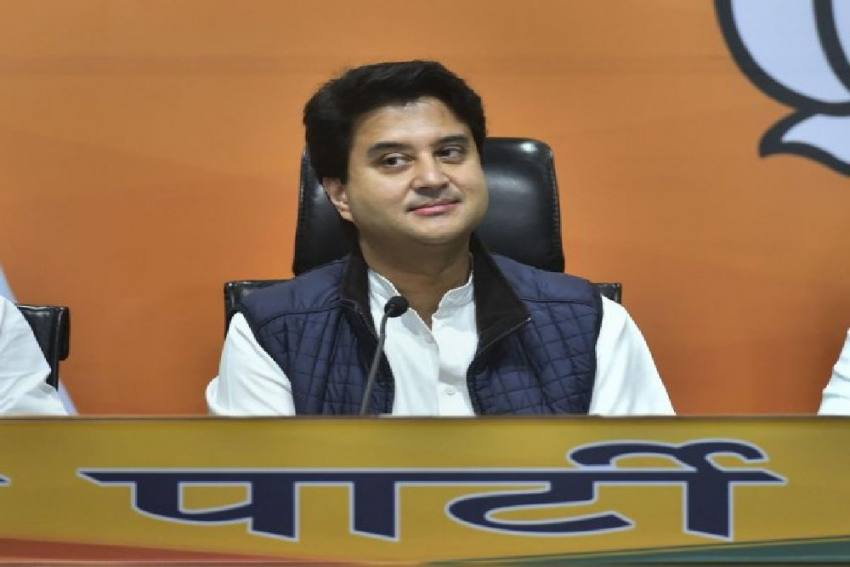
Jyotiraditya Scindia, former Congress party leader, joined the Bharatiya Janata Party (BJP) last week. (PTI)
Two arguments, among others, have emerged prominently in the wake of Jyotiraditya Scindia’s decision to quit the Congress party and joining the Bhartiya Janata Party(BJP). First: it has inflicted irreparable damage on the Congress party and would open floodgates for other ambitious leaders to emulate. Second: by joining the BJP, Jyotiraditya scindia has gone back to where he really belonged; a case of Ghar Wapasi as his aunt Yasodhararaje Scindia put it.
Scindia’s decision to quit the Congress is not going to harm Congress as enormously as it is being argued. In India’s national politics today, the worth of each politician should be evaluated based on his/her mass appeal and social base against Narendra Modi, who clearly has emerged unrivaled mass leader with pan-India appeal in the post-Indira Gandhi era.
Given that Scindia could not even win his Guna seat, a family bastion, and lost it to an ordinary challenger — BJP’s K P Yadav — speaks volumes his mass appeal. His defection and ability to mobilize few MLAs that could pull down Congress government, it is true, is a major jolt; but given that Congress has faced similar fate in Karnataka — which shows more of the BJP’s ability to outsmart the the grand old party than Scindia’s game plan, who seems more a pawn in the BJP’s larger game.
Among the most damaging defections from Congress in the recent decades was that of V P Singh — in the late 1980s — who not only left the party but formed a new government in New Delhi by defeating Rajiv. Others such as Mr. Sharad Pawar and Mamata Banerjee — both went on to form their own parties — largely regional in nature. Clearly, Scindia is not capable of doing any of these. Therefore, the damage he has done or likely to do remains very limited. His impact on Kamal Nath government is again mainly the narrow majority the Congress government earned in 2018 elections, which has made it vulnerable.
Furthermore, nothing appears more ludicrous than looking at these developments from the ideological lens of India’s electoral politics. The truth is Indian politics has been purely dictated by pragmatism and opportunism for a very long time, particularly since mid 1970s. However, we need to recognize the BJP is a majoritarian party, an ideology that is in contradiction with India’s core Constitutional aspirations.
What is not happening in the recent years is a serious ideological battle in India’s electoral politics — not even even secularism versus Hindtuva. Whatever little ideological battle is witnessed is mainly launched by intellectuals, civil societies but not by major parties, who are more into rhetoric and tokenism. Failure of opposition parties to unite against Modi’s BJP in 2014 and in 2019 is an example of this.
The last time a serious ideological clash occured around the issue on secularism against the BJP’s brand of Hindutva was in 1996, when a moderate leader like Atal Bihari Vajpayee was not allowed to run his BJP-led coalition government more than 13 days. Many stalwats of the anti-BJP coalition of that period were Vajpayee’s comrade in arms in 1977 anti-emergency movement and 1989 anti- corruption movement against Rajiv Gandhi, and yet opposed him fiercely and pulled down his government. Anything of that kind is not seen afterwards, and definitely not in 2014 or 2019, which is the most unfortunate development.
What is, however, interesting is to examine the historical relationship between between Scindias and Muslims and how it will shape Scindia’s position on the BJP’s Hindutva ideology.
History of Scindias, which can be traced to 18th century is far older than that of politics of Hindutva the RSS or Bhartiya Jana Sangh or BJP of today represent, which is mostly the 20th century phenomenon. The word Scindia is derived from Maharashtrian word, Scinde. The members of family began their career as soldiers and later emerged as Maratha ruler of the present day Gwalior state in course of time. Life histories of two prominent figures in Scindia dyansty would inform that the family despite having worked under Shivaji’s army had a special relationship with Muslims, and they were no bigots.
The family traces its origin to a village Kanerkeda, near Satara in Maharashtra. In 1722, the Scindia dynasty was established by Ranojirao Scindia. But the most prominent and fascinating figure in the family history is Mahadji Scindia, who took part in the third battle of Panipat in 1761. In this battle, Mahadji Scindia was injured seriously and was saved by Rane Khan, a water carrier. In 1765, Mahadji seized Gwalior, and Rane Khan was made a jagirdar of the Scindias and Mahadji declared him his brother. During his time, Scindias had the largest empire that stretched from Rajasthan desert to the Bay of Bengal. Even after conquering Delhi, Mahadji took care to maintain Mughal Emperor as the titular head.
Mahadji further treated Baba Mansur Shah, a Muslim as his Guru. Scindias venerate Mansur Baba’s tomb even today. Every year in September, Baba’s Urs ceremony continues to be held by the head of the family in Gwalior. Despite being a great ruler and warrior, Mahadji had nine wives and three daughters, but no son. He adopted Daultatrao, his cousin’s son, and that is how dynasty moved further to the present.
Other prominent figure of Scindia dynasty was Madhav Maharaj, whose son was Jiwajirao, grand father of Jyotiraditya Scindia. An interesting episode of his time that would demonstrate how deep their connection was with Muslims. In 1925, a fire broke out at Imam Bara prepared for the Muharram function. Taziya was burnt and the procession was delayed by two hours. “Tazia is not burnt. I am burnt,” said Madhav Maharaj. Apparently, tears roll down while Madhav Maharaj rode through the streets on that day along with the Moharram procession, write Vir Sanghvi and Namita Bhandare in their biography of Madhavrao Scindia.
Given this history, it is interesting to explore how the family got drawn to Jana Sangh politics or modern day Hindutva politics. Some argue it was Vijayaraje Scindia, who got drifted to Jana Sangh politics owing to the power struggle she had with Dwarka Prasad Mishra, former Congress Chief Minister of Madhya Pradesh, also known as Chanakya of his time. That is because Mishra played the key role in the election of Indira Gandhi as Prime Minister by defeating the syndicate after the death of Shastri.
It is well known that Rajmata Scindia had fought two elections in 1957 and 1962 as Congress candidate before she joined Bhartiya Jana Sangh. The person who perhaps played a decisive role keeping Rajmata in the loop of Jana Sangh or Hindu Right politics was Sambhajirao Angre, who she once credited to have brought down D P Mishra government single handedly to settle her political score with Mr. D P. Mishra.
Given this context, it will be interesting to see how Jyotiraditya Scindia repsonds to BJP brand of Hindutva. So far as the Congress is concerned — the real challenge before the party is to realize its social base is far greater than the number of seats it has in parliament today. Though, a good part of its social base is scattered. How to build a narrative that could help the party win more parliament seats so that it could reflect its social base is a challenge. Mere anti-Modism has not worked and won’t work in future either. Moreover, who will take lead over this issue is another million-dollar question.
(Dr Shaikh Mujibur Rehman teaches at Jamia Millia Islamia, New Delhi and is the author of a upcoming book, Explaining Muslim Mind. Views are personal)
source: http://www.outlookindia.com / Outlook / Home> Website> National> Opinion / by Shaikh Mujibur Rahman / March 16th, 2020