Uttar Pradesh has emerged as the top-performing state in the country in the digital registration of Waqf properties on the Centre’s ‘Unified Waqf Management, Empowerment, Efficiency and Development (UMEED)’ portal, completing the process for 92,832 properties within the stipulated timeframe, the state government said.
The Union Ministry of Minority Affairs had on June 6, 2025, directed all states to ensure online registration of Waqf properties on the UMEED portal by December 5, 2025. Although the deadline was later extended by six months, Uttar Pradesh completed the exercise well ahead of schedule.
According to official data, the registered properties include 86,347 Sunni Waqf properties and 6,485 Shia Waqf properties, making Uttar Pradesh the largest contributor nationwide to the portal.
State officials said extensive awareness campaigns and sustained administrative support played a key role in ensuring timely compliance by Mutawallis, or managers of Waqf properties, across districts.
District-wise figures show Lucknow leading in the registration of Shia Waqf properties with 625 entries, followed by Amroha with 539 and Meerut with 533. In the Sunni Waqf category, Barabanki topped the list with 4,940 registered properties, followed by Sitapur and Azamgarh. Bijnor, Moradabad, Saharanpur, Meerut and Jaunpur were also among the leading districts.
Officials said the digital registration drive is expected to enhance transparency in the management of Waqf properties, curb misuse and aid in their protection and development.
source: http://www.daijiworld.com / Daijiworld.com / Home> National-World / by Daijiworld Media Network – Lucknow / December 14th, 2025
The historic Jama Masjid in Sukhana village reopened for prayers after remaining closed since the Partition of 1947. The mosque stood unused for seventy eight years and fell into disrepair during this period. Its small brick walls weakened and decorative dome work suffered damage after decades without regular worship.
Local residents said the structure survived due to the care of a Sikh couple, Nirmal Singh and his wife Kamaljeet Kaur. The couple cleaned the premises and ensured basic upkeep over the years. Their efforts prevented further damage and kept the site intact until restoration began.
Members of the Muslim community from Raikot and Noorpura supported the revival work. Kareef Fukran Ahmed of Ahmedgarh led sustained efforts to restore the mosque. The Gram Panchayat and the mosque management committee organised a special religious programme to mark the reopening.
Punjab Shahi Imam Hazrat Maulana Muhammad Usman Ludhianvi attended the event along with MLA Hakam Singh Thekedar and Punjab Waqf Board senior member Advocate Abdul Qadir. Speakers highlighted shared responsibility in protecting places of worship. They stressed respect for faith and social harmony.
The Muslim community honoured Nirmal Singh and Kamaljeet Kaur for their long service to the mosque. The Shahi Imam said religion guides people toward humanity and unity. He praised the couple for preserving a religious heritage site through personal commitment.
Maulvi Muhammad Mursaleen of Madrasa Bassian conducted proceedings. Several Muslim and Sikh leaders joined the programme, including Qari Mohammad Sadiq Yazdani, Hafiz Mohammad Ashraf, Babbu Khan Raikot, Sarpanch Manjeet Singh, former Sarpanch Ujagar Singh, and Panch Sukhdev Singh.
Speakers urged continued cooperation and respect among communities.
source: http://www.radiancenews.com / Radiance News / Home> Latest News> Report / by Radiance News Bureau / December 13th, 2025
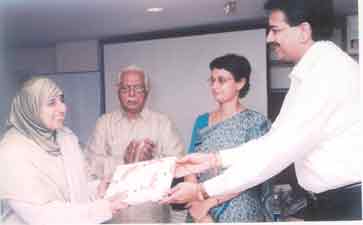
Uzma Naheed, a director of Iqra Education Foundation, Mumbai, has been awarded by Times Foundation in recognition of her exemplary work in the field of education and women’s economic development.
Naheed has conducted Teachers Training programmes in 18 cities in India and in two cities in Bangladesh. These programmes help teachers adopt modern teaching techniques being used in the West. These programmes were basically been designed by Iqra Education Foundation for Muslim children living in pluralistic societies.
Naheed has also conducted inter-faith dialogue seminars under the auspices of Times Foundation and World Conference for Religion & Peace, New York.
She has designed and developed 20 short-duration technical courses for economically poor Muslim women to set up their own home-based businesses.
Naheed, who is grand-daughter of Maulana Qari Taiyyib and daughter of Maulana Salim Qasimi of Deoband, is active in the Indian Muslim women issues and was intrumental in the passage of the model Nikahnama by the All India Muslim Personal Law Board. Her drafts were rejected or deferred many times but she did not give up. Finally the draft was accepted during the last conference at Bhopal.
source: http://www.milligazette.com / The Milli Gazette Online / Home> Awards / by The Milli Gazette Online / Print edition January 2004
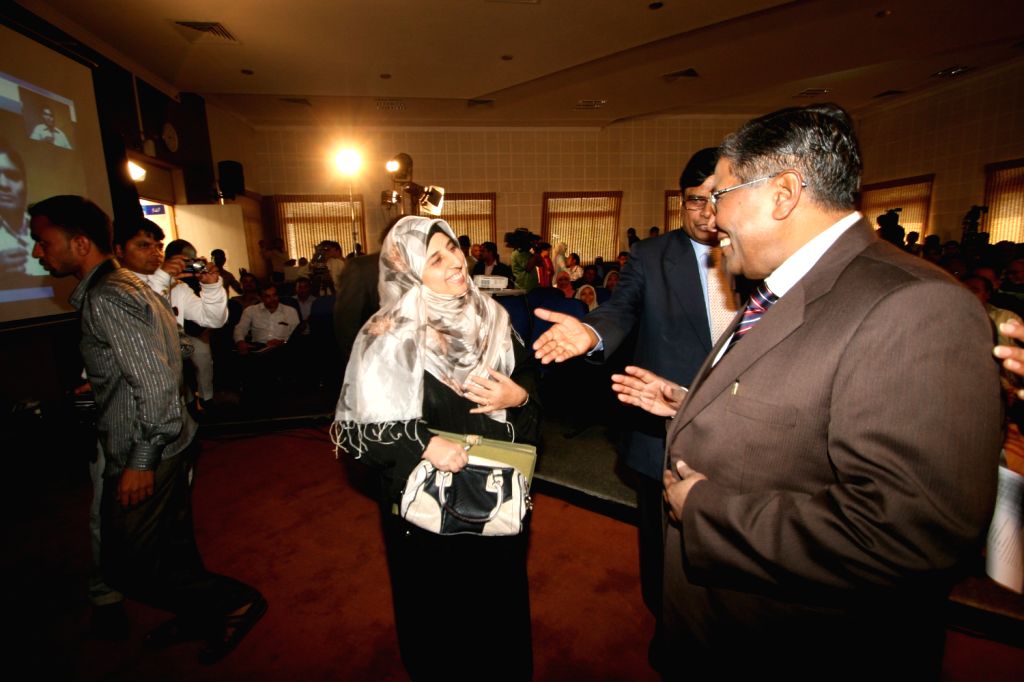
Minority Affairs Minister K Rahman Khan with Uzma Naheed, Member, All India Muslim Personal Law Board at three day interational conference on status of Muslim women in Indian sub-continent at Maulana Azad National Urdu University in Hyderabad on March 8, 2013.
The National Federation of Girls Islamic Organisation (NFGIO) has announced its newly elected Federal Committee. Adv. Sumaiya Roshan, from Tamil Nadu, has been re-elected as President, marking a continuation of her leadership in advancing the organisation’s mission.
The GIO has a legacy spanning four decades, focusing on the overall development of Muslim women and their education, leadership, and social contribution across the nation. The newly elected Federal Committee brings together a dynamic team of accomplished individuals from across the country, ensuring representation and inclusivity in its leadership.
The Vice President, Afeefa Tahniyath from Andhra Pradesh, and General Secretary, Anamtha Dildar Ahmed from Maharashtra South, will lead key efforts in expanding the organisation’s outreach. The Secretaries include Fehmeeda Ilyas Qureshi (Gujarat), Maseera Firdous (Telangana), Fathima Noureen (Kerala), Momina Affaf Taiyebati (UP East) and Safeeda Hussain (Kerala).
Adv. Sumaiya Roshan said, “The NFGIO was founded to recognise the potential of young Muslim women in India and to guide them toward excellence in all areas of life, empowering them to shape the future and drive meaningful societal progress.”
The election was conducted under the guidance of Syed Sadatullah Husaini, President Jamaat-e-Islami Hind, at JIH headquarters here.
source: http://www.radiancenews.com / Radiance News / Home> Latest News> Report / by Radiance News Bureau / December 10th, 2024
On a quiet October morning in Delhi, when most people begin their day scrolling through screens, Dr. Istikhar Ali adjusted his helmet, whispered a small prayer, and kick-started a motorcycle that would soon become a moving classroom, a counselling room, a travelling research lab – and sometimes, a silent companion.
His destination? Unknown.
His purpose? Crystal clear.
He wanted to take the conversation about mental health to places where such conversations were never held before.
This is the story of a young public-health scholar who turned India’s highways into corridors of compassion, its villages into forums of reflection, and its communities into partners in healing.
A Beginning Rooted in Delhi, Inspired by JNU
My first conversation with him began on a nostalgic note – about Delhi.
“I stayed four years in Delhi and visited JNU several times,” I told him.
He smiled and replied, “Strange… you came so close, but destiny didn’t let us meet. Maybe it waited for this moment.”
From there, he unfolded his journey – from his early education, his family’s values, to the rigorous intellectual environment of Jawaharlal Nehru University (JNU), where his academic foundation in public health took shape. JNU not only gave him knowledge; it gave him a lens to look at human suffering not as isolated incidents, but as products of social, economic, and political realities. His research, activism, and writing reflect this lens deeply.
In his widely-read Scroll article, “Weary, Wary and Alone: From Delhi to Kerala, the Mental Distress Indians Struggle With” he documents the harsh truths he encountered during earlier travels: loneliness, anxiety, financial uncertainty, and the silent emotional burdens people carry across India.
In 26 days, he spoke to hundreds – students, farmers, teachers, journalists – each revealing how deeply mental suffering is woven into everyday life.
India, after all, is a country where, one in every seven Indians suffers from a mental health condition, over 200 million people face mental-health related distress, and close to 90% receive no treatment or support (NIMHANS & WHO reports).
Against this backdrop, one young man decided to ride, literally, into the heart of the problem.
The Ride Begins (Delhi to Kerala — 3,500 km of Listening, Healing, and Hope)
On 10 October 2025 – World Mental Health Day, Dr. Istikhar Ali began a 3,500 km solo motorcycle journey titled, “Ride for Mental Health: Beyond the Stigma.”
Supported by Snehi India and fuelled by nothing but conviction, he had no fixed plan – only a direction, and a determination to reach people who do not visit clinics, do not read scholarly journals, but silently battle overwhelming emotional storms.
Every village, every town, every stop became a lesson in lived experience. Where formal institutions build walls, he created bridges – conducting, 10+ public sessions, 30+ group discussions, hundreds of one-to-one conversations, workshops in universities and NGOs, corner meetings in markets, talks in madrasas, community centres and mosques and media interviews across states.
What makes his journey unique is that it wasn’t a mental-health “campaign”. It was a human campaign. He listened more than he spoke. He observed before he intervened. He met people where they were, not where textbooks expect them to be. And sometimes, the roads listened to him too.
A Day with Him: My Encounter in South Goa
When I met him in South Goa, he had just completed a long stretch from Ratnagiri. Dusty, exhausted, carrying nothing but essentials on his bike, he still greeted me with an unmistakable warmth. We spent hours discussing his work, his fears, his determination.
At one point he said: “Azhar Bhai, I started this journey without any detailed plan. But at every turn, God opened a door. And today, He brought me to you before I move from Madgaon towards Udupi.”
His humility was striking. At a time when the world is becoming increasingly self-obsessed and digitally distracted, here was a man riding across states not for adventure but for others.
His mission is a reminder that:
Mental health is not an individual struggle.
It is shaped by society, economy, politics, faith, family, and culture.
Healing requires communities, not just clinics.
If he can bring even 1% improvement in awareness among the millions struggling silently, it will be a monumental contribution. Great reformers and thinkers across history started with small circles that eventually created waves. His work stands in that lineage – contemporary, deeply relevant, and urgently needed.
Stories from the Road – Where Pain Meets Courage
Across his ride, he encountered:
A college student in Udaipur hiding panic attacks from his family,
A migrant worker in Ankleshwar battling depression after job loss,
A young girl in Goa openly speaking about anxiety for the first time,
A madrasa student in Malappuram sharing the emotional pressure of expectations, and
A group of activists in Kerala discussing burnout and resilience.
Each conversation re-affirmed what he often says: “Mental health is not a private burden; it’s a public responsibility.”
Ending Where Faith and Learning Meet
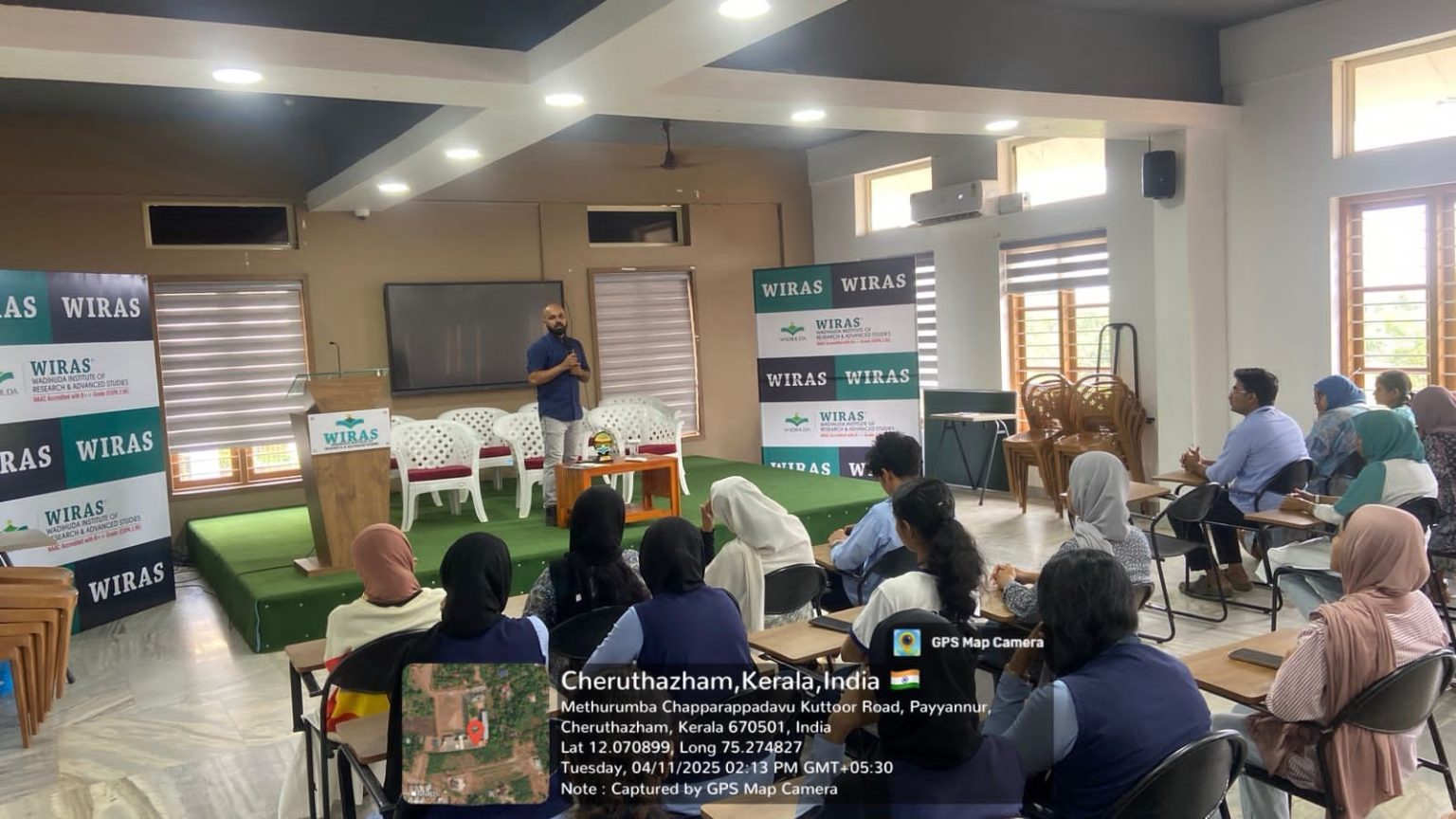
Dr. Istikhar chose Wadihuda Institute of Research and Advanced Studies in Kannur as his final stop – not for symbolism, but for a deeper message. Malappuram is a place where faith meets social service, education meets responsibility, and spirituality meets community welfare. He believes mental-health awareness must be integrated with ta’leem (education), tarbiyya (character development) and dawah (community engagement).
His concluding session, “Mental Health Beyond Silence and Survival: Faith, Education and Community Resilience,” aims to bring together students, scholars, educators and community leaders to build a culture of emotional support and resilience.
A Scholar, A Listener, A Traveller – But Above All, A Servant of Humanity
Dr. Istikhar Ali is a rare combination:
A public health scholar trained at JNU,
A DAAD Fellow with international exposure,
A grassroots listener who sits with people on sidewalks,
A writer whose words reflect lived struggle, and
A traveller who rides not for thrill but for purpose.
He is not simply creating awareness; he is creating a movement. In an era of self-promotion, he chooses selfless service. In a time of noise, he chooses conversations that matter. In a society crushed by unspoken mental suffering, he chooses courage – both his and others’. His journey teaches us that healing is not always found in hospitals. Sometimes, it begins on dusty roads, under bus shelters, in chai shops, in classrooms, in mosques, in marketplaces, and in the hearts of people who finally feel heard.
The Road Ahead
When he concluded his ride in Kerala, his mission didn’t end; it expanded. He plans to compile a publication and visual report from the stories collected, build alliances with educational institutions, create youth-led support networks, train community volunteers, continue travelling across new states and to develop research documenting the social roots of mental distress.
Every revolution starts with a single step. He started with a motorcycle engine roaring in Delhi. Dr. Istikhar Ali is not merely riding a bike across India. He is riding across stigma, across silence, across fear – to build a more compassionate society.
His journey is a reminder that the greatest service to God is service to His people, and that mental health is not a luxury; it’s an essential human right.
source: http://www.radiancenews.com / Radiance News / Home> Features> Focus / by Syed Azharuddin / Radiance News Bureau / November 17th, 2025
In a landmark action ensuring communal harmony, the 125-year-old Mehdi Bagh-Chimthanawala dispute between two breakaway Shia Dawoodi Jamaats in Nagpur, which had dragged through courts for decades, has finally been resolved peacefully through mediation by the Maharashtra State Minorities Commission.
The century-old conflict, rooted in religious succession and property issues, was settled in just 14 days, marking one of the swiftest and most historic arbitrations in the history of Maharashtra. The Commission’s chairperson, Pyare Khan, who enjoys the rank of the Minister of State, played a pivotal role in brokering peace between the two warring sects.
The case had a long judicial history and it was argued by some of India’s most renowned lawyers and heard by eminent judges. Interestingly, it reached a conclusion in only two hearings before Khan, who persuaded both the parties to arrive at an amicable understanding. The final order, based on a settlement deed signed on January 21, 2025, was officially issued on November 11, 2025.
The roots of the Mehdi Bagh-Chimthanawala conflict trace back to 1840, following the death of Syedna Badruddin Saheb, the 46th Dai of the Dawoodi Bohra sect. Disagreement over his successor led to the formation of two factions, known as Atba-e-Malak Jamaat and Mehdi Bagh Institution, by Maulana Malak Saheb and his followers in Nagpur in 1891.
After Maulana Malak Saheb’s death in 1899, the institution split into Mehdi Bagh and Chimthanawala groups. The Mehdi Bagh sect recognised Maulana Badruddin Ghulam Husain Malak Saheb as its spiritual head, while the Chimthanawala group followed Maulana Abdul Qadir Chimthanawala. Over time, disputes over religious leadership, property ownership, and financial control escalated, with both sides accusing each other of mismanagement, religious misconduct, and inciting communal tension.
The contested property, estimated to be worth over Rs. 4,000 crore, became the focal point of multiple lawsuits across decades in the Bombay High Court and the Supreme Court. The dispute witnessed some of India’s most eminent advocates representing both camps. On behalf of the Mehdi Bagh group, legal stalwarts such as Fali Nariman, Kapil Sibal, P. Chidambaram, Uday Lalit, K.K. Venugopal, Gopal Subramanium, and others appeared. Representing the Chimthanawala faction were Soli Sorabjee, Andhyarujina, C. Sundaram, and Rohinton Nariman, among several others.
Under the agreement reached through the Commission’s mediation, the property listed under Special Civil Suit No. 143/1967 was declared as Mehdi Bagh Waqf, to be administered by Maulana Amiruddin Malak Saheb. Maulana Abde Ali Chimthanawala will manage the Dawoodi Atba-e-Malak Wakf, Atba-e-Humayun, and Baitul Aman trusts.
While both sects agreed not to interfere in each other’s religious affairs, all pending litigations across the country will be withdrawn by mutual consent. Declaring the settlement as a “historic milestone in communal harmony,” Khan said this was not just the end of a legal dispute but a triumph of peace and understanding.
“The bitterness of 125 years has been replaced by brotherhood. The Maharashtra Minorities Commission has proven that any conflict can be resolved through dialogue and mutual respect,” Khan said. The resolution of the 125-year-old Mehdi Bagh-Chimthanawala dispute stands as a remarkable example of restorative justice and interfaith harmony, bringing closure to one of Nagpur’s and India’s oldest community conflicts.
The case reached the Commission after 73 members of the Mehdi Bagh institution filed a complaint against Abde Ali Chimthanawala and others, alleging violations of religious, financial, and personal rights. The first hearing took place on January 7, 2025, attended by representatives from both sides — four members from Mehdi Bagh and advocates R.S. Singh and Abdullah Khan representing the Chimthanawala group.
Following Khan’s suggestion to seek reconciliation, both parties returned on January 21, 2025, agreeing to a mutual settlement. The final order was officially issued on November 11, 2025, bringing closure to a dispute that had divided the Dawoodi Bohra community for more than a century.
Expressing satisfaction over the outcome, Sadique Razzak Chimthanawala, son of Maulana Abde Ali Saheb Chimthanawala, said: “We are content with the settlement deed and grateful that this long-standing dispute has ended peacefully.”
Afzal Mehdi, a member of the Mahdi Bagh legal team, echoed the sentiment, stating, “This is a historic day for both communities. Our relations with the Chimthanawala group have improved, and we are confident that such disputes will not arise again. We sincerely thank Minorities Commission chief Pyare Khan for his efforts.”
source: http://www.indiatomorrow.net / India Tomorrow / Home> National Interest / by India Tomorrow Correspondent / November 29th, 2025
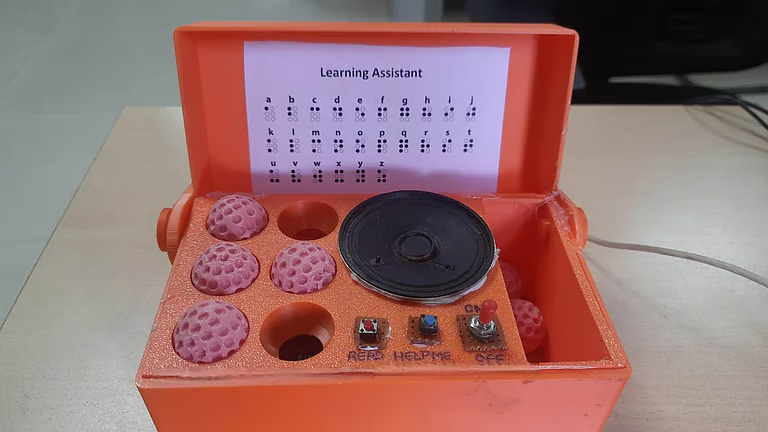
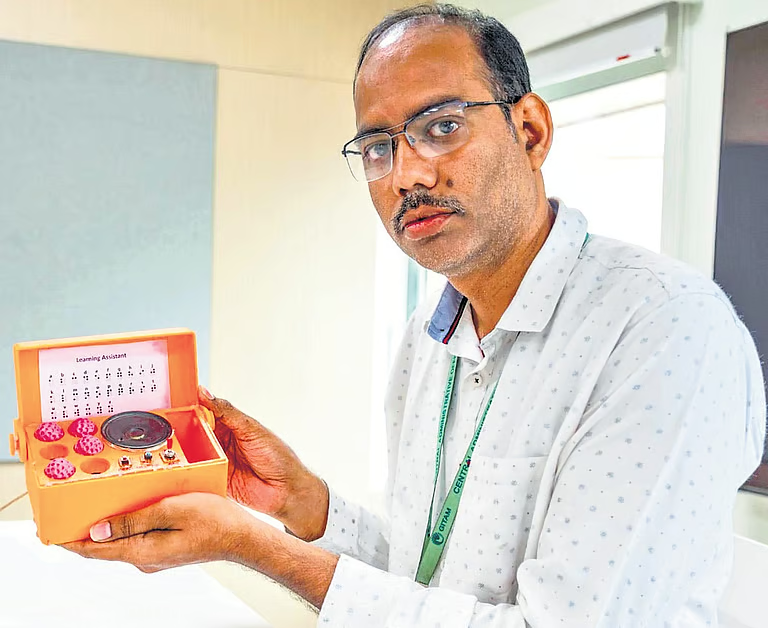
The device includes a ‘Help Me’ button that alerts the teacher whenever a student needs intervention, improving classroom management.
Mohammed Khwaja Muinuddin Chisti, Assistant Professor in the Department of EECE from GITAM Deemed to be University, has developed an embedded Braille Learning Assistant Embedded Kit (LAEK).Photo | G Satyanarayana
Visakhapatnam :
For many visually impaired children, the journey to literacy begins with the touch of a fingertip. But mastering Braille is often a slow and demanding process that requires constant one-on-one support from teachers, a challenge in schools where trained instructors are scarce and classrooms are full. For families living far from specialised schools, opportunities are even fewer, leaving children dependent on others for even the basics of reading and communication.
A faculty member at GITAM Deemed to be University, Visakhapatnam, is hoping to change that. Mohammed Khwaja Muinuddin Chisti, Assistant Professor in the Department of EECE, has developed an embedded Braille Learning Assistant Embedded Kit (LAEK), a simple, sensor-based device that allows visually impaired children to learn Braille independently, either at home or in school.
The device is a 3 × 2 hollow hemispherical Braille cell fitted with sensors that identify the dot patterns placed by the student. Once the pattern is detected, the system decodes it and provides audio feedback by announcing the corresponding letter, number or instruction. This makes it possible for students to practise and revise lessons without waiting for a teacher to guide every step. “In many schools, one teacher has to train 30 or 40 visually impaired children, and each child needs personal attention for Braille practice,” Chisti remarked, adding, “Many students hesitate to ask the same doubt again. I wanted to create something that lets them learn comfortably at their own pace.”
The device includes a ‘Help Me’ button that alerts the teacher whenever a student needs intervention, improving classroom management. The balls used to form patterns are designed to stay within reach even if dropped, and the device is chargeable, eliminating the difficulty of replacing batteries.
“The tool is also aimed at children who cannot attend blind schools due to distance or lack of accessibility. Parents can guide their child’s learning at home using the same pattern-based method followed in classrooms. Depending on the child’s learning ability, all basic Braille alphabets can be learnt within a few weeks,” Chisti stated.
Before developing this tool, Chisti created a ‘Walking Assistant’ device, a wearable tool that alerts visually impaired users about obstacles through vibrations and sound. His interactions with students and teachers during that project sparked the idea for a more focused educational device.
“When I visited blind schools to donate the walking aids, I saw the kind of effort teachers put in, and how much time it takes for each child to grasp Braille,” he said.
“I felt technology could ease that pressure and help children become confident, independent learners.”
The new learning assistant has been filed for patent registration. Chisti hopes to manufacture and distribute multiple units to blind schools using research grants and donor support.
Future upgrades may include computer vision and speech recognition to help students identify people around them and navigate with greater confidence.
source: http://www.newindianexpress.com / The New Indian Express / Home> Good News / by Usha Peri / November 30th, 2025
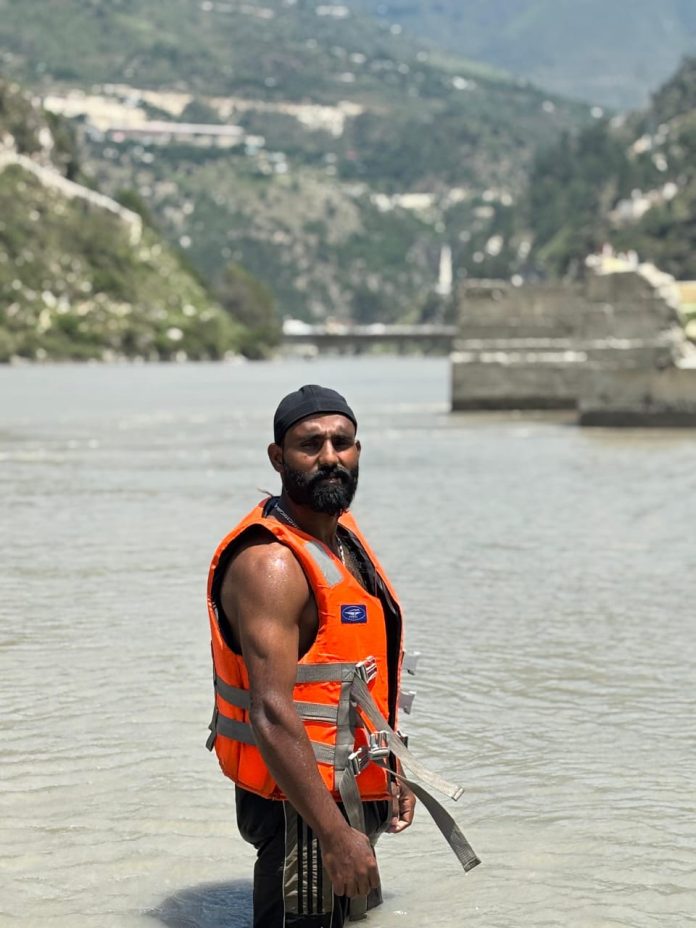
On the jagged banks of the Chenab, where the river churns like a living force and the sound of its roar rises above the valley’s silence, one man stands as the last hope for those it swallows. He is neither a government employee nor a trained professional in the formal sense. He has no salary, no official title, and no protective gear. Yet for more than fifteen years, Hamza Sheikh has been the first to dive in when someone disappears beneath the grey water.
He is soft in voice, and almost shy in demeanour. But behind that calmness lies a kind of courage that borders on the extraordinary. In his own estimate, he has pulled “more than four to five hundred” bodies from the Chenab. And astonishingly, “in my 15-year journey, at least three hundred alive I have brought out.”
There are few stories like Hamza’s today—stories of a single man whose work is stitched into community memory, whose bravery is understood more by the grieving families he has helped than by any government record. His entire training, he says, comes from growing up near the river.
“This is Chenab,” he explains, gesturing towards its violent surface. “We have been living here since childhood. This is our training.”
A River That Became a Graveyard
The Chenab was not always a death trap. Hamza recalls a time when accidents were rare, when the banks were bustling with a small city called Pul Doda.
“There used to be a market here earlier… at least 450 shops,” he says. “The dam destroyed everything.”
When the dam collapsed during the 2008 earthquake, the river changed forever. What was once shallow and predictable became deep, erratic, and unforgiving. Entire markets and neighbourhoods were consumed by water. People promised rehabilitation never received land. The river became in parts a silent grave, in parts a raging beast.
It was around this time that Hamza’s role became essential. His family had lost their land and livelihood; he found purpose in saving others from what had taken so much from his own.
He still remembers the first dead body he pulled out. “I was about 10–11 years old… a body came running. I caught it. His condition was very bad. He had worms.”
That moment, shocking as it was, shaped his life. Since then, the river has rarely let him rest.
Inside the Mind of a Man Who Jumps In
The Chenab is deceptive. From afar, it looks like any fierce river. Up close, it is a trap. The water is icy, visibility is zero, the current can drag down cars, and the depth changes unpredictably.
“Many people run away after hearing the noise of Chenab,” Hamza says. “But for us, it is very common.”
He describes rescue attempts that sound superhuman. In many cases he dives blind, because “we close our eyes, because there is sand. We can’t see anything. We go 15–20 feet without oxygen.”
The riverbed is lined with boulders sharp enough to slice flesh. Some sections are calm for a few metres and then suddenly erupt in turbulence strong enough to flip a vehicle. Somewhere in the river’s deepest pockets, Hamza says, lie bodies that never surfaced.
“Imagine a chopper went here 15 years ago,” he says. “We didn’t find it. Neither the body nor the chopper.”
And yet, he returns each time.
When asked if he is ever scared, he shrugs. “Chenab is like our home.”
A Body in the River Is Only the Beginning
The most difficult part of Hamza’s job is not the water—it is what the water does to the dead.
He recounts incidents that would break most people. One case remains etched in him: a woman whose remains had been in the river for days.
“When I pulled her, her skin came out,” he says quietly. “There were worms. Her hands were full of worms.”
There are other stories—bodies broken by rocks, faces eaten away by the river’s minerals, limbs separated, the smell of decay rising even from the coldest water. But Hamza refuses to turn away.
“Emotions come,” he admits. “Because if someone’s family reaches their house, then it is a matter of reward. We don’t take money. We do it with the intention of reward.”
For families waiting on the bank, Hamza is not a rescuer; he is closure.
The Line Between Saving and Being Pulled Under
The living, Hamza says, are far more dangerous to rescue than the dead.
“A living person can drown you too,” he explains. “He will take a slap from you… he will take him too if you are not trained.”
He recalls one incident from 2017: a woman who had jumped in during the fast flow of mid-summer.
“I jumped without a jacket emotionally. I was in the water for half an hour. Sometimes she was drowning me and sometimes I was saving her.”
Both survived—but the memory remains a reminder of how narrow the margin is between life and death in the Chenab.
Some rescues haunt him differently. In Katra, a college girl jumped; her body surfaced only two months later. “At that time,” he says, “I was very sad.”
He remembers another scene—two girls swept away in a torrent so strong it resembled the sea.
“No one dared to go down,” he recalls. “I went into the water.”
Injuries That Tell a Story
Hamza lifts his cap to show a scar running diagonally across his head. It is long, thick, and uneven—evidence of how much he has risked.
“My head was cut from here,” he says softly. “There were 60 stitches inside. The blood was flowing and I came out. I didn’t know that my face was bleeding.”
It happened during a car rescue, when he was pushed beneath a rock and had to “adjust without any equipment.”
There are other injuries—bruises, cuts, nights spent shivering after hours of diving, the long-term damage cold water inflicts on the body—but Hamza doesn’t dwell on them. The river has taken more from others, he says, than it has from him.
Hamza’s work is made all the more remarkable by the fact that he does it with almost nothing.
“We have a boat, but we don’t have it,” he says with a faint, ironic smile. Their earlier boat, gifted years ago, “died in the water the next day.” Now he must request one from Doda each time there is an emergency.
He has no oxygen tank, no wetsuit, no underwater torch, no sonar, no rope strong enough to withstand Chenab currents.
“It takes four days to call an NDRF officer,” he says. “The dead body is in the water and rots. Even NDRF officers are not able to get into the water.”
He tells of one such officer whose rope snapped. “He had just got married… I saved him from the side without any equipment.”
The irony is bitter: the man who rescues even trained personnel is himself unprotected.
No official has offered him financial aid, let alone a salary. “I only got praise and nothing else,” he says.
Each time the phone rings, Hamza says, he thinks of the family waiting on the bank.
“We think and we get a phone call. We have to go… we get emotional.”
He recalls the day two of his classmates drowned. He watched their parents crying helplessly.
“I couldn’t bear it,” he says. No one else dared to enter the water that day. He went alone.
He has not always succeeded. “There were 11 people… I found only one,” he says. “Till date, I haven’t found any of the others.”
But it does not stop him.
“Whoever we went to save, we brought him alive,” he insists. It is his source of pride—and perhaps also his armour against grief.
The Man the River Has Not Defeated
As Hamza talks, the Chenab roars behind him—its sound too steady, too relentless. It is a reminder of how small one man is compared to a river that has eaten cities, choppers, buses, families.
And yet, when someone goes missing, people do not call the authorities first. They call Hamza.
Not because he is invincible. Not because he is paid. But because for fifteen years, whether at midnight or dawn, whether in winter cold enough to freeze blood or monsoon floods that turn the valley into a bowl of water, he has shown up.
“This is our training,” he says again. “Wherever Chenab goes, wherever there is someone, we go.”
It is perhaps the simplest explanation for what he does—but not nearly enough to describe the magnitude of it.
In a valley full of quiet resilience, Hamza remains its quietest hero: anonymous, unrecognised, and yet carrying within him the memories of hundreds of tragedies, hundreds of families, and hundreds of lives he pulled—sometimes limp, sometimes breathing—from a river that never gives anything back.
source: http://www.muslimmirror.com / Muslim Mirror / Home> Indian Muslim> Positive Story / by Babra Wani / November 18th, 2025
The newly elected assembly in Bihar will have 11 Muslim MLAs, down by 8 as compared to their tally in the last assembly, the final results of the 2025 state elections announced Friday showed.
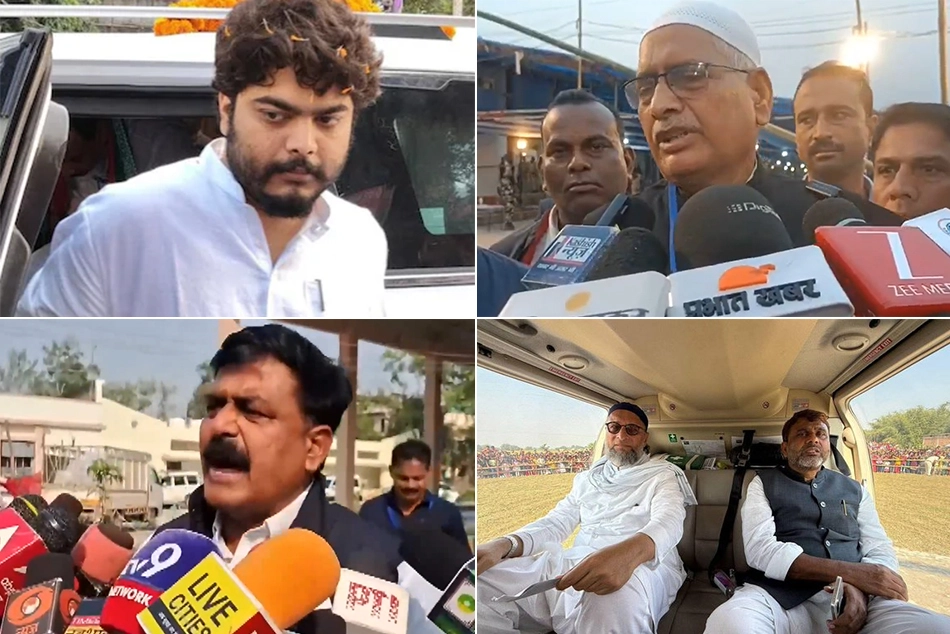
(Clockwise from left) Osama Shahab (RJD), Qamrul Hoda (Congress), Akhatrul Iman (Seen with AIMIM Chief Asaduddin Owaisi) and Zama Khan (Janata Dal United)
List of Muslim MLAs in Bihar 2025:
The newly elected assembly in Bihar will have 11 Muslim MLAs, down by 8 as compared to their tally in the last assembly, the final results of the 2025 state elections announced Friday showed.
A total of 24 Muslims belonging to different political parties were elected in the 2015 election whereas 19 Muslims were elected to the Bihar Assembly Elections in 2020.
The representation of Muslims went further down after the 2025 Bihar Assembly Elections the results of which were announced after counting of votes held on Friday November 14, 2025.
How Many Muslims Contested Bihar Vidhan Sabha Elections 2025?
The All India Majlis e Ittehadul Muslimeen (AIMIM) of Asaduddin Owaisi had fielded a maximum 23 Muslim candidates from as many constituencies of Bihar in the 2025 state assembly polls. Of them 05 Muslims have won.
On the other hand, Rashtriya Janata Dal (RJD) had fielded 18 Muslim candidates, Congress had given the party tickets to 10 Muslims, Janata Dal (United) had nominated 04 Muslims, and 02 Muslims contested as CPI (M) candidates.
Of these candidates 03 from RJD, 02 from Congress and just 01 from Janata Dal (U) won the 2025 Bihar elections.
Kumari Mayawati’s Bahujan Samaj Party (BSP), Prashant Kishor’s Jan Suraaj Party (JSP) and Lok JanShakti Party (Ram Vilas Paswan) had also given their party tickets to some Muslims. No Muslim fielded by these parties could win the 2025 Bihar elections.
The Bhartiya Janata Party (BJP) has not given the party symbol to any Muslim.
7. Mohammad Murshid Aalam (Jokihat) 8. Md Tauseef Alam (Bahadurganj) 9. Md. Sarwar Alam (Kochadhaman) 10. Akhtarul Iman (Amour) 11. Ghulam Sarwar (Baisi)
The most shocking defeat of a Muslim candidate was in Balrampur where AIMIM candidate Advocate Adil Hasan lost the seat to the BJP by just 389 votes.
2025 Bihar Election Final Results
Assembly or Vidhan Sabha elections in Bihar were held in two phases. Polling for the first phase was held on November 06, 2025 which ended with a voter turnout of 65.08%.
On the other hand, Polling for the second phase was held on November 11, 2025 which saw the voter turnout of 68.76%.
The overall poll percent, as per the Election Commission of India, was 66.91% – highest since 1951 when the first assembly election was held.
The counting of votes was held today, and as per the final result announced by the Poll Panel, the NDA alliance has won 202 seats whereas the RJD-Cong INDIA bloc could win just 35 seats.
The Election Commission final results show, the BJP has won 89 seats and emerged as the single largest party in Bihar for the first time in the state’s history.
The JD (U) has won 85 seats. Lok Janshakti Party Ram Vilas Paswan candidates won 19 seats.
On ther hand, the RJD candidates could win just 25 assembly seats and Congress 06. Owaisi’s AIMIM won 05 seats.
source: http://www.ummid.com / Ummid.com / Home / by ummid.com news network / November 14th, 2025