Category Archives: Community Involvement / Social Issues

Exhibition on Quran at Jamia Millia

NEW DELHI :

HolyQuranJamia26jun2018

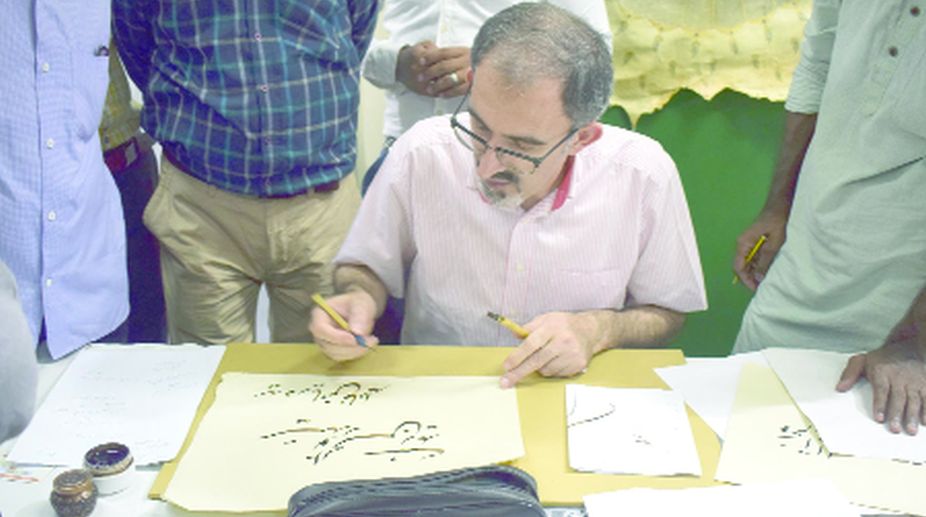
An Exhibition on Holy Quran was inaugurated at the Dr Zakir Husain Library in Jamia Millia Islamia (JMI) on 11 June. The exhibition, organised in collaboration with the Iran Cultural House, was launched by Prof Talat Ahmad in the presence of Masood Rezvanian, Ambassador of the Islamic Republic of Iran.

The exhibition includes a rare collection of manuscripts of the Holy Quran dating back to the 15th century. The manuscripts, written in Arabic, are in different calligraphic styles like Naskh, Thuluth, Muhaqqaq, Nashtalique and Shibasta. Beside this, the exhibition also displays rarely published translations of the Holy Quran in several Indian languages, including Hindi, Urdu, Kannada, Tamil and Malayalam, and in foreign languages, including English, Japanese, French, German, Burmese, Turkish and Persian.

Calligraphy as an art form came to India during the Mughal period between 16th century and 19th century. The Mughal Empire had close ties with the Iranian Empire, which led to the cultural exchange of the art forms. This led to the spread of Iranian influence in art, architecture and calligraphy.

Among the exhibits are the smallest and the largest Quran. Other exhibits include rare Quranic manuscripts and Quran written on different materials like ivory, metal, animal skin, wood and handmade paper.

source: http://www.thestatesman.com / The Statesman / Home> Features / by Majid Alam / New Delhi / June 24th, 2018
How a ‘Maths World’ lab in this Dakshina Kannada village school produced cent per cent results

Nada Village, Belthangandy Taluk (Dakshina Kannada District) , KARNATAKA :

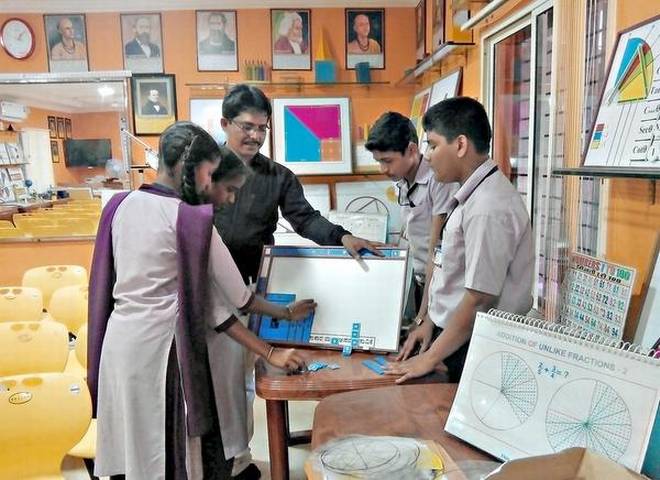
Yakub Koyyur, assistant teacher in mathematics, at the lab opened by him at Government Kannada Medium High School in Belthangady taluk of Dakshina Kannada district.

All SSLC students pass the maths paper; their success is being attributed to a laboratory in the school

A government school teacher setting up a laboratory to help students overcome their fear of mathematics four years ago appears to have borne fruit in a Dakshina Kannada village school as all the 43 students who appeared for the mathematics paper in the recently held class 10 exam have passed.

The Government Kannada Medium High School at Nada village in Belthangady taluk had previously recorded cent per cent results in mathematics way back in 2002.

It was Yakub Koyyur, an assistant teacher in mathematics, who opened the laboratory in the school in February 2014. But it was effectively put to use one year later, from the 2015–16 academic year.

It was the first such laboratory opened in a government school in the State. The objective was to make students having less-than-average learning ability score well and at least pass the mathematics paper.

When the first batch of class 10 students who used the laboratory wrote the exam in March 2015, the pass percentage in mathematics went up to 77.35 from 69.38 in 2014. It further rose to 95% in 2016 and witnessed a slight decrease — 94.59% — in 2017. The dream of the teacher to see all class 10 students pass in the subject was achieved this year.

Mr. Koyyur said many students end their education in class 10 for having failed in mathematics as they feel it is tough nut to crack. He, however, wanted to make the students first shed the fear about the necessary evil and pass the SSLC exam.

Before setting up the laboratory, the pass percentage in mathematics in class 10 in the school varied between 62.6 and 86.76 during 2008–13.

All those students who passed in mathematics in class 10 this year had made use of the laboratory since they joined the school for class 8 in 2015–16. “The laboratory inspired the students to shed the fear and also provided a base to understand the concepts of mathematics. Three years of continuous exposure of students to the laboratory could be one of the reasons for all having passed this year,” Mr. Koyyur said. But the pass percentage also depended on the questions asked and the learning ability of students, he added.

In his bright and colourful ‘Maths World’ laboratory, all students from class 8 onwards get hands-on experience through models, audio-visual tools, and charts. The laboratory was opened with a partial government funding of ₹2.5 lakh and ₹13 lakh contributed by the school alumni.

source: http://www.thehindu.com / The Hindu / Home> News> States> Karnataka / by Ravi Prasad Kamila / Mangaluru – June 18th, 2018

3-day seminar on Indo-Iranian Persian Literature begins at KU

Srinagar, JAMMU & KASHMIR :

Srinagar

A three-day international seminar on Indo-Iranian Persian Literature organised by the Department of Persian began at the University of Kashmir in the auditorium of Ibn e Khuldun Alama Iqbal library on Thursday.

The theme of the seminar is “emergence of moral and ethical values in Indo-Iranian Persian literature and its relevance in modern times”.

The scholars and professors from different countries of the world have taken part in the 3-day seminar to present their research papers and to share their experiences with the students, various scholars and professors from the different states and different universities including Delhi, Lucknow has also participated.

The seminar was started with the recitation of Holy Quran by Dr Shanawazz shah followed by the naat by Syeda Mysooma.

Vice Chancellor Prof Khurshid Iqbal Andrabi presided over the seminar, addressed the guests and welcomed them with his warm speech.

In his presidential address, Prof Andrabi said that morals are the basic requirement of an individual, and is very fascinated by the beautiful culture, language of Iran.

Dr Jehangir Iqbal, Coordinator, Department of Persian, underlined the aims and objectives of the seminar and also highlighted the achievements of the department over the years.

Prof Shaief Hussain Qasmi delivered the keynote address.

Dr Ali Raza Ghazvey, Director literary Innovative center Academy of Art Tehran, Iran said: “it seems that we have entered a little Iran with the same culture that we are sharing with each other and the effect of Awraadi Fatah by Mir Syed Ali Hamadani ( rah) has kept the lost glory intact.”

Another guest and professor from the University of Kabul Afghanistan while presenting his research paper and sharing his experience with the students present there said: “we must look to the Persian language, not as an option but we must take it as the objective.”

Meanwhile, Arif Ayoubi who is a chairman Fakhhur Din Ali Ahmad committee said that the best students and scholars will be awarded the gold medals and some cash where they also would be helped and guided in future.

Now the next 2 days of the international seminar will be dedicated to the students and scholars from various faculties and universities to present their papers during these 2 days.

source: http://www.kashmirlife.net / Kashmir Life / Home> Kashmir Latest News / by KL News Network / June 21st, 2018

Three Pakistanis get Indian citizenship

Nizamabad, TELANGANA :

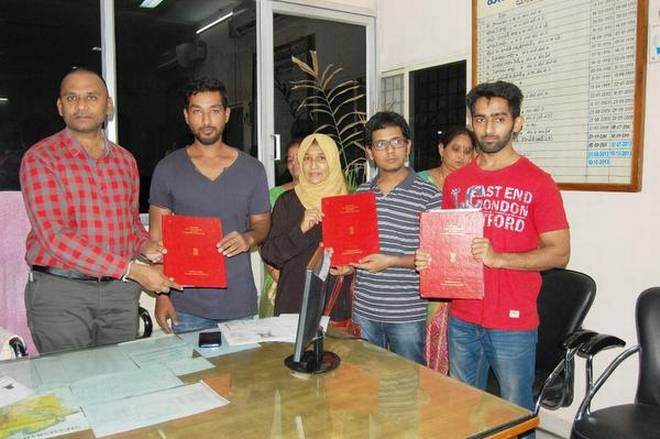
Revenue Divisional Officer T. Vinod Kumar handing over Indian citizenship documents to Sanan, Ruman and Saif at his office in Nizamabad on Tuesday.

The brothers, born to Indian mother and Pakistani father, applied for citizenship eight years back

Three Pakistani nationals – Mohammed Sanan, 29, his younger brothers Ruman, 27, and Saif, 25, were granted Indian citizenship by the Government of India. Revenue Divisional Officer T. Vinod Kumar handed over the citizenship copies to them in the presence of their mother Faiz Unnisa here on Tuesday.

After the perusal of their applications for citizenship, the Ministry of Home Affairs issued orders.

The orders were issued under Section 5(1)f of Citizenship Act-1955 on April 24 approving their appeal. The citizenship document copies No:243; 244; and 245 subsequently were sent to the district authorities.

They had applied for citizenship some eight years ago.

Ms. Faiz, daughter of late Hafeez Abdul Rehman and Samdani Begum, married Mohammed Abdul Nadeem Javed of Bahawalpur in Punjab province of Pakistan in 1988. After marriage, she moved to Pakistan, but did not give up her Indian citizenship. All her three sons were born there. After divorcing her Pakistani husband in 2004, she moved to Nizamabad along with her three sons and they have been staying here on a long term visa (LTV).

Refusing to reveal the details, Ms. Faiz and her children immediately left the RDO chambers after receiving the citizenship documents.

According to sources, she, along with her children and her siblings, has been running a private school in the old city for several years now. Meanwhile, Bharatiya Janata Party (BJP) activists arrived at the RDO office to stage a protest against giving citizenship to the trio. Realising that they had already left, they called off the protest.

When contacted, District Collector M. Ram Mohan Rao said the Government of India granted the citizenship to the three Pakistani nationals only after being convinced that there will not be any law and order problem with them. “I hope there will not be any problem from them, and or to them from anyone. Anyway, I will take the issue to the notice of the Commissioner of Police as regards their protection,” he told The Hindu.

source: http://www.thehindu.com / The Hindu / Home> News> Cities> Hyderabad / by Special Correspondent / Nizamabad , June 19th, 2018

8 months into politics, AMU alumnus wrests sole zilla parishad seat for Left in Bengal

Goalpokhar (North Dinajpur District) , WEST BENGAL :

The Urdu teacher at Dharmapur High School at Goalpokhar in Bengal’s North Dinajpur district won from Belon in Goalpokhar 2 block.

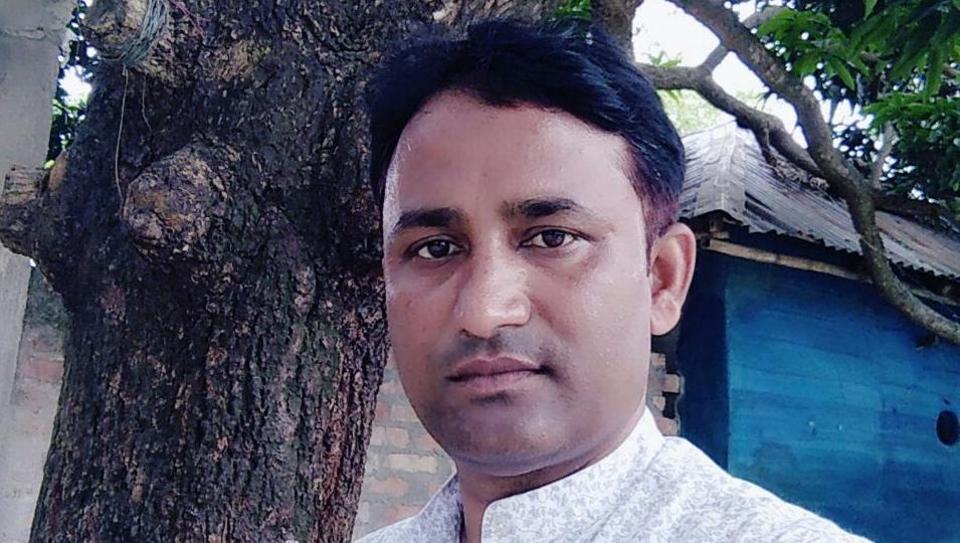
Md Shahid Siddiquee joined politics eight months ago after he was inspired by Forward Bloc MLA from Chakulia in North Dinajpur district, Ali Imran Ramz.(HT Photo)

Eight months ago, Md Shahid Siddiquee,32, a former student of Aligarh Muslim University, was a newcomer in All India Forward Bloc, a partner in Bengal’s Left coalition.

When results to the polls in the state’s three-tier panchayats were released, Siddiquee emerged as winner of the sole zilla parishad (district council) seat for the Marxists who were facing rout.

The Urdu teacher at Dharmapur High School at Goalpokhar in Bengal’s North Dinajpur district won from Belon in Goalpokhar 2 block. This is the Left’s only zilla parishad seat out of 825 (only 622 saw contest) in Bengal. Siddiquee defeated veteran Trinamool Congress leader Abdul Ghani by 1,156 votes.

Communist Party of India (Marxist), Communist Party of India and Revolutionary Socialist Party, the three other big constituents of the 10-party Left Front, could not win any seat in the highest tier of the panchayats.

Interestingly, Siddiquee is not even known to many of the top Left leaders in these parties. He will be introduced to them at a meeting of the Left Front leaders on May 26.

Siddiquee joined politics eight months ago after he was inspired by Ali Imran Ramz, Forward Bloc MLA from Chakulia in North Dinajpur district. Ramz is the second youngest MLA in the Bengal assembly.

“I was always a Forward Bloc supporter but it was Ramz who inspired me to join active politics. He also inspired me to contest. The credit for my victory goes to him,” said Siddiquee.

“Had Trinamool supporters not resorted to violence at eight booths our margin would have been higher. But I am sure many Trinamool supporters also voted for me,” he added.

Ramz claimed that Siddiquee’s victory has proved that Left Front can put up a fight against Trinamool if it keeps in touch with people at the grassroots. “From the very beginning I was against seat adjustment with any party outside the Left Front. In North Dinajpur, Forward Bloc contested on its own. I am grateful to our voters,” said Ramz.

CPI(M) Politburo member and MP from Raigunj in North Dinajpur, MP Salim, said the Left would have done much better in the north Bengal region had Trinamool not resorted to violence.

source: http://www.hindustantimes.com / Hindustan Times / Home> Cities> Kolkata / by HT Correspondent / May 22nd, 2018

Madras Inherited to unravel city’s architectural treasures

Chennai, TAMIL NADU :

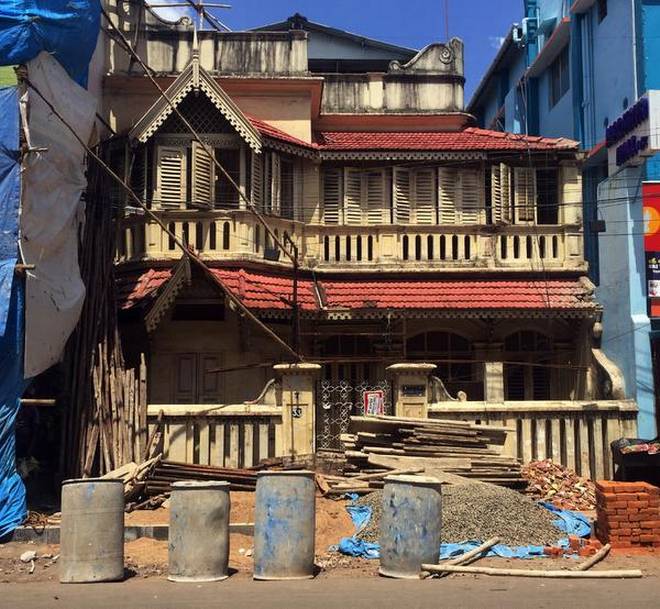
One of the projects taken up by the Triple O Studio

Any mention of Chennai’s architectural marvels instantly brings to mind large, red public structures built in the Indo-Saracenic architectural style. But, there is more to the city’s architectural history in its residential areas.

Madras Inherited, an initiative of a group of architects and volunteers, aims to unravel these hidden architectural gems through heritage walks and document the fast disappearing residential structures in the city.

Spearheaded by Triple O Studio, an architectural firm, Madras Inherited will focus on small residential buildings across the city that have gone unnoticed unlike public heritage structures. While Chennai has some of the finest Indo-Saracenic structures, it is also a confluence of many intriguing architectural styles that the group will research and map through a series of walks.

Tahaer Zoyab, architect and co-founder of Madras Inherited, said a project to document the old houses of Mylapore came as an eye-opener to the vanishing heritage in the city. “The character of the interior lanes is fast changing and we wanted to share the stories with people before residential buildings disappear and also document the rich legacy,” he said.

The team has so far documented architectural designs of about 50 houses in Mylapore. “We have traces of Neoclassical, Gothic and Art Deco styles in structures across the city. We can still find traditional vernacular architecture in some of the Agraharam houses of Mylapore, Tiruvanmiyur and Triplicane,” he said.

Classic example

George Town, one of the older settlements in the city, presents a classic example of a confluence of different styles. Dare House in Parrys Corner, for instance, is designed in the Art Deco style in which there is an emphasis on vertical lines and the distinct design of a ‘sunburst jaali’ for ventilation, Mr. Zoyab pointed out.

Such intricate details imbibed in residential and private building architecture will be documented and shared with heritage enthusiasts in the city. Madras Inherited will focus on cultural tourism and heritage education and management through a series of interactive events like photo walks in historical areas. The initiative will be launched on June 16 with a walk through the lanes of Royapettah, where participants will get to decode the architectural history of the area. The walk that starts at 6.30 a.m. will cost adults Rs. 700 and students Rs. 450. Participants get to take home a bag of custom-made souvenirs, ranging from coasters to bookmarks.

The locality has a range of styles from Agraharam houses, traces of Gothic design and Islamic-style houses. The proceeds from these walks will be used to fund the mapping and documentation of city’s heritage structures. There are plans to expand to areas like Periamet, Vepery and George Town after September.

For details on the walk, send an e-mail to mail@madrasinherited.in or contact +91-8939135048.

source: http://www.thehindu.com / The Hindu / Home> News> States> Tamil Nadu / by K. Lakshmi / Chennai – June 15th, 2018

Madin grounds witness mega prayer meet

Malappuram, KERALA :

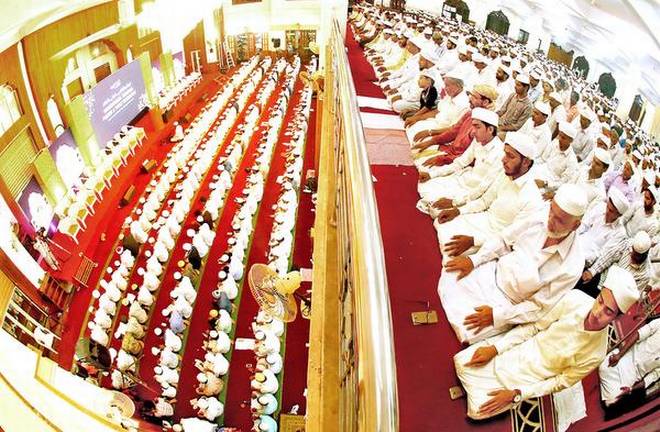
Sunni believers from different parts of the State attend an annual mega prayer gathering organised by the Madin Academy in Malappuram on Monday.

Thousands of Sunni believers from different parts of the State attended an annual mega prayer gathering organised by the Madin Academy here on Monday night.

Although the organisers had cut down the size of the programme by shifting the stage into the Madin Grand Mosque and reducing the publicity for the event in view of the Nipah virus scare, there was no decrease in the turnout of the orthodox Sunnis who reached the Swalat Nagar for the blessings of Lailathul Qadr. Lailathul Qadr or “the night of decree” is the holiest night of the year for Muslims across the world.

According to the Koran, Lailathul Qadr is “better than a thousand months”. In his special message to the people, Madin Academy chairman Sayed Ibrahim Khaleel Bukhari Thangal exhorted the mahals and the community to give extra stress on cleanliness and hygiene.

All India Jamiyyathul Ulama general secretary Kanthapuram A.P. Aboobacker Musliar inaugurated the function. Samastha Kerala Jamiyyathul Ulama president E. Sulaiman Musliar presided. Mr. Bukhari led various prayers such as Thouba, Tahleel and Swalat.

source: http://www.thehindu.com / The Hindu / Home> News> States> Kerala / by Staff Reporter / Malappuram – June 12th, 2018

‘Rising Kashmir’ editor Shujaat Bukhari shot dead by gunmen in Srinagar: Police

Srinagar, JAMMU & KASHMIR :

Shujaat Bukhari was leaving his office in Press Enclave in Srinagar’s Lal Chowk when he was shot at. He is in a critical condition, police said.

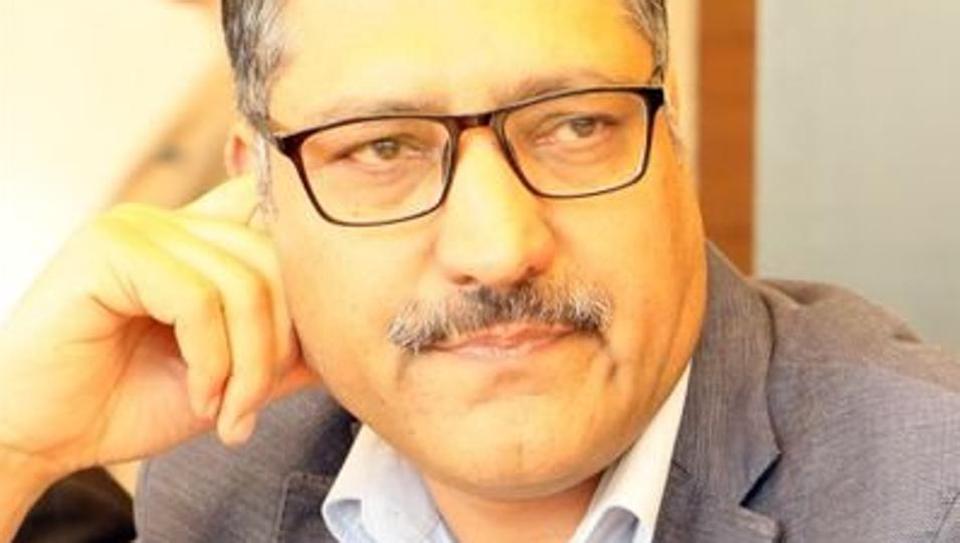
Shujaat Bukhaari is the editor of newspaper Rising Kashmir. (Picture courtesy: Twitter/Shujaat Bukhari)

Veteran journalist and Rising Kashmir editor Shujaat Bukhari was shot dead by unidentified gunmen outside his office in the heart of this Jammu and Kashmir capital, police officials said on Thursday.

Bukhari, who was leaving his office in Press Enclave in the city centre Lal Chowk for an iftar party when he was shot, officials said.

The two policemen who were guarding him are also injured, they added.

source: http://www.hindustantimes.com / Hindustan Times / Home> India / by PTI, Srinagar / June 14th, 2018

Iconic mosque welcomes women for iftar

Kolkata, WEST BENGAL :

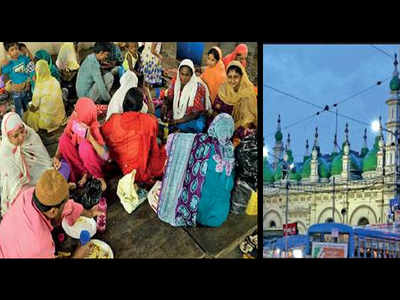
Women have lunch at Tipu Sultan Mosque.

Kolkata  :

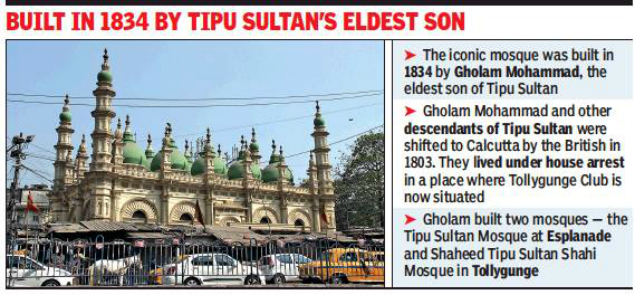
The iconic Tipu Sultan Mosque has, for the first time in its 184-year history, opened its doors for women this Ramzan.

The Esplanade landmark has arranged for iftar and evening prayers for women under a temporary shamiana inside its premises, lending a crucial support system that lets them leave home for shopping in the city’s famed central commercial area without worrying about how and where to break their fast and get some shelter from the sun and, right now, the rains.

The shamiana, with adequate lighting, fans and water, has proved to be a huge relief for women working in offices in the central business district, with the masjid authorities providing the iftari comprising fruits, chhola, sweets and sherbet.

“You do not even have to get your own iftari. We will provide it. Just reach the mosque minutes before iftar and take your seat,” Prince Anwar Ali Shah, the mosque’s mutwali (caretaker) and great-grandson of Prince Gholam Mohammad, Tipu Sultan’s eldest son, said.

The Esplanade landmark has arranged for iftar and evening prayers for women under a temporary shamiana inside its premises, lending a crucial support system ...
The Esplanade landmark has arranged for iftar and evening prayers for women under a temporary shamiana inside its premises, lending a crucial support system …

The mosque was built in 1834 by Prince Gholam Mohammad, when was in exile in Kolkata.

“A lot of women come to Esplanade from far-flung areas for shopping during Ramzan and do not have any proper place to go to when it is time for iftar. Many are forced to break their fast on the road and forgo their evening prayers,” Shah said, explaining the rationale behind the decision.

Women devotees have welcomed the change. Park Circus resident Asma Momin had come to Esplanade to buy essentials on Tuesday. “I was not carrying any food at all,” she said. “The shamiana and the iftari were a godsend,” she added.

Sabrina Yasmin had come to Dharamtala from nearby Wellesley but was caught in the rain; for her, the shamiana provided the much-needed shelter. “It is a great decision and shows the mosque authorities’ inclination to change with the times,” she said. Around 150 women partake of iftar at the Tipu Sultan Mosque daily.

Fasting during Ramzan is one of the five obligatory pillars of Islam, along with the declaration of faith, the namaz, the Haj pilgrimage and giving zakat (an Islamic levy). The conclusion of Ramzan heralds the arrival of Eid, the biggest Muslim festival.

source: http:///www.timesofindia.indiatimes.com / The Times of India / Home> News> City News> Kolkata News / by Zeeshan Javed / TNN / June 13th, 2018

Ensuring iftari for thousands, since 1839

Lucknow, UTTAR PRADESH :

Lucknow :

It is 8am on Saturday and big black cauldrons that will slowly simmer dal in them have been put up on burning embers with the help of two strong men. For the past 179 years, the ritual has been repeated every Ramzan in the bawarchikhana (kitchen) within the premises of the Chhota Imambara.

While it is dal and tandoori roti that is cooked for three days, an Awadhi delicacy called ‘taley hue aaloo ka salan’ (fried potato curry) with roti follows for the next three. The cycle continues for the entire month of Ramzan, feeding around 600 poor people as their dinner the the entire month of Ramzan.

In the same kitchen, a different set of snacks is also prepared for the specific purpose of serving rozedars coming to offer prayers in 15 mosques under Husainabad & Allied Trust (HAT).

Around 2,500 people will receive a plate of gujhiya, phulka, chana, suhaal, dates, a fruit (preferably banana) along with bread-butter and cake outsourced from a bakery, thanks to a king’s commitment to the poor.

The third King of Awadh, Muhammad Ali Shah, had created the Husainabad Endowment Deed in 1839 to feed the poor. Since then, the two massive community kitchens within the Chhota Imambara have been following the tradition of sending out iftari to the 15 mosques under its umbrella.

Every Ramzan, by the end of the day, this kitchen would have fed over 3,000 mouths.

“A sum of around Rs 16 lakh is passed for the iftar and dinner services every year. Two separate dedicated teams of chefs and their assistants are engaged for it. Everyday, activity in the kitchens begins at 8am. By 4.30pm, we send out the first batch of iftar food for the mosques,” said Habibul Hasan, an official from HAT.

The 179-year-old Nawabi tradition saw a break only in 2015. During Ramzan that year, a movement against alleged corruption in the UP Shia Central Waqf Board being spearheaded by Shia cleric Maulana Kalbe Jawad  had brought the tradition to a halt. Protesters had locked the entrances to both the Bada Imambara and Chhota Imambara, restricting all entry. Even the kitchens could not function.

However, people from the neighbourhood of the 15 mosques came together to fund the food. HAT had also roped in private bakeries. Even during the mourning months of Muharram, food is served from the traditional kitchens of the Imambara.

source: http:///www.timesofindia.indiatimes.com / The Times of India / Home> News> City News> Lucknow News / by Yusra Husain / TNN / May 21st, 2018