Category Archives: Community Involvement / Social Issues

Female Qazis: Raising the Bar

Mumbai, MAHARASHTRA :
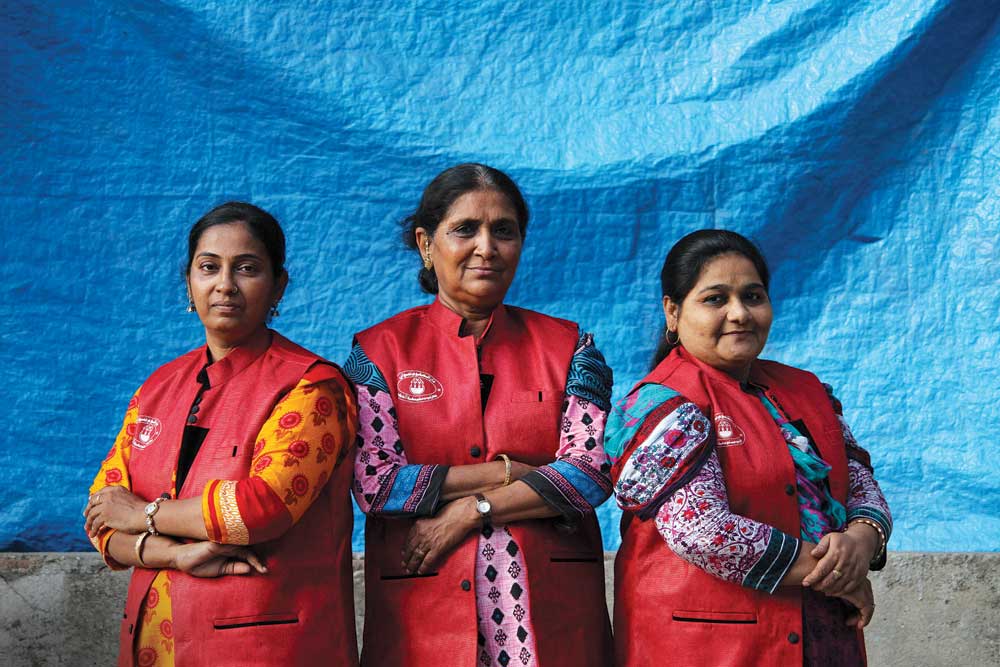
(L-R) Suraiya Shaikh, Khatoon Shaikh and Heena Siddiqui, newly appointed qazis in Mumbai (Photo: Anushree Fadnavis)

India’s pioneering female qazis are pushing for a gender-neutral interpretation of Muslim law

IN THE LAST two years that Suraiya Shaikh was preparing herself to become one of India’s first female qazis, she grew close to a young woman in a Muslim neighbourhood in Mumbai’s Khar suburb. Shaikh is a member of the Bharatiya Muslim Mahila Andolan (BMMA), an advocacy group that campaigns for female rights within the community. She came to know the woman—let’s call her Haseena, a teenager then and now 20 years old—through an outreach programme of the group.

Haseena was going through a particularly bad time. She was only just beginning to heal from a severe bout of tuberculosis, which had forced her to discontinue her school education. She spent all her time indoors, her body was getting frailer by the day, and the strong medicines she consumed had left her deaf in one ear. According to Shaikh, who used to visit Haseena at home, the young girl was also in depression.

During these visits, Haseena would convey her anxieties and fears. And Shaikh, in return, would tell Haseena about her life, and her ambition of becoming a qazi, an Islamic judge. The two Muslim women, separated by exactly 25 years in age, were to become close friends.

Several days went by last year without the two getting a chance to meet. But when Haseena suddenly appeared in front of Shaikh next, she had undergone a striking transformation. She looked healthy and had put on some weight. When she would comb her hair, Suraiya says, she would take almost two hours to do just that. But the most remarkable thing about her, Shaikh recalls, was Haseena’s new-found ebullience.

“It was love,” Shaikh now says. “She was in love.”

Haseena had fallen in love, gotten engaged, and was planning to get married by end of 2017. But this marriage, as Shaikh now laughs while recounting the story, is not going to be like any old love marriage. It is neither a simple love marriage, she says, nor an arranged one. “It will be a wrong-number love marriage.”

A young Muslim man in Malad had mis-dialled a phone number and found himself accidentally speaking with Haseena. Drawn by the quality of each other’s voice, the frequency of these ‘wrong number’ calls increased over the next few months until the two were sure they were in love and decided to get engaged.

Haseena has now put a condition to her suitor. When the two get married in December, their wedding will have to be conducted not by a qazi chosen by his family, as has come to be the tradition, but by a female one, Suraiya Shaikh.

“The boy’s family has so far not agreed to the idea of a female qazi. I believe they are saying this is not possible. But the boy has promised he will convince them,” Shaikh says. “And maybe this will be my first nikaah.”

Some days ago, when Haseena learnt that Shaikh had completed her training, she wanted to know when the qazi would need to be intimated for a December wedding. “I told her, ‘Usually you have to register a month in advance, but you had better register by October’,” Shaikh recounts. “These wrong number marriages, I don’t know… Kuchh tehkeekat karna padega (We will have to carry out some investigations).”

The BMMA, which was formed in 2007, although its members have been campaigning for Muslim women’s rights for much longer, pursues its cause in different ways. It files petitions in court, like the one that resulted in women being allowed to enter the sanctum sanctorum of Mumbai’s Haji Ali dargah. It also runs a legal aid centre in Mumbai, Shariah Adalat, for aggrieved Muslim women, which often pits them against qazis and maulanas who interpret Muslim laws unfavourably towards women.

“It’s really atrocious how these qazis go about their job,” says Khatoon Shaikh, the BMMA’s Maharashtra convenor. “Often, they don’t even have proper training. They just grow long beards and open their shops,” adds Heena Siddiqui, a BMMA member. As the women describe it, Islamic judges have several duties to perform, like ensuring that there is no underage marriage, that a wedding has the consent of both the bride and groom, and later, if the husband wants to divorce his wife, the procedure is spaced out over a proper period of time (with a reconciliation attempt), and not done by the man saying one word thrice at a single go. “But the problem with these qazis,… is that a husband will say ‘talaq’ thrice and a male qazi will just listen to the husband’s version of things and finalise a talaqnama, without once listening to the woman or asking witnesses,” Khatoon Shaikh says.

WHEN BMMA MEMBERS learn of such cases, they not only meet both parties and try to reconcile the matter, but also catch hold of the offending qazis. They send notices to them and, if needed, file police complaints. Sometimes the qazis apologise and promise to rectify issues. Sometimes they switch off their phones and refuse to meet them. In one such case some years ago, they began receiving complaints about a Bandra judge known as Musa Qazi who had solemnised marriages where the bride was a minor and finalised divorces without once meeting the wife. “We just went to his office, all of us, and really scared him,” says Siddiqui, “Now he doesn’t do anything like that. In fact, when we need a qazi, we send our people to him now.”

In most cases, however, such relatively easy resolutions aren’t available, and Muslim women languish under unfair rulings as a result. Two years ago, the BMMA released the findings of a two-year-long survey it had conducted among 5,000 Muslim women in 10 Indian states. A majority of the women turned out to be housewives who had been married before the age of 18 and who suffered from domestic abuse. Many of them were divorcees. The survey revealed that most of them wanted the Triple Talaq process of divorce to be abolished, arbitration before a divorce to be made compulsory, and any qazi who gave legitimacy to such a divorce without consulting the woman or stipulating the need for arbitration to be punished.

About three years ago, as the results of the survey began to come in and several cases presented themselves at their Sharia Adalat, members of the BMMA began to wonder: why should they only deploy their methods for fire-fighting? Why couldn’t they attempt to prevent these fires in advance? Noorjehan Safia Niaz, one of the co-founders of the group, was more specific. Why didn’t the group train women to be qazis?

The group set up a centre for Islamic learning and theology, Darul Uloom Niswaan, and prepared a syllabus covering various subjects ranging from the Indian Constitution and jurisprudence to Muslim prayers and laws, as also the history, principles and values of Islam. A total of 30 Muslim women across India were selected to join the training programme. Two years later, 15 of them have qualified as Islamic judges. There have never been women holding these positions in India before, barring a few exceptions like Shabana Ara Begum, whose father, a qazi in West Bengal, helped her become one several years ago. Niaz says she hasn’t come across any such cases elsewhere either in the larger Islamic world. Several of them have been taunted by traditionalists who claim that females cannot be judges. But the BMMA points out that the Qur’an does not bar women from the role. “The problem is not that the Qur’an is unfair towards women. It is the misinterpretation done by qazis and clerics,” Siddiqui says. “A female qazi, we think, will bring a more gender-neutral perspective when she interprets Islamic laws. She will think about the woman before deciding any matter.”

Siddiqui recounts a case she encountered a few years ago, where a husband divorced his newly-wed wife by uttering talaq thrice upon discovering that she wore glasses. “When the family had come to see her before marriage, she hadn’t been wearing the spectacles. But after the marriage, when they found that her eyesight was weak, they claimed they had been cheated,” Siddiqui says. “And can you believe it? The qazi confirmed this talaq without once meeting the girl.”

Safia Akhtar, a 65-year-old former college professor in Bhopal who has also qualified as a qazi, narrates a problem-case she is currently helping resolve. A woman wants to divorce her husband because he has taken another wife. But whichever qazi she has approached so far has forbidden her from divorcing her husband. “We are now fighting the case in court,” says Akhtar.

Among other things, women judges will ensure that for weddings, the address and identity documents of grooms as well as brides are submitted for scrutiny; that sources of income are ascertained; and that both are marrying of their own free will. “These are small basic things, but often no one does them,” Siddiqui says.
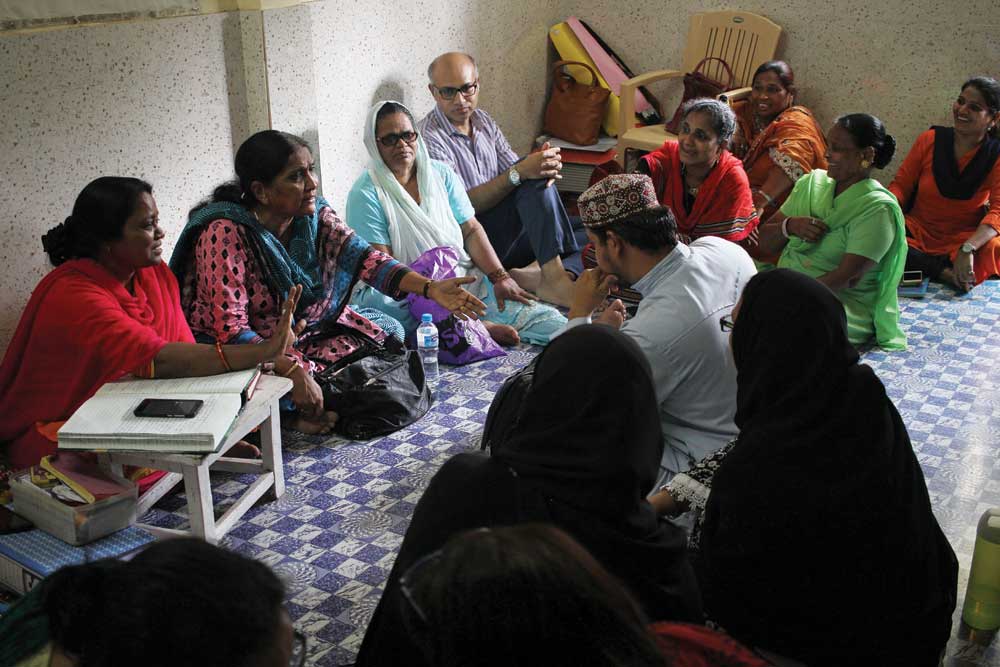
As a qazi, Khatoon Shaikh (second from left) often handles cases where women have been divorced and abandoned without any consultation (Photo: Anushree Fadnavis)

We sit on the floor in a tiny two room office in Bandra’s Kherwadi area. There is little here other than wooden stools upon which rest large registers detailing the cases of several women. The walls are covered with colourful posters of messages. ‘Jahaan insaaf nahin, wahan Islam nahin’ says one; where there is no justice, there is no Islam. Another has details of cases dealt with last year: a total of 229, of which a majority concerned Triple Talaq (31) and polygamy (35); the BMMA has managed to resolve 61 of them, a success rate of 38 per cent.

Below these charts, Nirmala, a Hindu woman who volunteers at the organisation, sits with a large register. “Fifty-four new cases already this year, can you believe it?” she asks and raises her arms.

Beside her, seated on the floor are three women. One of them, draped in a burkha, draws open her facial veil to reveal a face not older than 25, perhaps even younger. “She is almost four months pregnant,” says one of her two companions. “But her husband refuses to cooperate.” The woman’s face has no expression and her eyes seem vaguely focused on the thickness of the register.

The young woman, it turns out, was married six months ago to a Muslim man in a Jogeshwari household in the city. But she had to return home just a few months later after she was verbally and physically abused by her in-laws. She wants a divorce, but her husband has refused to grant one. Her doctors have now found that her foetus has an abnormality, a danger to her as well as the foetus if she goes ahead with the pregnancy, but the husband refuses to sign any document permitting an abortion. He was supposed to visit the office today to discuss the issue, but almost an hour later, he has not shown up.

Suraiya Shaikh’s face tightens with rage when the husband says over phone that he can’t come. She threatens to lodge a non- cognisable offence against him if he doesn’t show up in two days. The young woman gazes at the register throughout the conversation. The doctors want to abort the foetus by next week; an abortion after 20 weeks of pregnancy would be illegal. The three thank Shaikh and promise to return a few days later.

All of Saturday passes like this. A few people come with new cases or to inquire after old ones. The weekdays are much busier, where the entire room is crowded with people and their grievances. Khatoon Shaikh is away today, at a police station in Bhiwandi, where a Muslim man has kept both his children but thrown his wife out of his house on the suspicion that she is having an affair with someone. And when there is no one around, Suraiya Shaikh, Siddiqui and Nirmala joke amongst themselves.

The biggest challenge for them, they admit, will be to be accepted as qazis. “We have done all this,” Niaz says. “Now I think the community should come forward and respond.” But the qazis themselves don’t plan on waiting. Several of them have begun to contact their family members and friends to see if there is anyone of marriageable age whose weddings they can formalise.

SURAIYA SHAIKH HAD JOINED the BMMA after the group helped resolve a marital discord between her sister and her husband. Over the years, she has encountered so many cases, from Facebook Triple Talaq posts to divorce notices sent by email and SMS, that she is no longer surprised by them. She has also learnt to keep her temper in check.

But occasionally, anger gets the better of her. Some days ago, while walking out of Bandra Railway Station with her daughter- in-law, she caught sight of a man hitting his wife. She intervened to help the woman hit her husband back. Her daughter-in-law, who is quite conservative and has been suspicious of her mother- in-law’s activism, was shocked. “How could you do that?” she asked Suraiya Shaikh. “You are a qazi now.”

source: http://www.openthemagazine.com / OPEN / Home> Society / by Chendup G. Bhutia   / April 28th, 2017

Major Mohammed Ali Shah’s diversity to the fore

UTTAR PRADESH / NEW DELHI :

Mohammed Ali Shah
Mohammed Ali Shah

Theatre actor Major Mohammed Ali Shah turned a motivational speaker for a session ‘Disruppt’ held in Hyderabad

If diverse experiences are what people seek from life, Major Mohammed Ali Shah has had plenty of those. The son of Lt. Gen. Zameer Uddin Shah (vice-chancellor of the Aligarh Muslim University and brother of actor Naseruddin Shah) wanted to be an actor since childhood, dabbled with a lot of career options before he chose the stage.

After a stint with a call centre when the IT boom was on, he was selected for a Short Service Commission posting — he was a young lieutenant deployed at Jammu and Kashmir,LOC — and then he did an executive programme in Marketing at IIM-Calcutta and switched over to a corporate career.

Yet Shah left it all to pursue a career in theatre and films. Now, in his latest avatar, he has turned a motivational speaker, addressing in a session in the city for a platform Disruppt, that seeks to help people overcome issues in their personal and professional lives.

“Surprisingly, Hyderabad was a place where I had tried for acting opportunities several years ago but things didn’t work out. Destiny brings me back to the same place now. The Disruppt session here even had a few people writing handwritten letters to me. That, in times where people don’t take time to send Whatsapp messages. I had suffered a lot of setbacks in life, so if I can contribute to people’s wellbeing by narrating my personal experiences, why not,” says Shah asks.

Amid all the professional churn, there haven’t been any regrets. “In my corporate life, I was paid well, there was no risk or adventure and I was even growing, getting promoted each year. When I looked back at satisfaction, things weren’t falling in place. I quit it one day to pursue my ambitions in the city of dreams, Mumbai. There was initial regret, but I gathered courage soon enough, my parents and my wife stood by me,” Shah states.

This phase also made him a nuanced actor. His army stint was crucial in landing him roles in Haider, Bajrangi Bhaijaan and the Malayalam film titled The Ruffian. Post two unsuccessful attempts to get into NSD (which was once his long-time goal), life came full circle when he worked with Tom Alter and Saif Haider Hasan.

Hasan even went on to produce his theatre series ‘The Major Actor’s Assorted Monologues’ that had shows at Kuwait, UK, Mumbai and Delhi. “Besides, my army stint had me equipped at everything from polo to rock climbing to martial arts and paragliding, mostly the Short Service Commission stint taught me to be a thorough gentleman. If I’m happy about one thing in life, it’s about taking no help from my family, be it from my sister (a social activist), father or uncle,” he says.

He’ll be next seen in Tigmanshu Dhulia’s Yaara (also stars Vidyut Jamwal and Shruti Haasan) and an untitled film where he plays a Punjabi.

source: http://www.thehindu.com / The Hindu / Home> Entertainment> Theatre / by Srivathsan Nadadhur / April 29th, 2017

Around 400 Muslim students clear IIT-JEE 2012

NEW DELHI :

New Delhi:

This was just a dream until some years back. The presence of Muslims in such top layer entrance tests like IIT-JEE was just negligible. The successful Muslim candidates could be counted on fingers. This year, around 400 Muslim candidates from across the country have cracked IIT-JEE. This could be a record.

A total of 24,112 students have secured ranks in various categories in IIT-JEE 2012. Muslims are 391. According to JEE Chairman GD Reddy, only 19,426 of the successful candidates have been shortlisted for counseling for admission to 9,647 seats in the IITs and other institutes. Fortunately, Muslim candidates have got ranks within 19,000 – 188 have got ranks within 10,000 — it means all will get chance to face counseling. The highest ranker among Muslims is Mohammad Hafeezul Rahman (Rank 159) and the lowest among Muslims is Shoaib Khan (Rank 18408).

Rahmani-30’s successful candidates in IIT-JEE 2012 at the campus of the coaching institute in Patna on 18th May 2012

The greater presence of Muslims in IIT-JEE could be attributed to some minority-focused coaching centres established in last five years, the foundation of which was laid by Rahmani-30. Set up in 2008, the Patna-based free residential coaching centre of Rahmani Foundation, under the patronship of Maulana Mohammad Wali Rahmani, has been sending its candidates to IIT-JEE since 2009 and every year it has got results.

Only this year, a total of 16 students of Rahmani-30 have cracked IIT-JEE. Seven of them were of the current batch that ended in March 2012 while six from the last two batches of 2010 and 2011 – they had not got success in previous attempt but succeeded this year. Besides, 3 Muslim students of Bangalore centre of Rahmani 30 have also qualified this year.

More than 5.6 lakh students had appeared for the IIT-JEE on April 8, 2012 for admission to nearly 9,600 undergraduate seats in the 15 IITs and other institutions.

IITs in India
IIT-Bhubaneshwar
IIT-Bombay
IIT-Delhi
IIT-Gandhinagar
IIT-Guwahati
IIT-Hyderabad
IIT-Indore
IIT-Kanpur
IIT-Kharagpur
IIT-Madras
IIT-Mandi
IIT-Patna
IIT-Rajasthan
IIT-Roorkee
IIT-Ropar

JEE 2012 Rank List : Muslim students
Rank Name Category Registration No.
159 MOHAMMAD HAFEEZUL RAHMAN OBCM 6037448
289 JASEEM UMAR M OBC 6112333
406 SHEHZAD HATHI GE 1002007
524 PARVEZSH AHAMED HMS OBC 6137244
560 SHAFEEQUL ISLAM GE 2147412
675 NASIRUDDIN AHMAD GE 2054364
840 MOHAMED FASIL C P OBC 6110005
858 MOHAMMAD OSAMA GE 2146595
870 SHAIK KHAJA MOHIDDIN OBCM 6003074
872 KAZI SAIF RAHAMAN GE 1051186
920 SOHAIL AHASAN GE 5141033
999 ASIF AHMED SARDAR GE 5130180
1128 NAJMI HAMZA ISMAIL OBCM 1025213
1208 GHULAM AHMED ANSARI OBC 6027044
1245 AMEER HAMZA OBCM 5006275
1428 MURTUZA RAJA GE 2104088
1437 BASHAMAKH YAZEED GE 3070042
1438 HUSSAIN BOHRA GE 2099383
1753 INZAMAMUL HAQUE OBCM 2039366
1772 ABDUL AZIZ GE 5139304
1816 MOHD SAOOD SHAKEEL OBCM 2068412
1874 ADIL REZA OBCM 4099681
1891 SHAIK AZHAR MADAR OBCM 6073297
1934 MD DANISH KALIM GE 1079150
1994 SHAIK ABDUL AKRAM OBCM 6076203
2149 ZAHID SHARIEF GE 7012132
2191 ABUZAR GAFFARI GE 2106044
2209 IQBAL OBC 7021256
2238 ABID HAQUE GE 2052109
2257 SAFDAR AHMAD WANI GE 2097117
2336 KHAN UZAIR SUHAIL GE 1055304
2376 MD NADEEM AKHTAR OBCM 3122087
2379 NABEEL AHMAD KANGOO GE 2091362
2452 MD ENAYAT ULLAH GE 7096120
2580 HAMMAD ABDULLAH AYYUBI GE

source: http://www.twocircles.net / Two Circles.net / Home> India News> Indian Muslim / by TCN Staff Reporter / May 23rd, 2012

SAUDI ARABIA – Community bids farewell to Indian diplomat

Jeddah , SAUDI ARABIA :

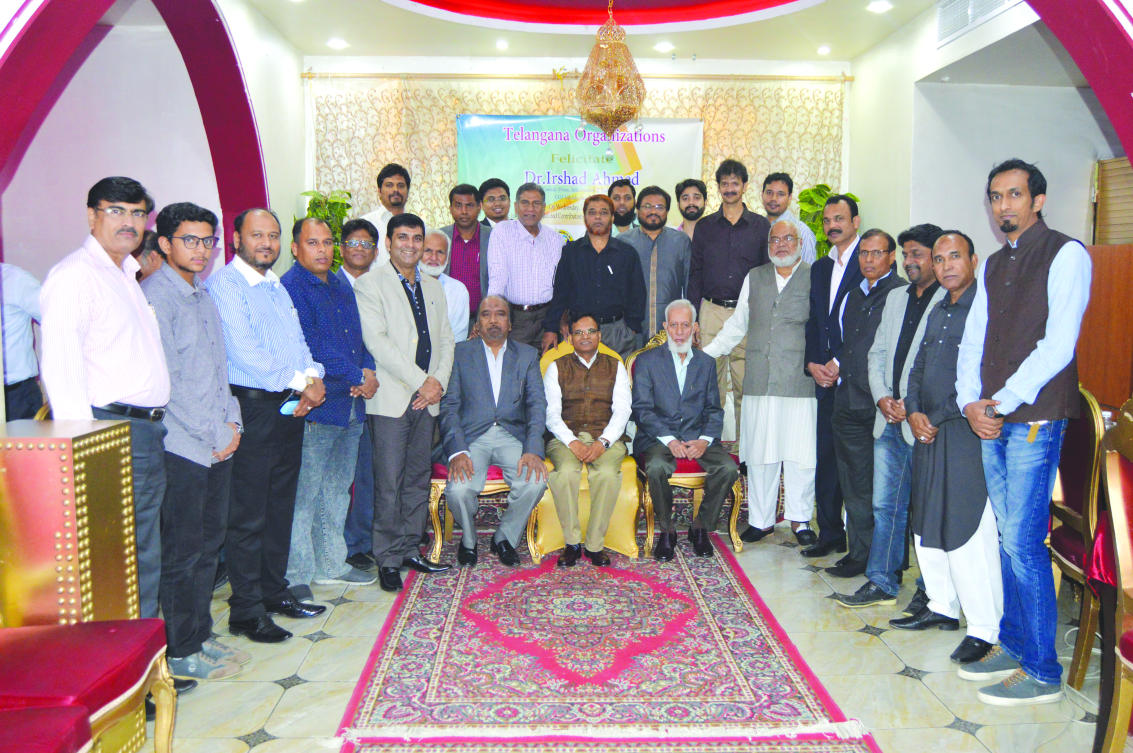
Dr.Irshad Ahmed (seated centre) with leading members of the Indian community in Jeddah at the farewell event
 JEDDAH:
An evening to bid farewell to Dr. Irshad Ahmed, consul for press, information and culture, on completing his four-year term at the Consulate General of India in Jeddah was held recently.
 It was organized by Jeddah-based community welfare organizations from Telangana, including Khak-e-Taiba Trust, Urdu Academy, Deccan NRIs, Noor Education Society, Pain & Palliative Care Trust and Telangana Welfare Foundation.
 Ahmed thanked the Telangana organizations for holding the event in his honor. He spoke about his memorable experiences in the Kingdom and applauded the hospitality of the Hyderabadi community residing in Jeddah.
 “People living in this holy land are very blessed and very proactive when it comes to community welfare,” he said, adding he will miss the Indian community.
Ahmed said he enjoyed his stay in Jeddah and felt very fortunate to be able to help the expats residing here.
The evening commenced with the recitation of the Holy Qur’an by Hafiz Noor, followed by a heart touching naat by Khalid Hussain.
Mirza Qudrath Nawaz Baig, along with senior community members, welcomed Chief Guest Ahmed and lauded the brotherly hand he had extended toward overseas Indians.
The presidents and vice presidents of the Telangana organizations praised Ahmed for his dedication to the Indian community and in organizing various events; specifically pointing out the large-scale mushaira held at the Consulate of India and promotion of the Urdu language in a foreign land.
Ahmed was presented with a plaque of appreciation. Members of the Telangana organizations said they would not say goodbye to Ahmed but would rather say “see you soon.” They said they are looking forward to seeing Ahmed soon in Jeddah on a new assignment.
One of the key hosts of the event, Imran Kausar, gave the audience an overview of the consul and his achievements.
He started his career as an Arabic lecturer in Jamia Millia Islamia in 1995; he later joined the Ministry of External Affairs, Government of India in 2001. His first foreign posting was at the Embassy of Riyadh as third secretary (Information and Culture from 2003 to 2005; then he was transferred to Consulate General of India, Jeddah as consul (Education and Culture) from 2005 to 2008.
He then worked as undersecretary (Gulf) from 2008 to 2012 and was then posted to the Consulate General of India, Jeddah again where he continued his posting as consul (Press, Information & Culture) from 2012.
He will continue his new assignment at the Ministry of External Affairs (headquarters) in New Delhi, India.
Leading members of the community at the event included Shameem Kausar, Siadat Ali Khan, Hasan Bayazeed, Jamal Qadri, Abdul Razzak, Abdul Wahab, Asimuddin Ansari, Aslam Afghani, Asif Daudi, Tahir Ali, Noorul Amin, Majid Saleem, Munawar Khan, Mazharullah Jibran, Sheikh Ibrahim, Rashid Razzak, Saleem Farooqui, Mahmood Misri, Ghazanfar Zaki, Mir Arif Ali, Abdul Rafay and Liaqat Ali Khan.
source: http://www.arabnews.com / Arab News / Home> Saudi Arabia / Wednesday – April 26th, 2017

The story of an Indian hero who laid down his life for the country

Mysuru, KARNATAKA :

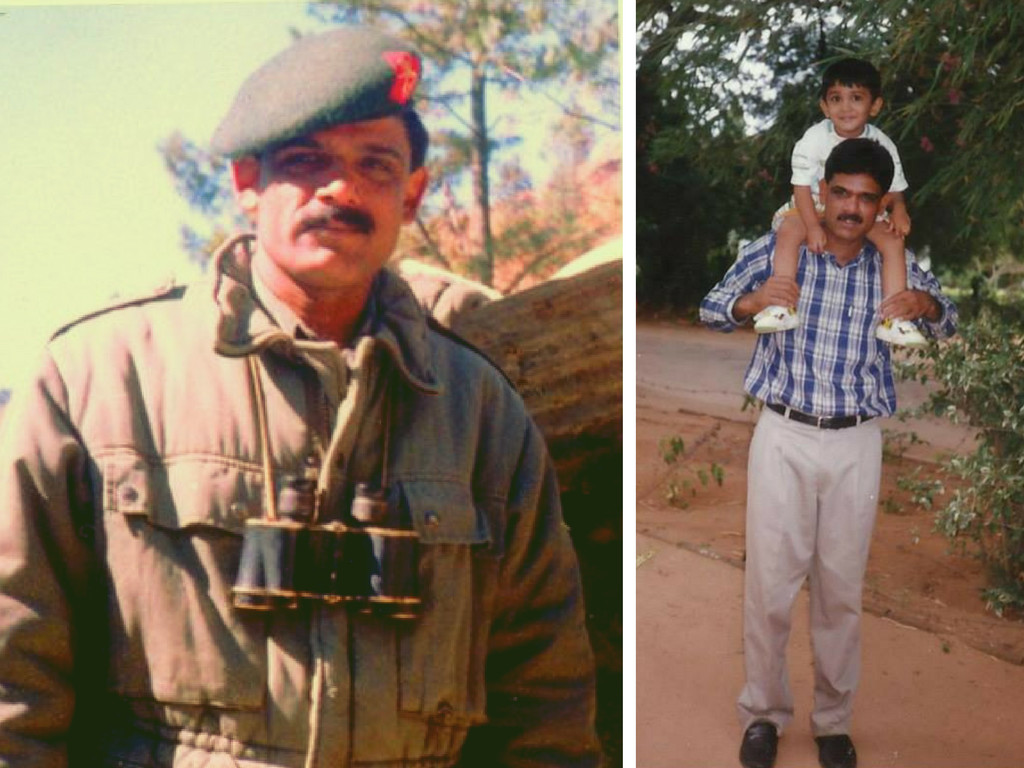
This July, Salma Shafeeq Ghori completes 15 years without her husband Major Shafeeq Khan Ghori. It was her son’s first day at school. She had been visiting family and they had just come back home when a group of Army men knocked on the door. They had been trying to reach her the whole day with the news.
The first two days, they said his condition was critical. “It was a shock for my father-in-law and my little one who did not understand what was happening around him. Nobody wanted to believe it was him and finally after two days of wait and agony, he was brought home for a final farewell with due military honours,” Salma recollects.
MajGhori01MPOs28apr2017
The story of a brave heart
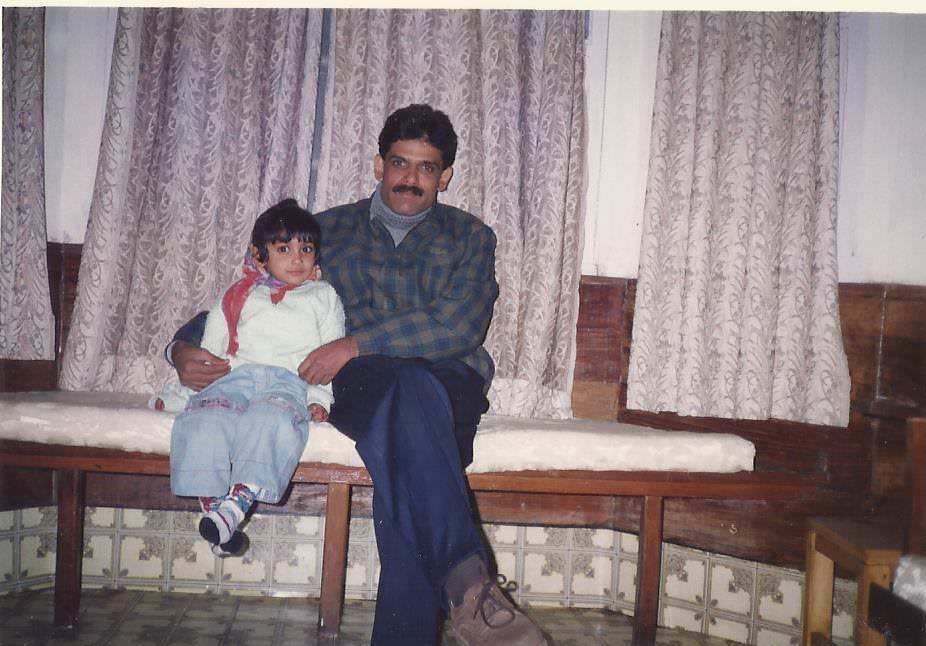
It took their son three years to understand what happened on his first day at school. His questions about his father’s return finally stopped and he accepted that he was truly gone. He stopped asking his mother – why don’t we visit him and why can’t we call him? Tell him to visit me in my dreams, I want to see him.
Relatives had often told Major Shafeeq – what you have done is enough. It is time to leave the fighting and stay with your family. He would respond with twinkling eyes, that he could die walking on the road too. At least working at the Army would give him a death he could be proud of. He hadn’t joined so he could leave.
MajGhori02MPOs28apr2017
On a more serious note, he would prepare his family members. “Live life always as though I am with you and the kids. Never deprive them of anything just because I am not there. I’ll be back soon,” That’s how life continues now, as though he is still a part of us,” Salma reminisces.
Major Shafeeq, 40, was killed in action in Operation Rakshak. He succumbed to a bullet fighting militants. His last act was saving a fellow-soldier’s life from the bullets. His field tenure was to end in another two years and he was to spend the next few years with his family in a peaceful location. He was a keen sportsperson, good at football and cricket, but his favourite pastime was singing.
“I miss daily life with him, our conversations, our travels together, the ferocious way he defended what he believed in, his love, and bringing up our children. He was a hero with a mighty heart,” Salma relates.
MajGhori03MPOs28apr2017
Putting together the pieces
Salma and Shafeeq had a happy life together for 10 years, till 2001. With two beautiful children, Salma says that she didn’t know what sorrow was. The children grew up and got busy with school, but she felt a void that nothing could fill. This changed when she made friends with Subhashini Vasanth, who ran the Vasanthratna Foundation for Arts.
Vasanthratna Foundation helps the families of Army martyrs heal through arts and vocational activities. “While looking after the families of martyrs, understanding their sorrow and pain, I realised that I was not the only one who was suffering. So many of them had it much worse than me. Spending time with these women and empathising with them has helped me overcome my own pain,” says Salma.
Many more families need peace and healing
Hundreds of soldiers in the Army die every year, leaving behind their families. Many families lose their only support and need help carrying on. Vasanthratna Foundation helps such families, giving them vocational training, counselling and support to carry on and be brave.
Donate to help the foundation support vocational training for 30 Army widows here.
source: http://www.milaap.org / Milaap / Home / August 2016

Aamir Khan gifted Maulana Azad’s speech to sister

Pune, MAHARASHTRA :

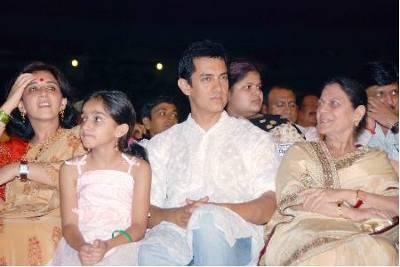
Aamir Khan's family
Aamir Khan’s family

For her elder sister Nikhat’s 50th birthday, Aamir Khan gifted her five speeches of  Moulana Abul Kalam Azad.

Aamir Khan’s sister, Nikhat celebrated her 50th birthday on Saturday and the entire Khan-daan was in Pune celebrating her birthday with lot of fanfare.

Aamir Khan had been thinking since a really long time of a special birthday gift for his sister. The entire family had been pitching in ideas for gifts to give to Nikhat. Everyone in the family had given him several options.

However, our perfectionist Khan wanted to look for the most perfect birthday gift for his sister. He especially wanted the gift to be extremely special, as it was Nikhat’s 50th birthday.

After a long brainstorming session Aamir Khan did the unbelievable. “He sourced and got the copy of five speeches of Maulana Abul Kalam Azad, the great Indian freedom fighter and Aamir Khan’s great grand uncle”, says a source. “At the get-together in Pune, everyone in the family heard all the speeches together and was teary eyed at the end of the session”.

“As it was much before their time and way back in history, no one from the family had ever heard Maulana Abul Kalam Azad’s voice ever before including Aamir, his sisters, bothers and cousins”, adds the source.

Aamir Khan and Kiran’s son Azad Rao Khan has been named after Maulana Abul Kalam Azad.

2012 has been Aamir Khan’s busiest year ever. Aamir is known for doing one project at a time. This is the first time in his career that he has been juggling between his magnanimous TV show Satyamev Jayate, Talaash and Dhoom 3 all in the same breath. Hence Aamir Khan hasn’t been able to spend quality time with his family.

source: http://www.http://www.timesofindia.indiatimes.com / The Times of India / News> Entertainment> Hindi> Bollywood> News / TNN / August 07th, 2012

Rehana Adeeb – victim turned survivor who is helping other women follow her path

Muzzaffarnagar,  UTTAR PRADESH :

Image: The Wire
Image: The Wire

Rehana Adeeb was raped, forced to drop out of school, married off, and was a victim of constant domestic abuse all before she was 18 years old. But now, she is a survivor who has set up her own NGO, Astitva, to help women who fall prey to gender-based violence.

Rehana was forced to marry a middle-aged man when she was just 15 years old, in Muzzaffarnagar, UP. Being born into a Muslim family and being a woman meant that she had to undergo double oppression, and the worst part is that it took a lot of time for her to realise that it was not “normal”. According to The Better India, she said,

“At first, I did not realise that something wrong was happening to me. Being a Muslim woman, I had always lived in purdah and seen the same thing happening to other women. By the time I realised that what I was going through was not right, I was already a mother of five daughters.”

One day, she happened to attend a meeting organised by a local NGO called Disha. She came from a family where even mobility for women was restricted. So, she hesitated initially, but was finally persuaded to just come and observe. Recalling her first day there, she told The Wire,

“Wearing a burqa, with a baby in tow, I attended the meeting where people said women could speak against oppression, lodge an FIR with the police, and that it is important not to be ashamed. They were singing revolutionary songs. I felt such tumult that sleep eluded me that night.”

That is when she decided that she was not ready to take on any more abuse, and that she wanted to help other women in her area attain the same. But that also meant having to face constant threats and abuse, and being ostracised by her family and neighbours as well. Ignoring all that, unflinchingly, she started working with abused women and other NGOs before starting an NGO of her own.

Astitva was started in the year 2005 to help women in Muzaffarnagar who were victims of all forms of gender-based violence, including honour killings, which were common in the area. People have started trusting her and not seeing her as a threat only recently, after she was invited as a chief guest to a conference in Beijing. Because, in her area, it is very rare for someone to be invited abroad, people are convinced she must be doing some good.

Rehana gets all forms of threats constantly because what she is doing is very much against the Khap and caste-based panchayats that have dominance in her locality. Yet, she marches on, undeterred, with emancipating as many women as possible as her only goal.

Do you have an interesting story to share? Please write to us at tci@yourstory.com. To stay updated with more positive news, please connect with us on Facebook and  Twitter. 

source: http://www.yourstory.com / Your Story.com / Home> Activism> Think Change India / April 20th, 2017

Nusrat Jahan: Calcutta Times Most Desirable Woman 2015

Kolkata, WEST BENGAL :

NusratMPOs25apr2017

Standing tall at 5’7”, Nusrat Jahan’s beauty is right there -staring at you. And no, you can’t look away because she’s absolutely gorgeous in her simplicity. Nusrat, who has been voted as Calcutta Times Most Desirable Woman of 2015, is on cloud nine! The overwhelming number of votes received online on http:www.itimes.compolls, along with our vote, has helped us decide the winners. When we reached out to Nusrat, who has topped the list, the twinkle in her eye got brighter.Excerpts:

How does it feel to be voted as the Most Desirable Woman of 2015? I am at a loss of words to express my feelings at this moment. I feel on top of the world. Still pinching myself to believe this is true. Times Most Desirable Woman is a prestigious honour given by The Times of India and I sincerely thank all those who thought I deserve this title.

What, according to you, makes a woman desirable? I believe beauty comes from within. A woman’s inner strength and her personality make her desirable. It has nothing to do with her looks. Her behaviour also matters.

How many times a day do you check yourself out in the mirror? Rarely. I believe I look good all the time (laughs), so I don’t need to keep looking in the mirror. On a serious note, I am too lazy . I am miles away from the mirror unless I am shooting or going out.

Who do you think is the most desirable man? Bradley Cooper -suave and oh-so-hot! You can find me drooling over him.

What do you find attractive in a man? Honesty and chivalry . I also like men with a good sense of humour, someone who can engage me in a conversation for hours.

Are you aware that men find you desirable? Well, yes! Name one woman who will not enjoy getting attention from men.

Who, according to you, is more desirable than you? Nicole Kidman -she is elegance and beauty personified.

What is that X-factor in you that makes men go weak in the knees? My eyes and smile!

Tell us about the milestones you want to achieve in life. I am a happy-go-lucky person, who lives in the present. I don’t waste time fretting about the future I can’t control. I work hard and leave the rest to the Almighty , who has already chalked out the course of my life .

source: http://www.timesofindia.indiatimes.com / The  Times of India / News> Entertainment> Bengali> Movies / TNN / January 12th, 2017

The Colours Of Kotwara

Lucknow, UTTAR PRADESH / NEW DELHI :

MuzaffarFPMPOsapr2017

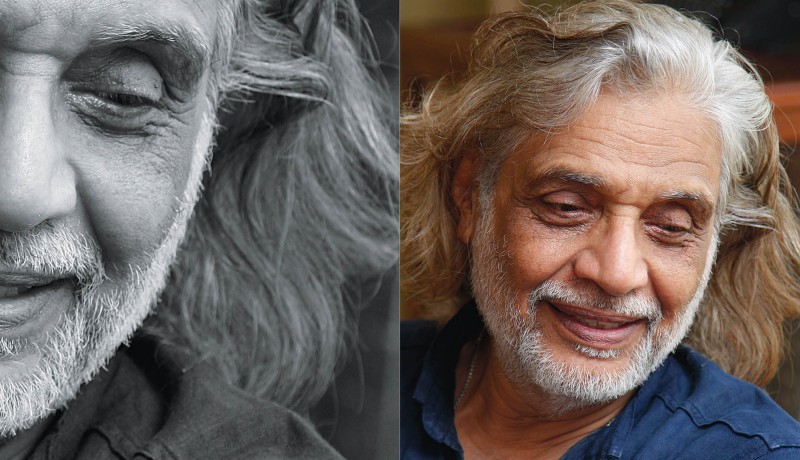
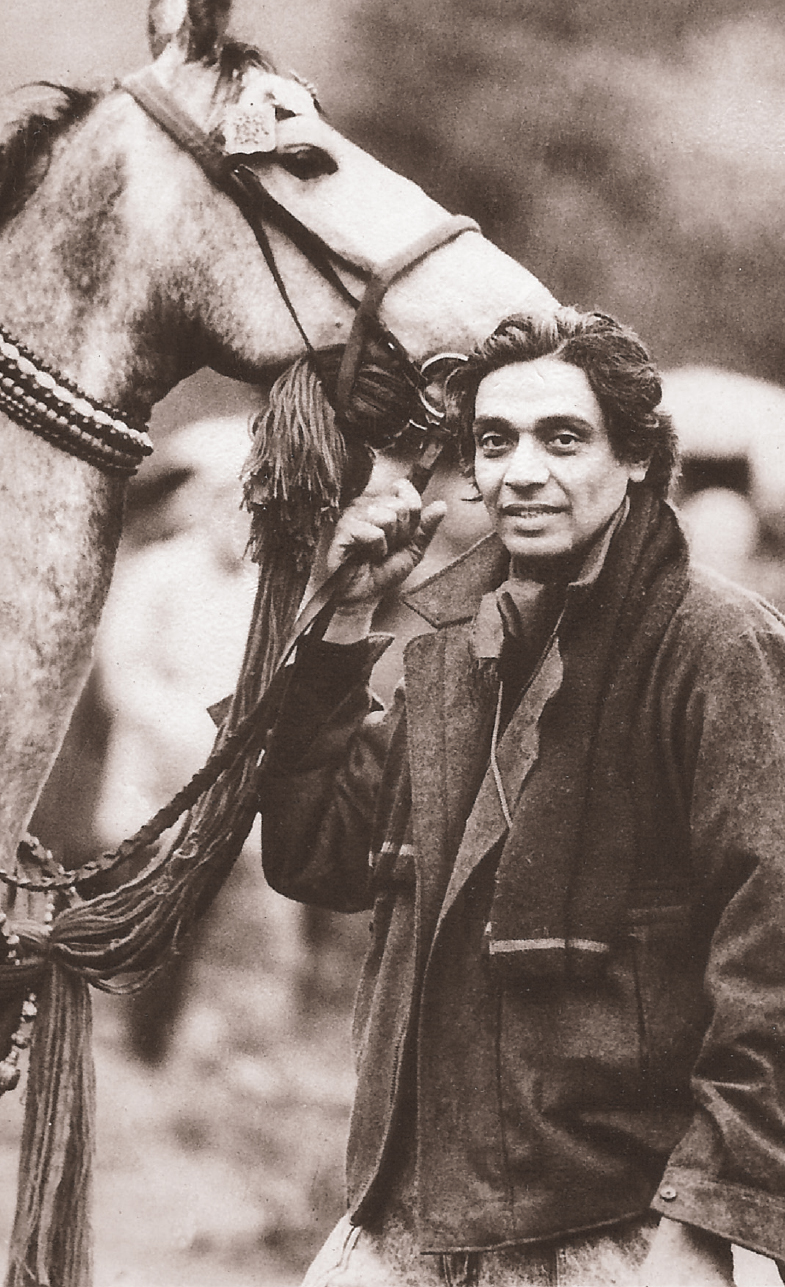
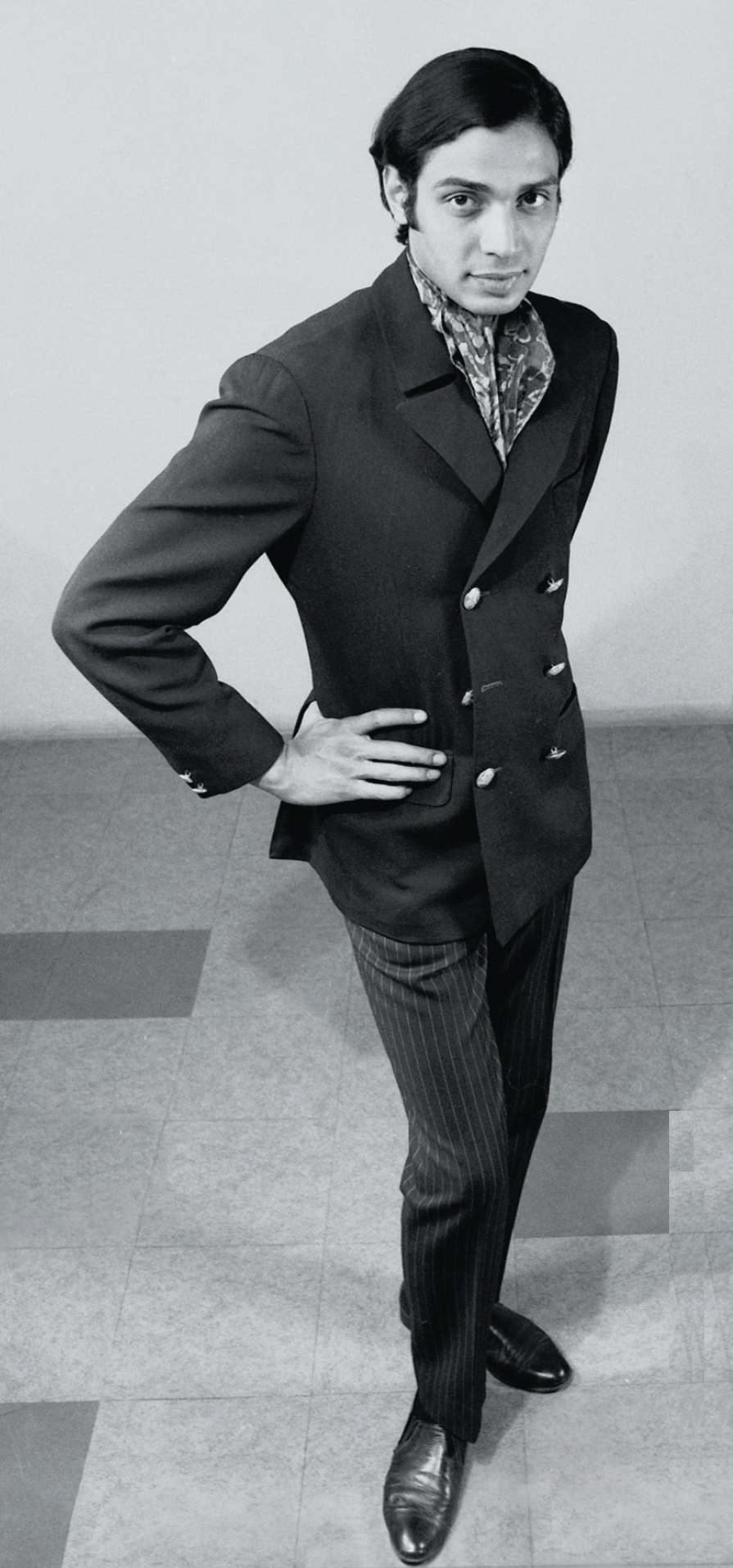
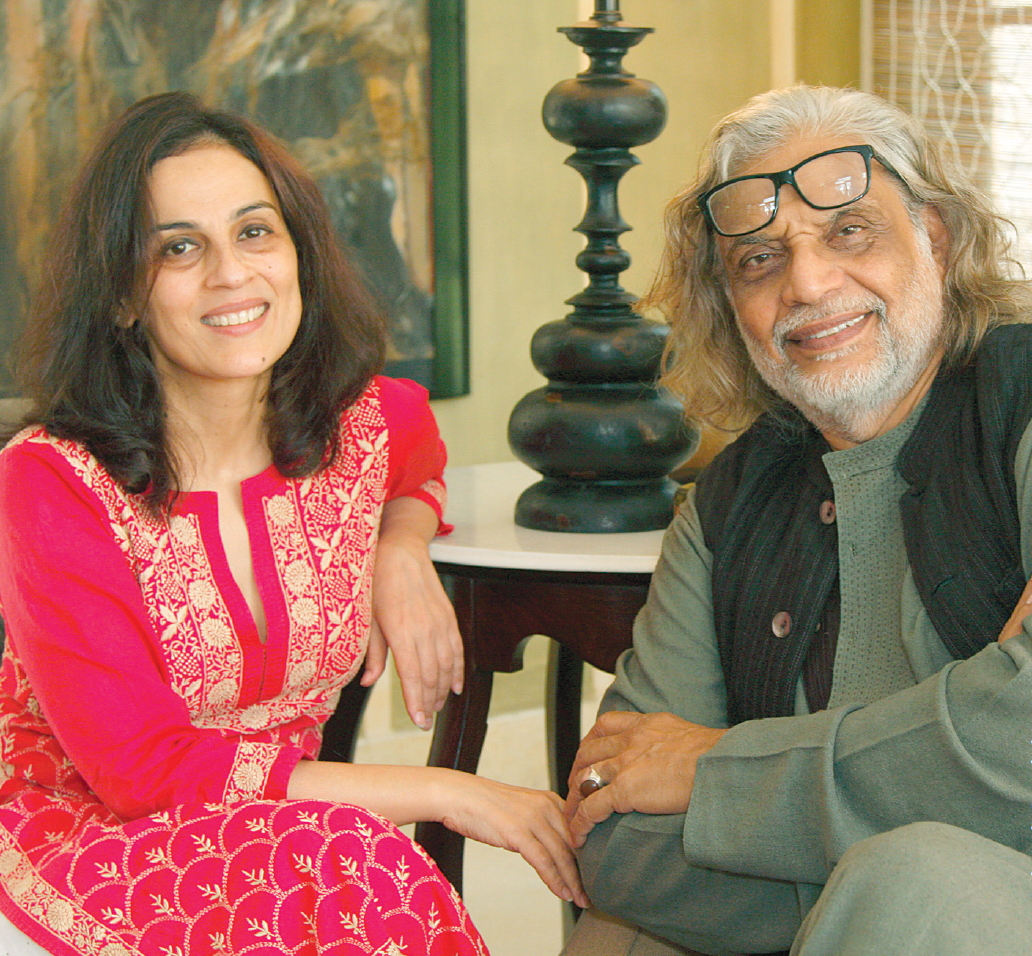
Muzaffar Ali wears many hats—filmmaker, painter, poet, fashion designer, revivalist, Sufi exponent, social worker—with consummate ease. As he prepares to release his latest labour of love, Jaanisaar, he speaks to Ambica Gulati about being in a ‘constant state of inspiration’

Filmmaker. Painter. Sufi exponent. Revivalist. Fashion designer. Music lover. Social worker. Just some of the ways Muzaffar Ali is described. But the man himself is loath to be labelled. For him, life is a singular pursuit: a quest for harmony and love as elucidated by the Sufi philosophy, “surrender of the highest order, which manifests through human compassion”.

Our introduction to Ali takes place at his charming farmhouse in Gurgaon, where Barrack, his horse, runs freely in the grassy expanse while dogs laze contentedly in the morning sun. In another corner, vintage cars are parked in a shed, pregnant with stories of a royal past. Ali is the current Raja of Kotwara, a former princely state 160 km from Lucknow, but there is nothing pretentious about him or his lifestyle. Enter the farmhouse and you notice how mud, mortar and brick blend seamlessly, mirroring the owner’s constant quest for harmony and balance in keeping with the Sufi way of life. Inside the massive door, red pillars catch the eye, and once inside the glass doors, you are introduced to the sophisticated yet mellow world of a man with seemingly infinite creative nuances. Designed by his wife Meera, Ali’s farmhouse is a fusion of styles that perfectly capture the personality of the Raja—his paintings adorn the walls, old books lie open on tables, and a fireplace painted by Ali himself occupies pride of place in the centre of the room.

At the age of 70, white hair flowing across his elegant shoulders, Ali speaks with a quiet passion about his films, establishing the Kotwara clothing brand with Meera, spreading Sufism, creating beautiful minds, reinventing the lives of the people of Kotwara and his umbilical ties to the region. During the conversation, the Padma Shri (2005) recipient also sheds light on his soon-to-be-released film Jaanisaar, and receiving the Rajiv Gandhi National Sadbhavana Award (2014) for promoting peace and harmony.

Muzaffar01MPOsapr2017

EXCERPTS FROM AN INTERVIEW

Who really is Muzzafar Ali?

I am my parent’s child, shaped by my father Syed Sajid Husain Ali’s progressive thinking and groomed by my mother Kaneez Hyder’s cultural feathers. I grew up in an era of turmoil, when India was all for independence. Awadh had a prominent Nawabi culture. My father was the head of Kotwara, but he thought like the common man. He had studied in Scotland where he dressed up like the British, drove a sports car and was influenced by the philosophy of the Communist Party of Great Britain. He believed in an egalitarian society, and focused on health, education and work for all. In 1937, he fought his first elections against the Muslim League as he believed in a secular, democratic India. Humanism and secularism were his principles. My mother followed the purdah system. She was interested in art, culture, music and all the influences you see in Umrao Jaan.

What is common to Muzzafar Ali the filmmaker, social worker, painter, Raja and fashion designer?

An artist in quest for a balance between humanity and beauty.

Were you groomed for the arts at home? And was the pursuit of creativity a deliberate career choice?
I was studying science at Aligarh Muslim University. My father believed in the Nehruvian vision, which was progress through science and technology. He wanted me to be a part of that. After the zamindari system was abolished in 1957, he locked himself up and studied law. During India’s transition, he also transformed. He gave up wearing mill-made clothes and opted for khadi. Suddenly, there was a perceptible shift from a lavish lifestyle to a Spartan one. I guess something similar happened to me in university. I discovered poetry and poets like Faiz Ahmed Faiz and Rahi Masoom Raza, and my education became an art of science or perhaps it was the science of art that got to me. I read the works of Rumi and became passionate about the Sufi way of love and surrender.

Muzaffar02MPOsapr2017

I completed my BSc but went to Kolkata to work in an advertising agency headed by renowned filmmaker Satyajit Ray. His thoughts and style were a strong influence on me. I realised that film was an interesting medium to express your beliefs. But my introduction to the arts was through painting. I loved to sketch and paint since childhood. I even won many prizes in school.

Do you still paint?

I still paint as much as I can create time for it. I like to live with my paintings, in constant dialogue with them. Therefore, I am in a constant state of inspiration. These works are in my own homes, mostly in the Gurgaon home. I have had 10 one-man shows; I would like to show soon if I meet the correct person through whom I should hold an exhibition.

Did you have any doubts when you chose a career different from the one you were being prepared for?

Nothing is impossible and I was brought up in an open-minded atmosphere. I had seen my father take a quantum leap from being a zamindar to giving people a voice and wearing hand-woven clothes. He did not believe in a capitalist society and always said ‘a penny saved is a penny earned’. My salary in Kolkata was ₹ 300 and my hostel fee was ₹ 150 per month. But I managed.

Muzaffar04MPOsapr2017

How did films happen?

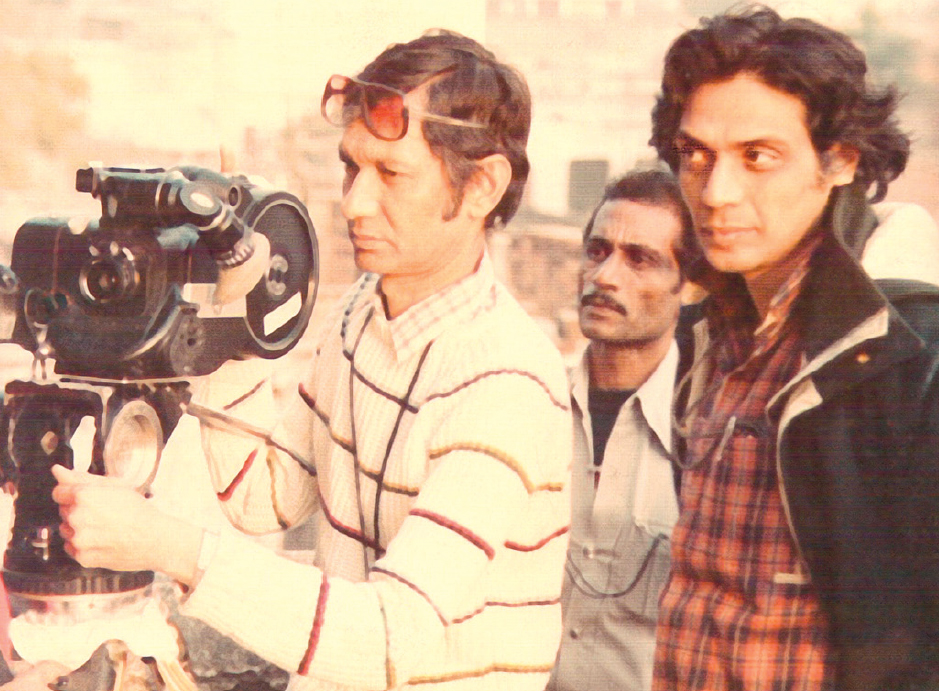
The first film I made was Gaman. Working with Satyajit Ray, I had realised what a camera could do. So my journey was from sketching to moving images. It’s a journey I continue to repeat every time I make a film. Each film, therefore, became a milestone in my understanding and expression of life and has been rooted in the soil of Awadh, Lucknow and Kotwara. They have been shot there, with natives featuring in them.

I had started working with Air India in the communications department in the 1970s. I worked there for 11 years. I lived in Mumbai and I would see people coming from villages to the city. They would lose their identity to earn a living. This was the theme of my film Gaman. Social issues and cultural ethos always influenced me. In 1976, I started Umrao Jaan. The film captured the culture of Awadh and times of Wajid Ali Shah. All the detailing in the movie was what I had seen and learnt at home. All the poetry and love and surrender I was in love with found its way into the songs. In Anjuman, I explored the lives of chikan workers and the exploitation of women.

What about your famed film Zooni, which is yet to see the light of day?

Zooni was based on the folklore surrounding 16th century Kashmiri poetess Habba Khatoon. It was my way of expressing pride in the beautiful state of Kashmir, my way of showing that violence will lead us nowhere. Zooni is a big exploration into the people and culture of the Valley and something that neither I nor the people are ready to undertake because of what has happened since 1989. It is an unfinished dream and if I meet the right people, it may become a reality. The script will need to be revisited to suit the audience of today but the spirit is universal and, therefore, it has to be a global film.

What can we expect in Jaanisaar? Is it a sequel to Umrao Jaan?

This film is centred on the siege of Awadh, the revolt of 1857, and romance between an Anglicised Raja and a courtesan. It stars newcomers Imran Abbas Naqvi and Pernia Qureshi. It is not a sequel to Umrao Jaan but takes off from where Umrao Jaan ends in the same region. This is my fifth feature film. Not counting Zooni, I have done several serials and short films on Sufism.

Umrao Jaan established Rekha as one of the most beautiful women in the country. It also had classical songs such as Dil cheez kya hai…. Will Jaanisaar offer something similar?

The focus is on the culture of Awadh. The rest is up to the audience, to see where it goes.

What will be your next artistic endeavour after Jaanisaar?

Plans after Jaanisaar will become reality only after the film is released and accepted. I think big but take small, measured steps. Every film is a dialogue with my audience.

Muzaffar05MPOsapr2017

The creation of the Kotwara brand—how did that happen?

Ambience is very important for me. Kotwara is a beautiful 14-acre, green land with mango groves. In films, my actors always look beautiful, so I thought why not clothes in real life? Kotwara has been my studio for all my creative shades. It was where I began painting and it is where my work with the revival of chikan began. It also houses a school for children and Jaanisaar is also being shot there.

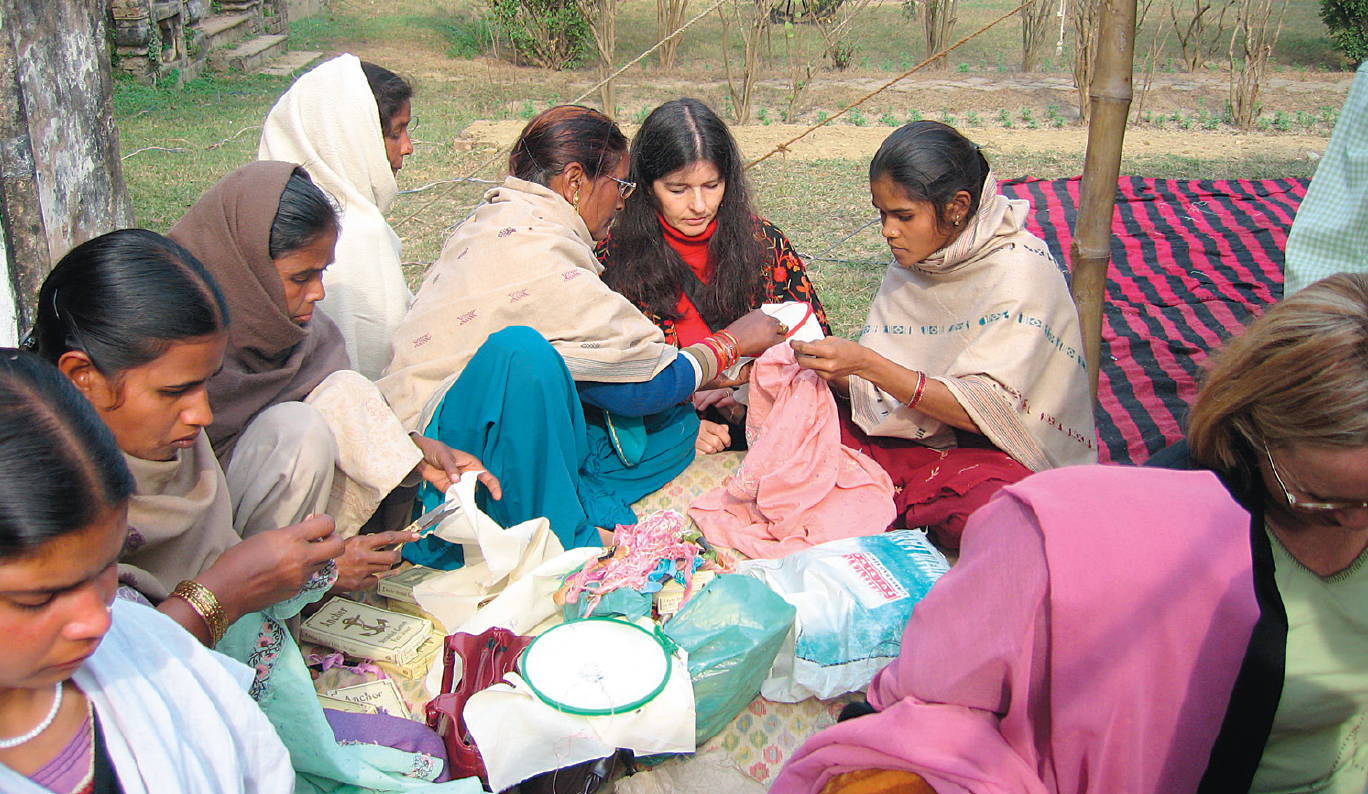
Fashion happened during the making of Zooni in 1988. American fashion designer Mary McFadden visited us back then and after seeing Kotwara, she said it could be a haven for crafts. Fashion was still evolving in those days and even known names like Suneet Verma worked with Mary. In 1991, my father passed away and I was wondering what to do next with his huge legacy. Meera supported me and helped turn Kotwara into an asset. Sugarcane farming was the mainstay of the region but there was never enough. We decided to revive the crafts and got a few people from Lucknow to train a few willing workers. We looked at how to make new motifs suited to the changing world and new works with zardozi. And ‘Dwar Pe Rozi’ [a charitable society] was born. Now, there are 300-400 people working on this in different pockets. Then, we built a small school for children; there are 300 children studying there.

How did the brand hit the limelight?

We started participating in fashion weeks in 2000, and the rest is history.

What do you feel is the biggest contribution to your hometown through the Kotwara brand?

Kotwara is a concept, an idea. Inspired by my first film Gaman, it aims to provide employment at one’s doorstep under the Dwar Pe Rozi vision. In Kotwara, I have tried to pour in my creative skills with human resources from the village to create craft and couture in which my films could add value. I think it is a very slow process and is succeeding because of the thought and style that is going into it, from both Meera and I.

How did Jahan-e-Khusrau, the annual Sufi festival you have been organising at Humayun’s tomb in Delhi, happen?

The Sufi way of love and surrender has always been my approach to peace and harmony. The soul’s call is to create a union. The music albums I have brought out are centred on this Sufi spirit. Paigham-e-Mohabbat had lyrics by some of the most distinguished poets such as Rahi Masoom Raza, Ali Sardar Jaffery, Faiz Ahmad Faiz, Ahmad Faraz, Qazi Nazrul Islam and Jan Nisar Akhtar. Other albums are Jahan-e-Khusrau, a tribute to Hazrat Amir Khusrau, while Raqs-e-Bismil (Dance of the Wounded) is a collection of ghazal inspired by Rumi. I received the support of then Delhi chief minister Sheila Dixit for the festival. Delhi is the land of Sufi saints and has the dargah of 36 saints. This festival was a natural way of felicitating the Sufi spirit of union. We started in 2000. Given the chance, I would also like to organise a Wajid Ali Shah festival in Lucknow. In 2005, I also started the Rumi Foundation and published two motivational journals and poetry.

Are you also translating Sufi works? And how can Sufi music bring peace to the subcontinent?

For me, Sufi poetry is the final stage of love and surrender. Every time I use it in an album or in Jahan-e-Khusrau, I try to translate it. Although I am not very good at translation, I don’t want listeners to miss out on the meaning. Raqs-e-Bismil with Abida Parveen, selected, composed and translated by me, is one such effort.

Life’s journey has brought you to the Rajiv Gandhi National Sadbhavana Award. How does this make you feel?

I sometimes wonder if I even belong there. I have been graced along with a galaxy of people such as famous scientist Yashpal and Mother Teresa. The award is a significant recognition in our country. In a nation of such vast ethnic diversity, taking the route of religion to unite people can lead to unprecedented intolerance. We need to celebrate those who have upheld these human values. The award leaves you with the responsibility of living up to these ideals.

Have you ever felt that you may not be able to live up to the expectations of the people around you?

I feel I could do more for the school. But I focus on creating more beautiful minds and let the doubts out.

Muzaffar03MPOsapr2017

How did you meet Meera? Does the age difference ever make you feel insecure?

I met Meera in Delhi when I was uprooted from Kashmir with an incomplete film. I found her an extremely powerful anchor in my life. I was making an hour-long film on the life of Hazrat Khwaja Moinuddin Chishti of Ajmer, called Seena Ba Seena (From the Heart to the Heart). I gave her a small role and we married soon after that. That was 25 years ago. Age did not matter then, nor does it now. She is honest and dedicated. She thinks out of the box, is a talented architect, and open and receptive to new things and ideas.

Are your children also involved in creative pursuits?

My eldest son Murad [from his first marriage] is based in Delhi and is an actor; Shaad [from his second marriage] lives in Mumbai and is directing films; and my daughter Sana [with Meera] has started helping us with the clothing brand. But now I look at the whole world as a child. I do not think about my biological children only, but in a broader scope of creating happier worlds.

What is a typical day like for you?

Walk with my dogs. Playing with my horse. Work on my thoughts. Sharpen my aesthetics through poetry and music. Sketch and paint.

Has age made any difference to your life and work? Has it mellowed you or contributed to your growth?
By His grace, I have learnt to become sharper with age, and I believe this is the time to enlighten the youth with dreams to improve the world in which we live. Create open and questioning minds.

What is your future vision?

To create beautiful, open minds. I find pleasure in seeing the children in school. They are going to be the new harvest. In turn, they will create a happier world for others. I will keep sharing whatever I can, in my own way.

Photos: Avinash Pasricha
Featured in Harmony — Celebrate Age Magazine
January 2015

source: http://www.harmonyindia.org / Harmony India.org / Harmony – Celebrate Age Magazine / January 2015