Category Archives: Community Involvement / Social Issues

Hygiene Comes First on This Butcher’s Block

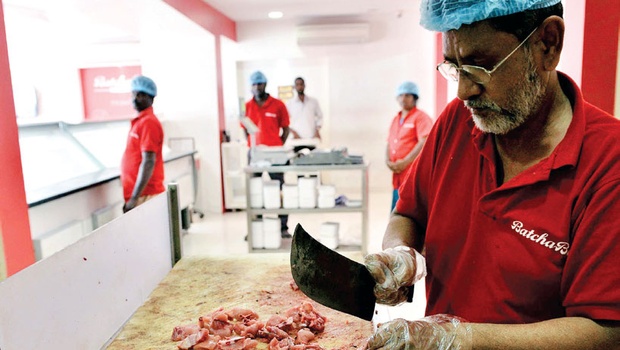
BatchaBai’s meat shop in T Nagar | P Jawahar

Sparkling white tiles, gleaming metal counters, spotlessly clean knives and the soft humming of refrigerators… This could be the sight that greets you when you walk into a run-of-the-mill meat shop on the streets of Chennai. Not in a few years or even a few months, but right now.

The Meat Sciences Department of the Tamil Nadu Veterinary and Animal Sciences University (TANUVAS), has been providing meat retailers free designs and consulting services to convert their shops into places where hygiene is the priority – and they have been doing it for the past five years.

“We have been giving out designs and consultation to any entrepreneur who wishes to start up or modernise his business,” says Robinson Abraham, Head of theMeat Services Department. “All they have to do is approach us.” Consulting at a private firm would be prohibitively expensive to the small businesses that most meat shops were, he pointed out.

But when asked about what these five years of free consulting has engendered, he points to just one operating shop in Chennai. The BatchaBai meat shop in Kilpauk stands as a silent testimony to what a few well-thought out improvements in slaughter house design can do.

There are counters made of stainless steel, teflon cutting boards, rounded edges to prevent wiping hands on tables and white tiles to make any spattered blood visible. Compared to the ill-lit, ill-washed rooms that most meat shops offer, the sight is almost unreal in its cleanliness. “These are very small but necessary design elements,” points out R Narendrababu, one of the three professors in the department. “They improve the hygiene of the shop tremendously.”

The reason why hygiene comes in a sad second in the owners’ list of priorities, he adds, is because consumers themselves have been desensitised to the dangers of bad hygiene. “Unless people refuse to buy meat from shops that don’t adhere to basic hygiene norms, retailers will never feel the need to implement these practices,” he says.

source: http://www.newindianexpress.com / The New Indian Express / Home> Cities> Chennai / by Jonahan Ananda – Chennai / January 29th, 2014

3-Day Flower show at Balyatri Estate near Madikeri from tomorrow

BalaytreEstateMPos31jan2014

Madikeri :

 An eye-catching flower show has been organised from Jan. 26 to Jan. 28 from 10 am to 5 pm at the Yousuf Ali Khan memorial flower garden at the premises of Balyatri Coffee Estate near Boikeri on Madikeri-Suntikoppa Road in Kodagu.

The estate belongs to former Rajya Sabha member F.M. Khan. Briefing the press on the annual flower show, Khan said that “over 90 varieties of flowers and fruits have been grown in the garden which is the only private flower garden in the country. The garden took shape about 50 years ago and for the last 15 years the flower show is being organised annually for the public. The garden houses Philia, Lorsper, Khel, kelen chus, cactus, dahlia, daisy, roses, pinks, kupia and other exotic varieties including bonsais.

He said that horticulture was bifurcated from agriculture when Indira Gandhi was the Prime Minister to boost the growth of horticulture which has not happened to the desired level yet. Continuing, he opined that Congress needed young leaders like Rahul Gandhi and Priyanka.

However he felt that Rahul should address more public rallies instead of closed-door meetings to reach the masses.

source:http://www.starofmysore.com / Star of Mysore / Home> General News / January 25th, 2014

Writer Kamala Surayiya receives Ezhuthachan prize

Thiruvananthapuram :

Celebrated writer Kamala Surayiya, whose selection to Kerala’s highest literary award came under fire from pro-Sangh cultural outfits, on Wednesday said it was time to stop “hurling stones” at her.

“I am grateful to my critics, for they make me realise my shortcomings. But is it not time to stop hurling stones at me?” asked Surayiya.

The well-known writer was apparrently referring to the outcry by the pro-Sangh cultural outfits for her selection for the Ezhuthachan Puraskaram, in her acceptance speech here.

Surayiya received the Ezhuthachan Puraskaram, carrying Rs 1 Lakh, from Kerala Chief Minister A K Antony at a functuion at the Durbar Hall in the government secretariat.

The pro-Sangh cultural forum Thapasya had criticised the choice of Surayiya for the prize instituted after Ezhuthachan, revered as the ‘father of Malayalam literature’, holding that Surayiya represented a value system different from the one for which Ezhuthachan stood.

Her critics, however, had said their opposition was not for her convertion to Islam.

“Abuses are not new to me. They are quite common in Kerala. Once I was considered for the Nobel prize. A poet from Kerala dashed off a letter to the Nobel authorities with 150 signatures appended to it. They held that considering me for the honour was like kicking the Nobel,” she said.

“I do read criticism. But I don’t dare open letters mailed to me these days. Most of them have abusive contents.

“What wrong did I do. Maybe I embraced a minority religion. For me religion is just a means to realise God. I stand for unity of all religions,” Surayiya said.

source: http://www.articles.timesofindia.indiatimes.com / The Times of India / Home> City> Thiruvananthapuram> Kerala / PTI / January 01st, 2003

Kalam inaugurates centenary celebrations of Pamban bridge

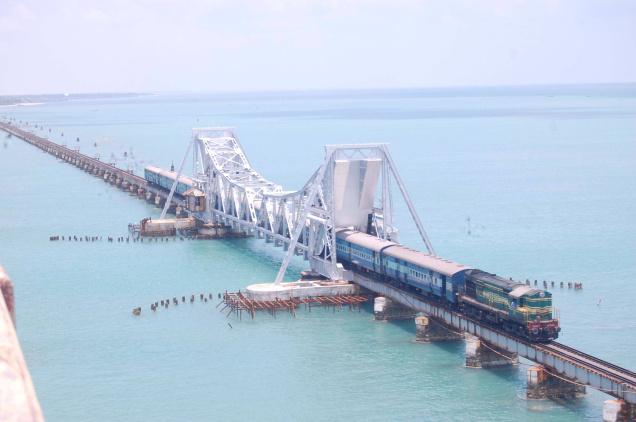
ENGINEERING MARVEL: The special train carrying former President A.P.J. Abdul Kalam at Pamban railway bridge./  Photo: L. Balachander / The Hindu
ENGINEERING MARVEL: The special train carrying former President A.P.J. Abdul Kalam at Pamban railway bridge./ Photo: L. Balachander / The Hindu

India’s first cantilever bridge connects Rameswaram with mainland

A long-time resident of Rameswaram and former President A.P.J. Abdul Kalam inaugurated the centenary celebrations of the Pamban railway bridge — India’s first cantilever bridge, connecting the pilgrim-island of Rameswaram with the mainland. He turned nostalgic as a two-coach special train took him from Mandapam across the bridge. “Pamban bridge is part of my life,” Mr. Kalam said. As a young boy, he had travelled hundreds of times on the bridge to take newspapers to the island for distribution.

Mr. Kalam unveiled a plaque and released a book Marvels of South Indian Railway, marking the inauguration of the nearly month-long celebrations.

Southern Railway General Manager Rakesh Misra said the bridge was an engineering marvel that had withstood corrosion and a violent sea for over a century. The 65.23-metre-long rolling central lift span (the bridge is 2.06 km long), named after Scherzer, German engineer who designed and built the span, has been given a fresh coat of paint and decorated with lights. It opens up like a pair of scissors to allow vessels to pass through under the bridge.

Mr. Kalam had played a vital role in preserving the bridge. After the Railways announced its uni-gauge policy in 2006, and almost gave up gauge conversion at the bridge, he brought in IIT-Madras expertise to thrash out an engineering solution.

The bridge was put to test for the first time in December 1964, when a severe cyclonic storm hit this part of the area. All girders, both RCC and steel, were washed away. Two of the 141 piers were also damaged. But, Scherzer’s span withstood nature’s fury.

source: http://www.thehindu.com / The Hindu / Home> National / by Walter Scott / Pamban – January 29th, 2014

Delayed passport kills ragpicker’s Brazil dream

Bangalore :

If things had gone according to the script, ragpicker Mohammed Khan, 47, would have been in Brazil on Wednesday to participate in an international conference on waste management.

But red-tapism and inefficient babus servants ensured that Khan can’t pick up some finer aspects his trade there because he couldn’t get his passport in time.

Khan, a resident of Tippu Nagar in Benhalli near Kogilu Cross, off Bellary Road and 30 km from the city centre, applied for a Tatkal passport on November 2. He should have got it by mid-November but there’s no sign of it yet despite three IAS officers giving their reference letters to endorse Khan’s application.

The only ragpicker from South India chosen for the conference, Khan said: “When I was chosen, my family and friends were thrilled. I never imagined I’d get to fly. Khuda ka marzi (God’s will), I thought. But because I couldn’t get a passport, I couldn’t travel abroad.”

Khan applied for a voter’s ID card in 2009. “Though I wrote 1965 was my year of birth, clerks erroneously entered it as 1966 in my card. I gave an application for rectification. But the corrected card never came,” he narrated.

That mistake was perpetuated in his Aadhaar card. When Khan went to apply for a passport, he was asked to get his transfer certificate from the school where his year of birth was mentioned as 1965. The mismatch was enough for authorities to raise queries.

Another hurdle came up in the handwritten date and reference number in the verification letter given by Salma K Fahim, IAS, additional commissioner, BBMP.

“The letter had its reference number and date mentioned in handwriting and was rejected by passport officials. The letter was reissued as per the directions of the passport authorities. But when the authorities sent a fax to BBMP to verify its contents, there was no response from the civic body as the fax machine in its office was not working,” explained Nalini Shekar from the NGO Hasiru Dala which is working with pourakarmikas.

“We have been told that police verification is going on,” said Krupa Rani, project co ordinator with Hasiru Dala, the NGO that chose him. But an acknowledgement by the regional passport office only says, “Police verification shall be carried out post issuance of passport.”

Recycling waste on bicycle

“I am the only educated person in my family. I could not pass SSLC as I had no textbooks. After that I followed in my father’s footsteps and took to ragpicking,” Mohammed Khan said.

Khan is out at 9 every morning looking for waste on the streets. “These days public don’t give away iron scrap. I earn not more than Rs 50-Rs 100 daily. It’s much lesser than what I used to earn a couple of years ago. I also work at the dry waste collection centre at Allalasandra. Five wastepickers have started it by depositing Rs 500 each in a bank,” said Khan.

Khan pedals for about 40 kms every day, looking for valuable and recyclable waste by the roadside.

According to Nalini Shekar of Hasiru Dala NGO, Khan was chosen for the Brazil trip because of his fluent Hindi, communicating skills and experience and knowledge on pattern of urban waste. “We won’t give up for his passport. Maybe he’ll get another opportunity to fly abroad for professional reasons,” she said.

He will get passport soon: Official

KJ Srinivas, regional passport officer, sought for details of Khan’s case and spoke to officials concerned immediately.

“We had treated this as a special case and had even given him an out -of-turn appointment. But because we didn’t get a confirmation from IAS officer Salma K Fahim on her reference letter, his application was considered treated as a regular one and sent for police verification. But we’ve contacted the officer on phone. Khan will be issued a passport at the earliest and the police verification will be done after that,” Srinivas said.

“I was contacted by passport authorities once again on Tuesday evening and I’ve given my confirmation. But it’s sad that Khan missed the chance to take part in an international conference,” said Salma.

source: http://www.articles.timesofindia.indiatimes.com / The Times of India / Home> City> Bangalore / by Sunitha Rao R, TNN / November 28th, 2012

Ali: Nizams built city, not Naidu

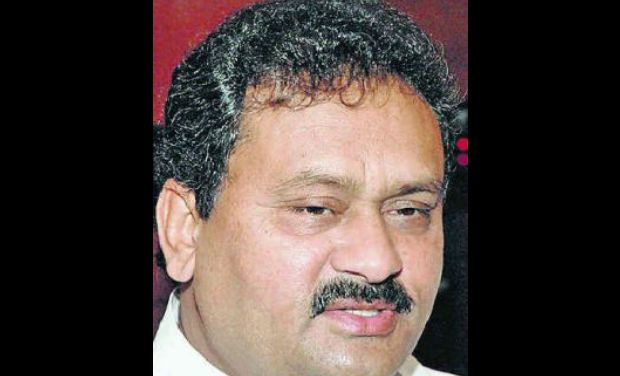
Mohd Ali ShabbirMPos25jan2014

Hyderabad: 

The Nizams’ rule found place in the record books of both the Legislative Assembly and Council on Friday.

Congress MLC Mohd Ali Shabbir actually submitted a detailed note to Council chairman A. Chakrapani, stating that the Nizams, especially Nizam VII, had developed Hyderabad city and not Telugu Desam president N. Chandrababu Naidu.

Shabbir listed over 100 buildings, monuments, infrastructure projects, government departments, hospitals and others, including the present Assembly building, Jubilee Hall, Hussainsagar Lake, Railway network, Road Transport Corporation, Begumpet Airport, Osmania University, Osmania General Hospital etc. that had been constructed by the Nizams or during their reign.

“Pre-1956 Hyderabad was the largest and most prosperous of all princely states in India. It had its own army, airline, telecommunication system, railway network, postal system, currency and radio broadcasting,” he explained in the note which was part of the debate on the AP Reorganisation Bill.

“Hyderabad, the first planned city of India, was already a developed city centuries before it became part of Andhra Pradesh. The world’s first drinking water reservoir, Hussainsagar, was built in 1562,” he said.

Several MLAs and MLCs like Akbaruddin Owaisi, Mohd Shabbir Ali, Etela Rajender and others gave credit to the Nizams for the development of Hyderabad, while some Seemandhra MLAs like D. Narendra and others criticised their rule, which they said, had led to the Telangana armed rebellion and the notorious Razakaar movement.

“I wanted to put the record straight. The Nizams developed Hyderabad city and others contributed later. The claim of Leader of Opposition in Assembly, Nara Chandrababu Naidu, is ridiculous that he got Hyderabad on the global map. The fact is, Naidu went on the global map and got recognition by reciting the name of Hyderabad repeatedly,” Shabbir Ali said in the note to the Legislative Council Chairman.

He challenged Seemandhra leaders for an open debate on Hyderabad. “In fact, Naidu tried to damage the culture and identity of Hyderabad. The historic Hussain Sagar Lake was shrunk during Naidu’s period and he tried to change the name of the city from Hyderabad to Cyberabad. Even NTR’s samadhi is built on encroached land which was originally Hussain Sagar,” he alleged.

source: http://www.deccanchronicle.com / Deccan Chronicle / Home> News> Politics / DC / January 25th, 2014

Lt Governor Najeeb Jung played ‘key role’ in defusing AAP, Centre stalemate: Source

Representational Picture

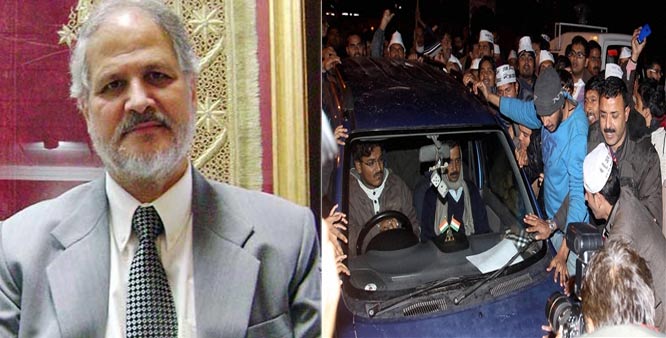
“The Lt Governor played a key role in defusing the situation,” said a government source. Jung made discreet inquiries at his end and reportedly found some damaging information against the police officials whom the Delhi government wanted penalized, the source added.

As to the withdrawing of the dharna, the source said that Jung had sought a commitment from Kejriwal that he would agree with the formula devised by him “to end the stalemate”.

Kejriwal’s two-day dharna outside Rail Bhavan in Delhi was on Tuesday withdrawn after the Lt Governor “partially agreed” to the government’s demand of action against five Delhi Police officers for alleged dereliction of duty.

As the proposal reached the government, Chief Minister Arvind Kejriwal and the members of AAP’s Political Affairs Committee (PAC) held an hour-long closed door meeting at Press Club following which the CM announced his decision to call off the dharna.

Kejriwal, his cabinet and party colleagues and AAP supporters had gone on a dharna over their demand for the suspension of three SHOs and two ACPs in connection with three separate cases.

One of those involved the gang-rape of the Danish woman in the national capital while the second case deals with the alleged burning of a woman by her in-laws over dowry.

The third matter is related to an alleged prostitution and drug ring in Malviya Nagar and Khirki Extension and the refusal of police there to undertake a raid against those reportedly involved in the racket when Delhi Law Minister Somnath Bharti had sought their intervention for the same.

Under the compromise agreed by AAP, the SHO of Malviya Nagar and the PCR van in-charge at Paharganj, where the Danish woman was gangraped last week, have been sent on leave. Earlier in the day, with Kejriwal leading the dharna outside Rail Bhavan, senior AAP leader Yogendra Yadav met Jung over lunch to discuss the scope for ending the stalemate.

The Delhi Lt Governor is learnt to have made an appeal for the chief minister to agree with his proposal for a compromise between Delhi government and the Centre.

(Agencies)

source: http://www.post.jagran.com / Home> India News> General News / by Agencies / January 22nd, 2014

Karnataka tableau will be Tipu Sultan and his sword

​Karnataka hopes to maintain its winning streak at the Republic Day parade

TipuMPos22jan2014

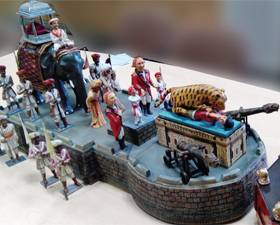
The Congress government in Karnataka will roll out the tableau of ‘Tipu Sultan—the first ruler of India to see the evil designs of the East India Company’ at the Republic Day parade.

Karnataka has been winning accolades every year during Republic Day parade. Sources in the Information Department told Bangalore Mirror that this year, it was unanimously decided to have Tipu’s battle against East India Company as the theme of the tableau. While one part reflects his valour with a life-size bust and an unsheathed sword, another part story depicts his humiliating defeat at the hands of Lord Cornwallis who took away Tipu’s two sons as captives in the Second Mysore War (1780-84).

“Tipu was one of the first rulers who saw the evil designs of the East India Company. He repeatedly said that he would rather live two days as a tiger than live 200-years like sheep. Tipu’s personality also has qualities of a good diplomat, visionary and a planner. He had a vision for missile technology and the first-ever rocket centre was set up in Srirangapatna. He had embassies with France, Amirs of Afghanistan and Sultan of Turkey and established trade contacts,” explained a source from the Information Department.

The scene that the government has recreated in the form of tableau was adopted from the painting of Brown who has pictured a lame Vakeel escorting two sons of Tipu. The children, dressed in muslin cloth with blue slashes and white turban, look towards Lord Cornwallis, reflecting a poignant moment in the history of India. The tableau also depicts Tipu’s famous sword measuring 91 cms with an impressive and ornate hilt carrying an Arabic inscription which reads ‘Sword of the Ruler’.

The state won President’s awards for its tableaux in the past four years.

source: http://www.bangaloremirror.com / Bangalore Mirror / Home> Bangalore> Others / by Niranjan Kaggere, Bangalore Mirror Bureau / January 22nd, 2014

A Digital Village

Shahid Ahmad (38) Project Director, Chanderiyaan

When you ask a software engineer like Shahid Ahmad about Jacquard weaving, the answer would stump many a fashion designer. “It is actually the world’s oldest binary system,” says Ahmad of Digital Empowerment Foundation (DEF). He has even devised a Jacquard card punching machine that eliminates two weeks of manually punching a card with the binary sequence to an hour’s work. And the weavers of Chanderi village in Madhya Pradesh are rejoicing.

Ahmad’s tryst with the age-old traditional weaving business of Chanderi began when it was gasping on its last breath. It started off with a 2008 basic survey of Chanderi village on the instigation of Jyotiraditya Scindia when Ahmad had gone to invite him for a DEF function.

The survey threw up distressing facts: weavers were being treated as labourers and earned a pittance; a few businessmen controlled the market; there wasn’t much demand for the products in the market and the youngsters were migrating to cities. Ahmad decided to give the ancient craft and its craftsmen a shot of digital empowerment. Thus was born Chanderiyan, a programme that has transformed the ancient weaving village of Chanderi.

Ahmad eased the bottleneck in the designing process (which was done manually by a couple of designers on graph paper). “I wanted to speed up designing and other aspects of the business while retaining the traditional looms,” he recalls. He also wanted to increase the earning capacity of the weavers, which was then at Rs 2000 a month.

He customised the CAD CAM software and trained 20 weavers in using the software. Of these, three to four weavers were selected to train a further 100 weavers. Simultaneously, a design library was created with 10,000 traditional designs, some retrieved from old saris.

Digitisation gave the weavers a chance to create designs and replicate the same in the loom quickly. It also allowed them to visualise new colours and create contemporary variations without having to waste precious man hours. The demand for Chanderi saris increased as the market saw newer designs and faster supply. Today, the weavers earn at least Rs 10,000 per month. The business turnover, according to an IIM Calcutta survey is anywhere between Rs 65 crore to 100 crore.

Ahmad has now taken his big idea a step further: he has devised an e-portal (Chanderiyaan.net) wherein weavers can sell their products directly to the customers globally. He also trained the weavers in aspects like taking photographs of their products, sending couriers etc. He also put up Wi-fi in a five kilometer radius. “From raw materials pricings to what exhibitions are on, the youngsters can now take their own decisions,” says Ahmad.

His dream is to make the weavers the future businessmen of Chanderi. Ahmad admits to now being more of a textile engineer than a software engineer; he even trains NID students from Bhopal on the technique of Jacquard weaving. He might not be familiar with colours, warps and weaves, but he sure knows his binary system.

source: http://www.bangaloremirror.com / Bangalore Mirror / Home> Work / by Jayanthi Madhukar, Bangalore Mirror Bureau / January 21st, 2014

Mangalore: Shahida Aslam elected president of National Women’s Front

Mangalore :

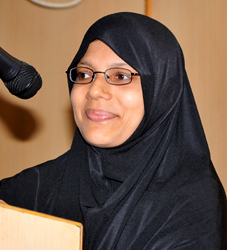
Mangalore-based woman activist Shahida Aslam has been unanimously elected the new president of National Women’s Front. She was the Karnataka state unit president of the organisation.

The announcement was made at the third national general council of the organization that was held on Sunday at Malabar House, Puttanathani in Kerala.

ShahidaAslamMPos21jan2014

Aslam, who holds a master degree in mass communication and journalism, is a freelance journalist from Mangalore. She was part of the editorial board of Prastutha, a Mangalore-based Kannada fortnightly. She also had worked for a women’s monthly magazine.She was also an office-bearer of Karnataka women’s writers forum. She presented a paper titled ‘Muslim women in public space’ at an international conference organised at Calicut by institute of objective studies, Delhi. She had also worked as a member of several fact finding teams for human rights organisation and women’s rights organisation.

Alima Fathima from Tamil Nadu and Fareeda Hasan from Kerala have been chosen as the vice president and general secretary of the NWF respectively.

The council started with the introduction by the national president Shahida Tasnim. She said, “The last two years of the organization were the years of growth. We were successful in reaching new places and setting state committees in Goa and Andhra Pradesh. The organization also received good response from women activists from Delhi which has encouraged us to take our movement to the northern part of India in the coming term.”

The leadership oath to the president was given by the returning officer. The newly elected president administered the oath to the newly elected office bearers and national committee member. The programme concluded with the valedictory speech of the newly elected president Aslam, who motivated the members to put in more efforts for the protection of rights and social justice.

The general elected a 13-member national committee and also the new office bearers. The new leadership is as below:

1. Shahida Aslam Karnataka – President
2. Alima Fathima Tamil Nadu – Vice-president
3. Fareeda Hasan Kerala – General secretary
4. Shifa Coimbatore, Tamil Nadu – Secretary
5. Shahida Tasnim, Karnataka – Treasurer
6. Zainaba Ali, Kerala – National committee member
7. Asiya Maryam, Tamil Nadu – National committee member
8. Nousheera Karnataka – National committee member
9. Atiya Firdos, Delhi – National committee member
10. Shareena Najib, Kerala – National committee member
11. Habeeba Usman, Kerala – National committee member
12. Rehana, Goa – National committee member
13. Safiya Erode, Tamil Nadu – National committee member
The following resolutions were passed by the national general council:

1.  Provide security, justice and rehabilitation to Muzaffarnagar riot victims: The NGC of NWF demanded the immediate rehabilitation and adequate protection of the riot victims of Muzaffarnagar. The government failed to attend the basic needs of the people displaced from their homes and native villages. The NGC strongly believes that rehabilitating the families thrown out of their native villages along with providing security to their lives and properties is the primary task the government has to fulfil. The NGC demands the UP government to take immediate steps to solve the humanitarian crisis and fulfill is promises.

2.  Pass the Communal Violence Bill in the upcoming parliament session : The country has been infected by the deadly virus of communalism since independence. This in turn resulted in various communal riots which has caused an extreme loss to the country and especially to the Muslim community. After every riots the culprits go scot free and no legal action is taken on them. Such negligence by the law authorities has only increases the confidence of the communal fascist forces. The demand for the communal violence bill is a long pending demand which has only seen promises but no actions. The NGC of NWF demands that the government immediately brings into effect a powerful communal violence bill in the upcoming Lok Sabha session and take quick steps for its implementation.

3.  Take immediate steps for protection of women: Since the past few years the issue of rapes has come to the national attention. It is a tragedy that even after so much discussion happening about this issue the government and police has failed miserably to protect the women from such heinous crimes. Every day we see a new incident happening in almost all the cities of country. The cases happening to women from rural and tribal areas not even reported. The NGC of NWF strongly demands the central and state governments to take the issue very seriously and give top priority to the protection of women.

source: http://www.daijiworld.com / DaijiWorld / Home> Top Stories / Press Release / Mangalore – January 20th, 2014