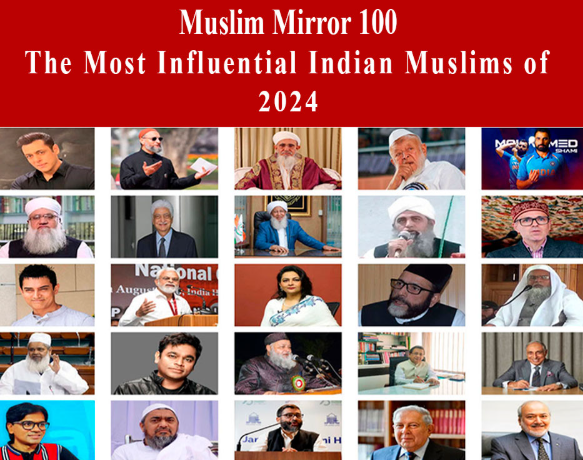
Muslim Mirror, in collaboration with the Minority Media Foundation, has released its highly anticipated list of the“100 Most Influential Indian Muslims of 2024.” This initiative, celebrated as a benchmark of excellence, acknowledges the remarkable contributions of Indian Muslims across various fields, showcasing their leadership and societal impact on a national scale.
A Mission to Shift Narratives
The project aims to counter the negative portrayal of Muslims often propagated by corporate-funded media serving political agendas. By curating this list, Muslim Mirror presents a positive narrative, celebrating the vibrant and diverse contributions of Indian Muslims to the nation’s development and society.
Comprehensive and Inclusive Representation
The selection process emphasizes inclusivity and diversity, representing achievers from Kashmir to Kanyakumari and Assam to Gujarat. The list spans a wide array of sectors, including politics, religion, activism, literature, entrepreneurship, academia, sports, and entertainment.
In an effort to reflect the broad spectrum of the Muslim community, individuals from all sects—Barelvis, Deobandis, Ahle Hadith, Shias, Bohras, and others—have been recognized. The selection underscores the community’s rich cultural and social diversity.
Spotlighting Leadership and Impact
The list features leaders from prominent Muslim organizations and unsung heroes who have made unparalleled contributions in their respective domains. Special attention was given to young achievers, whose recognition aims to inspire future generations of leaders.
Notably, the initiative also includes individuals facing legal challenges and imprisonment, underscoring the principle that they are accused, not convicted. This approach highlights their contributions despite the adversities they face, reaffirming the importance of justice and fairness.
A Rigorous and Ethical Selection Process
Selecting 100 individuals from a community of over 200 million posed significant challenges. Extensive consultations with grassroots representatives across India informed the process. A team of experts finalized the list, which is presented in alphabetical order due to the absence of a ranking mechanism.
While the team strived for accuracy and fairness, they acknowledged the possibility of unintentional exclusions. Readers and stakeholders are encouraged to provide suggestions for deserving individuals to be included in the 2025 list. To maintain ethical standards, members of the Muslim Mirror team and the Minority Media Foundation were not considered for the list.
The Muslim Mirror 100 serves as a testament to the exceptional contributions of Indian Muslims in shaping the nation. By shining a light on their achievements, the initiative not only celebrates their successes but also fosters a sense of pride and inspiration within the community.
As the list continues to evolve, it stands as a powerful reminder of the resilience, talent, and leadership within the Indian Muslim community, setting the stage for even greater accomplishments in the years to come.
source: http://www.muslimmirror.com / Muslim Mirror / Home> Big Story> Indian Muslim> Positive Story / by Muslim Mirror / January 03rd, 2025
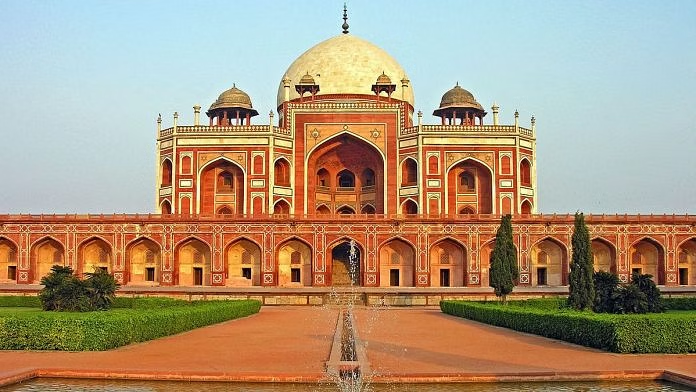
Humayun’s Tomb introduced India to the Persian style of a domed mausoleum set in the centre of a landscaped char-bagh garden.
Humayun’s Tomb, Delhi | Photo: Commons
Humayun’s first wife was a Persian from Khorasan and a daughter of Humayun’s maternal uncle. She was also called Haji Begum, probably because she had gone on the Haj to Mecca. During Humayun’s reign, she appears in history at the Battle of Chausa, where the harem was captured by Sher Khan. In all the chaos of battle, a boat carrying women capsized and her young daughter, Aqiqa Begum, was drowned. Bega Begum did not have any more children. Today she is remembered for the tomb of Humayun that she built in Delhi. After the death of her husband, when she decided to build the mausoleum, she was encouraged in her endeavour by her stepson Akbar, who was very fond of her.
Among all Humayun’s wives, Bega Begum lived a life of surprising independence. She went off to the Haj and came back with Arab craftsmen who worked at the tomb. This was much before Gulbadan Begum and Hamida Banu Begum went to Mecca during the reign of Akbar, their trip getting much more coverage in contemporary writing. Bega Begum did not join the harem in Agra but remained in Delhi, supervising the building work. An episode described by Gulbadan shows that she was a spirited woman who even spoke sharply to her husband when he did not visit her.
Among all Humayun’s wives, Bega Begum lived a life of surprising independence. She went off to the Haj and came back with Arab craftsmen who worked at the tomb. This was much before Gulbadan Begum and Hamida Banu Begum went to Mecca during the reign of Akbar, their trip getting much more coverage in contemporary writing. Bega Begum did not join the harem in Agra but remained in Delhi, supervising the building work. An episode described by Gulbadan shows that she was a spirited woman who even spoke sharply to her husband when he did not visit her.
Then Humayun replied, ‘It is a necessity laid on me to make them happy. Nevertheless, I am ashamed before them because I see them so rarely… I am an opium-eater. If there should be any delay in my comings and goings, do not be angry with me.’ However, Bega Begum was not reassured and said, ‘Your Majesty has carried matters to this point! What remedy have we? You are emperor. The excuse looked worse than the fault.’ Gulbadan ends her tale saying, ‘He made it up with her also.’
The contemporary historian Badauni writes that Akbar and Bega Begum were very close and he describes her as a ‘second mother to Akbar’. Once when the boy Akbar had a toothache, Bega Begum brought some medicine but Hamida was reluctant to give it to him. This was understandable since, in a harem that was often full of politics and jealousy, the mothers feared that their children could be poisoned. Abul Fazl quotes Akbar as saying, ‘As she knew what the state of feeling was, she [Bega Begum] in her love to me swallowed some of it without there being any order to that effect, and then rubbed the medicine on my teeth.’
Bega Begum would often travel to Agra to meet Akbar and she spent her allowance doing charity. The Jesuit Antoine de Monserrate wrote, with reluctant approval, of her good works, ‘Throughout her widowhood she devoted herself to prayer and to alms-giving. Indeed, she maintained five hundred poor people by her alms. Had she only been a Christian, hers would have been the life of a heroine.’
Bega Begum was the first of the Mughal women to become a builder, and many would follow to build mausoleums, mosques, madrasas, seminaries, bazaars and gardens. Humayun’s Tomb introduced India to the Persian style of a domed mausoleum set in the centre of a landscaped char-bagh garden, which would reach its peak with the Taj Mahal. Built near the dargah (mausoleum) of the Sufi saint Sheikh Nizamuddin Auliya, the mausoleum complex became the graveyard for many members of the dynasty. Bega Begum is buried in the mausoleum near her husband, and somewhere nearby is the grave of one of the most unfortunate princes of the dynasty – Dara Shukoh.
___________________________
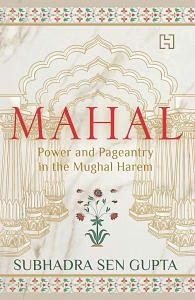
This excerpt from Mahal: Power and Pageantry in the Mughal Harem by Subhadra Sen Gupta has been published with permission from Hachette India. Hardback Rs 599.
_______________
source: http://www.theprint.in / The Print / Home> Page Turner> Book Excerpts / by Subhadra Sen Gupta / November 30th, 2019
Asar-us-Sanadid was published in 1847. Yet, Syed Ahmad Khan distresses over the ‘recent’ increase in Delhi’s population.
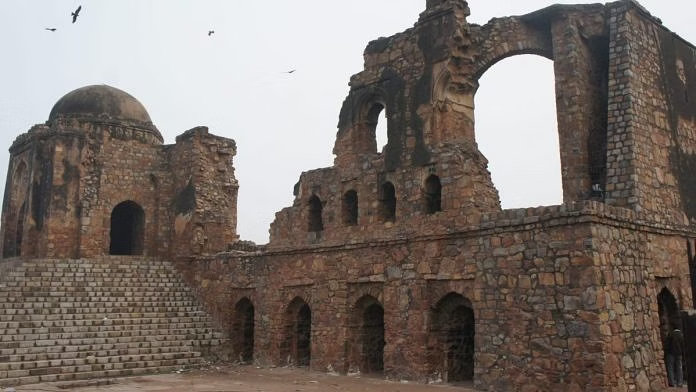
Ruins of Feroz Shah Kotla in Delhi | Commons
Delhi is introduced, interpreted, and celebrated all the time through walks, performances, talks and articles. But not many realise that the person who began telling the stories of Delhi was a young man in his 20s named Syed Ahmad Khan. Two centuries after he was born, his work Asar-us-Sanadid can now enjoy a wider readership because of its translation into English by Rana Safvi in 2018.
Syed Ahmad Khan was not the first writer to describe Delhi, but when he compiled his notes on the ‘remains of the great’ (asar-us-sanadid) into a book, he chose to write not in Farsi but in the accessible Urdu — making him a pioneer. Another first was that it appeared as a book rather than as a manuscript because his brother had just installed a new Urdu printing press in Delhi. Khan’s qualifications to write were not that of a narrow specialist. In those happy days, when education was not one fixed menu, he had studied science, mathematics, Farsi and Urdu. In his 20s, living in his family home in Shahjahanabad (present-day Old Delhi), Khan was a junior official in the East India Company, helping his brother publish an Urdu newspaper, and translating Farsi manuscripts.
Asar-us-Sanadid was published in 1847, and had a quality of eagerness explained by Khan learning the subject as he went along. Khan went to great lengths to transcribe inscriptions (‘He is climbing up with such enthusiasm/That people think he has some work in the sky’ was an affectionate comment about his swinging round the Qutub Minar in an improvised basket-and-poles contraption to read the inscriptions on the higher storeys). The artists’ drawings for the book were based on his own sketches.
There are very few extant copies of the original edition. The better-known second edition, published in 1854, bears the blue pencil marks of the Collector A.A. Roberts, who did a hatchet-job, reducing it by a half, adhering to chronology, giving British scientists a role in the Jantar Mantar project, removing all the poets and artists, and making it an altogether dull book.
Sights, sounds and silences
To Khan, historic architecture was not just patrons, materials, form and function. It was part of a continuous culture, nourished by new infusions. Political history, the overlapping cities and forts, the increasingly sophisticated elements in architecture – these became four-dimensional by reading mosques, dargahs and mazhars as sacred spaces, calm with the presence of mystics and scholars long departed. They were to be experienced in silence, reading the inscriptions, not listening to the patter of a guide. He delineates the complementarity of a vibrant urban culture —music, poetry, dance — and animated bazaars, the tranquil atmosphere of the countryside, fields and hills dotted with ruins. “The charm of the Delhi scene,” as historian Percival Spear would describe it a century later.
In a sentence that sounds startlingly contemporary, Syed Ahmad Khan is distressed by the “recent” increase in the city’s population, making it — and also the bracing hills of Mehrauli — unpleasantly congested. But he insists that “in spite of all these factors, the climate of Delhi is still a thousand times better than that of other cities.” The magnificent Mughal fort (remember that he was writing well before 1857) is described in the second chapter; Shahjahanabad in the third; the artists, poets and musicians in the fourth (the section captioned, charmingly, ‘The nightingale-like sweetly-singing people of Shahjahanabad on the outskirts of Paradise’).
Shining light on Delhi for other historians
It was a challenging task. Delhi’s landscape was not easy to read in the complete absence of any older accounts or images. There was overlap, modification (particularly in the Qutub Minar area), vandalism (of poet Abdul Rahim Khan-I-Khana’s tomb by the ruler of Awadh). As a teenager, Syed Ahmad Khan was interested in astronomy, so his distress over the neglect of Jantar Mantar is understandable. He would have liked to spend more time studying it: “I will need a separate book to describe the workmanship, use and effectiveness of these instruments.”
Mirza Ghalib, in the ‘Foreword’, describes his friend’s book as one that would “numb the hands of other writers.” Khan’s meticulous account of buildings, even those in ruins, became the template for later books in English. “He who undertakes to write the archaeology of Delhi must constantly seek for light in the pages of Syed Ahmed Khan’s interesting work on that subject,” wrote Carr Stephen in The Archaeology and Monumental Remains of Delhi (1876).
More than 20 years lapsed between Asar-us-Sanadid’s second edition and Stephen’s book. A world separated the two publications. Khan, posted in Bijnor (in present-day Uttar Pradesh), was not caught in the trauma of 1857 (the Great Revolt). Some of the poets he had listed in Asar-us-Sanadid — like Ghalib — sought relief by writing laments to their ravaged city. His own reaction was different. With a sense of grief at seeing an efficient machine derailed, Khan would write Asbab-e-Baghawat-e-Hind (The Causes of the Indian Rebellion) to understand what had gone wrong. His bond with Delhi was severed. He went on to become a distinguished public figure in north India, remembered today for the institution he founded, the Aligarh Muslim University.
Hopefully, reading Asar-us-Sanadid now will return the young Syed Ahmad Khan to us. The past is in many ways a foreign country, and to walk with a guide through towns of the past is an invigorating exercise.
This article is the first of an eight-part series on Reading A City with Saha Sutra on www.sahapedia.org, an open online resource on the arts, cultures and heritage of India. Read the series here.
Dr Narayani Gupta writes on urban history, particularly that of Delhi. Views are personal.
source: http://www.theprint.in / The Print / Home> Opinion> Sahapedia / by Narayani Gupta / December 01st, 2019
Mirza Ismail, who was born to Persian parents, wrought a civic revolution in four Indian cities during the 1940s.
Prime Minister Sir Mirza Ismail (centre) of Hyderabad state, 1948 | Commons
Between 1926 and 1948, Mysore, Bangalore, Hyderabad and Jaipur enjoyed the attention of ‘serial Diwan’ Mirza Ismail. Born in 1883 to Persian parents, Ismail grew up in Bangalore, where he would return in his final years, passing away in 1959.
From the age of 43, Mirza Ismail was appointed as diwan successively by the Maharaja of Mysore (1926–41), the Nizam of Hyderabad (1942–46) and the Maharaja of Jaipur (1946–47). These rulers, like the Mughal badshahs, respected and honoured their engineers and townscapists. Mirza Ismail was to them what Ali Mardan Khan, the brilliant Persian engineer who laid out the plans for the Lahore and Delhi canals, had been to Shah Jahan.
In Jaipur, the ruler commemorated him by naming a road after him, just like architect Edwin Lutyens’ engineers Hugh Keeling and Alexander Rouse had two major roads in New Delhi to their names (later changed to Tolstoy Marg and Deen Dayal Upadhyay Marg, respectively), even though Edwin Lutyens and architect Herbert Baker themselves were apportioned obscure lanes.
There were some princes, in whose states aesthetic values meshed with their eagerness to adopt innovations to improve urban and rural areas. But Mirza Ismail never felt it was enough. In My Public Life: Recollections and Reflections (published in 1954), he wrote: “Administrations in India, with hardly any exception, have taken little or no interest in the improvement of their cities and towns; the villages, of course, need hardly be mentioned. Look at the great open spaces in crowded London – or in Paris. How many cities in India can boast of such parks? The municipalities are apt to spend their income, not on sanitation and the necessary amenities of life, but on educational institutions which it is the duty of the States’ Governments to provide. Public parks and private gardens may not be the most important amenities, but they are necessary to a full and happy life. The beautification of our towns and cities must be a continuous process… Unfortunately, just as nature abhors a vacuum, so do our municipalities abhor open spaces. They are not satisfied until all are built upon…It is to my mind obligatory for the administration to provide for the recreation and enjoyment of the people, especially the poorer classes, and enable them to enjoy themselves without expense. I have tried to do this wherever I could — in Mysore, Jaipur and Hyderabad.”
Making Bangalore beautiful
If M. Visvesvaraya, as Diwan of Mysore (1912–19), made Bangalore (now Bengaluru) an industrial city, then Mirza Ismail made it a beautiful one, with the Lalbagh and the streets lit by chandelier lamp posts. An interesting story about him goes that he did not simply glance around to check if things were in good condition – he would lift the corner of a carpet to see if the floor had been swept. Mysore still proudly flaunts the label of ‘The Garden City of India’.
His brief spell in Jaipur wrought a civic revolution. An article in the New York Times in 1942 remarked that Jaipur had been a picture of neglect, but after two years of Mirza Ismail’s sojourn, it was “more thoroughly transformed and improved than New York after Robert Moses got through with it.’ (Robert Moses, a contemporary of Mirza Ismail, was himself compared to Baron Haussmann, who transformed Paris in the 1860s). “Reconstruction, new parks, new buildings, restorations and improvements of all kinds are now going on at an amazing pace for India. The city swarms with workers as busy as bees,” Ismail wrote in his book.
He continued, “Money is meant to be spent reproductively, not to be hoarded. If I had not constructed the new offices and new bungalows and made many other improvements in Jaipur, it would probably not have been chosen under the new dispensation as the capital of Rajasthan.”
The illustrious photographer Cecil Beaton, after visiting Jaipur, spoke highly of Ismail in his praise for the city: “Nowhere else in the world have I seen such brilliant and robust colours used to produce an effect so refined and subtle. Sir Mirza is the arch-enemy of corrugated iron sheets, brass bands (Indian) and of almost everything else that is crude and vulgar. The money he spends is put into circulation and is used as a means of getting rid of unhygienic conditions and sources of disease. Already the metamorphoses he has achieved in a short time are incredible, but his plans are as countless as his inspirations.”
But Mirza Ismail was too astute a person not to see the writing on the wall. “Governments in the East,” he reflected, “do not enjoy the confidence and respect of the public they serve. Our countries so easily become the paradise of the professional politician.”
This article is the sixth of aneight-part series on ‘Reading A City’ withSaha Sutra on www.sahapedia.org, an open online resource on the arts, cultures and heritage of India.
Dr Narayani Gupta writes on urban history, particularly that of Delhi. Views are personal.
(From left) Lokaraj Urs (Founder, Madilu Seva Trust NGO), Veeresh, President, Suvarna Karnataka Chemists and Distributors Association, S. Manjunath, President, Mysore District Chemists and Distributors Association, C.K. Muralidharan, Ashok Kumar, Joint Secretary, Mysore District Chemists and Distributors Association and Nigin.
World’s youngest Head Master (HM) Babar Ali, who was in city recently, was felicitated by the office-bearers of Mysore District Chemists and Distributors Association.
source: http://www.starofmysore.com / Star of Mysore / Home> Photo News / December 31st, 2024
Thanjavur District, TAMIL NADU / Bengaluru, KARNATAKA :
ESA Mission (Esa – Easiest Solution for All) from “May, 2021 till present” works to help all places in India lead eco-friendly, cleanliness.
Vision Bringing back humanity. We do service to control the inflation and to bring smiles on the faces of the poor. We join hands with school, university students, public & private sectors to transform this earth for everyone!
Mission In India, we focus on healthy natural organic foods, to give clothes for the poor, to stay fit & healthy, to develop the rural & to improve the urban, to support government institutions, to compare and learn from the art & history!
Environment * Education * Food * Clothing * Rural Development * Marriage & Family * Fitness & Health * Art & History Our motto/slogan for Esa – (Our Vision Your Mission!)
‘ESA Mission’ is now registered & comes under “KONAKIND FOUNDATION” ((KONA – Purity Speaks & Quality Serves))
A BRIEF :
We started ESA Mission (Esa – Easiest Solution for All) from “May, 2021 till present” works to help all places in India lead eco-friendly, cleanliness.
The reason behind this mission and vision for our India, we have seen a lot of people without humanity. Though they’re rich but not willing to spend for their own family members because of their short selfishness. Our selfishness should be big and broad like district, state or national level. Then we can see the brightness in our district level, state and national level too.
Mr. Mohamed Abubacker started his first step from the plantation drive doing the plantation in his backyard space in his house and then he started doing the plantation drive in his Thanjavur district.
Later on he felt it small so after doing 1500 fruit saplings he started collecting and donating the books not only in Thanjavur also in Vellore, Bengaluru, Mysore and planned to start in Palakkad.
His vision begin in the year 2013 back in Teynampet, Madras. At the time he lost Rs. 200 no one was ready to help. He felt should bring back humanity. It also should control the inflation and smiles on the faces of the poor. He joined hands with the school, university students, public & private sectors to transform this earth for everyone! His mission is for India.
He focus on healthy natural organic foods, to give clothes for the poor, to stay fit & healthy, to develop the rural & to improve the urban, to support government institutions, to compare and learn from the art & history!
We have spent Rs. 2,00,000 within this amount we have planted more than 2600 fruit saplings, 2500 meals for 2500 people for 2.5 years, collected more than 55000 books and donated more than 13,000 books to the schools, colleges, libraries, tuition centres, and individuals, awareness program for more than 6 institutions and social media platforms, art & history related.
We have collected more than 30 historical events and messages about our Hindustan 200 years record.
We have collcted more than 100 waste tyres, well washed and painted orange, white and green those were placed at the entrance of the government hospital.
Our Present Target :
Surprisingly everything till date costed Rs. 2,00,000 only, but from now we expect more than Rs 15,00,000 to do more initiatives.
Mohamed Abubacker is the Managing Director and incharge of KONAKIND FOUNDATION, Amzath Ibrahim is the Director of KONAKIND FOUNDATION, Tarik Ahmad is the Board Member of KONAKIND FOUNDATION, Abdul Lateef is the volunteer incharge and advisory of KONAKIND FOUNDATION, Mr Thameem is the environmental specialist and advisory of KONAKIND FOUNDATION, they also have more than 150 volunteers in person and they expect more than 1500 volunteers in person.
*EasyLand Environment Project – (Our Land Is Our Brand!)
*AlKareem Bin Project – (Time Brings Money But Ideas Become an Investment!)
*Men Women Society (The more you plan, the more you will perform!)
*KONA CLOTHING EXCHANGE (Our Brand Is Our Grand!)
*AlWaris Art & History Project – Good lessons done, history begins now! Things have just started!))
We’re applicable for 12A, 80G, CSR & Darpan Certificates.
We receive only Indian Rupees for now.
Contribute your wealth to improve & develop the projects :
We’re applicable for 12A, 80G, CSR & Darpan Certificates. We receive only Indian Rupees for now. Contribute your wealth to improve & develop the projects.:
The All India Ideal Teachers Association (AIITA), after completing its 2020-2024 term, conducted elections for the new term 2025-2028 in New Delhi.
Delegates from across the country participated in the process and elected Abdul Rahim Sheikh from Maharashtra as national president for the next session. Mukhtar Kotwal will serve as general secretary.
Elections were also held for state presidents, and Khalid Akhtar was elected president of AIITA Rajasthan. Mohammad Yunus Ansari was nominated as state secretary.
State Advisory Council Members are Abdul Hameed Rangrej, Qari Mohammad Ishhaq, Mohammad Juned, and Ansar Ahmed from Jaipur; Mohammad Shakir, Makrana; Khalid Akhtar, Sikar; and Mohammad Yunus Ansari, Mangrol.
AIITA is functioning nationwide among teachers with objectives to improve the declining moral standards of educational institutions, to prevent the commercialisation of education, to make society aware of the respect for teachers, to curb the growing trend of violence among students, to inspire students to become good human beings, and to keep the curriculum free from communalism.
source: http://www.radiancenews.com / Radiance News / Home> Latest News> Report / by Raheem Khan, Radiance News Bureau / December 30th, 2024
Zakir Abbasi, a singer and secretary of ‘Bazm-e-Musiqi,’ has been honoured with the Shekhawati Ratna Award by Vipra Foundation. The award ceremony was held at Stardom Hotel in Jaipur, where talents from Shekhawati, who have brought fame to their region and India in their respective fields, were honoured.
Singer Zakir Abbasi received this award for his awareness-raising songs. Abbasi has worked to raise awareness in society through songs on road safety, drug rehabilitation, save the girl child, and voter awareness.
Abbasi is known across India for his social activism and awareness campaigns. His goal is to make the common people aware through his self-composed songs. Upon receiving Shekhawati Ratna Award, the office bearers and music lovers of Bazm-e-Musiqi congratulated Abbasi. His efforts to educate the masses through his music have made him a prominent figure in the Shekhawati region.
source: http://www.radiancenews.com / Radiance News / Home> Pride of the Nation> Awards> Latest News / by Raheem Khan, Radiance News Bureau / December 28th, 2024
A new biography looks into Akbar’s life to draw some inspiration on how to manage the boardroom. The third Mughal emperor was always thinking on his feet, one step ahead of friend and foe; but he also knew that force had to be tempered with tolerance, and confidence with caution.
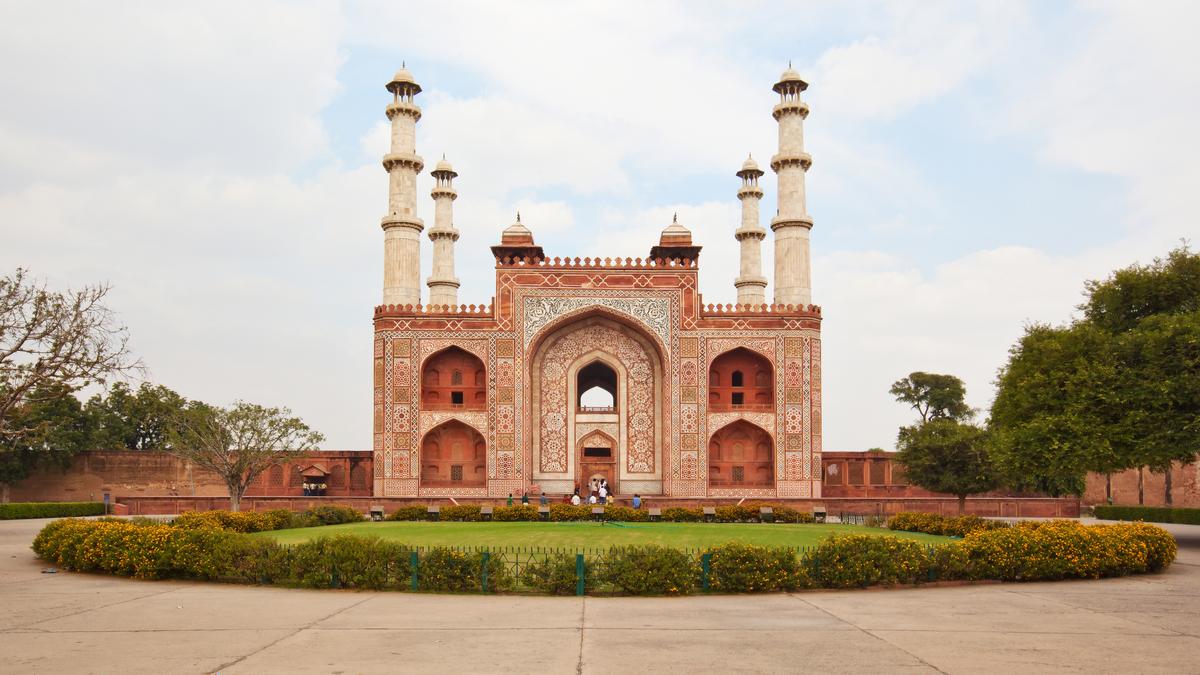
Akbar’s Tomb in Sikandra, Agra | Photo Credit: cinoby
Even as elements in the right-wing have made attempts to nibble at the great Jalaluddin Akbar, historians and authors have taken it upon themselves to project the third Mughal emperor clothed in nothing but facts of history.
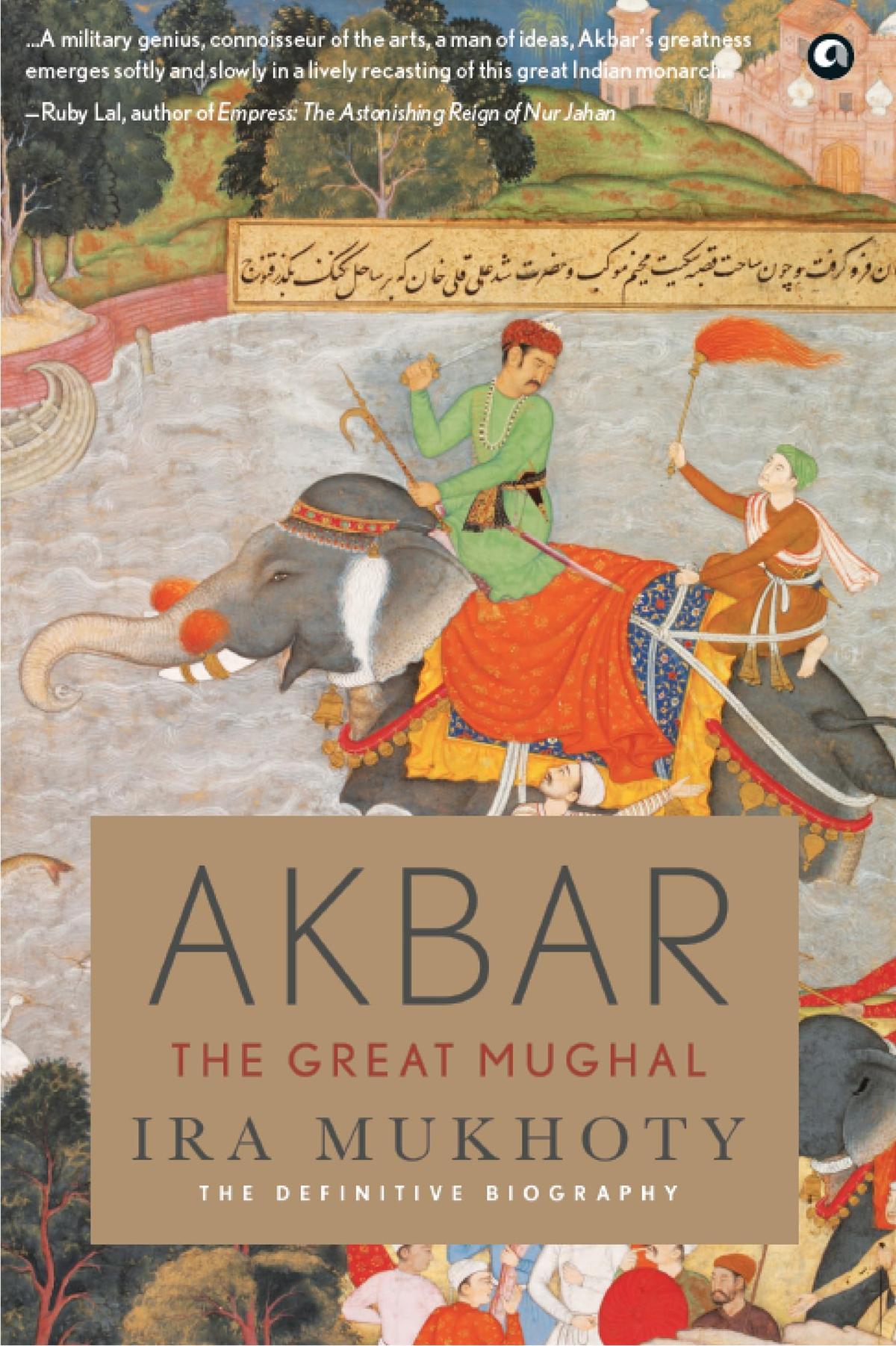
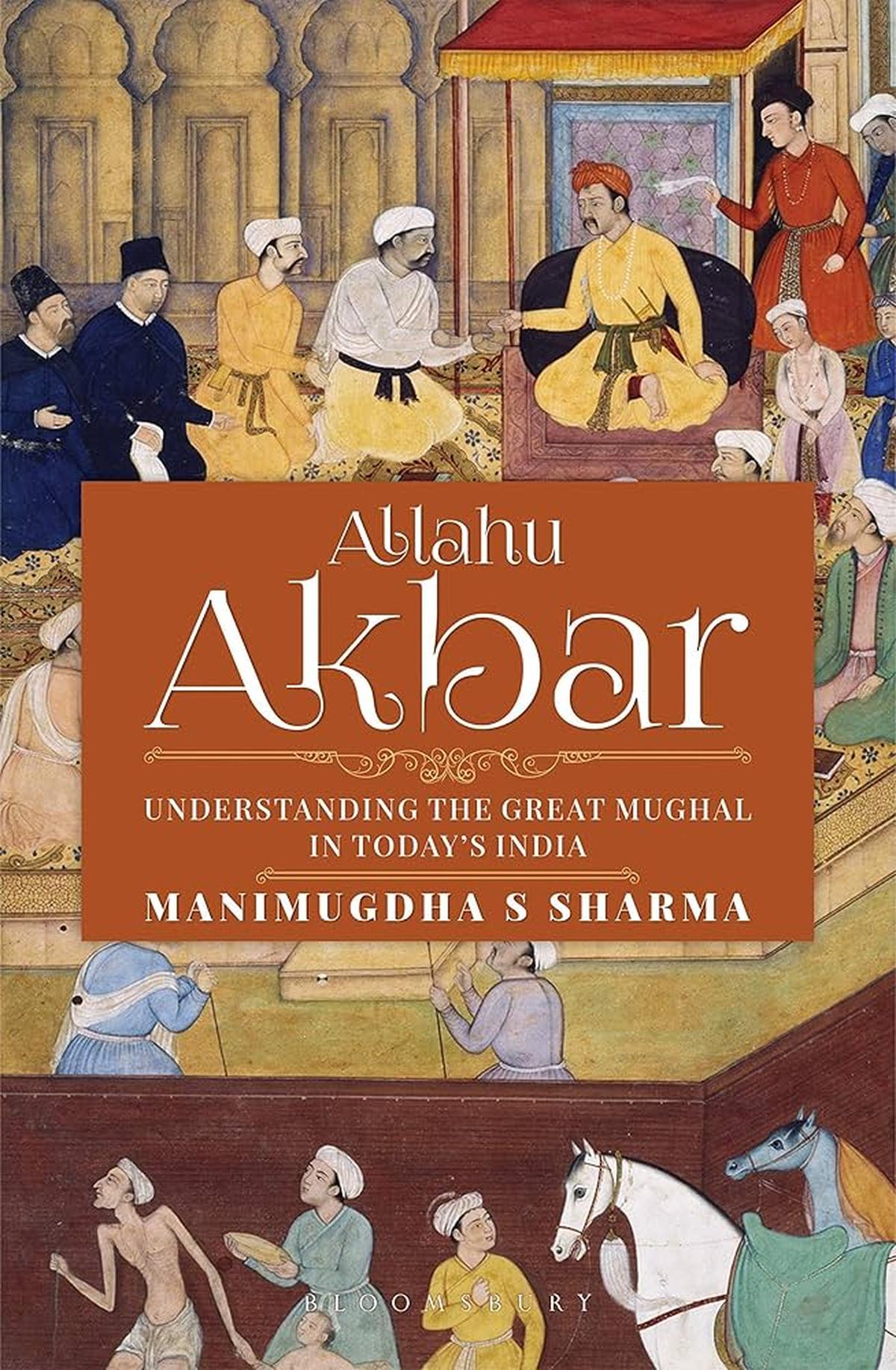
Around the time of COVID-19, Ira Mukhoty came out with her exhaustive biography, Akbar The Great Mughal: The Definitive Biography (Aleph). It came on the heels of Manimugdha S. Sharma’s Allahu Akbar: Understanding the Great Mughal in Today’s India (Bloomsbury) where the author, as the title suggests, made an attempt to see the Mughal monarch in the light of modern-day developments.
The books show why Akbar is considered an Indian icon and a king with compassion and empathy. Instead of spending his childhood as a royal prince, practising calligraphy and honing his skills with the sword, Akbar lived those years, as Mukhoty writes, “in the company of his beloved animals and their keepers…He raced pigeons, ran alongside camels and dogs, and hunted cheetahs, lions, tiger, and deer. And Akbar tested his physical strength and courage against wild elephants, learning to ride and to tame them.”
Akbar had grown up practically illiterate but would eventually be “known for his reverence for learning, penmanship, books…and would patronise some of the most extraordinary works of writing, translation and illustration ever undertaken in the country,” Mukhoty points out.
This quest for knowing the unknown led Akbar to build Ibadat Khana, an assembly of scholars of different religions. Akbar’s congregation of men of spiritual accomplishment was the work of a truly liberal mind. At a time when the Safavids were persecuting non-Shias in Iran and Europe had no space for non-Christians, Akbar invited them all. He abolished the religious tax, jiziya, for non-Muslims and did away with the pilgrimage tax on Hindus and was known to prevent Sati. As Sharma quotes Abul Fazl in Allahu Akbar, “The Shahenshah in his wisdom and tolerance remitted all these taxes, which amounted to crores. He looked upon such grasping of property as blameable and issued orders forbidding the levy thereof.”
In simpler words, it meant, as Sharma writes, “The state wouldn’t come in between an individual and his faith.”
Beyond religion
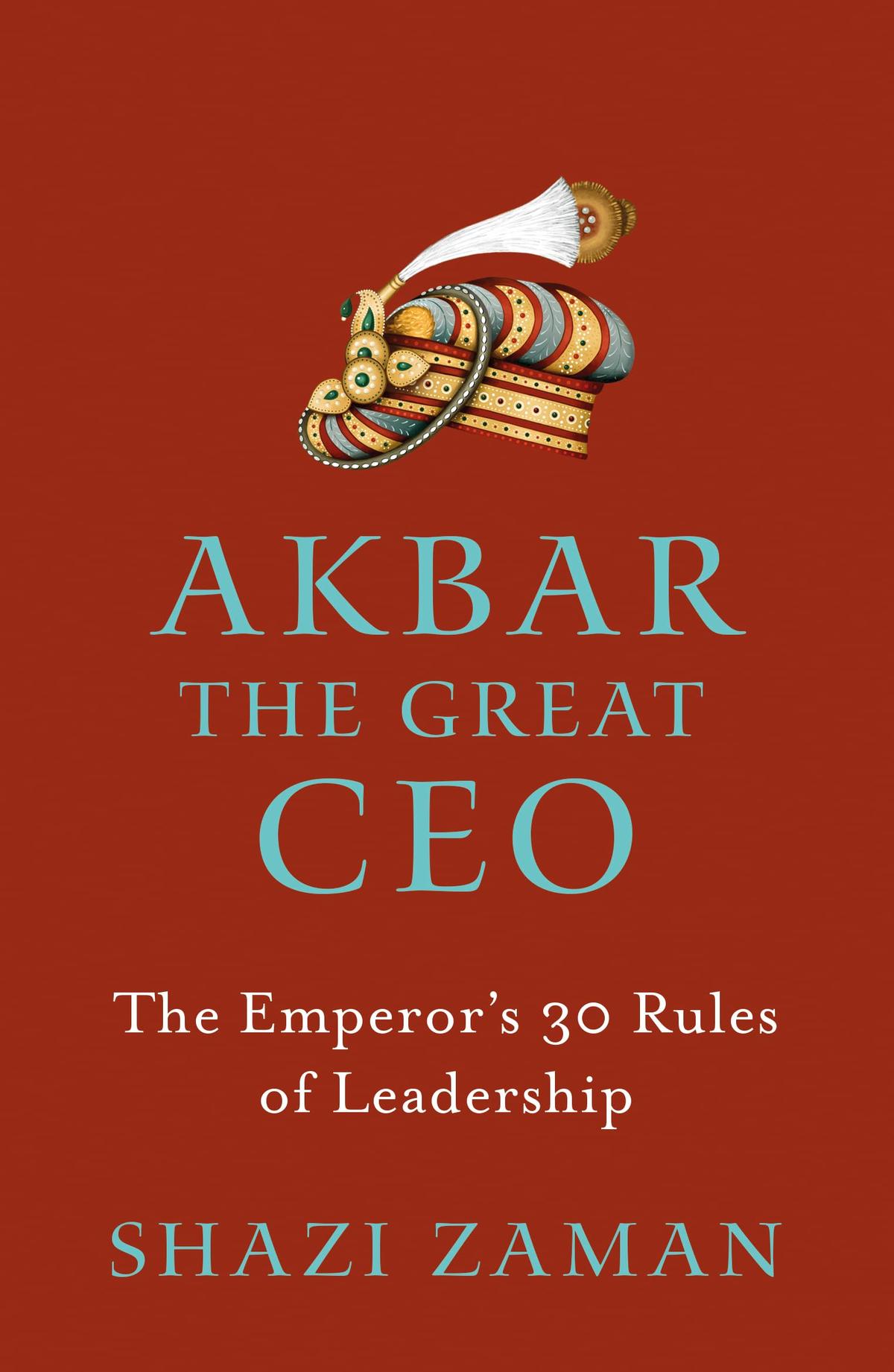
Yet Akbar’s relevance goes beyond the sphere of religion as noted journalist and author Shazi Zaman discusses in his latest, Akbar The Great CEO: The Emperor’s 30 Rules of Leadership. Published by Speaking Tiger, the book has a contemporary, and non-historic feel to it. In its innovative approach lies its appeal. Zaman presents Akbar as a practitioner of some dictates which would do a management guru proud. Interestingly, the book opens with the words of a Jesuit priest stationed at Akbar’s court. The priest wrote in awe, “He was a prince beloved of all, firm with the great, kind to those of low estate, and just to all men, high or low, neighbour or stranger, Christian, Saracen or Gentile; so that every man believed that the King was on his side.” The priest’s words were borne by the fact that Akbar, as Zaman writes, “perfected the art of ruling with a light touch even though he had the means to be brutal.”
The surprise factor
So what were the 30 rules of Akbar? Though he ruled in an age when the Emperor was often larger than life, Akbar believed in subtlety. Importantly, as his experience with the Afghan king Daud Khan Karrani proved, Akbar was not just fast in his thinking, he was unpredictable too. When he would be least expected to show up in a battle, he would take the enemy by surprise, vanquish his forces, and bring him to his knees. “When the Rubicon was to be crossed was a call that he [Akbar] took in a manner so unpredictable that his opponents could never gain an advantage by guessing it,” writes Zaman. “The Emperor’s audacity was well documented visually as well… In one painting, he is seen holding a cheetah by its ear, and in another painting, he is seen mounted on a mast elephant and chasing another across a shaky bridge built on boats.”
Zaman mentions another incident which underscores Akbar’s acuity. When a slave attacked him, Akbar knew who was behind it but chose to remain quiet.
As Zaman writes, “Even the truth has to await its moment.” Does it remind you of office boardroom meetings? Maybe. But remember this was the strategy of the Mughal emperor who was merely 21 at the time of the attack. He knew the truth, but also knew how to use it to his advantage later in life.
Little wonder then that one of Akbar’s favourite books which he also recommended to his officers was Akhlaq-i-Nasiri, a 13th century text on etiquette and way of life, which said, “The king should keep his secrets concealed, so that he can change his mind without sounding contradictory…The need to keep secrets has to be combined with the need to consult intelligent people.” Akbar did it all.
Be it his relationship with Maham Angaand Bairam Khan, or later the Rajputs, Akbar was always smart and wise.
Zaman’s book progresses like an equation in a science book as he goes on to reveal many facets of Akbar’s personality.
Cultivated image
One such aspect was the way he looked, and the way he presented himself. “Akbar’s image was cultivated, recorded and disseminated with a lot of thought. There was a message in how he dressed and looked and what he chose to be doing in the picture. Each portrait portrays a facet of his personality. It never was a picture for the sake of a picture,” writes Zaman.
Written with the brush of an artist, the book is a must-read for anyone looking for life lessons and critical values, particularly in the boardroom. The ‘illiterate’ emperor was indeed a wise man, who never “went to extremes” in any direction.
source: http://www.thehindu.com / The Hindu / Home> Books / by Zia Us Salam / December 25th, 2025
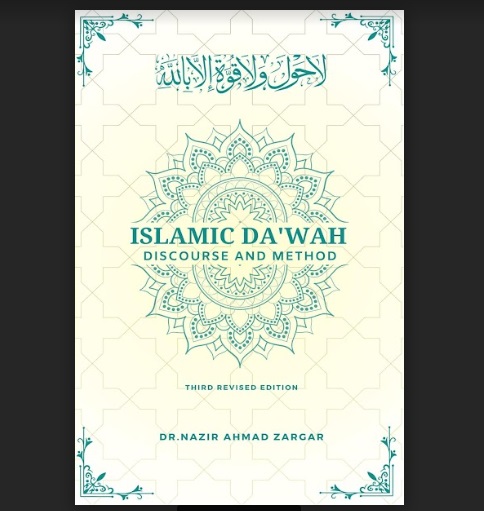
Author: Dr. Nazir Ahmad Zargar, Title: Islamic Da‘wah Discourse and Method, Publication Details: Chahattisgarh: Evincepub Publishing, 2024., Edition: Third Revised Edition , Pages: 297+ i-xx. ISBN: 978-93-5673-906-2. Price: ₹500
Islam is a missionary religion, and Da‘wah (the call to Islam) is a divine commandment. In common terms, Da‘wah invites people to Islam. A person who invites people to Islam through a dialogue process is called Dā‘ī. In a broader sense, it connotes an invitation to the Imān (Islamic faith) to the prayer or Islamic way of life. The book under review attempts to elucidate the methodological aspect of Da‘wah in the contemporary era.
The author maintains an academic tone throughout the book and presents Islamic Da‘wah as a means to eliminate misrepresentation, misinformation, and misconceptions regarding Islam and its worldview. Therefore, the main objective of this work is to make its readers understand that Da‘wah is an attitude that presents the actual teachings of Islam and the real image of Islam, free from division and prejudice. The methodological aspect of this work highlights the role of a Dā‘ī in contemporary times. In this context, the book offers a comprehensive approach to Da‘wah. The author deals with the communication part of Da‘wah methodology, including using social media and modern technologies to propagate the message of Islam.
The revised third edition has been improved to a greater extent than early editions; some sections have been edited with great detail. A few portions have been added afresh. The foreword of the revised third edition is written by Prof. S. M. Yunus Gilani, Malaysia. He says, “This work is an invaluable resource for anyone seeking to understand the essence of Islam, its profound teachings, and the wisdom behind its principles. It provides a roadmap for those who are called to the noble task of conveying the message of Islam with wisdom, compassion, and integrity (pp. vi-vii).” This book is spread over five chapters, excluding a vast introduction, conclusion, appendix, and an epilogue to the protocols. In his detailed introduction, the author draws an outline of the fundamental concepts and basic principles of Da‘wah. He introduces Islam as a peaceful religion and argues that it provides a solution to the problems of mankind.
Furthermore, it discusses the relation of Da‘wah with communal harmony and mutual co-existence. Similarly, it also analyzes conceptions such as the essences of Wahy (revelation) and Risālah (prophethood), the dichotomy between rational and revealed knowledge, and characteristics of a Dā‘ī. This section also highlights the historical perspectives of Da‘wah during the al-Khilafah al-Rashidah (Caliphate period) and Da‘wah in contemporary times from a global context.
Chapter first, Da‘wah and its significance, delves into the meaning and definition of Da‘wah. The author here focuses on the different dimensions of Da‘wah, such as ways and means, objectives, importance, causes of decadence, language and media of Da‘wah, and role of Da‘wah organization. Dr. Zargar is of the view that “the primary aim of a Da‘wah organization is to unite the disarranged Ummah into a unified whole once again (pp. 25-26). The author emphasizes Da‘wah, both individual and collective Da‘wah programmes, keeping a view of a particular place’s circumstances and social order. He argues that the prophet Muḥammad (SAW) preached the message of Islam both individually and in public. However, he asserts that there must be an organized group of individuals who can understand their responsibilities and perform Da‘wah, and he substantiates his argument with the āyat (verses) of the Qur’ān and ahadith. Dr. Zargar points out that the role of an organized group is not merely to perform the activities of Da‘wah but to play his role in “construction and deconstruction simultaneously” (p. 125).
Chapter second, a brief historical survey of the development of Da‘wah methodology, is through examination and analysis of Da‘wah from historical perspectives and early methods. The author divides Islamic Da‘wah into three major historical phases; the initial phase discusses the early Islamic Da‘wah that started from the mount of Ṣafa and was carried out during the whole time of the prophet Muḥammad (SAW). Dr Zargar believes that Da’wah’s scope, significance, and relevance grew gradually and substantiates his claim from the different āyat of the Qur’ān (p. 132-34). The second phase discusses Da‘wah in the period of al-Khilāfah al-Rāshidah as a state responsibility. This phase emphasizes the status of Da‘wah as an obligatory duty for the rulers and examines scholarly opinions. The third phase elucidates the decline of activities of Da‘wah at the governmental level and becomes more concerned at individual and collective or group level. However, Da‘wah continues to remain the duty of a Muslim. The author notes that the most crucial part of this phase is that throughout the first century of Muslims, the activities of Da‘wah remained peaceful, and no force was used to convert people to Islam (p. 140). The author has quoted many historical events that support the fact that Da’wah activities were peaceful. For instance, he evidently discusses how Berke Khan and other Mongols accepted Islam despite terrorizing Muslim lands. Therefore, the events in which Tartars became Muslim have been explicitly considered turning points in Muslim history. The concluding part of this chapter discusses the spread of Islam in India and the major factors responsible for the emergence of Islam. However, this section has been discussed briefly and needs further elaborations to substantiate the claims pertaining to major factors responsible for the spread of Islam in India.
Chapter third, ‘the contemporary Da‘wah movements’, discusses four major Da‘wah organizations in the contemporary era, such as al-Ikhwān al-Muslimūn, Tablīghī Jamā‘at, Jamā‘at-i-Islāmī and Ahl-i-Ḥadīth movement of India. The chapter’s main subject remains in discussing historical settings in which Da‘wah movements emerged, their ideologies, objectives, approaches, basic principles, contributions, activities, methodologies, and achievements and weaknesses to Da‘wah activities. For instance, the author states that the founders of al-Ikhwān al-Muslimūn have realized that Westernisation is a threat to Islam, which can be countered by returning to the basics of Islam (p. 153). Similarly, the author argues that the purpose of Jamā‘at-i-Islāmī was to establish a “theo-democratic state” yet to be found (p. 166). Regarding Tablīghī Jamā‘at the author has made a comprehensive analysis and focused on its major activities and hallmarks, purpose, and methods of Da‘wah. Dr. Zargar is of the opinion that while other Da‘wah movements focused on producing literature alongside their activities in the field Da‘wah, the TablīghīJamā‘at did not consider writing books any of the means of Da‘wah. However, they are very concerned about working in practical fields. Subsequently, a lucid analysis of the Ahl-i-Ḥadīth movement of India and other movements has been conducted. Dr. Zargar made mention of Ahl-i-Ḥadīth movement in Kashmir and highlighted its role in the reformation as well.
Chapter four is dedicated to the communicational perspectives of Da‘wah and highlights the basic qualities of a Dā‘ī and Mud‘ī, such as language, attitude, knowledge, organizational qualities, discipline, and righteousness. Similarly, the fifth chapter of the book focuses on Da‘wah in the contemporary global society. The author discusses here globalization from the Islamic perspective, post-modern materialistic society, concepts such as the definition of man in Islam, problems of materialism, individualism, and the decline of the West. Dr. Zargar has also highlighted the problems, concerned with Dā‘ī’s, the importance of Ijtihād in Da‘wah and education system, Da‘wah and women, following the law of land, nationalism, and Muslim politics as well. It is pertinent to mention that this work presents a thorough analysis of the contemporary position, aims, and objectives of the Zionist movement, formation of UNO, the establishment of the Kingdom of Israel, and economic institutions and multinational companies to support the causes of Israel are debatable issues discussed in Da‘wah and the Contemporary Global Society.
In sum, Dr Zargar argues that Islam is indeed the religion of Da‘wah. He asserts that Da‘wah is the real force behind the success of Islam and Muslims. Therefore, he offers some ways to continue Da‘wah in the contemporary era, such as inter-religious dialogue, debates, freedom of choice, and essay competitions. The book’s appendix is another valuable contribution because it discusses the Jewish protocols, which consist of 24 documents containing the most comprehensive programmes for world subjugation published in 1905. The author’s lucid explanations and examination of the protocols expose the aims, purposes, and approaches of Jews to the rest of the people of the world whom they called Gentiles. An epilogue to the protocols traces the need and significance of Islamic Da‘wah and the Protocols of the Elders of Zion. In sum, the book is a comprehensive guide and a valuable edition in the related field for students and researchers.
The author is a Doctoral Candidate, Comparative Religion, Department of Religious Studies, Central University of Kashmir
source: http://www.kashmirobserver.com / Kashmir Observer / Home> In-Depth Review / by Guest Author / April 20th, 2024