Category Archives: Education

NEET 2020: Abbas and Rizia, the two pillars of Soyeb Aftab’s success

Kolkata, WEST BENGAL / ODISHA :

Sheikh Mohammed Abbas candidly admits that his in-laws at Kolkata supported him financially during the tough times

Sheikh Mohammed Abbas and his wife Rizia with their children. (Photo | EPS)

Rourkela :

Soyeb Aftab has wowed the entire country with his phenomenal performance in the National Eligibility Cum Entrance Test (NEET)-2020  scoring a perfect 720 out of 720. 

However, behind his extraordinary feat lies the struggle and resolve of his parents Sheikh Mohammed Abbas and Sultana Rizia who despite their limited means ensured their children got the best education. 

Abbas and his wife Rizia made all the compromises and sacrifices for their children, Soyeb and his 10-year-old sister Alisha, who studies in Class V. Alisha is also a brilliant student. 

Abbas, a graduate said he and his wife laid the foundation for a bright future for their children 20 years back when on his insistence, Rizia, with Soyeb in her womb completed her graduation.

“My orthodox family was adamant on not allowing Rizia to study further after marriage. We moved away from my family and stayed separately for eight-and-a-half years. In the meanwhile, Rizia gave birth to Soyeb and completed her graduation from Burdwan University by travelling frequently from Rourkela to West Bengal,” he said. Since then the couple has left no stones unturned to provide an ideal environment to their children for their studies. 

As a businessman, Abbas often saw many ups and downs but he did not let adversities come in the way of his children’s future. He recently switched to construction work from loose tea leaf trade.

During lockdown, there was no work and then the earning started dipping drastically.

Abbas candidly admits that his in-laws at Kolkata supported him financially during the tough times. 

Rizia said her struggle to complete graduation inspired her to give the best of education to her children. She along with Soyeb and Alisha had moved to Kota, Rajasthan in 2018 where the siblings took admission at Sarvodaya School.

Soyeb also pursued medical coaching at Allen Career Institute in the town. Abbas’ childhood friend Afroz Ahmed said the businessman’s resolve and determination helped him stay all alone in the city for two years.S

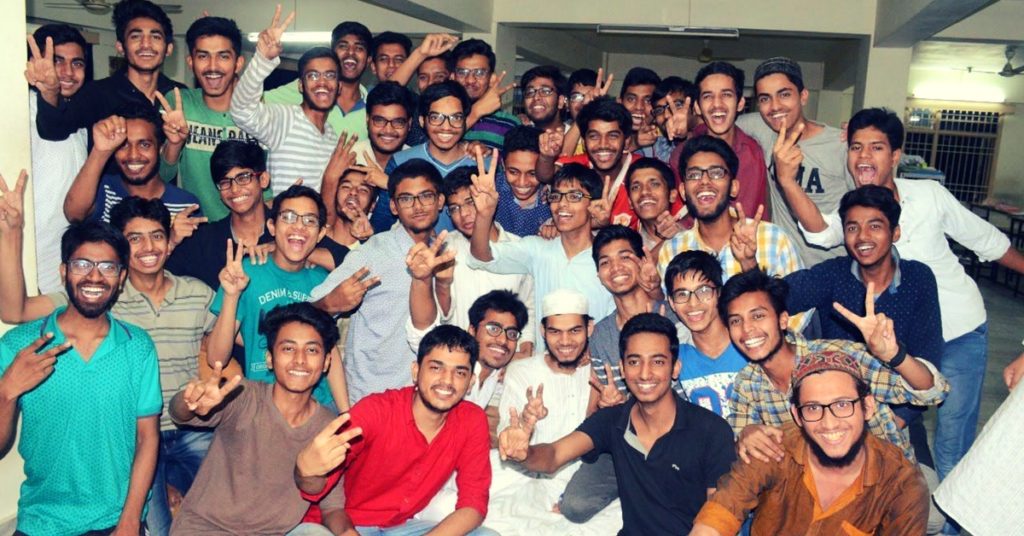
NEET 2020: 06 Muslims among toppers

Among the Muslims who figured in NEET 2020 Merit List is Shoyeb Aftab who got All India Rank 1 (AIR 1).

NEET 2020: 

In a remarkable display of success against challenging conditions as many as 06 Muslims have figured in the Merit List of National Eligibility cum Entrance Test (NEET UG 2020) released today.

The National Testing Agency (NTA) had conducted National Eligibility cum Entrance Test (NEET UG 2020) on September 13 and October 14, 2020. It declared its result today i.e. Friday October 16.

Among the Muslims who figured in NEET 2020 Merit List is Shoyeb Aftab (Soyeb Aftab as mentioned in the NTA list and Shoaib Aftab as normally the name is spelled) who got All India Rank 1 (AIR 1).

Shoyeb is first from Odisha to bag the top position in the important medical entrance exam.

Other Muslims who figured in the NEET 2020 AIR List are:

Aysha S of Kerala (710 Marks, Air 12), Shaik Kothapalli Arfath Khadeer of Andhra Pradesh (710 marks, Air 18), Sanish Ahammed of Kerala (705 marks, Air 25), Farheen K S of Kerala (710 marks, AIR 66), and Mohd Sadiq Ansar of Uttar Pradesh who got 8th rank in the list of (Pwd) Toppers.

Among other toppers, Akanksha Singh has also scored 720 marks and secured AIR 2.

Tummala Snikitha, Vineet Sharma, Amrisha Khaitan and Guthi Chaitanya Sindhu secured 715 out of 720 marks and got AIR 3, AIR 4, AIR 5 and AIR 6 position.

The NEET result was originally scheduled to be declared on Oct 12. NTA however announced that it will declare the result on Friday at 04:00 pm. The result however was delayed by few hours and released late in the evening.

A total of 15,974,35 students had registered for NEET 2020. But, only 13,669,45 (85.57%) appeared for the exam conducted amidst Corona scare.

source: http://www.ummid.com / Ummid.com / Home> Education & Careers / by ummid.com news network / October 16th, 2020

The principal who won freedom for Indian hostages

Gorakhpur, UTTAR PRADESH / Benghazi, LIBYA :

Head of the Indian school in Benghazi, Tabassum Mansoor, led the negotiations with militants in Libya

Tabassum Mansoor  

After almost a month of tense negotiations, the hostage situation involving seven Indians in Libya came to an end with their release on October 11.

In the absence of a resident Ambassador in the country, the delicate task of ensuring the safe release of the Indians workers with Al Shola Al Mudea energy company, fell to Tabassum Mansoor, the Principal of the city’s Indian school and a long-term resident of Bengazhi.

The seven men were abducted by militants at Asshwerif while they were on their way to the airport in Tripoli on September 14. A source with knowledge of the operation said the rescue would not have been possible but for Ms. Mansoor, who carried out negotiations with the militants through the Libyan authorities and tribal elders.

Ms. Mansoor, 59, who was born in Gorakhpur, has been in Benghazi for more than three decades. She has mentored the Indian school in Benghazi and it has emerged as the only Indian-led English-medium educational centre in the city.

Recognition for her long-standing commitment to education amid difficult circumstances came from the Libyan authorities when she was inducted as a member of the National Education Council of Libya. Her work in the larger Indian community first came into the spotlight for her efforts during the 2011 evacuation of nearly 3,000 Indians from Benghazi when the city witnessed intense fighting between pro- and anti-Qadhafi forces.

This time too, Ms. Mansoor swung into action when requested by the Indian authorities.

“I can’t explain the terrible time we have been through. We had initially given up hope of seeing Umed again. But it was at that time that we found strength and support from Tabassumji. The Indian Embassy in Tunis provided excellent diplomatic support, but Tabassum Madam handled the local negotiations to free our people,” said an emotional Firoz, brother-in-law of Umed, one of the seven Indians, in an online interview.

Local recognition helped

The local recognition helped the principal in the talks to ensure the safe release of the Indians. Ms. Mansoor declined to speak about her role when The Hindu reached out to her. But a source familiar with the developments said the negotiation with the militants was extremely risky as they are known to be unpredictable. As the negotiations reached their conclusion, Ms. Mansoor went personally to Brega with Libyan security officials where the captors handed over the Indians.

The Libyan support to the Indian-led initiative were lauded by the External Affairs Ministry which expressed “sincere thanks to the Libyan authorities and the tribal elders from the region”.

source: http://www.thehindu.com / The Hindu / Home> National / by Kallol Bhattarcherjee / New Delhi – October 14th, 2020

This Muslim Cleric’s Initiative Helped 137 Underprivileged Students Crack JEE

Patna, BIHAR :

Senior cleric, Maulana Wali Rahmani runs Rahmani 30, a movement to provide free coaching to students from economically, socially and educationally backward communities.

This year, the JEE Main results were yet another raging success for the famous ‘Rahmani 30’, with over 137 of its minority students qualifying for the JEE Advanced exams for admissions to India’s premier engineering institutes–like the National Institute of Technology (NITs) and the Indian Institute of Technology (IITs).

Senior cleric, Maulana Wali Rahmani runs Rahmani 30, a movement to provide free coaching to students from economically, socially and educationally backward communities.

The Rahmani Programme of Excellence includes free residential-cum-coaching programmes for JEE (Main), JEE (Advanced), NEET, chartered accountancy and law entrance exams.

Speaking to The Times of India , Fahad Rahmani, CEO of Rahmani Programme of Excellence, said, “We began in 2008, and till 2017 we have sent 213 students to the IITs. This year’s JEE (Main) results are very encouraging as our overall success rate, including Patna, Hyderabad and Aurangabad centres, is 75% while the Patna centre’s result is 100% (23 out of 23 students).”

The coaching centre which ran in association with Anjuman-I-Islam and financial support from the Memon Chamber of Commerce had coached two batches of JEE aspirants in Mumbai. But unfortunately, the Mumbai centres shut down last year as Anjuman-I-Islam ran into a financial crisis.

Even in the face of the closure of its Mumbai facilities, the authorities weren’t deterred from their will to help students. And so the centre moved to Aurangabad. The programme continues to benefit minority students in Bangalore, Hyderabad, Aurangabad and Chennai.

Rahmani 30 which started with the vision to search, find, house and train deserving students without any stated or implied fees, enrol a student after a screening–this involves a standardised objective written test followed by a behavioural interview for final selection.

Once selected, the students are provided with complete supervised hostel accommodation and nutritious meals during the tenure of coaching.

They are trained with the help of skilled teachers, hired to lecture and demonstrate specialised topics. There is a proper mechanism to measure student progress regularly. Even the lecturer’s progress is measured to maintain transparency between students and the administration and ensure a conducive learning environment. This also helps eliminate any communication issues or cultural misunderstandings and address student grievances.

The students are also thoroughly assisted through the process of applying for various standardised examinations.

As per TOI, over 17 students from the Aurangabad centre have qualified for JEE (Advanced) exams this year. There is hope for the revival of the Mumbai centre nonetheless as activists come together and request Muslim philanthropists and businesspersons to come forward and facilitate it.

(Edited by Shruti Singhal)

source: http://www.thebetterindia.com / The Better India / Home> The Better Home / by Jovia Aranha / May 02nd, 2018

In a first, scientists discover 2.5 million-year-old dragonfly fossil in India

WEST BENGAL:

Researchers from four universities in West Bengal have been looking for fossils in the sediments of Chotanagpur plateau for almost a year

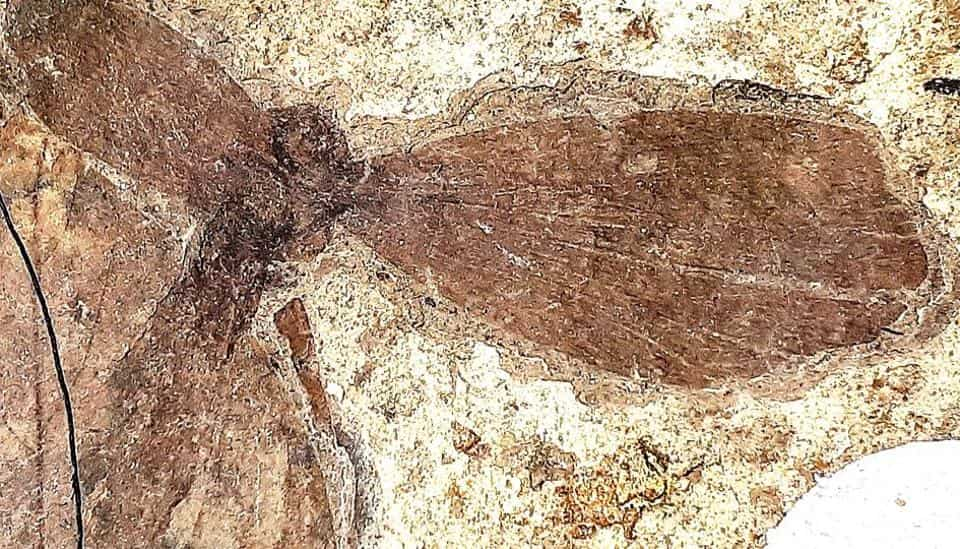
The dragonfly is around 3cm long and has a wingspan of around 2.5cm. This is, however, much smaller than the fossils of giant dragonflies, which have been found elsewhere in the world. (Sourced)

A team of scientists from West Bengal has discovered the first dragonfly fossil in India from Jharkhand’s Latehar district. The fossil is at least 2.5 million years old. A paper on the finding was published in the October 10 edition of Current Science journal.

“This is the first dragonfly fossil from India. It is a well-preserved one. The fossil belongs to the late Neogene period, which dates between 2.5 million and five million years ago,” said Subir Bera, a professor with the Centre for Advanced Study of the Botany department, University of Calcutta.

Researchers from four universities in West Bengal have been looking for fossils in the sediments of Chotanagpur plateau for almost a year. In January 2020, they dug the dragonfly fossil from a depth of around 5m below the soil surface.The team has also found fossils of various insects, fishes and leaves of some flowering plants.

The research was headed by Mahasin Ali Khan, assistant professor of Botany at Sidho-Kanho-Birsha University.

“The nearest living member of the fossil is Libellula depressa, a species of dragonfly that is found in any tropical country, including India,” said Manoshi Hazra, one of the team members and the first author of the research paper, which has been published in Current Science.

As dragonflies spend most of their lives near fresh water bodies, the scientists said that millions of years ago a freshwater body might have existed there, which has now dried up. The other fossils of plants and fishes, which the scientists have found, also support the theory.

“The very fact that the team has found the fossil of an adult dragonfly from the sedimentary bed is very interesting. Usually the prospect of finding an immature dragonfly from the sedimentary bed is huge because dragonfly-larvae live underwater. The prospect of finding insect fossils from sedimentary beds and coal beds is huge, but unfortunately little work has been done in India in this regard,” said TK Pal, a former scientist of the Zoological Survey of India.

source: http://www.hindustantimes.com / Hindustan Times / Home> Kolkata / by Joydeep Thakur / Hindustan Times, Kolkata / October 08th, 2020

Mubarak Pasha to be first VC of open varsity

Kozhikode, KERALA

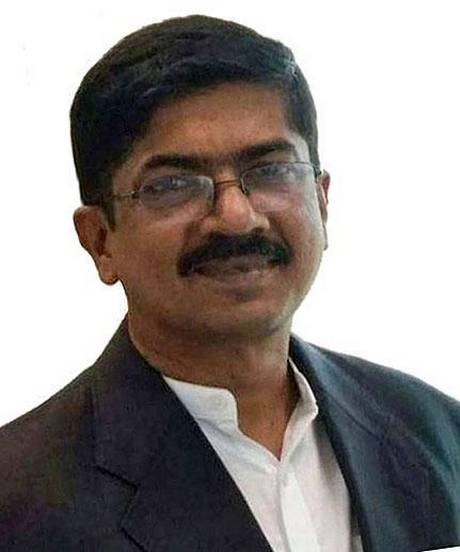
P.M. Mubarak Pasha

He holds a 34-year teaching and administrative experience in various institutions

The State Cabinet on Wednesday decided to appoint P.M. Mubarak Pasha as the first Vice Chancellor of Sree Narayana Guru Open University.

Dr. Pasha, who hails from Kozhikode, holds 34-year teaching and administrative experience in various institutions of higher education. He has served as Director of the College Development Council and Director of School of Distance Education, both at the University of Calicut; and Principal of Farook College, Kozhikode.

He is currently the Head of Strategic Planning and Governance in the National University of Science and Technology in Oman where he has settled since 2007. He was previously the Deputy Dean (Finance, Administration, Institutional Planning, and Quality Assurance) in the National University College of Medicine and Health Sciences there.

Dr. Pasha has also been a member on various panels, including the Court of Aligarh Muslim University, NAAC peer team, and regional direct taxes advisory committee.

The government also decided to appoint S.V. Sudheer, former professor-director, UGC-Human Resource Development Centre, University of Kerala, and P.N. Dileep, Professor, TKM College of Engineering, Kollam, as Pro Vice Chancellor and Registrar respectively of the fledgling university.

Dr. Sudheer had held positions including those of Director of both Planning and Development, College Development Council, and Controller of Examination in the University of Kerala. Dr. Dileep was previously the member of the Faculty of Engineering in the University of Kerala and Board of Governors in the APJ Abdul Kalam Technological University.

source: http://www.thehindu.com / The Hindu / Home> News> States> Kerala / by Staff Reporter / Thiruvananthapuram – October 08th, 2020

Welcome to Bengal, Where Thirty Muslim Professors Teach Sanskrit

WEST BENGAL :

At a time when faculty members both present and past have even written to the President of India, Ram Nath Kovind, requesting him to intervene and stall the appointment of Dr Feroze Khan in Banaras Hindu University (BHU)’s Sanskrit Dharam Vidya Vigyaan department, West Bengal seems to embracing its Sanskrit professors hailing from the ‘other’ community, comfortably.

Going by a loose headcount there are at least 30 Muslim professors in West Bengal, teaching Sanskrit. Around 14 were recruited last year through College Service Commission and 12 this year. The most recent recruitment being of Ramzal Ali at the Sanskrit department of Ramkrishna Mission Vidyamandir, Belur. Speaking to eNewsroom, regarding his recruitment, he said, “I am in a state of shock with so many calls being made to me, seeking my comment. A Muslim learning Sanskrit is nothing new. There is a history to it. In every Sanskrit department across the state, you will find at least one Muslim student. Muslim Sanskrit teachers in Bengal, is also not rare.”

Perhaps Ali has a point. For, Dr Shaikh Sabir Ali, a gold medalist in Sanskrit from the University of Calcutta has been teaching the language for almost a decade now. Dr Ali, at present, teaches Sanskrit at the West Bengal State University, Barasat. According to him, Sanskrit, as a language is beyond Vedas and Upanishads.

He said, “There is more to this language, apart from the Vedas, Purans and Upanishads. This language has a rich literature and grammar too. It was these two that attracted me as a child. Luckily, my teachers encouraged me to take up this language for my higher studies. You, see one can’t make people take up a language simply based on one’s religion. History is a witness to many Muslims mastering this language.”

Speaking from experience Ali said, “Every batch has at least one Muslim student in the Department of Sanskrit. In Kolkata, I presume, Rabindra Bharati University has a huge number of Sanskrit students.”  Dr Ali is also a topper from Ramkrisha Mission Vidyamandir.

Adding to the experiences of Muslim Sanskrit teachers in Bengal, Rakibul Sk, assistant professor at SBS government college said, “I have never been discriminated on the basis of my religion, neither while I was mastering Sanskrit, nor while teaching it. I would like to add that while I hail from a small place like Jangipur, my place of birth has taught me that there is no religious attachment to any language. Hence, when I took up Sanskrit for my higher education, the Hindu neighbours of mine never raised an eyebrow. On the contrary, they were quite happy. The teachers who guided me to reach this position are all Hindus. It’s sad that today, we are discussing all this from a religious perspective.”

However, on being asked about the faculty members writing to the President of India, Ali, said, “I don’t want to open up a new controversy. But let me be very clear, there is a particular department of Sanskrit, which is accessible only to the Brahmin. Even Hindus from other sect are not allowed to enter that domain, so the question of a Muslim being appointed in that domain can be quite challenging. As per my knowledge, Dr Feroze Khan has been appointed in the Sanskrit Dharam Vidya Vigyaan department, which is the domain that I just talked about. I don’t want to get into a further debate, but I guess, his recruitment in the literature department wouldn’t have caused this huge controversy.”

Given the new twist in the story, it would be interesting to see President Kovind’s call on the letter written by the faculty members of BHU, seeking his intervention to stall Khan‘s recruitment, especially when earlier this year, he had awarded Padma Sri for Literature and Education to Sanskrit Scholar Mohammad Hanif Khan Shastri.

(Courtesy: Sabrang India)

source: http://www.janataweekly.org / Janata Weekly / Home /by Shabina Akhtar / December 10th, 2019

100 Indian students join UK university’s new online diabetes course

UNITED KINGDOM:

Birmingham City University launched its new Master’s Degree in Advancing Diabetes Care in partnership with the University Hospitals Birmingham Diabetes Team this week.

Representational image.
Representational image.(Bloomberg file)

Around 100 Indian students have enrolled for a UK university’s newly-launched online course focussed on supporting people living with diabetes and leading new research into the condition.

Birmingham City University launched its new Master’s Degree in Advancing Diabetes Care in partnership with the University Hospitals Birmingham Diabetes Team this week. The course is aimed at helping healthcare professionals develop specialist skills and techniques to enhance the level of care provided to people living with diabetes. The first cohort of students taking up their places on the course are based in India and are sponsored by Mumbai-headquartered pharmaceutical company Lupin Pharmaceuticals.

“When I was an undergraduate student of medicine, at that point in time in India we used to read about diabetes in the subcategory of lifestyle diseases. Now we have seen the spread of this disease across all age groups, impacting people with different social backgrounds,” said Dr Shishank Vikram, Consul General of India, Birmingham.

“At this particular juncture the launch of the MSc is a very important step which will go a long way in not only providing quality training but in the exchange of best practice between the two sides. The students that are joining this course are all medical doctors and I wish them the best,” he said.

According to figures quoted by the university, India is home to nearly 77 million people with diabetes and the course has been designed to further research and development into diabetes care, particularly with COVID-19 causing a disproportionate mortality rate for people with diabetes. It is open to healthcare professionals including general practitioners (GPs), hospital-based doctors, specialist nurses and practice nurses, midwives, dietitians, podiatrists, pharmacists, psychologists and other roles across healthcare sectors.

“By providing training to medical doctors who specialise in diabetes care, we know what this is going to do, is to reach out to those communities who are most impacted by diabetes,” said Professor Philip Plowden, Vice-Chancellor at Birmingham City University. “The skills and knowledge that you develop on this course are going to result in evidenced-based effective diabetes care. We know the impact of this is going to be felt for generations,” said Plowden.

Professor Wasim Hanif, Professor of Diabetes & Endocrinology, Consultant Physician, & Head of Service in Diabetes at University Hospital Birmingham, said the reason the new course is important is that there are currently 463 million people living with diabetes globally.

“Globally every seven seconds somebody dies from diabetes, including in countries like India. To give you some perspective on these things, every day nearly 12,000 people die from diabetes. The aim of this course is to try and give the most advanced skills to healthcare professionals trying to manage diabetes,” he said.

The university says it hopes the brand new course will meet the needs of interdisciplinary healthcare practitioners working in partnership with people living with diabetes. 

source: http://www.hindustantimes.com / Hindustan Times / Home> Education / by Press Trust of India / posted by Akhilesh Nagari / October 04th, 2020

Jamia Researchers Develop Fastest Molecular Docking Tool for Drug Discovery Pipeline

NEW DELHI :

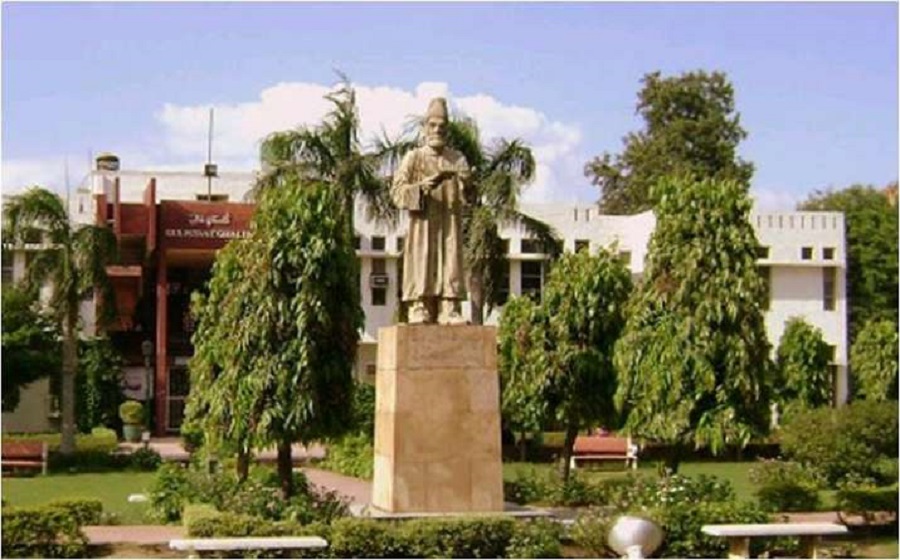
Jamia Millia Islamia, New Delhi.

Drug discovery is a complex and long-drawn process that requires an interdisciplinary approach to discover new drug-like molecules called leads

Clarion India

New Delhi :

A team of researchers, led by Dr. Md. Imtiaz Hassan at the Centre for Interdisciplinary Research in Basic Sciences, Jamia Millia Islamia(JMI), has developed a molecular docking-based high-throughput virtual screening tool as freeware named InstaDock.

Molecular docking is an in-silico method used for exploring protein-ligand interactions of therapeutic interest and is one of the most widely used approaches in drug development and discovery. Drug discovery is a complex and long-drawn process that requires an interdisciplinary approach to discover new drug-like molecules called leads.

In-silico approaches such as molecular docking are used in “virtual high-throughput screening” of chemical libraries containing millions of compounds to find potential leads in drug design and discovery.

Dr. Hassan and his students Taj Mohammad and Yash Mathur developed InstaDock, a free and open-access Graphical User Interface programme that uses standard tools to perform molecular docking and virtual high-throughput screening efficiently.

An InstaDock suite is a single-click executable, specially made for the convenience of non-bioinformatician and for people who are not experts in using computers. It is the easiest and more interactive interface than ever existing software that facilitates on-board visualisation and docking analysis in just a single click.

InstaDock has been accepted for publication by the Briefings in Bioinformatics, a reputed journal of the Oxford University Press with an Impact Factor of 9.1. InstaDock is freely available for academic and industrial research purposes at www.hassanlab.org/instadock.

“It is quite challenging for non-expert users to perform molecular docking and high-throughput virtual screening directly at a universal platform, as the process involves a large number of steps. We have presented InstaDock in such a way that it can be used by even non-bioinformaticians and people with very little knowledge of computers, which greatly enhances its scope of usefulness”, Taj Mohammad, Senior Research Fellow at Dr. Hassan’s Lab, said.

Yash Mathur said “we developed InstaDock with an aim to provide a simple and interactive drug-discovery platform to help curious minds and professionals alike, experiment and understand proteins in-silico with just a single click”

“The fields of molecular docking and high-throughput virtual screening are the much-needed areas of drug discovery and thus deployment of InstaDock is bound to greatly enhance the pre-existing procedures. It is a novel method that gives non-expert users the freedom and efficiency that is not provided by existing programs”, said Dr. Hassan.

Dr. Hassan said this work is a great effort of his students Taj Mohammad and Yash Mathur who worked constantly for a long time even in the lockdown situation. They are dedicatedly working in the field of structural biology, machine learning, drug discovery, and NGS analytics to contribute towards modern medical science.

Dr. Hassan’s lab is running several research projects related to drug design and discovery which can be accessed via www.hassanlab.org.

source: http://www.clarionindia.net / Clarion / Home> Editor’s Pick> India> Indian Muslims / September 25th, 2020

This Muslim teacher in Maharashtra developed all-purpose workbook for underprivileged children who can’t afford smartphones for online classes

Solapur, MAHARASHTRA :

Maharashtra:

At a time when educational institutions across the country have been shut due to the prevailing COVID-19 pandemic, online teaching has become the new reality. While online classes have come as a boon to students who otherwise would have lost valuable time, for the teachers adapting to online classes meant creating educational videos, conducting online classes via Google meet, synchronizing activities through WhatsApp groups.

While those students who have smartphones, internet availability, laptops and other electronic gadgets are getting benefits from it, other students belonging to India’s rural areas and considerably underprivileged are scrambling to access education through smartphones.

In Solapur district of Maharashtra, nearly 60 per cent of students are underprivileged and don’t have smartphones or adequate access to the internet.

Responding to this crisis, a Zilla Parishad Urdu primary teacher Javed Kazi from Solapur came forward with an idea of the workbook of all the subjects including drawing, math’s and languages to provide an option to the deprived students from 1st standard to 5th standard. The workbook offers these children to learn, read, write and solve equations at home under the telephonic guidance of concerned teachers and elderly people.

Talking to TwoCircles.net, Javed said he is doing it with the aim to serve his mother tongue Urdu and its students. “I am not intending to make money from it,” he said.

The notebook is not expensive, and as per Javed, is paid for by concerned class teachers from. “We don’t want to put a financial burden on our poor students,” he added.

Javed said that the notebook was a success and he has received an overwhelming response from teachers and students. “I have received calls from private schools and other cities of Maharashtra as well,” he said.

Javed said that three thousand copies of the trimmed syllabus based workbook have nearly finished and they are planning to publish three thousand more to meet the demand of all the five thousand students of 65 Zila Parishad’s, 22 corporation and 12 Nagar Parishad school students of the district.

Amid the ongoing pandemic, the government has encouraged Online Educational Resources OER but the availability of OER for Urdu medium students is very limited.

“In such a situation, we have to provide something to these students to engage them,” he said.

A Zila Parishad primary school teacher Mohsina Bangi said that the workbook has made learning activity easy for them. “We are supervising by making calls and students are giving a good response. They are reading textbooks and writing answers and solving problems of other subjects in the workbook,” she added.

A parent of a student from Aurad Zila Parishad school told TwoCircles.net that concerned teachers send educational videos and other online learning material but, “our children can’t get the benefit of it because we have four children and only one smartphone that I always carry.”

“This workbook has made all the children busy in learning activities. Children are reading, writing and informing their teachers as per convenience,” he added.

Ayesha Wasim Bagwan, mother of a fourth standard student expressed happiness over the provision of this workbook. “This has given momentum to my daughter’s learning process. Now she is giving some time to study, trying to solve math’s problems, writing answers by taking my help,” she said.

source: http://www.twocirlces.net / TwoCircles.net / Home> Children / by Imraan Inamdar / TwoCircles.net / September 18th, 2020