The author and academic says science fiction, whether set in the near future, a nearby planet or even in an alternate universe, is almost always about our today
Chatting with Sami Ahmad Khan is always fun. When he said he was re-reading Douglas Adams’ seminal Hitchhikers Guide to the Galaxy as he was including the increasingly inaccurate trilogy of five in an elective course, one’s curiosity was naturally piqued. Sami teaches at the University School of Humanities and Social Sciences, GGS Indraprastha University. “We run MA, MPhil and PhD programmes in Literary and Culture Studies,” says the 34-year-old author of Red Jihaad and Aliens in Delhi.
“The senior faculty members are quite receptive to new ideas, and constantly seek strategies for the school to stay updated with a rapidly-mutating world. Consequently, we are encouraged to undergo frequent syllabus revisions, especially for our MA (English) course.”
Science fiction electives
The latest revision Sami says was in 2019, and gave the faculty the opportunity to engage with their core areas of research in a classroom setting. “These teacher-specific courses (offered in MA second year) range from exploring multiple dimensions of art, philosophy, gender, drama and culture, temporal/event excavations (such as Partition studies) and trans-media (cinema) to area and genre studies (such as Science Fiction). Under this paradigm, I am pleased to offer two electives on SF in the upcoming semesters: the first course is on global SF and introduces learners to stalwarts such as Jules Verne, H.G. Wells, Isaac Asimov, Ray Bradbury, and Phillip K. Dick and recent films such as Christopher Nolan’s Interstellar to study the origins and theories of SF in the Global North.
The second course is on Indian SF, and utilizes, as starting points, select works by Satyajit Ray (Bangla) and Jayant Narlikar (Marathi) among others, and Shankar’s Enthiran, to explore how our own SF traditions operate across different narrative forms (short stories, novels, films, web-series etc). These courses simultaneously function as introductory primers for those interested in knowing more about SF as a genre/mode, and also address the textual/contextual depths and theoretical complexities an MA student must navigate.
Don’t panic
The author says he included The Hitchhiker’s Guide to the Galaxy in the course on global SF “the same ways dolphins don’t. What better novel to study about the end of world during the end of the world? It questions the philosophical underpinnings of our world and exhibits how SF toys with semantics/syntax of the narratives around it. Like a timeless classic, it doesn’t fail to respond to our contemporary material realities. Above all, it “has the words DON’T PANIC inscribed in large friendly letters on its cover.” We could use this helpful advice in the maddening times of COVID-42”— Could it possibly be the answer to the questions of life, the universe and everything?
Sami says the lockdown has been treating him better than expected. “I’m privileged enough to have a full belly, a roof over my head, a broadband connection, a Netflix subscription, and a gargantuan reading list. Usually, too, I’m happy being left to my own devices. I just need a book/film/web-series (i.e. a text) and the time/space to construct (and deconstruct) random ideas in my head, which this lockdown has given me. If only the circumstances weren’t so grim. This is when we begin to “question the nature of our reality” (as per Westworld), and start looking for our towel.”
Descriptive not predictive
These are troubling times and Sami hits the nail on the head when he says it is easier to read about dystopia than live it. “Through its monsters, future wars, zombie apocalypses, rogue AI, invading aliens, environmental fiascos, and alternate histories etc., SF, whether set in the near future or on a nearby planet or even in an alternate universe, is almost always about our today. Even Ursula Le Guin finds SF ‘descriptive’ and not ‘predictive’.”
The Delhi-based author says, “SF foregrounds and amplifies the feedback we receive from these dystopian narratives to our present(s), which then radically changes the way we approach our own lives and societies. SF’s dystopias and their hapless characters translate into an almost quasi-utopian connotation for us (the readers). A shared nightmare in/of the future suddenly awakens us to the lacunae of our times.”
Opposite sentiment
A real dystopia, according to Sami, portrays the exact opposite sentiment. “It is built on the premise that the SF dystopia (and its feedback) has failed to warn us, and in doing so, birthed an actual one in our lived reality. All that we are doing to this planet today – and what it is doing to us in return – makes it clear that the present has been colonized by the future. The age of men is over; the age of superbugs has begun.”
When we last spoke, Sami had spoken of a sequel to his 2017 SF thriller Aliens in Delhi, where reptilian creatures take over the capital. “I am a fanboy who has been lucky enough to not only get the opportunity to teach SF but also research and write it. I just finished a short story called Biryani Bagh, which brings aliens (and this time I may use this word differently) to a Bagh that has haunted contemporary popular imagination. I’ve been told it would appear in the second Gollancz Book of South Asian Science Fiction (Sami’s last story, 15004, appeared in the first volume). My next full-length project is an academic monograph, a critical catalogue of Indian Anglophonic SF for a university press. After that, perhaps, I might start writing the sequel of Aliens in Delhi – but only if the world hasn’t produced it already, not as fiction, but as a lived reality.
source: http://www.thehindu.com / The Hindu / Home> Life & Style / by Mini Anthikad Chhibber / June 16th, 2020
Aftab Siddique am born and brought up in Khar. She did her schooling from Duruelo Convent High School and R.D.National College. Aftab is a teacher by profession from last 27 years.
She says about her job as a teacher
As a teacher, we impart a specific syllabus but when kids face practical difficulties in real life, they are unaware of how to deal with them. Not only the children but as adults, individuals, professionals we too are unaware of our rights, Dos and Dont’s. This is what inspired me to contribute time to the community. Create awareness, bring people together , help, live together as one. Aftab is very attached to Bandra & Khar. Before becoming an activist, she used to unaware of BMC Ward , Police stations or any other government office. However after working with ALM, Citi Space and Federation, She met many like minded people who were very experienced.
Here is interview we did with her, do read below to know more.
1. How long have you been an activist? Do you take up issues on in your ALM or any issues in Bandra ?
It’s almost a decade , I am a social activist.I have been awarded by Bombay Catholic Sabha, H-W Federation, NDTV for my good work for contributing in bringing a change in community. and nominated by Mumbai Mirror as Top Ten Mumbai Heroes. I work not only with reference to my alm issues but across city BMC, Police, SRA , MHADA etc for all the distressed genuine people who need help or want to be a part to learn and contribute to the community.
2. Could you tell us what projects you have undertaken as an activist in the past and what have been their consequences ?
Various projects, I have taken till now.
a.) Deleted more than 2,700 names from Bandra Constituency of voters who didn’t exist .
b) Exposed 4000 crores SRA scam in Santacruz W Daulat Nagar. Already case is in criminal Esplanade court with help of EOW and lately an inquiry by Housing Secretary initiated with help of Hon CM .Almost 895 people from 17 years not rehabed and almost more than 150 residential and commercial sale buyers who paid 45-75 lakhs have not got possession. More than 125 crores is outstanding dues.
c.) Exposed the Maulana Azad Minority Scam which was bungled by Anti Corruption bureau in connivance with the accused . Inspite inquiry reopened by ACB Mr Nangre Patil other successors linger. Reason best known to them
d.) Got Educational Open plot 1751 sq mtrs on 15th & 33rd junction evicted in 2016 after pursue with Adtnl MC in 2012, lately learnt BMC has given it back after pressure from Bandra MLA.
e.) In December 2016, got BMC to reenter the Balgandharva Theatre but once again under Bandra MLA pressure it was given back . Issue now with Lok Ayukt where Hon Lok Ayukt has questioned MC in various breaches and flouts wilfully ignored. Waiting for MC to reply. Next hearing on 23/ 03/17 .
f.) Fernandez Chawl in Old Khar in 2016 got it signed for 27 families who were in deep trouble because of no proper procedures were followed and alot of violations in submissions. Project is initiated but cases we have not withdrawn as they are compoundable cases .
There was too much of political and Police pressure. Atrocities of police due to political pressure is very high in Bandra , Khar. This is not accepted by us.
g.) Lost files and missing files . Got an order in 2009 from Lok Ayukt to regenerate files of Mumbai City . The order directed BMC to upload all old and new files on BMC site, register FIR for the files which are lost.
h.) Formed a like minded group with people of H E/W and K (W) citizens where unanimous agenda is decided and pursued bimonthly or as on when its need of the hour.
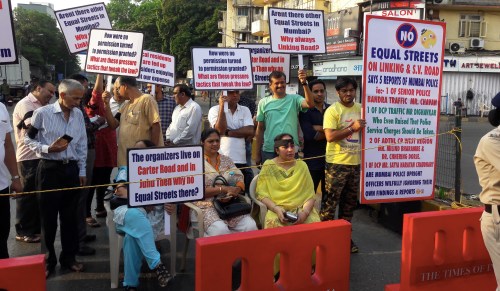
i.) Opposed Road Events ( Equal Streets) staying 19 days in Khar Police station as cops refused to help.The event caused inconvenience to residents confining residents and 16 hospitals and nursing homes. at a stretch of 3 kilometres. Service charges not paid to government. With support of Mumbai Police managed to cancel it. Last event in 2016, Mumbai Police ensured service charges was paid.
j.) Since 2011 ,Opposed illegal vendors during Ramadan in Kharie Village old Khar. Our representation to Adtnl CP was considered unlawful and under political pressure FIR was filed. Court cracked a whip on police for falsely accusing and I was acquitted in 2014. My agitation continued and ……
Last year , Khar police filed FIR on shop owners who put their ware on road and against anon people who set up boxes with help of local political karyakartas.
k.) Opposed poster banners and defacement on road . Under political pressure had faced FIR but was accepted as we had opposed in street with police who accompanied the protest March. Hon Home Minster Mr Jayant Patil and Mr Majeed Memon helped.
l.) In 2012-13 , Proposed the basement parking below Patwardhan Garden. In 2014, Jt CP traffic also gave his consent.I filed the same in DP revision in 2014 too. Presently, it is approved by BMC.
m.) In 2012-13 Proposed another full fledged Municipal Hospital opposite Bandra Rly Colony , SV road for people in HW along with Dialysis centre, OPD, OT, beds , Scan and pathology facility. Last year a five floor building has been approved. alm144 has received letter for BMC. .
n.) Proposed swapping of Khar Danda Police plot with present Khar Police station.Present place for police station is small and on lease. No space for citizens facilitation, filing documents, ATS is operated on road. The same has been filed in DP reservation suggestion, objections.West Region Police has also filed from their end. Police file in CP office, Kaksh- 8.
o.) Got the Mahatma Phule Hami Yojna room from political clutches and requested BMC to hand over to Khar Police .Now one sees Khar Police beat chowki nos- 1 on SV road.
p.) Next to Khar Police beat chowkie ,the open space garden got it redeveloped with BMC H/W funds with multipurpose play installed. Earlier, there was illegal garage being operated .
q.) Appealing from 2012 to all concerned BMC authorities for allowing children to play( Football,Cricket & other free play outdoor sports) in the Patwardhan Garden 14,571 sq mtrs open space Mid Circumference. There are no open space in 3 km for kids to play not only in H/W but also in H-EAST. After inspection, DMC Zn-III in 2014 has put up a report in favour of citizens. Last month we had signature campaign on this too. Almost more than 500 students from vicinity colleges and residents have signed.
r). Answered in question 3 below.
Presently, BMC has no plans on illegal hawkers and compound encroachments in 7 malls in 33rd road.
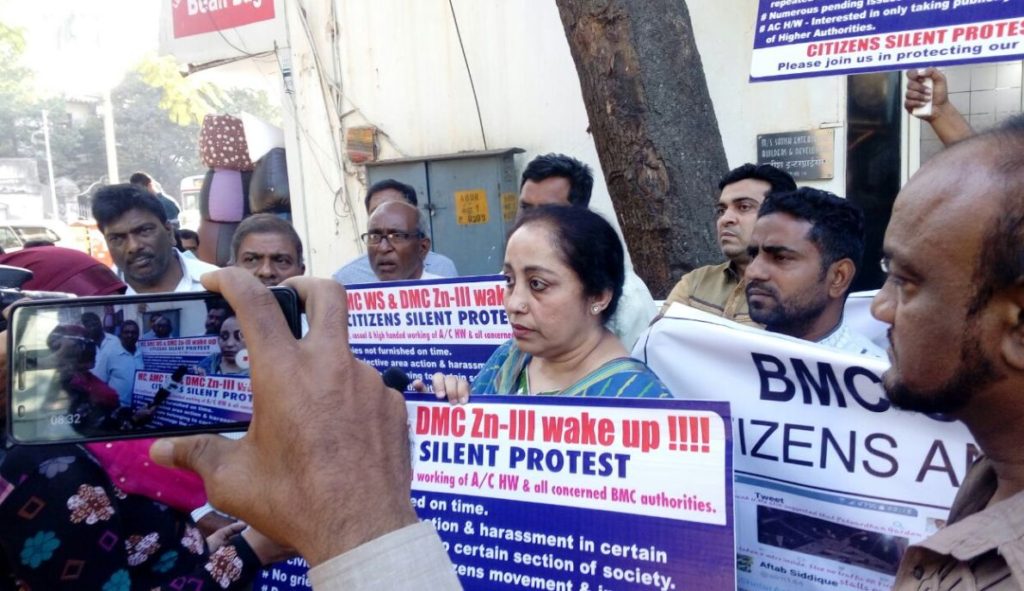
In Jan-Feb 2017,15 days residents and stall owners sat in Silent Protest against BMC demanding FIR against BMC.
Yesterday, too we filed a complaint against BMC for playing mischief, instigating people, creating riot like situation, damaging public property.
s.) Helped in Reunion of a female with her family in Andheri W, ( DN Nagar )where she was trapped in Saudi . Through agents in City, she was employed as nurse and once she reached Saudi , she was made to do odd jobs & suffered a lot of ill treatment. This was with help of His Excellency Mr Ahmed Jawed. Ex CP of Mumbai Police.
t. )With help if Sneha (NGO), Located a young lady who fled from the torture of her husband. Family disowned her. She fled from Muscat and is now living in a woman’s shelter home. She has started working to make ends meet.Issue related to Amboli Police stn.
u.) Got may over due officers, internally rotating officers transferred from BMC and Police. alm strongly objects officers patronizing politicians.
v.) From last 6 years a lot of individuals in their individual capacity donate books & basic amenities for poor deserving people.
w.) Disproportionate assets of Bandra Ex Councilor is still on in ACB.
x.) 7 illegal constructions inquiry in ACB is still on .
y.) SIC fined BMC BF Officer in 2008.Rs 25,000 for not providing information on time. 1st officer to be fined in BMC BF dept .
z.) alm144 with help of DMC Spl pursue initiated in Railway authorities paying fees to all hoardings to BMC. & now we are also pursuing with agreement with Dairy Commissioner and BMC for all Aarey, Aarey Sarita.From last 60 years BMC has no agreement with Dairy Commissioner. Only ground rent of monthly fee Rs 150 is being collected.
3. What do you think about the current project of underground shopping mall at Patwardhan Park and what would be the eventual fall out of the hawkers?
From Dec 2015, Residents in support of licence stalls are having a strong fight with BMC opposing the mindless beautification proposal of linking road Khar opposite National College .The proposal is 100 crores and not approved by any authority but BMC wants to shift 167 licence stalls on road . Underground shopping mall is out of question as it’s unsafe not only for stalls but also shoppers as Mumbai City is in red alert most of the time. It will be a very costly affair for stall owners . Cost if A/C etc. Health hazard too. Concept of basement pedestrian walk of shopping plaza is a failure in Mumbai City.
4. Could you tell us, about your life in Bandra and what do you particularly think about bandra and some of your favourite places in Bandra?
My favourite place in H-W where I love to relax or just sit with my friends chatting or eating is at Carter Road. I’m a non vegetarian and relish food from quite a few restaurants. Fortunately H-W ward is blessed with many restaurants .
I am a foodie but not a party animal. I’m an introvert. I love to spend time with my family, friends and close associates which I hardly get time.
5. What are some of the changes you would like to see in Bandra which doesn’t conflict with the current governments vision of development?
The changes that I would like to see in Bandra, Khar, Santacruz is :- I had carried a lot of Silent Protest agitation against BMC and Police high handedness demanding quality and timely services.
1.) Politicians should stop interfering with every government work and accept citizens perspective positively. Politicians seek help from alms and associations but both bureaucrats and politicians don’t like them and are always opposing in alm meetings.
2.) Curb encouraging illegal work.
3.) Greenery seems to be disappearing from HW ward. Our important main roads have started to look concrete.
4.) Organise Sporting Events in Public Spaces (RG and PG) for all age groups.
5.) Remove that major Bandra skywalk obstructing traffic.
6.) Presently all redevelopment projects in Bandra specially Khar and Santacruz ( W) are getting open space condition. In near future, how will roads be widened.
7.) There has to be a soft approach of BMC and specially Police officers. The West Region Police seems accountable to no one and is turning to be a shelter home for anti-socials. People are being assaulted , proper cases are not being registered. Every issues Police has started to ask people for sections and IPC or directing people to move to court.
8.) Install CCTV in sensitive and crime areas such as Linking Road KFC Jn , SV road at Khar Traffic junction, Lucky junction.Cameras installed by cops are not accurately focused.Seems deliberate. No proper PWD to maintain.
Police has a huge back log of inquiries. In hurry they end up diluting issues.
9.) Too many VIP bandobast in Bandra & Khar has to be stopped. Why so may Police staff is in Special duty of politicians. eg Narayan Rane , Sushil Kumar Shinde etc. When is Police going to serve a common man.
10.)I want youth to not only participate in organising programmes but also be a part of the system. Help being eyes and ears for good governance.
11.) I want the Gazdhar Bandh area, Daulat Nagar area and Road attached to Bandra Rly stn to look better. One can’t believe that in heart of city such areas and antisocial joints exist.
12.) Improve or Redevelop the Railway quarters on SV road , Police quarters at Carter Road. The conference room of Adtnl CP on ground floor.
13.) Improve all Municipal Markets.Implement Vendor Policy pending from 2014 so that people do not suffer and are not deprived of livelihood. This will make Roads free from illegal vending. (Loacl Police is responsible to put illegal vendors).
14.) Make parking slots or space for all heavy vehicles defacing SV road.
15.) Uplift Municipal schools infrastructure and standards. We have 7-8 major slums in HW ward and around 7 big Municipal schools.
source: http://www.bandra.info / Bandra.info / Home / by Bandra Info / March 13th, 2017
A total of 37 students from different districts of Himachal Pradesh have figured in the HPBOSE Top 10 Merit List 2020
Himachal Pradesh 10th Result 2020:
Laila Mohammed Ali and Hatika Zafar Ahmed are among the HPBOSE Toppers 2020 of Himachal Pradesh Board of Secondary Education Class 10 Exam 2020 result of which was declared on Wednesday.
Himachal Pradesh Board of Secondary Education (HPBOSE) Dharamshala declared Class 10th or Class X 2020 or HPBOSE Matric result 2020 on its official website hpbose.org Wednesday.
37 students in HPBOSE Top 10 Merit List 2020
A total of 37 students from different districts of Himachal Pradesh have figured in the HPBOSE Top 10 Merit List 2020.
Kumari Tanu Tilak Mali of Ishan Public School, Har Samloti, district Kangra topped the exam by scoring 98.71% marks. The 2nd position is secured by Kshitiz Sharma of New Gurukul Public School, Gopal Nagar, Hamirpur who scored 98.57%.
Vansh Gupta of Glory Public School, Bilaspur; Shagun Rana of Ishan Public School, Har Samloti, Kangra and; Anisha Sharma of Government High School, Pantehra, Bilsapur jointly shared the 3rd rank with 98.43% marks.
Shreya Sharma of Minerva Senior Secondary School, Ghumarwin got the 4th rank with 98.29%.
09 students share 10th rank
Laila Mohammed Ali of DAV Public School Manali got 98.14% marks and shared the 5th rank with four other students of the state.
On the other hand, Hatika Zafar Ahmed of Holy Himalayan Sr Sec School Chamba scored 97.43% marks and bagged the 10th rank. A total of nine students from different schools of Himachal Pradesh shared the 10th rank in Himachal borad class 10 toppers list 2020.
HPBOSE 10th Pass Percentage 2020
A total of 1,04,323 students had appeared for the class 10 exam March 2020. Of them, 53,526 were boys while the rest i.e. 50,094 were girl students. A total of 70,571 student2 cleared the 2020 HPBOSE 10th exam with an overall pass percentage of 68.11%.
A total of 27,197 students have been declared Failed whereas 5617 students will appear for Compartment exam.
source: http://www.ummid.com / Ummid.com / Home> India> Education & Career / by Ummid.com News Network / June 11th, 2020
The topper’s father said the madrassa teachers had helped the teenager by waiving off his monthly fees and offering free tuition to him.
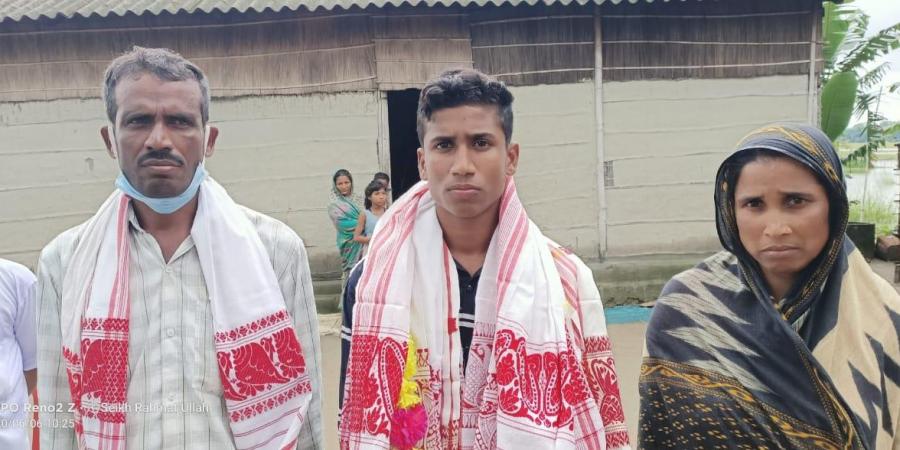
Eyamin Ali with his parents (Photo | Seikh Rahmat Ullah)
Guwahati ::
Karam Ali’s years of struggle has not gone in vain.
The vegetable vendor’s son, Eyamin, secured the top rank in Assam’s High Madrassa Examination, 2020, the results of which were declared on Saturday.
From the local MLA to panchayat leaders, people swarmed to Ali’s modest house at Kahibari village in Barpeta district of Lower Assam to extend their best wishes to the family.
For over a decade, Ali had pulled a cycle rickshaw to eke out a living for his family of six members. Two years ago, he had made the rickshaw a vegetable carrier by modifying it. Given his son’s achievement, he said “poverty can never stand in the way of excellence”.
“I cannot tell you in words how happy I am today. This is the result of Eyamin’s hard work. He topped every exam of his school life. He studied at an Assamese medium private school up to Class VI. As the expenses there took a toll on me, I got him admitted to government-run Dhakua High Madrassa in Class VII,” Ali told this newspaper.
He said as Eyamin kept excelling in his studies, the madrassa teachers had helped the teenager by waiving off his monthly fees and offering free tuition to him.
“I studied up to Class 12 and I know the value of education. I had always told my children that it would be difficult for me to give them the facilities. They have to study hard and follow what their teachers say. I said if they do that, they will shine in life,” Ali said.
His only daughter has been married off while she was a second semester student at a college. His two other sons are students of Class IX and II.
The family has one study table which Eyamin shared with his brother to study. With no electricity at home, the two brothers studied in the light of a lamp.
“My life has been a story of struggle. But I always took pains to ensure that my focus doesn’t get deviated. I will remain indebted to my teachers who helped me in whatever way they could. I knew I will get the fruits of my struggle. God also helped me,” Eyamin, who aspires to become a doctor and serve the society, said.
He scored 558 out of 600 with letter marks in all subjects.
source: http://www.newindianexpress.com / The New Indian Express / Home> Good News / by Prasanta Mazumdar / Express News Service / June 06th, 2020
A collaborative study between scientists in India, Saudi Arabia and South Korea aimed at discovering potential drugs to SARS-CoV-2 infection in humans has led to new findings that could pave way for clinical trials to cure the Coronavirus disease.
The recent study is titled ‘Unravelling lead antiviral phytochemicals for the inhibition of SARS-CoV-2 Mpro enzyme through in silico approach. ‘ It has been co-authored by Dr. Arun Bahadur Gurung (North-Eastern Hill University, Shillong), Joongku Lee (Chungnam National University, South Korea) and three others, Dr. M. Ajmal Ali, Dr. Khalid Mashay Al-Anazi along with Dr. Mohammad Abul Farah (King Saud University).
The research has used screening from FDA approved antiviral drugs applying computational approach to embark on a scientific experimentation of vaccine development for the disease.
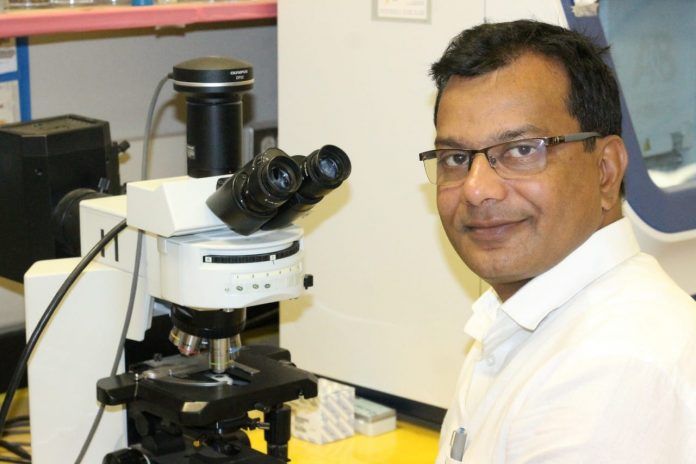
Dr Mohammad Abul Farah, originally from Ranchi in the Indian state of Jharkhand, spoke with TwoCircles.net about the study that has revealed substances and proteins having high capabilities of being used in treatment of the COVID-19 disease. An alumnus of Aligarh Muslim University, he is currently Professor at Saudi Arabia’s King Saud University and closely associated in the Genetics Laboratory at its College of Science in the Department of Zoology.
Having more than a decade of experience in academics and research in cytogenetics and genotoxicity, he is also working with Proteonik Inc, a South Korea based biotechnology research organization.
He opines that “the discovery of novel drug molecules is crucial and is need of the time” as mortality rate due to Coronavirus is rising exponentially and the speed for finding a vaccine must be accelerated with more variety in clinical lab experiments. He explained that at present there are no approved antiviral drugs or vaccines for the treatment of human CoV infection therefore the scientists in this study were compelled to use computational methods to address the problem and build on effective therapeutics against the current pandemic.
One of the co-authors, Dr M Ajmal Ali
Dr Farah informed that the researchers have proposed “potential lead molecules which can be explored as drug candidates for the treatment of the COVID-19 disease.” He further detailed the findings of the study for TwoCircles.net, beginning with the fact that “SARS-CoV-2 Mpro protease enzyme is a well-characterized drug target.” Through the study’s recent structural elucidation based on X-ray crystallography, it has opened an avenue for structure-based drug design. They have also explored “a small library of phytochemicals with previously reported antiviral properties for the identification of small molecular inhibitors against SARS-CoV-2 Mpro enzyme” leading to identification of three lead molecules which exhibit higher binding affinities as compared to the control.
“The findings are novel and exciting as the lead molecules also demonstrated broad-spectrum antiviral activities against SARS-CoV Mpro and MERS-CoV Mpro,” he informed. He also outlined that the scientists screened small drug-like molecules from a dataset of phytochemicals possessing antiviral activities and this was achieved with the help of drug-like filters and toxicity studies. The selected molecules were evaluated for their binding affinity to SARS-CoV-2 Mpro enzyme using molecular docking, from which a total of 38 phytochemicals belonging to the class of flavonoids, alkaloids, essential oils, organic acids, stilbenes and other phytoconstituents were screened. This led to identification of three lead molecules – Bonducellpin D and Caesalmin B and 5,7-dimethoxyflavanone-4′-O-β-d-glucopyranoside – all three having antiviral activities against parainfluenza virus (PI-3) and bovine (cattle) virus. These three lead phytochemicals, he says, “have potential to be developed as effective antiviral drug specifically against SARS CoV-2.”
When asked whether this identification would accelerate the process of vaccine formation or not, Dr Farah pointed that antiviral drug development takes place via classical mechanisms – usually by targeting important virus enzymes such as polymerases, proteases or neuraminidase; however vaccine against a specific virus is developed by injecting the same virus in inactive form or non-pathogenic form to activate the host immune system to produce specific antibodies against the virus. For that, he said “the current findings need further validations through in vitro and in vivo lab experiments for developing into drug candidate molecules.”
Bonducellpin D is a promising drug candidate against coronavirus, suggest the findings. While the three substances were found to be “significantly inhibiting Mpro enzyme that ultimately block the viral replication,” Bonducellpin D was identified as a unique precursor to a vaccine for coronavirus.
Discussing India’s more than 1 lakh mark of current infection rates coupled with a fourth phase of a nationwide lockdown and massive breakdown of economy unfolding with the migrant crisis, Dr Abul Farah highlighted that all the three lead molecules that need further validations through lab experiments can be obtained through a clinical manufacturing company and in case they are not available commercially, they can easily be purified from the source (plant), or could be synthesized in any chemistry lab equipped for organic synthesis.
“Of course, India can afford all these kind of research,” he said, when inquired about the feasibility of obtaining or manufacturing the same molecular binding in research labs in the country. He assured that India has “many high standard virology and clinical trial labs,” and the substances for clinical experiments can be obtained easily.
Born on February 5, 1936 at Devanahalli on the city’s northern outskirts, Ahmed was a prolific writer in Kannada and penned poems, plays, short stories and novels.
KS Nissar Ahmed
Bengaluru :
Eminent Kannada poet and writer K.S. Nissar Ahmed passed away here after prolonged illness, an official said on Sunday. He was 84.
“Ahmed died at his residence in the city’s south-west suburb after prolonged illness due to age-related complications,” a state information department official told IANS here.
Born on February 5, 1936 at Devanahalli on the city’s northern outskirts, Ahmed was a prolific writer in Kannada and penned poems, plays, short stories and novels.
A post-graduate in geology, Ahmed worked in the mines and geology department of the state government at Gulbarga in the state’s northern region in the 1950s-60s before moving to Bengaluru to teach the subject (geology) at the state-run central college in the city centre and later at Chitradurga and Shimoga in the state’s Malnad region during the 1970s.
“Ahmed is a recipient of several awards and honours, including Padma Sri and Sahitya Academy award in 2008 and state awards like Pampa in 2017, Nadoja in 2003 and Rajyotsava in 1981,” the official recalled.
Kuvempu University at Shimoga awarded honorary doctorate to Ahmed in 2010.
Ahmed is well known for his poems “Nityotsava” and other popular works such as “Manasu Gandhi Bazaru”, “Sanje Aidara Male” and “Manadondige Mathukathe”.
source: http://www.newindianexpress.com / The New Indian Express / Home> States> Karnataka / by IANS / May 03rd, 2020
The doctor’s colleagues said she was dressed in her best attire, the protective gear, on the day of her marriage, which was postponed on her request.
Kerala doctor decided to serve coronavirus patients instead of getting married during the outbreak(Sourced Photo)
Sunday, March 29 was supposed to be one of the happiest days in the life of a young Kerala doctor as she was all set to get married to a Dubai based businessmen. However, the critical battle against coronavirus meant that instead of getting married, she decided to don her protective gear and treat patients afflicted by the dreaded virus.
Meet 23-year-old, Dr Shifa M Mohammed, a house surgeon, who was busy at the isolation ward of the Pariyaram medical college hospital in Kannur on Sunday, March 29. Instead of bridal finery, the young anti-Covid-19 warrior donned the personal protection equipment (PPE) that day. ‘Marriage can wait, not my patients, who are struggling for their lives in isolation wards,’ she had told her groom and parents. Both of them readily agreed to her decision.
“In every girl’s, life wedding is an important event. But my daughter has put her social responsibility and professional commitment before her personal needs. When she suggested postponement of her wedding, we readily agreed to it,” said her father Mukkam Mohammed, a leader of the Nationalist Congress Party and LDF district convenor in Kozhikkode.
“When we approached the groom Anus Mohammad, a businessman in Dubai, he also readily agreed to it. I am a social worker and my wife is a teacher. Both my daughters have imbibed this spirit from our social work,” Mohammed added.
His elder daughter is also a doctor and currently posted at the Kozhikkode medical college hospital.
Initially Dr Shifa was reluctant to speak about her decision, which she said was “not out of the ordinary”, but after much prodding, she said “I didn’t do anything great. I did only my duty. I don’t want to talk about it much. There are many like me who postponed their personal engagements. I am only one among them,” she said over the phone after coming out of the isolation ward.
“It is true, on marriage day I was in the corona ward and some of my friends teased me saying I was dressed in my best attire (PPE). But I always enjoy serving my patients. I don’t want to talk much about it as I did my duty only,” she said, and added that as a house surgeon, she can’t talk about her patients and other details.
As the number of Sars-CoV-2 infected have gone up significantly in Kerala, the state government has recently converted Pariyaram medical college hospital in Kannur to a dedicated facility to treat Covid-19 patients. The state has reported two disease-related deaths and 234 people are in isolation wards.
source: http://www.hindustantimes.com / Hindustan Times / Home> India News / by Ramesh Babu , Hindustan Times, Thiruvananthapuram / March 31st, 2020
Prince of Arcot Nawab Mohammed Abdul Ali. File. | Photo Credit: Special Arrangement
Prince of Arcot Nawab Mohammed Abdul Ali, who is also the President of MEASI, spoke to Chief Minister Edappadi K. Palaniswami
The Muslim Educational Association of Southern India (MEASI), the parent body of The New College, Chennai, has contributed ₹50 lakh to the Chief Minister’s Public Relief Fund towards meeting the challenge of tackling COVID-19 pandemic.
Prince of Arcot Nawab Mohammed Abdul Ali, who is also the President of MEASI, spoke to Chief Minister Edapaddi K. Palaniswami over phone on Wednesday, and requested him to accept the offer from a minority educational institution, according to a release.
MEASI honorary secretary T. Rafeeq Ahmed and treasurer Elias Sait assisted Mr. Ali in raising the fund.
source: http://www.thehindu.com / The Hindu / Home> News>Cities> Chennai / by Special Correspondent / Chennai – April 23rd, 2020
Jamia Hamdard Professor Mohd. Aftab Ahmad has been awarded for Drug Research in Unani Medicine.
Jamia Hamdard Professor Mohd. Aftab Ahmad recieving the award from Union Minister Rajnath Singh.
Professor Mohd. Aftab Ahmad of School of Unani Medicinal Education and Research(SUMER), Jamia Hamdard has been awarded by the Ministry of Ayush, Govt of India for his contribution in Unani Medicine at International Conference on Unani Medicine.
Brief details about Jamia Hamdard Professor Mohd. Aftab Ahmad
1. Professor Mohd. Aftab Ahmad has about 25 years of teaching and research experience.
2. He joined the Department of Ilmul Advia, erstwhile Faculty of Unani Medicine, presently School of Unani Medical Education & Research (SUMER) as a Lecturer. Since then he is imparting teaching and giving practical training to the students of BUMS, MD. (Ilmul Advia), BPharma (Unani) and DPharm (Unani).
3. He has established the Dawasazi lab at Jamia Hamdard with all necessary alterations and prepared Unani Murakkabat (Compound Unani Medicines) in a meticulous and scientific manner using good pharmacy practices, for the practical demonstration of Dawasazi to the students.
4. Dr. Ahmad used some mutatis mutandis in the formulation of Unani Pharmacopeial Murakkab Advia to enhance their efficacy, using Modern and clinical techniques.
As of now, 100 types of Murakkab Advia/pharmaceutics are being prepared in the inhouse-lab and distributed to the indoor patients of the Majeedia Hospital, Jamia Hamdard.
Speaking on the occasion, Mohd. Aftab Ahmad was quoted saying It was a great honour” to receive the award in recognition for Drug Research in Unani Medicine and to get appreciation and even more so to be awarded by the Defence Minister, Rajnath Singh.
Unani Day observed at Jamia Hamdard
International Conference on Unani Medicine was organized by the Central Council for Research in Unani Medicine on February 11 and 12, 2020 at New Delhi. Every year Unani Day is observed on February 11. The event provided a platform to discuss wide range of topics which would help in developing knowledge and understanding Unani System of Medicine and its contribution to health and well-being.
The theme of this international conference is Unani Medicine – Towards Achieving the Sustainable Development Goal (SDG-3) of Good Health & Well-Being.
Jamia Hamdard Unani conference witnessed participants from across the globe
A galaxy of experts and luminaries from the field of health sciences across the globe shared their knowledge, experiences and innovations. There was participation from industry, academia and research organizations engaged in the development of Unani Medicine and related health sciences.
Contribution of government
The Unani Day celebration inter-alia included the conferment of annual AYUSH Awards for Unani Medicine, wherein awards conferred for excellence in different categories, viz. Best Research Paper’, Young Scientist’, Best Teacher’ and Lifetime Achievement’. An exhibition of industry and academia will also be organised.
source: http://www.indiatoday.com / India Today / Home> Education Today> News / by India Today Web Desk / New Delhi – February 12th, 2020
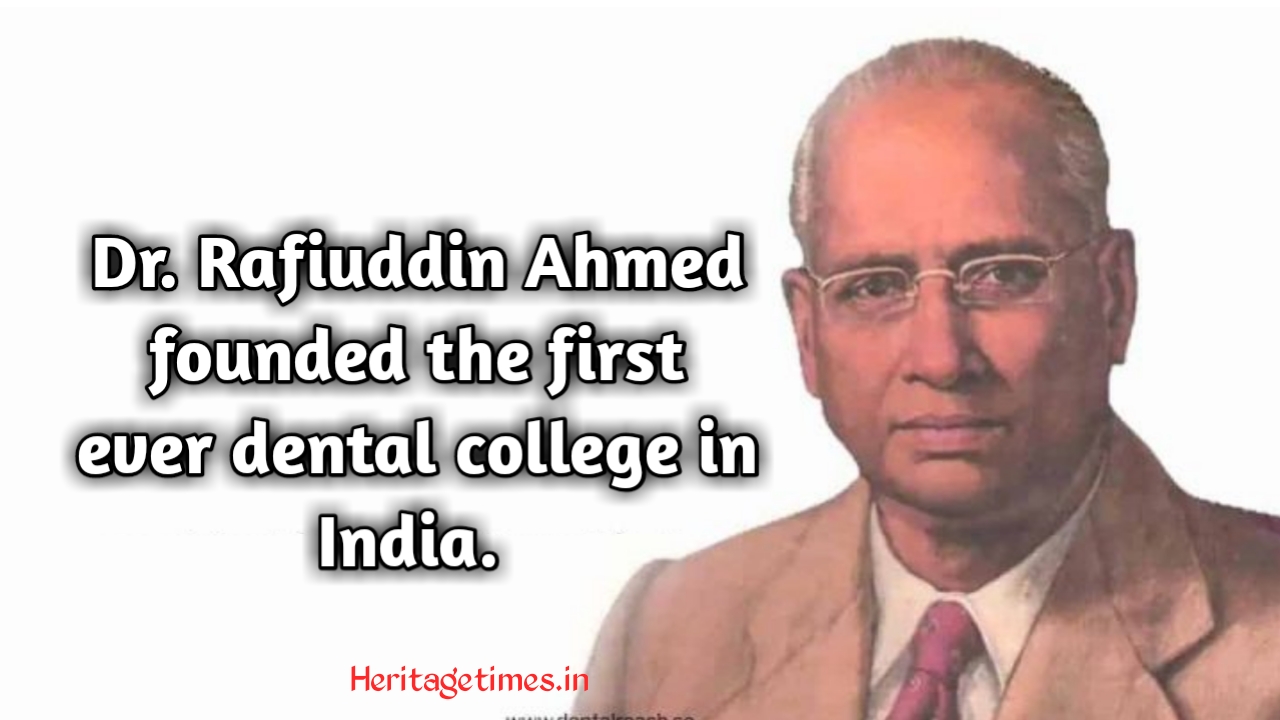
The beginning of this decade, 2020 marks the centennial anniversary of the very reputed Institute, R. Ahmed Dental College in Calcutta, West Bengal, India which was established solely by the effort of the “Father of modern dentistry” of India, Dr Rafiuddin Ahmed in the year 1920.
Dr Rafiuddin Ahmed established the Indian Dental Journal in 1925 and served as an editor till 1946. He published the first student handbook in Operative dentistry in 1928.
It was due to his constant efforts and endless endeavour that the year 1946 witnessed the formation of the Bengal Dental Association which was later renamed as the Indian Dental Association, as it is known today.
Dr Rafiuddin has an exemplary achievement in his professional career. After completing his alma mater from Aligarh Muslim University, He earned his D.D.S (Doctor of Dental Surgery) degree from the University of Iowa School of dentistry, USA in 1915. During the world war- I, he worked at the Forsyth Dental Infirmary for children in Boston, Massachusetts.
In 1919, a year after the war ended, he returned to India to open a dental institute in Calcutta. Initially, the college was run on an experimental basis with only eleven students from 1920 to 1923. Dr R Ahmed took the responsibility of teaching the student both theoretical and practical alongside other dedicated teachers. By 1928, this college was a well- organised institution for scientific dental education in India.
In 1947, Dr Ahmed was awarded a fellowship at the international college of dentistry. He also received a fellowship at the royal college of Surgeons of England and the Pierre Fauchard Academy in 1949.
The founding father of IDA became a minister of the Bengal Government and supervised the Department of Agriculture, Community Development, Co-operation, Relief and Rehabilitation until 1962.
This great personality is an epitome of excellence. His entire life revolved around providing services to the communities. His contribution in the field of dentistry is something to be remembered and truly appreciated. Dr R. Ahmad proved to be an all-rounder. He wasn’t just a dentist, but also was a publisher, an editor, a dedicated teacher, a minister, a president (of IDA). These are just to name a few.
The distinguished achievements of this great personality was recognised by the Government of India and in 1964 Dr Rafiuddin was awarded with the prestigious Padma Bhushan, making him the first Indian Dentist to be honoured with the third highest civilian award of the republic of India.
source: http://www.heritagetimes.in / Heritage Times / Home> Education / by Dr.Zareen Fatima / January 24th, 2020