Category Archives: Education

MP Board Class 12 Result 2019: Falak Naaz, Irfan Mansuri among state toppers

MADHYA PRADESH :

Madhya Pradesh has registered an overall Pass Percentage of 76.31 in Class 12 HSSC 2019 examination

FalakNaazMPOs01dec2019

MP Board Class 12th Result 2019:

 Arya Jain of Science stream and Vivek Gupta of Commerce have topped the Madhya Pradesh board Class 12 Inter HSSC 2019 exam while Falak Naaz and Irfan Mansuri are among the toppers list containing the names of 70 girls and 47 boys.

Arya Jain, a student of Science (Maths) stream, scored 486 marks to share the 1st rank with Vivek Gupta of Commerce stream.

Irfan Mansuri – a student of Science Biology group, scored 474 marks to bag the 3rd position. Falak Naaz of Humanities scored 471 marks and bagged the 4th rank in MP board Class 12 HSSC 2019 Merit List.

Madhya Pradesh Board of School Education (MPBSE) has declared Higher Secondary School Certificate (HSSC) Class 12 Intermediate results today i.e. Wednesday May 15, 2019 on its official website mpresults.nic.in. Madhya Pradesh has registered an overall Pass Percentage of 76.31 in Class 12 HSSC 2019 examination.

Direct link to check MP board Class 12 HSSC Result 2019

  1. Click here to go official MPBSE official website: mpresults.nic.in.
  2. Click on ‘HSSC (Class 12th) Exam Result 2019’.
  3. Enter roll number and name.
  4. Click on “Submit”.
  5. The results will be displayed on the screen.
  6. Save the results and take a print out for further reference.

The students can check their MP Board Class 10 or HSC results 2019 along with Class 12th HSSC Vocational Exam 2019 on the official website www.mpresults.nic.in, mpbse.mponline.gov.in, mpbse.nic.in, ExamResults.net, MPEducation.net indiaresults.com results.mpeducation.net, knowyourresult.com.

Students can also check their result via mobile by downloading “Know your result” app or visiting mpmobile.gov.in.

The Madhya Pradesh board Class 10 HSC 2019 exam began on March 01 and ended on March 27, 2019. On the other hand MP Board Class 12 exam HSSC 2019 commenced from March 02 and ended on April 02, 2019.

In 2018, MP board Class 10 and Class 12 results were announced on May 14. The overall pass percentage of Class 10 in 2018 was 66%. Harshvardhan Parmar and Anamika have shared the first rank in 2018 Class 10 board exam..

The overall pass percentage of Class 12th in 2018 was 68%. Shivani Pawar of Arts stream bagged the first rank in Class 12th examination in 2018. The commerce stream topper was Ayushi dhengula and Lalit Panchauri topped from the science stream in 2018.

source: http://www.ummid.com / Ummid.com / Home> India> Education & Careers / by ummid.com news network / May 15th, 2019
Syed Shahabuddin’s Grandson Tops Advocates-on-Record Exam

BIHAR :

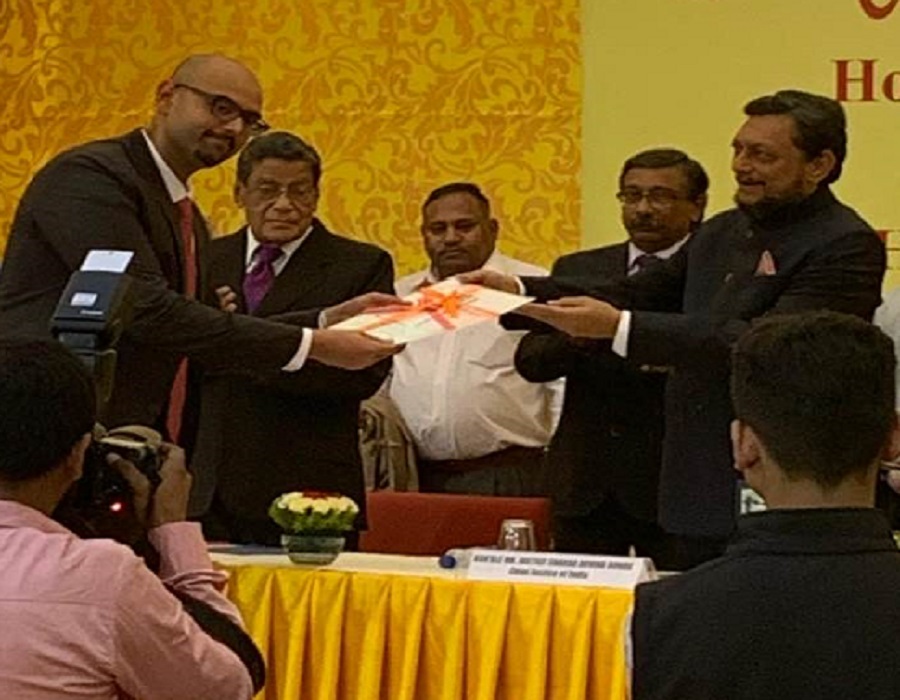
Chief Justice of India SA Bobde conferred Gold medal and other title to Azmat Hayat Amanullah

Chief Justice of India SA Bobde honouring Azmat Hayat Amanullah as topper of the Supreme Court Advocates-on-Record examination 2018.

New Delhi :

Chief Justice of India SA Bobde on Tuesday conferred gold medal and other title to Azmat Hayat Amanullah as topper of the Supreme Court Advocates-on-Record examination 2018.

Azmat is grandson of late IFS, parliamentarian and author Syed Shahabuddin. He is son of former IAS officer Afzal Amanullah and Parveen Amanullah, former minister of Bihar.

At a program held on the occasion of Constitution Day on Nov 26, Azmat received the award from CJI.

“With the infinite grace of God, my son Azmat got the first place in the examination of advocates-on-record, from Chief Justice of India, on the occasion of Constitution Day,” Parveen Amanullah posted on Facebook.

Azmat has obtained his law degree from Indian Law School, Pune. He has expertise in laws related to land, service matters, consumer, property, labour, employment, industrial disputes and workmen compensation.

The Advocates-on-Record exam is conducted by the Supreme Court.

source: http://www.caravandaily.com / Caravan / Home> India> Indian Muslims / by Caravan News / November 28th, 2019

Welcome To Bengal, Where There Is Not One Or Two, But Thirty Muslim Professors Who Teach Sanskrit

WEST BENGAL :

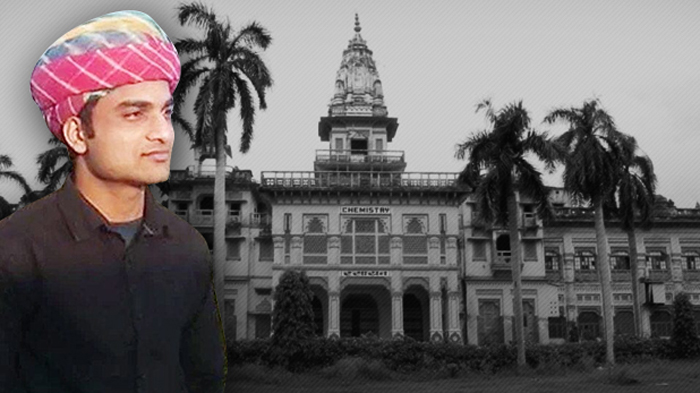
Firoz Khan and Banaras Hindu University. Courtesy: tv9bharatvarsh.com

Kolkata:

At a time when faculty members both present and past have even written to the President of India, Ram Nath Kovind, requesting him to intervene and stall the appointment of Dr Feroze Khan in Banaras Hindu University (BHU)’s Sanskrit Dharam Vidya Vigyaan department, West Bengal seems to embracing its Sanskrit professors hailing from the ‘other’ community, comfortably.

Going by a loose headcount there are at least 30 Muslim professors in West Bengal, teaching Sanskrit. Around 14 were recruited last year through College Service Commission and 12 this year. The most recent recruitment being of Ramzal Ali at the Sanskrit department of Ramkrishna Mission Vidyamandir, Belur. Speaking to eNewsroom, regarding his recruitment, he said, “I am in a state of shock with so many calls being made to me, seeking my comment. A Muslim learning Sanskrit is nothing new. There is a history to it. In every Sanskrit department across the state, you will find at least one Muslim student. Muslim Sanskrit teachers in Bengal, is also not rare.”

Perhaps Ali has a point. For, Dr Shaikh Sabir Ali, a gold medalist in Sanskrit from the University of Calcutta has been teaching the language for almost a decade now. Dr Ali, at present, teaches Sanskrit at the West Bengal State University, Barasat. According to him, Sanskrit, as a language is beyond Vedas and Upanishads.

Speaking from experience Ali said, “Every batch has at least one Muslim student in the Department of Sanskrit. In Kolkata, I presume, Rabindra Bharati University has a huge number of Sanskrit students.”  Dr Ali is also a topper from Ramkrisha Mission Vidyamandir.

He said, “There is more to this language, apart from the Vedas, Purans and Upanishads. This language has a rich literature and grammar too. It was these two that attracted me as a child. Luckily, my teachers encouraged me to take up this language for my higher studies. You, see one can’t make people take up a language simply based on one’s religion. History is a witness to many Muslims mastering this language.”

Speaking from experience Ali said, “Every batch has at least one Muslim student in the Department of Sanskrit. In Kolkata, I presume, Rabindra Bharati University has a huge number of Sanskrit students.”  Dr Ali is also a topper from Ramkrisha Mission Vidyamandir.

Rakibul Sk, assistant professor at SBS government college said, “I have never been discriminated on the basis of my religion, neither while I was mastering Sanskrit, nor while teaching it. I would like to add that while I hail from a small place like Jangipur, my place of birth has taught me that there is no religious attachment to any language. Hence, when I took up Sanskrit for my higher education, the Hindu neighbours of mine never raised an eyebrow. On the contrary, they were quite happy. The teachers who guided me to reach this position are all Hindus. It’s sad that today, we are discussing all this from a religious perspective.”

Adding to the experiences of Muslim Sanskrit teachers in Bengal, Rakibul Sk, assistant professor at SBS government college said, “I have never been discriminated on the basis of my religion, neither while I was mastering Sanskrit, nor while teaching it. I would like to add that while I hail from a small place like Jangipur, my place of birth has taught me that there is no religious attachment to any language. Hence, when I took up Sanskrit for my higher education, the Hindu neighbours of mine never raised an eyebrow. On the contrary, they were quite happy. The teachers who guided me to reach this position are all Hindus. It’s sad that today, we are discussing all this from a religious perspective.”

However, on being asked about the faculty members writing to the President of India, Ali, said, “I don’t want to open up a new controversy. But let me be very clear, there is a particular department of Sanskrit, which is accessible only to the Brahmin. Even Hindus from other sect are not allowed to enter that domain, so the question of a Muslim being appointed in that domain can be quite challenging. As per my knowledge, Dr Feroze Khan has been appointed in the Sanskrit Dharam Vidya Vigyaan department, which is the domain that I just talked about. I don’t want to get into a further debate, but I guess, his recruitment in the literature department wouldn’t have caused this huge controversy.”

Given the new twist in the story, it would be interesting to see President Kovind’s call on the letter written by the faculty members of BHU, seeking his intervention to stall Khan‘s recruitment, especially when earlier this year, he had awarded Padma Sri for Literature and Education to Sanskrit Scholar Mohammad Hanif Khan Shastri.

source: http://www.enewsroom.in / E News Room / Home> Let there be light / by Shabina Akhtar / November 27th, 2019

Tamkeen Shaikh – born Indian woman Conservative nominee for UK poll

Ahmedabad, GUJARAT  / Barking, UNITED KINGDOM :

Ahmedabad-born Indian woman Conservative nominee for UK poll

London (IANS) :

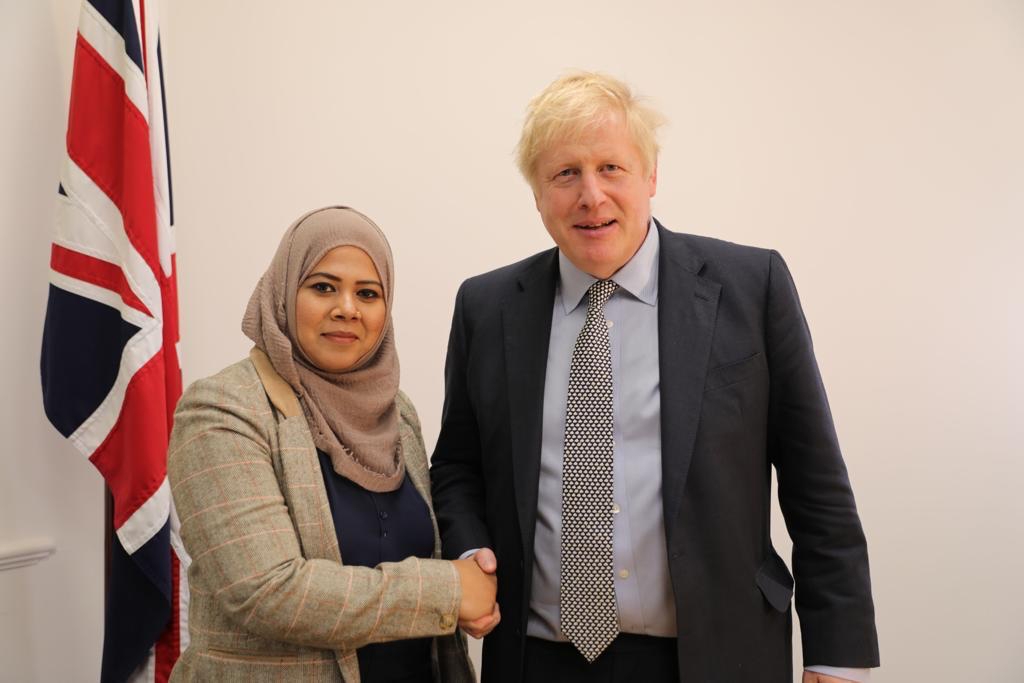
Indian origin Tamkeen Shaikh, born and raised in Ahmedabad, has been selected as the Conservative Party candidate for the Barking constituency for the December 12 UK elections.

“Delighted to be selected as the Conservative Party Candidate for Barking. Hard work begins now! #BlueBarking,” Shaikh, who studied and worked as a journalist in India before coming to the UK, tweeted on being named candidate.

A staunch supporter of Prime Minister Boris Johnson and Brexit, Shaikh left home 14 years ago for a Masters in media and management in the UK.

Married with two children, Shaikh is now working in the education sector.

She says: “The reason I have joined politics and particularly the Conservative Party is, it’s the best way to contribute to the society and the party believes in creating opportunities for business and innovation.

“Here the Parliament is pushing to have 50:50 representation of men and women and are encouraging women on a wider scale to get involved in politics. If elected my priority is to draw more investments in school, social enterprise, youth engagement, building family homes and care for the elderly.”

“The mantra that has worked for me is ato be consistent and persistent’ that will lead you to achieve your goals. Indians are a large economical contributors in UK and continue to do so. Indian community has integrated well within the community and are making huge progress in all sectors,” she adds.

“Like the majority of Barking residents, I voted Leave and I want to get Brexit done.

“You only have to look at the epidemic of fly-tipping, the state of Barking Station and our failing high streets to realise the Labour Party is failing us. We deserve better than Labour. I live in Barking, my children go to a local school and so I understand the needs of local people.

“We need an MP who will fight for more investment in our schools, improved care for the elderly and to give young people things to occupy them to keep them off the streets and give them a better future.

“I want to see a thriving high street that will benefit social enterprises and small businesses, providing jobs for residents. I am your local candidate representing the local people of Barking and I will get Brexit done,” she promised.

source: http://www.therahnuma.com / The Rahnuma Daily / Home> World / by IANS / November 26th, 2019

Breaking taboos

Kuwarpur Baghel (Hardoi District), UTTAR PRADESH :

ShikohZaidiMPOs26nov2019

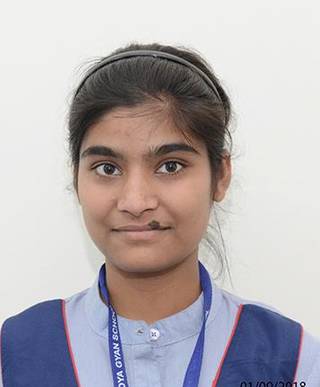
Shikoh Zaidi is helping women in her village by providing easy access to their basic hygiene needs

Shikoh Zaidi, a 16-year-old girl from Kuwarpur Baghel in Hardoi district of central Uttar Pradesh, has started a social initiative to break taboos around menstruation and spread awareness about menstrual hygiene, in her village. She was inspired by Deepa Narayan’s book on gender inequality titled Chup, which talks about an average Indian woman’s struggle in a patriarchal society.

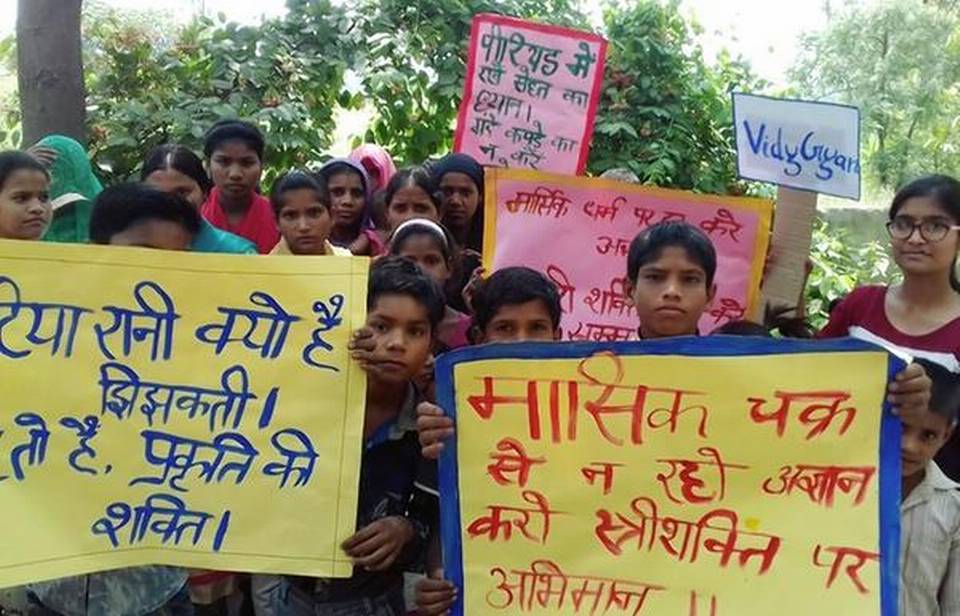
Encouraged by her teachers at VidyaGyan, a school that offers free education to meritorious underprivileged students in Uttar Pradesh, Zaidi was inspired to do something to improve the lives of women in her own village.

SPECIAL ARRANGEMENT | Photo Credit: SPECIAL ARRANGEMENT

“The conservative outlook of my village doesn’t allow for a space where one can talk openly about these issues. However, with my father’s assistance, I was able to organise a campaign by writing slogans and collecting short videos around menstrual health and hygiene. My father and I went door-to- door to invite women and girls to create awareness,” says Zaidi.

“When I first demonstrated the use of sanitary napkins, they giggled and were amazed at the sheer sight of them. Some women were completely ignorant about this basic product. By the third screening, I noticed that women were engaging with me and clarifying their queries as well. Some girls had even started using it,” she adds.

No help

However, many women in the village cannot afford these products. “I wrote to the district magistrate to make free sanitary pads available to the women in our village. But, the authorities failed to keep their promises. Panchayat officials were also of no help,” laments Zaidi.

Many women are still using cloth and rags because free pads are only available in a shop that is 20 km away.

Nonetheless, Zaidi is creating awareness on methods to maintain hygiene and cleanliness during menstruation with the available resources. “I am planning to make a self-help group and install a sanitary pad making machine which will not only help in solving this issue but also provide employment to people in the village,” she says.

source: http://www.thehindu.com / The Hindu / Home> Initiative – Education / by Neha Rupeja / November 27th, 2019

Amid BHU row, Belur college appoints Muslim teacher in Sanskrit department

Belur,Howrah City,  WEST BENGAL :

Ramzan Ali, who joined Ramkrishna Mission Vidyamandira in Belur following nine years of experience at a north Bengal college, said he was overwhelmed by the warm welcome extended to him.

Banaras Hindu University (File photo | PTI)

Kolkata :

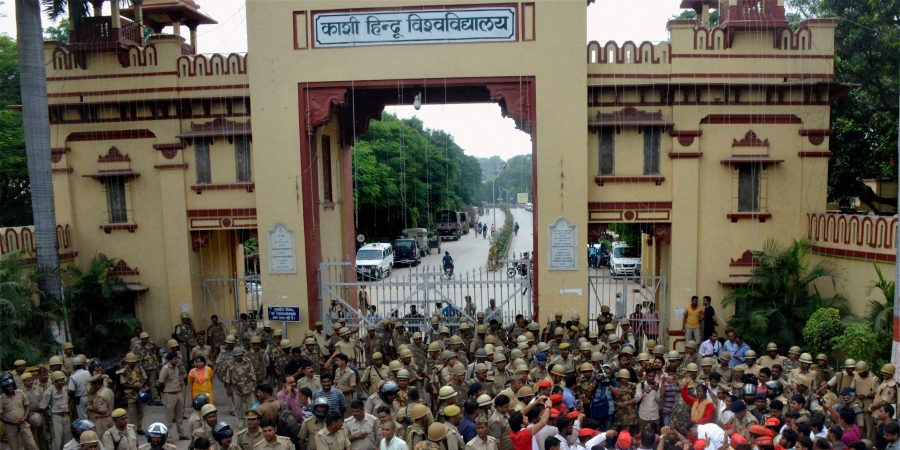
At a time when students of the Banaras Hindu University in Uttar Pradesh are up in arms over the religious identity of one of its Sanskrit teachers, a college, on the outskirts of Bengal capital, has appointed a Muslim man as an assistant professor to teach the subject.

Ramzan Ali, who joined Ramkrishna Mission Vidyamandira in Belur following nine years of experience at a north Bengal college, said he was overwhelmed by the warm welcome extended to him by the students and faculty members.

“I was welcomed by principal Swami Shastrajnandaji Maharaj, and everyone. Maharaj told me that my religious identity was not important, what mattered was my grasp over the language, my indepth knowledge and my ability to share it with the students,” Ali, who joined the Belur college on Tuesday, told PTI.

Asked about the Banaras Hindu University (BHU) agitation, he said, “I believe Sanskrit embodies India’s inclusiveness, its rich culture.

Don’t forget Sanskrit is the mother of all languages.

How can anyone bar people from other religions from learning and teaching Sanskrit?” A section of students at BHU has been demonstrating against the appointment of Feroz Khan as the assistant professor of the varsity’s Sanskrit department.

Although the BHU authorities backed him, Khan has not been able to take classes.

Ali, who is in his early 40s, asserted that he had never faced any discrimination as a Sanskrit teacher.

“I never felt that I was out of place or unwanted while studying or teaching Sanskrit. Here, at the Belur college, the management has arranged for my accommodation and ensured that I do not face any inconvenience,” the assistant professor maintained.

A student of the Sanskrit department at Ramkrishna Mission Vidyamandira said he was looking forward to attending Ali’s classes.

It is “unfair” to question the religious identity of a teacher, he said.

“Ali sir has just joined So far, I haven’t had the opportunity to attend any of his classes. I am looking forward to it,” the student added.

The principal of the college could not be contacted for his comment.

Bushra Arshad creates history; busts all myths; clears UPSC

Saurikh Village (Kannauj), UTTAR PRADESH :

BushraArshad01MPOs22nov2019

Bushra Arshad is being lavished with praise for achieving 6th rank in UPPCS, after the results were recently announced, and for being selected as SDM. This girl from Saurikh village is the only Muslim participant to become SDM in UPPSC-2017. She is the same Bushra Arshad who scored 277th rank in UPSC, results of which were announced in July, and subsequently was selected for the IRS, but she was not satisfied with her achievement.

She is not satisfied even with her latest achievement shows her grit and passion to achieve her dream of being in top 20 in IAS. The reality, however, seems that Bushra is fond of breaking the myths and proving the stereotypes wrong.

Her family, relatives, and husband all believe that she will not settle for anything less. They have a good reason for their belief: If a village girl, married with kids, after four surgeries and overcoming the pain of those surgeries, could score such a high rank in one of the prestigious exams and stamp her presence, then everything is possible for her.

Bushra smiles and reacts: Though we could find exemplary achievements from persons faced with each of those obstacles, my facing every one of those hurdles, probably, resulted in my being strong-willed in my quest.

Bushra’s father is a farmer and her mother is a housewife. A lone brother and a sister are also well-educated.  Both parents are graduates. But Bushra, in her mother Shama’s words, is definitely the “Extra-ordinary” one, packed with talent and way better than us.

Bushra graduated at the age of seventeen and a half. She had an MBA degree before she turned 20. She completed her studies up to class XII from Kannauj and went to Kanpur for graduation.

BushraArshad02MPOs22nov2019

Bushra says that she wanted to give the UPSC exam right away, but couldn’t since she didn’t meet the minimum age requirement. Her mother says that Bushra was admitted directly into the second class at the age of four and a half years. She adds “She already had learned so much at home itself that she never came even second (in her class).” She says Bushra is habituated to be a topper. My multi-talented daughter topped in everything”.

““Make this girl a collector” was the constant advice of anyone and everyone who visited us to my Abbu and Ammi,” says Bushra. “It got me fixated. (Again) Since I did not meet the minimum age requirement of UPSC, I prepared and appeared for JRF test.”

She cleared JRF in her first attempt and achieved a Ph.D. in Distress Management from AMU and that’s how the title “Doctor” got associated with her name. Right after that, she married Asmar Hussain. A little while later Engineer Asmar Hussain and Bushra moved to Saudi Arabia. Asmar started his studies at Jazan University, while Bushra obtained a high-ranking position. Leaving a well-placed position and an excellent package that came along with it, Bushra returned to India along with her husband.

Bushra says, “There was only one reason for our return to India, limitless love and ‘patriotism’, I often used to contemplate that the knowledge that I gained in my country through its residents, the skills born from that knowledge ought to benefit the same citizens, and that is their right.”

Her husband, Asmar Hussain, says that after this he took up a job at Coal India, they had two children. His wife underwent four major surgeries. It has been ten years since, but her desire to become a collector from within egged her constantly.

Bushra adds: “I did my job honestly. I did my duty as a mother. I also performed the responsibilities of a wife without neglecting my husband. I did not use the excuse of constant pain after surgeries to set me back and now I am appointed a deputy collector.”

Asmar Hussain, who is pursuing a Ph.D. from AMU, is a resident of Aligarh. He says that Bushra sits in the front seat of the car as a habit. Once she sets her sight on something, she achieves it at all costs.

Mohammad Akmal, a youth from Kannauj, says, “In four months, this is the second news that a girl from Saurikh has made history.Four months ago, this same girl did wonders. Bushra’s success proves that  excuses are for weak-willed people. She is truly an example of positivity and she is the talk of Kannauj ”.

source: http://www.twocircles.net / TwoCirlcles.net / Home> Indian Muslim> Lead Story> TCN Positive / by Aas Mohammed Kaif , TwoCircles.net / October 29th, 2019

Six Muslims, five of them female, crack Rajasthan Judicial Services exam

RAJASTHAN :

Mayank Pratap Singh from Jaipur is set to become the youngest judge in India

JudicialMPOs22nov2019

Jaipur:

A total of 06 Muslims have cleared the Rajasthan Judicial Services (RJS) exams result of which was announced Wednesday. Five of the six Muslims who cleared the coveted exam are female.

Youngest Judge In India

According to the result of Civil Judge Cadre 2018 under the Rajasthan Judicial Service Rules, 2010 declared early in the morning Wednesday 197 candidates successfully cleared the exam. Of them 127 are women.

Mayank Pratap Singh from Jaipur who has also cracked the Rajasthan judicial services 2018 exam at just 21 years of age, will be the youngest judge in India.

Muslims in the list

The six Muslims in the list of successful candidates are Sania Manihar, Sajida, Sana, Huma Khohri, Shehnaz Khan and Faisal Khan.

Sajida who belongs to Jodhpur secured 37th, Sana Hakim Khan bagged the 130th position, Huma Khohri 136 and Shehnaaz Khan got 143rd rank. The lone Muslim man in the list Faisal Khan got the 107th rank.

This is the first time five Muslim females have cleared the Civil Judge exam.

In the top ten, eight are women. Only the topper and the 10th ranker are men.

Selected candidates will join the service as a judicial magistrate after a two-year probation period.

The original age requirement for appearing in the judicial services exam was 23 years, which was reduced to 21 years by the Rajasthan High Court this year.

source: http://www.ummid.com / Ummid.com / Home> India> Education & Career / by ummid.com News Network / November 22nd, 2019

From naming ‘IIT’ to setting up of UGC: Initiatives by Maulana Abul Kalam Azad

Mecca, SAUDI ARABIA / New Delhi   :

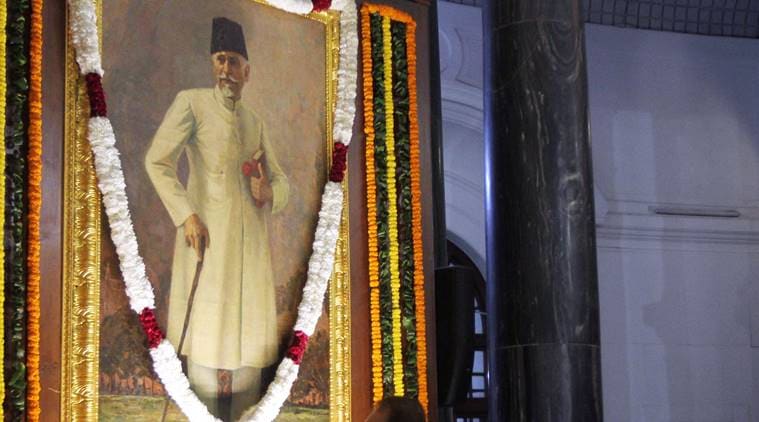
Homeschooled for the early part of his life, Azad is considered to be the father of the Indian Institutes of Technology (IITs). Here is a look at some of the major initiatives taken by him in setting up the Indian education system.

Maulana Abdul Kalam Aazad, HRD Minister of India, JMI, jamai, DU, IIT, National education day, education news

Maulana Abdul Kalam Aazad (File Photo)

Bharat Ratna awardee and India’s first Minister of Human Resource Development (HRD), Maulana Abul Kalam Azad was not only an educationalist but also a journalist. Homeschooled for the early part of his life, Azad is considered to be the father of the Indian Institutes of Technology (IITs) which are still considered among the best Indian educational institutes. Here is a look at some of the major initiatives taken by him in setting up the Indian education system.

Naming IITs – When India was looking to set up higher educational institutes which would impart knowledge in the field of science and technology, a Massachusetts Institute of Technology-like (MIT) model was thought of. The name ‘Indian Institute of Technology’ was adopted by Maulana Abul Kalam Azad before the inauguration of the institutes. The first Indian Institutes of Technology – IIT Kharagpur came into establishment in 1950.

Establishing UGC – A committee headed by S Radhakrishnan under the leadership of Azad as HRD Minister suggested extending the Universities Grant Commission (UGC)’s role to supervise work of all Indian varsities, make recommendations and grant funds. Earlier, UGC looked after three central universities, namely Aligarh, Benaras and Delhi.

DU and IISc – He laid the foundation stone of the Indian Institute of Science (IISc) in 1909, then known as the Tata Institute and granted deemed university status in 1958. Azad also oversaw the setting up of the ‘Central Institute of Education, Delhi’, which later became part of University of Delhi (DU) as the Department of Education. He was also a member of the foundation committee to establish Jamia Millia Islamia at Aligarh in UP.

Minority community – A supporter of education for poor, women and minority communities, Azad had said, “It is a birthright of every individual to receive at least the basic education without which he cannot fully discharge his duties as a citizen.”

To honour his efforts, Ministry of Minority Affairs of the Central Government of India set up the Maulana Azad Education Foundation to promote education among educationally backward sections of the society. The Ministry also provides the Maulana Abul Kalam Azad National Fellowship, an integrated five-year fellowship in the form of financial assistance to students from minority communities to pursue higher studies. The education institutes include Maulana Azad National Institute of Technology, the Maulana Azad College among others.

source: http://www.indianexpress.com / The Indian Express / Home> Education / by Education Desk , New Delhi / November 11th, 2019

Coming! Soybean-based sanitary napkins made by 2 Kerala students

Kadambur (Kannur District) KERALA :

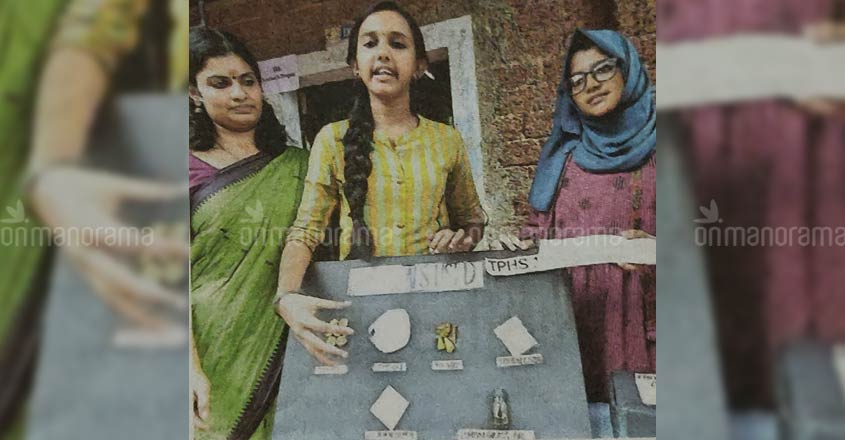
Two Class-10 students, PV Nayana and Fathimathul Nafra, introduced organic sanitary napkin made from soybean

Personal hygiene concerns are behind the recent bids to promote the production and use of affordable sanitary napkins especially among underprivileged women. A 2018 Hindi film named ‘Pad Man’ is even based on a Tamil social activist who introduced low-cost sanitary pads.

At this year’s Kerala School Science Fest, two Class-10 students — PV Nayana and Fathimathul Nafra — impressed spectators with organic sanitary napkin made from soybean.

With soybean as base for the disposable absorbent pad the duo not only introduced a unique method of making organic sanitary napkins but also pledged their commitment to nature.

Nayana and Nafra are students of the Higher Secondary School at Kadambur in Kerala’s Kannur district.

They claim that the organic napkins are safe for use as chemicals are not used in it. Besides, these biodegradable napkins pose absolutely no harm to the nature.

Napkins made using organic and biodegradable materials like coconut fibre, water hyacinth, banana stem and jute are already in the market.

Nayana and Nafra said extensive research done in this field had inspired them.

Soybean’ incredible ability to absorb water made us try out its possibilities, they added.

After making the napkins, they conducted further experiments and tests at SN College, Kannur, and also at a Bengaluru facility. The experiments there proved successful which further motivated the students to present it at this year’s School Science Fest.

Besides soybean, organic materials like beeswax and cotton too are used in this sanitary napkin. Making a single piece of this organic soybean napkin would cost Rs 3. However, the students say that it would only cost Rs 1.5 per piece if the napkins are industrially produced.

Nayana and Nafra were guided by Roshita who is a teacher at their school.

source: http://www.english.manoramaonline.com / OnManorama / Home> News> Campus Reporter / by OnManorama Staff / November 06th, 2019