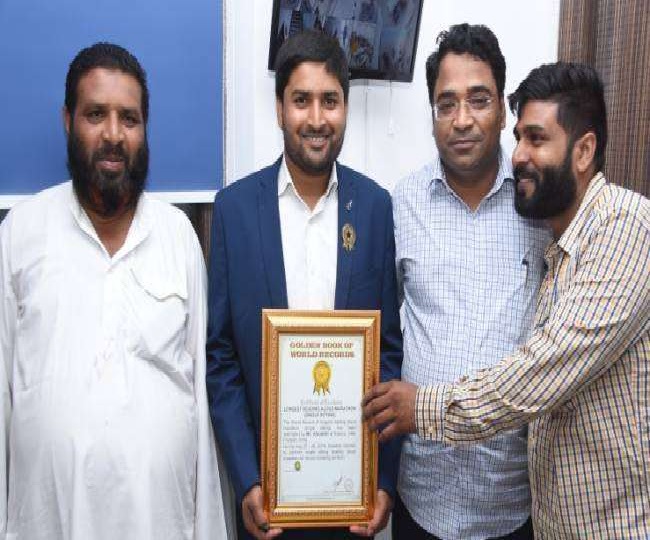
A student from Chhatrapati Shahu Ji Maharaj University (CSJMU), Kanpur created a world record for continuously reading books for 27 hours and five minutes.
Kanpur | Jagran Trending Desk:
A student from Chhatrapati Shahu Ji Maharaj University (CSJMU), Kanpur created a world record for continuously reading books for 27 hours and five minutes. His feat was acknowledged by the Guinness Book of World Records on Monday.
The 22-year-old boy, Allauddin, broke the previous record of continuous reading for 24 hours which was held by Yatish Chandra Shukla of Lakhimpur Kheri, who achieved this feat two years back.
His teacher, Dilip Gangwar, who helped him achieving this milestone said that the executive officers of the Guinness Book told him that he could break the earlier record if he could read for 24 hours and five minutes, but Allauddin said he would continuously read for 27 hours.
The Gangwar coaching made subsequent arrangements for Allauddin and a judge Mahesh Vishnoi, from Guinness Book of World Record was assigned to monitor the reading feat.
According to the rules to set this record, Allauddin could only take breaks of 30 seconds to sip water or to take some edibles and he would not be allowed to go to the washroom during the reading time.
Allauddin, standing firm on his desire to break the record started reading at 10 am on Sunday and finished on Monday. He took less than three breaks of less than 30 seconds to sip small quantities of water, said Dilip Gangwar.
Several eminent people, including former union minister Sri Prakash Jaiswal, MLC Arun Pathak and Satish Nigam witnessed the challenging task.
source: http://www.english.jagran.com / Jagran English / Home> English News> Trending / posted by Talib Khan / August 27th, 2019
Cooking demo videos galore, but Khaja Moinuddin’s popular no-frills videos serve to fill hungry orphans as well
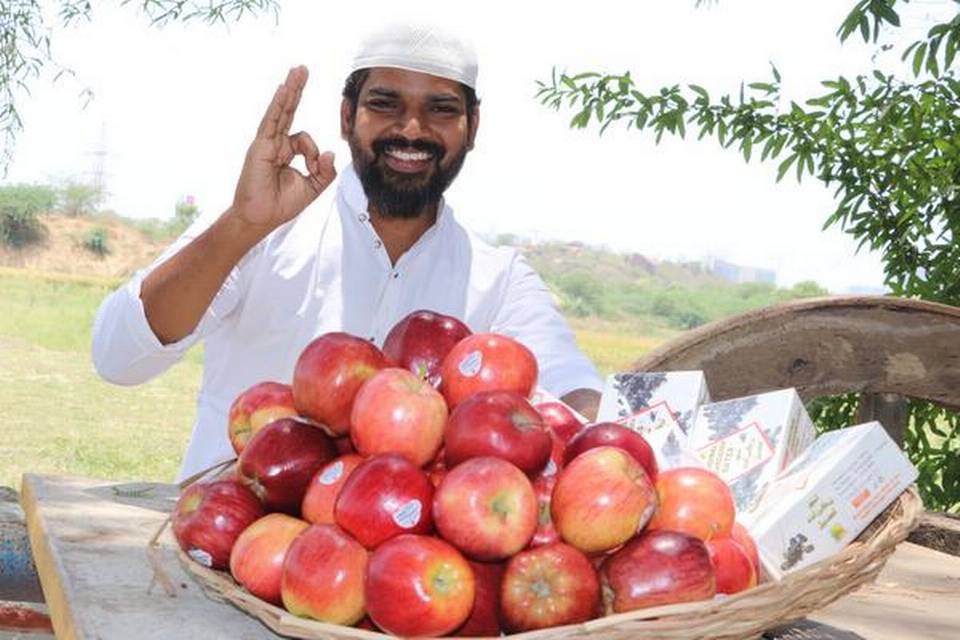
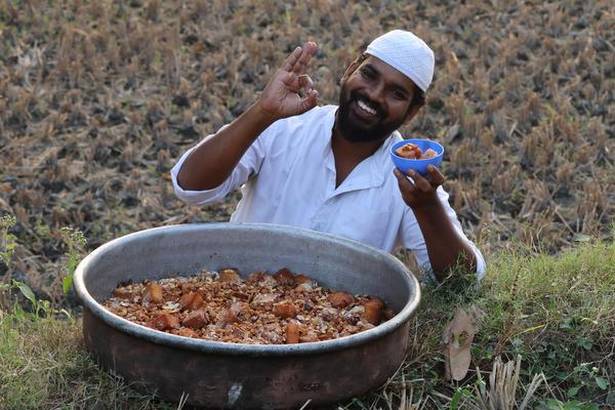
If you are able to look away from Khaja Moinuddin’s ear-to-ear grin, you will notice a 40 kilogram-capacity degcha or a handi that is either resting over a bed of embers or bubbling with food in the heat of a wood fire. His kitchen is always outdoors; Moinuddin is either cooking in the open under the sky or, during the summer months, under the shade of a tree. His smile remains intact, no matter where.
Moinuddin’s cooking is on a big scale, similar to his boundless smile. And if you are one of those who gets sucked into the web of cooking demo video feeds, then you are sure to have come across his.
If Moinuddin’s name doesn’t strike a bell, the YouTube channel Nawab’s Kitchen sure will. Popular as one of the viral content creators from Hyderabad, the chef is almost always cooking to be able to feed 40 people. The cooked food is distributed in orphanages and their staff, as well as among people who stop by and wait patiently to watch him cook.
“I always cook extra and never come back with leftovers. Once we are done cooking, everyone in and around the area where we cook is free to join us to eat. Initially we would pack the cooked food in boxes and distribute it, then we thought we would feel even better if we are able to serve the people directly,” says Moinuddin.
And who is the ‘we’ he is referring to? Moinuddin clarifies he might be the face of Nawab’s Kitchen, but there are two others who work equally hard to put every video on YouTube. “My colleagues-turned-friends Srinath Reddy and Bhagat Reddy are with me in this. We conceptualised Nawab’s Kitchen (NK) together,” smiles Moinuddin.
Moinuddin has over 10 years of working experience in regional TV channels as a producer. His friends and partners Srinath and Bhagat who prefer to work behind the scenes are experienced at working in the video editing department. Having known each other for a good number of years, the three decided to quit their jobs and start a YouTube channel that will engage, educate and be on a neutral topic like food. “There are very few people who don’t pause while scrolling, to watch a video on how a certain dish is being cooked. Especially if it is an dish Indian, and been shot to show the richness of rustic regional cuisine,” adds Moinuddin.
NK’s no-frill videos and a relaxed explanation of the ingredients and cooking process, wins him fans on his YouTube channel. His recipes are easy and simple to follow. “However, we choose a venue to cook that is close to some orphanage so that we can share the food with them. When we set out to put together NK we wanted to do social service through what we were gaining,” adds Moinuddin.
None of the three friends are trained chefs, they function with the knowledge and experience that comes with observing their families cook. Moinuddin adds, “My nani was an excellent cook, when I was in Tenali with her while doing my graduation, I learnt her style of cooking.”
For dishes like pizza and cakes, Moinuddin equips himself by learning online. “When we reach the gates of the orphanages, the smile and love with which the children greets us, banishes the day’s stress. The love and appreciation they show towards us makes us wonder where the children get their wisdom from,” says Moinuddin. NK regularly visits about 15 orphanages to share their food.
What is Nawab Kitchen’s signature dish? “My mutton biryani has a lot of fans,” he laughs.
source: http://www.thehindu.com / The Hindu / Home> Life & Style>Food / by Prabalika M. Borah / August 20th, 2019
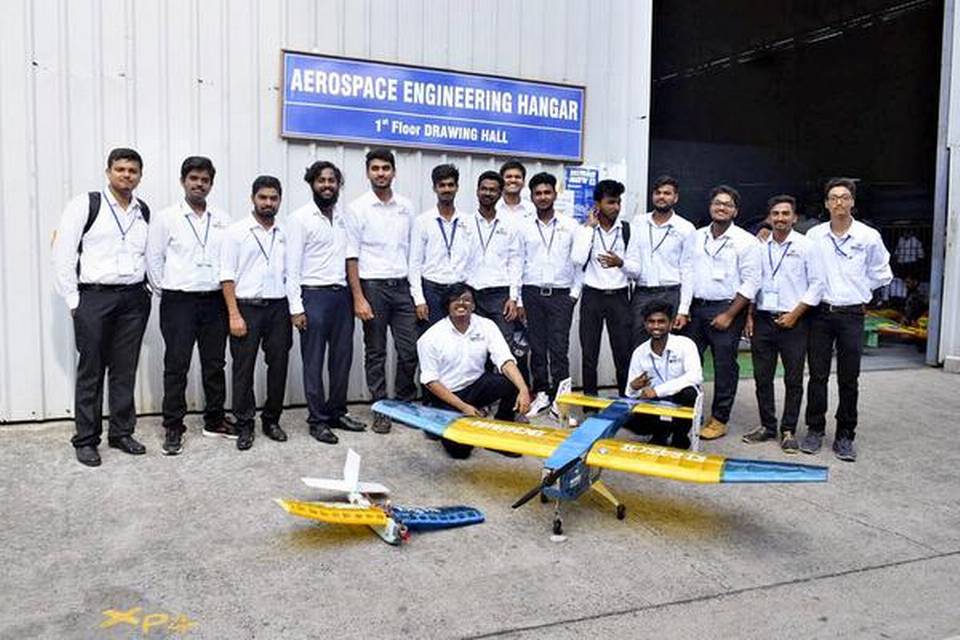
The AeroKLE team with their working models. | Photo Credit: Special Arrangement
They come first in regular class and third in micro class in national tournament
AeroKLE, a team of 17 students of KLE Technological University (KLETU), has secured the top place, in the regular class, at the national-level SAE India Aero Design 2019 competition held in Tamil Nadu.
In the recent competition, organised by SRM Institute of Science and Technology, they also secured the third rank in the micro class. As many as 146 teams from across the country took part in the competition.
The team comprised Vineet Anand Bedarman (captain), Amit Allimatti, Sayyed AhmedZuhair, Rohit Anvekar, Rahul Pattar, Shridhar Hadimani, Om Prakash Patel, Yajnesh Poojari, Koustubh Annigeri, Sujay C, Nilesh Bandekar, Mallikarjun Pattanshetty, Yeshwanth Kumar, Ajey Joshi, Alex Steven Dharmdas, Calvin Lobo, and G.V. Srikar.
The team was guided by Head of School of Mechanical Engineering, KLETU, B.B. Kotturshettar; Head of Centre of Material Sciences Nagaraj Banapurmath, and faculty coordinator G.M. Hiremath.
They were involved in designing and testing different prototypes in Hubballi.
They also optimised the final aircraft designs and submitted the technical design report at the event.
The report too was praised by judges and was has adjudged the ‘best technical design report’ at the event.
The students have bagged a purse of ₹1.35 lakh.
At the contest, the regular class demanded the highest payload to be lifted, whereas the micro class demanded the highest payload fraction.
The teams had to conform to the mechanical and electrical limitations as prescribed by Society of Automotive Engineers (SAE), India.
Experts from the Indian Space and Research Organisation, the Defence Research and Development Organisation, Hindustan Aeronautics Limited, and National Aerospace Laboratories were the judges for the event.
source: http://www.thehindu.com / The Hindu / Home> News> States> Karnataka / by Special Correspondent / Hubballi – August 02nd, 2019
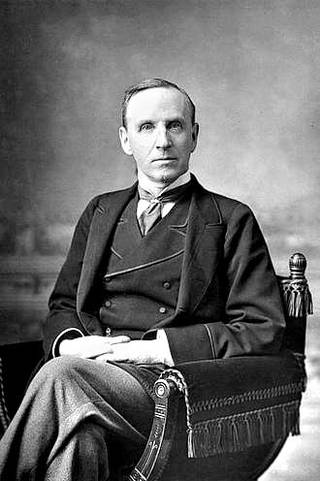
Torch bearer Syed Husain Bilgrami, Special arrangement
Apart from holding high ranking positions in Nizam’s dominion, Syed Husain Bilgrami was also made a member of the Secretary of State’s Council, in London.
Nawab Imad-ul Mulk is a familiar name in the annals of Hyderabad’s 19th century history. He was a noted educationalist, civil servant, prominent administrator and a noted scholar in the Nizam’s dominions. He was private secretary to Salar Jung I, the then Prime Minister of Hyderabad State; also a tutor and conscience keeper of the Nizam — Mahboob Ali Pasha — whose government he served with great distinction. For his dedication for work, strength of character and extraordinary mastery over English language and literature, the British government also utilised his services on many occasions. He had the rare honour of having served as member in the Secretary of State’s Council .He also had the distinction of having met along with Salar Jung I, Queen Victoria at Buckingham Palace in London.
Nawab Imad ul Mulk was the title that the Nizam bestowed in recognition of the services he rendered, with which he was well known in Hyderabadi circles; but his actual name was Syed Husain Bilgrami.
Syed Husain Bilgrami was born in 1844 at Gaya, where his father held high position under the East India Company administration. He was educated at the Presidency College, Calcutta from where he graduated in English literature. In 1868 he became a Professor at the Canning College in Lucknow before joining the service of the Nizam of Hyderabad in 1873. It was the time when Salar Jung I the Prime Minister of Hyderabad state was looking for English educated young men to be appointed in Hyderabad to modernise the administration and to improve educational facilities in the dominions. In 1872, Salar Jung while on a visit to Lucknow, met young Syed and was attracted to his intelligence and demeanour. He was invited to join the Hyderabad service, which he did the next year. For his impeccable English, both spoken and written, Syed Husain was taken as the private secretary to Salar Jung. The rest of his long career was irrevocably bound with Hyderabad.
The story goes that when Salar Jung asked Syed where his family originally hailed from, he answered, ‘Bilgrami’ (in the then United Provinces). The Prime Minister in a lighter vein suggested that Bilgrami could as well be added to his name and thus he became Syed Husain Bilgrami.
Bilgrami’s rise to prominence in Hyderabad was due to his sheer work as an educationalist. As the first Director of Public Instruction (1875- 1902) he initiated several reforms to improve the educational set up in the state. He was instrumental in the establishment of the Nizam College with English medium, with Dr Aghoranath Chattopadhyay, (father of Sarojini Naidu) as its first Principal. It is said that Bilgrami was the person who discovered the genius in Chattopadhyay, the first Indian to obtain D. Sc in Biochemistry from Edinburgh University. The College was affiliated to Madras University as there was no University in the Hyderabad dominions by then. Bilgrami was for some years taken by the government of India, as a member of the Universities Commission, a forerunner of the present UGC. In Hyderabad, he established Madarsa- i- Aizza, a school exclusively for the children of the nobles with a view to make them cultured and more responsible towards society. A crowning achievement of Bilgrami in the furthering of education in Hyderabad was the establishment of a girls school in 1885 with his personal funds. This was hailed as one of its kind in the country as the girls were taught besides usual subjects, needle work, household duties etc. English, besides Urdu and Arabic, was made the medium of instruction. To make girls from traditional families attend school, bullock carts with curtains were arranged to fetch them to school and back home.
In Hyderabad state, with a view to foster industrial growth, Bilgrami established three Industrial Schools at three important towns in the state, Aurangabad, Warangal and Hyderabad, which later grew to be Engineering Colleges. The State Central Library in Hyderabad also owes its establishment to the untiring efforts of Syed Husain Bilgrami.
Bilgrami was also a prolific writer in English and his books include Historical and Descriptive Sketches of His Highness, the Nizam’s Dominions, in 2 volumes, and A Memoir of Sir Salar Jung I. Besides, he had also composed several poems.
Lord Morely, the Secretary of State for India, who took Bilgrami as a member of his council.
The career graph of Syed Husain Bilgrami reached its zenith when he was made a member of the Secretary of State’s Council, in London. After the Liberal Party came to power in Great Britain in 1906, the new Secretary of State for India, Lord Morley, along with Lord Minto, the Viceroy of India wanted to initiate certain administrative and legislative reforms which ultimately resulted in the passing of India Councils Act of 1909 ( popularly known as Morley-Minto Reforms). For the task of formulating the reforms, Morley took two Indians as members to his council. The first was Syed Husain Bilgrami, who from the days of his first visit to England accompanying Salar Jung way back in 1876, had maintained friendship with several high ranking British political leaders of his time like Disraeli, Lord Salisbury, Gladstone etc. The other Indian appointed to the council by Morley was Krishna G Gupta, a senior ICS officer. Bilgrami thus played a key role in the passing of the first ever Constitutional Act of 1909.
Indian ayahs
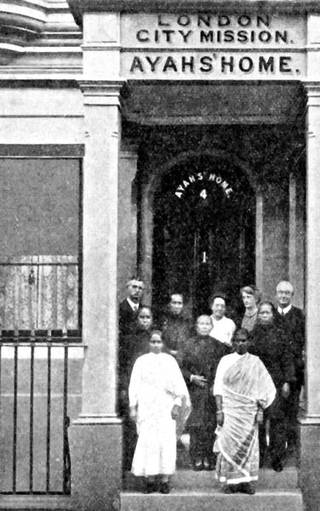
As a member of the Council of the Secretary of State for India, Bilgrami once made history by protesting the pitiable and callous attitude to Indian ayahs and other caretaker women who had been abandoned by their British employers. Many British officials in those days, employed Indian ayahs to look after their children on the long voyage from India to Britain and the employer was to provide for their passage home. But many a time those ayahs were dismissed once they reach Britain and left to fend for themselves. Such conditions led even to the founding of a ‘Ayahs Home in East London’, where such abandoned destitute ayahs were temporarily provided with food and shelter.
Ayas House / special arrangement
In May 1908, an Indian ayah Meera Sayal from Bombay arrived in London with a British family that was returning home. But she was abandoned by the family on the busy Kings Cross road in Central London, with a mere one pound in hand. The matter was brought to the notice of the India Office in London by the manager at Ayahs Home. The British authorities were of the opinion that Indian ayahs had no legal remedy in the absence of any written agreements that they would be taken back to India and quoted a precedent when the India Office in London in a similar case in 1890 had declined to take any action.
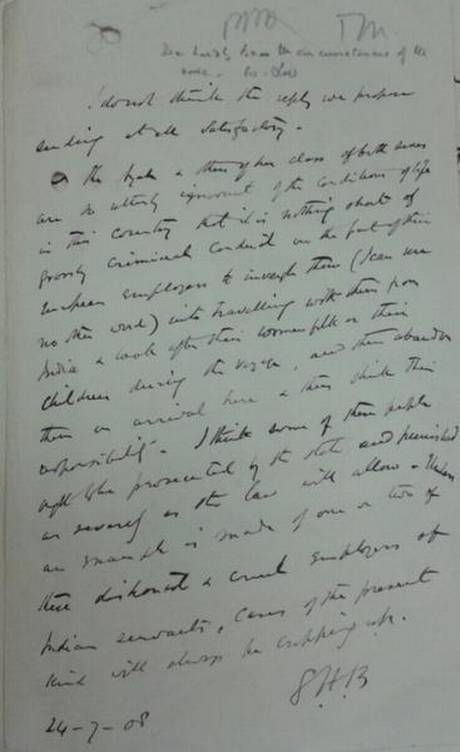
The protest note Bilgrami wrote as a member of the council of Secretary of State for India.
But Syed Husain Bilgrami, as a member of the Secretary of State’s Council felt hugely outraged and immediately wrote a strongly worded resentment on “the dishonest and cruel European employers inveighing Indian servants to travel with them and abandoning them on arrival in Britain”. This bold stand of Syed Husain Bilgrami reflected how he was a man of lofty principles and high ideals with a strong sense of duty and impeccable uprightness. This letter dated July 14, 1908, had been quoted in many future complaints of the Asian caretakers against British employers that ultimately led to the betterment of Indian ayahs going with British families to London.
After returning from England in 1909, Bilgrami spent his retirement in Hyderabad in a villa on the slopes of the iconic Naubath Pahad, overlooking the waters of Hussain Sagar and died in 1926, aged 82. Bilgrami had four sons and all of them were brilliant as they excelled in their different chosen fields. Nawab Sir Mehdi Yar Jung Bahadur, the Education and Finance member in Nizam’s administration and who led a delegation to the Round Table Conference in London in 1930 -31, as a representative of the Nizam, was one of Bilgrami’s sons. Yar Jung as the Vice-Chancellor of Osmania University, had hosted the 5th session of the Indian History Congress (IHC) in 1941. Today Bilgrami’s progeny has a network that is spread across all the continents. Prof. Akeel Bilgrami, the California=based renowned academic intellectual, is one among the high-profile, large Bilgrami family.
source: http://www.thehindu.com / The Hindu / Home> Society> History & Culture> Hyderabad Heritage / by K S S Seshan / August 19th, 2019
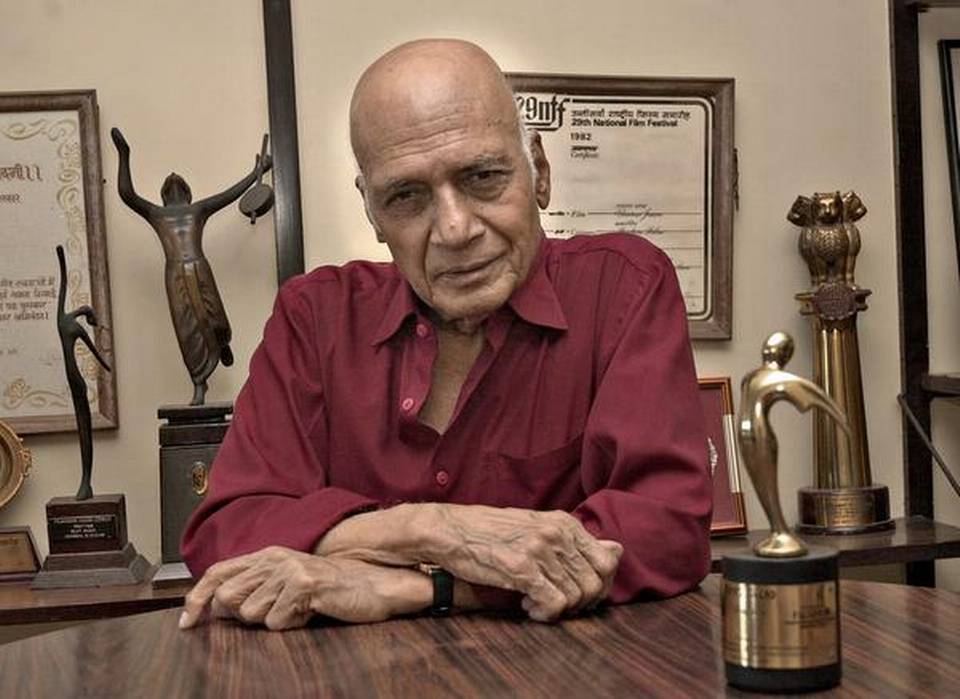
A composer who understood the nuances of Urdu and Hindi as much as the ‘sargam’ itself
If there is one word or phrase to pin down Khayyam’s music , it would be ‘literary’ or ‘poetic’. He was a music composer who understood the nuances of Urdu and Hindi as much as the ‘sargam’ itself. So, in the ideal spirit of collaboration, the songs were deeply resonant both in the thought and feeling of the writer as much as Khayyam’s own melody. No wonder some of his films had the poet or the artist as a protagonist, points out film and music expert Pavan Jha. The acme of it were Umrao Jaan (1982, Rekha as a courtesan) and even more so Kabhi Kabhie (1977 Amitabh Bachchan as a ‘shayar’), twoof the biggest successes of his career in Hindi cinema that began in the late 40s.
Yash Chopra’s Kabhi Kabhie also marked the peak of his steady association with poet-writer-lyricist Sahir Ludhianvi, the other high point of which came earlier in Phir Subah Hogi (1958) and later also in Trishul (1978).
While remaining resolutely “Indian”, Khayyam’s music spanned a range — from the classical to semi-classical, folk to ghazal. “From pahadi to Punjabi, Braj to Awadh his musical influences encompassed the entire North India. He composed one of Mohammed Rafi’s best non-film bhajans — Paoon padoon tore Shyam,” says Jha. His contribution to the light classical non-film music may have come under the shadow of the film music but was just as significant. He was the one to have composed I Write, I Recitefor Meena Kumari with the actress singing her own ‘nazms’ in the album.
Changing with the times
When it came to film music itself, he never got straitjacketed in any specific style, kept adapting with the times, the subject and characters of his films. So, in a film like Kabhi Kabhie, along with a melancholic and romantic title track and Main pal do pal ka shayar hoon he also created the youthful and energetic Tere chehre se, Pyaar kar liya to kya and Chahe chale chhuriyan. In Phir Subah Hogi he composed the devastatingly satirical Aasman pe hai khuda, a brilliant comment on the sad state of the nation, which resonates till date. As do Chin-o-arab hamara and the sad yet hopeful Wo subah kabhi to aayegi. Yet in the same film soundtrack he also had the beautiful love song Phir na keeje meri gustaakh nigahee ka gila.
Though he came out with great work in every decade that he spent in the Hindi film industry, it was not until the 70s and 80s — with Kabhi Kabhie and Umrao Jaan — that he catapulted into the big league of music composers. His amazing repertoire in the two films is what most would recollect him for, but there have been gems studded all over his abundantly rich discography. Like the Sahir creation Parbaton ke pedon par shaam ka basera hai in Shagoon (1964), Majrooh Sultanpuri’s Shaam-e-gham ki kasam sung from the heart by Talat Mehmood in Footpath (1953) or Majrooh’s Rafi-Suman Kalyanpur duet Thehriye hosh mein aa loon from Mohabbat Isko Kehte Hain (1965). There are the beautiful Aankhon mein humne, Aaj bichade hain and Hazaar raahein in Thodisi Bewafai (1980) and Dikahyi diye yun, Karoge yaad to and Phir chhidi raat in Bazaar (1982).
Kaifi Azmi was another writer-lyricist with whom Khayyam created magic in Shola Aur Shabnam (1961) with songs like Jeet hi lenge baazi hum tum and later in Akhri Khat (1966) with Bhupendra singing Rut jawan jawan, raat meherbaan. Of the present lot of lyricists, though he had a great friend and admirer in Gulzar, he collaborated briefly with him in Thodisi Bewafai and later, in the 90s, on the television programme Dard (Dil ka ek chehra dikhayi dega, sung by Jagjit Kaur and Bhupendra). There was an abandoned venture of the two, called Kharidaar, in which actor Rekha is supposed to have sung one song. Also, Khayyam and his wife, singer Jagjit Kaur, are said to have organised the sangeet for Rakhee-Gulzar wedding.
Among the playback singers he worked a lot with Talat Mehmood, Mukesh and even more so with Mohammed Rafi. Perhaps one the best examples of teaming up with Rafi was the mellifluous and haunting Kahin ek naazuk masoom ladki in Shankar Hussain (1977). Not to forget Aur kuchh der theher in Akhri Khat and Jaane kya dhoondhti rehti hain ye aankhein mujh mein in Shola Aur Shabnam, the latter taking Rafi’s voice from low notes to the high in a magical seamless musical stretch.
Lata Mangeshkar sang the lilting Baharo mera jeevan bhi sanwaro in Akhri Khat under his baton, Aap yun faaslon se and Apne aap raaton mein in Shankar Hussain and Aye dil-e-nadaan and Khwaab ban kar koi aayega in Razia Sultan (1983). He was one of the crucial figures to have helped shape Asha Bhonsle’s formidable career. The two peaked in Umrao Jaan butit was in an earlier film called Footpath that Asha got the major break of getting to sing for the lead. He also gave the film industry the booming vocals of Kabban Mirza in Aayee zanjeer ki jhankar in Razia Sultan and unique voice of Jagjit Kaur, also his wife, in songs like Tum apna ranj-o-gham apni pareshani mujhe de do in Shagoon(1964) and Dekh lo aaj humko jee bhar ke, koi lauta nahin phir marr ke in Bazaar(1982), a prophetic song in retrospect.
source: http://www.thehindu.com / The Hindu / Home> Entertainment> Music / by Namrata Joshi / May 20th, 2019
Prof Shahid Ahmed, Department of Economics, Jamia Millia Islamia (JMI) gets an offer to be affiliated as Adjunct Senior Fellow at RIS, a policy research Institute under the MEA, Government of India.
Prof Shahid Ahmed, Department of Economics, Jamia Millia Islamia(JMI) has been offered to become Adjunct Senior Fellow at Research and Information System for Developing Countries (RIS), New Delhi, in recognition of his research work and contributions in the area of international economics.
About RIS
RIS is an autonomous policy research institute under the Ministry of External Affairs, Government of India. RIS Adjunct Senior Fellows are a select group of experienced scholars who are well recognised nationally and internationally in the area of international economics and development of policies related issues relevant to decision making in the developing world.
More about Prof Shahid Ahmed
Earlier, Prof. Ahmed has served as Senior Economist at United Nations Conference on Trade and Development (UNCTAD).
He has also served as Head, Department of Economics; Director, Centre for Jawaharlal Nehru Studies and Finance Officer of the university.
Prof. Ahmed has so far published 5 books and 93 research articles in national and international journals on several economic issues, particularly on multilateral trade negotiations, regional economic co-operation, South-South cooperation among others.
Prof. Ahmed has been given “Award of Excellence” for sterling achievements in the professional life and outstanding contribution to the society at large by MD University Rohtak in 2012 and AMP National Award for Excellence in Education in 2018 by Association for Muslim Professionals, Mumbai.
About JMI
Jamia Millia Islamia, an institution originally established at Aligarh in United Provinces, India in 1920 became a Central University by an act of the Indian Parliament in 1988. In Urdu language, Jamia means ‘University’, and Millia means ‘National’.
The story of its growth from a small institution in the pre-independence India to a central university located in New Delhi-offering integrated education from nursery to research in specialized areas-is a saga of dedication, conviction and vision of a people who worked against all odds and saw it growing step by step. They “built up the Jamia Millia stone by stone and sacrifice by sacrifice,” said Sarojini Naidu, the nightingale of India.
source: http://www.indiatoday.in / India Today / Home> News> Education Today / by India Today Web Desk / New Delhi – July 29th, 2019
Akansha Tiwari is the 2018 topper of Uttar Pradesh Provincial Civil Services (Judicial Service Civil Judge – JR. Div.) Exam
Lucknow:
A total of 38 Muslims, including 18 girls, are among 610 candidates who have passed the Uttar Pradesh Judicial Service Civil Judge (JR. DIV.) Eexam 2018 result of which was declared on July 20.
As many as 07 students from Aligarh Muslim University (AMU) Residential Coaching Academy (RCA) are also among the candidates who have cracked the coveted exam. Among them 03 are non-Muslims.
Uttar Pradesh Judicial Sservice Civil Judge (JR. DIV.) Exam 2018 result was based on Personal Interview conducted from June 21 to July 17, 2019 and UPPSC Civil Judge Main Exam conducted on January 30, 31 and February 01, 2019.
A total of 5,795 students had appeared for the UPPSC Civil Judge Main Exam out of them 1,847 had qualified for Personal Interview. Of them 610 were declared passed.
Among the successful Muslim candidates, Shahnawaz Siddiqui bagged the 11 Rank, Jaseem Khan got 36th Rank whereas Hena Kausar got 93th Rank and Meher Jahan got 97th Rank.
Names of other Muslim judges are Asif Nawaz Khan (96), Umaima Shahnawaz (100), Zishan Medhi (103), Naved Akhter (120), Nazim Akbar (124), Bushra Noor (129) and Bushra Khursheed (160).
Among the successful candidares from Aligarh Muslim University (AMU) are Pratyush Gupta (Rank 78), Asif Nawaz Khan (Rank 96), Meenakshi Bansal (Rank 186), Mehnaz Khan (Rank188), Shamsul Rahman (Rank 273), Shalini Singh (Rank 375) and Farha Naaz Parveen (Rank 469).
Akansha Tiwari of Gonda district is the 2018 topper of Uttar Pradesh Provincial Civil Services (Judicial Sservice Civil Judge – JR. DIV.) Eexam. Harihar Gupta of Nainital stood second while Prateek Tripathi of Azamgarh came third.
source: http://www.ummid.com / Ummid.com / Home> India> Education & Career / by Ummid.com News Network / July 23rd, 2019
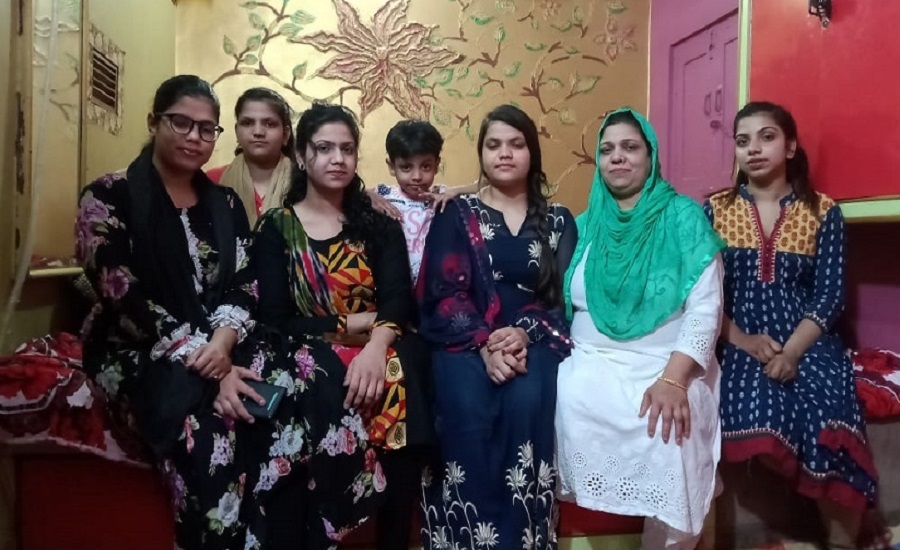
Sana Niyaz, 3rd from left, along with her proud mother and siblings. — Photo India Tomorrow
New Delhi :
Despite many detractors, Sana Niyaz, a student of an Urdu medium girls government school near Jama Masjid, is the top scorer among all Delhi government school students in the CBSE Class XII examinations, results for which were declared on Thursday.
A student of Sarvodaya Kanya Vidyalaya No. 2, Jama Masjid in Old Delhi, Sana scored 97.6 per cent marks in the Board examination and she is the fourth of her sisters to complete education from the same school.
Two years ago, Sana’s elder sister, Umra, had topped the school in her class XII CBSE examinations. Her youngest and fifth sister is also studying in class IX in the same school.
The 17-year-old Sana is the daughter of a Cook at Matia Mahal’s famed Al Jawahar restaurant. Her father and mother, a housewife, both stopped studying after class VIII. And these four sisters are the first ones in the family to have completed Class XII.
Sana’s family live in bylanes of Matia Mahal, Jama Masjid where no girl has gone to college and hardly there are some who are even allowed to go to school.
Hailing from an average family how did Sana managed to score high in her studies. She also had topped the exam by scoring 89% in Xth Class.
Sana says she never took tuition classes and relied upon her sisters for any guidance. She also credits her school teachers for her success who, she says, were always ready to help her.
Being a student of Urdu medium she must have faced other problems like non-availability of the subject books in Urdu. Sana says, “I studied in Urdu medium, but there was no Urdu edition of the second sociology book required in our syllabus. I looked for study material online, as well as the English and Hindi texts,” she said. She scored 98 per cent in sociology.
The main push behind her success is pursuing studies has always been her mother, Asma Parveen.
“Our father was initially not in favour of us even studying till class XII. But it is our mother who insisted we study and continued to push for us to go to college,” said Sana’s sislter Ilma, who is doing a vocational course in fashion designing after graduating from Zakir Husain College.
Sana Niyaz wants to pursue B.A. Program from St. Stephen’s College and along with that I also want to prepare for civil services as I aspire to become an IAS officer.
Why she wants to opt B.A. Programme and not any Honour degree in any particular subject, Sana says “Even though history is my favourite subject, I don’t want to do an honours degree because I want a mix of subjects. I also want to prepare for the civil services exams.”
Delhi government schools this year achieved their best-ever performance in class XII examination, with a pass percentage of 94.29 per cent.
Rahman founded Mina Jebel Ali Canteen and Catering Services, the flagship firm of the Parco group of companies – supplied photo
Rahman had been ill for nearly a year and he had flown to India for treatment.
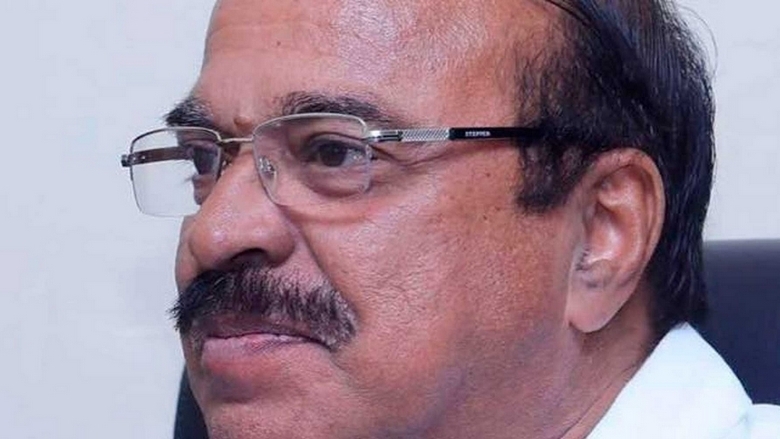
Dubai-based businessman PA Rahman, chairman of Parco Group, died in his hometown in the south Indian state of Kerala on Sunday night. He was 72.
OK Ibrahim, KMCC senior vice-president, told Khaleej Times that Rahman had been ill for nearly a year and he had flown to India for further treatment.
“Relatives and friends who are close to Rahman travelled to India two weeks ago to pay their last respects, as his health continued to deteriorate,” Ibrahim said.
Rahman founded Mina Jebel Ali Canteen and Catering Services, the flagship firm of the Parco group of companies.
Over the last 39 years, he, along with his brothers, built diverse business units with interests in hospitality, retail, manufacturing, real estate, contracting, jewellery, healthcare, restaurants and education, among others.
“These companies are all supported by a large team of dedicated professionals who develop and manage the activities of the group,” said Ibrahim.
He was a successful entrepreneur but, on top of his achievements, people knew him as a community leader who was always willing to help those in need. He did a lot of social work and opened education centres.
He had served as a member of the state council of the Muslim League and a director of the Dubai Middle East Chandrika. He also founded NAM College, Kallikandy, a general degree college located in Kallikkandy, Kannur district, Kerala.
dhanusha@khaleejtime.com
source: http://www.khaleejtimes.com / Khaleej Times / Home> Nation> Dubai / by Staff Reporter, Dubai / July 10th, 2019
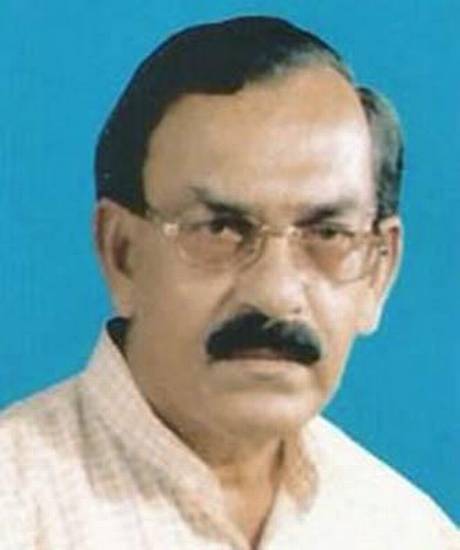
Islamic history expert Prof. P.A. Ibrahim Kutty, 71, a prominent presence in the city’s cultural and literary circles, passed away on Wednesday.
He was the vice president of Kerala History Association and treasurer of Samastha Kerala Sahitya Parishad. His body, kept at his house Nilofer on SRM Road at Kaloor, will be buried at the Kaloor Thottathumpady Juma Masjid on Thursday.
Born in 1948 at Mala, Prof. Ibhahim Kutty had his education in Maharaja’s College, Aligarh Muslim University and Ernakulam Law College.
He had retired as Head of Islamic History Department from the Maharaja’s College in 2001. He was a member of boards in various universities and was the chairman of the Islamic Studies Board in Kerala University, Calicut University and Mahatma Gandhi University.
He is survived by his wife Razia, daughter of former Mayor A.A. Kochunni Master.
source: http://www.thehindu.com / The Hindu / Home> News> Cities> Kochi / by Special Correspondent / Kochi – July 04th, 2019