Category Archives: Education

A spelling bee with a difference

Winners of the spelling bee contest: (from left) Bindu Shree (3rd place), Sandhya (2nd place), Archana N.S. (1st place), Syed Arbaz (4th place), and Vishwanath R. (5th place). / The Hindu

The air is thick with tension as students from 23 schools across the city struggle to get their words right.

“How do you spell Gemini?” a judge asks Preethy of Madivala Government High School. She hesitates and asks for a Kannada translation, then proceeds to answer correctly, amid loud claps and cheers.

It was the sixth year that Sahasra Deepika International for Education (SDIE) was holding a spelling bee competition for Class 9 students of Kannada-medium government high schools across the city.

It is unique in many ways: the students do not come from top private schools and many cannot speak English beyond constructing basic sentences. As many as 92 students were drawn from 23 schools as part of a programme to impart English grammar and vocabulary skills among Kannada-medium students. They performed admirably, tackling words from ‘celebration’ and ‘vague’ to ‘heliocentric’ and ‘echinodermata’. The winning word was ‘chorus’.

“We want to give these children an opportunity to be on stage, and to gain confidence through such competitions,” says Vijayalakshmi Ramakrishnan, founder and treasurer of the SDIE. “Some of these kids have never celebrated a birthday. Some do not get English textbooks until the end of the school year.”

The goal is to try to ensure that these children do not feel left out, she says, pointing out that without a working knowledge of English, the children have little chance of getting jobs in the future.

The winners of the event are: Archana, Krishna Iyer School; Sandhya, Honnagonahatti Government High School; Bindu Shree, Honnagonahatti High School; Syed Arbaz, Fort High School, and Vishwanath Doddagolarahatti Government High School.

source: http://www.thehindu.com / The Hindu / Home> News> National> Karnataka / by Cinthya Anand /Bengaluru – February 01st, 2015

Sanskrit, Arabic fetes to felicitate scholars

The Samskritolsavam and the Arabic Sahityolsavam, being organised as part of the 55th State School Arts Festival in Kozhikode, will also consist of seminars and other events.

The Samskritolsavam is mainly held at the S.K. Pottekkat Hall in Puthiyara while a few competitions are being held at a classroom of the Model Higher Secondary School at Mananchira too.

A seminar will be held as part of the fete at Town Hall (renamed as Vidyavachaspathi V. Panoli Nagar) on January 19.

Education Minister P.K. Abdu Rabb will inaugurate it at 9.30 a.m. and Mayor A.K. Premajam will preside.

Procession

Director of Public Instruction K. Gopalakrishna Bhat will deliver the introductory address on the occasion. Vineetha Prabhakaran, daughter of V. Panoli, will be the torch-bearer in the procession that begins from the latter’s house at Thiruthiyad at 7.30 a.m.

It will be flagged off by former Vice Chancellor of Sree Sankaracharya University of Sanskrit J. Prasad.

M.K. Raghavan, MP, will release a souvenir of the Samskritolsavam while Vice Chancellor of the Sanskrit university M.C. Dileep Kumar will be the chief guest. MLA A. Pradeepkumar will honour writer and Aksharaslokam exponent P. Chandrasekharan; the former Principal of Ayurveda College, Kottakkal, A.P. Haridasan; and the former Head of the Department of Sanskrit, University of Calicut, C. Rajendran on the occasion.

The Sanskrit seminar will be on the topic ‘Adhunikakaale Samskritanatakani Aswanadam Cha.’ M.K. Suresh Babu and C.K. Jayanthi from the Koyilandy and Tirur centres of the Sanskrit university will be the presenter and moderator respectively.

The Arabic Sahityolsavam will be held at the C.H. Hall on Red Cross Road while a few competitions will be organised at a classroom of the Model Higher Secondary School, Mananchira.

The Arabic seminar will be held at C.H. Hall at 10.30 a.m. Minister for Social Justice and Panchayats M.K. Muneer will inaugurate the programme. The seminar will be on the topic ‘Arabic and Information Technology.’ Deputy Mayor P.T. Abdul Latheef will preside over the programme.

Education Minister P.K. Abdu Rabb will honour the Arabic scholars at 12 noon while Mr. Bhat will preside.


  • MP to release Samskritolsavam souvenir
  • Rabb will honour scholar

source: http://www.thehindu.com / The Hindu / Home> News> Cities> Kozhikode / by Staff Reporter / Kozhikode – January 15th, 2015

Slew of events to mark MES jubilee valedictory

The year-long golden jubilee of the Muslim Educational Society (MES) will end with a four-day valedictory summit featuring public meets, academic discussions, seminars, and cultural events starting from January 22 in Kozhikode. Addressing a press conference here on Wednesday, the State office-bearers of the society said a wide spectrum of leaders, including Ministers, educationalists, and cultural icons, would attend the event. The main venue of the event would be adjacent to the upcoming headquarters of the MES at Govindapuram on Mini-Bypass Road. The summit would begin with a women’s conference at 10 a.m. on January 22. State Women’s Commission chairperson Rosakutty, Muslim Personal Law Board member Uzma Naheeda, social activists Flavia Agnes, Medha Patkar, and Teesta Setalwad would speak.

A cultural festival of students from MES institutions across the State would also be part of the event on the first day. A national seminar on ‘cultural nationalism’ to be inaugurated by senior Congress leader Digvijay Singh would be held later in the day. Another seminar on the third day would be inaugurated by Chief Minister Oommen Chandy.

source: http://www.thehindu.com / The Hindu / Home> News> Cities> Kozhikode / Staff Reporter / Kozhikode – January 15th, 2015

Eminent Muslim educationist Saiyid Hamid dead

Aligarh :

Noted educationist and former vice chancellor of the Aligarh Muslim University Saiyid Hamid, who played a key role in the drafting of the Rajindar Sachar Committee report on the state of Muslims in the country, died on Monday at age 94 in New Delhi. Born in Faizabad in 1920, Hamid, who also headed Jamia Hamdard, a deemed university, in 1999, worked for the educational uplift of Indian Muslims.

AMU spokesman Rahat Abrar, who worked closely with Hamid when he was chairman of the UP Rabita Committee, said, “Saiyid Hamid’s life was devoted to the cause of Muslim education. He spread awareness and addressed the educational backwardness among Muslims. He edited a journal, ‘Nation and the World’, and wrote extensively for the community’s development in the social sphere. I would like to remember him as a visionary, and an institution builder.”

Before Hamid joined AMU, the departments had chairpersons for more than 10-15 years. He introduced the rotation system. A firm believer in education as tool for social change, he encouraged Muslim youth towards higher studies, and dissuaded AMU teachers from leaving the country for petro dollar opportunities.

Hamid’s keen interest in encouraging Muslims to take up civil services led him to establish Hamdard Public School and University, and ensure the UGC conferred “deemed university” status on Jamia Hamdard.

Syed Zafar Mahmood, AMU alumnus and founder of New Delhi-based non-profit organization Zakat Foundation of India, said, “He worked for the educational uplift of the deprived. He led educational caravans across north India. Consequently, dozens of new schools were privately established. As AMU VC he chose to side with merit and justice, even taking cudgels with vested interests. In the Sachar Committee, he was a silent contributor of substantial inputs.”

At the time when Hamid was chancellor of Jamia Hamdard, Zillur Rehman of Ibn Sina Academy in Aligarh was in the academic council. Rehman reminisced, “Hamid sahib was a bureaucrat and head of AMU. He took decisions keeping in mind political realities of the country, and guided us in difficult times. His way of working was above sectarian, communal and regional considerations. That, along with his speeches and writings, kept us all inspired.”

The AMU and its associated institutions will remain closed on Tuesday as a mark of respect, an AMU spokesperson said, adding a condolence meeting will be held in the afternoon.

source: http://www.timesofindia.indiatimes.com / The Times of India / Home> India  / by Eram Agha, TNN / December 30th, 2014

AMU mourns death of its former VC

Aligarh :

Noted educationist and leading Muslim figure Saiyid Hamid, a Sachar Committee member and former VC of Aligarh Muslim University, died on Monday at the age of 94 in New Delhi.

Hamid, who was also chancellor of Jamia Hamdard (1999), succumbed to a cardiac arrest. Born in Faizabad in 1920, he is remembered for his crusading spirit to work for the upliftment and educational development of Indian Muslims.

AMU spokesperson Rahat Abrar, who worked closely with Hamid when he was chairman of the UP Rabita Committee, said, “His life was devoted to the cause of Muslim education. He led to spread awareness and address the educational backwardness among Muslims. In fact, he edited a journal called ‘Nation and the World’, and wrote every word for the community’s development in the social sphere.”

Abrar added, “A visionary, and an institution builder, that is how I would like to remember him (Hamid). Before he joined AMU, the departments would have a chairman for more than 10-15 years. He introduced the rotation system and now there is term to serve. As a staunch believer of education as a tool for change he inspired Muslim youth to pursue higher studies, dissuaded AMU teachers from leaving the country for petro dollar opportunities outside.”

Since Hamid wanted Muslims to take up civil services, he worked hard to establish Hamdard Public School and the University. It was due to Hamid’s purposefulness and vision that UGC agreed to confer deemed university status on Jamia Hamdard.

At the time when Hamid was chancellor of Jamia Hamdard, Zillur Rehman of Ibn Sina Academy in Aligarh was in the academic council. Rehman reminisced: “Hamid sahib had been a bureaucrat and head of AMU. He took decisions keeping in mind political realities of the country, and guided us in difficult times. His way of working was above sectarian, communal and regional considerations. That, along with his speeches and writings, kept us all inspired.”

Syed Zafar Mahmood, AMU alumnus and founder of non-profit organization Zakat Foundation of India, said, “Saiyid Hamid worked for the educational uplift of the deprived. He led educational caravans across north India. Consequently, dozens of new schools were privately established. As AMU VC he chose to side with merit and justice, even taking cudgels with vested interests. In the Sachar Committee, he was a silent contributor of substantial inputs.”

AMU will remain closed on Tuesday to mourn Hamid’s passing.

source: http://www.timesofindia.indiatimes.com / The Times of India / Home> City> Agra / by Eram Agha, TNN / December 29th, 2014

Beary Sahitya Academy honorary awards for three

Awards to be presented at Chikkamagaluru on January 10

The Karnataka Beary Sahitya Academy will confer its annual honorary awards 2014 on B.M. Ichalangodu, B.A. Shamshuddin Madikeri and Y. Mohammed Beary Edapadavu.

While Prof. Ichlangodu is being honoured for his contributions in Beary language research, Mr. Shamshuddin is being honoured in the field of literature and Mr. Mohammed Beary in the field of education, said academy chairman B.A. Mohammed Haneef.

Mr. Haneef told presspersons here on Monday that the awards would be presented at the Beary Language Conference to be held at Chikkamagaluru on January 10. More than 5,000 Beary-speaking people were expected to attend the event, he said.

The Chikkamagaluru District Beary Federation would be co-hosting the event at the Vokkaligara Sabha Bhavana where the language conference would be held from 10 a.m. and the award presentation would be held from 3 p.m.

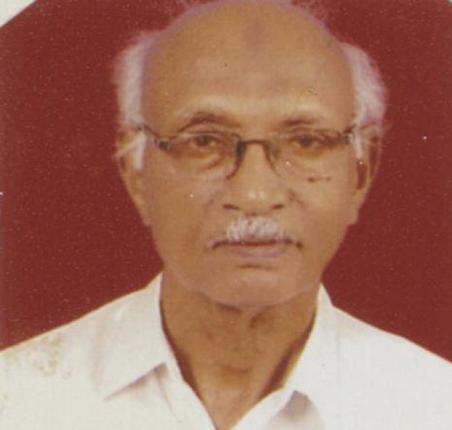
B.M. Ichlangod
B.M. Ichlangod

Prof. Ichlangod worked in various colleges in the undivided Dakshina Kannada and has written many works including translation of Koran, and Muslims of Tulunadu. He has also been active in the consumer rights movement.

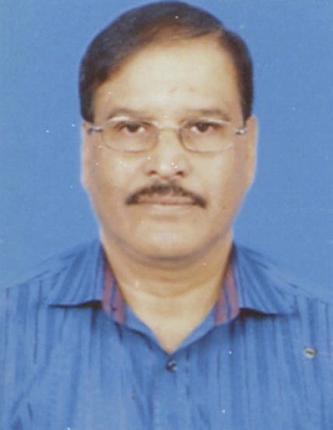
B.A. Shamshuddin Madikeri.


Mr. Shamshuddin has worked as a journalist for many publications in Madikeri and has penned many works in Beary language.

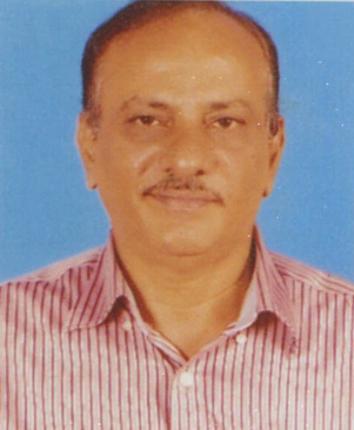
Muhammad Byari Yedapadavu.

Mr. Mohammed Beary, after serving the Syndicate Bank for 22 years, established Ideal English Medium School at Edapadavu and has been the president of the Federation of Dakshina Kannada and Udupi district English Medium Schools. He is also the president of the committee of families of victims of Mangaluru air crash.

The awards carry Rs. 10,000 in cash and citation. The Kannada and Culture Department has proposed to the government to increase the cash purse to Rs. 75,000 each, but the academy is not sure when that would come into effect, Mr. Haneef said.

The academy has also identified nine personalities to be felicitated during the language conference for their contributions to various fields.

They are: Mariam Ismail, Ismail Azad, A.M. Sridharan and Umar Farooq (for literature); K. Mohammed (for defence); Moidin Kunhi (for medicine); Azala Ayub and B.H. Noor Mohammed (for social service) and Mohammed Iqbal (for singing), he said.

source: http://www.thehindu.com / The Hindu / Home> News> Cities> Mangaluru / by Anil Kumar Sastry / Mangaluru – December 16th, 2014

I like Indore-based designer Asif Shah’s work, says model Zulfi Syed

Model Zulfi Syed, who was in Indore recently to participate in a private event, spoke to HT about Bigg Boss, his plans to start a modelling academy and more. Here are excerpts from an interview.

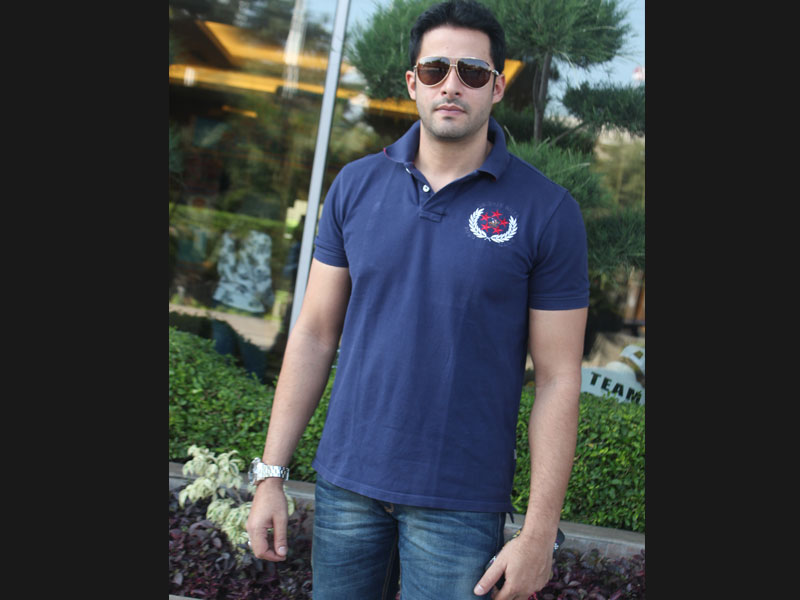
Model and actor Zulfi Syed visited Indore recently to participate in a private event. (Shankar Mourya/HT photo)

You have been a part of reality show Bigg Boss. What do you have to say about the ongoing season of the show?

I find the format a bit different now. Our season was more or less based on an international format. Now there is more contact with the outside world and even the number of wildcard entries have gone up. The audiences have better access to housemates as they can talk to them over phone. This wasn’t possible when Bigg Boss started initially.

We heard you are planning to start a modelling academy. Is that true?
I am starting an academy for people who want to get into modelling. There are hardly any schools to mentor aspiring models in India. I am planning to open such a school. We would be visiting cities like Indore and Bhopal and hold workshops for aspiring models. I have a team of experts which includes models like Rahul Dev, Alisia Raut, Praveen Sirohi, Amrita Patki, Shahwar Ali and Aanchal Kumar to guide them. There will be a makeup artist and a fitness trainer. Shakir Sheikh would be imparting training in choreography. We will train them on how to walk the ramp among other things. We will be doing portfolio shoots and if they have potential, we will handle their work in Mumbai. The institute would be called Smoke and we plan to start the project by February, 2015.

What inspired you to start such an institute?
I have been a part of the modelling industry for several years. I felt the need for such an institute. There are a lot of people who come from small towns to Mumbai and they don’t know where to start if they want to become a model.

Many male models have gone missing from the industry.
There is obviously more work for girls. Designers for women have increased in the recent past. Even a lot of male designers have ventured into creating outfits for women. The industry was always ruled by women and I think it will be this way.

What are your upcoming projects?
I am working on a Bulgarian venture which contains a mix of Indian as well as Bulgarian actors. Portions of the film will be shot in Bulgaria. It’s an action-thriller movie. I can’t talk much about it right now.

Which designer’s outfits do you prefer wearing?
I follow a lot of designers. Of late, a lot of interesting names have crept in the market. I like Asif Shah from Indore for his style of suits. Rohit Bal is really good. I also admire Ravi Bajaj, Suneet Verma and Manish Malhotra.

source: http://www.hindustantimes.com / Hindustan Times / Home> India-News> Indore / by Hussain Malvi, Hindustan Times / Indore – November 29th, 2014

MIM expands horizon with cop training

Hyderabad :

In what is known as a “passing out parade” of constables held at the police academy recently, more than 70 graduates were from the stable of the Majlis-e-Ittehadul Muslimeen (MIM). But what is interesting is that of this number, more than half are Hindu, Dalit and Sikhs while only 29 are Muslim candidates.

“As a part of the MIM initiative, we had trained around 200 people over a period of three months for the physical fitness and written tests. Also, of the 10 girls selected, only two are Muslims and the rest are Hindus. It is pertinent to point out that two of the selected youth are Mahesh Yadav and Vijay Kumar from Begum Bazaar. Those selected also belong to the Reddy community and other backward classes. Another two are Sikh recruits,” said Manzoor Ali Khan, in-charge of the constable recruitment training programme.

While the MIM has been vocal about its intentions of forging a Muslim-Dalit political alliance – which has gained momentum with the slogan Jai Bheem, Jai Meem – the move indicates that the party is keen to reach out to members of the majority community as well. The party in addition has proposed initiatives for training youth for employment.

“The top leadership wants an inclusive approach in all things we do. Therefore, we intend to train youth regardless of religion, caste, creed and sex. We are now waiting for the next constable recruitment notification to be issued,” Manzoor said. The number of Hindu recruits trained by the MIM has increased substantially this year, he claimed.

Meanwhile, the Millat Fund, a philanthropic arm of the Siasat Urdu Daily, too has had its share of success in sending candidates from its training rooms. According to the managing editor Zaheeruddin Ali Khan of the daily, around 170 cadets from a batch of around 300 was selected were a part of the parade held last week.

“Since 2003, most of those who have been selected are men and we have tried our best to train women as well. Of the 20 girls who sought training from us this year belong to the majority community. We are encouraging the participation of candidates from all religions,” he said.

source: http://www.timesofindia.indiatimes.com / The Times of India / Home> City> Hyderabad / by Syed Mohammed, TNN / December 13th, 2014

Darul Musannefin an excellent seat of learning

Azamgarh:

On November 21, 2014, Darul Musannefin Shibli Academy, Azamgarh, completed 100 years of its life. Widely acknowledged by scholars of Asian neighbours, this academy of letters specializes in research on Islamic learning, medieval Indian history and oriental studies.

Moulded in the scholarly tradition of India’s ancient centre of learning, Darul Musannefin Shibli Academy in the old Azamgarh town has taken its place alongside some known modern research institutions. A well-equipped library and a well-organised publication department, putting out original works or the fruits of modern research in oriental philosophy, history and culture, make it envy of many institutions in the field.

Darul Musannefin Shibli Academy was conceived by Allama Shibli Nomani and established by his disciples headed by Maulana Hamiduddin Farahi on November 21, 1914, three days after his death with the main objectives to nurture and sustain a body of scholarly authors, provide a congenial environment for scholars to create, compile and translate literary works of high scholastic and historical value and undertake printing and publication of literary works of the Academy.

Chairman Istiyaq Ahmed Zilli said that it was aimed at effectively meeting increasing intellectual and ideological challenges faced by the Muslim community of the sub-continent after the collapse of their political authority and its replacement by British power.

The Academy continued to create scholarly works in the fields of Islamic history and literature. It had so far published more than 250 books, including significant ones like Sirat-un-Nabi and Al Faruq. The Academy had maintained an unbroken tradition of publication of its Urdu monthly journal ‘Maarif’ in uninterrupted circulation since July 1916. The Academy had nurtured a rare environment of single-minded and selfless devotion to academic pursuits.

source: http://www.timesofindia.indiatimes.com / The Times of India / Home> City> Varanasi / by Binay Singh, TNN / November 29th, 2014

Arts College turns 95, not 75!

Last week, the media was abuzz with reportage on the launch of ‘Platinum Jubilee’ celebrations of the Arts College of Osmania University. Deans, heads of departments, faculty and students and several former principals and alumni of the college participated in the event to mark the 75th year of the Arts College. But the fact is that Arts College completed 95 years of its existence on 28th August this year itself. This prestigious institution would be completing its centenary in 2019, just a year after the centenary of Osmania University.

The seventh Nizam of Hyderabad, Mir Osman Ali Khan, had issued a firman for the establishment of Osmania University on 26th April 1917 for offering higher education through Urdu medium in the erstwhile Hyderabad State. The University became functional in 1918. Under the aegis of the University, the Arts College was inaugurated on 28th August 1919 and it was temporarily housed in eight rented buildings in Gunfoundry area in the city.

A faculty of 25 lecturers was recruited and 225 students were admitted in Intermediate first class in the first academic year of the college. Incidentally, Sir Ross Masood, grandson of Sir Syed Ahmed Khan and founder of Aligarh Muslim University, was the first principal of Arts College. Degree and postgraduate courses were started in 1925 and PhD programme in several disciplines in 1938.

The government acquired a vast extent of land (about 2,000 acres) at Adikmet for development of the campus of Osmania University in 1928. Engineer Ali Nawaz Jung and Architect Zain Yar Jung were sent abroad to study and suggest a model plan for the campus. Monsieur Jasper, a Belgian architect, prepared the detailed plans for the campus buildings. The Nizam laid the foundation for the Arts College building on 5th July 1934. The imposing building, in Indo-Saracenic style of architecture, was built in a record time of 5 years. The Arts College building was inaugurated by the Nizam on 4th December 1939.

The majestic and elegant edifice in pink granite stone retains much of it charm even today, though it has seen vicissitudes of fortune over the last 75 years. The college, being 20 years older than the building, has been witness to many more changes. While departments in modern disciplines as well as classical and Indian languages were opened, the medium of instruction was changed from Urdu to English, soon after police action in erstwhile Nizam State in September 1948. The Arts College made its name all over the globe for its academic excellence by producing eminent alumni and employing renowned academicians.

In 1973, degree courses were discontinued in Arts College and it became an exclusively postgraduate college, offering PG and advanced diploma courses and research studies in various disciplines. Though it was the hotbed of Telangana movement during 1968-71 and several Mulki agitations earlier, Arts College scaled new heights in the 1970s and 1980s. The college made its mark in both arts and social sciences, including economics, history, geography, political science, public administration, psychology, sociology, English and other foreign languages, classical and Indian languages and communication & journalism, linguistics, Islamic Studies and philosophy.

Those who studied in the Arts College or served on its faculty brought laurels. The alumni include not only great academicians but also bureaucrats, political leaders and educational administrators. Many of the erstwhile faculty or alumni of the college went on to become vice-chancellors of eminent universities in the state as well as other prominent universities across the country. Some made their mark abroad. Apart from its alumni in many other disciplines, the Arts College also produced many eminent media persons who studied at its department of communication and journalism.

Yet, after the mushrooming of colleges offering professional courses such as Engineering, MBA, MCA, B.Ed etc, there has been a marked drop in the students seeking postgraduate courses in social sciences and arts subjects. The severe financial crunch due to inadequate funding of the university through block grants by the government has led to a situation where the Arts College is forced to discontinue some courses or to keep several posts of faculty vacant. This is having its own impact on the academic excellence of the college. In the last few years, Osmania University campus witnessed intense agitation by students for separate Telangana State. Now, Telangana is a reality and it is time to strive hard to win back fame and pristine glory for Arts College before it celebrates its centenary in 2019.

(The writer is an MLC and a journalist)

source: http://www.timesofindia.indiatimes.com / The Times of India / Home> City> Hyderabad / by Syed Amin Jafri, TNN / December 08th, 2014