Category Archives: Education

AIMCA students secure top ranks in Karnataka University examination

Bhatkal, KARNATAKA:

Bhatkal:

Students of the Anjuman Institute of Management and Computer Application (AIMCA) have achieved remarkable success by securing top ranks in the annual university examination conducted by Karnataka University Dharwad (KUD).

In the Bachelor of Business Administration (BBA) stream, Aisha Rufi, daughter of Jameel Hussain Fakardey, secured the first rank with an impressive score of 94.95% marks.

Wasira, daughter of Abdul Jabbar Shingeti, secured the eighth rank with a commendable score of 91.69% marks, while Eifa, daughter of Habibullah Siddibapa, secured the ninth rank with 91.67% marks, as announced in a press release by the Principal of AIMCA.

Anjuman Hamee-e-Muslimeen President Kazia Muzammil, General Secretary Ismail Siddique, Principal Mohammad Mohsin, and other staff members congratulated the students on their remarkable achievement in the university examination.

source: http://www.varthabharati.in / Vartha Bharati / Home> Karavali / by Vartha Bharati / August 23rd, 2023

Minorities Research Chair Set Up In First Private University Established By Muslims In Rajasthan’s Jodhpur

Jodhpur, RAJASTHAN:

Jodhpur:

In a major initiative set to generate new avenues, the Jodhpur-based Maulana Azad University, which is the first private university established by the Muslim community in Rajasthan, has set up a Minorities Research Chair for conducting targeted studies and research on the issues, problems and challenges confronting the minority communities in the state. The research chair will make important recommendations after its studies.

The Minorities Affairs Department of the Congress government in Rajasthan has sanctioned Rs. 2 crores as financial assistance for the research chair. The university was established by the Marwar Muslim Educational & Welfare Society (MMEWS) at Bujhawar village on the outskirts of Jodhpur in 2013. The institution of higher education is now imparting education to more than 15,000 students belonging to Muslim and other less privileged communities in multiple disciplines of studies.

The Minorities Research Chair will function under Maulana Azad University’s Centre of Excellence and Research, for which Chief Minister Ashok Gehlot had granted Rs. 15 crores in 2022. The research chair, which is expected to make a meaningful intervention for the development of Muslims and other minorities, is the brainchild of noted educationist Mohammed Atique, who is the MMEWS Chief Executive Officer and the Founder-Chancellor of Maulana Azad University.

The research chair was inaugurated at a grand function organized on the university premises in the presence of Rajasthan Minorities Affairs Minister Saleh Mohammed, Rajasthan Madrasa Board Chairman M.D. Chopdar, several MLAs, public representatives, government officers, educationists, distinguished citizens, journalists and social activists on August 16. The university is already running M.Phil and Ph.D. programmes in various streams.

In his address, Saleh Mohammed said the Maulana Azad University, which had made consistent progress during the last 10 years, was another name for high-quality scientific education in the future. The Minorities Research Chair would prove to be extremely beneficial for research and education in the areas crucial for the development of minority communities, he said.

After the research chair’s inauguration, the Central Equipment Room of the university’s Faculty of Pharmacy, and the classroom furniture and virtual smart classes of Crescent Public School and Maulana Azad Upper Primary School run by MMEWS were dedicated to the students. A poster of the foreign language training programme under the Chief Minister’s Minority Language Proficiency and Communication Skills Development Scheme was also released on the occasion.

Mr Atique said the Maulana Azad University was making sincere efforts to achieve the goal of “education for all” with a clear objective that no child from the weaker sections of any community should be deprived of education because of the lack of basic facilities. University president Jameel Kazmi said the research chair would review the progress of the government’s schemes for the development of minority communities and evaluate their achievements and success, besides identifying the obstacles in their implementation.

Presiding over the function, M.D. Chopdar described Atique as “Sir Syed” of the modern era while pointing out that the initiatives taken under his leadership in Jodhpur had made a record of sorts. He said the Madrasa Board was taking steps for the modernization and development of madrasas, for which the MMEWS was rendering full cooperation to it. Chopdar also flagged off a vehicle carrying the furniture supplied by the Madrasa Board to various schools in the city.

Luni MLA Mahendra Singh Bishnoi, Jodhpur City MLA Manisha Panwar and Congress leader from Soorsagar Assembly constituency, Ayub Khan, were special guests at the function. All of them praised the stellar role played by the MMEWS and Maulana Azad University in improving the educational standard of the Muslim community in Jodhpur. A large number of distinguished citizens from Barmer, Jaisalmer, Pokhran and Phalodi in western Rajasthan also came to attend the function.

The MMEWS, established in 1929 during the pre-Independence era, runs as many as 330 educational, health and social institutions. Atique has been instrumental in easing the lives of more than 45,000 youths through these institutions working in varied fields of education, health care, community development, rural development, waste-to-wealth initiatives and skill development programmes during the last four decades.

The then ruler of Jodhpur princely state, Maharaja Umaid Singh, was the patron of MMEWS and had gifted a school named ‘Durbar Muslim School’ to the Society in 1936. The Rajasthan government allotted five acres of land to the MMEWS in 1978, on which the Maulana Abul Kalam Azad Muslim Senior Secondary School was constructed.

Since then, the MMEWS has established several institutions, including the Industrial Training Institute, Nursing College, Pharmacy College, B.Ed. College, Mai Khadija Hospital, Rahmatul-Lil-Alameen Blood Bank, Marwar Adarsh Gaushala and Bujhawar Veterinary Hospital.

The MMEWS established the university in 2013 with the intention of providing higher education to the most deprived and marginalized sections of society.

The first president (Vice-Chancellor) of Maulana Azad University was the noted Islamic scholar from New Delhi, Akhtarul Wasey. The current president, Jameel Kazmi, hailing from Jaipur, has taken steps for interdisciplinary studies while maintaining the indigenous ethos and the spirit of plurality in the university’s functioning.

About 45,000 students have so far passed out from the MMEWS group of institutions and become doctors, engineers and business people and entered other professions as well. Some of them have also established nursing homes and clinics in remote rural areas, which are often ignored in the government’s development plans. Maulana Azad University has set the motto, “Gain Knowledge and Serve Mankind”, for itself.

source: http://www.indiatomorrow.net / India Tomorrow / Home> Education / by the India Tomorrow Correspondent / August 25th, 2023

Resetting her Compass, Samina Bano got off the Corporate Ladder to Champion RTE in UP

BIHAR / Lucknow, UTTAR PRADESH:

Chance, coincidence and an unflinching belief in the plans of the cosmos propelled Samina Bano to quit the corporate world to champion children’s right to equitable access to education.

Sometime in late 2012, Samina Bano, then a Chicago-based consultant with Deloitte Consulting, started to notice what she believed to be ‘omens’ all around. She loved her corporate life – thrived on its challenges and enjoyed its ceaseless travelling, yet was convinced it was time to move on. “There was this persistent feeling that I was meant for something else,” she says.

A hazy idea of what that ‘something else’ entailed was brought about by a chance reading of How to Change the World by David Bornstein. “Till that point, I did not know how to make the best use of my education and skills. I first read the term ‘social entrepreneur’ in the book and figured out that was the way ahead for me,” she recalls.

It would take a chance reaching out to one such change maker in Bihar for Samina to understand that Uttar Pradesh – a state with some of the poorest development indicators, was where she must use her skills. Another chance conversation on the Right to Education Act (RTE) helped her decide the area she must work on.

Samina’s work channelled initially through the Bharat Abhudaya Foundation and subsequently through the RightWalk Foundation (both of which she founded), has focused on Section 12(1)(C) of the above Act. The Section mandates that all private unaided schools (with the exception of minority-run schools) reserve 25 percent seats in their entry-level class for children from socially and economically disadvantaged groups.

Since 2009, when the Act came into force, that Section had never been implemented in UP- home to the world’s largest child population. In 2012, two years before Samina started working, the State recorded zero admissions under the Section, but in 2017, this number had leaped to 27,726.

This was made possible by the bringing together of various stakeholders, awareness building, handholding of parents, creating interface with the government, activating a helpline for RTE admissions and creating an online digital system to institutionalise the admission process. The most prominent push in this effort came yet again from a chance fight.

“The first parents who approached us for admissions fell within a one-kilometre area of a branch of City Montessori School. Under the State government’s rules, it was the ‘neighbourhood school’ to which the children were entitled to admission. We were turned away 15 times by the school. Finally, when the District Magistrate ordered the school to admit 31 children, it approached the High Court”, Samina recounts. It turned out to be a David versus Goliath fight which the school (recognised in 2013 by the Guinness Book of World Records as the world’s largest school) had every reason to win had it not been for Samina and her team’s persistence.

“We did not leave the court case to the government. We worked with its counsel to provide the right arguments. The school was represented by the likes of Gopal Subramanium and Shanti Bhushan.  At no point in time were we assured of a win. Yet, we were sure we were going to try,” she says.

The High Court’s order in September 2015 against the school (which then went on to appeal against it only to have its plea dismissed by the Supreme Court) was the most strongly worded message of Samina’s persistent belief that inclusive education was the way ahead for a more egalitarian society. She says, “The law is the same for everyone. Injustice is not acceptable. If you take an initiative with the right conviction, dedication, faith, belief, integrity and truthfulness, God will help you to find the right path”.

This was a lesson Samina had first learned as a child of eight at one of the air force stations her airman father was posted. “I did not understand why there must be a playground reserved only for the children of officials,” she says. Then when she learned in civics class one day that a playground was public property, she rallied classmates and marched up to the station commander demanding that the playground either be opened to all children or their lessons be modified to reflect the inequality.  “My victory gave me the hope that anything wrong happening with the world need not stay that way. If we try, even an eight-year-old can make a difference,” she says of that learning.

The transition to working with the government and bureaucrats has been tough admits Samina, While the communication, problem-solving, team and interpersonal skills she learned in her corporate stint helped her, she was hamstrung by women’s inherent inability to network after work hours. Her background in high-end technology did little to convince men of her abilities. “My disability made them think that I must have gotten into engineering through a quota,” she says referring to an accident that left her with more than 50 percent paralysis in one leg.

She has been challenged by vicious rumours of her being related to a prominent politician, accused of having a communal agenda in her dogged pursuance of the RTE and even faced physical threats. “I have had to work almost thrice as hard for recognition of my abilities,” she says. She has also had to bear criticism of her supposed aggressiveness which in men would have been lauded as leadership ability.

Yet never one to shy away from challenges, Samina believes she has been guided by instinct in her work life. This was first manifested when she gave up her MBBS course for a change to engineering, driven by her love for Physics and Mathematics, and refusing to bow to the stereotype that the medical professional was the safest bet for women who studied science.

Her dogged fight against being typecast has yielded rich honours for Samina. She is the recipient of the International Ashoka Fellowship, and the Acumen Fellowship, and counts the APJ Abdul Kalam Award for Innovation in Governance and Women Super Achiever Award from the World Women Leadership Congress, among her many recognitions. Yet it’s in the heartfelt gratitude of parents and children that she finds her greatest reward.

Having created an enabling environment for the implementation of the RTE – not just through admissions but by training government officials at every level, bringing private school managements up to speed on how to provide inclusive education and effecting policy changes, Samina is ready to move on to her next challenge. “Our philosophy is to strengthen government systems for effective and efficient delivery of services, such that they can function independently of us”, she explains. Thus, after 2018, she sees RightWalk as addressing new challenges in education and in other sectors.

And through it, all as Samina, 31, says, “I shall continue to listen to my heart and heed the omens.

source: http://www.yourstory.com / Your Story / Home> Stores / by Puja Awasthi / February 20th, 2018

Meet Mubeena Ramzan, the trailblazer in imparting women’s education and property rights

Sopore (Baramulla District) , JAMMU & KASHMIR:

“In today’s world, if something goes wrong in our household, women are held responsible,” said Mubeena Ramzan, an iconic figure for women’s rights and upliftment in Kashmir. Featured in “The World’s 500 Most Influential Muslims of 2019” and born in the ‘apple town of Kashmir’, Sopore, she had always been a “sensitive” child who always looked around for people who were not so privileged. She had a strong desire to help the underprivileged but financial constraints made her helpless. Growing up, she aimed to change this and be instrumental in helping the lesser fortunate women around her.

“When I initially started, we were just a few people but the recognition of our Kashmiri people who stood with me and joined our cause made me happier,” she shared about being among the most influential Muslims of 2019. Mubeena completed her studies in her native town and joined a private college run by Anjuman Moin-ul-Islam which was the only college for women at Sopore then. “Whenever things are wrong at home, a woman is asked to do a job and support the family,” she recalled. Speaking about her immediate surroundings, she detailed how women were still suppressed “in the garb of religion as interpreted by the village elders and religious leaders.” Disturbed by such wrong interpretations of the status of women in Islam, she was motivated to get educated and work towards improvisation concerning women rights.

“There is an ayah in the Quran which talks about women to remain inside four walls of their homes but we have forgotten that every ayah had its own context,” Mubeena stated while defining her motivation to pursue Islamic Studies. “Our so-called maulvis used Islam as a tool to suppress women while Islam is the only religion which empowers women in every aspect of her life,” she added. Driven by this zeal, she went to the University of Kashmir for pursuing Masters in Islamic Studies. Her choice of studying the interpretation of Islamic teachings was aimed “to look inside the teaching which catered to women.”

“In Islam, women have been given property rights but whenever a daughter asks for her share she is abandoned and fought off,” says Mubeena. Her harrowing experiences of witnessing abandoned women with limited access to clothes, food or water motivated her to enrol for a B.Ed., M.Phil and PhD in Islamic Law. Her vision remained to challenge the deliberately flawed interpretations of Islamic teaching that caused Muslim women untold misery. After her studies, she initially started working as a research associate, looking for opportunities to educate, help and empower women through Islamic teaching. She feels that when people “want to truly empower a woman they should give her the share from the property.”

“In Islam, women don’t have any economic liabilities, men were created as the protector and guardian of women so it’s his responsibility to look after her,” Mubeena explained. She completed two theses on Islamic Law and Social Evils as well as on Shah-e-Hamdan and Orientalism. Her education has taught her that “there needs to be more resources for women’s empowerment and education.” To contribute to the cause, she continued working in various educational institutions as a contractual lecturer and research associate and went on to open her own institution for women, Jamia Islamia Mahdul Muslimaat.

“The vocational training in activities like cutting, tailoring, and computer skills here empower and helps us to support ourselves financially,” says Nahila Wani, a senior student at Jamia Islamia Mahdul Muslimaat. The school provides shelter, food, clothes, and education free of cost to all needy students. “Many students who have received an education from this institution have gone on to open their own schools, benefiting our society,” shares Nahila who added that the well-balanced curriculum “fosters independence and awareness among women, making them conscious of their duties and rights.”

“There were so-called preachers who said that I can’t run this institution as I am a woman,” she said while recounting the initial three years of starting the institution. She explained that initially the establishment faced many problems but over time they installed networks with professional teams including top doctors in the valley. The emphasis here lies in educating women in Quranic exegesis, science of Hadith, Jurisprudence, and History, while also training them in languages like Arabic, English, Urdu, and computer skills. “Our goal is to equip them with the necessary skills to become self-reliant and competent individuals,” said Mubeena.

In 2014, Mubeena also started Ansar-ul-Nisa, a socio-religious organization that provides special support to needy orphans, would-be-brides, and widows. Through the organization, she came across several cases of suicidal cases of women, especially among married women. According to the latest National Crime Records Bureau (NCRB) report, there was a 15.62% increase in crimes against women in 2021 compared to the year 2020. Over 7,000 arrests were made in cases of women harassment in the union territory in 2021. In the 2011 Census, among 64 lakh women in the valley, the crime rate per lakh population in stood at 61.6% as of 2021. 315 cases of rape, 1,414 incidents of attempt to rape, and 14 dowry deaths were reported in 2021 wherein 91.4% of cases showed that the accused were known to the victims. Around 1,851 cases of physical assault on women with the intention to outrage their modesty was also caused. The figures clashed with the lockdown in COVID-19 when suicidal tendencies among Kashmiri women grew rapidly, the same time around Mubeena’s team was expanding women counselling activities.

The counseling cell works 24×7 hours to help Kashmiri women in such events wherein one of the cases she dealt with was involving a girl who was abandoned by both her parents who had separated and remarried and registered her as an orphan. Her organization fought on the social front against her father ultimately convincing the local elders to rightly grant some portion of the property in her name. The girl was married off soon after and is currently living happily with her husband and a daughter. Two more orphan sisters studying in Jamia Islamia Mahdul Muslimat received legal help to secure property share from their grandfather and are now living with their mother in their own house. Stories like this abound in Mubeena’s organizations.

“We believe in providing a safe space where newly married women, divorcees, and those suffering from mental health disorders can come to share their stories and find relief,” shares Mubeena. Through her institution’s counseling team of highly qualified professionals including top doctors and professors, they divert efforts to support them financially and emotionally. “As we look to the future, we aim to establish a helpline number to further expand our reach and continue to provide crucial support for those in need,” she said. At present, 600 girls are studying in the institutions and about 500 widows also receive financial assistance. Due to lack of funds, her plans of opening a college for skills-oriented courses are delayed.

Speaking about her future plans, she detailed that she aims to build an institution where all modern subjects are taught at par with Islamic education, alongside martial arts and vocational skills like cutting, designing, oratory, etc. “Our whole motive is to make women empowered through education,” Mubeena iterated her future plans.

Sadaf Shabir is an independent journalist. She tweets @sadafreports 

source: http://www.twocircles.net / TwoCircles.net / Home> India News /by Sadaf Shabir / May 24th, 2023

Yenepoya Specialty Hospital gets Dakshina Kannada’s first Joint Replacement Robotic Unit

Dakshina Kannada, KARNATAKA:

Yenepoya Specialty Hospital gets Dakshina Kannada’s first Joint Replacement Robotic Unit

Mangaluru: 

Yenepoya Specialty Hospital marked a significant milestone with the launch of its cutting-edge Joint Replacement Robotic Unit. The launch event took place at the Taj Vivanta Hotel in the city on Tuesday. Gracing the occasion, Karnataka Health Minister and Dakshina Kannada In-charge Minister Dinesh Gundurao inaugurated the revolutionary unit, which is a collaborative effort with Meril Life, a global med-tech company.

This pioneering initiative stands as the first-of-its-kind facility not only in Dakshina Kannada but also as the first outside Bengaluru in the state of Karnataka.

Dr. Muhammad Thahir, the Director – Medical at Yenepoya Hospital, extended a warm welcome to the esteemed guests and attendees, setting the tone for the event. Dr. Yenepoya Abdulla Kunhi, Chairman of Yenepoya Group, followed with introductory remarks that shed light on the transformative potential of the newly launched robotic unit in the realm of healthcare. Dr. Kunhi also emphasized the need for adapting to technological advancements for the betterment of humanity and acknowledged the district’s continuous commitment to healthcare excellence.

Suvdeep, representing Meril, provided an insightful overview of the Cuvis Joint Replacement Robotic Unit, now available at Yenepoya Specialty Hospital. Highlighting its uniqueness, Suvdeep explained that it’s the sole fully-automatic robotic joint replacement unit currently accessible. The technology empowers doctors to offer personalized alignments based on a generated 3D model from CT scans, underscoring the critical role of medical expertise in the process.

Dr. Deepak Rai, Consultant Orthopaedic Surgeon at Yenepoya Specialty Hospital, applauded Abdulla Kunhi and Mohammed Farhaad Yenepoya for their visionary efforts in elevating healthcare standards in Dakshina Kannada. Dr. Rai elucidated the profound impact this robotic joint replacement unit is anticipated to bring to the future of healthcare over the next decade.

Explaining the concept of Joint Replacement Robotic Surgery, the Cuvis system was described as a tool that employs accurate CT scans of the knee and meticulous measurements pre-surgery, delivering enhanced precision and benefits in the field of joint replacement.

Minister Dinesh Gundurao commended the new service and urged the public to utilize such advanced offerings in the region. He also stressed the importance of researching why arthritic issues are increasingly affecting the younger generation. Minister Gundurao applauded the healthcare contributions of Yenepoya Group and underscored their resolute commitment to elevating healthcare in the district.

The event concluded with Dhanush Shetty extending a vote of thanks, while Clinical Dietitian Haifa Ansari efficiently compered the proceedings.

Managing Director of Yenepoya Group, Yenepoya Mohammed Kunhi, Director Operations Yenepoya Abdulla Javeed, Pro-Chancellor of Yenepoya Deemed to be University Yenepoya Mohammed Farhaad, Vice-Chancellor Dr. Vijay Kumar, Former Minister Ramanath Rai, Dr. Bhaskar Shetty, Dr. CP Habib Rehman, Dr. Savita Shetty, and others were present during the significant occasion

source: http://www.varthabharati.in / VarthaBharati.in / Home> Karavali / by Vartha Bharati / August 15th, 2023

Free UPSC and GPSC coaching is available for Muslim students from all over India

Surat, GUJARAT:

Surat:

Under the direction of Surat Islam Yatimkhana Society (SIYS) and PMET, Knowledge Academy provided free UPSC/GPSC coaching for Muslim students from all over India.


Knowledge Academy calls for online applications for the UPSC/GPSC-Civil Services Coaching Programme (2023–24).

The dates are as follows:

The online application starts on May 1, 2023. Link for online application: www.pmet.org The last date for submission of the application is June 10, 2023. Entrance tests at various centres will be on June 18, 2023. A tentative declaration of results will be announced on June 25, 2023. The interview will be held at Surat Islam Yatimkhana, Surat, from July 3rd to July 4th, 2023. The result announcement will be on July 6, 2023. Graduates in any discipline who completed their studies in 2023 or earlier are eligible to apply.

The duration of the programme is one year from the start of the coaching or the preliminary exam, whichever is later. The programme will be conducted at the dedicated facility, which is equipped with state-of-the-art infrastructure and technology. The programme will run for a duration of 1 year, during which time you will receive intensive training from top-class coaches. You will also have access to a range of study materials, including books, online resources, and mock tests.

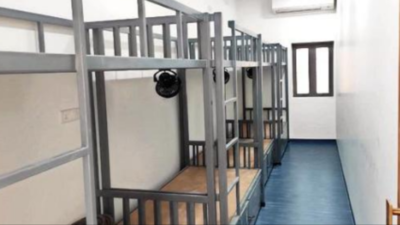
In addition to the training and study materials, the residential programme will also provide comfortable accommodations and healthy meals. This will ensure that students can focus entirely on their studies without any distractions or interruptions.


For more details, visit the link at www.pmet.org, and for more information, contact the PMET Office at 8780631131, Harun Mahida at 8980490743, or Imran Khan at 9140343730.

Note: The news above is posted only for reference, for the forthecoming year 2024. The date for 2023 has already passed by.

source: http://www.thehindustangazette.com / The Hindustan Gazette / Home> News> Education / by Shifa / May 23rd, 2023

Aslam, Bhai’s three doctor daughters have brought pride to the family, Teli community

Safala (Palghar), MAHARASHTRA:

Aslam Bhai, his wife Sabia and their three doctor daughters : Aliya. Ayesha, Saddika

The monsoon session of the Maharashtra State Legislature is underway in Mumbai. The world has accepted the work of great scholar and social reformer Savitribai Jyotirao Phule, who laid the foundation of women’s education in India. The struggle of Savitribai and her husband Mahatma Phule for women’s education is extraordinary. Opposition MLAs in both Houses demanded that a case be registered against those who used indecent language against Savitribai and Mahatma Phule. lam

Aslam Bhai was ecstatic and top of the world.

“She is the second daughter in your family who has become a doctor, isn’t it?” Aslam Bhai said, “Apart from Aaliya, I also have twin daughters Ayesha and Siddika. Saddika has completed her BDS (Bachelor of Dentistry Science degree from Pune and is now working as a dentist.

Aaliya, the youngest of his daughters, he said, completed her MBBS degree with distinction in Gynecology and Obstetrics from Lokmanya Tilak Medical College, Mumbai. She did her post-graduation in psychiatry at KEM Medical College, Mumbai.

Aslam Bhai was speaking with pride and happiness. Alia’s future husband Dr. Imtiaz Kazi is also a doctor by profession and has done MS Ortho from KEM College.

Aliya, Aslam Bhai’s third daughter

This will probably be the first incident of all three daughters of a middle-class family of Teli Muslim (traditional business of oil) community becoming doctors. Aslam Bhai looked very happy with the success of his three daughters. His wife Sabia also has a big contribution to this success.

Aslam Bhai’s dream of becoming a doctor himself could not be fulfilled due to poverty. Despite having a good knowledge of cricket and being proficient in the game, Aslam Bhai could not even become a cricketer due to financial reasons. But Aslam’s parents and Sabia Shaikh’s grandmother were modern-minded. He believed that girls should go for higher education. Due to this vision, all three girls of this Marathi Muslim family have become doctors setting an example for the community.

Education surely is the cure for most of the problems of Indian Muslims. Through quality professional skills and higher education, the family, community, and ultimately the country can be taken on the path of progress and Aslam Bhai and Sabiya have proved this. Of course, Ayesha, Siddika, and Alia have achieved this position after a lot of hard work. 

Aslam Bhai’s parents are small farmers. His father Yunus Mian worked in a small company in Andheri, Mumbai. His mother, Kulsoom, used to sell fish while doing housework and contribute to the household expenses of the large family of four sons, two daughters, and a mother-in-law. On days the couple had to go without food but they never compromised with the education of their daughters. The boys completed their school and college studies, but Aslam could not become a doctor for financial reasons. 

His father felt sorry for this till the end. Aslam Bhai took charge of his family by taking small and big contracts for construction works.

Aslam Bhai was married to Sabia, a girl from a cultured family in Andheri. They had three daughters – twins – Ayesha and Siddika and the youngest Aaliya. Despite the financial constraints, Aslam and Sabia dreamed of providing higher education to their daughters. The daughters also worked hard to fulfill the dreams of their parents.

The Sheikh family is proud of the Marathi soil here, the motherland of Palghar district. Aslam Bhai also got help from friends for the higher education of his three daughters. Aslam Bhai says that Hitendra Thakur, first mayor Rajiv Patil, Ajiv Patil, Milind Bhate, Ramesh Koti, Unmesh Kulkarni, and their family members helped him a lot.

All three girls wanted to become cricketers like their father. All three love cricket very much. He also knew that due to the economic condition, his father’s dream of becoming a doctor has been shattered. Seeing the trend of girls’ intelligence, Aslam Bhai and Sabia worked hard to make them doctors, and they succeeded. Now seven-eight girls in this area are pursuing medical studies and consider these three as their role models.

The girl learned and moved on. It is said that if a girl learns, she can improve her generation. In this context, the three doctor daughters of Aslam Bhai and Sabia Bhabhi have the potential to become role models in the Muslim community. A family from the Marathi Muslim Teli community showed how necessary and important women’s education is. This will be the first instance in the Muslim community of Maharashtra that all three daughters in the same family are doctors. That’s why society should express heartfelt gratitude towards this Sheikh family. Hats off to the entire family for their success!

After joining the Times Group in Mumbai, I came to know for the first time about the Teli Samaj, a part of the Muslim community. Rabad, Shahapur, Bhiwandi, Thane City, Palghar, Jawhar, Dahanu, Safale, Sonawe, Dahisar, Manor, Shirgaon, Tarapur Chinchani, Wada, Mathane, Vedhi, Kore, Edwan, Satpati, Mumbai suburb and city, as well as Vidarbha and Muslim Teli Samaj, is found in some areas of Marathwada. Earlier there was a Balutedari system in the village. This community used to do the business of extracting oil from oilseeds. Due to business, this society had the art of mixing with all the castes and religions of the village. Later, the mechanization of oil production took place. And the traditional oil business of this society was destroyed. As a result, people started looking for jobs in the service sector. Some became drivers of vehicles to transport passengers, many started a chicken and egg business, and some became butchers.

No person from the Muslim Teli community could reach the top of politics. That’s why the value of this society in politics is zero. According to OBC movement leader Shabbir Ansari, the Muslim Teli community is now entering higher education. Circumstances teach everything. The son of a rickshaw puller from the same community in Jalna district has become the youngest IAS in the Indian Administrative Service. So Mirza Abdul Karim Naqvi’s daughter Maryam has started 32 libraries for children through the Reading Culture Movement in Aurangabad. Ayesha, Siddika, and Aliya have taken this trend forward. 

Islam is probably the first religion to recognize the independent existence of women and their identity. Islam gave many rights and privileges to women. But the self-styled protectors of patriarchal culture in the name of religion have denied these rights and created a different tradition. Muslim women have been given the right by religion to do business to earn money and maintain the family.

Prophet Hazrat Muhammad’s first wife Hazrat Khadija had her own business. She was one of the richest women in Mecca. After the establishment of Islam, she became the first female follower. And even after accepting Islam, his business continued. Other women of the society also followed this tradition. The first book on the Prophet descended in the Cave of Diamonds in Mecca on the 26th day of Ramazan. It only talked about reading and gaining knowledge. Allah gave the message to get knowledge. And this message applies to both men and women.

The author is a senior Journalist. The article was transcribed from Marathi by Sameer Skeikh

source: http://www.awazthevoice.in / Awaz, The Voice / Home> Story / by Awaz The Voice / by Sameer Maniar, Mumbai / August 09th, 2023

SEED, Quran Foundation, Award Scholarship Worth 73.9 Lakh to MANUU Students

INDIA:

Maulana Azad National Urdu University students receive a scholarship worth 73.9 lakh from SEED 

Support for Educational & Economic Development (SEED), a non-profit organisation dedicated to assisting and uplifting the underprivileged, has awarded scholarships totaling 73,90,000 rupees to students at Maulana Azad National Urdu University (MANUU), a central university in Hyderabad, India known for providing higher education opportunities to students of Urdu backgrounds.

The recipients were selected based on their performance and financial backgrounds. The scholarship was sponsored by SEED with the support of two other Hyderabad based non-profit organisations — the Quran Foundation and the Helping Hand Foundation. SEED has provided 586 scholarships to MANUU students across all campuses.

Danish, a journalism student at the university, expressed gratitude to SEED saying, “This scholarship will greatly assist me. Such scholarships boost students’ confidence and enable them to focus on their education rather than financial problems.” 

Another student, who wished to remain anonymous, stated, “I lost my father during COVID, and this scholarship is a real help for me to pursue my aspirations.”

The scholarship distribution ceremony 2023 took place on 17 July at the university campus. 

The Vice Chancellor, Prof. Syed Ainul Hasan, expressed his displeasure with the discontinuation of the NSP scholarship for MANUU students. He stressed MANUU students’ talent and potential and stated that the management is actively working to offer them the best possibilities and platforms to demonstrate their abilities. 

The Executive Director of SEED, Mr. Syed Mazheruddin Hussaini, addressed the students, emphasising the value of hard effort in their academic journey. He also urged them to concentrate on improving their soft skills and communication abilities in order to face future work obstacles. 

“It is the students’ responsibility to improve their careers through self-confidence, hard work, sincerity, and effective time management.” He then presented a 73,90,000 rupees cheque to the Vice Chancellor.

The Registrar, Prof. Ishtiaque Ahmed, commended Prof. Syed Alim Ashraf for facilitating the SEED scholarship for MANUU students. 

Mujtaba Hasan Askari, Founder of the Helping Hand Foundation, addressed the students and encouraged them to strive for success in life. “Success can only be achieved through education,” he said.

Overall, the SEED scholarship initiative in collaboration with the Quran Foundation demonstrates a valuable commitment to supporting the educational aspirations of MANUU students, empowering them to overcome financial barriers and achieve their academic goals. 

source: http://www.twocircles.net / TwoCircles.net / Home> Education / by Musheera Ashraf, TwoCircles.net / July 18th, 2023

Zaheeruddin Ali Khan: A journalist and philanthropist in boundless relationship

Hyderabad, TELANGANA:

 Zaheeruddin Ali Khan

Hyderabad: 

A journalist. A Telangana protagonist. A regular figure at protest meetings. A pensive figure at conferences. A concerned citizen whose heart beats for the poor. A secularist to the core. A force to reckon with. Sure.

That gives a word picture of Zaheeruddin Ali Khan, former Managing Editor, The Siasat. In his 62 years, he was more than just a friendly, smiling face. He epitomised the essence of selflessness and compassion. He touched many lives, particularly of Muslim boys and girls, struggling for quality education. In his later years he took on the mighty Wakf mafia and showed by example what protection and conservation really means. Quiet, firm, and unrelenting. His passing away has brought the curtains down on a multifaceted career.

As I sit down to pen a few words about my friend of 30 years, I am at a loss for words. Zaheer Bhai, as he was affectionately called, was so talented and versatile that it is impossible to describe all his traits. But suffice it is to concentrate on just one aspect: his love and care for the well-being of the community. More than a journalist he was a social worker – a true humanitarian. He espoused causes that are not essentially part of a newspaper job. He went the extra mile to help people, especially during times of strife. Zaheer sab was there to lend a hand, be it the Gujarat massacre, the Mumbai riots, or the Bihar floods. He raised money through the Siasat Millat Fund and mobilised resources to help the affected. He was always at the forefront, ready to ease pain and suffering. This compassionate trait earned him a special place in the hearts of people. His innate sense of empathy touched countless lives and brought a ray of hope to despairing souls.

Zaheer Sab’s philanthropy was not limited to just emergency situations. He was always ready to support the needy and destitute. People made a beeline to his office for all sorts of things. Some would come to him seeking a job, some for educational support, and few others for help in corrections to Aadhaar cards and things like that. He lent an ear to everyone patiently and did the best he could.

For him, education was the master key to success. He believed it to be the best investment one could make. And all through his life, he tried to open the doors of opportunities through education to the poor and underprivileged. Women empowerment was a cause dear to his heart. Realising the difficulty the community faced in marrying girls in view of rising dowry demand, Zaheer bhai came up with the idea of ‘Do-ba-do’ (face-to-face) programme. This unique programme helped many families find a suitable match for their daughters without having to run around.

Though I knew Zaheer bhai for a long time, I drew close to him after my retirement from The Hindu newspaper. He wanted me to write for Siasat.com, a news portal set up by him. After initial hesitation, I agreed. He interacted with me on a day-to-day basis discussing story ideas. Like many others, I was touched by his boundless energy and infectious smile. I met him at a book release programme at the P.S. Telugu University on Saturday evening. We chatted together. But I never knew that it would be our last meeting.

The love and respect commanded by Zaheer bhai was evident from the huge turnout of people at his funeral prayers at the Shahi Masjid on Tuesday morning. Rest in peace Zaheer bhai. Your efforts to transform lives will continue to have a ripple effect.

source: http://www.siasat.com / The Siasat Daily / Home> Featured News / by JS Ifthekhar / August 08th, 2023

NEET UG 2023 Result: Twins from Kashmir village fulfill mother’s dream

Wattoo Village (Kulgam District, South Kashmir), JAMMU & KASHMIR:

Hailing from Watoo village, some 20km from main Kulgam town, the twin sisters have also realised the dream of their mother, a school teacher.

NEET UG 2023 Result: 

Syed Sabiya had dreamt of becoming an IAS officer until her twin sister, Syed Bisma’s passion for MBBS influenced her to follow the same path. A year later, both sisters have successfully cleared the NEET examination.

The twin sisters, who reside in a remote village in south Kashmir’s Kulgam district, are the daughters of a religious cleric who leads prayers in a local mosque.

“Bisma had aspired to be a doctor since her early childhood,” says their father Syed Sajad. “But Sabiya had initially wanted to pursue a career in the Indian Administrative Service. However, she later decided to follow Bisma’s chosen path.”

Originating from Watoo village, situated approximately 20 kilometers away from the main town of Kulgam in south Kashmir, the twin sisters have also fulfilled their mother’s dream, who works as a school teacher.

“While my father always expressed his contentment with whatever decision I made, my mother consistently desired for both of us to become doctors,” says 19-year-old Sabiya. “Numerous factors motivated me to prepare for the NEET, including my mother, my teachers, and a society that holds doctors in high regard.”

Sabiya commenced her education at New Era Private School in their village, while her sister studied at Kids Care Private School in Kapran village, located in the neighbouring Shopian district, where their aunt resided.

After their initial schooling, both sisters enrolled in separate government higher secondary schools in different villages.

Upon completing their 12th grade, the sisters relocated approximately 75 kilometers away to Srinagar for NEET coaching.

Despite hailing from a remote area, Sabiya believes that being from a village is no longer a disadvantage. “The internet has revolutionised everything,” she asserts. “It is as accessible to us as it is to boys and girls in Srinagar.”

Sabiya explains that both sisters prepared for the competitive exams together. “We maintained a regular study schedule of eight hours per day, but it required serious effort,” she shares. “In the days leading up to the exams, we extended our study hours to up to 16 hours a day.”

This year, three candidates, including one boy, from Watoo village, which comprises around 450 families, successfully qualified the NEET exams.

Twenty kilometers away from Watoo, Sumera Mehraj’s father, Mehrajudin Rangrez, finds it difficult to believe that his 21-year-old daughter has cleared the exams.

“Only God knows how challenging it is for a girl from a humble family to qualify for such an exam,” says Mehraj, who works as a driver for the Deputy Commissioner of Kulgam. “I can’t believe that she has actually made it.”

Sumera studied at GNV Ashmuqam for the past six years and narrowly missed selection last year. Mehraj explains that he was encouraged by his superior to send her for coaching this year, which turned her fortune around.

“Last year, she had secured 475 marks. For us, it seemed like the end of the dream,” he recalls. “But the sahib (DC) motivated and helped me to enroll her in coaching.”

source: http://www.indianexpress.com / The Indian Express / Home> News> Education / by Bashaarat Masood / Srinagar, June 16th, 2023