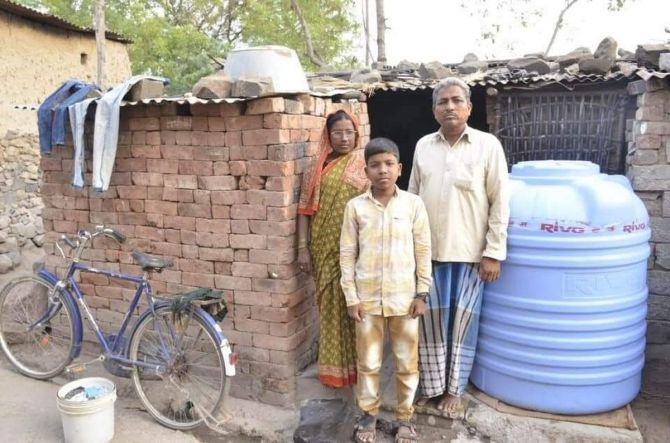
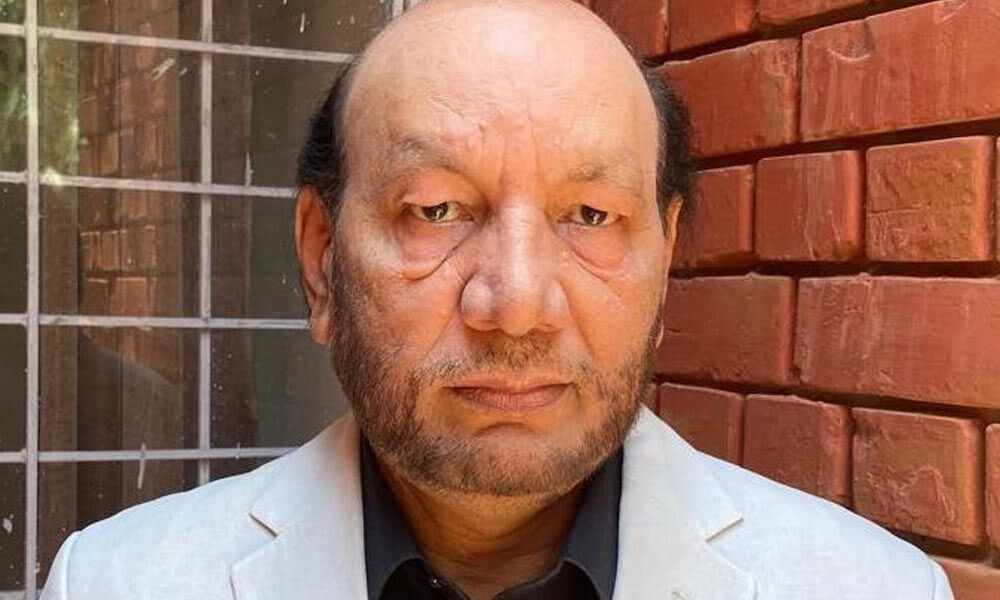
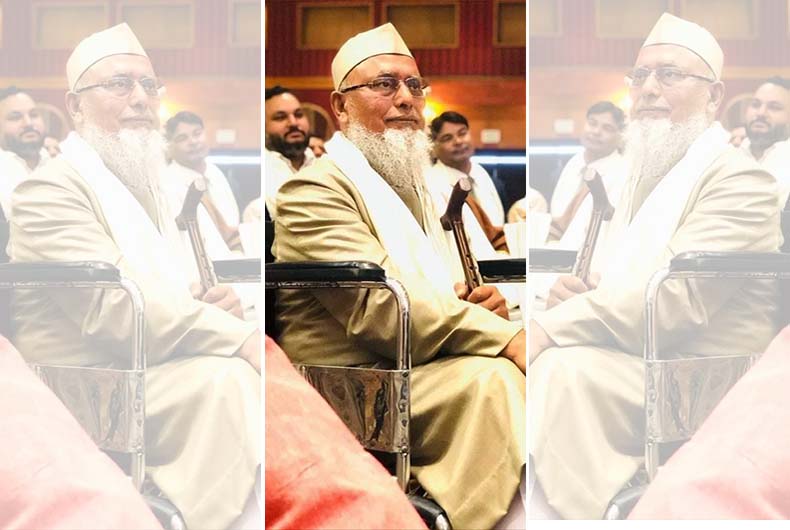
Mateen Jamadar with his parents, mother Razia Begum and father Nabisaab. Photograph: Kind courtesy Mohammad Mohsin
A teenager who doesn’t need to be told to study, who makes no demands on his parents even while preparing for his board exams — and then goes on to score a perfect 100%. Jyoti Punwani salutes Mateen Jamadar’s scholastic achievement against all odds.
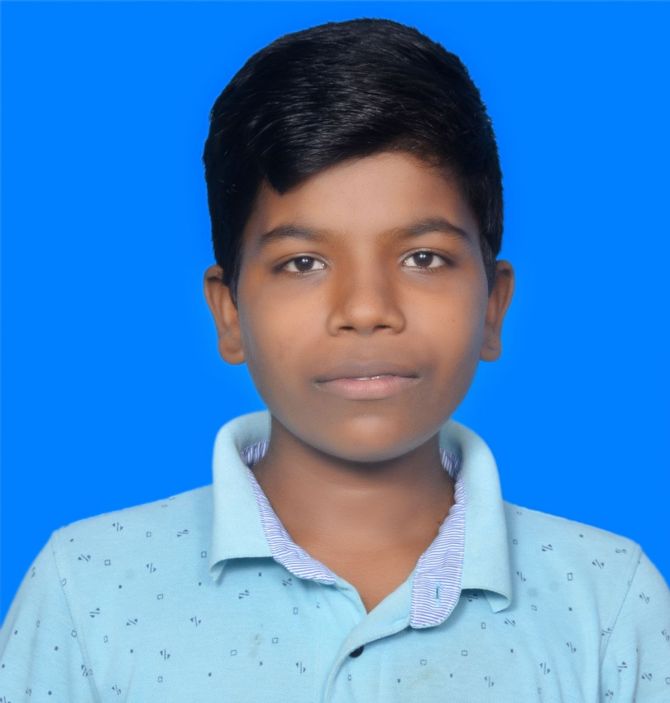
He’s 18, but looks 15.
A teenager who doesn’t need to be told to study, who makes no demands on his parents even while preparing for his board exams – and then goes on to score a perfect 100%.
Meet Mateen Jamadar, the pride of Mannur village in Gulbarga district, for having scored 600/600 in Karnataka’s PUC (pre university course) exam, the results of which were announced on Friday, July 23, 2021.
His father Nabisaab works as a mason on construction sites in the village, earning about Rs 500 a day; his mother Razia Begum cleans her neighbour’s field all day to come home with barely Rs 150.
Both parents have studied upto Class 10 and wanted their three sons to study further, but their eldest had to give up after Class 10 thanks to an eye affliction. He is now handicapped and at home, unable to work.
Their second son has done well, he’s a constable in Bengaluru; but it is their youngest who has brought them fame they had never imagined.
Razia Begum says she knew Mateen would do well. “Since he was a child he would come home and sit with his books,” she recalls. “No playing, no roaming around.”
That made Mateen his village school topper; he scored 619 out of 625 in his Class 10 Boards.
Mateen says he expected to do well in the PUC. This year, the evaluation for the final PUC exam had to be done based on previous performance since the exam was not held due to COVID-19 restrictions.
“I had scored 98.7% in my 10th and around the same in my First Year PUC,” he says over the phone. “I thought I would get 99%.”
Always fond of studies, Mateen decided to seek out a good college after completing his 10th from the government school in his village. The PUC college in his village wasn’t up to the mark.
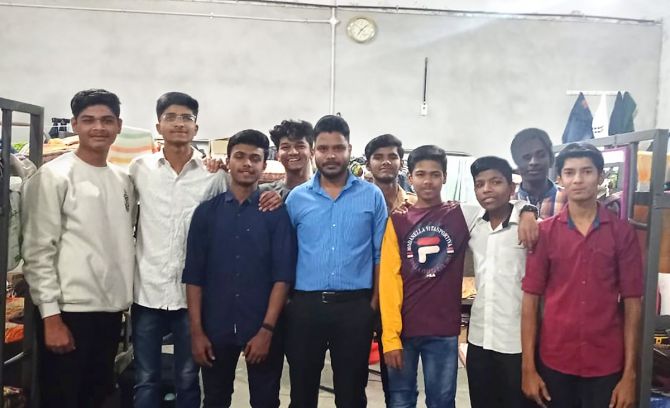
His quest took the village boy more than 600 km away from his home to the MMU PU College in Ramanagara. The magnet that drew him there was the hostel run by the Rahman Education Foundation in Ramanagara city.
The Foundation provides free stay for five years to meritorious boys to prepare them for the UPSC exams. The stay includes not just food, but also access to teachers, computers, sports facilities, and lectures by visiting IAS and Karnataka Administrative Service officers.
It was one such talk by IAS officer Mohammad Mohsin that made Mateen decide his final goal — the IAS. “The IAS gives you respect,” said the youngster.
Mateen, third from right with his hostel mates.
Mohsin, a Karnataka batch IAS officer hailing from Bihar, tells Rediff.com that the Rahman Foundation had invited him to spend half a day to motivate their hostelites. “I told the boys that no one from my family had ever joined the IAS; we are a business family. But I wanted to do something for the country.”
It was Mohsin who brought Mateen Jamadar’s achievement to the world by tweeting (external link) about him. “I wanted to show students that poverty need not mean the end of the road,” said Mohsin.
It may well have become so for Mateen.
Forced by the lockdown last year to return home as his hostel shut down, Mateen had to depend on online teaching. When he left for college, his parents had given him a simple phone, just good enough to stay in touch. Students were anyway not allowed a phone by the hostel authorities. The latter would keep the students’ phones with them, and give them back for just one hour every Sunday to call up home.
That phone was no use for online classes. To buy himself an Android, Mateen had to use his annual scholarship of Rs 6,000 given by the Karnataka government, but even that wouldn’t have been enough had his father not dipped into the funds he had saved slowly over the years.
Of course, that meant working harder to make up, but said Nabisaab, “We have to do that much for our children; and this boy has turned out to be so clever, we have to support him!”
Mateen Jamadar
Nabisaab and Razia Begum used to work in Mumbai and Pune earlier, on construction sites. But it was the desire to educate their children that took them back to their village, said Nabisaab.
His youngest son has made sure that’s a decision he will never regret. As Mateen said, “More than me, my parents are overjoyed at my result.”
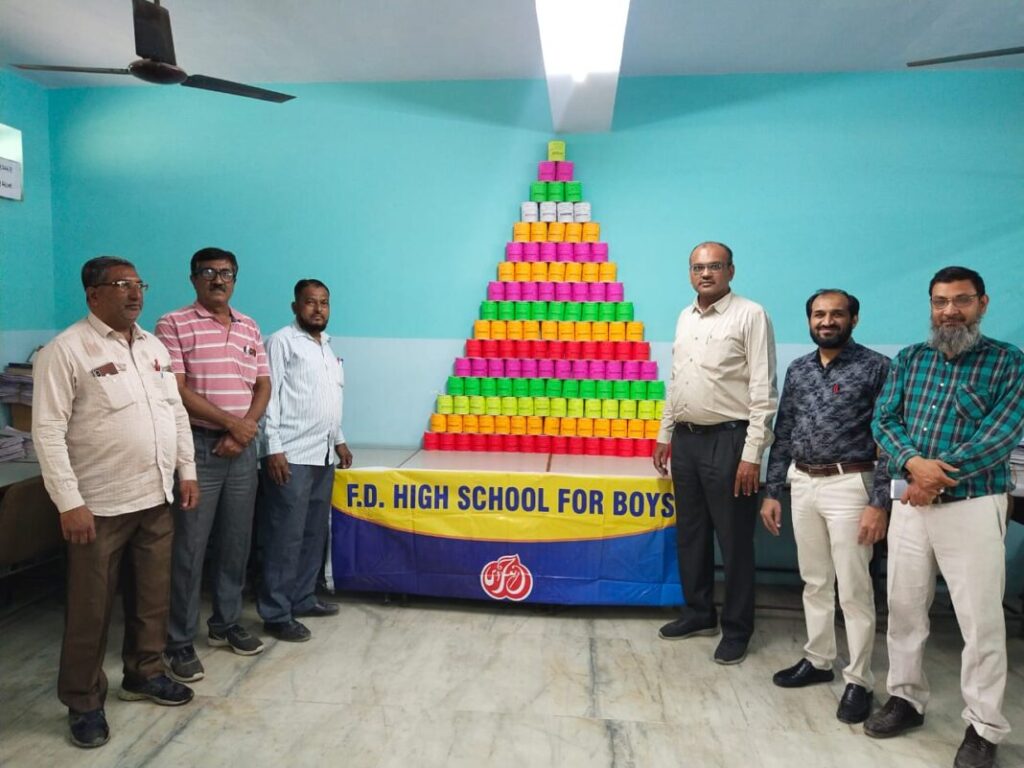
FD High School’s novel way of charity. Photo : India Tomorrow.
Ahmedabad :
India has 413,670 flat-broke beggars, the most vulnerable and downtrodden section of society. However, human rights activists say the number is three times higher, with West Bengal ranking top with 81,224 panhandlers followed by 65,835 in Uttar Pradesh, 30,218 in Andhra Pradesh, 29,723 in Bihar, 28,695 in Madhya Pradesh and 25,853 in Rajasthan.
Even after some 60 years, the Bombay Prevention of Begging Act, 1959 has abysmally failed to eradicate begging in the country. The dirt-poor freeloaders in tattered clothes could be seen soliciting alms at bustling public places like bus terminals, railway stations, traffic signals, street markets and religious shrines. The penniless ragamuffins roaming the streets are branded as ‘pickpockets’, ‘trespassers’, anarchists’ as also ‘unhygienic elements’.
Though there are countless wandering mendicants without a rupee to their name, the workshy, good-for-nothing professional beggars earn anything between Rs 20,000 and a whopping Rs 40,000, and their tribe is increasing, especially after the Delhi High Court ruled in August, 2018 that begging was not a crime.
Brainstorming for a long time on ways to stamp out this ‘source of public nuisance’, that is, begging, the high-brow principal of a prestigious school in Gujarat’s largest city, Ahmedabad, has hit upon a novel idea.
Kind-hearted students of the F D High School For Boys in Jamalpur locality no more let their hearts bleed for these knights of the roads and no more give alms to them. Instead, principal Zahid Mansuri has given them eye-catching donation boxes in the form of lightweight tin cans which they keep in their homes.
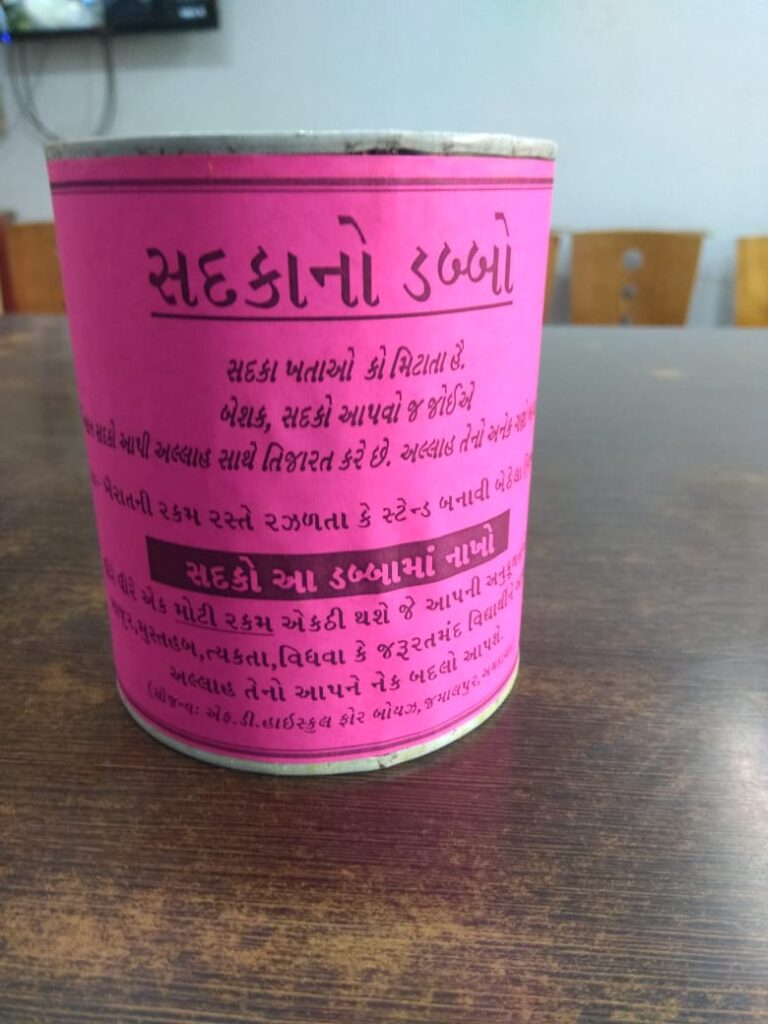
‘Can of Charity’
Students as well as their family members keep on dropping coins and currency notes in the colourful ‘can of charity’, called ‘sadqa no dabbo’ in Gujarati, for a couple of months or till the can is almost full after which the cash box is gifted to a poverty-stricken student, a widow, a sick or physically-challenged person, or to a cash-starved family.
“Instead of donating money to the poor strangers, we can hand over the cash-filled ‘cans of charity’ to the truly needy or family whose financial condition we know. Thus your hard-earned money goes to deserving people and changes their life for the better,” says Mansuri, a double post-graduate.
He has distributed some 300 cans to students, teachers, staff members and others all of whom liked the idea and those like physical training teacher A K Malek and retired bank officer M A H Kazi are demanding more dabbas.
While Malek says that it is better to avoid touching beggars while giving alms to them during corona times, Kazi feels that just giving Rs 2 to an unknown beggar does not serve any purpose.
Bleeding-heart teachers of the F D High School For Boys, part of the popular F D Education Society running 33 schools, colleges and technical institutes with 18,000 students on rolls, have dreamed up yet another way to silently lend a helping hand to underprivileged students without causing embarrassment to them.
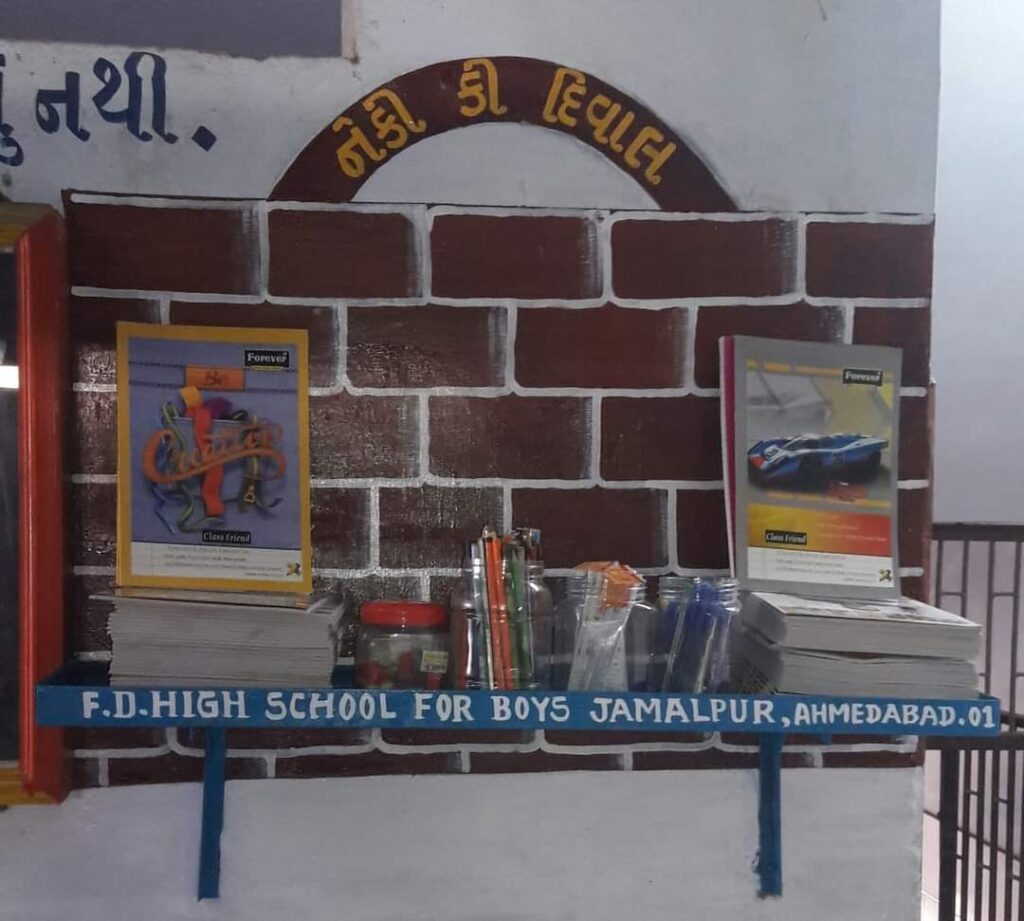
‘Wall of Goodness’
Under an initiative called ‘Neki Ki Diwar’ (The Wall of Goodness), four or five wide-mouthed, tall transparent containers are kept at one place on the school premises, and generous students and teachers put new or used pencils, erasers, paintbrush, metal or plastic scales and even notebooks into them. Down-at-heel boys and girls or even those who have forgotten or lost these items can take their pick without asking permission from anyone.
Well, Principal Mansuri and teachers, always ready to help students, realised that a good number of cash-starved students footed it to school from their distant homes, and enjoyed snacks from the money thus saved. Over several meetings to find a solution to this problem, the principal and teachers decided to get their old ramshackle bicycles repaired and donate them to the hard-up schoolers.
“Within a month, we collected 21 such rickety bicycles which after repairs looked spick and span. Not long ago, we donated these cycles to deserving and destitute students,” Mansuri told indiatomorrow.net.
In sum, there are 35,000 schools in Prime Minister Narendra Modi’s home state of Gujarat and one only hopes other schools will learn a lesson from F D High School For Boys.
source: http://www.indiatomorrow.net / India Tomorrow / Home> Education> Featured / by Mahesh Trivedi, India Tomorrow / April 02nd, 2021
Noted Persian scholar Prof Syed Ainul Hasan is the new Vice-Chancellor of Maulana Azad National Urdu University. According to a communication received from the Union Education Ministry to the varsity, the President in his capacity as the Visitor of MANUU appointed Prof Hasan, as the fifth VC of MANUU for a five-year term.
Prof Ainul Hasan is a professor, Persian & Central Asian Studies, Jawaharlal Nehru University, New Delhi. Earlier, he also served as the Dean, School of Language, Literature and Culture Studies, JNU. He is also the president, All-India Persian Scholars’ Association. He has more than 34 years of teaching experience and produced 87 research scholars.
A visiting professor of Rutgers State University, New Jersey (US) under Fulbright, Prof Hasan authored 13 books. He is a specialist in Indo-Iran, Indo-Arab relations and comparative literature.
Prof S M Rahmatullah, In-charge VC and Prof Siddiqui Mohd Mahmood, Registrar I/c, congratulated Prof Hasan on his appointment. They hoped that under his leadership MANUU will attain new heights of academic excellence.
source: http://www.telanganatribune.com / Telangana Tribune / Home> Hyderabad / by Telangana Tribune / July 24th, 2021
Daughter of teacher couple ranked fifth in Madhyamik, dreams of becoming a doctor.
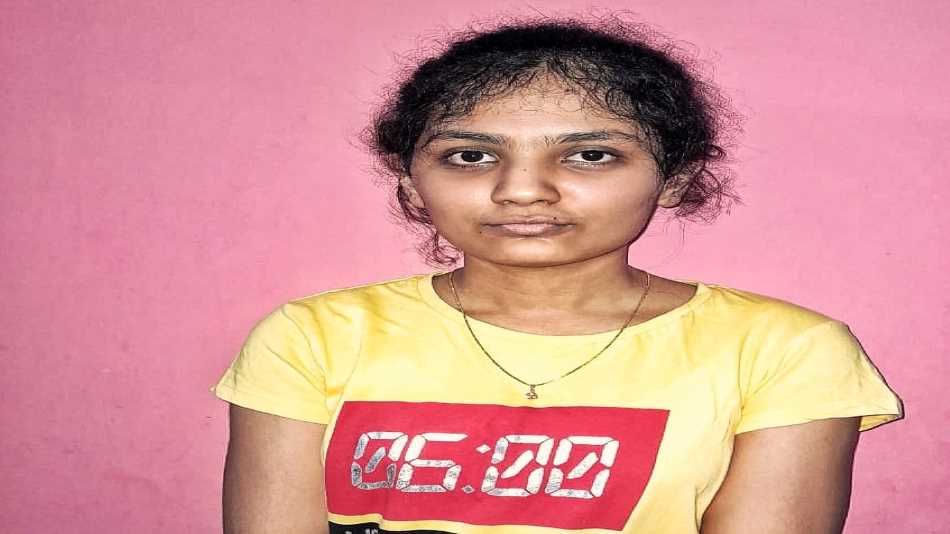
A girl has topped West Bengal Higher Secondary exams alone for the first time. Image Source: ABP Education picture.
Rumana Sultana, a student of the science stream from Kandi Raja Manindra Chandra Girls’ High School from Murshidabad, has scored the highest marks in the West Bengal Higher Secondary (HS) 2021 exams.
Rumana scored 499 out of 500 marks — 99 in Bengali, 100 in English, 100 in bioscience, 100 in chemistry, 99 in physics, and 100 in maths.
“I am very happy for her. This is an all-time record. This is the first time that a girl student has topped the Higher Secondary exams alone and this is also the first time that a student from a minority community has topped the exam. We congratulate her,” said Mahua Das, the president of West Bengal Council of Higher Secondary Education (WBSCHSE), which conducted the HS exams and declared the result on July 22.
The Murshidabad girl’s dream is to become a doctor. She hopes to crack the medical entrance exam and if not she plans to study biology.
Apart from studying, Rumana loves writing poetry. She had ranked fifth in Madhyamik (Class X) 2019, scoring 687 marks.
Rumana comes from a family of teachers. Her father Rabiul Alam is the headmaster of Gaisabad Achala Vidyamandirin Bharatpur, Murshidabad. Mother Sultana Parveen is also a teacher.
Her feet firmly on the ground, Rumana regrets not being able to write the exams and does not to give too much importance to her top score. “My Madhyamik and Class XI results were good. That helped. I would say I was expecting to do well but did not expect to top,” she signed off.
Professor Mohd Zahid Ashraf will receive this award under the Biological Sciences category. His work, as per a JMI statement, has contributed towards developing strategy for an early diagnosis and treatment of thrombosis at extremely challenging environmental conditions at high altitudes.
New Delhi:
Professor Mohd Zahid Ashraf (Source: JMI)
Jamia Millia Islamia (JMI) Professor Mohd Zahid Ashraf, Head, Department of Biotechnology will be conferred with the Visitor’s Award 2020. The professor will be awarded for his research on resolving the mystery of blood clotting on exposure to hypoxia at high altitudes. Professor Ashraf will be awarded by President Ram Nath Kovind at a function to be organised at the Rashtrapati Bhavan.
Professor Ashraf will receive this award under the Biological Sciences category. His work, as per a JMI statement, has contributed towards developing strategy for an early diagnosis and treatment of thrombosis at extremely challenging environmental conditions at high altitudes.
“The outcome of his research has given insights to our understanding of blood clot formation on ascension to mountains, sports, pilgrimage and soldier’s working under hostile environments,” the JMI statement said.
Congratulating Professor Ashrah, the Vice Chancellor of JMI Najma Akhtar said that it is a recognition for the research accomplishments by the university and Professor Ashraf’s achievements will motivate other faculty members towards pursuit of excellence in research along with academics.
The Vice Chancellor said that the university is committed towards the government’s mission to increase science education, research and promote STEM.
JMI professor to be awarded Visitor’s Award
Professor Ashraf is an elected Fellow of National Academy of Sciences, Allahabad and the Indian Academy of Sciences, Bangalore. He is a member of distinguished Guha Research Council.
Professor Ashraf, the JMI statement says, is also the recipient of ICMR’s Basanti Devi Amir Chand and DBT’s National Biosciences Award for his seminal work on high altitude related thrombosis in the Indian population.
This is the second time a JMI Professor has been selected for the Visitor’s Award. Earlier in 2015, the Cosmology and Astrophysics Research Group headed by Professor M Sami of Centre for Theoretical Physics, JMI had also received the Visitor’s Award for research carried out in the field of contemporary issues in Astrophysics and Cosmology.
source: http://www.ndtv.com / NDTV / Home> Education / by Mridusmita Deka / July 19th, 2021
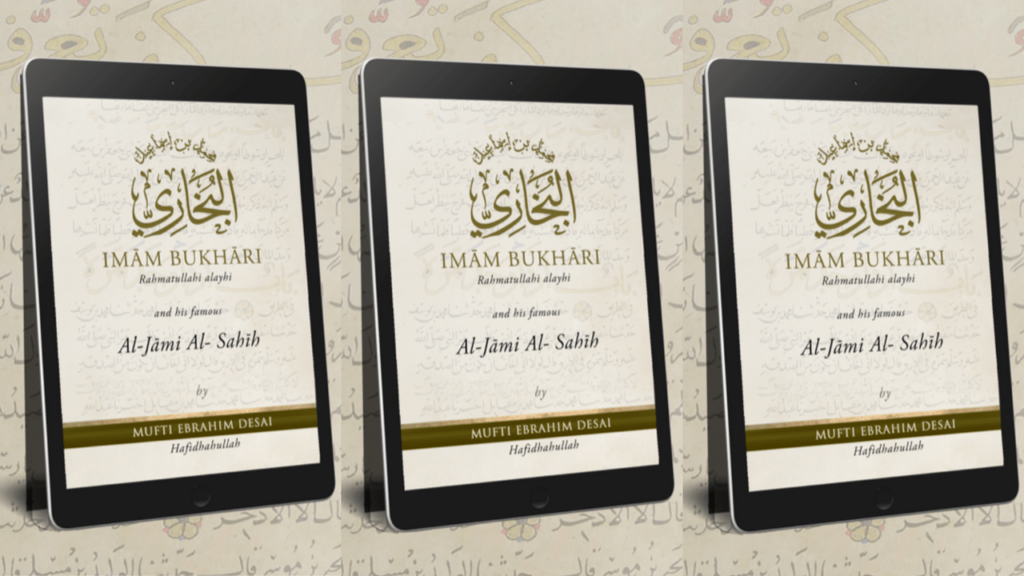
Mufti Ebrahim Desai, the world-renowned South-African-Indian Islamic scholar, and jurist, who established the Darul Iftaa Mahmudiyyah in Durban, South Africa where he trained students to become muftis passed away Thursday 15 July in Durban. He was 58.
Mufti Ebrahim Desai had been issuing fatwas in various fields for more than 25 years, mainly through the askimam.org website.
Born on 16 January 1963 in Richmond, South Africa, Mufti Desai memorized the Quran at the Waterval Islamic Institute and studied traditional Dars-i Nizami course at the Jamia Islamia Talimuddin in Gujarat, India. He specialized in fiqh (Islamic jurisprudence) under Mufti Ahmed Khanpuri and also studied with the former Grand Mufti of Darul Uloom Deoband, Mahmood Hasan Gangohi, the author of the multi-volume Fatawa Mahmudiyyah.
Mufti Saheb taught Fiqh, Principles of Fiqh, Tafsir, Hadith at Madrasah Ta῾limuddin, Isipingo Beach, South Africa for 10 years. He also headed the Fatwa Department at Jamiatul Ulama, KwaZulu-Natal. He was a senior Sheikhul Hadith at Madrasah In’aamiyyah, Camperdown for another 10 years. In 2011, Mufti Ebrahim Desai Saheb moved to Durban permanently and laid the foundation for Darul Iftaa Mahmudiyyah, Sherwood, Durban. In the early 1990s, he started Ask Imam Fatawa Portal, an online Islamic questions and answers database of Darul Iftaa Mahmudiyyah.
Mufti Desai was an Islamic finance expert who served as sharia advisor to various Islamic financial institutions.
He was featured among The 500 Most Influential Muslims compiled by the Royal Islamic Strategic Studies Centre and referred to as the “South African Grand Mufti of Indian descent.”
Mufti Ebrahim Desai had authored two books, “Introduction to Hadith: A general introduction to Hadith and its sciences” and “Introductions to Islamic Commerce”. His fatawa have been compiled in a book titled “Al-Mahmood”. Another compilation of his talks at the Shariah Compliant Business Campaign is also available titled “Shariah Compliant Business Campaign”. The latest compilation of contemporary verdicts is also available titled “Contemporary Fatawa”.
Muslims around the world expressed their sadness over his death.
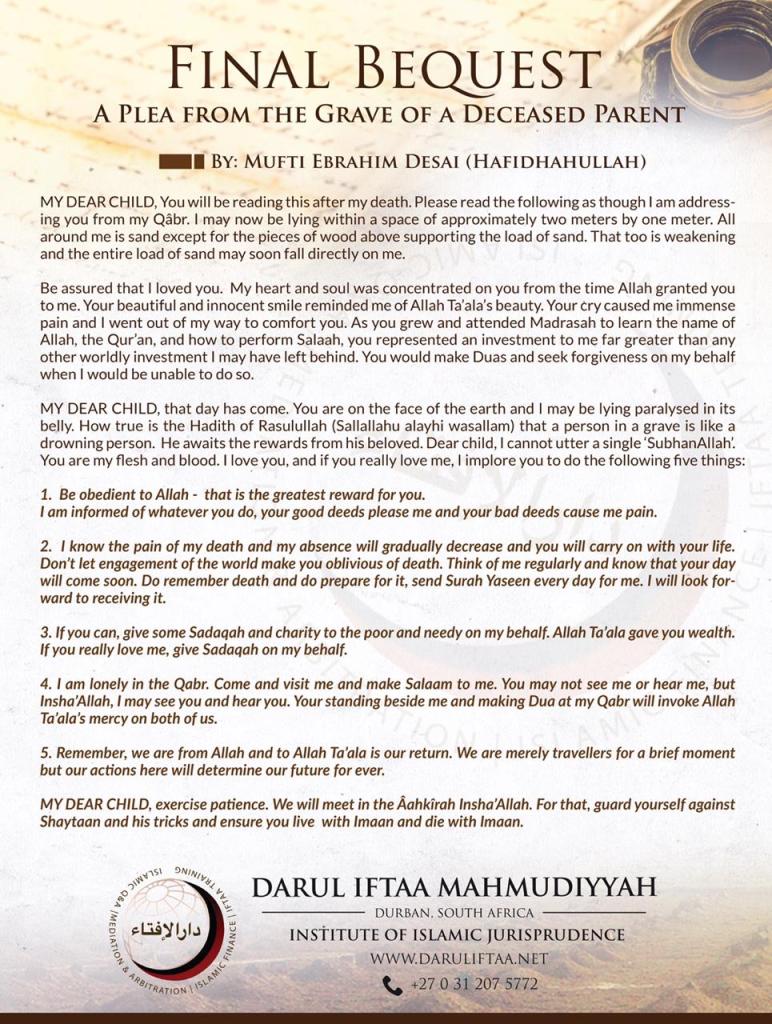
Final Bequest: A Plea from the Grave of a Deceased Parent by Mufti Ebrahim Desai
source: http://www.thecognate.com / The Cognate / Home> News / by Shaik Zakeer Hussain / July 16th, 2021
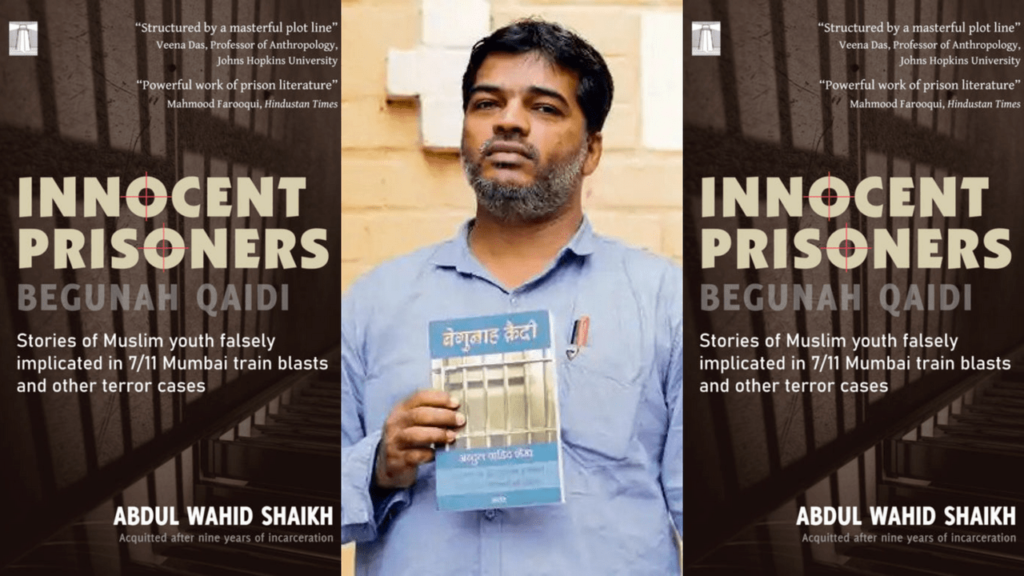
11th July is remembered in India’s at 7/11 because of Mumbai Train blasts in 2006. New Delhi-based publisher Pharos Media has brought out “Innocent Prisoners”, the English version of Begunah Qaidi authored by Abdul Wahid Shaikh, himself victim of a fake terror plot by agencies. The book, written while the author was incarcerated in Mumbai’s Arthur Road jail, was originally published in Urdu and later translated into Hindi.
Now available in English, it is a massive work of 504 pages on the tactics agencies and police use to ensnare innocents in fake terror cases to justify government policies and influence citizens of the country to accept the emergence of a security state in India.
The author himself was a victim of this ensnaring tactic who was acquitted by the Special MOCA & NIA Court Mumbai while his co-accused rot in jail and their appeal is pending for the last six years in Bombay High Court.
Shaikh offers first-hand information about agencies and police tactics on implicating innocent people, fabricating false evidence against them, and use torture of victims and the immoral pressure on their relatives to force them to confess to crimes they never committed or implicate other innocents.
The book is basically about the 7/11 Mumbai train blasts case but also covers German Bakery Blasts 2010, Malegaon Blasts 2006, Aurangabad Arms Haul Case 2006, Akshardham Attack 2002, and the “Indian Mujahideen” plank used by agencies to fabricate cases. It also extensively covers police torture, fabrication tactics, and various strategies police and agencies employ to implicate innocents and force them to make false confessions to prove stories concocted by the agencies and police.
This exposé offers startling details of the heinous games played in India by the State through police and agencies for decades in the name of “terrorism”. This book unveils the ugly face of government and agencies, modus operandi of police, ATS and investigation agencies, their inhumane tortures, legal tactics employed, and the secrets of court cases. Innocents implicated in terror cases will find the courage to fight their legal battles through this book. The reality of the blast cases and the tall claims made by police and media are exposed in great detail in this book.
The author himself was a victim of torture and tactics of police and investigation agencies. He has narrated first-hand experiences of himself and some other innocent prisoners at the hands of police, investigation agencies, and officials of the jail system.
This book is not just a testimony of the innocence of a person acquitted of all charges in an infamous “terror” case, it also showcases his unmoved resolve to fight the legal battle for his and other victims’ freedom. It also is a manual on how not to get yourself entangled in the vicious web of false implication in the first place and how to secure freedom from the clutches of heartless people in uniform, if arrested.
The author, Abdul Wahid Shaikh is a teacher at a Mumbai school. He was the only person to be acquitted out of the 13 accused in the 11 July 2006 Mumbai train bombings case because till the end he refused to sign a false confessional statement while his other co-accused succumbed to pressures and signed their false confessions which were used in court to sentence them to death and life imprisonment.
Shaikh completed his post-graduation and studied law during his nine years in jail. Keeping his promise to his co-accused, he frequently travels around the country talking about the truth.
A Hindi feature film based on his life will soon be released. Even years after his acquittal, cops continue to harass him. Priced at Rs 495, this book as well as its Urdu and Hindi versions are available on Amazon and Pharos Media.
source: http://www.thecognate.com / The Cognate / Home> News / by The Cognate News Desk / July 12th, 2021
Sheikh Amini started his services as the Chief Editor of Al-Daie and the teacher of Arabic literature at Darul Uloom Deoband from 15th Shawwal 1402 AH (6th August 1982).
Sheikh Waheeduz-Zaman Kairanavi (1930-1995) was one of the few exemplary teachers of Arabic language and literature whom the 20th century witnessed in India. During his long teaching services at Darul Uloom Deoband, not only he trained his students how to speak and write eloquent Arabic language but he also trained them how to live an ideal life in the society as a good human being. He educated them in the way that wherever they went, they became the cause to enhance the glory and reputation for him and for their seat of learning, i.e. Darul Uloom Deoband.
Waheeduz-Zaman Kairanavi always encouraged his students and wished to see them at the peak of success. Whenever an opportunity of exposure and publicity came to him, he always pushed his students forward to let them prove their mettles.
In 1982, when there was a vacancy for Chief Editorship of Arabic Islamic fortnightly Magazine, Al-Daie, published from Darul Uloom Deoband, he preferred one of his capable and qualified students, Sheikh Noor Alam Khalil Amini (1952-2021), then the teacher of Darul Uloom Nadwatul Ulama, Lucknow to take this important responsibility. Later, the scholars of Arabic language and literature witnessed how ideal this choice was!
“Early days as Editor”
Sheikh Amini started his services as the Chief Editor of Al-Daie and the teacher of Arabic literature at Darul Uloom Deoband from 15th Shawwal 1402 AH (6th August 1982). As the Chief Editor, he published the first issue of the magazine on 7th Muharram 1403 – 25th October 1982 and went on to work tirelessly for 40 years (1403-1442 AH) as Chief Editor of the magazine. His standard Islamic, academic, literal and thoughtful write-ups for Al-Daie, in a well-expressed and eloquent Arabic language, enhanced the beauty of the magazine.
Moreover, collecting the standard and thoughtful articles by Arab writers and the excellent publication of Al-Daie in accordance with his amazing fervor, the magazine took no time to reach the peak of its success. Not only the Indian sub-continent scholars, but also the Arab scholars, poets and the men of letters welcomed the magazine with open arms.
Thus, the magazine played a key role, as a mouthpiece of Darul Uloom Deoband, in introducing Deobandi thought (Which is strictly following the path of Ahlus-Sunnah Wa-Al-Jamah) and presenting the institution’s academic activities in the Arab world.
“Columns on important subjects”
Sheikh Amini had fixed several columns in Al-Daie such as Kalimatul-Muharrir, Kalimatul-Adad, Al-Fikr Al-Islami, Dirasaat-Islamiyyah, Ilaa-Rahmatillah, Mahalliyat, Anba’aul-Jamiah, Ishraqah etc.
Besides these columns, there were also some other columns like Isdaratun-Hadithah, Al-Adabul-Islami, Al-Aalamul-Islami etc. in Al-Daie, if articles on such topics were included for publication.
Sheikh Amini used to write for the columns like Kalimatul-Muharrir, Kalimatu-lAdad, Al-Fikr Al-Islami, Ilaa-Rahmatillah, Isdaratun-Hadithah and Ishraqah in an eloquent Arabic language in the light of reliable references and accurate statistics. For the Kalimatul-Muharrir, it was his practice to write a brief article on current issues related to India or the Muslim world containing one or two pages sometimes. At the end of the article, there used to be written [Al-Tahreer] in the brackets. Next to it, the time and date were noted to let the readers know at what time and date the article was written. It was his practice to write the time and date at the end of his any write-up.
For the second column: Kalimatul-Adad, mostly he wrote a detailed article on social, political or Islamic burning issue. The article sometimes was on virtues of the month of Ramadan and fasting -Sawm, greatness of the migration of the prophet Muhammad (SAWS), need and importance of prayer etc. Article of this column sometimes revealed the cunningness of America and its illegitimate child, Israel.
He also used to show up the positive and negative aspects of the steps taken by the leaders of the Muslim and Arab world. He never hesitated to express his opinion about the stand and the decisions of the Indian government on any grave issue. The article would consist of 5/6 pages and sometimes even more pages than that. The Urdu translation of some of the articles written for this column is now part of his Urdu book “Kiya Islam Paspa Ho Raha Hai?”
“Al-Fikrul-Islami”
He had great love for the scholars of Deobandi school of thought as they were true flag bearers of Islam. It was his mission to introduce their academic works and prominent services for Islam in Arab world. For this purpose, he translated Urdu books of those prominent scholars and published on the pages of Al-Daie in parts under the column of Al-Fikrul-Islami. This series continued for many years.
In this way, he translated dozens of books into Arabic language. The books are published from Darul Uloom Deoband and its Sheikhul Hind Academy. For few years, he had stopped writing for the aforesaid column. For this column, Abu Aaidh Al-Qasmi Al-Mubarakpuri (the patronymic of the famous Islamic scholar and teacher of Darul Uloom Deoband, Sheikh Muhammad Arif Jameel Qasmi Mubarakpuri, who is Assistant Editor of Al-Daie too) is translating “Tafseere Usmani” nowadays. This is a great and well-known Quranic commentary (Tafseer book) of Allamah Shabbir Ahmad Usmani (May Allah grant him Jannah!). As of Shaban 1442, the translation of the first 4 parts has been published under this column.
“Obituaries”
Sheikh Amini also wrote hundreds of articles for the column, “Ilaa-Rahmatillah”. Under this column, he wrote on famous scholars, thinkers, preachers, poets, men of letters and social and political personalities who had passed away in the near past from the Indian sub-continent as well as Arab world. In this article, he used to write the account of the deceased’s life, his services and the scholarly works etc. Like his other articles, the article of this column also had distinctive method as well as uniqueness and singularity of expression. The article would encompass all the features of the life of the diseased. The article used to be very lengthy. Sometimes, it was like a short biography of the diseased. He wrote on almost three hundred personalities as of March 2010.
Some articles written for the said columns were translated into Urdu language by the author and by some of his students and got them published in various Urdu magazines and newspapers. The readers liked them very much. They showed their desire that these Urdu articles should be compiled in the form of a book. Considering the sentiments of the readers, the author published the collection of 37 articles namely “Pase Marg Zindah” in 932 pages in May 2010. Of the same series, another collection of 24 articles namely “Raftagane Naa-Raftah” is soon to be published.
“Book Reviews”
Under the column of “Isdaratun-Hadithah”, he used to write a review on newly published books. His review too was very inclusive, comprehensive and lengthy. In this column, he used to elaborate the value of the reviewing book, its publication, introduction of author and his works in detail. As an example, the review of “Tohfatul-Alma’aee Commentary of Sunan Al-Tirmidhi” of Mufti Sa’eed Ahmad Palanpuri (Rahimahullah) can be read. This review is published with Tohfatul-Alma’aee, at the end of the 8th volume of the book.
The column: “Ishraqah” was on the last page of the magazine. Its remainder part used to be published on the last pages just back to the last one. For this column, Sheikh Amini used to write a well-grounded and demonstrative article, be on academic, religious, social or political topic, in the light of his thought, knowledge, experiences and observations or some situations and incidents influencing him. It was decorated with applicable idioms, appropriate synonyms, and beautiful similes. This article used to be the sample and model of an eloquent Arabic literature. It was highly valued and appreciated not only by the Indian readers of Al-Daie, but also by Arab scholars. It is pleasing that the hundreds of articles written for this column have been compiled and published this year namely: “Min Wahyil-Khaatir” in five huge volumes. It consists of 2600 pages as a whole. It was published just few weeks before the sad demise of Sheikh Amini. It is a precious and valuable gift for those who have interest in Arabic language and literature to read.
It is appropriate to record here that before the publication of Al-Daie, Darul Uloom published a quarterly magazine namely “Dawatul-Haq” as its mouthpiece, under the editorship of Sheikh Waheeduz-Zaman Kairanavi. After abolishing its publication, “Al-Daie”, a fortnightly magazine, was launched. Its first issue was published on 11th Rajab 1396 (10th July 1976), under the editorship of Sheikh Mufti Badrul Hasan Qasmi (ex-teacher of Darul Uloom Deoband and currently resident in Kuwait). Following his resignation, Sheikh Amini was appointed as its Chief Editor and the teacher of Arabic literature at Darul Uloom Deoband as stated above. Previously Al-Daie was published as a fortnightly magazine; but the governing body of Darul Uloom decided to convert it into monthly. Then from Safar-Rabiul Awwal 1414 AH (August 1993), it is regularly published as a monthly magazine.
May Allah accept the efforts of Sheikh Amini and grant him His choicest place in Jannah! Aameen!
[The writer, Khursheed Alam Dawood Qasmi, works at Moon Rays Trust School in Zambia, Africa. Sheikh Noor Alam Khalil Amini died on May 3, 2021 in Deoband.]
source: http://www.ummid.com / Ummid.com / Home> Life & Style / by Khursheed Alam Dawood Qasmi / June 11th, 2021
Noor Ayesha, Founder-CEO, Iqra International School
“Women should give themselves a chance, there’s so much that they are capable of, we need to leave behind a legacy and contribute to our ummah and the world at large.”
Noor Ayesha is an award-winning educator, an empowering leader, a mother of three, and the founder of a school that nurtures more than 650 children. Iqra International School – awarded the ‘Most Promising school for Quality Education in Bangalore’ was founded by Noor Ayesha with the aim of delivering value-based education in order to cultivate in each child, the aspiration to ‘learn and live values’.
“To be a great leader, you have to be a great reader,” says Noor Ayesha. She believes that Muslims moved from the golden age to the “dust age” due to the gradual fading of value-based education guided by Islamic principles.
Noor Ayesha was conferred with the Rashtriya Shiksha Ratan Award by The Indian Society for Industry and Intellectual Development and the ‘Fakhr-e-Watan’ Award for her academic and social services. She has been a speaker at the Eldrok Summit 2019, Early Childhood Association Summit 2019, Asia Education Summit 2016, Asia Leadership & Services Awards 2016, and at various MFERD conferences. She has also been chosen as the Global Goodwill Ambassador of India for Global Goodwill Ambassadors (GGA).
She believes that one must always have goals – professional, personal, and spiritual. “When you have determination and passion, Allah makes ways. Always,” she says.
Ayesha, along with her team at IIS has disproven the prejudiced notion that the niqab and hijab are obstacles to development and that veiled women are incapable. “We are proof that Muslim women are no less than anyone,” she asserts. She also strongly believes that there is “no shortage of capacity in the Muslim society but there is a need to unearth it and move forward.”
She efficiently managed the school single-handedly for many years, with the support of her team, comprising only of women. “Many of them who thought nothing of themselves are now leading the institution and representing Iqra at various conferences.” Ayesha gladly affirms. “Women should give themselves a chance, there’s so much that they are capable of, we need to leave behind a legacy and contribute to our ummah and the world at large.”
She points out that the inherent flaws in the existing education system have resulted in educated individuals leading privileged lives but vehemently failing in giving back to society, which she believes is the primary purpose of education. At Iqra, students are instilled with a sense of responsibility towards society, along with the quality education they acquire.
Iqra International School is a dream come true for Ayesha’s father, who has always envisioned being able to educate the children of the community. “We felt that a mosque’s imam would be better at his role of a leader if he was additionally equipped with worldly knowledge,” she explains. The school was set up as a result of Ayesha’s commitment to fulfilling her father’s dream and the dire need for a school that would nurture students with Islamic values along with quality education, with the added advantage of facilitating students with a campus that is within the city.
The school was conferred with the ‘Best Innovative International Preschool in Bangalore’ award at the Asia Education Summit & Awards 2016, the ‘Most Promising School for Quality Education in Bangalore’ award at the Asia Leadership and Services Awards 2016, ranked No.1 in India for “Individual Attention to Students” at the India School’s Merit Awards 2016, ranked No.1 in India for ‘Holistic Development’ at India’s School Merit Award 2017, awarded Excellence in Flexible Education Programme at The India K12 Awards 2019, declared “Brand of the Year” in National Brand Awards 2019, and was conferred with the International School Award 2019-2022 by the British Council.
“As a school, we are in no competition with any other Islamic schools, as we are all working towards the same beautiful cause – ‘nurturing children to learn and live Islam’,” Noor Ayesha asserts. “We just do our very best and leave the rest in His (God’s) hands.”
Iqra International School provides quality education with the IGCSE curriculum, seamlessly integrated with the QIAS (Quran, Islam, and Arabic Studies) curriculum. They also have an intensive hifdh program for students who perform exceptionally well in the Quran classes. The school also has 25- 30 students from other faiths, who have no problem with learning the Quran, the Arabic language, or using the Islamic salutation of peace.
“Alhumdulillah, two years ago, 3 of our brilliant students became huffadh. All 3 students were excellent in the IGCSE academics as well. I must also mention how good they were at football. Most of our football championships were won with two of them scoring the highest goals. Pursuing religious knowledge only makes it easier to become brilliant at gaining worldly knowledge. A balance between the two could be gained and this was proven by these children who made it possible,” she narrates.
The majority of Iqra’s staff have their own children studying at Iqra. “Even before a problem gets addressed by parents we would’ve already found a solution to it or in many cases solved it because we are all mothers ourselves with our own children studying at our school”, Ayesha says.
They also make sure students get ample exposure to other global cultures and beliefs by conducting inter-faith programs, inter-school competitions, Mock United Nations (MUN), and other such activities.
Before establishing Iqra, Ayesha conducted extensive research in the field of international education, particularly Islamic education, including the works of Dr. Dawud Tauhidi’s Tarbiyyah project that elaborates the purpose of Islamic education – its ideal impact and practicality.
“It’s not just the name ‘international’, our school has been international in all aspects from day one, from the research to the books and the curriculum,” she says.
The project has been completely funded by her father, from its inception until recently. Ayesha explains that the biggest challenge they faced was the difficulty in finding experienced teachers. In order to solve this, they set up ISTARI (Iqra Staff Training and Research Institute), as a result of which, they’ve been able to train and hire passionate and well-trained teachers.
“The trust and support from our school parents and the entire Iqra community, in general, has been immense right from the beginning, and that has helped Iqra reach wherever it has today, Alhumdulillah,” she contends.
Currently, Noor Ayesha is the Founder-Managing Director at Iqra International School, Director at Fantasy Group, Founder & CEO at OURAH, Director at Iqra Games Village, Director at the Centre of Integrative Medicine and Clinically Applied Hijamah Therapy(ICAHT), and Vice-Chairman in the Universal Educational Trust.
She is also the Member of the Advisory Board at Aspire Residential Public School, Kochi, Patron Principal at Early Childhood Association (ECA), Member of the Advisory Board at Eastern Public School, Bhopal, Member of the Islamic Educators Communication Network operated by Islamic Schools League of America (ISLA) and Council of Islamic Schools in North America(CISNA).
She completed her schooling in Baldwin Girls’ High School, Bachelor in Computer Science Engineering from Visvesvaraya Technological University, and MBA in HRD and Project Management from Cardiff Metropolitan University, Wales UK. She is currently pursuing her Doctorate in Educational Leadership and Policy from July 2021 at the University of Toronto, Canada.
source: http://www.thecognate.com / The Cognate / Home> People> Rushda Fathima Khan / July 12th, 2021
The coaching and guidance center run at the Haj Bhawan under the Minority Welfare Department of the Bihar government provides residential preparation for government jobs and academic examinations. The Haj Bhawan started offering guidance first in Bihar civil services and is helping students in police inspector’s job test. Lately, the center has been in news for the success it has achieved.
Bihar :
Unlike other Haj Bhawan’s in the country, the Haj Bhawan of the northern Indian state of Bihar is not sending Muslim pilgrims to Mecca for Hajj. The Bhawan is doing a different and sometimes a more urgent and laudable one. It is in news for sending minority students on a job journey to secure top level state jobs.
The coaching and guidance center run at the Haj Bhawan under the Minority Welfare Department of the Bihar government provides residential preparation for government jobs and academic examinations. The Haj Bhawan started offering guidance first in Bihar civil services and is helping students in police inspector’s job test.
Fifty-three of Haj Bhawan’s coaching and guidance center’s candidates were declared successful in the recently announced result of Bihar Public Service Commission’s examination for the top civil state job. Out of nearly 1400 successful candidates, 101 were Muslim candidates.
Similarly, fifty-three Haj Bhawan’s candidates were selected for the post of Sub Inspector in Bihar Police. Importantly, 19 successful candidates in the BPSC exam and 11 in the police exam are female.
Of late, the Bihar government’s initiative to provide ‘coaching’ to the students for government job examinations has been quite a success. Bihar has also seen the success of privately run Rahmani 30 for Muslim students for engineering and medical entrance tests.
Maulana Mazharul Haque Arabic and Persian University is the nodal agency for the government’s state coaching scheme. While the facilities are free here, only Rs. 3500 are charged as mess fee. For those whose candidates whose families cannot even afford that and are economically weak, the mess fee is waived off.
This coaching and guidance center was established in the financial year 2006-07. Initially, it struggled but since the year 2010, it has been bringing success to the state. Till 2019, 1517 candidates have been selected for jobs from here out of 4777 selected candidates for coaching. In 2019-20 the centre gave coaching to 860 and in 2020-2021, the number of students who received coaching was 568.
The centre promises to provide free residential coaching for the jobs offered by Bihar Public Service Commission, general police jobs like sub-inspectors and constables, jobs offered by Railways and staff selection commission. The centre also provides coaching for the preparation of the University Grants Commission’s exams like the National Eligibility Test (NET) and Junior Research Fellow (JRF). It also gives coaching for Teachers Eligibility Tes (TET).
However, the success in Bihar Public Service Commission’s exam is getting all the accolades to this center at Haj Bhawan. The center conducts entrance tests for its different coaching programmes. For the BPSC jobs, each year 150 candidates are selected out of nearly 1000 candidates who sit for its entrance test. The entrance test is advertised in the local newspapers and on social media too.
Features of the Center Mohammad Rashid Hussain is the coordinator of this coaching and guidance centre. He has studied at Jawahar Lal Nehru University (JNU) and Hamdard Study Circle. He did his masters in Persian and Central Asian Studies from JNU, and qualified for JRF and SRF. Hussain later moved to Hamdard Study Circle. In 2007, he cleared the BPSC examination and joined Bihar Administrative Service.
Talking to TwoCircles.net, Hussain said that he has adopted the model from Hamdard Study Circle. “The 24 hours open library, test series, lectures by the top experts and online-offline study materials are the salient features of this center,” he said.
He said that the environment of group study is quite helpful. “Discipline is quite strict here. No one needs to go outside to get anything related to their studies,” Hussain said, who also works as CEO of Bihar Haj Committee.
According to Hussain, the mock interview preparation at the Centre is quite successful. “So much so, that even non-minority students approach us for the interview and this service is provided to them,” he added.
Hussain said that the girl candidates get maximum safety measures at the Centre, and “this keeps them focused in their preparations.” The girl candidates are provided separate rooms, mess and prayer hall. There are two female wardens for them.
What inspires candidates at the Centre Mohammad Adil Bilal got 22nd rank in BPSC’s examination and would be a Deputy Superintendent of Police (Dy SP) after training. Adil’s father teaches English at a college in Darbhanga.
Talking about his success, Adil said that the coordination between seniors and juniors at the Centre “worked wonders for him.” He said that seniors were very helpful in pointing out the shortcomings and suggesting ways for improvement.
Razia Sultan, an engineer by profession, was also selected for the post of Dy SP. In fact, it is claimed that she is the first Muslim lady in Bihar to get this post directly. She joined the center after clearing the mains examination.
Talking to TwoCircles.net, she said that “she got a lot of motivation here.” She appreciates the guidance for the interview.
Noorjahan, another successful candidate, told TwoCircles.net that she got the best training here in personality development. She quotes an oft-repeated saying by the center’s coordinator Mohammad Rashid Hussain that “a ship is safe at the harbour but it is not made for the harbour,” as very motivating.
“This inspired me to work hard,” she said.
Another successful candidate, Sima Khatoon has done her Computer Engineering from Jamia Millia Islamia, New Delhi. She has been selected for Panchayati Raj Officer.
Talking to TwoCircles.net, she said that that “any Muslim girl can achieve success.”
She is all praise for the facilities and guidance that was provided to her at the Centre. “Allah has listened to my prayers for a platform to work for social welfare,” she said.
More works needed Afzal Hussain of Bihar Rabita Committee, which works for the minority community, told TwoCirlces.net that the success at Haj Bhawan is “commendable and its success needs to be emulated.” He said that the six centres supposed to impart coaching to minority students for job examinations at Patna, Darbhanga, Motihari, Kishanganj and Bhagalpur should also be developed along the lines of Haj Bhawan.
Social activist Nashoor Ajmal said that while the success at Haj Bhawan is welcome, “we should seriously think about the abysmal representation of Muslim community in government jobs while their population constitutes almost 17 per cent in Bihar.”
Experts and successful candidates are of the opinion that more efforts are needed and such initiatives should start at the Masjid committee level in the state.
Ajmal added the government of Bihar should work for the educational upliftment of the Muslim community by conducting special drives.
Sami Ahmad is a journalist based in Patna, Bihar.
source: http://www.twocircles.net / TwoCircles.net / Home> Lead Story / by Sami Ahmad, TwoCircles.net / July 02nd, 2021