Category Archives: FREE : Food

A faith that serves and not divides

Hyderabad, TELANGANA :

A Hindu priest and a Muslim social worker have come together to promote harmony during times of polarisation and communal discord.
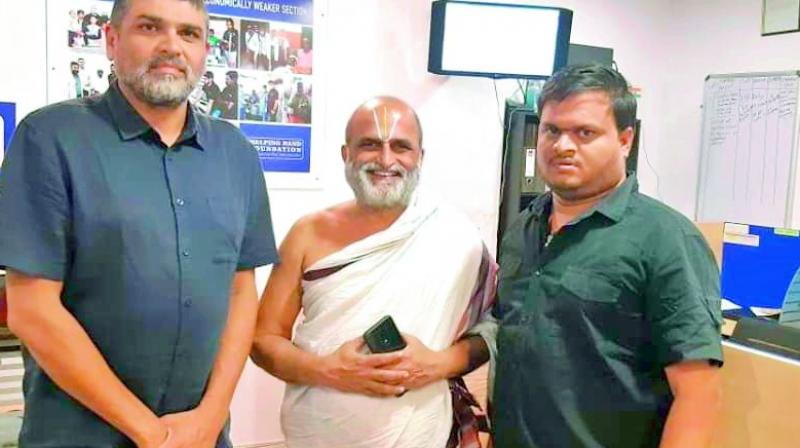
Mujtaba Hasan Askari with C.S. Rangarajan

Despite differences in their faith, culture, attire and, as some would see, calling, a Hindu priest and a Muslim social worker have been making a statement in humanity as they work together to foster love and goodwill. The polarisation they witness around them appears to be of no consequence to the duo.

C.S. Rangarajan, chief priest at the Chilkur Balaji Temple in the city, and Mujtaba Hasan Askari, of Helping Hand Foundation (HHF), have been working ceaselessly to give communal harmony a chance. They’ve been doing their best in promoting shared values and upholding the doctrine of ‘unity in diversity’ through well thought-out programmes.

“Our aim is to ensure that human values are placed above religion and faith. Humanity is the biggest religion,” they say in unison.

The divine intervention
Both batch mates of the College of Engineering, Osmania University, Rangarajan and Askari quit their lucrative jobs at the peak of their career to bring about social change. While the former, a social reformer who wants to purge the society of caste-based prejudices, turned to spirituality and became the chief priest at the Chilkur Balaji Temple, the latter founded the NGO Helping Hand Foundation to serve humanity in his way.

Interestingly, what brought the duo together was a deaf Dalit woman named Kamalamma, who sells flowers at the Chilkur Temple. In 2018, she tied rakhi on Rangarajan’s wrist, but it would be much later that he learns about her handicap.


Rangarajan recounts how after he learnt of her deafness, with her rakhi on his wrist, he felt duty-bound to help the woman. He quickly took Kamalamma to the Gandhi Hospital in Hyderabad, where the ENT surgeon diagnosed her with profound hearing loss and recommended a hearing aid. The hearing aid, priced at `55,000, was expensive. The local newspaper reported the story, and as luck would have it, Askari read about it and got in touch with Rangarajan to let him know that his NGO would foot the bill. The hearing aid restored Kamalamma’s hearing. “There’s no doubt. Divine intervention has brought us together,” says Rangarajan, smiling. “God operates through human beings.”

Serving God through humanity
Instead of parting ways after that incident, the good Samaritans stayed in touch. They met regularly to exchange ideas on the positive work they could do for a society caught in the whirlpool of political turmoil and religious polarisation.’


Then, sometime last year, Lucas — a Lallaguda-resident — approached Rangarajan, looking for support for his daughter’s education at the St Francis College, Begumpet. The priest immediately contacted Askari, who arranged the money from HHF. Here was a Muslim NGO reaching out to help a Christian girl on the recommendation of a Hindu priest.

Since then, the duo has been working closely to promote interfaith dialogue. Clearly, for the duo, humanity is an integral part of religion, while religion is a private thing. A few months ago, Rangarajan even visited the Masjid-e-Ishaq in the Old City, where HHF runs a primary healthcare centre. There, he addressed the community on the need for communal harmony.

Rangarajan and Askari plan to promote communal harmony in a visible manner, through social work and dialogue.

In fact, in the coming days, they intend to conduct health camps by Muslim doctors in some temples and by Hindu physicians in some mosques. The idea is simple-to make a difference through the work they do, and it’s heartening to watch just that restoring peaceful co-existence, one kind act at a time.

source: http://www.deccanchronicle.com / Deccan Chronicle / Home> Lifestyle & Trending / by J.S. Ifthekhar / January 23rd, 2020
How Indian Muslims Engaged in COVID-19 Relief Efforts Are Countering Hate With Love

Across India, Muslims have been as engaged in operations to help people worst affected by the crisis as anyone else.

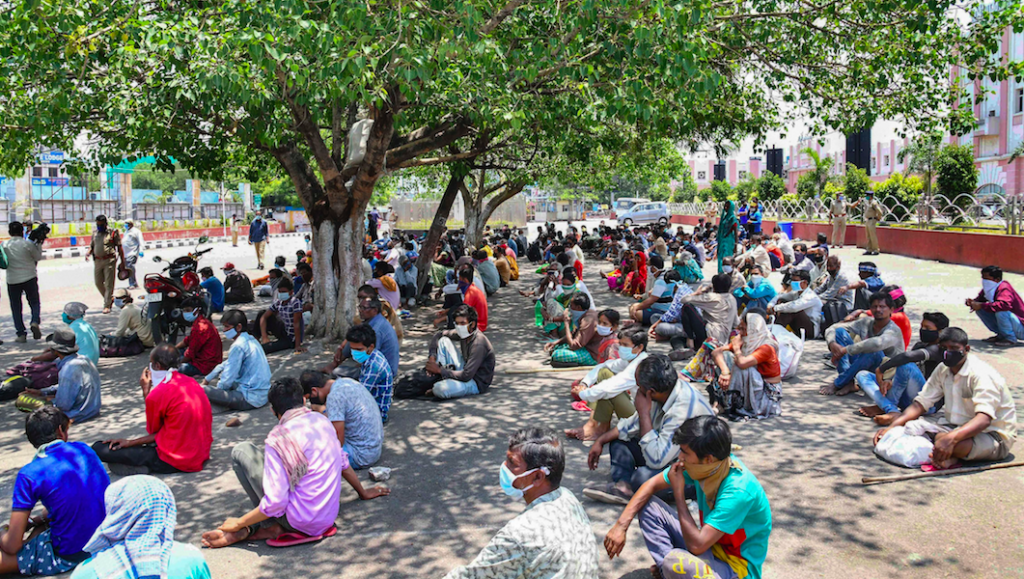
People sit in Hyderabad as volunteers distribute relief material. Photo: PTI

By its very nature, hate destroys and tears down; by its very nature, love creates and builds up.”

– Martin Luther King Jr. 

As India soldiers through its lockdown amid the COVID-19 crisis, it is clear that the devastation it has wrought on lives and livelihoods is unprecedented in living memory.

From living on the fringes of society to now struggling for survival, the lived reality of millions of Indians today is one of deprivation and desperation. Dominating the narrative is also a vile and hateful worldview that seeks to find opportunity in a humanitarian catastrophe, and reflects a willingness to advance a “nationalist” agenda, albeit at the cost of the nation.

Thankfully, the story of COVID-19 in India does not begin with deprivation and end in hate. An integral aspect of our collective situation today is that tragedy has engendered resolve, and for some noble souls, countering hate is an exercise in demonstrating love and compassion. 

Initiatives across the country to provide relief to the most vulnerable segment of society reflect how civil society can make a difference even in the face of government inefficacy and ineptitude. Especially heartening is the work of organisations that are working to provide succour to all, regardless of religious or caste identities. 

In Mumbai, “Food – Ek Chhoti Si Asha” is a broad community relief effort initiated by Nikhat Mohamedy, a Hijab-clad Muslim lady.

Now serving over 25,000 meals a day to the poor and destitute across the metropolitan city and far-flung suburbs, it all started with Mohamedy coming across a daily wage worker from the slums who had not eaten for two days. This led to her cooking food for 150 people in the vicinity of her home near Crawford Market.

The sheer extent of the need and Mohamedy’s passion for relieving hunger saw many more people join and contribute to the effort with their time and money. Today, the organisation has one main kitchen serving 15,000 meals a day and several “satellite kitchens” across the city serving an additional 10,000 to 15,000 people.

Volunteers, donors and beneficiaries come from every religious community and every sect. “This is about recognising the fact that we are all children of Adam and Eve, and feeding those brothers and sisters who are hungry and deprived is fundamental to expressing our humanity, ” says Mohamedy.

“For me, personally, this work is also an expression of my identity as a Muslim. Widespread prejudice against Muslims cannot be allowed to get in the way of serving all who are impacted by this crisis regardless of their religious identify or social status,” she adds.

Helping Hand Foundation, a nationwide NGO operating in the health sector is another organisation that has pivoted towards awareness campaigns and emergency assistance in the wake of the COVID-19 crisis.

A dedicated team of 100 volunteers including several ambulance drivers, nurses, paramedics, counsellors and patient care givers are working on a daily basis to reach out to areas where food and medical attention are urgently needed. This is in addition to awareness campaigns on social distancing and hygiene, in government hospitals as well as in slums, along with the efforts it takes in educating the masses on ways to safeguard their health at this time.

“We have been engaged in the mission to serve our fellow citizens even before COVID-19. The magnitude of the challenge facing our country and the sheer plight of those in need has only strengthened our resolve to do more,” says Mujtaba Askari, the organisation’s founder and trustee who is based in Hyderabad. 

“As for the demonisation of Muslims, the antidote to hate can never be hate. It is love and compassion,” Askari adds.

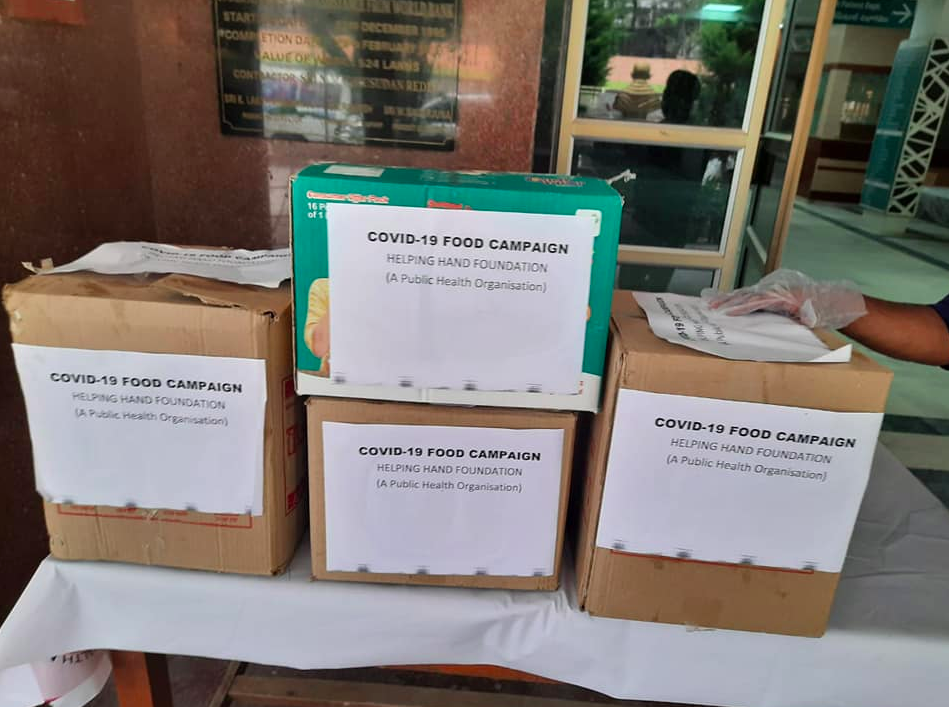
Food packets to be distributed by the Helping Hand Foundation. Photo: Facebook

The phenomenon of individuals and organisations transcending religious differences to serve all is not limited to Muslims.

In Mumbai, a Bengali Welfare Association has reallocated the funds meant for Durga Puja celebrations towards COVID-19 relief efforts. From Gurdwaras  to Buddhist monasteries hundreds of houses of worship of practically every religious community have recognised the existential nature of the crisis facing the country and the world, and have risen to the occasion by welcoming everyone who needs help.

The point of highlighting Muslims doing the same is not to take anything away from the magnanimity of these laudable efforts. In the current climate, however, of unending vitriol being poured on Muslims by some public figures and media outlets, there is something especially uplifting about so many Indian Muslims rising above anger and bitterness to stay focused on providing relief to fellow citizens.

Not only are Muslim-led efforts in various states working towards relief a common phenomenon, established nationwide organisations of Indian Muslims such as the Jamaat-e-Islami Hind (JIH) have a long track record of being in the forefront of relief efforts in the face of natural calamities. Their grassroots-based nationwide network is now being effectively leveraged  to provide relief to Indians of every creed and caste, which the organisation plans to continue until the lockdown is in place.  

Undoubtedly, the struggle to save India’s soul will be long and hard, and things will likely get worse before they get better.

However, it is the acts of kindness that so many people of every religious community are willing to extend to each other that keeps the hope alive for millions of Indians. 

These acts already represent a triumph of pluralism over bigotry, and of compassion over cruelty. 

Musaddique Thange is a project management professional based in the US. He has served as a board member of the Indian American Muslim Council and has been engaged in social services in San Diego, California for the last 10 years.

source: http://www.thewire.in / The Wire / Home> Analysis / by Musaddique Thange / April 27th, 2020

Muslim Women In the Lead to Fight Covid-2019 – From Masks to Cremations

What do people like Jahanara Bibi, Zakir Hussain, Heera, Rebecca, Mansura, Reshma, Hassanujjaman, Akbar, Raju and Rahim have in common?

One, they all are residents of West Bengal; two, they are Muslim and three, immune to the communal strife reported all around, they have dedicated themselves to help the poor, the ignorant and the needy in these times of Covid-19 irrespective of their communal identity.

Some of them are making masks and distributing these free of cost among poor people who cannot afford to buy them, creating awareness in their respective neighbourhoods about the need for wearing masks, maintaining social distancing and staying indoors during the lockdown. They live in neighbourhoods in extended Kolkata where the majority is Muslim but Hindus live here too and there does not seem any communal strife raising its head here.

According to Arunakshya Bhattacharya of the Anandbazar Patrika (May 4, 2020), Jahanara Bibi, a housewife, who lives in the neighbourhood of Duttapukur Police Station, happened to chance upon a group of children moving about without masks during the lockdown. So, she asked them why they were not wearing masks. They chorused that they did not have the means to buy masks. She at once made up her mind to make masks herself at home with leftover pieces of cloth and distribute these for free among poor children. She personally distributed these masks to different localities in the neighbourhood. To end this happy story, her husband, Zakir Hussain, has joined her in this effort.

Explaining what motivated her, Jahanara says, “I know that people in these outskirts and suburbs areas are not aware of the importance of wearing masks and the ill effects of not wearing them. There are many who cannot afford to buy masks or know to make them, So, I took it upon myself not to make masks but also to visit homes from door to door and distribute the masks and also, if possible, to explain the importance of wearing masks when stepping out.”

Happily, other women of the community such as Heera, Rebecca and Mansura are distributing masks across neighbourhoods like Jagulia, Duttapukur, Golabadi, etc from one house to the next and also selling some masks to those who can pay.

Aamdanga is a neighbourhood crowded with people of the minority community. The same applies to Hadipur and Gorpara in Deganga. A group of women from the minority community noticed that the residents of these places were crowding needlessly in some areas, in violation of the rules of social distancing. Some were even seen chit-chatting at small tea shops.

A group of Muslim women took it upon themselves to form small groups and visit these crowded areas and counsel the locals against crowding needlessly and advising them to stay home. Reshma Tarafdar, a college student, went from door to door to advise them to stay at home and not step out during the lockdown. Some among these groups are also helping out in the distribution of free food among the poor and the very poor.

Hassanujjaman Choudhury, a young man who lives in Noornagar within Deganga, has invented an original “Food ATM” machine which carries the label “Please maintain social distancing” on its body. The very poor who cannot afford their daily meals are handed a metal token with the picture of Netaji Subhash Chandra Bose. They have to slip this token into a slot in the machine and at once, two packets of rice, potatoes, onions, soyabean and oil come out. Others involved in similar volunteer work are Akbar, Raju and Rahim who have vowed to stand beside the deprived and the downtrodden in these dark days.

These incidents come in the wake of the story of Abdul Rehman Sheikh, 30, a businessman, who, along with other Muslim neighbours, came to the aid of the sons of Draupadi Bai Verma when her sister refused to take care of her as she suspected the old woman of being a Covid-19 patient. No one was there to take her to a hospital and she died the following day. This happened in the beginning of April this year.

She lived with one son who is very poor while the other was away and could not come down when the mother was serious. They were very poor. The neighbours refused to even touch the body leave alone joining to help in the funeral rites. At this juncture, Sheikh brought ten Muslim men and came forward to arrange the cremation of the lady by Hindu rites both physically and financially.

This happened in South Toda in Indore. The old woman was suffering from paralysis for three months. According to Sheikh, her sister’s sons, who live just 100 metres away refused to step inside the house. “If she was taken to a hospital the same day, she probably wouldn’t have died,” said Sheikh. the 10 men, along with her two sons and their children, took out the procession to the cremation ground around a kilometre away.

Man-made schisms within two communities do not exist except when politicians try to ignite them for their own axe-grinding motives irrespective of the degree and intensity of the harm this igniting of hate can fall on the harmony and secular feelings the present situation demands. These are just a few examples that illustrate how Kolkata and its suburbs are being witness to the wonderful effort being put in by women of the minority community in volunteering to help people in distress, specially the economically deprived classes, with their help, without thinking about how their exposure in the public domain might place them at risk.

According to a Reuters Report in The Japan Times,(April 20, 2020), “There is no official breakdown of coronavirus cases by religion. But many Muslims feel unfairly blamed for spreading the disease after a cluster emerged at a gathering of Muslim missionaries in New Delhi last month. Sensational news coverage about the event, fanned by some Hindu nationalist politicians, helped spur the trending topic “Coronajihad” on social media.

source: http://www.thecitizen.in / The Citizen / Home / By Shoma A. Chatterji / West Bengal / May 06th, 2020

Valsad man spends Rs 1 cr to buy ration kits for the poor

Dungri Falia -Vapi (Valsad District) GUJARAT :

Every day at 9.00 am, three trucks loaded with ration kits leaves Khan’s godown to distribute ration kits to the villagers. These vehicles have essential pass provided by the local administration.

Narsulla Khan has supplied over 21,000 ration kits. (Express Photo)

A 40-year-old businessman from Valsad district has spent Rs 1.10 crore in more than a month to distribute ration kits to poor families in 35 villages in the district. Narsulla Khan who runs an electric panel manufacturing unit in Vapi GIDC has till date supplied over 21,000 ration kits.

Khan, a resident of Dungri falia in Vapi, began distributing the kits on March 27. He created a team of 70 people which included sarpanch of the 35 villages. Khan procured grocery items from wholesale traders in Valsad, Vapi, Navsari and Surat and the team helped put together the kits.

Every day at 9.00 am, three trucks loaded with ration kits leaves Khan’s godown to distribute ration kits to the villagers. These vehicles have essential pass provided by the local administration.

The kit comprises 10 kg rice, 5 kg wheat flour, 2 kg Tuver daal, 3 kg potato, 3 kg onion, 1 kg oil and 1 kg salt.

“The sarpanches and the team have the list of people who need help. So far we have covered or 35 villages and delivered 21,000 kits. I know what it feels like to sleep empty stomach. My father worked very hard to provide for us. By God’s grace, we have enough now. SO, I thought why not help the poor people during lockdown,” Khan said.

“We will continue supplying kits till the lockdown is lifted. The district administrations and even the police of Vapi have our numbers and they call us whenever anybody needs help,” he added.

Vapi taluka Mota Ponda village sarpanch Dhriubhai Ahir said, “The group helps whenever the delivery truck gets stuck anywhere or stopped by the police. Khan does not go out to deliver kits, it is distributed by his volunteers and sarpanches.”

source: http://www.indianexpress.com / The Indian Express / Home> India / by Kamaal Saiyed / Surat – May 01st, 2020

Youngsters ‘rice’ to the occasion, do their bit for villages

Bengaluru, KARNATAKA :

They load their vehicles with rice, pulses and spices as also medicines and hygiene kits for distribution in these villages, just 50km from Bengaluru.

Bengaluru :

Siddanapalya and Chinnaiahnapalya—two backward villages in Anekal taluk of Bengaluru Rural district—daily see a band of youngsters come there and give them gyaan on coronavirus and provide essentials.Murali Prabhas, a young startup entrepreneur, and three other fellow engineers, Thasneem Fathima, Sushmitha Singh and R Nisha, trudge every day from Whitefield to Anekal to provide succour to these affected villages due to the lockdown. Another member is Dr Raj Kumar who is busy with his medical duties but contributes to their volunteering programme in kind and cash.

They load their vehicles with rice, pulses and spices as also medicines and hygiene kits for distribution in these villages, just 50km from Bengaluru. The group tries to create awareness about the deadly Covid-19 disease and the need to maintain personal hygiene – hand washing and social distancing. However, it is easier said than done as the professionals from Bengaluru say the attention span of people is just five minutes when one talks about coronavirus and its deadly effect while the attraction for food and hygiene kits is more.

The ‘Humanity First’ group has been involved in social work for the last five years and they say the present work has not been easy as the villages with a population of 1,000-1,200 are completely unaware of what is happening in the world.  Murali says, “None of them adheres to any rules of the national lockdown. As far as social distancing is concerned, it is an alien concept for them.”

Members of Humanity First distribute food at a village in Anekal taluk | Express

Presently, this group has been preparing food like pulao/tomato bhath/bisibele bhath/puliyogire at the villages itself as any packed food is not welcome here. The day’s menu is prepared taking help from a select band of 10 villagers while the vegetables are purchased from the farmers here. This makes it easy for the group to deal with them as they are highly suspicious, says a group member. “Only 4-5 of us go every day as we have to maintain social distancing.  The villagers crowd around us as soon as we reach.”

Food is such an attraction that some residents bring vessels instead of plates. “We have been teaching them how to wash hands, wear masks and keep a distance of 12 feet from one another. For them, the kit is a big attraction apart from the food and within 5 minutes, we have to teach them about hygiene.”

The hygiene kit comprises a bottle of sanitiser, mask, bath and washing soaps, sanitary pads, shampoo and a strip of Dolo 650 – a paracetamol. Every day, kits worth Rs 12,000 are distributed to children who are above 14 years. For food preparation, they spend about Rs 6,000 per day.The group is managing this work from its own savings and small donations from their friends and relatives while one of the members brings his vehicle for distribution work.

In these villages, one can find migrant labourers from UP, Bihar and Odisha who work in the nearby iron and steel fabrication units, garment factories and a pharmaceutical company. Since the units are closed, the migrants have been managing with free rations from the government. For the migrants, these are hard times and even a single food item that they get from these youngsters is welcome.

The Humanity First has tied up with a women’s group who are making sanitisers and masks and they are helping them to market 2,000 masks and 10 litres of sanitiser.For this dedicated group of youngsters, it is with a prayer on their lips that they go to these villages to do their bit. “People await our arrival every day and we cannot miss it even for one day in such harsh times,” they say.

Service their motto

From 2014 onwards, Murali Prabhas has done a lot of backend work for charity trusts and Rotary. He and his friends built four washrooms for the Divine Blind School in 2016. After his visit to a school in Kolar district where children were wearing torn uniforms, Murali and his friends decided to take up social work and adopted two slums between Kadugodi and Whitefield in Bengaluru. For three years, they taught science and mathematics and distributed textbooks to Class 10 children in the slums.

source: http://www.newindianexpress.com / The New Indian Express / Home> Cities> Bengaluru / by Meera Bharadwaj / Express News Service / April 26th, 2020

Coronavirus lockdown: Brothers in Kolar sell their land to feed people

Mohammadpur Village (Chintamani Taluk) / Kolar, KARNATAKA :

When Prime Minister Narendra Modi announced the nation-wide lockdown to contain COVID-19 from March 25, brothers Tajamul and Muzamil Pasha in Kolar took an exceptional step. They sold a 30*40 plot of land they owned in the town. 

This was not to meet their financial needs in times of crisis. But to support those who had lost their livelihoods owing to the lockdown.

The two brothers, who live in the Housing Board colony of Kolar, raised Rs 25 lakh from the sale. The money was used to purchase groceries and other essentials for the underprivileged. 

“Isolation is key in the fight against COVID-19. Poor people venture outside if they don’t get food. The ideal way to keep them inside their houses is by supplying groceries and food at their doorstep,” Tajamul Pasha told DH.

The Pashas hail from Mohammadpur village in Chintamani taluk in Chikkaballapur district. Tajamul was an eight-year-old and Muzamil, just five, when their parents passed away. Soon after, they relocated to Kolar with their grandmother.

Compelled to earn their livelihood, they had to discontinue studies after Class IV. 

“A kind-hearted man gave us a house near the masjid in Gauripet. Hindus, Muslims, a Sikh family and several others gave us food those days. Religion and caste were never a barrier. What brought us together was humanity and we are now attending the call of humanity,” Tajamul says.

“Those days taught us the value of food. This childhood experience drove us to serve the poor till the lockdown ends,” he adds.

Community initiative

After raising Rs 25 lakh, the brothers tapped into a close network of friends, which includes members from all communities, to start the relief work. First, they bought groceries in bulk and stored them at their residence. Ration packets containing essential items: 10 kg rice, 1 kg all-purpose flour, 2 kg wheat, 1 kg sugar, edible oil, tea powder, spice powders, a bottle of hand sanitiser and face masks were prepared.

Then, they erected a tent in an open space next to their house and set up a community kitchen to serve food to those who can’t cook meals in their houses.  

The volunteers have also been given passes by the police, so they can make deliveries of the essential items on their bikes.

They sourced information about those in need of help by visiting the localities themselves and seeking details from the locals and elected representatives.

Their main aim is to ensure that each member of the family receives three meals a day.

So far, the Pashas have delivered free groceries to over 2,800 families, covering some 12,000 people. They have also served food to over 2,000 people. Now, the brothers are working with other like-minded people to continue serving those in need.

“I didn’t know that the government would extend the lockdown. I have done my best, using resources the God has given me. I plan to continue to serve the needy till the lockdown ends,” Tajamul says.

source: http://www.deccanherald.com / Deccan Herald / Home> Specials / by Jagadish Angadi / April 22nd, 2020

Kerala Blasters’ player Zakeer Mundampara lends house for COVID-19 care

KERALA :

Kerala blasters E player Zakeer Mundampara is an inspiration for the people to be part of the initiatives to help the health workers and other people affected by Covid-19.

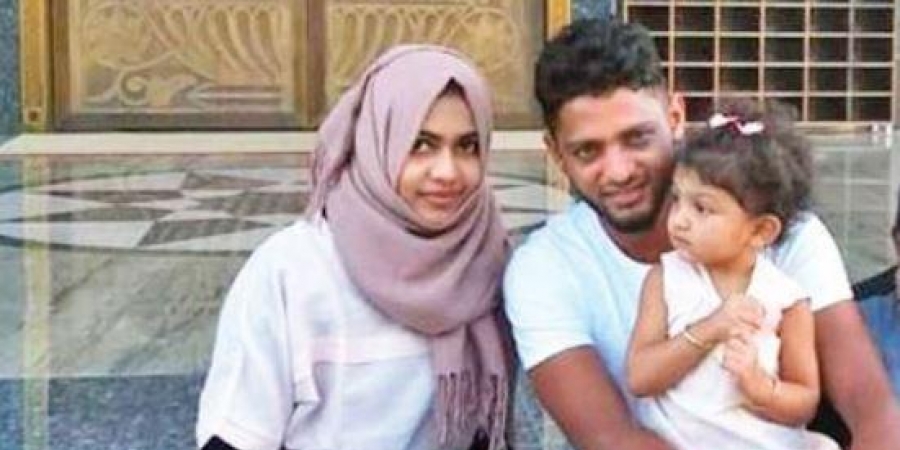
Zakeer Mundampara with his wife and daughter Mariyom. (File Photo)

Malappuram :

Kerala Blasters E player Zakeer Mundampara is an inspiration for the people to be part of the initiatives to help the health workers and other people affected by COVID-19.

The young footballer has offered his two-storey residence at Areekode for COVID-19 care and leads an initiative to distribute food kits to the families affected by the infection.

“I’m going to stay with my seven-months pregnant wife at our house in Edavannappara. We will not be using the house at Areekode for at least next couple of months. So, my wife and I have decided to provide the vacant house for COVID-19 quarantine purposes or to accommodate the medical workers in the area. The house has three bedrooms and three bathrooms. Anyone who wants to use these facilities can contact me,” the India Super League (ISL) player said.

Mundampara announced his willingness to lend the house for COVID-19 care for free through his Facebook page recently. The former Santosh Trophy player is also active in helping the people hit by the pandemic.

“Our club, Areekode Chakkamthodu FC, in association with Al Sabah FC Dubai and FC Trikkaripur, has so far distributed 133 food kits to the families affected by the pandemic in the area. We will continue with such efforts to help the people affected by COVID-19 till this crisis ends,” he adds.

Though he will be active with his volunteering activities, Mundampara has decided to spend more time at his house at Edavannappara with wife Fasila and five-year-old daughter Mariyom. “I’m going to spend most of this lockdown time with my family. I will also be finding some time for football practices and small exercises at home. Other than that, not thinking of any busy football practice schedule during this lockdown,” he says.

The 28-year-old had played for Chennaiyin FC and Mumbai City FC in the ISL before becoming a part of Kerala Blasters. Mundampara had also played for Chirag United Club Kerala, Churchill Brothers and Mohun Bagan.

source: http://www.newindianexpress.com / The New Indian Express / Home> Good News / by Vishnu Prasad K P / Express News Service / April 08th, 2020

These heroes from Hyderabad spend savings to feed the homeless, beggars

Hyderabad, TELANGANA :

A mosquito net-maker and an auto driver have been using their savings to feed the homeless and beggars every night.

HeroresHydMPOs03apr2020

Hyderabad :

A day after Chief Minister K Chandrasekhar Rao announced the state-wide lockdown and curfew from 7 pm to 6 am, the streets were uncharacteristically empty post nightfall.

While most of the residents stayed at home figuring out ways to procure essentials to sustain till the lockdown period, a group of youngsters from Sanath Nagar went around the city, braving the curfew and the police, to distribute food to the homeless and labourers at night.

Mohammed Qadeer, a mosquito net-maker, and his friend Mohammed Ghazi, an auto-rickshaw driver, have been using their savings from the day of lockdown to feed around 100-150 homeless and beggars every day at night. What they’re doing is of significance: though there are many people distributing food during the day, there is hardly anyone doing it at night due to the curfew.

The Express chanced upon the youngsters a few days ago at around 9 pm and accompanied them while they distributed food packets to the needy. While Qadeer rode a motorcycle alone, two others were on another bike holding a large crate filled with food packets – comprising dal and rice.

They moved slowly looking out for homeless or beggars sleeping on the pavements. When they approached one such person who was sleeping in front of a restaurant at Somajiguda, there was a look of disbelief on his face when he realised that he was being given food.

They were stopped by a bike-borne traffic police, who enquired what they were doing out at night. After Qadeer and others explained to the police of their service, they were let go. “This has happened every day till now. We are always stopped by the police, but they let us go when we tell them why we are out,” he said on Wednesday.

They have now started distributing food in different areas like Lakdi ka Pul. “We are not affiliated to any NGO and we do not have any external funding,” Qadeer told Express. The Sanath Nagar resident makes food at his house, with his family helping him in the cooking process.

“We take utmost care when it comes to hygiene and ensure cleanliness while cooking food,” he said. However, as of on Wednesday, Qadeer said they have been facing financial issues and that they may not be able to distribute food for two days.

source: http://www.newindianexpress.com / The New Indian Express / Home> Good News / by Ahik Sur / Express News Service / April 02nd, 2020

Meet Md. Shujatullah who completed 1000 days of serving free breakfast to 1000 people

Hyderabad, TELANGANA :

MdShujatullah01MPOs07dec2019

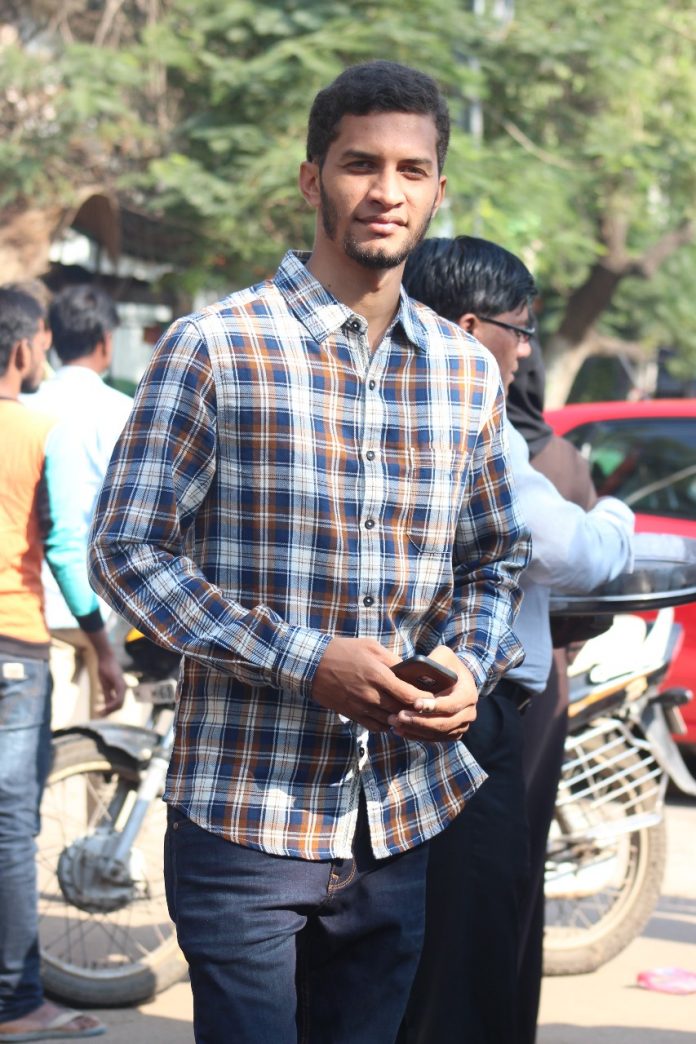
Mohammed Shujatullah, a student of Pharm D from Sultan Ul Uloom College of Pharmacy, Hyderabad began serving free breakfast to the needy three years ago and is continuing to do so till date without a break of a single day.

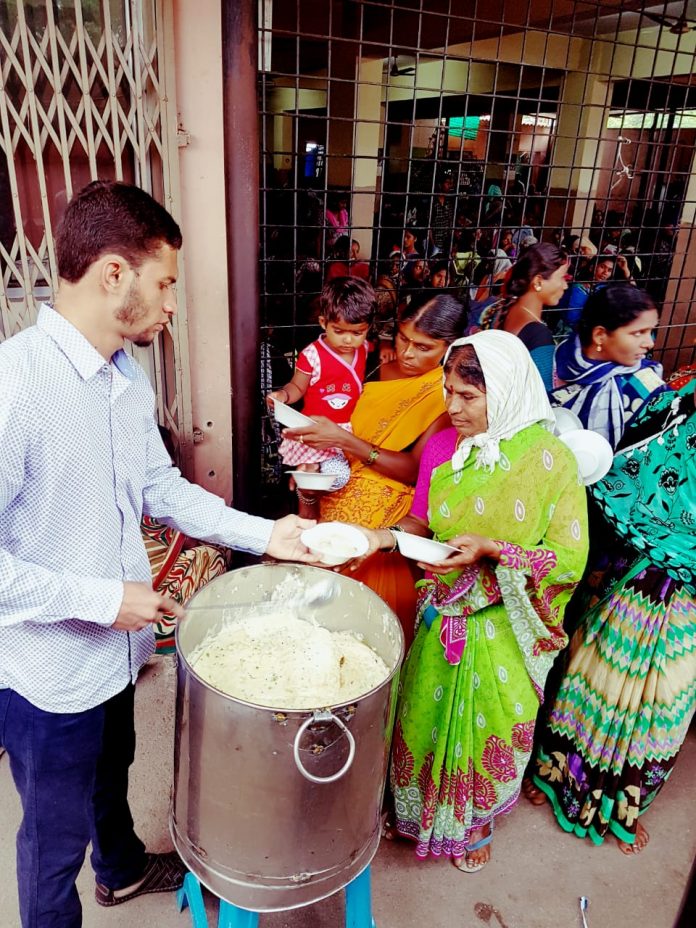
Every morning he goes to three Government hospitals in Hyderabad – Nilofer Hospital, Government Maternity Hospital, Koti and Nizam Institute of medical sciences (NIMS) with hot Upma cooked in pure ghee and chutney to serve breakfast to the patients and their attendants. He finishes serving breakfast by 9.15-9.30 am in all the three hospitals feeding nearly a 1000 people.

MdShujatullah02MPOs07dec2019

How it began

Shujat spoke to TwoCircles.net about how his philanthropic journey that started in 2014 by serving food packets to just 10 people and by 2016 went on to reach 1000, “ When I was in my final year of bachelor’s degree I had failed in one subject. And as I was awaiting my results I sent up a prayer that I will feed 10 hungry people if my backlog is cleared. It was the day the results were to be declared.”

And luckily he passed. And so the same night, he went to the street with 10 packets of food. He woke up an old man to give the food, but the man declined by saying he had his fill and told Shujat to give the food packet to someone else.

Shujat did not expect this from a homeless poor person. He says, “ the old man could have taken the food and kept it for the morning. But he was so honest. And that touched a chord in me”.

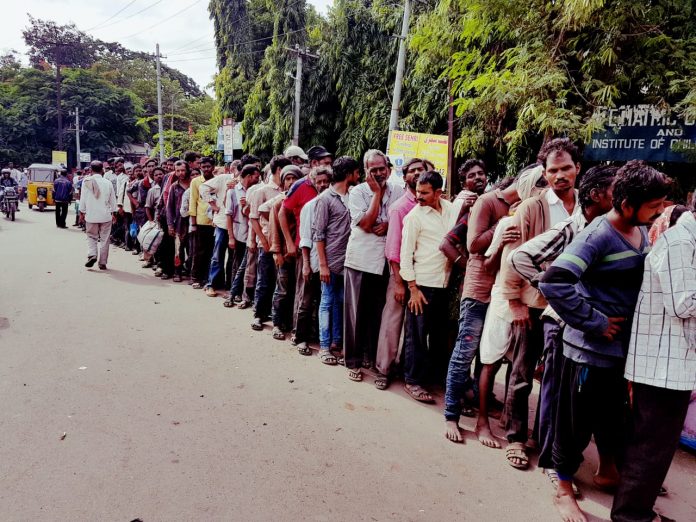
People waiting in queue for the breakfast

The 10 packets were not enough as there more people who wanted food. Shujat came the next night again with more food packets and this time again the old man who had fallen asleep huddled in a corner due to the chilly winter said the same thing.  Shujat asked the man to keep the food for the morning. And the man said, ‘God will feed me in the morning. For now, you give my share to someone else’.  Shujat was impressed not just with the honesty of the old man but his belief in Providence.

Shujat says, he got to thinking, ‘here is a homeless beggar, who does not even know if he will get the next meal, yet he has such a firm belief in the Almighty who is the provider of one and all.’ And after this, he began serving food packets on a daily basis to the persons on the streets.

Serving breakfast at Niloufer Hospital

One day he had a chance to go to a Government Hospital where he saw people from different districts and villages come to Hyderabad for treatment and they lived in the hospital for days together with their attendants. They find it difficult to buy food due to monetary problems. So the idea of serving breakfast struck him. Mid-day Meals are available at the Telangana food centre at Rs.5/- which they could afford.

Mobilising funds

Fortunately for Shujat, his father has 12 siblings and all of them with their children are in a good position. He capitalised on this and made quick calls to all of them and asked them all to donate their one day’s salary to him. He explained to them what he would do with the funds. And soon he had enough money to enable him to serve breakfast twice a week in one Government Hospital. And soon friends and other extended family started donating. “As they say, little drops make a mighty ocean, funds started to come steadily and soon I was able to serve breakfast on a daily basis,” he told TwoCircles.net.

The daily expense for Upma for approximately 1000 persons with 25 kilos of semolina comes to Rs. 5000/- including the auto charges and the cost of disposable cutlery. On why he chose Upma, Shujat says, “ Upma is easy to make and if I attempt any other item there will be  a difference in the planned budget.”

And when his service came to light through media, more people began to donate. And Shujat who was getting immense satisfaction from feeding the poor,  decided to start a foundation for charity and service. So in 2016, he registered ‘Humanity First Foundation’.

MdShujatullah05MPOs07dec2019

Humanity First Foundation

Through the foundation, Shujat reached out to potential donors through friends, social media platforms and also crowdfunding via the internet. His activities also expanded gradually and he now distributes blankets to people on the streets; free supper in the nights to beggars, donates books and other things in orphanages, helps very poor families with their monthly ration.

Once the foundation was registered his contacts also grew. Other like-minded NGOs contacted him to work in collaboration. So now Shujat has extended his services to an old age home on the suburbs of Hyderabad where he supplies medicines, adult diapers and groceries, supports a livelihood program for women by running a tailoring centre in a neighbouring town and providing them sewing machines and conducting free medical camps. He even identifies homeless old people who have no one to take care of them and admits them in old age homes.

Sehri in Ramzan

This year for the month of Ramzan Shujat has gone one step ahead and made arrangements to provide saheri/ suhur (pre-dawn meal) for those attendants who want to observe Roza. Till now he has provided saheri meals to around 8000 -10,000 people. He has put up a board with his contact number so whoever wants to fast have to just call him up and the saheri will be provided to them between 2 and 3 am. For Ramazan, he has 15 volunteers who distribute the food.  On other days his volunteers turn up for 2 days a week for the morning routine.

DIstributing sehri
DIstributing sehri

What the future holds for him and the Foundation

Shujatullah shared with TwoCircles.net, that he is able to do all this not just because of the good values instilled by his parents but also because of the support his friends, family and donors have been rendering.

And he is one busy person juggling his internship at Aster prime Hospital after serving breakfast in the hospitals which he finishes by 9.15. After coming home from the hospital, after a quick bite, he goes to overlook the functioning of the small Urdu medium school started by his grandfather.

His father is a retired government employee and mother a homemaker. Shujat has no intention of going abroad or even out of Hyderabad even though he got several offers. For him, his foundation comes first.

“ I hope my life partner will have the same passion as me so I can continue my work with the same zeal”, he says laughingly when asked about the future. “ I am going to continue to serve the poor as long as I can” he added. He finishes his  Pharma D (Doctor of Pharmacy) in about 2 months after which he intends to find work in Hyderabad itself.

Shujat and his team
Shujat and his team

Shujat has very few friends and does not indulge in any of the activities the youth of his age like watching movies, idle hanging out with friends and so on, which is why he has lots of time to follow his passion.

To know more about Shujat and his work and to help him, check out his website or mail him at humanityfirstfoundation2016@gmail.com call him at 9676054142

source: http://www.twocircles.net / TwoCircles.net / Home> Indian Muslim> Lead Story > TCN Positive / by Nikhat Fatima, TwoCircles.net / June 11th, 2019

Roti Bank: Unique effort to fight hunger, provide food to the poor in impoverished region of UP

Mahoba ,  Bundelkhand Region , UTTAR PRADESH :

RotiBankMPOs04nov2019

Everyone in Mahoba knows Haji P Mohammad alias Haji Muttan and can guide a visitor to his home.

After all, he is the man who had opened the first Roti Bank, a unique initiative to ensure that no one stays hungry in the town. It has been a huge success story and similar Roti Banks were late opened in different parts of the country & even outside India.

But it was not an easy journey when Haji Muttan started the Roti Bank. The beginning was in the year 2014. It was decided that rotis would be collected–volunteers would go from house to house and collect them, in order to provide food–rotis and sabzi for the needy, so that no one went to bed with an empty stomach in the town.

In the backward and impoverished Bundelkhand, which often suffers from drought, lack of employment opportunities and extreme poverty, everyone was aware that there was a need for a public participatory movement to tackle the level of hunger and malnutrition.

However, he managed to form a team of such people–like Jaspal Singh and Pankaj Anuragi, who were ready to dedicate themselves for the cause. ‘Many households were eager to provide at least two rotis and sabzi. The request was just to ensure the food was fresh”.

There were so many needy people who had no one to look after them, some had to be provided food at their home. But people realised that it was a cause that was worth an effort. Youngsters came and joined him. “I always wanted to do some social service, something for the sake of humanity”, says Haji Muttan.

Over the years, the Roti Bank became a symbol of pride for the town. After all, hundreds were getting benefited everyday. Later, others got inspired and more Roti Banks were opened in the region and in other cities of Uttar Pradesh from Varanasi to Rampur and Gorakhpur, and then across India.

Om Narayan, who has been associated with the work from the beginning, says that the aim was service. “People from all religious communities came together, joined the movement”, he says. “After Roti Bank’s success, similar projects started in Banda, Chhatarpur and other cities in Bundelkhand”, he added.

“Apart from Haji sahab, Jagannath Prajapati and Father L Masih are also part of the team. There are many volunteers who do it with dedication”, he further said. After Tsunami, when Indonesia witnessed destruction, and there were large number of destitutes and orphans, Roti Banks was started at different places there also.

Haji Muttan also visited Indonesia. A non-governmental initiative that is being run with public support by dedicated inviduals, it has set an example how to fight hunger, especially, when a huge population still suffers from extreme poverty and the country needs to wage a war against hunger and malnutrition.

source:  http://www.newsbits.in / NewsBits.in / Home> India / by Shams Ur Rehman Alavi