Category Archives: Green Products

Son Of The Soil

Mehmood Khan, Unilever’s global innovation head, goes back to his native village with a plan to turn it around.

Nai Nangla in Haryana’s Mewat district could be just another Indian village, ridden with the usual problems of a people trapped in poverty: Lack of healthcare and clean water, low productivity, high unemployment and illiteracy. But Haji Siddiq Ahmed, a local farmer in his late 60s, sees a different vision. “I want this village to be an adarsh (model) village. Others should look up to this village — that this is what an ideal village should be like,” he says.
The image Ahmed sees is actually taking shape in this quiet village with a majority Muslim population. What’s more surprising is the way the change is taking hold. It may be difficult to imagine the humble folk of Nai Nangla as business executives, but the cool concepts reviving the economy of the village are no less professional.

Take dairy farming, which engages nearly 80 percent of the villagers. Earlier, all they could get was Rs. 12 for a litre of milk; today they can get as much as Rs. 25. Three years ago, female literacy was at 2 percent; today, almost 85 percent of the female population can sign their names and 86 percent of the children in the district are enrolled in schools. Some women are also learning to sew and are setting up their own tailoring units. Companies like insurance provider Aviva, ICICI Bank and Larsen & Toubro are beginning to look at Mewat both as a market and as a field for recruitment. They have hired locals, offering dramatically higher incomes.

Image: Amit Verma / CHARGING UP: Memhood Khan's plans changed Ramzaan's life for the better. The young man treats Khan to a ride on his new motorcycle
Image: Amit Verma /
CHARGING UP: Memhood Khan’s plans changed Ramzaan’s life for the better. The young man treats Khan to a ride on his new motorcycle

The man behind these changes is a Nai Nangla native, someone who left the village nearly 40 years ago in search of an education and a career. His name is Mehmood Khan. Now 54, he is Unilever’s innovation head.

Now, thanks to him an experiment in introducing market economy is taking shape at Nai Nangla and the district of Mewat. An impossible feat for an outsider, but something the people of Nai Nangla have welcomed from one of their own. “Focus on education and use enterprise to bring change by leveraging resources in villages,” he says.

Khan has worked and lived in many countries over the years, making London his home for the last nine. But his link to his roots always remained alive; he would visit his village two or three times a year. He still remembers trudging a couple of kilometres to school everyday and taking cattle out to graze.
“I somehow landed a seat in university and then got into IIM-Ahmedabad. I was ejected by the system,” he says.
For the last five years, Khan has been hard at work to change “the system”.

He is converting a local resource, livestock, into a productive enterprise. He roped in the National Dairy Development Board’s Mother Dairy to spur Nai Nangla’s milk output and break the stranglehold that milk vendors had on local dairy farmers. At one time, these vendors — middlemen really — would lend money to farmers to buy milch animals.
In return, they would demand milk supply at low fixed prices until the loans were repaid. For most farmers, their income was too low to enable them to repay the debt. The result: They remained trapped in debt.
Khan was troubled by this age-old exploitation. He spoke to Mother Dairy and ushered in a new system to break this debt trap. Debt-laden farmers were given loans from institutions so they could repay the vendor and start selling direct to Mother Dairy. “Almost 25 people got loans to buy cattle, without having to pay any bribes,” says Ahmed.

Others who could repay on their own, did so and started selling to Mother Dairy for a better price. This competition forced the milk vendors to match market prices. Overall, incomes improved.
In July 2008, Mother Dairy set up milk collection centres in Nai Nangla and six other villages. In the first week, it got 70 litres of milk. Today, Nai Nangla alone gets 250 litres a day. “Gross income from agriculture has gone up from Rs. 80 lakh to Rs. 1.2 crore,” says Khan. “Milk (has become) a constant income source in a village which has seasonal income due to Kharif and Rabi crops.”

source: http://www.forbesindia.com / Forbes India / Home> Features – Beyond Business / by Neelima Mahajan-Bansal / June 05th, 2009
Call of the Jungle

At Saad Bin Jung’s luxury eco-tourism lodge in Kabini, Karnataka, villagers and tribals work together to conserve the forest and the big cats that inhabit it

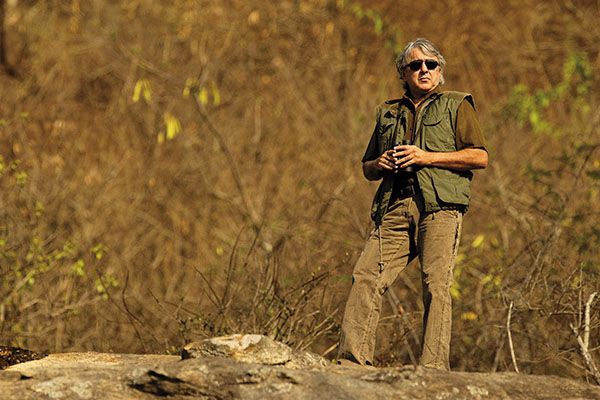
Image: Shaaz Jung A new calling: Saad Jung believes in eco-tourism that conserves more than animals
Image: Shaaz Jung
A new calling: Saad Jung believes in eco-tourism that conserves more than animals

As the last rays of sunlight filter through the leaves, a shadow slinks out of the thick foliage with an unmistakable feline elegance. “There,” whispers 27-year-old Shaaz Jung from his perch atop a jeep. Immediately, seven pairs of eyes turn to the clearing ahead. Under the rapt gaze of the tourists, a male leopard emerges from the foliage. A flurry of clicks from SLR cameras breaks the silence of the waning dusk. But the leopard makes an indifferent model. He was aware of the jeep the moment the vehicle entered his territory, deep in the jungles of Karnataka. For the tourists, however, this sighting is a privilege. The shy animal deigned to make an appearance on the last of the five game drives organised by Bison Wildlife Resort near Kabini Lake, Karnataka. The resort, started by Shaaz’s father, 53-year-old Saad Bin Jung, lies between two national parks, Nagarhole and Bandipur, and is a two-hour drive from Mysore. It is also a labour of love, one in which villagers and tribals work with the Jungs to conserve and preserve this ecologically vibrant zone.

Though the eco-resort opened five years ago, it took over a decade to come to fruition. Consider its back story.

Like his uncle Mansur Ali Khan—the late nawab who is remembered by his moniker ‘Tiger’ Pataudi—Saad Jung started his career as a cricketer. A descendant of the royal Pataudi family of Bhopal and the Paigahs of Hyderabad, he acknowledges and accepts the popular portrayal of Indian nobility as hunters. “I now realise the mistakes we made while addressing wildlife conservation within the forests that belonged to our family,” says Jung. “The rulers, to a large extent, permitted community usage of forest produce. Locals were asked to manage forest land, but were banned from hunting. That was the sole prerogative of the royals. There was control, but there was also inclusion.”

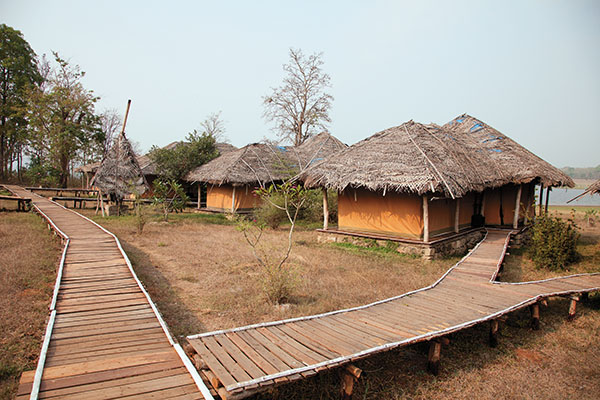
Image: Prasad Gori for Forbes Life India The village: The resort maintains a rustic look and feel, although it houses luxurious facilities
Image: Prasad Gori for Forbes Life India
The village: The resort maintains a rustic look and feel, although it houses luxurious facilities

Saad began taking an active interest in conservation in 1986. He started with Bush Betta Resort at Bandipur and an angling camp on the Kaveri river soon after. In 1997, he acquired patta (registered) land outside the protected forest area and worked with locals to build a luxury resort, one that doesn’t intrude on or disturb the ecologically sensitive zone. The Bison Resort,  made up of African lodge-style stilted, elaborate tents and decks that overlook the forest and Kabini lake, is the result. Most of the building material for it was sourced locally. Rather than alienating tribals and villagers from the land, Saad brokered a symbiotic relationship between resort and village.

The Bison, which opened in 2009, has succeeded because it combines luxury with inclusive growth. Saad and Shaaz, who is the resort manager, create a rustic yet opulent experience. From sunken showers in bathrooms to bars that overlook the lake, the resort delivers a unique kind of grandeur—one that typically costs more than Rs 10,000 a night for Indians and Rs 24,240 ($400) a night for foreign nationals. Most employees are locals and their intimate knowledge of the land heightens a visitor’s experience.

source: http://www.forbesindia.com / Forbes India / Home> Forbes India/Live / by Shravan Bhat / August 16th, 2014

G.B. Pant University honors U.S. Chief Agricultural Negotiator Ambassador Islam A. Siddiqui

The G. B. Pant University of Agriculture and Technology in Pantnagar, Uttarakhand, today honored its former student, United States Chief Agricultural Negotiator Ambassador Islam A. Siddiqui, with an honorary degree of Doctor of Science. The degree was conferred upon Ambassador Siddiqui in recognition of his contributions to agricultural research and development, as well as agricultural trade policy development and his work’s influence on world agriculture.

“I feel humbled and honored at the same time to be receiving this honorary degree of Doctor of Science. Thousands of agricultural scientists, engineers, and veterinarians graduating from Pantnagar and sister universities provided the foot soldiers to make the Green Revolution a reality. This massive technology transfer of modern agricultural practices – combining education, research, and extension — turned India from a net food importing country to a food exporting nation. As a student of the first batch of this great institution when it opened its doors 51 years ago, I had not imagined in my wildest dreams that one day I would receive this prestigious award.”

Ambassador Siddiqui was born in Haldwani, Uttar Pradesh and attended G.B. Pant University before taking a scholarship at the University of Illinois in the United States. Throughout his career, he has advocated for international cooperation, technology transfer, capacity building, and new technology development to achieve food security in the 21st century.

source: http://www.newdelhi.usembassy.gov / Embassy of the United States, New Delhi, India / Home> News & Events> Press Releases / New Delhi – May 20th, 2011

A lone woman’s crusade against the sand mafia

Jazeera along with her children protesting in front of the Secretariat in Thiruvananthapuram. Photo: Kaavya Pradeep Kumar / The Hindu

Jazeera is on a silent campaign, in defence of the Neerozhukkumchal beach in Kannur

The so-called sand mafia of a little taluk in Kannur rues the day Jazeera returned home. Dismissed as an insignificant voice of protest against the rampant exploitation of a stretch of shoreline near Pazhayangadi town, this woman has soon come to be known as a force to be reckoned with. All the way from the northern district of Kannur, she has brought her silent campaign to the State capital, as she sits in front of the Secretariat with her three children — protesting without loud sloganeering or politically coloured flags or leaflets.

Entering the fifth day, Jazeera’s protest has thus far been eclipsed by a far more populous Left protest.

Now that they have left, the presence of this family has become more conspicuous, leading the Chief Minister to meet them briefly on Monday afternoon on the issue of sand-mining in her hometown. For Jazeera, the cause is intensely personal, as the Neerozhukkumchal beach is the canvas all her childhood memories are painted upon.

She is an autorickshaw driver, a profession she has struggled to be part of, in a conservative society. She does not let herself to be affected by such taboos and continued working until after her marriage in 2004, when she moved to Kottayam with her husband.

She has found the new district far more accepting. It was only one and a half years ago, when she returned home during the final month of her third pregnancy, did she see to her shock the daylight robbery of a natural landscape.

Countless visits to the Kannur collectorate and police stations have proved futile.

And for the past one and a half years, her silent protest has involved a sit-in, along with her daughters Rizwana, Shifana and her son Mohammed. The two girls, aged 12 and 10, know everything about the case and have flanked their mother every step. Her husband, Abdul Salaam, is a teacher at a madrasa in Kochi.

While he has not been a visible part of Jazeera’s protest, his support, despite pressure various quarters, has been a huge boon for her.

She is clear about her objective despite the obstacles strewn before her in terms of muscle and money power. Even the police, she says, have pleaded with her to give up. “Their greed is despicable. In broad daylight they commit this heinous crime of emptying our lands, oblivious to the fact that there are so many creatures that depend on it. The sudden depth of water is dangerous as well,” she says.

She is glad to have met the Chief Minister personally and she said he assured her that he would ensure that the vehicles carting away the sand would be immediately dealt with.

She will leave once she obtains something in print promising a complete halt of the activities.

source: http://www.thehindu.com / The Hindu / Home> News> National> Kerala / by Kaavya Pradeep Kumar / Thiruvananthapuram – August 08th, 2013

Famous tracker called to trap Icrisat Panther

Panther caught on camera at Icrisat (Photo: DC)

Hyderabad:

Nehru Zoological Park veterinary officials and tiger specialist Nawab Shafath Ali Khan were called in to tranquilise the panther on prowl at Icrisat  (International Crops Research Institute for the Semi-Arid Tropics) in Patancheru.

Though the panther was caught on the camera-trap set up by wildlife officials, it has managed to avoid capture.

Additional principal chief conservator of forests (wildlife) Mallikarjuna Rao said, “We have stepped up our efforts to catch it. We are also taking the help of Shafath Ali Khan to track the animal.”

Mr Khan has been involved in tranqualising man-eaters in various parts of the country. Mr Rao added, “The animal rescue van from Nehru Zoological park has been kept at Icrisat. A veterinary team, led by Dr Srinivas, which has expertise in tranquilisation has also been deployed.”

source: http://www.deccanchronicle.com / Deccan Chronicle / Home> Nation> Current Affairs / DC Correspondent / June 11th, 2014

Gujarat’s 2kg mangoes stump scientists


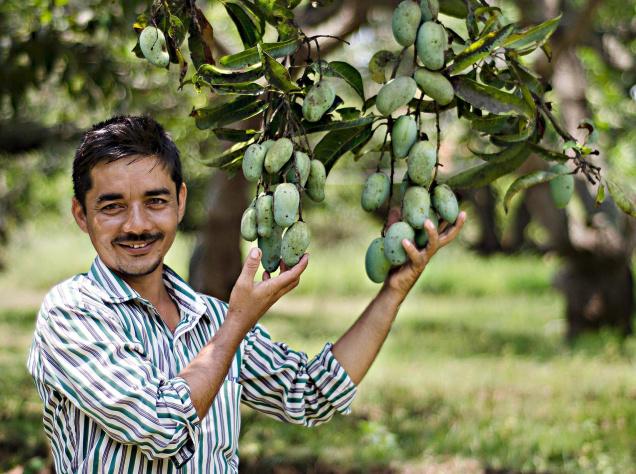
People pose with mangoes weighing over 2kg grown at an orchard in Shinor village in Vadodara.

Vadodara :

Mangoes weighing over two kilograms apiece have caught the fancy of farmers and scientists alike in central Gujarat. These mangoes are not a miracle of genetic engineering or hybridization but the humble ‘desi’ variety that grows across the countryside.

The exceptionally large mangoes grow on a tree in the farm of Iqbal Khokhar in Shinor village on the banks of Narmada in Vadodara district. The fruit from this tree was recently displayed at the Krishi Mahotsava in Chhota Udepur.

A native of Shinor and deputy director in the animal husbandry department, Dr Snehal Patel, is among the people who have been highlighting this unique fruit. A mango orchard owned by Patel’s family existed at the location and was sold later. But only two trees have survived now – one of them being the one that bears the jumbo-size mangoes.

Horticulture expert from Anand Agriculture University, Hemant Patel, said, “This is four to five times the size of even the Rajapuri mango. This phenomenon needs to be researched.”

source: http://www.timesofindia.indiatimes.com / The Times of India / Home> India / by Sachin Sharma, TNN / June 06th, 2014

These mango trees date back to Tipu’s era

LUSCIOUS: Syed Ghani Khan in his orchard at Kirugavalu village in Malavalli taluk of Mandya district. / The Hindu

Kirugavalu farmer has 116 mango trees which are 200-year-old

This farmer from Kirugavalu village in Malavalli taluk of Mandya district has preserved 116 mango trees dating back to the times of the then Mysore ruler Tipu Sultan.

Carbon dating and other scientific assessment by the Genetics and Plant Breeding Department of the University of Agricultural Sciences, Bangalore, have shown that these trees are more than 200 years old.

This 20-acre orchard, popularly known as ‘Bada Bagh’, is said to have been raised by those in the palace of Tipu, who was a great lover of fruits, especially mangoes. The orchard was later gifted to a farmer by Tipu. Syed Ghani Khan (39), who has inherited this from his forefathers, is preserving it with care.

According to Mr. Khan, the trees yield exotic varieties of fruits. “While some trees yield fruits that taste like sweet lime, others produce fruits with cumin flavour. There are some trees that yield fruits resembling the shape of fish,” he said.

In great demand

Till recently, his family used to sell the fruits locally. But from the last two years, he has been selling the fruits at organic outlets in Mysore apart from exporting them to Dubai and Abu Dhabi, where they are in great demand and also fetch a premium price.

In fact, Mr. Khan, who was passionate about becoming a curator at an archaeological museum, he did his graduation in archaeology and museology. But he had to return to his native village from Mysore to take care of his farm and support his family after his father became bedridden due to an ailment. “I then decided to turn my exotic farm itself into a live museum and started working on it,” he said.

Paddy varieties too
Mr. Khan also pursues another avocation passionately. He collects native varieties of paddy and grows them mainly to preserve those rare varieties. “Presently, I have a collection of about 600 native varieties of paddy, including ‘rakta dham’, ‘naadikeli’ and ‘jugal’,” he said.

His efforts paid off as his farm caught the attention of Delhi-based Protection of Plant Varieties and Farmers’ Rights Authority, which has started registration of the exotic varieties of mangoes in the garden. He will get legal right over the plant species after the registration.

Mr. Khan was also honoured with the ‘Plant Genome Saviour Farmer Recognition’ award by the authority in 2012.

Mr. Khan now wants other farmers to grow these rare varieties of mangoes. He, however, is unable to take up propagation of these rare varieties systematically by constructing a poly-house as it requires big investment. As none of the government agencies offered him any help, Mr. Khan himself started an organisation to train farmers and students about local varieties of crops.

He is looking forward to getting government assistance to take his mission forward and ensure that these exotic varieties of mangoes are grown in the orchards of many more farmers.

source: http://www.thehindu.com / The Hindu / Home> News> National> Karnataka / by B. S. Satish Kumar / Bangalore – May 12th, 2014

Under his broad brood, swifts ready to fledge

With little expertise, wildlife expert Saleem is trying to give them a new lease of life

The city wildlife team is facing an unusual challenge. They have to pull off what is considered a one-in-a-thousand rescue and rehabilitation of young house swifts (Apus nipalensis), which experts term is a touch-and-go situation.

Despite lack of expertise in rehabilitating the house swifts, which are very delicate, the six young ones are being cared for round the clock with great diligence by wildlife rehabilitator Saleem Hameed.

The birds were rescued from the HAL campus on Friday. At present, Saleem feeds them 24 times in 12 hours, once every half an hour.

This is what Saleem said:

“They were eight birds when they came here. They were rescued after a fall from a hangar. The good thing is, they were rescued along with the nest. Sadly, two died soon, but six are alive.

”They are very difficult birds to raise. With a high rate of metabolism, they have to be hand-fed every half an hour and they need attention round the clock at least till they fledge. The feeding starts at 7 in the morning. They are fed an insect diet, Mazuri, shipped down from the US. They are responding well. They need great care and attention, predominantly between 7 am and 7 pm.

”Unlike most birds, these are very sociable and live in huge colonies. In most birds, we find the territorial fight and new ones are not easily accepted. But here, they are accepted soon as they are sociable. As nothing much is known about swifts, we hope these birds which are roughly about 3-4 weeks-old would take a week or two to fledge. Some birds fledge within a month. Sparrows fledge within 14-15 days.

”An interesting thing is that one of them, probably the oldest of the lot, has already started jumping and is trying to fly. He jumps about 2-3 feet. As they fledge, they have to be launched into air to ensure they can join other swifts that are in a colony.”

source: http://www.bangaloremirror.com / Bangalore Mirror / Home> Bangalore> Others / by  Chetan R,  Bangalore Mirror Bureau / March 27th, 2014

Actor in a Tractor

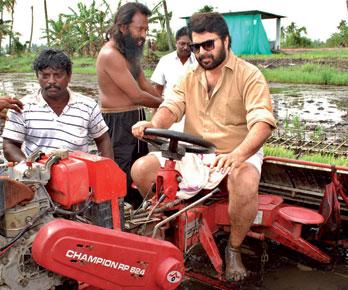
Mammootty takes up farming in a battle against chemical fertilisers

SAYING NO TO CHEMICALS Mammootty has turned to natural paddy cultivation
SAYING NO TO CHEMICALS    Mammootty has turned to natural paddy cultivation.

Mammootty has played farmer in many films. Now, dismayed by the use of chemicals in farming, he has taken the tractor wheel in his own hands. Busy with his main vocation, the actor had given the 17 acres of land he owned in Cheepungal, near Kumarakom in Kottayam district, on lease for paddy cultivation. This season onwards, he says, he will cultivate the paddy himself. Mammootty insists that his renewed interest in farming is not just a hobby or gimmick and reminds sceptics that he hails from a peasant family.

“When I leaarned about natural farming, I got interested,” he says. “This is very natural paddy cultivation by using only natural manure like green leaves, cow dung, etcetera.” Mammootty has no plans of turning to organic farming. He thinks it is not viable.

It was a pleasant surprise for Cheepungal locals when the superstar appeared on the farm last Wednesday in a traditional white dhoti, brown shirt and his favourite sunglasses. Appu, his childhood friend, and KM Hilal, a former Left-wing student leader and now a natural farming proponent, accompanied him to the paddy field. The actor drove the tractor and assisted the workers in transplanting the saplings. Mammootty, who has won the National Award for best actor three times, hopes he can inspire others to turn to natural farming. “For paddy, chemical fertilisers are absolutely unnecessary. Cow dung and cow urine are the best manure,” he says.

Mammootty is keen to protect varieties of paddy seeds that are diminishing due to chemicals and is seeking experts who can guide him. “Our ancestors had 3,000 such seeds and at present only 60 exist,” he says. “These seeds succumbed to pests and pesticides.”

Mammootty seems to have been inspired by the concept of Zero Budget Natural Farming (ZBNF) popularised by agri-scientist Subhash Palekar. This promotes crop rotation, mechanical cultivation, biological pest control and green manure. Earlier, Malayalam actor- director Sreenivasan and director Sathyan Anthikkad were in the news too for similar agricultural ventures.

source:  http://www.openthemagazine.com / OPEN Magazine / Home> Open> Regulars / by Shahina KK / July 23rd, 2013

Repository of Indian medicines

With the growing interest in traditional and complementary systems of medicine across the globe, a facility located in Foundation for Revitalisation of Local Health Traditions (FRLHT) campus, Bangalore helps authenticate the identity of medicinal plants, especially in the form of a repository of the natural resources. 

This centre named as Bio-cultural herbarium is a one-stop information related to plants and currently holds about 40,000 accessions pertaining to more than 3,200 medicinal plants collected from across various bio-geographic regions of the country. A unique feature of this herbarium is its easy accessibility both to the scientific community and the layman which has been achieved through linking the cultural information pertaining to vernacular names, local uses and classical uses of plants to the herbarium database.

The centre also has a repository of raw drugs collected directly from the botanical source and samples. The herbarium and raw drug repository is supported with an image library that currently possesses over 20,000 images. Dr Noorunnisa Begum, curator of the Herbarium says “Traditional knowledge of medicinal plants and their utilisation is increasingly being realised and put to use by modern medicine”.

The long term goal of the centre is to act as a vehicle to promote medicinal plant conservation and in turn help revive health care traditions.

source: http://www.deccanherald.com / Deccan Herald / Home> Supplements> Spectrum / by Manish Sharma / March 11th, 2014