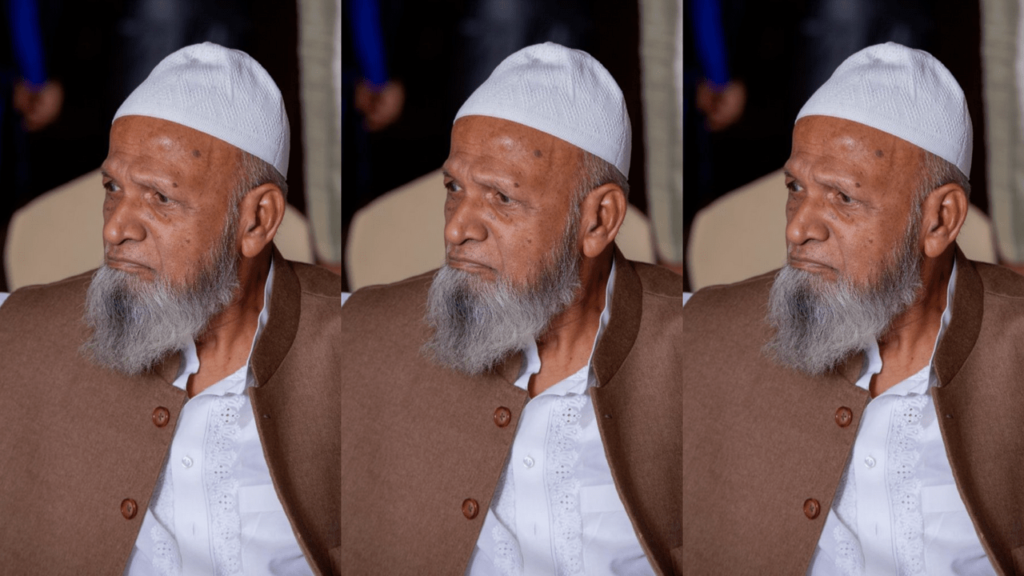
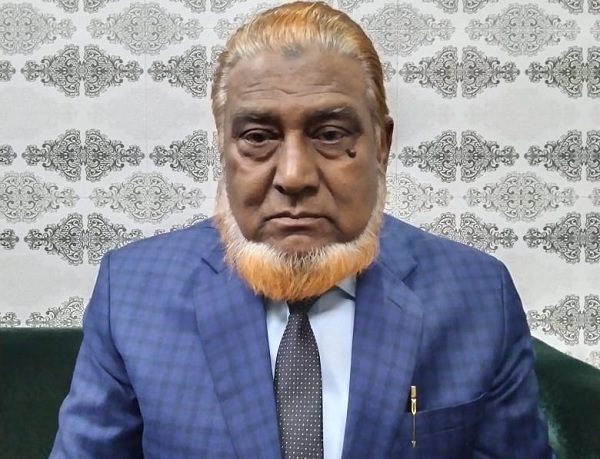
Former Karnataka Health and Family Planning Minister, A K Abdul Samad Tuesday morning due to age-related ailments. He was 87.
He breathed his last in Bengaluru at his residence.
A businessman by profession, A K Abdul Samad joined the Congress party and was elected to the Assembly from Ramanagara constituency in 1978.
He then served as the Minister of Health and Family Planning under the D. Devaraj Urs government.
His tenure is regarded as a golden period for the development of Unani in the state. The prestigious National Institute of Unani Medicine was allotted to Bangalore with a view of a bright future for Karnataka Unani graduates.
A K Abdul Samad also played a major role in starting the Government First Grade College in Ramanagara, which was initiated by Syed Hazi Muneerji.
His funeral prayers will be held at the city’s Masjid-e-Khadriya after Asr.
source: http://www.thecongnate.com / The Cognate / Home> News / by Shaik Zakeer Hussain / September 07th, 2021
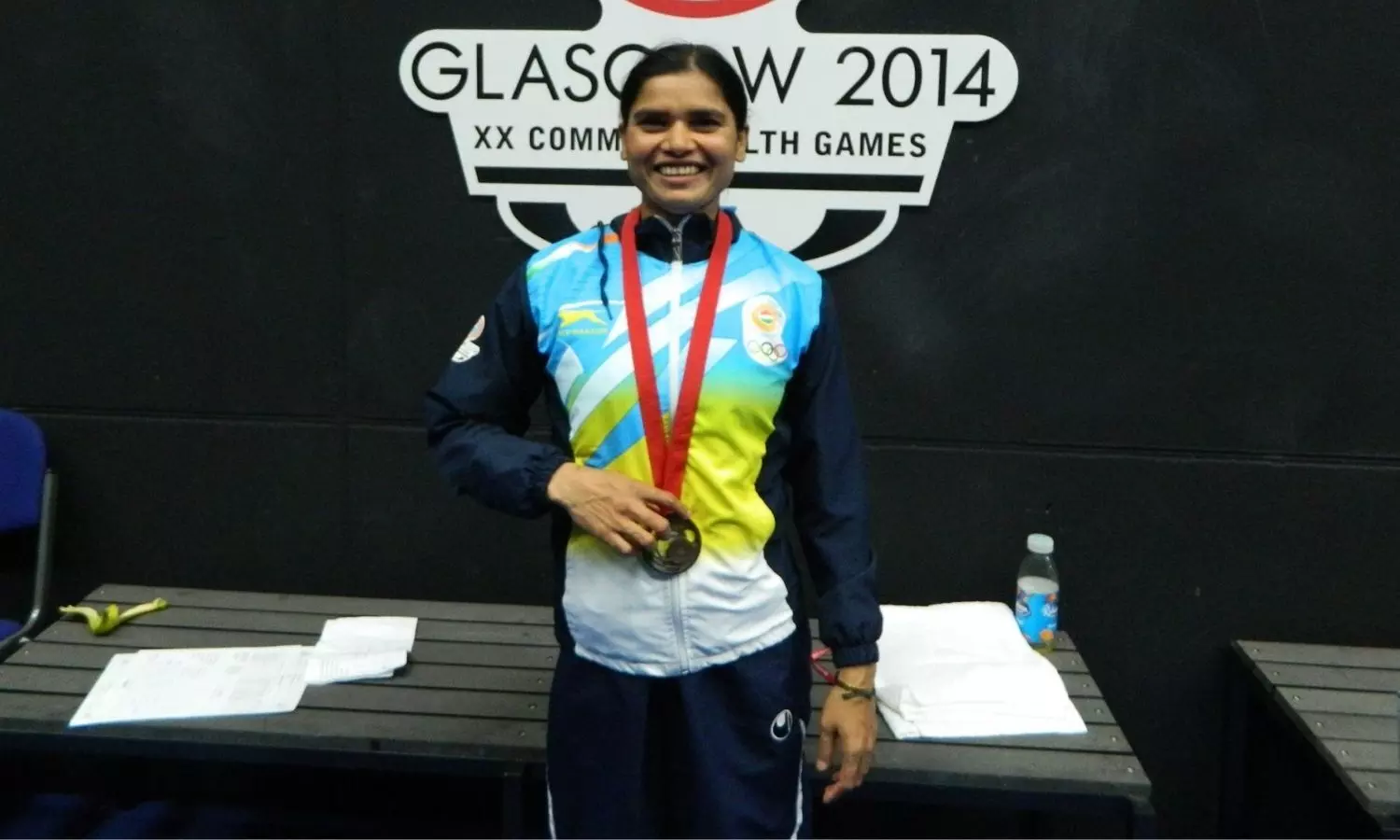
India’s only woman powerlifter at Tokyo Paralympics, Sakina Khatun finishes in fifth position in the final of the women’s 50kg powerlifting.
Para Powerlifter Sakina Khatun / thebridge.in
Indian para powerlifter Sakina Katun finishes fifth in the women’s 50kg powerlifting event on Friday at the Tokyo Paralympics. Participating in her maiden Paralympic Games, Sakina lifted 90kg in her first attempt, followed by an unsuccessful lift of 93kg in second. In her third attempt, Sakina successfully lifted 93 kg to finish 5th. Egyptian Reha Ahmed a best of 120kg to win the gold medal, followed by China’s Hu Dandan, who lifted 112kg to win the silver medal and Great Britain’s Olivia Broome lifted 107kg to win the bronze medal.
Sakina made the country proud by winning a silver in the Para Powerlifting World Cup in Dubai in the up to 45kg category with a lift of 80kg. Sakina Khatun is the only female para-athlete in Indian history to win a medal at the Commonwealth Games. Hailing from Bengaluru, Sakina’s father worked as a marginal farmer and her family faced many financial problems. Despite all of this, Sakina survived Polio as a child and she had to undergo four surgeries to survive the deadly disease.
source: http://www.thebridge.in / The Bridge / Home> Tokyo 2020 Paralympics / by The Bridge Desk / August 27th, 2021
THE Muslims-stirred to the acknowledgment of their actual situation in India especially after the Mutiny of 1857. The exit of the last Mughal monarch from the throne of Delhi was not only a symbol of their downfall but also an end to their existence as a separate and dominant group in Indian political life. A new phase in India’s history opened after the 1857 rebellion and the consequent dissolution of the East India Company. The era of the colonial Raj began with Queen Victoria’s proclamation of 1 November 1858. This benign document set a new tone of authority and conciliation. The post-Great Revolt period was probably the gloomiest period in the history of the Muslim community in the Indian Subcontinent. Muslims had created and taken an unmistakable part in the events of 1857, in the British eyes, whereas Hindus kept a low profile. Therefore, the Muslims were to bear, alone, the fault. Two factors influenced the creation of this image: the first was, of course, the nature of the movements led by Shariatullah and Syed Ahmad decades before the Mutiny; and second was the lingering imagery in the West of Muslims authored by European Christian perseveres during the Crusades (1095-1291). Quick and savage responses were to be incurred by the British administration, which would bring about a cruel reality for the Muslim people group. They lost their moorings, their confidence, their hope. And, for the first time, they realized with the anguish of bitterness that they were nothing but a weak, powerless, supine minority. This was the first casting of the seeds of nationalism, the first kindling of a feeling of loneliness and prostration, the first awakening to the need of solidarity. It was a period of gigantic political, social, economic, and social change that stirred a feeling of nationalism in the people groups of India. It was a period when a modernized Muslim scholarly and political initiative came to characterize and explain fundamental Muslim community and political necessities under the Raj, simultaneously as a beginning nationalist development was being fashioned by a more extensive working-class tip-top challenging British absolutism. The pressure among Hindus and Muslims started to arise in this period. At the point when it turned out to be extraordinarily disturbed after the mid-1920s, a practically unrecoverable hole opened up between what we may call Indian nationalism and Muslim rebellion, prompting the decisive division of Pakistan from the remainder of India in 1947.
It was a period when questions began emerging among the Ashraf classes about how Muslims could approach obliging western social impacts without negating the religious statutes of Islam. It was an issue stacked with subtleties, owing more to singular inclinations than a communitarian agreement. There were tones and layers of dark in trades between Muslims of various leanings on the suitable Islamic reaction toward the western experience. Modernity itself was a challenging thought, open to many fluctuated understandings. One of the main courses through which modernity contacted the Muslim people group of India was through the press. Also, it was one of the main channels through which educated Muslims aired their perspectives on the degree to which a social system informed by Islam could serenely get the inundation of western thoughts and innovation.
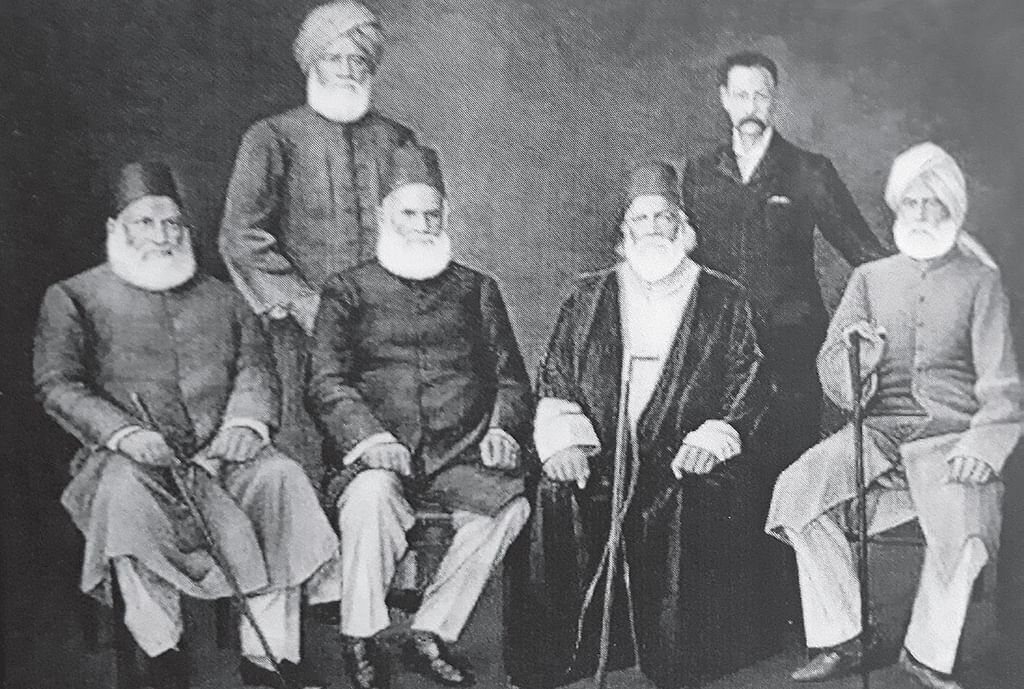
It was also a time when an extremely important character came into the frame, which went by the name of Sir Syed Ahmad Khan. The founder and intellectual pioneer of Muslim nationalism. And it was this nationalism that evolved into becoming a movement that strived to carve out a separate Muslim-majority country in the subcontinent, and then further evolve to become Pakistani nationalism. Sir Syed is the one who acted with the tide of functions and established the Aligarh’s framework in the unfriendly, undoubtedly threatening milieu of the 1880s. Sir Syed, though by no means consciously made possible the emergence of two most outstanding Muslim leaders who had enthusiastically started out as staunch Indian nationalists, ended up finally at the threshold of Muslim nationalism. Belonging to a family which had roots in the old Muslim nobility, Sir Syed’s prolific authorship on the Muslim condition in India (during British rule) and his activism in the field of education, helped formulate nationalist ideas in the Muslims of the region. These ideas went on to impact and influence a plethora of Muslim intellectuals, scholars, politicians, poets, writers and journalists who then helped evolve Syed’s concept of Muslim nationalism into becoming the ideological doctrine and soul of the very idea of Pakistan. It was Sir Syed that had initiated the educational, intellectual, ideological, cultural and political trends and engendered tendencies that laid the groundwork for a Muslim renaissance in India. It is certainly true to say that Sir Syed was too much impressed by western rationalism and wanted to show that every doctrine of Islam could measure up to all principles of science, reason, and common science. In doing this, he was trying to be both rationalist and a good Muslim. He was one of the first Muslim scholars to offer a point by point answer to British authors who were presenting and introducing the tradition of Islam as something which was damaging and retrogressive. Sir Syed reminded the British that Islam was inalienably a progressive and modern religion, and it had empowered and encouraged the study of philosophy and the sciences. He actively campaigned for the adoption of modern Western education in India, particularly for Muslims. He both started and joined a number of organizations whose purpose was to make European knowledge accessible to young Muslims and other Indians in Urdu vernacular. In 1870 the appearance of Sayyid Ahmad Khan’s Tahzib-ul-Ikhlaq exhorting Muslims to reform their religious worldview had a catalytic effect on the newspaper business. Sir Syed reprimanded ulema for compelling the Muslims to dismiss science. He composed that Muslims needed new religious philosophy of Islam, which was discerning and dismissed all doctrinal ideas that were in conflict with good judgment and reason. Threatened by Sayyid Ahmad’s bold forays into the domain of Islam, many of his co-religionists ventilated their outrage by resorting to the print medium, colonial modernity’s most attractive gift for instantaneous self-promotion. The response to Sayyid Ahmad’s arguments on the compatibility of Islamic teachings and modern ideas was similarly sharp in the North-Western Provinces and Punjab. While in the North-Western Provinces numerous new names arose on the guide of Urdu journalism as pundits of the Aligarh school, Sayyid Ahmad’s religious thoughts were given an extreme dressing down in Punjab by the Ahl-I-Hadith’s Ishaat ul Sunnat. Sayyid Ahmad’s way to deal with Islamic religious philosophy and statute acquired him the gashing maltreatment of “orthodox” Muslim ulema. His advancement of ijtihad or free-thinking and dissatisfaction with regards to taqlid or adherence to the four definitive schools of Islamic statute set him at loggerheads with the ulema who effectively found in it a scarcely masked attack on their pre-famous status as the strict watchmen of the Muslim people group. His support of western knowledge and culture as well as loyally to the raj drew astringent remarks from Muslims joined to their cultural moorings and the ideal of an all-inclusive Muslim ummah. Among Sayyid Ahmad’s fiercest critics was the Persian scholar Jamaluddin al-Afghani who lived in India somewhere in the range of 1879 and 1882 and called for Hindu-Muslim solidarity as the initial step to dislodging British imperialism.
Jamal Al-Din Al-Afghani — a bright young political activist, journalist, reformer, and Afghan ideologist who showed up in India in 1855. He one of the most prescient of modern Muslim thinkers, who had travelled and preached across British India. In contrast to the conventional ulema, Afghani didn’t perceive any great in turning inwards and drastically dismissing the modernity associated with British rule. His belief in the potency of a revived Islamic civilization in the face of European domination fundamentally impacted the development of Muslim thought in the nineteenth and early twentieth centuries. He recognized the matchless quality of Western education, however, accentuated that Muslims should grasp it to improve their parcel and afterward reverse the situation against Western imperialism by ousting it and setting up a worldwide Islamic caliphate. Al-Afghani held that Hindus and Muslims should work together to overthrow British rule in India. He worked to transform Islam into a lever against western imperialism. Afghani was the prototype of the modern fundamentalist. Like Sir Syed, he also had been influenced by western rationalism and the ideological mode of western thought. Afghani welded a traditional religious hostility towards unbelievers to a modern critique of western imperialism and an appeal for the unity of Islam, and while he inveighed against the west, he urged the adoption of those western sciences and institutions that might strengthen Islam. Afghani saw Western innovation as a solution to recover regenerate the Muslims, not as an approach to assist them in discovering a spot inside colonial settings yet to completely comprehend and afterward eradicate imperialism. Afghani was rather progressive and modernistic in his thinking. A contemporary English admirer described Afghani as the leader of Islam’s liberal religious reform movement. The pan-Islamist thought which he spearheaded esteemed the significance of changing and reforming the Muslim mentality through modern scholarly methods, and afterward utilizing the transformed as a weapon against the political incomparability of Western imperialism.
Another prominent sage of the modern Muslim intellectual movements of the time was Justice Ameer Ali. His History of the Saracens and Spirit of Islam enjoyed a wide readership both in India and Britain, but his target audience was the Western public. He wished to familiarize this public with the history and religion of Islam, and he was successful at that. He accepted that there were issues that made it problematic for his Western contemporaries to appreciate Islam as a religion suited to the needs of the modern world, but he remained unapologetic on central Islamic beliefs. Chiragh Ali (1844–95), a lawyer from Hyderabad, argued for the reform of Muslim civil law and the establishment of a humane Islamic law based on the Quran rather than on later accretions and interpretations. Altaf Husain Hali’s The Musaddas described the drama of Islam, its glories and its tragedies, in simple, sensuous, and passionate poetry; and, at the same time, he highlighted the need for the reform of Muslim society. The Musaddas became a best-seller in Urdu-speaking India, and it is still read and enjoyed by thousands even today. The scope and spirit of Urdu literature augmented during this period. Akbar Allahabadi (1846–1921), acclaimed for his gnawing parody, censured Sir Sayyid Ahmad Khan’s zing for Western culture and analyzed Muslims aping Western ways of life as ‘playing out monkeys’ for their British coaches. The Urdu weekly by Agra Akhbar, distributed by Khwajah Asif Ali denounced the Muslim Anglo-Oriental University conspire at Aligarh as ‘eccentric and illusory’. Much good Urdu prose was being written in this period; however, three specific improvements significantly advanced its reach and quality. The first one was the development of journalism. Despite the fact that the Urdu press returns to the late eighteenth century, it started genuinely to thrive and flourish from the 1870s onwards. Papers like Akhbar-e Am in Lahore (1870), Oudh Punch in Lucknow (1877–1936), and Paisa Akhbar in Delhi (1888) revolutionized journalism by receiving new patterns, for example, eye-getting features, notices, modest value, newspaper design, alongside the publication aptitudes of ironical composition, spontaneous extemporization, and powerful questioning. Hostile to British assessments were regularly communicated in such political papers as the Zamindar of Lahore, the Al-Hilal, and Al-Balagh, began by Maulana Abul Kalam Azad in 1912 and 1915, and the Hamdard edited by Muhammad Ali. The second significant advancement in Urdu writing was the introduction of the novel. Finally, we must record the rise of Urdu drama in this period.
To sum up, Sir Syed received harsh criticism. His religious naysayers remained positioned in their mosques and madrassahs. Thus, the greater part of his religious adversaries couldn’t discover a spot in the school that he set up in Aligarh. This school evolved into becoming a college and then an institution which began to produce a specific Muslim world-class and metropolitan bourgeoisie who might go on to dominate Muslim nationalist thought in India and eventually decide the course in 1906 when the consciousness of Muslim nationalism took practical form when a deputation of Indian Muslims – Shimla Deputation – held a meeting with the Governor-General Lord Minto in Shimla and secured the viceroy’s consent in respect of separate electorate for Muslims.
The views expressed in this article are the author’s own and do not necessarily reflect the editorial stance of Kashmir Observer
The author is a student at University of Hyderabad
source: http://www.kashmirobserver.com / Kashmir Observer / Home / by Inayathullah Din, Guest Author / December 18th, 2020
Punzwa Village (Kupwara District),JAMMU & KASHMIR :
Srinagar:
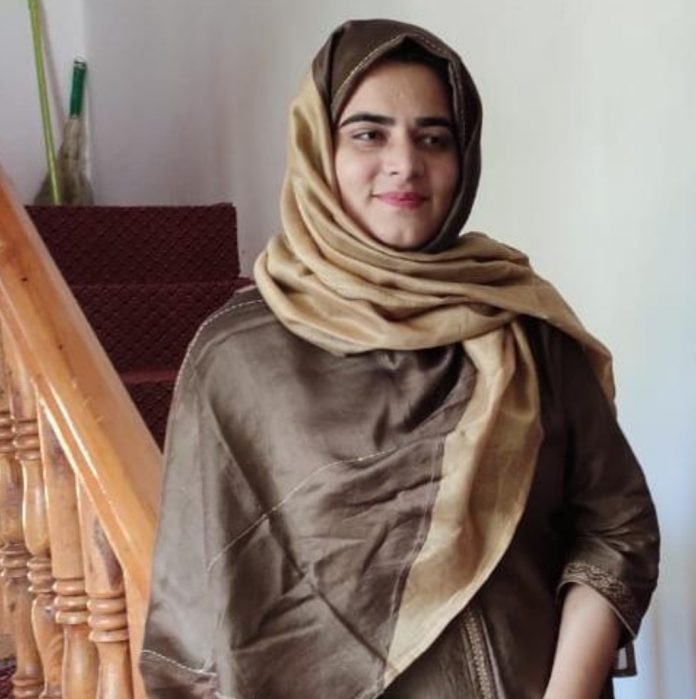
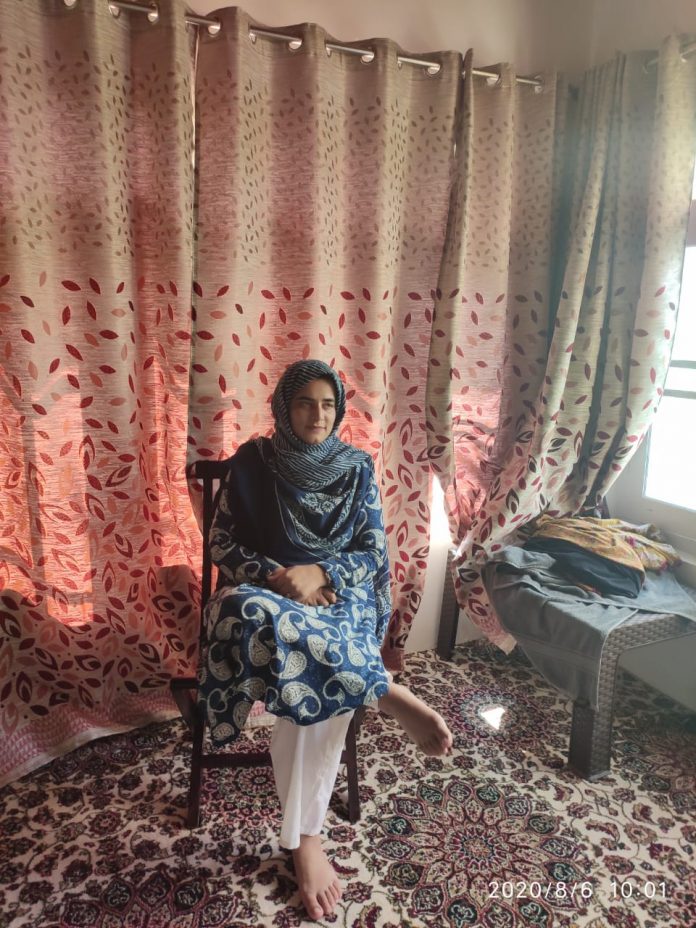
Twenty-three-year-old Nadia Beigh hailing from Punzwa village in Kupwara district of North Kashmir is the first girl from her village to crack the prestigious Civil Services Examination in her second attempt.
Ranked at 350, Nadia credits her success to her family.
To escape the recurrent internet shutdowns in the valley, Nadia enrolled herself in Residential Coaching Academy, Jamia Millia New Delhi which provides free coaching to selected students who are chosen through a rigorous entrance exam. Thirty students from the academy cleared the civil services exam this year.
“If I had stayed back in Kashmir last year, I don’t think I would have been able to prepare for my exam. The internet is extremely important if you are preparing for civil services. Other than that, I live in a remote area where newspapers reach late and a single newspaper will cost you 20 or more rupees. So, I thought it was better to move to Delhi,” says Nadia.
When asked about what service she would prefer to choose, Nadia, a graduate in Economics (Honors), told TwoCircles.net that she is keen about working in administration or foreign services. But her rank doesn’t allow her to be allotted to those ranks. She now plans to sit for the civil services exam again next year and is hopeful of scoring a better rank.
“I know I have potential to do better. Though I’ll be joining services this year, I’ll sit for the exams next year as well. It is a safe option,” she says.
Fighting all the odds, 16 candidates from Jammu and Kashmir managed to clear the exam. With the abrogation of Article 370, a complete communication and security lockdown was imposed in the erstwhile state of J&K. This was followed by a massive influx of students to different states of India, especially those preparing for various competitive examinations.
“I could spot a Kashmiri on every corner of Delhi. Some students in my locality who could not afford to move out of Kashmir, unfortunately, could not clear the exams,” she says.
Nadia has two sisters who are doctors by profession and a brother, a civil services aspirant himself. Her parents are government school teachers, the reason why she believes she has been able to excel in her education.
Since the news of her cracking the exam has come out, scores of people have flocked to her home to congratulate her. She is particularly overwhelmed by the number of girls who have approached her to procure information about the examination pattern.
“If because of me more girls are inspired to appear for the exam, I believe that would be the biggest achievement. People of Kashmir are very talented. Once they set their minds to it, they can achieve anything,” she says.
Just a day after clearing the exam, somebody created a fake Twitter profile using her name and picture and posted controversial tweets that could cause problems for her, she said.
“Since I am going to be a government official now, the tweets were against the government. I have spoken to the Cyber Police Srinagar and the account has been taken down but the screenshots of those tweets have been circulated widely. I am very anxious about it,” she said.
Despite all this, Nadia wants to work for the upliftment of her people. She believes that with a high position in the administration she can serve the people of Kashmir. Her plans consist of working diligently and aiming for a better rank next year.
source: http://www.twocircles.net / TwoCircles.net / Home> Indian Muslim / by Asma Hafiz, TwoCircles.net / August 08th, 2020
Anisa Mohammed is the interim captain as Stafanie Taylor is unavailable for the T20I series due to serving a period of isolation in Antigua
Anisa Mohammed to lead West Indies team as Stafanie Taylor in isolation.
St John’s (Antigua):
A 13-member West Indies women’s squad led by interim skipper Anisa Mohammed for the opening T20 International against South Africa Women at the Sir Vivian Richards Cricket Ground on Wednesday (IST) was announced by the Cricket West Indies (CWI) Women’s Selection Panel on Tuesday.
Anisa Mohammed is the interim captain as Stafanie Taylor is unavailable for the T20I series due to serving a period of isolation in Antigua, after being identified as a primary contact of a COVID-19 positive case in Jamaica.
The women’s chief selector, Ann Browne-John said in a statement:
“The T20I and ODI series against South Africa gives another opportunity for the team to play international matches ahead of the upcoming ICC World Cup qualifiers (In March-April next year in New Zealand). It is unfortunate that Stafanie will not be available for this series but there are a number of experienced players who we would be looking to, to fill any void.
“The young player Qiana Joseph brings another left-hand batter option as well as left arm orthodox bowling which has been lacking in the team. This will be a good test coming out of the recent Pakistan series, since South Africa is one of the higher ranked teams.”
The West Indies women’s team returns to the field after a successful double series win over Pakistan women, where they took the T20I series 3-0 and the ODI series 3-2. The West Indies women’s squad has been preparing in a high-performance camp in Antigua prior to the upcoming series.
The second and third T20Is will take place at the Sir Vivian Richards Cricket Ground on September 2 and September 4 respectively. The five ODIs will be played from September 7 to 19, with the first three matches being played at the Coolidge Cricket Ground (CCG) and the last two at the Sir Vivian Richards Cricket Ground.
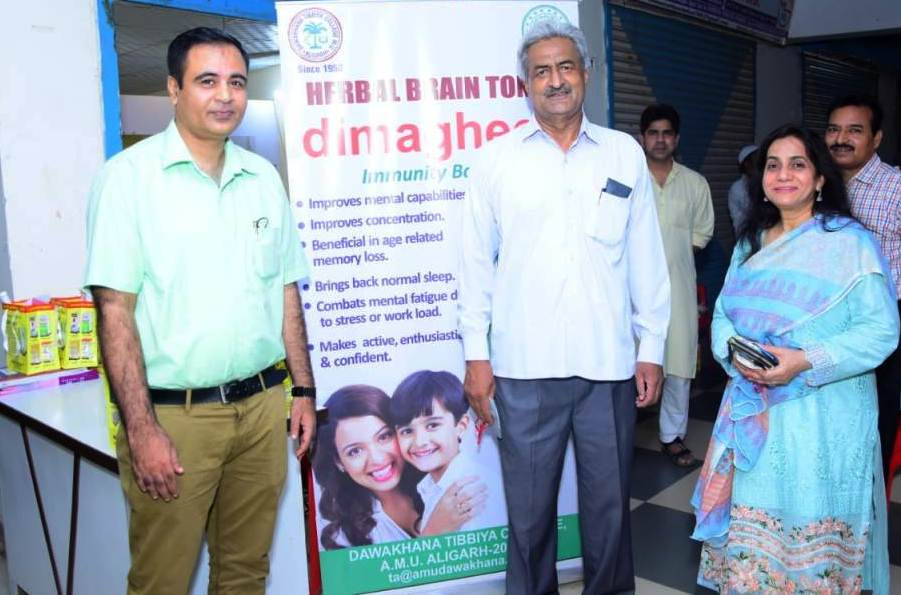
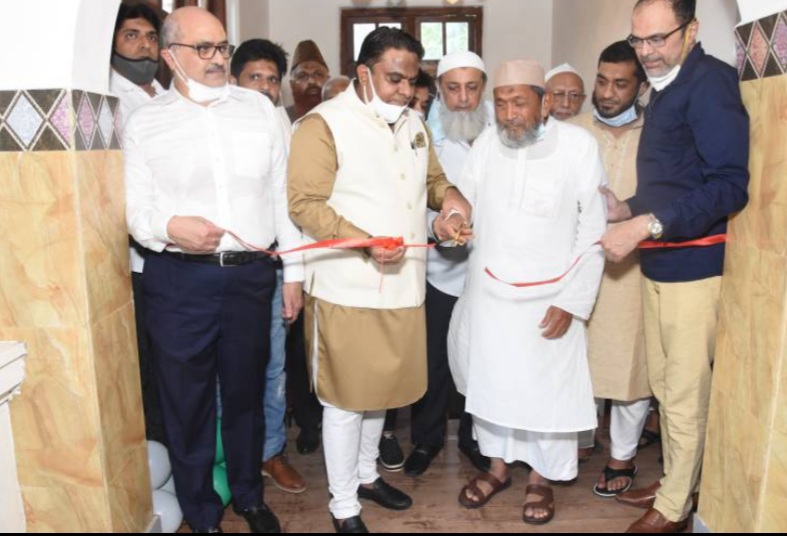
In a patient-friendly move to meet community health needs, free Unani medicines were distributed to patients from the lower economic strata by a team of Dawakhana Tibbiya College (DTC), Aligarh Muslim University (AMU). The free medicines were dispensed during the inaugural of a Unani Medicine Clinic in Jamalpur locality.
“We found that many poor patients were struggling to get medicines. Some of them have been without any income and couldn’t afford the health facilities. It prompted us to distribute free medicines to people in dire need,” said Prof Salma Ahmed (Member-in-Charge, DTC).
She distributed the medicines with the DTC Marketing Team headed by Mr Shariq Azam.
Former Dean, Faculty of Unani Medicine, Prof Abdul Mannan; Prof Shamim Ahmad (Department of Agriculture Management) and Prof Mohd Khalid Azam (Department of Business Administration) stressed that this free medicine campaign in the wake of the pandemic is a big boon for the financially backward patients.
They added that it is our duty to provide the financially weaker sections with free essential health services including medicines.
source: http://www.amu.ac.in / Aligarh Muslim University / Home> AMU News / by Public Relations Office, AMU / August 27th, 2021
So far, Jamiat Ulama-i-Hind has constructed 311 houses, mosques and schools at different places in the riot-affected district of UP
Maulana Arshad Madani handed over the keys of the houses to the victims of Muzaffarnagar riots
New Delhi :
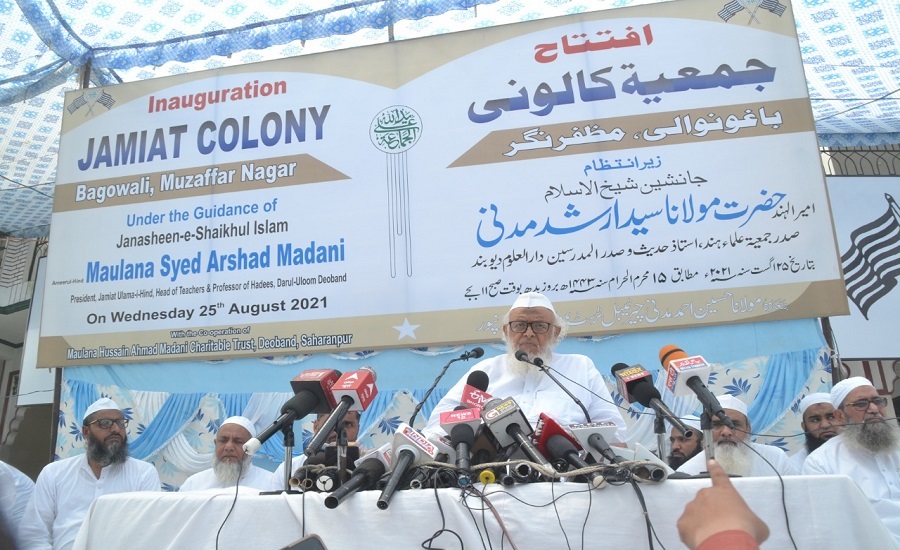
President of Jamiat Ulama-i-Hind Maulana Arshad Madani on Wednesday handed over keys of newly-built houses to 66 families who lost their homes in the deadly Muzaffarnagar riots in 2013, the group said in a statement.
Thousands of families were displaced due to riots. “These people were still living in extreme despair in different places. Jamiat Ulama-i-Hind has continued its relief and assistance from the very beginning as per its long tradition,” the Jamiat statement said, adding the group has constructed 311 houses, mosques and schools at different places in the district and the victims have been settled in them.
In March 2019, Maulana Madani had inaugurated the proposed Jamiat Colony consisting of 151 houses in Bagowali village of Muzaffarnagar. “At that time, the keys of 85 houses were handed over to the riot victims,” said the statement. “Today, Maulana Madani handed over the keys of the remaining 66 houses to the victims. A school for the religious education of the children of the victims and a mosque have also been built in the same colony.”
So far, 466 houses have been constructed for the Muzaffarnagar riot victims, and they have been resettled in them.
Addressing a grand function for handing over the keys of the houses to the beneficiaries, Maulana Madani said that “the riots in the city of Muzaffarnagar in Uttar Pradesh can also be listed as horrific because for the first time, a large number of Muslims had left their homes due to the fear of their lives. In these riots, the police showed the partiality which caused the killing and looting in the rural areas of Muzaffarnagar.”
source: http://www.clarionindia.net / Clarion / Home> Big Story> India. Indian Muslims / by Team Clarion / August 25th, 2021
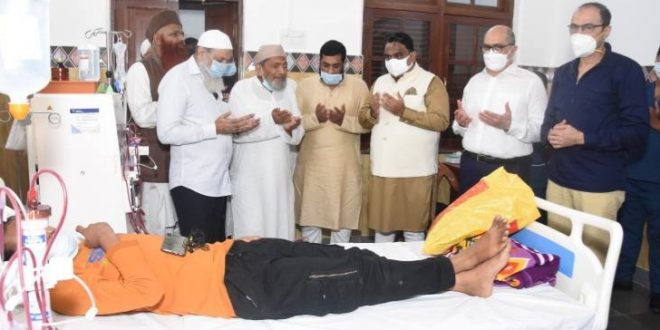
On the eve of 75th year of Independence of India, Sahara Medical Center inaugurated a Free Dialysis Services at Hakim Ajmal Khan Dispensary situated in Madanpura – Agripada area on 16th August, 2021, Monday.
It is the outcome of a joint effort initiated by the Late Hafiz Reshamwala, Trustee of Sahara Medical Center and a well-known Social Worker, Rais Shaikh MLA – Bhiwandi and House Leader of Samajwadi Party in Mumbai Municipal Corporation said, Hani A Farid. He said, “On this momentous occasion of 75th Independence Day, We dedicate Free Dialysis Centre to Mumbaikers, specially the people of Madanpura and Agripada. We will start to serve 16 Patients a day and will gradually increase the capacity in the future.”
“Affordable Healthcare gained prominence during this time of Pandemic. Sahara Medical Centre’s Free Dialysis Service is a blessing in disguise, it is totally “Free”. It will serve thousands of patients and will relieve poor families from the recurring health care expenses” said Rais Shaikh- MLA and Member of the Standing Committee BMC.
Dialysis is a recurring expense with each session costing around Rs.800 to Rs.3000 per session in a private dialysis centers and Hospitals. Patients need 3 sessions in a week which is beyond the budget of an average family.
Sahara Medical Center, situated in Agripada is a well-known Welfare Trust serving in the field of Medical and Health with its diagnostic center since last 20 years. It has facility such as X-Ray, Blood and other Tests facilities.
source: http://www.muslimmirror.com / Muslim Mirror / Home> Indian Muslim / by Rehan Ansari / August 16th, 2021
Amid disastrous floods in Maharashtra, a Madrassa opens door to flood-affected people.
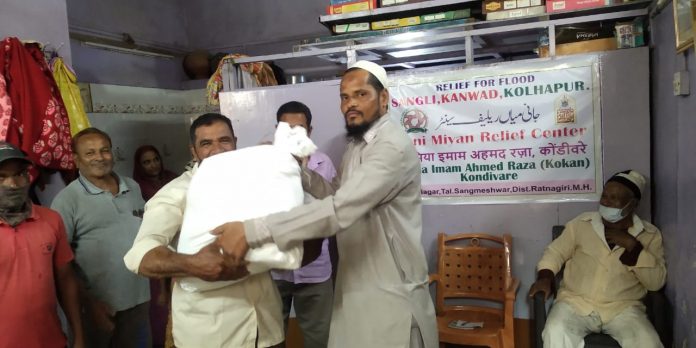
Amidst scenes of chaos and mayhem, a Madrasa called Darul Ulum Imam Ahmed Raza in Kondivare, Ratnagiri, located 30-35 km from Chiplun and 100-150 km from Mahad in Maharashtra, offered its space to flood affected people. Named as Jani Miya Relief Center after the founder of the Madrasa, Ismail Ahmed Jani Miya, the centre offered relief, aid and succor to the affected people. One of its kind, the relief centre transformed the space of the university prayer hall, spanning across an area of 126×80 sq feet, into a makeshift mall where items of sustenance and daily use – starting from a hair comb to mattresses and ration were provided free of cost.
MAHARASHTRA :
The districts of Ratnagiri and Raigad in Maharashtra were centres of a severe flood that hit the Konkan region on July 22. The worst-hit was Chiplun in Ratnagiri and Mahad in Raigad. The region, which is surrounded by the Sahyadri hills and two rivers Vashishthi and Shiv, is prone to flooding. This year the flooding occurred at an unprecedented level, aggravated by the over-flowing of the Koyna dam whose water regularly arrives at a reservoir close to Chiplun.
Talking to TwoCircles.net, Pankaj Dalwi, an environmentalist working in the Konkan said there are other factors such as extensive deforestation and poor urban planning as the cause of growing calamities.
A jarring example of a 21st-century man-made disaster, the flooding caused massive damage in terms of human life and livelihood. Hundreds of people in affected areas died (at least 209 deaths according to an Al- Jazeera report), thousands got displaced and entire villages and roads were turned into layers of debris and mud.
Amidst scenes of chaos and mayhem, a Madrasa called Darul Ulum Imam Ahmed Raza in Kondivare, Ratnagiri, located 30-35 km from Chiplun and 100-150 km from Mahad, offered its space to flood affected people. Named as Jani Miya Relief Center after the founder of the Madrasa, Ismail Ahmed Jani Miya, the centre offered relief, aid and succor to the affected people. One of its kind, the relief centre transformed the space of the university prayer hall, spanning across an area of 126×80 sq feet, into a makeshift mall where items of sustenance and daily use – starting from a hair comb to mattresses and ration were provided free of cost.
The flood had left entire communities without basic items of survival and the provisions provided by the relief centre were crucial for the survival of the affected community.
The members of the Madrasa undertook the mammoth task of providing a lifeline to the affected even if that meant working day and night, in rain or in cold.
TwoCircles.net spoke to fifty-year-old Qazi Mohammed Abdul Rahim Maqbooli, an important member of the Madrasa, about how they organized a centralized system of distribution.
Talking about how it all started, he said, “We first started distributing small ration kits and other essential items through a coupon system. Our volunteers visited each house, looked at the condition of the house, the number of family members in the household and issued coupons accordingly. These coupons were to be brought to the mall for receiving the provisions. Impressed by our fair and efficient system of distribution, trusts and NGOs providing relief from areas like Mumbai, Nasik, Malegaon, Rajasthan, Gujarat, Bhiwandi and many more started sending all kinds of items from combs, buckets, flex sheets, blankets, cylinders, stove, utensils, and so on to our mall. The mall became the distribution point for all items big and small,” he said.
The arrangements included well-thought-out needs of different members of the community of afflicted people. “We even gave out the special essentials required by women, old people, and babies including pads, diapers, small blankets for infants and so on,” Qazi told TwoCircles.net.
When asked about the challenges faced by the volunteer team in its operation, Qazi said that, “Sometimes people turned up without coupon. We didn’t want to turn them down and send them empty-handed. So we gave them basic ration kits with food essentials. We wanted to make sure that at least 1000-2000 rupees worth of goods is given to everyone.”
The Madrasa did not restrict itself to setting up the mall and distributing goods. They hired buses and drivers to drive people from their houses to the mall and back. “Our volunteers helped people load the bus with their goods that drove them and sometimes, all the way to Mahad, which is at least 100 kilometres away. Sometimes, we also delivered mattresses and other heavy items to the doorstep of the affected houses.”
The Madrasa sent out an appeal for help and mobilized a strong volunteer base of people of all ages from the nearby villages.
Qazi recalls that what was especially striking was the enthusiasm with which young volunteers and students of madrasa served the community. “This is what we teach our students in the school – to help everyone and work for the public good. My brother, Mufti Qazi Muhammed Ibrahim Maqbooli, who is also the principal of the school, and I provide free education and necessary items such as bags, stationery, books etc. free of cost to all our students.”
“At the Madrasa, we believe in serving humanity no matter what religion a person belongs to. Some Hindus in the area were hesitant about whether they will also receive the relief goods or not. We went to their houses to reassure them that we served everyone irrespective of religion,” Qazi said.
Talking about his motivation in serving the public, Qazi said, “Our parents always taught us to serve people. My father is bedridden and needs constant support and care. Despite this, all members of my family gave all their time to relief work. Last year, when the cyclone devastated thousands of homes in Konkan and there was no electricity for 3 months, we distributed ration kits to all affected areas. To me, the message of our faith is to love, share and view everyone with equality.”
What stands out in this brave example of relief work is not the generosity and benevolence of a charitable institution, but the humility and empathy of people who understand what it means to live in human society. Through their exemplary action, the people of the Madrasa and the volunteers of the region showed what it means to truly care and serve the people by opening up their spaces, giving their valuable time and providing labour for the welfare of a disaster-struck community.
source: http://www.twocircles.net / TwoCircles.net / Home> Lead Story / by Nikita D, Twocircles.net / August 23rd, 2021
During a conversation at home, my father Late Janab Shahid Ahmad Shoaib was telling somebody about this young dynamic person who could be the future of the community. I did not understand much about that then. As the time went by, I did my graduation, went to Mumbai to pursue my engineering and then MBA and simultaneously got involved with my corporate jobs.
At this juncture, when I recollect my memory, I find my father was always concerned about the social, economic, educational backwardness of the community. He was no doubt an intellectual who could prove that anything is possible if there is strong will and focus. A researcher, an educationist, a man with highly fertile mind, he was much ahead of time in his vision. He always believed that there has got to be a dream to serve the humanity and positively impact people, take them along and help them realize their dreams.
It wasDr Hamid Hussain who could understand the feelings of my father. He was instrumental in creating an active and dedicated team which finally culminated in the successful execution of the Biradari Conference at Itki in 1994.
The grandeur of this conference is still considered as a historic moment which provided a unique platform to the community. Dr Hamid Hussain played the most remarkable role as the Chairman of the Bihar Muslim Kalwar (Kalal/Eraqui) Millat Committee Conference so well that he is considered as the architect of the mission.
He has displayed an effective role of the community leader. A Leader with passion & compassion. As far as I know him, his focus has always been to bring in the basic changes in the community and take this to the most desired progressive level. He is actively contributing to the welfare of the community by serving as the President of ; AnjumanFalahMilli, HamdardAnjuman, Munni Masjid, Madrasa MadinatulUloom Management Committee, Qabrastan Committee,
Dr Hamid Hussain has been able to provide a direction to the community members in many ways. Today there are many success stories under his guidance. We have many people in the community who have proved their mettle in the fields of Education, Industry, Politics, Bureaucracy, Social Service and other fields. There are many members who are serving at various levels in many countries. However, there are lot of work to be done.
As an effective community leader, Dr Hamid has provided a Vision, Established Effective Organizational Structure and Communication Protocols, is an Effective Role Model, has Inspired and Motivated many, Delegated and Empowered the next generation of the community. I found him displaying the roles of a Coach, Facilitator, Strategist, Visionary, Change agent, Decision-maker, Influencer and above all a Team player.
Dr Hamid has emerged as s successful Social Leader who has devoted his life and talents to improving society regardless of social standing, wealth, or privilege. He has served and blessed the community. He has lifted the vision of community, broadened our possibilities and deepened our life experiences. He has preserved peace and ensured prosperity for as many people as possible.
As far as I know Dr Hamid, he is a man on mission. He is not going to rest till he sees his community members’ progress to the highest level. He is relentlessly working towards bringing in Unity & Co-operation among the people through the common agenda and unidirectional alignment. He is trying to set a system wherein Intellectuals, Entrepreneurs, Educationists, Politicians, Health Professionals, Government Employees of the community can come under one umbrella to work together for the welfare and upliftmentof needy & deserving members.
Leadership is the activity of persuading people to co-operate in the achievement of a common objective. This is the activity of influencing people to strive willingly for mutual objectives. Leadership always involves attempts on the part of a leader to affect the behaviour of a follower or followers in a situation. And the entire Biradari is happy to note that Dr. Hamid Hussain has proved to be an able Leader of the Community.
source: http://www.maeeshat.in / maeeshat.in / Home> Corporate> Opinions / by Ainain Shahidi for Maeeshat, Mumbai / July 29th, 2021