Beary Chamber of Commerce and Industry (BCCI) felicitated COVID-19 warriors on Wednesday, February 3 at Hotel Ocean Pearl, Mangaluru.
The felicitation program commenced with prayer offered by Ashraf Kinara Kudroli.
Chancellor of Nitte University, N Vinay Hegde said, “When society was facing turbulent times, extending a helping hand to those in need is commendable. I have never witnessed such unprecedented times in the last 81 years of my life. People have been philanthropists on several occasions, but being one during the pandemic is a different thing altogether.”
Chairman Sri Devi Education Trust Sadananda Shetty said, “I congratulate the Beary Chamber of Commerce and Industry for felicitating COVID warriors who worked hard, faced all the difficulties, and risked their lives during the pandemic.”
President Beary Chamber of Commerce and Industry, S M Rasheed said, “The year 2020 was a tough year for all of us, as one of our active founder members lost his life due to coronavirus.”
As many as 11 COVID warriors were felicitated in the event namely: Abdul Rehman Goodinabali, Ziyauddin Ahmed, Abdul Rauf Putthige, Dr Farhan Fazal, Dr Tajuddin K, KM Asif, Abubakar Siddique, Mohammed Ilyas Bajpe, Ashraf Kinara Kudroli, Abdul Azeez and Mohammed Ashraf Kandak.
President Beary Chamber of Commerce and Industry S M Rasheed welcomed the gathering, treasurer Mansoor Ahmed proposed the vote of thanks and Abdul Razzaq compered the event.
source: http://www.daijiworld.com / DaijiWorld.com / Home> Top Stories / February 03rd, 2021
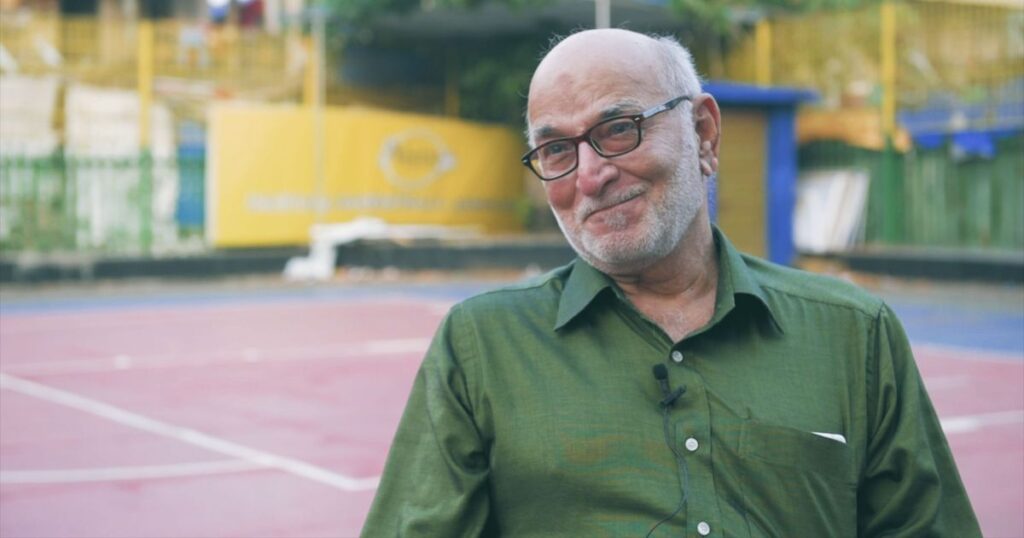
The 75-year-old is one of the biggest names to emerge from the Late Bachookhan Municipal Playground in Nagpada.
Scroll.in photo
The tall frame of Gulam Abbas Moontasir stands out in the narrow by-lane with mushrooming slums that leads to the Nagpada Basketball Association courts. The ground has the distinction of producing almost a dozen internationals and many more national-level players. The 75-year-old Moontasir is one of the biggest names to emerge from the Late Bachookhan Municipal Playground.
Moontasir’s elder brothers were more inclined to body building but the youngster picked up basketball at the age of nine thanks to a group of friends and insists that he was a very bad player and can’t really explain when the transformation really took place.
“I was very bad. As an athlete, I just couldn’t run. Any child could have beaten me straight away but I don’t know I got into it. One thing we did because of our elder brothers was that they put us into weight training in the 1950s,’ says the man who captained India in the 1969 and 1975.
The strong foundation soon became the bedrock of Moontasir’s style of play as he was known to dominate play with his sheer physical presence as the Nagpada hoopsters began to first dominate arch rivals Mastan YMCA and then the state and national scene.
“It was physical but isn’t basketball also a physical game? I’ll tell you, some of my friends. For eg, Narsimha Sharma, who is in the US now, would tell me, ‘just grab the ball, you don’t have to push in your weight.’
“When I started out Napgpada was not a big name in basketball. It was known for its volleyball. But slowly we made a name for ourselves… The first tournament we won was under 5 feet. We beat Mastan YMCA in 1953. I was 11 years old. After that of course Nagpada picked up basketball.
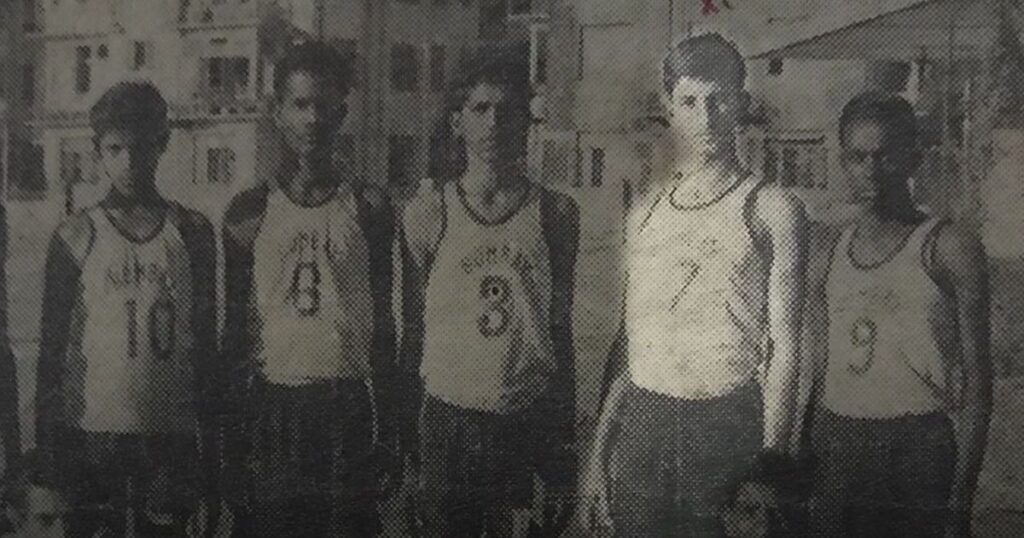
“In 1957, before I was 16 years, we won the men’s state championship. And we were Nagpada ‘B’ team, not Nagpada ‘A’ team. We beat them in the finals in 1957. I was selected of course for the state team also then it was Bombay. Next year, I was the captain of the Bombay state team in nationals and I was ranked 3rd in the country in the men’s section,” explains Moontasir, who went on to ply his trade at the national and international level for three decades and became the first player from Nagpada to be honoured with the Arjuna Award in 1970.
Railways boost
His career really blossomed after he joined Western Railways as the side boasted of the country’s top stars and Moontasir was the pivot around whom the team revolved.
Ask him about his own memorable game and Moontasir prefers to speak about the worst one rather than the best. “It was in Bangalore. It was so bad that the children you see [points at youngsters dribbling in a basketball court] would have played better. I just couldn’t hold the ball. People always ask me about what my best game was. I say, I remember my worst game which I will never forget in my life.
“I don’t know why. I would double-dribble, I would fall down, I would lose the ball,” stating these were the kind of games that one needs to learn from.
Never the one to mince words, Moontasir was suspended twice for his run-ins with the referees and lost out almost three years of his career.
“Twice I got suspended for arguing with the referee. And I was suspended for three years. Arguing with the referee. Not abusing, not hammering, not doing anything. Just arguing with the referee I was suspended for three years. Anyway I did come back after that,” he adds.
He made his international debut during an exhibition game against Australia in 1960 and the high point of his career probably came in 1970 when Moontasir became the first Indian to be named in the Asian All-Star team after a brilliant showing in the Asian Games in Bangkok.
“We were supposed to tour Europe but we didn’t,” he says with little regret, adding he then tried to move to United States of America to make a career in basketball but things did not materialise.
“In fact, I had applied for an overseas scholarship in America. But unfortunately they said ‘We don’t give scholarships to overseas students.’ And then in those days I had to pay $3000 which I didn’t have. So I didn’t go,” he adds.
Moontasir, who played his last nationals for his employer at the age of 44 and continued playing competitive basketball for four more years, insists that even if had got a chance to go to America he would have had to work extremely hard on his fitness to match the standards of the players there.
A stickler for hard work, Moontasir uses the phrase “working very very hard” almost a dozen times during the half-an-hour interaction and goes on to explain why he would appreciate an Ivan Lendl more than his idol John McEnroe.
“Between McEnroe and Lendl, who do I think I appreciate more? Lendl. It was because the guy had no talent. It was sheer hard work. If McEnroe had worked as hard as Lendl, he would have had 30 Grand Slams,” he adds, before stating that the Indian players who are trying their luck in USA’s National Basketball Association League will have to really step up on the fitness front or would not stand a chance.
This is also why, Moontasir did not really venture into coaching after his playing career apart from working with the Western Railway women’s team.
Even today he visits the Nagpada Basketball Association courts occasionally and those running the show definitely want him to provide some inputs to the young trainees who are looking to make a mark on the domestic scene.
But Moontasir, who has even acted in a few feature films, isn’t really interested. “During our playing times we were told that a basketball player never walks on the court but runs. I don’t see that kind of intensity in these players now.”
The 75-year-old insists that even the Basketball Federation of India isn’t providing enough exposure and game time for the players to mature and excel. “We are far away from world standards. But we can definitely be among the top five in Asia and that should be our primary aim,” he signs off.
source: http://www.scroll.in / Scroll.in / Home> The Field> Field Watch / by Abhijeet Kulkarni, Shashank Rajaram and Crystelle Rita Nunes / December 17th, 2017
Ali’s coaching influenced well-known players like Vijay Amritraj, Anand Amritraj, Ramesh Krishnan, Leander Paes and Somdev Devvarman.
Tennis legend Akhtar Ali, a father figure in Indian tennis, passed away here in the early hours of February 7, said a Bengal Tennis Association source.
He was 81 and is survived by his son, well known tennis player Zeeshan Ali, and two daughters.
Ali had been suffering from various ailments for the last few months. He was hospitalised for a few days before being brought back home recently. He passed away at 2:30 a.m. on February 7.
His cremation is expected to take place around 4 p.m.
Born on July 5, 1939, Ali played in eight Davis Cup ties against Pakistan, Malaysia, Iran, Mexico, Japan and Monaco between 1958 and 1964. He also captained and coached the Indian side. He has also played in the Wimbledon and French Open grand slam events.
His last ATP tour outing was against Vijay Amritraj in a clay court match in Bombay on November 11, 1974.
A fine and soft-spoken person, Ali is well known as a coach, whose coaching influenced well-known players like Vijay Amritraj, Anand Amritraj, Ramesh Krishnan, Leander Paes and Somdev Devvarman.
He was passionately involved in coaching and organising events for grassroots players throughout his life.
Ali was conferred the Arjuna Award in 2000 for lifetime contribution to tennis.
source: http://www.thehindu.com / The Hindu / Home> Sport> Tennis / by Y.B. Sarangi / Kolkata – February 07th, 2021
The politician is known for his soft-spoken demeanor and organisational abilities, which have helped the IUML remain relevant in the politics of Kerala, especially among the Muslim voters.
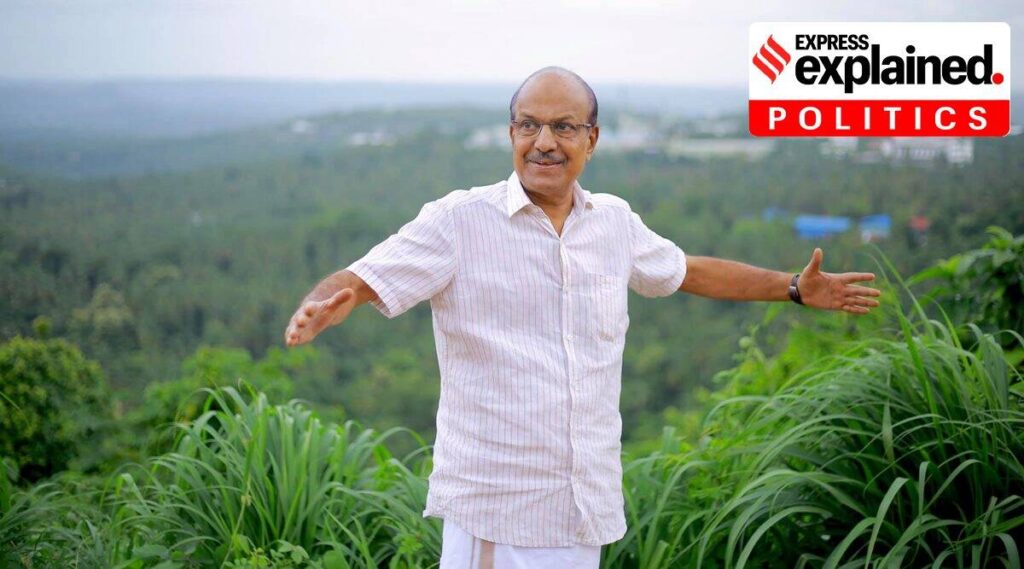
Indian Union Muslim League (IUML) general secretary PK Kunhalikutty is the most prominent, visible leader of IUML, an ally of the Congress in Kerala. (PK Kunhalikutty Facebook page)
On Wednesday, Indian Union Muslim League (IUML) general secretary PK Kunhalikutty submitted his resignation as Lok Sabha MP from Malappuram to Speaker Om Birla in New Delhi. The decision followed a directive from the party’s state and national committees to oversee the party’s preparations and candidate selection ahead of the crucial Assembly elections in Kerala in April-May.
What is Kunhalikutty’s role in Kerala politics?
Kunhalikutty (69) is the most prominent, visible leader of IUML, an ally of the Congress in Kerala, and wields a great deal of influence not just in his own party but also in the UDF, the coalition they are a part of.
In his five decades-old career that began with the Muslim Students Federation (MSF), the student wing of IUML, he has been a seven-time MLA and two-time Lok Sabha MP. He has served as minister in the state cabinet four times, under Congress chief ministers K Karunakaran, AK Antony and Oommen Chandy.
He’s not a powerful orator who can make fiery speeches at political rallies, but is known for his soft-spoken demeanor and organisational abilities which have helped the IUML remain relevant in the politics of Kerala, especially among the Muslim voters. Many a time, Congress leaders have turned to Kunhalikutty to make use of his problem-solving and negotiation skills to quell issues within the UDF.
More importantly, he has the full confidence of the Panakkad Thangal family, who are to the IUML what the Gandhis are to the Congress. Kunhalikutty also maintains close relations with both Chandy and Ramesh Chennithala, the leaders of the ‘A’ and ‘I’ factions respectively within the Congress.
Is his resignation from Lok Sabha his return to ‘state politics’?
Technically yes, even though Kunhalikutty has always been a visible and active face in Kerala’s politics even after his election to the Lok Sabha.
Kunhalikutty was chosen as the party’s candidate in a bye-election in Malappuram LS constituency in 2017 after the unexpected death of E Ahammed, the IUML’s longtime national face. It indicated that he was taking a break from Kerala to play a more active role in national politics and bring together democratic, secular forces. He eventually vacated his Assembly seat of Vengara to contest from Malappuram LS seat and won by a margin of 1.7 lakh votes that year.
In the 2019 LS elections, he repeated his victory from Malappuram. The CPI(M) alleged that Kunhalikutty contested in the LS elections in the hope of getting a ministership if the Congress-led UPA came to power.
How is his resignation from Lok Sabha less than two years after being elected seen in the state’s political circles?
Naturally, the decision has sparked a range of conversations both within the UDF and rival parties.
The CPI(M) and the BJP have attacked Kunhalikutty and the IUML for forcing an unnecessary bye-election on the people of Malappuram and waste taxpayer funds at the behest of personal career moves. The CPI(M) went a step further and said Kunhalikutty is angling for a deputy CM post if the UDF comes to power and that the Congress is being subservient to the IUML.
Even within the IUML, the decision has generated criticism especially among the younger leadership who feel that the move will dampen the public image of the party. A few local leaders even resigned, protesting the move. The party leadership responded by saying that Kunhalikutty’s active presence in the Assembly election campaign and his candidacy would help bring the UDF to power.
The Congress, on its part, has welcomed the move, saying his leadership in the election campaign will boost the UDF’s prospects especially in the Malabar region where IUML has its strongholds. The party understands that a strong IUML is key to UDF’s path to power.
So, how important is IUML to Congress’ chances of returning to power in Kerala?
Very important. In the 2016 Assembly elections, the seat tally of the Congress and the IUML was separated by a mere four seats. While the Congress won just 22 out of the 87 it contested, the IUML had a very good strike-rate, winning 18 out of the 24 seats it fought in. In 2011 Assembly elections too, the IUML won 20 out of the 24 it contested. Barring exceptions, like the 2006 Assembly elections when a long line of IUML leaders including Kunhalikutty suffered defeat at the hands of the LDF, the IUML has been successful in defending its stronghold constituencies especially in the Muslim-majority Malappuram district. It has been the numero uno party for Muslims in the state.
Even in the recent local body elections, the IUML swept panchayats, municipalities and corporations in Malappuram and surrounding areas even as the Congress suffered heavy defeats at the hands of the CPI(M). And so, the Congress understands that all it has to do is win at least 50 seats because the IUML will make up the difference to reach the half-way mark of 70 in the Assembly.
source: http://www.indianexpress.com / The Indian Express / Home> Explained / by Vishnu Varma, Kochi / February 05th, 2021
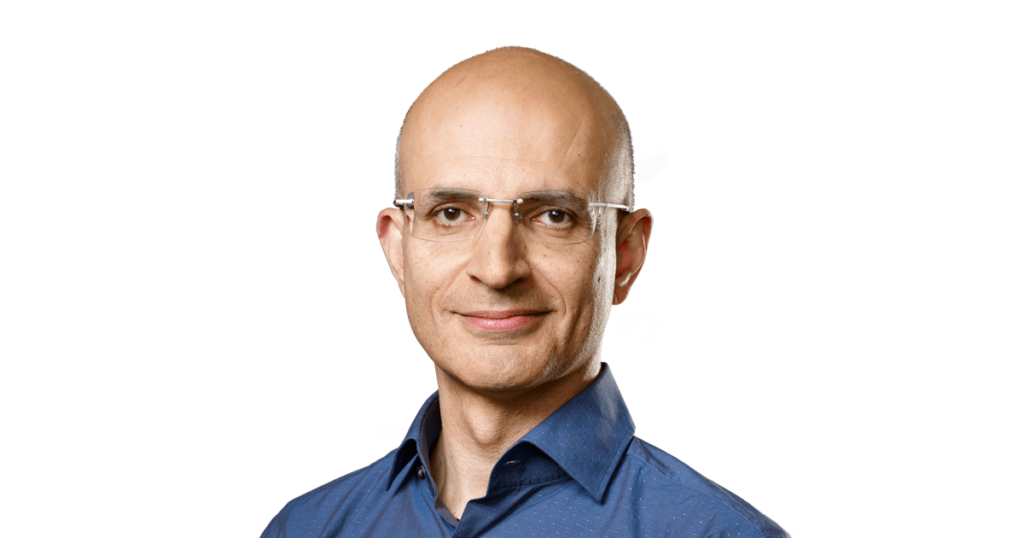
Indian-origin Sabih Khan has been named as the Senior Vice President of Operations at Apple, the global tech giant announced. Khan, whose family hails from Rampur in Uttar Pradesh has been with Apple since 1995 working in various senior executive roles.
In his new role, Khan would be in charge of Apple’s global supply chain, ensuring product quality and overseeing planning, procurement, manufacturing, logistics and product fulfilment functions, Apple said in a statement.
“Sabih leads our Ops team with heart. He and his entire worldwide team are committed to delivering unmatched experiences to our customers, treating workers everywhere with dignity and respect, and protecting the environment for future generations,” said Tim Cook, Apple CEO.
Before joining Apple’s procurement group in 1995, Sabih Khan worked as an applications development engineer and key account technical leader at GE Plastics. He earned a bachelor’s degrees in Economics and Mechanical Engineering from Tufts University and a master’s degree in Mechanical Engineering from Rensselaer Polytechnic Institute.
Khan’s promotion follows the departure of Apple’s legendary chief design officer Jonathan Ive, who quit the company to form his own design company, LoveFrom.
KKhan will report to Jeff Williams, Apple’s chief operating officer
“I’ve been privileged to work with Sabih for more than 20 years, and you won’t find a more talented operations executive anywhere on the planet,” said Williams. “He is a world-class leader and collaborator, and I have no doubt that he will be the best leader of the Ops team in Apple’s history.”
source: http://www.thecognate.com / The Cognate / Home> Business / by Shaik Zakeer Hussain / June 29th, 2019
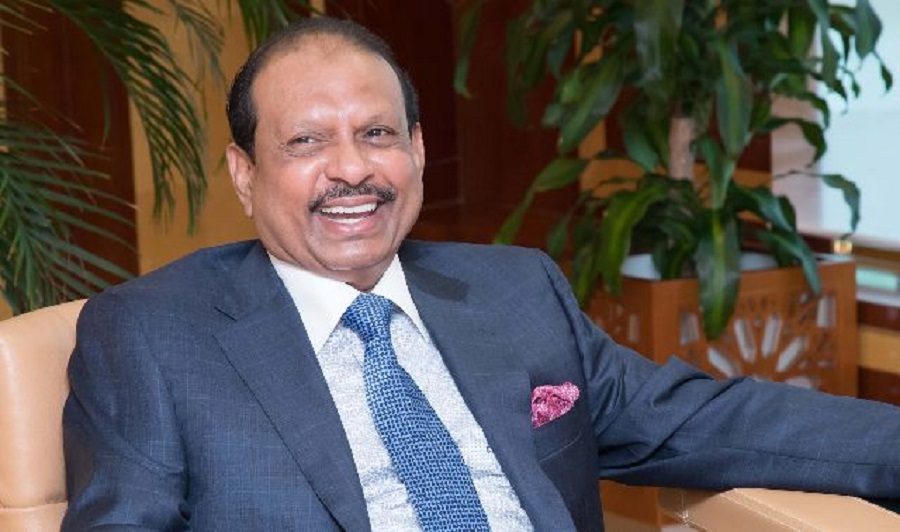
Chairman and Managing Director of UAE-based Lulu Group International is an employer of more than 30,000 Indians abroad.
Thiruvananthapuram :
M.A. Yusuffali, Chairman and Managing Director of UAE-based Lulu Group International has been nominated as expert member of the Governing Council of India Centre for Migration (ICM) by the Ministry of External Affairs (MEA).
ICM is a committee that undertakes research and studies on migration of Indian workers for overseas employment and supports informed policy making in MEA.
Among other objectives, ICM is tasked with equipping the country’s human resources in the field of employment to international standards, providing guidance for promoting employment in foreign countries, highlighting India as a country with a highly qualified and skilled workforce, and preparing welfare schemes for the Indian working community abroad.
The committee, chaired by the Secretary, Ministry of External Affairs, also includes the Secretary, Ministry of Finance, the Secretary, Ministry of Labour and the Secretary, Ministry of Small and Medium Enterprises.
Yusuffali, while thanking Indian government and the prime minister for this important nomination, said that he will use his experience of almost 5 decades in the Middle East both as an NRI businessman and as an employer of more than 30,000 Indians to further enrich the diaspora.
“My efforts will be more towards preparing the new generation as a global professional fit for today’s fast-evolving business environment, especially considering the challenging times we are going through,” UAE-based Indian businessman said. — IANS
source: http://www.clarionindia.net / Clarion India / Home> Editor’s Pick / by IANS / January 19th, 2021
PB Nooh opened a control room with some 50 young doctors and volunteers for the exercise, which technology helped a great deal
P.B Nooh, who grew up in Kerala’s Perumbavoor, near Ernakulam district, studied in a public school before graduating from the University of Agricultural Sciences, Bengaluru
PB Nooh opened a control room with some 50 young doctors and volunteers for the exercise, which technology helped a great deal
P.B. Nooh, the collector of Pathanamthitta district, is known to be an aggressive young man, facing adversities with a smile and having the capability to take quick decisions. And, he is at the ground-zero of Kerala’s coronavirus crisis.
While he has been regularly hitting the streets without any complaint, for many other young civil servants it would have been a nightmare. In fact, this is third attempt to help the state sail out of a crisis of giant proportions.
Shortly after he was appointed as the district collector, and just 15 days after having a surgery, Kerala had witnessed the worst floods in over a century. In August 2018, when the waters started rising, the low-lying areas of Pathanamthitta were one of the most affected. Nooh was tasked with the largest rescue operation ever seen: Around .14 million people were rescued and moved to safer locations uphill within hours.
Months later, the district hogged national headlines as the epicentre of the Sabarimala protests. But Nooh stood tall as the protests over the ban on the entry of menstruating women in the hill shrine, and dealt with the situation with an iron hand.
Nooh, who grew up in Kerala’s Perumbavoor, near Ernakulam district, studied in a public school before graduating from the University of Agricultural Sciences, Bengaluru. He followed his elder brother P.B. Saleem to the civil services, with a ranking of 48 in 2012.
“Ever since, he has weathered crisis after crisis, but the current one has simply been no match to all previous occasions,” said an official of the chief minister’s office who has worked with closely with Nooh, requesting anonymity.
“When we called him to enquire about the first three Covid-19 cases (in Pathanamthitta), he was away on work in Trivandrum. He reached Pathanamthitta around 12am the same night, did not rest until he traced those three patients, and their primary contacts, isolated them in hospitals, and prepared an action plan in consultation with several experts, including doctors,” the official added.
“It must have all ended by 3am or so. We would have faced a bigger crisis if he had not acted that quickly. He has the gift for instant decision-making, and is a god-sent gift for us. Young turks like him are the ones who really enable chief minister Pinarayi Vijayan’s CEO style of operation.”
The next day, on 8 March, the district administration announced about five residents of Ranni, who had evaded health screening at Kochi airport on their return from Italy about a week ago, and subsequently tested positive for Covid-19.
The case of the couple and their son came as a shocker to Kerala, as it came to light only after two other relatives were infected with the deadly virus. The state was immediately put on high alert, as the family had travelled to several places across Pathanamthitta and Kottayam districts, including a local health clinic. Two nonagenarian family members were also shifted to the Kottayam Medical College hospital with high fever.
“The Italy-returned family hid their travel details from the health authorities. Such practices have to be seen as a crime,” said an angry Kerala health minister K.K. Shailaja to reporters that day. By the following day, it became clear that the family had inflected about eight others, India’s most number of Covid-19 cases for a district back then. And, Nooh was key to the success of the rapid action team.
Mint could not get Nooh’s comments. But, in an interview with Mathrubhumi News on Thursday, he said: “That was a scary moment. This was an unprecedented situation. Until we set an action plan, I was a bit disturbed.”
“Societally, we knew the news would create a lot of panic and trauma. Second, the government is answerable on how they escaped. So, I called the superintendent of police and said, look we only have this night, we have to get hold of these guys before sun rise. SP The did a good job and by 1.00am we had them.” The district administration then went into a massive drive to trace the contacts who were in touch with the family.
Nooh opened a control room with some 50 young doctors and volunteers for the exercise, which technology helped a great deal. Soon after, Nooh helped devise a strategy with the help of the police to track a patient’s phone number and trace tower locations, before marking the places of visit on Google Maps to zero in on possible contacts. Within six days, all contacts were traced and at least 4,000 people, including 2,000 people who returned from foreign countries, were traced and home quarantined. The challenge for Nooh will only increase by the day, but he could be central to Kerala’s fight against Covid-19.
source: http://www.livemint.com / Mint / Home> India / by Nidheesh M K / March 21st, 2020
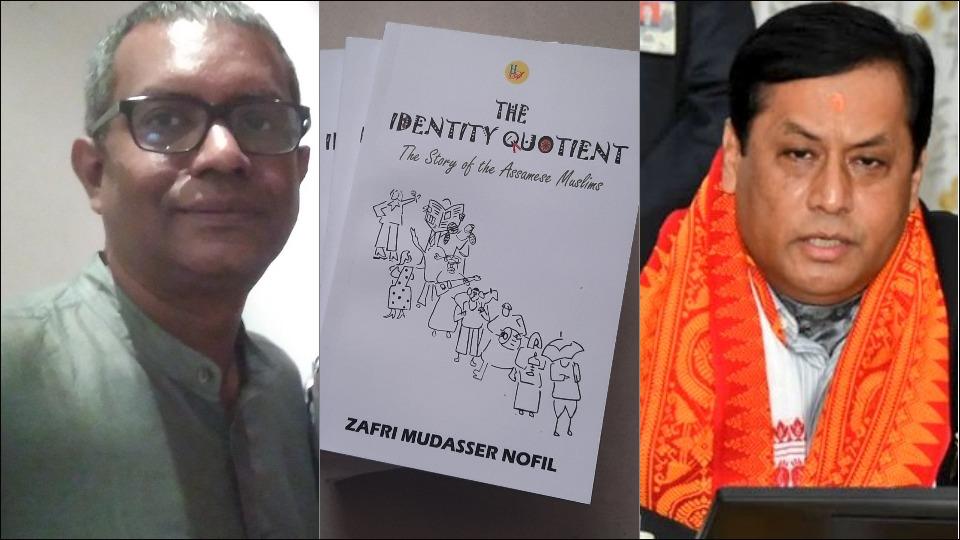
CM Sarbananda Sonowal calls Zafri Mudasser Nofil’s new book, The Identity Quotient: The Story of the Assamese Muslims, an informing and inspiring read as it significantly highlights the Assamese Muslims and their lineage to the medieval period when Muslim rulers and generals invaded the region
Assam epitome of Hindu-Muslim unity: CM Sonowal in foreword of Zafri’s new book(Twitter/zafrimn/sarbanandsonwal)
Assam has over the years set a perfect example of harmonious coexistence and is an “epitome of unity” between Hindus and Muslims, which is reflected in the Zikir devotional songs popularised by Muslim mystic Azan Pir and inspired by Vaishnavite saint Srimanta Sankaradeva, says Chief Minister Sarbananda Sonowal.
He makes these remarks in the foreword to a new book “The Identity Quotient: The Story of the Assamese Muslims” written by journalist Zafri Mudasser Nofil and brought out by Har-Anand Publications.
“Assam has over the years set a perfect example of harmonious coexistence of Hindus and Muslims. The state has been an epitome of Hindu-Muslim unity which becomes evident from the symbiosis of Hindu-Muslim friendship,” Sonowal says.
“The Zikir and Zari of Azan Pir inspired by Srimanta Sankaradeva essentially preach the secular message, the same way as to how Dr. Bhupen Hazarika’s songs reverberate the message of equality, peace and unity between religions and humanism,” he adds.
The Zikirs and Zaris are Muslim devotional songs in Assamese ascribed to Azan Pir who has become a spiritual icon of Assam exemplifying universal brotherhood. He was inspired by Srimanta Sankaradeva and was successful in building a bridge of unity.
The chief minister notes that the book significantly highlights the Assamese Muslims and their lineage to the medieval period when Muslim rulers and generals invaded the region. Nofil, himself an Assamese Muslim, covered Assam for ‘The Sentinel’ newspaper in Guwahati before moving to New Delhi where he is now working as a Senior News Editor for Press Trust of India (PTI) on its national desk. “I am happy with the book which encapsulates vignettes of the contributions of the Muslims of the state, their customs, traditions and their unique cuisines. With its uniqueness of being a narrative non-fiction with vivid quotes from historical texts, I am sure the book will be read and appreciated by all. I hope the book informs and inspires many,” Sonowal says.
In the book, Nofil traces the history of Muslims in Assam in the medieval era, their amalgamation with the locals and discusses their contribution to the state up to the present day, when talks of a controversial citizenship law and national register of citizens (NRC) have caused tension among the community “This book tells how Muslims of Assam are different from the rest of the country. They take pride in calling themselves Assamese first and never consider themselves to be lesser Assamese than Assamese Hindus,” Nofil writes. The book draws information from multitudes of credible historical documents and archives, interactions with litterateurs, scholars and artistes.
The contribution of Assamese Muslims has been multifaceted, diverse and immense. Be it politics, civil services, literature, art, education, law, sports, music, films and entertainment, they have excelled in every other field, Nofil says in the book.
It profiles several achievers, who have made a mark in their respective fields. They include former president Fakhruddin Ali Ahmed to actor Adil Hussain and classical singer Begum Parveen Sultana, to several people from the community who have many firsts to their names.
But of late, he says, the indigenous Muslims have been “suffering the ignominy” of being bracketed with illegal immigrants as ‘Miya’, an Urdu word meaning gentleman, which is, however, used in Assam for Bangladeshi-origin Muslims who mostly live in ‘char’ areas or floating river islands.
(This story has been published from a wire agency feed without modifications to the text. Only the headline has been changed.)
source: http://www.hindustantimes.com / Hindustan Times / Home> Lifestyle / by Press Trust of India / posted by Zafarshan Shiraz,New Delhi / December 14th, 2020
The BJP-led Hindu nationalist government has conferred Padma awards on 119 personalities. The awardees include eight Muslims.
Two renowned Islamic scholars, Maulana Wahiduddin Khan and MaulanaKalbe Sadiq have also been selected for the award.
Padma Vibhushan, the second-highest civilian award have been presented to Maulana Wahiduddin Khan, while Maulana Kalbe Sadiq have been provided Padma Bhushan, the third-highest civilian award.
Both the scholars had urged Muslims to give away their claim on Babri Masjid. Currently, a Ram Temple is being constructed on the site where Babri Masjid was standing till its demolition by Hindutva mobs, aided by BJP-RSS veterans, on 6 December 1992.
The awardees include, polymath Ali Manikfan, who has been awarded with the Padma Shri for his contribution in grassroots level innovations at Lakshwadeep. Born into an aristocratic family in 1938 in the Minicoy Island of Lakshwadeep, Manikfan is as marine researcher, ecologist, shipbuilder, agriculturist, and a polyglot.
Gulfam Ahmed from Uttar Pradesh for his contribution in the field of Art, Lakha Khan for Literature from Rajasthan, and Ghulam Rasool Khan for Art from Jammu and Kashmir, Sanjida Khatun for Art from Bangladesh and Col Quazi Sajjad Ali Zahir for Public Affairs from Bangladesh are among the recipients of the Padma Shri.
These awards cater to various disciplines including art, social work, public affairs, science and engineering, trade and industry, medicine, literature and education, sports and civil service. While ‘Padma Shri’ is awarded for distinguished service in any field, ‘Padma Bhushan’ is awarded for distinguished service of high order. ‘Padma Vibhushan’ is awarded for exceptional and distinguished service.
source: http://www.muslimmirror.com /Muslim Mirror / Home> Featured / by Muslim Mirror Staff / January 28th, 2021
Badharia Village (Azamgarh District), UTTAR PRADESH / NEW DELHI :
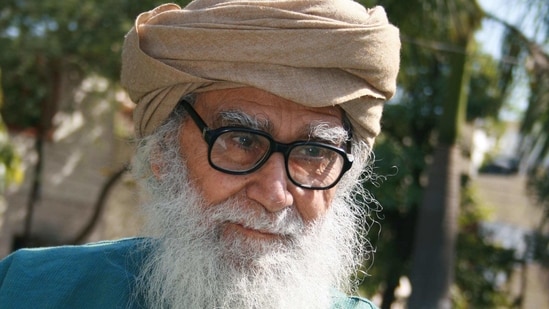
Maulana Wahiduddin Khan has been given Padma Vibhushan, India’s second-highest civilian award, for his exceptional contribution in the field of spiritualism.
File photo of Maulana Wahiduddin Khan.(CPS Global)
The Centre on Monday released the list of Padma awards on the eve of India’s 72nd Republic Day in which it has honoured 119 people for their achievements and contributions to their respective fields of work.
One of the names that is sure to pique interest is that of renowned Islamic scholar Maulana Wahiduddin Khan. He has been given Padma Vibhushan, India’s second-highest civilian award, for his exceptional contribution in the field of spiritualism.
Khan first shot to limelight when he gave a clarion call to Muslims to relinquish claims over the disputed Babri Masjid site, one the first community leaders to do so.
He then floated, along with others, the “Vajpayee Himayat (support) Committee”, which had extensively campaigned for the former BJP prime minister in the Lucknow constituency in the 2004 Lok Sabha elections.
Khan is known for his association with Vajpayee and his senior colleague in the Bharatiya Janata Party (BJP) L K Advani.
Khan has contributed articles to the RSS mouthpiece Organiser which presents him “as an enlightened alternative to Islamic fanaticism” for “reportedly counselling Muslims to abandon their claim on Ayodhya”.
His verified Facebook page describes the Islamic scholar as, “Maulana Wahiduddin Khan is an Islamic spiritual scholar who has adopted peace as the mission of his life. Known for his Gandhian views, he considers non-violence as the only method to achieve success.”
He established Centre for Peace and Spirituality (CPS) in 2001 to promote and reinforce the culture of peace. The website of the organisation says the Khan was born in Uttar Pradesh’s Azamgarh in 1925.
Padma awards – conferred in Padma Vibhushan, Padma Bhushan and Padma Shri categories – are among the highest civilian awards given in various disciplines/fields like art, social work, public affairs, science and engineering, trade and industry, medicine, literature and education, sports, and civil service.
source: http://www.hindustantimes.com / Hindustan Times / Home> India News /by HindustanTimes.com – edited by Amit Chaturvedi / January 25th, 2021